Tag: Hakeem Jeffries

  • 17 House Republicans vote with Democrats to extend Obamacare subsidies for 3 years

    17 House Republicans vote with Democrats to extend Obamacare subsidies for 3 years

    WASHINGTON, D.C. (TIP)- The House passed a bill on Thursday, January 8, to extend the Affordable Care Act enhanced subsidies for three years by a vote of 230-196 with 17 Republicans voting with Democrats and defying GOP leaders, Allison Pecorin of ABC News reported.

    A tangible path forward that sends legislation through the Senate to the Resolute Desk to address the expired subsidies remains in question.

    Senate Majority Leader John Thune said Thursday, January 8, that there’s “no appetite” for an extension in the upper chamber and pointed instead to ongoing bipartisan talks between senators and House members.

    “We’ve had that vote, as you know, already,” Thune said. “But we’ll see what happens from the working group, and if they can come up with something that has reforms. And we’ll go from there.

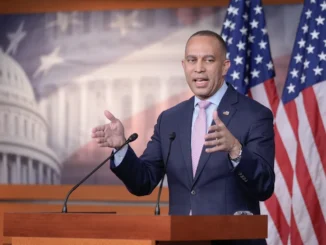
    House Minority Leader Hakeem Jeffries expressed pride in the “bipartisan coalition” created ahead of Thursday’s vote on a three-year extension of enhanced Affordable Care Act subsidies after nine Republicans crossed the aisle Wednesday night to set up passage in the House.

    “I hope today there will be more Republicans joining this leader,” said Senate Minority Leader Chuck Schumer, gesturing towards Jeffries at a news conference Thursday.

    Jeffries called the vote “an opportunity to take a meaningful step forward to lower the high cost of living for everyday Americans, particularly as it relates to health care, but it’s a battle that we will continue to wage on behalf of the American people.”

    9 Republicans vote with Democrats to set up House vote on 3-year extension of ACA subsidies
    Wednesday’s procedural vote passed by a 221-205 margin with nine Republicans voting with Democrats to pass it.

    Saul Loeb/AFP via Getty Images – PHOTO: Senate Minority Leader Chuck Schumer and US House Minority Leader Hakeem Jeffries hold a press conference on Capitol Hill in Washington, January 8, 2026.

    The subsidies, which expired at the end of 2025, were enhanced during the COVID-19 pandemic to increase the amount of financial assistance to those who were already eligible and to expand eligibility to more people.

    A bipartisan group of House members and senators met for about an hour over lunch Thursday to grapple over various health care provisions, telling reporters afterward that they’ve struck an agreement to address widespread fraud, such as phantom accounts.

    “We’re trying to see if we can get to some agreement that’s going to help them, and the sooner we can do that, the better,” New Hampshire Democratic Sen. Jeanne Shaheen told reporters as she left the meeting. “So there was agreement on addressing fraud.”

    Shaheen did not divulge details of an impending deal but said the next step will be crafting bill text in the coming days.

    Many conservatives want to add Hyde Amendment protections to ensure that an extension of the ACA tax credits won’t provide federal funds for abortion services, generating Democratic opposition to GOP proposals.

    But several moderates, including Reps. Don Bacon and Dan Meuser, conceded that the ACA already includes Hyde protections, so there is an ongoing debate among appropriators on whether that’s sufficient cover for conservatives if an extension of the subsidies does not explicitly codify those protections.

    Nevertheless, some Republicans believe a bipartisan deal is within reach.

    “Things are still being hashed out. There’s always the details — the so-called devil’s in the details, or maybe the angel’s in the details,” Meuser said, adding lawmakers hope to conclude discussions “as soon as possible.”

    “I mean, it’s certainly a sense of urgency, to say the least,” he said.

    Lawmakers did not reveal whether they scheduled another meeting but signaled that bill text could be ready soon.

    “They’re very close,” said GOP Rep. Brian Fitzpatrick, adding that the bill mirrors the language of a bill that he and Lawler and Democratic Reps. Tom Suozzi and Jared Golden introduced.

    Suozzi said it was “a very hopeful feeling when you participate in a meeting like this,” citing an even split of Democrats and Republicans at the meeting while emphasizing everyone’s commitment to “moving beyond this toxicity and trying to find some common ground.”

    The Senate last month rejected a three-year extension of the subsidies when the measure fell short of the 60-vote threshold, though four Republicans — Sens. Susan Collins of Maine, Josh Hawley of Missouri, and Lisa Murkowski and Dan Sullivan of Alaska — all crossed the aisle in support of the measure.

    An estimated 22 million of the 24 million ACA marketplace enrollees are currently receiving enhanced premium tax credits to lower their monthly premiums, and many are seeing their premiums soar in 2026.

    Rod Lamkey/AP – PHOTO: Senate Majority Leader John Thune speaks during the Senate Republican policy luncheon news conference at the Capitol, Jan. 6, 2026, in Washington.

    The nonpartisan Congressional Budget Office estimates the bill would increase the federal deficit by about $80.6 billion over the next decade.

    If the measure is enacted, the number of people with health insurance would increase by 100,000 people in 2026, 3 million in 2027, 4 million in 2028 and 1.1 million in 2029, relative to current law, the CBO reported.

    According to the CBO, the 4 million increase in 2028 would result from changes in several types of coverage: 6.2 million more people would be enrolled through ACA health insurance marketplaces; 400,000 million more people enrolled in Medicaid and the Children’s Health Insurance Program; 500,000 fewer people would purchase nongroup coverage outside the marketplaces; and 2.1 million fewer people would have employment-based coverage.

    Senate back to square one on health care after both bills fail
    President Donald Trump has publicly expressed his opposition to extending the enhanced subsidies.

    “I’d like not to be able to do it. I’d like to see us get right into this. I don’t know why we have to extend — this can be done rapidly if the Democrats would come along,” Trump said on Dec. 18 in the Oval Office.

    After Speaker Mike Johnson resisted pressure to allow a vote on the subsidies late last year, a quartet of House Republicans — Fitzpatrick, Lawler, Bresnahan and Mackenzie — banded together before the holiday break and signed on to a Democratic discharge petition to force a vote on an ACA extension, much to the chagrin of GOP leaders.

    (Source: ABC News)

  • Mike Johnson Reveals GOP Health Care Plan as ACA Subsidies Set to Expire

    Mike Johnson Reveals GOP Health Care Plan as ACA Subsidies Set to Expire

    WASHINGTON, D.C. (TIP): After the Senate failed this week to advance competing health care plans, attention has shifted to the House, where Republicans are making a last-minute push as the clock runs out to prevent higher insurance costs for millions of Americans, says a Newsweek report.

    Speaker Mike Johnson unveiled a sweeping Republican proposal late Friday, December 12,  moving ahead without extending enhanced tax subsidies that help people afford insurance through the Affordable Care Act, also known as Obamacare. Those subsidies, expanded during the COVID-19 pandemic, are set to expire at the end of the year.

    Why It Matters

    President Donald Trump has said he believes Republicans can deliver a better alternative to Obamacare, a promise he has made repeatedly over the years. But he has offered few specifics beyond proposing direct payments to help Americans buy insurance.

    What To Know

    Johnson, a Louisiana Republican, spent much of Friday behind closed doors with GOP lawmakers, as he had earlier in the week, working to assemble the package as the House enters the final days of its 2025 legislative session. The Speaker said in a statement announcing the Lower Health Care Premiums for All Americans Act that the House plans to vote on the package next week.

    Democrats staged the longest federal government shutdown in U.S. history this fall in a failed attempt to force Republicans to negotiate over health care. Despite promises of votes, the Senate this week failed to advance both a Republican-backed health plan and a Democratic bill that would have extended the enhanced ACA tax credits for three years.

    With just days remaining before lawmakers leave Washington, Congress appears poised to adjourn without a consensus solution.

    House Republicans released a package of more than 100 pages that centers on long-standing GOP priorities aimed at reshaping the health insurance market. The plan seeks to expand access to employer-sponsored coverage and increase oversight of pharmacy benefit managers, or PBMs, while leaving the enhanced ACA subsidies to expire.

    A central element of the proposal would expand access to so-called association health plans, allowing small businesses and self-employed individuals to band together to purchase insurance. Supporters argue that pooling coverage gives employers greater bargaining power to negotiate lower premiums.

    Critics, however, warn that association plans often provide fewer benefits and weaker consumer protections than plans sold through the ACA marketplaces.

    The proposal also would require PBMs to provide more detailed data, a move Republicans say could help rein in prescription drug costs. PBMs act as intermediaries between drugmakers, insurers and pharmacies, and critics across party lines have accused them of inflating prices and squeezing independent pharmacists.

    The GOP package also references cost-sharing reductions for some lower-income ACA enrollees, but those changes would not take effect until January 2027.

    Notably absent from the plan is any extension of the enhanced ACA tax credits that millions of Americans rely on to lower their monthly premiums. Those subsidies, enacted during the pandemic, expire Dec. 31. Without congressional action, many families could see their out-of-pocket premiums more than double, and in some cases increase by far more.

    Trump has consistently promoted the idea of sending money directly to individuals rather than extending ACA tax credits. It remains unclear how large such payments would be. A Senate Republican plan that failed this week would have created new health savings accounts funded with $1,000 annually for most adults, or $1,500 for people ages 50 to 64.

    No such health savings accounts appear in the House plan. Johnson’s approach has put politically vulnerable House Republicans in swing districts under mounting pressure as the subsidy deadline nears.

    Frustrated with delays, a group of centrist Republicans has joined Democrats to push alternative proposals to temporarily extend the ACA tax credits to avoid immediate premium hikes.

    Those lawmakers are backing several bills and have begun signing discharge petitions, a rarely successful procedural tactic that can force a vote on legislation if a majority of House members sign on.

    This year, however, discharge petitions have gained unusual traction. Lawmakers recently used one to force a vote on releasing Jeffrey Epstein-related files held by the Justice Department. One petition, sponsored by Rep. Brian Fitzpatrick, R-Pa., had attracted 24 signatures as of Friday, evenly split between Republicans and Democrats. It would compel a vote on a bill extending the subsidies for two years while adding anti-fraud provisions and PBM restrictions.

    Another petition, introduced by Rep. Josh Gottheimer, D-N.J., has drawn 39 bipartisan signatures and would force a vote on a one-year subsidy extension with new income caps.

    Both efforts could succeed if House Democratic leader Hakeem Jeffries urges his caucus to sign on. So far, he has declined to commit. Jeffries is also backing a separate Democratic petition with 214 signatures that would extend the subsidies for three years without changes. No Republicans have joined that effort, and Senate Republicans have made clear such a proposal has no chance of passing their chamber.

    What People Are Saying

    Johnson said in a statement, in part, “Nearly 15 years ago, the Democrats’ Unaffordable Care Act broke the American health care system. Since its inception, premium costs have skyrocketed, networks have shrunk, and the system has become bloated, inefficient, and riddled with waste, fraud, and abuse. While Democrats demand that taxpayers write bigger checks to insurance companies to hide the cost of their failed law, House Republicans are tackling the real drivers of health care costs to provide affordable care, increase access and choice, and restore integrity to our nation’s health care system for all Americans.”

    Trump said late Friday at a White House event, “I want to see the billions of dollars go to people, not to the insurance companies. And I want to see the people go out and buy themselves great healthcare.”

    Jeffries said Friday, “We’re actively reviewing those two discharge petitions and we’ll have more to say about it early next week.”

    What Happens Next

    As Congress nears adjournment, the fate of millions of Americans’ health care costs remains uncertain.

    (Source: Newsweek)

  • White House insists debt ceiling be dealt with without conditions

    White House insists debt ceiling be dealt with without conditions

    WASHINGTON, D.C. (TIP): The White House on Tuesday, January 17,  insisted that the looming debt ceiling crisis be dealt with without conditions and there is no room for negotiations on this.

    “This should not be political brinkmanship. We should be dealing with the debt ceiling without conditions. It is important. We’re not going to work our way around this; we’re not going to negotiate on this. This is the basic duty of Congress,” White House Press Secretary Karine Jean-Pierre told reporters at her daily news conference.

    In the last administration, the Democrats and Republicans were able to deal with the debt limit three times. “Let’s not forget that,” she said. Last week, Treasury Secretary Janet Yellen in a letter to Congress raised the red flag on an imminent debt crisis. Given the sharp differences between the ruling Democrats and the opposition Republicans, who enjoy a majority in the House of Representatives, not handling the issue on time might result in the United States defaulting on its debt commitment, which has never happened in the past.

    Republicans have so far insisted on not raising the debt limit which currently is USD 31.381 trillion as approved by Congress last month. This debt limit is the total amount of money that the US government is authorized to borrow to meet its existing legal obligations and is scheduled to reach its statutory limit on January 19. The United States is the only industrialized nation to have such an arbitrary institution as a debt ceiling, but the players who keep ending up in the same standoff aren’t exactly looking to kill it, Time magazine said Tuesday.

    The New York Times warned that a default would most likely rattle markets and carry big risks, no matter how the Federal Reserve and Treasury try to curb the fallout. In her letter to the Congressional leadership, Yellen asserted that it is “critical that Congress act in a timely manner to increase or suspend the debt limit”. Failure to meet the government’s obligations would cause irreparable harm to the US economy, the livelihoods of all Americans, and global financial stability, she warned.

    Indian American Congressman Raja Krishnamoorthi, who is a Democrat, has called for an increase in the debt limit. “If we don’t raise the debt ceiling, we’ll go into default, and only one default is enough to nuke the economy,” he said.

    Opposing an increase in the debt limit, Republican Congressman Ralph Norman, said that USD31.4 trillion, is a massive amount of debt. “The government owes this money because politicians in Washington simply will not stop spending. This has been the case for decades, and Republicans are just as much to blame as Democrats,” he said.

    “We’ll have to see how negotiations play out, but the bottom line is this: Republicans need to see some degree of incremental spending cuts in these debt ceiling negotiations. An agreement without some reasonable cuts is unacceptable,” Norman said.

    “Our national debt is approaching a level not just harmful to economic growth and irresponsible to future generations, but dangerous to our national security today. We are entering treacherous waters and must couple any debt ceiling increases with real reforms,” said Congresswoman Victoria Spartz.

    “Huge amounts of politically directed spending and crony capitalism have created a significant oligopoly problem in nearly every market sector – not much different from oligarchs ruling in post-socialist countries,” she said.

    Senate Majority Leader Chuck Schumer and House Democratic Leader Hakeem Jeffries in a joint statement said that the Congress must act on legislation to prevent a disastrous default, meet America’s your obligations and protect its full faith and credit.

    “A default forced by extreme MAGA Republicans could plunge the country into a deep recession and lead to even higher costs for America’s working families on everything from mortgages and car loans to credit card interest rates,” they said.

    “America pays its debts. Period. There should be no political brinkmanship with the debt limit. It’s reckless for Speaker McCarthy and MAGA Republicans to try and use the full faith and credit of the United States as a political bargaining chip. A default would be catastrophic for America’s working families and lead to higher costs,” Schumer said in another statement.

    (Source: PTI)

  • Indian American Congressman Ami Bera loses bid to lead Democratic Congressional Campaign Committee

    Indian American Congressman Ami Bera loses bid to lead Democratic Congressional Campaign Committee

    WASHINGTON, D.C. (TIP): The longest-serving Indian American Congressman, Ami Bera has lost his bid to lead the Democratic Congressional Campaign Committee with incoming House Democratic leader Hakeem Jeffries choosing Rep. Suzan DelBene for the job.

    Bera had thrown his hat in the ring last month saying his “skills and experiences” made him “the best choice” to lead the DCCC, “at this pivotal moment as we seek to win in 2024 and deliver for the American people.” Bera and Tony Cárdenas, both California representatives, were in the race for DCCC chair, but party leaders ultimately decided they needed to elevate a woman to the role, media reported citing unnamed sources.

    The House Democratic caucus adopted an amendment during a closed-door meeting last month that allows the leader to appoint the chair of the DCCC instead of the position being an elected one. The amendment was originally proposed by DelBene, as well as Reps. Brad Schneider of Illinois and Mark Pocan of Wisconsin.

    DelBene’s appointment will need to be ratified by the full Democratic caucus.

    DelBene, who was first elected to Congress in 2012, is the outgoing chair of the New Democrat Coalition, made up mostly of pro-business Democrats, including lawmakers representing swing districts, according to media. She succeeds New York Rep. Sean Patrick Maloney, who lost reelection to his Lower Hudson Valley seat last month.

    In a letter to his colleagues on Nov 14, Bera, who has represented California’s 7th Congressional District since 2013, claimed House Democrats defied history in the 2020 election.

    “Not only did our frontliners win close races, but we flipped several Red to Blue seats and we broadened and strengthened our base through historic turnout from young voters.”

    “As we head into 2024, the stakes could not be higher for the American people,” wrote Bera who was Frontline Chair for the DCCC, responsible for overseeing the efforts to reelect Democratic Members of Congress in competitive seats.

    However, Bera’s candidacy also “came with some baggage” as his opponents resurfaced reports that his father had been sentenced in 2016 after prosecutors tracked “at least $260,000 in illegal contributions funneled through donors but secretly paid by the elder Bera through multiple bank accounts used to further cover his tracks,” according to media reports.