Tag: INDONESIA

  • Economic crisis is not far away

    Economic crisis is not far away

    The next financial crisis is coming. It’s just a matter of time – and we haven’t finished fixing the flaws in the global system that were so brutally exposed by the last one.

    Massive monetary policy stimulus has rekindled growth in developed economies since the deep recession that followed the collapse of Lehman Brothers in 2008; but what the IMF calls the “handover” to a more sustainable recovery – without the extra prop of ultra-low borrowing costs – has so far failed to materialize.

    Meanwhile, the cheap money created to rescue the developed economies has flooded out into emerging markets, inflating asset bubbles, and encouraging companies and governments to take advantage of unusually low borrowing costs and load up on debt.

    “Balance sheets have become stretched thinner in many emerging market companies and banks. These firms have become more susceptible to financial stress,” the IMF says.

    Meanwhile, the failure to patch up the international financial system after the last crash, by ensuring that banks in emerging markets hold enough capital, and constraining risky borrowing, for example, means that a new Lehman Brothers-type shock could spark another global panic.

    VOLATILITY IN STOCKS AROUND THE WORLD

    Jan 13, 2016: Asian shares have tumbled after a heavy sell-off on Wall Street added to nervousness among investors.

    Japan’s Nikkei 225 was down more than 4% at one point – dropping below 17,000 for the first time since September – before closing down 2.7% at 17,240.95.

    US shares had fallen by more than 2% as oil prices continued to decline and worries grew over prospects for US company earnings.

    Weak economic data from Japan also dented investors’ confidence.

    Government data showed that core machinery orders fell 14.4% in November from the previous month.

    The orders were down for the first time in three months in the world’s third largest economy.

    Plunging oil prices

    Brent crude prices, meanwhile, fell 0.9% to $30.05 a barrel after earlier hitting a fresh 12-year low of $29.73.

    Bernard Aw, market strategist at trading firm IG, said oil prices would not see much recovery this year amid a supply glut.

    “Oil prices should continue to remain low, where a sustained pick-up is expected only in the third quarter of 2017,” he said in a note on Thursday.

    Australia’s S&P/ASX 200 share index ended 1.6% lower at 4,909.40, despite the release of better-than-expected employment data.

    The unemployment rate in the country was 5.8% in December, with fewer jobs lost than economists were expecting.

    The country lost 1,000 new jobs, as against expectations of 10,000.

    In South Korea, the benchmark Kospi index closed down 0.9% at 1,900.01 after its central bank kept interest rates unchanged for the seventh consecutive month.

    Hong Kong’s Hang Seng index ended the day down 0.6% at 19,817.41.

    Investors were spooked by Wednesday, Jan 13, sharp falls on Wall Street, when the Dow Jones and S&P 500 fell 2.2% and 2.5% respectively.

    There are fears that the continuing low crude price reflects a slowdown in some economies and could weigh on growth in emerging markets, many of which rely on oil revenues.

    Jan 13, Russia’s Prime Minister, Dmitry Medvedev, warned tumbling oil prices could force his country to revise its 2016 budget.

    He said that the country must be prepared for a “worst-case” economic scenario if the price continued to fall.

    Oil and gas projects worth $380bn have been postponed or cancelled since 2014 as companies slash costs to survive the oil price crash, including $170bn of projects planned between 2016 and 2020, according to a report from energy consultancy Wood Mackenzie.

    Mainland shares recover

    The Shanghai Composite index was the only bright spot in the region, reversing early losses to close up nearly 2% at 3,007.65.

    Regulators had announced late on Wednesday that they had stepped up monitoring share-selling by listed companies’ major shareholders.

    The securities commission also said that its transition to a US-style registration system for listings would be a gradual process and not lead to a surge in initial public offerings (IPOs).

    The announcement was the latest in a series of measures to support the market after heavy losses since last week.

    Elsewhere in the region, Indonesia’s Jakarta composite index closed down 0.5% at 4,513.18 points. The index had fallen more 1.7% earlier as multiple bomb blasts rocked the capital city on Thursday.

    Indonesia’s central bank continued its meeting throughout the attacks and cut its benchmark interest rate to 7.25%from 7.5%. The bank’s move is in an attempt to give its struggling economy a boost and comes despite a weakening currency.

    Jan 14, 2015: US stocks have closed higher, but European markets have continued to suffer from worries over oil prices and economic growth.

    The three main US indexes all gained between 1.4% and 2%, lifted in part by a 2% rise in the US oil price.

    Earlier in London, the FTSE 100 closed 0.7% down, while the main Frankfurt and Paris indexes fell 1.7%and 1.8% respectively.

    Those falls followed a heavy sell-off in some Asian markets.

    The pound hovered close to five-and-half-year lows against the dollar.

    Alongside the rise in the price of US West Texas Intermediate crude, Brent oil also rose in afternoon trading. The price was up 2.5% to $31.03 a barrel, having briefly drifted below $30 on Wednesday.

    The falls in European shares followed overnight losses in Asia. Japan’s Nikkeiindex closed down 2.7%, having dropped more than 4% at one point.

    Hong Kong’s Hang Seng eased off two-and-a-half-year lows to finish down 0.6%. The Shanghai Composite, which has endured torrid trading in recent months, was one of the few bright spots, rebounding nearly 2%.

  • Police arrest 3 men on suspicion of links to Jakarta attack

    Police arrest 3 men on suspicion of links to Jakarta attack

    JAKARTA (TIP): Indonesians were shaken but refusing to be cowed a day after a deadly attack in a busy district of central Jakarta that has been claimed by the Islamic State group.

    In a new development, police on Friday told an Indonesian TV channel they arrested three men on suspicion of links to the attack that killed seven people including five attackers.

    The area near a Starbucks coffee shop where the attack by suicide bombers and gunmen began remained cordoned off with a highly visible police presence on Friday.

    Onlookers and journalists lingered nearby, with some people leaving flowers and messages of support.

    A large screen atop the building that houses the Starbucks displayed messages that said
    “(hash)prayforjakarta” and “Indonesia Unite.”

    Newspapers carried bold front-page headlines declaring the country was united in condemnation of the attack, which was the first in Indonesia since 2009.

    Depok area police chief Col. Dwiyono told MetroTV that the three men were arrested at dawn at their homes in Depok on the outskirts of Jakarta.

    Dwiyono, who goes by one name, says the men are suspected militants and are being questioned over possible links to the attack Thursday.

    MetroTV broadcast footage of the handcuffed men being escorted by police.

    Risti Amelia, an accountant at a company near the Starbucks restaurant said she was “still shaking and weak” when she returned to her office. Because staff remained emotional, the company decided to send workers home, she said.

    Two civilians were killed in the attack that began Thursday morning, an Indonesian and a Canadian. Another 20 people were wounded.

    (AP)

  • Return of terror in Indonesia

    Return of terror in Indonesia

    The multiple terror attacks in Jakarta, the Indonesian capital, which left at least seven dead, mark the return of organized Islamist violence to the country after a brief period. The Southeast Asian country witnessed several terror attacks during the last decade, including the 2002 Bali bombing that killed over 200 people. Most of such attacks were carried out by the home-grown terrorist group, Jemaah Islamiyah, which has links with al-Qaeda. An effective military campaign against the JI by the government, along with U.S.-model counter-terror strategies, helped Indonesia break up the extremist network and arrest the tide of terror strikes. But Thursday’s attack, the first major terror assault in the country in six years, has rekindled fears that extremists are regrouping themselves at a time when it is going through a tough economic phase. Indonesia has blamed Islamic State for the attack. The apparent target of the attackers was a downtown mall with outlets of Starbucks and Burger King, as well as a diplomatic quarter in Jakarta. It’s evident that the attackers wanted to inflict maximum damage, much the same way the Bali tourist hotspot was attacked. But the plan didn’t succeed, according to initial reports, as the gunmen were stopped at the mall and sent back to a police post, where they opened fire.

    Though major attacks were halted after the Malaysian leader of the JI was killed in a shootout in rural Indonesia in 2009, Jakarta has stepped up security measures in recent times in the wake of growing Islamist challenges. If militants radicalized at home and trained in Afghanistan posed security challenges in 2000-09, now radicalized youth get military training in Syria and Iraq. Up to 700 Indonesians are estimated to have traveled to Syria and Iraq to join Islamic State. The government has expressed concern that their return would reinforce the broken extremist networks, bringing back another phase of organized violence. There was a massive crackdown on suspected Islamists on New Year’s eve. For the Islamists, Indonesia has always been a high-stakes game. Though their influence among Indonesian society is negligible and their networks were broken up by the state, the latest attacks show they still possess the capability to hit life. It is bad news for the government of President Joko Widodo, which faces the challenge of rejuvenating an economy hit by a slowdown and falling commodity prices. Mr. Widodo, who came to power in 2014, has been trying to portray Indonesia as a peaceful, stable place to attract investments to fund growth. Terror attacks would certainly make his job harder. A bigger challenge is to prevent the return of attacks along the model of the last decade. To stop Islamists making inroads into the world’s largest Muslim society, the government has to take on both the extremist organizations and the extremists’ ideas. President Widodo should not let Islamists have their way.

  • Terrorism Returns to Indonesia: 7 Dead

    Terrorism Returns to Indonesia: 7 Dead

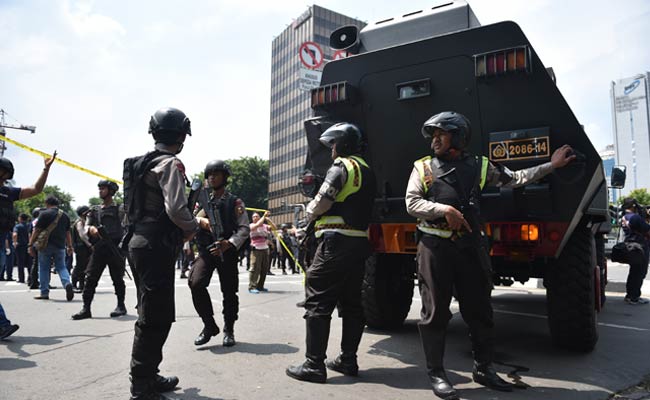
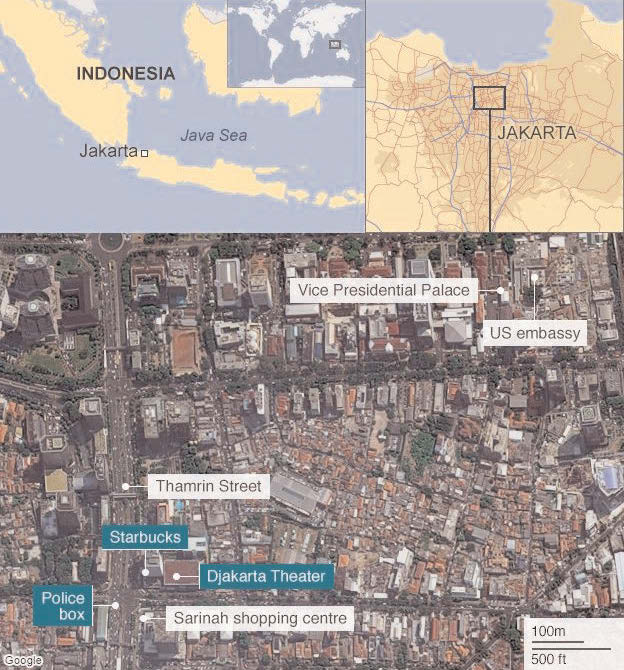
    JAKARTA (TIP): The Jakarta attacks began, January 14, at about 10:40 local time (03:40 GMT) with a series of bomb blasts at an intersection near the Sarinah shopping mall and a Starbucks coffee shop.

    Reports say that there were at least six explosions in fairly quick succession.

    The first blast took place outside the Starbucks cafe, which had its windows blown out.

    As people inside ran out, two gunmen waiting outside opened fire.

    At least two militants also attacked the police box in the centre of the intersection in a suicide bomb attack.

    Armed police quickly sealed off the area and moved in on the attackers, initially using cars and later armoured vehicles as cover.

    Gunmen in the area continued firing at bystanders and police, with sporadic gunfire reported for several hours afterwards.

    During a shootout, militants took cover in the Djakarta Theatre cinema, in the same building as Starbucks. Police said three attackers were killed in front of the cinema.

    Reports said gunfire and explosions were also heard elsewhere in Jakarta, but it is not clear where those took place.

    There have been conflicting reports – police initially warned there could be as many as 14 attackers.

    However, they later said that the situation was “under control” after five militants were killed, including a foreigner.

    Police said two attackers had died in a suicide bomb attack outside the police box, while three attackers were killed in a shootout with police at the Djakarta Theatre cinema.

    However, in its statement, IS put the number of militants at four.

    ‘We are not afraid’

    People in Jakarta have responded defiantly to the attacks in their city by posting the Indonesian phrase for “We are not afraid” on Twitter.

    The hashtag #KamiTidakTakut has emerged in the aftermath of Thursday’s attacks.

    A common meme, of a peace sign with a Jakarta landmark in its centre, was adapted from an image used on social media after the Paris attacks.

    Where the Eiffel Tower stood in the Paris version, this shows Indonesia’s National Monument.

    It stands in the centre of Jakarta as a symbol of the country’s struggle for independence. It is a famous landmark and popular meeting point in the city.

    Some Twitter users wrote alongside it: “Fear is not in our dictionary.”

    Another popular hashtagwas #JakartaBerani, which can be translated as “Jakarta is Brave”.

    The Islamic State’s influence & role in Indonesia 

    Indonesia has been expecting an attack from jihadist groups for months now.

    Just before Christmas, police arrested nine people over planned terror attacks and seized bomb-making equipment in raids across Java.

    The so-called Islamic State (IS) said it had carried out the attacks, in an online statement that could not be independently verified.

    Indonesian police said they believed Bahru Naim, an Indonesian currently thought to be in Syria had masterminded the attack and been “planning this for a while” and that they had received funding from Syria for the attacks.

    Police chief Tito Karnavian told local media Bahrun Naim wanted to be IS’s leader in the region.

    “All leaders (of IS) in Southeast Asia are competing to be the chief. That’s why Bahrun Naim plotted this attack,” he said. He also added that he believed the attacks in the city were part of a continuing rivalry between Filipino jihadist groups and Bahrun Naim over who would lead any potential IS group in the region.

    Following the Paris terror attacks in November, he published a post on his personal blog – now unavailable – praising them and noted a number of “lessons” he said could be learned, including the way the terror cells in Europe were united and how orderly their operations were.

    Meanwhile, national police spokesman Maj Gen Anton Charilyan said the militants had imitated the recent Paris attacks. However, security experts say the gunmen appeared to be inexperienced, with little training.

    The fact that the Jakarta attacks were claimed by IS but also preceded by a message from al-Qaeda specifically targeting Indonesians is some indication of the continuing interest the two groups have in the country.

  • Cost of Piracy

    Cost of Piracy

    An Indian firm will pay a fairly hefty restitution to the state of California for using pirated software. This unauthorized use, according to the state’s Attorney General, Kamala Harris, gave the company unfair advantage and also constituted theft of intellectual property. Pratibha Syntex Ltd, an apparel manufacturer, will pay $1 lakh in restitution, clean up its act, put into place proper policies to stop such practice in the future, and conduct regular audits to ensure that this is done.

    The US has again demonstrated the long reach of its law, and the figure of $22 billion is being cited as estimated loss in revenue to California manufacturers due to global companies using pirated American software. The use of pirated software is practically ubiquitous and different studies come up with varying figures, but it is generally agreed that the US is the largest paying consumer of software with a low piracy rate of 17 per cent. Emerging economies like Venezuela, Indonesia, China and India indulge in the rampant use of pirated software.

    While propriety software will always be necessary, and should always be paid for, there are now many options that allow open-source software or ‘shareware’ to be used. Some such software is of very high quality and is given free, Google’s Android systems being one example. Individuals and companies can thus, with some effort, find free or reasonable substitutes for almost all kinds of software in common use, and thereby benefit from it without infringing the law. There is also evidence of a change in attitude.

    The emerging idea of software as a service available on shared ‘cloud’ servers, rather than as a product, makes it available at a less daunting price. But that requires robust Internet services, which may not be readily accessible in many parts of the world. It is in the interest of software vendors to price their products fairly and to make them approachable in emerging markets, just as it is in the interest of users to eschew pirated software, as the latest case has demonstrated.

  • Japanese PM Shinzo Abe’s India visit begins December 11

    Japanese PM Shinzo Abe’s India visit begins December 11

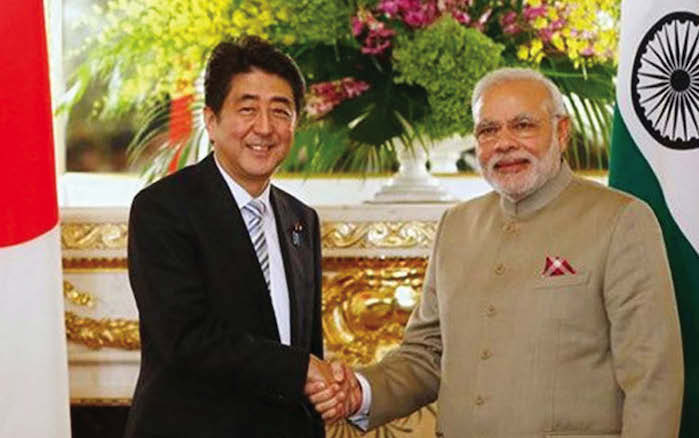
    NEW DELHI (TIP): Japanese Prime Minister Shinzo Abe arrives on a three day visit to India on December 11. He comes with the conviction that Japan and India have “a bilateral relationship with the greatest potential in the world”. Abe said, “I will turn this potential into reality. I am convinced that Prime Minister Modi and I can achieve this by working together”.

    Key priorities for the discussions between Japanese Prime Minister Abe and Indian Prime Minister Modi will be to make progress with bilateral negotiations regarding civil nuclear energy co-operation and defense ties. A deal for India’s first ‘bullet train’ based on Japanese technology and financing is all set to be concluded. Collaboration on higher education, too, is on the agenda.

    Prime Minister Narendra Modi is set to sign a deal with Japanese Prime Minister Shinzo Abe on the country’s first bullet train, with Tokyo financing the bulk of the high-speed rail project between Mumbai and Ahmedabad at a cost of $14.7 billion, one of India’s biggest foreign investments in its infrastructure sector.

    Prime Minister Narendra Modi and his Japanese counterpart Shinzo Abe will issue a joint statement on the deal on Saturday during the latter’s visit to India.

    India ranked as the second-biggest recipient of Japanese government-backed yen loans as of fiscal 2013, with a running total of 4.45 trillion yen.

    The railway loan deal could propel it ahead of the largest borrower, Indonesia, which had a 4.72 trillion yen tally.

    Once India decides to adopt Japanese train technology, it will hold a tender for contracts. A consortium including JR East, Kawasaki Heavy Industries and Hitachi is expected to bid.

    The Japan International Cooperation Agency and India’s rail ministry began a joint feasibility study on high-speed rail two years ago.

    With trains zipping along at up to 320 kph, the Mumbai-Ahmedabad railway is expected to shorten travel time between the two western Indian cities from around eight hours to roughly two.

    Construction is supposed to begin in 2017, with completion slated for 2023. India has plans for seven high-speed rail corridors, starting with this one.

  • Sindhu, Srikanth reach third round of Indonesia Masters

    Sindhu, Srikanth reach third round of Indonesia Masters

    MALANG (INDONESIA) (TIP): Top seeds P V Sindhu and K Srikanth notched up contrasting victories to advance to the third round of the $120,000 Indonesia Masters Grand Prix Gold tournament on December 4.

    Sindhu, who clinched the Macau Open Grand Prix Gold last week, brushed aside Indonesia’s Wulan Cahya Utami Sukuputri 21-12, 21-9 in a women’s singles match.

    The two-time bronze medallist at World Championships, Sindhu next takes on the winner of the match between seventh seed Jang Mi Lee and China’s He Bingjiao at the Gedung Graha Cakrawala on Friday.

    In men’s singles, World No. 9 Srikanth, who has qualified for the BWF Super Series Finals, survived a scare before prevailing over Indonesia’s Saputra Vicky Angga 21-14, 17-21, 25-23 in a match that lasted an hour and five minutes. He will next take on China’s Qiao Bin.

    Eighth seed RMV Gurusaidutt also reached the third round with a 21-19, 19-21, 21-15 win over Singapore’s Kean Yew Loh to set up a clash against Malaysia’s Iskandar Zulkarnain Zainuddin later in the day.

    However, it was end of road for third seed HS Prannoy, who had won the title last year when it was hosted by Jakabaring Sport City, Palembang. The Indian lost 12-21, 22-20, 13-21 to Shi Yuqi of China.

  • Chhota Rajan sent to Tihar jail in fake passport case

    Chhota Rajan sent to Tihar jail in fake passport case

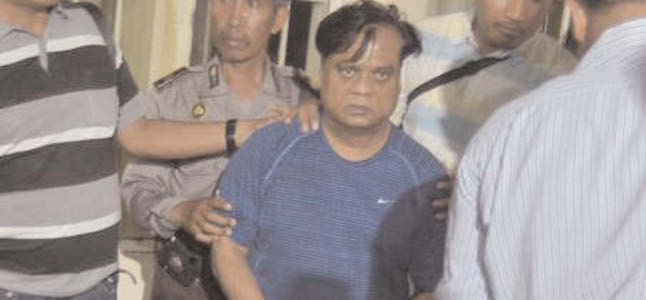
    NEW DELHI (TIP): Underworld don Chhota Rajan was on Nov 19 evening handed over to the Tihar jail authorities. Rajan will spend his first night in a high security cell inside jail number 2.

    Jail sources said that he was brought to the prison around 6 in the evening by CBI officials, who had custody of the gangster.

    The don was extradited from Indonesia earlier this month after his arrest on October 27 at the Bali airport, where he was held while travelling under a false name. Sources said the don was kept alone and would be under constant CCTV surveillance. From Friday, he will be allowed to move only in a small corridor outside his cell. Tamil Nadu state police personnel will be posted to ensure that he is not ‘attacked’.

    Sources said around 6.30pm on Wednesday, Rajan was brought to jail number 2.

    Sources said that in the coming weeks, he could be given the facility of attending court hearings through video conferencing. “He is alone in his cell because of the high-security threat to him. He will not mix with anyone. A deputy superintendent has been asked to ensure that someone is always on his watch round the clock,” said a jail officer.

    Even if Rajan is not able to get video conferencing facility, sources said that he would travel alone to the next court appearance slated for November 3.

    CBI takes over cases

    The CBI on Thursday took over 71-odd cases of Maharashtra police against Mumbai gangster Chhota Rajan, with the Department of Personnel and Training (DoPT) issuing a mandatory notification effecting the move on a request from the state government. “The CBI is in the process of taking over these cases,” said a CBI spokesperson.

    A city court on Thursday sent Rajan to the city’s high-security Tihar jail in judicial custody for two weeks in a CBI case related to alleged passport fraud.

    “Rajan was today produced before the competent court and the court sent him in 14 days’ judicial custody to the Tihar prison,” the spokesperson said. According to a CBI source, the agency will soon seek permission of the court to question Rajan in the cases, which are being re-registered.

    The HT on Wednesday had first reported that the CBI will take over Maharashtra police’s cases against Rajan this week. The DoPT notification was in response to an earlier notification of the Maharashtra government beginning the handover process. It is yet to be seen, however, if all cases against Rajan, including those that are undergoing trial like the one pertaining to murder of Mumbai’s senior crime journalist Jyotirmoy Dey in 2011, are among the cases handed over to the agency, said the source.

  • India, APEC and the US

    India, APEC and the US

    The major focus during the Asia Pacific Economic Cooperation (APEC) meeting in Manila, Philippines on November 18th and 19th would be on the Paris terror attacks though it is a trade promotion group that does not delve into security issues. The regional tensions in the South China Sea would be coming to some sort of attention indirectly despite Chinese efforts to block any discussion.  The issue of enlarging the membership and India’s pending membership application will most probably again be relegated to the background. Both China and the US will raise their pitch to sell their version of free trade blocks. China will try to sell its proposal for the Free Trade Area for Asia-Pacific (FTAAP) which excludes India and the US will do the same for the Trans-Pacific Partnership (TPP) which currently excludes China. Prime Minister Narendra Modi had raised the issue of Indian membership in the APEC with President Barack Obama in January 2015, when Obama visited India as the guest of honor for India’s Republic Day parade. President Obama expressed verbal support for India’s membership in the APEC at that time.


    The APEC was initially floated in 1989 by an Australian initiative and had 12 founding member economies: Australia, Brunei Darussalam, Canada, Indonesia, Japan, Korea, Malaysia, New Zealand, the Philippines, Singapore, Thailand and the United States. In 1991, China, Hong Kong, China and the Chinese Taipei (Taiwan) joined the APEC as a regional package. Mexico and Papua New Guinea followed in 1993. Chile was allowed to join the APEC in 1994.  Peru, Russia and Viet Nam joined the APEC in 1998, taking its full membership to 21 economies. The group acts with consensus in making decisions. APEC is more a trade promotion group and its recommendations are not binding on the member economies.


    The APEC’s mission statement reads: “Our primary goal is to support sustainable economic growth and prosperity in the Asia-Pacific region. We are united in our drive to build a dynamic and harmonious Asia-Pacific community by championing free and open trade and investment, promoting and accelerating regional economic integration, encouraging economic and technical cooperation, enhancing human security, and facilitating a favorable and sustainable business environment. Our initiatives turn policy goals into concrete results and agreements into tangible benefits.”


    The APEC put a moratorium on new memberships in 1997 for a period of 10 years though India’s membership application was pending. The moratorium was extended for another three years in 2007. However, for inexplicable reasons the APEC economies have not bothered to deal with the issue of further enlargement.  Especially India’s application for the membership has been pending with the APEC for last 20 years without approval. Every year since 2010, India has been looking expectantly for the APEC to consider India’s application for membership but nothing concrete has materialized owing to passive obstruction and stonewalling.


    Mainly, two arguments are used against India’s membership that India is not part of Asia-Pacific region and that India has proved to be an obstacle during negotiations in various international trade reforms/regimes. India had bargained tough during the Doha round and the Bali round of the WTO negotiations. Both these arguments are fallacious and self-serving. One fails to understand where countries like Thailand and Brunei have either land or sea borders with the Pacific Ocean? Or being a member of the ASEAN qualifies these two countries for the APEC membership! One also needs to ask a rhetoric question if India is an Asian country or not?  India is not located on the moon! Since the concept of Asia-Pacific has already been substituted by a larger strategic concept of the Indo-Pacific, there is no reason to continue to withhold India’s membership of the APEC on geographical grounds alone. Without India’s participation, there is no Indo-Pacific economy and hence no Asia-Pacific economy!


    India introduced market reforms initially in 1991 when China was allowed to join as a member. India has gradually introduced more market reforms & liberalization and that is the reason India applied for the membership of the APEC. It is true that Indian economy was largely socialistic prior to 1991 but so were China’s, Russia’s and Vietnam’s. Indian membership of the APEC would provide an incentive to continue further deeper economic liberalization. India has been a founding member of the WTO as well as of its previous incarnation of the GATT (General Agreement on Trade and Tariffs) since its inception. Interestingly, Russia is a part of the APEC since 1998 though it still does not qualify for the WTO membership as a market economy. China was allowed to join the WTO only in year 2000 despite being a member of the APEC since 1991. There seems to be some sort of unstated cooperation between both the US and China to continue to go slow on India’s membership of the APEC.

    A number of US based analysts have exhorted the US to champion India’s cause in the APEC for membership as a step toward eventual inclusion in the TPP.  Kevin Rudd, the former Australian PM and head of the CII-Asia Society Task Force  opined that the APEC misses much by not having India on board. Clarifying that APEC is not a free-trade body, Rudd said, “APEC is not a platform for market access negotiations, or a trade negotiating forum, but voluntary association of economies”. We, in India, can understand China’s reflexive and habitual pattern of opposition to India’s membership for any international arrangement with strategic implications because China is an adversary and a strategic threat. India does not perceive the US as an adversary in the post-cold war scenario. In fact, Pew Research on public opinion has consistently shown Indian public considering the US as one of the most  friendly nations.


    The US Deputy Assistant Secretary of State and Senior Official for the APEC Matt Matthews on November 2nd 2015 dampened cold water on India’s membership by categorically stating that it is not on the agenda of the APEC meeting in Manila in Philippines, on November 18 and 19. He further stated: “I do not believe there is any active consideration within APEC for expanded membership in the current time”. When reminded that President Obama had “supported” India’s desire for membership of the APEC during his 2015 visit to India on Republic Day, Matthews said the US had so far only welcomed “India’s interest” in joining the APEC. “It is important to be careful and accurate about describing President’s comment. President welcomed India’s interest in the APEC. That speaks for itself. We welcome India’s examination of APEC. We have not entered [into any] discussion about it. I do not believe India is formally pressing for actual membership now in APEC,” he said.


    India needs to hold the US to its words. The US must stop playing word games like China. The US expects too many unilateral concessions from India without delivering anything in return. The US, after signing the civil nuclear deal in 2005 and after ratifying the same in 2008, has not been able to shepherd India’s membership of the NSG, the MTCR, The Australia Group and the Wassenaar arrangement. The US has also made verbal promises to support India’s permanent membership of the UNSC. However, there is no concrete effort or will to make it implemented into reality despite a lot of rhetoric from the US. The proof of the US goodwill should reflect in active and actual support for India’s membership for the most benign of these international arrangements. Being an active member of the APEC will help India transform its domestic economy into full-fledged market economy. It will also prepare India for additional economic reforms so to obtain eventual membership of the RCEP or the TPP or the FTAAP.


    India and the US have had a legacy of trade disputes within the WTO. US trade representatives have invoked the Special 301 Priority Foreign Country designation for India. If the US continues to show a pattern of passive indifference and obstruction to India’s membership of the APEC while using the flowery rhetoric akin to China, India may have to utilize more aggressive marketing and trading strategies. Let it be known to everyone including the US that trade wars and denial of market access is as a detrimental as a hot war in the modern context. If you don’t support us, you are against us in our pursuit of market access. Since India and the US have now formalized an annual Strategic and Commercial dialogue, perhaps, the US performance in its active support to India’s membership of the APEC needs to be carefully monitored annually. Preferential trade access to Indian market for the US must be made contingent upon US behaviors towards India’s membership in the APEC and other free trade groups.

    To paraphrase and plagiarize Carla Anderson Hills, the former US trade representative: We (India) will be ready to open the APEC and other trade-blocks with a crowbar if necessary, but with a Namaste if possible!


    (The author is President, The Council for Strategic Affairs, New Delhi, India, an independent and privately funded Indian think-tank. He can be contacted at adityancsa@gmail.com)

  • Chhota Rajan in India After 27-Yr Hunt

    Chhota Rajan in India After 27-Yr Hunt

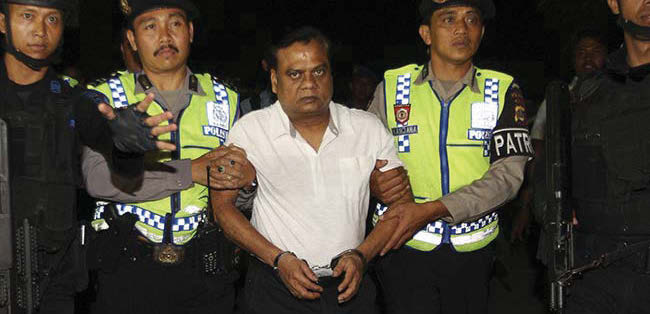
    NEW DELHI (TIP): Long-absconding underworld don Chhota Rajan was brought to Delhi early on Nov 6 morning from Indonesia by a joint team headed by CBI officials for facing trial in various criminal cases registered against him in Delhi and Mumbai.

    The 55-year-old gangster, who had been on the run for past 27 years, kissed the ground on his arrival in Delhi.

    Rajan, whose real name is Rajendra Sadashiv Nikalje, will be kept in the national capital where he will be questioned by sleuths of various investigating agencies as he has been making claims of having further evidence to nail India’s most wanted terrorist Dawood Ibrahim and his links with Pakistan’s snooping agency ISI.

    Immediately after his arrival here in an Indian Air Force Gulfstream-III aircraft from Indonesia’s Bali, Rajan, who is considered as a ‘friendly don’ as he reportedly tipped Indian security agencies about the movement of Dawood and his aides, was whisked away to an undisclosed location under tight security.

    Official cars with flashing lights accompanied by heavy-armed escort vans were seen leaving the Palam Technical Area at around 5:30am, as anxious camerapersons and photographers made unsuccessful attempts to get a glimpse of the underworld don, who was in one of those vehicles with tinted glasses.

    Rajan had told media in Bali that he was happy to return to his motherland and had rubbished reports that his arrest was orchestrated as he was facing threat from Dawood’s men.

    Ahead of his arrival in India, Maharashtra government made a surprise announcement of handing over all the cases related to the underworld don to the CBI as the agency had expertise in handling such cases. This move comes barely a few days after the state Chief Minister Devendra Fadnavis had been making claims that Rajan will be brought only to Mumbai.

    The Maharashtra government’s sudden U-turn raised many eyebrows within the police establishment in the megalopolis as the Chief Minister himself had ordered for creation of a special cell inside Aurthur Road prison with medial arrangement of dialysis being made. Rajan is on dialysis as his both kidneys are not working.

    Rajan, after his arrest, had expressed reservation over plans to lodge him in a Mumbai jail, fearing that his arch- rival and India’s most wanted terrorist Dawood Ibrahim may target him there.

    Till the formalities of CBI to take over the Maharashtra cases are completed, Rajan will be in the custody of special cell of Delhi Police which has six cases registered against him. Interestingly, CBI had told the Bombay high court, while hearing petitions filed by the family members of murdered rationalist Narendra Dabholkar, that it was severely understaffed and required officers from the Maharashtra Police to assist it in the probe.

    Rajan was arrested on the basis of an Interpol Red Corner notice at Bali airport on October 25 after he had arrived in the island city of Indonesia from Australia.

    India was keen that the deportation takes place at the earliest and had put in a request to Indonesian authorities immediately after his arrest, sources said.

    However, his deportation was deferred by a day as the international airport in Bali was shut down due to spewing of volcanic ash from a nearby mountain.

    Immediately after his flight took off, Indian ambassador to Indonesia Gurjit Singh tweeted: “#ChotaRajan deported successfully to India. Delay due to Bali airport closure ends. Thanks Indonesia for support.”

    Rajan is wanted in over 75 crimes ranging from murder, extortion to smuggling and drug trafficking.

    Mumbai Police has nearly 70 cases registered against Rajan, including 20 of murder, four cases under the Terrorist and Disruptive Activities (Prevention) Act, one under Prevention of Terrorism Act and over 20 cases under the stringent Maharashtra Control of Organised Crime Act.

    Delhi Police has six cases registered against Rajan, who was a close aide of fugitive underworld don Dawood at one point but split before the 1993 Mumbai blasts were conspired. In 2000, there was an attempt on Rajan’s life when Dawood’s men tracked him down to a hotel in Bangkok but he managed a dramatic escape by jumping from the first floor of the hotel.

    Rajan had fled India in 1988 for Dubai. NSG and special cell along with the para military. The details were finalized in a closed-door meeting on Tuesday.

    Rajendra Sadashiv Nikalje, known as Chotta Rajan, has been on Interpol’s most-wanted list for over two decades. Rajan, who has come back to India after 27 years, is wanted in over 75 crimes ranging from murder, extortion to smuggling and drug trafficking.

  • Annexures to NN Vohra committee report on politician-criminal nexus Missing?

    Annexures to NN Vohra committee report on politician-criminal nexus Missing?

    With the arrest of underworld don Chhota Rajan in Bali (Indonesia), a report from Vohra Committee which had the names of politician-underworld nexus has regained focus.

    The alleged annexure contains details of the nexus between politicians, bureaucrats and criminals, the Congress has said there is no harm in making these files public.

    The Government set up the N. N. Vohra Committee in July 1993 following the Mumbai bomb blasts in March of that year, to take stock of all available information about the activities of the crime syndicates/mafia organisations which had developed links with, and were being protected by Government functionaries and political personalities. The Vohra committee submitted its report in 1993 in the wake of the Bombay blasts taking off all the available information about “the activities of crime syndicates/mafia organizations which had developed links with and were being protected by government functionaries and political personalities.”

    But the then Congress-led Central government obtained a stay-order from the Supreme Court in the year 1996 against making annexure to NN Vohra committee report public. The Supreme Court had ruled that it would be “severely and detrimentally injurious” to public interest if annexures to the N N Vohra Committee report, containing details of the alleged nexus between politicians, bureaucrats and criminals, were disclosed.

    In 2012, RTI activist Subhash Chandra Agrawal filed a RTI application demanding the full report of the Vohra committee. In an order passed by the then information commissioner Sushma Singh on May 10 2012, she directed the home ministry to provide the annexures to RTI activist Subhash Chandra Agrawal within two weeks.

    On June 27, 2012 MHA under Congress Government denied any such annexure being on record.

    Now, the main question is if there was no such annexure/s, then how and why the then Central government obtained stay-order against making the said documents public?

    Congress now has switched its stand and Congress leader Digvijaya Singh told Times Now, “There is no harm in releasing this report,” while former home minister RPN Singh said “I don’t know about the report but If there is anything to suggest a link between politicians and criminals then action should be taken if any politician or bureaucrat is hand in glove with any terrorist organisation then action must be taken.”

    Meanwhile BJP leader Siddharth Nath Singh said the government will look into the matter and give a structured response. “The Government is sensitive about these matters and there is zero tolerance towards tolerance,” Singh told TIMES NOW.


  • Chhota Rajan arrested in Indonesia, likely to be deported to India

    Chhota Rajan arrested in Indonesia, likely to be deported to India

    n-CHHOTA-RAJAN-large570-2Indonesian police officials said that they have arrested a wanted criminal from India in Bali who had been on the run for two decades, with Interpol flagging him as a wanted man back in 1995.

    Acting on a tip-off from Australian police, Indonesian authorities detained Rajendra Sadashiv Nikalje, alias ‘Chhota Rajan’ yesterday as he arrived in the popular resort island of Bali from Sydney, Bali police spokesman Heri Wiyanto told AFP.

    n-CHHOTA-RAJAN-large570“We received information from police in Canberra yesterday (Sunday) about the red notice for a murderer,” he told AFP.

    “We arrested the man at the airport yesterday. What we know is that this man was suspected to have carried out 15 to 20 murders in India.”

    “Bali Police arrested Chhota Rajan yesterday at CBI’s request made through Interpol,” CBI Director Anil Sinha said as he confirmed the arrest.

    Bali police were coordinating with Interpol and Indian authorities, Wiyanto said, adding it was likely Nikalje would be deported to India.

    A spokesperson for Australian Federal Police said Interpol in Canberra had alerted Indonesian authorities “who apprehended Nikalje at the request of Indian authorities”.

    The federal police confirmed last month that Nikalje was living in Australia under another identity and had been in discussions with Indian authorities, the spokesperson said, but would not provide further details.

  • ECUADOR GROUNDS MADE-IN-INDIA DHRUV CHOPPER, TERMINATES CONTRACT

    NEW DELHI (TIP): Ecuador has unilaterally terminated a contract with Hindustan Aeronautics Limited (HAL) after four of the seven Dhruv advanced light helicopters bought from the state-run Indian firm were involved in crashes.

    Defense minister Fernando Cordero announced the action during a news conference on Wednesday. He said two of the crashes were caused by mechanical failures. The three remaining Dhruv helicopters have been grounded.

    The development is a major setback for HAL, which has sought to market the Dhruv as a low-cost alternative to military and utility helicopters from Western nations. Work on the Dhruv began in 1984 and it first flew in 2002 after a troubled development programme.

    Four of the seven Dhruv helicopters delivered to Ecuador between 2009 and 2012 have crashed. One was assigned to transport President Rafael Correa, though he was not in the aircraft at the time.

    Ecuador earlier complained that HAL had failed to ship some parts for the helicopters, which were bought for a total of $45.2 million.

    HAL, which completed deliveries of the helicopters in 2012, has contested Ecuadorian claims that it failed to ship spares on schedule. A HAL spokesperson told leading defence publication Jane’s that maintaining the aircraft was “exclusively” the responsibility of the Ecuadorian Air Force as the 24-month warranty period for HAL to provide after-sales service support for the seven helicopters had long expired.

    Besides Ecuador, the Dhruv is also operated by the security forces of Nepal, Mauritius and the Maldives. The Dhruv has also been offered to Malaysia and Indonesia.

    More than 200 Dhruv helicopters are in service with the Indian military. They have been used extensively in relief operations after natural disasters such as the flash floods in Uttarakhand in 2013.

  • Magnitude 6.6 earthquake hits eastern Indonesia; 39 injured

    MANOKWARI (TIP): A 6.6-magnitude quake hit in waters off Indonesia’s easternmost province early Sept 24, injuring dozens of people, damaging buildings and sending panicked residents fleeing from homes, hotels and even a hospital.

    The quake, which struck at 00:53 am Friday (1553 GMT Thursday), was centered 28 kilometers (17 miles) north of Sorong, a town in Indonesia’s West Papua province, the US Geological Survey said on its Web site. It occurred at a depth of 24 kilometers (15 miles).

    Hundreds of people fled their homes in panic in Sorong and at least 39 people were hurt, mostly with broken bones, said Petrus Korisano from the local disaster mitigation agency in Sorong. Nearly 260 houses and buildings were damaged.

    Hundreds of people were evacuated to temporary shelters as authorities surveyed the damage, Korisano told The Associated Press.

    The panic extended to Manokwari city, 315 kilometers (195 miles) to the west of the epicenter, where hundreds of patients from at least one hospital had to be evacuated, some in wheelchairs or with IVs attached to their arms, said Burhanudin, an official at the disaster mitigation agency in the city, who like many Indonesians uses only one name. Hotels emptied and residents ran into the streets and higher ground in the Raja Ampat popular tourist destination.

    An official from Indonesia’s Meteorology and Geophysics Agency, Budi Waluyo, said the underwater quake had no potential to generate tsunami waves along nearby coasts.

    The world’s largest archipelago, Indonesia is prone to earthquakes due to its location on the Pacific “Ring of Fire,” an arc of volcanoes and fault lines in the Pacific Basin.

    In 2004, a monster temblor off the shores of Aceh in Indonesia triggered a tsunami that killed 230,000 people in a dozen countries. Most of the deaths were in Aceh.

  • Indonesian city may ban teen dating after dark

    WEST JAVA (TIP): Dating just got harder for Indonesian teenagers in West Java, with a local leader on September 3 threatening to ban late-night trysts and marry off young couples caught out after dark. If a new regulation goes ahead as planned on October 1, teenagers in Purwakarta, a local district about 100 kilometres from the Indonesian capital Jakarta, will be banned from visiting each other after 9pm.

    To enforce the regulation Dedi Mulyadi, the head of Purwakarta district, said local patrols and new CCTV cameras would keep a watchful eye out for canoodling teenagers breaking the rules. “Those who violate the rules will be summoned by the village cultural council for counselling,” he told media. “If they break the rules three times, the village council may ask for the parents to marry them.” It’s not clear how the measure will be enforced —Indonesians under 16 cannot legally marry — but underage ceremonies do still occur. Mulyadi claimed the regulation — which will only apply to youths under 17 —would help return his hometown to its rural roots.

    This new provision would ensure teenagers were home in bed early and living a more traditional life, he added.

    “I come from a village and back in the day, you could not visit a neighbour after 9pm because villagers would be in bed, preparing to wake up at dawn to till their paddy fields,” he said. Mulyadi said this new provision would also help enforce another of his schemes: banning underage, unlicensed drivers from zipping around on motorcycles.

  • Volcanic ash shuts four Indonesian airports

    JAKARTA (TIP): Four airports in Indonesia were shut on July 10 due to an ash cloud from a volcanic eruption in East Java.

    According to the country’s flag carrier Garuda Indonesia, Bali’s Denpasar International Airport and three others in Lombok, Jember and Banyuwangi were closed down.

    “Due to Mt Raung eruption, airport closure is only applied for Bali, Lombok, Banyuwangi, and Jember. While others are still operating normally,” the airlines tweeted.

    Mount Raung is one the most active volcanoes in Indonesia’s Java island. It erupted on July 2 forcing the cancellation of a number of flights to Australia.

    “All fights flying to and from Bali, Lombok, Jember and Banyuwangi are cancelled today until 10pm or further notice,” Garuda Indonesia tweeted.

  • Business leaders urge G20 to push digital economy, e-commerce

    ISTANBUL (TIP): An influential group of business leaders have urged the G20 to improve the global trade system for the emerging digital economy as well as focus on reforms to ensure strong and sustainable growth.

    The group known as B20, met in Turkey on the sidelines of the G20 sherpas meeting and discussed the recommendations which would be finalised for the G20 leaders meeting in November. It called for eliminating data flow restrictions and softening regulations on data privacy to decrease the cost of doing business. It said customs regimes must be harmonized to ensure that bottlenecks to e-commerce are minimized and transactions are made more predictable.The G20 comprises the largest and emerging economies, which account for 85% of global GDP and 75% of world trade. It comprises the US, the UK, the European Union, India, Argentina, Australia, Brazil, Canada, China, France, Germany, Indonesia, Italy, Japan, South Korea, Mexico, Russia, Saudi Arabia, South Africa and Turkey.

    “Harmonize customer protection rules, specifically on core issues relating to purchase processes, to better facilitate e-commerce efforts and eliminate costs and administrative difficulties,” it said in its draft recommendations.

    According to estimates, the digital economy is expected to contribute $4.2 trillion or more than 5% of GDP for the G20 countries in 2016 and is growing at 10% annually. Cross border e-commerce accounts for 10-15% of total e-commerce volumes, depending on the region. By 2025, annual global cross-border e-commerce revenues could swell to between $250 billion and $350 billion-up from about $80 billion now, according to Mckinsey Global Institute and BCG analysis. The B20 has six task forces on infrastructure and investment, trade, financing and growth, anti-corruption, employment and small and medium enterprises and entrepreneurship. Each of the task forces made specific recommendations to improve business prospects within the G20, which would help lift GDP growth.

    It called for reaffirming the commitment to rollback of existing protectionist measures, particularly non-tariff barriers and said the G20 must start taking distinct actions by eliminating localization barriers to trade as a first step. Numerous reports show that G20 governments are not adhering to their standstill and roll back commitments with regards to regular tariff barriers, the B20 said.

    “Non-tariff barriers can have a much greater negative impact on GDP growth than tariffs. The benefits of reversing all barriers introduced between 2008 and 2013 is at least $460 billion increase in global exports, a $423 billion increase in global GDP and 9 million jobs supported worldwide,” it said. The B20 strongly backed the creation of an enabling environment for increased flow of private funds into more sustainable infrastructure. It said there is a need to increase the number of projects developed through public-private partnerships (PPPs) and build capabilities of governments to deliver PPPs.

  • 3,000 evacuated as Indonesia upgrades alert over volcano

    JAKARTA (TIP): Nearly 3,000 people have been evacuated from their homes after Indonesia upgraded the threat posed by a volcano on Sumatra to the highest possible level, an official said June 5.

    Authorities raised the alert status of Mount Sinabung -a highly active volcano on Indonesia’s westernmost island -late Tuesday after a “sharp rise” in activity, said national disaster management agency spokesman Sutopo Purwo Nugroho.

    The amount of hot ash, smoke and rock spewing from the volcano has ramped up significantly since Sunday, with lava visible at the crater, the Mount Sinabung Observation Station chief Armen Putra said.

    Military based in the area told AFP that soldiers and police Wednesday evacuated 2,730 residents from four villages within a danger zone around the south and southeast of the volcano. “Volcanic activity is still high today, triggering tremors,” said district military commander Lieutenant Colonel Asep Sukarna. “On June 4 we worried that the volcano would send hot ash clouds down over the villages, so we moved 2,730 people to a safer place.”

    People were aware of the danger and left in an orderly fashion, he said, adding that there were no further orders at this stage to evacuate other villages.

    Those displaced are now in temporary shelter 13 km (8.1 miles) from the volcano. Nearly 10,000 people have now had to evacuate their homes since Sinabung burst back into life in 2013 after a period of inactivity. While some were able to return once volcanic activity died down, others have been forced to remain in shelters.

    A massive eruption in February 2014 killed at least 16 people and sent thousands more fleeing for safety.

    Sinabung is one of 129 active volcanoes in Indonesia, which sits on the Pacific Ring of Fire, a belt of seismic activity running around the basin of the Pacific Ocean.

    The country’s most active volcano, Mount Merapi in central Java, killed more than 350 people in a series of eruptions in 2010.

  • Salman’s verdict features in Chinese media

    BEIJING (TIP): The court verdict sending movie actor Salman Khan to jail was featured in the news bulletin of China Central Television, the state broadcaster, this evening. The news was also circulated by the official Xinhua to hundreds of media outlets that subscribe to it. This is significant because news from the Bollywood is seldom covered in the Chinese media although Hindi movies viewed across the country. They are mostly dubbed in Chinese or carry Chinese subtitles. Khan is particularly popular among the people of Xinjiang province, which borders Central Asia and Pakistan, sources said. He is also popular in Central Asia, and parts of South East Asia including Malaysia and Indonesia. In its New Delhi datelined story, Xinhua said Bollywood actors have come forward to express their sympathy towards Khan, who has been found guilty in a 13-year old hit and run case.

  • Chinese president to visit Pakistan, hammer out $46-billion deal

    Chinese president to visit Pakistan, hammer out $46-billion deal

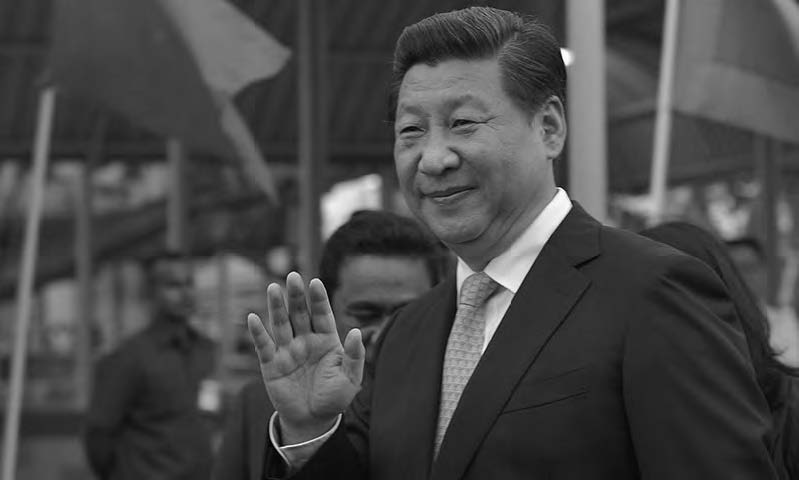
    ISLAMABAD (TIP): Chinese President Xi Jinping will launch energy and infrastructure projects worth $46 billion on a visit to Pakistan next week as China cements links with its old ally and generates opportunities for firms hit by slack growth at home.

    Also being finalized is a long-discussed plan to sell Pakistan eight Chinese submarines. The deal, worth between $4 billion and $5 billion, according to media reports, may be among those signed on the trip.

    Xi will visit next Monday and Tuesday, Pakistan’s foreign ministry said.

    Commercial and defence ties are drawing together the two countries, which share a remote border and long-standing mistrust of their increasingly powerful neighbour, India, and many Western nations.

    “China treats us as a friend, an ally, a partner and above all an equal — not how the Americans and others do,” said Mushahid Hussain Sayed, chairman of the Pakistan parliament’s defence committee.

    Pakistan and China often boast of being “iron brothers” and two-way trade grew to $10 billion last year from $4 billion in 2007, Pakistani data shows.

    Xi’s trip is expected to focus on a Pakistan-China Economic Corridor, a planned $46 billion network of roads, railways and energy projects linking Pakistan’s deepwater Gwadar port on the Arabian Sea with China’s far-western Xinjiang region.

    It would shorten the route for China’s energy imports, bypassing the Straits of Malacca between Malaysia and Indonesia, a bottleneck at risk of blockade in wartime.

    If the submarine deal is signed, China may also offer Pakistan concessions on building a refuelling and mechanical station in Gwadar, a defence analyst said.

    China’s own submarines could use the station to extend their range in the Indian Ocean.

    “China is thinking in terms of a maritime silk road now, something to connect the Indian Ocean and Pacific Ocean,” said a Pakistani defence official, who declined to be identified.

    For Pakistan, the corridor is a cheap way to develop its violence-plagued and poverty-stricken Baluchistan province, home to Gwadar.

    China has promised to invest about$34 billion in energy projects and nearly$12 billion in infrastructure.

    Xi is also likely to raise fears that Muslim separatists from Xinjiang are linking up with Pakistani militants, and he could also push for closer efforts for a more stable Afghanistan.

    “One of China’s top priorities on this trip will be to discuss Xinjiang,” said a Western diplomat in Beijing. “China is very worried about the security situation there.”

  • Rally in demand of Hindu Holidays on Friday 10 April

    In demand for Hindu Holidays in NYC schools, multiple Hindu groups in NYC will hold a ‘Grand Rally’ in front of City Hall on Friday, 10th April 2015 at 12 noon. The organizers are mostly Bangladeshi groups and had requested all other groups from any country to join.

    Organizers are expecting a huge crowd from at least 2 dozens organizations and requested everybody to join with their banner. The organizers planned to handover a memorandum to the Mayor on the same day.  

    Organizer Sitangshu Guha informed that they had sent memorandams to almost all city council members which stated that, NYC is home to about 1 million Hindus who are the immigrants  from India, Bangladesh, NepalSri LankaBhutan, Indonesia, Thailand, Malaysia, Afghanistan, the Caribbean (TrinidadGuyanaSuriname), Fiji, South Africa and African continent,  and other countries; and their descendants, followed by the thousands of American adherents of the ISKCON movement (the Hare Krishna group). It added, Hindu holidays are traditionally marked by various cultural festivities and spiritual retreats that promote and celebrate human excellence. Moreover, Hinduism propagates self-awareness and fosters tolerance, healing, and peaceful coexistence. The memorandum also pointed out that, when the city schools are closed on holidays of other faiths, not doing so on the Hindu holidays is akin to discrimination. 

    For more info: Sitangshu Guha  guhasb@gmail.com; & 646-696-5569; Shyamal Chakraborty 917-415-9261; Sushil Saha 646-454-1882; Suvo Roy 646-463-9282 & Pradip das 718-674-4545. Pradip Malaker 646-479-5275

  • By 2050, Hindus will become the world’s third largest population: Study

    By 2050, Hindus will become the world’s third largest population: Study

    WASHINGTON (TIP): Hindus will become the world’s third largest population by 2050, while India will overtake Indonesia as the country with the largest Muslim population according to a new study. According to the Pew Research Center’s religious profile predictions assessed data released on Thursday, the Hindu population is projected to rise by 34 per cent worldwide, from a little over 1 billion to nearly 1.4 billion by 2050.

    By 2050, Hindus will be third, making up 14.9 per cent of the world’s total population, followed by people who do not affiliate with any religion, accounting for 13.2 per cent, the report said.

    The people with no religious affiliation currently have the third largest share of the world’s total population.

    Muslims are projected to grow faster than the world’s overall population and that Hindus and Christians are projected to roughly keep pace with worldwide population growth, the report said.

    “India will retain a Hindu majority but also will have the largest Muslim population of any country in the world, surpassing Indonesia,” it said.

    “Over the next four decades, Christians will remain the largest religious group, but Islam will grow faster than any other major religion,” according to the report.

    The report predicted that by 2050 there will be near parity between Muslims (2.8 billion, or 30 per cent of the population) and Christians (2.9 billion, or 31 per cent), possibly for the first time in history.

    There were 1.6 billion Muslims in 2010, compared to 2.17 billion Christians.

    “The number of Muslims will nearly equal the number of Christians around the world,” it added.

    If the trend continues, Islam will be the most popular faith in the world after 2070, it said.

    By 2050, Muslims will make up about 10 per cent of the Europe’s population, up from 5.9 per cent in 2010.

    Over the same period, the number of Hindus in Europe is expected to roughly double, from a little under 1.4 million (0.2 per cent of Europe’s population) to nearly 2.7 million (0.4 per cent), mainly as a result of immigration, it said.

    In North America, the Hindu share of the population is expected to nearly double in the decades ahead, from 0.7 per cent in 2010 to 1.3 per cent in 2050, when migration is included in the projection models. Without migration, the Hindu share of the region’s population would remain the same.

    Buddhism is the only faith that is not expected to increase its followers, due to an ageing population and stable fertility rates in Buddhist countries, such as China, Japan and Thailand.

    The projections considered fertility rates, trends in youth population growth and religious conversion statistics.

  • CHINA NOW WORLD’S THIRD-BIGGEST ARMS EXPORTER: SIPRI

    CHINA NOW WORLD’S THIRD-BIGGEST ARMS EXPORTER: SIPRI

    BEIJING (TIP): China has overtaken Germany to become the world’s third-biggest arms exporter, although its 5 per cent of the market remains small compared to the combined 58 per cent of exports from the US and Russia, a new study says.

    China’s share of the global arms market rose 143 per cent during the years from 2010- 2014, a period during which the total volume of global arms transfers rose by 16 per cent over the previous five years, the Stockholm International Peace Research Institute said in a report released Monday.

    Its share of the world market was up from 3 per cent in the 2009-2014 period, when China was ranked ninth among exporters of warplanes, ships, side arms and other weaponry, said the institute, known as SIPRI.

    The data show the growing strength of China’s domestic arms industry, now producing fourth-generation fighter jets, navy frigates and a wide-range of relatively cheap, simple and reliable smaller weapons used in conflicts around the globe.

    China had long been a major importer of weapons, mainly from Russia and Ukraine, but its soaring economy and the copying of foreign technology has largely reversed the trend, except for the most cutting-edge designs and sophisticated parts such as aircraft engines.

    China supplies weapons to 35 countries, led by Pakistan, Bangladesh and Myanmar, SIPRI said.

    Chinese sales included those of armored vehicles and transport and trainer aircraft to Venezuela, three frigates to Algeria, anti-ship missiles to Indonesia and unmanned combat aerial vehicles, or drones, to Nigeria, which is battling the Boko Haram insurgency in its north.

    China’s comparative advantages include its low prices, easy financing and friendliness toward authoritarian governments, said Philip Saunders, director of the Center for the Study of Chinese Military Affairs at the US National Defense University.

    “Generally speaking, China offers medium quality weapons systems at affordable prices, a combination attractive to cash-strapped militaries in South Asia, Africa and Latin America,” Saunders said.

    Notable successes include a co-production deal with Pakistan to produce the JF-17 fighter, widespread sales of the basic but effective C- 802 anti-ship cruise missile, and an agreement to sell the HQ-9 air defense missile system to Turkey that has run into controversy over its incompatibility with NATO weapons systems.

    China also has exploited niche markets such as North Korea and Iran that the West won’t sell to, emphasizing its attractiveness to impoverished countries and pariah states, said Ian Easton, research fellow at The Project 2049 Institute, an Arlington, Virginia-based Asian security think tank.

    Both those US foes appear to have received satellite jamming and cyber warfare capabilities from China, along with technologies to break into private communications and spy on government opponents, Easton said.

    “All of these sales should be very disconcerting to American policymakers and military leaders,” he said, calling China’s rise to the third-place spot among exporters a “disturbing development” that could threaten the security of the US and its allies.

    China also offers leading-edge drone technology at competitive prices. One model, known variously as the Yilong, Wing Loong or Pterodactyl, has become especially popular with foreign buyers, although Chinese secrecy surrounding such sales makes it difficult to know how many are in service and where.

    Chinese state broadcaster CCTV quoted retired People’s Liberation Army Gen. Xu Guangyu saying at an air show two years ago that the unmanned aircraft, which can be armed with two guided missiles, would cost only about $1 million each. That is about 10 to 20 per cent of the price of a comparable US model such as the MQ-1 Predator. Rumored buyers include the United Arab Emirates, Uzbekistan and Saudi Arabia.

    However, China’s incremental growth and the yawning gap with industry leaders America and Russia show the limitations of its aspirations.

    The US retained a 31 per cent share of the global arms market, exporting to at least 94 recipients, SIPRI said. Countries in Asia and Oceania took 48 per cent of US exports, followed by the Middle East with 32 per cent and Europe at 11 per cent, it said.

    Russia was second with a 27 per cent global share, 39 per cent of which went to India — the world’s largest arms importer overall. China took 11 per cent of Russia’s exports, followed by Algeria.

    SIPRI uses a five-year moving average to account for fluctuations in the volume of arms deliveries from year-to-year and doesn’t provide monetary values, which are often distorted by governments providing weapons as gifts or at below-market prices.

  • Asian American Coalition of Chicago honors Dr. Amarjit Singh

    Asian American Coalition of Chicago honors Dr. Amarjit Singh

    The Asian American Coalition of Chicago honored Indian Americans Dr. Amarjit Singh, and Anukool Vasudevan, at their 32nd Conference on Business And Networking and Annual Lunar New Year Celebration on Saturday, February 28, 2015, at the Hyatt Regency O’Hare Hotel in Rosemont Illinois. This year’s gala event themed “Unity in Diversity” was hosted by the Indonesian American community of Chicago, with Martino Tangkar serving as the event chairperson. More than 1300 attended the black-tie event.

    Amarjit Singh M.D, past president of Indian American medical Association of Illinois and also Past Chairman of Punjabi Cultural Society of Chicago, with a stellar record of community service won the Indian American Exemplary Community Service Award.

    Mr. Anukool Vasudevan a senior at Loyola University won the Indian American Youth Who Excel Award.

    The awards were distributed by the Ambassador of Republic of Indonesia to U.S.A. Honorable Budi Bowoleksono assisted by Martino Tangkar and George Mui.

    Mrs. Aurora Abella Austriaco a distinguished attorney, the first ever Asian American president of Chicago Bar Association, was honored with the Pan Asian American Award. Lisa Madigan, Attorney General State of Illinois received the Coalition’s GRAND ASIAN AWARD. This award is periodically presented to someone of non-Asian descent, who has made significant contributions to the Asian Pacific American community.

    U.S. Congresswoman IL-8 Tammy Duckworth was the keynote speaker. More than 1300 people attended this extravaganza evening dinner banquet. More than 500 attended the day time events health fair, business seminars and networking opportunities.

    The dignitaries who spoke included Jesse White Secretary of State of Illinois, Illinois Attorney General Lisa Madigan, State Treasurer Michael Frerichs, State Comptroller Leslie Munger, US Congressman Robert Dold, Cook County Board President Toni Preckwinkle, and Cook County State’s Attorney Anita Alvarez. Many other government officers, media outlets, local dignitaries, business and community leaders, and the counsel generals of many Asian countries were in the audience. Mr. O.P. Meena consul H.O.C. represented the India’s Consulate General in Chicago.

    The evening program was presented by Asian American celebrities, Joanie Lum, Billy Dec, Eric S. Horng, Judy Hsu, Nesita Kwan, Nancy Loo, Mai Martinez, Susanna Song, and Katie Kim. Linda Yu .

    During the pre-event cocktail hour reception a Fashion Show was presented by Akira and Lady Quaint.

    The entertainment program featured colorful costumes, Javanese and Balinese gamelan music performances, Holy Balinese “Barong” Lion Dance, Indonesian Cultural dance “Reog Ponorogo Singo Lodoyo” by a group of 40 Indonesian dancers from Wasington DC, performances from the 25 member Indonesian Consulate General in Chicago Dance Troupe; “Puspanjali” by the Indonesian Performing Arts of Chicago; and members of the Indonesian Dance of Illinois. “Journey to Harmony,” a Unity Dance choreographed by Liah Tehan, brought another interpretation of this year’s theme, and musical performance “Together, The World Can Count On Us,” by Keith, Betty & Kelly Uchima.

    The evening show was produced and directed by Irene Cualoping.

    “The purpose of this celebration is to showcase the culture, and contributions, of Asian Americans of Chicago on its road to empowerment,” said Rajinder Singh Mago Executive Secretary of Asian American Coalition of Chicago.

    An event held on this grand of a scale only once a year, Lunar New Year is traditionally the single largest organized annual event in Chicago’s Asian American community which takes turns to host the event.

    There were exhibition booths for businesses and community organizations in the foyer area during the whole day. The next year’s hosts are Chinese American community chaired by Dr. Karen Eng.

  • HONDA CEO TO STEP DOWN AMID AIR BAG CRISIS

    HONDA CEO TO STEP DOWN AMID AIR BAG CRISIS

    TOKYO (TIP): Honda Motor Co hurt by falling sales and embroiled in a crisis over defective air bags is replacing its CEO.

    The Japanese automaker said on Tuesday that Takanobu Ito, its president and chief executive officer since 2009, will step aside in June and be succeeded by longtime executive Takahiro Hachigo.

    The unexpected decision follows the recalls of more 6.2 million Honda vehicles in the US and millions of others elsewhere equipped with air bags made by Japan’s Takata Corp.

    The air bags have inflators that can explode, expelling shards of metal and plastic. At least six deaths and 64 injuries have been linked to the problem worldwide.

    At a press conference the 61-year-old Ito said it was his own decision to step down. He has been at Honda since 1978, when he joined the company as a chassis engineer.

    “I believe Honda needs to become one strong team in order to overcome challenges and the team requires a new, youthful leadership,” Ito said, according to a transcript provided by Honda. Hachigo is 55.

    Other automakers use the Takata air bags, but Honda has the most exposure and is spending heavily on the recalls. The company has lowered its full-year profit forecast to $4.6 billion from $4.8 billion.

    Honda is also facing civil penalties and lawsuits over the issue. In January, the US fined the company $70 million, which was the largest civil penalty levied against an automaker, for not reporting to regulators some 1,729 complaints that its vehicles caused deaths and injuries and for not reporting warranty claims.

    Amid the crisis, Honda lowered its global vehicle sales forecast for the full year to 4.45 million vehicles from 4.6 million. Its US sales grew just one per cent last year as plummeting gas prices hurt demand for its lineup of small cars such as the Civic.

    Earlier this month, Ito scrapped Honda’s goal of selling 6 million vehicles per year by 2017, saying the company needed to focus on quality instead of on sales targets.

    Stephanie Brinley, a senior analyst with IHS Automotive, said Ito’s six-year tenure as Honda’s chief is in line with Honda’s past three CEOs.

    Ito’s tenure was largely a successful one, Brinley said. Between 2009 and 2014, Honda’s global sales grew 28.5 per cent. He encouraged a focus on sportier cars, like the upcoming Acura NSX, and returned Honda to Formula 1 racing. He also expanded Honda’s global manufacturing footprint with new plants in Mexico, Brazil, Thailand, Indonesia, India and China.