Tag: INDONESIA

  • ISIS EXPANDING ‘INTERNATIONAL FOOTPRINT’

    ISIS EXPANDING ‘INTERNATIONAL FOOTPRINT’

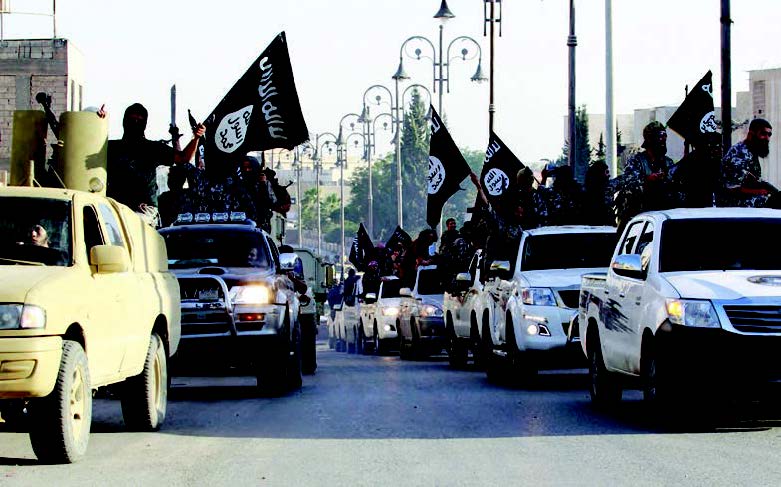
    The Islamic State, despite being driven by Kurdish fighters from its one-time Syrian stronghold in Kobani last week, nevertheless is extending its reach well beyond Iraq and Syria, military officials and analysts warn — represented, by some estimates, in nearly a dozen countries.

     ISIS History

    The Islamic State, despite being driven by Kurdish fighters from its one-time Syrian stronghold in Kobani last week, nevertheless is extending its reach well beyond Iraq and Syria, military officials and analysts warn — represented, by some estimates, in nearly a dozen countries.


    Lt. Gen. Vincent Stewart, director of the US Defense Intelligence Agency, delivered a grim assessment earlier this week in testimony to the House Armed Services Committee, as he described how the group was surfacing in North Africa.


    “With affiliates in Algeria, Egypt, Libya, the group is beginning to assemble a growing international footprint that includes ungoverned and under governed areas,” Stewart said.


    ISIS continues to hold a wide swath of territory, bigger than the state of Pennsylvania, in its home base spanning parts of Iraq and Syria, propped up by more than 20,000 foreign fighters from at least three dozen countries. But the terror network’s tentacles, as Stewart indicated, are creeping into other nations; largely those with fragile governments.


    “ISIS, like Al Qaeda, has thrived in the failed states where there is a vacuum of power,” said James Phillips, Middle East senior research fellow with the Heritage Foundation.


    A key worry is the group’s potential ambitions in Afghanistan, where the U.S. combat mission just ended and Afghan security forces are in control.


    Defense secretary nominee Ashton Carter, who had his confirmation hearing Wednesday, told Congress he is aware of reports that ISIS may try to expand into Afghanistan, and vowed to work with coalition partners to stop the group. He said he would consider changing plans for withdrawing the remaining 10,600 U.S. troops from Afghanistan by the end of 2016 if security conditions further deteriorate.


    The Islamic State’s ambitions do not stop at Afghanistan, the so-called Graveyard of Empires. Militant groups in Pakistan, the Philippines, Israel and the Gaza Strip, Lebanon, Indonesia and Jordan, among other areas, reportedly have pledged formal support for ISIS. New York Magazine, in a recent report, wrote, “Think of them as ISIS’s self-appointed foreign bases.”


    It’s impossible to know precisely how many members are involved in these groups, but analysts say the biggest groups generally are still affiliated with Al Qaeda, while others are starting to stand with ISIS – and execute attacks.


    An ISIS-tied group in Egypt, for instance, claimed responsibility for a series of coordinated attacks on Jan. 30 that killed at least two dozen security officers in restive Sinai.


    The Caliphate Soldiers Group in Algeria, which pledged loyalty to ISIS in September, kidnapped and beheaded a French tourist the same month. Terrorists posted a video of the beheading, saying it was in response to French airstrikes in Iraq. Algerian Special Forces killed the terror leader late last year, which analysts say dealt a morale blow to the small group.


    In Libya, the Islamic State’s Tripoli Province took credit for a hotel attack on Feb. 1 which killed nine people, including an American.


    Published reports tie other groups to ISIS including The Jundallah militant group and the Tehreek-e-Khilafat groups in Pakistan; the Philippines’ Abu Sayyaf group; Sinai Province in Egypt; Lebanon’s The Free Sunnis of Baalbek Brigade; Indonesia’s Jama’ah Ansharut Tauhid; and Sons of the Call for Tawhid and Jihad in Jordan.


    The Heritage Foundation’s Phillips said it’s not just groups like these that have declared loyalty. “There are an unknown number of self-radicalized militants in many different countries that may self-identify with ISIS and carry out ‘lone wolf ’ terrorist attacks in its name, without necessarily being members of the group,” he said. He cited the hostage crisis in Sydney, Australia, last December as an example.


    ISIS continues to get pounded by coalition airstrikes in Iraq and Syria, where Kurdish forces recently took back the vital city of Kobani. Those strikes are likely to increase following the brutal execution of a captured Jordanian pilot (though the coalition is down a member, with the United Arab Emirates having suspended airstrikes after the pilot’s capture in December.)


    Phillips said the purpose of the group’s grisly propaganda videos – including of the Jordanian pilot being burned alive in a cage — is to change the subject, from recent setbacks in Kobani as well as some areas in Iraq, through “jihadist pornography.” He said the point is to show the group as an
    “invincible army,” psychologically attractive to European teenagers who might join the fight.


    Raymond Stock, a Shillman-Ginsburg writing fellow at the Middle East Forum, argued the message carries more weight with Muslims worldwide than most realize. He told Fox News the propaganda videos are “so well-produced and so well-targeted –extremely effective. We have nothing counteracting that.”


    Stock, who spent 20 years living in Egypt, sees the group’s ambitions as limitless and argues it is a mistake to believe the Islamic State is an organization seeking to control limited territory.


    He also suggested Al Qaeda and ISIS are not necessarily direct competitors. He cited an Arabic proverb, which he translates as: “Me and my brother against my cousin; me and my cousin against the outsider.”


    In Senate Armed Services Committee confirmation hearing for defense secretary, Sen. John McCain, R-Ariz., pressed Carter on the need to have a strategy against ISIS.


    “I believe I understand our strategy at this time,” Carter explained. “I also have the intention, again if confirmed, to make it my first priority to go there, to talk to our military leaders there, to confer with you …I think a strategy connects ends and means, and our ends with respect to ISIL needs to be its lasting defeat.”


    McCain retorted: “Well, it doesn’t sound like a strategy to me, but maybe we can flesh out your goals.”


    (Source: AP)

  • World Economy Past and future tense

    World Economy Past and future tense

    A Financial crash in Russia; falling oil prices and a strong dollar; a new gold rush in Silicon Valley and a resurgent American economy; weakness in Germany and Japan; tumbling currencies in emerging markets from Brazil to Indonesia; an embattled Democrat in the White House. Is that a forecast of the world in 2015 or a portrait of the late 1990s?

    Recent economic history has been so dominated by the credit crunch of 2008-09 that it is easy to forget what happened in the decades before. But looking back 15 years or so is instructive-in terms of both what to do and what to avoid.

    Then, as now, the United States was in the vanguard of a disruptive digital revolution. The advent of the internet spawned a burst of innovation and euphoria about America’s prospects. By 1999 GDP was rising by more than 4% a year, almost twice the rich-country average. Unemployment fell to 4%, a 30-year low. Foreign investors piled in, boosting both the dollar and share prices. The S&P 500 index rose to almost 30 times earnings; tech stocks went wild.

    The optimism in America stood in stark contrast to gloom elsewhere, as it does today. Japan’s economy had slipped into deflation in 1997. Germany was “the sick man of Europe”, its firms held back by rigid labor markets and other high costs. Emerging markets, having soared ahead, were in crisis: between 1997 and 1999 countries from Thailand to Brazil saw their currencies crash as foreign capital fled and dollar-denominated debts proved unpayable.

    Eventually, America ran into trouble too. The tech-stock bubble burst in early 2000, prompting a broader share price slump. Business investment, particularly in technology, sank; and as share prices fell, consumers cut back. By early 2001 America, along with most of the rich world, had slipped into recession, albeit a mild one.

    America the powerful

    Inevitably the parallels are not perfect. The biggest difference is China, a bit-part player in 1999 and now the world’s second-biggest economy, contributing disproportionately to global growth. But there are three trends at work that destabilized the world economy then and could do the same now.

    The first is the gap between America, where growth is accelerating, and almost everywhere else, where it is slowing. In the late 1990s Larry Summers, then the US deputy treasury secretary, warned that the world economy was “flying on one engine”. For 2015 The Economist’s panel of forecasters expects 3% growth in America, compared with 1.1% in Japan and the euro area. China’s growth rate may fall to around 7%.

    Americans can comfort themselves that, as in the late 1990s, the optimism gap is partially warranted. Jobs are being created in their country faster than at any time since 1999, cheap petrol has buoyed consumer spending and business investment has picked up. But the news is not all good: cheaper oil could tip plenty of America’s shale producers into bankruptcy in 2015, while a stronger dollar and weakness abroad will hurt exporters-just as they did 15 years ago. Britain, the other Anglosphere champion, may also be clobbered by the euro zone’s woes.

    The second worrying parallel with the late 1990s is the dismal outlook for the rich world’s two other big economies. Germany’s growth rate has tumbled to around 1% and there is a deeper malaise caused by years of underinvestment, a disastrous energy policy and a government that is too obsessed by its fiscal targets to spend money and too frightened of its voters to push through the sort of structural reforms that Gerhard Schröder implemented in 2003. Meanwhile Japan has repeated the error it made in 1997-thwarting its escape from stagnation with a premature rise in consumption tax.

    The third echo of the 1990s is the danger in emerging markets. Back then the problem was fixed exchange rates and hefty foreign debt. Now the debts are lower, the exchange rates float and most governments have built up reserves. Still, there are growing signs of trouble, especially in Russia. But other commodity exporters also look vulnerable, especially in Africa. Oil accounts for 95% of Nigeria’s exports and 75% of its government revenue. Ghana has already gone to the IMF for support. In other countries the danger lies in the corporate sector. Many Brazilian firms are heavily indebted in dollars. A rash of corporate defaults may prove less spectacular than Asia’s sovereign-debt crises in the 1990s, but they will make investors nervous and push up the dollar.

    Fear the hangover

    Add all this up and 2015 seems likely to be bumpy. Bears will bet that a surging dollar coupled with euro-zone torpor and a few emerging-market crises will eventually prompt a downturn in America. On the plus side, stock markets do not look as frothy as they did in the 1990s: the price/earnings ratio of the S&P 500 is 18, not far above its historical average. Although many big tech firms are investing recklessly, most have decent balance-sheets . And the global financial system is less leveraged and hence less vulnerable to contagion. In 1998 Russia’s default felled LTCM, a big American hedge fund. Such knock-on effects are less likely today.

    But if the world economy does stumble, restoring stability will be harder this time round because policymakers have so little room for maneuver. Back in 1999 the Federal Reserve’s policy rate was around 5%, leaving plenty of scope for cutting when the economy slowed. Nowadays interest rates all over the rich world are close to zero.

    The political scene is also different, and not in a good way. At the end of the 1990s most people in the rich world had enjoyed the fruits of the boom: median American wages rose by 7.7%in real terms in 1995-2000. Since 2007, by contrast, they have been flat in America, and have fallen in Britain and much of the euro zone. All over the rich world voters are already grumpy with their governments, as polling numbers and their willingness to vote for protest parties show. If they are squeezed next year discontent will turn to anger. The economics of 2015 may look similar to the late 1990s, but the politics will probably be rather worse.

    By James G Rickards

    The world economy in 2015 will carry troubling echoes of the late 1990s
    Economist, Jim Rickards explains the coming economic crisis in 2015.
    (The author is an American lawyer. He is a regular commentator on finance, and is the author of The New York Times bestseller Currency Wars: The Making of the Next Global Crisis, published in 2011, and The Death of Money: The Coming Collapse of the International Monetary System, published in 2014)

    (Source: The Economist)

  • A decade later, Asia remembers tsunami victims with tears, prayers

    A decade later, Asia remembers tsunami victims with tears, prayers

    BANDA ACEH, INDONESIA (TIP): Tearful memorials were being held on Friday across tsunami-hit nations for the 220,000 people who perished when giant waves decimated coastal areas of the Indian Ocean a decade ago. On December 26, 2004 a 9.3-magnitude earthquake off Indonesia’s western tip generated a series of massive waves that pummelled the coastline of 14 countries as far apart as Indonesia, Thailand, Sri Lanka and Somalia. Among the victims were thousands of foreign tourists enjoying Christmas in the region, carrying the tragedy of an unprecedented natural disaster into homes around the world.

    A chorus singing the Indonesian national anthem opened the official memorial at a 20-acre park at Banda Aceh — the main city of the province closest to the epicentre of the massive quake —which bore the brunt of waves towering up to 115 feet.

    “Thousands of corpses were sprawled in this field,” Indonesian Vice-president Jusuf Kalla told the crowd of several thousand — many among them weeping.

    “Tears that fell at that time… there were feelings of confusion, shock, sorrow, fear and suffering. We prayed. And then we rose and received help in an extraordinary way. Help came from Indonesia and everyone else, our spirits were revived,” he said, hailing the outpouring of aid from global donors.

    Mosques held prayers across the province while people visited mass graves — where many of the country’s 170,000 tsunami dead rest. But a Red Cross display of hundreds of salvaged ID documents and bank cards, also served as grim reminder that many victims simply vanished. In southern Thailand, where half of the 5,300 dead were foreign tourists, a smattering of holidaymakers gathered at a memorial park in the small fishing village of Ban Nam Khem, which was obliterated by the waves. As the ceremony began, survivors recounted stories of horror and miraculous survival as the churning waters, laden with the debris of eviscerated bungalows, cars and boats, swept in without warning, killing half of the village’s inhabitants.

    Swiss national Raymond Moor said he noticed something was amiss when he saw a white line on the horizon rushing towards the beach where he and his wife were having breakfast. “I told my wife to run for her life… it wasn’t a wave but a black wall,” he said, describing being caught up in the water moments later like “being in a washing machine”.

  • Indonesia’s new president causes buzz by flying economy

    Indonesia’s new president causes buzz by flying economy

    JAKARTA (TIP): Indonesia’s new president Joko Widodo caused a stir this weekend by opting to fly economy class to watch his son’s high school graduation in Singapore, drawing both praise and criticism online.

    Skipping the usual heavy security protocol for heads of state, Widodo and his wife Iriana queued for check-in at Jakarta airport like ordinary passengers before taking their economy seats.

    Widodo is known for his common touch, and his family have maintained a modest lifestyle since he became leader of Southeast Asia’s biggest economy last month.

    The presence of the president, known by his nickname Jokowi, caused a buzz at Jakarta’s airport as passengers shouted and clamoured to shake his hand, with some taking selfies on their phones.

    Some, though, thought it was a publicity stunt. “Why should he go through the metal detector, join the queue, etc? Sir, stop polishing your image, just act natural,” Rangga Aditya commented on news portal Detik.com.

    Harry Azet tweeted: “Living a fake life is difficult: Jokowi went to Singapore flying economy but slept in an expensive hotel.”

    Widodo stayed in a five-star hotel on Orchard Road, Singapore’s shopping mecca, an Indonesian embassy spokesman in Singapore told media.

    But his choice to fly economy also won widespread praise, with many urging other government officials to follow suit.”Jokowi sets a good example by flying economy. Hopefully other officials can follow in his footsteps,” tweeted Anita Tobing.

    Widodo said he did not use the presidential private jet or the VIP terminal because he was travelling for personal reasons.”I am going for family matters, a private agenda, not a state visit – so why should I use the facility?” Widodo told reporters.

  • Indonesia’s new president causes buzz by flying economy

    Indonesia’s new president causes buzz by flying economy

    JAKARTA (TIP): Indonesia’s new president Joko Widodo caused a stir this weekend by opting to fly economy class to watch his son’s high school graduation in Singapore, drawing both praise and criticism online.

    Skipping the usual heavy security protocol for heads of state, Widodo and his wife Iriana queued for check-in at Jakarta airport like ordinary passengers before taking their economy seats.

    Widodo is known for his common touch, and his family have maintained a modest lifestyle since he became leader of Southeast Asia’s biggest economy last month.

    The presence of the president, known by his nickname Jokowi, caused a buzz at Jakarta’s airport as passengers shouted and clamoured to shake his hand, with some taking selfies on their phones.

    Some, though, thought it was a publicity stunt. “Why should he go through the metal detector, join the queue, etc? Sir, stop polishing your image, just act natural,” Rangga Aditya commented on news portal Detik.com.

    Harry Azet tweeted: “Living a fake life is difficult: Jokowi went to Singapore flying economy but slept in an expensive hotel.”

    Widodo stayed in a five-star hotel on Orchard Road, Singapore’s shopping mecca, an Indonesian embassy spokesman in Singapore told media.

    But his choice to fly economy also won widespread praise, with many urging other government officials to follow suit.”Jokowi sets a good example by flying economy. Hopefully other officials can follow in his footsteps,” tweeted Anita Tobing.

    Widodo said he did not use the presidential private jet or the VIP terminal because he was travelling for personal reasons.”I am going for family matters, a private agenda, not a state visit – so why should I use the facility?” Widodo told reporters.

  • Saina, Srikanth boost semifinal chances with second win

    Saina, Srikanth boost semifinal chances with second win

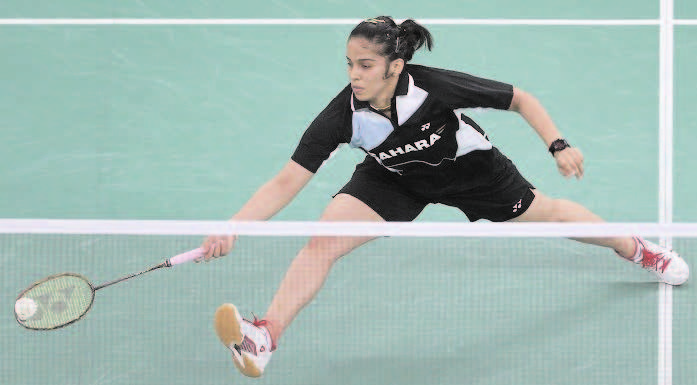
    DUBAI (TIP): India’s top badminton players Saina Nehwal and Kidambi Srikanth took a big step on way to reaching the semifinals at the World Super Series Finals by securing second consecutive wins in their respective group on December 18.

    Srikanth, who reached a career-high world number six in the rankings today, celebrated his rise on the world stage by beating eighth-ranked Tommy Sugiarto of Indonesia 21-18 21-13 at the Hamdan Sports Complex. It was Srikanth’s first win over the Indonesian.

    World number four Saina extended her domination over South Korea’s Sung Ji Hyun with an emphatic 21- 12 21-18 victory. It was Saina’s fifth win against Sung in six career meetings though the Indian had lost last time they played each other in the 2013 Denmark Open.

  • China, Japan take steps to bury hatchet after 3 years of dispute

    China, Japan take steps to bury hatchet after 3 years of dispute

    BEIJING (TIP): China and Japan have reached an agreement on maintaining peace in the disputed chain of islands in the East China Sea after three years of war mongering. The agreement was reached in Beijing between China’s State Councilor Yang Jiechi and the visiting National Security Advisor of Japan, Shotaro Yachi. The new move may also pave the way for the first ever meeting between Chinese president Xi Jinping and Japanese prime minister Shinzo Abe on the sidelines of the Asia Pacific Cooperation summit next week.

    India and other Asian countries are watching the new move closely because it might have an impact on their territorial disputes with China, sources said. They include Philippines, Indonesia and Malaysia, which are sending their heads of state to the APEC summit. In Tokyo, Japan’s Abe said, “Both Japan and China are coming to the view that it would benefit not just the two countries but regional stability if a summit is held”.

    But China has not yet confirmed that president Xi would meet him. Under the agreement, the two sides said they would prevent the situation around the disputed Diaoyu Islands, which is called Senkaku in Japan, from aggravating with the use of dialogue and consultation. They will establish crisis management mechanisms to avoid contingencies. Japan controls the strategically located islands but China claims ownership of it. They “agreed to gradually resume political, diplomatic and security dialogue through various multilateral and bilateral channels and to make efforts to build political mutual trust”.

    Beijing has managed Tokyo to accept that it would abide by the spirit of “facing history squarely and looking forward to the future”. This is a catch phrase of Chinese officials when they demand that Japan should admit the torture of Chinese people by Japanese soldiers during World War II, and tender an apology. The two countries have acknowledged that each has a different positions on the disputed islands and some parts of the East China Sea. Commerce ministers of the two countries agreed to meet during the APEC summit next week indicating a slight improvement in the relationship.

  • WORLD CELEBRATES DIWALI with prayers, bright lights and fireworks

    WORLD CELEBRATES DIWALI with prayers, bright lights and fireworks

    WASHINGTON (TIP): The five-day Indian festival – Diwali – symbolic of victory of good over evil was celebrated , from October 22 , the world over with great enthusiasm Amid chanting of Vedic mantras and lighting of the traditional ‘diya’ by US Secretary of State John Kerry, Diwali was celebrated for the first time at the State Department. “As the days grow shorter, the Diwali reminds us that spring always returns – that knowledge triumphs over ignorance, hope outlasts despair, and light replaces darkness.

    Diwali is a time for the revitalization of mind and spirit,” said Kerry who was joined by India’s Ambassador S Jaishankar. “It affords a chance to reflect on how we can bring light to others. It is an opportunity for us all, regardless of our own traditions, to renew a shared commitment to human dignity, compassion, and service – and it is a commitment, I think, at the heart of all great faiths,” he said. Some 300 guests, including a large number of eminent Indian-Americans and envoys from other South Asian countries, were present to celebrate Diwali for the first time at the State Department’s historic Benjamin Franklin room, which was lit with many small diyas and candles.

    The top Indian-American US officials, including Assistant Secretary of State for South and Central Asia Nisha Desai Biswal and USAID Administrator Raj Shah, were also present. “We worked hard to prove that we were, in fact, natural partners, which I believe we are. We are two optimistic nations who believe that history doesn’t shape us, but that we have the power to shape history. And that spirit of hope and optimism is really at the center of the Diwali celebration,” Kerry said and greeted people with Saal Mubarak. The guests were served the traditional Indian dishes – including sweet dishes like Jalebi, Gulab Jamun, different varieties of burfi, kaju katli and kheer. Some of the dishes were in fact were made inside the State Department kitchen, while other dishes were procured from a popular Indian restaurant in Washington DC.

    It was also one of the rarest occasions that no alcohol was served. It was all soft drinks, juices and not to miss the traditional mango ‘lassi’. In Birmingham, UK, Bhangra music filled the air as hundreds of people flocked to Diwali celebrations in Birmingham. Food stalls and dancing also entertained families as they turned out in their droves for Soho’s Festival of Lights.

    It was the first time the event had been staged after being organized by the newly-formed Soho Road BID. The BID is home to 560 predominantly independent businesses stretching from Holyhead Road to Soho Hill – with an estimated local population of 250,000. BID manager Craig Bucky said: “We were so excited to be able to run our first community event. “It’s been a lot of hard work and determination but it was a great celebration that the community can be proud of.” BID chairman Dipak Patel said that more events were in the pipeline in a bid to improve the area.

    “The long-term strategy is to make Soho Road an exciting place to work and live,” he said. Diwali was celebrated with enthusiasm and vigor in Sri Lanka, the land where the epic happened. Distribution of misri and lighting a lamp was a traditional fix. Locals offer prayers along the beach. In Thailand, Diyas or lamps made of banana leaves with candles and incense were placed in the river to float. People greeted each other and distributed sweets. Diwali was celebrated with full aplomb in Malaysia. Even the locals indulged in the festivities wholeheartedly. Diwali is an official holiday in Malaysia. People invite each other to their homes and celebrate it with their friends and family.

    The Hindu community of Malaysia constitutes about 8% of its total population. The community celebrates it under the name of Hari Diwali. Nepal is a multi ethnic land with diversity in culture. Nepal celebrated Diwali with bright lights, gift exchanges, fireworks, and elaborate feasts to welcome Lakshmi, the goddess of light and wealth. Diwali in Nepal is known as Tihar. In Australia, Diwali was celebrated publicly amongst the people of Indian origin and the local Australians in Melbourne.

    The cultural kaleidoscope of India was depicted as Indians in Melbourne showcased Indian art, culture, style, traditions and food via various activities, seminars, festivals, fairs and events. Diwali was also celebrated in Guyana, Fiji, Mauritius, Myanmar, Singapore, Trinidad & Tobago, Indonesia, Japan, Thailand and Africa, among the Hindus across the world.

  • 4 Indian shuttlers, including Saina, advance in Denmark Open

    4 Indian shuttlers, including Saina, advance in Denmark Open

    ODENSE (TIP): On a fruitful day for the Indian shuttlers, Saina Nehwal and P V Sindhu stormed into the women’s singles quarterfinals while two men’s players also secured places in the last-eight stage of the Denmark Open Super Series Badminton event, here on October 16. London Olympics bronze medallist Saina made short work of Minatsu Mitani 21-12 21-10 in her second round contest, which lasted just 38 minutes.

    Before Saina’s win, two-time World Championships bronze medallist Sindhu took just 31 minutes to get the better of Ksenia Polikarpova of Russia 21-17 21-19 at the Odense Sports Park. Since the top two women shuttlers from India are in either half of the draw, they could clash for the title if they win two more matches.

    In the men’s singles, Srikanth defeated Chinese Taipei’s Jen Hao Hsu 21-12 21-15 in 45 minutes while Kashyap fought hard before prevailing over Dionysius Hayom Rumbaka of Indonesia 21-17 17-21 22-20 in a contest that lasted 69 minutes. World No. 10 Sindhu opened up a 4-0 lead in the first game and continued to widen the gap, eventually winning it 20-17. In the second game, Sindhu quickly broke away from a 2-2 tie to take a slight edge and then she kept on extending it to make it 19-15 at one stage. But a brief fight back from the Russian saw her closing the gap to 19-20 before Sindhu used all her experience to wrap it up in her favour.

    In men’s singles second round matches, Srikanth had a rather comfortable outing today, but Glasgow Commonwealth Games gold medallist Kashyap faced a stiff challenge from his Indonesian rival. After a neck and neck battle till 13-13 in the opening game, Kashyap bagged four consecutive points to make it 17-13 and then there was no looking back for the Indian. But the Indonesian shuttler came back strongly in the second game as he opened up a huge 7-1 lead.

    Although Kashyap managed to reel off six points on a trot to catch his opponent, the Indonesian showed a lot of determination to keep the Indian at bay and take the match to the decider. Third game was a closely-fought affair with both players refusing to spare an inch. The game swung from one end to other before the Indian held his nerves to earn two points from 20-20 to advance to the next stage.

  • JAPANESE NEWSPAPER APOLOGIZES FOR FALSE FUKUSHIMA REPORT

    JAPANESE NEWSPAPER APOLOGIZES FOR FALSE FUKUSHIMA REPORT

    TOKYO (TIP): The publisher of Japan’s leading newspaper apologized to readers on Sep 11 for several serious errors in its reporting, retracting an article that claimed workers abandoned their posts during the Fukushima nuclear disaster.

    Asahi’s publisher Tadakazu Kimura, speaking at a hastily arranged news conference, made the apology after a confidential government document cited in the daily’s report was finally released to the public with no mention of a mutiny by plant workers. “I offer profound apologies to our readers and people at Tokyo Electric Power Co. (TEPCO),” the 60-year-old publisher said. He said he would decide whether or not to resign after enacting “revival through sweeping reform.” The article published on May 20 said 90 per cent of workers at the Fukushima Dai-ichi nuclear power plant had left the complex, disobeying the plant chief’s order to stay put in the worst nuclear accident since Chernobyl in 1986.

    TEPCO operates the plant, located 220 kilometres (138 miles) northeast of Tokyo. A massive earthquake and tsunami crippled its cooling systems and sent reactors into meltdown in March 2011. The daily said about 650 employees, or 90 per cent of the plant’s workforce, retreated to another seaside TEPCO nuclear plant 12 kilometres away when the nuclear crisis worsened a few days after the accident.

    The official document released on Thursday recounted the testimony of plant chief Masao Yoshida to a government investigative panel, with no trace of staff “disobeying Yoshida’s order” as Asahi had claimed. Yoshida died of cancer in July last year. Other dailies which also had access to the then confidential statement had already cast doubt on the article.

    In the same news conference, Kimura also admitted a highly contentious report published 32 years ago on the topic of Japan’s wartime sexual enslavement of Korean women was also false. That report cited a Japanese writer who claimed to have witnessed the kidnapping of women on the South Korean island of Jeju for the purposes of sex slavery, which has since been discredited by independent research by rival newspapers and academics. Asahi admitted in early August that its 1982 article on the comfort women and follow-up reports were based on a “false” statement by the witness, but Kimura’s apology was the publication’s first in relation to it.

    “I apologize to readers for publishing the erroneous articles and being too late in making the correction,” he said. The admission of the mistake has boosted the country’s conservative forces, which have insisted there was no “sex slavery” at the frontline brothels and that many of the comfort women were highly paid prostitutes. Prime Minister Shinzo Abe told a radio talk show on Thursday the report had “agonized many people and impaired Japan’s reputation in the international community”. With few official records available, researchers have estimated up to 200,000 women, many from Korea but also from China, Indonesia, the Philippines and Taiwan, served Japanese soldiers in “comfort stations”.

  • Pakistani woman climbs world’s seven highest peaks

    Pakistani woman climbs world’s seven highest peaks

    ISLAMABAD (TIP):
    Samina Baig became the first Pakistani woman to climb seven highest peaks in seven continents in under eight months, media reported on Sunday. Baig, 23, has completed the challenge of climbing seven of the highest mountains around the world, including Mount Everest which she scaled in May 2013, Dawn online reported.

    Baig accompanied by her brother Mirza Ali, flew out to Russia, after Alaska, where they went on to scale the highest mountain in Europe, Mt Elbrus in Russia, which is 5,642 metres tall, bringing their “Seven Summits” adventure to an end. Baig was part of an adventure diplomacy mission, funded by passionate climbers outside Pakistan, a few embassies in Islamabad, with no support from the Pakistan government.

    Belonging to Pakistan’s mountainous Hunza Valley, both climbers had summited Mt McKinley, Alaska, reaching 6,168 metres into the sky July 3. Samina Baig became the first Pakistani woman to climb to the top of that highest peak in North America. In March, she and Mirza Ali reached the top of the 4,884 metreshigh Mount Carstensz Pyramid, the highest peak in Indonesia.

    In the last six months, the duo made history in December when they climbed Mt Aconcagua in Argentina, the highest peak in South America.Then in January, they summited the highest peak in Antarctica, Mt Vinson, and then the 5,895 metres-high Mount Kilimanjaro in Tanzania in February.

  • Of Bullet Trains and Boundary Disputes

    Of Bullet Trains and Boundary Disputes

    “While economic cooperation with China is mutually beneficial, India must review its approach to border issues with the Asian giant. It should insist that the dispute be resolved in accordance with 2005 Guiding Principles”, says the author.

    Addressing an election rally in Arunachal Pradesh on February 22, Mr Narendra Modi called on China to shed its “mindset of expansionism”. Mr Modi averred: “Arunachal Pradesh is an integral part of India and will remain so. No power can snatch it from us. I swear in the name of this soil that I would never allow this State to disappear, breakdown, or bow down. China should shed its expansionist mindset and forge bilateral ties with India for peace, progress and prosperity of both nations”. This message was reinforced with the appointment of Mr Kiren Rijiju from Arunachal Pradesh as Minister of State for Home Affairs.

    China made the predictable noises, with Prime Minister Li Keqiang congratulating Mr Modi on his appointment and President Xi Jinping sending his Foreign Minister Wang Yi to meet Mr Modi, with a personal message of greetings. Did these gestures signal any substantive change in China’s policies, either on its outrageous territorial claims on Arunachal Pradesh, or the continuing intrusion of its troops across the Line of Actual Control? The answer is clearly in the negative. Just on the eve of Vice President Hamid Ansari’s visit to the Middle Kingdom, China published yet another official map depicting the entire State of Arunachal Pradesh as its territory.

    While the UPA Government had claimed that new “mechanisms” had been agreed upon to curb cross border intrusions, the intrusions continued. Given these developments the NDA Government should carefully consider reviewing and reorienting existing policies on China. Any talk of more robust military responses to Chinese adventurism is illadvised. The NDA Government has unfortunately inherited a situation where India’s armed forces are inadequately equipped and lacking in numbers. It would take a minimum of five years before the armed forces are adequately equipped and manned, to be able to present a more selfconfident response to Chinese adventurism.

    New Delhi should, however, now reorient its diplomacy, by taking note of the fact that Chinese assertiveness and aggression is directed not only against India, but towards all its maritime neighbors, with unilateral declarations on delineation of its maritime boundaries. Just as China’s claims on Arunachal Pradesh have no legal or historical basis, its claims on its boundaries with all its maritime neighbors, are in violation of the UN Convention on the Laws of the Seas. China has used force to seize disputed Islands claimed by the Philippines and Vietnam and to explore for offshore oil and gas.

    Tensions with Japan are escalating, because of China’s claims to the Senkaku Islands, controlled by Japan since 1894. China’s unilateral declaration of an Air Defence Identification Zone beyond its borders has been rejected by South Korea and Japan. Its territorial claims on its maritime borders face challenges from South Korea, Taiwan, Japan, Vietnam, Philippines, Brunei, Malaysia and Indonesia. Yet another major source of concern has been the Chinese policy of strategic containment of India, primarily based on enhancing Pakistan’s nuclear weapons, missile, maritime, air power and army capabilities.

    This is an issue which India inexplicably and rarely, if ever, highlights either bilaterally, or internationally. This policy of strategic containment through Pakistan has been reinforced by China’s readiness to provide weapons and liberal economic assistance to all of India’s neighbors in South Asia. Worse still, bending to Chinese pressures, India has periodically avoided proposed joint military exercises with Japan and the US. A measured response to Chinese containment would be for India to step up military cooperation with Vietnam, including supply of Brahmos cruise missiles which can enable Vietnam to counter Chinese maritime bullying.

    This would be an appropriate answer to China’s unrestrained military relationship with Pakistan. Given the fact that Russia is a major arms supplier to Vietnam, President Vladimir Putin’s concurrence can surely be obtained for such missile supplies to Vietnam. Russia has, after all, given its concurrence to China’s supply of Russian designed advanced RD 93 fighter aircraft engines to Pakistan. Will growing trade relations with China soften its approach to border claims, or its strategic containment of India, as some in India appear to believe? Bilateral trade with China today amounts to around $66 billion, with India facing a growing trade deficit, currently of around $29 billion.

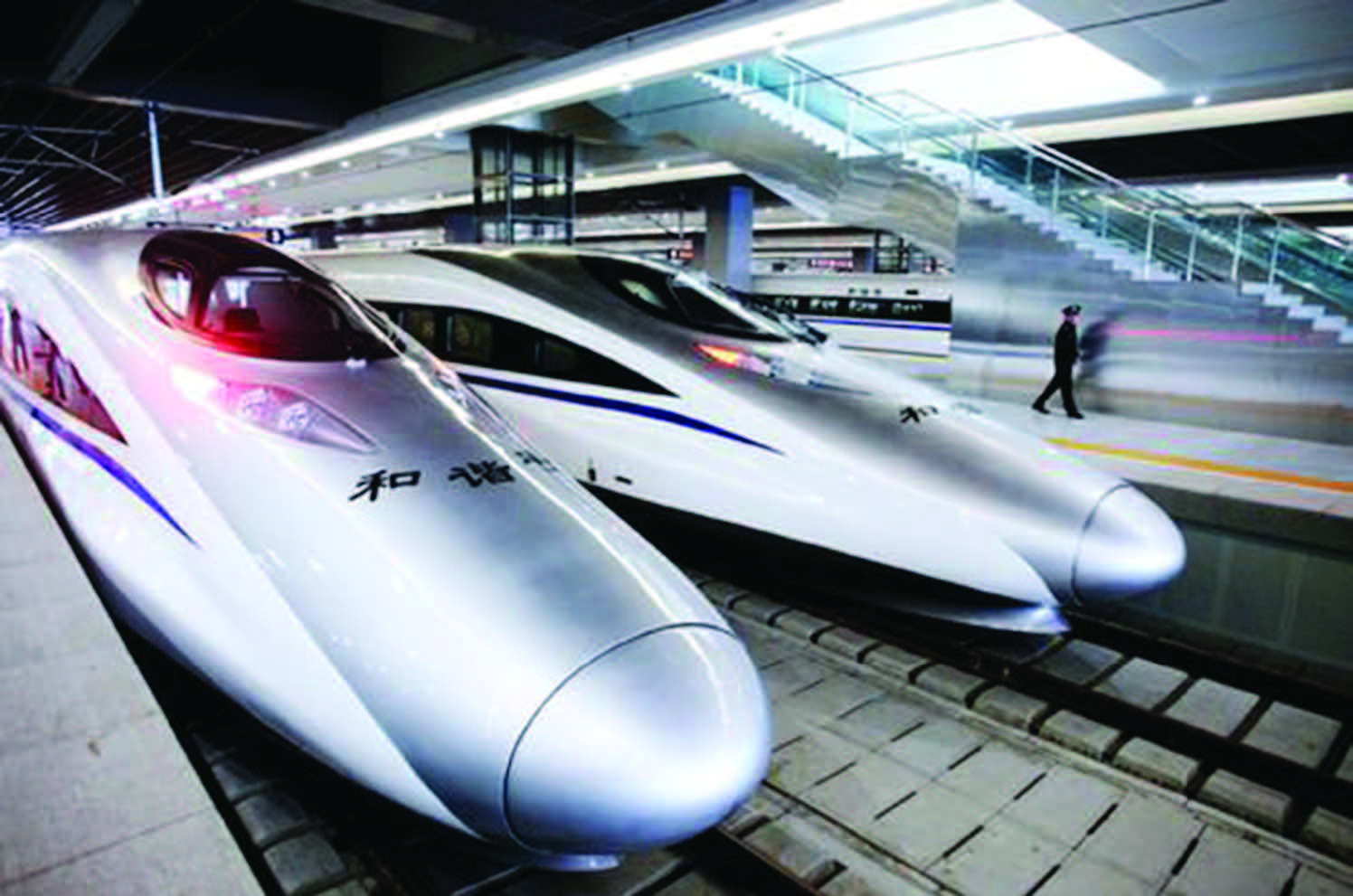
    China’s annual bilateral trade with Japan amounts to $314 billion and that with South Korea $235 billion. China is also the largest trade and investment partner of Vietnam. Both Japan and South Korea also have substantial investment ties with China. Despite this, China has remained unyielding on its territorial claims on these countries, not hesitated to use force and threatened to cut its investment ties with Vietnam, after recent tensions. To believe that China will embark on a path of reason on border issues, because it sells us a few bullet trains and invests in infrastructure in India would be, to put it mildly, naïve.

    On the contrary, India needs to ensure that unrestricted, duty-free access of Chinese products, in areas like energy and electronics, does not adversely affect indigenous development and production, or undermine energy, communications and cyber security. While dialogue, economic cooperation and interaction with China in forums like the BRICS and the G20 are mutually beneficial, there is need to review our approach to border issues with China. It is evident that China has no intention of exchanging maps specifying its definition of the Line of Actual Control, either in Ladakh, or Arunachal Pradesh. India should now insist that the border issue has to be resolved in accordance with the Guiding Principles agreed to in 2005.

    The boundary has to be along “well defined and easily identifiable natural geographic features”. Secondly, any border settlement should “safeguard due interests of their settled populations in the border areas”. Proceeding according to these Guiding Principles enables India to reinforce its claims that the border lies along the Karakoram Range in Ladakh and the McMahon Line in Arunachal Pradesh. Given China’s agreement to safeguard the “interests of settled populations,” its claims to Arunachal Pradesh are untenable.

    Moreover, with the Dalai Lama now clarifying he no longer seeks an independent Tibet, India should not hesitate to state that it hopes the Tibet issue is settled in accordance with the 17 point 1951 agreement between the Chinese authorities and the Dalai Lama. This agreement acknowledges Chinese “sovereignty” in Tibet, while respecting the freedom of religion and the “established status, functions and powers of the Dalai Lama”.

  • Flipkart, ‘India’s Amazon,’ launches low-cost phones before Mozilla and Google

    Flipkart, ‘India’s Amazon,’ launches low-cost phones before Mozilla and Google

    BANGALORE (TIP): Amazon announced its first smartphone June end and not to be outdone, online retailer Flipkart, “India’s Amazon,” is now launching a smartphone line of its own. Unlike Amazon’s higherend Fire, which sports multiple cameras for a 3D effect and a bevy of other features, Flipkart’s is aimed at the Indian market and is a budget smartphone, Tech In Asia reports. While Mozilla and Google have also announced low-end smartphone plans, Flipkart seems to be beating them to the market. Flipkart’s phones will start at about $45, will sport dual SIM and will support Android Jelly Bean and KitKat as operating systems. Interestingly, both Flipkart and Google have partnered with smartphone manufacturer Karbonn for their India-focused phones.

    Google is also working with other manufacturers such as Micromax and Spice, which, like Karbonn, have significant market share. In early June, Mozilla announced that it’s gearing up to launch low-cost smartphones in India and Indonesia in the second half of 2014. They will likely be priced under $60, as Mozilla chief operating officer Gong Li said at the time that phones over that price “are still too expensive for most consumers in India and other Southeast Asian countries.”

    Flipkart unveiled a new tablet, the Flipkart Digiflip Pro XT712, which it seems to have designed with online shopping in mind – shopping through its online store, that is. The purchase of the tablet comes with special offers, such as Flipkart shopping credits, if used through the tablet’s Flipkart app. Amazon’s Fire phone is also meant to help users purchase more on Amazon, thanks to its product identification feature, Firefly.

  • SAINA NEHWAL’S ANGELS SCRIPT UBER CUP HISTORY

    SAINA NEHWAL’S ANGELS SCRIPT UBER CUP HISTORY

    NEW DELHI (TIP): ‘Raising the bar’ has been Saina Nehwal’s calling card for years. The Hyderabadi diehard and her team of gutsy shuttlers made Uber Cup history on May 22, taking India into the semifinals for the first time in modern era of the tournament with a 3-0 win over Indonesia. India now face Japan – who beat Denmark – in the semifinals to be played at the Siri Fort Complex on Friday.

    The Indian captain paved the way for her team’s triumph, winning the first match against Lindaweni Fanetri. Her understudy , 18-year-old PV Sindhu, survived a scare and an attack of nerves to get the better of Bellartrix Manuputty to make it 2-0. The pair of Jwala Gutta and Ashwini Ponnappa then gave the finishing touches to a campaign which will be remembered for years.

    Saina came to know about her QF opponents well past midnight on Wednesday. Indonesia and its top singles player Fanetri were not going to give the Indian captain a sleepless night. “Following the victory over Ratchanok Intanon (World No. 4 from Thailand), there was nothing much to think about,” a confident Saina said moments after knocking out Fanetri 21-17, 21-10. The vociferous, partisan crowd realized that history was being created when Sindhu saved two match points in the third game to finally emerge bruised but not beaten.

    She got past Bellartrix Manuputty (world No. 24) 21-16, 10-21, 25-23. Jwala and Ashwini (ranked 36th) punched much above their weights against the ninth ranked Indonesian pair of Greysia Polii/Nitya Krishinda Maheswari to assure India at least a bronze with their 21-18, 21-18 win. Fanetri, ranked 23rd, was off the blocks faster than Saina expected and opened up an eight-point (15-7) lead in the first game.

    The drift was working to Saina’s disadvantage as she failed to control the backline. A couple of simple smashes, which should have been put away , were buried into the net. “I kept my focus and went for the rallies. At one point I stopped looking at the score,” said Saina. She did much more. Reading Fanetri’s game rather astutely , Saina kept spreading the bird all across the court. Fanetri was running ragged. “I could feel she was getting tired,” Saina said.

    In the second singles, Sindhu, untroubled till the quarters, suddenly started erring on the side of caution. Winning the first game, she went into a shell to lose the second against Manuputty , playing with a heavily strapped knee. In the third, when aggression was supposed to be the key word, Sindhu chose to wait for her opponent to make errors and clinched the battle of nerves to make it a sweet success story.

  • INDIA PIPS JAPAN TO BE THIRD LARGEST ECONOMY IN PPP

    INDIA PIPS JAPAN TO BE THIRD LARGEST ECONOMY IN PPP

    NEW DELHI (TIP):
    The global economic balance seems to be tilting towards the developing countries. India has overtaken Japan to emerge as the third largest economy in purchasing power parity (PPP) terms, after the US and China, latest data released by the World Bank showed. Separately, an analysis showed members of the OECD, a rich-country club, accounted for 50% of the global economy estimated at $90 trillion in 2011, compared to 60% of the $70 trillion economy in 2005. While developing countries made up the remaining half, large emerging market economies such as India, China, Brazil, Indonesia, Russia and South Africa now make up around 30% of the world GDP.

    The previous version of the World Bank’s International Comparison Program (ICP) report had said that India was ranked 10th in 2005 in terms of PPP. PPP is used to compare economies and incomes of people by adjusting for differences in prices in various countries. “The economies of Japan and the UK became smaller relative to the US, while Germany increased slightly and France and Italy remained the same,” the World Bank report said. It said that six of the world’s 12 largest economies were in the middle-income category.

    The dozen largest economies accounted for twothird of the world economy and 59% of the population, the report added. The six largest middle-income economies – China, India, Russia, Brazil, Indonesia and Mexico – accounted for 32.3% of world GDP, while the six largest high-income economies – US, Japan, Germany, France, UK and Italy – accounted for 32.9%, showing the distance that the emerging economies had travelled through rapid growth in recent years. At 27%, China has the largest share of the world’s expenditure for investment, with the US at half the level with 13% share. India, Japan and Indonesia followed with 7%, 4%, and 3%, respectively.

  • INDONESIA VOLCANO ERUPTS; 2 KILLED, 100K EVACUATED

    INDONESIA VOLCANO ERUPTS; 2 KILLED, 100K EVACUATED

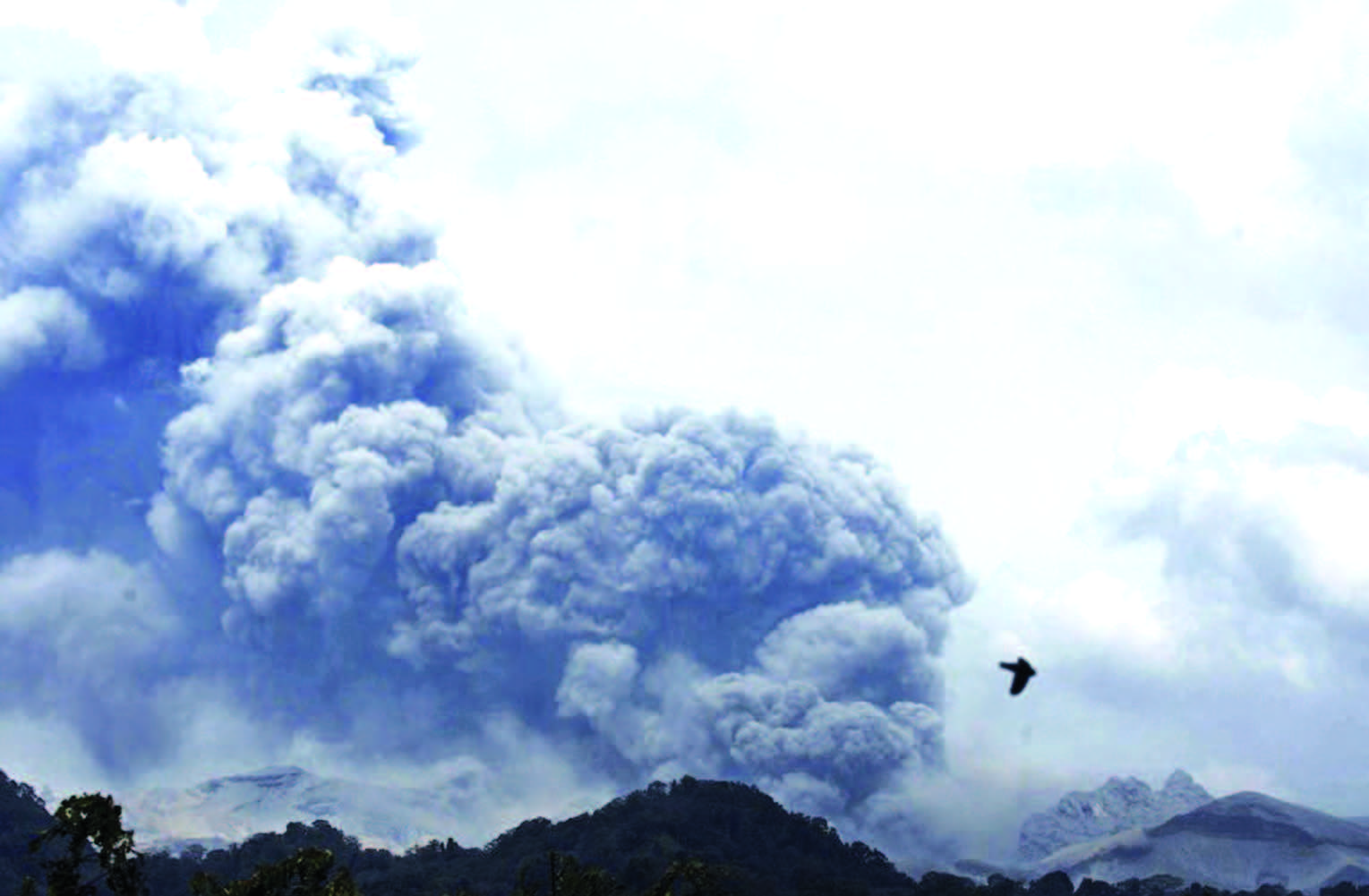
    KEDIRI (TIP): A major volcanic eruption in Indonesia shrouded a large swath of the country’s most heavily populated island in ash on Friday, triggering the evacuation of more than 100,000 people and the closure of three international airports after killing two people. The explosive overnight eruption of Java island’s Mount Kelud could be heard up to 200km (125 miles) away, Indonesia’s disaster agency said.

    The ash cloud reached 30km (18 miles) into the atmosphere and fell to earth in towns and cities across the region, including Surabaya, Indonesia’s second-largest city, and even farther afield in Yogyakarta, where motorists switched on headlights in daylight. Kediri, a normally bustling town about 30km (19 miles) from the mountain, was largely deserted as residents stayed indoors to avoid the choking ash. “The smell of sulfur and ash hung so thickly in the air that breathing was painful,” said Kediri resident Insaf Wibowo. Some residents were shoveling the ash and grit into sacks to use for the construction of buildings or to fertilize crops.

    One collector said that middlemen had already told him they would pay up to $56 for a small truck filled with the debris. Two people were killed when the roofs of their homes collapsed under the weight of the ash and volcanic debris unleashed during the eruption, the disaster agency said. International airports in Yogyakarta, Solo and Surabaya were closed due to reduced visibility and the dangers posed to aircraft engines by ash, Transport Ministry spokesman Bambang Ervan said. Virgin Australia said it had canceled all its Friday flights to Bali, Phuket, Christmas Island and Cocos Island because of the eruption. The disaster agency said tremors were still wracking the volcano, but that scientists didn’t expect another major eruption.

    It said all villages within 10 kilometers (6 miles) of Kelud _ more than 100,000 people had been evacuated to temporary shelters, but that elsewhere villagers had returned to their homes to begin cleaning up. The 1,731-meter-high (5,680-foot-high) Mount Kelud in eastern Java, Indonesia’s most densely populated island and home to more than half of the country’s 240 million people has been rumbling for several weeks and was under close observation. Muhammad Hendrasto, head of Indonesia’s volcano monitoring agency, said the mountain erupted violently about 90 minutes after authorities raised its alert status to the highest level. The disaster agency said it had spewed millions of cubic meters of debris into the atmosphere.

    Kelud is among about 130 active volcanoes in Indonesia. The archipelagic nation is prone to volcanic eruptions and earthquakes because of its location on the so-called “Ring of Fire” a series of fault lines stretching from the Western Hemisphere through Japan and Southeast Asia. Due to the fertile volcanic soil and the shortage of space on Java, hundreds of thousands of people live close to active volcanoes. They are used to the rumblings, but their proximity to the peaks presents difficulties for authorities.

    The last major eruption at Kelud was in 1990, when it kicked out searing fumes and lava that killed more than 30 people and injured hundreds. In 1919, a powerful explosion that reportedly could be heard hundreds of kilometers away killed at least 5,160 people. Earlier this month, Mount Sinabung in North Sumatra province erupted as authorities were allowing thousands of villagers who had been evacuated to return to its slopes, killing 16 people. Sinabung has been erupting for four months, forcing the evacuation of more than 30,000 people.

  • Challenges in Indo-Pacific Region

    Challenges in Indo-Pacific Region

    INDIA MUST PLAY A PROACTIVE ROLE FOR LONG-TERM SECURITY AND STABILITY

    It would be in India’s interest to readily join cooperative efforts aimed at maintaining stability. India has acquired robust military intervention capabilities and is formulating a suitable doctrine for intervention”, says the author.

    The security environment in the Indo- Pacific region has been vitiated by territorial disputes on land in the South China Sea and the East China Sea as well as terrorism, the proliferation of small arms and piracy in the Malacca Strait. Freedom of navigation on the high seas is of critical importance for the economies of most Asian countries.

    Maintaining peace and stability and ensuring the unfettered flow of trade and energy supplies through the sea lanes of communications will pose major challenges for the Asian powers as well as the United States. Only cooperative security architecture can provide long-term stability and mutual reassurance. Through its forward military presence and its abiding military alliances, the US has played a key role in providing stability in the Indo-Pacific region through many decades of turbulence during and after the cold war.

    The US is now re-balancing or ‘pivoting’ from the Euro-Atlantic zone to the Indo-Pacific in tune with its changing geo-strategic priorities and the rise of emerging powers. It is also simultaneously downsizing its forces and will need new strategic partners to help it maintain order and stability. According to Rory Medcalf, Senior Fellow, Brookings Institution, Washington, “the choreography of this geopolitical interplay will depend on the quality of leadership and decisionmaking in Beijing, New Delhi and Washington.”

    As C Raja Mohan has averred in his book “Samudra Manthan: Sino-Indian Rivalry in the Indo-Pacific”, the major powers in the region, including Australia, China, India, Indonesia, Japan and the US, need to work creatively to frame acceptable rules for the commons in the Indo-Pacific. Unless such realization comes about, subterranean tensions will continue to hamper stability. China has so far been ambivalent in seeking to join a cooperative framework and has preferred to stand apart. It has failed to realize that its growing trade and massive dependence on energy imports through the Indian Ocean make it imperative for it to join the efforts being made to establish such a framework.

    It would be in India’s interest to readily join cooperative efforts aimed at maintaining stability. India has acquired robust military intervention capabilities and is formulating a suitable doctrine for intervention. Though India has a pacifist strategic culture rather than a proactive one that nips emerging challenges in the bud through pre-emption, it has not hesitated to intervene militarily when its national interests warranted intervention, both internally and beyond the shores. The Army was asked to forcibly integrate the states of Goa, Hyderabad and Junagadh into the Indian Union soon after Independence as part of the nation-building process. The Indian armed forces created the new nation of Bangladesh after the Pakistan army conducted genocide in East Pakistan in 1971.

    India intervened in the Maldives and Sri Lanka at the behest of the governments of these countries and was ready to do so in Mauritius in 1983 when the threat to the government there passed. India had airlifted 150,000 civilian workers from Iraq through Jordan during Gulf War I in what became known as the largest airlift after the Berlin airlift. Also, almost 5,000 civilian workers were evacuated by ship from Lebanon in 2006. After the 2004 South-East Asian tsunami, 72 naval ships had set sail within three days to join the international rescue and relief operations even though India’s eastern sea board had itself suffered extensive loss of life and damage. India’s limited military presence overseas has been mostly benign.

    According to Shyam Saran, a former Foreign Secretary, “…most South-East Asian countries and Japan welcome a larger presence of Indian naval assets in the region.” As part of the Indo-US defense cooperation, joint patrolling of the SLOCs in the Indian Ocean is already being undertaken up to the western mouth of the Malacca Strait as part of joint naval exercises. Other military exercises have led to a broad understanding of each other’s military capabilities and limitations and many interoperability challenges have been ironed out. The Indian Army has designated one infantry division as a rapid reaction division, with an amphibious brigade, an air assault brigade and an infantry brigade. The Army also has an independent parachute brigade that can be deployed at short notice.

    The Indian Navy now possesses the INS Jalashva (USS Trenton) that can carry one infantry battalion with full operational loads and is in the process of acquiring additional landing ships. Besides long-range fighter-bomber aircraft with air-to-air refueling capability like the SU-30MKI, the Indian Air Force has acquired fairly substantive strategic airlift capabilities, including six C-130 Super Hercules aircraft for the Special Forces. A permanent corps-level tri-Service planning HQ with all-weather reconnaissance and surveillance capabilities needs to be set up under the aegis of the HQ Integrated Defense Staff to monitor emerging situations on a regular basis and act as a control HQ for intervention operations.

    In future, India may undertake joint military operations in its area of strategic interest if the country’s major national interests are at stake. Such a campaign may take the form of an intervention under the UN flag – something that India would prefer – or even a “coalition of the willing” in a contingency in which India’s vital national interests are threatened. There will naturally be several caveats to such cooperation as India will not join any military alliance. It will also be necessary to work with other strategic partners and friendly countries in India’s extended neighborhood and with organizations like the Gulf Cooperation Council (GCC), the ASEAN Regional Forum (ARF) and, when possible, even the Shanghai Cooperation Organization (SCO). The aim should be to establish consultative mechanisms through diplomatic channels for the exchange of ideas, and conduct joint training and reconnaissance. Small-scale joint military exercises with likely coalition partners help eliminate interoperability and command and control challenges and enable strategic partners to operate together during crises.

  • Strong 6.3 quake strikes off eastern Indonesia, no immediate reports of damage

    Strong 6.3 quake strikes off eastern Indonesia, no immediate reports of damage

    JAKARTA (TIP): A strong 6.3-magnitude earthquake struck off eastern Indonesia on November 19, the USGS reported, but there were no immediate reports of damage and local officials ruled out any threat of a tsunami. The quake struck 110 kilometres (68 miles) north-northeast of the town of Tobelo in the Maluku chain of islands around 1330 GMT at a depth of 63 kilometres, it said.

  • CELEBRATIONS AROUND THE WORLD

    CELEBRATIONS AROUND THE WORLD

    Diwali is also celebrated outside of India mainly in Guyana, Fiji, Malaysia, Nepal, Mauritius, Myanmar, Singapore, Sri Lanka, Trinidad & Tobago, Britain, Indonesia, Japan, Thailand, Africa, Australia and the US among the Hindus across the world.

    Britain
    The Indians are the second largest ethnic minority in Britain. To get rid of the feeling of missing their homeland, especially during festival times, the Indians here celebrate most of the festivals. The occasion is marked by visit to the local temple to worship the shrine of Lakshmi, which they have made for Diwali. Eating special sweets, burning of incense sticks, lighting the home and surroundings and the blowing of the conch shell follows the prayer session in the Lakshmi temple. The festival here is celebrated according to the Hindu solar calendar hence it falls in the months of October-November, amongst the cold, damp and windy months in Britain. Still the enthusiasm of the festival celebration makes the task of leaving small lamps on windowsills or by open doorways possible ignoring the chill. The lamps and diyas play their part in maintaining the atmosphere of Diwali at home.

    Guyana
    Guyana, formerly known as British Guiana, is located on the northeast coast of South America. Guyana is 82,978 square miles in area and has a population of about 7,70,000. Hindus constitute 33% of Guyana’s total population. The Co-operative Republic of Guyana in Southern America celebrates Diwali according to the Hindu Solar calendar. The day of the festival is declared as a national holiday in the official calendar of Guyana. The tradition of celebrating the festival is believed to have been brought to Guyana in the year 1853 by the first indentured people from India.

    The legends related to the festival are similar to that of India. The celebration of the festival includes, distribution of sweets, illuminating the inside and outside of the house, exchange of greetings, cleaning of houses and wearing of new clothes. The celebrations hold special significance for the people of Guyana. The distribution of sweet signifies the importance of serving and sharing whereas exchange of greeting cards denotes the goodwill of each other.

    The sweets distributed mainly consist of pera, barfi, and kheer. The tradition of wearing new cloth for the people of Guyana is significant especially in this festival. They believe that wearing new cloth is the symbol of healthy souls in healthy bodies. Cleaning of their homes and keeping them well illuminated in and outside is a practice meant to illuminate the road for Goddess Lakshmi so that while goddess Lakshmi visits their home she faces no problem of light as the Diwali night is regarded as the darkest night of the year.

    Indonesia
    The name Indonesia came from two Greek words: “Indos” meaning Indian and “Nesos” meaning islands. The majority of population follows Islam. Hindus constituent about 2% of Indonesia’s total population. However, the Indonesian island of Bali is famous for celebrating the festival of Diwali, as a majority of the population here is that of Indians. It is one of the most revered festivals of the locals here. The celebration and rituals of the festival is mostly similar to that celebrated by their counterparts in India.

    Malaysia
    Fascinating in its diversity, Malaysia has many mesmerizing charms and attractions. With a population of about 20 million, comprising of a harmonious multi-ethnic mix of Malays, Malaysia promises a colorful potpourri of cultural traditions. Most are based on the various religious practices, beliefs and traditions influencing the costumes, festivals, ceremonies and rituals. The Hindu community of Malaysia constitutes about 8% of its total population .The community celebrates Diwali as a symbol of triumph of good over evil. The Malaysian people call Diwali as Hari Diwali.

    This festival is celebrated during the 7th month of the Hindu solar calendar. The south Indian traditional of oil bath precedes the festivities. The celebration includes visits to temples and prayers at household altars. Small lamps made from clay and filled with coconut oil and wicks are a common sight to signify the victory of Lord Rama, the hero of the Hindu epic Ramayana, over the demon king Ravana. Diwali is celebrated almost all over the Malaysia except in Sarawak & Federal Territory of Labuan.

    Mauritius
    Mauritius is an island in the Indian Ocean that lies to the east of Madagascar. This beautiful landmass is full of picturesque landscapes and enchanting spots. Mauritius accounts a 63% of Indian majority of which 80% follow Hinduism. Hence, celebration of almost all the Hindu festivals in this island is a common phenomenon. In Mauritius, Diwali celebration is an age-old tradition. It holds special significance for the natives, who believe that Diwali has been celebrated even long before the return of Lord Rama from 14 years of exile and his coronation as the king. The festival is marked by lightening of earthen lamps in rows making images out of the rows. Lakshmi is worshiped as the goddess of wealth and crackers are burnt to scare away evil spirits.

    Nepal
    Nepal is a landlocked country nestled in the foothills of the Himalayas. Nepal, a multi-ethnic and multi-lingual society is the only Hindu Kingdom of the world. Diwali is celebrated here with the usual Hindu festivities and rituals. Diwali in Nepal is known as Tihar. Just like most places in India Diwali is celebrated here to honor the goddess of wealth and god of prosperity Lakshmi and Ganesh respectively. The festival of light falls in the months of October or November on the day of Amavasya – the darkest day of the year. The festival here continues for five days. Every day has its special significance. The first day is dedicated to cows as they cook rice and feed the cows believing that goddess Lakshmi comes on cows. The second day is for Dogs as the Vahana of Bhairava.

    Preparation of delicious food especially meant for the dog is a typical characteristic of the day. Lights and lamps are lit to illuminate the entire surrounding and some of the specialty items are prepared to mark the third day of the festival. Fireworks, Lamps and crackers are widely used. The fourth day is dedicated to Yama, the Hindu God of Death. He is prayed for long life. The fifth final day is Bhhaya Dooj dedicated for the brothers who are wished long life and prosperity by their sisters.

    South Africa
    South Africa is located at the southern tip of the continent of Africa. It is a mix of cultures and has one of the largest immigrant Indian communities in the world. The country has almost one million immigrant Indians. Most of these Indian immigrants are concentrated in the eastern regions of Natal and Transvaal of the country. About 65% of Hindus, 15% of Muslims and 20% of Christians live in this area. Due to the majority of the Hindu population, a number of Hindu festivals are celebrated here. Diwali also holds an important place in the festival calendar of the region. The celebration is more or less same to that in India. Most of the Hindus here are from Gujarat and Tamil Nadu and continue to follow their regional variations of Hinduism.

    Trinidad & Tobago
    Trinidad is the most southern of the Caribbean islands, lying only seven miles off the Venezuelan coast, is one of the most exciting, colorful islands of the West Indies. Considered as the land of the Humming Bird, Trinidad and Tobago has a good number of Indian population. For that reason, Hindu festivals, customs, traditions and observances forms an integral part of the society, which comprises the unique beauty of the twin island state. The Diwali celebration has a unique flavor here in the Caribbean island nation. Here 43 per cent of the 1.3 million populations are ethnic Indians. The Diwali celebrations are usually marked as an occasion to unify the nation that consists of Hindus, Muslims, Christians, Indo-Trinidadians and Afro- Trinidadians.

    The festival day is regarded as a national holiday. The festival is also marked by scores of functions besides the usual rituals of the festivity. The functions and celebrations also have an official imprint as the Ministers of the Government also participate in the celebrations sometimes. The belief behind the festival is same as of India, which is, prevalence of good over evil. The celebrations continue for over a week and the headquarters of the National Council of Indian Culture at Diwali Nagar becomes the focal point.

    America
    Diwali is one of the biggest Hindu festivals celebrated among many people and communities in the United States. Many schools, community groups, Hindu associations, Indian organizations and corporate businesses get involved in celebrating Diwali. Politicians, including governors and past presidents, previously made public announcements expressing their greetings and well wishes to Hindus on Diwali. Many Indian stores sell jewelry and traditional outfits, such as chiffon saris, as well as statues of Hindu deities and incent sticks used in prayer around this time of the year. Many women and girls use mehendi, which is a temporary henna decoration, on their palms. It is also common to wear fine jewelry and silk outfits to celebrate this joyous festival.

  • The India of 2013 is not the India of 1991

    The India of 2013 is not the India of 1991

    With simple ideas that do not require big bang reforms, India can weather the storm caused by global and domestic economic factors, believes the author.

    There are ways of looking at India’s present economic woes marked by a rapid fall in the value of the rupee caused by persistent inflation of the past few years and the high current account deficit (CAD) of about $85 billion (4.5 per cent of GDP) which needs to be funded through uncertain capital inflows year after year. The description of the present crisis by various economic and political analysts by itself tends to carry shades of ideological bias.

    Some well known economists on the far right prefer to describe the external sector situation as worse than the 1991 economic crisis India had faced. This narrative suggests the 1991 crisis was marked by a severe, external sector crunch and it acted as a trigger for the big bang reforms of the early 1990s. This section believes that the present crisis may be worse than that of 1991 but the government this time round is much more complacent, and less inclined to implement drastic reforms to revive growth.

    Then and now

    Of course, not everyone agrees with the narrative that the India of 2013 is worse than it was in 1991. Actually it is not. And more of the same kind of reforms is perhaps not the answer either. The world was very different in 1991 when western economies were still strong and looking outward, trying to deepen the process of economic globalization.

    Today, major OECD economies are looking much more inward than before, trying to fix their own domestic economy and polity. Emerging economies like India,which managed to avoid until 2011 the negative impact of the global financial crisis, began to dramatically slowdown after 2011. Most of the BRICS economies have lost over four per cent off their peak GDP growth rates experienced until 2010.

    After 2010, excess global liquidity flowing from the West, the consequent high international oil and commodity prices fed seamlessly into India’s domestic mismanagement of the supply of key resources such as land, coal, iron ore and critical food items to create a potent cocktail of high inflation and low growth, and a bulging CAD. The key difference between 1991 and 2013 is the availability of global financial flows.

    In 1991,western finance capital had not significantly penetrated India. Now, a substantial part of western capital is tied to India and other emerging economies where OECD companies have developed a long-term stake. The broader logic of the global capital movement is that it will seamlessly move to every nook and corner of the world where unexploited factors of production exist and there is scope to homogenize the modes of production and consumption in a global template. This relentless process may indeed gather steam after the United States shows further signs of recovery.

    Indeed, some experienced watchers of the global economic scene have said that a recovery in the U.S. will eventually be beneficial for the emerging economies. This basic logic will sink into the financial markets in due course. At present, the prospect of the U.S. Federal Reserve withdrawing some of the liquidity it had poured into the global marketplace is causing emerging market currencies to sharply depreciate. In a sense, the depreciation of 15 to 20 per cent this year of the currencies in Brazil, South Africa, Turkey, Indonesia and India can be seen partially as a kneejerk reaction to the smart recovery of the housing market in the U.S. and the consequent prospect of the Federal Reserve gradually unwinding its ongoing $40 billion a month support to mortgage bonds over the next year or so.

    But eventually, a fuller recovery in the U.S. will mean better economic health globally. Besides, some tapering of liquidity by the U.S. Federal Reserve is inevitable as such an unconventional monetary policy cannot last forever. The U.S. Federal Reserve balance sheet was roughly $890 billion in 2007. It has ballooned to a little over $3 trillion today simply by printing more dollars. Such massive liquidity injection by printing dollars in such a short period is probably unprecedented in American history.

    This is also unsustainable because sooner rather than later, such excess liquidity could send both inflation and interest rates shooting up in the U.S. – which again may not be good for the rest of the financially connected world. So what should India learn from the current situation? One, it needs to understand that cheap, finance capital flowing in from the West is a doubleedged weapon. If not used judiciously to enhance productivity in the domestic economy, such finance will tend to become an external debt trap.

    This lesson is as important for the government as it is for the Indian capitalist class which has shown a tendency to use cheap finance and scarce resources such as spectrum, coal, land and iron ore to play stock market games in collusion with the political class. Of course, this is a systemic issue and needs to be addressed at the level of electoral funding reform. Indeed, this is more important than “fresh economic reforms” that blinkered economists advocate.

    Using natural resources

    India still has time to work towards insulating itself from the vagaries of global finance causing much weakness in the currency and the current account. To begin with, the government can easily generate $20 billion or one per cent of GDP by allowing higher coal and iron ore production from its large reserves. Our annual coal imports have gone up from roughly $7 billion five years ago to about $18 billion now. The increased dollar outflow was largely avoidable because India has among the largest coal reserves in Asia.

    India could have saved $10 billion simply by producing more domestic coal. The government must, under a specially regulated dispensation, maybe under the Supreme Court’s watch, revive the export of iron ore from Karnataka and Goa where much of the mining has stopped following judicial intervention. Prime Minister Manmohan Singh spoke about making a special plea to the Supreme Court to restart mining and exports from here.

    This could add another $7 to $8 billion to the foreign exchange reserves. These are simple ideas which do not require “big bang reforms,” as some overzealous economists might suggest. If some of these resources are produced optimally and gold imports are brought down by about $20 billion, to the levels that existed before 2011, the CAD should be back to the comfort zone of less than three per cent of GDP. The moment CAD comes below three per cent of GDP, the overall sentiment would definitely change for the better.

  • CELEBRATIONS AROUND THE WORLD

    CELEBRATIONS AROUND THE WORLD

    Diwali is also celebrated outside of India mainly in Guyana, Fiji, Malaysia, Nepal, Mauritius, Myanmar, Singapore, Sri Lanka, Trinidad & Tobago, Britain, Indonesia, Japan, Thailand, Africa, Australia and the US among the Hindus across the world.

    Britain
    The Indians are the second largest ethnic minority in Britain. To get rid of the feeling of missing their homeland, especially during festival times, the Indians here celebrate most of the festivals. The occasion is marked by visit to the local temple to worship the shrine of Lakshmi, which they have made for Diwali. Eating special sweets, burning of incense sticks, lighting the home and surroundings and the blowing of the conch shell follows the prayer session in the Lakshmi temple. The festival here is celebrated according to the Hindu solar calendar hence it falls in the months of October-November, amongst the cold, damp and windy months in Britain. Still the enthusiasm of the festival celebration makes the task of leaving small lamps on windowsills or by open doorways possible ignoring the chill. The lamps and diyas play their part in maintaining the atmosphere of Diwali at home.

    Guyana
    Guyana, formerly known as British Guiana, is located on the northeast coast of South America. Guyana is 82,978 square miles in area and has a population of about 7,70,000. Hindus constitute 33% of Guyana’s total population. The Co-operative Republic of Guyana in Southern America celebrates Diwali according to the Hindu Solar calendar. The day of the festival is declared as a national holiday in the official calendar of Guyana. The tradition of celebrating the festival is believed to have been brought to Guyana in the year 1853 by the first indentured people from India. The legends related to the festival are similar to that of India. The celebration of the festival includes, distribution of sweets, illuminating the inside and outside of the house, exchange of greetings, cleaning of houses and wearing of new clothes. The celebrations hold special significance for the people of Guyana. The distribution of sweet signifies the importance of serving and sharing whereas exchange of greeting cards denotes the goodwill of each other. The sweets distributed mainly consist of pera, barfi, and kheer. The tradition of wearing new cloth for the people of Guyana is significant especially in this festival. They believe that wearing new cloth is the symbol of healthy souls in healthy bodies. Cleaning of their homes and keeping them well illuminated in and outside is a practice meant to illuminate the road for Goddess Lakshmi so that while goddess Lakshmi visits their home she faces no problem of light as the Diwali night is regarded as the darkest night of the year.

    Indonesia
    The name Indonesia came from two Greek words: “Indos” meaning Indian and “Nesos” meaning islands. The majority of population follows Islam. Hindus constituent about 2% of Indonesia’s total population. However, the Indonesian island of Bali is famous for celebrating the festival of Diwali, as a majority of the population here is that of Indians. It is one of the most revered festivals of the locals here. The celebration and rituals of the festival is mostly similar to that celebrated by their counterparts in India.

    Malaysia
    Fascinating in its diversity, Malaysia has many mesmerizing charms and attractions. With a population of about 20 million, comprising of a harmonious multi-ethnic mix of Malays, Malaysia promises a colorful potpourri of cultural traditions. Most are based on the various religious practices, beliefs and traditions influencing the costumes, festivals, ceremonies and rituals. The Hindu community of Malaysia constitutes about 8% of its total population .The community celebrates Diwali as a symbol of triumph of good over evil. The Malaysian people call Diwali as Hari Diwali. This festival is celebrated during the 7th month of the Hindu solar calendar. The south Indian traditional of oil bath precedes the festivities. The celebration includes visits to temples and prayers at household altars. Small lamps made from clay and filled with coconut oil and wicks are a common sight to signify the victory of Lord Rama, the hero of the Hindu epic Ramayana, over the demon king Ravana. Diwali is celebrated almost all over the Malaysia except in Sarawak & Federal Territory of Labuan.

    Mauritius
    Mauritius is an island in the Indian Ocean that lies to the east of Madagascar. This beautiful landmass is full of picturesque landscapes and enchanting spots. Mauritius accounts a 63% of Indian majority of which 80% follow Hinduism. Hence, celebration of almost all the Hindu festivals in this island is a common phenomenon. In Mauritius, Diwali celebration is an age-old tradition. It holds special significance for the natives, who believe that Diwali has been celebrated even long before the return of Lord Rama from 14 years of exile and his coronation as the king. The festival is marked by lightening of earthen lamps in rows making images out of the rows. Lakshmi is worshiped as the goddess of wealth and crackers are burnt to scare away evil spirits.

    Nepal
    Nepal is a landlocked country nestled in the foothills of the Himalayas. Nepal, a multi-ethnic and multi-lingual society is the only Hindu Kingdom of the world. Diwali is celebrated here with the usual Hindu festivities and rituals. Diwali in Nepal is known as Tihar. Just like most places in India Diwali is celebrated here to honor the goddess of wealth and god of prosperity Lakshmi and Ganesh respectively. The festival of light falls in the months of October or November on the day of Amavasya – the darkest day of the year. The festival here continues for five days. Every day has its special significance. The first day is dedicated to cows as they cook rice and feed the cows believing that goddess Lakshmi comes on cows. The second day is for Dogs as the Vahana of Bhairava. Preparation of delicious food especially meant for the dog is a typical characteristic of the day. Lights and lamps are lit to illuminate the entire surrounding and some of the specialty items are prepared to mark the third day of the festival. Fireworks, Lamps and crackers are widely used. The fourth day is dedicated to Yama, the Hindu God of Death. He is prayed for long life. The fifth final day is Bhhaya Dooj dedicated for the brothers who are wished long life and prosperity by their sisters.

    South Africa
    South Africa is located at the southern tip of the continent of Africa. It is a mix of cultures and has one of the largest immigrant Indian communities in the world. The country has almost one million immigrant Indians. Most of these Indian immigrants are concentrated in the eastern regions of Natal and Transvaal of the country. About 65% of Hindus, 15% of Muslims and 20% of Christians live in this area. Due to the majority of the Hindu population, a number of Hindu festivals are celebrated here. Diwali also holds an important place in the festival calendar of the region. The celebration is more or less same to that in India. Most of the Hindus here are from Gujarat and Tamil Nadu and continue to follow their regional variations of Hinduism.

    Trinidad & Tobago
    Trinidad is the most southern of the Caribbean islands, lying only seven miles off the Venezuelan coast, is one of the most exciting, colorful islands of the West Indies. Considered as the land of the Humming Bird, Trinidad and Tobago has a good number of Indian population. For that reason, Hindu festivals, customs, traditions and observances forms an integral part of the society, which comprises the unique beauty of the twin island state. The Diwali celebration has a unique flavor here in the Caribbean island nation. Here 43 per cent of the 1.3 million populations are ethnic Indians. The Diwali celebrations are usually marked as an occasion to unify the nation that consists of Hindus, Muslims, Christians, Indo-Trinidadians and Afro- Trinidadians. The festival day is regarded as a national holiday. The festival is also marked by scores of functions besides the usual rituals of the festivity. The functions and celebrations also have an official imprint as the Ministers of the Government also participate in the celebrations sometimes. The belief behind the festival is same as of India, which is, prevalence of good over evil. The celebrations continue for over a week and the headquarters of the National Council of Indian Culture at Diwali Nagar becomes the focal point.

    America
    Diwali is one of the biggest Hindu festivals celebrated among many people and communities in the United States. Many schools, community groups, Hindu associations, Indian organizations and corporate businesses get involved in celebrating Diwali. Politicians, including governors and past presidents, previously made public announcements expressing their greetings and well wishes to Hindus on Diwali. Many Indian stores sell jewelry and traditional outfits, such as chiffon saris, as well as statues of Hindu deities and incent sticks used in prayer around this time of the year. Many women and girls use mehendi, which is a temporary henna decoration, on their palms. It is also common to wear fine jewelry and silk outfits to celebrate this joyous festival.

  • US missions in Asia used for spying?

    US missions in Asia used for spying?

    SYDNEY (TIP): China and Southeast Asian governments demanded an explanation from the US and its allies on October 31 following media reports that American and Australian embassies in the region were being used as hubs for Washington’s secret electronic data collection programme.

    The reports come amid an international outcry over allegations that the US has spied on the telephone communications of as many as 35 foreign leaders. A document from NSA leaker Edward Snowden, published this week by German magazine Der Spiegel, describes a signals intelligence programme called “Stateroom” in which US , British, Australian and Canadian embassies secretly house surveillance equipment to collect communications.

    Those countries, along with New Zealand, have an intelligence-sharing agreement known as “Five Eyes.” “China is severely concerned about the reports, and demands a clarification and explanation,” Chinese foreign ministry spokeswoman Hua Chunying said. Australia’s Fairfax media reported on Thursday that the Australian embassies involved are in Jakarta, Bangkok, Hanoi, Beijing and Dili in East Timor; and High Commissions in Kuala Lumpur and Port Moresby, Papua New Guinea.

    The Fairfax report, based on the Der Spiegel document and an interview with an anonymous former intelligence officer, said those embassies are being used to intercept phone calls and internet data across Asia. Indonesia’s foreign minister Marty Natalegawa said his government “cannot accept and strongly protests the news of the existence of wiretapping facilities at the US embassy in Jakarta.

    It should be emphasized that if this is confirmed, such action is not only a breach of security, but also a serious breach of diplomatic norms and ethics, and certainly not in tune with the spirit of friendly relations between nations,” he said. The Snowden document said the surveillance equipment is concealed, including antennas that are “sometimes hidden in false architectural features or roof maintenance sheds.

    Des Ball, a top Australian intelligence expert, said he had personally seen covert antennas in five of the embassies named in the Fairfax report. He declined to go into further detail or specify which embassies those were. But Ball said what Der Spiegel has revealed is hardly surprising or uncommon.

  • John Kerry warns that another budget gridlock will damage US leadership

    John Kerry warns that another budget gridlock will damage US leadership

    WASHINGTON (TIP): America’s top diplomat warned on October 23 that the United States could suffer more lasting damage to its influence abroad if the next round of budget talks in a few months lead to another breakdown. Secretary of State John Kerry said the recent 16-day shutdown had raised questions among key allies about whether Washington can be counted on to lead – whether it is in talks with Iran, Middle East peace negotiations or completing an Asia- Pacific trade deal. “What we do in Washington matters deeply to them, and that is why a selfinflicted wound like the shutdown that we just endured can never happen again,” Kerry told the Center of American Progress policy think tank. “The simple fact is that the shutdown created temporary but real consequences in our ability to work with our partners and pursue our interests abroad,” Kerry added. Kerry’s warning about future U.S. credibility was more forceful at home than abroad. In Asia recently where he stood in for President Barack Obama at summits in Indonesia, Brunei and Malaysia, Kerry dismissed the protracted budget negotiation in Washington as a “moment in politics” and assured countries it would not hurt U.S. commitments to the region.

    But back in Washington on Thursday after several weeks of non-stop travel in Asia and Europe, Kerry said the shutdown had affected confidence in the United States abroad. “This political moment was far more than just symbolism, far more than just a local fight. It matters deeply to our power and to our example,” he said. “While this chapter is temporarily over, we’ve got another date looming, and the experience has to serve as a stern warning to all.” “Make no mistake, the greatest danger to America doesn’t come from a rising rival,” Kerry said, “It comes from the damage that we’re capable of doing by our own dysfunction and the risks that will arise in a world that may see restrained or limited American leadership as a result.” U.S. lawmakers reached a last-minute deal earlier in October to break the fiscal impasse and avert a crippling debt default, but it promises another budget battle in a few months. Under the deal, a House-Senate negotiating committing will be formed to examine a broader budget agreement, with a deadline of Dec. 13. The deal funds the government until Jan. 15 and raises the debt ceiling to Feb. 7. Kerry said America’s allies were watching the budgets talks closely.

  • Senate confirms Indian American to key arts position

    Senate confirms Indian American to key arts position

    WASHINGTON: An exponent of Bharatanatayam, Ranee Ramaswamy was confirmed on October 17, as a member of the prestigious National Council on the Arts. Ranee founded the Ragamala Music and Dance Theatre in 1992 at Minneapolis, Minnesota and started popularizing this classical Indian dance form in the US. The National Council on the Arts advises the Chairman of the National Endowment for the Arts, who also chairs the Council, on agency policies and programs. It reviews and makes recommendations to the Chairman on applications for grants, funding guidelines, and leadership initiatives. Renee has been confirmed for a term expiring September 3, 2018. According to her bio posted on her website she has been a disciple of Alarmel Valli, one of India’s greatest living masters since 1984. Ranee has worked with celebrated artists such as poet Robert Bly, jazz musician Howard Levy and legendary composer L Subramaniam, the Cudamani ensemble of Indonesia and Wadaiko Ensemble Tokara of Japan. Among her many grants and fellowships are 13 McKnight Artist Fellowships, a Bush Fellowship, and an Artist Exploration Fund grant from Arts International. Her work is supported by the National Endowment for the Arts, the National Dance Project, and the Japan Foundation. In 2011 she was chosen as the McKnight Foundation Distinguished Artist. Ranee and co-Artistic Director Aparna Ramaswamy were named the 2011 “Artist of the Year” by the Minneapolis Star Tribune.

  • India progressing well on ASEAN partnership

    India progressing well on ASEAN partnership

    JAKARTA (TIP): India has made significant progress on its proposed plan of action for expanding partnership with the 10-nation ASEAN grouping in areas of economic, political, security and socio-cultural cooperation, and the two sides are on track to meet $100 billion trade by 2015. The assessment has been made in an executive report on the progress in the implementation of the projects and activities under the Plan of Action to Implement the ‘ASEANIndia Partnership for Peace, Progress and Shared Prosperity (2010-15)’. Prime Minister Manmohan Singh last night arrived here in Indonesia, a key ASEAN country, for a bilateral visit after attending ASEAN summits in another South East Asian nation Brunei from October 9-10. Besides attending the ASEAN and East Asia Summits, Singh also held bilateral meetings with various government leaders on the sidelines in Brunei and would hold bilateral talks with Indonesian leaders here. The key members of ASEAN block include Brunei, Cambodia, Indonesia, Myanmar, Singapore, Thailand, Philippines and Vietnam. Singh also announced that India would set up a separate mission for ASEAN with a full time ambassador, who would be based in Jakarta where the ASEAN Secretariat is also located.

    The report highlighted that the past three years have “witnessed remarkable progress” in the implementation of the Plan of Action. “The successful conduct of a large number of activities and collaborative projects in a range of sectors covering all three pillars — political security, economic and sociocultural — was made possible through concerted efforts by both ASEAN Member States and India, and efficient coordination by Brunei Darussalam, Cambodia, and the ASEAN Secretariat,” it said. The Mid-Term review would be undertaken by the Committee of Permanent Representatives to ASEAN and the Ambassador of India to ASEAN. On the economic front, volume of trade and investment flows between ASEAN and India has increased considerably, but remains relatively low compared with other dialogue partners of ASEAN. The bilateral trade grew by 4.6 per cent from $68.4 billion in 2011 to USD 71.6 billion in 2012. ASEAN’s exports were valued at $43.84 billion and imports from India amounted to $27.72 billion in 2012. The target has been set at $100 billion by 2015 for ASEAN-India trade.