Tag: INDONESIA

  • The Pivot under Pressure

    The Pivot under Pressure

    It’s not just the canceled trip. Other factors are limiting the ability of the U.S. to focus on the Asia-Pacific.

    Senior U.S. administration officials have been at pains in recent weeks to demonstrate how Washington’s strategic focus is shifting from the military quagmires of the greater Middle East to the dynamism of Asia. It’s a tough sell, and there is reason to doubt that America’s allies and friends in the region are buying it. Even before the cancellation of President Barack Obama’s Asia trip, which would have included the APEC and East Asia summits, doubts about U.S. focus were rising. Take Obama’s address before the UN General Assembly earlier this month. Its core takeaway is that the manifold problems of the Middle East have once more re-asserted their claim on Washington’s attention. Unveiled with much fanfare (here and here) two years ago, the so-called Asia pivot is all about shoring up the U.S. presence in a vital region that is increasingly under the sway of an ascendant China.

    Obama dubbed himself “America’s first Pacific president” and declared that Asia is where “the action’s going to be.” Vowing that the future would be “America’s Pacific Century,” his lieutenants rolled out two specific initiatives: 1.) A buildup of military forces that is plainly directed against China; and 2.) An ambitious set of trade and investment negotiations known as the “Trans-Pacific Partnership” (TPP) that would contest Beijing’s economic hegemony in East Asia. But the pivot – or the “strategic rebalance,” as administration officials now prefer to call it – was birthed with two congenital defects: It was unveiled just as the convulsions of the Arab Spring began tearing apart the decades-old political order in the Middle East, and just as an era of severe austerity in U.S. defense budgeting was taking shape. Until a few weeks ago, Obama gave every appearance of a man wishing the problems of the Middle East would just go away. But much like the Glenn Close character in Fatal Attraction, the region refuses to be ignored. For all the talk about turning the page on years of military and diplomatic activism in the region, Obama keeps having to take notice.

    Indeed, he was forcefully reminded of its combustibility when the outbreak of fighting in Gaza between Israel and Palestinian militants intruded on his last trip to Asia a year ago. And despite his stubborn determination to steer clear of it, he now finds himself sucked into Syria’s maelstrom. The president’s General Assembly address underscores the power of this gravitational pull. In it, Mr. Obama affirmed: “We will be engaged in the region for the long haul,” and outlined the security interests that he is prepared to use military action to protect. He reiterated his intention to see through the uncertain prospect of Syria’s chemical disarmament and then staked his prestige on two longshot projects: stopping Iran’s nuclear weapons program and brokering an Israeli-Palestinian peace accord. He also pledged renewed focus on sectarian conflicts and humanitarian tragedies like the Syrian civil war. This marks quite an evolution in Obama’s thinking from earlier in the year when he justified his Hamlet-like ambivalence on Syria by pondering: “And how do I weigh tens of thousands who’ve been killed in Syria versus the tens of thousands who are currently being killed in the Congo?” In all, Obama’s remarks last month mark a noticeable change in his foreign policy agenda.

    As the New York Times noted: “For a president who has sought to refocus American foreign policy on Asia, it was a significant concession that the Middle East is likely to remain a major preoccupation for the rest of his term, if not that of his successor. Mr. Obama mentioned Asia only once, as an exemplar of the kind of economic development that has eluded the Arab world.” This shift will only renew the multiplying doubts in the region about his commitment to the pivot. So too will the fiscal policy drama currently being played out in Washington, which regardless of its precise outcome, looks certain to end up codifying the sequestration’s deep budget cuts that have disproportionally affected defense spending. Already the drama in Washington has prompted him to cancel his Asia visit. Meanwhile, many in Asia are questioning whether the administration has the fiscal wherewithal to undertake its promised Asia pivot, including the military aspect. The budget squeeze is already cutting into military readiness. The U.S. Navy is slated to play a central part in the buildup, but two thirds of its non-deployed ships and aviation units reportedly don’t meet readiness goals, and the frequency of naval deployments has been noticeably pared back. The Air Force has grounded a third of its fighter squadrons and “Red Flag,” its premier combat training exercise, was canceled for the fiscal year that just ended. Deep reductions in Army and Marine Corps ground forces are in the offing, and joint exercises involving U.S. forces and their Asian counterparts have been scaled back.

    Moreover, a senior officer working on strategic planning for the Pentagon’s Joint Staff recently acknowledged the difficulty of militarily disengaging from the Middle East and re-directing forces to Asia. As Defense News reported: “‘We’ve been consumed by that arc of instability from Morocco to Pakistan for the last 10 years,’ Rear Adm. Robert Thomas said. And while the senior staffs at the Pentagon are dutifully discussing how they are rebalancing to the Pacific, ‘I suspect, though, for the next five years, just as the last 10 years, we will have this constant pull into the’ Middle East.” “Over the next several years, he continued, ‘I think that you’re going to continue to talk about a rebalance to Asia, and you’re going to do some preparatory work in the environment, but the lion’s share of the emphasis will still be in that arc of instability.’” Thomas also predicted a constant tug for resources between the U.S. military commands responsible for Asia and the Middle East. This strain may explain why the Pentagon has yet to develop a comprehensive game plan for the military buildup in Asia. Likewise in doubt is U.S. resolve on the TTP, which involves 12 Pacific Rim countries that together account for a third of the world’s trade.

    The Obama administration, having already missed the initial November 2011 deadline it set for completion, was hoping to have a basic agreement in place in time for the Asia Pacific Economic Cooperation (APEC) summit that convened in Indonesia on the weekend. But there has been slow progress in the negotiations (see here, here and here for background), and even the revised deadline looks likely to slip. Moreover, the White House has not even moved to formally request socalled “trade promotion authority,” a traditional indicator of serious intent because it puts trade deals on a quick path to Congressional approval. The administration announced more than a year ago that it would request this authority from Congress but Michael Froman, the new U.S. Trade Representative, recently stated there is “no particular deadline in mind.” Nor has the White House used its political capital to address rising domestic opposition (here and here) to the trade deal. Washington will continue to proclaim the Obama administration’s steadfastness to the Asia pivot. But U.S. allies and friends now have even more reason to think otherwise.

  • Obama cancels trip to Asia

    Obama cancels trip to Asia

    WASHINGTON (TIP): The White House announced October 3 late night that President Obama’s upcoming trip to Asia has been canceled. “Due to the government shutdown, President Obama’s travel to Indonesia and Brunei has been cancelled,” White House press secretary Jay Carney said in a statement. “The President made this decision based on the difficulty in moving forward with foreign travel in the face of a shutdown, and his determination to continue pressing his case that Republicans should immediately allow a vote to reopen the government. Secretary (of State John) Kerry will lead delegations to both countries in place of the President.” Earlier this week, the White House announced Obama’s trip has been scaled back, canceling stops in Malaysia and the Philippines.Carney added that: “The cancellation of this trip is another consequence of the House Republicans forcing a shutdown of the government.”The trip was scheduled to begin on Saturday.The White House said Obama will schedule the trip for another date. “The President looks forward to continuing his work with our allies and partners in the Asia-Pacific and to returning to the region at a later date,” Carney said.

  • Upbeat Moneydart plans to operate in 50 states of United States by 2014

    Upbeat Moneydart plans to operate in 50 states of United States by 2014

    WOODBRIDGE , NJ (TIP): UAE Exchange, an Abu Dhabi based financial services company,which operates its money transfer business in USA under its wholly owned subsidiary Moneydart Global Services, is aggressively pushing forward to expanding its operations in all 50 states of USA by the next year. Moneydart Global Services Chief Operating Officer Y. Sudhir Kumar Shetty and Promoth Manghat, its Global Operations Vice-President,who are currently visiting USA to study the market, told media persons here that Moneydart made impressive gains in spite of recession in United States and downturn in world economy. “We are a trusted name in the world market of fund remittance in major currencies of the world”, he claimed.

    Addressing media persons at company’s US headquarters in Woodbridge, NJ, Shetty unveiled Moneydart App,which can be easily uploaded on Android and other Smartphone operating systems. “The new App will meet the needs of our customers who preferred to complete their transaction using their mobile phones twenty four hours a day without visiting a branch”, said Shetty. According to Promoth Manghat, Moneydart is the only money transfer company,which acquired a SWIFT membership,which is normally given to banks. “Using our SWIFT membership we plan to launch our Business 2 Business product in North America. This service will benefit businesses that require wire transfer in more than one currency. He said that Moneydart’s online portal money2anywhere.com facilitated moneytransfer to a bank account and allows beneficiaries to pick up from our branches. He added that Moneydart’s ‘FLASHremit’ service was helping customers in India, Pakistan, Philippines, Bangladesh, Indonesia and Sri Lanka for money transfer within minutes. Moneydart’s Regional Head for Americas, Ajit Paul said his company was committed to various community activities and helping a number of community organizations conducting cultural and social activities

  • Indians Across World Celebrate Independence Day With Gusto

    Indians Across World Celebrate Independence Day With Gusto

    BEIJING/MELBOURNE (TIP): Indians across the globe on August 15 donned patriotic colours as they celebrated the country’s 67th Independence Day, unfurling the national flag and organising cultural events to mark the occasion. India’s ambassador to China S Jaishankar hoisted the tri-colour at the embassy premises in Beijing to celebrate the Independence Day.

    A large gathering of Indian expatriates working in Beijing attended the ceremony. Jaishankar read out President Pranab Mukharjee’s national address and later hosted a reception on the occasion. The national tricolour also fluttered proudly across southeast Asia, as Indians and friends of India thronged to witness the unfurling of the flag by Indian envoys in the region to mark India’s 67th Independence Day. In Bangkok, India’s ambassador to Thailand Anil Wadhwa unfurled the flag and read out the President’s speech.

    School children sang patriotic songs while 14 dancers from Arunachal Pradesh’s Tawang district performed the Snow Lion dance much to the delight of hundreds of Indians present at the Embassy. The tricolour was also unfurled by Indian envoys in neighbouring Myanmar, Singapore, Laos, Indonesia, Malaysia, the Philippines, Cambodia and Vietnam. In Tokyo, India’s ambassador to Japan Deepa Wadhwa unfurled the national flag. About 300 Indians and friends of India attended the function. Patriotic songs were sung by school children from two Indian schools in Tokyo.

    In Singapore, India’s high commissioner Vijay Thakur Singh led more than 500-strong Indian community in celebrating the Independence Day. Singh read out the President’s message which was followed by three hours of cultural performances and singing of patriotic songs. Students from Indian schools in Singapore also performed during the cultural events. Singh hosted a morning reception for the Indian community and businessmen in Singapore.

    In Australia, Indian diaspora celebrated the 67th Independence Day by organising flag hoisting ceremonies across the country followed by gala dinners and events. Speaking on the occasion, India’s high commissioner to Australia Biren Nanda extended greetings to Indian nationals and persons of Indian origin in the country. He said India’s relations with Australia have grown from strength to strength since the establishment of a strategic partnership between the two countries in 2009. “Our bilateral trade has reached $20 billion. There has been a very significant growth in two-way investment.

    Indian companies have invested significantly in the resources sector and have propelled our economic relationship to the strategic level,” he said. Nanda further took note of Indian companies which have established joint ventures in Australia in the manufacturing sector in areas like auto components, aircraft manufacture, the manufacture of tractors and refining of vegetable oils. “The Free Trade Agreement that we are now negotiating will diversify and deepen our economic engagement,” Nanda said.

    Indian government is organising Regional Pravasi Diwas this year in Sydney which is expected to be attended by over 1000 participants across the region. In the southern Chinese city of Guangzhou, consul general K Nagaraj Naidu hoisted the tricolour and read the President’s address to the nation at the Indian Consulate.

  • INDIA CELEBRATES 66TH ANNIVERSARY OF INDEPENDENCE

    INDIA CELEBRATES 66TH ANNIVERSARY OF INDEPENDENCE

    Independent India is 66 years old today, as is Pakistan. Both countries got their Independence from British rule on August 14/15, 1947. Pakistan celebrates August 14 as its Independence Day. Mohammed Ali Jinnah was Pakistan’s first Governor- General and the main driving force for the formation of that country. Jawaharlal Nehru was India’s first Prime Minister but Mahatma Gandhi is considered the father of the nation.

    Both Jinnah and Gandhi died soon after their countries’ independence, but Nehru remained to guide India. In Pakistan, an elected government has recently given way to another democratically-elected, an unprecedented devolution for Pakistan, bedeviled as it has been with coups and long bouts of military rule. Indeed, a disastrous army dictatorship, that of the bumbling General Yahya Khan, led to a humiliating defeat at the hands of India, the break-up of Pakistan and the creation of Bangladesh.

    Fortunately, India has not broken up, though the doomsayers predicted that it would, since it was much more diverse than Pakistan, with more languages, communities and faiths that threatened to pull it apart. Pakistan imagined that religion was the glue that would bind it together. It was wrong. India’s democracy proved to be a much stronger binding force than religion. First, there was the revolt of the Nagas in the northeast who wanted an independent Nagaland.

    Despite the continuing unrest in the region, many former rebels have become elected leaders. Similarly, in Tamil Nadu, in the south, there was a powerful separatist movement, the demands of which were much more radical than those of the Bengalis in East Pakistan. Yet, the Tamil separatists moderated their demands once they were elected to power – and got them – whereas East Pakistan was forced to rise up in revolt when it was denied its representative rights.

    Democracy has kept India united; the lack of it broke up Pakistan. India has, of course, had other serious divisive threats, mainly in Punjab and the State of Jammu and Kashmir. In Punjab, Indira Gandhi made a fatal error by sending in troops into Amritsar’s Golden Temple, the holiest shrine of the Sikhs. Her advisers told her that the army would clear the Sikh militants, who were holed up in the shrine, in no time at all with little loss of life.

    And she would be seen as upholding the unity of the country against terrorists. Her advisers were grievously wrong. It took the army two days and nights to defeat the heavily-armed and well-trained terrorists. Hundreds of Sikh militants, soldiers and innocent pilgrims (who were caught in the crossfire) were killed in the fighting (the exact toll has never been released by the Indian authorities). Indira Gandhi paid for the blunder with her life, when two of her Sikh bodyguards gunned her down in her garden.

    Eventually, the traumatized Sikh community returned to the mainstream, the election of a Sikh, the gentle and upright Dr Manmohan Singh, as Prime Minister being symbolic of the change. Again, democracy had provided the healing touch and rescued India. Meanwhile, Kashmir had also gone up in flames, thanks partly due to a rigged election and corrupt misgovernance. Kashmir remains one of India’s major unresolved problems and the main sticking point in better ties between India and Pakistan.

    So, is India’s glass half full, or half empty? The empty part relates to insufficient progress in two main areas: Education and health. India’s literacy rate is still only a little over 70 per cent, which means that over 300 million Indians, mostly girls, cannot read or write. And the expectancy of life – the surest indicator of health – is still less than 70 years. Countries like China, Indonesia and even Sri Lanka, which were behind India in these social parameters six decades ago, have done better than India.

    Where the glass is half full is in the rapid economic growth India has made in the past two decades, next only to China’s, creating a middle class of around 300 million Indians. India has become a giant in the information and technology (IT) areas and a major base for outsourcing jobs and skills for major western multinational companies. Indian companies like the Tatas and Birlas have also successfully ventured abroad. A quarter century ago, India did not figure among the nations that mattered in the world.

    It now matters and Indians can justifiably be proud of that. Major challenges remain, but they can hold their heads up high, in India and abroad. The same, sadly, cannot be said for Pakistan. However, with a stable democratic government in power and the army in the background, it may be about to finally turn the corner. On August 15, 1947, Jawaharlal Nehru made perhaps his most eloquent speech. He spoke about his nation stepping out “from the old to the new” and of India’s “tryst with destiny”. That tryst still needs to be fulfilled.

  • Rupee Falls To Historic Low Of 62 Per Dollar, Sensex Plunges Over 400 Points

    Rupee Falls To Historic Low Of 62 Per Dollar, Sensex Plunges Over 400 Points

    MUMBAI (TIP): The rupee dropped to a historic low of 62.00 per dollar in late morning trade on August 16 on good demand for the US currency from banks and importers in view of sharp fall in equity market. The rupee resumed slightly higher at 61.35 per dollar as against the last closing level of 61.43 at the Interbank Foreign Exchange (Forex) Market.

    But, it fell sharply to an all-time low of 62.00 on good dollar demand from banks and importers in view of fall in equity market, before quoting at 61.90 per dollar at 1045 hours. It moved in a range of 61.32 and 62.00 per dollar during the morning deals. In global market, the US dollar seesawed against major rivals in the early trade, in line for further volatility as the week wraps up with more data to fuel Federal Reserve consideration of tapering monetary stimulus.

    Sensex snaps 4-session winning spree, tumbles 475 points The S&P BSE benchmark Sensex snapped 4-session rising spree, tumbling 475 points in late morning trade due to all-round selling from operators in view of fall in global markets amid depreciation of rupee value against the dollar. Shares of consumer durable, banking, realty, capital goods, metal, power and refinery sectors declined sharply.

    The BSE-30 share index, Sensex, resumed lower at 19,297.11 points and dropped further to a low of 18,852.40 before quoting at 18,892.86 at 1115 hours. It showed a sharp fall of 474.73 points, or 2.45 per cent, from its last close. It had gained by 702.71 points or 3.76 per cent in last four sessions. The NSE 50-share barometer Nifty also tumbled by 159.90 points or 2.78 per cent to 5,582.40 at 1050 hours.

    Major losers were – BHEL (4.59%), HDFC (4.44%), Maruti Suzuki (4.24%), Tata Power (3.73%), Icici Bank (3.59%), M&M (3.41%), Tata Steel (3.36%) and Larsen (3.19%). The market sentiment was also affected by RBI’s decision on Wednesday to reduce the limit for overseas direct investment (ODI) under automatic route for all fresh ODI transactions from 400 per cent of the net worth of an Indian party to 100 per cent of its net worth.

    Asian stocks stumbled on Wednesday after some weak earnings and worries that the Federal Reserve would soon pare its bond purchases slammed Wall Street. Key benchmark indices in China, Hong Kong, Indonesia, Singapore, South Korea and Japan were down by 0.51 to 1.35%.

  • BJP Has Sound Plans To Jumpstart The Stalled Indian Economy- Rajnath Singh

    BJP Has Sound Plans To Jumpstart The Stalled Indian Economy- Rajnath Singh

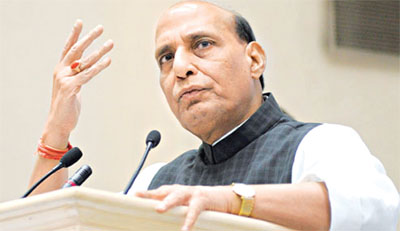
    NEW YORK, NY (TIP): “The BJP-led NDA government created 67 million jobs in less than five years whereas the Congress led UPA created less than 2.7 million jobs between 2004 and 2009. These figures are from the data collected by the federal government controlled agencies and not a figment of imagination”, Rajnath Singh said.

    He was speaking on what BJP will do to jumpstart the stalled Indian economy at a function organized by India-America Chamber of Commerce, July 25. Rajnath Singh who was in Washington for three days said he had discussions with the Congressmen and administration officials on the issue of difficulties faced by candidates in H1B and L1 visa to work legally in the US. The GDP cost burden will go up by 0.3 to 0.4 percent due to increase in fees.

    “We had lodged our protest against the comprehensive immigration reforms bill and they had raised the issue of patents and compulsory drug license issues. There was only one case under these CDL whereas Indonesia had six cases and Canada four cases,” he added. The US would do well to share its latest technology on green energy with nations such as India so that it can benefit the humanity. Once these inventions are ashared, they would help us more in a very rapid manner, he said.

    The BJP government will strengthen the village economy as over 70 percent of the people live in rural areas. We will do our best to stop urbanization and create more jobs in the rural areas as was done in the previous NDA government under the PURA scheme. More than 55 percent of the jobs for youth are in rural areas and there is a need to strengthen this sector. Turning to climate change, the BJP leader said while US that has been preaching, has a carbon emission rate of 20 ton per capita per annum, India has only 1.5 per ton per capita per annum.

    The global average is only 4.5 ton per capita per annum. You now decide who is on the right side and who is not. Addressing the members of the India- America Chamber of Commerce in Manhattan, he said India is now facing a serious financial crisis of grave magnitude despite the fact that no one in the global economy can ignore India. The economy of India is not something that makes us feel comfortable or feel proud of.

    But India was regarded as third largest economy of the world, he said. When the NDA government led by Atal Behari Vajpayee stepped down in 2004, the fiscal deficit was 2.5 percent and current account deficit was surplus. The revenue deficit was less than one percent. The economy witnessed a boom period during 1999 to 2004 when the country was ruled by the NDA and the slide started in 2004. “The boom that we created lasted till 2008 and then we are now witnessing is one of the worse economic downturns,” Singh said.

    “When I mentioned to the Speaker of the House yesterday at Washington that we had a surplus current account when we left power, he was surprised. There was a revenue deficit that went up from 4.5 percent to 6 percent in 2008. The current account of deficit shot to 6 percent. We passed the fiscal responsibility bill in the parliament and hence were able to bring some fiscal discipline.

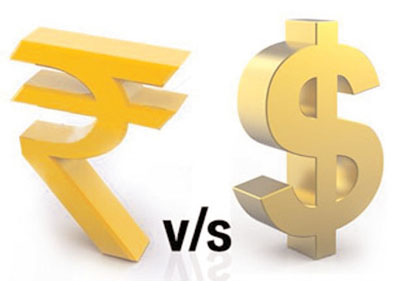
    Inflation is now hovering around 7.7 percent,” he said. The rupee value has depreciated drastically to the US dollar from Rs 37 a dollar in 2008 to Rs 60 in 2013 almost doubling in five years. We thought this would be offset by increase in exports and that also did not happen; it went up by just one percent. It’s very unfortunate that savings that have been the biggest strength of India as it provided capital is now falling at a very rapid rate.

    The small businesses tend to grow with the increase in savings and in the absence they take a major hit. Savings drop and growth rates drop and what else to drop. The success of Indian story is over. The success story of India is waiting for the BJP to return to power. The UPA has ruined the economic structure of the country. How will the BJP restore investors’ confidence and fix the broken economy once it comes to power? We will do what we did from 1999 to 2004 and we had a unique development model which is not only a model for India to feel proud of but came as a surprise to the world.

    When we handed over the reins of the government to the Congress-led UPA, India’s growth rate was 8 to 9 percent and rate of inflation was around three percent. More than 50 percent of the highways were built during the Vajpayee government and the present Congress dispensation had admitted this in the court. Where had all the developments gone now? The BJP created a success story only to be mauled by the Congress, he added.

    We have proved in the BJP-ruled states how we prioritize economic reforms and Gujarat is a shining example of India. The whole world is now talking about Gujarat and foreign governments are keen to study the success story. Take the case of Madhya Pradesh that was considered a sick state with no economic development before the BJP Government took over. Agricultural growth rate has gone up to 19.1 percent in the state as against 4 percent of the federal government.

    Madhya Pradesh has replaced as country’s largest supplier of food grains to the central pool. In Chhattisgarh, more than 90 percent of the population is covered under the Public Distribution System and people enjoy social security compared to mass suicide by farmers in the Congress-ruled states. Goa is the only state in India where petrol is cheaper than diesel similar to what we see in the US.

    Do we have to prove anything more to assure the people that our first priority will be to fix the problems and take India on a different plane?, he asked. The average GDP of BJP-ruled governments is about 10 percent whereas the nation is only experiencing a growth rate of less than five percent. There are only two models – BJP model for growth and Congress model for destruction, he added. Earlier, Rajiv Khanna, President, India-America Chamber of Commerce welcomed Rajnath Singh and introduced the subject of talk.

    He pointed out that Indian economy has been weakening and this had caused considerable doubts in the minds of investors and wanted Singh to speak on how his party, if it came to power would jumpstart the stalled Indian economy. The talk by Rajnath Singh was followed by an interesting Q & AA session. Singh candidly answered the few questions put to him.

  • RAMADAN

    RAMADAN

    RAMADAN IN 2013 WILL START ON TUESDAY, THE 9TH OF JULY, AND WILL CONTINUE FOR 30 DAYS UNTIL WEDNESDAY, THE 7TH OF AUGUST.

    RAMADAN is a month of celebration for Muslims around the world. Millions of Muslims around the world eagerly await the sighting of the new crescent and the dawn of the first day that mark the beginning of the holy month. This year Ramadan begins from July 9. Ramadan, one of the five pillars of Islam and the ninth month of the Islamic calendar, is observed with prayer, fasting, reading and reciting the Qur’an, and giving to charity.

    Ramadan, a month of unity and solidarity for Muslims across the continents, is observed in accordance with the historical and cultural traditions among Muslim societies. The spirit of Ramadan lies in fasting and praying, and togetherness. The social events, seasonal foods, recipes and ways of celebrating the days of Ramadan make the holy month a festive time among Muslims around the world. Muslims celebrate the beginning of Ramadan in different ways. Greetings of Ramadan Kareem (Glorious Ramadan), Ramadan Mubarak (Blessed Ramadan) and Kul Am Wa Antum Ba Khair (may every day of the year be packed with goodness) fill the atmosphere.

    Saudi Arabia comes alive reflecting the colors of Ramadan._Most of the street poles in major cities of the Kingdom are decorated with ornamental Ramadan lights, and light streamers lining the important historical structures around cities are a visual delight.Also, street vendors selling miswak (tooth cleaning stick) and charity organizations distributing dates at traffic intersections are a common sight welcoming the holy month. Similarly, in Palestine boys and girls set off fireworks to celebrate the beginning of the fasting month. In Indonesia, ceremonial musicians walk the streets beating drums and singing devotional songs. While in Turkey, the mosques are decorated with ‘mahya’ lights, suspended between their minarets to display devotional messages.

    In Egypt, traditional lanterns or ‘fanawee’ are the symbol of the beginning of Ramadan, and cannon shots are fired at iftar time. Kids carry colorful ‘fanoosh’ around streets while people decorate their houses with a holistic lantern to mark the celebration of Ramadan. Similarly, in Jordan and Palestine, people hang the ‘hilal’ (crescent) lamps at their windows symbolizing their holy sentiments. In India and Pakistan, it is interesting to see busy with festive decorations and celebrations.

    An eventful day during Ramadan is broadly observed within two spheres. First, the time of fasting from sunrise to sunset when a Muslim is expected to abstain from food , water, bad conduct and character and utilize the hours in prayers, reading and recitation of the Qur’an and helping the needy.

    The second circles around festive food rituals of the iftar after sunset till the sahoor before sunrise in addition to the prayers, including taraweeh (special night prayers) held after Isha prayers, unique to Ramadan. As the folklore has it, in most parts of the Muslim world a ‘mushaharati’ – drummer calling out to wake people up for sahoor before sunrise can still be witnessed, especially in Palestine, Jordan, Egypt and some cities of Indonesia, India, Pakistan and Bangladesh as well. All around the world, Muslims traditionally open their fast with dates according to the ‘sunnah’( practice) of the Prophet Muhammad (peace be upon him).

    Generous iftar parties known as azeema, in Saudi Arabia among families, relatives and friends are plentiful. Here in Saudi Arabia, some families observe iftar on the beaches in Jeddah and Dammam and around popular parks in Riyadh. “This is a time to show exceptional hospitality to our fasting friends. Sharing and caring are intertwined principles of this auspicious month” says Ghena Al- Barazi, owner of G.G. Pieces. Another distinctive sight in Ramadan is Maa’idatar-Rahman – the banquet of the Merciful God.

    It’s about tables serving iftar in the streets for free to poor people or people who happen to be still in the street and unable to get back home by iftar time. “Many persons take part in funding, preparing and serving those meals, and it’s one of the best things in Ramadan as charity, and helping the poor,” says Nasser Al-Sulaieman. Food served during the Islamic observance sees a similar variant around the Muslim world.

    Muslims enjoy the holy month with delicious recipes, menus and sweet treats to break the daily fast. General atmosphere is festive and celebratory. “A time to connect with families,” says Maha Al-Malik, executive director MIX, which organizes annual food festivals in Riyadh. “During Ramadan, families and friends get together over iftar and sahoor and share their dishes over long extended sufraas (dining mats). This inspires a sense of belonging among its members.” In Ramadan, tradition and food are almost similar around the Middle East-Gulf countries, including Syria, Lebanon, Jordan, Palestine, Qatar, the UAE, Kuwait and Bahrain.

    Muslims break their fasts with dates and drinks and offer the Maghreb salah and return to a sumptuous full course dinner. After Isha salaah and taraweeh (special prayers during Ramadan) awaits a treat with sweet dishes like kunafeh, qatayef and various others desserts. Ladies mostly enjoy their time visiting relatives and doing the necessary shopping beyond iftar and return for sahoor preparations for their families. Sahoor is a light preparation of food just before sunrise and the Fajr salaah. Ramadan has its own special food rituals presenting its notable dishes and delights from Muslim regions across the globe. Bandar Al-Mutairi said: “In Saudi Arabia, we break our fast with qahwa Arbi and tamar (dates). Shorba (soup of oats and wheat), samboosas and kabsa with leham (meat), macaroons, lasagna, lughemaat, soopia and khowaz are the common flavors.” With traditions from different cultures finding a place on the same table of Ramdan, it sets an inspiring ambiance of religious unity and brotherhood.

    In Egypt, sumptuous iftar parties are known as Ozoma. For Amani Mustafa Gamal, an Egyptian married to Nasser Hassan Abdel Samad, a Sudanese Doctor at KKIA, Riyadh, Ramadan means taking the traditional food and cultural favorites of both the countries. “Popular dishes like mahshy (rice cooked with wheat and green vegetables), lughmatal ghaazi (sweet dish), aafab-e-zainab (finger of Zainab) a sweet dish, make tasty ideas for iftar dinners,” she says. Drinks and juices like soopia, ersos, licorice, tamarind are common in Ramadan, adds Amani. “Customary Ramadan recipes and celebrations include a common national Baladi meals, lughumaat made from wheat and cereals served with special dried ladies finger sauce. Variety of bread from thick gurrafah to tissue thin khassrah are common. Halomore (a sweet and sour drink) serves for breaking the fast in Sudan, Nasser Hassan of Sudan says.

    Sweets are very popular during the holy month all over the Muslim world. Local bakers prepare breads, pancakes, patties and sweetmeats like Qatayef (a sort of sweet dumpling filled with cream or nuts), an Arab dessert commonly served during the month of Ramadan. During the holy month, women remain busy making pastries and special dishes for iftar displaying the richness of their traditional cuisines.

    Sweets have a special place in the Turkish Ramadan menu, especially gullac (a traditional Ramadan dessert of layers of thin cornstarch pastry soaked in rosewater-infused milk), kadayif dolma (shredded pastry filled with walnuts), revani (dense sponge cakes soaked with sugar syrup), helva (a confection made from farina and pine nuts), baklava and lokum (Turkish delight). In India and Pakistan, shops and local vendors sell fried samosas and varieties of pakoras (vegetable fritters) and jalebis, fruit chats and sweet cakes.

    The hustle around the busy markets with people flocking the fruit vendors and sweet shops just minutes before iftar, though quiet noisy, is still appealing considering the religious flavor and sentiment about Ramadan. One delights in the sheer chai (sweet tea) enriched with dry fruits cooked over night on low flame, haleem ( a porridge of meat, wheat, and lentils), pulao with mutton, biryanis, sewaii, kheer — a sweet dish made from rice cooked in milk and nuts – add to the festive celebrations. In Jordan and Palestine, families share and exchange dishes with neighbors and relatives. Qatayef sweet pancakes), warq dawalli (rice and meat wrapped in grapes leaves), makhubah, malfoof, mansaf a layered main course dish of bread rice and meat with black licorice drink – arq sous are common Ramadan recipes, updates Haula Umme Hamza from Jordan.

    Palestinian cheese Nablus, named after the west bank city of Nablus, is sought after by Jordanians. Muhammed Sameh from Kuwait celebrates Ramadan and Eid Al-Fitr here in the Kingdom but says he misses the celebrations back home as Ramadan is a good time for family get-together, and extending invitations to relatives and friends. The completion of the month long religious observations and celebrations extends to Eid Al-Fitr, celebrated on the first three days of the Islamic month of Shawwal throughout the Muslim world.

  • US aims to expand India arms trade by “billions of dollars”

    US aims to expand India arms trade by “billions of dollars”

    WASHINGTON (TIP): The United States has already made “tremendous progress” in expanding weapons sales to India since 2008, and US companies could see “billions of dollars” in additional sales in coming years, a senior US State Department official said on april 18.

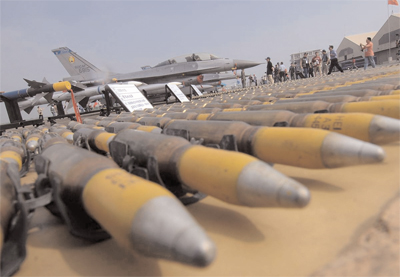
    Andrew Shapiro, assistant secretary of state for politicalmilitary affairs, said US sales of military equipment to India had grown from zero in 2008 to around $8 billion, despite a decision by India to choose a French-built plane in a closely-watched fighter plane competition. “While that fighter competition loss was disappointing, we have made tremendous progress in the defense trade relationship,” he told a news briefing. “There’s going to be billions of dollars more in the next couple of years.” He said a major arms trade initiative headed by Deputy Defense Secretary Ashton Carter was making good progress and should lead to “an ever greater pace of additional defense trade.” He gave no details on future possible arms sales. US weapons makers including Lockheed Martin Corp (LMT.N), Boeing Co (BA.N), Raytheon Co (RTN.N) and others, are keen to sale their wares to India, the world’s largest arms importer, especially since US military spending is now declining after a decade of sharp growth fueled by the wars in Iraq and Afghanistan. India plans to spend about $100 billion over the next decade upgrading its mostly Sovietera military hardware.

    Shapiro, who is due to leave the State Department at the end of this week, said he had seen news reports about delays in India’s talks with France’s Dassault Aviation (AVMD.PA) about a $15 billion purchase of 126 Rafale fighter jets. But he said the US State Department had not received word from India that it planned to reopen that competition or move ahead with a separate Indian naval fighter competition. Lockheed and Boeing were eliminated from the Indian fighter competition in April 2011.

    Shapiro said the State Department was seeing continued demand for US weaponry from the Middle East and Asia, but US companies faced stiff competition from European weapons makers, who are also facing declining demand in their home markets. He declined to discuss any specific arms sales, but noted that Singapore, Indonesia, and Australia had been key partners in defense trade in recent years. South Korea is also expected to announce the winner of its 60-fighter competition soon.

    Shapiro said his office had dramatically increased its advocacy for US weapons makers under former Secretary of State Hillary Clinton, and her successor, John Kerry, planned to continue the “economic diplomacy” initiative. Shapiro said State Department representatives planned to attend a major air show in Paris in June, despite mandatory budget cuts required under a process known as sequestration, but said officials would have to be conservative about the number of air shows they attended. He said sequestration-related furloughs could also slow the Pentagon’s work on export license requests, which threatened to slow or reverse progress made by the State Department in accelerating work on the licenses to 17 days on average now from 40 to 60 days several years ago. “Those processing times are likely to increase at a time when we’re trying to increase our defense trade. That’s not the best signal to send,” Shapiro said.

  • Indonesia hit by 7.2 magnitude earthquake

    Indonesia hit by 7.2 magnitude earthquake

    JAYAPURA (TIP): A 7.2 earthquake struck the eastern Indonesian province of Papua, the US Geological Survey said, sending panicked crowds running into the streets. There were no immediate reports of damage and no tsunami warning was issued after the quake struck on land at 1.42pm local time today at a depth of 75km, 272km west-southwest of provincial capital Jayapura, the USGS said. ”Based on all available data a destructive Pacific-wide tsunami is not expected and there is no tsunami threat to Hawaii,” the Pacific Tsunami Warning Centre has posted on its website.

    Local seismologists had measured the quake at 7.2. People in the area told AFP they felt the quake strongly and hundreds went running into the streets, witnesses told AFP. Narsi Bay said she was in a meeting on the first floor of a hotel in Jayapura when she felt ”strong shaking”. ”I went downstairs to go outside as quickly as I could as I was afraid that the building would collapse”. An official from the country’s meteorology, climatology and geophysics agency said the quake happened on land and there was no tsunami threat. ”We haven’t received any reports of damage.” Indonesia sits on the Pacific ”Ring of Fire” where continental plates collide, causing frequent seismic and volcanic activity.

  • Chinese New Year 2013

    Chinese New Year 2013

    Chinese Spring Festival, also called Lunar New Year,has more than 4,000 years of history. Being one ofthe traditional Chinese festivals, it is the grandestand the most important festival for Chinese people. It isalso the time for the whole families to get together, which issimilar with Christmas Day to the westerners. Originatingduring the Shang Dynasty (about 17th – 11th century BC),Spring Festival, which celebrates family reunion, is full ofrich and colorful activities, and new hopes with the adventof spring and flowers blossoming. People from differentregions and different ethnic groups celebrate it in theirunique ways.

    Festival Time
    The Spring Festival comes on the first day of Chineselunar calendar and lasts for almost half of a month. But infolk custom, this traditional holiday lasts from the 23rd dayof the twelfth month to the 15th day of the first month(Lantern Festival) in the lunar calendar. Among these days,the New Year’s Eve and the first day of the New Year is thepeak time of the festival. The exact days are different inevery year according to the lunar calendar. Schedule ofSpring Festival in recent years is offered in the followingtable.Chinese New Year begins according to the Chinesecalendar which consists of both Gregorian and lunar-solarcalendar systems. Because the track of the new moonchanges from year to year, Chinese New Year can beginanytime between late January and mid-February.

    Below isa chart that shows the beginning day of Chinese New Yearand the animal sign for that year.Chinese New Year is the longest and most importantfestivity in the Chinese calendar. The origin of ChineseNew Year is itself centuries old and gains significancebecause of several myths and traditions. Chinese New Yearis celebrated in China and in countries and territories withsignificant Chinese populations, including Hong Kong,Macau, Singapore, Thailand, Indonesia, Malaysia, Taiwan,Mauritius, Philippines, and also in Chinatowns elsewhere.Chinese New Year is considered a major holiday for theChinese and has had influence on the lunar new yearcelebrations of its geographic neighbors.Within China, regional customs and traditionsconcerning the celebration of the Chinese new year varywidely.

    People will pour out their money to buy presents,decoration, material, food, and clothing. It is alsotraditional for every family to thoroughly cleanse thehouse, in order to sweep away any ill-fortune and to makeway for good incoming luck. Windows and doors will bedecorated with red color paper-cuts and couplets withpopular themes of “good fortune” or “happiness”, “wealth”,and “longevity.” On the Eve of Chinese New Year, supper isa feast with families. Food will include such items as pigs,ducks, chicken and sweet delicacies. The family will endthe night with firecrackers. Early the next morning,children will greet their parents by wishing them a healthyand happy new year, and receive money in red paperenvelopes.

    The Chinese New Year tradition is to reconcile,forget all grudges and sincerely wish peace and happinessfor everyone.Although the Chinese calendar traditionally does not usecontinuously numbered years, outside China its years areoften numbered from the reign of the Yellow Emperor. Butat least three different years numbered 1 are now used byvarious scholars, making the year beginning in 2012 AD the”Chinese Year” 4710, 4709, or 4649.Every family does a thorough house cleaning andpurchases enough food, including fish, meat, roasted nutsand seeds, all kinds of candies and fruits, etc, for thefestival period. Also, new clothes must be bought,especially for children. Red scrolls with complementarypoetic couplets, one line on each side of the gate, are pastedat every gate. The Chinese character ‘Fu’ is pasted on thecenter of the door and paper-cut pictures adorn windows.

    Taboos
    The Spring Festival is a new start for a new year, so it isregarded as the omen of a new year. People have manytaboos during this period. Many bad words related to”death”, “broken”, “killing”, “ghost” and “illness” or”sickness” are forbidden during conversations. In someplaces, there are more specific details. They consider itunlucky if the barrel of rice is empty, because they thinkthey will have nothing to eat in the next year. Takingmedicine is forbidden on this day, otherwise, people willhave sick for the whole year and take medicine constantly.

    Festival Food
    Food during this festival has its characteristics, which isthe representative of Chinese festival food culture.Dumplings and the reunion dinner are indispensable atthis time. Cold and hot dishes are all served. Fish is alwaysan important dish then, which expresses people’s hope ofhaving a wealthy new year.

    History
    It is said that the custom of Spring Festival started inwhen people offered sacrifice to ancestors in the last monthof Chinese lunar calendar. At that time, people preparedthe sacrifice by doing thorough cleaning, having bathesand so on. Later, people began to worship different deitiesas well on that day. It is the time that almost all the farmworks were done and people have free time. The sacrificingtime changed according to the farming schedule and wasnot fixed until the Han Dynasty (202BC-220AD). Thecustoms of worshipping deities and ancestors remainseven though the ceremonies are not as grand as before. It isalso the time that spring is coming, so people held all kindsof ceremonies to welcome the spring.

    Legends
    There are many legends about the festival in Chineseculture. In folk culture, the Spring Festival is also called”guonian” (meaning “passing a year”). It is said that the “nian”(year) was a strong monster which was fierce and cruel andate one kind of animal including human being a day. Humanbeings were scared about it and had to hide on the eveningwhen the “nian” came out. Later, people found that “nian” wasvery scared about the red color and fireworks. So after that,people use red color and fireworks or firecrackers to driveaway “nian” every year. As a result, the custom of using redcolor and setting off fireworks remains.

    Festivities Schedule
    Preparing the New Year starts 7 days before the NewYear’s Eve. According to Chinese lunar calendar, peoplestart to clean the house on Dec. 24, butcher on Dec. 26th andso on. People have certain things to do on each day. Thesefestival activities will end Jan. 15th of the lunar calendar.

  • The Republic Of India

    The Republic Of India

    The Republic of India is a large South Asian country rich in ethnic diversity,with over one billion people speaking hundreds of languages. Politically it is the world’s largest liberal democracy. The Indian economy is the fourth largest in the world, in terms of purchasing power parity, and is the world’s second-fastest growing economy. India is also the second most populated country in the world. India has grown significantly, in terms of both population and strategic importance, in the last twenty years attributed to economic reforms. Strategically located in Asia,constituting most of the Indian subcontinent,India straddles many busy trade routes. It shares its borders with Pakistan,the People’s Republic of China,Myanmar,Bangladesh,Nepal,Bhutan and Afghanistan.Sri Lanka,the Maldives and Indonesia are the nearby island nations in the Indian Ocean. Home to some of the most ancient civilisations in the world, India was formally ruled by the British for almost ninety years before gaining independence in 1947.

    Origin of India’s name:
    The official name India is derived from Sindhu, the historic local appellation for the river Indus and is the most internationally recognisable of the country. The Constitution of India and general usage also recognises Bharat as the other official name of equal status. Bharat comes from the name of an ancient Hindu king and means seeker of knowledge. The third name is Hindustan, meaning land of the Hindus (where Hindu refers to those who dwell to the right of the Indus/Sindhu river) used from the Mughal times onwards. India,a sub-continent with 5000 year old History. A civilization united by its diversity,richness of culture,the glory of past,the turbulences and triumphs. The landmarks of each era,the achievements of a change,the legacy of a regime.

    As we walk through the history,India is an amazing discovery and its history is a unique tale of the past. With the arrival of the Portuguese, French and English traders, advantage was taken of the fractured, debilitate kingdoms to colonise India. In 1857, an insurrection amongst the army sepoys ensued in the popular Revolt of 1857 against the powerful British East India Company; this mobilised resistance, though short-lasting, was caused by the widespread resentment against discriminatory policies of the British. After the revolt, the Indian independence movements started demanding complete independence. On August 15th, 1947, India was finally granted independence from British rule and became a secular republic.

    January 26 (Republic Day of India): Republic Day is one of the greatest national celebrations observed throughout the country on January 26 every year. India became Republic on the 26th Jan, 1950. The country became a sovereign democratic republic with a written constitution and an elected parliament. At the time of independence, although India was under British rule, there were 565 Princely States, big and small, ruled by powerful sovereigns who were protected by treaties of alliance with the British Crown.

    Without bringing them together, the fundamental unity of the country was not possible. This unification was accomplished by Sardar Vallabhbhai Patel, whose statesmanship helped to integrate the country into one nation. In a little less than 2 years, all the princely States became a part of the Republic of India. It was on this date in 1927 that the Indian National Congress, then fighting its nonviolent war for freedom, voted for complete independence as against ‘dominion status’. When members of the INC took the pledge to work towards a ‘sovereign democratic republic’ of India.

  • Foreign Tornados

    Foreign Tornados

    The world’s high-risk tornado corridors are in the United States, Bangladesh, and Eastern India, but tornadoes can pop up almost anywhere, if the conditions are right. Other sites where tornadoes also appear include southern Canada, Europe, Asia, and Australia. In 2012, confirmed fatalities worldwide occurred in Poland, Japan, Indonesia, and Turkey. On February 24, a strong tornado struck South Sulawesi province in Indonesia, killing five people and damaging 98 structures. On April 9, a tornado struck a construction site in Elazƒ±ƒü Province, Turkey, killing at least six people and injuring seven others. Several homes were destroyed along the tornado’s seven-mile-long track. On July 14, a group of tornadoes hit the northern region of Pomerania in Poland, killing a 60-year old man in Wycinki and injuring at least 10 other people.

  • Islamist Terrorism may end by 2030

    Islamist Terrorism may end by 2030

    WASHINGTON (TIP): A landmark US intelligence report released on Dec 10 says the “current Islamist phase of terrorism” might end by 2030, but violent terrorism itself is unlikely to die completely and might evolve into bloodless forms of economic and financial terrorism.

    Many states might continue to use terrorist group out of a strong sense of insecurity, although the costs to a regime of directly supporting terrorists looks set to become even greater as international cooperation increase, according to the report Global Trends 2030. But with more widespread access to lethal and disruptive technologies, individuals who are experts in such niche areas as cyber systems might sell their services to the highest bidder, including terrorists who would focus less on causing mass casualties and more on creating widespread economic and financial disruptions, it warned.

    The report has a dismal prognosis for Pakistan, widely considered the epicenter of terrorism, ranking the country 12th among 15 countries that have a high risk of failure in a list that is topped by Somalia and includes Afghanistan, Nigeria, and Ethiopia. Bangladesh, which was ranked 11th in the last such report issued in 2008, is now considered stable and has been moved out of the list.

    Although the report said South Asia would continue to face internal and external shocks during the next 15- 20 years, including tensions between India and Pakistan over resources, it saw New Delhi’s “power advantage” relative to Islamabad growing rapidly.

    India’s economy is already nearly eight times as large as Pakistan’s; by 2030 that ratio could easily be more than 16-to-1, it said. In fact, to the likely dismay of Indian planners who factor in Pakistan’s economic growth and stability for peace-making prospects, the country does not even find mention as a second level economy such as Colombia, Egypt, Indonesia, Iran, South Africa, Mexico, Turkey, that the report countsin a list of middle tier that will also rise by 2030.

    “Low growth, rising food prices, and energy shortages will pose stiff challenges to governance in Pakistan and Afghanistan. Afghanistan’s and Pakistan’s youth bulges are large — similar in size to those found in many African countries. When these youth bulges are combined with a slow-growing economy, they portend increased instability,” the report warns. India, the report says, is in a better position, benefiting from higher growth, but it will still be challenged to find jobs for its large youth population. Inequality, lack of infrastructure, and education deficiencies are key weaknesses in India.

    “The neighborhood has always had a profound influence on internal developments, increasing the sense of insecurity and bolstering military outlays. Conflict could erupt and spread under numerous scenarios,” the report warns, adding that conflicting strategic goals, widespread distrust, and hedging strategies by all the parties will make it difficult for them to develop a strong regional security framework.

  • Visa on Arrival Scheme Registers A Growth of 25 Percent

    Visa on Arrival Scheme Registers A Growth of 25 Percent

    NEW DELHI (TIP): The “Visa on Arrival” (VoA) Scheme of the government has become popular with the tourists. The scheme registered a growth of 25% during the period January-November 2012 over the corresponding period of 2011. A total number of 13,903 VoAs were issued during the period January-November 2012 as compared to 11,121 VoAs issued during the corresponding period of 2011. The highest number of 3913 VoAs were issued to the tourists from Japan followed by New Zealand ( 2645) and The Philippines ( 2205). The following are the important highlights of VoAs issued during November, 2012.
    (i) During the month of November 2012, a total number of 1,630 VoAs were issued under this Scheme as compared to 1,382 VoAs during the month of November 2011, registering a growth of 17.9%.

    (ii) The number of VoAs issued under this scheme during November 2012 for nationals of the eleven countries were Japan (435), New Zealand (299), the Philippines (257), Indonesia (229), Singapore (207), Finland (86), Cambodia (70), Luxembourg (23), Myanmar (13), Vietnam (10) and Laos (1).

    (iii) The number of VoAs issued under this scheme during January- November 2012 were Japan (3,913), New Zealand (2,645), the Philippines (2,205), Indonesia (2,116), Singapore (1,718), Finland (810), Vietnam (152), Cambodia (144), Luxembourg (101), Myanmar (89) and Laos (10).

    (iv) During the period January- November 2012, the highest number of VoAs were issued at Delhi airport (8,285), followed by Mumbai (2,827), Chennai (1,950) and Kolkata (841).

    As a facilitative measure to attract more foreign tourists to India, the Government launched the “Visa on Arrival” (VoA) Scheme in January 2010 for citizens of five countries, viz. Finland, Japan, Luxembourg, New Zealand and Singapore, visiting India for tourism purposes. The Government extended this Scheme to the citizens of six more countries, namely Cambodia, Indonesia, Vietnam, the Philippines, Laos and Myanmar in January 2011.

  • India: the warped history and geography of Non Alignment 2.0

    India: the warped history and geography of Non Alignment 2.0

    In the aftermath of the disintegration of the Soviet Union, the Narasimha Rao government reworked India’s dysfunctional economic and foreign policies to improve India’s abysmal terms of trade with the rest of the world. The latest global financial crisis seems to have shaken the United States’ global dominance and is forcing India to revisit its post-Soviet foreign policy.

    Choices Asian countries like India make in the near future will affect the chances of the emergence of an ‘Asian Concert’ that, in turn, will influence the United States’ ability to sustain its dominance by ‘rebalancing’ toward Asia. A second term for President Obama means that Asian countries may be compelled to respond to ‘rebalancing’ sooner rather than later. Obama’s first foreign tour since his re-election is a case in point. But as usual India is struggling to discover the right balance between strategic independence and alignment, and soft and hard powers. NonAlignment 2.0: A Foreign and Strategic Policy for India in the Twenty First Century, a document released in February 2012, is of interest in this context, as it is one of the most comprehensive contributions to the ongoing debate within India.

    It discusses India’s strategic opportunities and attempts to outline India’s foreign and strategic policy over the next decade. While the authors, including well-known academics, retired government officials, journalists and industry representatives, ‘were administratively supported by the National Defence College and Centre for Policy Research’, the usual disclaimers apply. Written over a year, the document’s release coincided with the Chinese foreign minister’s visit to India and was attended by the current and past National Security Advisors, who mostly disagreed with the document. The document indeed does not throw much light on India’s foreign policy conundrum – ‘to enhance India’s strategic space and capacity for independent agency’. It largely restricts itself to presenting a bulleted list of what ought to be done. The authors were ‘driven by a sense of urgency… that we have a limited window of opportunity in which to seize our chances’ and the belief that ‘internal development will depend decisively on how effectively we manage our global opportunities’.

    But they seem to be torn between nostalgia for India’s earlier non-alignment policy and the belief in India as a quintessentially nonaggressive country, and the reality of an emerging multipolar world, where hard choices are unavoidable and hard power counts. NonAlignment 2.0 then appears to be a convenient, if not ad hoc, solution to India’s foreign policy conundrum in the midst of the growing chances of confrontation between the US and China, as well as between Israel and Iran. Three aspects of this document – which limit its usefulness – are striking. First, the document is devoid of idealism, which, irrespective of its impracticality, could have helped build overarching structures to reconcile the otherwise irreconcilable claims upon foreign policy. Second, the discussion is not built upon any theoretical and strategic framework, given the ad hoc nature of the solutions presented in the document. Third, the document does not empirically substantiate the assumptions that inform the solutions.

    The discussion essentially happens in a vacuum without engaging in parallel or preceding debates. The document does not even refer to the Non-Alignment Movement. Unsurprisingly, the authors neither explain why and in what ways the earlier non-alignment policy needs to be changed, nor do they explain in what respects NonAlignment 2.0 is different. Moreover, the authors think in largely non-institutional terms, which is surprising given their commitment to nonalignment that ideally entails multilateralism. This is evident from the absence of references to key organizations and blocs such as ASEAN, the EU and SAARC. With the exception of the IMF, UN and the G20, other international organizations are rarely, if ever, mentioned. And there is hardly any discussion on potential alternatives to the existing international organizations. A narrow geographical focus compounds the historical and institutional vacuum at the heart of NonAlignment 2.0. Global pretensions notwithstanding, the document largely focuses on China and Pakistan – the only countries that have sub-chapters devoted to them. Most references to the US are related to Pakistan, Afghanistan and China. Even Pakistan is thought of ‘as a subset of the larger strategic challenges posed by China’. SAARC members, excluding Pakistan and Afghanistan, are referred to merely seven times, of which five references are to Bangladesh.

    And Indonesia, another important neighbor, and Japan, an important partner, attract less attention than Iran. In fact, Iran completely overshadows the Middle East in the document. Viewed alongside the lack of engagement with international institutions and India’s history, the skewed geographical focus of NonAlignment 2.0 suggests two things that should disturb those who, for some reasons, hope that India will step up and play a larger role in the emerging international order in Asia. Firstly, a significant section of the Indian strategic community continues to be obsessed with Pakistan and, increasingly, China and, hence, is oriented toward India’s northern land borders. Such an orientation is obsolete given India’s ever increasing marine footprint and growing economic and strategic engagement with countries across the world. Secondly, they also continue to be unable to imagine international institutional solutions to perennial regional military and diplomatic concerns.

    For instance, NonAlignment 2.0 informs us that in future, Chinese attempts to escalate the China-India border conflict ought to be countered through ‘effective insurgency in the areas occupied by Chinese forces’. This is a solution from another age. But as veteran journalist BG Verghese pointed out, this document is important insofar as it challenges others to think aloud.

  • New anti-China Asian Trilateral Grouping Emerges; India, Indonesia, Australia to Hold Talks

    New anti-China Asian Trilateral Grouping Emerges; India, Indonesia, Australia to Hold Talks

    NEW DELHI (TIP): India, Indonesia and Australia will form the first “troika” to confer on the Indian Ocean, a first step towards a trilateral grouping in Asia. This new engagement is believed to be significant as all three countries seek to hedge against possible Chinese expansionism.

    Peter Varghese, Australian high commissioner and new foreign secretary, said Canberra would be taking charge of the Indian Ocean regional grouping next year, and an India-Australia-Indonesia trilateral would be one of the early deliverables. Talking to TOI on the eve of his departure, Varghese said, “We will have a troika with Indonesia, the incoming vice-chair. This will be a good window to do things, to push practical agenda for IORARC.” The Indian Ocean is proving to be an important strategic outreach for India, as well as Australia, which now focuses more on what it calls the “Indo- Pacific” rather than East Asia. It has created convergences between India and countries like Australia in ways that would not have happened earlier.

    Varghese said, “I think we are in a qualitative new space in the (bilateral) relationship. We have now cleared the obstacles that were holding the relationship back. The students’ safety issue, while we don’t want to be complacent about it, I think is behind us. The uranium issue is now resolved. We’ve now got some clear air in the relationship.” India is looming higher in the Australian mindset. India, as Varghese points out, is not only the source for the largest number of legal migrants into Australia, it’s also one of the greatest sources for skilled labour. The Australian government’s recent white paper places a big emphasis on the India relationship. For the first time, both countries are working on geo-political and security issues — the two nations have quietly launched a bilateral dialogue on East Asia.

    The big thing, Varghese says, will be an India-Australia approach towards building up the East Asia Summit into an important element of a regional security architecture. “This is a time of some fluidity strategically in Asia, and it’s very instant. We are trying to create institutions that help us manage what is going to be a historic transition in the region. The history of Asia is not strong on institutions.

    It offers a good prospect to get a single institution that can deal with big economic and strategic issues in an integrated way. Australia and India have common objectives.” Last week’s East Asia summit showed how the forum can be easily hijacked by territorial disputes. Varghese observes, “The next EAS will be held in the background of a number of concerns about what is happening in relation with territorial disputes in the region. It would be a natural thing for the EAS to discuss that.

    We all want to see those issues resolved in a way that uphold certain core principles, the most important of which is the peaceful resolution of disputes and also a resolution which respects international law, freedom of navigation and freedom of the high seas.”

  • Anti-Islam film: Protesters storm diplomatic enclave in Islamabad, army called in

    Anti-Islam film: Protesters storm diplomatic enclave in Islamabad, army called in

    NEW DELHI (TIP): Hundreds of demonstrators protesting against the anti-Prophet Muhammad film stormed the diplomatic enclave in Islamabad, Pakistan on Thursday. Authorities were forced to call in the army to control the situation which threatened to escalate into violence. Hotels frequented by foreigners were also attacked by the demonstrators. This was the most violent show of anger in a day that saw smaller demonstrations in Indonesia, Iran and Afghanistan.

    The vulgar depiction of Islam’s Prophet Muhammad in an American-made movie has angered Muslims across the world, with many taking to the streets to rally against the film. In recent days, the decision by a French satirical magazine to release cartoons crudely depicting the prophet as added to the tension .Riot police used tear gas and batons to keep stone throwing demonstrators away from the enclave, and hundreds of shipping containers were lined up to cordon off the area. Some protesters were students affiliated with the Islamist hard-line Jamaat-e-Islamic party. The demonstrations are expected to grow in Pakistan on Friday, the traditional day of prayer in the Muslim world. The Pakistani government has called a national holiday for Friday so that people could come out and demonstrate peacefully against the film. That decision drew rare wordsof praise from the Pakistani Taliban, which is usually at war with the government.

  • Egypt’s mufti urges Muslims to endure insults peacefully

    Egypt’s mufti urges Muslims to endure insults peacefully

    CAIRO (TIP) – Muslims angered by cartoons mocking the Prophet Mohammad should follow his example of enduring insults without retaliating, Egypt’s highest Islamic legal official said.

    Western embassies tightened security in Sanaa, fearing the cartoons published in a French magazine on September 19 could lead to more unrest in the Yemeni capital where crowds attacked the U.S. mission last week over an anti-Islam film made in America.

    In the latest of a wave of protests against that video in the Islamic world, several thousand Shi’ite Muslims demonstrated in the northern Nigerian town of Zaria, burning an effigy of U.S. President Barack Obama and crying “Death to America”.

    In the Pakistani capital, about 1,000 stone-throwing protesters clashed with police as they tried to force their way to the U.S. embassy on Thursday and the government shut down mobile phone services in more than a dozen cities as part of security arrangements ahead of protests expected on Friday.

    The U.S. embassy in Pakistan has been running television advertisements, one featuring Secretary of State Hillary Clinton, emphasising that the U.S. government had nothing to do with the film.

    The U.S. and French embassies were closed on Friday in Jakarta, capital of Indonesia, which has the world’s biggest Muslim population, and diplomatic missions in the Afghan capital, Kabul, were on lock-down.

    The cartoons in France’s Charlie Hebdo satirical weekly have provoked relatively little street anger, although about 100 Iranians demonstrated outside the French embassy in Tehran.

    In Tunisia, the birthplace of the Arab Spring revolts, the Islamist-led government decreed a ban on protests planned on Friday against the cartoons. Four people died and almost 30 were wounded last week when protesters incensed by the movie about the Prophet Mohammad stormed the U.S. embassy.

    An Islamist activist called for attacks in France to avenge the perceived insult to Islam by the “slaves of the cross”.

    Mu’awiyya al-Qahtani said on a website used by Islamist militants and monitored by the U.S.-based SITE intelligence group: “Is there someone who will roll up his sleeves and bring back to us the glory of the hero Mohammed Merah?”
    He was referring to an al Qaeda-inspired gunman who killed seven people, including three Jewish children, in the southern French city of Toulouse in March.

    Condemning the publication of the cartoons in France as an act verging on incitement, Egypt’s Grand Mufti Ali Gomaa said on Thursday it showed how polarised the West and the Muslim world had become.

    Gomaa said Mohammad and his companions had endured “the worst insults from the non-believers of his time. Not only was his message routinely rejected, but he was often chased out of town, cursed and physically assaulted on numerous occasions.

    “But his example was always to endure all personal insults and attacks without retaliation of any sort. There is no doubt that, since the Prophet is our greatest example in this life, this should also be the reaction of all Muslims.”
    His statement echoed one by Al Azhar, Egypt’s prestigious seat of Sunni learning, which condemned the caricatures showing the Prophet naked but said any protest should be peaceful.An official at the Coptic Orthodox Church in Egypt, whose population of 83 million people is 10 percent Christian, also condemned the cartoons as insults to Islam.

  • AS I SEE IT – China thrives in soft corner with two-track U.S. strategy

    AS I SEE IT – China thrives in soft corner with two-track U.S. strategy

    The U.S. strategy long has been geared against the rise of any hegemonic power in Asia and for a stable balance of power. Yet, as its 2006 national security strategy report acknowledges, the United States also remains committed to accommodate “the emergence of a China that is peaceful and prosperous and that cooperates with us to address common challenges and mutual interests.”

    Can U.S. policy reconcile these two seemingly conflicting objectives? The short answer is yes.

    The U.S., in fact, has played a key role in China’s rise. One example was the U.S. decision to turn away from trade sanctions against Beijing after the 1989 Tiananmen Square massacre and instead integrate that country with global institutions – a major decision that allowed China to rise. Yet, paradoxically, many in the world today see China as America’s potential peer rival.

    Often overlooked is the fact that U.S. policy has a long tradition of following a China-friendly approach.
    In 1905, for example, President Theodore Roosevelt – who hosted the Japan-Russia peace conference in Portsmouth, New Hampshire, after the war between the two countries – argued for the return of Manchuria to Manchu-ruled China and for a balance of power in East Asia. The Russo-Japanese War actually ended up making the U.S. an active participant in China’s affairs.

    After the Communists seized power in China in 1949, the U.S. openly viewed Chinese Communism as benign and thus distinct from Soviet Communism. In more recent decades, U.S. policy has aided the integration and then ascension of Communist China, which began as an international pariah state.

    It was the U.S. that helped turn China into the export juggernaut that it has become by outsourcing the production of cheap goods to it. Such manufacturing resulted in China accumulating massive trade surpluses and becoming the principal source of capital flows to the U.S.

    America’s China policy has traversed three stages. In the first phase, America courted the Mao Zedong regime, despite its 1950-51 annexation of Tibet and its domestic witch hunts, such as the “Let a Hundred Flowers Bloom” campaign. Disappointment with courtship led to estrangement, and U.S. policy then spent much of the 1960s seeking to isolate China.

    The third phase began immediately after the 1969 Sino-Soviet bloody military clashes, as the U.S. actively sought to take advantage of the open rift between the two communist states to rope in China as an ally in its anti-Soviet strategy.

    Even though the border clashes were clearly instigated by China, as the Pentagon later acknowledged, Washington sided with Beijing. That helped lay the groundwork for the China “opening” of 1970-71 engineered by Henry Kissinger, who had no knowledge of China until then.

    Since the 1970s, the U.S. has followed a conscious policy to aid China’s rise – a policy approach that remains intact today, even as Washington seeks to hedge against the risks of Chinese power sliding into arrogance. The Carter White House, in fact, sent a memo to various U.S. departments instructing them to help in China’s rise.

    In the second half of the Cold War, Washington and Beijing quietly forged close intelligence and other strategic cooperation, as belief grew in both capitals that the two countries were natural allies. Such cooperation survived the end of the Cold War. Even China’s 1996 firing of missiles into the Taiwan Strait did not change the U.S. policy of promoting China’s rise, despite the consternation in Washington over the Chinese action.

    If anything, the U.S. has been gradually withdrawing from its close links with Taiwan, with no U.S. Cabinet member visiting Taiwan since those missile maneuvers. Indeed, U.S. policy went on to acknowledge China’s “core interests” in Taiwan and Tibet in a 2009 joint communiqué with Beijing.

    In this light, China’s spectacular economic success – illustrated by its emergence with the world’s biggest trade surplus and largest foreign-currency reserves – owes a lot to the U.S. policy from the 1970s, including Washington’s post-Tiananmen decision not to sustain trade sanctions.

    Without the significant expansion in U.S.-Chinese trade and financial relations since the 1970s, China’s economic growth would have been much harder.

    From being allies of convenience in the second half of the Cold War, the U.S. and China have emerged as partners tied together by close interdependence. America depends on Chinese trade surpluses and savings to finance its supersized budget deficits, while Beijing relies on its huge exports to the U.S. both to sustain its economic growth and subsidize its military modernization.

    By plowing two-thirds of its mammoth foreign-currency reserves into U.S. dollar-denominated investments, Beijing has gained significant political leverage.

    China thus is very different from the adversaries the U.S. has had in the past, like the Soviet Union and Japan. U.S. interests now are so closely intertwined with China that they virtually preclude a policy that seeks to either isolate or confront Beijing. Even on the democracy issue, the U.S. prefers to lecture some other dictatorships rather than the world’s largest and oldest-surviving autocracy.

    Yet it is also true that the U.S. views with unease China’s not-too-hidden aim to dominate Asia – an objective that runs counter to U.S. security and commercial interests and to the larger U.S. goal for a balance in power in Asia.
    To help avert such dominance, the U.S. has already started building countervailing influences and partnerships, without making any attempt to contain China. Where its interests converge with Beijing, the U.S. will continue to work closely with it. American academic John Garver, writing in the current issue of the Orbis journal, sees a de facto bargain between Washington and Beijing in the vast South Asia-Indian Ocean Region (SA-IOR): “Beijing accepts continuing U.S. pre-eminence in the SA-IOR in exchange for U.S. acceptance of a gradual, incremental and peaceful expansion of Chinese presence and influence in that region.”

    For the U.S., China’s rising power helps to validate U.S. forward military deployments in the Asian theater, keep existing allies in Asia, and win new strategic partners. An increasingly assertive China indeed has proven a diplomatic boon for Washington in strengthening and expanding U.S. security arrangements in Asia.

    South Korea has tightened its military alliance with the United States, Japan has backed away from a move to get the U.S. to move a marine airbase out of Okinawa, Singapore has allowed the stationing of U.S. Navy ships, Australia is hosting U.S. Marine and other deployments, and India, Vietnam, Indonesia and the Philippines, among others, have drawn closer to the U.S.

    The lesson: The rise of a muscle-flexing power can help strengthen the relevance and role of a power in relative decline.

    Let us not forget that barely a decade ago, the U.S. was beginning to feel marginalized in Asia because of several developments, including China’s “charm offensive.” It was worried about being shunted aside in Asia.
    Today, America has returned firmly to the center-stage in Asia, prompting President Barack Obama to declare his much-ballyhooed “pivot” toward Asia. To lend strategic heft to the “pivot,” the U.S. is to redirect 60 percent of its battleships to the Pacific and 40 percent to the Atlantic by 2020, compared to the 50-50 split at present.

    Despite the “pivot,” the U.S. intends to stick to its two-track approach in Asia – seek to maintain a balance of power with the help of its strategic allies and partners, while continuing to accommodate a rising China, including by reaching unpublicized bargains with it on specific issues and Asian subregions.

    Brahma Chellaney is a prolific writer. He has authored “Asian Juggernaut” (HarperCollins) and “Water: Asia’s New Battleground” (Georgetown University Press).