Tag: InstagramGoogle

  • Buddha Purnima

    Buddha Purnima

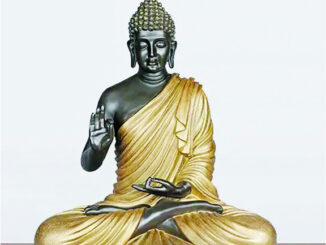
    Buddha Purnima, traditionally known as Vesak or Vesakha,  is celebrated as Lord Gautama Buddha’s Birthday. Vaishakh Purnima is also called Buddha Purnima. Gautama Buddha’s name was first Prince Siddhartha Gautama. Buddha means ‘Knowledgeable and knowledgeable person’, Gautama Buddha is also known as Shakyamuni.

    Buddha Purnima is the biggest festival day for followers of Buddhism. Buddha was born on the full moon day. Buddha attained nirvana on the day of full moon and left this world on the day of Vaishakh sukla full moon. This day is celebrated as Buddha Purnima in the whole world. Several types of celebrations have been organized on this day. Celebrations are organized according to customs and culture of different countries in different countries.

    On this day devout Buddhists and followers assemble in various temples before dawn for the ceremonial and honourable hoisting of the Buddhist Flag.

    Devotees bring simple offerings of flowers, candles and joss-sticks to lay at the feet of their teacher. They come together to make a special effort to refrain from killing of any kind and are encouraged to partake in vegetarian food for this day.

    Certain temples observe the practice of displaying a small statue of Buddha in front of the altar in a basin filled with water and decorated with flowers. Devotees are allowed to pour water over the statue as a symbol of cleansing bad karma.

    Buddha Purnima also includes talks given by monks who engage in reciting verses uttered by Buddha 25 centuries ago to invoke peace and happiness.

    Celebrating this day does not involve festivities unlike other events, but works as a mean of making special efforts to bring happiness to the unfortunate, the aged, the handicapped and the sick.

    Celebrations around the world

    Japan

    The festival here, is based on a different legend that says, a dragon appeared in the sky on Buddha’s birthday and poured soma over him, which is a Vedic ritual drink. In the modern arena, Japan celebrates Vesak by pouring amacha, a sweet tea on statues.

    Nepal

    Nepal is home to Lumbini-birthplace of Buddha, and Swayambhu-the holy temple for Buddhists also known as the Monkey Temple. The main door of Swayambhu is opened only on this day; hence, people from all over Kathmandu valley are stimulated by the event. Pilgrims across the world gather in thousands to celebrate Buddha’s birthday at his birthplace.

    Sri Lanka

    Sri Lanka celebrates Vesak for about one week! During this time, the selling of alcohol and fresh meat is prohibited with abattoirs also being closed. The celebrations here include giving of alms and erection of pandals wherein each pandal illustrates a story from the Jataka Tales. Food stalls are set up by Buddhist devotees that provide eatables and drinks to passersby. Also birds, insects and animals are released by the thousands in what is known as a ‘symbolic act of liberation’; of giving freedom to those who are in captivity, imprisoned, or tortured against their will.

    Apart from these, other Asian countries like Korea, Vietnam, Malaysia, Indonesia, and Singapore also participate in processions and prayers by monks and make this day a true symbol of spirituality.

    What Do People Do?

    Many Buddhists visit temples on Vesak to listen to monks give talks and recite ancient verses. Devout Buddhists may spend all day in one or more temples. Some temples display a small statue of Buddha as a baby. The statue is placed in a basin filled with water and decorated with flowers. Visitors to the temple pour water over the statue. This symbolizes a pure and new beginning.

    Many Buddhists pay special attention to Buddha’s teachings during Vesak. They may wear white robes and only eat vegetarian food on and around Vesak. Many people also give money, food or goods to organizations that help the poor, the elderly and those who are sick. Caged animals are bought and set free to display care for all living creatures, as preached by Buddha.

    Public Life

    Government offices, post offices and banks are closed in India on Vesak. Stores and other businesses and organizations may be closed or have reduced opening hours. Transport is usually unaffected as many locals travel for religious celebrations.

    Background

    Gautama Buddha was a spiritual teacher in India. Many scholars are uncertain when he lived. It is believed that Buddha was born at some time between sixth and fourth centuries BCE. Opinions among scholars are generally divided between those who place Buddha’s death about 480 BCE and those who place it as much as a century later.

    Buddha was an influential spiritual teacher during and after his lifetime. Many Buddhists see him as the Supreme Buddha. Festivals to honor Buddha were held for many centuries. The decision to celebrate Vesak as the Buddha’s birthday was formalized at the first conference of the World Fellowship of Buddhists. This conference was held in Colombo, Sri Lanka, in May, 1950. The date was fixed as the day of the full moon in May. Different Buddhist communities may celebrate Vesak on different dates in years when there are two full moons in May. This is because the Buddhist lunar calendar can be interpreted in different ways.

    Symbols

    The dharmacakra or dharma wheel is a symbol often seen during Vesak. It is a wooden wheel with eight spokes. The wheel represents Buddha’s teaching on the path to enlightenment. The eight spokes symbolize the noble eightfold path of Buddhism.

  • Indian American Kris Kolluri tapped to lead NY & NJ’s Gateway Program

    Indian American Kris Kolluri tapped to lead NY & NJ’s Gateway Program

    NEW YORK (TIP): Kris Kolluri, an Indian American infrastructure management expert, has been tapped to lead New York and New Jersey’s Gateway Program, including redevelopment of the Portal North Bridge and a new Hudson River tunnel. New York Governor Kathy Hochul and New Jersey Governor Phil Murphy jointly announced the nomination of Kolluri as the CEO of the Gateway Development Commission, on May 6. The Commission is a partnership between New York, New Jersey and Amtrak that coordinates delivery of the Gateway Program with its partner agencies, including the Port Authority of New York and New Jersey and NJ TRANSIT.

    Kolluri will be considered by the Gateway Development Commission’s Board at its next upcoming meeting, anticipated on May 16, according to a press release from the New York governor’s office.

    “With his extensive resume, Kris Kolluri brings an extraordinary record of public service and I am confident he will serve New York and New Jersey well as CEO of the Gateway Development Commission,” Hochul said.

    “The Gateway Hudson Tunnel is critical to the Northeast corridor serving more than 800,000 passengers daily and is a key component of our plan to build back stronger than ever,” she said.

    “Moving the Gateway Program, and specifically the Hudson Tunnel Project, forward is critically important for our region, and I am confident that Kris Kolluri’s leadership will help us realize these much-needed projects,” said Murphy. “Kris has years of infrastructure management and operations experience, as well as years of government experience, that will be vital as we continue working with our federal partners to get the Gateway Program fully funded and completed.” “I am honored to be nominated by Governors Phil Murphy and Kathy Hochul to be Chief Executive Officer of the Gateway Development Commission. I look forward to meeting the Commissioners and supporting their important work,” said Kolluri.

    “There is a clear and present opportunity and desire among federal, state, and bi-state partners to advance the Hudson Tunnel Project and the Gateway Program,” he said. “In the short term, the HTP is poised to move forward and the Commission has a critical role in overseeing the successful delivery of this project.”

    “Should my candidacy be approved by the Commissioners, I commit to being singularly focused on ensuring that this collaborative effort results in HTP’s fruition,” said Kolluri. Kolluri served as the Commissioner of the New Jersey Department of Transportation (DOT) from January 2006 until December 2008.

    In his capacity as DOT Commissioner, Kolluri served as Chairman of NJ TRANSIT, the New Jersey Turnpike Authority, and the South Jersey Transportation Authority. While at DOT, Kolluri played an instrumental role in helping develop a funding strategy to meet New Jersey’s contribution towards the ARC project, a nationally significant rail tunnel project that would have connected New Jersey and New York.

    At DOT, Kolluri oversaw a total of 17,000 employees, more than $3.6 billion in capital funds, and over $2 billion in operating funds.

    Kolluri currently serves as the President & CEO of Camden Community Partnership, Inc., an economic and community development non-profit. He previously served as the CEO of the Rowan University/Rutgers – Camden Board of Governors (Joint Board).

    Prior to his appointment as CEO of the Joint Board, he served as Counsel at the law firm of Windels Marx Lane and Mittendorf, where he advised clients on transportation and economic development matters.

    Kris also served as the CEO of the New Jersey Schools Development Authority from December 2008 to January 2010.

    Before serving as DOT Commissioner, Kris specialized in redevelopment and transportation law as an attorney at Parker McCay of Marlton. Kris has a Bachelor of Science from Rutgers University – Camden and a Juris Doctor degree from Georgetown University. He lives in Haddonfield, New Jersey.