Tag: ISRAEL

  • Gaza militants resume rocket fire at Israel after truce expires

    Gaza militants resume rocket fire at Israel after truce expires

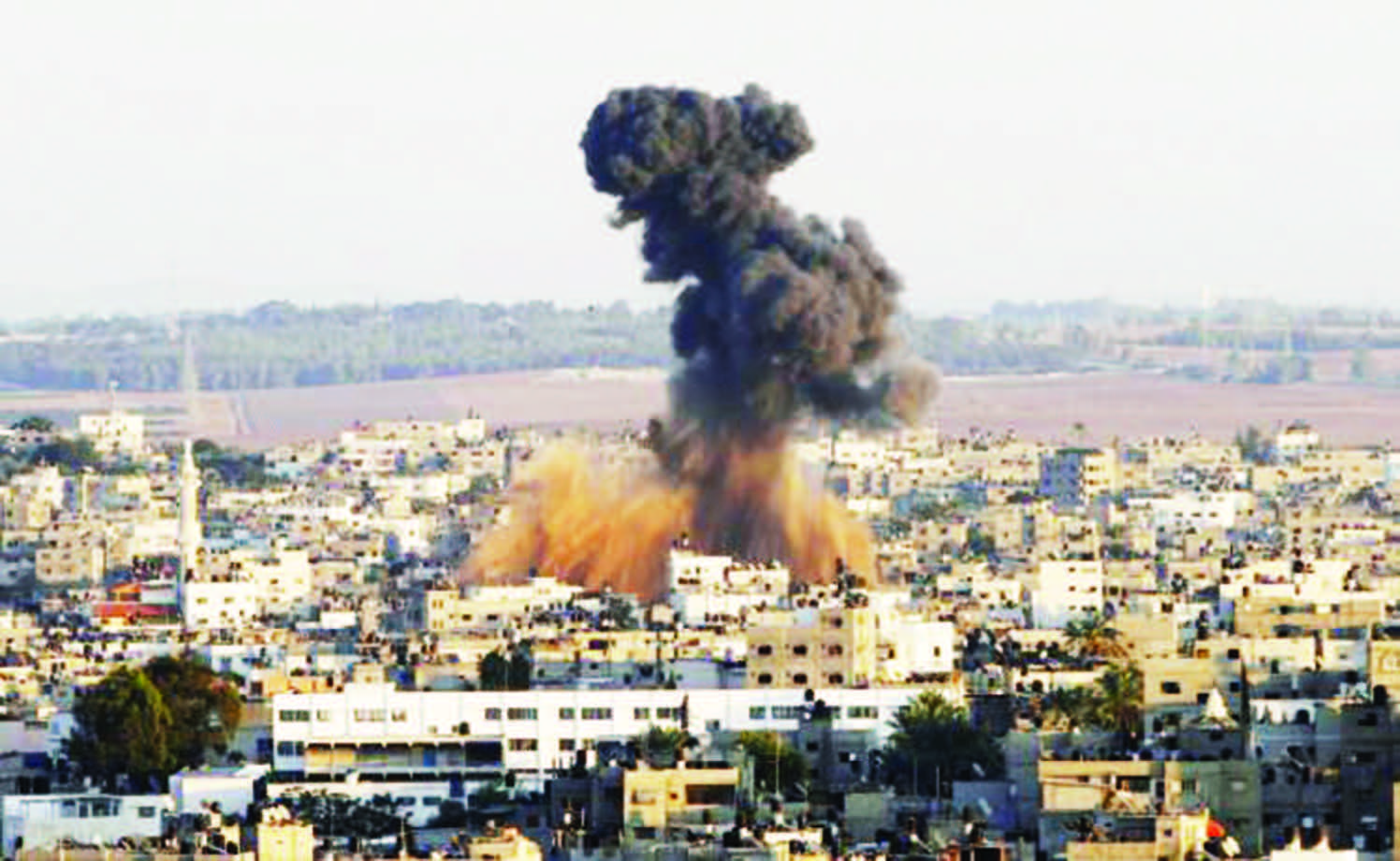
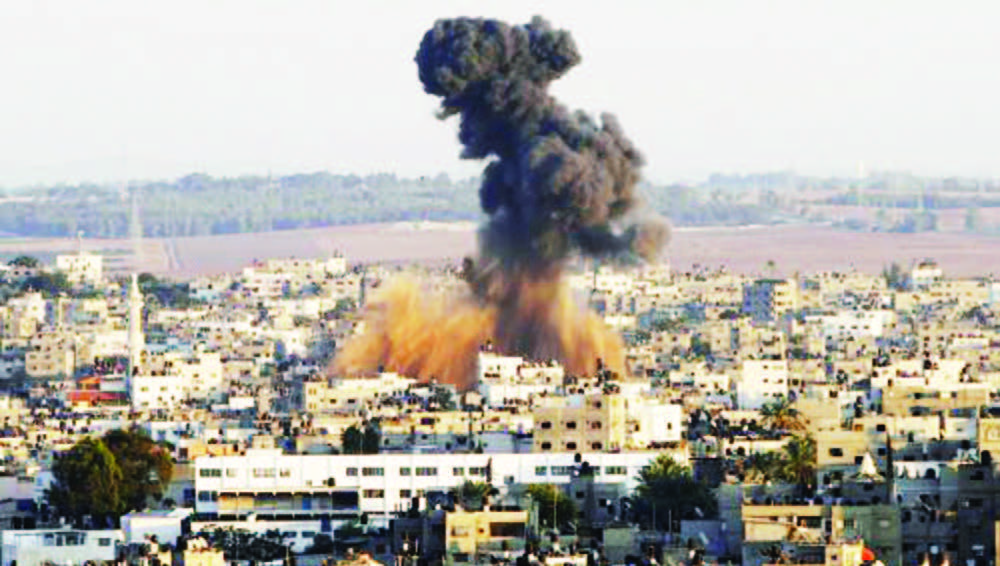
    GAZA/JERUSALEM (TIP): Palestinian militants in the Gaza Strip resumed rocket fire into Israel on Friday after Egyptian-mediated talks in Cairo failed to extend a 72-hour truce in a nearly month-long war. As police said rocket-warning sirens were sounding in southern Israel, the military’s “Iron Dome” interceptor system brought down a missile over the southern city of Ashkelon.


    A military spokesman said on Twitter: “After the 72- hour ceasefire, Hamas resumes indiscriminate rocket fire at Israel. At least 5 rockets launched – one intercepted over Ashkelon.” Israel had earlier said it was ready to agree to an extension as Egyptian go-betweens pursued talks with Israeli and Palestinian delegates in Cairo on ending the war that has devastated the Hamas-controlled enclave. A Hamas spokesman said Palestinian factions had not agreed to extend the truce, but would continue negotiations in Cairo. The Palestinians had wanted Israel to agree in principle to demands which include a lifting of a blockade on the Gaza Strip, the release of prisoners and the opening of a sea port.


    The armed wing of Hamas released a statement late on Thursday warning Palestinians negotiators not to agree to an extension unless Israelis offered concessions. There was no sign that Israel had made any such moves. Israel also made it clear that it would respond forcefully if attacked and a minister raised the prospect of re-taking control of the Gaza Strip to overthrow its Hamas rulers.


    “Israel will act with force if Hamas resumes its fire and to my mind we will have, this time, to seriously consider, although not with enthusiasm, the option of taking control of the Gaza Strip in order to topple the Hamas regime,” strategic affairs minister Yuval Steinitz said on Army Radio. Gaza officials say the war has killed 1,875 Palestinians, most of them civilians. Hamas said on Thursday it had executed an unspecified number of Palestinians as Israeli spies.


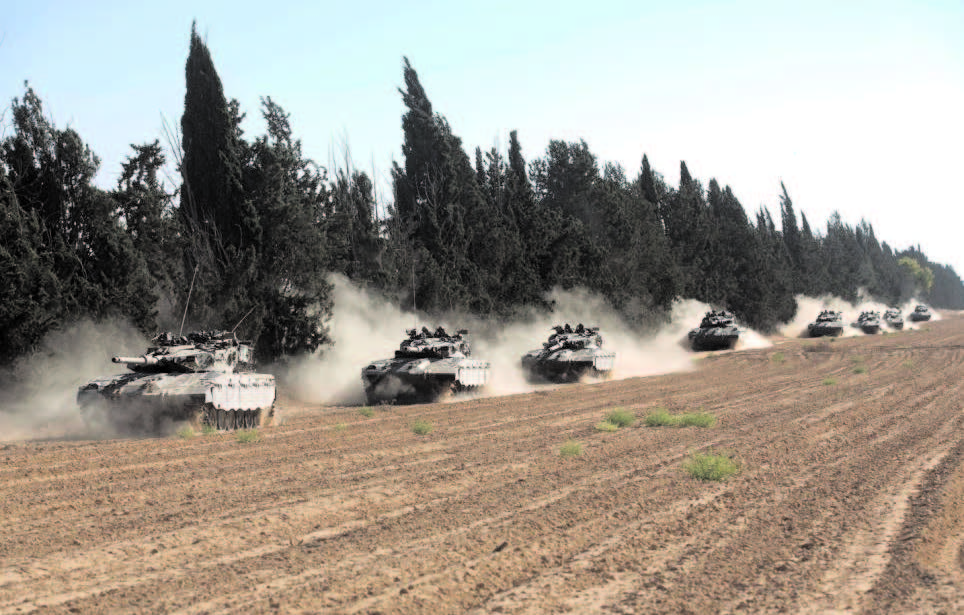
    Israel says 64 of its soldiers and three civilians have died in the fighting that began on July 8, after a surge in Palestinian rocket salvoes into Israel. Hamas refusal to extend the ceasefire could further alienate Egypt, whose government has been hostile to the group and which ultimately controls Gaza’s main gateway to the world, the Rafah border crossing. The Israelis described the ceasefire as a tradeoff of “calm for calm”. They have shown little interest in easing their naval blockade of Gaza and controls on overland traffic and airspace, worrying Hamas could restock on weapons from abroad. Israel withdrew its ground forces from Gaza on Tuesday, shortly before the truce began.

  • Afghan terror allegations ‘baseless’, Pakistan says

    Afghan terror allegations ‘baseless’, Pakistan says

    ISLAMABAD: Pakistan on Thursday rejected allegations from Kabul that it was involved in terrorist attacks and insurgent activities on Afghan soil. Foreign office spokesperson Tasneem Aslam said in her weekly briefing that Afghanistan has been continuously maligning Pakistan’s national security institutions unabated.

    “We categorically reject Afghan allegations of involvement in terrorist attacks, insurgent activities or cross-border shelling. We also firmly reject any statements casting aspersions on Pakistan’s commitment to fight terrorism,” Aslam said. She said that terrorism is a common enemy afflicting the whole region and concerted efforts must be made by all sides for combating it effectively.

    “Levelling baseless allegations serves no useful purpose. It rather benefits the enemies of peace and undermines the prospects of a cordial relationship between peoples of Pakistan and Afghanistan,” she said. Aslam emphasized that the launch of Operation ‘Zarb-e-Azb’ in North Waziristan is the clearest reflection of Pakistan’s resolve to fight terrorism.

    She also said that Pakistan remains committed to building friendly and good-neighbourly relations with Afghanistan based on the principles of mutual respect for sovereignty and territorial integrity of both countries. She hoped that Kabul would reciprocate to Islamabad’s policy of restraint and responsibility and its continued efforts for constructive engagement.

    On the violence in Gaza, Aslam said that PM Nawaz Sharif has strongly condemned Israel’s actions and reiterated Pakistan’s long-standing support to the cause of Palestine. “He also announced US$ 1 million for emergency humanitarian assistance for the affected people of Gaza,” she said.

  • Israel vows to destroy Hamas tunnels, deaths spike

    Israel vows to destroy Hamas tunnels, deaths spike

    JERUSALEM (TIP): Israeli Prime Minister Benjamin Netanyahu vowed on Thursday to destroy Hamas’ tunnel network designed for deadly attacks inside Israel “with or without a ceasefire,” as the Palestinian death toll soared past 1,400 — surpassing the number killed in Israel’s last major invasion of Gaza five years ago. Netanyahu’s warning came as international efforts to end the 24-dayold war seemed to sputter despite concern over the mounting deaths.

    The Israeli military said it was calling up an additional 16,000 reserve soldiers to pursue its campaign against the Islamic militants. At least 1,441 Palestinians have been killed, three-quarters of them civilians, since hostilities began on July 8, according to Gaza health officials — surpassing the at least 1,410 Palestinians killed in 2009, according to Palestinian rights groups. Israel says 56 soldiers, two Israeli civilians and a Thai agricultural worker have died — also far more than the 13 Israeli deaths in the previous campaign. As the toll grew, UN high commissioner for human rights Navi Pillay accused both Israel and Hamas militants of violating the rules of war.

    She said Hamas is violating international humanitarian law by “locating rockets within schools and hospitals, or even launching these rockets from densely populated areas.” But she added that this did not absolve Israel from disregarding the same law. The Israeli government, she said, has defied international law by attacking civilian areas of Gaza such as schools, hospitals, homes and UN facilities. “None of this appears to me to be accidental,” Pillay said. “They appear to be defying — deliberate defiance of — obligations that international law imposes on Israel.”

    Pillay also took aim at the US, Israel’s main ally, for providing financial support for Israel’s “Iron Dome” antirocket defense system. “No such protection has been provided to Gazans against the shelling,” she said. At the United Nations, Israel’s Ambassador Ron Prosor responded to criticism of his country, saying: “I think the international community should be very vocal in standing with Israel fighting terrorism today because if not, you will see it on your doorstep tomorrow.”

    Israel expanded what started as an aerial campaign against Hamas and widened it into a ground offensive on July 17. Since then, Israel says the campaign has concentrated on destroying cross-border tunnels militants constructed to carry out attacks inside Israeli territory and ending rocket attacks on its cities. Israel says most of the 32 tunnels it uncovered have now been demolished and that getting rid of the remainder will take no more than a few days. “We have neutralized dozens of terror tunnels and we are committed to complete this mission, with or without a cease-fire,” Netanyahu said Thursday in televised remarks. “Therefore, I will not agree to any offer that does not allow the military to complete this important mission for the security of the people of Israel.”

    For Israel, the tunnel network is a strategic threat. It says the tunnels are meant to facilitate mass attacks on civilians and soldiers inside Israel, as well as kidnappings, a tactic that Hamas has used in the past. Palestinian militants trying to sneak into Israel through the tunnels have been found with sedatives and handcuffs, an indication they were planning abductions, the military says. Several soldiers have been killed in the current round of fighting by Palestinian gunmen who popped out of underground tunnels near Israeli communities along the Gaza border.

    Israeli defense officials said the purpose of the latest call-up of 16,000 reserves was to provide relief for troops currently on the Gaza firing line, and amounted to a rotation that left the overall number of mobilized reservists at around 70,000. They spoke on condition of anonymity in line with regulations. However, Israeli officials have also said they do not rule out broadening operations in the coming days. Palestinians have fired more than 2,850 rockets at Israel — some reaching major cities but most intercepted by the Iron Dome defense system. On Thursday alone, more than 100 rockets were fired toward Israeli cities, the army said.

  • UN calls for accountability in Gaza conflict

    UN calls for accountability in Gaza conflict

    UNITED NATIONS:
    With the number of civilians killed in Gaza rising by the day, the United Nations’ top human rights official warned that war crimes may have been committed in the fight between Israel and Hamas — a struggle that shows no signs of waning. At least 1,432 people have been killed in Gaza during the current conflict, according to the Gaza Ministry of Health — a figure that is higher than the 1,417 Palestinians that the Palestinian Center for Human Rights said died in the 22 days of Israel’s Operation Cast Lead, which spanned 2008 and 2009.

    Those killed in the ongoing hostilities — which are tied to the Israeli military’s Operation Protective Edge — include 327 children and 166 women, the Gaza health ministry reports. U.N. High Commissioner for Human Rights Navi Pillay sounded an alarm Thursday, July 31 about the high numbers of civilian casualties, as well as how they’ve occurred. She called for “real accountability considering the increasing evidence of war crimes.” Pillay specifically pointed to the six United Nations schools in Gaza that have been struck, resulting in civilians’ deaths.

    The United Nations has blamed Israel for the strikes, but Israel says its military only responded to fire and did not target the schools. “The shelling and bombing of UN schools which have resulted in the killing and maiming of frightened women and children and civilian men, including UN staff, seeking shelter from the conflict are horrific acts and may possibly amount to war crimes,” Pillay said in a statement. Pillay didn’t excuse the Hamas militants, either. She once again condemned the indiscriminate firing of rockets into Israel, and the placement of military assets close to densely populated areas.

    But the biggest concern appeared to be the shelling of the schools. “If civilians cannot take refuge in UN schools, where can they be safe?” Pillay asked. “They leave their homes to seek safety — and are then subjected to attack in the places they flee to. This is a grotesque situation.” Another top U.N. official, Undersecretary for Humanitarian Affairs Valerie Amos, said there is a need for Israel and Hamas to comply with humanitarian and human rights law. “Each party must be held accountable to international standards; not the standards of the other party,” she said in remarks to the U.N. Security Council.

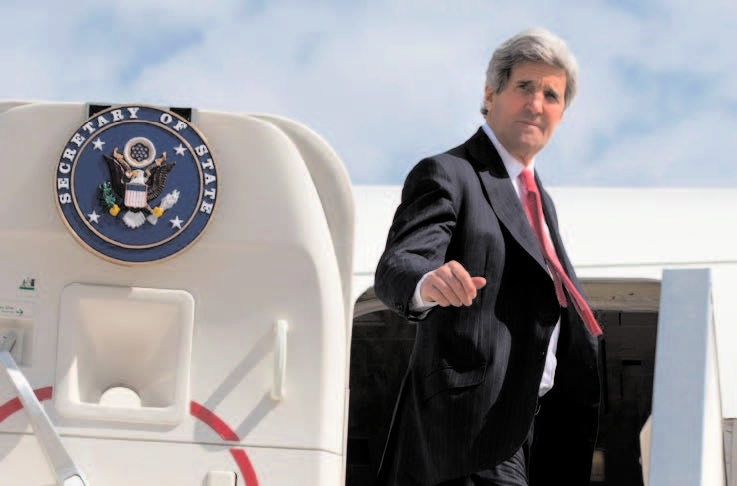
    The calls for accountability didn’t just come from the United Nations. “Civilian casualties in Gaza have been too high. It is clear the Israelis need to do more” to prevent civilian deaths, Pentagon spokesman Col. Steve Warren told reporters. U.S. Secretary of State John Kerry said he’s hopeful there can be a ceasefire that will bring peace — even temporarily to the region. After more than three weeks of fighting, Israeli Prime Minister Benjamin Netanyahu said Thursday that Israel would complete its goal of destroying Hamas’ network of tunnels with or without a cease-fire.

    Netanyahu said this is just the first phase of the demilitarization of Gaza. Fifty-six Israeli soldiers have died, according to the military, and three civilians have been killed in Israel since the conflict began. Many more citizens have been forced to take shelter, as rockets rained overhead. Still, the level of death and destruction doesn’t compare with what’s happening in Gaza, where health workers are struggling to deal with the relentless stream of dead and wounded.

  • LEARNING WITH THE TIMES: Gaza blockade — Over $100m in aid stuck

    LEARNING WITH THE TIMES: Gaza blockade — Over $100m in aid stuck

    Why does war keep breaking out in Gaza?
    Under the 1993 Oslo Accords between the Palestine Liberation Organization (PLO) and Israel, a Palestinian National Authority (PNA) was set up to govern Palestinian areas of West Bank and Gaza. In 2005, Israel withdrew its forces and settlers from Gaza. In 2006, the fi rst Palestinian government was elected. While the main Palestinian group Fatah won in West Bank, radical Islamic Hamas won in Gaza. Hamas had its origins in Egypt’s Muslim Brotherhood. While carrying out welfare work among Palestinians and gaining popularity, Hamas was involved in violent strikes against Israelis. After this victory, a confl ict broke out between Fatah and Hamas leading to the ouster of Fatah from Gaza. Hamas became Gaza’s de facto ruling party. This was unacceptable to Israel because Hamas was strongly opposed to it.

    Why did Israel blockade Gaza?
    Responding to Hamas victory in Gaza and its belligerence, Israel imposed a land, air and sea blockade in 2007, controlling the fl ow of essentials and regulating entry and exit of Palestinian workers. Export of produce was stopped and electricity supply cut. Gaza slid into poverty. It’s largely dependent on international aid channelized through UN agencies, and smuggling through tunnels. Even UN aid must be cleared by Israel and according to a recent UN statement, over $100 million worth of aid is blocked because of a 10-month delay in Israeli clearance. Israel carried out a series of assassinations of key Hamas functionaries. Angered at the blockade and Israeli attempts to destroy it, Hamas began fi ring rockets at Israel regularly. The Israelis retaliated and attacked Gaza.

    Why the current Israeli attack?
    After the 2012 attack, a ceasefi re was in place between Hamas and Israel. In April 2014 US-initiated peace talks on the Palestinian issue failed. In June, Hamas and Fatah reconciled and formed a Unity government, ending eight years of confl ict. Israel saw this unity between the two major Palestinian factions as a threat. Meanwhile, three young Israeli men were kidnapped and killed by a West Bank Palestinian family. Israel claimed this was Hamas’s work, although Hamas denied it. Israel carried out mass arrests of Palestinians and ratcheted up pressure. Hamas responded with rockets. Israel got the pretext to strike back.

    Have Israelis succeeded?
    There’ve been three major Israeli g ro u n d – c u m – a i r operations against Gaza. In these attacks, about 2,557 Palestinians and 52 Israelis have died. In intermittent clashes and air strikes, some 594 Palestinians and 41 Israelis have died. It doesn’t appear as if Hamas is getting weakened by these attacks and nether is the safety of Israelis getting better. Much more extreme Islamic groups, like Islamic Jihad, are fi nding a toehold in Gaza.

  • Devil’s Brew in Middle East

    Devil’s Brew in Middle East

    By S Nihal Singh

    America’s Receding Ability to Bring Peace

    “The major power in the region, the United States, is increasingly compromised by its total support of Israel, largely due to domestic factors, and its desire to reduce its footprint in the region. In hindsight as, many at that time suggested, the US was foolish to invade Iraq under false pretences. And on the Israel-Palestinian conflict, it is on the wrong side of history”, says the author.

    That the Middle East (West Asia of our description) is in a state of flux is crystal clear. We have a three-yearold civil war in Syria, an Iraq wracked by tribal and Shia-Sunni strife, Libya still fighting the post-Gaddafi dispensation and Israelis launching a disproportionate war on Palestinians, not for the first time. The common thread in these crises is the role of outside powers, both in creating crises in the first instance and in muddying the waters and the inability of local actors to make peace.

    In Syria, a minority Alwaite regime is seeking to retain its throne in a Sunni-majority country, with opponents of a bewildering variety of moderates and militants ranged on the other side. In Iraq, after all American troops left, Prime Minister Nouri al-Maliki, belonging to the majority Shia, has been interpreting his role primarily in terms of advancing the interests of his community.

    The Kurds are asserting their rights while the Sunni, dethroned from their ruling perch, have combined with Islamic militants to challenge the state. Both in Syria and Iraq the Islamists of the extreme variety, first under the rubric of the ISIS and later under the name of the Islamic State, have carved out an area in Syria and Iraq they rule, with President Bashar Assad’s regime in Syria and the Iraqi authorities unable to dislodge them. Superimposed on these dramatic events is the old Israel-Palestinian conflict, essentially caused by Israeli actions in occupying and colonising vast Palestinian lands and East Jerusalem on the strength of total American support extending to unprecedented military supplies and a generous annual financial subsidy.

    These actions nullify attempts at finding a twostate solution and the prospect is of one state with a growing Palestinian population living as second-class citizens. Regional powers belonging to the Sunni and Shia faiths have taken up positions determined in the first category by supporting the anti-Assad forces in Syria, more of them supporting the cause of the newly disenfranchised Sunni of Iraq. On the other side is Iran, the minority Assad regime in Syria and the Hezbollah movement of Lebanon.

    After the proclamation of the Islamic Caliphate in Syria and Iraq, the Sunni states led by Saudi Arabia have moderated their somewhat indiscriminate financial and military support for the Islamic militants fighting the Assad regime. Iran has been consistent in its support of President Assad and the Hezbollah. Turkey’s position has evolved over time, initially the leader of the regime change lobby for Syria, together with neighbours hosting large numbers of Syrian refugees.

    It is taking time to reconsider its options while deeply disappointed with US inaction in Syria while supporting the cause of the Muslim Brotherhood in Egypt and sympathetic to the plight of the Palestinians. One big change in the regional picture is the anti-Morsi coup that has eventually brought the Army under the guise of a civilian President Abdel Fatah el-Sisi to power. The Brotherhood is classed as a terrorist organisation, its leaders and hundreds of its followers are in prison. The new regime has closed the Rafah border with the Gaza Strip, a lifeline for besieged Palestinians and shut down most of their tunnels.

    Speculation is rife in this churning process, with extravagant scenarios of the break-up of Syria and Iraq and other countries essentially carved out by France and Britain out of the end of the Ottoman Empire. Two trends seem clear. The first is a sharpening Shia-Sunni conflict which is taking many forms. Second, the spreading cancer of 21st century Israeli colonization which lies at the heart of the historic Middle East conflict. There are no easy solutions to either of these problems. Any Shia-Sunni reconciliation assumes a measure of tolerance on the two sides. There are many actors inflaming passions, not least of all Iraqi Prime Minister Maliki.

    On the other side, proponents of the Islamic Caliphate are keeping the fires of intolerance burning. The major power in the region, the United States, is increasingly compromised by its total support of Israel, largely due to domestic factors, and its desire to reduce its footprint in the region. In hindsight as, many at that time suggested, the US was foolish to invade Iraq under false pretences.

    And on the Israel-Palestinian conflict, it is on the wrong side of history. What then can we expect from the devil’s brew, which is the Middle East in the coming days and months? There will no doubt be a ceasefire between Israelis and Palestinians even as Israel’s isolation in the world increases because of the scale of the carnage it has been inflicting on Palestinians, highlighted by the Human Rights Convention. But the problem will continue to fester because domestic factors compel US administrations to remain captive to the urges of Israeli colonialism.

    The other regional crises will run their course, with little prospect of millions of Syrian refugees in neighbouring countries and the internally displaced able to return home soon. In many instances, there is no home to go to. In Iraq, the virtual partition of the state into Shia, Sunni and Kurdish regions will take firmer shape. The new Egyptian regime, in terms of the Palestinian cause, is a tacit ally of Israel and will pose problems for Gazans.

    In this tangled mess, one crisis feeds on the other and the resulting picture is far from following a common pattern. The tragedy is that the sole mediator remains the United States and it is hamstrung by its own compulsions. In immediate terms, the future remains bleak. For the present, there is no countervailing force to take matters in hand.

    The East-West conflict represented by the growing antagonisms between Russia and the United States over Ukraine make a complementary Moscow initiative impossible. The only bright spot is that since things cannot get worse, they will take a turn for the better.

  • EGYPT SIDES WITH ISRAEL IN CONFLICT WITH HAMAS

    EGYPT SIDES WITH ISRAEL IN CONFLICT WITH HAMAS

    CAIRO (TIP): An echo of the anti-Hamas rhetoric coming from Israel during its conflict with Gaza is resonating from what many would consider a surprising corner since fighting erupted July 8: Egypt. A country whose leader just over a year ago had been a close Hamas ally is now one of its principal antagonists. It is stirring up public opinion against the militant group because Hamas is the Palestinian branch of the Muslim Brotherhood, which Egypt has outlawed. Normally, Egyptians would be decrying Israel for the Palestinian death toll in Gaza, which is at more than 750 and rising. But Abou Ahmed Shehab, 60, who sells scarves at a sidewalk stand in central Cairo, was quick to attack Hamas.

    “The reason for what’s happening to our Palestinian brothers is because of Hamas,” he says. “Hamas is an extremist group.” Last summer, the Egyptian military ousted Muslim Brotherhood leader Mohammed Morsi as president and jailed him. It branded the Islamist group a terrorist organization and threw thousands of its leaders and members in jail. Hundreds were killed as the Islamic movement became the focus of a security crackdown. Since then, a military-backed government that is now led by Abdel Fattah al-Sisi, who went from military strongman to elected president this past spring, has succeeded in stoking anti-Islamist sentiment among a large swathe of Egypt’s public. Both state-run and privately owned media have helped fuel the anti-Hamas attitudes.

    Hamas has “terrible policies and the outcomes of those policies are being felt by women and children,” said taxi driver Medhat Kamel, 40, about civilian deaths in Gaza. “They rely on violence and don’t use dialogue.” From a political standpoint, Hamas is criticized in Egypt for its “unwise ways” of managing the crisis with Israel, said Mustapha Al Sayyid, a political science professor at both Cairo University and the American University in Cairo. Last week, Hamas rejected an Egyptian cease-fire initiative, saying it wasn’t consulted and the proposal wouldn’t end an Israeli and Egyptian blockade of Hamas-ruled Gaza, which is suffering economically as a result.

    Egypt’s hostility toward Gaza may be one reason Hamas lamented last week that it feels “alone” in battling Israel without support from the Arab region. Today’s situation is different from 2012, the last conflict between Israel and Hamas. At the time, Morsi brokered a cease-fire that Hamas accepted. Two years later, the Egyptian government, which has accused Hamas of helping militants attack soldiers and police in Egypt, is doing little to help the Palestinians. It’s keeping its Rafah border crossing with Gaza closed, even preventing a humanitarian aid convoy from crossing.

    Khaled Fahmy, chair of the history department at the American University in Cairo, has observed a sea change in public discussion about Hamas recently. “There has been an alarming outpouring in the past two weeks, not only dumbing down and toning down criticism of Israel, but also – in fact – a very, very sharp increase in vitriolic, racist discourse against Palestinians and Hamas in particular,” Fahmy said. Last week, an Egyptian writer accused Hamas of militant violence in Egypt, and called on people in Gaza to rebel against the group. “We are not going to support you going forward or have sympathy for you unless you get rid of the Hamas gang, which puts you in conflict with the world, Israel and the Egyptians,” Adel Nouman wrote in an opinion piece for daily newspaper El Watan.

    “This is the stance of the Egyptian people.” Some went further, praising Israel’s assault on Gaza. “I’m telling the Israeli army, the Israeli people and the Israeli leaders: You are men,” media personality and staunch adversary of political Islam, Tawfiq Okasha, declared in a TV broadcast. Despite the Hamas bashing, support for Palestinians and hostility toward Israel have not disappeared from Cairo’s streets. Umm Youssef, 33, who was visiting from southern Egypt, said, “Egyptians and Palestinians are one people, one nation.

  • US House of Representatives backs resolution supporting Israel

    US House of Representatives backs resolution supporting Israel

    WASHINGTON (TIP): The US House of Representatives has backed a resolution expressing support for Israel and its right to self-defence. Lawmakers endorsed the non-binding measure by a voice vote on Friday. It condemns Hamas for unprovoked rocket attacks on Israel. The bipartisan resolution is sponsored by Democratic congressman Steve Israel and Republican congressman Tom Cole. Israel has intensified its broad military offensive in the Gaza Strip to stop rocket fire from Palestinian militants targeting Israel.

    The death toll from the 4-day-old conflict has exceeded 100, and President Barack Obama has told Israel the United States is willing to negotiate a cease-fire between Israel and Hamas. The measure includes a provision by Republican congressman Ed Royce highlighting Iran’s role in supporting Hamas.

  • GAZA DEATH TOLL NEARS 100, ISRAEL DOES NOT RULE OUT GROUND OFFENSIVE

    GAZA DEATH TOLL NEARS 100, ISRAEL DOES NOT RULE OUT GROUND OFFENSIVE

    GAZA/JERUSALEM (TIP): Israel said on July 12 it would not bow to international pressure to end air strikes in Gaza that officials there said had killed almost 100 Palestinians, despite an offer by US President Barack Obama to help negotiate a ceasefire with militants. Asked if Israel might move from the mostly aerial attacks of the past four days into a ground war in Gaza to stop militant rocket fire, Prime Minister Benjamin Netanyahu replied, “we are weighing all possibilities and preparing for all possibilities.” “No international pressure will prevent us from acting with all power,” he told reporters in Tel Aviv a day after a telephone conversation with Obama about the worst flare-up in Israeli- Palestinian violence in almost two years.

    On Friday Washington affirmed Israel’s right to defend itself in a statement from the Pentagon. But defence secretary Chuck Hagel told Israeli defence minister Moshe Ya’alon he was concerned “about the risk of further escalation and emphasized the need for all sides to do everything they can to protect civilian lives and restore calm.” A rocket caused the first serious Israeli casualty — one of eight people hurt when a fuel tanker was hit at a service station in Ashdod, 30 km (20 miles) north of Gaza, and Palestinian militants warned international airlines they would fire rockets at Tel Aviv’s main airport.

    Medical officials in Gaza said at least 75 civilians, including 23 children, were among at least 99 people killed in the aerial bombardments which Israel began on Tuesday. They included 12 killed on July 12. Palestinian President Mahmoud Abbas urged the United Nations security council to order an immediate truce. But Israel said it was determined to end cross-border rocket attacks that intensified last month after its forces arrested hundreds of activists from the Islamist Hamas movement in the occupied West Bank following the abduction there of three Jewish teenagers who were later found killed.

    A Palestinian youth was killed in Jerusalem in a suspected Israeli revenge attack. Israel’s campaign “will continue until we are certain that quiet returns to Israeli citizens”, Netanyahu said. Israel had attacked more than 1,000 targets in Gaza and there were “more to go.” Israel’s military commander, Lieutenant-General Benny Gantz, said his forces were ready to act as needed — an indication of a readiness to send in tanks and other ground troops, as Israel last did for two weeks in early 2009.

    “We are in the midst of an assault and we are prepared to expand it as much as is required, to wherever is required, with whatever force will be required and for as long as will be required,” Gantz told reporters. Western-backed Abbas, who is based in the West Bank and agreed a powersharing deal with Gaza’s dominant Hamas in April after years of feuding, called for international help: “The Palestinian leadership urges the security council to quickly issue a clear condemnation of this Israeli aggression and impose a commitment of a mutual ceasefire immediately,” he said.

    Race for shelter
    After the failure of the latest USbrokered peace talks with Israel, Abbas’s accord with Hamas angered Israel. The rocket salvoes by the hardline movement and its allies, some striking more than 100 km (60 miles) from Gaza, have killed no one so far, due in part to interception by Israel’s partly-US funded Iron Dome aerial defence system. But racing for shelter had become a routine for hundreds of thousands of Israelis and their leaders have hinted they could order troops into the Gaza Strip, a 40-km sliver of coastline that is home to nearly two million people. Some 20,000 reservists have already been mobilized, the army says.

    Hamas’s armed wing said it would fire rockets at Tel Aviv’s Ben-Gurion international airport and warned airlines not to fly to Israel’s main gateway to the world. The airport has been fully operational since the Israeli offensive began and international airlines have continued to fly in, with no reports of rockets from Gaza — largely inaccurate projectiles — landing anywhere near the facility, inland of the coastal metropolis. It is within an area covered by Iron Dome. The Israeli military said it launched fresh naval and air strikes early on Friday on Gaza, giving no further details.

    An air strike on a house in the city of Gaza killed a man described by Palestinian officials as a doctor and pharmacist. Medics and residents said an aircraft also bombed a three-storey house in the southern town of Rafah, killing five people. Later a four-year-old boy killed when a neighbour’s house was targeted by an Israeli raid, a Palestinian hospital official said. Two other people aged 70 and 80 were killed in a missile strike elsewhere in Gaza, the Palestinian Heath Ministry said.

    Homes, many belonging to militants, have been targeted frequently in attacks that have sent Palestinian families living nearby running into the streets in panic. Explosions echo constantly across the densely populated territory. The Palestinian interior ministry in Gaza said an Israeli strike targeted the home of a senior Islamic Jihad leader after darkness fell, at a moment when Israel reported heavy rocket barrages on its southern cities. There were no reports of any casualties in these raids. White streaks arcing into a blue sky, ending abruptly in flashes and dark puffs of smoke marked what the military said was the interception of three rockets over Tel Aviv.

    Lebanese rockets
    Fire was also exchanged across Israel’s northern border. Lebanese security sources said two rockets were fired into northern Israel on Friday but they did not know who had fired them. Israel responded with artillery fire. Palestinian groups in Lebanon have often fired rockets into Israel in the past.

  • Foreign funding and the Maharajas among NGOs

    Foreign funding and the Maharajas among NGOs

    “At the heart of the dilemmas presented by the evolving situation is the kind of Middle East major regional and world powers want to see. More importantly, where will the present series of conflicts take the region, with the escalating Shia-Sunni conflict and the dislocation of millions, either internally displaced or living as refugees in neighboring countries?” the author wonders

    Behind the frenzied diplomacy over the future of Iraq are new assumptions taking shape. First, is the division of the country among its Shia, Sunni and Kurdish areas a matter of time? Second, how far will the Islamic State of Iraq and Syria (and its variant the Levant), collectively known as the ISIS, spread from its present swathe in Syria and Iraq? What is being debated is the future shape of the Middle East some hundred years after the French-British division of the spoils of the disintegrating Ottoman Empire.

    There are no clear answers because of the variety of regional and world powers pursuing differing policies. Of the regional actors, the most important are Saudi Arabia, Iran and Turkey. Here is a conflict not only between Sunni and Shia countries but the very different inflections of the two Sunni powers and Shia Iran’s interest in seeking the destruction of the ISIS as it protects its influence in Iraq, now being governed by the majority Shias.

    The United States has an obvious interest in seeking to check the onslaught of the ISIS and to save a scrap of investment in all that it put into Iraq starting with its invasion in 2003.

    But the ISIS represents a danger also to its vital interest in Israel’s security, with the present ruling dispensation there bent on colonizing the land of Palestine in perpetuity.

    The dilemma for President Barack Obama is that having won his election and reelection on the strength of ending America’s wars in Iraq and Afghanistan, he has been forced to re-introduce American military power in the shape of 300 military advisers and the threat of air strikes. Washington cannot allow a terrorist outfit of the shape of the ISIS to hold sway over Iraq.

    Here Iranian and U.S. interests coincide, despite their backing of opposite sides in neighbouring Syria. At the heart of the dilemmas presented by the evolving situation is the kind of Middle East major regional and world powers want to see.

    More importantly, where will the present series of conflicts take the region, with the escalating Shia-Sunni conflict and the dislocation of millions, either internally displaced or living as refugees in neighbouring countries? A few pointers can be tabulated. If the present crisis in Iraq continues to take its toll, what is being described as the soft partition of its three main regions is inevitable.

    Second, the Gulf monarchies led by Saudi Arabia will draw closer even as they have been disheartened by the hesitation shown by President Obama over effectively dealing with the Syrian crisis. It remains to be seen whether the vast differences that separate Iran and the US over resolving the Iranian nuclear portfolio can be bridged in the near future.

    But Tehran has been signaling for some time under the Presidency of Mr. Hassan Rouhani that it wants to play a constructive role in the region and beyond it. Future steps taken by President Obama and Iran, among others, will decide the shape of the region. Egypt, the traditional regional heavyweight, is too involved in its domestic transition and economic woes to be of much assistance in the immediate crisis facing the region.

    Indeed, we are entering a new phase in the affairs of the region and the Arab world. The days of the Arab Spring are but a distinct memory although the hopes of a better world will not die down for ever.

    The problem for the liberals and secular reformers is that they are in a minority and religion-based politics and the destructive uses of religion in its distorted forms have taken their toll. Basically, the peoples of much of the region are conservative and God-fearing in their outlook even as the younger generation, vast sections of whom are unemployed, are looking for work and the goodies promised in a television – and internet-generated age.

    Besides, it would be imprudent to forget after the Arab romanticism introduced by Gamal Abdel Nasser in Egypt, the dream was snuffed out and disillusionment set in, accentuated by the Arabs’ humiliating defeat in the 1967 war with Israel.

    Even as the Palestinians are seeking to recover some of their land and dignity, Israel shows no sign of obliging, enjoying as it does uncritical American support, thanks to the powerful American Jewish lobby. For the most part, the Arab world has been ruled by absolute monarchies or, as in Egypt’s case, by armed forces officers donning the lounge suit, as in the case of three decades of Hosni Mubarak rule, until his overthrow.

    Tunisia, the originator of the Arab Spring, is the only country that is trying to make a success of the spirit of the original revolution. Indeed, the prospects for the Arab world look gloomy but, as the old adage has it, time does not wait for people and countries and the question before the world is where the currents of history are taking the region. In installing another armed forces man in the shape of ex-Field Marshal Abdel el-Sisi as the new President, Egypt offers no solution.

    Nor can President Bashar al-Assad of Syria fighting a vicious civil war to safeguard his office and the rule of his minority Alawite rule offer a solution. In Algeria, an incapacitated President Abdelaziz Bouteflika has won yet another show election. If the region’s leadership does not provide the answer, where will the peoples and the world look for answers?

    For one thing, the ISIS has helped concentrate minds because this is one thing neither the majority in the region nor outside powers want. The threeyear savagery of the Syrian civil war first gave rise to it even as President Assad interested outside powers to help the fight for, or against, him. In Iraq, the rapidity of the ISIS’s advance was determined in part by Prime Minister Nouri al-Maliki’s marginalization of Sunnis and the disaffection of Kurds. But the question remains: Where does the Middle East go from here? (Courtesy The Tribune)

  • GOPIO’s 25th Anniversary Jubilee Convention a historic success

    GOPIO’s 25th Anniversary Jubilee Convention a historic success

    PORT OF SPAIN (TIP): The Global Organization of People of Indian Origin (GOPIO International) concluded its 25th Anniversary (Jubilee) Convention 2014 in Port of Spain in Trinidad & Tobago, with a memorable and highly successful celebration from 27th May through 30th May, 2014 coinciding with the 169th anniversary of Indian Arrival Day commemoration in Trinidad & Tobago.

    The convention was a historic event in the Indian Diaspora attended by delegates from several countries where GOPIO is prominent and where persons of Indian origin reside in substantial numbers and even small numbers. Countries include: Australia, New Zealand, Fiji, Malaysia, Mauritius, Sri Lanka, India, South Africa, Netherlands and other countries of the European Union (EU), UK, Canada, USA, and the Caribbean region: Guyana, Trinidad & Tobago, Suriname, Belize, St. Vincent, Guadeloupe, Martinique, Grenada and St Lucia.

    Among the many events of the convention, some of the notable highlights include: Welcome reception at the Diplomatic Centre residence of Hon. Kamla Persad-Bissessar, Prime Minister of Trinidad & Tobago, GOPIO’s elections for new officers, all-day academic conference, special guests at cultural performances held at National Cultural of Indian Culture (NCIC), and unveiling of arrival monument marking the first arrivals of indentured Indian laborers in Trinidad.

    A significant highlight of GOPIO’s 25th Anniversary Jubilee Convention was the special welcome reception of GOPIO delegates at the Diplomatic Centre residence of the Hon Prime Minister Kamla Persad Bissessar on 28th May. The reception was hosted by Ministry of National Diversity and Social Integration with Minister Dr Roger Samuel making the initial remarks, followed by GOPIO International president Ashook Ramsaran and presentation of gifts.


    9
    GOPIO Jubilee Recognition Recipients with GOPIO officials, Indian High Commissioner G. Gupta,Trinidad & Tobago’s Minister Dr. Vasant Bharath MP and Minister Ramona Ramdial MP.

    Hon Prime Minister Kamla Persad Bissessar formally welcomed GOPIO’s delegates, recounted GOPIO’s special reception/dinner during the visit to the Kolkata Memorial on 12th January, 2012 and thanked GOPIO for holding its 25th Anniversary Jubilee Convention in Trinidad & Tobago. In attendance were several ministers and members of parliament of the Government of Trinidad & Tobago as well as the Indian High Commissioner HE Gauri Gupta. The evening included a special celebratory treat of Caribbean and Indian music with delegates joining in dancing. On 28th May, a Business-to-Business seminar featuring prominent scholars and business leaders was held at the Radisson Hotel.


    10
    Some of the Legacy Generation Residents of Trinidad & Tobago with GOPIO officials, Indian High Commissioner HE Gauri Gupta, With Trinidad & Tobago’s Min. Dr. Suruj Rambachan, Min. Ramona Ramdial, Counselors Abdool & Seepersad, Couva Regional Chairman Henry Awong. Unveiling of Indian Arrival Monument at Waterloo-by-the-Sea

    It was sponsored by Trinidad & Tobago’s Ministry of Trade & Investment. Sessions include: Investment & Trade Opportunities in Trinidad & Tobago; Investment & Trade Opportunities in St Vincent & Grenadines; Investment & Trade Opportunities in Guyana; Success Stories of Doing Business in the Caribbean; Free Enterprise, Market Economy and Business Successes; The Growth of Education and Medical Services for Bi-Lateral Trade; Media as Marketing Tool in Emerging Economies The Academic Conference segment of the convention was a full 1-day event held on 29th May at the Radisson Hotel.

    There were several sessions designed round the convention theme of “Indian Diaspora Today & Tomorrow” The chief guest at the Inaugural Session was Indian High Commissioner HE Gauri Gupta and the keynote speaker Dr Mahin Gosine, Professor of Sociology and Anthropology at SUNY, New York, USA. Prof Kumar Mahabir, Assistant Professor at University of Trinidad and Tobago, concluded the session. Other sessions with prominent and suitably qualified speakers from several countries were: Global & Regional Diaspora Investments & Economic Opportunities; The Indian Diaspora: Issues, Challenges & Opportunities; Diaspora’s Youth, Children, Gender & Inter-Generational Issues; Multi- Cultural Diversity & Inter-Ethnic Cooperation in the Indian Diaspora; Education, Science & Technology as Significant Assets in the Indian Diaspora; Health, Wellness, Lifestyle & Nutritional Factors in the Indian Diaspora; GOPIO’s 25th Anniversary Resolutions; Wrap-up & Conclusion. Elections were held by GOPIO International Council for several positions in GOPIO at the international level.

    The following officials were elected by unanimous vote: President – Ashook Ramsaran; Executive Vice President – Sunny Kulathakal; Senior Vice President – Dr. Piyush Agrawal; International Coordinator North America – Dr. Renuka Misra; and International Coordinator Caribbean, Dr. Arnold Thomas. Chairman Inder Singh was elected for another term. The Jubilee Recognition Gala was another highlight of GOPIO’s 25th Anniversary (Jubilee) Convention 201, held on 29th May, 2014 in the Grand Ballroom at the Radisson Hotel in Port of Spain. In attendance was Indian High Commissioner HE Gauri Gupta, Trinidad & Tobago’s Minister of Trade & Investment, Dr. Vasant Bharath; and Min. Ramona Ramdial, Minister in the Ministry of Environment & Water Resources. The event was emceed by prominent radio and television host Zelisa Boodoosingh.

    GOPIO’s Jubilee Recognition for outstanding achievements in selected categories were awarded to several persons “who contributed to the betterment of people of the Indian Diaspora. The Jubilee Recognition recipients achieved significant and prominent levels of stature and recognition in their respective fields of endeavor and have served interests of people in their respective countries of domicile and others as well, in addition to generating pride and respect among the Indian Diaspora and others in country of birth or domicile”. Posthumous: Henri Sidambaron (Guadeloupe); Dr. Najma Sultana (USA); Baleshwar Agrawal (India); Lall Paladee (Trinidad & Tobago). Friend of GOPIO: HE Dr. Ralph Gonsalves, Prime Minister of St. Vincent & Grenadines.

    Professional, Civic, Culture, Entrepreneurship, Media, Philanthropy: National Indian Cultural Centre (Trinidad & Tobago); John Barath (Trinidad & Tobago); Brenda Gopeesingh (Trinidad & Tobago); Dr. Hans Hanoomansingh (Trinidad & Tobago); Sattaur Gafoor (Guyana); Dr Yesu Persaud (Guyana); Chief Justice Carl Singh (Guyana); Dr. C. Baidjnath Misier (Netherlands); Dr. Lakshmi Persaud (United Kingdom); Ishwar Ramlutchman (South Africa); Nicole Vaitylingon (Guadeloupe); Dr. Vivian Rambihar (Canada); Dr. Parmatma Saran (USA); Dr. Sudhir Parikh (USA); TV Asia H R Shah (USA); India Abroad (USA); Kedar N. Gupta (India); Israel Khan (Trinidad & Tobago); Ashok Motwani (India). In addition to recognition of those who contributed to GOPIO’s formation in 1989 as well as all previous life members, GOPIO recognized the newest life members since 6th January, 2014 in attendance: Yamonee Barbaro (USA); Balkrishna Naipaul (Canada); Deo Gosine (Trinidad & Tobago); Sasenarine Sankar (Guyana); Claude Sheikboudhou (Guadeloupe); Elie Shitalou (Guadeloupe); Shaji SM Alex (India); Shaji Baby John (India). The National Council of Indian Culture (NCIC) hosted GOPIO delegates at its major events held at its Diwali Nagar in Chaguanas.

    NCIC president Dr. Deokinanan Sharma and Mr Surujdeo Mangaroo graciously welcomed GOPIO delegates as special guests. Special events were: 27th May: Concert — famous Bhojpuri singer, Kalpana Patowary from Assam, India; 29th May – Indian Arrival Day commemoration with a special treat of music, songs, dances, recitals and authentic Caribbean and Indian foods. GOPIO 25th Anniversary Jubilee souvenir brochure is 112-page bound, elaborate keep sake publication distributed at no cost to all convention delegates and visitors, as well as mailed subsequently to worldwide officials, businesses, organizations.

    The brochure messages of congratulations and well wishes, articles, program details, convention and international team, facts about GOPIO, its formation and history, as well as an extensive photo gallery. The convention team organized around the GOPIO chapter in Trinidad & Tobago, working diligently with dedicated and focused efforts to plan, coordinate and hold a magnificent GOPIO milestone convention in a country distant from the other regular venues which GOPIO has used over the years for its major events. Convention Convener: Ena Maraj, president of GOPIO International chapter of Trinidad & Tobago; General Convener: Dr. Arnold Thomas, GOPIO International Coordinator Caribbean; several chapter members serving in various capacities. The convention was endorsed and supported by a wide cross section of public and private sectors as well as civic and cultural organizations, academicians and academic institutions, media and others.

    In addition, prominent persons of Indian origin and several Pravasi Samman Awardees also participated in the convention. HE Shri Gauri Gupta, Indian High Commissioner to Trinidad and Tobago, provided unwavering support and participated as chief guest in several major events of the convention. The National Council of Indian Culture (NCIC) provided meeting facilities during the planning stages. Special support by various ministries of the Government of Trinidad & Tobago, as well as National Council of Indian Culture (NCIC). Grand patrons: Deo Gosine (Labidco Port Services Ltd, Trinidad & Tobago); Dr. Chandrikaersad Baijnath Misier (Surichange NV, Netherlands). Indian Arrival Monument at Waterloo-by-the- Sea The Indian Arrival Monument at Waterloo-bythe- Sea was unveiled on 30th May 2014, the 169th anniversary of Indian Arrival Day in Trinidad & Tobago, another significant and historic marker of the journey of Indian migration to other lands for better livelihood.

    The monument is another commemorative milestone marker in honored tribute and well deserved recognition of the first arrivals of indentured Indian laborers in Trinidad & Tobago. This unveiling was attended by Trinidad & Tobago’s Ministers Dr. Suruj Rambachan MP, supporter Mininister Ramona Ramdial, Counselors Abdool and Seepersad, Couva Regional Chairman Henry Awong, among many others officials. GOPIO International President Ashook Ramsaran and Indian High Commissioner HE Gauri Gupta unveiled the monument in the presence of hundreds of people including several “legacy generation” persons, a few over 100 years old.

    This was followed by an authentic Indian lunch served Caribbean style. The inscription, patterned after the Kolkata Memorial in India and Indian Arrival Monument at Highbury in Guyana, read as follows: In honour of Indian indentured labourers whose arrival in Trinidad and Tobago began on 30th May 1845. In recognition of their pioneering spirit, sacrifices, endurance and determination to seek better livelihoods for themselves and their descendants.

    In gratitude for their invaluable contribution to the social, spiritual, cultural, economic and political development of Trinidad and Tobago”. Remarked GOPIO International Chairman Inder Singh, “this is the best GOPIO convention since its formation in 1989”. GOPIO International President Ashook Ramsaran added that, “this silver jubilee convention is unparalleled in historical significance, with the special welcome, warmth and hospitality of the people of Trinidad & Tobago”. For more information, please contact GOPIO International at +1-718-969-8206, Email: ramsaran@aol.com. (Based on a press release).

  • Israel, Denmark keen to partner in Ganga cleanup, water management

    Israel, Denmark keen to partner in Ganga cleanup, water management

    NEW DELHI (TIP): PM Narendra Modi’s pet Ganga cleanup programme and his mission for clean water has attracted interest from foreign nations. Israel and Denmark, global leaders in water technology and water management, say they can be part of this particular national mission. Israeli ambassador Alon Ushpiz said, “Think about the purification of the holy Ganges. I have a list of 200 Israeli companies that can do this.

    ” Already, a consortium of Danish water companies are operating in Gujarat, even conducting a pilot project for water management in Rajkot, Danish ambassador Freddy Svane said. “If you go from Gujarat down to Tamil Nadu and up to Hyderabad, you will come across more than two dozen Israeli desalination plants. Some huge, others not so big. There are places in some cities where you probably will drink water from Israeli desalination plants, joint projects with state governments. This is good water, very good water.

    The plants are exactly the same as on the shores of the Mediterranean,” Ushpiz said. Svane said Copenhagen harbour was a perfect case study of implementation of new technologies for water management. Danish companies can undertake impact studies, cleaning up of water and even provide enzymatic solutions to reduce waste water in quantity and quality. Ushpiz said, “Israel loses just about 8% of what we put in the pipes, the best figure in the world. Indian figures are higher. The beauty of water management is that you simply enlarge your water collection by saving water. I come from a society that has put water on a pedestal. It’s not only a commodity, it’s a cultural value.”

  • MARUTI TARGETS DOUBLEDIGIT GROWTH

    MARUTI TARGETS DOUBLEDIGIT GROWTH

    MUMBAI (TIP): Maruti Suzuki expects to grow its vehicle sales in double digits in 2014-15 on the back of several initiatives that it had undertaken.

    Addressing a media round-table, Mayank Pareek, Chief Operating Officer, Marketing & Sales, Maruti Suzuki India, said the company was relying on initiatives such as its car exchange strategy, niche marketing, rural thrust, and product innovations to drive growth.

    “In early 2013, we realised that 2013-14 was not going to be easy. And, we focussed on distribution and pricing models. So although sales declined 6 per cent, our used car sales rose 16 per cent to 289,000 units.’’ The company also focussed on niche marketing having identified 372 niches like temple priests, blue pottery industry in Jaipur, and pharmaceutical retailers, selling 62,000 cars to these.

    The company also offers customisation of vehicles with a range of 4,000 accessories. In terms of dealers, Maruti has 1,331 main outlets and Emerging Market outlets (markets with more than 100 cars) and plans to double these in the next three years.

    It introduced the ‘R outlets’ for the rural markets this year and also 7,800 resident dealer sales executive (RDSE) in villages. Maruti’s rural sales went up from 3.5 per cent of sales in 2007 to 32 per cent in 2014. “We realised there was a big opportunity in the hinterland.

    In 2012-13, we sold 26 per cent of our cars in rural market in only 44,000 villages; 6.7 per cent of villages in India. In 2013-14, we sold in 94,000 villages. “We can double or even triple this.” In terms of servicing cars, he said Maruti Mobile Services (MMS) launched last year was very successful and had 1,031 Maruti Eeco vans to service vehicles all over India.

    Now every month 40,000 customers use this service. On the diesel-petrol preference,Mr. Pareek said that while in November 2012 when the diesel-petrol price gap was Rs.32, the diesel car share was 64 per cent, it tapered to 58 per cent in 2012- 13 and to 54 per cent in 2-13-14. “In April 2014, it was at 51 per cent and should hold.”

    The parent Suzuki had last year indicated that Maruti’s export focus would be the Middle East and Africa. While exports declined to 1.03 lakh units (1.20 lakh units) in 2013-14, “that was because we discontinued sales to Europe but going forward, we should see a pick up in numbers from South Africa, Algeria, ASEAN, South America and Israel. In 2014-15 we should be able to maintain exports.”

  • U.S. policy on India, and Modi, needs to change

    U.S. policy on India, and Modi, needs to change

    We are a Democracy and each one of us has the freedom to express our differences without fear, but yet we have to work together in nation building and the common good of every member of the society. Whatever is needed to be done should have been done at the ballot, the majority, indeed, the overwhelming majority has chosen to trust the words of Mr. Modi and together, we have to go forward. Justice should be the foundation of every society and no one should be above the law, and the law is clear: One is innocent until proven guilty.

    Mr. Modi in his interview with NDTV has challenged the civil society to hang him, if he is found guilty. Until he is found guilty, we need to value our systems. Justice is the only thing the society stands on. I have been critical of Mr. Modi from the very beginning and that has not changed, but I was never for the pound of flesh, instead I was for restoring the lives of those who lost their homes, livelihood and the loved ones, and to build a cohesive India where no Indian had to live in fear of the other.

    In each one of the pieces I have written, the theme was consistent; Justice and inclusion. I agree with Fareed Zakaria on many items he has listed, I do hope, President Obama puts his differences aside, and values the verdict of the people of India, it is not a simple majority, it is a huge majority. Let’s give Modi a chance and trust our democracy and support him in his plans – as he has articulated it in his interview time and again.

    Mike GhouseMike Ghouse : The author is a community consultant, social scientist, thinker, writer, news maker, and a speaker on Pluralism, Interfaith, Islam, politics, terrorism, human rights, India, Israel-Palestine and foreign policy.

  • UK seizes two large consignments of mangoes from India containing the deadly tobacco whitefly

    UK seizes two large consignments of mangoes from India containing the deadly tobacco whitefly

    LONDON (TIP): UK has seized two large consignments of mangoes from India in April containing the deadly tobacco whitefly which carries over 100 harmful viruses with it. In an exclusive interview to TOI, UK’s department for environment, food and rural affairs (Defra), which voted to put the ban on Indian mangoes into EU in place from Thursday, told TOI that the whitefly is at present alien in EU.

    EU has protected zone status against the tobacco whitefly – meaning the species don’t exist anywhere in the union. EU therefore faces serious threat of the fly being introduced through contaminated Indian mangoes. “The tobacco whitefly would be very damaging to UK salad crops if introduced. Tomato crops are particularly susceptible and 100% yield losses have been seen in some outbreaks in Israel.

    It also emerged that the two consignments confiscated did undergo vapour heat treatment to rid it off pests in India but it didn’t work,” DEFRA told TOI. The DEFRA official added “These temporary restrictions are important to protect our home-grown salad crops, an industry worth an annual £321 million, from potential pests and diseases. We are working closely with our Indian and European counterparts to resolve the issue and resume trade in these select products as soon as possible.”

    Meanwhile an official of the European Commission told TOI from Brussels that it has asked India to steam the mangoes before exporting it to EU. Frederic Vincent from the European Commission told TOI “Experts say steaming mangoes could rid them off the pests. India wasn’t keen to do so saying it would change the way the mangoes look. We have been involved in extensive discussions with India in 2013 about ways to de contaminate these mangoes. But the talks went nowhere. It was such a serious threat that not a single EU country opposed the ban”.

    Vincent added “India will have to correct the deficiencies as regards their official controls to ensure that commodities exported to the EU fulfill the EU phytosanitary import requirements. India will then send us guarantees on the correct implementation of the Indian measures. The EU’s Food and Veterinary Office will then verify the good implementation of these guarantees on-thespot at the end of 2014 through a team that will be sent to India. A decision on the lifting of the ban would depend on the outcome of the FVO audit.

    There is no precise timeline: it is up to Indian authorities to ensure that their products fulfill our food safety requirements”. DEFRA minister Owen Patterson is expected to talk to India’s high commissioner to UK Ranjan Mathai on how to resolve the impasse. The commission said the decision to ban mango import had to be taken due to a high number of such consignments being intercepted at arrival in the EU with quarantine pests, mainly insects, like non- European fruit flies.

  • US unwilling to give up Middle East peace process yet

    US unwilling to give up Middle East peace process yet

    WASHINGTON (TIP): The suspension of peace talks between Israel and Palestinians delivered the harshest blow yet to secretary of state John Kerry’s ambitious, if perhaps quixotic, hope of ending the decades-long impasse at the cost of focusing on other crises around the world.

    But Kerry refused to accept defeat, saying “we will never give up our hope or our commitment for the possibilities” of Mideast peace. On Thursday, Kerry sought to portray the latest setback with as much optimism as the dismal development would allow. “There is always a way forward,” he told reporters at the state department, just a few hours after Israeli Prime Minister Benjamin Netanyahu in Tel Aviv bluntly said the peace process had taken “a giant leap backward”.

    Even diplomats and experts sympathetic to Kerry’s desire to soldier on with the talks declared the Mideast peace process on life support. Others, impatient with what they described as the Obama administration’s rudderless foreign policy, said the US needed to move on and refocus on other pressing priorities. Kerry acknowledged the bleakness of the situation, and said Israeli and Palestinian leaders needed to be willing to make compromises to keep the nine months of negotiations alive beyond an April 29 deadline.

    “We may see a way forward, but if they’re not willing to make the compromises necessary, it becomes very elusive,” he said. Kerry has struggled to hold together the talks after a series of tit-for-tat diplomatic manoeuvres between the two sides over the last month that have eroded any trust or progress built since last summer. The worst blow came on Thursday when Israel’s security cabinet agreed to shelve the negotiations as the result of a new deal struck by the Palestinian Authority to create a reconciliation government with the militant group Hamas. Hamas has called for the destruction of the state of Israel, and is considered a terrorist organization by the US, European Union and other counties worldwide.

    However, among Palestinians, the new agreement was hailed as a potentially historic step toward mending the rift that has split their people between two sets of rulers for seven years. Similar deals have been struck before between Hamas and the Fatah political party that Palestinian President Mahmoud Abbas represents. All have failed, and US experts said all sides should wait and see if the new agreement, reached on Wednesday, also fizzles out before declaring an end to the peace process with Israel. Former US diplomat and Mideast peace negotiator Dennis Ross said the Obama administration should wait to see whether Hamas and Fatah are able to form an interim government within five weeks, as they have pledged.

    If the cannot, Ross said, the process might yet survive. Until then, “I don’t think you can say for sure that this is over with,” said Ross, who helped cobble together talks between Netanyahu and Abbas at the White House in 2010 and served as President Bill Clinton’s Mideast adviser. “It’s fair to say it’s on life support. I wouldn’t say this thing is done and can’t be resurrected.” Time is not on Kerry’s side, nor has it been throughout the negotiations. Originally, Kerry had envisioned a full agreement within nine months. When it became clear earlier this year that was not possible, given a glaring lack of meaningful progress, the state department adjusted its ambitions and set an April 29 deadline for producing a framework plan to keep the talks going for months longer.

    It was not immediately clear how long the US is now prepared to let the latest impasse continue. US negotiators will remain in the region for the time being, said state department spokeswoman Jen Psaki. Throughout the year, Kerry has been forced to brush off snide accusations from critics that he is doggedly pursuing a peace deal in order to nab a Nobel Prize or make the Mideast his legacy issue after decades of statesmanship. During that time, the civil war in Syria has turned bloodier, with as many as 150,000 people killed and President Bashar Assad showing no signs of leaving.

    Russia, meanwhile, has begun to flex its muscle in neighbouring former Soviet states, annexing the Crimea region in Ukraine and threatening to take over even more territory across that nation or others. No one accuses Kerry of ignoring other diplomatic crises, and he has spent at least as much time travelling to hotspots for negotiations on various problems during his first year at the State Department as he has spent in Washington. But Elliott Abrams, another longtime diplomat and top Mideast adviser to President George W Bush, described the peace process as a “forced march” fuelled by Kerry’s eagerness for a quick deal.

    He predicted the peace process will live on in some form — largely because it fills a political need for the US, Israel and Palestinian leaders, and “because the two-state solution is still ultimately the right outcome”. “The pipe dream was Kerry’s belief that he could quickly reach a final status agreement; that was a vision based almost entirely on vanity,” Abrams said. “The administration should seriously be asking itself how it screwed things up so badly

  • Former US test site sues nuclear nations including India and US for disarmament failure

    Former US test site sues nuclear nations including India and US for disarmament failure

    WASHINGTON (TIP): The tiny Pacific republic of the Marshall Islands, scene of massive US nuclear tests in the 1950s, sued the United States and eight other nucleararmed countries on Thursday, April 25, accusing them of failing in their obligation to negotiate nuclear disarmament.

    The Pacific country accused all nine nuclear-armed states of “flagrant violation of international law” for failing to pursue the negotiations required by the 1968 Nuclear Non-Proliferation Treaty. It filed one suit specifically directed against the United States, in the Federal district Court in San Francisco, while others against all nine countries were lodged at the International Court of Justice in The Hague, capital of the Netherlands, a statement from an anti-nuclear group backing the suits said.

    The action was supported by South African Nobel Prize winner Archbishop Desmond Tutu, the Nuclear Age Peace Foundation said. “The failure of these nuclear-armed countries to uphold important commitments and respect the law makes the world a more dangerous place,” its statement quoted Tutu as saying. “We must ask why these leaders continue to break their promises and put their citizens and the world at risk of horrific devastation. This is one of the most fundamental moral and legal questions of our time.”

    The Nuclear Age Peace Foundation is a USbased non-partisan advocacy group working with the Marshall Islands and its international pro-bono legal team. The Marshall Islands, a grouping of 31 atolls, was occupied by Allied forces in 1944 and placed under US administration in 1947. Between 1946 and 1958, the United States conducted repeated tests of hydrogen and atomic bombs in the islands. One, on March 1, 1954, was the largest US nuclear test, code-named Bravo. It involved the detonation of a 15-megaton hydrogen bomb on Bikini Atoll, producing an intense fireball followed by a 20-mile-high mushroom cloud and widespread radioactive fallout. The Marshallese government says the blast was 1,000 times more powerful than that at Hiroshima. The lawsuits state that Article VI of the NPT requires states to negotiate “in good faith” on nuclear disarmament.

    The Nuclear Age Peace Foundation said the five original nuclear weapons states – The United States, Russia, Britain, France and China – were all parties to the NPT, while the others – Israel, India, Pakistan and North Korea – were “bound by these nuclear disarmament provisions under customary international law.” A copy of the suit against the United States made available to Reuters says that it is not aimed at seeking compensation from the United States for the testing in the Marshall Islands, which became an independent republic in 1986. Under agreements between the United States and the Marshall Islands, a Nuclear Claims Tribunal was established to assess and award damages to victims of the nuclear tests.

    But it has never had the cash to compensate fully for the damage done. The suit against the United States said it should take “all steps necessary to comply with its obligations … within one year of the date of this Judgment, including by calling for and convening negotiations for nuclear disarmament in all its aspects.” “Our people have suffered the catastrophic and irreparable damage of these weapons, and we vow to fight so that no one else on earth will ever again experience these atrocities,” the statement quoted Marshall Islands foreign minister Tony de Brum as saying. “The continued existence of nuclear weapons and the terrible risk they pose to the world threaten us all.”

  • SIKH-AMERICANS: Towards a More Perfect Union

    SIKH-AMERICANS: Towards a More Perfect Union

    It is a speech Dr. I.J. Singh delivered at Vaisakhi Celebrations at the Indian Consulate on April 16.-EDITOR

    Thank you for coming to this very special occasion. This is an important part of the year not just for Sikhs but for many of our non-Sikh neighbors as well. This time of the year we take note of Passover for the Jews and Easter for Christians. For Sikhs it is Vaisakhi that gave final form to the message of Sikhism.

    I see many here who know about the significance of Vaisakhi better than I. But I also see some who are on unfamiliar territory. Very briefly we relive the day – mid-April 1699 when the 10th Founder-Guru of Sikhism called a special convocation of Sikhs – around 80,000 attended. He appeared with a flashing naked sword and asked for a head. Consternation! You bet.

    Finally one man offered his head. Took into a tent. The Guru came out with a bloody, naked sword and repeated the call for a head. Surely, many looked away or slunk away. Finally one by one 5 from distant parts of India and different castes of society volunteered. From this modest beginning a nation was formed. An egalitarian community with no differences of caste, class, color, gender, race, or such trivia. I come to you as an American who is also a Sikh. Rather than addressing in detail the events and message of Vaisakhi 1699 I want to define a place for Sikhs and Sikhism today within the larger framework of contemporary American society.

    I see that we are — all Americans — at one time or another, in one form or another — just off the boat. Many of you came more than two centuries ago; my people – a little over a hundred years; I came 50 years ago. All three are examples of just being off the boat. We are not counting Native Americans here. Like new kids on the block we Sikhs have a checkered and relatively unknown presence in contemporary American society. But Sikhs worked on the Panama Canal when it was built in 1903-04. The West was not opened by the likes of John Wayne alone — Chinese, Italian and Indians, including Sikhs had a hand in it.

    Yes, there were discriminatory laws in place then. The Asian Exclusion Act, prevented Asians from owning land or becoming citizens until 1946. Immigration laws were eased only during Lyndon Johnson’s time as President in the 1960’s. Keep in mind the targeting and profiling of Sikhs in the United States post 9/11. In 1960 when I came here, there were 3 Sikhs in New York. I went to graduate school in Oregon where I was the only one for years. Now there are a tad less than a million in North America. From the day I landed here, the American Dream has been my preoccupation, as it is of all immigrants from anywhere. After a while I began to wonder what exactly we mean when we talk about being and becoming an American.

    The flood of immigrants – about 18 million Europeans – came between 1890 and 1920. Israel Zangwill celebrated them in his Broadway play titled The Melting Pot. Thus this defining expression entered our national dialogue. But in a melting pot, the units blend irretrievably together. The individual identity of each item is lost — homogenized. This reminds me of a hostile takeover, not a model of cooperative interaction. This is not how America is. In this land each wave of immigrants has added inestimable value to society. The creativity, vitality and energy of this culture come from its immigrant roots. A melting pot in which immigrants bring none of their traditions, language, culture, music and cuisine would leave the larger society poorer.

    Sometimes I think of this society as a mosaic, in which small shards that have little value individually create an enthralling whole with much magic to it. A mosaic is an interactive model where every little piece, no matter how small, has a place such that the whole is greater than the sum of the parts. However, it is a Static not a Dynamic model. A better metaphor for this society is a large multi-instrument orchestra. Note that in it the lowly cymbals or the triangle, too, have a place. When they speak, the naturally dominant strings and pianos listen. When the mighty and the small talk to each other without drowning the other, the conversation becomes heavenly music. That’s how a rich performance is born.

    An orchestra, when well and wisely led, has an organic presence to it. The central idea is that the totality is greater than the sum of the parts. And there is a core of American values that defines and unites us. Think with me a moment: A lynch mob is governance by democratic majority, but we would all reject it. Sometimes a majority turns tyrannical. History speaks eloquently of the struggles of Women, Blacks, the Irish, Jews, Germans, East Europeans, Italians and the Japanese for an equal place in this society. My people as well! A democracy mandates that the rights of the smallest minority are equally protected. In a mosaic or an orchestra the smallest bit is not trampled on, but instead allowed its breathing space. The lot of a minority is never easy. And Sikhs would be a minority no matter where they lived in this world, even in India.

    So, there are days when I hear the multiinstrument orchestra in my soul, and the “world’s mine oyster” as Shakespeare said Then there are days that are not so kind. So, I remain particularly sensitive to our place in a multi-ethnic, multi-religious nation such as this; the triangle and the cymbal among the powerful strings and pianos are always on my mind. In Sikh belief, as in many spiritual traditions, the “Word” is God. Sikh scripture – the Guru Granth – opens with an alphanumeric devised by Guru Nanak the founder of the faith over 500 years ago. “Ik Oankar”, he formulated, joining the first numeral, “one” with “Oankar”, a word that stands for Creator or Doer. Ik Oankar then postulates One God – not a partisan Jewish, Christian, Muslim, Hindu or Sikh God, but one that embraces all creation.

    To experience God one needs to discover unity in the diversity of creation. If I can see the oneness in the creator and creation, there is absolutely no room left for distinctions in race, caste, creed, gender, color or national origin. Differences between “them” and “us” vanish. Equality, liberty, fraternity and justice are inherent in that oneness. And, then, as the Sikh scripture says, “I see no stranger.” Vaisakhi today reconnects us to these ideals. This nurturing and celebrating unity in diversity is how I understand this nation’s motto: E Pluribus Unum that defines us — One from the many – that is our motto, and our way to a more perfect union. An equal place at the table for the diversity that comprises this society. This is how I see Sikh presence in this country – small but significant. Fear of the stranger has, at times, produced discriminatory laws. But as FDR said in a different context, “we have nothing to fear but fear itself.”

    Emerson reminds us, “A nation, like a tree, does not thrive well till it is engrafted with a foreign stock”. The idea I am pushing is integration, not assimilation beyond recognition and definitely not pockets of isolation either. Such were the values of this nation’s founding fathers. The inscription “In God We Trust” on our currency, and “One Nation under God” in our Oath of Allegiance would not find approval in their eyes. In fact, these words were added only in the 1950’s during the Joe McCarthy days. Jefferson reminds us: “It does me no harm if my neighbor thinks there are twenty gods or that there is none.” This tells me that much as it is possible to be a good Christian and a good American, or a good Jew and a good American, or even an atheist and a good American, it is similarly possible to be a good Sikh and a good American.

    These are not mutually exclusive ideas. Let me recount a brief story: It was a day or two after 9/11 and I was one of the few people walking about wearing a turban in New York City. I fell into conversation with a bright, educated ‘white’ American. And wellto- do — his brief case was better than mine and his suit more expensive. We talked a while about Sikhs in America. “Tell me,” finally, he said “your people have been here a hundred years. Why did they not leave their religion back home when they came here?” I was taken aback but recovered. So I asked. “Your people have likely been here over 200 years. Tell me, when they came here, why did they not leave their religion back home. No natives here between you and I!” It was his turn to be thoughtfully silent a moment. Then he said: “You have a point. Let’s have a cup of coffee.” We did and remain friends now, so many years later. To understand the meaning of diversity, we need to see “us” in “them” and “them” in “us”. Unity of faiths and peoples is created by the Creator but cultivating this unity and its awareness is not the craft of heaven – it is our awesome duty on Earth.

    About I.J. Singh
    Dr. I. J. Singh came to the United States in 1960 on a Murry & Leonie Guggenheim Foundation fellowship and now is professor emeritus of anatomical sciences at New York University. He earned a PhD in Anatomical Sciences from the University of Oregon Medical School and a DDS degree from Columbia University, New York. Dr. Singh serves on the Advisory Board of the United Sikhs and the Board of the Sikh Research Institute. He also serves on the Editorial Boards of the Sikh Review (Kolkata) and Nishaan (New Delhi), has authored five collections of essays on his journey as a Sikh in North America, is a regular columnist on the Internet and has lectured extensively on interfaith issues.

    Dr. Singh was born in Gujranwala, now in Pakistan. His father was a senior officer with the Punjab Public Service Commission. Strangely enough, while all his brothers chose to serve Indian defense forces, Dr. Singh alone chose the field of academics. One brother was a commander in the navy; the other a commander in the air force. His brother-in-law retired as a brigadier in the Indian army. Only he and his father in the family were civilians.

  • US court approves plan to sell Iran assets in Manhattan

    US court approves plan to sell Iran assets in Manhattan

    NEW YORK (TIP): A federal judge has approved plans to sell a 36-storey Manhattan office building and other properties owned by Iran nationwide in what will be the largest terrorism-related forfeiture ever, a prosecutor said on April 18. US attorney Preet Bharara said Judge Katherine Forrest approved the deal between the US government and 19 holders of more than $5 billion in terrorism-related judgments against the government of Iran, including claims brought by the estates of victims killed in the Sept. 11, 2001, terrorist attacks.

    The deal calls for the Manhattan building and other forfeited assets to be sold by the US Marshals Service, with the US government receiving reimbursement for litigation expenses and any costs of the sales before the rest is distributed to victims of terrorist attacks. The agreement stems from a 2008 lawsuit by the government against the building’s owners.

    Bharara said the settlement is an important step toward “completing what will be the largest ever terrorism-related forfeiture and providing a substantial recovery for victims of terrorism.” “From the very beginning of this case,” Bharara said in a release, “this office sought to dismantle Iran’s slice of Manhattan an office tower on Fifth Avenue both to end Iran’s illegal sanctions-violation and money-laundering schemes and to provide a means of compensating victims of Iraniansponsored terrorism.” Besides September 11 victims, the settling creditors include families and estates of victims of the 1983 terrorist bombings of US Marine Barracks in Beirut, the 1996 terrorist bombing of the Khobar Towers in Saudi Arabia and terrorist attacks in Israel and elsewhere.

  • Indian American Forum gives away Outstanding Women’s Achievements Awards

    Indian American Forum gives away Outstanding Women’s Achievements Awards

    LONG ISLAND, NY (TIP): Indian American Forum presented, Thursday March 27, the Third Annual Outstanding Women’s Achievements gala as part of Women’s History Month and International Women’s Day Celebrations. First Lady of Nassau County Linda Mangano was the Chief Guest and, an honoree too.

    Five women who excelled in their professions and community services received the Outstanding Women’s Achievements Awards Dr Chhaya Patel: Founding member of ARCH Foundation, Action Research in Community Health Development, for her contributions in field of Medicine and community Services Swati Vaishnav; Founder of Nartan Rang Dance Academy and member of Board of Directors of Bhartiya Vidya Bhavan, for her contributions and promotion Indian Culture, dances and community services Sunila Tejpaul: Founder of Forest Hills Montessori School and member of Board of Child Center of New York, for her contributions for Education, social and community services Sunita Mukhi: Cultural Producer and interdisciplinary Performance Scholar in Culture Pandita Tripti Mukherjee: Illustrious Indian Classical Music Vocalist from Padit Jasraj Music Institute Chief Guest Linda Mangano praised the efforts of Indian American Forum and Indian American Community.


    20

    She Congratulated honorees and emphasized on the importance of role women are playing in this world. Nassau County Executive Edward P Mangano presented Citations to honorees and praised their efforts and congratulated them for their achievements. Among the gathering, several elected dignitaries were present who included Chairman of Nassau County Commission of Human Rights, Zahid Syed, Human Rights Commissioner Sharanjit Singh Thind and Town Clerk from Town of Hempstead Nasrin Ahmed.

    Citations were presented from the offices of Town of Hempstead Supervisor Kate Murray, Congresswoman Carolyn McCarthy, Congressman Steve Israel and Senator Kemp Hanon. Also present were Satnam Prahar, President India Association of Long Island, Sher Madra and Peter Bheddah, Board of Directors of Nargis Dutt Foundation, Kavita Lund, Dr Dina Pahlajani, Children’s Hope , Sudhir Vaishnav and Sunil Modi, President of Association of Indians in America (AIA).

  • General Bikram Singh, Chief of the Army Staff of Republic of India visits Israel

    General Bikram Singh, Chief of the Army Staff of Republic of India visits Israel

    Earlier this week, General Bikram Singh, Chief of the Army Staff of the Republic of India, arrived in Israel on an official visit. During the course of his visit, General Singh met with the IDF Chief of the General Staff, Lieutenant General Benjamin “Benny” Gantz and the Commander of IDF Ground Forces, Major General Guy Tzur.

    These meetings focused on the close military cooperation between Israel and India. The military chief also toured Israeli military bases, where he was briefed on the operational procedures of the Ground Forces. During his stay, General Singh visited the Yad Vashem Holocaust Memorial Museum, where he laid a wreath in memory of Holocaust victims. He also laid a wreath in the Indian War Cemetery in Jerusalem in honor of Indian soldiers.

  • Devyani – a Kabuki, a Tragic Trilogy or a Bilateral Selfinflicted Wound?

    Devyani – a Kabuki, a Tragic Trilogy or a Bilateral Selfinflicted Wound?

    Alightning fast re-indictment on March 14th, within 2 days of a judge’s dismissal, speaks to the Prosecutor’s rebuke of those who misunderstand law and chose to personalize their disrespect, while continuing to seek to hold a person liable for her alleged criminal wrongs.

    Any and all attacks on the prosecution were wrong in-fact and counterproductive at best, and all those who wish to engage in that mind-numbing sport ought to cease and desist. The legal process deserves respect, especially given the adversarial system of justice – anything less misdirects logic and proportionality, the hallmark of justice, when forced to function in a river of insults.

    I am disturbed by what I have seen occur from December 12th to March 12th, when Judge Scheindlin issued her surprising and unexpected technical-dismissal of the January 9th Indictment. There has been much noise from all quarters since December 12th, who sought to vilify the United States and our abovepolitics United States Attorney Preet Bharara. Some, perhaps, to derail the bilateral relationship.

    Others, perhaps, questioning how could a friendly nation treat another so. Yet others, were playing for personal advantage – much as an undertaker does upon every death. But the most painful cut, made repeatedly, was the legally false or factually false-laced comment coming from a source whose job was to defend Devyani, within the bounds of law. While lawyers, like doctors, can misdiagnose, they ought not misrepresent facts. Certainly, to do both, and repeatedly, when you have over 1 billion good and decent people worried about national respect and national honor is beyond comprehension as it is a core wrong.

    This misdiagnosis and mis-statements caused legal and factual false predicates to give birth to false public expectations in India and false governmental bureaucratic judgment. I know, as I took unexpected heat for properly diagnosing that Devyani lacked diplomatic immunity while holding an A-visa – even as I admitted that the arrest-off-the-street was excessive and ought not have been done. It even gave false birth to genuine public anger against the United States and US Attorney Bharara. The height of which were folks marching in India against President Obama and the American Flag. There were even unseemly and false stories about US Attorney Bharara’s political ambitions.

    This was, and is, wrong. Preet Bharara has earned his spot in the pantheon of legendary Southern District prosecutors like my mentor, the great Bob Morgenthau. Perhaps, the greatest wrong are the birth defects of the Devyani case, which in retrospect, I’m sure no one in the State Department knowing what they now know, would have ever asked the Justice Department to prosecute Devyani. Just look at who is involved, and not merely what is alleged to have occurred. Sangeeta Richard, who twice went to the United States Embassy in Delhi to lie about her contract of employment and scam herself a visa-approval; Philip Richard, who after getting to the United States, wants a divorce because Sangeeta, he says, can’t be trusted and lies; Wayne May and his wife, who while posted in India were anti-India and anti-Indian – worthy of a “Ripley’s Believe it or Not” episode.

    Such a posting between friendly nations is diplomatic malpractice at best. Can you imagine our State Department posting an anti-Semite to Israel, and who, along with his wife while there, enjoy mocking the receiving nation and its citizens on Facebook? The second greatest wrong is the pre-birth twin facts of prior legal proceedings in India against Sangeeta Richard, and the shocking evacuation of Philip Richard and family, well timed to occur prior to Devyani’s December 12th arrest. The law would have been better enhanced, while being mutually respectful, if India’s prior case and America’s subsequent case, each against their respective defendant(s), took its turns and twists to find justice.

    The evacuation stands as a core wrong, with lingering need for redress. After the successful negotiations between our Secretary of State John Kerry, and India’s Foreign Minister Salman Khurshid, Devyani was legally allowed to go home due to the State Department’s grant of a G-visa to replace her Avisa. The A-visa did not immunize her from being charged or arrested for what she was, and now again, is. That the A-visa was replaced by G-visa, proved the vitality, portance and warmth both nations place upon the bilateral relationship – from President Obama to the everyday hardworking American citizen. But, then, Devyani made her most critical error: instead of resolving the criminal charges, with the best possible resolution, including, a non-jail sentence along with an additional civil resolution, she sought an outright dismissal of the criminal charges based upon a mere 1-day full immunity consequence of a G-Visa, which had no retroactive effect of cloaking her.

    This was nothing short Caesarian hubris, overlaid on legal misdiagnosis and misrepresentation of facts. A trilogy of tragic proportions. Now, what must be avoided at all costs is an unearned chill between friends – India and United States, and Indians and Americans. From the presence of Indian tea at the Boston Tea Party to the innocent blood shed upon Lord Cornwallis’ cold command when stepping foot in India after losing “the Colonies” to General George Washington, these two nations have a joint destiny. Indeed, even Christopher Columbus only found the New World because of India.

    History will not kindly look upon additional colossal errors, nor will destiny willingly permit same. Devyani was, and ought to remain, a mere hiccup in the most important bilateral relationship of the 21st Century. On this Ides of March, as I remember Julius Caesar who ruled the world and brought us the Pax Romana, it is good to embrace humility, as it helps minimize errors of judgment in any capital of a sovereign nation, and the need to separate from folks, whose misjudgments and misrepresentations. Let only those who know the actual law and honor the real facts have the right to make binding judgments to keep the public peace, enhance the public good, and seek to form a more perfect world.”

  • Israel gears up for possible unilateral strike on Iran

    Israel gears up for possible unilateral strike on Iran

    JERUSALEM (TIP): Israeli Prime Minister Benjamin Netanyahu and defence minister Moshe Ya’alon have ordered the military to continue preparations for a possible strike on Iran’s nuclear facilities during 2014, a media report here said.

    The Israel Defense Forces allocated up to NIS 12 billion ($3.5 billion), nearly a fifth of its budget this year, for preparations for a possible unilateral strike on Iran, approximately the same amount invested last year, reported Xinhua citing Israeli daily Ha’aretz on March 19. The figure was presented by top officers who briefed the joint committee in January and February on the military’s plans, said the lawmakers who spoke to Ha’aretz requesting anonymity.

    They said that some of their colleagues who were present at the meetings asked the officers whether it was justified to continue pouring billions into the preparations to strike Iran, citing the interim nuclear agreement inked between Tehran and the six powers last November, and the ongoing negotiations aimed at reaching a final accord. The officers replied that the military had received a “clear directive” from the political echelon, meaning Netanyahu and Ya’ alon, to continue training for a possible independent strike, the report said.

    It was regardless of the diplomatic efforts to resolve the Iranian issue peacefully, it added. The second round of nuclear talks was launched in Vienna Tuesday, with European Union foreign policy chief Catherine Ashton and Iran’s Foreign Minister Mohammed Zarif in attendance. The newspaper noted that both Netanyahu and Ya’alon have strongly indicated in recent months that Israel, which views a nuclear-armed Iran as an existential threat, has not abandoned the military option.

  • Devyani – a Kabuki, a Tragic Trilogy or a Bilateral Self inflicted Wound?

    Devyani – a Kabuki, a Tragic Trilogy or a Bilateral Self inflicted Wound?

    Alightning fast re-indictment on March 14th, within 2 days of a judge’s dismissal, speaks to the Prosecutor’s rebuke of those who misunderstand law and chose to personalize their disrespect, while continuing to seek to hold a person liable for her alleged criminal wrongs.

    Any and all attacks on the prosecution were wrong in-fact and counterproductive at best, and all those who wish to engage in that mind-numbing sport ought to cease and desist. The legal process deserves respect, especially given the adversarial system of justice – anything less misdirects logic and proportionality, the hallmark of justice, when forced to function in a river of insults.

    I am disturbed by what I have seen occur from December 12th to March 12th, when Judge Scheindlin issued her surprising and unexpected technical-dismissal of the January 9th Indictment. There has been much noise from all quarters since December 12th, who sought to vilify the United States and our abovepolitics United States Attorney Preet Bharara. Some, perhaps, to derail the bilateral relationship.

    Others, perhaps, questioning how could a friendly nation treat another so. Yet others, were playing for personal advantage – much as an undertaker does upon every death. But the most painful cut, made repeatedly, was the legally false or factually false-laced comment coming from a source whose job was to defend Devyani, within the bounds of law. While lawyers, like doctors, can misdiagnose, they ought not misrepresent facts. Certainly, to do both, and repeatedly, when you have over 1 billion good and decent people worried about national respect and national honor is beyond comprehension as it is a core wrong.

    This misdiagnosis and mis-statements caused legal and factual false predicates to give birth to false public expectations in India and false governmental bureaucratic judgment. I know, as I took unexpected heat for properly diagnosing that Devyani lacked diplomatic immunity while holding an A-visa – even as I admitted that the arrest-off-the-street was excessive and ought not have been done. It even gave false birth to genuine public anger against the United States and US Attorney Bharara. The height of which were folks marching in India against President Obama and the American Flag.

    There were even unseemly and false stories about US Attorney Bharara’s political ambitions. This was, and is, wrong. Preet Bharara has earned his spot in the pantheon of legendary Southern District prosecutors like my mentor, the great Bob Morgenthau. Perhaps, the greatest wrong are the birth defects of the Devyani case, which in retrospect, I’m sure no one in the State Department knowing what they now know, would have ever asked the Justice Department to prosecute Devyani. Just look at who is involved, and not merely what is alleged to have occurred.

    Sangeeta Richard, who twice went to the United States Embassy in Delhi to lie about her contract of employment and scam herself a visa-approval; Philip Richard, who after getting to the United States, wants a divorce because Sangeeta, he says, can’t be trusted and lies; Wayne May and his wife, who while posted in India were anti-India and anti-Indian – worthy of a “Ripley’s Believe it or Not” episode. Such a posting between friendly nations is diplomatic malpractice at best. Can you imagine our State Department posting an anti-Semite to Israel, and who, along with his wife while there, enjoy mocking the receiving nation and its citizens on Facebook? The second greatest wrong is the pre-birth twin facts of prior legal proceedings in India against Sangeeta Richard, and the shocking evacuation of Philip Richard and family, well timed to occur prior to Devyani’s December 12th arrest.

    The law would have been better enhanced, while being mutually respectful, if India’s prior case and America’s subsequent case, each against their respective defendant(s), took its turns and twists to find justice. The evacuation stands as a core wrong, with lingering need for redress. After the successful negotiations between our Secretary of State John Kerry, and India’s Foreign Minister Salman Khurshid, Devyani was legally allowed to go home due to the State Department’s grant of a G-visa to replace her Avisa. The A-visa did not immunize her from being charged or arrested for what she was, and now again, is. That the A-visa was replaced by G-visa, proved the vitality, portance and warmth both nations place upon the bilateral relationship – from President Obama to the everyday hardworking American citizen.

    But, then, Devyani made her most critical error: instead of resolving the criminal charges, with the best possible resolution, including, a non-jail sentence along with an additional civil resolution, she sought an outright dismissal of the criminal charges based upon a mere 1-day full immunity consequence of a G-Visa, which had no retroactive effect of cloaking her. This was nothing short Caesarian hubris, overlaid on legal misdiagnosis and misrepresentation of facts. A trilogy of tragic proportions. Now, what must be avoided at all costs is an unearned chill between friends – India and United States, and Indians and Americans.

    From the presence of Indian tea at the Boston Tea Party to the innocent blood shed upon Lord Cornwallis’ cold command when stepping foot in India after losing “the Colonies” to General George Washington, these two nations have a joint destiny. Indeed, even Christopher Columbus only found the New World because of India. History will not kindly look upon additional colossal errors, nor will destiny willingly permit same.

    Devyani was, and ought to remain, a mere hiccup in the most important bilateral relationship of the 21st Century. On this Ides of March, as I remember Julius Caesar who ruled the world and brought us the Pax Romana, it is good to embrace humility, as it helps minimize errors of judgment in any capital of a sovereign nation, and the need to separate from folks, whose misjudgments and misrepresentations. Let only those who know the actual law and honor the real facts have the right to make binding judgments to keep the public peace, enhance the public good, and seek to form a more perfect world.”

  • INDIA AND US TO HOLD TOP-LEVEL MEET TO BOLSTER MILITARY TIES

    INDIA AND US TO HOLD TOP-LEVEL MEET TO BOLSTER MILITARY TIES

    NEW DELHI (TIP): A 26-member delegation led by General Vincent K Brooks, commanding general of the US Army Pacific, will be in New Delhi on March 18-20 for the 18th meeting of the India-US executive steering group (ESG). The Indian delegation, in turn, will be led by director-general of military operations Lt-General P R Kumar during the talks.

    “The ESG will discuss measures to further crank up military-to-military ties through joint combat exercises, doctrinal and operational exchanges. The two armies are slated to conduct their annual Yudh Abhyas counterterrorism exercise at Chaubatia (Uttarakhand) in July- August this year,” said an official. The exercise, the last edition of which was held at Fort Bragg in the US last May, was to be held earlier this year but got delayed by a few months amid the diplomatic wrangling during the Devyani Khobragade episode.

    The expansive India-US defense cooperation over the last decade has seen the armed forces from the two countries conduct over 70 exercises, including the highend Malabar naval combat exercises. India has also invited Japan to join the Malabar war games in August- September this year, an offer which was extended during Japanese PM Shinzo Abe visit here in January. The US has already bagged defense deals close to $10 billion over the last decade in the lucrative Indian defense market, with the latest being the $1.01 billion one for six additional C-130J “Super Hercules” aircraft.

    The other deals on the anvil are the ones for 22 Apache attack helicopters, 15 Chinook heavy-lift helicopters, four P-8I maritime patrol aircraft and 145 M-777 ultra-light howitzers, together worth another $4 billion or so. Desperate to displace Russia as India’s largest defense supplier, the US is promising to treat India on par with its closest allies like the UK and Australia for providing cutting-edge military technology.

    Towards this end, the US has also managed to almost scuttle an almost-finalized over Rs 15,000 crore project with Israel to equip the over 380 infantry battalions of the Indian Army with third-generation, shoulder-fired antitank guided missiles (ATGMs). After the US initially created roadblocks in the transfer of technology (ToT) for its “Javelin” ATGMs, India had turned to the Israeli “Spike” ATGMs for the project. India is keen on an initial import of the tank-killing missiles followed by ToT to defense Public Sector Unit Bharat Dynamics for indigenous manufacture. But after the US recently offered a joint project to manufacture the next-generation of ATGMs, the Indian defense ministry says both the Israeli and American proposals are now being studied to select the better option.