Tag: ISRAEL

  • Jordan warns of review of peace deal with Israel

    Jordan warns of review of peace deal with Israel

    AMMAN: Jordan warned on Wednesday that it might review a 1994 peace treaty with Israel after Israeli MPs began a debate on allowing Jewish prayers at Jerusalem’s sensitive Al—Aqsa mosque compound.

    “If Israel wants to violate the peace treaty in this issue, the entire treaty, its articles, details and wording will be put on the table,” Prime Minister Abdullah Nsur told Qatar’s Al—Watan newspaper in an interview. Under the peace treaty, Jordan is the custodian of Muslim holy sites in Jerusalem.

    Nsur’s remarks, quoted by state—run Petra news agency, came as Jordan’s parliament passed a motion urging the expulsion of Israel’s ambassador to the kingdom, Daniel Nevo. “Such Israeli attempts would lead to the destruction of the peace treaty as the international community is pushing for peace between Israel and the Palestinians,” government spokesman Mohammad Momnai told Petra.

    “The Jordanian custodianship is not a privilege granted by Israel. It is the Hashemites’ historic responsibility that is emphasised in the peace treaty.” Last year, Jordan’s King Abdullah II and Palestinian president Mahmud Abbas signed an agreement to confirm a verbal deal dating back to 1924 that gave the kingdom custodianship over Jerusalem’s Muslim holy sites. The Jordanian parliament’s vote followed a motion the previous day signed by 47 MPs demanding that the peace treaty with Israel be scrapped.

    “All deputies who attended a meeting today to discuss Israel’s debate on sovereignty over Al— Aqsa voted to kick out the Israeli envoy and recall the Jordanian ambassador in Israel (Walid Obeidat),” prominent lower house deputy Khalil Attieh told AFP. The Israeli foreign ministry declined to comment on the Jordanian parliament’s vote. The Knesset on Tuesday evening began a debate called by rightwingers to demand that Israel end its practice of forbidding Jewish prayer at the Al—Aqsa compound.

    In a motion which was not put to a vote, MP Moshe Feiglin, a hardline member of Prime Minister Benjamin Netanyahu’s Likud party, said Israel’s fear of igniting Muslim rage amounted to discrimination against Jews. “Any terror organisation can raise its flag there (but) there can be no trace of the Israeli flag,” Feiglin told the Knesset.

    “Only Jews are forbidden to pray at this place.” Jews now pray at the Western Wall plaza below the compound. Israeli police on Tuesday clashed with stone—throwing Palestinian protesters at the compound ahead of the Knesset debate. The Al—Aqsa compound, which lies in Israeli—annexed east Jerusalem’s Old City, is a flashpoint because of its significance to both Muslims and Jews. Sitting above the Western Wall plaza, it houses the Dome of the Rock and Al—Aqsa mosques and is Islam’s third— holiest site. But it is also Judaism’s holiest place, being the site of the first and second Jewish temples

  • India, Israel ink anti-terror pacts

    India, Israel ink anti-terror pacts

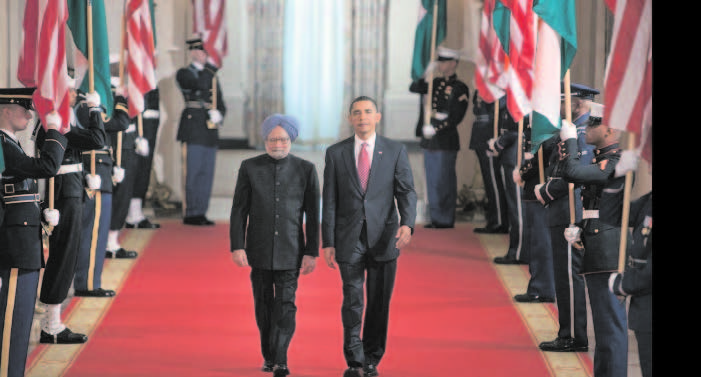
    KOLKATA (TIP): India and Israel have signed a number of agreements on cooperation in legal assistance and public and homeland security. The pacts are part of the ongoing efforts by both countries in the war against terror and are based on the shared determination to protect citizens, assets and interests.

    “We believe that these agreements are another important platform for the cooperation between our countries and we would like to express our appreciation for the leadership of the ministry of home affairs in this regard,” Israel ambassador in India Alon Ushpiz said. Israel’s minister of public security Yitzhak Aharonovich said: “Today is an important day.

    These agreements that were signed are a fine example of our substantial and equal partnership with India. The various types and forms of threats the two countries face make this cooperation an indispensable one. Terror is a global threat and only through cooperation between allies can peace-seeking countries overcome such threats.”

  • Pak to beat India to associate membership to Cern

    Pak to beat India to associate membership to Cern

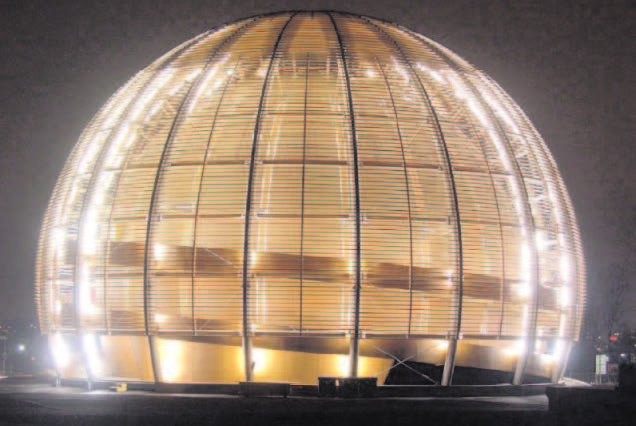
    LONDON (TIP): Pakistan is all set to beat India in becoming an associate member at Cern ( European Organization for Nuclear Research), the world’s largest particle physics laboratory that recently found the God Particle.

    A senior official of Cern told the mediaperson in London that bureaucratic red tape in India had slowed down the country’s intentions of joining Cern as an associate member. The official said, “Cern is very keen that India becomes an associate member and takes up a larger role in the experiments at Cern.

    But the final documents which India needed to submit have been stuck at the Prime Minister’s Office (PMO) for months now.” According to the official, Pakistan on the other hand moved swiftly to put “all documents in place” and “is all set to become an associate member before India”. To be an associate member, India will have to pay $10.7 million annually.

    The status of associate member is also the pre-stage to full membership. As an associate member, India would have been entitled to attend open and restricted sessions of the organization. Rolf Dieter Heuer, Director-General of Cern had recently said that Cern had become highly popular in India. Cern receives the highest number of applications for summer internships from India. Cern discovered the Higgs Boson popularly known as the god particle.

    The associate membership will open the doors of mega science experiments for Indian scientists and will also allow Indian industry to participate in bids for Cern contracts across various sectors. India was given “Observer” status in Cern in 2002. The Cern convention was signed in 1953 by the 12 founding states Belgium, Denmark, France, the Federal Republic of Germany, Greece, Italy, the Netherlands, Norway, Sweden, Switzerland, the United Kingdom and Yugoslavia, and entered into force on 29 September 1954.

    The organization was subsequently joined by Austria (1959), Spain (1961-1969, re-joined 1983), Portugal (1985), Finland (1991), Poland (1991), Czechoslovak Republic (1992), Hungary (1992), Bulgaria (1999) and Israel (2014). The Czech Republic and Slovak Republic re-joined Cern after their mutual independence in 1993.

    Cern now has 21 member states and Romania is a candidate to become a member state. Serbia is an associate member in the pre-stage to membership. “Observer” status allows non-member states to attend council meetings and to receive council documents, without taking part in the decision-making procedures of the organization. Over 600 institutes and universities around the world use Cern’s facilities. High-energy physicists from India mainly from the Tata Institute of Fundamental Research (TIFR) have been participating in experiments at Cern since the 1970s.

    Subsequently the TIFR-EHEP Group joined the L3 experiment contributing hardware for the endcap hadron calorimeter making major contributions to core software and participating in important physics analyses such as the line shape analysis, Higgs searches, QCD and b-quark physics. Some 10,000 visiting scientists from over 113 countries – half of the world’s particle physicists – come to Cern for their research.

  • Iran, six big powers seek to agree on basis for final nuclear deal

    Iran, six big powers seek to agree on basis for final nuclear deal

    VIENNA (TIP): Six world powers and Iran appeared to make some progress at a second day of talks in Vienna on Wednesday to hammer out an agenda for reaching an ambitious final settlement to the decade-old standoff over Tehran’s nuclear programme. The United States, Russia, China, Britain, France and Germany want a long-term agreement on the permissible scope of Iran’s nuclear activities to lay to rest concerns that they could be put to developing atomic bombs.

    Tehran’s priority is a complete removal of damaging economic sanctions against it. The negotiations will probably extend at least over several months, and could help defuse many years of hostility between energy-exporting Iran and the West, ease the danger of a new war in the Middle East, transform the regional power balance and open up major business opportunities for Western firms. Both sides were relatively upbeat about the first meeting. “The talks are going surprisingly well. There haven’t been any real problems so far,” a senior Western diplomat said.

    A European diplomat said Iran and the world powers were “committed to negotiating in good faith” and that they had discussed the schedule for future meetings and other issues. had detailed discussions on some of the key issues which would have to be part of a comprehensive settlement,” the diplomat added. A senior Iranian official, Hamid Baidinejad, told Reuters: “Talks were positive and generally (were about) the framework for the agenda for further talks.” The talks had originally been expected to run for as long as three full days but might be adjourned as early as Thursday morning due to the crisis in Ukraine, according to Western diplomats.

    European Union foreign policy chief Catherine Ashton, who coordinates official contacts with Iran on behalf of the six, was due to attend an extraordinary meeting of EU foreign ministers in Brussels on Ukraine on Thursday afternoon. Ashton’s deputy Helga Schmid chaired the Vienna talks during the day with Iranian Deputy Foreign Minister Abbas Araqchi, flanked by senior diplomats from the six powers. Separately, Ashton met Iranian Foreign Minister Mohammad Javad Zarif. The powers have yet to spell out their precise demands of Iran. But Western officials have signalled they want Tehran to cap enrichment of uranium at a low fissile concentration, limit research and development of new nuclear equipment, decommission a substantial portion of its centrifuges used to refine uranium, and allow more intrusive U.N. nuclear inspections.

    Such steps, they believe, would help extend the time Iran would need to make enough fissile material for a bomb and make such a move easier to detect before it became a fait accompli. Tehran says its programme is peaceful and has no military aims. Graham Allison, director of Harvard University’s Belfer Center, said the aim should be to deny Iran an “exercisable nuclear weapons option”. “Our essential requirement is that the timeline between an Iranian decision to seek a bomb and success in building it is long enough, and an Iranian move in that direction is clear enough, that the United States or Israel have sufficient time to intervene to prevent Iran’s succeeding,” he said.

    COMPLEX PROCESS AHEAD
    Highlighting wide differences over expectations in the talks, Araqchi was cited by Iran’s English-language Press TV state television on Tuesday as saying that any dismantling of Iranian nuclear installations would not be up for negotiation. The talks could also stumble over the future of Iran’s facilities in Arak, an unfinished heavy-water reactor that Western states worry could yield plutonium for bombs, and the Fordow uranium enrichment plant, which was built deep underground to ward off any threat of air strikes. “Iran’s nuclear sites will continue their activities like before,” the official IRNA news agency quoted Iranian Atomic Energy Organisation spokesman Behrouz Kamalvandi saying.

    During a decade of on-and-off dialogue with world powers, Iran has rejected Western allegations that it has been seeking the means to build nuclear weapons. It says it is enriching uranium only for electricity generation and medical purposes. As part of a final deal, Iran expects the United States, the European Union and the United Nations to lift painful economic sanctions on the oil-dependent economy. But Western governments will be wary of giving up their leverage too soon. Ahead of the talks, a senior US official said getting to a deal would be a “complicated, difficult and lengthy process”.

    On the eve of the Vienna round, both sides played down anticipation of early progress, with Iran’s clerical supreme leader, Ayatollah Ali Khamenei, saying he was not optimistic – but also not opposed to negotiations. The six powers hope to get a deal done by late July, when an interim accord struck in November expires. That agreement, made possible by the election of relative moderate President Hassan Rouhani on a platform of relieving Iran’s international isolation by engaging constructively with its adversaries, obliged Tehran to suspend higher-level enrichment in return for some relief from economic sanctions. Zarif, also quoted by Press TV on Tuesday, sounded an optimistic note. “It is really possible to make an agreement because of a simple overriding fact and that is that we have no other option.”

  • Tunisia shines amid gloom

    Tunisia shines amid gloom

    Arab Spring protests not in vain
    After three years of turmoil and bloodshed in the Middle East and North Africa, where is the Arab Spring? Apart from the relatively tiny state of Tunisia, where it all started, the picture in the rest of the region that had been swept away by the storm looks bleak today. Egypt, the largest of the Arab world, seems to be retracing its steps to three decades of the Mubarak era, with the Army flexing its muscles.

    Libya, which never had recognized governing institutions during the long Gaddafi era, is seeking to emancipate itself from the unofficial rule of militias armed to the teeth. Nor is there encouraging news from elsewhere. Yemen has still a long way to go to achieve stability. Although the former ruler Saleh was pushed aside by a group of neighbors, he retains influence. And in Syria, in the throes of civil war, negotiations of a sort seem to be going nowhere. President Basher al-Assad is disinclined to give up power as his country is literally being destroyed.

    It is clear that he cannot remain the ruler of a united country, yet it is uncertain when circumstances will compel him to go. Obviously, he does not accept the agenda of Geneva I leading to an inauspicious start to Geneva II requiring an effective transitional authority to govern Syria by replacing the present leader. Amidst this deep gloom, it is instructive to examine the causes of the Tunisian success, tentative as it is. A key to the reconciliation in the country was the sagacity of the major Islamic party Ennahda and its leader Rached Ghannouchi, in recognizing the fact that although it was the dominant political force, it would have to meet the aspirations of others, particularly the secularists.

    In fact, it took the murder of two Socialist leaders to bring to the Islamists the truth that their philosophy must be brought into the national consensus. Going for Tunisia were its secular traditions and the freedoms women enjoyed. Significantly, the new constitution passed by Parliament as a technocratic government was formed is the most gender liberal in the Arab world. No wonder France’s President Francois Hollande graced the ceremony marking the birth of new Tunisia while the European Union gave its own blessings. Much work remains to be done, but Tunisia is showing the way to the future in the entire region. The starkly different picture in Egypt is more representative of the region.

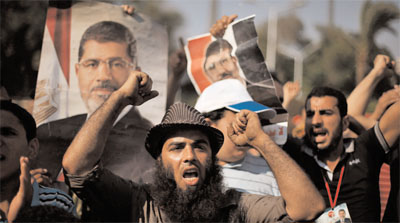
    For a time after the Arab Spring, it seemed that the country was trying to break away from its military-dominated past. A president was freely elected for the first time in the country’s history, with the military allowing him to take office. But the task for Mohamed Morsi and his Muslim Brotherhood proved too arduous to manage. In short, he botched it, and as political dissent against Morsi and the Brotherhood mounted, a relieved Army under then General el-Sisi dethroned him. Although Sisi, now elevated to the rank of Field Marshal, is being coy in announcing his decision to contest the presidency, it is a matter of time before the announcement is made.

    The administration has taken draconian steps to try to crush the Brotherhood, calling it a terrorist organization and trying Mr. Morsi. The Brotherhood is no stranger to suppression in its 85-year history, but it has survived by its grassroots support through its long tradition of charity work in feeding and caring for the poor. And Egypt is in dire economic straits, thanks to the three years of political turmoil despite the attractive aid package the Gulf monarchies have given the military dispensation to express their relief at the end of the Brotherhood experiment.

    The Egyptian story is very much in the making because although the military will bask for a time in the popularity of Field Marshal Sisi, who is being presented as something of a new Nasser, the modern Arab hero, disillusionment will set in as he is crowned. Bred on military rule for more than half a century after the dethronement of Kung Farouq, there are few genuine democratic institutions for people to bank upon. Fattened on generous American military aid to further its own reasons and to protect Israel, the military has a vast economic empire. It is interesting that even during the yearlong Morsi presidency, the defense portfolio was given to Sisi and the defense budget was beyond prying civilian eyes.

    In short, the region of the Middle East and North Africa will remain turbulent for years and decades because the Arab Spring has broken the somnolence of at least half a century. It seems a matter of time before popular revolts will break out again. As it is, the continuing civil war in Syria is roiling the whole neighborhood as its neighbors and others are seeking to cope with more than two millions of Syrian refugees, and that weathervane of the Arab world, Lebanon, is increasingly being subjected to the storms raging all around it. The time frame for future events will be determined in part by how long it will take to douse the flames of war in Syria. The Basher al-Assad regime shows no inclination of leaving office, having bought time to accept the Russian-sponsored deal to divest itself of its deadly chemical arms.

    Russia has an obvious stake in retaining its foothold in Syria but there will come a time when Russian support for the Assad regime will prove too expensive. For the Tunisian street fruit seller who set off the Arab Spring by protesting against his suppression by the authorities through publicly ending his own life, it was a tragedy. But the larger tragedy has been the havoc and changes brought about by protestors leading thus far to a reassertion of the military in Egypt, thanks to the Muslim Brotherhood’s fumbling in seeking to buttress its own position, instead of giving good governance. But for the bright spot represented by Tunisia, the Middle East and North Africa will continue to roil until the US and Russia and the regional powers will make a genuine attempt to seek peace, instead of merely feathering their own nests.

    The Middle East and North Africa will remain turbulent for years and decades because the Arab Spring has broken the somnolence of at least half a century. It seems a matter of time before popular revolts will break out again. As it is, the continuing civil war in Syria is roiling the whole neighborhood as its neighbors and others are seeking to cope with more than two millions of Syrian refugees, and that weathervane of the Arab world, Lebanon, is increasingly being subjected to the storms raging all around it”, warns the author.

  • FOREIGN RELATIONS OF INDIA

    FOREIGN RELATIONS OF INDIA

    India has formal diplomatic relations with most nations; it is the world’s second most populous country, the world’s mostpopulous democracy and one of the fastest growing major economies. With the world’s seventh largest military expenditure, ninth largest economy by nominal rates and third largest by purchasing power parity, India is a regional power, a nascent great power and a potential superpower.

    India’s growing international influence gives it a prominent voice in global affairs. The Economist magazine argues, however, that underinvestment in diplomacy and a lack of strategic vision have minimised India’s influence in the world. India is a newly industrialised country, it has a long history of collaboration with several countries and is considered one of the leaders of the developing world along with China, Brazil, Russia and South Africa (the BRICS countries). India was one of the founding members of several international organisations, most notably the United Nations, the Asian Development Bank, G20 industrial nations and the founder of the Non-aligned movement.


    32
    India has often represented the interests of developing countries at various international platforms. Shown here is Prime Minister Manmohan Singh with Dmitry Medvedev, Hu Jintao and Luiz Inácio Lula da Silva during BRIC summit

    India has also played an important and influential role in other international organisations like East Asia Summit, World Trade Organisation, International Monetary Fund (IMF), G8+5 and IBSA Dialogue Forum. Regionally, India is a part of SAARC and BIMSTEC. India has taken part in several UN peacekeeping missions and in 2007, it was the secondlargest troop contributor to the United Nations.[12] India is currently seeking a permanent seat in the UN Security Council, along with the G4 nations. India’s relations with the world have evolved since the British Raj (1857–1947), when the British Empire monopolised external and defence relations. When India gained independence in 1947, few Indians had experience in making or conducting foreign policy. However, the country’s oldest political party, the Indian National Congress, had established a small foreign department in 1925 to make overseas contacts and to publicise its freedom struggle.

    From the late 1920s on, Jawaharlal Nehru, who had a longstanding interest in world affairs among independence leaders, formulated the Congress stance on international issues. As a member of the interim government in 1946, Nehru articulated India’s approach to the world. India’s international influence varied over the years after independence. Indian prestige and moral authority were high in the 1950s and facilitated the acquisition of developmental assistance from both East and West. Although the prestige stemmed from India’s nonaligned stance, the nation was unable to prevent Cold War politics from becoming intertwined with interstate relations in South Asia.


    33

    In the 1960s and 1970s India’s international position among developed and developing countries faded in the course of wars with China and Pakistan, disputes with other countries in South Asia, and India’s attempt to balance Pakistan’s support from the United States and China by signing the Indo- Soviet Treaty of Friendship and Cooperation in August 1971. Although India obtained substantial Soviet military and economic aid, which helped to strengthen the nation, India’s influence was undercut regionally and internationally by the perception that its friendship with the Soviet Union prevented a more forthright condemnation of the Soviet presence in Afghanistan. In the late 1980s, India improved relations with the United States, other developed countries, and China while continuing close ties with the Soviet Union. Relations with its South Asian neighbours, especially Pakistan, Sri Lanka, and Nepal, occupied much of the energies of the Ministry of External Affairs.

    In the 1990s, India’s economic problems and the demise of the bipolar world political system forced India to reassess its foreign policy and adjust its foreign relations. Previous policies proved inadequate to cope with the serious domestic and international problems facing India. The end of the Cold War gutted the core meaning of nonalignment and left Indian foreign policy without significant direction. The hard, pragmatic considerations of the early 1990s were still viewed within the nonaligned framework of the past, but the disintegration of the Soviet Union removed much of India’s international leverage, for which relations with Russia and the other post-Soviet states could not compensate. After the dissolution of the Soviet Union, India improved its relations with the United States, Canada, France, Japan and Germany. In 1992, India established formal diplomatic relations with Israel and this relationship grew during the tenures of the Bharatiya Janata Party (BJP) government and the subsequent UPA (United Progressive Alliance) governments.

    In the mid-1990s, India attracted the world attention towards the Pakistan-backed terrorism in Kashmir. The Kargil War resulted in a major diplomatic victory for India. The United States and European Union recognised the fact that Pakistani military had illegally infiltrated into Indian territory and pressured Pakistan to withdraw from Kargil. Several anti-India militant groups based in Pakistan were labeled as terrorist groups by the United States and European Union. India has often represented the interests of developing countries at various international platforms. Shown here are Prime Minister Manmohan Singh with Dmitry Medvedev, Hu Jintao and Luiz Inácio Lula da Silva during BRIC summit in June, 2009. In 1998, India tested nuclear weapons for the second time which resulted in several US, Japanese and European sanctions on India.

    India’s then-defence minister, George Fernandes, said that India’s nuclear programme was necessary as it provided a deterrence to potential Chinese nuclear threat. Most of the sanctions imposed on India were removed by 2001. After the 11 September attacks in 2001, Indian intelligence agencies provided the U.S. with significant information on Al-Qaeda and related groups’ activities in Pakistan and Afghanistan. India’s extensive contribution to the War on Terror, coupled with a surge in its economy, has helped India’s diplomatic relations with several countries. Over the past three years, India has held numerous joint military exercises with U.S. and European nations that have resulted in a strengthened U.S.-India and E.U.-India bilateral relationship. India’s bilateral trade with Europe and United States has more than doubled in the last five years.

    India has been pushing for reforms in the UN and WTO with mixed results. India’s candidature for a permanent seat at the UN Security Council is currently backed by several countries including France, Russia,[50] the United Germany, Japan, Brazil, Australia and UAE. In 2004, the United States signed a nuclear co-operation agreement with India even though the latter is not a part of the Nuclear Non- Proliferation Treaty. The US argued that India’s strong nuclear non-proliferation record made it an exception, however this has not persuaded other Nuclear Suppliers Group members to sign similar deals with India. During a state visit to India in November 2010, US president Barack Obama announced US support for India’s bid for permanent membership to UN Security Council as well as India’s entry to Nuclear Suppliers Group, Wassenaar Arrangement, Australia Group and Missile Technology Control Regime.

  • The pitfalls of prosecuting Devyani on Sangeeta’s word

    The pitfalls of prosecuting Devyani on Sangeeta’s word

    “Trafficking” this is not, but “Amnesty” for an illegal alien it is, including, paid-for family reunification

    It is a fact that passports come in three “colors”: Red-for diplomatic; White for official; and Blue for everyday citizen. The colors become important, as is the fact that a person may only have one passport at a time – i.e. if you have a White passport, you no longer have a valid Blue passport. To start comprehending this Devyani Odyssey, it is important to recall that according to press reports, Philip Richard, Sangeeta’s husband, was employed by US Embassy in Delhi as a driver – perhaps for Wayne May.

    According to the Indictment (Ind.), Sangeeta and Devyani arrived at their “final” bargained-for deal prior to October 15, 2012 for 30,000 rupees a month, with Sangeeta, exercising free will, refused the original 20,000 Rupees a month (Ind. at 13). Sangeeta, after cutting her 30,000 Rupees deal gave Devyani her personal “Blue” passport, which the Indictment charges, Devyani never returned to Sangeeta (Ind. at 14). Contrary to press reports, the Indictment makes clear that the IP address used by Devyani to get her own A-1 visa on September 27, 2012, was the same one used to apply on October 15, 2012 for Sangeeta – and admits that the “$4500 monthly income” was not applicable to either Sangeeta’s expected pay or Devyani’s income (Ind at 10 and15).


    8
    Sangeeta Richard

    On November 1, 2012, Sangeeta, without Devyani present, appeared at the US Embassy for her 1st Interview, but without any written contract was rebuffed (Ind. at 17). Then, Sangeeta and Devyani, knowing their actual deal, jointly, willingly and voluntarily entered on November 11, 2012 into a so-called Fake Employment Contract (Ind. at Ex. “E”) to deceive the US Embassy, when Sangeeta, again alone, went for her 2nd Interview on November 14, 2012 and successfully lied to the US Embassy, such that her visa application was processed and granted on November 15, 2012 (Ind. at 18 – 28.) Then, hours before Devyani and Sangeeta left for New York on the morning of November 24, 2012, they entered into a written contract on November 23, 2012 (True Employment contract) that memorialized the original and actual October agreement between the two: 30,000 Rupees a month (Ind. at 29 – 37, and Ex. “F”).

    Relying solely upon Sangeeta’s unadorned word, the Indictment accuses Devyani of overworking and exploiting Sangeeta, and lists hours Sangeeta claims to have worked – as much as “94 to 109” hours a week, including, Sundays (Ind. at 38 – 41). To challenge the hours claimed by an employee, and a domestic worker have been known to lie – as I successfully exposed while representing then-CG Amb. Dayal that she was not sleeping in a closet but a studio apartment and suffered from sexual fantasies and indeed, within 2 weeks those allegations were dropped from the amended complaint. Lurking, however, is a latent problem: the powerful Confrontation Clause would ultimately require the diplomat-employer to confront the employee with the diplomat’s Office’s officially immune and confidential calendar to establish the hours actually worked, except that no government, who owns that office calendar, would permit its use and spill into the public record their official meetings.

    Per the Indictment, Sangeeta wanted to go back to India starting February 2013, and ultimately, coming to CGI in June 2013 – but lacking money and her “personal” passport, could not (Ind. at 42-43). So, on June 22, 2013, she left her place of employment and went AWOL (Ind. at 44). On November 19, 2013, an arrest warrant was issued in India charging Sangeeta with extortion, cheating, and participating in a conspiracy based upon the July 3, 2013 FIR filed in India (Ind. at 48 – 49 and Ex. “G”), which lists the 30,000 Rupees a month deal and that Sangeeta disappeared with her Official passport, after being told she cannot work during her “off days” outside her legal employment to earn extra monies. Indeed, the Indictment states that Devyani alleged that Sangeeta (Accused #1) always intended, [obviously, unbeknownst to Devyani], to use Devyani to gain entrance into the United States.

    Indeed, Devyani filed a motion in Delhi High Court, which attached the so-called Fake Employment contract as well as her FIR, which listed the actual agreement of 30,000 Rupees (albeit, Devyani did not provide the High Court with the November 23, 2012 so-called True Contract with 30,000 Rupees a month payment). The FIR also listed Sangeeta’s husband, Philip, as Accused #2. And as to Count Two, False Statement, the Indictment charges Devyani alone for the false statements made during both Interviews by Sangeeta, when Sangeeta alone went for her interviews. The core problem here is that Sangeeta willfully, voluntarily and with free will entered into three contracts: an oral contract, followed by two written agreements, with the first and third contracts each calling for 30,000 Rupees to be paid per month. Then, Sangeeta, alone, was twice was interviewed by the US Embassy to negotiate the fraud upon the US Embassy, aided by her-executed Fake Contract, and Sangeeta did so successfully.

    Of course, once Sangeeta agreed to work as Devyani’s domestic worker, Sangeeta gave her “Blue” passport to Devyani, who then got Sangeeta her Official “White” passport, with obvious “cancellation” of the Blue passport. Sangeeta then traveled on her White passport on November 24, 2013 to New York, and which was missing, as reported in the FIR when Sangeeta left Devyani’s employ in June 2013. Hence, the claim that Devyani, was somehow preventing Sangeeta from traveling on her Blue passport is incomprehensible – as Sangeeta had her White passport, which Sangeeta knew, she could not use to go back to India, given her violation of her employment-terms. Additionally, with an arrest warrant for Sangeeta issued on November 19, 2013 by the Delhi High Court and her husband listed as an Accused #2, Sangeeta’s claimed desire to return to India is not credible.

    Finally, since Philip Richard was in the employ of the US Embassy in Delhi, Sangeeta was always empowered to seek advice and counsel from Philip’s employer, prior to her entering into two contracts for 30,000 Rupees, both before and after the Fake Contract. That Sangeeta’s family was flown out of Delhi, “evacuated,” on December 10, 2013, per press reports at American taxpayer expense, and also granted a T-Visa like Sangeeta, while legal proceedings were already under way in India is troubling beyond the moment, as it affronts sovereignty and comity of nations – while extrajudicially accepting Sangeeta as a “victim” and preventing the Indian court, in its first-filed case, to be deprived of the presence of Accused #2 – Philip Richard. The law is a splendored thing, as it can also be, as Dickens in Oliver Twist eloquently said, “an ass”: “If the law supposes that,” said Mr. Bumble,… “the law is an ass-an idiot. If that’s the eye of the law, the law is a bachelor; and the worst I wish the law is that his eye may be opened by experience-by experience.”

    That our State Department required our Justice Department to file criminal charges against Devyani, while giving Sangeeta and family a T-visa, under these circumstances is nothing short of an avoidable itch becoming a roaring rash. Sinful human trafficking, modern day slavery, this is not – no matter the powerful incentive of getting a T-visa causing one to fake being trafficked. Now, hopefully, a generous dose of an ointment, consisting of a small amount of amnesia and a large amount of bilateral mutual respect, will get this vital relationship between the united States and India to an even stronger footing – similar to the one we have with Israel – then reciprocity can give way to the wiser sibling, proportionality and we can get the “optics” of security barriers being reinstalled in Delhi and Washington DC.

  • Israel calls off resettlement plan for Bedouins

    Israel calls off resettlement plan for Bedouins

    RAHAT, ISRAEL (TIP): Israel on December 12 suspended a contentious bill aimed at resettling nomadic Bedouin Arabs into government-recognized villages after a series of objections rendered the plan politically untenable. The man behind the ambitious program, former Cabinet minister Benny Begin, called the Bedouin in Israel’s southern Negev desert the country’s most discriminated minority and bemoaned that political forces had derailed a plan he said aimed to help the community.

    “Right and left, Arabs and Jews joined forces — while exploiting the plight of many Bedouin — to heat things up for political gain,” he said in a hastily arranged press conference. Begin said that given the current reality he was forced to recommend that the proposed bill be shelved, a suggestion immediately approved by Prime Minister Benjamin Netanyahu. Liberal opponents said the plan would confiscate Bedouin land and affect their nomadic way of life while hardliners thought it was too generous. Others said the Bedouin were not consulted and the plan, which called for uprooting thousands and relocating them into new towns, was being forced upon them. “The government now has an opportunity to conduct real and honest dialogue with the Negev Bedouin community and its representatives,” the Association for Civil Rights in Israel said after Thursday’s announcement.

    “The Negev Bedouin seek a solution to the problem of the unrecognized villages, and a future in Israel as citizens with equal rights.” A pair of Bedouin representatives reached by telephone had no immediate comment. The government insisted its moves were necessary to provide basic services that many Bedouins lack and would benefit their community while preserving their traditions. The government body dealing with the plan said it calls for the vast majority of Bedouin to live where they are. It said it is investing hundreds of millions of dollars in housing, health, public services and education for the Bedouin in an effort to lift them out of poverty. The proposed law had sought to resolve decades-old land claims by the Bedouin community to pave the way for a large-scale development plan in the southern desert area, one of the few remaining open spaces in this densely populated country. Bedouins are a small group within the Arab minority.

    Traditionally, they have identified more closely with Israel than their Arab brethren, but their complaints against the resettlement program echoed broader sentiments among other Arab Israelis. Some opponents have held violent demonstrations in recent weeks. In a dusty, unrecognized village in the Negev, with no connection to electricity lines or water mains, Zanoun Odeh said he did not know what the future would hold for him and his children. Prior to Thursday’s announcement, Odeh said the plan did not clearly lay out the fate of each village. In his home in Rahme, 1,200 people live in dilapidated shacks with corrugated tin roofs and electricity provided by generators. He said the village doesn’t have a single computer, highlighting the gap with Israel’s otherwise modern society. “Not a single Bedouin opposes having electricity and water, but he also wants his rights to be preserved,” said Odeh, 58, wearing a traditional robe and headscarf. The plan was to see the arrival of two huge army bases, expanded roads and rail networks and the creation of new Jewish and Bedouin communities.

    The relocation plan is a key part of the law known as Prawer-Begin, named after the officials who drew it up, and roused fierce opposition from Arab-Israeli legislators and human rights activists, who called it a thinly veiled land grab tinged with anti-Arab racism.While Arab leaders have lambasted the plan, the sentiments of the Bedouin themselves appeared to be mixed. Embittered by years of poverty and discrimination, some viewed any Israeli offer with suspicion. Others said it was imperfect but offered an alternative to the current living situation. Under the $2 billion plan, Israel was to grant 12,000 Bedouin land claimants 50 percent of their territory, while seizing the remaining half in exchange for compensation. More than $300 million was to be spent on improving infrastructure, building schools and fostering employment. The law intended to legalize some 10 Bedouin villages but some 40,000 Bedouin were to be uprooted from their homes and resettled into new government-built towns over the next 10 years. As an incentive to move, Israel was offering young bachelors and married couples a free plot of land in the new towns and about $28,000.

  • The Geopolitics of Nuclear Proliferation

    The Geopolitics of Nuclear Proliferation

    AS I SEE IT

    It is not easy for Iran and the US to end mutual hostility

    The author sees no end to three decades of mutual hostility and suspicion between Iran and the US.

    Just after the foreign ministers of the self-styled “international community” (comprising the EU members and the US) together with their Russian and Chinese counterparts met the Iranian Foreign Minister in Geneva, the Foreign Ministers of India, China and Russia issued a statement which recognized “the right of Iran to peaceful uses of nuclear energy, including for uranium enrichment, under strict IAEA safeguards and consistent with its international obligations”.

    This was an important declaration as the Republican right wing in the US, egged on by a predictable alliance of Israel and Saudi Arabia, would like to scuttle any possibility of an agreement that ends sanctions against Iran in return for Iran accepting safeguards mandated by the IAEA on all its nuclear facilities. Israel wants a termination of uranium enrichment and plutonium production in Iran, together with an end to Iran’s implacable hostility to its very existence. American policies on clandestine nuclear enrichment have been remarkably inconsistent. The country responsible for triggering the proliferation of centrifugebased uranium enrichment technology was the Netherlands.

    It was the Dutch who carelessly granted A.Q. Khan access to sensitive design documents on centrifuge enrichment technology when he worked at the Holland-based Physical Dynamic Research Laboratory, a sub-contractor of the “Ultra Centrifuge Nederland”. Former Dutch Prime Minister Ruud Lubbers has revealed that after Khan’s activities came to light, he was prepared to arrest Khan in Holland, but was prevented from doing so in 1975 and 1986 by the CIA. It is well known that the Reagan Administration had tacitly assured Pakistan that it would look the other way at Pakistani efforts to build the bomb.

    If President Reagan looked the other way at Pakistani proliferation, President Clinton winked at Chinese proliferation involving the transfer of more modern centrifuges, nuclear weapon designs and ring magnets apart from unsafeguarded plutonium facilities to Pakistan. The A.Q. Khan-Iranian nexus goes back to the days of Gen Zia-ul-Haq when the Iranians received the knowhow for uranium enrichment from Khan. Iran is now known to possess an estimated 19,000 centrifuges, predominantly at its enrichment facilities in Natanz.

    It has an old plutonium reactor used for medical isotopes which, it says, is to be replaced by a larger reactor together with reprocessing facilities being built at Arak. Given the clandestine nature of its nuclear program, its activist role in the Islamic world and its virulent anti-Semitism, Iran’s nuclear program has invited international attention. This has resulted in seven UN Security Council Resolutions since 2006, which called on Iran to halt enrichment and even led to the freezing of assets of persons linked to its nuclear and missile programs.

    There have also been cyber attacks (Stuxnet) by the Americans and the killing of some of Iran’s key scientists, believed by the Iranians to have been engineered by the Israelis. While Iran’s nuclear program enjoys widespread domestic support,what have really hurt the Iranians are the crippling economic sanctions by the US and its European allies. These sanctions have led to the shrinking of its oil exports and spiraling of inflation. They have been crucial factors compelling Iran to seek a negotiated end to sanctions, without giving up its inherent right to enrich uranium that it enjoys under the NPT.

    Crucially, the US can now afford to review its policies in the Middle East. Its dependence on oil imports from the Persian Gulf has ended, its oil production will exceed that of Saudi Arabia in the next five years and it is set to become a significant exporter of natural gas. The emergence of Saudi backing for al Qaeda-linked Salafi extremists in Iraq and Syria is not exactly comforting as the Americans prepare to pull out of Afghanistan. While the Obama Administration may make soothing noises to placate the ruffled feathers in Riyadh and Jerusalem, rapprochement with Iran does widen its options in the Muslim world at a time when Iranian Foreign Minister Mohammad Javad Sharif proclaims that Shia-Sunni tensions are “the most serious threat not only to the region but to the world at large”.

    But it would be unrealistic to expect that negotiations between the P 5 and Germany on the one hand and the Iranians on the other will produce any immediate end to the Iranian nuclear impasse. The Israelis and the Saudis, who wield immense clout in the Republican right wing, the US Congress and in many European capitals will spare no effort to secure support for conditions that the Iranians would not agree to. Iran already has one nuclear power plant built by the Russians at Bushehr, with another 360 MW plant under construction at Darkhovin. It currently has stockpiles of uranium enriched to either 3.5%, which can be used in power reactors, or to 20%, which can be relatively easily further enriched and made weapons grade.

    The Iranians are reported to have agreed that the highly enriched uranium will be converted into fuel rods or plates. Iran has an old plutonium reactor for medical isotopes, which it requires to shut down. It is constructing a larger plutonium research reactor at the city of Arak. The Iranians claim that the reactor at Arak is set to replace the existing plutonium reactor, which is being shut down. This is not an explanation that skeptics readily buy. In the negotiations at Geneva, France reportedly took a hard-line position, demanding that the construction of the Arak plutonium reactor should stop and that there should be no reference to Iran’s “right” to enrich uranium.

    This is not surprising. France has recently concluded a $1.8 billion arms deal with Saudi Arabia and is the recipient of large Saudi investments in its sagging agricultural sector. The Iranians are hard bargainers and will not unilaterally give any concessions unless these are matched by a corresponding and simultaneous lifting of economic sanctions. Having already concluded an agreement with the IAEA, granting the IAEA access to its uranium mine and heavy water plant, Iran is unlikely to agree to yield to demands to stop the construction of its new plutonium reactor.

    More importantly, given the continuing gridlock in Washington between the Obama Administration and the Republican-dominated Senate, the Obama Administration will not find it easy to secure Congressional approval for easing sanctions against Iran, especially in the face of Israeli and Saudi opposition. It is not going to be easy for Iran and the US to end over three decades of mutual hostility and suspicion.

  • Nuclear talks begin, Iran warns of limits

    Nuclear talks begin, Iran warns of limits

    GENEVA (TIP): A new round of Iran nuclear talks began in fits and starts November 10, with the two sides ending a first session just minutes after it began amid warnings from Iran’s supreme leader of “red lines” beyond which his country will not compromise. Still, both sides indicated a first-step agreement was possible on a deal to roll back Iran’s nuclear program in exchange for limited sanctions relief, despite strong opposition from Israel and unease in both Congress and among Iranian hard-liners. President Barack Obama appears determined to reach such an agreement, which could be a major step toward reconciliation between the United States and a former ally that turned adversary after the Islamic Revolution of 1979. But America’s longtime allies Israel and Saudi Arabia fear a deal will fall short of ending the Iranian threat and that a resurgent Iran will transform the balance of power in the Middle East.

    A senior US official said Wednesday’s brief plenary was only a formality and that bilateral meetings would continue through the evening to try to hammer out the first steps of a deal. She demanded anonymity under US government briefing rules. However, there was also tough talk, reflecting tensions from nearly a decade of negotiations that have begun to make headway only recently. While voicing support for the talks, Iran’s supreme leader, Ayatollah Ali Khamenei, insisted there are limits to the concessions Tehran will make.

    And he blasted Israel as “the rabid dog of the region” comments rejected by French President Francois Hollande as “unacceptable.” French spokeswoman Najat Vallaud-Belkacem told reporters in Paris that such statements complicate the talks, but France still hopes for a deal and its position has not changed. At the previous round earlier this month, France said it wanted tough conditions in any preliminary deal with Iran, and those negotiations then ended with both sides speaking of progress but continued differences on a final agreement. Khamenei gave no further details in a speech to a paramilitary group aimed at both placating hard-liners and showing his backing for the Iranian officials meeting with international negotiators in Geneva.

    But his mention of Iran’s “nuclear rights” was widely interpreted as a reference to uranium enrichment. For his part, Israeli Prime Minister Benjamin Netanyahu pushed ahead with criticism of what he asserts is a deal in the making that will give Iran too much for too little in return. Netanyahu, in Moscow to meet with President Vladimir Putin, renewed his demand for a full stop to all Iranian nuclear programs that could be turned from peaceful uses to making weapons. He said that Israel wants to see a negotiated settlement, but added that it must be “genuine and real.” “Israel believes that the international community must unequivocally ensure the fulfillment of the UN security council’s decisions so that uranium enrichment ends, centrifuges are dismantled, enriched material is taken out of Iran and the reactor in Arak is dismantled,” Netanyahu said, referring to Iran’s plutonium reactor under construction. Putin had no public reaction to Netanyahu’s comments.

    “We expect that mutually acceptable solutions will be found shortly,” he told reporters. If the talks produce a deal to freeze Iran’s nuclear efforts, negotiators will pursue a more comprehensive agreement that would ensure that Tehran’s program is solely for civilian purposes. Iran would get some sanctions relief under such a first-step deal, without any easing of the harshest measures, those crippling its ability to sell oil, its main revenue maker. Iran has suggested it could curb its highest-known level of enrichment, at 20%, in a possible deal that could ease the US-led economic sanctions. But Iranian leaders have made clear that their country will not consider giving up its ability to make nuclear fuel, the centerpiece of the talks since the same process used to make reactor stock can be used to make weapons-grade material.

    Details of sanctions relief being discussed have not been revealed. But a member of Congress and legislative aides on Wednesday put the figure at $6 billion to $10 billion, based on what they said were estimates from the US administration. The aides and the member of Congress demanded anonymity because they weren’t authorized to divulge the estimate publicly.The senior US administration official declined comment beyond saying that envisaged sanctions would give Iran only limited relief and they could be rolled back if Iran reneges on terms of any initial deal.

    “We will not allow this agreement, should it be reached … to buy time or to allow for the acceptance of an agreement that does not properly address our core, fundamental concerns,” Secretary of state John Kerry told reporters in Washington The talks are being convened by Catherine Ashton, the European Union’s top diplomat. Her spokesman, Michael Man, said there is “room for flexibility” on sanctions relief if Iran’s concessions warrant it. In Washington, department spokeswoman Jen Psaki expressed optimism, saying the Obama administration believes “we have an opportunity to move forward on a diplomatic path with the Iranians.”

  • The Geopolitics of Nuclear Proliferation It is not easy for Iran and the US to end mutual hostility

    The Geopolitics of Nuclear Proliferation It is not easy for Iran and the US to end mutual hostility

    The author sees no end to three decades of mutual hostility and suspicion between Iran and the US.

    Just after the foreign ministers of the self-styled “international community” (comprising the EU members and the US) together with their Russian and Chinese counterparts met the Iranian Foreign Minister in Geneva, the Foreign Ministers of India, China and Russia issued a statement which recognized “the right of Iran to peaceful uses of nuclear energy, including for uranium enrichment, under strict IAEA safeguards and consistent with its international obligations”.

    This was an important declaration as the Republican right wing in the US, egged on by a predictable alliance of Israel and Saudi Arabia, would like to scuttle any possibility of an agreement that ends sanctions against Iran in return for Iran accepting safeguards mandated by the IAEA on all its nuclear facilities. Israel wants a termination of uranium enrichment and plutonium production in Iran, together with an end to Iran’s implacable hostility to its very existence. American policies on clandestine nuclear enrichment have been remarkably inconsistent. The country responsible for triggering the proliferation of centrifugebased uranium enrichment technology was the Netherlands.

    It was the Dutch who carelessly granted A.Q. Khan access to sensitive design documents on centrifuge enrichment technology when he worked at the Holland-based Physical Dynamic Research Laboratory, a sub-contractor of the “Ultra Centrifuge Nederland”. Former Dutch Prime Minister Ruud Lubbers has revealed that after Khan’s activities came to light, he was prepared to arrest Khan in Holland, but was prevented from doing so in 1975 and 1986 by the CIA. It is well known that the Reagan Administration had tacitly assured Pakistan that it would look the other way at Pakistani efforts to build the bomb.

    If President Reagan looked the other way at Pakistani proliferation, President Clinton winked at Chinese proliferation involving the transfer of more modern centrifuges, nuclear weapon designs and ring magnets apart from unsafeguarded plutonium facilities to Pakistan. The A.Q. Khan-Iranian nexus goes back to the days of Gen Zia-ul-Haq when the Iranians received the knowhow for uranium enrichment from Khan. Iran is now known to possess an estimated 19,000 centrifuges, predominantly at its enrichment facilities in Natanz. It has an old plutonium reactor used for medical isotopes which, it says, is to be replaced by a larger reactor together with reprocessing facilities being built at Arak.

    Given the clandestine nature of its nuclear program, its activist role in the Islamic world and its virulent anti-Semitism, Iran’s nuclear program has invited international attention. This has resulted in seven UN Security Council Resolutions since 2006, which called on Iran to halt enrichment and even led to the freezing of assets of persons linked to its nuclear and missile programs. There have also been cyber attacks (Stuxnet) by the Americans and the killing of some of Iran’s key scientists, believed by the Iranians to have been engineered by the Israelis.

    While Iran’s nuclear program enjoys widespread domestic support,what have really hurt the Iranians are the crippling economic sanctions by the US and its European allies. These sanctions have led to the shrinking of its oil exports and spiraling of inflation. They have been crucial factors compelling Iran to seek a negotiated end to sanctions, without giving up its inherent right to enrich uranium that it enjoys under the NPT. Crucially, the US can now afford to review its policies in the Middle East.

    Its dependence on oil imports from the Persian Gulf has ended, its oil production will exceed that of Saudi Arabia in the next five years and it is set to become a significant exporter of natural gas. The emergence of Saudi backing for al Qaeda-linked Salafi extremists in Iraq and Syria is not exactly comforting as the Americans prepare to pull out of Afghanistan. While the Obama Administration may make soothing noises to placate the ruffled feathers in Riyadh and Jerusalem, rapprochement with Iran does widen its options in the Muslim world at a time when Iranian Foreign Minister Mohammad Javad Sharif proclaims that Shia-Sunni tensions are “the most serious threat not only to the region but to the world at large”.

    But it would be unrealistic to expect that negotiations between the P 5 and Germany on the one hand and the Iranians on the other will produce any immediate end to the Iranian nuclear impasse. The Israelis and the Saudis, who wield immense clout in the Republican right wing, the US Congress and in many European capitals will spare no effort to secure support for conditions that the Iranians would not agree to.

    Iran already has one nuclear power plant built by the Russians at Bushehr, with another 360 MW plant under construction at Darkhovin. It currently has stockpiles of uranium enriched to either 3.5%, which can be used in power reactors, or to 20%, which can be relatively easily further enriched and made weapons grade. The Iranians are reported to have agreed that the highly enriched uranium will be converted into fuel rods or plates. Iran has an old plutonium reactor for medical isotopes, which it requires to shut down.

    It is constructing a larger plutonium research reactor at the city of Arak. The Iranians claim that the reactor at Arak is set to replace the existing plutonium reactor, which is being shut down. This is not an explanation that skeptics readily buy. In the negotiations at Geneva, France reportedly took a hard-line position, demanding that the construction of the Arak plutonium reactor should stop and that there should be no reference to Iran’s “right” to enrich uranium. This is not surprising.

    France has recently concluded a $1.8 billion arms deal with Saudi Arabia and is the recipient of large Saudi investments in its sagging agricultural sector. The Iranians are hard bargainers and will not unilaterally give any concessions unless these are matched by a corresponding and simultaneous lifting of economic sanctions. Having already concluded an agreement with the IAEA, granting the IAEA access to its uranium mine and heavy water plant, Iran is unlikely to agree to yield to demands to stop the construction of its new plutonium reactor.

    More importantly, given the continuing gridlock in Washington between the Obama Administration and the Republican-dominated Senate, the Obama Administration will not find it easy to secure Congressional approval for easing sanctions against Iran, especially in the face of Israeli and Saudi opposition. It is not going to be easy for Iran and the US to end over three decades of mutual hostility and suspicion.

  • John Kerry to join Iran nuclear talks as hopes of deal rise

    John Kerry to join Iran nuclear talks as hopes of deal rise

    GENEVA (TIP): US secretary of state John Kerry will join nuclear talks between major powers and Iran in Geneva on Friday in an attempt to nail down a long-elusive accord to start resolving a decade-old standoff over Tehran’s atomic aims. Kerry, on a Middle East tour, will fly to the Swiss city at the invitation of European Union foreign policy chief Catherine Ashton in “an effort to help narrow differences” in the negotiations, a senior State Department official said. Ashton is coordinating talks with Iran on behalf of the five permanent UN Security Council members plus Germany. After the first day of meetings set for Thursday and Friday, both sides said progress had been made towards an initial agreement under which the Islamic state would curb some of its nuclear activities in exchange for limited relief from punitive measures that are severely damaging its oildependent economy. US President Barack Obama said the international community could slightly ease sanctions against Iran in the early stages of negotiating a comprehensive deal on Tehran’s atomic programme to remove fears about Iranian nuclear intentions. “There is the possibility of a phased agreement in which the first phase would be us, you know, halting any advances on their nuclear programme … and putting in place a way where we can provide them some very modest relief, but keeping the sanctions architecture in place,” he said in an interview with NBC News.

    Negotiators in Geneva cautioned, however, that work remained to be done in the coming hours in very complex talks and that a successful outcome was not guaranteed. Iran rejects Western accusations that it is seeking a nuclear bomb capability. Kerry said in Israel, Iran’s arch foe, that Tehran would need to prove that its atomic activities were peaceful, and that Washington would not make a “bad deal, that leaves any of our friends or ourselves exposed to a nuclear weapons programme”. “We’re asking them to step up and provide a complete freeze over where they are today,” he said in a joint interview with Israel’s Channel 2 television and Palestinian Broadcasting Corporation recorded in Jerusalem on Thursday. In Geneva, Iranian deputy foreign minister Abbas Araqchi said it was too early to say with certainty whether a deal would be possible this week, although he voiced cautious optimism. “Too soon to say,” Araqchi told reporters after the first day of talks between Iran and the United States, Russia, China, Britain, France and Germany. He added, “I’m a bit optimistic.” “We are still working. We are in a very sensitive phase. We are engaged in real negotiations.” The fact that an agreement may finally be within reach after a decade of frustrated efforts and hostility between Iran and the West was a sign of a dramatic shift in Tehran’s foreign policy since the election of a relative moderate, Hassan Rouhani, as Iranian president in June. The United States and its allies are aiming for a “first-step” deal that would stop Iran from further expanding a nuclear programme that it has steadily built up in defiance of tightening international pressure and crippling sanctions. The Islamic Republic, which holds some of the world’s largest oil and gas reserves, wants them to lift increasingly tough restrictions that have slashed its daily crude sales revenue by 60 percent in the last two years. Both sides have limited room to manoeuvre, as hardliners in Tehran and hawks in Washington would likely sharply criticise any agreement they believed went too far in offering concessions to the other side.

    US Senate may seek more sanctions
    Lending urgency to the need for a breakthrough was a threat by the US Congress to pursue tough new sanctions on Iran. Obama has been pushing Congress to hold off on more sanctions against Iran, demanded by Israel, to avoid undermining the diplomacy aimed at defusing fears of an Iranian advance towards nuclear arms capability. But many US lawmakers, including several of Obama’s fellow Democrats, believe tough sanctions brought Iran to the negotiating table and that more are needed to discourage it from building a nuclear bomb.

  • The Pivot under Pressure

    The Pivot under Pressure

    It’s not just the canceled trip. Other factors are limiting the ability of the U.S. to focus on the Asia-Pacific.

    Senior U.S. administration officials have been at pains in recent weeks to demonstrate how Washington’s strategic focus is shifting from the military quagmires of the greater Middle East to the dynamism of Asia. It’s a tough sell, and there is reason to doubt that America’s allies and friends in the region are buying it. Even before the cancellation of President Barack Obama’s Asia trip, which would have included the APEC and East Asia summits, doubts about U.S. focus were rising. Take Obama’s address before the UN General Assembly earlier this month. Its core takeaway is that the manifold problems of the Middle East have once more re-asserted their claim on Washington’s attention. Unveiled with much fanfare (here and here) two years ago, the so-called Asia pivot is all about shoring up the U.S. presence in a vital region that is increasingly under the sway of an ascendant China.

    Obama dubbed himself “America’s first Pacific president” and declared that Asia is where “the action’s going to be.” Vowing that the future would be “America’s Pacific Century,” his lieutenants rolled out two specific initiatives: 1.) A buildup of military forces that is plainly directed against China; and 2.) An ambitious set of trade and investment negotiations known as the “Trans-Pacific Partnership” (TPP) that would contest Beijing’s economic hegemony in East Asia. But the pivot – or the “strategic rebalance,” as administration officials now prefer to call it – was birthed with two congenital defects: It was unveiled just as the convulsions of the Arab Spring began tearing apart the decades-old political order in the Middle East, and just as an era of severe austerity in U.S. defense budgeting was taking shape. Until a few weeks ago, Obama gave every appearance of a man wishing the problems of the Middle East would just go away. But much like the Glenn Close character in Fatal Attraction, the region refuses to be ignored. For all the talk about turning the page on years of military and diplomatic activism in the region, Obama keeps having to take notice.

    Indeed, he was forcefully reminded of its combustibility when the outbreak of fighting in Gaza between Israel and Palestinian militants intruded on his last trip to Asia a year ago. And despite his stubborn determination to steer clear of it, he now finds himself sucked into Syria’s maelstrom. The president’s General Assembly address underscores the power of this gravitational pull. In it, Mr. Obama affirmed: “We will be engaged in the region for the long haul,” and outlined the security interests that he is prepared to use military action to protect. He reiterated his intention to see through the uncertain prospect of Syria’s chemical disarmament and then staked his prestige on two longshot projects: stopping Iran’s nuclear weapons program and brokering an Israeli-Palestinian peace accord. He also pledged renewed focus on sectarian conflicts and humanitarian tragedies like the Syrian civil war. This marks quite an evolution in Obama’s thinking from earlier in the year when he justified his Hamlet-like ambivalence on Syria by pondering: “And how do I weigh tens of thousands who’ve been killed in Syria versus the tens of thousands who are currently being killed in the Congo?” In all, Obama’s remarks last month mark a noticeable change in his foreign policy agenda.

    As the New York Times noted: “For a president who has sought to refocus American foreign policy on Asia, it was a significant concession that the Middle East is likely to remain a major preoccupation for the rest of his term, if not that of his successor. Mr. Obama mentioned Asia only once, as an exemplar of the kind of economic development that has eluded the Arab world.” This shift will only renew the multiplying doubts in the region about his commitment to the pivot. So too will the fiscal policy drama currently being played out in Washington, which regardless of its precise outcome, looks certain to end up codifying the sequestration’s deep budget cuts that have disproportionally affected defense spending. Already the drama in Washington has prompted him to cancel his Asia visit. Meanwhile, many in Asia are questioning whether the administration has the fiscal wherewithal to undertake its promised Asia pivot, including the military aspect. The budget squeeze is already cutting into military readiness. The U.S. Navy is slated to play a central part in the buildup, but two thirds of its non-deployed ships and aviation units reportedly don’t meet readiness goals, and the frequency of naval deployments has been noticeably pared back. The Air Force has grounded a third of its fighter squadrons and “Red Flag,” its premier combat training exercise, was canceled for the fiscal year that just ended. Deep reductions in Army and Marine Corps ground forces are in the offing, and joint exercises involving U.S. forces and their Asian counterparts have been scaled back.

    Moreover, a senior officer working on strategic planning for the Pentagon’s Joint Staff recently acknowledged the difficulty of militarily disengaging from the Middle East and re-directing forces to Asia. As Defense News reported: “‘We’ve been consumed by that arc of instability from Morocco to Pakistan for the last 10 years,’ Rear Adm. Robert Thomas said. And while the senior staffs at the Pentagon are dutifully discussing how they are rebalancing to the Pacific, ‘I suspect, though, for the next five years, just as the last 10 years, we will have this constant pull into the’ Middle East.” “Over the next several years, he continued, ‘I think that you’re going to continue to talk about a rebalance to Asia, and you’re going to do some preparatory work in the environment, but the lion’s share of the emphasis will still be in that arc of instability.’” Thomas also predicted a constant tug for resources between the U.S. military commands responsible for Asia and the Middle East. This strain may explain why the Pentagon has yet to develop a comprehensive game plan for the military buildup in Asia. Likewise in doubt is U.S. resolve on the TTP, which involves 12 Pacific Rim countries that together account for a third of the world’s trade.

    The Obama administration, having already missed the initial November 2011 deadline it set for completion, was hoping to have a basic agreement in place in time for the Asia Pacific Economic Cooperation (APEC) summit that convened in Indonesia on the weekend. But there has been slow progress in the negotiations (see here, here and here for background), and even the revised deadline looks likely to slip. Moreover, the White House has not even moved to formally request socalled “trade promotion authority,” a traditional indicator of serious intent because it puts trade deals on a quick path to Congressional approval. The administration announced more than a year ago that it would request this authority from Congress but Michael Froman, the new U.S. Trade Representative, recently stated there is “no particular deadline in mind.” Nor has the White House used its political capital to address rising domestic opposition (here and here) to the trade deal. Washington will continue to proclaim the Obama administration’s steadfastness to the Asia pivot. But U.S. allies and friends now have even more reason to think otherwise.

  • So-Called Spring; Su-Shi Strife and The South-West Asia

    So-Called Spring; Su-Shi Strife and The South-West Asia

    “The author foresees tremendous tectonic changes in the wake of Arab Spring et al. He says, “There will be following major discernible evolutionary geo-political trends underlying the so-called Arab spring. The despotic regimes headed by dictators, monarchs, military strongmen, presidents-for-life and supreme leaders-for-life would eventually be overthrown by the popular revolt. The middle-east is surely due for a major cartographic make-over in the next few decades. The fault-lines would be sectarian, ethnic and linguistic. The glue of Political Islam supported by embedded Jihadi elements would be torn asunder while facing the sectarian, ethnic and linguistic divide.”

    Arab Spring, Arab Winter, Arab Summer, Arab Renaissance, Arab Awakening, Islamic Awakening and Islamic Rise are just few of the epithets used to describe the complex and multidimensional geopolitical changes in the middle-east region that comprises of West Asia and Northern Africa. Depending upon one’s perspective, each of these adjectives is inadequate to describe the complex geopolitical phenomena that have engulfed the region. It is important to recapitulate that barring three nations, viz. Iran, Turkey an Israel all other countries in this region are Arab. Despite Francis Fukuyama’s puerile musings about the “end of history”, we are now witnessing tectonic changes of historic proportions.

    However, it will be a very slow and bloody change that would be unstoppable despite numerous western interventions. The genie of historic change had been unleashed much earlier in 2003 when the Baathist regime was toppled in Iraq ostensibly to chase the now non-existent “weapons of mass destruction”. The ten year anniversary of the US invasion of Iraq and “the ensuing mother of all battles” does not witness peace and tranquility in that nation, divided de facto, on sectarian and ethnic fault-lines. The Iraqi Kurdistan, nominally under the central government of Iraq is on a rapid trajectory to peace, prosperity and development while Baghdad continues to witness sectarian violence and bomb attacks. The Prime Minister Nouri al- Maliki is grabbing executive powers and has inadvertently encouraged sectarian divide and Shia identity politics. Besides the Iraqi Kurds, the real beneficiary of the US invasion worth $ 870 billion has been the Islamic Republic of Iran.

    If one chooses to be historically correct, the Islamic revolution of 1979 in Iran is the real harbinger of the so-called Arab spring. A US supported dictator was overthrown by popular revolt in Iran. The popular revolution was usurped and captured by Islamist Ayatollah Khomeini leading to a lot of blood-shed and massacre of democratic and liberal sections of the Iranian society in a targeted manner. A mini-version of this so-called (“Persian”) spring was again manifest in Iran, a non-Arab Shia theocracy in 2009 under the name of “green revolution”. However, the US administration led by Barak Hussain Obama “rightly” failed to capitalize on the situation leading to brutal suppression of young Iranians by the theocratic regime and its revolutionary guards. For the first time the US and its cronies missed an opportunity for externally driven regime change in Iran. Starting with Tunisia, the Arab Spring phenomena later on engulfed Egypt and Yemen. In Yemen, an extended “managed” political change was indeed brought in grudgingly under the patronage of Western imperialistic powers. Both Tunisia and Egypt saw subsequent takeover by Islamists in democratic elections. After over-throwing of Ben-Ali, the fundamentalist An-Nahda Islamists were the victors of the Tunisian democratic elections in October 2011.

    The Jihadists and the Salafists are now working in tandem with the conservative An-Nahda Islamists to infiltrate the previously secular Tunisian state from within. The story in Egypt is not very much different where the popular revolution against Hosni Mubarak and the Armed Forces has already been annexed by the Muslim Brotherhood (MB) and Mohammad Morsey. The Egyptian judiciary, especially the Supreme Court has resisted the Muslim Brotherhood and its attempts to foist an Islamist constitution. Furthermore, the Egyptian Supreme court has postponed yet again the parliamentary elections denying the MB an opportunity to control the entire state. Parts of the civil police force have already stopped obeying orders of the Islamist government to fight against fellow citizens forcing the MB to spare its cadre for law enforcement duties. Using the fig-leaf of so-called Arab Spring, the opportunistic Western powers militarily intervened in Libya, another socialist Baathist party ruled Arab dictatorship and brought out a regime change they had craved for long.

    The subsequent Islamist take-over of Libya, the barbaric treatment (victor’s justice) given to the quixotic dictator Col Mommar Gadaffi and killings of the US ambassador and other personnel by Al Qaeda in Ben Ghazi is illustrative of the nature of the beast. Interestingly, the Shah of Iran, Saddam Hussain and Col Mommar Gadaffi, all three had indeed served with great distinction as the “useful idiots” of the Western imperialism. The ideological hollowness of the West and the cheer-leaders of the socalled Arab Spring was noted again in Bahrain where popular and public demands for political change were exterminated brutally by foreign military intervention undertaken by the Kingdom of Saudi Arabia (KSA) and Pakistan in order to prevent take-over of the Sunni ruled nation by a Shia majority population. Syrian example shows the true colors of the cheer-leaders of the so-called Arab spring.

    Another socialist and secular Arab country ruled by the Baath party is being systematically destabilized from outsideintervention for the last two years and sacrificed at the altar of Sunni-Salafi- Jihadi-Wahabi (SSJW) geopolitical interests. Foreign Sunni fighters are leading the war against the Assad regime, fully supported by the regional Sunni monarchies. What we see now is essentially a Sunni-Shia (SU-SHI) sectarian power struggle in the Islamic nations of the West Asian region with Western imperialistic intervention in a systematic manner to defeat the secular and socialist Baath party regimes and of course to safeguard the interests of the Sunni-Salafi-Jihadi-Wahabi (SSJW) alliance. This bloody sectarian conflict will not be resolved in next few months or years.

    As the geopolitical events unfold, we will witness a quasi-permanent fratricidal intra-Islamic sectarian war for decades in the west Asian region culminating in major cartographic changes. There will be multiple incarnations of Arab & Islamist “Tianamen Squares” during which the despotic rulers will brutally suppress the revolting citizens. The US strategic retreat from the middle- east and pivot to Asia will finally allow the history to emerge in the middle-east uncontaminated by the hegemonic order imposed by the US hyper-power. Right now all the Arab monarchies have tried to buy out the demands for freedom and socio-political change by bribing their respective populations with yet more goodies financed by petro-dollars. This monetary intervention would at best delay the clamor for freedom and political change only by a few years in the oil-rich nations. There will be Islamist take-over of one-kind or other in all these countries. But political Islam would not be able to provide stability and strategic security to these nations.

    Just like in the communist countries as they vied with one another for title of the adherents of the true nature of communism practiced in the former communist countries, one would witness competitive claims of “true or genuine Islamism” by various ruling dispensations in this region. Fundamentalist competitive “political Islam” in alliance with Jihadis would hijack liberal and democratic popular uprisings. Indeed, there will be immense loss of human life and Jihadi terrorism will rule the roost. Transfer of power and change of regimes will be an inherently bloody process. There will be serious human rights violations and genocide by all the sides in the name of “true Islam”. Western apologists and backers for these despotic countries under severe financial crunch would no longer be interested in maintaining the geo-political status quo ante. geopolitical tectonic changes are likely to result in emergence of new nation states. Syria might be balkanized into multiple small entities or state-lets analogous to the former Republic of Yugoslavia.

    One would not be surprised if an Independent Kurdistan finally emerges as the 4th non- Arab country in the middle-east. Iraq, Iran, Syria and Turkey may lose their respective Kurdish populations to a newly independent and democratic Kurdistan. Since the fall of the Ottoman empire, the Western imperialistic powers while arbitrarily carving out state-lets to safeguard their own economic and hydrocarbon interests, chose to sacrifice the Kurdish national interests and denied them right to a state. West Asia has app 35 million Kurdish (non-Arab) people with app half (18 million) in Turkey, 8 million in Iran, 7 million in Iraq and 2 million in Syria. Unraveling of Syria will serve as a catalyst for Turkish Kurds to revolt against the increasingly Islamist Sunni dispensation of Turkish Prime Minister Recep Tayyip Erdogan in Ankara that has systematically deviated from the secular ideology of Kemal Ata-Turk, the founding father of modern Turkey.

    Both the PKK (Kurdistan Workers Party) and its imprisoned leader Abdullah Ocalan have successfully orchestrated staggered, coordinated hunger strikes for more than two months by thousands of Kurdish prisoners in Turkish jails. Turkey is going through a schizophrenic struggle between its European aspirations and Islamic moorings. However, political Islam will not be able to hold the Turks and the Kurds together. With increasing Sunniazation of the Turkish polity, this large ethnic and linguistic Kurdish minority will eventually assert itself in this chaotic geopolitical transition. Islamic glue will not be able to hold together Turkish and Kurdish ethnic identities and a volcanic eruption of nationalist fervor will unravel Turkey as we know it. If Turkish and Syrian Kurds turn more nationalistic and declare an independent Kurdistan, Iraqi and Iranian Kurds will be forced to follow suit. As a result of this, a truncated Iraq would eventually come out as a Shia-Arab theocracy with a Sunni minority supported by the neighboring Shia-Persian theocracy, Iran. Iran would not be insulated from demands of political freedom and change if there is no external intervention.

    Young, educated and emancipated Iranians will eventually overthrow the conservative Ayatollah-cracy leading to a more democratic and liberal regime change. A non-theocratic and more democratic and liberal Iran will re-emerge as a major regional power with friendly Shia majority governments in Iraq, Azerbaijan, Bahrain and elsewhere including in Lebanon. Iran will be a longterm winner in the despite losing some territory to Kurdistan and Baluchistan. A loose federation of Shia states may become a power grouping in the region. In such a geopolitical scenario, the territorial integrity and sovereignty of the Kingdom of Saudi Arabia (KSA) would no longer be safeguarded by a strategically retreating USA. By 2017, the USA will surpass the Saudis as the largest petroleum producing nation that will become a net exporter of hydro-carbons in 2020. Future US administrations will be forced by domestic isolationists to give up the stability mantra leaving the middle-east region to its own devices.

    The ultrageriatric conservative clan of Saudi princelings with all their extremities in the grave will not be able to hold the country together especially in the face of increasingly restive and un-employed young men. Increasing modernization and “secularization” of this tribal society will be resisted violently by the ruling political establishment. There have already been small demonstrations by Sunni Muslims calling for the release of people held on security charges. Saudi women will demand equal rights and driving privileges. The Saudi women would like to emulate their more emancipated Iranian counter-parts in public discourse. If Al Qaeda or its various mutants take-over the Saudi Arabia, the House of Saud will be brutally slaughtered in the name of “liberating Islam”. The internal strife in Saudi Arabia will manifest openly in an explosive manner when the oilfields dry up in few decades. The only unrest to hit Saudi Arabia during the so-called Arab Spring wave of popular uprisings was among its Shi’ite Muslim minority. The Shia populations in the Eastern region of Saudi Arabia will eventually revolt against a Sunni-Salafi- Jihadi-Wahabi (SSJW) complex leading to emergence of another Shia state-let.

    Bahraini Shia population is likely to overthrow the ruling Sunni dynasty, leading to emergence of another Shia nation. A Palestinian state-let may eventually be established as a joint protectorate of Egypt and Jordan. Egypt and Turkey will have much diminished geo-political influence. Egypt will have to deal with the issue of human rights of an increasingly vocal Coptic Christian minority. Some countries might eventually disappear by 2030. The most putative candidates are Lebanon, Kuwait and the Palestine. The impact of these geo-political changes will without doubt creep eastwards towards the Af-Pak region of the South-Asia leading to cartographic changes in national boundaries. Pakistanoccupied Baluch principalities, exploited by the Punjabi-dominated Pakistani army will successfully revolt for an independent Baluchistan as the Chinese footprint increases in the Gwadar port. After taking over the Gwadar port, China will seriously attempt to exploit the mineral and hydrocarbon wealth of Pakistan-occupied Baluch areas, thereby, increasing the sense of alienation and marginalization amongst the Baluch tribes.

    The separatist Baluchistan Liberation Army will target Chinese companies and personnel in the ensuing war of independence. The Sistan- Baluchistan province of Iran will take its own time joining an Independent Baluchistan. The consequent undoing of the artificial geographic boundaries arbitrarily determined by the British colonialists will lead to emergence of newer states carved out of the Af-Pak region. Another fall-out of these changes would be emergence of an independent and greater Pakhtoonistan comprising of the Khyber-Pakhtoonwah province of Pakistan and the Pakhtoon areas of the Afghanistan across the now defunct Durand line. The result would a truncated but more stable Afghanistan controlled by the northern alliance comprising of the Tajeks, Hazaras and Uzbeks. A truncated Pakistan will continue to remain as a rent-seeking failed state. It may implode eventually, leading to its fragmentation followed by multi-lateral external intervention under supervision of the UN and the IAEA to secure the nuclear weapons and the fissile materials.

    Further to north-east, a restive Uighurs’ population will force the emergence of Eastern Turkistan while throwing away the 300 years’ old occupation by the Han Chinese and subsequent annexation by the Communist China led by Comrade Mao. Will this tectonic change engulf the central Asian states or the “stans” is not clear at this time as the geopolitical dynamics are entirely different in the Central Asia in comparison to the South and West Asia. There will be following major discernible evolutionary geo-political trends underlying the so-called Arab spring. The despotic regimes headed by dictators, monarchs, military strongmen, presidents-for-life and supreme leaders-for-life would eventually be overthrown by the popular revolt. The middle-east is surely due for a major cartographic make-over in the next few decades. The fault-lines would be sectarian, ethnic and linguistic. The glue of Political Islam supported by embedded Jihadi elements would be torn asunder while facing the sectarian, ethnic and linguistic divide.

    Whether some kind of democracy will eventually prevail in this region in near future is doubtful, at best. Political Islam with its Jihadi mutant will be on the ascendance temporarily as an essential bloody interim phase in the long-term development of liberal democracy in the West Asia, North Africa and Af-Pak regions of South Asia. Increasing modernization, secularization and intellectual emancipation of the common masses will eventually defeat the Islamist counterreaction in each of these countries. Iran which is way ahead in the trajectory of civilizational change and democratic evolution will emerge as the most influential regional player while Egypt, Turkey and the KSA will eclipse relatively.

  • India, the Land Columbus Set out to Find

    India, the Land Columbus Set out to Find

    What is it about India, that its tryst with destiny is still on-going? Why does India keep moving forward despite the doers and the naysayers, the empire builders and the colonized? The answer, I submit, lies in the glorious amalgam of history and hope, glory and defeat, education and renunciation, family and loneliness, accomplishment and worthlessness, ego and doubt, government and the governed, “East” and “West,” nuclear energy and organic linen; in short, India is a living contradiction – old and young, religious and secular, Eastern and Western, proud and humble, poor and rich, stranger and friend. On India’s Independence Day, one cannot but thank the British empire for all of its managerial excellence and vision, for it is they who did what no maharaja was able to do short of Ashoka the Great: create a Greater India, a unified India.


    img145

    That there was a Great Partition, with untold stories of misery and heroism, courage and slaughter, so that a few “Royals,” domestic and foreign, could uproot so much humanity for mapmakers’ joy rather than compel sovereign governments to give equal protection to the governed, remains an irksome lesson for would-be nation-makers. Arab Spring’s lessons are both forward-looking, as they are rear-view looking, and given the world being conquered, as a whole, by the unstoppable digital binary code, the great denominator, the world has indeed gone “flat,” and time “instantaneous”: lost are the curves of the globe and the hands of time on the alter of digital transparency – more controlled by multinational corporations than by analogue sovereign governments desperately seeking to harness the binary code to defend against “enemies, foreign and domestic.” What is to become of India, one may ask. Beware, I say to all who thought that China would counter-balance the Soviets.

    Like China’s core greatness lay sub-rosa unseen by the likes of Henry Kissinger, so, I fear is true of India, albeit, mercifully, only in part. In part, I say, because India’s investment in democracy’s warts is full-throttle and every citizen, poor and rich alike, sees themselves as the master of the public trust. Just ask The New York Times’ columnist Thomas Friedman as to why he is so in love with India, and why India, a Hindu-majority nation, effortlessly and confidently rests its position in the comity of nations in the gentle, strong and erudite hands of Salman Khurshid.


    img147

    It is as if Ashoka the Great, Akbar the Great, Guru Nanak, and Mother Teresa, not just Gandhi, Jinnah and Nehru, wrought this continuing tryst with destiny. For us in the United States, where each of the 50 states are a laboratory of policy for the nation to embrace or reject, India, I submit, given its diverse religious content and in the main peaceful co-existence, economic growth that defies the weight of regulations, may well be a laboratory to the world – for there, East and West, greed and charity, ambition and detachment live in substantial harmony. Since Secretary John Kerry is working overtime to seize the moment decreed by destiny, as he races to the Middle East to jumpstart the cob-webbed peace process between Israel and Palestine, no matter the profit of the status quoers, and harder yet, to re-order the Afgan-Subcontinent equation, each of the affected nations and citizenry, in the exercise of their enlightened selfinterest, owe a good faith response – for destiny awaits, in an infinite variety of shades and colors, the outstretched-hand’s state of loneliness or girth, given the many amalgamated hands reaching for the same sweet spot of history. Moreover, the dynamic of Israel’s meddlesome Thomas Dewey-like preference in last year’s presidential elections when Barack Obama won the “imperial term” in a resounding Harry Truman-like fashion, presents the Middle East a better shot than ever before.

    However, multi-lateral frustration infecting the Afgan- Subcontinent recalibrated process requires a critical mass of trilateral leadership, which ignores the interlopers’ inflammatory excesses, so as to bring the blessings of liberty and prosperity to their populace, unhappily aware of their common ancestry and uncommon present. For them I recall the example of the European Union’s birth, when jealous pride of many a nation, that claimed the world as its own, was overcome – surely those in the sub-continent can bequeath to their childrens’ children a gentle neighborhood where all are free to worship as they see fit and prosper per individual effort, as they have the benefit of cross-pride “across the border.” It may well be that the United Nations, created with the ink of World War II victory and a subsequent switcheroo a la ROC with PRC, needs the reforms that many have pushed for, including, Prime Minister Manmohan Singh, and his then-Permanent Representative Hardeep Singh Puri, after winning an unprecedented near-unanimous electoral victory to a rotational seat on the Security Council.

    It may well be that the “bubbling” South China Sea needs to bubble less, even as it starts the Kabuki dance of a future theater of avoid-able war and remilitarization. India’s attention, then, must be Eastward, Upward, and Westward. As an American, I can only hope that the land Columbus set out to find, India, and the nation he caused to be born, the United States, find in each other a common soul, aided by the rule of law and abetted by a democratic republic, such that Jefferson’s Declaration of Independence, “When in the Course of human events, it becomes necessary for one people to dissolve the political bands which have connected them with another, and to assume among the powers of the earth, the separate and equal station to which the Laws of Nature and of Nature’s God entitle them, a decent respect to the opinions of mankind requires that they should declare the causes which impel them to the separation. We hold these truths to be self-evident, that all men are created equal, that they are endowed by their Creator with certain unalienable Rights, that among these are Life, Liberty and the pursuit of Happiness.–

    That to secure these rights, Governments are instituted among Men, deriving their just powers from the consent of the governed, — That whenever any Form of Government becomes destructive of these ends, it is the Right of the People to alter or to abolish it, and to institute new Government, laying its foundation on such principles and organizing its powers in such form, as to them shall seem most likely to effect their Safety and Happiness. …” and Jawaharlal Nehru’s “Tryst with Destiny” speech loudly resonates to this day: “Long years ago we made a tryst with destiny, and now the time comes when we shall redeem our pledge, not wholly or in full measure, but very substantially. At the stroke of the midnight hour, when the world sleeps, India will awake to life and freedom. A moment comes, which comes but rarely in history, when we step out from the old to the new, when an age ends, and when the soul of a nation, long suppressed, finds utterance. It is fitting that at this solemn moment we take the pledge of dedication to the service of India and her people and to the still larger cause of humanity. At the dawn of history India started on her unending quest, and trackless centuries are filled with her striving and the grandeur of her success and her failures.

    Through good and ill fortune alike she has never lost sight of that quest or forgotten the ideals which gave her strength. We end today a period of ill fortune and India discovers herself again. The achievement we celebrate today is but a step, an opening of opportunity, to the greater triumphs and achievements that await us. Are we brave enough and wise enough to grasp this opportunity and accept the challenge of the future?” The world is better that Columbus lived, dreamed and strove. For we are here, dear Cristoforo Columbo, to prove you were never map-lost.

  • Medical Tourism to India: The Next Services Industry Revolution

    Medical Tourism to India: The Next Services Industry Revolution

    India ranked third in the world in medical tourism in 2012, with Thailand leading and Hungary in the second position. The hallmark of medical tourism in India is care. The author underscores this aspect: “India is still a caring society – though this is fast going.

    As many patients, both American and European have noted, this adds a subtle and intangible value added factor to the quality of medical care in India.” “Man does not live by bread alone. We have had in recent years super specialty hospitals rise where cutting-edge care is given at a pittance to the indigent. These are largely staffed by disciples of the leading gurus of India with a strong spiritual bent. For them medicine is now more a calling rather than a vocation”, says the author.


    img6

    Starting sometime in the early 1990s the IT revolution took off in India which has revolutionized many aspects of Indian industry. It led to the rise of Indian global IT giants and world class firms Infosys, Tata Consultants,Wipro and a host of others. Now in the 21st century it is the turn of the global medical industry to take advantage of world class quality and ultra-competitiveness of Indian medical services. There are estimates of 20% to 25% compounded annual growth in medical tourism to India for at least the foreseeable future.


    img7

    The first wave from SAARC (South Asian Association for Regional Cooperation) commenced some time ago. The second wave from the advanced European countries began not too long ago. With the rise of Obamacare it will now be the turn of the medical tourism rush from the US and Canada. In some ways it should be easier for the medical tourism industry to draw clients from the US since many of India’s leading doctors of today trained in the US and are intimately familiar with the culture, procedures and standards in the US. They dominate in several medical fields in the US at the leading research institutions. That apart there is a subtle factor.

    India is still a caring society – though this is fast going. As many patients, both American and European, have noted this adds a subtle and intangible value added factor to the quality of medical care in India. Plus there is the image of Indians in the US as being the most advanced and affluent immigrant community. In math, science, medicine, R&D and the teaching professions the reputation of Indians is unrivalled. More important Indians are not viewed as a hegemonistic / imperialistic threat anywhere in the world – our excessive non-violence (ahimsa) fetish has some use after all, vis a vis for example the Chinese.


    img8

    The other great civilization out of Asia is viewed with deep suspicion as monolithic, mercantilistic, hegemonistic all over the world. Now to speak in a larger context. Whether this medical tourism boom and the resulting affluence of the medical sector will lead to the improvement of general medical care for the vast impoverished masses of India is the real issue. One hopes that it will. The second factor is whether it will lead to the growth of cutting edge medical R&D establishments in India which will advance the frontiers of medical care. Once some 2000+ years ago in the time of Charaka and Susruta, c.f. Charaka Samhita and Ashtanga Hridayam, India nee Bharatavarsha led the world in the sophistication of its medical AND SURGICAL care theory and practice.

    With the wholesale destruction of the native culture through the millennia of Islamic conquest, rapine and genocide much of this vanished. Then it was the turn of the English for about 200 years. There has to be pride in one’s cultural heritage and a resolve / samkalpa to bring about a cultural renaissance where such services and arts will rise to the top again. We have been successful in the IT industry; it is true. But some 25 years after the boom began we have still not advanced as far as we could / should have to rise above the cyber coolie image.

    There is not as much real cutting edge IT innovation and research taking place in India as would have been possible. The cutting edge work is still being done in the US and Israel. As someone who worked in the consulting industry in a senior capacity, I have seen that the level of professionalism and training in even the best Indian IT firms is far below what it is at the elite global consulting firms out of the US / UK / France. The low level work was taken up by India / Indians.

    Now that India is being priced out the work is moving to Vietnam, Laos, Bangladesh and elsewhere. One hopes there will be more thoughtful and professional planning and assistance at the central government level for the medical services industry. There is an inherent advantage here which was not there in the case of the IT industry. Many of the medical professionals involved are wealthy to start with having been for decades in the US. They have the top level socio-political contacts. The issue is how much of a pro bono orientation will guide their actions. Man does not live by bread alone.

    We have had in recent years super specialty hospitals rise where cutting-edge care is given at a pittance to the indigent. These are largely staffed by disciples of the leading gurus of India with a strong spiritual bent. For them medicine is now more a calling rather than a vocation. With the rampant growth of materialism and conspicuous consumption aping the West, will much / any of the old values which made Indian Hindu society a survivor for some 5,000 years continue? That is the real question. Let us hope and pray and all do our bit to ensure that the age old values flourish in the India of today and the future. (The author is based in New York and can be reached at nagendrasrao@gmail.com)

  • 18 Dead, 280 Hurt In Beirut Car Bomb Blast: NEWS AGENCY

    18 Dead, 280 Hurt In Beirut Car Bomb Blast: NEWS AGENCY

    BEIRUT: BEIRUT (TIP): A powerful car bomb tore through a bustling south Beirut neighborhood that is a stronghold of Hezbollah on August 15, killing at least 18 and trapping dozens of others in an inferno of burning cars and buildings in the bloodiest attack yet on Lebanese civilians linked to Syria’s civil war. The blast is the second in just over a month to hit one of the Shiite militant group’s bastions of support in years, and the deadliest in decades.

    It raises the specter of a sharply divided Lebanon being pulled further into the conflict next door, which is being fought on increasingly sectarian lines pitting Sunnis against Shiites. Syria-based Sunni rebels and militant Islamist groups fighting to topple Syria’s President Bashar Assad have threatened to target Hezbollah strongholds in Lebanon in retaliation for intervening on behalf of his regime in the conflict.

    August 15 explosion ripped through a crowded, overwhelmingly Shiite area tightly controlled by Hezbollah, turning streets lined with vegetable markets, bakeries and shops into scenes of destruction and burning cars. Dozens of ambulances rushed to the scene of the explosion and fire fighters used cranes and ladders in trying to evacuate dozens of residents from burning buildings. Some terrified residents fled to the rooftops of buildings and civil defense workers were still struggling to bring them down to safety several hours after the explosion.

    The blast appeared to be an attempt to sow fear among the group’s civilian supporters and did not target any known Hezbollah facility or personality. Hezbollah’s Al Manar TV and Red Cross official George Kattaneh said the death toll was at least 18 and said more than 280 were wounded. The army, in a statement, said the explosion was caused by a car bomb. It called on residents to cooperate with security forces trying to evacuated people trapped in their homes. Syria’s conflict has spilled across the border into its neighbor on multiple occasions in the past two years.

    Fire from Syria has hit border villages, while clashes between Lebanese factions backing different sides have left scores dead. But direct attacks against civilian targets were rare until Hezbollah stepped up its role in Syria. Since then, its support bases in southern Beirut have been targeted. Since May, rockets have been fired at suburbs controlled by the group on two occasions, wounding four people.

    On July 9, a car bomb exploded in the nearby Beir al- Abed district, wounding more than 50 people. However Thursday’s explosion was much deadlier than those, the bloodiest single attack in south Beirut since a 1985 truck bomb assassination attempt targeting top Shiite cleric Mohammed Hussein Fadlallah in Beir al-Abed left 80 people dead. It came despite rigorous security measure taken in the past few weeks by Hezbollah around its strongholds, setting up checkpoints, searching cars and sometimes using sniffer dogs to search for bombs.

    It also came a day before Hezbollah leader’s was scheduled to give a major speech marking the end of the month-long 2006 war with Israel. The explosion occurred on a commercial and residential main street in the Rweiss district, about 100 meters (yards) away from the Sayyed al-Shuhada complex where Hezbollah usually holds rallies. Hezbollah leader Sheikh Hassan Nasrallah, who has lived in hiding since his group’s 2006 month-long war with Israel, made a rare public appearance at the complex on Aug. 2, where he addressed hundreds of supporters.

    He was to speak again on Friday from a location in southern Lebanon, but his speeches by satellite are often transmitted to followers at the complex. Panicked Hezbollah fighters fired in the air to clear the area and roughed up photographers, smashing and confiscating some of their cameras following the explosion. Sunni-Shiite tensions have risen sharply in Lebanon, particularly since Hezbollah raised its profile by openly fighting alongside Assad’s forces. Lebanese Sunnis support the rebels fighting to topple Assad, a member of a Shiite offshoot sect.

    The group’s fighters played a key role in a recent regime victory in the town of Qusair near the Lebanese border, and Syrian activists say they are now aiding a regime offensive in the besieged city of Homs. A previously unheard-of group calling itself Aisha the Mother of Believers Brigades claimed responsibility for the attack in a video posted on YouTube, saying it is the second “message” they sent since last month’s blast in the area. The authenticity of the claim could not be independently verified.

    Our second message was strong and astounding,” said a masked man who read the statement, flanked by two other armed and masked men. He called on civilians to stay away from Hezbollah strongholds in the future, saying the militant group is “an agent for Iran and Israel.” Hezbollah lawmaker Ali Ammar called the blast a “terrorist” attack and called for restraint among the group’s supporters. He suggested the group’s political rivals in Lebanon were responsible for creating an atmosphere that encourages such attacks.

    Politicians within Lebanon’s Westernbacked coalition have slammed the group for its involvement in Syria and called for its disarmament. The U.S. Ambassador to Lebanon Maura Connelly strongly condemned the bombing. In comments posted on the embassy’s Facebook page, Connelly called for all parties to exercise calm and restraint. The British Foreign Office official in charge of Middle East policy, Alistair Burt, also condemned the attack.

    Terrorism and extremism have no place in Lebanon. I call for the Lebanese state to investigate this urgently and bring the perpetrators to justice,” he said in a statement. Outgoing Lebanese Prime Minister Najib Mikati declared Friday a day of mourning for the victims of the attack.

  • INDIA’S HIGHS AND THE LOWS

    INDIA’S HIGHS AND THE LOWS

    The transition of India from a British colony to a sovereign, secular, and democratic nation was indeed historical. It was a long journey of around two decades that started with the conceptualisation of the dream in 1930 to its actual realization in 1950. A look into the journey that led to the birth of Indian Republic will make our celebrations more meaningful.

    Lahore Session of the Indian National Congress The seeds of a republican nation were sowed at the Lahore session of the Indian National Congress at the midnight of 31st December 1929. The session was held under the presidency of Pt. Jawarhar Lal Nehru. Those present in the meeting took a pledge to mark January 26 as “Independence Day” in order to march towards realizing the dream of complete independence from the British. The Lahore Session paved way to the Civil Disobedience movement.

    It was decided that January 26, 1930 would be observed as the Purna Swaraj (complete Independence) Day. Many Indian political parties and Indian revolutionaries from all over the country united to observe the day with honour and pride.

    Indian Constituent Assembly Meetings
    The Indian Constituent Assembly, which was constituted as a result of the negotiations between the Indian leaders and members of the British Cabinet Mission, had its first meeting on December 9, 1946.The Objective of the Assembly was to give India a constitution, which would serve a lasting purpose and hence appointed a number of committees to thoroughly research the various aspects of the proposed constitution. The recommendations were discussed, debated and revised many times before the Indian Constitution was finalized and officially adopted three years later on November 26, 1949.

    Constitution came into force
    Though India became a free nation on August 15, 1947, it enjoyed the true spirit of Independence on January 26, 1950 when the Constitution of India finally came into force. The Constitution gave the citizens of India the power to govern themselves by choosing their own government. Dr. Rajendra Prasad, took oath as the first President of India at the Durbar Hall in the Government House and this was followed by the Presidential drive along a five-mile route to the Irwin Stadium, where he unfurled the National Flag.

    Ever since the historic day, January 26 is celebrated with festivities and patriotic fervor all around the country. The day owes its importance to the constitution of India that was adopted on this day. On this Republic Day, read what the great Constitution of India, that propounds liberal democracy, has in its store. Let’s also feel proud in pronouncing what the Preamble to our Constitution (External website that opens in a new window) says.

    1971 Indo Pak War As in the 1965 Indo-Pak War, the main battles in 1971 between armoured formations was relegated to Chamb and Shakargarh sectors – located in the Western Theatre. Sporadic tank battles took place in the East Theatre, but these were one-sided battles weighed heavily in India’s favour. No action had taken place in the Punjab sector, but the South-Western sector in Rajasthan did see much activity. An offensive by the Pakistanis was blunted here solely on the use of air power.

    The Indian Army had two armoured regiments and three independent armoured squadrons supporting Lieutenant General Jagjit Singh Aurora’s Eastern Command’s thrust into East Pakistan. India had one T-55 tank regiment in the northern sector supporting the XXXIII Corps’ offensive in the Hilli-Bogra area, with one PT-76 regiment in the western area supporting the II Corps’ thrust.

    Finally three independent armoured squadrons (one PT-76, one AMX- 13 and one Ferret armoured car) were supporting the IV Corps’ offensive from the east. Opposing them were a Pakistani armoured force of a regiment of M-24 Chafees in the Bogra area, countering India’s T-55 regiment and two squadrons of Chafeee tanks supporting the west and Dacca sectors.

    When full scale hostilities began, half the tanks were either knocked out or captured by the time the Indian troops were on the outskirts of Dacca. After which the rest of the tanks were finally accounted for, as part of the surrender deal. In it’s offensive, Indian losses were heavy. At least thirty PT-76 tanks were destroyed or damaged, another four T-55s had their tracks blown up over mines.

    The high loss rate among the PT-76 tanks was due to the fact that this type of tank had very thin armour plating to help assist its amphibious capabilities and was an easy target for mines. However all, but eleven, of the PT-76s were repaired after the war. The AMX-13s did not see much action and the Ferrets had no battle casualties. One very interesting situation, had the tank squadron of the 7th Light Cavalry recovering one of their own tanks lost to the Pakistan Army during the 1965 War, which was displayed at the East Bengal Regimental Center as a war trophy.

    The tank was then handed to the Army Ordnance Corps, which in turn handed it back to the East Bengal Regimental Center! The Battle of Basantar took place during the 1 Corps’ offensive in the Shakargarh Sector. India employed two armoured brigades to support its offensive by three infantry divisions and the Pakistani reaction was swift. On December 16th and 17th, when Indian infantry captured certain villages at the River Basantar, Pakistan sent in an armoured brigade.

    The 17 Poona Horse equipped with the Centurion tank, blunted the Pakistani armoured offensive. One particular action at Barapind saw one lone tank troop (three tanks) of the 17 Poona Horse – Indian Army take on an entire squadron of Pattons of the 13th Cavalry – Pakistan Army. When one of the tanks was hit & disabled and another tank’s gun was jammed, the troop commander, Captain V Malhotra gave the order for the last remaining tank to withdraw.

    But this tank led by Second Lieutenant Arun Khetarpal, stuck to its position and kept firing at the Pattons till the last moment when Second Lieutenant Khetarpal was hit and killed. These three tanks accounted for more than the ten tanks out of the squadron. So impressed were the Pakistanis with this action, that the Squadron Commander of Pakistan’s 13 Cavalry – Major Nissar came over to the Indian lines after the ceasefire to talk to the tank commanders who had blunted his offensive.

    At the end of which, 66 Pakistani tanks were claimed as destroyed. Indian casualties were about 23 tanks, however the efforts of the EME (Electrical & Mechanical Engineers) saw to that all, but 10 of the tanks, were back on the road again.

    Period of Liberalization
    The arrival of the East India Company in India caused a huge strain to the Indian economy and there was a twoway depletion of resources.The British would buy raw materials from India at cheaper rates and the finished goods were sold at higher than normal price in Indian markets. During this phase India’s share of world income declined from 22.3% in 1700 AD to 3.8% in 1952. Post Colonial Indian Economy: After India got independence from colonial rule in 1947, the process of rebuilding the economy started. For this various policies and schemes were formulated. First five year plan for the development of Indian economy came into implementation in 1952.

    These Five Year Plans, started by Indian government, focused on the needs of the Indian economy. If on one hand agriculture received the immediate attention on the other hand the industrial sector was developed at a fast pace to provide employment opportunities to the growing population and to keep pace with the developments in the world. Since then the Indian economy has come a long way.

    The Gross Domestic Product (GDP) at factor cost, which was 2.3 % in 1951-52 reached 6.5 in the financial year 2011-2012 Trade liberalization, financial liberalization, tax reforms and opening up to foreign investments were some of the important steps, which helped Indian economy to gain momentum. The Economic Liberalization introduced by Man Mohan Singh in 1991, then Finance Minister in the government of P V Narsimha Rao, proved to be the stepping-stone for Indian economic reform movements.

    To maintain its current status and to achieve the target GDP of 10% for financial year 2006-07, the Indian economy has to overcome many challenges. Challenges before Indian economy: Population explosion:The rising population is eating into the success of India. According to 2011 census of India, the population of India has crossed one billion and isgrowing at a rate of 2.11% approx. Such a vast population puts lots of stress on economic infrastructure of the nation.

    Thus India has to control its burgeoning population. Poverty:As per records of National Planning Commission, 36 crore people are living below the poverty line in India in 2012. Unemployment:The increasing population is pressing hard on economic resources as well as job opportunities. Indian government has started various schemes such as Jawahar Rozgar Yojna, and Self Employment Scheme for Educated Unemployed Youth (SEEUY). But these are proving to be a drop in an ocean. Rural Urban Divide:It is said that India lies in villages, even today when there is lots of talk going about migration to cities, 70% of the Indian population still lives in villages.

    There is a very stark difference in pace of rural and urban growth. Unless there isn’t a balanced development Indian economy cannot grow. These challenges can be overcome by the sustained and planned economic reforms. These include: Maintaining fiscal discipline Orientation of public expenditure towards sectors in which India is faring badly such as health and education. Introduction of reforms in labour laws to generate more employment opportunities for the growing population of India. Reorganization of agricultural sector, introduction of new technology, reducing agriculture’s dependence on monsoon by developing means of irrigation. Introduction of financial reforms including privatization of some public sector banks.

    Scams That Rocked India
    Ever since India has achieved her freedom, she has also been known as a corrupted land. The extend of corruption has increased to such an extend that, any person joining political parties does have an intention of making easy and fast money within the shortest period of time. If all the amounts that have been disclosed, for every scam till date is pooled up, I guess , India is most richest country and the power and strength She holds could not be compared with any other.

    However, since people are getting more and more selforiented, when it comes to progress and wiping away poverty, nobody is least bothered. A few of the top scams that have taken place since the year 1947 is discussed here, just to bring to the notice of the public where we stand and how things are working. Let us get from the latest to the oldest.
    1. The Indian Coal Allocation Scam: This is one among the latest scams that has occurred concerning the Indian government’s allocation of the nation’s coal deposits to public sector entries and private companies. According to the CAG (Comptroller and Auditor General of India), the Indian Government was accused of allocating coal blocks, in an in-efficient manner during the period 2004-2009.

    The reason for this allegation was because, the Government had the authority to check on the allocation of coal blocks by a process of competitive bidding, but they failed to do so, resulting in lower payment by the public sector enterprises and the private firms. According to the CAG report, an amount of near to Rs. 185,591 crore (USD $ 35.08 billion) was lost to the government because of this improper screening in procedures, which might have happened due to bribery is what studies says. Whatever it may be, loosing such a huge amount by the Government is a fall from the Governments side.
    2. The 2G Spectrum Scam: This scam was one which involved the politicians and government officials equally. The scam involved in issuing frequency allocation licenses by the telephone companies in re-creating 2G subscriptions for cell phones. When valued by the Comptroller and Auditor General ( CAG ) of India about the money composed from the 2G licenses , the defeat for the exchequer was Rs. 176,369 crore ( USD $ 39.16 billion ). The issuing of licenses began in 2008; however it came to public attention when the Indian Income tax Department conducted an investigation on the political campaigner Niira Radia.

    The Supreme Court on February 2012 declared cancellation of all licenses issued in 2008 during the tenure of A. Raja, who was the minister of telecom then. There were about 122 licenses that were cancelled. The actual plan for awarding the licenses was on a first come first served policy. However, A. Raja manipulated the rules and instead pf the first who applied for the licenses, it was first who tipped Raja got the license. 3.

    Commonwealth Games Scam:
    This was a scam that was harshly criticized by several well-known social activists and politicians as billions of dollars were being spent on sporting event, although the fact that we have the leading concentration of poor people. Some of the other major problems that was being highlighted was grave corruption by the games organizing committee, delay in the erection of the main Games venues, and infrastructural compromise. Indian businessman Azim Premji called the Commonwealth games a “drain on the public funds” and also said that hosting such an expensive game event was not the priority for India, and India had other priorities to look into like education, public health and infrastructure.

    4. Satyam Scam:
    In the history of the corporate, Satyam Computer Services Scandal is biggest ever and the chairman, Ramalinga Raju confessed that the company’s accounts were falsified. For near to a decade, Raju kept the accounts details in the dark by pumping up revenues and earning up figures of Satyam. He confessed that , as per the balance sheet of 30th September 2008, the company had exaggerated figures for cash and bank balances of Rs. 5040 crore ( USD $ 1.12 billion ) as next to Rs. 5361 Crore ( USD $ 1.19 billion ) in the book thus acquiring an interest of Rs. 376 Crore , which was not existing.This scam was in tune of near to Rs. 14000 Crore.

    5. Bofors Scam:
    This scandal is also known as the hallmark of Indian Corruption. This was a most important corruption during the 1980`s where the then Prime Minister Rajiv Gandhi and quite a few others which also includes a powerful NRI family named the Hindujas were accused of receiving bribe from Bofors AB for engaging a proposal to supply India’s 155 mm field howitzer. The scale of the corruption was so worse that it led to the crush of Gandhi’s ruling in the Indian national Congress party.

    It was hypnotized that the level of the scandal was tuned to be about Rs. 400 million. The middle man who was associated with this scandal was an Italian businessman named Ottavio Quattrocchi and who also represented the petrochemicals firm, Snamprogetti. Quattrocchi was very intimate to the family and emerged as a influential broker in the 1980`s between big business and the Government of India. Despite the controversy, the Bofor gun was used extensively during the Kargil War with Pakistan and gave India ‘an edge’ over Pakistan according to battlefield comrades.

    6. The Fodder Scam:
    This scam involved the misappropriation of about Rs. 950 crore (USD $ 179.55 million) from the government treasury, of Bihar. The scheme involved the manufacture of ‘vast herds of invented stock’ for which food, medicines and animal husbandry equipment was apparently acquired. In this scam even the Chief Minister of Bihar, Laloo Prasad Yadav was included then which finally led to his resignation. The scam had its origins in small scale by some government employees by submitting false expense reports, which grew in magnitude and drew additional elements over a period of time which ultimately led to the forming of a mafia. This scam still continues to be exposed by the media due to the widespread links between tenured bureaucrats, elected politicians and businesspeople involved.

    7. The Hawala Scandal:
    This was an Indian political scandal, which involved payments allegedly acknowledged by politicians through four hawala brokers, mostly the Jain brothers. It was about $ 18 million bribery humiliation. In an arrest linked to the militants in Kashmir is what gave way to the raid of the hawala brokers and the scandal through them, which revealed large scale payments to national politicians.

    8. The IPL Scam:
    Cricket is a game where lot of commotions occur and there hare many hurdles to cross over and the IPL (Indian Premier League) is no better at it. The BCCI (Board of Control for Crocket in India) has found itself in the middle of many conflicts with the coming of IPL. The IPL had set forth many terms at many occasions, which were not accepted and had to be terminated. There were conflicts with the Cricket Club of India, with the England and Wales Cricket board, with Cricket Australia and many more. The IPL chairman Lalit Modi was suspended in 2010 for alleged act of individual transgression by the BCCI. There was also spot fixing among the players during the IPL in 2012.

    9. Harshad Mehta Scam:
    Mehta was a famous stockbroker of his time. He was well known for his high record breaking profits from the stock market and trading and later was involved in the scandal worth Rs. 5000 crore ( USD $ 945 million) in Bombay Stock Exchange. He had a great way in convincing the public that through the banking system he could finance his buying. Two small and little known banks helped him in this and he made a great fraudulent price hikes in the stock markets. By the time the scandal came to limelight, many banks were left blank and in fact Managers from two reputed banks committed suicide.

    10. Kinetic Finance Limited Scam:
    In this scam, various banks lost about Rs. 200 crore (USD $ 37.8 million). The promoters of kinetic finance limited borrowed about Rs. 145 crore from an association of banks led by SBI, and Bank of Baroda. After borrowing the money, they used it for other purposes of the Kinetic group and eventually the promoters resigned and the firm was renamed in another name. A special Investigation Audit was conducted and based on the report it was found that about five banks filed criminal cases against the promoters.

    11. Adarsh Housing Scam
    In this scam, land was allotted to the war widows of Kargil war and also for the retired personal of The continued on page 48 Defense Services. Over a period of 10 years, the top politicians and bureaucrats bend several rules and commit various acts of commission and omission to have the building in order and finally they got themselves allotted with flats at the premium locality at a much cheaper cost. This scam is noticeable as it took keen planning and almost 10 years to execute this kind of brutality to the poor and left alone in the defense.

    12. Citibank Fraud:
    This was a fraudulent done by the bank employee by promoting false promises to the customers. Shivraj Puri, the Relationship manager of Gurgaon branch had convinced his customers to invest in a fake scheme that gave high interests. He made forged circulars from SEBI. He opened joint accounts in several names and made customers deposit into those accounts and he invested in places of his interests. This was bought to lime light when customers started complaining about being asked to invest in a scheme that was not available to the bank.

    13. Madhu Koda Scandal:
    Madhu Koda is the ex-chief Minister of Jharkhad. He was bought to limelight by the IT department by charging for laundering money for about Rs. 4000 crore and other disproportionate income. Almost five currency counting machines were seized from his residence. The amount was used to purchase hotels, mines, and companies, in foreign countries like Thailand, Liberia, Dubai and many other places. With this kind of laundering and investments, he builds an empire, but bigger to the most successful businessmen within a short period of time.

    14. Barak Missile Scandal:
    This is a case of alleged defense corruption which was related to the purchase of Barak 1 Missile Systems by India from Israel. The contracts have been signed by the Indian government to procure seven Barak systems at a total cost of Rs. 199.50 million. This was done despite objections raised by several groups, including members of the team that had actually visited Israel to observe the performance of the missile.

    15. Kargil Coffin Scam:
    This is one of a kind of scam, where even the coffins for the soldiers who died in the Indo-Pak war, were bought for low quality and at higher price. The government had paid about $2500 per coffin, which was earlier purchased for $172 per coffin. And moreover the quality was very poor. This led to range among the public and led to the resignation of the defense minister.

    16. Mining Scam in India:
    This scam is related to the ore-rich states of India and has generated controversies in India which spans encroachment of forest areas, underpayment of government royalties, and conflict with tribal regarding land-rights.

    17. Sukh Ram Telecom Scam:
    Sukh Ram is a former union communication minister in Indian National Congress Government. He was the telecom Minister during the P.V. Narasimha Rao`s cabinet. He was caught with allegations regarding irregularities in awarding a telecom contract. The CBI seized around Rs. 3.6 crores from his residence. He has been imprisoned for the fraud that he has done.

    18. SNC Lavalian Scam:
    This is a financial scam related to the government with a Canadian company. A loss of about Rs. 374.50 crores, for the renovation and modernization of the hydroelectric power stations at Pallivasal, Sengulam, and Panniar (The PSP Project as it is called) at the Idduki district in Kerala.

    19. Belekeri Port Scam:
    This scam relates to about 3.5 million of sequester iron ore that was exported illegally from Belekeri Port in Karnataka. This scam is said to be worth about Rs. 60,000 crore (USD $ 12 billion). The iron ore was illegally mined after giving a minimal pay to the government.

    20. Telgi Scandal: The Telgi scandal is after the great Abdul Karim Telgi who issued counterfeit stamp papers. Had appointed about 300 people as agents to sell these counterfeit stamp papers to bulk purchasers like banks, insurance companies, and share broking firms. The size of the scam is about 20,000 crores (USD $3.78 billion). In this scam, many high ranked governmental officials were also recorded.

  • Independence Day CELEBRATED IN Tel Aviv

    Independence Day CELEBRATED IN Tel Aviv

    GOPIO Israel executive committee with the Indian Ambassador to Israel, H.E. Mr. Jaideep Sarkar at the 67th Independence Day Celebrations in Israel. L to R Yehoshua Naor, Yosef Reuben, H.E. Mr. Jaideep Sarkar, Yaffa Gupte, Mrs. Minoka Sarkar, Jacqueline Solomon.

  • India’s Missions Abroad Celebrate 66th Anniversary Of India’s Independence Day

    India’s Missions Abroad Celebrate 66th Anniversary Of India’s Independence Day

    India’s 66th anniversary of Independence was celebrated across USA with great enthusiasm. Whereas the government of India outposts in Washington, New York and elsewhere held celebrations, Indian Americans in various parts of USA took out parades and organized cultural festivities to mark India’s 67th Independence Day.

    We have reports of celebrations from others countries, too, including Israel where India’s Independence Day was celebrated in Tel Aviv. We bring our readers here a brief pictorial report of the celebrations at a few Government of India outposts.

  • US To Close Some Embassies On Sunday Over Threat

    US To Close Some Embassies On Sunday Over Threat

    WASHINGTON (TIP): US embassies that would normally be open this Sunday – including those in Abu Dhabi, Baghdad and Cairo – will be closed that day because of unspecified security concerns, the US State Department said on August 1. CBS News reported that the embassy closings were tied to US intelligence about an al-Qaida plot against US diplomatic posts in the Middle East and other Muslim countries.

    CBS said the intelligence did not mention a specific location. “The Department of State has instructed certain US embassies and consulates to remain closed or to suspend operations on Sunday, August 4th,” State Department spokeswoman Marie Harf told reporters at her daily briefing. “Security considerations have led us to take this precautionary step.” Harf declined to detail the “security considerations” or name the embassies and consulates that would be closed, but a senior State Department official told reporters later they were those that would normally have been open on Sunday.

    A quick search of the State Department website showed that those included several US missions in the Muslim world, including the embassies in Abu Dhabi, Baghdad and Cairo. CBS News said US embassies would also be closed in Bahrain, Israel, Jordan, Kuwait, Libya, Oman, Qatar, Saudi Arabia, Yemen, Afghanistan and Bangladesh. “The department has been apprised of information that, out of an abundance of caution and care for our employees and others who may be visiting our installations … indicates we should institute these precautionary steps,” Harf said. “The department, when conditions warrant, takes steps like this to balance our continued operations with security and safety.”

  • US Officials Will Not Declare Whether Coup Occurred In Egypt

    US Officials Will Not Declare Whether Coup Occurred In Egypt

    WASHINGTON (TIP): The Obama administration told Congress on July 25 it does not plan to make a determination on whether a military coup occurred in Egypt, avoiding a decision that would force the cut off of most of the annual $1.55 billion in US aid. US Deputy Secretary of State William Burns delivered the message in separate briefings to senior members of the US Senate and the House of Representatives, several lawmakers told reporters after meeting the number two US diplomat.

    The question of whether a military coup took place has vexed the White House, which generally wants to be seen as supporting democratically elected leaders but which had no love lost for ousted Egyptian President Mohamed Mursi. Under US law, most aid must stop to “any country whose duly elected head of government is deposed by military coup d’etat or decree” or toppled in “a coup d’etat or decree in which the military plays a decisive role.” However, the law does not actually oblige the White House to make a decision.

    “The law does not require us to make a formal determination as to whether a coup took place, and it is not in our national interest to make such a determination,” said an Obama administration official who spoke on condition of anonymity. Speaking after the session with Burns, Senator Bob Corker, the top Republican on the Senate Foreign Relation Committee, said the Obama administration might never make a decision on the matter and suggested that U.S. law needed to be changed. “No determination has been made.

    It’s possible that no determination will ever be made,” Corker told reporters. The Egyptian armed forces deposed Morsi on July 3 after huge street protests against his rule, clearing the way for last week’s installment of an interim Cabinet charged with restoring civilian government and reviving the economy.

    Current and former officials have said the administration has no appetite for terminating aid, which runs at about $1.55 billion a year, $1.3 billion of which goes to the military, for fear of antagonizing one of Egypt’s most important institutions. Nor does it wish to increase instability in the most populous Arab nation, which is of strategic importance because of its peace treaty with close US ally Israel and its control of the Suez Canal, a vital waterway for the US military.

  • Politicization Of Criminals

    Politicization Of Criminals

    Need for a preventive remedy.
    “I am more disturbed by the second judgment holding valid Section 62(5) of the Representation of the People Act, 1951, which prohibits any person from voting if he is confined to prison even on a petty offence or is in the lawful custody of the police (say being a slum dweller, a poor rickshaw driver, and thus unable to obtain bail) while permitting rich accused persons like those involved in the Colgate and telecom scandals if on bail, but denying the trade union workers like those of Maruti the right not only to contest an election but also the right to vote because the anti-labor state colludes to keep them in jail…”, says the former Chief Justice of High Court of Delhi.

    A recent judgment of the Supreme Court holding that Section 8(4) of the Representation of the People Act, 1951, which exempts a sitting legislator from vacating the seat if convicted of offences under sub sections (1), (2) and (3) of Section 8 (which prohibit a person from contesting elections to the legislatures) till his appeal is decided, is ultra vires of the Constitution.

    Surprisingly, there is less panic and opposition to the judgment than one would have expected – evidently because the judgment exempts from its applicability the existing legislators – thus the present members of Parliament and state legislatures going to the polls this year are not really affected. The two-judge Bench side-stepped a five- judge decision in the Prabhakar case which had categorically held that the two categories, one of persons who are not legislators and the other who are legislators, “is based on a wellestablished nexus with a public purpose”.

    The two situations are different – in the latter course the vacation of a seat affects the House. As it is, the courts on their own have developed a universal practice of permitting the convicted member only to mark his presence to prevent his disqualification but forbidding him to take part in the proceedings or vote till his appeal is decided. So for all practical purposes a convicted MLA plays no part in the deliberations of the legislature.

    This interpretation by the Supreme Court would have serious consequences for opposition human rights activists, trade unionists and political activists, who are so indiscriminately and partisanly prosecuted under various security laws or even when holding bandhs and demonstrations. In such a situation automatic vacation of the seat of a sitting legislator would empower the ruling party with an arbitrary unanalyzed power.

    Consider the enormity of injustice to the elected legislator,who had no conviction at the time of getting elected, but getting convicted during his term would automatically have his seat vacated, notwithstanding that his conviction may be set aside in appeal shortly thereafter; but by then another person would have been elected, thus causing irreparable damage to the career of the political activist.

    The court recognizes the anomaly but opines that the legislator can ask for a stay of conviction by the appellate court and, if granted, he can continue. With respect, is this not leaving to the uncertainty of different reactions by judges prompting the cynical comment in English law that what is justice is measured by the length of the Chancellor’s foot.

    I am afraid this process is so discretionary and would vary with individual decisions by different judges – hardly a satisfactory alternative to Section 8(4) of the Act, which had at least a practical object to see that the electorate choice is not nullified by an adverse decision of the trial court without giving an opportunity of it being corrected in appeal which is his statutory right.

    In order to avoid further delay (which is really the villain) it could be legislated that the seat would stand vacated if the first appeal fails – no further appeals or revision before the courts will prevent the seat from being vacated. It could also be provided that the appeal by a sitting convicted legislator will be mandatorily decided within three months.

    This alternative has the merit of removing criminality from elections and also the prevention of irreparable harm and injustice to the elected legislator. No, I am not underestimating the danger of criminalization of politics – personally I would call it politicization of criminals because previously criminals helped candidates win, now criminals compete to become legislators themselves – a horrible undemocratic situation endangering clean democracy. A recent survey shows that at present 162 out of the 545 Lok Sabha members and 1,258 out of the 4032 sitting MLAs have themselves declared that criminal cases are pending against them.

    And this in spite of the warning given by the Vice President, Mr. Hamid Ansari, as far back as 2004: “Exactly 23% of MPs elected in 2004 had criminal cases registered against them – over half of these cases could lead to imprisonment of five years or more. The situation is worse in the case of MLAs… Are we not progressing?” My opposition to the extreme interpretation by the Supreme Court resulting in a validly elected legislator losing his seat should not be interpreted as in any way minimizing the danger of criminality in our legislatures.

    Rather the contrary. I feel that a more satisfactory mechanism to halt the politicization of criminals is to have a law, long advocated by the P.U.C.L., that if six months before the polling date, a person has been chargesheeted by a court, he /she would stand debarred from contesting the forthcoming election. This time-frame would give the person concerned sufficient time to have the charge sheet quashed by an appellate court, thus negating the doubtful defense put forth by political parties of false cases being lodged against political rivals on the eve of the nomination date.

    I am more disturbed by the second judgment holding valid Section 62(5) of the Representation of the People Act, 1951, which prohibits any person from voting if he is confined to prison even on a petty offence or is in the lawful custody of the police (say being a slum dweller, a poor rickshaw driver, and thus unable to obtain bail) while permitting rich accused persons like those involved in the Coalgate and telecom scandals if on bail, but denying the trade union workers like those of Maruti the right not only to contest an election but also the right to vote because the anti-labor state colludes to keep them in jail – would this not (against their better sense) provoke an ordinary simpleton citizen to tend to agree with Charles Dicken’s favorite Character Bumble when he said, “If law supposes that – the law is an ass – an idiot”, echoing in the same strain what provoked George Chapmen (1559-1634) to say:

    “I am ashamed, the law is such an ass.” In the U.K. the right to vote is only denied if a person is convicted and sentenced to 12 months. In Israel even a convicted person in jail is allowed to vote. The United Nations as far back as 1955 resolved “that unconvicted prisoners are presumed to be innocent and shall be treated as such”.

    Also why is it that the political parties, which are so upset at the latest Supreme Court ruling, are mysteriously silent and inactive at not amending the election rules to give the voters the right of negative voting, by carrying out the unanimous recommendation of the Election Commissions to the Central Government so as to provide an extra button of negative voting in the electronic voting machine? Are they afraid of facing the searing answer of the electorate in the voting machine of “None of the above”?

  • INDIA-ISRAEL TRADE PACT WILL BOOST VOLUME BY $2 B : ENVOY

    INDIA-ISRAEL TRADE PACT WILL BOOST VOLUME BY $2 B : ENVOY

    Hyderabad (TIP): The India-Israel free trade agreement, which is close to being concluded, will have far reaching implications on both the countries going beyond trade volumes, according to Alon Ushpiz, Israeli Ambassador to India. Speaking to reporters here, he said that the parleys between the two countries on FTA are currently under way in New Delhi. The agreement is likely to be concluded at the earliest.

    “In fact, we were hoping to conclude this a few months ago. The FTA negotiations are pretty complex and take time to conclude as both the parties tend to be firm on their respective stands,” he explained. The bilateral trade had shot up to about $5 billion in 2011, excluding services, with similar volumes both sides. This registered a slight slowdown in 2012. But the moment the FTA is signed, it could help accelerate trade volumes by at least $2 billion, he said.

    IT FUND
    Sectors such as information technology, research and development, high-tech areas have immense potential to grow bilaterally. In fact, there have been proposals to set up a separate fund for the IT sector between the two countries to encourage development of products. Already, several cooperative initiatives are now underway between the two counties and also with some States in the area of agriculture technology, water management, treatment of sewerage and desalination.

    ENERGY
    Israel has gained considerable expertise in the energy sector, including renewables. We are in talks with the Ministry of New and Renewable Energy and expect to sign an agreement for mutual cooperation for sharing of technology, he said. Referring to the cooperation in the agriculture sector, he said several projects have been initiated with States focussing on water management and improving productivity.

    These include technology sharing for production of vegetables, mango, citrus fruits, pomegranates and flowers. “We are natural friends of water. We can offer technology and share learning with India. This could be through Government, public undertakings and also expertise in the private sector,” he said.

  • Mandarin Lessons To Help Army In Covert Operations

    Mandarin Lessons To Help Army In Covert Operations

    NEW DELHI: The Army’s elite special forces, along with sharpening their clandestine warfare skills, will now hone their linguistic skills as well. The Army is stepping up training of its Para and Para-SF battalions in “strategic foreign languages”, with special emphasis being placed on “Chinese languages”.

    The Army feels its special forces should be wellversed in “linguistic, cultural and behaviour patterns” of potentially hostile countries because their mandate is to undertake covert and unconventional missions deep inside enemy territory “to neutralise high-value targets” in a surgical manner. A detailed analysis — of the “strategic languages” the special forces should be proficient in — was carried out with this is mind, which was followed by a presentation being made to Army chief General Bikram Singh, said sources.

    It was then decided that Chinese language skills should be made a thrust area since Mandarin and Cantonese speakers are few and far between. While the special forces have been getting some foreign language training, the aim is to now step it up. “Sharpening verbal communication skills will enhance their operational capability in different regions,” said a source. The American SEAL Team Six which took down Osama bin Laden at Abbottabad on May 2, 2011, for instance, had some Pashto and Urdu speakers.

    “The language and culture as far as Pakistan is concerned is not a problem. There are some experts in Afghan Pashto and Dari as well as some other languages. But China is a problem area. Overall, the plan is to make a pool of 993 linguist personnel available to the Para-SF battalions by 2014,” said a source. This comes at a time when the Army is also trying to transform and modernise its eight Para-SF and five Para battalions.

    Plans are also afoot to add two more Para-SF battalions — each of which has around 620 soldiers — by 2017 to add to the eight existing ones tasked with “reconnaissance, out-ofarea contingencies, surgical strikes, targetdesignation” and the like. These battalions are also slowly being equipped with 5.56mm TAR-21 Tavor assault rifles, 7.62mm Galil sniper rifles, M4A1 carbines, all-terrain multiutility vehicles, GPS navigation systems, modular acquisition devices, laser range-finders, highfrequency communication sets, combat free-fall parachutes, underwater remotely-operated vehicles from countries like the US, Israel, France and Sweden.

    Experts, however, criticise the government for dragging its feet in establishing the desperatelyneeded Special Operations Command (SOC) to bring together disparate special forces of the Army, Navy, IAF, Cabinet Secretariat and home ministry under a unified command and control structure. Only then will the Indian special forces, which currently wallow in the “tactical domain”, be able to effectively execute strategic or politico-military operations in tune with national security objectives.

    The SOC, in fact, was one of the key recommendations of the Naresh Chandra taskforce report submitted to Prime Minister Manmohan Singh in May, 2012. The chiefs of staff committee — led by Air Chief Marshal N A K Browne and including General Bikram Singh and Admiral D K Joshi — has also virtually finalized a proposal for the government to create tri-Service Special Operations, Cyber and Aerospace Commands.