Tag: Kansas

  • Health and Human Services Secretary Kathleen Sebelius resigning

    Health and Human Services Secretary Kathleen Sebelius resigning

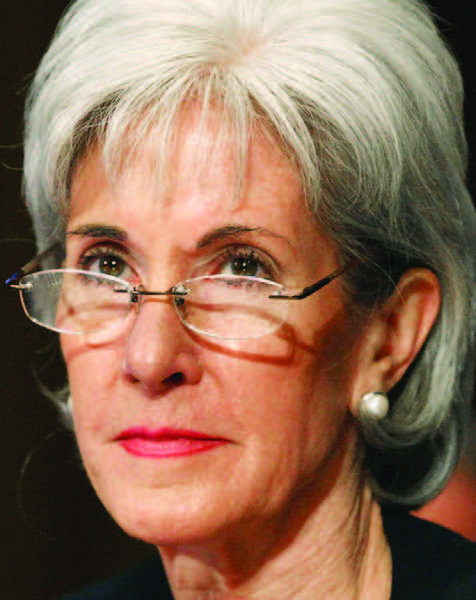
    WASHINGTON (TIP): Months after the start of a rocky period in the rollout of the federal health-care law, Health and Human Services Secretary Kathleen Sebelius is stepping down, according to an Obama administration official, ending about a fiveyear long run in her job.

    President Obama intends to nominate Office of Management and Budget Director Sylvia Mathews Burwell as her replacement, the official said Thursday, April 10. Sebelius plans to resign her post and an official announcement about the change is expected from the White House Friday morning, according to the White House official. The move comes months after the start of a rocky period in the rollout of the federal health-care law.

    The Web site on which Americans tried to sign up for coverage via the newly created exchanges was plagued by technical glitches and there was uncertainty about whether the administration would meet its enrollment goals. But Sebelius got some good news at the end of her tenure when Obama announced earlier this month that more than 7 million Americans had signed up for coverage, a sharp turnaround after a botched start. Before joining the Obama administration in 2009, Sebelius was the governor of Kansas.

  • Arizona governor Jan Brewer vetoes religious freedom bill

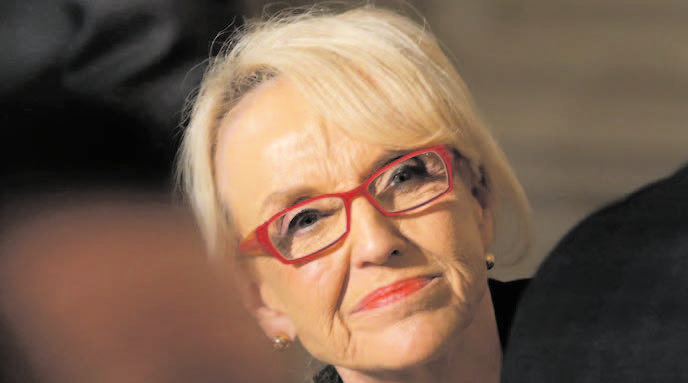
    Arizona governor Jan Brewer vetoes religious freedom bill

    PHOENIX (TIP): Governor Jan Brewer on Wednesday vetoed a Republican bill that set off a national debate over gay rights, religion and discrimination and subjected Arizona to blistering criticism from major corporations and political leaders from both parties. Loud cheers erupted outside the Capitol building immediately after Brewer made her announcement. “My agenda is to sign into law legislation that advances Arizona,” Brewer said at a news conference. “I call them like I see them despite the tears or the boos from the crowd. After weighing all the arguments, I have vetoed Senate Bill 1062 moments ago.”

    The governor said she gave the legislation careful deliberation in talking to her lawyers, citizens and lawmakers on both sides of the debate. But Brewer said the bill “could divide Arizona in ways we could not even imagine and no one would ever want”. The bill was broadly worded and could result in unintended negative consequences, she added. The bill backed by Republicans in the legislature was designed to give added protection from lawsuits to people who assert their religious beliefs in refusing service to gays. But opponents called it an open attack on gays that invited discrimination.

    The bill thrust Arizona into the national spotlight last week after both chambers of the state legislature approved it. As the days passed, more and more groups, politicians and average citizens weighed in against Senate Bill 1062. Many took to social media to criticize the bill, calling it an attack on gay and lesbian rights. Prominent Phoenix business groups said it would be another black eye for the state that saw a national backlash over its 2010 immigration-crackdown law, SB1070, and warned that businesses looking to expand into the state may not do so if bill became law.

    Companies such as Apple Inc. and American Airlines and politicians including GOP Senator John McCain and former Republican presidential nominee were among those who urged Brewer to veto the legislation. Brewer was under intense pressure to veto the bill, including from three Republicans who had voted for the bill last week. They said in a letter to Brewer that while the intent of their vote “was to create a shield for all citizens’ religious liberties, the bill has been mischaracterized by its opponents as a sword for religious intolerance”. SB 1062 allows people to claim their religious beliefs as a defence against claims of discrimination.

    Backers cite a New Mexico Supreme Court decision that allowed a gay couple to sue a photographer who refused to document their wedding, even though the law that allowed that suit doesn’t exist in Arizona. Republican Senator Steve Yarbrough called his proposal a First Amendment issue during a Senate debate. “This bill is not about allowing discrimination,” Yarbrough said. “This bill is about preventing discrimination against people who are clearly living out their faith.”

    Democrats said it was a veiled attempt to legally discriminate against gay people and could allow people to break nearly any law and cite religious freedom as a defence. “The heart of this bill would allow for discrimination versus gays and lesbians,” said Senator Steve Gallardo, D-Phoenix. “You can’t argue the fact that bill will invite discrimination. That’s the point of this bill. It is.” The bill is similar to a proposal last year brought by Yarbrough but vetoed by Brewer, a Republican. That legislation also would have allowed people or religious groups to sue if they believed they might be subject to a government regulation that infringed on their religious rights.

    Yarbrough stripped that provision from the bill in the hopes Brewer will embrace the new version. Civil liberties and secular groups countered that Yarbrough and the Center for Arizona Policy, a powerful social conservative group that backs anti-abortion and conservative Christian legislation in the state and is opposed to gay marriage, had sought to minimize concerns that last year’s bill had far-reaching and hidden implications. Yarbrough called those worries “unrealistic and unsupported hypotheticals” and said criminal laws will continue to be prosecuted by the courts.

    The Center for Arizona Policy argues the law is needed to protect against increasingly activist federal courts and simply clarifies existing state law. “We see a growing hostility toward religion,” said Josh Kredit, legal counsel for the group. Similar religious-protection legislation has been introduced in Ohio, Mississippi, Idaho, South Dakota, Tennessee and Oklahoma, but Arizona’s plan is the only one that has been passed by a state legislature. The efforts are stalled in Idaho, Ohio and Kansas.

    The push in Arizona comes as an increasing number of conservative states grapple with ways to counter the growing legality of gay marriage. Arizona’s voters approved a ban on gay marriage as a state constitutional amendment in 2008. It is one of 29 states with such constitutional prohibitions, according to the National Conference of State Legislatures. Federal judges have recently struck down those bans in Utah, Oklahoma and Virginia, but those decisions are under appeal.

  • India Seeks Congressional Help over Immigration Bill

    India Seeks Congressional Help over Immigration Bill

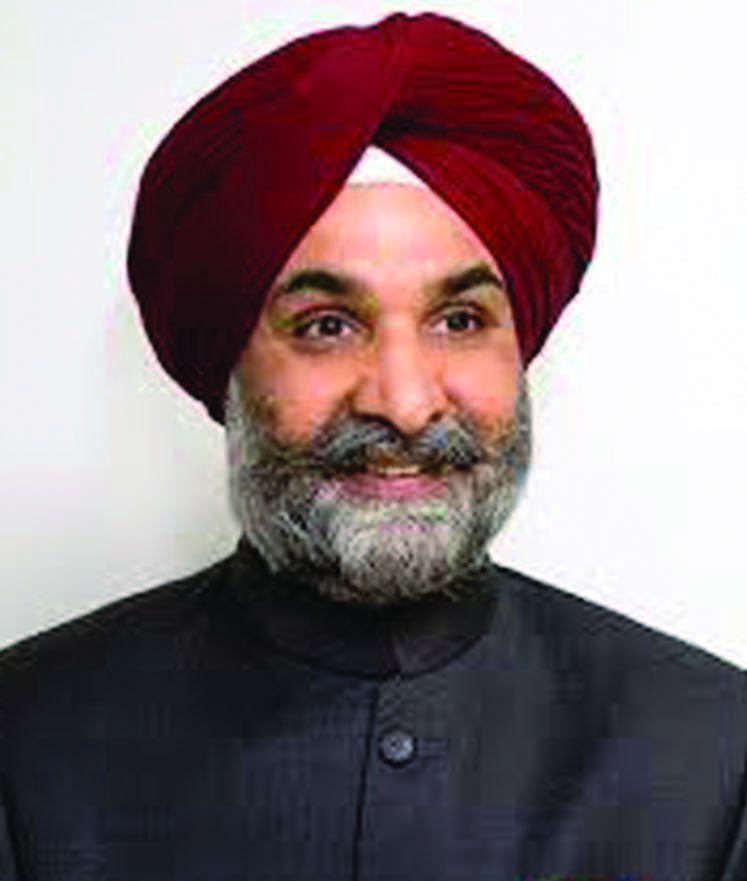
    WASHINGTON (TIP): India has sought Congressional help in addressing its concerns over certain alleged discriminatory provisions of the comprehensive immigration bill, which if passed into law would adversely impact Indian IT companies. “One of the concerns, Indian businesses are seeking to address, and where the US Congress can help them, is about the current debate, on restrictions on the movement of high-skilled non-immigrant professionals employed by Indian IT companies into the United States,” Taranjit Singh Sandhu, Charges d’Affaires of the Indian Embassy in the U.S., said.

    “These discriminatory provisions, if they are enacted, will essentially create a market access barrier, for Indian IT companies in the US and will, not only cause damage, to their operations, but will also impact the ability of US companies, who depend on their services to innovate, grow and be competitive, and affect the local economies,” Mr. Sandhu said on Tuesday. He was addressing the ‘Indian American Meetup’ event organized by the GOP Conference and the House Foreign Affairs Committee, at the Capitol Hill.

    The Indian IT industry has led the way, in strengthening the India-U.S. trade and investment relationship, Mr. Sandhu said adding that today, companies like TCS, Wipro, Infosys and HCL employ well over 50,000 U.S. citizens and support more than 280,000 other local U.S. jobs. “They are integral, to the operations of many US companies, helping them in developing new products, and improving operations and efficiencies,” he argued. Trade and economic partnership, remains a central pillar of expanding India-U.S. ties, creating jobs for hundreds of thousands of people in both countries, he said.

    “Our bilateral trade today, has reached $100 billion, and maintains an upward trajectory. Indeed, despite global economic slowdown, US exports in goods and services to India, which is nearing $50 billion, have grown by an impressive 12 percent, in the first half of 2013,” Mr. Sandhu said. Noting that U.S. is an important source, for foreign direct investment, in India, he said for the U.S., India is now, among, the fastest growing sources, of inward investment.

    More than 65 large Indian corporations, including TATA, Reliance, ESSAR, Piramal and others, have invested in the U.S., about $17 billion, in a number of U.S. states, including Colorado, Oklahoma, Georgia, Idaho, Tennessee and Kansas among others over the last five years, he said. Taking note of the concerns expressed in U.S. about the pace of reform in India and its investment climate, Mr. Sandhu said New Delhi is sensitive to these views.

    “Government of India has focused, on improvement of our investment regulations, leading to significant FDI liberalization, in the past year, in a number of sectors, of U.S. interest – including, multi-brand and singlebrand retail, civil aviation, telecommunications and defense,” he observed. “In addition, clearances for pending projects, have been fast-tracked, taxation issues have been addressed upfront and clarified, and the much talked about Preferential Market Access guidelines for private sector companies have been kept in abeyance,” Mr. Sandhu said.

  • India Seeks Congressional Help over Immigration Bill

    India Seeks Congressional Help over Immigration Bill

    WASHINGTON (TIP): India has sought Congressional help in addressing its concerns over certain alleged discriminatory provisions of the comprehensive immigration bill, which if passed into law would adversely impact Indian IT companies. “One of the concerns, Indian businesses are seeking to address, and where the US Congress can help them, is about the current debate, on restrictions on the movement of high-skilled non-immigrant professionals employed by Indian IT companies into the United States,” Taranjit Singh Sandhu, Charges d’Affaires of the Indian Embassy in the U.S., said.

    “These discriminatory provisions, if they are enacted, will essentially create a market access barrier, for Indian IT companies in the US and will, not only cause damage, to their operations, but will also impact the ability of US companies, who depend on their services to innovate, grow and be competitive, and affect the local economies,” Mr. Sandhu said on Tuesday. He was addressing the ‘Indian American Meetup’ event organized by the GOP Conference and the House Foreign Affairs Committee, at the Capitol Hill.

    The Indian IT industry has led the way, in strengthening the India-U.S. trade and investment relationship, Mr. Sandhu said adding that today, companies like TCS, Wipro, Infosys and HCL employ well over 50,000 U.S. citizens and support more than 280,000 other local U.S. jobs. “They are integral, to the operations of many US companies, helping them in developing new products, and improving operations and efficiencies,” he argued. Trade and economic partnership, remains a central pillar of expanding India-U.S. ties, creating jobs for hundreds of thousands of people in both countries, he said.

    “Our bilateral trade today, has reached $100 billion, and maintains an upward trajectory. Indeed, despite global economic slowdown, US exports in goods and services to India, which is nearing $50 billion, have grown by an impressive 12 percent, in the first half of 2013,” Mr. Sandhu said. Noting that U.S. is an important source, for foreign direct investment, in India, he said for the U.S., India is now, among, the fastest growing sources, of inward investment. More than 65 large Indian corporations, including TATA, Reliance, ESSAR, Piramal and others, have invested in the U.S., about $17 billion, in a number of U.S. states, including Colorado, Oklahoma, Georgia, Idaho, Tennessee and Kansas among others over the last five years, he said. Taking note of the concerns expressed in U.S. about the pace of reform in India and its investment climate, Mr. Sandhu said New Delhi is sensitive to these views.

    “Government of India has focused, on improvement of our investment regulations, leading to significant FDI liberalization, in the past year, in a number of sectors, of U.S. interest – including, multi-brand and singlebrand retail, civil aviation, telecommunications and defense,” he observed. “In addition, clearances for pending projects, have been fast-tracked, taxation issues have been addressed upfront and clarified, and the much talked about Preferential Market Access guidelines for private sector companies have been kept in abeyance,” Mr. Sandhu said.

  • Supreme Court refuses to block Texas abortion law

    Supreme Court refuses to block Texas abortion law

    DALLAS (TIP): A sharply divided Supreme Court on Tuesday, November 19 allowed Texas to continue enforcing abortion restrictions that opponents say have led more than a third of the state’s clinics to stop providing abortions. The justices voted 5-4 to leave in effect a provision requiring doctors who perform abortions in clinics to have admitting privileges at a nearby hospital.

    The court’s conservative majority refused the plea of Planned Parenthood and several Texas abortion clinics to overturn a preliminary federal appeals court ruling that allowed the provision to take effect. The four liberal justices dissented. The case remains on appeal to the 5th U.S. Circuit Court of Appeals in New Orleans. That court is expected to hear arguments in January, and the law will remain in effect at least until then. Justice Stephen Breyer, writing for the liberal justices, said he expects the issue to return to the Supreme Court once the appeals court issues its final ruling.

    The Texas Legislature approved the requirement for admitting privileges in July. In late October, days before the provision was to take effect, a trial judge blocked it, saying it probably is unconstitutional because it puts a “substantial obstacle” in front of a woman wanting an abortion. But a three-judge appellate panel moved quickly to overrule the judge. The appeals court said the law was in line with Supreme Court rulings that have allowed for abortion restrictions so long as they do not impose an “undue burden” on a woman’s ability to obtain an abortion. Writing for the appeals court, Judge Priscilla Owen noted that the Texas law would not end the procedure, only force women to drive a greater distance to obtain one.

    Justice Antonin Scalia, writing in support of the high court order Tuesday, said the clinics could not overcome a heavy legal burden against overruling the appeals court. The justices may not do so “unless that court clearly and demonstrably erred,” Scalia said in an opinion that was joined by Justices Samuel Alito and Clarence Thomas. Chief Justice John Roberts and Justice Anthony Kennedy did not write separately or join any opinion Tuesday, but because it takes five votes to overturn the appellate ruling, it is clear that they voted with their conservative colleagues. Planned Parenthood and several Texas abortion clinics said in their lawsuit to stop the measure that it would force more than a third of clinics in the state to stop providing abortions.

    After the appeals court allowed the law to take effect, the groups said that their prediction had come to pass. In their plea to the Supreme Court, they said that “in just the few short days since the injunction was lifted, over one-third of the facilities providing abortions in Texas have been forced to stop providing that care and others have been forced to drastically reduce the number of patients to whom they are able to provide care. Already, appointments are being canceled and women seeking abortions are being turned away.” Breyer said the better course would have been to block the admitting privileges requirement at least until the court issued its final ruling because some women will be unable to obtain abortions.

    If courts ultimately find the law is invalid, “the harms to the individual women whose rights it restricts while it remains in effect will be permanent,” he said. Tennessee and Utah are the other states enforcing their laws on admitting privileges. Similar laws are under temporary court injunctions in Alabama, Kansas, Mississippi, North Dakota and Wisconsin. In Texas, 12 abortion providers say they have attempted to obtain hospital privileges for their doctors, but so far none of the hospitals have responded to the requests. That means those clinics can no longer offer abortions, leaving at most 20 facilities open in a state of 26 million people. All of those facilities are in metropolitan areas, with none in the Rio Grande Valley along the border with Mexico. Currently, only six out of 32 abortions clinics in Texas qualify as ambulatory surgical centers, and some have doctors who do not meet the admitting privileges requirement. Texas women undergo an average of 80,000 abortions a year.

  • Obamacare-how caring?

    Obamacare-how caring?

    Some 106,185 people signed up for Obamacare in its first month of operation, a period marred by major technological problems with both the federal and state enrollment websites.

    Troubled HealthCare.gov is unlikely to work fully by end of November, says an official with knowledge of the project. According to this source of information, software problems with the federal online health insurance marketplace, especially in handling high volumes, are proving so stubborn that the system is unlikely to work fully by the end of the month as the White House has promised. The insurance exchange is balking when more than 20,000 to 30,000 people attempt to use it at the same time – about half its intended capacity, said the official, who spoke on the condition of anonymity to disclose internal information. And CGI Federal, the main contractor that built the site, has succeeded in repairing only about six of every 10 of the defects it has addressed so far. Government workers and technical contractors racing to repair the Web site have concluded, the official said, that the only way for large numbers of Americans to enroll in the health-care plans soon is by using other means so that the online system isn’t overburdened.

    This inside view of the halting nature of HealthCare.gov repairs is emerging as the insurance industry is working behind the scenes on contingency plans, in case the site continues to have problems. And it calls into question the repeated assurances by the White House and other top officials that the insurance exchange will work smoothly for the vast majority of Americans by Nov. 30. Speaking in Dallas a week ago, President Obama said that the “Web site is already better than it was at the beginning of October, and by the end of this month, we anticipate that it is going to be working the way it is supposed to, all right?” Julie Bataille, director of communications at the Centers for Medicare and Medicaid Services (CMS), which is part of the Department of Health and Human Services, said: “We are working 24/7 to make improvements so that by the end of the month the site is working smoothly for the vast majority of users.We are making progress, including fixes to reduce error rates and get the site moving faster. “The challenges we are addressing today,” she added, “are a snapshot of November 12th, not November 30th.” Meanwhile, pressure intensified Tuesday on the Obama administration to address the growing complaints of Americans whose individual insurance policies are being canceled because they do not comply with new government rules for coverage. The online magazine Ozy published a video interview with former president Bill Clinton saying that Obama must “honor the commitment” he made to Americans that they could keep their insurance – even if it requires a change in the law. Fewer than 27,000 Americans selected an insurance plan through the federal healthcare.gov site, which is handling enrollment for 36 states, according to figures released Wednesday by the Obama administration.

    The site is still far from fully operational, leaving tech experts racing to get it working by month’s end, as the administration promised. The states running their own exchanges are responsible for the bulk of the sign-ups. Nearly 79,400 people have selected a plan through state-based exchanges, with California leading the way with nearly 35,400 selecting a plan. States have also been battling system errors, with Oregon having yet to accept online applications. Only 11 states reported sign-up figures Wednesday. These figures reflect people who have selected insurance plans through the exchanges, but not necessarily paid for them. Americans have until Dec. 15 to pay if they want coverage to begin on Jan. 1. Open enrollment lasts through March 31. Kansas Insurance Commissioner Sandy Praeger said she and her counterparts in other states have offered suggestions to the White House on how best to address the problem of canceled policies. The most obvious solution, she said, would be to allow customers to renew policies early to let them stay in effect until November 2014. But that would come with a trade-off, she said: Those people would not receive federal subsidies for which they might be eligible if they bought a plan on the exchange. She said that she and other insurance commissioners are trying to address consumers’ desire to use the federal exchange. “Honestly,” she said, “it’s just a big mess right now. .?.?. I don’t know what to tell people.” Debate over how to respond to Americans who are irate about losing their insurance is intensifying on Capitol Hill.

    The House plans to vote this week on a bill introduced by Energy and Commerce Committee Chairman Fred Upton (R-Mich.) that would extend this year’s insurance plans for a year. On Tuesday, Sen. Dianne Feinstein (D-Calif.) said she is co-sponsoring a bill with Sen. Mary Landrieu (D-La.) that would require insurers to offer 2013 plans on the individual market indefinitely. The software defects that ware making the Web site unstable with too much volume mean that some people face frozen computer screens when they try to enter information – and then get timeout errors, said the official with knowledge of the project. Call centers have had problems, too. Within the network of 17 federally sponsored call locations staffed by more than 10,000 people, consumers are discovering that telephone representatives lack the authority to correct errors in online applications. And sometimes, consumers with more than routine questions are promised that specialists will call them back, but the calls never come. Insurance companies, which have been pressing the White House for greater ability to sign up customers directly, are stuck at the moment, unable to complete enrollments. That is because they must connect with the federal online system to determine whether customers’ incomes qualify them for tax credits to help pay for their insurance – a part of the system that does not work. According to the official, workers are trying to streamline the computer system so that it can handle outside queries from insurers and the call centers about whether people are eligible for subsidies. Technical workers are striving to have this part of the system working reliably within two to three weeks.In a telephone call with reporters earlier Tuesday, Bataille said that HHS is emailing about 275,000 consumers who have gotten stuck while trying to shop for and buy health plans. The e-mails encourage them to try again. Asked whether the Web site could handle all those consumers if they logged on at once, Bataille replied, “That’s why we are sending this series of e-mails in waves.” The CMS has said it has cut the waiting time for pages on the federal Web site from an average of eight seconds to one second and has reduced errors that have blocked consumers from 6 percent to 2 percent.

  • Sri Srinivasan takes oath holding Gita in hand

    Sri Srinivasan takes oath holding Gita in hand

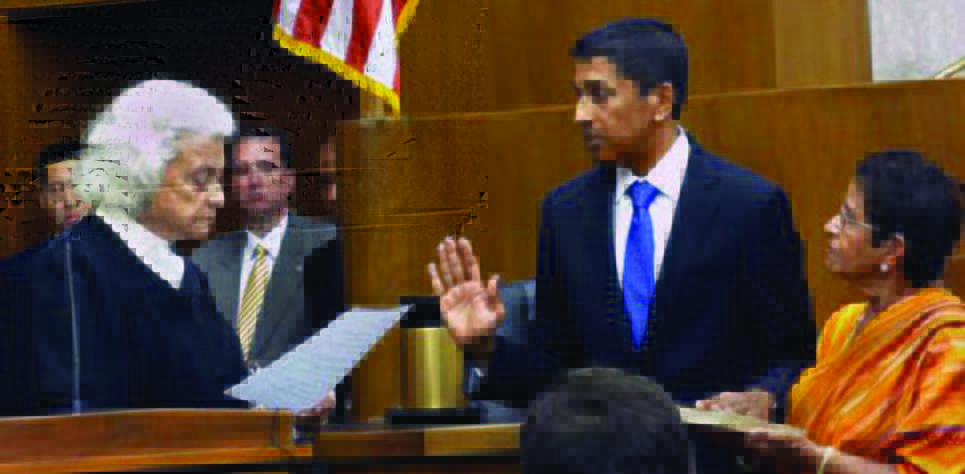
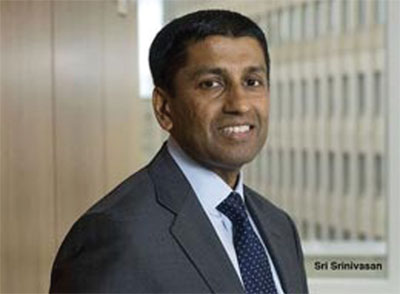
    WASHINGTON (TIP): Sri Srinivasan, 46, was sworn in an overflowing court room by retired Supreme Court judge Sandra Day O’Connor, in the presence of legal luminaries, friends and families as his mother Saroja Srinivasan held the Gita, the sacred book of Hinduism, before him. Gursharan Kaur literally rushed from the airport with just a short halt at the hotel to watch the investiture of Srinivasan on the bench of the US Courts of Appeal for the District of Columbia Circuit. O’Connor, for whom Srinivasan once clerked, called him “fair, faultless and fabulous”. Confirmed by the US Senate in May by a 97 to 0 vote, Srinivasan was earlier principal deputy solicitor general of the US to which job he succeeded another Indian American, Neal Kumar Katyal, in August last year.

    Srinivasan came to the US with his parents in the 1970s at the age of four. His family settled in Lawrence, Kansas, where his father was a mathematics professor at the University of Kansas, and his mother taught at the Kansas City Art Institute. He received his BA with honors and distinction in 1989 from Stanford University and his JD with distinction in 1995 from Stanford Law School, where he was elected to Order of the Coif and served as an editor of the Stanford Law Review. Addressing the gathering, Srinivasan acknowledged the contribution of his parents and family on his achievements. Srinivasan was first nominated by Obama on June 11, 2012. On January 2, his nomination was returned to the President, due to the sine die adjournment of the Senate. On January 3, 2013, Obama re-nominated him for the same office. His appointment is a testimony to his credibility and caliber as a brilliant legal luminary of the US. Srinivasan was previously the Principal Deputy Solicitor General of the United States. He is a highly respected appellate advocate who has spent a distinguished career litigating before the US Supreme Court and the US Courts of Appeals, both on behalf of the United States and in private practice.

  • Heavy rain unleashes deadly US flooding

    Heavy rain unleashes deadly US flooding

    ST LOUIS (TIP): Torrential rains lashed the US midsection on augst 8, causing flash flooding that killed a woman and a child, damaged homes and forced multiple water rescues. Up to 10 inches (254 millimeters) of rain pounded Missouri overnight. A woman died in the far southwestern corner of the state where creek water washed over a highway, sweeping away her car. Authorities in the south-central Missouri town of Waynesville continued to search for 23-year-old Jessica D Lee, whose car was swept up in a flash flood early Tuesday.

    The body of her 4-year-old son, Elyjah, was found Tuesday, hours after his mother made a distress call from her mobile phone. Flash flood warnings were common in Missouri, Kansas, Arkansas, Oklahoma and Tennessee. And things could get worse: Heavy rain is in the forecast into the weekend. National Weather Service meteorologist Drew Albert in Springfield, Missouri, said the rain is the result of a storm front that has stalled over the plains.

    Missouri has gotten the worst of it. Some gauges near Waynesville recorded 15 inches (380 millimeters) of rain in a two-day period. One-day totals of 6 inches (152 millimeters) or more were common across the width of the southern part of the state. Soggy south-central Kansas was under a flood warning after up to 6 inches (152 millimeters) of rain fell early Thursday in the center of the state. Since the storms began Sunday, hundreds of Kansas homes have been damaged, mostly by water in basements and sewage backups, said Megan Hammersmith, director of the Central Kansas Chapter of the American Red Cross.

    An estimated 10 inches (254 millimeters) of rain fell overnight in parts of Benton County, Ark, prompting the county to declare an emergency. Benton County Emergency Management director Robert McGowen said crews have performed 15 water rescues. More than three dozen roads and bridges were closed, but no injuries were reported. Heavy rain in Tennessee also triggered flash flooding that required several water rescues. Nashville firefighters waded into waist-deep water to lead residents of one apartment complex to higher ground.

  • 15 Indian-American students qualify for Spelling Bee semis

    15 Indian-American students qualify for Spelling Bee semis

    WASHINGTON (TIP): 42 have made it to the national Spelling Bee semifinals. Of them 15 are Indian-American students. Six of them are girls. The Indian American students account for almost one-third of the total 42 candidates who have qualified. The girls who succeeded include Himanvi Kopuri from Colorado, Nikitha Chandran from Florida, Vanya Shivashankar from Kansas, Neha Seshadri from Michigan, Shobha Dasari from Texas and Vismaya Kharkar from Utah.

    Vanya is already making her third appearance in the Scripps National Spelling Bee. Her sister Kavya was a fourtime participant and the 2009 national champion. Vanya competed in the 2010 national finals, and tied for tenth place at last year’s Bee.

    The boys who made it to the semifinals after the day-long competitions are Pranav Shivakumar from Illinois, Kuvam Shahane from Michigan, Gokul Venkatachalam from Misouri, Ryan Devanandan, Sriram Hathwar and Arvind Mahankali from New York, Ashwin Veeramani from Ohio, Aditya Rao from New Jersey, and Chetan Reddy from Texas. However, Tara Singh, 8, the youngest in the competition, could not make it to the semi-finals.

    In all there were nearly 50 Indian Americans who came to Washington to take part in this prestigious national-level competition. Indian-origin people remain unchallenged in the Scripps National Spelling Bee since 2008, with Sameer Mishra winning it in 2008, Laodicean Kavya Shivashankar (2009), Anamika Veeramani (2010), Sukanya Roy (2011) and Snigdha Nandipati (2012).

    For the first time in the 86-year history of the National Spelling Bee, the evaluation of vocabulary knowledge will be formally incorporated as an element of the competition, the organizers said. “This is a significant change in the Scripps National Spelling Bee, but also a natural one,” said Paige Kimble, director of the Scripps National Spelling Bee. “It represents a deepening of the Bee’s commitment to its purpose: to help students improve their spelling, increase their vocabularies, learn concepts and develop correct English usage that will help them all their lives.”

    Earlier this month, 12-year-old Indian- American Sathwik Karnik won the National Geographic Bee contest in the US. In 2008, Akshay Rajagopal from the community won the geographic bee contest while the 2012 edition was won by Rahul Nagvekar

  • 21 lawmakers back Chandigarh-born Srikanth ‘Sri’ Srinivasan as top US judge

    21 lawmakers back Chandigarh-born Srikanth ‘Sri’ Srinivasan as top US judge

    WASHINGTON (TIP): A many as 21 lawmakers have lent their support to the Chandigarh-born Indian-American legal luminary Srikanth ‘Sri’ Srinivasan to a top US court, ahead of an expected Senate vote on the nomination. Srinivasan, 46, currently principal deputy solicitor general of the US last week won unanimous approval from the Senate Judiciary Committee for his nomination as a judge on the US Court of Appeals for the American capital.

    “Sri Srinivasan would be an outstanding judge for the Court of Appeals,” wrote the lawmakers, including Ami Bera, the lone Indian-American House member, in a letter to Senate Majority Leader Harry Reid. If confirmed by the full Senate, which appears all but certain given unanimous support for him in the judicial panel, Srinivasan, who last August succeeded another Indian American, Neal Kumar Katyal, in his current job would be the first South Asian judge on the powerful appeals court, often called the nation’s second-highest court.

    “He has worked in the US Solicitor General’s office three times – for both Republican and Democratic administrations – and argued 24 cases before the Supreme Court,” the lawmakers wrote. “As members of Congress, we value the importance of having diversity on the court. Representation of Indian Americans within our judicial system is overdue,” they added. Srinivasan was born in Chandigarh and grew up in Lawrence, Kansas.

    He received his BA with honors and distinction in 1989 from Stanford University and his JD with distinction in 1995 from Stanford Law School, where he was elected to Order of the Coif and served as an editor of the Stanford Law Review.

    He also holds an MBA from the Stanford Graduate School of Business, which he received along with his JD in 1995. He received the Attorney General’s Award for Excellence in Furthering US National Security in 2003 and the Office of the Secretary of Defense Award for Excellence in 2005.

  • Indian-American poised to join U.S. Appeals Court

    Indian-American poised to join U.S. Appeals Court

    WASHINGTON (TIP): Chandigarh-born Indian- American legal luminary Srikanth ‘Sri’ Srinivasan has moved a step closer to making history as the first South Asian judge on the U.S. Court of Appeals for the American capital. Mr. Srinivasan (46) who in August last year was named Principal Deputy Solicitor- General – succeeding another Indian-American, Neal Kumar Katyal – won unanimous approval from the Senate Judiciary Committee on Thursday, May 16 . If confirmed by the full Senate, which appears all but certain with all the Republicans on the Democratcontrolled panel joining in the 18-0 vote, Mr. Srinivasan would also become the first new judge on the powerful Appeals Court, often called the nation’s second-highest court, since 2006.

    Some court-watchers are already touting him as the next likely Supreme Court nominee as the Appeals Court has served as a stepping-stone for four justices on the top court. The White House, which has fought hard for his confirmation, soliciting letters of support from former Solicitors-General and Supreme Court law clerks from both parties, applauded the vote for Mr. Srinivasan. Srinivasan was born in Chandigarh and grew up in Lawrence, Kansas. He received his BA with honors and distinction in 1989 from Stanford University and his JD with distinction in 1995 from Stanford Law School, where he was elected to Order of the Coif and served as an editor of the Stanford Law Review.

  • North American Heat Wave

    North American Heat Wave

    The summer heat wave in North America led to morethan 82 heat-related deaths across the United States andCanada. The intense three-week-long spell began aroundJune 20, when a high pressure system centered over BajaCalifornia moved into the plains, creating temperaturesnear or exceeding 110 degrees. The heat spread east fromthe Rocky Mountains, causing high temperatures in thecentral states rivaling records from 80 years ago. On June25, Denver tied its all-time high with a temperature of 105degrees. Hill City, Kansas, was the warmest spot in theUnited States on June 26, reaching 115 degrees. All of thisheat was probably the engine for the June Derecho, whichformed in the Midwest and tore through the Mid-Atlantic.The heat wave even reached New England, as Hartford,Connecticut, hit 100 degrees on July 18.

  • Obama Renominates Indian American As Federal Judge

    Obama Renominates Indian American As Federal Judge

    WASHINGTON (TIP): Indian- American Srikanth Srinivasan is among the 33 federal judges renominated by the US President Barack Obama for the US Court of Appeals, January 4, 2013. Srinivasan is the only Indian American re-nominated by Obama for the District of Columbia Circuit. “Today, I am re-nominating thirtythree highly qualified candidates for the federal bench, including many who could have and should have been confirmed before the Senate adjourned,” Obama said. “Several have been awaiting a vote for more than six months, even though they all enjoy bipartisan support. I continue to be grateful for their willingness to serve and remain confident that they will apply the law with the utmost impartiality and integrity,” he said.

    “I urge the Senate to consider and confirm these nominees without delay, so all Americans can have equal and timely access to justice,” Obama said in a statement. Srinivasan was born in Chandigarh, and grew up in Lawrence, Kansas. He received his BA with honors and distinction in 1989 from Stanford University and his JD (Juris Doctor) with distinction in 1995 from Stanford Law School, where he was elected to Order of the Coif and served as an editor of the Stanford Law Review. He also holds an MBA from the Stanford Graduate School of Business, which he received along with his JD in 1995.

    Srinivasan began his legal career by serving as a law clerk for Judge J Harvie Wilkinson on the US Court of Appeals for the Fourth Circuit from 1995 to 1996. He then spent a year as a Bristow Fellow in the Office of the Solicitor General before clerking for Justice Sandra Day O’Connor during the Supreme Court’s 1997-98 term. He was an associate at the law firm of O’Melveny & Myers LLP in Washington, DC, from 1998 until 2002. In 2002, he returned to the Solicitor General’s Office as an Assistant to the Solicitor General, representing the US in litigation before the Supreme Court.

    For his work, he received the Attorney General’s Award for Excellence in Furthering US National Security in 2003 and the Office of the Secretary of Defense Award for Excellence in 2005. In 2007, Srinivasan became a partner with O’Melveny & Myers LLP. In 2011, he was named the Chair of the firm’s Appellate Practice Group. He was named as the Principal Deputy Solicitor General in August 2011. In June this year he was nominated by Obama to serve on the US Court of Appeals for the District of Columbia Circuit.

  • US State Asks Sperm Donor To Pay Child Support

    US State Asks Sperm Donor To Pay Child Support

    KANSAS CITY (TIP): A Kansas man who donated sperm to a lesbian couple so they could have a child said on Wednesday he is shocked the state is now trying to make him pay child support. William Marotta, 46, donated sperm to Jennifer Schreiner and Angela Bauer under a written agreement that he would not be considered the father of the child nor liable for child support. A daughter, now 3, was born to Schreiner. But in October, the state of Kansas filed a petition seeking to have Marotta declared the father of the child and financially responsible for her after the couple encountered money issues.

    Marotta will ask the court on January 8 to dismiss the claim, which centers on a state law that the sperm must be donated through a licenced physician for the father to be free of any later financial obligations. He gave a container of semen to the couple, who found him on Craigslist, instead of donating through a doctor or clinic. The case is seen as having repercussions for other donors. Sperm banks routinely provide sperm to people who want to conceive on the understanding that the donors are not responsible for the children.