Tag: Lifestyle

  • ARVIND ARM, US COOMPANY TO PAY $3.2M TO RALPH LAUREN

    AHMEDABAD (TIP): City-based textile conglomerate Arvind on Monday said its subsidiary Arvind Lifestyle Brands (ALBL) and US Polo Association (USPA), USA will jointly pay $3.2 million (Rs 20 crore approx) to Ralph Lauren Corporation (RLC) USA to settle a lawsuit filed by it in a US court in 2013.

    Ralph Lauren had filed a case in a district court in US against ALBL and USPA alleging breach of agreement due to non-compliance in respect of disclaimers to be printed on USPA products sold in India. ALBL has licence to manufacture and market USPA-branded products in India.

    “The parties got into good faith discussions and agreed to enter into an amicable settlement without admission of liability of any party,” Arvind informed the Bombay Stock Exchange (BSE). The company further said, “Under the terms of the settlement, ALBL and USPA have agreed to pay jointly settlement amount to RLC. As per the settlement agreement, ALBL shall pay $3,200,000 in full settlement and satisfaction of the dispute between the parties.” 

    Ralph Lauren had first issued a notice for arbitration to be held in India against ALBL and USPA and the company was successful in obtaining a temporary injunction against the commencement of the arbitration from the jurisdictional court in India. Later, Ralph Lauren went ahead and filed a lawsuit in the US Court. Arvind has a large portfolio of owned and licensed brands and retail formats. The company’s own product brands include Flying Machine, Colt, Ruggers and Excalibur, among others, while its licensed product brands have global names like Arrow, Gant, Izod, Elle, Cherokee and US Polo Assn, among others. It also has a joint venture in India with global major Tommy Hilfiger.

  • ALLEN SOLLY AIMS TO BECOME RS 1,000 CRORE BRAND BY FY16

    ALLEN SOLLY AIMS TO BECOME RS 1,000 CRORE BRAND BY FY16

    KOLKATA (TIP): Allen Solly, part of Aditya Birla Group’s Madura Fashions, aims to be a Rs 1,000 crore brand by FY16.

    “In FY15, we are looking at Rs 800 crore topline from Rs 550 crore in the previous year,” Allen Solly COO Sooraj Bhat said.

    Allen Solly ranks third in terms of revenue among the seven to eight brands that the company owns in fashion and lifestyle segment, he said.

    Bhat said the new sub-brand Solly Sport has partnered with Wimbledon for exclusive marketing casual-wear line.

    He added that in FY15 the brand is expected to generate Rs 40 crore revenue and over the next three years it will expand to touch Rs 200 crore.

    The company said it will not resort to discounts and bargains to push volumes, adding that online accounts for just 4 percent of topline.

    The company has 207 exclusive stores and it proposes to add 50-odd stores in the next year.

  • 22 years after divorce, man faces claim from wife

    LONDON (TIP): A penniless British woman seeking financial support from her millionaire ex-husband 22 years after their divorce was told by Britain’s Supreme Court on Wednesday that she could pursue her claim, a ruling with implications for other British divorcees.

    The judgment could open the door for other people to seek financial settlements in Britain’s family courts decades after the breakdown of their marriages.

    “This is definitely a judgment that will be referenced in the future in other cases where an individual becomes rich in the years after they divorce,” said Marilyn Stowe, senior partner at the firm Stowe Family Law.

    She said people should try to agree a final settlement at the time of their divorce if they wanted to avoid being pursued years down the line when they may be much wealthier.

    Dale Vince and Kathleen Wyatt were both poor when they married in 1981. They had a son and lived an itinerant lifestyle together until 1984, when they broke up. They were formally divorced in 1992.

    After their separation, Vince joined the traveller community and spent about a decade living from hand to mouth in a converted ambulance, attending New Age festivals and anti-nuclear arms protests.

    In the early 1990s, he began experimenting with green energy. He started at the Glastonbury music festival where he fixed a windmill to the top of an old pylon, installed batteries at its foot, plugged in four large mobile telephones and offered festival-goers a wind-powered phone service.

    From these modest beginnings, Vince, now 53, eventually built up Ecotricity, a green energy business worth an estimated 57 million pounds ($86 million).

    Meanwhile, Wyatt, now 55, and her four children continued to live what the court described as “an unsettled lifestyle”, subsisting on state benefits and earnings from low-wage jobs.

    Wyatt launched legal action in 2011 asking for 1.9 million pounds from Vince on the basis that she had brought up the couple’s son alone with no money from Vince.

    Her claim was struck out by the Court of Appeal in 2013, but Wyatt took her case to the Supreme Court which ruled that she had a chance of obtaining a modest settlement.

    The Supreme Court was not being asked to rule on whether Wyatt should receive money from Vince or not, but rather on whether her case should have been considered fully rather than struck out summarily on the basis it was too late. The Supreme Court said Wyatt’s claim faced “formidable difficulties” but she did have childcare arguments on her side. The case will now continue in a lower family court.

  • IT’S DIRECTION OVER ACTING FOR ANGELINA JOLIE

    IT’S DIRECTION OVER ACTING FOR ANGELINA JOLIE

    Actress Angelina Jolie says she is now looking to focus on her directing career. “I’ve never been comfortable as an actor — I’ve never loved being in front of the camera. I didn’t ever think I could direct, but I hope I’m able to have a career at it because I’m much happier,” Jolie told luxury lifestyle magazine Du Jour, reportsfemalefirst.co.uk.

    Jolie, who made just one big screen outing this year as she took on the title role in Maleficent, will be donning the director’s hat with Unbroken, a biopic about Olympian and prisoner of war Louis Zamperini. She has just finished filming By The Sea, which will see her star and direct in the same movie for the first time. The film stars her husband Brad Pitt, whom she is directing for the first time.

  • Soaring Dallas apartment costs haven’t put a dent in rentals

    Soaring Dallas apartment costs haven’t put a dent in rentals

    DALLAS (TIP): An average new apartment in Dallas’ popular Uptown neighborhood can cost you twice as much as the mortgage payment on a mid-priced North Texas home.

    And developers can’t build apartments fast enough, even though most of their new renters – a combination of young professionals and affluent empty nesters – could save money buying a house in the suburbs.

    Of course, they don’t want to live there. They are willing to pay more for the luxury rental lifestyle and an address in the heart of Dallas. “A lot of them are people moving into town – people coming from other urban experiences,” Dallas developer Lucy Billingsley told developers at an apartment seminar this week. “We know we have lifetime renters who will be with us now.” While spending $1,800 to $2,000 a month for a unit of less than 1,000 square feet may sound crazy to many Dallas residents, there are thousands of tenants signing up for the newest wave of apartments. So far this year, more than 13,000 renters have signed leases in North Texas. New projects woo residents with luxe lifestyle amenities and hotel-style services. “Renting apartments is a much more attractive option than it used to be,” developer Dirik Oudt with Lang Partners says. “We are fiercely competing for tenants, and the only way to differentiate our project is with better amenities and better design. “Some of the apartments we live in now are like resorts.” A generation ago, apartments in Dallas were the waiting rooms for homeownership. That’s not the case anymore. Starter homes stall Changes in the job market and tougher mortgage qualifying standards have pushed home buying down on young America’s list of must-haves. “Thirty-five years ago when I started in the business, apartments were feeders into singlefamily homes,” said apartment builder Brad Miller with Encore Multi-Family. “Now, singlefamily homebuilders are not building starter homes anymore. “And people have to wait longer to be able to afford to buy a house.” While they are waiting, they want deluxe digs. Top-of-the-market apartment rents in Dallas are eye-popping, but they are still cheap compared to a lot of other major U.S. markets. Dallas ranked 15th among top apartment rental markets in a new report by Zumper Inc. Rents are, of course, less here than on the coasts. But we are also less expensive than Denver, Atlanta and Minneapolis, a new report shows. Thousands of residents who are moving to North Texas from California, Chicago and the Northeast to fill new jobs in Dallas-Fort Worth find our apartment rents a bargain. “We import people from all over the country,” said Drew Kile with Institutional Property Advisors. “For them, our apartments are cheaper, and they want to live in town.” Bargain for some Recently, I bumped into an exec working in Toyota Motors’ new headquarters up in Plano who just rented in Uptown. He’s moving from New York and knows all about urban lifestyle. The run-up in Dallas apartment rents still is big enough to make some industry analysts nervous. Zumper’s report on rents said that Dallas had the fastest month-over-month average rent increase among the 25 major markets it surveyed. And overall rents here are up about 40 percent from a decade ago. Greg Willett, vice president with longtime Dallas apartment market firm MPF Research, warns, “we need to pay attention to the affordability factor.” “You are pushing rents above the wage growth level,” Willett told developers meeting in Dallas this week. “You can do that for a while but not indefinitely. “A big share of the people that want that product don’t make near enough to afford it.”

    (Source: Dallasnews)

  • BHUTAN REVISITED: BALANCING MODERNITY WITH TRADITION

    BHUTAN REVISITED: BALANCING MODERNITY WITH TRADITION

    Like a giant Brahminy kite swooping down on its prey, Drukair’s Airbus, plumed in the national colours of orange and yellow, veered sharply to the left over the Himalayas to head for an unexpected v-shaped opening in the mountains. To the collective gasps of its passengers – who had barely recovered from the excitement of flying alongside the world’s mountain peaks, including Mount Everest, Kanchenjunga, Jumolhari, Dhaulagiri and Makalu among others – it emerged through the gap to present a vista that was both panoramic and breathtaking.

    A long strip of asphalt beckoned below in a welcoming carpet at the quaint Paro airport, the gateway to the mystical kingdom of Bhutan. It was flanked on either side by verdant slopes of cypress, pine and oak, dotted in the foothills by pretty traditional cottages and chhordens (Buddhist stupas), with their fluttering white flags, and the sparkling chu (river) that gives company a good way during the one-hour journey from Paro to capital Thimphu.


    9

    Welcome to the country often described as “the last Shangri La on earth”, that Lonely Planet calls one of the world’s most enigmatic and intriguing nations. “Felicitations to the Royal Couple on their Wedding”, greeted a giant billboard with a coloured photo of HRH Jigme Kesar Namgyel Wangchuk, the fifth king of Bhutan, and his wife Gyaltusuen Jetsun Pema Wangchuk, as one set foot in a land whose benevolent rulers have chosen to measure their people’s well being through the unique concept of Gross National Happiness (GNH) rather than the universal metric of Gross National Product (GNP).

    Though the couple are observing their first wedding anniversary this month, the kingdom – it now calls itself a democratic constitutional monarchy – is still to get over the international attention it got when the world media came to cover the royal wedding last Oct 13. Immigration is a breeze (Indians require no visa but on the whole tourism has to be of high-value – other foreigners have to pay $200 each and travel in groups – ecologically friendly and cultural acceptable) and soon one is settled on the road to Thimphu in one of the Maruti Suzukis or Hyundai Santros that seem to predominate the 66,000 odd private vehicle population of the country.

    Although the snaking road to Thimphu is full of hairpin bends, no one honks because, as our driver put it sagely, the mountain gods “would feel disturbed”. Thimphu has changed since the time I was last here two decades ago. The city – which resembles an Indian hill town – of about 50,000 people is much more crowded, has many more markets, hotels and restaurants, and there is new construction everywhere, although everyone has to adhere to traditional Bhutanese architectural norms – white-washed rectangular buildings with sloping, crested roofs and gilded windows and all carrying the local icons of dragon and lotus.

    There is also the ubiquitous phallic symbol dangling from the eaves of Bhutanese homes to ward off malevolent spirits. In the words of a Bhutanese writer, “phallic rituals appear everywhere in our daily lives, marking events that range from the mundane to the momentous. “The birth of a calf, for instance, the purchase of a new truck, or the augury of a brand new home all merit a nod to the preeminent phallus.” Bhutan is a deeply spiritual nation of nearly 700,000 people whose history stretches back to the origins of Buddhism and who have developed a unique identity, derived largely from a religious and cultural heritage, designed for a harmonious evolution of man with nature.

    Such is the Bhutanese obsession with retaining their pristine lifestyle that the biggest media debate a few months ago was about the installation of the first traffic light at the busiest downtown crossing. Ultimately, the traditionalists, backed by the king, prevailed and the lights were dismantled. Today, a policeman directs traffic under a crafted canopy, traffic is orderly and noncacophonous and Bhutan, the land of the thunder dragon, continues with its delicate balance between tradition and modernity.

  • Basics very much in Indian economy’s favor

    Basics very much in Indian economy’s favor

    INDIA’S JOURNEY TO DEVELOPMENT AND CHALLENGES

    The economy of India is the tenthlargest in the world by nominal GDP and the third-largest by purchasing power parity (PPP).The country is one of the G-20 major economies, a member of BRICS and a developing economy that is among the top 20 global traders according to the WTO.

    India was the 19th-largest merchandise and the 6th largest services exporter in the world in 2013. India’s economic growth slowed to 4.7% for the 2013-14 fiscal year, in contrast to higher economic growth rates in 2000s. However, India’s decisive election outcome has created the potential for further structural reform that could result in a near 7 per cent GDP growth rate over the coming decade, and bank capital injections could enable banks to facilitate funding for that growth.


    32


    This would have meaningful implications for India’s fixed income markets. It is believed that the next decade for India’s foreign exchange (FX) and fixed income markets will be marked by policy-driven reforms driving accelerated growth with increasing market liberalization. Recent figures already appear more encouraging than the dynamics that have been supporting stagflationary recession conditions: The country’s balance of payments has improved, spurred by FX depreciation and the Reserve Bank of India’s (RBI’s) non-conventional measures. The growth outlook has turned moderately positive, helped by a global recovery; and bad loan formation, even at state-owned banks, may now be moderating.


    33


    The narrative for Indian markets began to brighten even before the elections. Following the second stage of India’s economic liberalization and the foreign direct investment (FDI) reforms initiated in September 2012, foreign investment will likely be a major contributor to a jump in private investment. However, despite liberal FDI limits, it has remained moderate, constrained, in part, by administrative hurdles. As the obstacles are reduced, we expect FDI to lead an investment boom over the next decade, similar to China’s mid-1990s experience. We project FDI will rise to an average of 2.5 per cent of GDP (FY2014-24) from an average of 1.5 per cent of GDP (FY2008-14). We believe such foreign capital flow will lend significant support to India’s balance of payments trajectory.

    Improving public health

    Health care services in India have undergone a vast change over the past few decades and encompass the entire nation. The industry is expected to supersede China by 2030 in terms of population expansion. Hence, it becomes one of the essential duties of the state to raise the nutrition level, the standard of living of the people together with improving public health.

    Health care Industry of India The rapidly increasing health care industry of India is one of country’s largest sectors, both in terms of revenue and employment. It has been estimated that the healthcare industry of India is will grow by & 40 billion. The continuous increase in the population of India is considered one of the principal reasons for the growth in the healthcare industry of India. The rise in the infectious as well as chronic degenerative diseases has contributed to the rise in the healthcare sector of India. Additionally, because of diseases like AIDS and several lifestyle diseases of India, the healthcare sector of India will have a constant growth.

    In spite of the fact that the Indian healthcare industry is rapidly expanding, healthcare infrastructure in India is very poor. A noticeable percentage of India suffers from poor standard of healthcare services. Most of the healthcare facilities of India provided by the various healthcare services are limited and of low standard. In order to understand the current status of the healthcare services in India, it is important to know about the different healthcare services found in the country.

    Public health services, essential public health services, preventive health services, mental healthcare services, home health services, magellen health service and school health services are some of the healthcare services found in India. Companies providing Health Insurance in India The various companies providing health insurance policies in India can also be put under the healthcare services of India. Some of the companies that provide health insurance coverage in India are Appollo DKV Insurance Company Ltd., Bajaj Alliance General Insurance Co. Ltd., Birla Sun Life Insurance, Aviva Life Insurance and the like.

    Points to note

    1).It has been found out that while the private health services have been rising for meet the needs of the rich citizens and foreigners, public health services in India are lagging behind and suffering in a major way.

    2).It has also been found out that less than 1% of the GDP is spent on the public health care services in India.

    3).Surveys made throughout India points out that 65% of the Indian population cannot access to modern medicines.

    4).In addition, a number of drugs and even many diagnostic tests are still unavailable in the public health care sector of India.

    5).Most of the hospitals, one of the prime healthcare services in India, are located in the urban areas, thereby making it almost impossible for the rural people to access.

    Indian industry sees green shoots of manufacturing growth
    A green shoots of revival have started to appear in the manufacturing sector, which is critical for job creation, with a majority of segments likely to post higher output, according to industry bodies. The survey conducted by CII-Ascon for the April-June quarter indicates positive growth in important sectors like consumer durables including the vehicle industry and white goods industry, which recorded a growth of 5- 10 per cent, leading to improvement in the overall industry growth.

    The FICCI survey found that eleven out of fourteen sectors are likely to show improvement in production during the second quarter (Jul-Sept) of the current fiscal. Over 64 per cent respondents are not likely to hire additional workforce in the next three months, though this proportion is less than that of the previous quarter (75 per cent), indicating improvement in hiring outlook in coming months.

    The survey gauges the expectations of manufacturers for Q2 for fourteen major sectors namely textiles, capital goods, metals, chemicals, cement, electronics, automotive, leather and footwear, machine tools, FMCG, tyre, textile machinery and more. Responses have been drawn from 392 manufacturing units from both large and small and medium (SME) segments with a combined annual turnover of over Rs 4 lakh crore.

    An upturn in demand condition is also reflected in the improved order books of the manufacturers, said Ficci survey. While only 36 per cent respondents reported higher order books for the April-June quarter in the last survey, 43 per cent respondents reported higher order books for July-September quarter.

    Foreign relations
    Soon after the 2014 Lok Sabha election results declared a thumping victory for the BJP-led NDA government, Prime Minister Narendra Modi invited the heads of all the SAARC countries including Pakistan, Bangladesh, Sri Lanka, Nepal, Maldives, Bhutan and Afghanistan, for his oath-taking ceremony, sending a major diplomatic signal to the global community.

    Credited with being a focused administrator, Modi signalled that his decisive win would reshape India’s foreign relations and leverage the diaspora to increase investments, business opportunities and better relations. Modi went on to choose neighbouring country Bhutan over others for his first foreign visit.

    “I will follow the (foreign) policies of the Vajpayee-led NDA government, and that also applies to the relationship with the United States. I don’t think a decision taken by any individual or one event should impact the overall policy,” Modi said in an interview. The winds of change were clearly being felt at home and abroad.


    29


    SAARC: A refocus on the neighbourhood
    For the first time, leaders of all South Asian Association Regional Corporation (SAARC) countries were invited for the swearing-in ceremony of an Indian Prime Minister. The presence of all seven countries, Pakistan Prime Minister Nawaz Sharif, Afghanistan President Hamid Karzai, Sri Lanka President Mahinda Rajapaksa, Bhutan Prime Minister Tshering Tobgay, Maldives President Abdulla Yameen Abdul Gayoom, Nepal Prime Minister Sushil Koirala, Speaker of Jatiyo Sangshad in Bangladesh Shirin Sharmin Chaudhury, was a welcome step towards strengthening India’s relations with the SAARC countries. However, political parties in Tamil Nadu voiced their displeasure at Sri Lanka’s president Mahinda Rajapaksa attending the ceremony and held demonstrations against him.


    30


    Bhutan visit: Asserting influence in South Asia
    PM Narendra Modi’s maiden foreign trip to Bhutan was intended to show that in the new scheme of things, the neighbourhood enjoys high priority. Inaugurating Bhutan’s Supreme Court building that was built with India’s assistance, Modi also laid the foundation stone of the 600MW Kholongchu Hydro-electric project, a joint venture between the two countries.

    He also proposed to hold a joint sports festival between Bhutan and north-eastern states of India, doubling scholarships for Bhutanese students in India and establishing e-libraries in 20 districts in Bhutan Though his faux pas of referring to Bhutan as Nepal while addressing the Bhutan Parliament caused some embarrassment, Modi went ahead to say that “when Bhutan calculates its happiness quotient, having a friend in India is also a major factor.”

    Meet with Pakistan Prime Minister Nawaz Sharif: Picking up the threads
    Relations between India and Pakistan have always been tense, but differences between the two countries had escalated after the 26/11 Mumbai terror attack. Modi’s invitation to Pakistan’s Prime minister Nawaz Sharif for his oath ceremony was seen as an attempt at cooperation rather than confrontation, which was reciprocated by his Pakistani counterpart.

    In their first meeting, Modi pressed for confidence-building measures, peace and security as well as enhancing bilateral trade, sending a positive message among the people of both the countries. Modi struck a pragmatic note with Sharif, underlining India’s concerns on terrorism and urging his Pakistani counterpart to crack down on militants and speed up trial of the 2008 Mumbai attack suspects.

    Sharif also responded to the meeting positively, accepting the fact that the two countries must strive for better cooperation. In the interaction which was widely seen as an “icebreaker”, the leaders also decided that their foreign secretaries would be in touch and discuss a way forward on talks that had been suspended since January 2013.

    BRICS Summit: New inroads
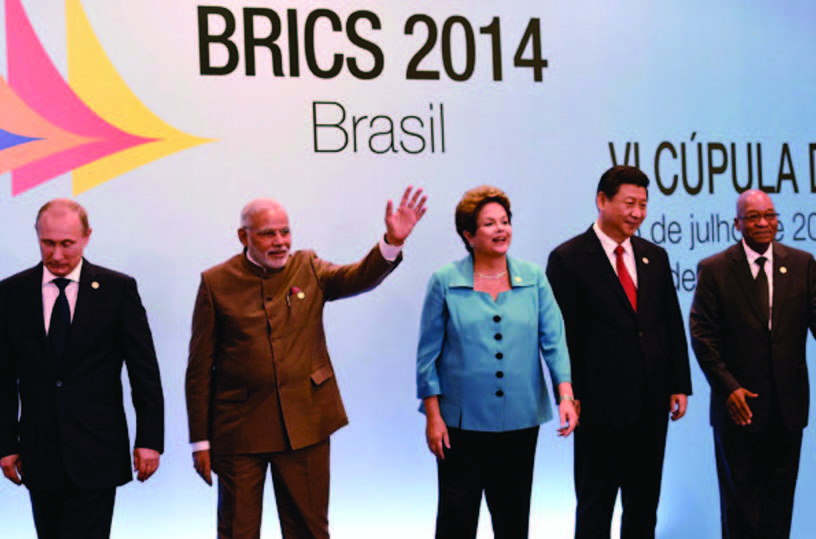
    Pushing for better international governance, Narendra Modi said he favoured an open, rule-based, international trading regime which is critical for global economic growth. Modi’s first BRICS summit saw significant inroads towards the establishment of the New Development Bank and though the headquarters of the bank is slated to be in China, its first President will be from India.

    Addressing the BRICS leaders, Modi also pressed for zero tolerance towards terrorism. He also met Chinese President Xi Jinping and both addressed the need for a solution to the boundary question. Further, Modi also favoured broadening the strategic partnership with Russia in nuclear, defence and energy sectors and invited President Vladimir Putin to visit the Kudankulam atomic power project during his trip in December.

    India poised to make further progress on UN’s development goals
    India has made progress on different indicators such as health and nutrition under the UN’s Millennium Development Goals and is expected to improve further upon them. “There has been progress in all the indicators and further progress is expected to be made in the remaining period up to 2015,” Planning Minister Rao Inderjit Singh had said recently.

    Challenges
    As far as India is concerned, 8 MDGs with 12 targets are relevant which are sought to be achieved during the period 1990 to 2015, the minister said. MDGs are international development goals that UN member states and numerous international organizations, including India, have agreed to achieve by the year 2015.

    Eradicating poverty
    These include eradicating extreme poverty and hunger; achieving universal primary education; promoting gender equality; reducing the child mortality rate and ensuring environmental sustainability. The minister’s said India had achieved the MDG target regarding poverty eradication. India had to halve the proportion of people whose income is less than one dollar a day between 1990 and 2015.

    In 1990, India had 47.8 per cent such poor people and thus the proportion of this population is to be reduced to 23.9 per cent. However, India’s poverty ratio was 21.92 per cent for 2011-12. Similarly, India has to half the proportion of people who suffer from hunger by 2015 to 26 per cent. However, the latest figure for 2004-05 reveal that the percentage of such population was 40 per cent.

    Education: Improving enrolment ratio
    In the education sector, India has to improve the net enrolment ratio in primary schools to 100 per cent by 2015. The country achieved 99.89 per cent enrolment in primary education in 2011-12. The proportion of pupils starting grade 1 who reach grade 5 was 86.05 per cent in 2011- 12 against the target of 100 per cent. The literacy rate in India was 61 per cent in 1990. It went up to 86 per cent in 2017-08.

    The ratio of girls to boys in primary education was 0.73 in 1990 which went up to 1.01 in 2011-12. Similarly the ratio of literate women to men (15-25 years) was 0.67 in 1990, which was 0.88 in 2007-08. MDGs target for both ratios is 1. The mortality ratio among children under the five-year age was 126 per 1,000 live births in 1990 which was brought down to 52 in 2012. The MDGs target is 42 for that.

    Infant mortality ratio
    The infant mortality ratio was 80 per 1,000 live births in 1990 which was brought down to 42 in 2012 against the MDGs target of 27. The proportion of one year old children immunized against measles was 42.2 per cent in 1990 which was improved to 74.1 per cent against targeted 100 per cent coverage.

    Similarly, the maternal mortality ration per 1,00,000 live births was 437 in 1990 which was brought down to 178 by 2011-12 against targeted 109 by 2015.

  • Nepal ex-prince arrested for drugs in Thailand

    Nepal ex-prince arrested for drugs in Thailand

    BANGKOK (TIP): Former Nepalese crown prince Paras Shah has been arrested on drugs charges in Thailand for a second time and could face up to five years in prison, police said on July 16. Shah was detained with about 13 grams (0.5 ounces) of marijuana at a hotel in Bangkok, according to an officer at Thonglor police station who did not want to be named. “He borrowed a flash drive from hotel security and when the security guard entered his room to get his flash drive back he saw marijuana on the counter so he told police,” the officer told AFP.

    He said Shah, who is visiting Thailand on a tourist visa, had admitted illegal drug possession and was remanded in custody. It is not the first time the former royal has been in trouble with the law in Thailand. Shah, who as crown prince was unpopular for his playboy lifestyle, was arrested for possession of about three grams of marijuana on the island of Phuket in October 2012. He was detained again later the same year for smashing property at a luxury apartment in Bangkok.

    In February 2013 Shah was admitted to intensive care in Thailand after suffering a heart attack. Shah became heir to the throne in 2001 after his cousin Crown Prince Dipendra killed nine members of his family including the king and queen in a drink-and-drugs-fuelled rampage, before apparently turning his gun on himself.

  • GOPIO’s 25th Anniversary Jubilee Convention a historic success

    GOPIO’s 25th Anniversary Jubilee Convention a historic success

    PORT OF SPAIN (TIP): The Global Organization of People of Indian Origin (GOPIO International) concluded its 25th Anniversary (Jubilee) Convention 2014 in Port of Spain in Trinidad & Tobago, with a memorable and highly successful celebration from 27th May through 30th May, 2014 coinciding with the 169th anniversary of Indian Arrival Day commemoration in Trinidad & Tobago.

    The convention was a historic event in the Indian Diaspora attended by delegates from several countries where GOPIO is prominent and where persons of Indian origin reside in substantial numbers and even small numbers. Countries include: Australia, New Zealand, Fiji, Malaysia, Mauritius, Sri Lanka, India, South Africa, Netherlands and other countries of the European Union (EU), UK, Canada, USA, and the Caribbean region: Guyana, Trinidad & Tobago, Suriname, Belize, St. Vincent, Guadeloupe, Martinique, Grenada and St Lucia.

    Among the many events of the convention, some of the notable highlights include: Welcome reception at the Diplomatic Centre residence of Hon. Kamla Persad-Bissessar, Prime Minister of Trinidad & Tobago, GOPIO’s elections for new officers, all-day academic conference, special guests at cultural performances held at National Cultural of Indian Culture (NCIC), and unveiling of arrival monument marking the first arrivals of indentured Indian laborers in Trinidad.

    A significant highlight of GOPIO’s 25th Anniversary Jubilee Convention was the special welcome reception of GOPIO delegates at the Diplomatic Centre residence of the Hon Prime Minister Kamla Persad Bissessar on 28th May. The reception was hosted by Ministry of National Diversity and Social Integration with Minister Dr Roger Samuel making the initial remarks, followed by GOPIO International president Ashook Ramsaran and presentation of gifts.


    9
    GOPIO Jubilee Recognition Recipients with GOPIO officials, Indian High Commissioner G. Gupta,Trinidad & Tobago’s Minister Dr. Vasant Bharath MP and Minister Ramona Ramdial MP.

    Hon Prime Minister Kamla Persad Bissessar formally welcomed GOPIO’s delegates, recounted GOPIO’s special reception/dinner during the visit to the Kolkata Memorial on 12th January, 2012 and thanked GOPIO for holding its 25th Anniversary Jubilee Convention in Trinidad & Tobago. In attendance were several ministers and members of parliament of the Government of Trinidad & Tobago as well as the Indian High Commissioner HE Gauri Gupta. The evening included a special celebratory treat of Caribbean and Indian music with delegates joining in dancing. On 28th May, a Business-to-Business seminar featuring prominent scholars and business leaders was held at the Radisson Hotel.


    10
    Some of the Legacy Generation Residents of Trinidad & Tobago with GOPIO officials, Indian High Commissioner HE Gauri Gupta, With Trinidad & Tobago’s Min. Dr. Suruj Rambachan, Min. Ramona Ramdial, Counselors Abdool & Seepersad, Couva Regional Chairman Henry Awong. Unveiling of Indian Arrival Monument at Waterloo-by-the-Sea

    It was sponsored by Trinidad & Tobago’s Ministry of Trade & Investment. Sessions include: Investment & Trade Opportunities in Trinidad & Tobago; Investment & Trade Opportunities in St Vincent & Grenadines; Investment & Trade Opportunities in Guyana; Success Stories of Doing Business in the Caribbean; Free Enterprise, Market Economy and Business Successes; The Growth of Education and Medical Services for Bi-Lateral Trade; Media as Marketing Tool in Emerging Economies The Academic Conference segment of the convention was a full 1-day event held on 29th May at the Radisson Hotel.

    There were several sessions designed round the convention theme of “Indian Diaspora Today & Tomorrow” The chief guest at the Inaugural Session was Indian High Commissioner HE Gauri Gupta and the keynote speaker Dr Mahin Gosine, Professor of Sociology and Anthropology at SUNY, New York, USA. Prof Kumar Mahabir, Assistant Professor at University of Trinidad and Tobago, concluded the session. Other sessions with prominent and suitably qualified speakers from several countries were: Global & Regional Diaspora Investments & Economic Opportunities; The Indian Diaspora: Issues, Challenges & Opportunities; Diaspora’s Youth, Children, Gender & Inter-Generational Issues; Multi- Cultural Diversity & Inter-Ethnic Cooperation in the Indian Diaspora; Education, Science & Technology as Significant Assets in the Indian Diaspora; Health, Wellness, Lifestyle & Nutritional Factors in the Indian Diaspora; GOPIO’s 25th Anniversary Resolutions; Wrap-up & Conclusion. Elections were held by GOPIO International Council for several positions in GOPIO at the international level.

    The following officials were elected by unanimous vote: President – Ashook Ramsaran; Executive Vice President – Sunny Kulathakal; Senior Vice President – Dr. Piyush Agrawal; International Coordinator North America – Dr. Renuka Misra; and International Coordinator Caribbean, Dr. Arnold Thomas. Chairman Inder Singh was elected for another term. The Jubilee Recognition Gala was another highlight of GOPIO’s 25th Anniversary (Jubilee) Convention 201, held on 29th May, 2014 in the Grand Ballroom at the Radisson Hotel in Port of Spain. In attendance was Indian High Commissioner HE Gauri Gupta, Trinidad & Tobago’s Minister of Trade & Investment, Dr. Vasant Bharath; and Min. Ramona Ramdial, Minister in the Ministry of Environment & Water Resources. The event was emceed by prominent radio and television host Zelisa Boodoosingh.

    GOPIO’s Jubilee Recognition for outstanding achievements in selected categories were awarded to several persons “who contributed to the betterment of people of the Indian Diaspora. The Jubilee Recognition recipients achieved significant and prominent levels of stature and recognition in their respective fields of endeavor and have served interests of people in their respective countries of domicile and others as well, in addition to generating pride and respect among the Indian Diaspora and others in country of birth or domicile”. Posthumous: Henri Sidambaron (Guadeloupe); Dr. Najma Sultana (USA); Baleshwar Agrawal (India); Lall Paladee (Trinidad & Tobago). Friend of GOPIO: HE Dr. Ralph Gonsalves, Prime Minister of St. Vincent & Grenadines.

    Professional, Civic, Culture, Entrepreneurship, Media, Philanthropy: National Indian Cultural Centre (Trinidad & Tobago); John Barath (Trinidad & Tobago); Brenda Gopeesingh (Trinidad & Tobago); Dr. Hans Hanoomansingh (Trinidad & Tobago); Sattaur Gafoor (Guyana); Dr Yesu Persaud (Guyana); Chief Justice Carl Singh (Guyana); Dr. C. Baidjnath Misier (Netherlands); Dr. Lakshmi Persaud (United Kingdom); Ishwar Ramlutchman (South Africa); Nicole Vaitylingon (Guadeloupe); Dr. Vivian Rambihar (Canada); Dr. Parmatma Saran (USA); Dr. Sudhir Parikh (USA); TV Asia H R Shah (USA); India Abroad (USA); Kedar N. Gupta (India); Israel Khan (Trinidad & Tobago); Ashok Motwani (India). In addition to recognition of those who contributed to GOPIO’s formation in 1989 as well as all previous life members, GOPIO recognized the newest life members since 6th January, 2014 in attendance: Yamonee Barbaro (USA); Balkrishna Naipaul (Canada); Deo Gosine (Trinidad & Tobago); Sasenarine Sankar (Guyana); Claude Sheikboudhou (Guadeloupe); Elie Shitalou (Guadeloupe); Shaji SM Alex (India); Shaji Baby John (India). The National Council of Indian Culture (NCIC) hosted GOPIO delegates at its major events held at its Diwali Nagar in Chaguanas.

    NCIC president Dr. Deokinanan Sharma and Mr Surujdeo Mangaroo graciously welcomed GOPIO delegates as special guests. Special events were: 27th May: Concert — famous Bhojpuri singer, Kalpana Patowary from Assam, India; 29th May – Indian Arrival Day commemoration with a special treat of music, songs, dances, recitals and authentic Caribbean and Indian foods. GOPIO 25th Anniversary Jubilee souvenir brochure is 112-page bound, elaborate keep sake publication distributed at no cost to all convention delegates and visitors, as well as mailed subsequently to worldwide officials, businesses, organizations.

    The brochure messages of congratulations and well wishes, articles, program details, convention and international team, facts about GOPIO, its formation and history, as well as an extensive photo gallery. The convention team organized around the GOPIO chapter in Trinidad & Tobago, working diligently with dedicated and focused efforts to plan, coordinate and hold a magnificent GOPIO milestone convention in a country distant from the other regular venues which GOPIO has used over the years for its major events. Convention Convener: Ena Maraj, president of GOPIO International chapter of Trinidad & Tobago; General Convener: Dr. Arnold Thomas, GOPIO International Coordinator Caribbean; several chapter members serving in various capacities. The convention was endorsed and supported by a wide cross section of public and private sectors as well as civic and cultural organizations, academicians and academic institutions, media and others.

    In addition, prominent persons of Indian origin and several Pravasi Samman Awardees also participated in the convention. HE Shri Gauri Gupta, Indian High Commissioner to Trinidad and Tobago, provided unwavering support and participated as chief guest in several major events of the convention. The National Council of Indian Culture (NCIC) provided meeting facilities during the planning stages. Special support by various ministries of the Government of Trinidad & Tobago, as well as National Council of Indian Culture (NCIC). Grand patrons: Deo Gosine (Labidco Port Services Ltd, Trinidad & Tobago); Dr. Chandrikaersad Baijnath Misier (Surichange NV, Netherlands). Indian Arrival Monument at Waterloo-by-the- Sea The Indian Arrival Monument at Waterloo-bythe- Sea was unveiled on 30th May 2014, the 169th anniversary of Indian Arrival Day in Trinidad & Tobago, another significant and historic marker of the journey of Indian migration to other lands for better livelihood.

    The monument is another commemorative milestone marker in honored tribute and well deserved recognition of the first arrivals of indentured Indian laborers in Trinidad & Tobago. This unveiling was attended by Trinidad & Tobago’s Ministers Dr. Suruj Rambachan MP, supporter Mininister Ramona Ramdial, Counselors Abdool and Seepersad, Couva Regional Chairman Henry Awong, among many others officials. GOPIO International President Ashook Ramsaran and Indian High Commissioner HE Gauri Gupta unveiled the monument in the presence of hundreds of people including several “legacy generation” persons, a few over 100 years old.

    This was followed by an authentic Indian lunch served Caribbean style. The inscription, patterned after the Kolkata Memorial in India and Indian Arrival Monument at Highbury in Guyana, read as follows: In honour of Indian indentured labourers whose arrival in Trinidad and Tobago began on 30th May 1845. In recognition of their pioneering spirit, sacrifices, endurance and determination to seek better livelihoods for themselves and their descendants.

    In gratitude for their invaluable contribution to the social, spiritual, cultural, economic and political development of Trinidad and Tobago”. Remarked GOPIO International Chairman Inder Singh, “this is the best GOPIO convention since its formation in 1989”. GOPIO International President Ashook Ramsaran added that, “this silver jubilee convention is unparalleled in historical significance, with the special welcome, warmth and hospitality of the people of Trinidad & Tobago”. For more information, please contact GOPIO International at +1-718-969-8206, Email: ramsaran@aol.com. (Based on a press release).

  • SOUTH INDIA’S GOLDEN TRIANGLE IN HILLS

    SOUTH INDIA’S GOLDEN TRIANGLE IN HILLS

    TRAVELOGUE

    If there is a paradise down south, it is in its own Golden Triangle in the hills. The regions of Coorg in Karnataka, the Nilgiris in Tamil Nadu and Wayanad in Kerala form one contiguous landscape offering all that a traveller could ask for: Lush green forests, wildlife, great people, man-made attractions, breathtaking landscapes, tea and coffee estates and temperate climate all year round. You can seamlessly drive between these regions on beautiful mountain roads.

    Join Elephants in their ‘Bathrooms’ in Dubare, Coorg So what if Dubare is like a pet elephant facility? The camp is home to elephants of all ages, from babies to granddaddies. At around 9, they come out of their quarters and head for the water pool for their daily bath.

    Be careful when they come down: some amble, but some run. You don’t want to be in the way. You can watch them from the sides, and step into the water and give them a scrub yourself. Of course, elephants don’t know the difference between a bathtub and a toilet seat – they allow their poop to drop where they are. You can be sure you are stepping on some.

    Dubare is a nice place to hang around all day long – lounge in the shade when done with elephants, take a boat ride, go bird spotting, read a book or just picnic with some music from your iPod. Life will look wonderful.

    Reaching for the Clouds in Talacauvery, Coorg Located about 42 kms (26 miles) from Madikeri, Talacauvery is said to be the origin of the Cauvery river. Of course, you really don’t see any visible signs there: a spring feeding water into a holy tank in a temple complex there is said to be the origin.

    The temple is dedicated to Goddess Caveriamma and Lord Agastheeswara. A dip in the tank, especially on holy days, is considered auspicious by Hindus. A 407-step steep climb from the temple takes you atop the hill where you are supposed to get views of the surrounding mountain ranges – I only got to see the anatomy of clouds. Yes, I was literally standing inside one or many – I could not tell where one ended and another started.

    Chikmagalur, Karnataka – Coffee first grown here in India Raindrops are falling on my head…and I am having coffee on the road in Chikmagalur – where coffee was first grown in India.


    13

    About 350 years ago when a seer is believed to have smuggled a few seeds from Mecca in Arabia. At the twilight hour, surrounded by forests and coffee estates, in mountain country with its cool, crisp air – it is heaven on Earth. Depending upon when you go, you can enjoy the coffee blossoms – or the picking season. The whole countryside is one you would want to build a cottage and spend the rest of your life in.

    A Thriving Tibetan Community in Bylakuppe in Coorg If you want a flavour of Tibet and Buddhism, drop by at Bylakuppe – supposedly the second largest Tibetan settlement outside of Tibet after Dharamsala up North. It is located about 6 kms from Kushalanagara in Coorg. Over 30,000 Tibetans and 7,000 monks have made it to their homes since 1961.

    The stunning Namdroling Nyingmapa Monastery here is the largest teaching center of Nyingmapa – a lineage of Tibetan Buddhism – in the world. Check in to get a flavour of Tibetan shopping, food, lifestyle, dressing, culture, festivals and religion.

    The Nilgiri Mountain Railway: A Toy Train you must Ride Wheeeee! I am on a toy train ride. Starting from Ooty or Ootacamund, now officially renamed Udagamandalam, going downhill all the way to Mettuppalayam in Tamil Nadu. And it figures in UNESCO’s World Heritage List.

    The train passes through some picturesque tea estates, the Nilgiris mountains, villages and towns with some retaining their old world charm – and skies with changing colours. The train negotiates 208 curves, 13 tunnels and 250 bridges. A few years back, a diesel engine was introduced for the leg between Coonor and Ooty – it is a treat watching the process of changing to a steam locomotive at Coonor or vice versa. Book in advance to ensure a seat.

    Walk Through the Tea Estates of the Nilgiris What is more refreshing than a cuppa of tea? A walk in the tea estates – especially those that cover the rolling hills of the Nilgiris.

    Step out before the first light, and watch the colours of the ground and skies change around you. Birds chirp Good Morning to you and the cool air rejuvenates your skin and soul.

    On the Trail of Tigers and Elephants in Bandipur, Karnataka The Bandipur National Park in Karnataka is one of the many reserves in this region. And home to tigers, elephants and many other animals and birds. In fact, the forests all merge into one another, and into human habitats and roads. You can commonly expect to see herds of elephants on the highways. Don’t miss out on safaris when in this part of the country.

    A Temple Festival, Circus and Fair in Wayanad Everyone loves a festival in these parts. I attended one at the Valliyoorkavu temple on the outskirts of Mananthavady in Wayanad. Attended by tribal folk from surrounding areas, it was a long night of prayers, folk dances, processions, food, shopping, circus and fairground rides.

    Roads leading to it are marked with processions from all directions – converging at the temple from early evening onwards. Processions comprise musicians, dancers including a few in masks, elephants, priests and devotees walking along, some with lit oil lamps. It is fun – and religious – for all in one big celebration.

    Kuruva Island in Wayanad The evergreen forested Kuruva island (called Kuruvadweep locally) lying in one of the tributaries of Kabini river in Wayanad seems a popular picnic spot. Rightfully so. A cluster of islands that emerge or submerge with water levels, and home to a variety of birds, butterflies and orchids, you can choose to be with the crowds or find your own solitude.

    We hiked in extreme humidity on a warm, sunny day through rice fields and forests to eventually reach the local tribal temple – very serene setting, and the simplicity of the temples is what attracts you. Despite new houses, many a lifestyle remains unchanged. Women were dressed as they always have been, water is drawn from wells and farming is the main occupation. The fields were planted with rice, and ginger harvested recently was being sorted manually.

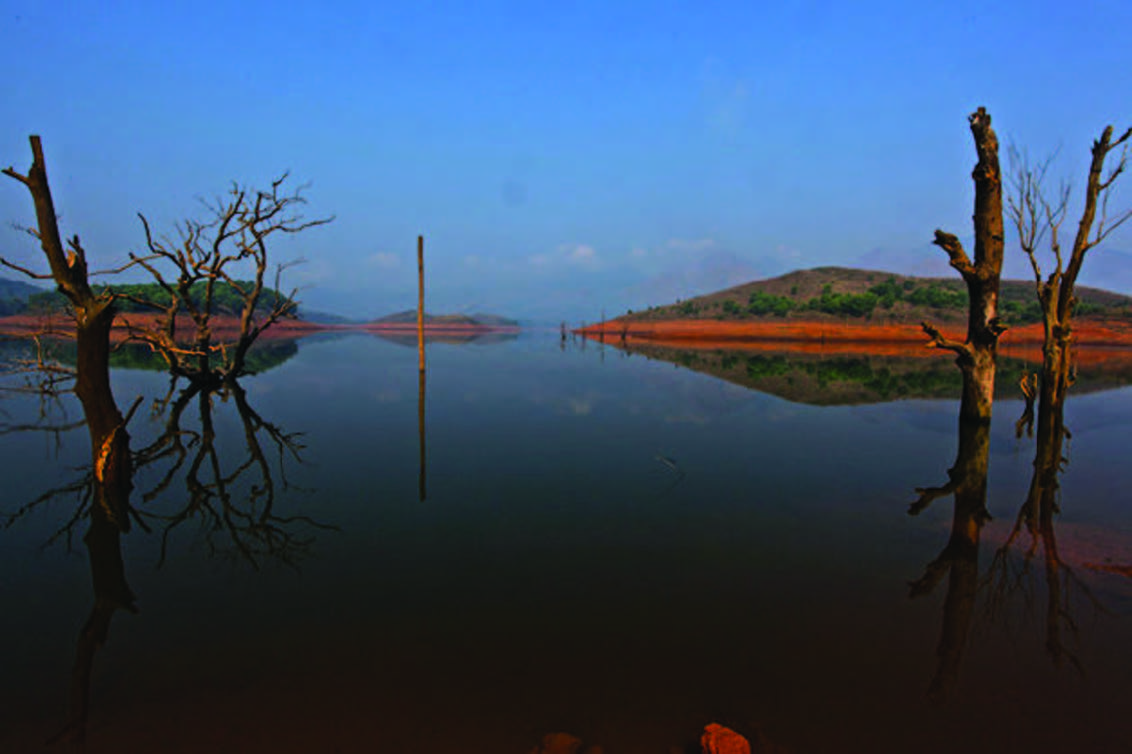
    Banasura Reservoir, Wayanad, Kerala – A sight to behold The Banasura Sagar dam in Wayanad is the largest earth dam in India. Without getting into technicalities or its environmental impact (if any), I would say it has resulted in creating some stunning features.

    The resulting reservoir is a large water body whose water level rises dramatically during the monsoons. Sprouting throughout are islands created when the reservoir submerged surrounding areas. And coming through are trees shorn of any leaves; they paint a ghostly image when it is misty and around sunset. A good place to film a horror flick.

  • INDIA’S ELECTION: Gujarat Model of Development Vs. Nation’s Conscience

    INDIA’S ELECTION: Gujarat Model of Development Vs. Nation’s Conscience

    The author is saddened at the turn of events in the 2014 elections. He fears the
    heterogeneity of the nation will receive a hard kick if Narendra Modi led BJP came to power.

    “It is India’s heterogeneity that has earned the admiration of the world and has received the label “mother of all civilizations”. The existence of multiple religions, cultures, languages, social groups have enabled the country to enjoy the boons of “unity in diversity” making it intriguing to the outside world as well as conducive to an egalitarian society”, says the author.

    Priyamvada Gopal, in the faculty of English at the University of Cambridge, writing in Independent stated that if Modi won the election, India would have crossed a moral Rubicon, a reference to the river Rubicon in north-eastern Italy, which means to pass a point of no return. It refers to Julius Caesar’s crossing of the river in 49 BC, which was considered an act of war, because crossing it with an army was forbidden by the Roman Senate.

    The writer appears to give a stern warning that India is at the crossroads where the electorate may soon decide whether the country that has been a functioning democracy with pluralist and inclusive agenda will remain the same or give way to installing Narendra Modi, as prime minister, thereby “crossing a blood-soaked moral Rubicon”. Many also fear that this election could fundamentally transform India to the point of no return beyond an open society, where all citizens, regardless of whether they belong to a majority or minority community, are treated equally before the law.

    While the BJP might have earned the right to pursue their agendas through the traditional process of democratic governance, do they need to radically alter the face of the nation? However, if they are to pursue the radical nature of their goals, there will be consequences, the first of which would be to divide the nation based on religion, caste and region. It is India’s heterogeneity that has earned the admiration of the world and has received the label “mother of all civilizations”. The existence of multiple religions, cultures, languages, social groups have enabled the country to enjoy the boons of “unity in diversity” making it intriguing to the outside world as well as conducive to an egalitarian society.

    Moreover, India is known as the land of spirituality and philosophy. It was the birthplace of three world religions: Hinduism, Buddhism and Jainism. Our great sages attained extraordinary scholarship; mastered power of meditation; and lived simple and sacrificial lives advocating punishment for the wicked and protecting the poor and weak. Fast forward to 2014 and listen to an average Indian on the street or an NRI who is on an overseas assignment. They tend to make very similarsound bytes as this Indian woman from Detroit: “Even if Narendra Modi was involved in Gujarat riots, I don’t care. His economic work wins out.

    I will vote for him.”One wonders as to what happened to our age old civilization that emphasized good over evil? As I was thinking of writing this article two images came to mind. One is that of Dr. Manmohan Singh, the current Prime Minister and the chief architect of India’s new economy. He has taken a centrally planned, inward looking, public-centered economy and reversed its direction. What he has accomplished is just phenomenal. Actually this dramatic change paints a picture of a man who is some sort of a revolutionary. If India entered the 21st century, the current Prime Minister has a lot to do with it. Take a look and see how fellow Indians perceive himnow and many of whom appear to be repeating every word ofthe western critics calling him an ‘under achiever’ or ‘a complacent leader’.

    The opposition party leaders even label him as the ‘weakest Prime Minister ever’! It is quite astounding thatmany Indians look at this brilliantman of integrity and honorwith almost disdain. On the contrary, Mr. Narendra Modi, has presided over a pogrom in Gujarat; ran an autocratic administration that instilled fear in people for the past 13 years; silenced the opposition while putting potentialrivals in their place; and ran a propaganda campaign on Gujarat model of development based on falsehoods.

    Yet, Indians appear to be in awe of this man who is being heralded as a Messiah of the nation! Are we missing something here? What happened to our value system that once promoted positive attributes in behavior and glorifiedcompassion and empathyfor fellow human beings? It is indeed a dramatic shift that is taking place in India though many are stillvery judgmental on the western materialism and its narcissist lifestyle. Modi’s campaign has been tremendously successful in creating a positive narrative and cultivatingthe mindset of the majority community. The campaign incites that the majority isincreasingly at a disadvantage in India, as minorities are raking in all the benefits and even occupying the higher echelons of power. This notion is sinking in and the Congress party, so far, has been unable to counter it.

    As someone who has visited Gujarat right after the riots, my perspectives are shaped by what I have witnessed in many refugee camps and affected villages. I was part of a NRI Sadhbhavana Mission team headed by Mr. Shrikumar Poddar to promote peace and harmony in a state torn by religious and sectarian violence in 2002. We were accompanied by Nishrin Jafri Hussain, daughter of former Congress Member of Parliament Ehsan Jaffri who was killed during the riots. Gulbarg Society, a complex of 18 bungalows and two apartment blocks once occupied by upper-middle-class Muslims in the largely Hindu neighborhood of Chamanpura, is now a cluster of door-less burned shells where at least 35 Muslims were hacked and burned to death, including Nishrin’s father Ehsan Jafri.

    In a recent New York Times report, Roopa Mody, who was a witness to this attack recalled the final minutes of the onslaught on this complex by the mob. “When the mob grew restive, attempting to knock down a wall of the compound, Mr. Jafri made a final call to Mr. Modi, the chief minister. “All he got in return were abuses,” Roopa said in an interview, reiterating what she said in deposition before the Supreme Court. “We prepared ourselves to die.Everyone says that Modi is a good leader who built roads and bridges, these roads are built on dead bodies.”

    Thane Richard, founder of the Dabba, an independent digital radio station poses this poignant question “Has India become so desperate for rapid economic growth, so blinded by the promise of prosperity, that she has forgotten basic humanity? It seems that, in the race towards higher GDP, the majority of India is willing to inject itself with steroids of bigotry or ruthlessness. Ethics be damned.”

  • Sant Chatwal appoints Danziger president and CEO of Hampshire group

    Sant Chatwal appoints Danziger president and CEO of Hampshire group

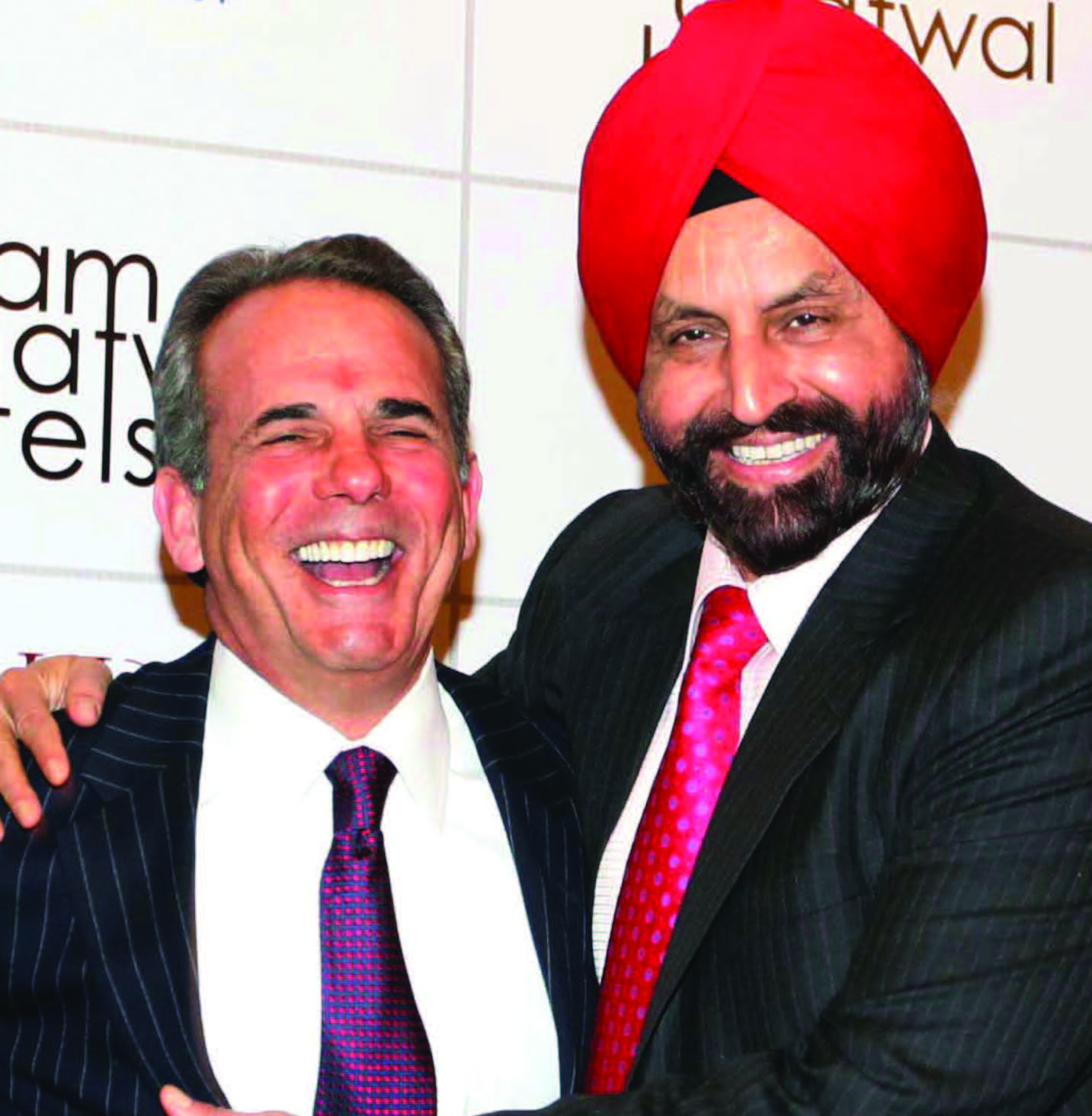
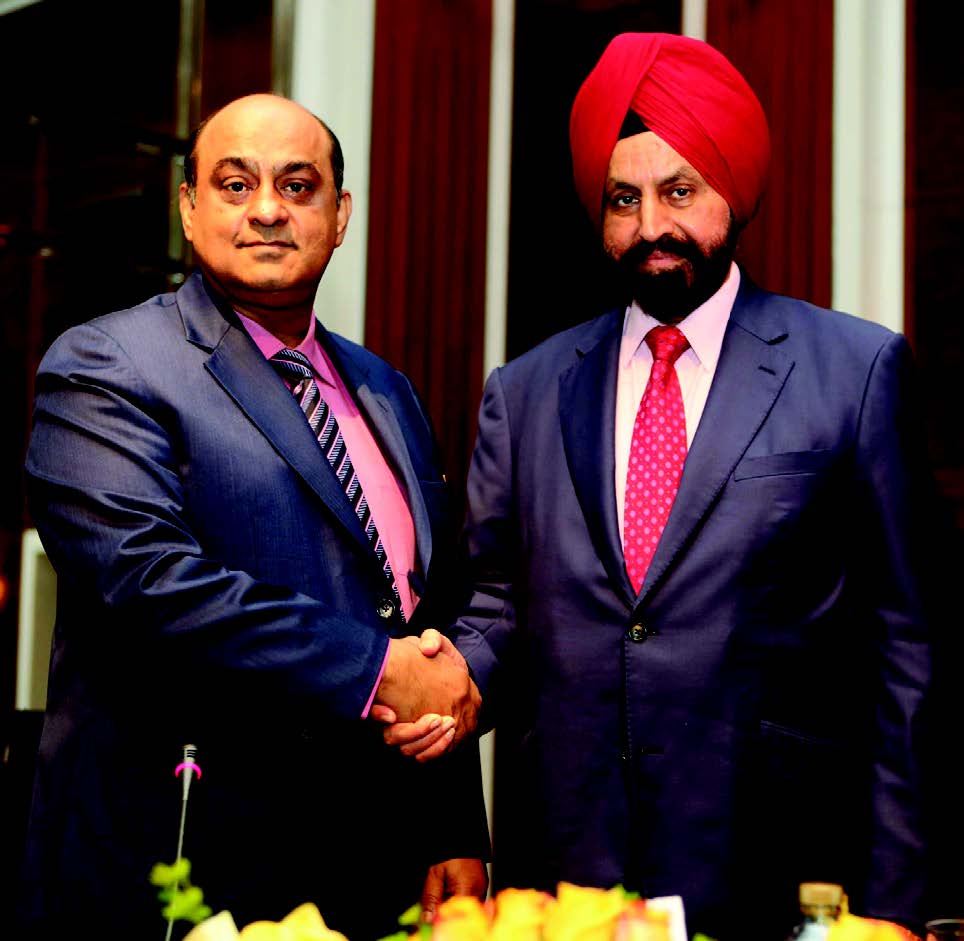
    Sant Chatwal (right) chairman of Hampshire Hotels & Resorts, appointed industry veteran Eric Danziger (left) president and CEO of Hampshire group, the New York-based hospitality group, which manages brands like Dream Hotels, Night Hotels and The Chatwal in New York, Miami, the United Kingdom, Thailand and India.

    Danziger, the former president and CEO of Wyndham Hotel Group, has 40 years experience in the hotel industry, and in his new role, will focus on growing the group’s third party management and asset management portfolios, in addition to expanding the firm’s proprietary Dream and Night lifestyle brands in the US as well as globally.

  • SAURASHTRA

    SAURASHTRA

    The name has a musical ring. Saurashtra, literally a region of one hundred kingdoms. Undoubtedly, the past of this princely area is rich in antiquity and history, as it is in lores and legends. One of Gujarat’s most picturesque regions, modern day settlements still pay homage to the glories of yesteryear. Here, there were glittering palaces with all the wealth of the world contained within. Here, there were temples and mosques, rich not only architecturally, but also in sheer wealth.

    Here, there were gardens and sparkling fountains, beautifully sculpted step-wells and imposing forts. And knitting them together is a warm people known for their hospitality, and for their love of art in daily life. But while the past endures beautifully in the state, Gujarat has also moved with the times, and Saurashtra has played an important role in the pace of development that characterises many of its towns. Here is a blend of the finest meeting of centuries that is at once exciting and picturesque.

    The plateau in central Saurashtra slopes towards the narrow coastal plains ending at sea-port settlements, while on the other side lie dense forests. The region attracts an average annual rainfall of 75 cms. Its inhabitants combine a martial past with maritime skills. Their love for colour and artistry has touched every aspect of their lifestyle, and the handicrafts of the region enjoy the patronage of all the states of India.

    Romantic literature has flowered in the region, as have religious texts. The wealth of the natural countryside has been the backdrop to it all. Saurashtra finds mention in ancient Indian epics and treatises, as well as in the writings of early travellers such as Ptolemy and Hieun Tsang.

    Bhavnagar
    An 18th century city, Bhavnagar was the capital of an erstwhile princely state. It’s business today is vastly different, for it is a premier cotton-exporting sea-port on the south-eastern Saurashtra coast. Among its many attractions is Samaldas College, just over a hundred years old, a frontline institution that claims Mahatma Gandhi as one of its students.

    In fact, Bhavnagar treasures its association with the Mahatma and at Gandhi Smriti a memorial to him has been constructed that consists of a very fine library with a museum of photographs depicting every facet of Bapu’s life. Gandhi Smriti aims at keeping Gandhian thought alive, and to this end it also houses a Khadi Gramodyog Bhandar for the sale of hand-spun, cotton khadi cloth.

    Old books, manuscripts, rare coins, arms and armour used by the Bhavnagar rulers are on display at the Burton Library and Museum The more-scientifically inclined may enjoy their visit to the Central Salt and Marine Research Institute. The city is dotted with gardens that make it very pleasant if you should choose to stroll around in the evenings or mornings. On the outskirts of the city is Victoria Park, a 500- acre expanse that has been developed as a botanical garden, and has a deer park in it.

    Dwarka
    Known in Puranic days as Kushasthali or Dwaravati, Dwarka on the west coast of Gujarat lies by the Arabian Sea and is the cradle of the Krishna legends. It is here that Lord Krishna is supposed to have ruled, and excavations have revealed that the present settlement is the sixth here, five others having been obliterated by the sea.

    Jagat Mandir or Nij Mandir forms the sanctum of Dwarkadish temple and dates back to 2500 years. Jagat Mandir has its own hall of audience and a conical spire. The roof of the hall is supported by 60 columns and the main temple rises five storeys high. The spire rises to a height of 157 feet and is richly carved.

    There are a very large number of temples in Dwarka of varying antiquity, most associated with some anecdote from the Puranas or the Mahabharata. One of the most popular temples is that of Rukmini, Krishna’s wife, considered an incarnation of Lakshmi, the goddess of wealth and beauty. The Sharad Peetha is one of the four Maths established by Jagatguru Shankaracharya.

    The Puranas mention 12 Jyotirlingas or columns of light representing Lord Shiva that manifested itself in different parts of the country. The one located in Dwarka is known as Nageshwar Mahadev and is a popular place of pilgrimage. The place where Lord Krishna is believed to have lived, Bet Dwarka is also sanctified as the place where Vishnu slew the demon Shankhasura.

    Junagadh
    Located at the base of Girnar Hill, Junagadh is the home of many legends which in turn have been responsible for the large number of shrines in the city. The Fort of Uppar Kot is an imposing reminder of the city’s medieval past. Within, are two wells called Adi-Kadi after the names of two girls. Another well, the Naughan has been dug to a great depth out of soft stone and has a very imposing staircase descending down to water-level.

    On the way to Girnar from the fort are the ancient Wagheswari temples and the Ashokan stone edicts with their 250 BC Pali inscriptions. Visitors can go up Mount Girnar in dolis or chair lifts. On top of the hill are beautiful Jain temples. The biggest among them is Neminath, the shrine of the 22nd Jain teerthankara. Another temple of significance is one dedicated to Goddess Amba. The adjoining hill of Datar has a Muslim shrine dedicated to Jaimal Shah Pir who is believed to have come from Sind at the behest of his preceptor, Pir Patta. It is interesting to note the presence of Buddhist caves here.

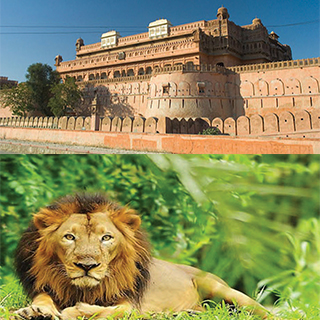
    Back in Junagadh, there is the Silehkhana and Darbar Hall, the armoury and the audience hall, both containing the royal regalia of former days, along with ancient weapons. The Sakerbag garden comprises of a small zoo, its proudest inhabitants being the Asiatic lions from the Gir forests.

    Palitana
    This is one of India’s most picturesque pilgrim centres. Located on Shetrunjaya hill are 863 temples built over an impressive span of nine hundred years. The temples are exquisitely carved in marble, veritable prayers in stone. To an observer, these appear to be ivory miniatures when seen from a distance.

    Created by master craftsmen, the most important temple is that of the first teerthankara, Shri Adishwar. It has ornate architectural motifs, though in its overall plan it is simpler than the Choumukh. Other notable temples are those of Kumarpal, Vimalshah and Sampriti Raja. The earliest temple was probably built by Kumarpal Solanki, a great Jain patron. The temple has a fabulous collection of jewels, and these can be seen with special permission.

    Porbandar
    A small port town that is linked with India’s history through its association with Mahatma Gandhi who was born here. The ancestral Gandhi house where Gandhi was born was purchased by the family in the 18th century, and the Mahatma’s father was the hereditary Dewan of Rajkot. The home of Gandhi’s childhood is now open to visitors.

    Known by the name of Kirti Mandir, it contains a Gandhian library, his personal effects, a photo-exhibition on his life and times, a hall for spinning cotton thread and a prayer hall. Porbandar is also the place where Gandhi’s wife, Kasturba, was born. A chronological history on the life of the Mahatma is listed here. Porbandar, in olden days, had a flourishing trade with Arabia, Africa and the Persian Gulf.

    It was then known as Sudamapuri in the memory of Lord Krishna’s friend, and there is a temple dedicated to Sudama here. Among institutions worth paying a visit are the Arya Kanya Gurukul and Bharat Smriti. The planetarium nearby is a great attraction. Porbandar today is also an industrial town with cement and chemical units. It has a fine beach and beautiful villas on the seacoast.

    Sasan Gir
    The home of the Asiatic Lion, and its retreat, Sasan Gir is a wildlife sanctuary for the protection of this rare species, and other animal and bird life. Sasan Gir is one of the country’s largest wildlife parks with a core area that spreads over 258.71 sq km. According to the 1989 census, the lion population in the park is 255.

    The forest also harbours a variety of other animals and birds, including predators such as the panther and the hyena. The deer family is adequately represented by sambar, chital, chousinga, nilgai and chinkara. Also found are the bear and long-tailed langur. The peacock is the most commonly seen bird here. A crocodile farm has been developed within the sanctuary. The park is open from mid- October to mid-June.

  • INDIAN WOMAN IN US FOUND GUILTY OF SETTING HUSBAND AFIRE

    INDIAN WOMAN IN US FOUND GUILTY OF SETTING HUSBAND AFIRE

    HOUSTON: A 27-year-old Indian-origin woman in the US state of Texas has been found guilty of causing arson that killed her husband two years ago. Shriya Bimal Patel was convicted on Monday of dousing her husband Biman Patel in gasoline and setting him on fire in 2012.

    Bimal, 29, died at the burn centre of the San Antonio Military Medical Center, nearly five months after the April 17 incident. She faces five to 99 years in prison. In closing arguments on Monday, the state asked jurors to recommend a life sentence for Shriya, who witnesses have said intentionally ignited an explosion that killed Bimal. Defence lawyers, however, sought probation for her.

    They said Shriya would be deported to India should she receive community supervision. Testimonies ended on Friday when defence attorneys called their only witness, an associate professor of Indian culture from the University of Texas. Her lawyers have argued that her husband killed himself and forced her to help.

    Prosecutors said Shriya, who had studied in London and lived in Dubai was used to an upper-class lifestyle, was upset because Bimal did not lived up to her expectations. They said she was disappointed that Bimal had been laid off from a telemarketing job and was struggling to pay his rent.

  • Texas dad killed daughter, her lesbian lover because he disliked that she was gay: mom

    Texas dad killed daughter, her lesbian lover because he disliked that she was gay: mom

    DALLAS (TIP): A Texas dad disgusted with his daughter’s lesbian lifestyle murdered the young woman and her lover, the girl’s mother said in a shocking twist to a gruesome case.

    James Cosby, 46, bludgeoned his daughter Britney Cosby to death and shot her lover, Crystal Jackson, on March 6 before dumping the bodies near the ferry gate in Port Bolivar, Texas, police believe.The bodies were found near a Dumpster around 7:30 a.m. the next day outside a Fisherman’s Cove food mart.

    Both women were 24. Britney’s mother told KHOU-TV that Cosby was angry his daughter was gay. “He said it to me a few times that he did not like the idea of her being gay,” Loranda McDonald told the TV station. “But, like I told him, there’s nothing we could do about that. That’s who she is. We can’t change her lifestyle.”

    Capital murder charges are pending against James Cosby, a registered sex offender released from prison in October, Galveston Sheriff Office Capt. Barry Cook told the Daily News. The murder weapons have not been recovered and Britney Cosby’s recently purchased 2006 Kia Sorento is still missing. (Source: KHOU-TV)

  • US couple finds $10 million in gold coins while walking their dog

    US couple finds $10 million in gold coins while walking their dog

    LOS ANGELES (TIP): A California couple out walking their dog on their property stumbled across a modern-day bonanza: $10 million in rare, mintcondition gold coins buried in the shadow of an old tree. Nearly all of the 1,427 coins, dating from 1847 to 1894, are in uncirculated, mint condition, said David Hall, co-founder of Professional Coin Grading Service of Santa Ana, which recently authenticated them.

    Although the face value of the gold pieces only adds up to more than $28,000, some of them are so rare that coin experts say they could fetch nearly $1 million apiece. “I don’t like to say once-in-a-lifetime for anything, but you don’t get an opportunity to handle this kind of material, a treasure like this, ever,” said veteran numismatist Don Kagin, who is representing the finders.

    “It’s like they found the pot of gold at the end of the rainbow.” Kagin, whose family has been in the rare-coin business for 81 years, would say little about the couple other than that they are husband and wife, are middleaged and have lived for several years on the rural property where the coins were found.

    They have no idea who put them there, Kagin said. The pair are choosing to remain anonymous, Kagin said, in part to avoid a renewed gold rush to their property by modern-day prospectors armed with metal detectors. They also don’t want to be treated any differently, said David McCarthy, chief numismatist for Kagin Inc. of Tiburon.

    “Their concern was this would change the way everyone else would look at them, and they’re pretty happy with the lifestyle they have today,” he said. They plan to put most of the coins up for sale through Amazon while holding onto a few keepsakes. They’ll use the money to pay off bills and quietly donate to local charities, Kagin said.

    Before they sell them, they are loaning some to the American Numismatic Association for its National Money Show, which opens Thursday in Atlanta. What makes their find particularly valuable, McCarthy said, is that almost all of the coins are in near-perfect condition. That means that whoever put them into the ground likely socked them away as soon as they were put into circulation.

  • Anna comes out in Mamata’s support but with a rider

    Anna comes out in Mamata’s support but with a rider

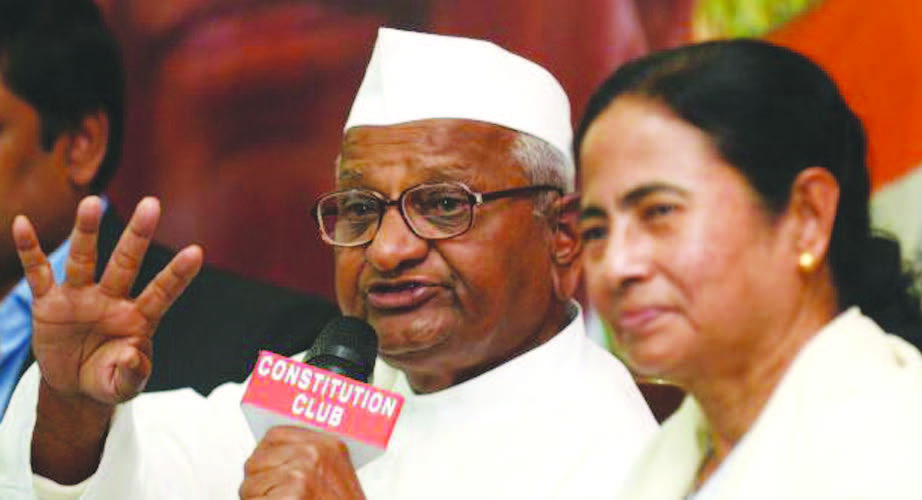
    NEW DELHI (TIP): Having fallen out with Arvind Kejriwal after he floated AAP, social activist Anna Hazare on February 19 threw his weight behind Trinamool Congress chief and West Bengal chief minister Mamata Banerjee who is eyeing a possible national role after the Lok Sabha elections.

    A day after their one-on-one meeting in the national capital, Anna and Mamata appeared together before the media to send the message of their new-found partnership. Pointing that it is for the first time that he is supporting a political leader, Hazare said he deviated from his stand after witnessing Mamata’s political struggle and simple lifestyle even as chief minister.

    “I had written a letter with my 17-point demands to all political parties but only Didi (Mamata) responded to it and agreed to implement it,” he said at the press conference where the backdrop read “sadgi, sachai, imaandari (simplicity, truthfulness and honesty).” But Hazare had a rider. He said his support to the TMC chief was limited to the few months of campaigning in the run-up to the polls and would end after the polls are over.

    Hazare mentioned that he had also written to Kejriwal about his 17-point agenda, but the APP leader he did not bother to reply to it. He said everybody talks of “regime change”, but that will not change the state of the nation for the better which can happen only through “systemic change”. Hazare was not short of words of praise for the TMC chief, saying she has the integrity of character to bring about a systemic change. “So, I thought of supporting a political leader for once,” he said.

    The anti-graft activist said he will be going around the country for the next five years to find at least 100 independent candidates with integrity of character for the 2019 Lok Sabha elections. “A hundred good people in Parliament can make a difference and bring about a change in the system that I am talking about,” he said.

    On her part, Mamata declared that she would consult Hazare on contestants from north and south Indian states including Delhi. The 17-point agenda that Hazare took up included legislations like protection to whistle-blowers and demand to make government decisions taken in all matters, except defence and foreign affairs, public after two months to bring in more transparency. His other demands include making villages as the nucleus before chalking out policies, land acquisition with farmers’ consent, major electoral changes like Right to Recall and Right to Reject and bringing back black money among other things. When asked whether he would oppose Kejriwal and BJP’s Prime Ministerial candidate Narendra Modi, Hazare said he would neither support nor oppose them.

  • MAMATA AND ANNA TO CAMPAIGN TOGETHER FOR LOK SABHA ELECTIONS

    MAMATA AND ANNA TO CAMPAIGN TOGETHER FOR LOK SABHA ELECTIONS

    KOLKATA/PUNE (TIP): Mamata Banerjee’s ambition to play a key role in the national politics is taking shape after plans of sharing the dias with Anna Hazare in a joint campaign for the forthcoming Lok Sabha elections. A meeting between Banerjee and Hazare, scheduled to take place in New Delhi on February 18, is likely to give shape to an all-India campaign tentatively dubbed “Fight for India”.

    Mamata has reportedly agreed to give an affidavit “to people” that she would “resign” from the post (of Prime Minister) if she failed to implement Hazare’s 17-point charter. “We need a simple Prime Minister like Mamata Banerjee. I will campaign for her and appeal to voters to elect her,” Hazare said after an hour-long meeting with Trinamool Congress national general secretary Mukul Roy at Ralegan Siddhi on February 13.

    “Mamata stays in a 12X8 ft home. She still wears slippers and simple saris. She doesn’t avail an (official) car and takes no salary. She offers a ray of hope and if people stand by her, then the country will change in no time,” he said. “I had earlier sent a 17-point agenda to all parties. Only Mamataji replied. She agreed to give an affidavit to people. I will go to Delhi on February 18. We will have a detailed discussion and the path ahead will be decided then.”

    But earlier Hazare’s had said he would not support any political party. “We don’t want a Prime Minister who operates on a remote control, even if he has an unblemished character,” Hazare added. Roy said he has come to meet Hazare as a respected senior and elderly statesman and convey Banerjee’s highest regard for him. Hazare also praised Goa chief minister Manohar Parrikar and Tripura chief minister Manik Sarkar, saying he was happy with the way these chief ministers were running their governments and maintaining a “simple lifestyle” despite being in power.

    Sources said “Fight for India” campaign will be targeting the approximate 90-crore people with cellphones. It would be apolitical to allow Hazare and Banerjee to share same space and also to enable them to target young voters (65% of voters in India is below 35 years of age). The campaign is likely to kick-start soon. Trinamool was the first political party to accept Anna’s 17-point charter of demands. Roy on January 16 had written to Hazare that most of these have been incorporated and some even implemented by the party during the 2009 Lok Sabha polls and 2011 Assembly polls.

    “I would like to assure you that we are wholeheartedly working to incorporate many more such ideas in our party’s 2014 election manifesto as well. We accept your 17- point economic agenda and need your guidance,” Roy had said. Hazare had indicated that acceptance of his 17-point agenda isn’t enough and that he wanted Banerjee should also sign an affidavit that if she can’t implement them she should resign. Agencies quoted Hazare saying, “…For the people, we want an affidavit from her that she would resign from the post if the 17 issues are not implemented. Affidavit is very important.

    And if this affidavit happens then I will tell people to stand behind her in order to change the country.” Hazare also said that he recently sent the same agenda to Aam Adami Party leader and Delhi chief minister Arvind Kejriwal and was waiting for his response. “Arvind’s party did not exist when I had sent the letter. So I will give him some time to respond. If he accepts the agenda and gives an affidavit I will think about supporting him,” he said.

  • PATENT WAR SPILLS OVER TO NON-CANCER DRUGS

    PATENT WAR SPILLS OVER TO NON-CANCER DRUGS

    MUMBAI (TIP) : The turf war between Big Pharma and generic companies, which was largely restricted to exorbitantly priced drugs for cancer and HIV. is now spilling over to chronic and lifestyle problems. In yet another instance of a drug MNC losing monopoly, the Chennai Patent Office, an opposition filed by Ranbaxy, has revoked Pfizer’s patent on a drug used in urinary incontinence, which is expected to bring down its price substantially.

    Significantly, the revocation of the patent may challenge Pfizer’s claims of monopoly on the Detro! formulation, experts say. The patent office recently revoked Pfizer claims on patent exclusivity for a formulation of its best-selling drug Detro!, used to manage overactive bladder symptoms. The patent office said the invention claimed in the revoked patent was found to be “prior claimed” by another patent of Pfizer on the same drug. The invention claimed in the revoked patent was also found to be obvious, and not involving any technical advancement compared to existing knowledge, legal sources say. Simply put, the invention claimed in the patent is same to the formulation on which Pfizer has monopoly rights, weakening the basic premise of the first patent.

    Pfizer had two patents on Detro!, the first patent (211539) was filed in August 1999, and the second (229260) three months later in November. Though Pfizer’s first patent on Detro! is still valid, experts say that it is now under threat, as the second one has been revoked. “In case the second patent (229260) on the extended release formulation of Detro! was not revoked, Pfizer would have had almost an additional three months of monopoly up to November 2019 instead of August 2019, when the first patent (211539) on the said formulation is supposed to expire.

    Generic companies are likely to use this additional three months time. Moreover, since the second patent has been revoked for being ‘prior claimed’, that is by the invention already claimed in the first one, it implies that the first patent is prone to attack on grounds of obviousness and lack of inventive step, and hence may be an inspiration for other players to attack the first patent,” said Sanchita Ganguli, patent attorney at S Majumdar, the firm which represented Ranbaxy. Ranbaxy declined to comment on its future strategy regarding opposing the first patent, now that the second has been revoked. Pfizer’s first patent on the drug is on weak ground and now prone to attack, experts say. Earlier, Ranbaxy had opposed the first patent on Detro!, and lost the case. A spokesperson from Pfizer said the company is “reviewing the decision and considering its options”.

  • Promoting Goa Tourism in NYC

    Promoting Goa Tourism in NYC

    Goa’s Tourism officials make a stop in NYC to promote the beach community’s charm, hospitality and relaxing lifestyle to Americans

    NEW YORK (TIP): After showcasing the amenities and characteristics of India’s most visited vacation destination all over Europe, Goa’s Department of Tourism made its first stop in North America , in New York City. The goal of the Goa Tourism Road show 2013 was to expose Americans to the magic of this quaint, beach community.Whether tourists want to explore ancient churches or build sand castles on Goa’s 20+ beaches, there is never a lack of indoor or outdoor activities to relax the mind and stimulate the soul.


    19
    Visiting Deputy Chief Minister of Goa Francis D’souza, Tourism Minister Dilip Parulekar and Nikhil Desai, Managing Director, Goa Tourism Development Corporation addressed a press conference. Seen in the picture are media representatives. Also seen is The Indian Panorama reporter Kajol Bishnoi ( Front row, third from right)

    Goa’s top officials Francis D’souza, Deputy Chief Minister of Goa, Dilip Parulekar, Tourism Minister of Goa, Nikhil Desai, Managing Director, Goa Tourism Development Corporation and Mrs. Sujata Thakur, Regional Director for India Tourism, shared stories about their beloved state. Speaking on the occasion, Mrs. Sujata Thakur said, “Goa is a unique destination, with the magnificence of all elements- Mountains, sea, beaches, and rivers. It has a majestic old world charm, a rich cuisine and, above all, a relaxing atmosphere where tourists can unwind themselves.

    The culturally rich people of Goa are friendly and hospitable and always ready to welcome tourists and help them in every way. While in Goa, one finds all day to day worries disappear. The gala event started with a press conference where Goa officials interacted with US Media. When asked what Goa government was doing to deal with the menace of drug use in Goa which had become a second Mexico or Columbia, Nikhil said the government had steps to control the situation so that tourists could enjoy their stay in Goa to the fullest.


    20
    Nrityalina Centre for Performing Arts presents a Goan folk dance

    The visiting delegation emphasized that Goa Tourism was keen on tapping the huge base of international tourists by promoting the state during the non-peak months from April to October. The department is currently focusing on North American cities with multiple road shows planned in New York, Los-Angeles and Houston. The cultural dance presentation after the press conference was an impressive part of the road show. Goan cuisine served on the occasion evoked appreciative comments.

  • THE TEMPLE CITY OF KANCHIPURAM

    THE TEMPLE CITY OF KANCHIPURAM

    Located on the Bangalore-Chennai highway is a small town Kanchipuram, which you may zip by if you are not the religious kinds and not aware of its spiritual significance. But here is some news for the nonreligious, history connoisseurs.Kanchipuram while being home to thousand plus temples, of all sizes, it boasts of temples more than thousand years old. Ladies, you too are in for good times as Kanchipuram is also synonymous with Kanjeevaram saris, recently made popular by Vidya Balan. So next time you are travelling on this route you can mark it as your go-to destination.


    img43

    Places of interest
    Kanchipuram is one of the seven holy cities in the country that one must visit in order to attain salvation.While the town is said to be home to 1,000 + temples, the prominent temples are primarily four – Ekambareswarar, Kamakshi Amman, Kailasanathar and Varadharaja Perumal temples. Ekambareswarar temple- This is the most famous Lord Shiva temple and dates back 1400 years. Here Lord Shiva is worshipped as Earth, one of the five elements. The temples’ gopuram or entrance gateway is 59 m tall, making it the one of the tallest temple towers in the country. Here in the temple you will find a Shivlingam that is a composite of 108 small lingams.Lord Rama is said to have prayed here when he was at war with Ravana, as told by a priest here.Spanning across the temple compound you will find 1,008 Shivalingas and also located in the temple is a 3,500 year old mango tree under which Goddess Kamakshi is said have done penance and later married Lord Shiva. Hence, the name Ekambareswarar as Eka means one and Amara means Mango tree. It is believed that if a childless woman takes a fruit of this tree she will be blessed with children. Architecturally the temple is beautiful and reminiscent of our rich cultural heritage. The temple is said to be originally built by Pallavas and later reconstructed by Cholas and Vijaynagara rulers.

    Kamakshi Amman temple-Abode of Goddess Kamakshi, this temple is one of the three Shakti peethas. Built in the 14th century it is one of the main temples dedicated to Goddess Shakti. Adi Shankara is closely associated with this temple and an image of him is worshipped in the temple. Kailasanathar temple- One of the oldest and architecturally beautiful temples is Kailasanathar temple. Dedicated to Lord Shiva the temple dates back to Pallava dynasty and was built in the 7th century AD. The temple is made of limestone and is filled with exquisitely carved sculptures. Today it holds the status of an archeological monument conferred by ASI. Little away from the humdrum of the city the temple can be a perfect place to enjoy some history and a moment of peace. Varadharaja Perumal temple- This temple is dedicated to Lord Vishnu and is said to be one of his 108 holy abodes. The temple was built by the Cholas. A sprawling complex with beautiful carvings is the other highlight of this temple. While here you can also get a view of the lives of olden times by visiting KanchiKudil, an old house that has been conserved for tourism purposes. Kanchi Kudil- A 90-year-old ancestral house belonging to an agrarian household has been converted into a tourist spot to give people a glimpse into the houses and lifestyle of yester years. The house has a master’s room, a kids’ room and a lady’s room. The dining area with a floor seating, a temple and an old style kitchen and bathroom, complete with a well, are other parts of the house. You can also buy some artefacts and handicrafts here. The house serves some snacks during the day. Entry ticket is Rs. 10/- per head.

    How to get there
    By road
    Kanchipuram is easily accessible by road. It is 280 km from Bangalore enroute to Chennai via NH4, NH7 and NH46.Bangalore -Hosur- Krishnagiri- Vellore -Kanchipuram.It takes approx. 5 hours by road. If going from Chennai it is 72 km. Food Saravana Bhavan and the likes are around to give you a taste of Tamil Nadu cuisine. While we stayed away from it since we were staying at my Chithi’s house we could not resist the street food – Bondas and Dal vadas. So if you do not have weak stomachs do try them out. You can also enjoy Malabar Parottas and Chicken curry. Kanchi or Kudalaiidlis are another famous dish. Shopping If you love silk you can go crazy choosing from a wide variety of colours and designs. Prakash Silks is the shop suggested by my aunt for silk saris and the one from where I got my loot. Nalli Silks and Pachaiyappa’s Silks are two other big names. You can also look out for Silk Pavadais(the South India equivalent of North Indian Lehengas) if you have a little girl to dress up. I ended up picking three for my daughter. Kanchipuram may come across as a nondescript town but it is a must visit place if you love to visit temples,

  • TIMES INTERNET INKS PARTNERSHIP WITH ZIFF DAVIS TO LAUNCH IGN & ASKMEN IN INDIA

    TIMES INTERNET INKS PARTNERSHIP WITH ZIFF DAVIS TO LAUNCH IGN & ASKMEN IN INDIA

    NEW DELHI (TIP): Times Internet (TIL), has entered into a strategic partnership with Ziff Davis, Inc. – a leading all-digital media company specializing in the technology, games and men’s lifestyle markets with over 120 million in-market buyers every month. Via this partnership, Times Internet will manage and drive local Indian destinations for IGN (IGN.com) and AskMen (AskMen.com), the premium gaming & men’s lifestyle sites. As part of the collaboration, Times Internet will have exclusive rights to the IGN and AskMen brands and their content in India, as well as the significant media opportunity they bring to the country. The unique partnership will help TIL grow an already-strong vibrant digital community of Indian consumers passionate about games, entertainment and lifestyle. TIL intends to use The Times Group’s multimedia resources to help develop and evangelize the brand locally. IGN is the world’s most popular website dedicated to video games and pop culture – including comics, film and TV, reaching 50m unique users worldwide.

    AskMen has been the largest and most trusted source of men’s lifestyle content on the web since launching in 1999 – and attracts over 16m unique users every month. The partnership grows the list of brands under the Times Local Partners (TLP) group – which is an initiative by Times Internet to partner with global digital companies. IGN and Askmen join the fledgling TLP portfolio, which has already rolled out the Indian editions of Gizmodo, Lifehacker and Business Insider. Satyan Gajwani, CEO, Times Internet, said: “We are really excited about this partnership and the arrival of Ziff Davis’ respected brands coming to India. The IGN name is incredibly respected, and this brings us the opportunity to create premium editorial and video content for the Indian gaming community. AskMen will augment our leadership in men’s lifestyle content offering and deliver the best to our users and advertisers in the coveted male 18-34 demographic.” Vivek Shah, CEO, Ziff Davis, added: “We’re delighted to be partnering with India’s leading media group to bring localized editions of our brands to this vibrant market for the first-time. The media landscape is evolving rapidly, and millions of Indian males 18-40 will benefit from AskMen and IGN’s globally respected advice.” By teaming up with local publishing experts in their markets, Ziff Davis continues to grow the influence of our brands, and allow marketers to deliver global advertising campaigns with local relevance and engagement.”

  • Unemployment & Inequality

    Unemployment & Inequality

    Social safety net for jobless and sick needed

    Even if GDP growth rises, there will be growing inequalities unless there are strong policies aimed at the uplift of the vulnerable sections and the rich are taxed in an efficient and judicious manner. There should be some insurance against unemployment and sickness which will enable low income families to live with dignity”, suggests the author.
    The Indian economy is faltering even though there are some rays of hope. Exports are rising again due to the weakened rupee and agricultural growth is poised to be higher after a good monsoon. But one bad news is that unemployment has risen in the last one year from 3.8 per cent to 4.7 per cent, according to the Labor Bureau’s survey. This is hardly surprising because there has been a slackening of manufacturing growth to unprecedented levels and it is the manufacturing sector which creates jobs for the semi-skilled labor force. Agricultural growth has not been high either and it is the paucity of nonagricultural jobs that is causing an increase in unemployment in the villages. India’s unemployment rate, however, is lower than some of the member countries of the EU, such as Spain, Portugal, Greece and France. In India, even part-time workers call themselves ’employed’, so there is always an underestimation involved. Even if unemployment has risen to 4.7 per cent, it is still much lower than the unemployment in European countries, the US or UK. But unlike in the EU, the Indian unemployed do not get any dole.

    The unemployed youth in India pose a big problem for the future. There are going to be 423 million jobseekers by 2030. Only rigorous skill training of youth will enable them to get jobs. Unemployment, especially in the lower income groups, is a personal disaster and people with meager savings recede into debt rapidly. One illness in the family can reduce the family to penury and push it below the poverty line. The lack of any kind of social insurance or security is what is lacking in India and has to be corrected. We are wasting millions of rupees on unnecessary expenditure like foreign travel of ministers and dignitaries but we still do not have in place a social safety net that may provide a minimum income to the poorest families to tide over their education and health expenditure. Families with low incomes, and who are without job guarantee or pension, are most vulnerable today, yet no one is talking of a universal social safety net. On the other hand, an increase in unemployment will only widen the income inequalities in the country. Already the inequalities are rising as is evident from an increase in the Gini coefficient (a number between 0 and 1) which has risen in recent years from 0.34 to 0.38 (at perfect equality of incomes, Gini is 0). But according to experts, India’s Gini coefficient is not a proper indicator of rising inequalities because it takes into account the expenditure data rather than income data.

    According to them, the Gini coefficient is much higher at 0.54 when it is measured by income levels. Inequalities are rising because in every sector there is wide disparity between the big players and the small ones. In agriculture, 80 per cent are small and marginal farmers and the disparity of income between the big farmers and the small ones is huge. This disparity is increasing further with fall in agricultural incomes and inflation. Also as has been pointed out, the agricultural subsidies like free power and low priced fertilizers are cornered by big farmers rather than the small and marginal. In manufacturing sector too, most units are small or medium scale. There is a profusion of micro units and the small-scale sector contributes to 45 per cent of exports and employs 60 million people. Their productivity and incomes are low. Around 40 per cent of the employees in the manufacturing sector are in the lowpaying food, beverages, textiles, leather, and garment units. The large industrialists have big incomes and capability to invest and earn high profits. Their deep pockets enable them to undersell their products and wean away competitors. In the service sector, too, only 2 per cent are high earners, who are in the finance, insurance or real estate sectors.

    Most of the service sector employees are in the informal or unorganized sector and are low-income earners. All domestic servants, guards, cleaners, street vendors, construction workers are in the service sector, but the difference in income between the top earners and the bottom ones is huge. This widening income disparity is evident everywhere – in towns, villages and big cities. The ultra-high net worth Indians are growing at the fastest rate among BRICS. They are worth $30 million and their number is at 7,850 in India. Counting in dollars, there are 69 billionaires and 2 lakh millionaires in India who can afford the lifestyle of the richest in the world. There is inequality in every country and Joseph Stiglitz in his book “The Price of Inequality” describes the growing inequality in the US. But in India, the contrast is glaring and unpalatable. People living without basic needs and human dignity are within a stone’s throw of big mansions of the rich. The fatalistic nature of Indians enables them to tolerate such contrasts with stoic silence. There are few protests in India, considering the way the poor live and how they are treated. In the past, Indian industrialists were known for their simple living and philanthropic acts. Unfortunately, that era is gone and today only 19 per cent of the rich engage in philanthropic deeds. If we go deeper we find that government policies have been somewhat pro poor since Independence but have been diluted over the years.

    With the latest food security Bill as an example of equitable distribution, the UPA government can earn kudos for thinking about the poor. But on the whole, the government has not been able to eradicate corruption or establish better governance so that expenditure meant for the poor reaches them. All we hear of is how the middle men have pocketed the food grain meant for the poor or the money meant for the welfare of the downtrodden. Every country has had problems after the global financial crisis but many have tried to provide for the low income population in a humane and efficient manner. Hopefully with the news of rising unemployment there will be some action taken for the benefit of those in the lowest income bracket. Even if GDP growth rises, there will be growing inequalities unless there are strong policies aimed at the uplift of the vulnerable sections and the rich are taxed in an efficient and judicious manner. There should be some insurance against unemployment and sickness which will enable low income families to live with dignity.

  • KOHLI BEATS DHONI AND SACHIN IN ENDORSEMENTS

    KOHLI BEATS DHONI AND SACHIN IN ENDORSEMENTS

    MUMBAI (TIP): India’s hottest young cricketer Virat Kohli is setting the world of brand endorsements alight. The Indian captain-in-the-making, whose exploits on the field, combined with his youth, good looks and never-say-die attitude, makes him a winner off the field too, has inked a Rs 10- crore per annum deal with German sports goods giant Adidas. The three-year contract, perhaps the most lucrative to be signed by an Indian sports star, will see the swashbuckling right-hand batsman endorsing the brand’s apparel and shoes. The Delhi lad has also struck a Rs 6.5 crore a year deal with a tyre brand that had master batsmen Sachin Tendulkar and Steve Waugh as its ambassadors, a person familiar with the development revealed.

    The two deals will see Kohli topping the likes of Indian skipper Mahendra Singh Dhoni and Tendulkar in terms of annual earnings per brand endorsement. Kohli, who turns 25 later this year, pocketed around Rs 40 crore from endorsements last year, but that sum may swell up substantially with these two deals in his kit bag. Currently, he lends his face to as many as 13 brands, including Pepsi, Toyota and Cinthol deodorants. An Adidas spokesperson declined to comment on the development.

    Tendulkar, who is Adidas’ current brand ambassador, is perhaps at the fag end of his illustrious career. And Kohli fits the bill perfectly as he is being groomed to take over the top job from Dhoni after the 2015 ICC World Cup, an executive from a sports management firm, who did not want to be named, said. Bunty Sajdeh-led Cornerstone Sport and Entertainment manages the Indian vicecaptain’s endorsement contracts. Sajdeh was unavailable for comment. Kohli’s annual endorsement fee has seen a meteoric rise over the past year, rivalling the likes of Bollywood heartthrob Ranbir Kapoor, the hottest brand ambassador in the film industry.

    Till last year, the cricket star used to command Rs 3 crore per brand annually, which went up to Rs 6 crore. The Rs 10-crore a year deal with Adidas propels him to a different league altogether. “For the past few years, Dhoni has been ruling the endorsement space, but Kohli is catching up very fast.While Dhoni connected well with the masses, Kohli has a more urban appeal which a lot of brands want to cash in on,” said Indranil Das Blah, COO of celebrity management firm CAA Kwan. The price escalation in Kohli’s endorsement contracts has meant that a lot of brands which had signed him early on must shell out much more to renew their deals or simply end their association with him. “We are willing to pay a premium, depending on what that number is.

    He has been a great fit for our brand which targets youngsters, and he has grown with us,” said J Suresh, MD and CEO, Arvind Lifestyle and Brands which has had the cricketer on board for three years as Flying Machine’s brand ambassador. The jeans-wear brand signed Kohli before the World Cup at a moderate price and its contract is up for renewal.With Rs 10 crore becoming the new benchmark, many brands will find it hard to match up to Brand Kohli’s price tag. Until recently, Kohli and Nike were in a five-year contract inked in 2008. However, things turned sour between the two sides when the US sports goods major went to court claiming Kohli had breached the contract by disagreeing to continue as its brand ambassador till 2014. But the Karnataka high court ruled in favour of the cricketer,

  • Chatwal Dream in Dubai

    Chatwal Dream in Dubai

    Hampshire Hotels & Sheffield Holding LTD. ink deal
    NEW YORK (TIP): On the heels of the wildly successful launch of its New York flagship property, Dream Downtown, and its sunny cousin Dream South Beach, the brand has announced its next international offering Dream Dubai in the Emirate city’s hip waterfront Marina District. Dream brand officials disclosed today that the hotel group has completed a deal that will make Dream Dubai the world’s tallest hotel development, taking occupancy in the project known as Marina 101.
    Dream Dubai Marina will house 300 guest rooms and 420 branded serviced apartments which will be managed by Sant Singh Chatwal’s Hampshire Hotels Management, LLC in association with Wyndham Hotel Group who are global expansion partners for the Dream brand by way of a joint venture deal the two entities struck in early 2011 In addition to the 720 rooms and service residences, Dream Dubai Marina will feature 6 restaurants and lounges, multiple retail entities and a nightclub that will occupy the 101st floor.


    img6
    The Marina 101 development is one of the largest super towers in the district and will stand as the tallest hotel tower in the world.

    Other recreational features will include two pools and two spas, one for each the hotel and the residences as well as men’s and ladies’ gymnasiums with squash courts. “It is through the Chairman, Sheffield Holdings LTD, Mr. Abu Ali Malik Shroff’s unique insight and vision of creating an iconic project in the heart of Dubai that this Dream will become a reality”, said Hampshire Hotels Chairman Sant Singh Chatwal, “He had the vision to create it and the fortitude to weather the storm of 2009 and 2010. I am very excited to call him a partner.” What will truly differentiate the upcoming Dream opening in Dubai from the other players in the market is the progressive nature of the brand and its forward-thinking eye for design and programming. The launch of Dream in Dubai will signify the first true lifestyle hotel opening for the Emirates and will be accompanied by other openings in the Dream pipeline including projects in Los Angeles, Dallas and West Palm Beach in the US as well as South Goa and Mumbai in India. Dubai’s Marina district is a dynamic, east-meets-west style megadevelopment on the man-made marina at the waterfront of the Arabian Gulf. The Marina 101 development is one of the largest super towers in the district and will stand as the tallest hotel tower in the world. The hotel is slated to open fourth quarter 2014.

    About the Dream Brand:
    Dream, the brainchild of hotelier Vikram Chatwal, is informed by a design philosophy that is contemporary, daring, at times surreal and always chic. Properties are highlighted by whimsical public spaces that mimic dream sequences and serene accommodations lit to lull the guest to sleep. Cosmopolitan yet comfortable, luxurious without being fussy, Dream hotels are remarkable for their genuine connection to the distinctive character of each locale, from New York’s thriving theater district to the colorful soil of Bangkok. The brand recently entered into an agreement with Wyndham Hotel Group, the world’s largest hotel company as measured by nearly 7,210 hotels, in which Wyndham gained exclusive rights to franchise the Dream brand globally. Dream hotels will be able to leverage Wyndham’s reservations system, Wyndham Rewards loyalty program and extended reach of sales, marketing and development professionals designed to further expand the brand.

    About Sheffield Holdings LTD
    Sheffield Holdings LTD is one of the leading Dubai-based private developers and has projects across Dubai, spanning the International City, Jumeirah Lake Towers, Dubai Waterfront and Mizin, where the realty company is constructing a unique retail mall. Sheffield Chairman Abu Ali Malik Shroff said the diversification of the portfolio has been done so that Sheffield is present in all potential growth sectors of the economy of Dubai.