Tag: Lifestyle

  • Historic Mayoral Town Hall on August 6

    Historic Mayoral Town Hall on August 6

    AARP, Hispanic Federation, Asian American Federation NAACP, & NALEO Join Forces to bring Voting Powerhouses’ Issues to Center Stage In partnership with WXTV Univision 41, WABC, Amsterdam News, and SinoTV/1380 AM, Town Hall will focus on Issues Critical to Most Powerful Voting Groups in NYC
    NEW YORK, NY (TIP): New York City powerhouse voting groups announced July 31 that they are holding a historic Mayoral Town Hall. AARP, Hispanic Federation, Asian America Federation, NAACAP, and NALEO will team up with WXTV Univision 41, WABC, Amsterdam News, and SinoTV/1380 AM to host a New York City Mayoral Town Hall on Tuesday, August 6th at Hunter College, from 10 a.m. to noon.

    The town hall will be the first time the groups have combined their voter engagement muscle to hold an event. To date, Mayoral hopefuls Sal Albanese, Aldofo Carrion, John A. Catsimatidis, Joe Lhota, John Liu, George McDonald, Erick Salgado, Bill Thompson, have all confirmed their participation. Hispanic, Asian, and African American/Black/Caribbean voters 50+ in New York City will account for about 47 percent of ballots cast in the upcoming election and according to a recent AARP analysis, roughly half of all voters in the elections will be AARP members.

    WXTV Univision 41, the leading Spanish-language television station in the New York area, will moderate and broadcast the town hall. A media panel including journalists from WABC, Amsterdam News and SinoTV will ask the Mayoral candidates a series of questions with several additional questions coming from the expected crowd of over 1,000. Together, the groups have key issues they are looking for the candidates to address including: jobs and the economy, housing affordability, sandwich generation issues such as caring for aging parents and older children, as well as how to make NYC a better place to live, work and age.

    “There’s a lot of noise in this election, our goal is to bring together some of the most powerful voting groups to help cut through it, and give the candidates the opportunity to tell where they stand on New York City voters’ kitchen table issues,” said Beth Finkel, State Director for AARP in New York State. “The multicultural communities are no longer a minority, and are on the way to becoming a majority of the vote in NYC – we want to be sure their issues are front and center for the candidates.”

    While AARP does not endorse candidates, have a PAC, or give money to campaigns or political parties, the non-partisan membership organization does provide straight-forward information on the issues to 50-plus voters, the media and the general public. Follow us on Twitter: @AARPNY and Facebook: AARP New York AARP is a nonprofit, nonpartisan organization, with a membership of more than 37 million, that helps people turn their goals and dreams into real possibilities, strengthens communities and fights for the issues that matter most to families such as healthcare, employment and income security, retirement planning, affordable utilities and protection from financial abuse.

    We advocate for individuals in the marketplace by selecting products and services of high quality and value to carry the AARP name as well as help our members obtain discounts on a wide range of products, travel, and services. A trusted source for lifestyle tips, news and educational information, AARP produces AARP The Magazine, the world’s largest circulation magazine; AARP Bulletin; www.aarp.org; AARP TV & Radio; AARP Books; and AARP en Español, a Spanish-language website addressing the interests and needs of Hispanics.

    AARP does not endorse candidates for public office or make contributions to political campaigns or candidates. AARP Foundation is an affiliated charity of AARP that is working to win back opportunity for struggling Americans 50+ by being a force for change on the most serious issues they face today: housing, hunger, income and isolation. AARP has staffed offices in all 50 states, the District of Columbia, Puerto Rico, and the U.S. Virgin Islands.

  • New York Life Agent Mahendra Parekh Recognized As Leader Protecting Lives

    New York Life Agent Mahendra Parekh Recognized As Leader Protecting Lives

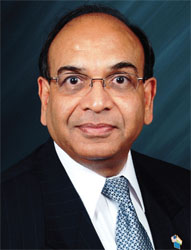
    SADDLE BROOK, NJ (TIP): New York Life Agent Mahendra Parekh from the New Jersey General Office was recently recognized for assisting the greatest number of policyholders with exceptional life insurance coverage in the New Jersey/New York area. Mahendra was among nearly four hundred Agents whose dedication to serving diverse communities was recognized during a meeting at New York Life’s headquarters in New York City.

    “We applaud Mahendra Parekh for this achievement and dedication to helping families protect their financial futures, especially in the “Asian Indian community” said John T. Baier, Managing Partner of New York Life’s New Jersey General Office. “Life insurance provides beneficiaries the chance to move forward with a degree of financial security otherwise impossible – and that’s making a real difference across the country.”

    Last year, New York Life paid billions to beneficiaries and Mahendra was part of that effort, which helped families maintain their lifestyle and keep their future plans on track.”

  • Bhutan Revisited: Balancing Modernity With Tradition

    Bhutan Revisited: Balancing Modernity With Tradition

    Like a giant Brahminy kite swooping down on its prey, Drukair’s Airbus, plumed in the national colours of orange and yellow, veered sharply to the left over the Himalayas to head for an unexpected v-shaped opening in the mountains. To the collective gasps of its passengers – who had barely recovered from the excitement of flying alongside the world’s mountain peaks, including Mount Everest, Kanchenjunga, Jumolhari, Dhaulagiri and Makalu among others – it emerged through the gap to present a vista that was both panoramic and breathtaking.

    A long strip of asphalt beckoned below in a welcoming carpet at the quaint Paro airport, the gateway to the mystical kingdom of Bhutan. It was flanked on either side by verdant slopes of cypress, pine and oak, dotted in the foothills by pretty traditional cottages and chhordens (Buddhist stupas), with their fluttering white flags, and the sparkling chu (river) that gives company a good way during the one-hour journey from Paro to capital Thimphu.

    Welcome to the country often described as “the last Shangri La on earth”, that Lonely Planet calls one of the world’s most enigmatic and intriguing nations. “Felicitations to the Royal Couple on their Wedding”, greeted a giant billboard with a coloured photo of HRH Jigme Kesar Namgyel Wangchuk, the fifth king of Bhutan, and his wife Gyaltusuen Jetsun Pema Wangchuk, as one set foot in a land whose benevolent rulers have chosen to measure their people’s well being through the unique concept of Gross National Happiness (GNH) rather than the universal metric of Gross National Product (GNP).

    Though the couple are observing their first wedding anniversary this month, the kingdom – it now calls itself a democratic constitutional monarchy – is still to get over the international attention it got when the world media came to cover the royal wedding last Oct 13.

    Immigration is a breeze (Indians require no visa but on the whole tourism has to be of high-value – other foreigners have to pay $200 each and travel in groups – ecologically friendly and cultural acceptable) and soon one is settled on the road to Thimphu in one of the Maruti Suzukis or Hyundai Santros that seem to predominate the 66,000 odd private vehicle population of the country.

    Although the snaking road to Thimphu is full of hairpin bends, no one honks because, as our driver put it sagely, the mountain gods “would feel disturbed”. Thimphu has changed since the time I was last here two decades ago. The city – which resembles an Indian hill town – of about 50,000 people is much more crowded, has many more markets, hotels and restaurants, and there is new construction everywhere, although everyone has to adhere to traditional Bhutanese architectural norms – white-washed rectangular buildings with sloping, crested roofs and gilded windows and all carrying the local icons of dragon and lotus.

    There is also the ubiquitous phallic symbol dangling from the eaves of Bhutanese homes to ward off malevolent spirits. In the words of a Bhutanese writer, “phallic rituals appear everywhere in our daily lives, marking events that range from the mundane to the momentous.

    “The birth of a calf, for instance, the purchase of a new truck, or the augury of a brand new home all merit a nod to the preeminent phallus.” Bhutan is a deeply spiritual nation of nearly 700,000 people whose history stretches back to the origins of Buddhism and who have developed a unique identity, derived largely from a religious and cultural heritage, designed for a harmonious evolution of man with nature.

    Such is the Bhutanese obsession with retaining their pristine lifestyle that the biggest media debate a few months ago was about the installation of the first traffic light at the busiest downtown crossing. Ultimately, the traditionalists, backed by the king, prevailed and the lights were dismantled. Today, a policeman directs traffic under a crafted canopy, traffic is orderly and noncacophonous and Bhutan, the land of the thunder dragon, continues with its delicate balance between tradition and modernity.

  • The NRIs: A Life of Dilemma

    The NRIs: A Life of Dilemma

    Ihave been living abroad for almost half of my 24 years of existence. Being an NRI for a substantial amount of time, I know the kind of lifestyle’s that most of them lead.Well, to start with, they are just a bunch of normal people who live abroad (not necessarily “developed” in the holistic sense).They can be split broadly into two distinct categories: The Never Return to India and The Now Return to India.

    The Never Return is a unique breed of people. Their uniqueness lies in the fact that they think they are the most fortunate people in this world. For them India is a third world country which is confined to those once-in-afew- years visits for the sake of completing the formality of seeing their loved ones. For them India is a chaotic, unhygienic and polluted place where they can’t live for a second without Bisleri water and where the sound of honking is noise pollution. Having said this, they don’t take the Indianness out of them because it will make them look out of sync with their identity – with their colonial masters – once they go back to their “holy” land. As such, anything to do with Indian “culture” needs to be imbibed – oops culture which suits their convenience, not culture in its purest form.

    Essentially, for this bunch of people being Indian is an opportunistic tool to sustain and increase their economic and social status in the land of the colonial masters. Now, let’s come to the Now Return category. This constitutes a considerable proportion of people. They are actually in love with their homeland so much that they want to come back as soon as possible (or that’s what they say!!) They enroll their kids in Indian international schools so that they are in line with the Indian schooling system. They make sure that the kids learn Carnatic music, dance, cricket, etc.

    For this bunch of guys, the Indianness factor imbibed within their families is not a formality but something that they yearn for immensely. Stuck in the vicious cycle of money and social pressures, they are not able to break away from the social barriers to return back home. As such, they look for ways to imbibe these qualities within their kin and tell people back home that their kids are more culturally inclined than any Indian kid could be.While in some cases this might be true, in most of the cases these are statements to satisfy the self from the guilt of not being able to return to their roots. So what is the big deal? The big deal is that despite their vast difference in approach to living they share some common, pertinent issues.

    One among the many issues is excessive academic expectations confronting the children – courtesy their NRI parents.Whether it is getting into Harvard or being the top in the school, there is no dearth of obsessive competition. The poor second generation kid is subject to immense pressure and his/her talents is more or less confined to the narrow path of engineering and not other streams of study. Not only does this reduce the appetite for the children, it makes their options and mindset for the future narrow. It is more of the NRI parent imposing what “they” want to be rather than what the “children” want to be. The main issue is the massive expectation they have from their children and therein lies the crux of the next issue confronting the NRIs. The default thinking in most of the parents’ mindset is that since they have invested immensely in inculcating the “Indianness” in them, the children would in turn be the “goody goody” souls in the decisions they make in their adult life. While it is fair enough to argue that the Indianness inculcated would make the children more in sync with the Indian lifestyle, the fact of the matter is they are growing up in a completely different country.

    In today’s world, the social thinking of the younger generation is made up by the attitudes of their friends around them and not by the “default” tutorial classes of Indian culture. Of course, there are exceptions but they are just exceptions. For example, there is no point in the NRI parent living in a country for 20 years and then expecting the children to grow up the way “they want” and marry the person whom they think is good enough. Expectations such as marital affairs are a crucial part of the illusion that is confronting the NRIs.

    It is very crucial that they come to terms with the reality and set their priorities straight in life. One needs to set their priorities and take a call on such issues. If they feel their culture and their way of thinking needs to be followed, then they should pack off and head back home. In an era of blossoming growth back home in India, heading back home is an economically practical solution and if one throws away the obsession with the foreign social “status”, I do not see any hindrance in coming back. You cannot expect to have the cake and the cherry, can you? If one is interested in staying abroad, then one should be prepared and be ready for the consequences (irrespective of its merit) with regards to the choice made by their children.

    While it is a duty for the children to keep the family in confidence on such issues, the realityof life is that a majority of the younger generation rarely looks beyond the self while taking such decisions. Essentially, the crux of the issue confronting all NRIs is the weight of expectation one thrusts on the younger generation and the illusion with which they subject themselves oblivious of the practical consequences of the choices that they have made in their lives. Whether one is in the Never Return or Now Return category, the NRIs need to confront issues head on rather than live in a illusion of their own!

  • Charismatic, Tough Leader Chavez Did Much, Had Many Detractors

    Charismatic, Tough Leader Chavez Did Much, Had Many Detractors

    SON of schoolteacher parents, Hugo Chavez was the man who became the President of Venezuela for a record four terms. His reforms had a major impact on the lives of the poor of his nation, although his socialistic ideals did nothing to endear him to the capitalists. His criticism of the US administration earned him the wrath of the most powerful nation in the world, and brought him acclaim from many in developing countries.

    It was a failed military coup that brought Chavez into the limelight, even though he got thrown into prison for his efforts. However, upon his release, he successfully donned a political avatar and challenged the political elite of the oil-rich nation. He won the elections and as President used oil as a weapon to build bridges abroad, especially with Cuba, the land of his mentor, Fidel Castro.

    His television and radio shows gave him a platform with the help of which he remained in touch with the common people. As often happens with strong leaders, Chavez leaves behind a mixed legacy. He has left his mark on Venezuelan society. He could not eradicate poverty as much as he wanted to, but he spent much on education and health sectors, thereby improving the lot of most sections of society. However, infrastructure needs more focus, as does industry. He also came in for criticism for trying to control the media and interfere in judicial processes.

    There is no denying the improvement in the overall lifestyle of common people during his tenure. Even as Venezuela mourns the death of its charismatic leader, the challenge before Nicolas Maduro, his handpicked successor, would be to tap into the undeniable public adoration of his processor while trying to improve the law and order situation and the rise in inflation which is affecting common people in Venezuela. Hugo Chavez has ensured that his presence will loom large over his people long after his demise

  • Nepalese Ex-Prince Suffers Heart Attack In Thailand

    Nepalese Ex-Prince Suffers Heart Attack In Thailand

    BANGKOK (TIP): Former Nepalese crown prince Paras Shah is inintensive care in Thailand after suffering a heart attack, the Nepaleseembassy in Bangkok said Wednesday.Shah, 42, who had been living in Thailand, was admitted to hospitallate Tuesday, acting Ambassador Dornath Aryal said.”Doctors said his condition is improving and he needs a fullexamination,” he said.

    Bangkok’s Samitivej Hospital confirmed thatShah had been admitted but declined to discuss his condition.Shah, who as crown prince was unpopular for his playboy lifestyle,was arrested for cannabis possession on the Thai resort island ofPhuket in October. He was detained again in December for smashingproperty at a luxury apartment in Bangkok. On both occasions hedenied the charges and was released on bail.

  • Vijay Mallya’s last stand: Selling  his crown jewel United Spirits

    Vijay Mallya’s last stand: Selling his crown jewel United Spirits

    BANGALORE/MUMBAI (TIP): “I feel sorry for him” or “he has my sympathies” are not the phrases you would ordinarily associate with as flamboyant a person as Vijay Mallya. But, indeed, they cropped up often when talking to a large number of people who have known him personally and professionally for this story.

    Sympathy that less than two weeks after publicly, almost defiantly, proclaiming that he would not sell family silver to fund his grounded airline Kingfisher, he had to do precisely that. A sense of sorrow for a man who has been felled by hubris. Or, as an associate memorably put it, through “nasha.”

    Mallya was always a high-stakes business operator. He built the liquor and beer businesses he inherited from his father, the late Vittal Mallya, at the young age of 28 in 1983, not only into dominant market players in India but in the case of the former into the world’s largest drinks company by volume. Much of the growth was fuelled by debt. His heavily leveraged balance sheets would have felled a lesser mortal but Mallya sailed through with minor hiccups though ‘Is Mallya broke?’ has been a constant refrain among the chatterati and corporate chieftains for two decades now. Alas, a similar tactic did not work in the airline that he launched with much fanfare on his son Sidhartha’s 18th birthday in May 2005.

    Standing personal guarantee to the debt raised by the airline and pledging much of his stake in other businesses to keep the airline afloat have today pushed him to sell the crown jewel in his portfolio: the liquor company, United Spirits, which has 50% of the Indian market and was the source of Mallya’s clout: economic and political, and his flamboyant lifestyle.

    “Vijay has an emotional and rational side to him. But somewhere in recent times he lost the sense of proportion allowing the Kingfisher crisis to spiral out of hand. He’s extremely passionate about the businesses he built, not that he loved the inherited ones less. That’s what made him stick out for a company (KFA) which was beyond any reasonable sense of business,” says Ravi Jain, a joint venture partner and former managing director of Mallya’s brewing unit, who used to drive Mallya and his ex-wife Sameera around Kolkata in his old fiat car.

    Ramesh Vangal, who was outbid by Mallya for Shaw Wallace, believes, “This is the end of an era. He built an enormous business with great potential. Allowing it to fall into the hands of an MNC is a little of a regret. But it’s the practical thing to do.” Vangal, the former Pepsi senior executive who has interests in the Indian liquor industry, points out, “It’s Karma actually. Vijay has seen the best of times. Now he’s facing the most challenging. It’s part of the circle of which we are all in. We learn as we go around.”

    Nobody doubts Mallya’s intelligence or his ability to build a business or a brand. Especially the latter. Even the ill-starred KFA is a testimony to his brand-building prowess. “He had this terrific grasp of any situation and could talk straight however difficult it was,” UB Bhat, a senior executive who worked with him in the 1980s, reminisces how the young Mallya flew into Bangalore from the United States 48 hours after his father’s sudden demise. “He was hardly 28 then, and there were whispers that his father’s close aides H P Bhagat or Srinivasa Rao could be considered for the role of chairman. He recovered swiftly to take charge of the affairs and went to create a strong corporate identity for the diversified businesses ( Herbertsons, Phipson, Kissan Foods, etc) his father had built. In the process, he brought several chieftains under his direct control just like what Ratan Tata managed within Tata Group,” says Bhat, who was involved in organizing Mallya’s first marriage to Sameera (formerly Sakina), sometimes doubling up as a priest, at a temple in Goa.

    Jain argues, “He would have done this (Diageo) deal in the ordinary course, but now it’s unfortunately seen as him being forced to sell the family business. The liquor market is changing and his own operations have become too big for him to manage alone. One can philosophically argue this is the beginning of retirement, and why not? He was at the top of his energy for thirty years.”

    Mallya’s often described by those close to him as proverbially a man with nine lives. He’s been in umpteen scrapes before and come out of it. While the general consensus is that his luck finally ran out, there are others who think by doing this deal with Diageo he’s actually doing a smart thing, getting the 10th life perhaps.

    K P Balasubramaniam, former chairman of Mysore Breweries (now SAB-Miller India) and an old Mallya friend from Bangalore believes, “It’s a smart thing he’s done. Diageo is a well run, profitable company. His 15% stake will appreciate in value and he will get good dividends. Same is the case with the beer business (where Heineken is the equal owner).”

    A sentiment echoed by Kishore Chhabria with whom he settled long-standing disputes recently. Said he, “The good thing about him is that he continues to be lucky. He would have been gone without this deal, but he has pulled it off. A lot of people might say bechara mar gaya but watch out. His 15% stake will be worth far more in three years than 29% he had. This was a pragmatic deal to do. Good for him and good for the industry.” Chhabria, the chairman of Allied Blenders & Distillers, the largest Indian-owned spirits company now, added, “I am sure he will enjoy playing the investor role from now on. People move on like the Singh brothers of Ranbaxy. There’s no need to be emotional.”
    And emotional Mallya has never been about business. He’s bought and sold businesses whenever he’s seen value. He sold Kissan to Hindustan Lever, after dallying with Nestle a bit. Berger Paintswas sold for a huge profit. He offloaded the brilliant portfolio he inherited from his dad – large stakes in Cabdury and Hoechst – saying there were not core to his business.

    Nobody also disputes Mallya’s generosity, large heartedness to his family and friends. Says a Bangalore corporate chieftain, “He’s a very nice guy. Very generous. Never malicious. Unfortunately, a lot of people misuse that. There are lots of people who take advantage of his hospitality, fly in his planes, attend his parties and then snigger behind his back.” His flamboyant lifestyle – close associates say his personal life was never as colourful as made out by the media – the yachts, the planes, the cars, the horses, the girls, the islands, FI and IPL teams, multiple homes – in the end damned him in the public eye.

    But all agree that the very expensive lifestyle – an apocryphal story has it that a big, global PE which did a due diligence when it was looking to invest in Kingfisher put the cost of the lifestyle at $60 million annually – would have to be piped down. Perhaps Mallya was readying for such a life with his recent tweets which suggested happiness at his loss of billionaire status.

  • Uttarakhand the land of clear lakes

    Uttarakhand the land of clear lakes

    Uttarakhand – the land of gods, the home of Himalayas and truly a paradise on earth, allures everyone from everywhere. The fresh air, the pure water, the chilling snow, the adverting mountains, the scenic beauty, the small villages, the simpler people and a tougher lifestyle is Traditional Hindu lore describes Uttarakhand as “Devbhumi” (Land of God), and they hold many important pilgrimage places. Just as importantly, the trouble and effort that it took the faithful to reach these places was seen as a means to help cleanse one’s soul, just as beating wet clothes against a rock knocked out all the dirt. Uttarakhand is paradise for different types of adventure activities. Like River Rafting, Trekking, Skiing, Camping, Rock Climbing, Rappelling, River Crossing. Mountaineering, Paragliding and Hot Ballooning make Uttarakhand one of the most attractive destinations for adventure sports not only in the India but the world. Uttarakhand is located in the northern India and is a place that has something to offer for every visitor visiting the place. It is a beautiful place that is also called the land of lakes and waterfalls. It is a place where one can find some of the most beautiful landscapes, mountains, etc. There are a number of beautiful and picturesque lakes in Uttarakhand. Given below is a list of some famous lakes in Uttarakhand.

    The following are the important lakes of Uttarakhand:

    Bheemtal

    Bheemtal Lake is named after the second Pandava brother Bhima in the Mahabharata who was known for his prodigious strength. Bhimtal is a famous lake that is located 25 kms. from Nainital. It is much clearer and quieter than Nainital. Located at 1,200 meters above sea level, Bhimtal gets slightly warmer during the summer months but it still makes for a great holiday destination where one can relax the mind and body. Bhimtal is one of the largest lakes in the whole of Uttarakhand.

    Devaria tal

    Devaria Tal is situated near Ukhimath in Uttarakhand. It is considered a very holy place. It is spread over 700 metres and is surrounded by the beautiful Chaukhamba peak. With forests all around the lake, it is an ideal place for bird watchers or for those who love angling. One can also reach Devaria Tal after a trek of about 8 kms. but, do keep in mind that this is a very steep trek that can really tire you out.

    Dodi tal

    Dodi Tal is a beautiful lake located in Uttarakhand and is situated very close to the Uttarkashi district. Dodi Tal gets its name from a particular kind of trout (freshwater fish) that is found here, by the name of Dodi. The water of this lake is said to be quite refreshing for the skin. Dodi Tal Lake is the source of the River Asi Ganga that merges with the River Bhagirathi near Gangotri. For a beautiful view of the Bandarpoonch Peak, located at 6,387 meters above sea level, one could climb up a little from the lake. A track little further leads one to the Hanumanchatti located at 2,400 meters.

    Dhalipur lake

    A water sports resort has been developed at the Asan Barrage by Garhwal Mandal Vikas Nigam in the year 1994. Asan Barrage was created in 1967 and it is popularly known as Dhalipur Lake. Situated 43 kms from Dehradun on Chandigarh-Shimla highway, the resort offers facilities like water skiing, boating, rowing, kayaking, canoeing etc. Wildlife lovers have an added bonus during the winter season as migratory birds can be seen in the vicinity

    Govind ghat

    This is 2 kms before Pandukesar and is the gateway for the Hem Kund Lake and the internationally well-known Valley of the Flowers. The Hem Kund Saheb is 20 kms by foot from here. There we find a Sikh Temple and some hotels. The Valley of the Flowers is a 17 km walk.

    Hemkund
    Hemkund is approached via Sutol or Roopkund after crossing Shila Saturday glacier. It is a small lake encompassing a view of the Trishul and Nanda Ghunti Base camps.

    Kashni Tal

    Madmaheshwar is a beautiful temple in the Garhwal Himalayas, in a valley between Badrinath and Kedarnath. A river called Madmaheshwar Ganga originates in a deep ravine below.

    Kagbhushandi Lake

    On the Valley of Flowers Road, a 20 km trek from a village called Bhyundar is a vast lake, the beauty of which is amazing. Since getting here is very difficult, very few tourists are found here.

    Kedar Tal

    Kedar Tal is situated at an altitude of 4,425 meters above sea level and about 18 kms. from Gangotri. The lake is so clear that the reflections of the Thalaiyasagar peaks are clearly visible in the water. But if you want to trek up the near-by places, make sure that you are well prepared because it can be a pretty tiring one. Also, make sure you take a tour guide with you to Kedar Tal since the route can be a little tough. .

    Maneri

    The Maneri-Bhali project, which supplies 93 MW of power to Uttarakhand, is located on the left bank of Bhagirathi, close to Uttarkashi. Roughly 13 km upstream of Uttarkashi is the village of Maneri. Here, a lake of an unbelievably beautiful and clear colour reflecting the surrounding conifers has been formed by damming the Bhagirathi, which is fast becoming a popular tourist attraction. There is camping site here on the banks of the river.

    Naukuchia tal

    Naukuchia Tal, literally, Nine-Cornered Lake, is 26 km (16 mi) from Nainital and 4 km from Bhimtal at an altitude of 1,220 m (4,003 ft). The lake is almost 1 km (1 mi) long, 0.5 km (0.3 mi) wide and approximately 40 m (131 ft) deep. It is the deepest of the lakes in the greater Nainital area. According to legend, if one takes in all nine corners in one glimpse, one can disappear in a cloud of smoke.

    Naini Lake

    Naini Lake is a natural fresh water vast lake made up of tectonic rocks. This lake is placed amongst the serene seven mountains that border this moribund water pool and the extravagant peaks, which seems to touch the sky. Many visitors jam here to adore the magnificent beauty that elongates over 3.5km. According to the mythological significance the left of Sati had fallen over here, hence the name naini (eye) derived for the lake. There is a temple of Naina Devi besides this pristine lake, which is said to be the location where her eye had fallen. This spot is known to be one of the 51 Shakti Peeths, which visitors from worldwide throng.

  • Nirmal Lifestyle Becomes First Indian Company to Sponsor U.S. Open

    Nirmal Lifestyle Becomes First Indian Company to Sponsor U.S. Open

    Major Indian Developer Partners With US Open to Promote Healthier Lifestyle

    NEW YORK (TIP): Nirmal Lifestyle, the leading developer of real estate in India, has become the first Indian company chosen to sponsor the US Open. the company has furthered its commitment to healthier living by introducing the first sports lifestyle apartment complex in affiliation with the US Open, the “Nirmal – US Open Apartments”.
    In becoming the first Indian company sponsoring the 2012 US Open, Nirmal Lifestyle has once more shown its commitment to health and physical fitness. None was more evident than the development of a lifestyle living complex dedicated to the US Open philosophy of showcasing the best of the best. Nirmal – US Open Apartments in Mumbai offers extensive fitness facilities including a hi-tech gymnasium, Olympic-sized tennis and basketball courts, jogging and cycling tracks and swimming pools. The complex is designed with the most state of the art amenities to ensure a healthy lifestyle.

    At a press conference attended by many prominent officials, Mr. Dharmesh Jain, Chairman and Managing Director for Nirmal, said, “We are proud to be the first Indian company sponsoring the US Open. Nirmal has always been committed to promoting healthier living through innovative design. Working with the US Open organization in developing the US Open Apartments in Mumbai reinforces Nirmal’s commitment in supporting a more active life for young and old. We look forward to continuing our partnership with the US Open in the years to come.”

    The US Open, held at the USTA National Tennis Center in Flushing, New York runs through September 9, 2012. For more information on Nirmal Lifestyle and the US Open Apartments, visit www.nirmallifestyle.com.

    About Nirmal Lifestyle

    Nirmal Lifestyle is a leading real estate company in India based in Mumbai, where it has been instrumental in developing Mulund as a preferred suburb of the city through its integrated development plan including developing retail spaces, residential apartments, office complexes and luxury hotels. The company has an exclusive alliance with US Open (USTA) and Discovery to bring world class sporting facilities of international standards to India.

    For More Information Contact: Walter Ocner, MediaMorphosis O: (718) 474-3700 C: (347) 475-7008
    walter@mediamorphosisinc.com

    (Press Release)