Tag: Malaysia

  • 6 MONTHS AFTER MH370 WENT MISSING, KIN PRAY FOR FLYERS

    6 MONTHS AFTER MH370 WENT MISSING, KIN PRAY FOR FLYERS

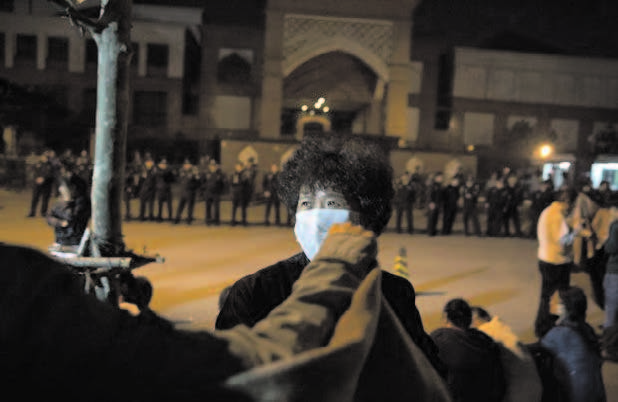
    BEIJING (TIP): Grieving family members of passengers aboard MH370 held an emotional gathering in Beijing on Sept 10, six months after the plane disappeared, demanding answers and accusing Chinese authorities of turning against them. Chinese passengers account for about two-thirds of the 239 people aboard the Boeing 777, which vanished on March 8 en route from Kuala Lumpur to China’s capital, with dozens of their relatives reportedly beaten and arrested in recent months.

    About 30 family members convened on Beijing’s Lama Temple, a popular Tibetan Buddhist site, to vent their frustration and pray for the missing on a day that marks both the six-month anniversary of the flight’s disappearance as well as China’s traditional Mid-Autumn Festival, a day for families to reunite. “In China, today is Family Reunion Festival, Mid-Autumn Festival,” said a 55-year-old woman Zhang, and whose daughter was aboard the flight. Australia has been spearheading the hunt for the plane, which is believed to have crashed in the southern Indian Ocean. But the massive air, sea and underwater search has till now failed to find any wreckage.

  • MH17 black boxes to be sent to UK lab: Malaysia

    MH17 black boxes to be sent to UK lab: Malaysia

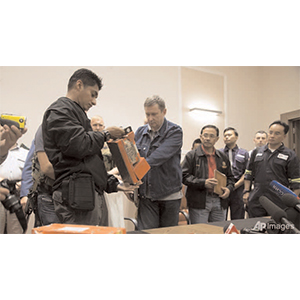
    KUALA LUMPUR (TIP): The black boxes recovered from the crash of Malaysia Airlines flight MH17 in eastern Ukraine will be sent to British aviation investigators for analysis, Malaysia has said. The decision by the Dutch-led team probing the disaster came after pro-Russian rebels controlling the crash site handed the boxes over to Malaysian officials on July 23, following an intense international outcry.

    Transport minister Liow Tiong Lai said in a statement late Tuesday that it was normal procedure to send the boxes, which record cockpit activity and flight data, to the nearest laboratory approved by the United Nations aviation agency, the International Civil Aviation Organisation (ICAO). “The international investigation team, led by the Netherlands, has decided to pass the black boxes to the UK Air Accidents Investigation Branch for forensic analysis,” he said.

    The boxes will be flown to Farnborough, England, accompanied by Malaysian officials and other members of the investigation team, Liow added. 298 people, including 193 from the Netherlands, aboard MH17 were killed when it went down over crisis-hit eastern Ukraine on Thursday. The jet is believed to have been shot by a surface-to-air missile. had announced late Monday a breakthrough deal with separatists from the self-proclaimed Donetsk People’s Republic, following direct negotiations.

    Besides the handover of the black boxes, the agreement also says that bodies from the crash will be sent to the Netherlands for analysis before being returned home, and provides for a safe route to the site controlled by the insurgents. The pro-Russia rebels currently stand accused by the US and some other nations of bringing down the aircraft, allegedly with a missile supplied by Moscow.

  • CWG 2014: Lifters Sanjita, Sukhen bag gold medals for India on Day 1

    CWG 2014: Lifters Sanjita, Sukhen bag gold medals for India on Day 1

    GLASGOW (TIP): India ran away with opening day honours in the weightlifting competition of the 20th Commonwealth Games with Sukhen Dey and K Sanjita Chanu winning the gold medal in their respective events. The Indian team bagged four out of six medals on offer on Day one of the competition on Thursday.

    Sanjita and Saikhom Mirabai Chanu opened India’s campaign on a flying note by winning a gold and silver respectively in women’s 48kg before Dey and Ganesh Mali bagged with first and third position in men’s 56kg to cap a remarkable day for the Indians at the Clyde Auditorium.

    The 25-year-old Dey lifted a total of 248kg (109+139) after trailing at the halfway snatch stage, but came back strongly in clean and jerk to win the gold. He had also won a silver in the 2010 Delhi CWG besides bagging a gold in the 2013 Commonwealth Championships in November last year. 21-year-old Mali was leading after snatch but slipped behind in clean and jerk to settle for bronze with a total lift of 244kg (111+133).

    Malaysia’s Mohd Pisol Zulheimi was at fourth after snatch but recovered in fine fashion to bag the silver with a total lift of 245kg (108+137). Zulheimi and another Malaysian, Mohd Faizal Baharom, gave a tough competition to Dey and Mali from the beginning but the Indians had the support in their side with a seizable crowd rooting for them with the tricolour in their hands. Baharom set the ball rolling with a lift of 110kg in snatch and Dey failed to clear 111kg after lifting 109kg in his earlier attempt.

    Mali, however, did better than his compatriot to lift 111kg and occupy the top slot with Baharom on second with 110kg and Dey on 109kg at third after snatch event. Mali’s effort of 133kg in his second attempt in clean and jerk was adjudged no-lift by the jury, but he cleared the weight in his next attempt. Dey jumped to the top spot with a lift of 136kg but Zulmeihi came into the mix with a clean and jerk of 136kg to jump to joint second.

    He then lifted 137kg to equal Dey at the top, leaving Mali at third. Dey then went ahead by lifting 138kg and pumped in the air with delight after totalling 248kg. He tried 146kg in an attempt to break the Commonwealth Games record in clean and jerk but failed. Nonetheless, he ran away with the title. Dey said his gold medal win was the best achievement of his career. “I have won a bronze in junior World Championships, then a silver in 2010 CWG before today’s gold. I lost out on a gold in Delhi because of a technical mistake. I would say today’s gold is the best of my career.

    Now my target is to do well in the Asian Games,” Dey said. “I would like to dedicate my win to the nation, the federation officials and my coaches. The exposure we got before the Games has been of immense help.We have had a training camp in Birmingham since June and that has helped a lot,” he said. He conceded that he was “worried after missing two snatch attempts”. Dey, who is now a subedar naik at the Indian Air Force in Chandigarh, hoped that he would get promotion after this feat.

    “I hope to get promoted after my gold medal,” he said. Mali, on the other hand, said that the no-lift decision during his clean and jerk had led to a bit of distraction. “I cannot do anything about that decision but the no-lift had distracted a bit. Had it not been that way I would have won the silver,” he rued. Mali, with the Indian Air Force in Chandigarh, also hoped that his performance would get him a promotion. “I am in the Indian Air Force and winning the medal means I will be getting a promotion. The medal has really lifted my heart,” he said.

    On the crowd at the Clyde Auditorium, he said, “I have been really impressed with the crowd, but when they are cheering while we are lifting it can be off-putting.” On training in a small village with his brother Chandrakant Mali, who will take part in the 94kg category, he said, “My brother and I have had only one barbell between us for six years. It’ll be a big deal taking home the bronze medal.

  • PM Modi’s Flight Among Planes Rerouted After Malaysian Airlines Crash

    PM Modi’s Flight Among Planes Rerouted After Malaysian Airlines Crash

    New Delhi (TIP): Prime Minister Narendra Modi’s flight was among the many planes that were re-routed after the Malaysian Airlines flight MH-17 was shot down in Ukraine on July 17. Modi, who returned last night after his trip to Brazil for a BRICS summit, tweeted today, “Our thoughts & prayers are with the families of those who lost their lives on board Flight MH17. We stand with them in this hour of grief.

    ” Reports say the PM’s Air India-One could have been in the same corridor as MH-17 perhaps an hour later. After the crash, it would have been rerouted over Black Sea. Sources say there is a notice to airmen barring planes from flying below 30,000 feet in Ukraine, which has seen fighting between its troops and pro-Russian rebels for the past few months. The route is regularly used by Indian aircraft.

    There are other routes but the choice of Ukraine depends on weather conditions. Most planes avoid the other flight path, which is over the Simferopol FIR, because both Russia and Ukraine lay claim over the area and more than one air traffic control in the same airspace could have serious safety implications. Contradictory directions were recently issued by Russia and Ukraine.

    The UN aviation agency announced that the right to provide air navigation services in the region belonged exclusively to Ukraine, something Russia has contested since it now controls the Crimean region of Ukraine. The Indian aviation regulator has now directed Air India and Jet Airways – the only two airlines to fly to Europe and America – to avoid eastern Ukraine.

  • Of Bullet Trains and Boundary Disputes

    Of Bullet Trains and Boundary Disputes

    “While economic cooperation with China is mutually beneficial, India must review its approach to border issues with the Asian giant. It should insist that the dispute be resolved in accordance with 2005 Guiding Principles”, says the author.

    Addressing an election rally in Arunachal Pradesh on February 22, Mr Narendra Modi called on China to shed its “mindset of expansionism”. Mr Modi averred: “Arunachal Pradesh is an integral part of India and will remain so. No power can snatch it from us. I swear in the name of this soil that I would never allow this State to disappear, breakdown, or bow down. China should shed its expansionist mindset and forge bilateral ties with India for peace, progress and prosperity of both nations”. This message was reinforced with the appointment of Mr Kiren Rijiju from Arunachal Pradesh as Minister of State for Home Affairs.

    China made the predictable noises, with Prime Minister Li Keqiang congratulating Mr Modi on his appointment and President Xi Jinping sending his Foreign Minister Wang Yi to meet Mr Modi, with a personal message of greetings. Did these gestures signal any substantive change in China’s policies, either on its outrageous territorial claims on Arunachal Pradesh, or the continuing intrusion of its troops across the Line of Actual Control? The answer is clearly in the negative. Just on the eve of Vice President Hamid Ansari’s visit to the Middle Kingdom, China published yet another official map depicting the entire State of Arunachal Pradesh as its territory.

    While the UPA Government had claimed that new “mechanisms” had been agreed upon to curb cross border intrusions, the intrusions continued. Given these developments the NDA Government should carefully consider reviewing and reorienting existing policies on China. Any talk of more robust military responses to Chinese adventurism is illadvised. The NDA Government has unfortunately inherited a situation where India’s armed forces are inadequately equipped and lacking in numbers. It would take a minimum of five years before the armed forces are adequately equipped and manned, to be able to present a more selfconfident response to Chinese adventurism.

    New Delhi should, however, now reorient its diplomacy, by taking note of the fact that Chinese assertiveness and aggression is directed not only against India, but towards all its maritime neighbors, with unilateral declarations on delineation of its maritime boundaries. Just as China’s claims on Arunachal Pradesh have no legal or historical basis, its claims on its boundaries with all its maritime neighbors, are in violation of the UN Convention on the Laws of the Seas. China has used force to seize disputed Islands claimed by the Philippines and Vietnam and to explore for offshore oil and gas.

    Tensions with Japan are escalating, because of China’s claims to the Senkaku Islands, controlled by Japan since 1894. China’s unilateral declaration of an Air Defence Identification Zone beyond its borders has been rejected by South Korea and Japan. Its territorial claims on its maritime borders face challenges from South Korea, Taiwan, Japan, Vietnam, Philippines, Brunei, Malaysia and Indonesia. Yet another major source of concern has been the Chinese policy of strategic containment of India, primarily based on enhancing Pakistan’s nuclear weapons, missile, maritime, air power and army capabilities.

    This is an issue which India inexplicably and rarely, if ever, highlights either bilaterally, or internationally. This policy of strategic containment through Pakistan has been reinforced by China’s readiness to provide weapons and liberal economic assistance to all of India’s neighbors in South Asia. Worse still, bending to Chinese pressures, India has periodically avoided proposed joint military exercises with Japan and the US. A measured response to Chinese containment would be for India to step up military cooperation with Vietnam, including supply of Brahmos cruise missiles which can enable Vietnam to counter Chinese maritime bullying.

    This would be an appropriate answer to China’s unrestrained military relationship with Pakistan. Given the fact that Russia is a major arms supplier to Vietnam, President Vladimir Putin’s concurrence can surely be obtained for such missile supplies to Vietnam. Russia has, after all, given its concurrence to China’s supply of Russian designed advanced RD 93 fighter aircraft engines to Pakistan. Will growing trade relations with China soften its approach to border claims, or its strategic containment of India, as some in India appear to believe? Bilateral trade with China today amounts to around $66 billion, with India facing a growing trade deficit, currently of around $29 billion.

    China’s annual bilateral trade with Japan amounts to $314 billion and that with South Korea $235 billion. China is also the largest trade and investment partner of Vietnam. Both Japan and South Korea also have substantial investment ties with China. Despite this, China has remained unyielding on its territorial claims on these countries, not hesitated to use force and threatened to cut its investment ties with Vietnam, after recent tensions. To believe that China will embark on a path of reason on border issues, because it sells us a few bullet trains and invests in infrastructure in India would be, to put it mildly, naïve.

    On the contrary, India needs to ensure that unrestricted, duty-free access of Chinese products, in areas like energy and electronics, does not adversely affect indigenous development and production, or undermine energy, communications and cyber security. While dialogue, economic cooperation and interaction with China in forums like the BRICS and the G20 are mutually beneficial, there is need to review our approach to border issues with China. It is evident that China has no intention of exchanging maps specifying its definition of the Line of Actual Control, either in Ladakh, or Arunachal Pradesh. India should now insist that the border issue has to be resolved in accordance with the Guiding Principles agreed to in 2005.

    The boundary has to be along “well defined and easily identifiable natural geographic features”. Secondly, any border settlement should “safeguard due interests of their settled populations in the border areas”. Proceeding according to these Guiding Principles enables India to reinforce its claims that the border lies along the Karakoram Range in Ladakh and the McMahon Line in Arunachal Pradesh. Given China’s agreement to safeguard the “interests of settled populations,” its claims to Arunachal Pradesh are untenable.

    Moreover, with the Dalai Lama now clarifying he no longer seeks an independent Tibet, India should not hesitate to state that it hopes the Tibet issue is settled in accordance with the 17 point 1951 agreement between the Chinese authorities and the Dalai Lama. This agreement acknowledges Chinese “sovereignty” in Tibet, while respecting the freedom of religion and the “established status, functions and powers of the Dalai Lama”.

  • Malaysian passenger plane ‘shot down’ over Ukraine

    Malaysian passenger plane ‘shot down’ over Ukraine

    All 298 aboard killed, including 5 Indians

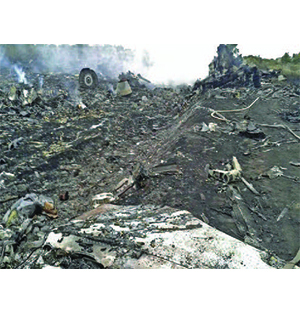
    KIEV/KUALA LUMPUR (TIP): Tragedy struck Malaysia Airlines once again, nearly four months after the mysterious disappearance of MH370 in the Indian Ocean. A Malaysia Airlines passenger plane with 298 aboard was shot down by a surface-to-air missile in Ukraine near the Russian border on July 17. All 298 people on board were killed, which included 5 Indians. The Malaysia Airlines Boeing 777 was flying from Amsterdam to Kuala Lumpur.

    “Nearly 300 persons died when a Malaysia Airlines Boeing-777 crashed in eastern Ukraine,” an advisor to the Ukrainian Interior Minister, Anton Herashchenko, said. “It was flying at an altitude of 10,000 meters. 280 passengers and 15 crew members died,” he said in a Facebook post. Witnesses from the town of Torez in the rebellion-wracked Donetsk region of Ukraine told RIA Novosti news agency that the plane wreckage and dead bodies have been found in the area.

    The plane disappeared from the radar and teams from the emergency services were trying to reach the scene, Russian media quoted an unnamed security source as saying. Malaysia Airlines said it lost contact with Flight MH17 at 14.15 GMT. Burning aircraft wreckage and bodies strewn on the ground were seen at the village of Grabovo, some 40 kms from the Russian border in an area where pro- Russian rebels are reportedly active. Malaysia Airlines confirmed on Twitter, “Malaysian Airlines has lost contact of MH17 from Amsterdam.

    The last known position of the plane was over Ukrainian airspace”. Malaysia’s Star newspaper quoting sources said the plane was “shot down” while cruising at an altitude of 30,000 feet. The plane could have been brought down by a ground-to-air missile, sources said. Ukrainian President Petro Poroshenko said: “It is not an incident, not a catastrophe, but a terrorist act… the Ukraine armed forces did not fire at any targets in the sky.”

  • Saina Nehwal pulls out of Glasgow CWG

    Saina Nehwal pulls out of Glasgow CWG

    HYDERABAD (TIP): In a major setback to Indian badminton hopes at the Glasgow Commonwealth Games, ace shuttler Saina Nehwal is learnt to have pulled out of the event. Saina, who shot to fame by winning the gold medal for India at the Delhi Games in 2010, has reportedly expressed her inability to join the team set to leave for Glasgow on Friday.

    Though Saina’s ticket has reached the city, it is reliably learnt that the shuttler will not fly to Europe. After her unexpected triumph at the Australian Open Super Series last month, Saina was a favourite to win gold in Glasgow. But the shuttler, who sustained blister injuries on both her feet, took some time to recover and was not able to practise properly.

    In fact, she did not hit the court for about a week after her return from Australia. It is also learnt that she is suffering from a knee problem. Neither Saina nor her coach Pullela Gopichand were available for comment. A source in the Badminton Association of India (BAI) told TOI that president Akhilesh Das Gupta and some members of the coaching staff are persuading her to go to Glasgow.

    However, till Thursday, their efforts had not borne fruit. “For the last three days we have been trying to convince her. If she goes even with 50% of fitness she can win a gold for us. Apart from Saina there are no big players among the Commonwealth countries. So far she has not agreed to be part of the squad.

    I don’t think she will change her mind,” the BAI official said. In 2010, Saina defeated Malaysia’s Wong Mew Choo in a nailbiting final to win the women’s singles gold. India won four medals then. Jwala Gutta and Ashwini Ponnappa clinched gold in the women’s doubles while Kashyap secured bronze in men’s singles. India had also won silver in the team event. With Saina’s likely to stay home, Indian hopes will hinge of PV Sindu and the pair of Jwala and Ashwini in the women’s section.

  • California man sentenced to 15 years for espionage

    California man sentenced to 15 years for espionage

    OAKLAND (US) (TIP): A federal judge has sentenced a California chemical engineer to 15 years in prison and fined him USD 28.3 million for a rare economicespionage conviction for selling China a secret recipe to a widely used white pigment. US District Court Judge Jeffrey White in Oakland said Liew, a naturalised US citizen, had “turned against his adopted country over greed.” A jury previously convicted the 56-yearold Liew of receiving USD 28 million from companies controlled by the Chinese government in exchange for DuPont Co’s pigment technology for making cars, paper and a long list of everyday items whiter.

    Along with the USD 28.3 million Liew was ordered to forfeit and pay to DuPont, the engineering company launched by him and his wife was fined $18.9 million. White expressed doubt yesterday that Liew would pay back much of his debt. White noted that US authorities had managed to trace USD 22 million of the $28 million received by Liew to various Singapore and Chinese companies controlled by Liew’s in-laws before losing the trail. “We’ll never get it,” White said. “It has been spirited out of the country.” Liew and his wife, Christina Liew, launched a small California company in the 1990s aimed at exploiting China’s desire to build a DuPont-like factory to manufacture the white pigment known as titanium dioxide.

    The Liews hired retired DuPont engineers and, according to the FBI, paid them thousands of dollars for sensitive company documents laying out a process to make the pigment. Two former DuPont engineers have also been convicted of economic espionage. Another engineer committed suicide in early 2012 on the day he was to sign a plea bargain acknowledging his role in the conspiracy. Except for a few months of release on bail, Liew has been in jail since his arrest in 2011. Wearing yellow jail garb and with his wife and family looking on from the gallery, Liew apologised for his actions. “There are many things I would have liked to have done differently,” Liew told the judge. “I regret my actions.” Liew was born on a farm in Malaysia to Chinese parents and went on to earn advanced degrees in chemical engineering.

  • GOPIO’s 25th Anniversary Jubilee Convention a historic success

    GOPIO’s 25th Anniversary Jubilee Convention a historic success

    PORT OF SPAIN (TIP): The Global Organization of People of Indian Origin (GOPIO International) concluded its 25th Anniversary (Jubilee) Convention 2014 in Port of Spain in Trinidad & Tobago, with a memorable and highly successful celebration from 27th May through 30th May, 2014 coinciding with the 169th anniversary of Indian Arrival Day commemoration in Trinidad & Tobago.

    The convention was a historic event in the Indian Diaspora attended by delegates from several countries where GOPIO is prominent and where persons of Indian origin reside in substantial numbers and even small numbers. Countries include: Australia, New Zealand, Fiji, Malaysia, Mauritius, Sri Lanka, India, South Africa, Netherlands and other countries of the European Union (EU), UK, Canada, USA, and the Caribbean region: Guyana, Trinidad & Tobago, Suriname, Belize, St. Vincent, Guadeloupe, Martinique, Grenada and St Lucia.

    Among the many events of the convention, some of the notable highlights include: Welcome reception at the Diplomatic Centre residence of Hon. Kamla Persad-Bissessar, Prime Minister of Trinidad & Tobago, GOPIO’s elections for new officers, all-day academic conference, special guests at cultural performances held at National Cultural of Indian Culture (NCIC), and unveiling of arrival monument marking the first arrivals of indentured Indian laborers in Trinidad.

    A significant highlight of GOPIO’s 25th Anniversary Jubilee Convention was the special welcome reception of GOPIO delegates at the Diplomatic Centre residence of the Hon Prime Minister Kamla Persad Bissessar on 28th May. The reception was hosted by Ministry of National Diversity and Social Integration with Minister Dr Roger Samuel making the initial remarks, followed by GOPIO International president Ashook Ramsaran and presentation of gifts.


    9
    GOPIO Jubilee Recognition Recipients with GOPIO officials, Indian High Commissioner G. Gupta,Trinidad & Tobago’s Minister Dr. Vasant Bharath MP and Minister Ramona Ramdial MP.

    Hon Prime Minister Kamla Persad Bissessar formally welcomed GOPIO’s delegates, recounted GOPIO’s special reception/dinner during the visit to the Kolkata Memorial on 12th January, 2012 and thanked GOPIO for holding its 25th Anniversary Jubilee Convention in Trinidad & Tobago. In attendance were several ministers and members of parliament of the Government of Trinidad & Tobago as well as the Indian High Commissioner HE Gauri Gupta. The evening included a special celebratory treat of Caribbean and Indian music with delegates joining in dancing. On 28th May, a Business-to-Business seminar featuring prominent scholars and business leaders was held at the Radisson Hotel.


    10
    Some of the Legacy Generation Residents of Trinidad & Tobago with GOPIO officials, Indian High Commissioner HE Gauri Gupta, With Trinidad & Tobago’s Min. Dr. Suruj Rambachan, Min. Ramona Ramdial, Counselors Abdool & Seepersad, Couva Regional Chairman Henry Awong. Unveiling of Indian Arrival Monument at Waterloo-by-the-Sea

    It was sponsored by Trinidad & Tobago’s Ministry of Trade & Investment. Sessions include: Investment & Trade Opportunities in Trinidad & Tobago; Investment & Trade Opportunities in St Vincent & Grenadines; Investment & Trade Opportunities in Guyana; Success Stories of Doing Business in the Caribbean; Free Enterprise, Market Economy and Business Successes; The Growth of Education and Medical Services for Bi-Lateral Trade; Media as Marketing Tool in Emerging Economies The Academic Conference segment of the convention was a full 1-day event held on 29th May at the Radisson Hotel.

    There were several sessions designed round the convention theme of “Indian Diaspora Today & Tomorrow” The chief guest at the Inaugural Session was Indian High Commissioner HE Gauri Gupta and the keynote speaker Dr Mahin Gosine, Professor of Sociology and Anthropology at SUNY, New York, USA. Prof Kumar Mahabir, Assistant Professor at University of Trinidad and Tobago, concluded the session. Other sessions with prominent and suitably qualified speakers from several countries were: Global & Regional Diaspora Investments & Economic Opportunities; The Indian Diaspora: Issues, Challenges & Opportunities; Diaspora’s Youth, Children, Gender & Inter-Generational Issues; Multi- Cultural Diversity & Inter-Ethnic Cooperation in the Indian Diaspora; Education, Science & Technology as Significant Assets in the Indian Diaspora; Health, Wellness, Lifestyle & Nutritional Factors in the Indian Diaspora; GOPIO’s 25th Anniversary Resolutions; Wrap-up & Conclusion. Elections were held by GOPIO International Council for several positions in GOPIO at the international level.

    The following officials were elected by unanimous vote: President – Ashook Ramsaran; Executive Vice President – Sunny Kulathakal; Senior Vice President – Dr. Piyush Agrawal; International Coordinator North America – Dr. Renuka Misra; and International Coordinator Caribbean, Dr. Arnold Thomas. Chairman Inder Singh was elected for another term. The Jubilee Recognition Gala was another highlight of GOPIO’s 25th Anniversary (Jubilee) Convention 201, held on 29th May, 2014 in the Grand Ballroom at the Radisson Hotel in Port of Spain. In attendance was Indian High Commissioner HE Gauri Gupta, Trinidad & Tobago’s Minister of Trade & Investment, Dr. Vasant Bharath; and Min. Ramona Ramdial, Minister in the Ministry of Environment & Water Resources. The event was emceed by prominent radio and television host Zelisa Boodoosingh.

    GOPIO’s Jubilee Recognition for outstanding achievements in selected categories were awarded to several persons “who contributed to the betterment of people of the Indian Diaspora. The Jubilee Recognition recipients achieved significant and prominent levels of stature and recognition in their respective fields of endeavor and have served interests of people in their respective countries of domicile and others as well, in addition to generating pride and respect among the Indian Diaspora and others in country of birth or domicile”. Posthumous: Henri Sidambaron (Guadeloupe); Dr. Najma Sultana (USA); Baleshwar Agrawal (India); Lall Paladee (Trinidad & Tobago). Friend of GOPIO: HE Dr. Ralph Gonsalves, Prime Minister of St. Vincent & Grenadines.

    Professional, Civic, Culture, Entrepreneurship, Media, Philanthropy: National Indian Cultural Centre (Trinidad & Tobago); John Barath (Trinidad & Tobago); Brenda Gopeesingh (Trinidad & Tobago); Dr. Hans Hanoomansingh (Trinidad & Tobago); Sattaur Gafoor (Guyana); Dr Yesu Persaud (Guyana); Chief Justice Carl Singh (Guyana); Dr. C. Baidjnath Misier (Netherlands); Dr. Lakshmi Persaud (United Kingdom); Ishwar Ramlutchman (South Africa); Nicole Vaitylingon (Guadeloupe); Dr. Vivian Rambihar (Canada); Dr. Parmatma Saran (USA); Dr. Sudhir Parikh (USA); TV Asia H R Shah (USA); India Abroad (USA); Kedar N. Gupta (India); Israel Khan (Trinidad & Tobago); Ashok Motwani (India). In addition to recognition of those who contributed to GOPIO’s formation in 1989 as well as all previous life members, GOPIO recognized the newest life members since 6th January, 2014 in attendance: Yamonee Barbaro (USA); Balkrishna Naipaul (Canada); Deo Gosine (Trinidad & Tobago); Sasenarine Sankar (Guyana); Claude Sheikboudhou (Guadeloupe); Elie Shitalou (Guadeloupe); Shaji SM Alex (India); Shaji Baby John (India). The National Council of Indian Culture (NCIC) hosted GOPIO delegates at its major events held at its Diwali Nagar in Chaguanas.

    NCIC president Dr. Deokinanan Sharma and Mr Surujdeo Mangaroo graciously welcomed GOPIO delegates as special guests. Special events were: 27th May: Concert — famous Bhojpuri singer, Kalpana Patowary from Assam, India; 29th May – Indian Arrival Day commemoration with a special treat of music, songs, dances, recitals and authentic Caribbean and Indian foods. GOPIO 25th Anniversary Jubilee souvenir brochure is 112-page bound, elaborate keep sake publication distributed at no cost to all convention delegates and visitors, as well as mailed subsequently to worldwide officials, businesses, organizations.

    The brochure messages of congratulations and well wishes, articles, program details, convention and international team, facts about GOPIO, its formation and history, as well as an extensive photo gallery. The convention team organized around the GOPIO chapter in Trinidad & Tobago, working diligently with dedicated and focused efforts to plan, coordinate and hold a magnificent GOPIO milestone convention in a country distant from the other regular venues which GOPIO has used over the years for its major events. Convention Convener: Ena Maraj, president of GOPIO International chapter of Trinidad & Tobago; General Convener: Dr. Arnold Thomas, GOPIO International Coordinator Caribbean; several chapter members serving in various capacities. The convention was endorsed and supported by a wide cross section of public and private sectors as well as civic and cultural organizations, academicians and academic institutions, media and others.

    In addition, prominent persons of Indian origin and several Pravasi Samman Awardees also participated in the convention. HE Shri Gauri Gupta, Indian High Commissioner to Trinidad and Tobago, provided unwavering support and participated as chief guest in several major events of the convention. The National Council of Indian Culture (NCIC) provided meeting facilities during the planning stages. Special support by various ministries of the Government of Trinidad & Tobago, as well as National Council of Indian Culture (NCIC). Grand patrons: Deo Gosine (Labidco Port Services Ltd, Trinidad & Tobago); Dr. Chandrikaersad Baijnath Misier (Surichange NV, Netherlands). Indian Arrival Monument at Waterloo-by-the- Sea The Indian Arrival Monument at Waterloo-bythe- Sea was unveiled on 30th May 2014, the 169th anniversary of Indian Arrival Day in Trinidad & Tobago, another significant and historic marker of the journey of Indian migration to other lands for better livelihood.

    The monument is another commemorative milestone marker in honored tribute and well deserved recognition of the first arrivals of indentured Indian laborers in Trinidad & Tobago. This unveiling was attended by Trinidad & Tobago’s Ministers Dr. Suruj Rambachan MP, supporter Mininister Ramona Ramdial, Counselors Abdool and Seepersad, Couva Regional Chairman Henry Awong, among many others officials. GOPIO International President Ashook Ramsaran and Indian High Commissioner HE Gauri Gupta unveiled the monument in the presence of hundreds of people including several “legacy generation” persons, a few over 100 years old.

    This was followed by an authentic Indian lunch served Caribbean style. The inscription, patterned after the Kolkata Memorial in India and Indian Arrival Monument at Highbury in Guyana, read as follows: In honour of Indian indentured labourers whose arrival in Trinidad and Tobago began on 30th May 1845. In recognition of their pioneering spirit, sacrifices, endurance and determination to seek better livelihoods for themselves and their descendants.

    In gratitude for their invaluable contribution to the social, spiritual, cultural, economic and political development of Trinidad and Tobago”. Remarked GOPIO International Chairman Inder Singh, “this is the best GOPIO convention since its formation in 1989”. GOPIO International President Ashook Ramsaran added that, “this silver jubilee convention is unparalleled in historical significance, with the special welcome, warmth and hospitality of the people of Trinidad & Tobago”. For more information, please contact GOPIO International at +1-718-969-8206, Email: ramsaran@aol.com. (Based on a press release).

  • Pirates steal tanker carrying million litres of oil, Malaysia on hunt

    Pirates steal tanker carrying million litres of oil, Malaysia on hunt

    KUALA LUMPUR (TIP): Malaysia is hunting for a group of machete-wielding pirates who hijacked a tanker off its eastern coast, stealing a million litres of oil, in the latest in a spate of attacks in its waters, an official said on June 13. Pirates hijacked the Malaysia-registered tanker MT Budi Mesra Dua last Saturday off Bintulu in the oil-rich Sarawak state as the ship sailed from neighbouring Singapore.

    “Ten machete-wielding pirates boarded the ship, which was carrying about a million litres of diesel. They took control of the tanker for about 10 hours,” Mohamad Sufi Mohamad Ramli, a local commander with the Malaysian Maritime Enforcement Agency told AFP. The armed pirates siphoned off the diesel fuel to another ship, robbed the crew of their valuables and destroyed communication equipment before escaping, he said.

    “We have activated 24-hour sea patrols around Bintulu waters (in the South China Sea) to prevent similar attacks,” Mohamad Sufi said.”We are hunting down the pirates,” he added. Pirates have attacked a number of vessels in waters off Indonesia, Singapore and Malaysia recently. In April, pirates injured the captain and stole diesel fuel from a Thailand-owned tanker off the eastern coast of Malaysia. In the same month, three Indonesian crew were kidnapped and diesel fuel stolen from a Singaporemanaged tanker in the Strait of Malacca, an important shipping lane.

  • NITIN GADKARI OPPOSES PLAN TO IMPOSE ANTI-DUMPING DUTY ON SOLAR GEAR

    NITIN GADKARI OPPOSES PLAN TO IMPOSE ANTI-DUMPING DUTY ON SOLAR GEAR

    NEW DELHI (TIP): Voices against the government plan to slap antidumping duty on solar panels are getting stronger with Transport Minister Nitin Gadkari asking his commerce counterpart to drop the proposal as it would ‘escalate’ the cost of solar power in the country. The Directorate General of Anti-Dumping and Allied Duties (DGAD) had recommended slapping the restrictive duty on imported solar panels from the U.S., Malaysia, China and Chinese Taipei to protect domestic manufacturers.

    The recommendations came against the backdrop of the U.S. dragging India to the WTO with respect to domestic sourcing norms for the national solar mission. India is of the view that its solar mission — which aims to have 20,000 MW solar capacity by 2022 — is compliant with WTO rules. In a letter to Commerce Minister Nirmala Sitharaman, Mr. Gadkari has asked her to scrap the proposal of imposition of anti-dumping duty imports on solar panels.

    “The duty if imposed, it would escalate the cost of solar power by about 100 per cent,” Gadkari’s letter said. He said indigenous manufacturers could be compensated with appropriate subsidy. “I have a firm view that the indigenous solar cell industry, which is in nascent state, needs protection and nurturing,” Gadkari added. Earlier in May, the Ministry of New and Renewable Energy (MNRE) had opposed the recommendation to slap proposal, saying ‘it is not the right time’.

    “We are opposing it. From our side, we have said that it is not the right time…,” Tarun Kapoor, Joint Secretary at the MNRE had said. Meanwhile, Sumant Sinha, Chairman of the National Renewable Energy Committee of CII, said in Beijing: “The imposition of this ADD will very adversely impact the growth of the solar energy plans in India, particularly given the fact that these plans are at a nascent stage and require nurturing and encouragement.”

  • High-speed internet for flyers within EU

    High-speed internet for flyers within EU

    LONDON (TIP): Passengers will now receive superfast in-flight broadband wi-fi services while flying within the European Union. British satellite telecommunications firm Inmarsat which has been spearheading the search for missing Malaysia Airlines Flight MH370 announced a big investment to boost broadband connectivity in aeroplanes. over Europe. The London-based firm will link aircraft to the internet via cellphone towers on the ground pointing skywards. A spacecraft will augment the system ensuring passengers experience an unbroken onboard wi-fi service. Inmarsat said on Thursday it will deploy a unique integrated telecommunications network delivering aviation passenger connectivity across the EU.

    The company has placed an order for a new S-band satellite, called Europasat and expects to complement this satellite with a fully integrated air-to-ground network across the European Union. Inmarsat’s new aviation network will deliver high-speed broadband services to commercial and business aviation passengers across the continent. These capabilities will be offered alongside Inmarsat’s Global Xpress aviation services, extending Inmarsat’s service coverage for European aviation passengers seamlessly across the rest of the globe.

    This will place Inmarsat in a leadership position in the in-flight passenger connectivity market, which is already both substantial and growing rapidly in North America and which offers exceptional growth potential globally. “We believe that the same in-flight connectivity opportunity exists in Europe and that, with the support of EU telecoms regulators, Inmarsat can rapidly bring to market unique, high speed aviation passenger connectivity services to meet this market demand on an EU-wide basis,” said Inmarsat CEO Rupert Pearce.

    “A number of European airlines are aligned with this vision and we are absolutely delighted to announce advanced discussions with British Airways to be a launch customer on our new aviation network.” Kate Thornton from British Airways commented: “British Airways is in discussions with Inmarsat about leading Europe in a new era of broadband in the air.

    Starting with UK domestic routes Inmarsat intends to deploy Europe’s first ground-based 4G broadband network giving our customers the internet access they expect on the ground while in the air.” To reduce initial programme costs, Inmarsat and Hellas-Sat, a noncompeting European satellite operator, have contracted with Thales Alenia Space for the construction of a satellite on a shared basis, with each partner retaining exclusive rights to a separate payload.

  • 13 THEORIES OF WHAT HAPPENED TO FLIGHT MH370

    13 THEORIES OF WHAT HAPPENED TO FLIGHT MH370

    Officials on May 29 confirmed what we have feared for some time — that a relatively tiny search zone in the southern Indian Ocean is not the final resting place of Malaysia Airlines flight MH370. From an underwater mission covering 850 sq km (320 sq mile) where acoustic “pings” were heard, the area being searched has now been extended to around a 60,000 sq km (23,100 sq mile) zone based on satellite data which remains disputed in some quarters.

    The Australia-led search control team estimate it could be August — next year — before this region has been covered, and hopes of finding the Boeing 777’s flight recorders are becoming increasingly dim. With so much uncertainty surrounding the circumstances of MH370’s bizarre disappearance, it has become rich territory for aviation experts, bloggers and conspiracy theorists alike. Here we round up 13 of the most prominent theories as to where the plane ended up, and what went wrong in the first place.

    1. Shot down in a military training exercise
    2. Flown north and shot down deliberately, prompting cover-up
    3. Flown north in the ‘shadow’ of another plane
    4. Tried to land on a desert island beach
    5. Landed at a US military base
    6. Headed for a remote airport in Langkawi, Malaysia
    7. A fire throughout the plane
    8. An explosion in the cockpit
    9. A struggle at altitude
    10. A botched hijack attempt
    11. Pilot suicide
    12. Sabotage – for a life insurance scam or corporate attack
    13. A CIA cover-up

    Finally, the former prime minister of Malaysia Mahathir Mohamad has waded in with his own theory – suggesting that, one way or another, the CIA is definitely hiding something. In a blog entry posted on 18 May entitled ‘Boeing Technology – What goes up must come down’, Dr Mahathir Mohamad makes ten claims including that the plane was taken over remotely by officials working for Boeing and the CIA.

    “The plane is somewhere, maybe without MAS markings,” reads Dr Mohamad’s post on chedet. “Someone is hiding something. It is not fair that MAS and Malaysia should take the blame,” 88-year-old Dr Mahathir, who was Malaysia’s prime minister between 1981 and 2003, alleges. “Airplanes don’t just disappear,” he said, concluding: “For some reason the media will not print anything that involves Boeing or the CIA. I hope my readers will read this.” Boeing have denied Dr Mohamed’s theory.

  • Malaysia releases satellite data on missing MH370

    Malaysia releases satellite data on missing MH370

    KUALA LUMPUR: Malaysia’s aviation authority released on Tuesday satellite data used to determine that flight MH370 went down in the southern Indian Ocean following demands from sceptical relatives of those on board. The Department of Civil Aviation (DCA) said in a statement it had worked with Inmarsat to provide 47 pages of data communication logs recorded by the British satellite operator as well as explanatory notes for public consumption.

    Family members of the 239 people on board the Malaysia Airlines plane, which vanished on March 8, had demanded that raw satellite data be made public for independent analysis after an initial undersea search found no wreckage. AFP was not immediately able to interpret the highly technical numerical data, which used the Doppler effect — the change in frequency of waves from a moving object — to decipher the Boeing 777’s final flight path.

  • TATA MOTORS LAUNCHES ULTRA RANGE OF TRUCKS

    TATA MOTORS LAUNCHES ULTRA RANGE OF TRUCKS

    CHENNAI (TIP): With an eye on beefing up its share in the burgeoning intermediate light commercial vehicle (ILCV) segment, Tata Motors has launched a new range of trucks christened ULTRA.

    Claimed to be contemporary in style, design and feature, the new ULTRA range of vehicles, Tata Motors believes, will provide buyers comfort in terms of driving and cost of ownership. To begin with, it has launched two models. Tata Ultra 812 will be priced at Rs.10.53 lakh (ex-showroom Chennai). Tata ULTRA 912 will be priced at Rs.10.94 lakh (ex-showroom Chennai).

    The ULTRA variants will be available in four colours. ULTRA is an entirely new platform, and is modular. The ULTRA range of trucks was showcased at the Auto Expo in 2012. Addressing a press conference here, Ravi Pisharody, Executive Director, Commercial Vehicles Business Unit of Tata Motors, said with ULTRA range of products the company was looking at serving both the domestic as well as global markets.

    Fielding a range of questions, he said the company was exporting around 50,000 units at the moment. This number would go up to 1.50 lakh units over the next three years, he added. The company would extend its geographical reach in the overseas market by expanding into countries such as Malaysia, Philippines and Vietnam soon, he pointed out.

    To a query, he said Tata Motors would line up a series of launches so as to have a complete portfolio in the ULTRA range (4 to 11 tonne space). A top company official asserted that the ‘walk through cabin’, triple benefit insurance offer, and AMC (annual maintenance contract) would ensure that the ULTRA range of vehicles went down well with the customers. The ‘walk through cabin’ especially, he said, would serve the needs of drivers in different countries.

    To a specific query, isharody said the past couple of years had been tough, especially for the haulage segment. Taking a positive view, he said, “Growth will return at some point of time.” He, however, could not hazard any guess as to when. He asserted that one had to take a long-term view of India “which is a growing market.” In this context, he pointed out that the CAGR (compounded annual growth rate) stood at an average 10 per cent during 2004-14.

  • TATA-AIRASIA GETS LICENCE FROM DGCA

    TATA-AIRASIA GETS LICENCE FROM DGCA

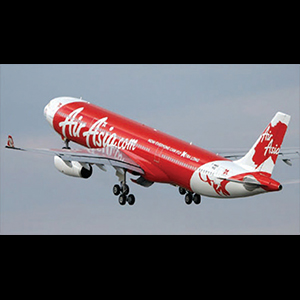
    NEW DELHI (TIP): Indian flyers are soon going to be spoilt for choice and low fares may make a comeback. The Tata Sons’ JV budget airline with Malaysia’s AirAsia got the licence to fly from the directorate general of civil aviation (DGCA) on Wednesday.

    This clearance, however, is subject to the judicial ruling in this regard as BJP leader Subramanian Swamy has moved court against forming startup airlines using FDI from foreign airlines route. The JV, AirAsia India Pvt Ltd (AAIPL), will be India’s seventh airline and aims to start flying anywhere between one to three months from now. Its CEO Mittu Chandilya says the new low-cost carrier will offer “35% lower fares” from current fare levels.

    “As of now we have one Airbus A- 320 and we will induct one aircraft every month. We will like to begin operations with a fleet of three planes. While three network options have been worked out, the first flight could be out of Chennai (the airline’s hub). Initially, our network will be all the metros except Mumbai. We may fly to Delhi as leaving the national capital out of the network does not seem feasible for a national airline like AAIPL,” Chandilya said after getting the air operator’s permit from DGCA chief Prabhat Kumar.

    Prabhat Kumar said: “We have granted the Air Operator’s Permit (AOP or flying licence) to AirAsia India, subject to the final decision of the high court and that is, under the directions of the Supreme Court.” The airline marks the re-entry of the Tatas into airline business after several decades. They had tied up with Singapore Airlines (SIA) in the late 1990s to acquire a stake in Air india but due to opposition from some players in the airline business and political interference, the move fizzled out.

    Once UPA-II allowed FDI by foreign airlines into Indian carriers, the Tatas came back with a bang. While Tata-AirAsia has been cleared to take off, the DGCA is in the process of granting licence to a Tata-SIA JV full service airline that should also start flying this year. AirAsia CEO Tony Fernandes tweeted: “History has been made today in Aviation. Everything has been hard for Airasia but we never give up.

    Today AirAsia India has got APPROVAL….. Our CEO @MittuChandilya with Air Operators permit. What a battle that was. Proud day for me and all AirAsia stars.” Chandilya also tweeted: “Boom! 1815hrs(IST) today AirAsiaIndia was born. So, proud of my team. Who is ready to revolutionize Air Travel in India.” But, not everyone was happy. Swamy, who is opposing the Tata JVs, ‘condemned’ the move and said it was done “reckless disregard of the rules and regulations”.

  • Flight MH370: Australia dismisses possible plane wreckage claim

    Flight MH370: Australia dismisses possible plane wreckage claim

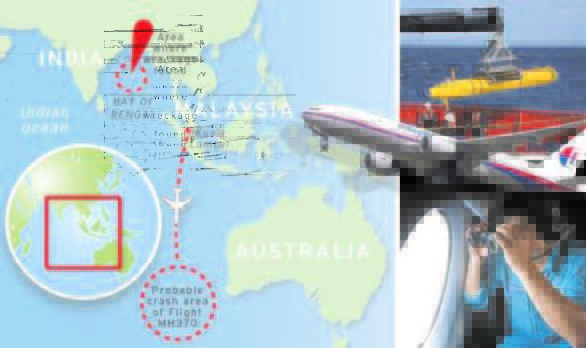
    SYDNEY (TIP): The Australian agency heading up the search for the missing Malaysian jet has dismissed a claim by a resource survey company that it found possible plane wreckage in the northern Bay of Bengal. The location cited by Australia-based GeoResonance Pty Ltd. is thousands of kilometers (miles) north of a remote area in the Indian Ocean where the search for Flight 370 has been concentrated for weeks.

    “The Australian led search is relying on information from satellite and other data to determine the missing aircraft’s location. The location specified by the GeoResonance report is not within the search arc derived from this data,” the Joint Agency Coordination Center, which is heading up the search off Australia’s west coast, said in a statement on Tuesday.

    “The joint international team is satisfied that the final resting place of the missing aircraft is in the southerly portion of the search arc.” GeoResonance stressed that it is not certain it found the Malaysia Airlines plane which vanished on March 8 during a flight from Kuala Lumpur to Beijing, but called for its findings to be investigated. The company uses imaging, radiation chemistry and other technologies to search for oil, gas or mineral deposits. In hunting for Flight 370, it used the same technology to look on the ocean floor for chemical elements that would be present in a Boeing 777: aluminium, titanium, jet fuel residue and others.

    GeoResonance compared multispectral images taken March 5 and March 10 — before and after the plane’s disappearance — and found a specific area where the data varied between those dates, it said in a statement. The location is about 190 kilometers (118 miles) south of Bangladesh. Malaysian Defense Minister Hishammuddin Hussein said Tuesday that China and Australia were aware of the announcement. “Malaysia is working with its international partners to assess the credibility of this information,” a statement from his office said. GeoResonance said it began trying to find the plane before the official search area moved to the southern Indian Ocean.

    India, Bangladesh and other countries to the north have said they never detected the plane in their airspace. The jet had contact with a satellite from British company Inmarsat for a few more hours, and investigators have concluded from that data that the flight ended in the southern Indian Ocean. No wreckage from the plane has been found, and an aerial search for surface debris ended Monday after six weeks of fruitless hunting. An unmanned sub is continuing to search underwater in an area where sounds consistent with a plane’s black box were detected earlier this month. Additional equipment is expected to be brought in within the next few weeks to scour an expanded underwater area. That search could drag on for eight months.

  • SOLAR GEAR MAKERS TAKE RS 1,000 CR HIT ON US, CHINA DUMPING

    SOLAR GEAR MAKERS TAKE RS 1,000 CR HIT ON US, CHINA DUMPING

    NEW DELHI (TIP):
    Amid ongoing trade battle with the US over domestic content clause in solar projects, manufacturers of PV (photo-voltaic) panels have said they were losing Rs 1,000 crore worth of business annually and suffering job losses due to dumping by US, China, Taiwan and Malaysia. Indian Solar Manufacturers’ Association, the apex industry body representing 25 companies, on Wednesday demanded 30-35% anti-dumping duty on imports from these countries “at ridiculously low prices” in violation of international fair trade regulations.

    The government recently said solar projects must use at least 15% of locally manufactured equipment, stoking US trade ire. US and EU too insist on domestic equipment and recently imposed anti-dumping duty on Chinese panels. In January 2013, the commerce ministry issued a gazette notification for launch of anti-dumping investigations on imports from these countries. ISMA also debunked criticism from project developers over quality of Indianmade panels.

    The association said Indian solar cells and modules are compliant with German-certified IEC specs and calibrated in German laboratories. “India has been supplying cells and modules to all major countries in Europe and Japan who have by far the most stringent quality standards and has found a ready market in these discerning countries,” ISMA said in a statement.

    The industry body also argued that countries in the EU and the West Asia, the US, China and South Africa require locally manufactured equipment to be used in solar farms, ensuring energy security and employment to their countrymen.

  • China shuts embassies after protests by MH370 relatives

    China shuts embassies after protests by MH370 relatives

    BEIJING (TIP): In a rare move, China has shut down a diplomatic district here housing the Indian and American embassies as angry relatives of passengers of the crashed Malaysian jet held overnight protests over the so far futile search to locate the plane.

    With no breakthrough despite the high profile multi-nation search operation nearly 50 days after Flight MH370 went missing, relatives of the 153 Chinese passengers had a stormy meeting with Malaysia Airlines staff yesterday after which they tried to protest in front of the Malaysian embassy located opposite the Indian mission here.

    Police stepped up security since yesterday evening and sealed off the area today throwing the traffic in the busy area out of gear. Many relatives reportedly rushed to the Malaysian embassy last night. Wen Wancheng, whose son was on the flight said she had spent the entire night outside the embassy along with dozens of other protesters. This is the second time since the plane went missing, that the Chinese relatives demonstrated in front of the embassy demanding Malaysian officials come out with the truth about the lost plane.

    Earlier, relatives had lashed out over the “abrupt” announcement by Malaysian Prime Minister Najib Rajak stating the plane “ended” in the southern Indian Ocean where weeks of search on the surface and beneath the sea yielded no results. Mystery continues to shroud the plane which went missing along with 239 passengers and crew on board, including five Indians, on March 8 while flying to Beijing from Kuala Lumpur.

    This time the protesters said they were angry over the failure of Malaysian officials to be present at the briefing by the airline yesterday as promised before. It is rare for such protests to be permitted by the Chinese authorities. The protests this time took place before the weekend visit of US President Barack Obama to Kuala Lumpur, which is the first by an American President. Malaysia is one of the Asean countries that are locked in maritime disputes with China over the South China Sea islands. The others include the Philippines, Vietnam and Brunei.

  • Flight MH370 search at ‘critical juncture’: Malaysia minister

    Flight MH370 search at ‘critical juncture’: Malaysia minister

    KUALA LUMPUR (TIP): The search for missing flight MH370 is at a “critical juncture”, Malaysia’s transport minister said on April 20, two days after Australia’s premier said a submersible device had one week to find wreckage from the plane in the Indian Ocean.

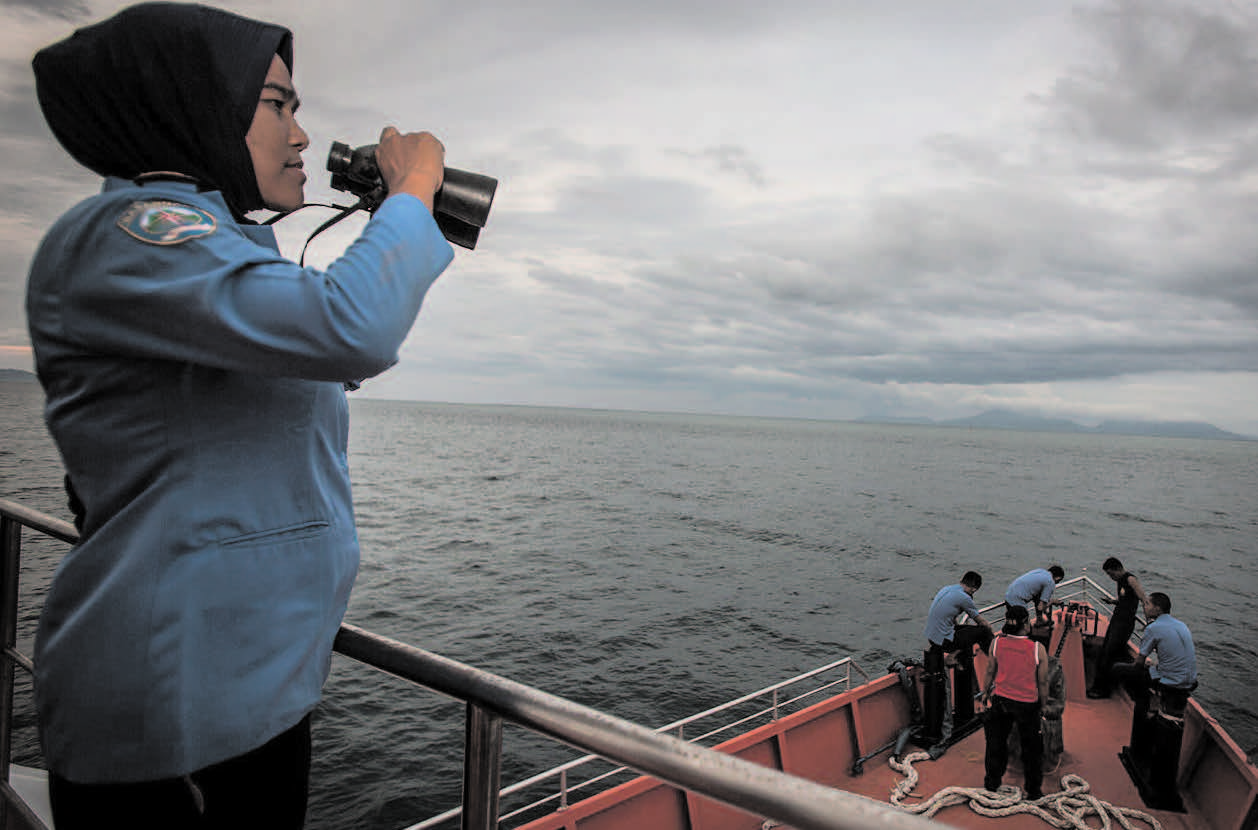
    “The search for today and tomorrow is at a critical juncture. We appeal for everybody around the world to pray that we find something,” transport minister Hishammuddin Hussein said. An underwater robotic submarine is expected to finish searching a narrowed down area of the Indian Ocean seabed for the missing Malaysia Airlines plane within the next week, after completing six missions and so far coming up empty, the search coordination center said Saturday.

    As the hunt for Flight 370 hit week six, the Bluefin 21 unmanned sub began its seventh trip into the depths off the coast off western Australia. Its search area forms a 10- kilometer (6.2-mile) circle around the location of an underwater signal that was believed to be coming from the aircraft’s black boxes before the batteries died. The sonar scan of the seafloor in that area is expected to be completed in five to seven days, the center said in an email to the Associated Press.

  • Flight search brings satellite company unaccustomed fame

    Flight search brings satellite company unaccustomed fame

    LONDON (TIP): On an enormous electronic map of the globe in the modernist headquarters of a satellite company here, two green hexagons the size of dinner plates hovered off the west coast of Australia, revealing signals from an armada of ships and planes converged in the hunt for any remains of Malaysia Airlines Flight 370.

    The searchers were there in large part because the company, Inmarsat, had produced an innovative analysis of a series of fleeting radio signals from the plane — picked up by one of its satellites in the hours after the jet, carrying 239 people, disappeared from radar screens March 8. Investigators say Inmarsat’s findings were critical to establishing that the Boeing 777-200 almost certainly crashed into the southern Indian Ocean.

    And more than a month since the flight took off, they remain among the few clues that investigators have as they try to piece together what happened. This week, the search vessels moved to an area hundreds of miles northwest of Perth, where Australian and Chinese ships have detected multiple “pings” consistent with those of a plane’s underwater locater beacons — not far from where Inmarsat’s calculations helped narrow estimates of the plane’s last location.

    The most recent of those signals were detected on Wednesday, prompting Australian officials leading the search to suggest that remains of the plane could be found soon. Through it all, the staff in Inmarsat’s east London control room have kept constant tabs on the global flow of mobile voice and data transmissions carried by its network of 11 satellites orbiting 22,000 miles above the earth. Superimposed upon the 21-foot-long map dominating a wall is a color-coded mosaic of cells, each spanning several hundred square miles. “The nature of our system is such that we can direct communications capacity very quickly to anywhere on the globe,” said Ruy Pinto, Inmarsat’s chief technology officer.

    “We are designed for that,” he added. “So when there is an event that we feel is going to require additional capacity or resources, we have a group of people that gets together and starts diverting resources to provide terminals, radio frequency and power.” Inmarsat, a communications company with $1.25 billion in revenue and 1,900 employees in more than 60 locations, has grown accustomed to playing a vital supporting role in world events, including conflicts and disaster relief. But in the case of the missing Malaysian jet, the company has found itself thrust, somewhat uncomfortably, into the spotlight. On a recent day, the cells over geopolitical hot spots like Crimea, Syria and Afghanistan were lit up in pink or yellow.

    They reflected a heavy concentration of satellite phones and portable broadband terminals in use by various military, media and relief organizations. Busy sea lanes near the English Channel, the Persian Gulf and the Straits of Malacca were tinted a deep green. Mr. Pinto pointed out the patch of activity off the Australian coast. But he and the handful of engineers who did the Flight 370 analysis maintained a stoic reserve. “There is no sense of a job well done quite yet, but that will probably come later,” said Mr. Pinto, 54, a Brazilian who joined Inmarsat as a software engineer in 1990.

    “There is a strong feeling that why we’re doing this is to help the investigation and try to help the families.We are very sure that our emotions, whatever they are, are nothing compared to their emotions, and we are very conscious that the story isn’t about us.” Known originally as the International Maritime Satellite Organization, Inmarsat was created in 1979 by the 88-member International Maritime Organization, an arm of the United Nations, and charged with providing a seamless global network for basic ship-to-shore voice and data communications, including free emergency services for ships in distress.

  • US warns China not to attempt Crimea-style action in Asia

    US warns China not to attempt Crimea-style action in Asia

    WASHINGTON: China should not doubt the US commitment to defend its Asian allies and the prospect of economic retaliation should also discourage Beijing from using force to pursue territorial claims in Asia in the way Russia has in Crimea, a senior US official said on April 3.

    Daniel Russel, President Barack Obama’s diplomatic point man for East Asia, said it was difficult to determine what China’s intentions might be, but Russia’s annexation of Crimea had heightened concerns among US allies in the region about the possibility of China using force to pursue its claims.

    “The net effect is to put more pressure on China to demonstrate that it remains committed to the peaceful resolution of the problems,” Russel, the US assistant secretary of state for East Asia, told the Senate Foreign Relations Committee. Russel said the retaliatory sanctions imposed on Russia by the United States, the European Union and others should have a “chilling effect on anyone in China who might contemplate the Crimea annexation as a model.”

    This was especially so given the extent of China’s economic interdependence with the United States and its Asia neighbors, Russel said. Russel said that while the United States did not take a position on rival territorial claims in East Asia, China should be in no doubt about Washington’s resolve to defend its allies if necessary. “The president of the United States and the Obama administration is firmly committed to honoring our defense commitments to our allies,” he said.

    While Washington stood by its commitments – which include defense treaties with Japan, the Philippines and South Korea – Russel said there was no reason why the rival territorial claims could not be resolved by peaceful means. He said he hoped the fact that the Philippines had filed a case against China on Sunday at an arbitration tribunal in The Hague would encourage China to clarify and remove the ambiguity surrounding its own claims.

    Russel termed the deployment of large numbers of Chinese vessels in its dispute with the Philippines in the South China Sea “problematic” and said that Beijing had taken “what to us appears to be intimidating steps.” “It is incumbent of all of the claimants to foreswear intimidation, coercion and other non-diplomatic or extra-legal means,” he said. In Asia, China also has competing territorial claims with Japan and South Korea, as well as with Vietnam, Malaysia, Brunei and Taiwan in potentially energy-rich waters. Obama is due to visit Japan, South Korea, Malaysia and the Philippines from April 22, when he is expected to stress his commitment to a rebalancing of US strategic and economic focus towards the Asia-Pacific region in the face of an increasingly assertive China.

  • Missing Malaysian Flight MH370: What do we know? What will we ever know?

    Missing Malaysian Flight MH370: What do we know? What will we ever know?

    BANGKOK (TIP): At the time – the evening of March 24 – it seemed like the breakthrough the world was waiting for. In a hastily called speech, Malaysian Prime Minister Najib Razak announced that an unprecedented analysis of satellite signals concluded that Malaysia Airlines Flight 370 “ended” deep in the Indian Ocean, far from any possible refuge for the 239 souls aboard.

    Finally, there was a solid explanation for what happened to the aircraft. A much more focused search could begin, and so perhaps could the grieving process for families from 14 countries. Najib’s announcement quieted wild speculation about desert islands and terrorists and covert operations. But four weeks after the plane disappeared, the apparent pivot in the search is proving to be not much of a pivot at all.

    Not a single piece of wreckage from the lost plane has been found, not even after a new analysis led investigators to change the focus of their search yet again. The latest search area is based on extremely limited satellite data combined with radar data taken some five hours before the plane is believed to have gone down. It is, as one search official said, “a very inexact science.” Australian Prime Minister Tony Abbott, whose country is coordinating the current search effort, spoke of “very credible leads” and “increasing hope” a day before Najib’s announcement.

    But on Thursday he said the search has become “the most difficult in human history.” The aircraft could indeed still be in the area planes and ships from several countries have been combing for nearly a week. Currents change the area each day, but on Thursday it was a 223,000-square kilometer (86,000-square mile) patch of ocean 1,680 kilometers (1,040 miles) northwest of Perth. Each unsuccessful day adds to the skepticism. “Without any kind of proof, uncertainty rules the day,” said Tim Brown, a satellite imagery expert at GlobalSecurity.org in Alexandria, Virginia.

    People still can’t wrap their head around how a modern airplane that big could just go missing in the modern world.” The focus of the search has changed repeatedly since air traffic controllers lost contact with the Boeing 777 between Malaysia and Vietnam. It began in the South China Sea, then shifted toward the Strait of Malacca to the west, where Malaysian officials eventually confirmed that military radar had detected the plane. Then came evidence that the plane had continued flying for at least five hours after contact was lost. The plane automatically sent hourly signals to a satellite belonging to Inmarsat, a British company, after the plane’s transponder and all communication systems had shut down. The “pings” did not include specific location information, but the team of experts who studied them said they must have come from one of two vast arcs that ran through both the Southern and Northern hemispheres.


    5

    Najib’s announcement reflected a further refinement of that data that determined the aircraft could only have flown south, where it most likely crashed into the sea when it ran out of fuel. Days of costly and fruitless searches off the coast of Perth since then have employed satellites, advanced aircraft and ships, but so far there have only been dead ends. Last week, using revised estimates of how fast the plane was traveling when it left the Malacca strait, investigators moved the search area hundreds of kilometers (miles) north. But there’s no guarantee that the plane maintained that speed for hours before going down. “The problem is, we’re dealing with probabilities – estimates,” Brown said of the Inmarsat data. “It’s where they THINK the plane went down.” Or as Capt. Ross “Rusty” Aimer, a former pilot who now runs Aero Consulting Experts, put it: “Until we find a positive concrete shred of evidence — a piece of the aircraft — everything else is just conjecture, and it could be totally wrong.

    So far, the satellite calculations have only directed us to oceanic garbage dumps.” Australian officials have expressed increasing pessimism in recent days. Angus Houston, who heads the joint agency coordinating the multinational search effort out of Australia, said investigators are using computer modeling to determine the plane’s final location, but two key variables needed to calculate that more precisely are unknown: the aircraft’s altitude and speed. “The starting point whenever you do a search and rescue is the last known position of the vehicle or the aircraft,” Houston said Tuesday. “In this particular case, the last known position was a long, long way from where the aircraft appears to have gone.” Satellite images taken from the previous search area captured hundreds of possible objects in the water, but searchers in planes and ships found nothing related to Flight 370.


    6

    In the current search area, even those clues have been lacking. “We have not had any satellite data, I’d have to say, that has given anything better than low confidence of finding anything so far,” Mick Kinley, deputy CEO of the Australian Maritime Safety Authority, said Tuesday. But he also said plane and ship crews “have by no means exhausted” the search area. Affected families, particularly those of some of the 153 Chinese passengers, have lashed out at Malaysian authorities for essentially declaring their loved ones dead without any firm proof. Najib said Thursday that everyone involved in the search is thinking of the families and their suffering. “I know that until we find the plane, many families cannot start to grieve,” he said. “We will not rest until answers are indeed found. In due time, we will provide a closure for this event.”

    Malaysia’s government on Wednesday organized a closed-door briefing for the families in Kuala Lumpur with officials and experts involved in the hunt. Steve Wang, a representative of some of the Chinese families who were also briefed in Beijing via video link, said most relatives remain skeptical. “They said themselves that there are many different possibilities, but they are judging on the basis of just one of them.We all know this can’t convince us,” Wang said. “Hope dwindles by the day and sadness grows. I believe the plane must be somewhere and someone must know, but we do not know who knows it. “What else can I do but wait in bitterness?” he said. “Two sleeping pills may get me two hours of sleep if I am lucky.” Dr Michael Phillips, a Shanghai-based Canadian psychiatrist, said that without bodies or even wreckage, families are caught in an emotional “no man’s land.”

    “A whole bunch of things can complicate grief, but in this situation it’s clearly complicated because they’re not sure the people are dead,” Phillips said. “Your logical head would say, ‘Oh, of course they’re dead,’ but your heart will say, `No, no, no, I don’t know.’” The lack of physical evidence also weighs on the investigation into the crash. Just like on Day 1, every theory remains on the table, including electrical or mechanical failure, terrorism, hijacking and pilot murder-suicide. On April 2, Malaysian Inspector General Khalid Abu Bakar sounded the most pessimistic note yet, warning that although investigations will go on, at the end of it “we may not even know the reason” the plane veered off course. The most vital clues are trapped inside the plane’s black boxes, or are hoped to be. Information from the flight data recorder will show what the jetliner was doing, but it may not explain why. The cockpit voice recorder, which only records audio from the flight’s final couple of hours, could simply be silent if the pilots were incapacitated before the plane went down.

  • Hunt for Malaysian plane heads underwater to find black box

    Hunt for Malaysian plane heads underwater to find black box

    PERTH (TIP): The search for missing Malaysia Airlines Flight MH370 in remote seas off Australia headed underwater on Friday, April 4, with a U.S. Navy high tech “black box” locator deployed for the first time as the battery life of the cockpit data recorder dwindles.

    Australian authorities said the so-called Towed Pinger Locator will be pulled behind navy ship HMAS Ocean Shield, searching a converging course on a 240 km (150 miles) track with British hydrographic survey ship HMS Echo. “The area of highest probability as to where the aircraft might have entered the water is the area where the underwater search will commence,” Retired Air Chief Marshal Angus Houston, the head of the Australian agency coordinating the operation, told reporters in Perth.

    “On best advice the locator beacon will last about a month before it ceases its transmissions so we’re now getting pretty close to the time when it might expire.” On Monday it will be 30 days since the jetliner lost communications and disappeared from civilian radar less than an hour into an overnight flight from Kuala Lumpur to Beijing on March 8.

    Experts have warned the Towed Pinger Locator may be of little use unless investigators can get a much better idea of exactly where the plane went into water, because its limited range and the slow speed at which it must be pulled behind the ship mean it cannot cover large areas of ocean quickly. Houston said the start of the underwater search in earnest did not override the need to keep searching for surface wreckage of the plane, as a find would be the most effective way to pinpoint a sub-sea hunt.

    “This is a vast area, an area that’s quite remote. We will continue the surface search for a good deal more time,” he said. “I think there’s still a great possibility of finding something on the surface,” he said. “There’s lots of things in aircraft that float. In previous searches life jackets have appeared which can be connected to the aircraft that was lost.” HUGE SEARCH AREA On Friday, up to 14 planes and nine ships were scouring the search area of about 223,000 sq km (86,000 sq miles) – roughly the size of the U.S. state of Minnesota – some 1,680 km (1,040 miles) west-north-west of Perth, he said.

    Britain is also sending HMS Tireless, a Trafalgar-class nuclear submarine with sonar capabilities and a Malaysian frigate was due to arrive in the search area on Saturday. Malaysian Prime Minister Najib Razak on Thursday, April 3, joined his Australian counterpart Tony Abbott in a tour of RAAF Base Pearce, near Perth, where aircrews from seven countries have been flying dozens of missions deep into the southern Indian Ocean. Malaysian authorities have faced heavy criticism, particularly from China, for mismanaging the search, now in its fourth fruitless week, and holding back information.

    Most of the 239 people on board the flight were Chinese. “The world expects us to do our level best, and I’m very confident we will indeed show what we can do together as a group of nations; that we want to find answers, that we want to provide comfort to the families and we will not rest until answers are indeed found,” Najib said. Authorities have not ruled out mechanical problems as causing the disappearance, but say all the evidence suggests the plane was deliberately diverted from its scheduled route. Malaysia’s police chief said the investigation was focusing on the cabin crew and pilots, after clearing all 227 passengers of possible involvement in hijacking, sabotage or having personal or psychological problems that could have been connected to the disappearance.

  • Flight MH370: Planes, ships race to beat bad weather in search for missing Malaysian jet

    Flight MH370: Planes, ships race to beat bad weather in search for missing Malaysian jet

    SYDNEY/KUALA LUMPUR (TIP): Aircraft and ships scouring the southern Indian Ocean for wreckage of Malaysia Airlines Flight MH370 were racing to beat bad weather on March 27 and reach an area where new satellite images showed what could be a debris field. The international search team has been bolstered to 11 military and civilian aircraft and five ships that will criss-cross the remote search site with weather conditions forecast to deteriorate later in the day.

    New satellite images have revealed more than 100 objects that could be debris from the Boeing 777, which is thought to have crashed on March 8 with the loss of all 239 people aboard after flying thousands of miles off course. “We have now had four separate satellite leads, from Australia, China and France, showing possible debris,” Malaysian acting transport minister Hishammuddin Hussein told a news conference in Kuala Lumpur late Wednesday. “It is now imperative that we link the debris to MH370.” The latest images were captured by France-based Airbus Defence & Space on Monday and showed 122 potential objects in 400 sq km (155 sq mile) area of ocean, Hishammuddin said.

    The objects varied in size from one metre to 23 metres (75 ft) in length, he said. Flight MH370 vanished from civilian radar screens less than an hour after taking off from Kuala Lumpur bound for Beijing, and investigators believe someone on the flight may have shut off the plane’s communications systems. Theories range from a hijacking to sabotage or a possible suicide by one of the pilots, but investigators have not ruled out technical problems. Partial military radar tracking showed the plane turning west off its scheduled course over the South China Sea and then recrossing the Malay Peninsula, apparently under the control of a skilled pilot.

    The logistical difficulties of the search have been highlighted by the failure so far to get a lock on possible debris despite the now numerous satellite images and direct visuals from aircraft and ships. The search area some 2,500km (1,550 miles) southwest of Perth has some of the deepest and roughest waters in the world, roiled by the “Roaring Forties” winds that cut across the sea. The winds are named for the area between latitude 40 degrees and 50 degrees where there is no land mass to slow down gusts which create waves higher than six metres.

    The search was called off for a full day this week because conditions were too dangerous for the search crews, which come from Australia, the United States, New Zealand, China, Japan and South Korea. Meteorologists say the current break in the stormy weather will be short. “This is only going to be a narrow window of opportunity by the looks of things, because another weather system is moving in for Thursday, which looks like that will bring an increase in winds again and also lead to a reduction in visibility through the rain associated with the cold front,” said Neil Bennett, a spokesman for Australia’s Bureau of Meteorology.

    Passengers’ relatives distraught

    Malaysian Prime Minister Najib Razak this week confirmed Flight MH370 had crashed in the southern Indian Ocean, citing satellite-data analysis by British firm Inmarsat. Recovery of wreckage could unlock clues about why and how the plane had diverted so far off course in one of aviation’s most puzzling mysteries. The United States has sent an undersea Navy drone and a high-tech black box detector which will be fitted to an Australian ship due in Perth in the coming days.

    The so-called black boxes — the cockpit voice recorder and flight data recorder — record what happens during flight, but time is running out to pick up their locator beacons, which stop about a month after a crash due to limited battery life. Malaysia said on Tuesday that the US “Towed Pinger Locator” would not arrive in the search area until April 5, which would give it only a few days to find the black box before the beacon battery would be expected to run out.

    The prolonged and so far fruitless search and investigation have taken a toll, with dozens of distraught relatives of Chinese passengers clashing with police in Beijing on Tuesday, accusing Malaysia of “delays and deception”. Malaysia’s confused initial response to the plane’s disappearance and a perception of poor communications have enraged many relatives of the more than 150 Chinese passengers and have strained ties between Beijing and Kuala Lumpur.