Tag: Malaysia

  • US rules out Malaysian plane landed at its Indian Ocean base

    US rules out Malaysian plane landed at its Indian Ocean base

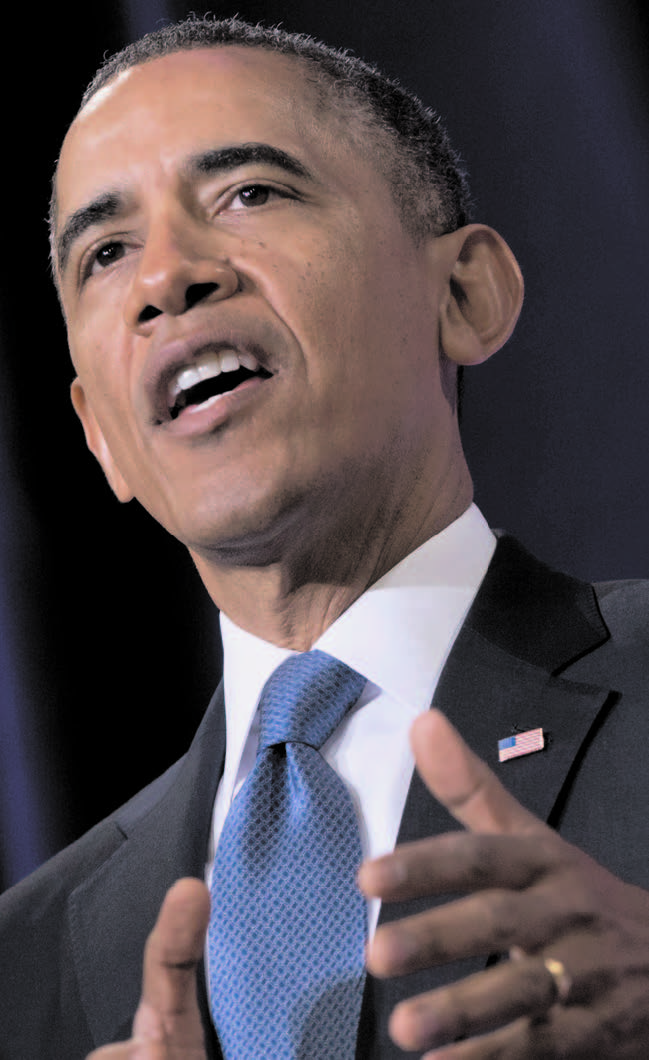
    WASHINGTON: (TIP) The United States has ruled out the possibility of the missing Malaysian plane landing at its Indian Ocean base in Diego Garcia. “I’ll rule that one out,” White House press secretary Jay Carney told reporters on Tuesday when asked about such news reports appearing mainly in the Chinese press.

    Carney said the Malaysian government has the lead in this investigation and the US officials are in Kuala Lumpur working closely with the Malaysian government on the investigation. “This is a difficult and unusual situation, and we are working hard, in close collaboration with the Malaysian government and other partners, to investigate a number of possible scenarios for what happened to the flight. Our hearts of course go out to the families of the passengers.

    They are in a truly agonizing situation,” he said. The United States remain fully committed to assisting the Malaysians and working with its international partners on this investigation, on this effort. “And we are providing assistance through the NTSB, through the FAA and through the FBI. We are in a close, collaborative relationship as regards this investigation,” he said in response to a question. Meanwhile, US State Department Spokesperson Jen Psaki said the focus now was on new search areas announced by the Malaysian Prime Minister over the weekend, which are based on a detailed, highly technical and innovative analysis of the potential flight path.

  • Malaysia Airlines Flight MH370 Hijacked?

    Malaysia Airlines Flight MH370 Hijacked?

    Actions Likely ‘Deliberate,’ Prime Minister Najib Razak States

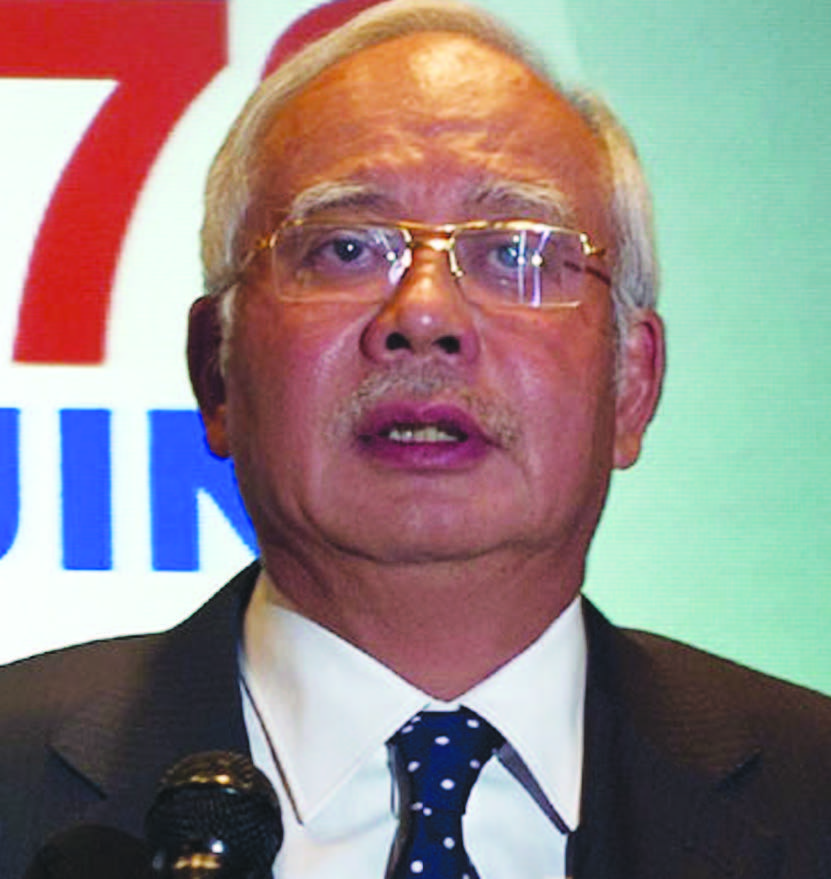
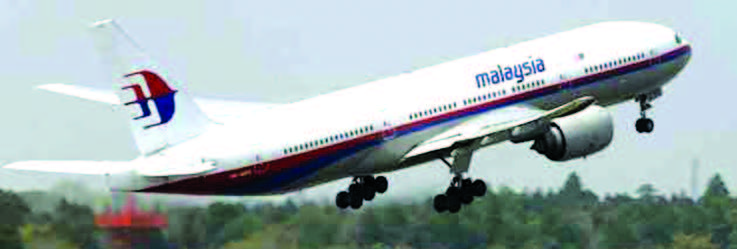
    KUALA LUMPUR (TIP) The mystery of the missing Malaysia Airlines Flight MH370 remains unresolved. Malaysia Prime Minister Najib Razak declared on Saturday, March 15 that “deliberate” actions were likely taken by someone on the missing Malaysia Airlines jet. He informed the press that authorities are confident the plane’s transponder was disabled. Malaysia Airlines Flight 370 left Kuala Lumpur, Malaysia, for Beijing, China, at 12:40 A.M. on March 8 with 239 people on board.

    Evidence is “consistent with the deliberate action of someone on the plane,” Razak said, adding that the investigation is “entering a new phase,” with search operations ending in the South China Sea. There is a “high degree of certainty that the Aircraft Communications Addressing and Reporting System (ACARS) was disabled just before the aircraft reached the east coast of peninsular Malaysia. Shortly afterwards, near the border between Malaysian and Vietnamese air traffic control, the aircraft’s transponder was switched off,” the prime minister stated. The radar then indicates that the plane turned back.

    “It then flew in a westerly direction back over peninsular Malaysia before turning northwest. Up until the point at which it left military primary radar coverage, these movements are consistent with deliberate action by someone on the plane.” The prime minister confirmed the aircraft on the radar was flight MH370. Aviation authorities now believe the plane’s last communication with the satellite was either in a northern corridor between the border of Kazakhstan and Turkmenistan to northern Thailand, or a southern corridor from Indonesia to the southern Indian Ocean, Razak said. Despite speculation about a hijacking, Razak reiterated that “we are still investigating all possibilities as to what caused MH370 to deviate from its original flight path.”

    Meanwhile, investigators have concluded that one or more people with significant flying experience hijacked the missing Malaysia Airlines jet, switched off communication devices and steered it off-course, a Malaysian government official involved in the investigation said Saturday, March 15. No motive has been established and no demands have been made known, and it is not yet clear where the plane was taken, said the official, who spoke on condition of anonymity because he was not authorized to brief the media. The official said that hijacking was no longer a theory. “It is conclusive,” he said. He said evidence that led to the conclusion were signs that the plane’s communications were switched off deliberately, data about the flight path and indications the plane was steered in a way to avoid detection by radar.

    The Boeing 777’s communication with the ground was severed just under one hour into a flight March 8 from Kuala Lumpur to Beijing. Malaysian officials have said radar data suggest it may have turned back toward and crossed over the Malaysian peninsula after setting out on a northeastern path toward the Chinese capital. Earlier, an American official told The Associated Press that investigators are examining the possibility of “human intervention” in the plane’s disappearance, adding it may have been “an act of piracy.” While other theories are still being examined, the U.S. official said key evidence suggesting human intervention is that contact with the Boeing 777’s transponder stopped about a dozen minutes before a messaging system on the jet quit. Such a gap would be unlikely in the case of an in-flight catastrophe.

    The Malaysian official said only a skilled aviator could navigate the plane the way it was flown after its last confirmed location over the South China Sea, and that it appeared to have been steered to avoid radar detection. The official said it had been established with a “more than 50 per cent” degree of certainty that military radar had picked up the missing plane after it dropped off civilian radar. Why anyone would want to do this is unclear. Malaysian authorities and others will be urgently investigating the backgrounds of the two pilots and 10 crew members, as well the 227 passengers on board. Some experts have said that pilot suicide may be the most likely explanation for the disappearance, as was suspected in a SilkAir crash during a flight from Singapore to Jakarta in 1997 and an Egypt Air flight in 1999.

    A massive international search effort began initially in the South China Sea where the plane’s transponders stopped transmitting. It has since been expanded onto the other side of the Malay Peninsula up into the Andaman Sea and into the Indian Ocean. The plane had enough fuel to fly for at least five hours after its last know location, meaning a vast swath of South and Southeast Asia would be within its reach. Investigators are analyzing radar and satellite data from around the region to try and pinpoint its final location, something that will be vital to hopes of finding the plane, and answering the mystery of what happened to it.

  • US experts to decode baffling radar signals

    US experts to decode baffling radar signals

    SEPANG (MALAYSIA) (TIP): The authorities in Malaysia acknowledged on March 12 that they had detected radar signals showing what could be the country’s missing airliner veering sharply off course and hundreds of miles away from its last known position but failed to disclose the data for four days even as they struggled to interpret it.

    Officials said they had given the radar data to American investigators who would assist in helping to determine whether the radar blips were likely to have come from the missing Boeing 777, Malaysia Airlines Flight 370. “We are still not sure that it is the same aircraft ,” Hishammuddin Hussein, the country’s defence minister, told reporters .

    “That is why we are searching in two areas.” Malaysian officials had previously said that they had evidence that the plane had possibly attempted to “turn back,” but they had not detailed the extent of military radar records until March 12. A Malaysian newspaper article on Tuesday reported the existence of military radar data, but the air force had described that as “misreporting .”

    On Wednesday, the head of the air force, general Rodzali Daud, said the radar blips, of which there were several, had disappeared from screens at 2.15am, about 90 minutes after Flight 370 took off. The last radar return was 200 miles northwest of the Malaysian island of Penang, he said, putting the plane in the eastern approaches of the Indian Ocean.

  • NO CLUE YET OF THE MALAYSIA AIRLINES MISSING PLANE

    NO CLUE YET OF THE MALAYSIA AIRLINES MISSING PLANE

    KUALA LUMPUR (TIP): Six days after the plane with 239 people aboard disappeared, Malaysian authorities expanded their search westward toward India, saying the aircraft may have flown for several hours after its last contact with the ground shortly after takeoff from Kuala Lumpur for Beijing.

    A string of previous clues about Flight MH370 have led nowhere. “MH370 went completely silent over the open ocean,” said Malaysia’s acting Transport Minister Hishammuddin Hussein. “This is a crisis situation. It is a very complex operation, and is not obviously easy.We are devoting all our energies to the task at hand.”

    A U.S. official, who spoke on condition of anonymity because he wasn’t authorized to discuss the situation by name, said the Boeing 777-200 wasn’t transmitting data to the satellite, but was instead sending out a signal to establish contact. Boeing offers a satellite service that can receive a stream of data during flight on how the aircraft is functioning and relay the information to the plane’s home base.

    The idea is to provide information before the plane lands on whether maintenance work or repairs are needed. Malaysia Airlines didn’t subscribe to that service, but the plane still had the capability to connect with the satellite and was automatically sending pings, the official said. “It’s like when your cellphone is off but it still sends out a little ‘I’m here’ message to the cellphone network,” the official said.

    “That’s how sometimes they can triangulate your position even though you’re not calling because the phone every so often sends out a little bleep. That’s sort of what this thing was doing.” The plane had enough fuel to fly about four more hours, the U.S. official said. Boeing did not comment. Messages involving a different, more rudimentary data service also were received from the airliner for a short time after the plane’s transponder – a device used to identify the plane to radar – went silent, the official said.

    Malaysia: No Debris at Spot From Chin
    If the plane had disintegrated during flight or had suffered some other catastrophic failure, all signals – the pings to the satellite, the data messages and the transponder – would be expected to stop at the same time. One part of the hunt is in the South China Sea, where the aircraft was seen on civilian radar flying northeast before vanishing without any indication of technical problems. A similarsized search is also being conducted in the Strait of Malacca because of military radar sightings that might indicate the plane turned in that direction after its last contact, passing over the Malay Peninsula.

    The total search area being covered is about 35,800 square miles (92,600 square kilometers) – about the size of Portugal. Asked if it were possible that the plane kept flying for several hours, Hishammuddin said: “Of course.We can’t rule anything out. This is why we have extended the search.We are expanding our search into the Andaman Sea.” The sea is northwest of the Malay Peninsula. He said Malaysia was asking for radar data from India and other neighboring countries to see if they can trace it flying northwest. India says its navy, air force and coast guard will search for the plane in the south Andaman Sea.

    View gallery
    “Because of new information, we may be part of an effort to open a new search area in the Indian Ocean,” White House spokesman Jay Carney said earlier Thursday, declining to offer additional details about that information or the new area. The U.S. Navy 7th Fleet said it is moving one of its ships, the USS Kidd, into the Strait of Malacca, west of Malaysia. In the latest disappointment, search planes failed to find any debris from the plane after they were sent Thursday to an area of the South China Sea off the southern tip of Vietnam, where satellite images published on a Chinese government website reportedly showed three suspected floating objects. “There is nothing.We went there. There is nothing,” Hishammuddin said. More than two-thirds of those on Flight MH370 were from China, which has shown impatience with the absence of any results. Chinese Premier Li Keqiang said Thursday in Beijing he would like to see better coordination among countries in the search.

    View gallery
    The passengers’ “families and friends are burning with anxiety. The Chinese government and Chinese people are all deeply concerned about their safety,” he said at the close of the annual session of the country’s legislature. “As long as there is a glimmer of hope, we will not stop searching for the plane.” He said China had eight ships and 10 satellites searching for the plane. Malaysia has been criticized for its handling of the search, in part because it took several days to fully explain why it couldn’t say whether the plane had turned back. Officials say they are not hiding anything and are searching areas where the plane is most likely to be, while trying to establish its actual location. Besides the Chinese satellite photos and the so-far fruitless search based on the possible sighting on military radar, there have been other developments in the aviation mystery that have failed to lead to finding the plane or the cause of its disappearance: Oil slicks seen Saturday, March 8, were found to have nothing to do with the jetliner.

    View gallery
    – A yellow object spotted by a search plane turned out to be ordinary sea trash. – Officials initially said four or five passengers checked in for the flight but did not board, fueling speculation about terrorism. Officials later said some people with reservations never checked in and were simply replaced by standby passengers, and no baggage was removed. – Officials said two men, later identified as Iranians, boarded the plane with stolen passports. It was later reported that they were unlikely to be linked to terrorist groups. Investigators have not ruled out any possible cause for the plane’s disappearance

  • Malaysia Airlines loses contact with jet carrying 239 people

    Malaysia Airlines loses contact with jet carrying 239 people

    KUALA LUMPUR (TIP) — A Malaysia Airlines flight carrying 239 people from Kuala Lumpur to Beijing disappeared Saturday after losing contact with air traffic controllers, the airline said.

    “At the moment we have no idea where this aircraft is right now,” Malaysia Airlines Vice President of Operations Control Fuad Sharuji said on CNN’s “AC360.” Subang Air Traffic Control lost contact with Flight MH370 at about 2:40 a.m. local time (1:40 p.m. ET Friday), Sharuji said. “We tried to call this aircraft through various means,” he said.

    The airline checked reports that the jet had landed in several places, but determined that none of the reports was true, he said. The Boeing 777-200 departed Kuala Lumpur International Airport at 12:41 a.m. and was expected to land in Beijing at 6:30 a.m., a 2,300-mile (3,700 kilometer) trip. It was carrying 227 passengers, two of them infants, and 12 crew members, the airline said. At the time of its disappearance, the plane was carrying about 7.5 hours of fuel, Sharuji said.

    The passengers are of 13 nationalities, the airline said. They were from China and Taiwan (154), Malaysia (38), Indonesia (12), Australia (7), France (3), United States (4), New Zealand (2), Ukraine (2), Canada (2), Russia (1), Italy (1), Netherlands (1), Austria (1). One infant from the United States and another from China were included in the tally. By CNN’s math, that adds up to 228 passengers, one more than the total cited by the airline.

    There was no immediate explanation offered. “Malaysia Airlines is currently working with the authorities who have activated their Search and Rescue team to locate the aircraft,” the statement said. The public can call +603 7884 1234 for further information. Efforts to contact the plane were fruitless. “We deeply regret that we have lost all contacts” with the jet, said CEO Ahmad Juahari Yahya in a statement. The airline’s website said the flight was piloted by Cap.

    Zaharie Ahmad Shah, 53, a Malaysian. He has 18,365 total flying hours and joined Malaysia Airlines in 1981, the website said. The first officer is Fariq Ab.Hamid, 27, a Malaysian with a total of 2,763 flying hours. He joined Malaysia Airlines in 2007. The airline said in a statement that its representatives were contacting the relatives of those aboard. “Focus of the airline is to work with the emergency responders and authorities and mobilize its full support,” it said.

  • Challenges in India-US ties

    Challenges in India-US ties

    Inconsistencies mark Obama Administration’s approach

    “… the US is becoming increasingly strident in its economic relations with India on issues ranging from sanctions on sections of our pharmaceutical industry and our civil aviation facilities, while demanding changes in our policies on solar panels and equipment and placing restrictions on the movement of IT personnel. It is, however, not India alone that is the recipient of such measures from the US!”, says the author

    Traveling across the US as the winter Olympics in Sochi commenced, one was saddened to witness how India’s international credibility had been shaken when television audiences across the world saw three forlorn Indian athletes marching without the national flag. India faced this disgrace, thanks to the avariciousness and nepotism of an internationally disgraced Indian Olympic Association.

    Sadly, this was accompanied by charges of corruption, nepotism, match fixing and worse involving the President of the BCCI. Many Indian friends in the US asked in anguish: “Is there no section of national life left in India which is free from corruption and venality?” The mood in Washington, where one had an occasion to meet a cross section of senior officials, business executives, analysts and scholars, was quite different.

    In marked contrast to the earlier years, I found widespread criticism of the conduct of foreign and security policies by President Obama. The Administration had not just botched up its healthcare program, but was seen as indecisive and weak in dealing with challenges in West Asia, Afghanistan and the provocations of a jingoistic and militaristic China. President Obama, in turn, is acutely conscious of the mood in the country which wants an end to foreign military entanglements. More significantly, as the US moves towards becoming a net exporter of energy, thanks to the expanding production of shale gas and oil, the country’s geopolitics are set for profound change.

    Using its leadership in areas of productivity and innovation, the US now appears set to the stage for increasing domination of the world economic order. From across its eastern shores, the US is negotiating comprehensive trade and investment partnerships with its European allies. Across its western shores in the Pacific, the Americans are negotiating transpacific partnerships with Australia, Brunei, Chile, Canada, Japan, Malaysia, Mexico, New Zealand, Peru, Singapore, South Korea and Vietnam as negotiating partners. While China has informally indicated an interest in joining this partnership, the US will use its influence to ensure that China is not admitted till American political and economic pre-conditions are met.

    There is naturally interest in Washington in the forthcoming general election in India. The assessment appears to be that the ruling Congress is headed for a drubbing in the polls. Not many tears will be shed in Washington or elsewhere about this inevitability as the only questions which well-wishers of India ask are how India landed itself in its present morass of corruption and whether a new dispensation, which may be fractious, will be able to restore India to a high growth path. Speaking informally, a senior official recalled that President Obama had described the US-India partnership as “one of the defining partnerships of the world”.

    The official noted that “every meaningful partnership between powerful nations encounters setbacks”, adding that such setbacks should be minor compared to the benefits of the relationship and the magnitude of what the two could accomplish together. The Khobragade episode was a defining event in India-US relations. The Americans found Indians across the political spectrum united in the view that insults to India’s national dignity would not be acceptable.

    It is important that in future negotiations by the Task Force set up to address such issues, India should make it clear that it will not tolerate events like Mrs. Sonia Gandhi being threatened with prosecution while undergoing medical treatment in New York, or the supercilious attitude adopted towards Mr. Narendra Modi, who is a constitutionally elected Chief Minister. We should not accept a situation where Americans believe that they can behave high-handedly towards our elected politicians because of their domestic lobbies. The US should also be left in no doubt that on such issues, including consular and diplomatic privileges, India will firmly adhere to a policy of strict reciprocity.

    The Obama Administration has messed up its relations with President Karzai in Afghanistan, dealing with him in a manner that showed scant regard for his position as the elected Head of State of Afghanistan. Worse still, by its actions, the US has clearly given the impression that despite its protestations it was clandestinely dealing, behind Mr. Karzai’s back, with the Taliban. While the US-Afghanistan Strategic Partnership speaks of joint determination in eliminating the “al- Qaida and its affiliates,” the US now speaks only of eliminating al-Qaida and not is affiliates like the Taliban, the Islamic Movement of Afghanistan, Lashkar-e-Taiba and Jaish-e- Mohammed.

    There are naturally concerns in Afghanistan that the US, which needs Pakistan’s assistance for withdrawing its military equipment from Afghanistan, will seek to appease the Pakistanis by giving them a lessthan- healthy role in determining the future dispensation in Afghanistan and the role of the Taliban in such a dispensation. While there is an evident congruence of interests in working with the US, Japan and others in the face of growing Chinese military assertiveness, New Delhi and Tokyo cannot ignore the reality that there have been many flipflops and inconsistencies in the approach of the Obama Administration to China.

    Moreover, the US is becoming increasingly strident in its economic relations with India on issues ranging from sanctions on sections of our pharmaceutical industry and our civil aviation facilities, while demanding changes in our policies on solar panels and equipment and placing restrictions on the movement of IT personnel. It is, however, not India alone that is the recipient of such measures from the US! Despite these challenges, India cannot ignore the reality that the US is the pre-eminent power in the world.

    Moreover, it will remain so in the coming years, primarily because its innovative and technological strengths are going to be reinforced by its energy surpluses, together with the energy potential of its neighbors like Canada, Mexico and Argentina. It will, moreover, remain the foremost power in the manufacture of high-tech equipment, particularly in defense and aerospace. It is for India to fashion industrial policies to leverage its strengths and potential to secure high levels of investment and partnership in crucial high-tech industries.

    I was advised in Washington that contracts currently secured with US companies enable us to import 5.8 million metric tons per annum of shale gas from the US annually. According to oil industry sources, these contracts alone provide us more gas than we could obtain from the controversial Iran-Pakistan-India pipeline. But, for all this to fructify, the new dispensation in New Delhi will have to replace economic populism and accompanying fiscal irresponsibility with a quest for accelerated growth.

  • ‘INDIA BIGGEST MARKET FOR BIZ JETS IN ASIA PACIFIC’

    ‘INDIA BIGGEST MARKET FOR BIZ JETS IN ASIA PACIFIC’

    MUMBAI (TIP): India has emerged as the biggest fleet owner of business aircraft in the Asia Pacific surpassing China with business houses and high net worth individuals (HNIs) acquiring aircraft. Even during the economic slowdown period of 2008- 12, Indian businessmen purchased 38 per cent more aircraft than the previous five years as per estimates by Beechcraft Corporation.

    According to Beechcraft, a leading manufacturer of business aircraft, India has a fleet of 254 business aircraft as compared to 213 in China, 192 in Japan, 150 in Hong Kong, 66 in Malaysia, and 53 in Thailand, making it the biggest fleet owner in Asia Pacific with 15 per cent market share. As per latest data from Beechcraft, 65 business aircraft were delivered in India between 2008 and 2012, up from 47 in the previous five years. This was compared to 119 delivered in China, 19 in Japan, 47 in Hong Kong and 10 in South Korea.

    Quoting Knight Frank Wealth Report 2013, Beechcraft said the number of wealthy businessmen (HNIs) in India would double from 8,481 in 2012 to 17,032 in 2022. During the same period, the number of HNIs in China will grow 137 per cent from 10,849 to 25,660. “Our survey of senior executives from around the world, and fund managers based in London, revealed that 96 per cent of global professional investors and senior business executives forecast growth for the Indian economy over the next five years and 41 per cent of respondents stated that this growth would be ‘significant’. About 53 per cent believe that the business aviation sector in India will grow significantly over the coming decade,” Beechcraft said.

    Considering this, Beechcraft has identified India as one of the most attractive markets in the world for business aviation and has committed significant investments. “The country continues to be an exciting market for us. With significant growth in deliveries over the past decade, the country continues to show huge potential for future growth. This is why we have decided to make a significant investment in increasing our presence in India,” said Richard Emery, President, APAC and EMEA, Beechcraft, at a press conference in Mumbai.

  • Obama to tour Japan, South Korea, Malaysia, Philippines in April

    Obama to tour Japan, South Korea, Malaysia, Philippines in April

    WASHINGTON (TIP): President Barack Obama will seek to ease questions over the staying power of his strategic shift to increasingly tense East Asia in April with stops in Japan, Malaysia, the Philippines and South Korea.

    Obama’s visits to Manila and Kuala Lumpur are intended to make up for his no-show when he cancelled a previous Asia tour in October amid domestic political strife in Washington. A subtext to his visit will be rising territorial tensions between several US allies and China, which deepened over Beijing’s recent declaration of an “air defense identification zone” in the East China Sea.

    Beijing was also angered last week when Washington stiffened its line on territorial disputes in the South China Sea, calling for it to adjust or clarify its claims. Obama’s stops in Japan and South Korea will also bolster close US alliances, at a time of aggravated political tensions between its two Northeast Asian friends. It was an open secret that Obama would call in Japan in April, to take up an invitation from Prime Minister Shinzo Abe, who took office in December 2012.

    But the decision to add South Korea to the trip came after rising pressure from Seoul and from the Asia policy community in Washington. The move also reflects a desire to signal to North Korean leader Kim Jong-Un that there are no gaps in US and South Korean resolve to counter Pyongyang’s nuclear program and belligerent rhetoric. It also indicates that Obama is keen to avoid dealing a political slight to South Korean President Park Geun-Hye that could result from a presidential visit to Tokyo and not one to Seoul.

    Relations between the two nations were severely rattled by Abe’s December visit to the Yasukuni Shrine, which honors war criminals among Japan’s war dead. Obama’s Asia itinerary also includes one noticeable exception — a stop in China. But he is expected to return to the region later in the year for regional summits in Australia, Beijing and Myanmar.

    The White House said in a statement that Obama’s April trip will highlight his “ongoing commitment to increase US diplomatic, economic and security engagement with countries in the Asia- Pacific region.” He is certain to try to push negotiations on a vast Trans-Pacific Partnership free trade pact that would include 12 nations, and is seen by some observers as an attempt to meet the economic challenge of a rising China.

  • 40 Muslim rebels killed in Philippine offensive

    40 Muslim rebels killed in Philippine offensive

    MANILA (TIP): Philippine troops have killed at least 40 Islamic fighters and captured a rebel stronghold with a bomb-making facility in a two-day offensive against insurgents opposed to a new peace deal, military officials said Thursday.

    President Benigno Aquino III said the military launched the assault to protect villages after Bangsamoro Islamic Freedom Movement fighters staged attacks in southern Maguindanao province. Troops were aiming “to seriously degrade their abilities to again act as spoilers,” Aquino told reporters.

    The rebels involved in the fighting have opposed peace talks between the government and the larger Moro Islamic Liberation Front, which were concluded over the weekend in Malaysia. They have promised to continue their uprising because the Malaysian-brokered talks would not lead to a separate homeland for minority Muslims in the south. Regional military spokesman Col. Dickson Hermoso said 12 of the slain rebels have been identified with the help of village leaders, while others were found buried in graves in and near Ganta village in Maguindanao.

    The fighting left one soldier dead and 12 others wounded by bombs hidden around a mosque and by rebel mortar fire, Hermoso said. After two days of attacks, army troops captured a key rebel stronghold Wednesday that spanned two villages in a swampy mountain foothill in Maguindanao where the insurgents made bombs and carried out combat training. Several bombs and materials for making explosives were seized by troops, Hermoso said. “It’s like a bomb factory,” Hermoso said. “We don’t negotiate with groups like this who threaten innocent civilians. We run after them to enforce the law.”

    The offensive, which was supposed to end Wednesday, would be extended up to Saturday as troops pursue the retreating rebels, who have split into smaller groups, he said. Rebel spokesman Abu Misry disputed the military report, saying there have been no deaths and only seven insurgents had been wounded in army shelling and helicopter rocket fire. About 10,000 villagers have fled the fighting, which underscored the difficulty of ending violence in the country’s south.

    Aside from the main Moro rebel group that concluded negotiations Saturday with the government for a new Muslim autonomy deal in the south, at least four other smaller insurgent groups threaten the peace in the region. Those groups include the Bangsamoro Islamic Freedom Movement and the smaller but more brutal Abu Sayyaf, which is notorious for bombings, kidnappings for ransom and beheadings. Aquino said the new peace deal would bring the government and the 11,000-strong main Moro rebel group together to pursue outlaws who have long thrived in the conflict.

  • GOVERNMENT INTRODUCES ‘KNOW INDIA PROGRAMME’ FOR NRI AND PIO YOUTH

    GOVERNMENT INTRODUCES ‘KNOW INDIA PROGRAMME’ FOR NRI AND PIO YOUTH

    NEW DELHI (TIP): The Government has introduced a programme named “Know India Programme” for young persons of Overseas Indians with a view to provide them an exposure to the country of their origin so that they can understand it better and more intimately. Addressing a press conference on the 2nd day of PBD -2014, Minister for Overseas Indian Affairs, Vayalar Ravi said that under the Programme, 20 young persons of Indian origin in the age group of 18 to 24 from different countries visit India extensively every year, which will provide them an opportunity to have a deeper insight into Indian people and society.

    Ravi said more than 900 delegates of Overseas Indians from about 50 countries have participated in this PBD and the highest number of 200 delegates are from Malaysia only. The Pravasi Bharatiya Centre in Delhi which was scheduled to be completed in September last year, will be completed very soon, he added.

  • CELEBRATIONS AROUND THE WORLD

    CELEBRATIONS AROUND THE WORLD

    Diwali is also celebrated outside of India mainly in Guyana, Fiji, Malaysia, Nepal, Mauritius, Myanmar, Singapore, Sri Lanka, Trinidad & Tobago, Britain, Indonesia, Japan, Thailand, Africa, Australia and the US among the Hindus across the world.

    Britain
    The Indians are the second largest ethnic minority in Britain. To get rid of the feeling of missing their homeland, especially during festival times, the Indians here celebrate most of the festivals. The occasion is marked by visit to the local temple to worship the shrine of Lakshmi, which they have made for Diwali. Eating special sweets, burning of incense sticks, lighting the home and surroundings and the blowing of the conch shell follows the prayer session in the Lakshmi temple. The festival here is celebrated according to the Hindu solar calendar hence it falls in the months of October-November, amongst the cold, damp and windy months in Britain. Still the enthusiasm of the festival celebration makes the task of leaving small lamps on windowsills or by open doorways possible ignoring the chill. The lamps and diyas play their part in maintaining the atmosphere of Diwali at home.

    Guyana
    Guyana, formerly known as British Guiana, is located on the northeast coast of South America. Guyana is 82,978 square miles in area and has a population of about 7,70,000. Hindus constitute 33% of Guyana’s total population. The Co-operative Republic of Guyana in Southern America celebrates Diwali according to the Hindu Solar calendar. The day of the festival is declared as a national holiday in the official calendar of Guyana. The tradition of celebrating the festival is believed to have been brought to Guyana in the year 1853 by the first indentured people from India.

    The legends related to the festival are similar to that of India. The celebration of the festival includes, distribution of sweets, illuminating the inside and outside of the house, exchange of greetings, cleaning of houses and wearing of new clothes. The celebrations hold special significance for the people of Guyana. The distribution of sweet signifies the importance of serving and sharing whereas exchange of greeting cards denotes the goodwill of each other.

    The sweets distributed mainly consist of pera, barfi, and kheer. The tradition of wearing new cloth for the people of Guyana is significant especially in this festival. They believe that wearing new cloth is the symbol of healthy souls in healthy bodies. Cleaning of their homes and keeping them well illuminated in and outside is a practice meant to illuminate the road for Goddess Lakshmi so that while goddess Lakshmi visits their home she faces no problem of light as the Diwali night is regarded as the darkest night of the year.

    Indonesia
    The name Indonesia came from two Greek words: “Indos” meaning Indian and “Nesos” meaning islands. The majority of population follows Islam. Hindus constituent about 2% of Indonesia’s total population. However, the Indonesian island of Bali is famous for celebrating the festival of Diwali, as a majority of the population here is that of Indians. It is one of the most revered festivals of the locals here. The celebration and rituals of the festival is mostly similar to that celebrated by their counterparts in India.

    Malaysia
    Fascinating in its diversity, Malaysia has many mesmerizing charms and attractions. With a population of about 20 million, comprising of a harmonious multi-ethnic mix of Malays, Malaysia promises a colorful potpourri of cultural traditions. Most are based on the various religious practices, beliefs and traditions influencing the costumes, festivals, ceremonies and rituals. The Hindu community of Malaysia constitutes about 8% of its total population .The community celebrates Diwali as a symbol of triumph of good over evil. The Malaysian people call Diwali as Hari Diwali.

    This festival is celebrated during the 7th month of the Hindu solar calendar. The south Indian traditional of oil bath precedes the festivities. The celebration includes visits to temples and prayers at household altars. Small lamps made from clay and filled with coconut oil and wicks are a common sight to signify the victory of Lord Rama, the hero of the Hindu epic Ramayana, over the demon king Ravana. Diwali is celebrated almost all over the Malaysia except in Sarawak & Federal Territory of Labuan.

    Mauritius
    Mauritius is an island in the Indian Ocean that lies to the east of Madagascar. This beautiful landmass is full of picturesque landscapes and enchanting spots. Mauritius accounts a 63% of Indian majority of which 80% follow Hinduism. Hence, celebration of almost all the Hindu festivals in this island is a common phenomenon. In Mauritius, Diwali celebration is an age-old tradition. It holds special significance for the natives, who believe that Diwali has been celebrated even long before the return of Lord Rama from 14 years of exile and his coronation as the king. The festival is marked by lightening of earthen lamps in rows making images out of the rows. Lakshmi is worshiped as the goddess of wealth and crackers are burnt to scare away evil spirits.

    Nepal
    Nepal is a landlocked country nestled in the foothills of the Himalayas. Nepal, a multi-ethnic and multi-lingual society is the only Hindu Kingdom of the world. Diwali is celebrated here with the usual Hindu festivities and rituals. Diwali in Nepal is known as Tihar. Just like most places in India Diwali is celebrated here to honor the goddess of wealth and god of prosperity Lakshmi and Ganesh respectively. The festival of light falls in the months of October or November on the day of Amavasya – the darkest day of the year. The festival here continues for five days. Every day has its special significance. The first day is dedicated to cows as they cook rice and feed the cows believing that goddess Lakshmi comes on cows. The second day is for Dogs as the Vahana of Bhairava.

    Preparation of delicious food especially meant for the dog is a typical characteristic of the day. Lights and lamps are lit to illuminate the entire surrounding and some of the specialty items are prepared to mark the third day of the festival. Fireworks, Lamps and crackers are widely used. The fourth day is dedicated to Yama, the Hindu God of Death. He is prayed for long life. The fifth final day is Bhhaya Dooj dedicated for the brothers who are wished long life and prosperity by their sisters.

    South Africa
    South Africa is located at the southern tip of the continent of Africa. It is a mix of cultures and has one of the largest immigrant Indian communities in the world. The country has almost one million immigrant Indians. Most of these Indian immigrants are concentrated in the eastern regions of Natal and Transvaal of the country. About 65% of Hindus, 15% of Muslims and 20% of Christians live in this area. Due to the majority of the Hindu population, a number of Hindu festivals are celebrated here. Diwali also holds an important place in the festival calendar of the region. The celebration is more or less same to that in India. Most of the Hindus here are from Gujarat and Tamil Nadu and continue to follow their regional variations of Hinduism.

    Trinidad & Tobago
    Trinidad is the most southern of the Caribbean islands, lying only seven miles off the Venezuelan coast, is one of the most exciting, colorful islands of the West Indies. Considered as the land of the Humming Bird, Trinidad and Tobago has a good number of Indian population. For that reason, Hindu festivals, customs, traditions and observances forms an integral part of the society, which comprises the unique beauty of the twin island state. The Diwali celebration has a unique flavor here in the Caribbean island nation. Here 43 per cent of the 1.3 million populations are ethnic Indians. The Diwali celebrations are usually marked as an occasion to unify the nation that consists of Hindus, Muslims, Christians, Indo-Trinidadians and Afro- Trinidadians.

    The festival day is regarded as a national holiday. The festival is also marked by scores of functions besides the usual rituals of the festivity. The functions and celebrations also have an official imprint as the Ministers of the Government also participate in the celebrations sometimes. The belief behind the festival is same as of India, which is, prevalence of good over evil. The celebrations continue for over a week and the headquarters of the National Council of Indian Culture at Diwali Nagar becomes the focal point.

    America
    Diwali is one of the biggest Hindu festivals celebrated among many people and communities in the United States. Many schools, community groups, Hindu associations, Indian organizations and corporate businesses get involved in celebrating Diwali. Politicians, including governors and past presidents, previously made public announcements expressing their greetings and well wishes to Hindus on Diwali. Many Indian stores sell jewelry and traditional outfits, such as chiffon saris, as well as statues of Hindu deities and incent sticks used in prayer around this time of the year. Many women and girls use mehendi, which is a temporary henna decoration, on their palms. It is also common to wear fine jewelry and silk outfits to celebrate this joyous festival.

  • The Essence of Diwali

    The Essence of Diwali

    The DFW Indian Cultural Society’s mega event-the Diwali Mela- is being organized on November 2 at Cotton Bowl. It will be the 8th super mela in a row. As our tribute to the grand event, we bring to our readers an article on Diwali specially written for The Indian Panorama by Mike Ghouse, a noted literateur and journalist. Read on.


    img8

    Diwali is the Indian festival of lights and is celebrated on a large scale throughout India and the Indian Diaspora. It is also celebrated in Nepal, Sri Lanka, Myanmar, Bangladesh, Malaysia, Singapore, Guyana, West Indies, Fiji, and of course, here in the United States. Thanks to the Gupta’s for placing Dallas on the World Map of Diwali Celebrations.

    I believe it is one of the biggest celebrations in the United States, if not the biggest in the western Hemisphere. Ramesh Gupta initiated the event eight years ago, fully supported, encouraged and funded by the Dallas billionaire couple Satish and Yasmin Gupta.

    DFW Indian Cultural Society (DFW ICS) made its debut on the Dallas scene with the very first “Diwali Mela 2006”, which drew over 38,000 people to Texas Stadium. . Attendance has been increasing every year and is currently at an impressive figure of over 70,000. Diwali Mela has become an annual signature event for DFW IC


    img10
    The inauguration of an earlier Diwali Mela

    DFW ICS has a strong commitment to the community which is reflected in the variety projects that it has undertaken, such as organizing the Diwali Mela, entertainment programs, sponsoring the Medical Clinics in Plano and Lewisville, for the uninsured and has recognized the contribution of teachers to the community by giving cash rewards.

    DFW ICS has supported multiple non-profit organizations throughout metropolis. Under the leadership of Satish Gupta, DFW ICS is moving forward by organizing various programs and dedicating itself to serving the needs of the communities in the Dallas Fort Worth area


    img9
    Huge gathering in Cotton Bowl

    Nearly 50,000 people attend the event. First it was held in Texas Stadium, former home of the Dallas Cowboys and now it is held at the Cotton Bowl Stadium in Fair Park, Dallas, where college football is played and home to Texas State Fair. There is nothing like it.

    Satish Gupta, president of the organizations writes this information on their website, http://www.dfwdiwalimela.com/, “This year again we have decided to pack all the fun for children, youth, adults and seniors. From Ram Leela and Bollywood singers to spectacular fireworks, elephant rides to slides, Cultural dances to mouth watering Indian food, all packed in one of the biggest Carnival of its kind in America. There will be three elephants and two camels available for the rides this year! We bring all this to you at a very minimal cost to you.”


    img11
    The moving spirit behind the Diwali Mela, Satish Gupta, President of DFW Indian Cultural Society

    “The large number of people the Carnival attracted in the past years is a testimony to its success. The number of attendees keeps growing and it presents an important platform for a quick reach to the Asian Community of Dallas Fort worth and the nearby cities of Texas.

    We would like to thank all our Sponsors who support us in this huge task. The purpose of this message is to request you to come with your family and friends and make the event a grand success. Your participation will go a long way in promoting our culture to the kids and youths of our community.” Diwali is spelled differently, and is called by many names.

    There is Divali among others, and Deepavali, meaning the festival of lights. Although Diwali is a Hindu tradition, people of all faiths participate in celebrations – Hindus, Jains, Muslims, Sikhs, Christians, Buddhists, Zoroastrians and others. People decorate their homes with lights and Rangoli, i.e., colorful drawing in the front yard of the home, sidewalks, even roads in India with colorful powders or colorful pieces of chalk.

    Women and Children look forward to express their artistic talent in this season. Their surroundings filled with colorful lights to enliven the day, to mark the dawn of a new era in one’s life. My childhood is filled with good memories of Diwali; the sparklers, the food and everything joyous you can imagine.

    A few years ago, Jyoti and Nishi Bhatia, former President of DFW Hindu Temple and President of Dallas Hindi Association respectively, asked me to speak about Diwali in a dinner gathering to a group of people from different faiths and cultures, and I cherished it, I love talking about Diwali, as its essence reflects the ideals of pluralism, and symbolizes hope and positive energy, victory of good over evil; a new beginning.

    It is indeed seeing the light at the end of tunnel. Diwali Celebration is a part of the epic Ramayana, and the Ram Lila is played out all night long in towns across India. I grew up watching it in front of my house, and my friends played different roles in the show. Indeed, one of my former relatives played Hanuman’s role.


    img12
    Ramayan being enacted

    It was a challenge for me to teach Ramayana to a group of people who knew nothing about it. It turned out to be a successful program. I prepared the nearly all white audience that I will be narrating the story through the power point and along will be reinforcing the names and roles of the key persons in the story and will ask them for feed back at the end.

    Friends, I cannot tell you the joy, the Bhatias and I felt when each one of them answered the questions from the story. They got it! It is a powerful story and takes about 30 minutes to narrate. The epic is filled with educative tales, edifying poems, and fables. It is probably through their constant retelling in the villages over centuries that Hinduism is most efficiently disseminated from generation to generation


    img13
    Ravana’s effigy is set on fire

    Whenever a society rots with adharma (wrong path), where no one cares about the other, lying, stealing and dishonesty become rampant, Lord Krishna says, I will emerge among you and restore the righteousness and trust in the society to function smoothly.

    Zarathustra, Moses, Jesus, Buddha, Muhammad, Krishna, Nanak, Mahavira, Confucius, Tao and others served the same purpose… it is almost like the laws of physics ; water finds its own level, and righteousness finds its own existence. Rama is one such incarnation who reestablished the moral code for social conduct and proper relation of mankind to divinity. He was truthful and a just king. Diwali symbolizes hope and positive energy

    ● People wear new clothes
    ● Share sweets as a symbol of happiness
    ● Renew the relationships
    ● Strengthen the bonds It signifies a new beginning, starting out fresh.
    ● for most businesses it is the new financial year
    ● An inventory of assets is taken
    ● An assessment of family and relationship
    ● Last harvest for the farmers
    ● New things are bought

    President Obama in his message last Diwali said it perfectly,
    “Many who observe this holiday will light the Diya, or lamp, which symbolizes the triumph of light over darkness and knowledge over ignorance.

    As that lamp is lit, we should all recommit ourselves to bring light to any place still facing darkness. Earlier this year, we were reminded of the evil that exists in the world when a gunman walked into the Sikh Gurdwara in Oak Creek, Wisconsin and opened fire.

    In the wake of that horrible tragedy, we saw the resilience of a community that drew strength from their faith and a sense of solidarity with their neighbors, Sikh and non-Sikh alike. We also saw compassion and love, in the heroic actions of the first responders and the outpouring of support from people across the country. Out of a day of sadness, we were reminded that the beauty of America remains our diversity, and our right to religious freedom. To those celebrating Diwali, I wish you, your families and loved ones Happy Diwali and Saal Mubarak.”


    img14

    Today, on this blessed day, we have a blank slate to start, let’s plan on filling it with doing good things for ourselves, to our family, friends, community, nation and the world until next Diwali. What are good things? Words and actions that bring peace, Mukti, salvation, Moksha, nirvana, Nijaat and freedom to us, yes us.

    There is so much of joy waiting to be had. If we can remove hatred and anger towards others, forgive others and ask for forgiveness (Michami Dukadam is a beautiful phrase the Jain’s use), then a blissful year is sure to come for each one of you and me.
    ● May this Diwali purge your heart, mind and soul from hate, malice, anger and ill-will;
    ● May this Diwali open your hearts and minds towards fellow being;
    ● May this Diwali brighten your life, and may this Diwali mark the dawn of a new era; Muslims are a big part of Diwali as well, and innumerable poets have written poetries and songs about Diwali.

    Here is my effort, I wrote this seven years ago on the occasion when Diwali and Ramadan were celebrated around the same time.

    A meri diwali hai, a meri eid hai donon may khushi hi khushi hai Diwali say naya saal shuru hota hai Ramzan ek naya insaan banata hai Diwali may ek baat ka hisab hota hai Ramzan may her baat ka review hota hai Diwali nayay saal ke liye clean slate deta hai Ramzan pichlay saal ki slate clean karta hai Baat hi baat may, my nay a sher likh diya Sahir Diwali aur Ramzan say subka acha hi hota hai Shubh kamnaein | Diwali Mubarak | Blessed Diwali. Happy Diwali to you my friends, may this Diwali bring happiness, serenity and peace to you. Amen!

  • India slips in ‘ease of doing business’ list: World Bank

    India slips in ‘ease of doing business’ list: World Bank

    WASHINGTON (TIP): India has slipped three positions to 134th spot in the latest ‘ease of doing business’ list, which is topped by Singapore, according to the World Bank. In the ‘Ease of Doing Business’ ranking of 189 economies, India has dropped from the 131st spot last year while Singapore continues to remain at the top. Singapore is followed by Hong Kong and New Zealand at the second and third positions, respectively. Other nations in the top ten are: the United States (4), Denmark (5), Malaysia (6), Korea (7), Georgia (8), Norway (9) and the United Kingdom (10). India has been ranked lower at 179 in terms of ease of starting a business in the 2014 list at a time when its government is making efforts to improve the country’s business climate. Last year, based on this criteria India was placed at 177th spot. The ranking of countries are based on various parameters including starting a business, dealing with construction permits, getting electricity, registering property, getting credit, protecting investors, paying taxes, trading across borders, enforcing contracts and resolving insolvency. “The ranking on the ease of doing business, and the underlying indicators, do not measure all aspects of the business environment that matter to firms and investors or that affect the competitiveness of the economy. “Still, a high ranking does mean that the government has created a regulatory environment conducive to operating a business,” the report said. India had earlier expressed concerns about the report. Earlier this year, a World Bankappointed independent panel of experts, in its review report, had suggested scrapping the ranking system with regard to ease of doing business.

  • CELEBRATIONS AROUND THE WORLD

    CELEBRATIONS AROUND THE WORLD

    Diwali is also celebrated outside of India mainly in Guyana, Fiji, Malaysia, Nepal, Mauritius, Myanmar, Singapore, Sri Lanka, Trinidad & Tobago, Britain, Indonesia, Japan, Thailand, Africa, Australia and the US among the Hindus across the world.

    Britain
    The Indians are the second largest ethnic minority in Britain. To get rid of the feeling of missing their homeland, especially during festival times, the Indians here celebrate most of the festivals. The occasion is marked by visit to the local temple to worship the shrine of Lakshmi, which they have made for Diwali. Eating special sweets, burning of incense sticks, lighting the home and surroundings and the blowing of the conch shell follows the prayer session in the Lakshmi temple. The festival here is celebrated according to the Hindu solar calendar hence it falls in the months of October-November, amongst the cold, damp and windy months in Britain. Still the enthusiasm of the festival celebration makes the task of leaving small lamps on windowsills or by open doorways possible ignoring the chill. The lamps and diyas play their part in maintaining the atmosphere of Diwali at home.

    Guyana
    Guyana, formerly known as British Guiana, is located on the northeast coast of South America. Guyana is 82,978 square miles in area and has a population of about 7,70,000. Hindus constitute 33% of Guyana’s total population. The Co-operative Republic of Guyana in Southern America celebrates Diwali according to the Hindu Solar calendar. The day of the festival is declared as a national holiday in the official calendar of Guyana. The tradition of celebrating the festival is believed to have been brought to Guyana in the year 1853 by the first indentured people from India. The legends related to the festival are similar to that of India. The celebration of the festival includes, distribution of sweets, illuminating the inside and outside of the house, exchange of greetings, cleaning of houses and wearing of new clothes. The celebrations hold special significance for the people of Guyana. The distribution of sweet signifies the importance of serving and sharing whereas exchange of greeting cards denotes the goodwill of each other. The sweets distributed mainly consist of pera, barfi, and kheer. The tradition of wearing new cloth for the people of Guyana is significant especially in this festival. They believe that wearing new cloth is the symbol of healthy souls in healthy bodies. Cleaning of their homes and keeping them well illuminated in and outside is a practice meant to illuminate the road for Goddess Lakshmi so that while goddess Lakshmi visits their home she faces no problem of light as the Diwali night is regarded as the darkest night of the year.

    Indonesia
    The name Indonesia came from two Greek words: “Indos” meaning Indian and “Nesos” meaning islands. The majority of population follows Islam. Hindus constituent about 2% of Indonesia’s total population. However, the Indonesian island of Bali is famous for celebrating the festival of Diwali, as a majority of the population here is that of Indians. It is one of the most revered festivals of the locals here. The celebration and rituals of the festival is mostly similar to that celebrated by their counterparts in India.

    Malaysia
    Fascinating in its diversity, Malaysia has many mesmerizing charms and attractions. With a population of about 20 million, comprising of a harmonious multi-ethnic mix of Malays, Malaysia promises a colorful potpourri of cultural traditions. Most are based on the various religious practices, beliefs and traditions influencing the costumes, festivals, ceremonies and rituals. The Hindu community of Malaysia constitutes about 8% of its total population .The community celebrates Diwali as a symbol of triumph of good over evil. The Malaysian people call Diwali as Hari Diwali. This festival is celebrated during the 7th month of the Hindu solar calendar. The south Indian traditional of oil bath precedes the festivities. The celebration includes visits to temples and prayers at household altars. Small lamps made from clay and filled with coconut oil and wicks are a common sight to signify the victory of Lord Rama, the hero of the Hindu epic Ramayana, over the demon king Ravana. Diwali is celebrated almost all over the Malaysia except in Sarawak & Federal Territory of Labuan.

    Mauritius
    Mauritius is an island in the Indian Ocean that lies to the east of Madagascar. This beautiful landmass is full of picturesque landscapes and enchanting spots. Mauritius accounts a 63% of Indian majority of which 80% follow Hinduism. Hence, celebration of almost all the Hindu festivals in this island is a common phenomenon. In Mauritius, Diwali celebration is an age-old tradition. It holds special significance for the natives, who believe that Diwali has been celebrated even long before the return of Lord Rama from 14 years of exile and his coronation as the king. The festival is marked by lightening of earthen lamps in rows making images out of the rows. Lakshmi is worshiped as the goddess of wealth and crackers are burnt to scare away evil spirits.

    Nepal
    Nepal is a landlocked country nestled in the foothills of the Himalayas. Nepal, a multi-ethnic and multi-lingual society is the only Hindu Kingdom of the world. Diwali is celebrated here with the usual Hindu festivities and rituals. Diwali in Nepal is known as Tihar. Just like most places in India Diwali is celebrated here to honor the goddess of wealth and god of prosperity Lakshmi and Ganesh respectively. The festival of light falls in the months of October or November on the day of Amavasya – the darkest day of the year. The festival here continues for five days. Every day has its special significance. The first day is dedicated to cows as they cook rice and feed the cows believing that goddess Lakshmi comes on cows. The second day is for Dogs as the Vahana of Bhairava. Preparation of delicious food especially meant for the dog is a typical characteristic of the day. Lights and lamps are lit to illuminate the entire surrounding and some of the specialty items are prepared to mark the third day of the festival. Fireworks, Lamps and crackers are widely used. The fourth day is dedicated to Yama, the Hindu God of Death. He is prayed for long life. The fifth final day is Bhhaya Dooj dedicated for the brothers who are wished long life and prosperity by their sisters.

    South Africa
    South Africa is located at the southern tip of the continent of Africa. It is a mix of cultures and has one of the largest immigrant Indian communities in the world. The country has almost one million immigrant Indians. Most of these Indian immigrants are concentrated in the eastern regions of Natal and Transvaal of the country. About 65% of Hindus, 15% of Muslims and 20% of Christians live in this area. Due to the majority of the Hindu population, a number of Hindu festivals are celebrated here. Diwali also holds an important place in the festival calendar of the region. The celebration is more or less same to that in India. Most of the Hindus here are from Gujarat and Tamil Nadu and continue to follow their regional variations of Hinduism.

    Trinidad & Tobago
    Trinidad is the most southern of the Caribbean islands, lying only seven miles off the Venezuelan coast, is one of the most exciting, colorful islands of the West Indies. Considered as the land of the Humming Bird, Trinidad and Tobago has a good number of Indian population. For that reason, Hindu festivals, customs, traditions and observances forms an integral part of the society, which comprises the unique beauty of the twin island state. The Diwali celebration has a unique flavor here in the Caribbean island nation. Here 43 per cent of the 1.3 million populations are ethnic Indians. The Diwali celebrations are usually marked as an occasion to unify the nation that consists of Hindus, Muslims, Christians, Indo-Trinidadians and Afro- Trinidadians. The festival day is regarded as a national holiday. The festival is also marked by scores of functions besides the usual rituals of the festivity. The functions and celebrations also have an official imprint as the Ministers of the Government also participate in the celebrations sometimes. The belief behind the festival is same as of India, which is, prevalence of good over evil. The celebrations continue for over a week and the headquarters of the National Council of Indian Culture at Diwali Nagar becomes the focal point.

    America
    Diwali is one of the biggest Hindu festivals celebrated among many people and communities in the United States. Many schools, community groups, Hindu associations, Indian organizations and corporate businesses get involved in celebrating Diwali. Politicians, including governors and past presidents, previously made public announcements expressing their greetings and well wishes to Hindus on Diwali. Many Indian stores sell jewelry and traditional outfits, such as chiffon saris, as well as statues of Hindu deities and incent sticks used in prayer around this time of the year. Many women and girls use mehendi, which is a temporary henna decoration, on their palms. It is also common to wear fine jewelry and silk outfits to celebrate this joyous festival.

  • John Kerry warns that another budget gridlock will damage US leadership

    John Kerry warns that another budget gridlock will damage US leadership

    WASHINGTON (TIP): America’s top diplomat warned on October 23 that the United States could suffer more lasting damage to its influence abroad if the next round of budget talks in a few months lead to another breakdown. Secretary of State John Kerry said the recent 16-day shutdown had raised questions among key allies about whether Washington can be counted on to lead – whether it is in talks with Iran, Middle East peace negotiations or completing an Asia- Pacific trade deal. “What we do in Washington matters deeply to them, and that is why a selfinflicted wound like the shutdown that we just endured can never happen again,” Kerry told the Center of American Progress policy think tank. “The simple fact is that the shutdown created temporary but real consequences in our ability to work with our partners and pursue our interests abroad,” Kerry added. Kerry’s warning about future U.S. credibility was more forceful at home than abroad. In Asia recently where he stood in for President Barack Obama at summits in Indonesia, Brunei and Malaysia, Kerry dismissed the protracted budget negotiation in Washington as a “moment in politics” and assured countries it would not hurt U.S. commitments to the region.

    But back in Washington on Thursday after several weeks of non-stop travel in Asia and Europe, Kerry said the shutdown had affected confidence in the United States abroad. “This political moment was far more than just symbolism, far more than just a local fight. It matters deeply to our power and to our example,” he said. “While this chapter is temporarily over, we’ve got another date looming, and the experience has to serve as a stern warning to all.” “Make no mistake, the greatest danger to America doesn’t come from a rising rival,” Kerry said, “It comes from the damage that we’re capable of doing by our own dysfunction and the risks that will arise in a world that may see restrained or limited American leadership as a result.” U.S. lawmakers reached a last-minute deal earlier in October to break the fiscal impasse and avert a crippling debt default, but it promises another budget battle in a few months. Under the deal, a House-Senate negotiating committing will be formed to examine a broader budget agreement, with a deadline of Dec. 13. The deal funds the government until Jan. 15 and raises the debt ceiling to Feb. 7. Kerry said America’s allies were watching the budgets talks closely.

  • India looks to the Diaspora with a lot of Expectations – BOB CMD Mundra

    India looks to the Diaspora with a lot of Expectations – BOB CMD Mundra

    Bank of Baroda Chairman and Managing Director, Mr. S.S. Mundra visited New York from September 16th to 18th. It was his first visit to New York after he took over as Chairman and Managing Director of the second largest public sector bank of India, second only to State Bank of India. Mr. Mundra met with customers and the Indian American community and also launched the internet banking. A reception to Mr. Mundra was hosted by the Indian Consulate where he met the Consul General Dnyaneshwar Mulay and a cross section of Indian American community.


    img49

    He also addressed the gathering and spoke about banking industry in general and, the Bank of Baroda operations in US in particular. He spoke about the synergy that can be developed through Bank of Baroda. Mr. S. S. Mundra was born on 18th July, 1954. After completing his Masters in Commerce, he joined Bank of Baroda as a Probationary Officer on 21st March, 1977. In his first stint in Bank of Baroda, he rose to the level of General Manager in 2007. During his illustrious career in Bank of Baroda, he held several challenging assignments which included a stint as Head of Bank’s Maharashtra & Goa Zone and Global Treasury Operations for over 5 years. During his overseas assignments, he served with Bank of Baroda (Uganda) Ltd. and was also Territorial Head of Bank’s European Operations, headquartered at London during the period 2008 – 2010.

    Mr. Mundra was elevated as Executive Director in Union Bank of India in September, 2010. During his tenure at Union Bank of India, he handled many important portfolios including Treasury, International, Large Corporate and Alternate Channels. On his elevation as Chairman and Managing Director on 21st January, 2013, he joined Bank of Baroda a premier Public Sector Bank (PSB) in India having a branch network of over 4000 branches including Bank’s overseas operations spread over 24 countries with a global business of over INR 8 trillion (USD 131 bn). Bank of Baroda is second largest Public Sector Bank of India only after State Bank of India in terms of Balance Sheet size.


    img51

    It has 100 branches/ offices outside India. He is on the Board of many national and international organizations which include EXIM Bank, National Institute of Bank Management (NIBM), Bank of Baroda (Uganda) Ltd., India International Bank Malaysia Bhd, Bank of Baroda (New Zealand) Ltd., BOBCARDS Ltd., India First Life Insurance, Baroda Pioneer Mutual Fund etc. He has remained Director on the Board of The Clearing Corporation of India Ltd. (CCIL), Central Depository Services (India) Ltd. (CDSL), MITCONConsulting and Engineering Services Ltd., BOB Asset Management Company, India Infrastructure Finance Corporation (UK) Ltd. (IIFCL), Star Union Dai-Ichi Life Insurance Company Ltd., National Payments Corporation of India Ltd (NPCI) and Bank of Baroda (Kenya) Ltd. He has also served on many Committees of RBI, IBA, NIBM, CII etc.

    He has also attended many training programs, seminar/ conferences both in India and abroad, in the area of Banking and Finance. He has widely traveled abroad. The countries he visited include UK, Belgium, France, USA, Japan, China, Hong Kong, Singapore, various African countries etc. With the blend of wide overseas and domestic banking exposure at top management level, he has immensely contributed to the improvement of policy framework of the banking industry. As recognition of his contributions in the field of banking, finance, industry and commerce, he has won many Awards and accolades, latest being his inclusion in the list of India’s top 100 CEOs in CD-ET (Corporate Dossier – Economic Times) Survey after a stringent process of selection while Bank of Baroda is also ranked as 20th Best Indian Brand by Brand Equity – Economic Times.

    The Indian Panorama chief editor Prof. Indrajit S Saluja interviewed Mr. Mundra. Here are excerpts from the interview.

    Q. You have launched internet banking. How does it help your customers?

    In today’s wired world, customers should have the right to have information in real time. At the moment, we are providing to our customers viewing facility. As of now, we are not providing transaction facility, which is a little complicated affair. However, there is no fee for the facility we are providing.

    Q. When, do you think, you will provide the real time transaction facility?

    There has to be an enhanced security level. Also, there has to be a higher comfort level for both the customers and the bank before we can go in for providing this facility. Q. Are there any legal or procedural difficulties in providing transaction facilities? Not so. Internet banking is an internationally accepted practice. There is no legal problem, as such. Yes, there could be procedural problems. There has to be a robust procedure that ensures the comfort level of customers. After all, the facility is meant to give comfort to customers.

    Q. What are your impressions of your meetings with customers here?

    I am glad our customers spoke highly of the services being provided by New York branch. All felt very happy with the staff and the cooperation they were getting.We look forward to long term relationship with our customers.We believe in making and cementing relationship. Of course, some suggested that we start retail banking. But then, there is no plan with the bank as of now.

    Q. We hear of banks in India committing irregularities and being pulled up. Did your bank ever face this kind of situation?

    We are a conservative bank, so to say.We are acutely compliant. There has never been a complaint about our not being compliant. However, there could some times be some small and inconsequential matters. But there always is room for improvement. Please remember, we are the second largest public sector bank, after State Bank of India.We have 42,000 employees and a customer base of 50 million. The total business of the bank, as on 31st march, 2013 , was 8 lac 50 thousand crore.

    Q. What do you think about the future of Indian economy?

    I believe the fundamentals of Indian economy are very strong. From a distance, the Diaspora may some times not be able to see the clear picture and have misgivings about the strength of the economy. But let me assure the Diaspora that Indian economy is strong and has the capacity to withstand knocks.

    Q. Your message to the NRIs?

    Indians abroad are doing very well. They are doing good to their genetic mother and also to their adopted mother. India is proud of them. And India looks up to them with great expectations.

  • Obama cancels trip to Asia

    Obama cancels trip to Asia

    WASHINGTON (TIP): The White House announced October 3 late night that President Obama’s upcoming trip to Asia has been canceled. “Due to the government shutdown, President Obama’s travel to Indonesia and Brunei has been cancelled,” White House press secretary Jay Carney said in a statement. “The President made this decision based on the difficulty in moving forward with foreign travel in the face of a shutdown, and his determination to continue pressing his case that Republicans should immediately allow a vote to reopen the government. Secretary (of State John) Kerry will lead delegations to both countries in place of the President.” Earlier this week, the White House announced Obama’s trip has been scaled back, canceling stops in Malaysia and the Philippines.Carney added that: “The cancellation of this trip is another consequence of the House Republicans forcing a shutdown of the government.”The trip was scheduled to begin on Saturday.The White House said Obama will schedule the trip for another date. “The President looks forward to continuing his work with our allies and partners in the Asia-Pacific and to returning to the region at a later date,” Carney said.

  • CARE Ratings to enter Europe via Singapore consortium

    CARE Ratings to enter Europe via Singapore consortium

    NEW DELHI (TIP): Credit rating agency Credit Analysis & Research Ltd (CARE) is entering the European market through a Singapore-based international arm. It has joined hands with credit rating agencies in four other countries — Brazil, Malaysia, South Africa and Portugal — to set up a Singapore-based entity called ARC Rating Holding. CARE will hold 20 per cent stake in this Singapore entity, which will hold 100 per cent in ARC Rating Europe, D. R. Dogra, Managing Director and CEO, CARE Ratings, told Business Line. “We can’t go international on our own and that is why the joint venture route. But we see lot of growth opportunities for us in Europe. ARC Rating Europe will have an office in London,” Dogra said. ARC Rating Europe will cater only to large companies and not offer rating services for small businesses. CARE, which had launched an initial public offering in December 2012, is the country’s second largest credit rating agency by revenue.

    A presence in London will help it serve Indian corporate clients, which have spread their wings in Europe, better. Indian companies need not only look to entrenched foreign credit rating players in those markets for their needs, it was pointed out. Dogra also said that CARE will set up an entity in Mauritius this fiscal, in which it would have a controlling interest of 51 per cent. The remaining stake may be picked up by African Development Bank, South African credit rating company Global Credit Rating (GCR) and others. CARE would look to enter Africa through the Mauritius entity. In Africa, plans are afoot to offer rating services for large companies as well as small and medium businesses, he said.

  • New foreign coach in 2 weeks, Oltmans to continue in his role

    New foreign coach in 2 weeks, Oltmans to continue in his role

    NEW DELHI (TIP): Indian men’s hockey team is set to get a new foreign coach within two weeks time as the national federation has shortlisted four candidates for the top job. Hockey India (HI) secretary general Narinder Batra has confirmed that they have received six applications from across the globe to fill the foreign coach’s post, which is lying vacant after Australian Michael Nobbs’s sudden ouster in July this year. “We have received six applications for the foreign coach’s post. After going through all the applicants’ CVs we have shortlisted four individuals,” Batra said, completely rubbishing reports that HI has recommended its High Performance Director, Roelant Oltmans’s name for the national team coach’s position on permanent basis. “In a day or two we will send the names to Sports Authority of India for their approval. The SAI will take a final decision on this issue after consulting us. We expect the new coach to be named within two weeks time,” he said.

    A newspaper report today claimed that HI had proposed Oltmans to be appointed as the national team coach till 2016 Rio Olympics and the SAI, who are responsible for hiring coaches, is believed to have approved the national body’s proposal. The report said Oltmans’s name came in the running after he guided India to the silver medal finish in last month’s Asia Cup in Ipoh, Malaysia. The Dutchman was the team’s interim coach during Asia Cup after Nobbs’s ouster. But the HI secretary general termed the report as “false and completely baseless”. “The report is false and completely baseless. We haven’t discussed anything with SAI on this matter. The question of proposing Oltmans’ name for national team coach doesn’t arise at all as he is our High Performance Director. He is responsible for the development of all teams be it junior, senior, women’s,” Batra said. “Oltmans himself played a key role in shortlising the candidates. His views were also taken into consideration in pruning down the list,” he added.

  • S JAISHANKAR NAMED AMBASSADOR TO US

    S JAISHANKAR NAMED AMBASSADOR TO US

    NEW DELHI (TIP): India’s envoy to China Subrahmanyam Jaishankar has been appointed as the next Ambassador to the US and his position in Beijing will be taken by Ashok K Kantha. Both Jaishankar and Kantha are from 1977-batch IFS. Significantly, both appointments come ahead of Prime Minister Manmohan Singh’s visit to these countries. Singh is leaving for the US on September 25 and is expected to visit China next month. Both the diplomats are expected to take up their respective assignment shortly, Ministry of External Affairs said today. Jaishankar will replace Nirupama Rao. Ashok Kantha is currently Secretary (East) in the MEA and has served in Malaysia and Sri Lanka among other postings. The country’s envoy to Beijing since August 2009, Jaishankar’s name was making rounds for the position of Foreign Secretary after Ranjan Mathai. However, the Prime Minister opted for the seniority and appointed Sujatha Singh as the Foreign Secretary.

  • BOB Chairman & MD visiting New York

    BOB Chairman & MD visiting New York

    NEW YORK, NY (TIP): Bank of Baroda Chairman and Managing Director, Mr. S.S. Mundra will be visiting New York from September 16th to 18th. It is the first visit of Mr. Mundra to New York after he took over as Chairman and Managing Director of one of the largest public sector banks of India. Bank of Baroda Chief Executive for Americas, Mr. Dhimant Pradyumna Trivedi informed TheIndian Panorama that during his visit to New York Mr. Mundra would be meeting customers and the Indian American community besides launching internet banking. Mr. Trivedi said that a reception to Mr. Mundra is being hosted by the Indian Consulate on Monday, September 16th where he will be meeting the Consul General Dnyaneshwar Mulay and a cross section of Indian American community.

    He will also address the gathering and, while talk about banking in general, he is likely to speak about the synergy that can be developed through Bank of Baroda. Read below a brief biography of Mr. Mundra. Mr. S. S. Mundra was born on 18th July, 1954. After completing his Masters in Commerce, he joined Bank of Baroda as a Probationary Officer on 21st March, 1977. In his first stint in Bank of Baroda, he rose to the level of General Manager in 2007. During his illustrious career in Bank of Baroda, he held several challenging assignments which included stint as Head of Bank’s Maharashtra & Goa Zone and Global Treasury Operations for over -5- years. During his overseas assignments, he served with Bank of Baroda (Uganda) Ltd. and was also Territorial Head of Bank’s European Operations, headquartered at London during the period 2008 – 2010.

    Mr. Mundra was elevated as Executive Director in Union Bank of India in September, 2010. During his tenure at Union Bank of India, he handled many important portfolios including Treasury, International, Large Corporate and Alternate Channels. On his elevation as Chairman and Managing Director on 21st January, 2013, he joined Bank of Baroda a premier Public Sector Bank (PSB) in India having a branch network of over 4000 branches including Bank’s overseas operations spread over 24 countries with a global business of over INR 8 trillion (USD 131 bn). Bank of Baroda is second largest Public Sector Bank of India only after State Bank of India in terms of Balance Sheet size.

    It has 100 branches/ offices outside India. He is on the Board of many national and international organizations which include EXIM Bank, National Institute of Bank Management (NIBM), Bank of Baroda (Uganda) Ltd., India International Bank Malaysia Bhd, Bank of Baroda (New Zealand) Ltd., BOBCARDS Ltd., India First Life Insurance, Baroda Pioneer Mutual Fund etc. He has remained Director on the Board of The Clearing Corporation of India Ltd. (CCIL), Central Depository Services (India) Ltd. (CDSL), MITCONConsulting and Engineering Services Ltd., BOB Asset Management Company, India Infrastructure Finance Corporation (UK) Ltd. (IIFCL), Star Union Dai-Ichi Life Insurance Company Ltd., National Payments Corporation of India Ltd (NPCI) and Bank of Baroda (Kenya) Ltd. He has also served on many Committees of RBI, IBA, NIBM, CII etc. He has also attended many training programs, seminar/ conferences both in India and abroad, in the area of Banking and Finance. He has widely traveled abroad.

    The countries he visited include UK, Belgium, France, USA, Japan, China, Hong Kong, Singapore, various African countries etc. With the blend of wide overseas and domestic banking exposure at top management level, he has immensely contributed to the improvement of policy framework of the banking industry. As recognition of his contributions in the field of banking, finance, industry and commerce, he has won many Awards and accolades, latest being his inclusion in the list of India’s top 100 CEOs in CD-ET (Corporate Dossier – Economic Times) Survey after a stringent process of selection while Bank of Baroda is also ranked as 20th Best Indian Brand by Brand Equity – Economic Times

  • INDIA, CHINA TO SIGN COOPERATION PACT IN ROAD SECTOR

    INDIA, CHINA TO SIGN COOPERATION PACT IN ROAD SECTOR

    NEW DELHI (TIP): India and China are set to sign an agreement for cooperation in the road and transport sector when Prime Minister Manmohan Singh visits Beijing in October. One of the areas would be cooperation in sharing of information on transport infrastructure. Government sources said the transport ministries of both sides have approved the details of the proposed agreement.

    Sources said the identified areas of cooperation include sharing best practices in road and bridge building technologies, policies, intelligent traffic system besides road-related issues. China has taken huge strides in building world class highways, and has built over 60,000 km of expressways. Plans are afoot to build around 18,000 km of expressways in India. China has also made a mark in speedy implementation of infrastructure projects, particularly road and rail. “Once we have technology sharing, it will help us push the pace of construction. They have also improved their record in reducing road deaths in the past sixseven years.

    Cooperation will open a window of opportunity for both the countries,” an official said. Around half-a-dozen road projects are being built with participation of Chinese companies. Sources said all these projects were bagged by private entities in which Chinese firms had a share. Sources said no project has been identified that can be taken up under this cooperation. “This is just a beginning. As we progress, projects will be identified,” the official said. The other major area of cooperation will in the electronic mode of collecting toll (ETC).

    China is way ahead of India in this sector. India also plans to bring all toll plazas on national highways under ETC so that people can pass through all plazas using a single smart card. India and China will also cooperate in the field of intelligent traffic system, vehicle specifications and their certification. While India is likely to benefit from Chinese sharing of information and knowledge, China will learn from India’s success in implementing public-private-partnership projects.

    Last year, former highways minister C P Joshi had reached out to Chinese infrastructure companies to invest in the road sector. He had said around 40 road construction projects were being undertaken by companies from China, Russia, the UK, Dubai, Singapore, Italy, South Korea, Malaysia, Spain and Thailand.

  • Indians Across World Celebrate Independence Day With Gusto

    Indians Across World Celebrate Independence Day With Gusto

    BEIJING/MELBOURNE (TIP): Indians across the globe on August 15 donned patriotic colours as they celebrated the country’s 67th Independence Day, unfurling the national flag and organising cultural events to mark the occasion. India’s ambassador to China S Jaishankar hoisted the tri-colour at the embassy premises in Beijing to celebrate the Independence Day.

    A large gathering of Indian expatriates working in Beijing attended the ceremony. Jaishankar read out President Pranab Mukharjee’s national address and later hosted a reception on the occasion. The national tricolour also fluttered proudly across southeast Asia, as Indians and friends of India thronged to witness the unfurling of the flag by Indian envoys in the region to mark India’s 67th Independence Day. In Bangkok, India’s ambassador to Thailand Anil Wadhwa unfurled the flag and read out the President’s speech.

    School children sang patriotic songs while 14 dancers from Arunachal Pradesh’s Tawang district performed the Snow Lion dance much to the delight of hundreds of Indians present at the Embassy. The tricolour was also unfurled by Indian envoys in neighbouring Myanmar, Singapore, Laos, Indonesia, Malaysia, the Philippines, Cambodia and Vietnam. In Tokyo, India’s ambassador to Japan Deepa Wadhwa unfurled the national flag. About 300 Indians and friends of India attended the function. Patriotic songs were sung by school children from two Indian schools in Tokyo.

    In Singapore, India’s high commissioner Vijay Thakur Singh led more than 500-strong Indian community in celebrating the Independence Day. Singh read out the President’s message which was followed by three hours of cultural performances and singing of patriotic songs. Students from Indian schools in Singapore also performed during the cultural events. Singh hosted a morning reception for the Indian community and businessmen in Singapore.

    In Australia, Indian diaspora celebrated the 67th Independence Day by organising flag hoisting ceremonies across the country followed by gala dinners and events. Speaking on the occasion, India’s high commissioner to Australia Biren Nanda extended greetings to Indian nationals and persons of Indian origin in the country. He said India’s relations with Australia have grown from strength to strength since the establishment of a strategic partnership between the two countries in 2009. “Our bilateral trade has reached $20 billion. There has been a very significant growth in two-way investment.

    Indian companies have invested significantly in the resources sector and have propelled our economic relationship to the strategic level,” he said. Nanda further took note of Indian companies which have established joint ventures in Australia in the manufacturing sector in areas like auto components, aircraft manufacture, the manufacture of tractors and refining of vegetable oils. “The Free Trade Agreement that we are now negotiating will diversify and deepen our economic engagement,” Nanda said.

    Indian government is organising Regional Pravasi Diwas this year in Sydney which is expected to be attended by over 1000 participants across the region. In the southern Chinese city of Guangzhou, consul general K Nagaraj Naidu hoisted the tricolour and read the President’s address to the nation at the Indian Consulate.

  • India fourth biggest market for Sony with Rs 8,000 crore sales

    India fourth biggest market for Sony with Rs 8,000 crore sales

    NEW DELHI (TIP): Despite weak demand in the industry, Sony India has managed to break into the top five markets in the Japanese giant’s global operations, riding on healthy sales of televisions. The upsurge — to the fourth position — has been quick for the Indian subsidiary that till two years ago was a distant ninth in Sony’s global markets. Sony India finished last fiscal (2012-13) with a 27% growth at overall revenue of Rs 8,000 crore.

    With this, India is ahead of many of Sony’s key markets like Brazil, Russia, Germany and Britain. India now trails US (top market for the company), China and Japan. Kenichiro Hibi, MD of Sony India, said that televisions and mobile phones (under the Xperia range) remain among the fastest-growing segments for the company. Hibi, however, expressed concern over weakening demand in line with the slowdown of the Indian economy. “The market situation is difficult and there are pressures,” Hibi told TOI after launching the premium ‘4K’ Bravia TV range that is priced upwards of Rs 3 lakh.

    Hibi said that the retail end was under stress and things at the ground are “not easy”. However, new launches as well as expectations of a turnaround towards the latter part of the year make the company confident as it expects to maintain the previous year’s growth in this fiscal as well. But despite witnessing growth in India, Sony India does not have any immediate plans to start manufacturing operations here.

    The company currently imports its product line-up from a clutch of countries like China, Malaysia, Japan and Thailand. Hibi said TV sales will continue to lead the charge for the company and it expects to sell 13 lakh units this fiscal against 11 lakh units in the previous year. Televisions contribute around 35% to Sony India’s revenues.

  • Waiver Augurs Well For Indo-US Ties, Say Officials

    Waiver Augurs Well For Indo-US Ties, Say Officials

    NEW DELHI (TIP): New Delhi is happy that Washington has granted another sixmonth waiver to India on Iran-related sanctions just ahead of the fourth Indo-US strategic dialogue. Along with India, China, Malaysia, South Korea, Singapore, South Africa, Sri Lanka, Turkey and Taiwan have also qualified for the exemption from sanctions. India has reduced its oil purchases from Iran considerably in the past few years, cutting imports by nearly a fifth.

    China’s reductions have, however, been more modest. An indication about India getting a fresh waiver from sanctions was recently given by US Undersecretary for Political Affairs Wendy Sherman when she visited New Delhi. “They (India) have stood side-by-side with all of us in the international community to say that Iran should not acquire a nuclear weapon.

    We greatly appreciate all of the leadership that India has provided, including their enforcement of sanctions,” she said. Officials here candidly acknowledge that the Indian economy, already going through a rough period, would have suffered greater had India attracted the Iran-related sanctions. The waiver to India is being viewed here as a move that sets a perfect stage for the fourth India-US strategic dialogue to be held here on June 24. ‘

    External Affairs Minister Salman Khurshid and US Secretary of State John Kerry will lead their respective delegations at the dialogue, which will cover the entire range of relationship between the two countries. The US has been nudging India to reduce its engagement with Iran in view of its controversial nuclear program.

    New Delhi has, however, made it clear Washington that it could not be pressed beyond a limit on the issue of Iran, keeping in view its historical ties with the Islamic country. It has also been forthright in stating that it would only abide by UN sanctions against Iran and not those slapped by individual countries, like the US.