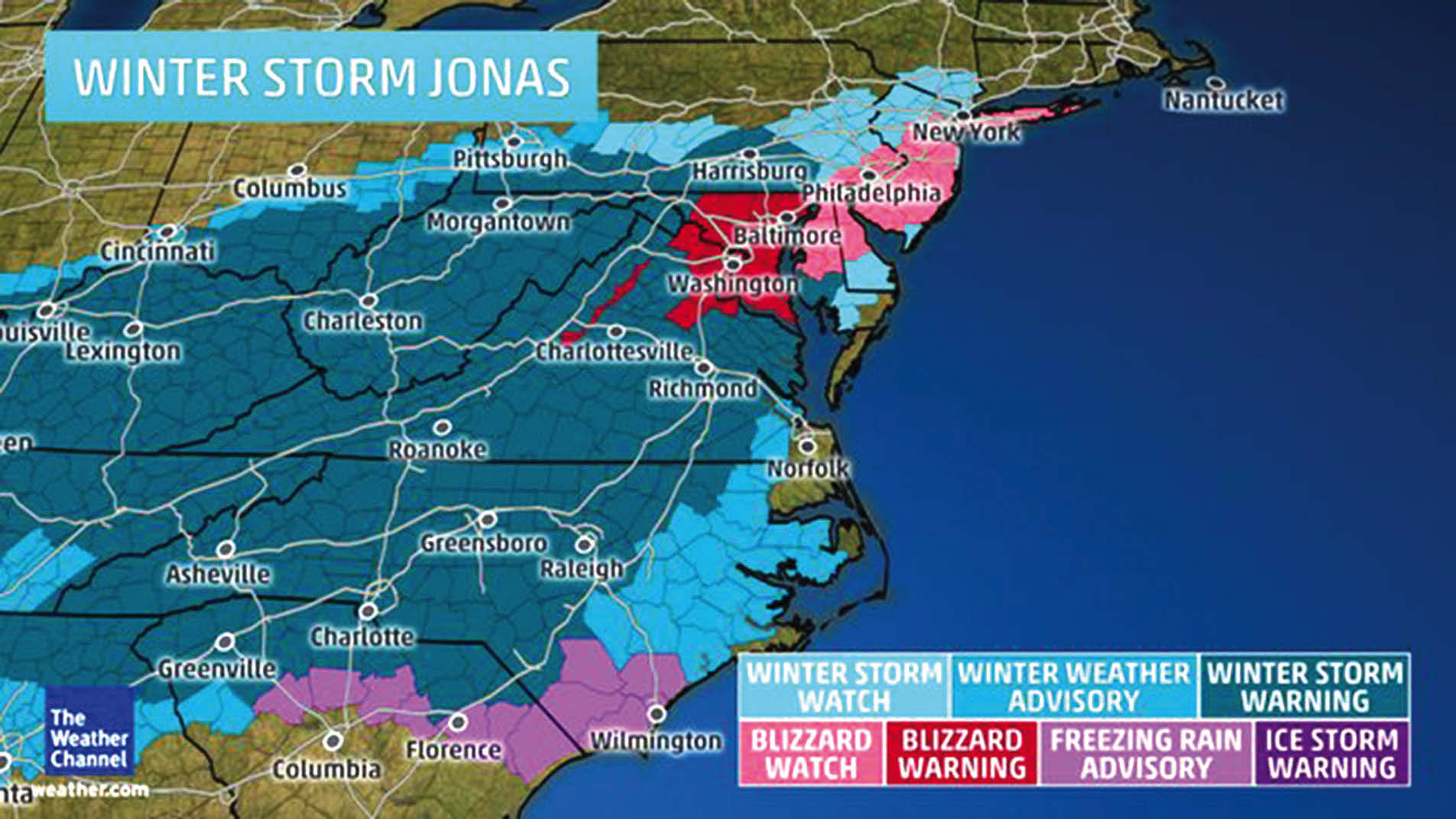
NEW YORK (TIP): The monstrous winter storm is coming to disrupt life, starting Friday, January 22. After an initial round of snow and ice, Storm Jonas will turn into a major snowstorm for the East Coast with strong, possibly damaging winds, significant icing and coastal flooding.
Heavy snow is expected to fall across parts of at least 15 states, with blizzard conditions possible over parts of the Washington D.C., Baltimore and New York City metro areas.
More than 50 million people could be affected by the “potentially paralyzing storm” headed for the East Coast this weekend, according to National Weather Service Director Louis Uccellini said on a call with reporters Thursday afternoon. CNN put the figure at 75 million.
The New York area will face the storm early Saturday for its first winter storm of the season and could see up to 8 inches of snow by Saturday night. Temperatures in the city are forecast to drop into the high 20s to the low 30s, according to the National Weather Service.
New York City Mayor Bill de Blasio said during a news conference on Thursday, Jan 21, that anyone in the area who planned to take “big trips over the weekend, get that out of your mind” and urged motorists to stay off the road.
CNN predicts it will be “one nasty snowstorm” that could leave the cities covered in a couple of feet of snow. The storm will start in the south and the Ohio Valley on Friday before moving north on Friday night and into Saturday morning, AccuWeather reported. By Sunday night, it will be over.
The storm could shut down highways and airports, according to AccuWeather. “This could be a long-duration snowfall that could last more than 24 hours in some locations,” AccuWeather meteorologist Elliot Abrams said.
Howling winds and pounding surf along the coasts could cause “substantial” beach erosion and coastal flooding, as well as property damage, the National Weather Service said.
Parts of Missouri, Kentucky, West Virginia, Virginia and North Carolina can expect ice accumulations that will mean slick roads, tree damage and power outages, AccuWeather said.
Snow and Ice Impacts
At least 6 inches of snow likely: I-95 corridor northward through New York City/Long Island, westward into the Ohio Valley and northwest Tennessee.
At least 1 foot of snow likely: Eastern Kentucky into most of West Virginia, Virginia except southeast portion, most of Maryland, D.C., northern Delaware, far southern Pennsylvania and extreme northwest North Carolina. Parts of these areas may see more than 20 inches of total snowfall.
Sharp snowfall gradient: There remains considerable uncertainty regarding snow amounts on the northern edge of Jonas’ snow shield from Pennsylvania to southern New England. These areas could see snowfall exceeding 6 inches, but confidence is not as high as areas just to the south.
Ice: The highest probability of accumulating ice to the extent of not only leading to slick roads, but also some tree damage and power outages is also possible.
High Winds
Strongest wind potential: Delmarva Peninsula, Chesapeake Bay, New Jersey and Long Island Saturday. Occasional gusts to 60 mph, coupled with the weight of wet, heavy snow in some of these areas, will likely lead to power outages, downed trees and limbs, and perhaps some structural damage.
Additional strong gusts: Washington and Baltimore metropolitan areas, where blizzard conditions are possible; New England coast, particularly southeast New England, Cape Cod, Nantucket Island and Martha’s Vineyard; North Carolina’s Outer Banks. There will also be rather strong winds gusts in the Mid-South region of west Tennessee, southeast Missouri, eastern Arkansas and northwest Mississippi Friday that could also produce local blizzard conditions in spots. The combination of heavy snow and these strong winds could lead to power outages and some downed trees/limbs.
Predictably, meteorologist message boards & social media are abuzz with the storm’s potential. One leading meteorologist on Twitter has already dubbed the storm a “blockbuster blizzard for the ages.” The person who literally wrote the textbook on major Northeast winter storms, Paul Kocin, wrote on Tuesday, Jan 19, that this week’s storm is “textbook.” Another meteorologist called the storm’s predicted evolution “perfection.”
There were the six children, their mother and her boyfriend in Houston, Texas. The nine worshippers in a church in Charleston, South Carolina. The 53-year-old father who tried to stop three men ransacking a metalworker’s minivan in Brooklyn. The 28-year-old mother of two in Indianapolis whose new husband shot her in the face 13 times. The two young reporters shot to death during a live news broadcast in Moneta, Virginia. And the thousands just like them whose deaths did not make the front page.
While many victims’ names may quickly disappear from the public eye, their stories live on in the statistics that help us to understand the scale of gun violence in the United States. Below is a compilation of numbers that added up to a significant year in gun debate in 2015.
According to the Gun Violence Archive (GVA), a nonprofit website that scours more than 1,200 sources to track gun deaths and injuries in the United States, there have been more than 50,000 incidents of gun violence in 2015.
The numbers include everything from homicides and multiple-victim gang assaults to incidents of self-defense and accidental shootings. The organization’s records show that more than 12,000 people have been killed with guns this year, but what its numbers do not record – due to government reporting practices – is a massive hole in the data: the nearly 20,000 Americans who end their lives with a gun each year. Nor does its already high injury tally capture the full extent of the victims who continue life with debilitating wounds and crushing medical bills. When the federal statistics for 2015 are released two years from now, the government’s models will show tens of thousands more gun-related injuries.
Major Incidents / Shootings (order by severity)
San Bernardino
Roseburg, Oregon
Charleston, South Carolina
Chattanooga, Tennessee.
Colorado Springs, Colorado
Garland, Texas
Gun Violence in America: By the Numbers
MORE THAN 4 MILLION: Number of American victims of assaults, robberies, and other crimes involving a gun in the last decade
MORE THAN 30,000: Number of gun deaths in America each year
MORE THAN 20,000: Number of children under 18 killed by firearms over the last decade
MORE THAN 20,000: Number of Americans who commit suicide with a firearm each year
466: Number of law enforcement officers shot and killed by felons over the last decade
As of December 23, a total of 12,942 people had been killed in the United States in 2015 in a gun homicide, unintentional shooting, or murder / suicide.
Terrorism dominates headlines and budget lines while a more lethal scourge persists at home.
In his remarks following the mass shooting at Umpqua Community College on October 1, President Obama said he knew his outrage over the country’s unrelenting gun violence would be interpreted by critics as “politicizing” the issue. Fine, he said, and asked news organizations to check the facts: “Tally up the number of Americans who’ve been killed through terrorist attacks over the last decade and the number of Americans who’ve been killed by gun violence, and post those side-by-side.” Several did, and Obama’s point was made: Amid the government’s massive, justifiable effort to squelch terror threats, comparatively little has been done to address a problem that has claimed exponentially more U.S. lives. According to an October poll, 40 percent of Americans say they know someone who was fatally shot or committed suicide with a gun.
Mass shootings – as measured by four or more people shot, regardless of total fatalities – have taken place in nearly 100 metro areas over the past 12 months.
According to the Mass Shooting Tracker, a crowdsourced database of shootings in which four or more people are injured or killed, all but one major American city has had a mass shooting since 2013, with Austin, Texas as the lone exception. This year alone, nearly 100 metro areas have experienced mass shootings. The Tracker counts domestic homicides in its tally, as well as sprays of gunfire that wound several people at once – but often aren’t counted among the San Bernardinos or Umpquas because the victims survived. Two such incidents year-old Adam Lanza fatally shot 20 children and 6 adult staff members occurred on Father’s Day this year, when 10 people were shot at a block party in West Philadelphia, Pennsylvania, and 12 people were shot at a child’s birthday party in Detroit, Michigan.
“This is not the time to be fearful,” said Detroit Police Chief James Craig. “These are urban terrorists who do nothing positive for our neighborhoods.”
School kids who fell victim to shootings at Sandy HookElementary School in Newton, Connecticut on December 14, 2012 when 20-children & 6 adults were shot
The vast majority of the nation’s gun violence does not look like Umpqua or Charleston or San Bernardino.
Though mass shootings demand nonstop coverage, it’s the shootings taking place in parking lots, bars, schools, bedrooms, and street corners across America that are responsible for most gun injuries and deaths.
Black men are disproportionately affected by gun violence.
A November ProPublica article noted that half of American gun death victims are men of color in “poor, segregated neighborhoods that have little political clout.” Timothy Heaphy, a former U.S. attorney in Virginia, says this is precisely why they don’t capture the public’s attention. “I don’t think we care about African-American lives as much as we care about white lives,” he said.
At a rate of more than twice a day, someone under 18 has been shot and killed.
A remarkable 75 percent of children killed with guns this year have been under the age of 12. Since the mass shooting at Sandy Hook Elementary in Newtown, Connecticut, three years ago, an American child under 12 has died by intentional and accidental gunfire every other day, according to analysis by NBC News. And those children are far more likely to die from guns held by family members and acquaintances than strangers, according to an NBC News analysis of FBI data.
On August 18, 9-year-old Jamyla Bolden was killed by a bullet fired into her Ferguson, Missouri, home as she did her homework on her bed. “Usually when we hear the gunshots, she’s the first one who yells ‘Mom, they’re shooting!’” her mother told KMOV.com, a local news station. “I noticed Jamyla wasn’t saying anything. That’s the main thing I remember: her not moving.”
Unsecured guns have turned dozens of toddlers into killers – and many more into victims.
Kids younger than three have gotten ahold of guns and shot someone at least 59 times this year, a disturbing trend first reported by Christopher Ingraham at the Washington Post in October. Most often, these toddlers injure or kill themselves, but more than a dozen have shot other people, sometimes fatally. Gun violence prevention advocates say that gun storage requirements and the adoption of smart guns that only fire for their owners could reduce these deaths, but the gun lobby vehemently opposes such mandates. In November, after the Post’s report, 20 Democrats in the U.S. Senate asked the Government Accountability Office to issue a report on the safe storage of guns in American homes.
Guns are now ending as many American lives as cars.
The comparative mortality rates – also first flagged by the Post’s Christopher Ingraham – come from CDC figures released earlier this month. They reflect a larger story: While motor vehicles have been getting progressively safer, guns have killed people at a consistent clip over the past 15 years. Unpacking the numbers further reveals that firearm fatalities are holding steady while suicides by firearm have climbed along with the number of guns in circulation. Some theorize that medical advances are saving shooting victims who formerly would have died of their injuries.
A gun in a troubled home continues to raise the risk of death
This enduring statistic from a decade-old California Attorney General report emphasizes just how dangerous it is to introduce firearms into a turbulent relationship. In no state is that more pronounced than in South Carolina, which ranks first in the rate of women killed by men – a rate that is more than twice the national average. After several frustrated starts, South Carolina finally passed legislation this year limiting firearms access for domestic abusers -along with Alabama, Delaware, Maine, Oregon, and Vermont. But 17 states still do not have their own equivalent of a federal law banning criminal domestic misdemeanants from possessing guns, according to the Law Center to Prevent Gun Violence.
In one of those states, Georgia, Vanessa Soyer was gunned down in front of her 13-year-old son in their Lawrenceville apartment on November 16. A mother of four, the Harlem-bred Soyer, 47, authored a book about domestic violence. Her husband of 15 years, from whom she was in the process of separating, was arrested for the murder. “Nobody would’ve ever thought that the words from the pages of her books would become her reality,” her GoFundMe page reads.
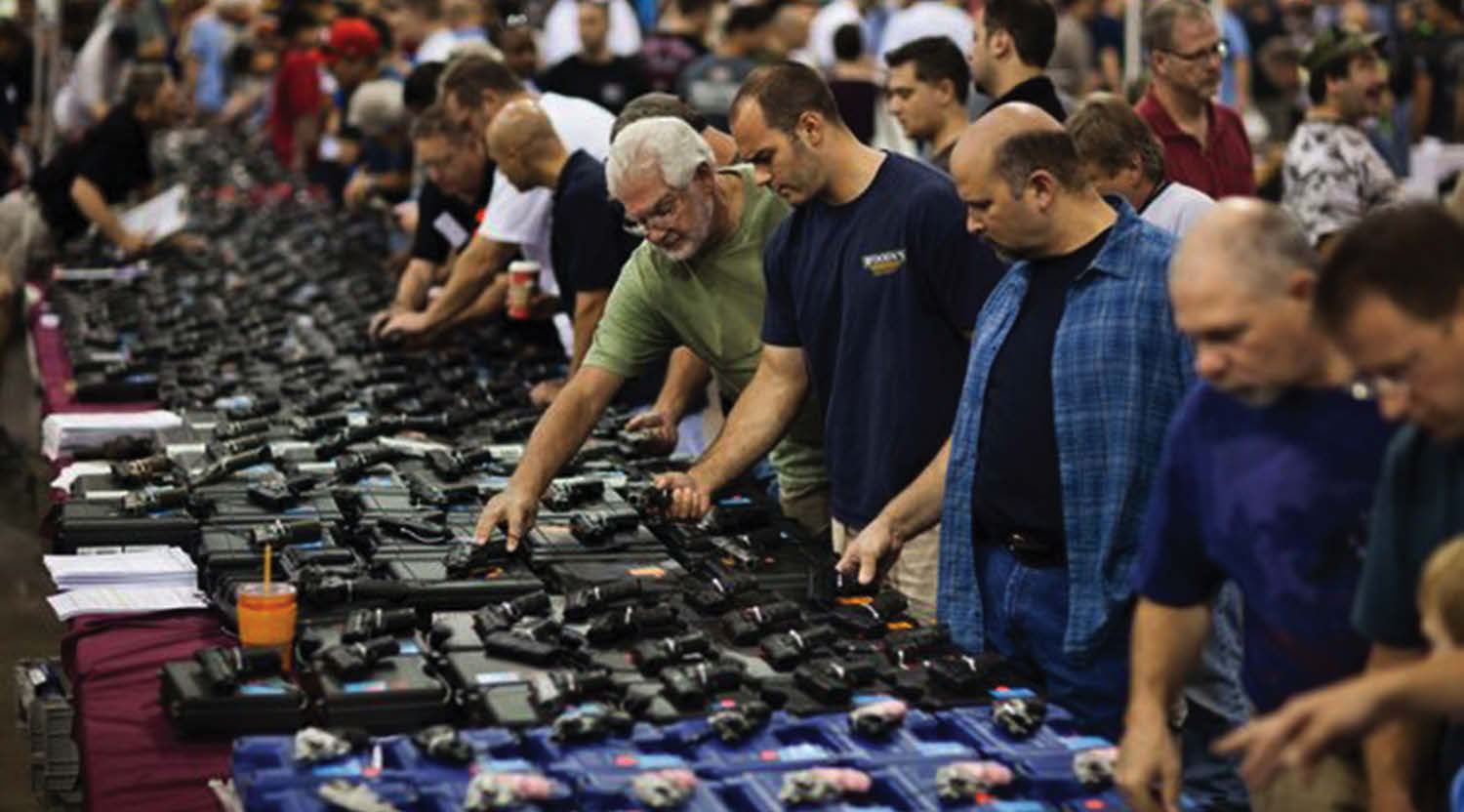
Gun sales in 2015 continued at a blistering pace.
The same day Robert Lewis Dear opened fire at a Planned Parenthood in Colorado Springs, Colorado, killing three and wounding nine, the FBI reported five percent more NICS checks than Black Friday last year, setting an all-time single-day record. If each of those checks resulted in a gun sale, it would means Americans bought enough new firearms to arm every active duty Marine.
8 % of gun owners own a stockpile of 10 or more weapons.
In an online survey of 3,000 people, Harvard’s Injury Control Research Center found that 22 percent of Americans professed to own guns – and 25 percent of those gun owners own five or more guns. The Center’s director, Dr. David Hemenway, told The Trace in October that guns in fewer hands might actually lower rates of gun suicide and accidental shootings. But the fact that these gun owners feel they must compile an arsenal raises another set of questions. “Who are these people and why do they have so, so many guns?” Hemenway asked. “And are they really responsible?”
Tens of thousands more stolen guns entered the illegal market – many a result of theft.
The advisories echoed from sheriffs in Jacksonville, Florida; St. Louis, Missouri; and Lafayette, Louisiana: Lock up your guns. More than 400 firearms were stolen from cars in Duval County, Florida, this year – and 60 percent of those were from unlocked cars. In St. Louis, reports of gun theft were up 70 percent in August, and cars and trucks were targeted far more than homes. A gun stolen out of a car in Lafayette was used to wound a police officer last year, and in Pinellas County, Florida, a gun stolen from an unlocked car was used to kill another officer. Stolen guns, which are increasingly showing up at crime scenes, were called “the engine of violence in Chicago” by police spokesman Anthony Guglielmi in August.
The increase in such thefts has sparked a debate about personal responsibility and gun ownership. The town of Orange, Connecticut, went so far as to charge a resident with misdemeanor reckless endangerment after he reported his loaded .38-caliber revolver stolen from his unlocked truck. Pro-gun advocates argue that stadiums and schools should be removed from gun-free zone designations, so people can carry their guns with them instead of leaving them in their cars. The bottom line, Jacksonville Sheriff Mike Williams said in November, is “be a responsible gun owner, take care of your weapon, lock it up.”
American cities continue to seize illegal guns at an astounding rate.
The Chicago Police Department announced earlier this month that it confiscated 6,521 illegal guns in 2015, which it said works out to one gun every 90 minutes. But Newsweek analyzed the department’s own figures and concluded that it’s been more successful than advertised. “With 335 days so far this year and 6,521 guns removed, that is about 19 guns a day, or about one every 74 minutes,” Polly Mosendz wrote. (In July, Adam Sege conducted a similar audit for The Trace, and determined Chicago Police were removing a gun off the streets every 75 minutes.)
Officers in Little Rock, Arkansas, took 118 guns off the street as of November 2015. Baltimore, Maryland, police estimate that they’ve seized nearly 3,500 illegal guns in the last 12 months.
Tyshawn Lee was the second 9-year-old boy murdered in Chicago in the last 15 months.
The gunshot wounds to his temples had to be sealed with wax. He wore a white tuxedo, red bow tie, white gloves, and red, size 5 gator-skin shoes, and his 25-year-old mother wore a white dress and a red hat to match. Tyshawn Lee was the second 9-year-old boy to be targeted and killed by gangs within the last 15 months in Chicago, and he was lured from a swing set in the Auburn Gresham neighborhood and murdered in an alley because his father allegedly belonged to a gang that may have been involved in the murder of the brother of one of the suspects. Peter Nickeas, the overnight crime reporter at the Chicago Tribune, detailed the days after the boy’s death – during which a battle-hardened city found it still had the capacity for shock.
The 114th Congress is still hesitant to engage with the gun issue.
At a hearing on the third anniversary of the Sandy Hook shooting, California Representative Mike Thompson, chairman of the House Gun Violence Prevention Task Force, noted that Congress has held more than two dozen moments of silence since the massacre – but has not approved any gun safety bills. In March, Thompson, a Democrat, and Representative Peter King of New York, a Republican, introduced a bipartisan bill that would implement background checks on private gun sales. Since then it’s been bouncing from one House subcommittee to another.
This was also the year that saw a backlash against politicians who offer “thought and prayers” after mass shootings but no legislative action. Left-leaning reporters noticed that the same lawmakers who only offered empty platitudes were highly rated by the NRA. On the evening of the San Bernardino shooting, Igor Volsky, a contributing editor at ThinkProgress, began Twitter-shaming them. One by one, he replied to three dozen Republican legislators’ “thoughts and prayers” tweets with the amount they’d been given by the NRA – a total of $12.5 million.
Shah Noor, a recent transplant to California from Maryland, was driving through a nearby community one evening with his wife and stopped at a 7-Eleven to get some milk.
A police car pulled up with lights flashing. Officers walked to their car and grilled them for 45 minutes. They were aggressive, he said, and asked what they were doing there, where they work. At one point, he saw the officer put his hand on his gun.
“It was scary,” Noor said. “Pure harassment.”
Police — Noor declined to identify the agency because of an ongoing investigation —cited him for talking on his cell phone while driving. He said the charge is bogus.
“My phone had been dead for over three hours,” said Noor, 32, a lawyer who now runs JS Noor, a jewelry business. And the log on his wife’s cell phone shows no activity during that time.
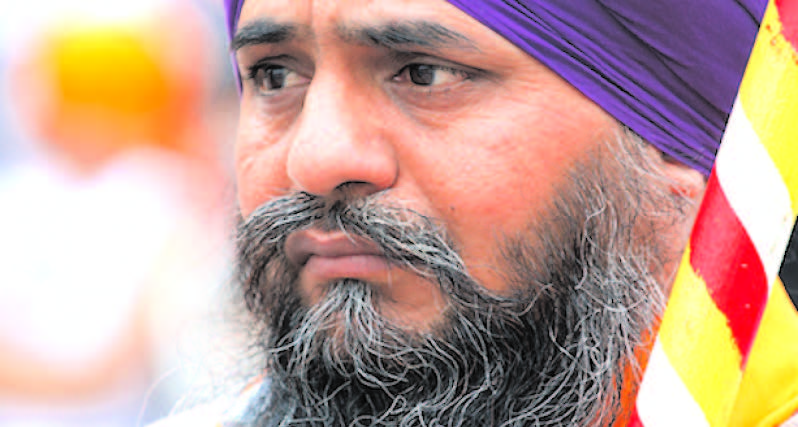
He’s convinced that racial profiling was in play. He wears a turban and has a beard. His wife, Stephanie, is African-American. And all of this happened within days of a mass shooting in San Bernardino carried out by a Muslim couple.
After every attack on U.S. soil committed by Muslims, the backlash seems to increase. But hate crimes don’t target only Muslims.
Noor is originally from India and a Sikh, not an Arab or Muslim.
‘[Sikhism] preaches a message of devotion, remembrance of God at all times, truthful living, equality between all human beings, social justice, while emphatically denouncing superstitions and blind rituals.’ – Sikh Coalition
Since 9/11, Islamophobia has spread and has targeted groups indiscriminately. Sikhs, who wear a turban as an article of faith, have often been mistaken for Muslims in the U.S. They pray at a gurdwara, not a mosque, but a gurdwara in Buena Park, Caifornia, was vandalized days after the San Bernardino shooting. Graffiti sprayed on the façade included the misspelled “Islahm” and an expletive directed at the Islamic State of Iraq and the Levant.
The San Bernardino shooters had apparently been inspired by the group that has been behind horrific violence worldwide, including the Nov. 13 attacks in Paris.
The 20-year-old man arrested for the vandalism issued a public apology to the congregation of Buena Park Gurdwara Singh Sabha, a Sikh house of worship in Orange County.
But other assaults have been more violent. On Sept. 15, 2001, four days after the attacks on the World Trade Center towers, Balbir Singh Sodhi was shot and killed outside of his Mesa, Arizona, gas station by Frank Roque. Roque wanted to “kill a Muslim” in retaliation for the attacks on Sept. 11. Sodhi is considered the first murder victim of post-9/11 backlash. Roque was convicted of first-degree murder and sentenced to life in prison for the hate crime.
The Sikh Coalition was founded by volunteers in 2001 in response to a spate of attacks against Sikh Americans.
“Sikh adults were assaulted, Sikh children were bullied, places of worship were vandalized,” said Arjun Singh, the coalition’s law and policy director. “Terrorist attacks lead to xenophobia and anyone who looks different is targeted, including Sikhs.”
The Sikh Coalition reports a spate of attacks and harassment this month alone.
A Sikh woman traveling to California shortly after the San Bernardino attacks said she had to show her breast pump to airline employees to prove she wasn’t a “terrorist”.
In Grand Rapids, Michigan, a store clerk originally from the state of Punjab in India was shot during an armed robbery. The assailants called the clerk a terrorist.
Five days after the San Bernardino attack, Gian Singh, a 78-year-old grandfather, was walking to pick up his grandson from school in Bakersfield, when a man in a pick-up truck threw an apple at him with such force that the apple split when it hit his head, according to the Sikh Coalition, which is representing him.
‘Sikh adults were assaulted, Sikh children were bullied, places of worship were vandalized. Terrorist attacks lead to xenophobia and anyone who looks different is targeted, including Sikhs.’ – Arjun Singh, law and policy director, Sikh Coalition
There have been Sikhs in the U.S. for more than a century. Many came to build the railroads in the West. There is no accurate data on the number of Sikhs here, and estimates vary widely between 750,000 and 1.6 million, according to the coalition. Almost half of them live in California, the state with the largest Sikh population, but the densest concentration of Sikhs is in the tri-state area of New York, Connecticut and New Jersey.
The Sikh religion is a monotheistic religion that originates in the Punjab region of India. According to the coalition, it “preaches a message of devotion, remembrance of God at all times, truthful living, equality between all human beings, social justice, while emphatically denouncing superstitions and blind rituals.”
“We were shocked after finding out about the graffiti,” said Jaspreet Singh, 40, on the board of the Buena Park gurdwara that was vandalized. “Especially the hate words being used.”
For Sikhs who grew up in the U.S., harassment has been a way of life. For Noor, schoolyard teasing was common but never did he feel so much hatred as after 9/11.
“You feel people don’t like you, like an outsider,” he said. People would call him “Osama” in reference to Osama bin Laden, the founder of Al-Qaeda, the group that claimed responsibility for the 9/11 attacks. They also called him “Taliban,” the armed fundamentalist movement in Afghanistan.
“Sometimes, I would walk up to [the hecklers] and yell back, ‘I’m not a terrorist,’” Noor said.
One time, someone pulled a knife on him in Wheaton, Maryland, a suburb of Washington. Another time, in Amsterdam, people in a car yelled out “bin Laden” at him, he said. When he yelled back, they followed him up an alley. He escaped.
And there was another encounter with police in a Detroit suburb. He had a bracelet in his hand that he was playing with. Police mistook it for a masbaha, Muslim prayer beads. He showed them that it had a cross on it.
“I wear religious symbols of all kinds,” Noor said. “I go to church, to gurdwara, to mosque.”
He has attended service at a Baptist congregation, his wife’s religion.
His cousin, Jaisal Noor, 30, a reporter for The Real News Network, a nonprofit news and documentary service based in Baltimore, wrote about assaults on Sikhs for the 10th anniversary of 9/11.
“The day of 9/11, I was confronted with the reality that things changed,” he said in an interview.
He was in high school when the World Trade Center towers collapsed.
“I remember that day feeling worried for my family, my parents,” he said. His father was a frequent business traveler who encountered a lot of discrimination at airports.
His classmates would rant, “We’re gonna get these A-rabs” but then would turn to him and tell him they had no problem with him because he was Indian.
“But it’s never gone away,” said Jaisal Noor. “Whenever we’re at war, the attacks increase … They see images of turban-wearing men as the enemies.”
Sikhs say their first reaction may be to distance themselves from Muslims and explain to people that they are not Arabs or Muslim. But they stress that no one, Sikh or Muslim or any other religious or ethnic minority, should be targeted.
“Many Sikhs are worried, and rightly so,” said Arjun Singh. “If the bigoted rhetoric continues, hate violence will continue too … Today’s toxic political climate has led to bias, discrimination and hate violence.”
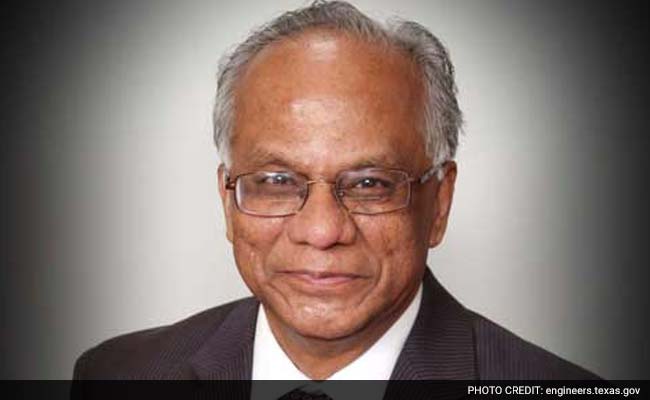
HOUSTON: An Indian-American has been appointed as the Secretary of the Texas Board of Professional Engineers that licenses qualified engineers and regulates the practice of professional engineering in the US state.
Sockalingam “Sam” Kannappan, a professional engineer and senior design engineer for SNC-Lavalin Hydrocarbons and Chemicals, has been appointed as the Secretary of the Texas Board of Professional Engineers (TBPE) in Austin.
Houston-based Kannappan also serves as a board member of the Society of Piping Engineers and Designers and an advisory board member of the Asia Society’s Texas centre.
The Indian-American engineer will be signing all newly-issued licenses, TBPE said in a statement.
The board issues, monitors and renews roughly 57,000 licenses for engineers.
The board’s role in the protection of the public is to license qualified engineers, enforce the Texas Engineering Practice Act and to regulate the practice of professional engineering in Texas.
Kannappan is a mechanical engineering graduate of Annamalai University in Tamil Nadu and received his MS in mechanical engineering at the University of Texas in Austin.
Previously, Kannappan also served as a member of the American Society of Mechanical Engineers Gas Pipeline Safety Research Committee, which defends Houston against bio-terrorism.
Additionally, from 2006 to 2011, he was on the Texas On-Site Wastewater Treatment Research Council.
Throughout his career, Kannappan has received a number of honours and awards, including an award from Crystal Dynamics group of NASA’s Goddard Space Flight Center in Maryland for improving laser measurement accuracy.
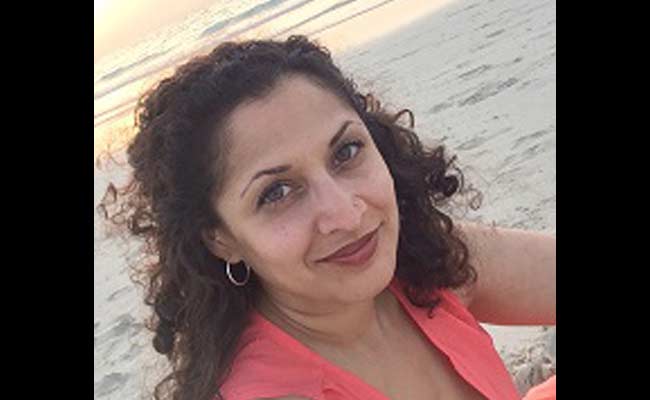
WASHINGTON: An Indian-American woman is among at least 27 people killed during a deadly siege of a Mali hotel by Islamic extremists.
Anita Ashok Datar, 41, is the sole US citizen to have been killed in the attack yesterday, State Department Spokesman John Kirby said.
“We mourn American Anita Datar and all those lost in Mali Attacks,” US Secretary of State John Kerry said in a tweet yesterday.
“We extend condolences to family & friends and stand with the Malian people,” he said.
In a statement released through the US State Department, Ms Datar’s family said that they are devastated by the news.
“We are devastated that Anita is gone-it’s unbelievable to us that she has been killed in this senseless act of violence and terrorism,” the family said.
Anita Dater lived in Takoma Park in Maryland, a suburb of Washington DC.
“Anita was one of the kindest and most generous people we know. She loved her family and her work tremendously,” the statement said.
As word spread among friends and colleagues, Datar’s death touched off a wave of mourning that on Saturday reached from colleagues in Washington and neighbors in Maryland to the front-runner for the Democratic presidential nomination.
“The world is a darker place without your light,” one stunned friend wrote on Datar’s Facebook page Saturday. “I am praying for your little boy.”
Her family issued a statement Friday voicing similar devastation.
“It’s unbelievable to us that she has been killed in this senseless act of violence and terrorism,” her brother Sanjeev Datar said in the statement. “Anita was one of the kindest and most generous people we know. She loved her family and her work tremendously.
Everything she did in her life she did to help others – as a mother, public health expert, daughter, sister and friend.”
Ms Datar was born in western Massachusetts and grew up in northern New Jersey.
She earned an MPH and MPA from Columbia University’s Joseph Mailman School of Public Health and School of International and Public Affairs.
She worked in Senegal for two years with the Peace Corps (1997-1999) and spent much of her career working to advance global health and international development, with a focus on population and reproductive health, family planning and HIV.
She was a senior manager at Palladium Group and a founding member of Tulalens, a not-for-profit organisation connecting underserved communities with quality health services.
Armed extremists stormed Radisson Blu hotel in Mali’s capital town locking in 170 people, killing at least 27 of them. Twenty captured Indians were evacuated without any harm.
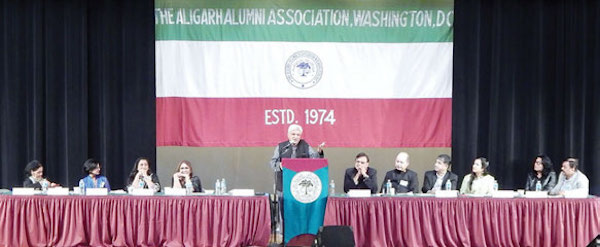
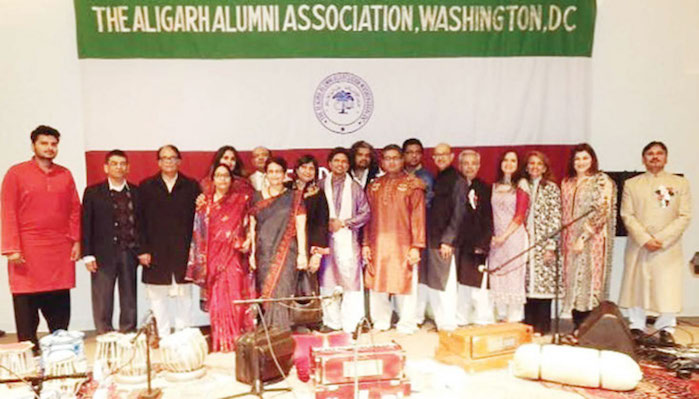
WASHINGTON (TIP): “Nazm is gaining ground in Mushaira,” said Javed Akhtar, the famous poet, film lyricist, and screenplay writer, presiding over 41st Annual International mushaira organized by the Aligarh Alumni Association in Washington on November 7, 2015. Nazm, which is a major part of the Urdu poetry normally written in rhymed verse and also in modern prose style poems, is a significant genre of Urdu poetry. “I was very pleased to see that a number poets have recited magnificent nazms in addition to ghazals and the number of female poets also presented excellent poetry at this mushaira,” he added.
Javed Akhtar recites his poems
Javed Akhtar has recently released a five-volume collection of poetry written by Akhtar’s grandfather Muztar Khairabadi. At the request of audience he described the 10-year journey that culminated in the publication of the, Khirman. He mentioned how the oft-repeated ghazal Na kisi kii ankh ka noor hoon, na kissi ke dil ka qarar hoon/Jo kisi ke kaam na aa sake main woh ek musht-e-ghubar hoon, ascribed to Bahadur Shah Zafar was actually written by Muztar. He elaborated that eminent literary critics such as Niyaz Fatehpuri, Ale Ahmad Suroor and Gopichand Narang had long argued that this verse was not found in Zafar’s complete works published in 1887 by the Nawal Kishore Press, and was definitely Muztar’s. The discovery of this ghazal, written in Muztar’s own handwriting and carrying his takhallus (pen name) Muztar, finally puts to rest any doubt about these much-quoted and often-sung verses, wrongly said to portray Zafar’s anguish when he was exiled from Hindustan to Rangoon. Another testimony, more by way of criticism of the ghazal’s weakness but nevertheless an acknowledgement of its authorship by Muztar, comes from a contemporary, Shah Muhammad Mumtaz Ali ‘Aah’ in 1928-barely a year after Muztar’s death.
Akhtar received thunderous applause when he recited his nazm, yeh khail kiya hai. At the request of the audience he also recited Woh Kamra and Waqt.
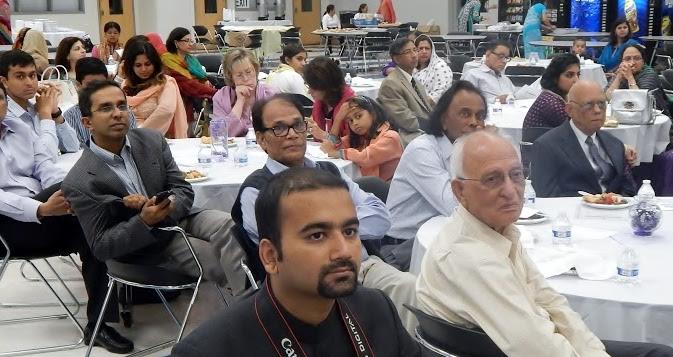
Welcoming the audience, Association’s President Farzana Farooqi briefly apprised the gathering about the activities of the Association. She informed that the Association had been in the forefront of organizing high-quality literary and cultural activities for the last 40+ years. It was this Association, which started the tradition of international mushaira in North America. Her speech was followed by rendition of Aligarh University Tarana, Yeh Mera Chaman Hai, which was written by Akhtar’s maternal uncle Majaz Lakhnawi. More than 600 Urdu-lovers that included diverse sections of the Indo-Pak community came to this event that was held at a newly-constructed spacious Gaithersburg High School, Gaithersburg, Maryland, a venue well suited to a grand literary environment.
The Mushaira was skillfully moderated by Dr. A. Abdullah, whose golden touch has been a key factor in making the ambience and effect of these mushairas memorable. Dr. Abdullah said that with a modest beginning of poetry recitation by a few Urdu lovers in 1975, the Mushaira has now entered in 5th decade. “Forty years of untiring efforts by the Washington Aligarh Alumni Association and support of the community, this Mushaira is now the expression of common heritage of all Urdu lovers in this area. It has become a reference for the introduction of Washington in the Urdu world. To preserve this history and the prestige of this Mushaira is responsibility of every one,” he added.
Dr. Mohammad Akbar thanked all the poets, guests, and audience for their continued support. He also acknowledged the hard work of volunteers.
In addition to Javed Akhtar twelve poets recited their kalam in their own unique style. Other well-recognized poets included Lata Haya and A. M. Turaz (India), Seema Ghazal and Sarwat Zehra (Pakistan). The local poets from USA, who also recited their kalam (poetry) were Abdullah, Akram Mahmood, Hana Khan, Khalid Irfan, Razi Raziuddin, and Sabiha Saba.
Javed Akhtar
Dr. A. Abdullah. Also seen at right is Javed Akhtar
Lata Haya
Sarvat Zehra
Seema Ghazal
Khalid
Samples of poetry of some poets are as follows:
Lata Haya- Hindi ki beti jise Urdu ne paala hai-a popular poet from Rajhasthan said:
Main ke aurat hoon, meri sharm hai mera zevar; bas Takkhallus isi bais to “Haya” Rakha hai
She was applauded for her poem about Urdu. She also brought the emotions of the audience to a high pitch with her soulful recitation of a poem she had written five days after her mother’s death.
Woh zid, woh shararat aur akarpan chala gaya; Maa jab chali gaee, mera bachpan chala gaya
Incidentally, Dr. Abdullah’s mother had also passed away five days before the mushaira and this poem brought tears in his eyes and many in the audience were also affected.
Dr. Abdullah, who was moderating the mushaira brought in the humorous poet Khalid Irfan of New York to the podium to change the somber mood. Khalid charmed the audience with his sophisticated jibes on the religious and political leaders and ongoing skirmishes between the neighboring countries-India and Pakistan.
Paijamo ka design ko badal daala to kiya gham hai; Hamari beewion ke gharare to eik jaise hain
Pareshan haal hai public magar donon muulkon ke; Meerasi, cricketer aur filmi sitare to eik jaise hain
Expressing his appreciation of Aligarh Alumni Association’s dedication of more than four decades to promoting Urdu in North America, Khalid said that Association’s contribution will be written in golden words in history.
Dr. Sabiha Saba, a neurobiologist by profession, congratulated the Association for providing top-class mushaira every year. She also expressed her gratitude by acknowledging the Association for establishing her in poetry and literature. She recited a few poems. A sample is given below.
Awwal-e-ishq ki who beytabi Kaisi manzil se hum guzar aaye Aap aaeN to phi Saba mahke Mahfil-e-bey baar meiN samara aye Turaz-a young Bollywood poet delighted the audience with dramatized presentation of his poetry. His rendering of poetry reminded the audiences that poetry reading was once a performing art as well. It was his participation in Washington mushaira and he was very impressed with the standard of mushaira and audience.
Akram Mahmood’s poetry expresses concerns of present day trials and tribulations, especially those encountered by immigrants.
Yeh hijr-e-musalsal ka wazeefa hai meri jaan Ek tark-e-sukoonat hi to hijrat nahin hoti.
Sarwat Zehra is a medical doctor by profession and has been writing ghazal, geet, and nazm. She is a rising female poet belonging to Fahmida Riaz’s school of thought expressing concerns of women.
Bint-e-Hawwua hoon main, yeh mera jurm hai Aur phir shaiyri to kara jurm hai.
Main tamasha nahin apna izhaar hoon Jaanti hoon mera bolna jurm hai
A number of people from the audience expressed their thanks to the Association for organizing this excellent mushaira. Mr. Kaleem Kawaja-a senior community leader-expressed his views as follows, “In the last about ten years some other Urdu wala groups have held mushairas in Washington and elsewhere in United States and Canada, but almost none of them have been able to develop the aura, flavor and reputation of Asli Aligarh Mushaira. Go to any other mushaira in Washington or other cities in US and you will hear people comparing them to the Washington Aligarh Mushaira.” Youn to hotey hain mushaerey aksar; laikin Aligarh Association key mushairey kaa haiy andaaz kutch aur, he added.
Dr. Moazzam Siddiqi-a prominent literary person and former Chief of Near-Eastern Languages at Voice of America said that Mushaira organizers deserve credit for inviting participation of more female poets. Most of them very enthusiastic and presented quality poetry. Historically, poetry recitation used to be more of a performing art and Lata Haya and Turaz enthralled the audience by presenting their poetry in that old style.
Dr. Renuka Misra-International Coordinator of the Global Organization of People of Indian Origin (GOPIO) said that she has been associated with the Aligarh mushaira religiously since she arrived in Washington more than two decades ago. It is a real pleasure to see that the standard of mushaira has been increasing. It was real treat to see more female poets’ participation in this year’s mushaira. I feel that that there should have been more time provided for Lata Haya and Turaz.
Mr. Bharat Bhargava-a retired Senior Executive of the World Bank said that it was one of the most successful Mushairas ever. Every poet came participated with vigor and kept the audience engaged. The organizers did an incredible job and Dr. Abdullah was as usual amazing.
Mr. Naimullah Qazi-a senior community member wrote: This year’s mushaira was very good. Audience enjoyed it fully. Everyone appreciated the way it was conducted. Poets were also very comfortable with Washington Audience.
Professor Dr. Maina Singh, wife of India’s Ambassador in Washington and a literary personality was accompanied by Mr. Shiv Rattan, Counsellor Community Affairs. Embassy of Pakistan was represented by Mr. Nadeem Hotiana, Minister for Press. Notable personalities included presidents and office bearers of community organizations such as the Association of Indian Muslims (AIMS), the Global Organization of People of Indian Origin (GOPIO), Washington Hyderabad Association (HAWAMA), Hindi Association, India Cultural Coordination Committee (ICCC), and the University of Karachi Alumni Association (UKAA).
WASHINGTON (TIP): Islamic State militants released a video on Thursday threatening the White House with suicide bombings and car blasts and vowing to conduct more attacks on France. The six-minute video, released by Islamic State fighters in Iraq, applauds last week’s Paris attacks, according to a translation of the Arabic provided by the Maryland-based SITE Intelligence Group.
The latest threat comes one day after the militant group put out a video showing scenes of New York City, which suggested it was also a target.
Islamic State, which controls a large territory in Syria and Iraq, has claimed responsibility for last Friday’s attacks in Paris in which 129 people were killed.
FBI Director James Comey said on Thursday he was not aware of any credible threat of a “Paris-type attack” in the United States.
State Department spokesman John Kirby told CNN that Thursday’s video was being examined to determine its “veracity.”
MUNCY, PENNSYLVANIA (TIP): An unmanned Army surveillance blimp broke loose from its mooring in Maryland and floated over Pennsylvania for hours on Oct 28 with two fighter jets on its tail, triggering blackouts across the countryside as it dragged its tether across power lines.
The bulbous, 240-foot helium-filled blimp eventually came down in at least two pieces near Muncy, a small town about 80 miles north of Harrisburg, as people gawked in wonder and disbelief at the big, white, slow-moving craft. No injuries were reported.
Fitted with sensitive defense technology, the radar-equipped blimp escaped from the military’s Aberdeen Proving Ground around 12:20 p.m. and drifted northward, climbing to about 16,000 feet, authorities said. It covered approximately 150 miles over about 3½ hours. As it floated away, aviation officials feared it would endanger air traffic, and two F-16s were scrambled from a National Guard base in New Jersey to track it. But there was never any intention of shooting it down, said Navy Capt. Scott Miller, a spokesman for the nation’s air defense command.
The blimp — which cannot be steered remotely — eventually deflated and settled back to Earth on its own, according to Miller. He said there was an auto-deflate device aboard, but it was not deliberately activated, and it is unclear why the craft went limp.
He said it was also unknown how the blimp broke loose, and an investigation was under way. Residents watched it float silently over the sparsely populated area, its dangling tether taking out power lines.
Tiffany Slusser Hartkorn saw it fly over her neighborhood on the outskirts of Bloomsburg around 2:15 p.m. and soon disappear from sight.
“I honestly was worried that there were people in it that would be injured. A neighbor down the road is thinking it knocked down a tree branch and power pole by his house that could’ve potentially destroyed his house,” Hartkorn said.
Wendy Schafer’s first thought upon seeing the blimp near her job at a spa and salon in Bloomsburg was that a nearby school was conducting an experiment.
“I had no idea what it was. We lost power at work, so I looked outside and saw the blimp,” Schafer said. “My first thought was Vo-Tech was doing something at the school until my friends tagged on Facebook about the blimp. It was crazy.”
About 27,000 customers in two counties were left without power, according to electric utility PPL, and Bloomsburg University canceled classes because of the outage. Electricity was restored to most people within a few hours.
The craft even knocked out power to the State Police barracks at Bloomsburg before settling in a wooded hollow, where it was swiftly cordoned off while military personnel began arriving to retrieve it, State Police Capt. David Young said. He said trees will probably have to be cut down to get it out.
Miller, the spokesman for the North American Aerospace Defense Command, said the tail portion broke off and hit the ground about a quarter-mile from the main section. The craft is known as a Joint Land Attack Cruise Missile Defense Elevated Netted Sensor System, or JLENS, and can be used to detect hostile missiles and aircraft. Such blimps have been used extensively in the Iraq and Afghanistan wars to provide radar surveillance around US bases and other sensitive sites.
MARYLAND (TIP): Chhap tilak sab cheeni ray mosay naina milai kay-is a famous line of Qawwali, composed in the 7th century by Hazrat Amir Khusrau, which has been enthralling audiences for hundreds of years in the Subcontinent.
Making their debut, as Qawwal in the Washington area, Sunny Diwan and party staged an excellent performance by singing this and other famous Qawwalis. In the elegant setting of the Community Center, with the magnificent Turkish mosque as a backdrop, they entertained the audience for nearly five hours. The enthusiasm and appreciation of the audience often found expression in individuals showering the artists with money, reenacting an old South-Asian tradition. The audience thoroughly enjoyed the evening and actively participated by clapping all the way through the performances. The fancy auditorium, with excellent acoustics, next to a mosque, all added to the listening pleasure of the audience and delightful ambiance of the evening.
A cold, drizzly evening and overall inclement weather did not discourage more than 150 lovers of Qawwali to come out and attend the Mehfil-e-Sama, organized by the Aligarh Alumni Association, Washington DC (AAA), on Saturday, October 3, 2015, at the new glittering Turkish Community Center auditorium at Lanham, Maryland. Attendees included members of diverse Indo-Pak cultural and literary organizations like the University of Karachi Alumni Association, Global Organization of People of Indian Origin, Hindi Association of Washington, and the American Muslim Institution, and others.
Welcoming the artists and audience, President Farzana Farooqi briefly appraised the audience about activities of the Association. She mentioned that the Association has been in the forefront of organizing high-quality literary and cultural activities for the last 40+ years. It was this Association, which started the tradition of International mushaira in North America.
“Famous lyricist-poet Javed Akhtar and other poets from India, Pakistan and other countries will share their poetry in this year’s mushaira scheduled on 7th November,” she added.
The Coordinator of the program, Masood Farshori, while introducing the artists said that Qawwali was a special form of musical performance to praise revered aulia (saints) for their good work. He said that Sunny Diwan orchestra had established reputation as Ghazal and light music singers, but Qawwali was a venture into a new territory for them. The main artist, Sunny Diwan, was accompanied by Aqeel Bhatti (Tabla), Naeem Peter (second Tabla), Sheldon John (Harmonium and background singer), and Patrick Bashir (keyboard and background singer).
The event concluded with brief remarks by the Secretary-General, Mohammad Akbar, who thanked the audience, the artists, and volunteers for great success of the program.
WASHINGTON (TIP): Citing the example of American India Foundation (AIF), dedicated to catalyzing social and economic change in India, an Indian-American business and philanthropy leader has advised donors to treat philanthropy as an investment.
If one wants to do philanthropy “properly,” one has “to treat it like an investment requiring thorough due diligence and regular goals and metrics tracking and assessment,” AIF Chair Lata Krishnan said in Washington at an event over the weekend.
AIF has more than 200 people in India who “source and screen” projects, monitor them while they are being implemented and deliver values to “investors,” she said delivering the second American Bazaar Philanthropy Lecture.
The essence of philanthropy is listening to those in need, she said. “It isn’t about what we want to get done,” said Ms Krishnan. “It is about those who are underprivileged and in need;(and finding out) what do they want, and how can we best deliver that.”
Ms Krishnan, who co-founded two enormously successful companies with her husband Ajay Shah, stressed the need for bringing business-oriented values to philanthropy, which, she said, is one of the two core things AIF focuses on.
Ms Krishnan and Mr. Shah along with a friend, bootstrapped SMART Modular Technologies “with only $110,000 in angel funding” in the early 1990s. By 1995, when the duo took the company public, the firm had more than $1 billion in revenue. They sold the company in 2002.
Currently, she is the chief financial officer of Shah Capital Partners, which invests in technology companies.
Earlier Ms Krishnan was introduced by US Assistant Secretary for Commerce for Global Markets, Arun M Kumar, one of the highest ranking Indian Americans in the Obama administration.
“She has pursued with the American India Foundation, a model, a concept of how the diaspora can support development in India in a very organized and professional way,” he said.
The philanthropy lecture was part of the second American Bazaar Philanthropy Dialogue, whose mission is to bring together stakeholders in the Indian American and South Asian American Philanthropy community.
The organizations represented included Sehgal Foundation, AIF, Pratham, Ekal Vidyalaya, Global Wheels Foundation, and Association of Indian Muslims, among others.
Besides Indian American entrepreneur and philanthropist Frank Islam, who was presented the American Bazaar Philanthropy award, the Dialogue also honored three young philanthropists from the South Asian American community.
They were: Shreya Bhatia, a 17-year-old senior at Thomas Jefferson High School for Science and Technology in Fairfax, Neev Saraf, an 8-year-old from Laurel, Maryland, and Swetha Prabhakaran, of Ashburn, Virginia.
Ms Bhatia raised $7,000 for the Insight Memory Care Centre, a Fairfax facility dedicated to providing care, support and education to individuals afflicted with the Alzheimer’s disease.
Saraf raised nearly $40,000 for the Nepal earthquake victims earlier this year.
Prabhakaran, a 15-year-old junior at Thomas Jefferson, is the founder and CEO of Everybody Code Now! a non-profit working to empower the next generation of youth to become engineers.
WASHINGTON (TIP): “Education is the gift that keeps on giving. Education empowers the mind and uplifts the soul. It is a powerful equalizer opening door to all to lift themselves out of poverty. Education is the best investment we can make to build next generations of leaders and entrepreneurs and innovators and problem solvers,” said Frank Islam delivering keynote address at the annual Iftar-fundraiser organized by the Aligarh Alumni Association of Washington. It was held on Saturday, June 27, 2015, at James Blake High School, Silver Spring, Maryland.
“Education is the best investment we can make to build next generations of leaders and entrepreneurs and innovators and problem solvers”, said Frank Islam delivering keynote address at the annual Iftar-fundraiser organized by the Aligarh Alumni Association of Washington on Saturday, June 27, 2015
Islam, an Aligarian, added that education also provides avenues for participation in 21st century workforce and careers, the competencies to compete in a globally economy, and the capacity to contribute to lifting fellow Muslims out of poverty and deprivation. He appealed to fellow Aligarians saying, “Let us together change the face of India. One life, one family, one village at a time,” Islam and his wife have committed $2 M to support the building of the Frank and Debbie Islam School of Management at Aligarh Muslim University. The building will be dedicated in October of this year.
The program started with the recitation of a Qur’anic Sura and its translation by teen-agers Hiba Usmani and Aizah Usmani, respectively. Welcoming the audience, President Mrs. Farzana Farooqi thanked them for their attendance and briefly outlined the significance of the program that supports education of underprivileged children.
A number of senior Aligarians, dignitaries, including Mr Tufail Ahmad and his wife Mrs Salma Ahmad, Mr Yazdani Siddiqui, Ambassador Islam Siddiqui and Mrs Tabassum Islam Siddiqui, senior Aligarian Syed Haider Abbas Zaidi, and Begum Zainab Zaidi. Eight out of 25 members who started the association, in 1974 (including founding president, vice-president, and secretary), were present at this event. Besides AAA participants and supporters, a large number of members of different literary, educational and cultural organizations like the University of Karachi Alumni Association, Hyderabad Association Washington, Islamic Society of Frederick, Global Organization of People of Indian Origin, and Montgomery County Muslim Council, were also present at this important event.
Chairman of the fundraising committee, Dr. Aftab Ansari
The Chairman of the fundraising committee, Dr. Aftab Ansari, updated the audience on the status of the Association’s highly successful scholarship and Feeder programs. He stated that in the year 2014, the AAA provided 248 scholarships and free tuition and coaching facilities at over 800 school-level children at different centers in India. Also, reassuring was the information that the AAA scholarship endowment funds had grown steadily over the years and scholarships are funded through the income generated by investment of the endowment fund.
Periodically, the Association institutes scholarships to honor prominent AMU alumni. Recently, it established two scholarships in the name of Professor Abdul Majid Siddiqui and Narendra Kumar Singh for their extraordinary services to the community. Professor Siddiqui taught at the University for many decades and was very popular teacher. Singh, who earned a Masters in Economics degree from AMU, was an IPS officer. He was killed in the line of duty by the mining Mafia in Madhya Pradesh, India. Ambassador Islam Siddiqui, emphasized the importance of education and need for uplifting the educational status of the community to empower them to compete for jobs in the modern world. He appealed to the audience for donation saying that a small token from our bounty can help the future of many students.
Dr. Habib Ashraf, Guest Speaker
Guest speaker Dr. Habib Ashraf, a physician and a longtime proponent of educational program, narrated how his grandmothers were instrumental in uplifting his family through education. His speech was very motivational and he emphasized how a small support from peoplecan make a big difference in the lives of underprivileged children.
It was pleasing to know that the expenses for Iftar and dinner were donated by a member, who wished to remain anonymous.
It is very reassuring to see that younger generation is joining the ranks of their elders in organizing these activities. Many a younger generation members donated generously, including full scholarships of $3,000.
Hamad Usmani.—a freshman in college—did a splendid job as Master of Ceremony. Zakaria Khan, a young college student has inherited the “Alig” spirit. He emphasized how his parents inculcated in him the importance of education and it helped him to succeed academically as well as socially.
It was also remarkable to note that in spite of bad weather and two competing fundraisers so many proponents for education attended the event.
Mrs. Shakila Raza thanked the speakers, donors, audience, and enthusiastic AAA volunteers for making the program a great success.
An Indian woman with a rare deadly form of tuberculosis has created a health scare in three states in the US where authorities are tracking down hundreds of people who may have been in her contact during her visit.
[quote_center]”THE PATIENT WAS TRANSFERRED TO THE NIH VIA SPECIAL AIR AND GROUND AMBULANCES.[/quote_center]
She has an extremely hard-to-treat form of tuberculosis is being treated at the National Institutes of Health outside Washington, D.C., and federal and state officials are now tracking down hundreds of people who may have been in contact with her.
The woman, who arrived in Chicago from India on April 4 and travelled by car to visit relatives in Illinois, Tennessee and Missouri, is now being treated at the National Institutes of Health (NIH) Clinical Center in Bethesda, Maryland.
She is suffering from a rare drug-resistant form of the disease, known as XDR-TB, which is immune to most Tuberculosis drugs, The New York times reported.
The unidentified woman is in an isolation room designed for patients with dangerous respiratory infections, according to the National Institutes of Health and the Centers for Disease Control and Prevention (CDC).
The CDC today described her condition as stable.
Health officials in Illinois were working with the CDC to find people with whom the woman may have had prolonged direct contact, in close quarters.
Health officials say the risk to the public is low. TB is not as contagious as the flu or measles. But people who had long periods of close contact with the patient, like the relatives with whom she stayed, are at risk.
For people who were on the flight with the woman, the odds of catching TB are low but not zero. The CDC said that it will obtain the flight manifest for the woman’s trip from India and notify passengers who may have been exposed.
Based on her medical history and molecular testing, she was diagnosed with XDR TB, it reported.
She was initially placed in respiratory isolation at a suburban Chicago hospital and later transported by air ambulance to the NIH Clinical Center.
Globally, nine million people contracted TB in 2013, and one and a half million died from it, according to the World Health Organization.
The Turkish government is building a new $100 million mosque and cultural center in Lanham, Maryland, a suburb of Washington DC to cater to the needs of the city’s large Muslim population.
Spread over 15 acres, the Turkish American Community Center will have a coffee house for 200 people, 5 gift shops, a cultural center, a 200-seat theater, an exhibition hall, a computer lab, a library, parking for 350 vehicles, a Turkish bath/Hamam, a guest house, a mosque serving 700 people, and residential development for 10 houses. The complex is expected to be complete by April 2015 and the Turkish President is expected to inaugurate the grand facility.
WASHINGTON (TIP): The Centers for Disease Control and Prevention said it is investigating what the Pentagon called an inadvertent shipment of live anthrax spores to government and commercial laboratories in as many as nine states, as well as one overseas, that expected to receive dead spores.
“At this time we do not suspect any risk to the general public,” CDC spokeswoman Kathy Harben said Wednesday.
A Pentagon spokesman, Col. Steve Warren, said the suspected live anthrax samples were shipped from Dugway Proving Ground, an Army facility in Utah, using a commercial delivery service.
Warren said the government has confirmed one recipient, a laboratory in Maryland, received live spores. It is suspected, but not yet confirmed, that anthrax sent to labs in as many as eight other states also contained live spores, he said. Later he said an anthrax sample from the same batch at Dugway also was sent to a U.S. military laboratory at Osan air base in South Korea; no personnel there have shown signs of exposure, he said, and the sample was destroyed.
“There is no known risk to the general public, and there are no suspected or confirmed cases of anthrax infection in potentially exposed lab workers,” Warren said.
A U.S. official said Wednesday evening that four people in three commercial labs had worked with the suspect anthrax samples and the CDC has recommended the four be provided “post-exposure prophylaxis,” or preventive treatment. The official was not authorized to discuss the details because they involved non-government lab employees, and so spoke on condition of anonymity.
The anthrax samples were shipped from Dugway to government and commercial labs in Texas, Maryland, Wisconsin, Delaware, New Jersey, Tennessee, New York, California and Virginia.
The Defense Department, acting “out of an abundance of caution,” has halted “the shipment of this material from its labs pending completion of the investigation,” Warren said.
Contact with anthrax spores can cause severe illness.
Harben said one of the laboratories contacted the CDC to request “technical consultation.” It was working as part of a Pentagon effort to develop a new diagnostic test to identify biological threats, she said. “Although an inactivated agent was expected, the lab reported they were able to grow live Bacillus anthracis,” she said, referring to the bacteria that cause anthrax disease. The CDC is working with state and federal agencies on an investigation with the labs that received samples from the Defense Department, she said.
Harben said all samples involved in the investigation will be securely transferred to the CDC or other laboratories for further testing.
LINCOLN (TIP): Nebraska abolished the death penalty on May 27 in a landmark veto-override vote backed by an unusual coalition of conservatives who oppose capital punishment.
Senators in the one-house Legislature voted 30-19 to override Gov. Pete Ricketts, a Republican who supports the death penalty. The vote makes Nebraska the first traditionally conservative state to eliminate the punishment since North Dakota in 1973.
Nebraska joins 18 other states and the District of Columbia in banning the ultimate punishment.
Some senators said they philosophically support the death penalty, but are convinced the state will never carry out another execution because of legal obstacles. Nebraska hasn’t executed an inmate since a 1997 electrocution, and the state has never done so with its current lethal injection protocol.
Nebraska lost its ability to execute inmates in December 2013, when one of the three lethal injection drugs required by state law expired.
Ricketts announced this month that the state has purchased two of the drugs that the state now lacks, but opponents have said they still aren’t convinced Nebraska will be able to resume executions. On Tuesday, Republican Attorney General Doug Peterson implored lawmakers to give state officials more time to prepare.
The repeal bill was introduced by independent Sen. Ernie Chambers, who has fought for nearly four decades to repeal the death penalty.
Nebraska’s action to repeal the death penalty is unusual because of its traditionally conservative leanings. Maryland was the last state to end capital punishment, in 2013. Three other moderate-to-liberal states have done so in recent years: New Mexico in 2009, Illinois in 2011 and Connecticut in 2012.
Nebraska’s officially nonpartisan Legislature is comprised of 35 registered Republicans, 13 Democrats and an independent. A Nebraska State Patrol spokeswoman said Wednesday that the agency was investigating death threats left on the answering machine of a state senator who supports the repeal.
The last time lawmakers passed a death penalty repeal bill was in 1979, but senators at the time didn’t have enough votes to override a gubernatorial veto.
Its Indian Americans again who have done it at the National Spelling Bee – Vanya Shivashankar, 13, of Olathe, Kansas, and Gokul Venkatachalam, 14, of Chesterfield, Missouri, were declared co-winners of the National Spelling Bee.
It is the second year in a row in which the contest has ended in a tie.
Vanya & Gokul were among the 25 Indian-Americans who made it to the list of 49 semi-finalists of the 88th Scripps National Spelling Bee, which just finished at the Gaylord National Resort and Convention Center in National Harbor, Maryland and was broadcasted live on ESPN2 today, May28.
For several years now, Indian-Americans have put up formidable challenges to their competitors and won most of the prestigious spelling awards in the United States.
This was the fifth appearance for Vanya (tied for 10th place in 2012, tied for 5th place in 2013 and tied for 13th place in 2014 & Gokul was considered favourite this year (Gokul finished third in 2014).
Even the competition’s announcers marveled at the finalists’ cool demeanor as the bee stretched into its final moments.
“They’re as calm and cool under pressure as anyone we’ve ever seen here,” one of the ESPN announcers said.
“It maybe impossible to stump these two tonight,” he said later.
25 Indian-Americans have made it to the list of 49 semi-finalists of the 88th Scripps National Spelling Bee, which is under way at the Gaylord National Resort and Convention Center in National Harbor, Maryland.
These kids are not nerds and neither their parents lock them up and starve them till they have learned the whole dictionary. In fact, they are all-rounders who perform jazz, dance, watch movies, climb mountains, play sports and do everything regular kids do; and their continued dominance in the prestigious annual contest shows their intellect.
These Indian-Americans would vie for top positions in the final of 88th Scripps National Spelling Bee scheduled for Friday (India time).
For several years now, Indian-Americans have put up formidable challenges to their competitors and won most of the prestigious spelling awards in the United States.
Gokul Venkatachalam, 14, from St Louis, Missouri, who finished third in 2014, is considered favourite this year.
Sriram Hathwar, 12, and Ansun Sujoe were the joint winners in 2014.
Making her fifth appearance to the Spelling Bee, 13-year-old Vanya Shivashankar from Kansas is another frontrunner.
Ms. Shivashankar previously competed in the Scripps National Spelling Bee in 2010, 2012 (tied for 10th place), 2013 (tied for 5th place) and 2014 (tied for 13th place).
Her elder sister, Kavya, won the 2009 championship.
At 19-years-old, Brandon Paulin officially became the youngest mayor in state history when he was sworn in as mayor in Indian Head, Maryland
“I just decided to step up because I think I can implement some solutions to Indian Head’s problems,” Paulin said.
Paulin won a special May 5 election for mayor, beating out the closest candidate by 54 votes.
Age won’t prevent Paulin from taking action however. Her nearly stopped his interview with WUSA to help a resident get gas. After that, the two talked about what she would like to see in the town.
He’s too young to legally drink alcohol, but is making Maryland history.
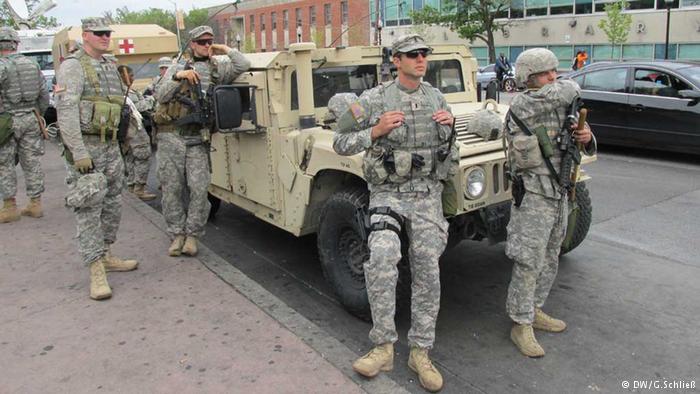
Maryland’s governor has announced the withdrawal of National Guard troops from Baltimore nearly a week after Freddie Gray’s funeral. Hours before, Baltimore’s mayor “rescinded” the city-wide curfew.
Some 3,000 National Guard troops are in the process of leaving Baltimore after Maryland’s Governor Larry Hogan announced their withdrawal.
[quote_right]More than 140 cars and 15 buildings were set ablaze durings Monday April 27th riots[/quote_right]
“We’ve already started withdrawal of the Guard. The trucks are pulling out this morning. It’s going to take a little bit of a while,” Hogan told reporters at a press briefing on Sunday.
The governnor added that 4,000 security personnel were brought into the city, including 1,000 “extra” police officers.
“It’s not going to happen instantaneously. It’s going to take a couple of days to get everybody out. We had to build an entire city to save the city.”
Logan announced a state of emergency in Baltimore on Monday after protests turned violent, spawning riots. The National Guard quickly mobilized after the governor’s announcement with 1,700 troops arriving in the city the day after.
BALTIMORE (TIP): Freddie Gray’s death in Baltimore is the latest in a rash of high-profile deaths of black men at the hands of police.
[quote_box_right]
Case Points
Gray was arrested April 12 on a weapons charge (Police still haven’t said why they arrested Gray on April 12, other than that they found a knife on him after a foot chase)
Gray suffered a spine injury at some point after his arrest and before he arrived at the police station
The Police van made a previously undisclosed stop on its way to a police station and was not mentioned by the police team under investigation to the Investigators.
[/quote_box_right]
Freddie Gray was a black man who entered a police van handcuffed and conscious on April 12 and came out less than an hour later comatose.
Gray was found unconscious in the wagon when it arrived at a police station on April 12. The 25-year-old had suffered a spinal injury and died a week later, touching off waves of protests across Baltimore, capped by a riot Monday April 27, in which hundreds of angry residents torched buildings, looted stores and pelted police officers with rocks.
Baltimore Mayor Stephanie Rawlings-Blake says she knew “immediately” that this was something more than the depressingly common passing of another young man.
Black men dying at the hands of police had become “a slow-rolling crisis” in America, as President Obama would put it nine days after Gray’s death.
Rioting broke out after Gray’s funeral on April 27-a night of arson, looting and brick throwing that led the mayor to declare a 10 p.m. citywide curfew as Maryland Governor Larry Hogan called out the National Guard.
[quote_center] Roots of the Riots[/quote_center]
Also Read : Baltimore woman Hailed Mom of the year – Graham is seen pulling her masked son away from a protest crowd
Stories about police brutality in Baltimore go far beyond Freddie Gray, whose death resulting from a spinal cord injury sustained while in police custody has sparked violent protests throughout Baltimore.
Baltimore has paid out nearly $6 million in settlements to more than 100 victims of police brutality in the four years from 2011 through 2014, according to the Baltimore Sun. Those victims ranged from young teens to a 26-year-old pregnant woman to an 87-year-old grandmother.
[quote_box_center]Investigations into the In-Custody Death and Riots[/quote_box_center]
Local police and the U.S. Justice Department both launched investigations of Gray’s death. Baltimore police said they will wrap up their investigation Friday May 1, and turn the results over to the Baltimore state’s attorney’s office, which will decide whether to seek an indictment. Six police officers, including a lieutenant and a sergeant who were involved in the arrest and subsequent death of Gray, have already been suspended pending investigations.
Police handed their Freddie Gray investigative files over to prosecutors a day earlier than planned yesterday on April 30. “I understand the frustration; I understand the sense of urgency,” Police Commissioner Anthony Batts said. “That is why we have finished it a day ahead of time.”
Prosecutor Marilyn Mosby said in a statement; “While we have and will continue to leverage the information received by the department, we are not relying solely on their findings but rather the facts that we have gathered and verified,” “We ask for the public to remain patient and peaceful and to trust the process of the justice system.”
Mosby’s office is tasked with deciding whether the death of 25-year-old African American Freddie Gray warrants charges against the six patrol officers, whose involvement in the case led to their temporary suspension.
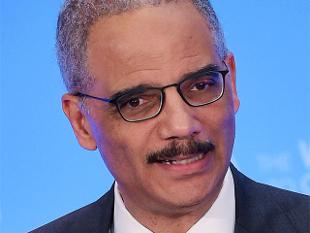
WASHINGTON: US Attorney General Eric Holder has been honoured by the Sikh community in America for his “exemplary service” to them during the “challenging times”, especially after the 2012 attack on a Gurdwara in Wisconsin.
64-year-old Holder was presented with a siropa (a robe of honour) and a Sewa Service Award by the Guru Gobind Singh Foundation (GGSF) of Rockville, Maryland and National Sikh Centre (NSC) of Washington at a ceremony here yesterday at the Justice Department.
He was also presented with an honorary plaque and a book on Sikhs, a phulkari, a traditional Punjabi embroidered shawl with bright floral craft.
Holder thanked the Sikh community for the honour. “Felt that there is no one more deserving than Holder, who has contributed tremendously towards the betterment of the Sikhs in the US,” said Inder Paul Singh Gadh, Chairman of GGSF board.
“We are very grateful to the Attorney General for his exemplary service to the nation and for his positive role in assuring that all communities, including the Sikh community, are safe during the challenging times especially in the aftermath of the terrible shooting at the Oak Creek Gurdwara,” said Rajwant Singh, Secretary GGSF.
The Justice Department has recently started tracking hate crimes against Sikhs. This will produce Sikh-specific data on how many hate crimes Sikhs endure, and the overall kinds of biases people of South Asian descent face.
Last year GGSF had honoured Brian Murphy of Oak Creek Gurdwara who was hit by 15 bullets as he fought with a gunman who shot dead six Sikh worshippers in the Wisconsin Gurdwara in August 2012.
Maryland (TIP): Indian Origin Palak Patel was found lying dead in the kitchen at a Dunkin’ Donuts on the night of April 12.
The incident came to light When a customer walked into an empty Dunkin’ Donuts/Baskin-Robbins, across from a high-trafficked casino and mall in Hanover, Md., the shop was empty at 10:51 p.m. and the customer called 911. A responding officer found 21-year-old Palak Patel lying dead in the kitchen, Anne Arundel County Police said.
Investigators believe Patel was fatally struck multiple times with an object and on Monday named her husband, who also worked at the store, a murder suspect.
Accused Husband, Bhadreshkumar Chetanbhai Patel is a Co-worker wanted for murder after Dunkin’ Donuts employee found beaten to death in kitchen at Maryland store, cops say (VIDEO). Bhadreshkumar Chetanbhai Patel, 24, who is still at large, has been charged with first- and second-degree murder, first- and second-degree assault, and dangerous weapon with intent to injure, Anne Arundel police said.
“We’re not ruling out the fact that he may still be local. He could be on foot. We do not have any vehicle information, no indication of a vehicle,” Anne Arundel County police spokesman Justin Mulcahy told WBAL.
The couple reportedly lived in a nearby apartment complex and police said they responded to a neighbor’s call about “loud noises or banging” in December, but there are no documented incidents of domestic violence.
“All of us at Dunkin’ Brands are saddened to learn of the death of crew member Palak Bhadreskumar Patel, and our thoughts go out to her family and friends,” Dunkin’ Donuts said in a statement. “The franchise owner is cooperating fully with the local authorities in their investigation. As this is a pending police matter, it is inappropriate for us to comment further.”
LOS ANGELES (TIP): The National Federation of Indian American Associations (NFIA), which is the largest umbrella organization in the US, representing over 3.5 million Americans who trace their roots to India, held its 18th biennial convention, March 6-8, 2015, at the Sheraton Cerritos Hotel in Cerritos, California,
The three day event was replete with intellectually stimulating seminars, graced by three members of the US Congress, Mayor of the city, Consul General of India San Francisco, Minister from Indian Embassy and other political leaders. On the nights of both Friday and Saturday were filled with excellent entertainment by local talent.
The convention started with a welcome reception/dinner and inauguration by Indian Consul General Venkatesan Ashok and California State Treasurer John Chiang on Friday, March 6th, followed by a full day of conference on Saturday.
The convention theme was “Indian Americans Making an Impact in America”. After an opening session on the theme chaired by NFIA Founder President Dr. Thomas Abraham, three more sessions followed: Indian Americans Contributing to India, chaired: Inder Singh, Past NFIA Chairman; Indian American Impact in The Area of Technology & Medicine, chaired by Boeing Company Technical Fellow Paul Sikand and Impact in US-India Trade & Business, chaired by Amritt Inc. Managing Director Gunjan Bagla. Various eminent speakers included: Long Beach Vice Mayor Suja Lowenthal, former Anaheim Councilman Harry Sidhu, Stem cell therapy practitioner Dr. Gaurav Goswami, and Attorney Sunny Kalara.
Newly elected Board
In the election for the new NFIA Board, many of the positions were unopposed. However, the elections were conducted for the other positions, in a very fair and transparent manner by the Election Committee chaired by Dr. Thomas Abraham of Connecticut (Founder of NFIA), Pramod Kamdar of San Diego and Inder Singh of Los Angeles.
At the General Body Meeting (GBM) chaired by President Sohan Joshi of Chicago, various reports were presented including reports from President and Secretary (Satheesan Nair of Chicago). Secretary Nair also presented treasurer’s report. Selfless and lifelong service of the Executive Director, Dr. Joydeb Roy, was acknowledged and applauded.
Coming off from a successful Convention the night before, the mood was upbeat and reinvigorating. A general discussion ensued on the progress and future of NFIA with many former NFIA Presidents making enlightening and spirited statements. Three (Dr. Thomas Abraham, Subash Razdan and Dr. Parthasarthy Pillai) of the former NFIA presidents are also accomplished global NRI leaders and recipients of the Pravasi Samman Award from the Government of India.
As part of the unfinished businesses from the past GBM, the subject of change of the 2 year term of office to a 1 year term was discussed and voted on after former President Subash Razdan (of Georgia) made the motion to change the 2 year term to a 1 year term with some qualifiers. This was seconded by Om Sharma (of Washington DC) and was approved by a voice vote, with a near unanimity.
At the conclusion of the GBM the general elections were declared open along with a sumptuous luncheon. The delegates from across the USA made a beeline for electing the remaining officers of NFIA for the term of 2014-2016 and as follows:
In the election of NFIA officers, Ashok Madan from Southern California was elected as President without opposition. Sudip Gorakshakar from Washington State was elected as Executive Vice President. The three vice presidents elected without opposition were Ajoy Dube from California, Babu K. Patel from Illinois, and Satheesan Nair also from Illinois.
The position of the NFIA secretary went to Dr. Yogendra Gupta from Maryland, VA, and Joint Secretary to Vasu Pawar from Southern California. Makam Subbarao from Southern California was elected as the Treasurer.
The seven Directors-at-Large were Rachel Verghese (Texas), Anjali Sachdev (Washington State), Dr. Satish Misra (Maryland), Madhavan Nair (Illinois), Ramesh Ramnani (Southern California)., Sachin Amin and Ashok Patnaik from California.
The six Regional Vice Presidents (RVP) elected unopposed were: Dr. Om Sharma (National Capital Region), Vandana Jhingan (Illinois), Mihir Patel (New York), Raj Razdan (Georgia), Lavanya Reddy (Washington State), and Kewal Kanda (California)
In closing and customarily, NFIA veteran Dr. Rajen Anand administered the Oath of Allegiance to the NFIA for the newly elected officers, with assurance of contribution of the newly elected leaders of their personal time, money, communication and talent.
The new Board under the presiding officer, Ashok Madan met after the elections and appointed:
Chandu Patel from Southern California as Chairman of the NFIA Foundation,
Dr. Hari Har Singh from NCR as Executive Director (Administration)
Dr. Joydeb Roy from NCR as Executive Director
Angela Anand was appointed by the President to chair the taskforce on Women’s Affairs.
The remaining 6 vacant RVPs positions are yet to be filled, for which the NFIA leadership under the newly elected Board will seek qualified and well-known community leaders from the following regions: Great Lakes (IN, MI, OH); Mid Atlantic (DE, PA, NJ); New England (CT, ME, MA, NH, RI, VT); Mountain (ID, CO, KS, MT, NE, ND, SD, UT, WY); South (AK, AL, KY, MS, LA, TN); South-West (AZ, OK, TX, NM).
After review of their resumes, their commitment of time, talent, money and connections, the NFIA Board will appoint them in the next Board meeting. NFIA has urged its media partners to help promote and help find qualified candidates for the above vacant positions. The main qualifier being the interested RVP has to belong to that region and commit to do a major activity in the region in compliance with NFIA goals, objectives and Bylaws.
The event on Saturday night was very successful with a packed hall for the Gala Awards Banquet. Indian Embassy was represented by Counsel General of India San Francisco, Mr. Venkatesan Ashok and Minister of Personnel and Community Affairs, Mr. N.K. Mishra from Washington DC.
Congresswomen, Judy Chu, Loretta Sanchez, Linda Sanchez, and Mayor of Cerritos, Mark Pulido graced the banquet and enlightened the audience with their thoughts on India and the Indian American community in the USA.
NFIA, with Lal K. Motwani as the chair of awards committee, honored high achiever Indian Americans including, physician Bharat Barai and Aparna Hande for community service, TV Asia chairman H.R. Shah for mass media, musician Rita Sahai and Kathak dancer Amrapali Ambegaokar for performing arts, psych-pharmacologist Rangaesh Gadasalli for medicine and health sciences, and management consultant K.V. Kumar and attorney Navneet S. Chugh in business and finance. The late New York cardiologist B.N. Viswanath was honored posthumously for his lifetime contribution to NRIs through broadcasting and philanthropy. In addition, Heart and Hand for Handicapped, a New York-based organization, received an award for its outstanding services to the handicapped in the U.S. and India.
A 45-year-old Indian-American Dhanurjay ‘DJ’ Patil has been named the first chief data scientist by the White House to shape policies and practices that will help the US remain a leader in technology and innovation.
Patil— who has worked with several big-name Silicon Valley operations, including LinkedIn, eBay, PayPal, Skype, and venture capital firm Greylock Partners. Prior to his work in the private sector, Patil worked at Department of Defence, where he directed efforts to bridge computational and social sciences in fields like social network analysis to help anticipate new threats to the US.
Patil will now work as Deputy Chief Technology Officer in the Office of Science and Technology Policy, reporting to US Chief Technology Officer Megan Smith. He will also work on the Obama administration’s Precision Medicine Initiative, which focuses on utilising advances in data and healthcare to provide clinicians with new tools, knowledge, and therapies to select which treatments will work best for which patients, while protecting patient privacy.
Over the course of two decades of work in the private and public sectors and in academia, Patil has pioneered new ways for institutions to benefit from data. As a doctoral student and faculty member at the University of Maryland, Patil used open datasets to improve weather forecasting. He worked briefly for the Department of Defense, advising on efforts to use social network analysis, for example, to anticipate emerging threats to the United States. Most recently, he was the vice president of product at enterprise software company RelateIQ, which was acquired by Salesforce last July.
Patil is moving his family to Washington where he’ll play a role in helping the United States government maximize its investments in big data and advise on policy issues and technology practices. And like his tech peers, he’ll be recruiting others to the cause. Patil will also be devoting time to the Administration’s Precision Medicine Initiative, which focuses on giving clinicians new tools, knowledge, and therapies to select which treatments will work best for which patients, while protecting patient privacy.
In a memorandum to the American people, Patil said his role as chief data scientist will be to responsibly source, process, and leverage data in a timely fashion to enable transparency, provide security, and foster innovation for the benefit of the American public.
“Data will continue to transform the way we live and work,” Patil said.
He has authored a number of articles and books explaining the important current and potential applications of data science.
FREDERICK (TIP): Two students were shot outside a public high school in Maryland on February 4 night while a basketball game was being played inside, sending game watchers running for cover as frantic parents rushed to the scene to make sure their children were OK.
The Frederick High School students were flown to a hospital in Baltimore with injuries not believed to be life-threatening, Frederick police capt Richard Hetherington said. He did not know the students’ ages or genders, and he said the shooter or shooters were still at large on Thursday.
Two junior varsity basketball games were going on at the time of the shooting, said Frederick County public schools spokesman Michael Doerrer.
Officers took about 200 people who were at the game into the school cafeteria, secured the building and questioned witnesses, Hetherington said. He said the students were being released to their parents in the parking lot of a nearby bowling alley.
before midnight, a school bus and a police van pulled into the lot and let off about a dozen students, the first group to be released. There was excited chatter as parents hugged their children.
Frederick High School junior Sofia McCluskey said she was watching the game and heard a muffled shot. “Someone yelled, ‘Yo, they’re shooting,’” she said. “And we just ran as fast as we could.”
She and her friend, Stephanie Sanchez, said they ran to the locker room and were taken to the cafeteria, where they waited and were briefly interviewed by police.
Sanchez said it was a frightening experience. “I was, like, shaking the whole time. I still am,” she said.
Dejuan Jones, a sophomore, said, “You would expect it to happen at a varsity game, but it was like a JV game,” he said. “Nobody hardly comes to those.”
Dana Wiles, 40, said her daughter, a Frederick High school sophomore, sent her a text message about 8.40pm. “She said she saw it happen,” Wiles said. “She’s not coming back to any more basketball games. I’m keeping her home with me.”
Wiles waited with her son, a senior at another school, near the street entrance to the school driveway. They periodically checked their cellphones for messages. “I just want my kid,” she said.
Tanika Mayweather, whose 15-year-old son Lawrence was playing in the basketball game, said, “I know he’s OK, because he called.” She said she’s not going to let her son play basketball for the school anymore. “We’ll have our basketball games out in the park,” she said.
Sean Noah, 16, who attends a different high school, was in the building for swimming practice. He said he didn’t hear any shots, but that he was kept inside for about 45 minutes afterward.
Elsa Pereira, 46, a paralegal, said her 10th-grade son was watching the game. “He called me right away,” she said. “He’s OK.”
Signup to our Newsletter!
Don’t miss out on all the happenings around the world