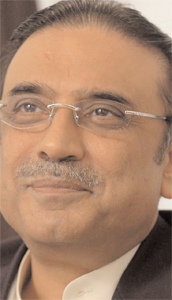
Tag: NATO

  • Zardari Raises Concerns Over Drone Attacks With US Delegation

    Zardari Raises Concerns Over Drone Attacks With US Delegation

    ISLAMABAD (TIP):President Asif Ali Zardari onThursday described US droneattacks in Pakistan’s tribalareas as “counterproductive”,saying the two countriesneed to “find a way out” inthe campaign againstmilitants operating in theregion.The drone attacks arecausing “great damage”among the people, Zardaritold a visiting delegation ofthe US Senate ForeignRelations Committee headedby its chairman RobertMenendez during a meetingat the presidency.

    Zardari also voicedconcern over continuedmilitant attacks on thePakistan army andparamilitary troops from theAfghan side of the border,presidential spokesmanFarhatullah Babar said.The president stressed theneed for NATO and Afghansecurity forces to act as an”anvil to Pakistan’s hammeroperations”.The two sides discussedseveral issues, includingbilateral relations, the fightagainst militancy and theregional situation, duringtwo rounds of talks.

    A delegation-level meetingwas followed by another onein which Zardari wasassisted by foreign ministerHina Rabbani Khar.CIA-operated spy planeshave carried out scores ofattacks in the lawless tribalbelt bordering Afghanistanthat have killed top al-Qaidaand Taliban leaders,including Tehrik-e-TalibanPakistan chief BaitullahMehsud.However, rights groups saydozens of civilians have alsodied in the attacks.During his talks with theUS delegation, Zardari alsoreferred to the need toacknowledge sacrifices madeby Pakistan in the fightagainst militancy.The blame-game “will notserve the common purpose ofdefeating militants”, he said.

  • Taliban suicide squad attacks Kabul police HQ

    Taliban suicide squad attacks Kabul police HQ

    KABUL (TIP): Nato troops joined a fight against a Taliban suicide squad that stormed a Kabul police headquarters at dawn Monday, killing three police officers and unleashing a stand-off that lasted for more than eight hours. The Taliban claimed the attack, which turned into the longest stand-off between the insurgents and security forces in Kabul since a major coordinated raid on the capital lasted 18 hours in April last year. Three of the five attackers were killed in the early part of the assault while two others wearing suicide vests holed up in the five-storey building in west Kabul and fired on security forces, a police officer told AFP. They were later also killed. “It’s over. The last two terrorists are dead and they were not even given the chance to detonate their suicide vests,” Kabul police chief General Mohammad Ayoub Salangi told AFP. The reason it took so long to overpower the last two men was “because our boys acted very carefully,” he said. “There were lots of important documents so we acted very carefully to not cause any damage to those documents.” Four traffic police, two members of the special forces and half a dozen civilians were wounded, deputy interior minister General Abdul Rahman said.

    An AFP photographer said Norwegian soldiers were seen firing at the police building. Nato’s International Security Assistance Force (ISAF) confirmed its participation in the operation but insisted it was small. “We do have a very small number of people assisting the Afghan security forces officials in the scene.

    It’s primarily an advising role and absolutely the Afghan officials are in the lead,” an ISAF spokesman told AFP. Nato says the Taliban insurgency has been weakened and characterised the attack as a ploy to attract media attention, but the time it took to mop up the insurgents will be seen as an embarrassment. “They (the Taliban) are losing the fight,” said General Gunter Katz, ISAF military spokesman. “They cannot fight face to face.

    These attacks are only to attract media. They carry out their attacks in the cities and crowded areas where civilians suffer.” He praised the role of the Afghan security forces in countering the attack. The assault began with a massive carbomb explosion that shattered the windows of nearby homes. A local resident described the initial explosion as “very very big — it was massive”. It was followed by several other explosions and gunfire. Taliban insurgents, who are waging an 11-year war against the westernbacked government of President Hamid Karzai, claimed credit for the attack, which it said began at 6am IST (0030 GMT). “A large number of fedayeen (suicide bombers) entered a building in Dehmazang and are attacking an American training centre, a police centre and other military centres and have caused heavy casualties on the enemy,” a Taliban spokesman said.

    There is no US or Nato-run training facility in the area and the Taliban are known to exaggerate when claiming attacks. Monday’s attack came less than a week after a squad of suicide bombers attacked the Afghan intelligence agency headquarters in Kabul, killing at least one guard and wounding dozens of civilians. All six attackers were killed in the brazen attack on the national directorate of security (NDS), also claimed by the Taliban. Afghan police and other security forces are increasingly targets of Taliban attacks as they take a bigger role in the battle against the insurgents before Nato withdraws the bulk of its 100,000 combat troops by the end of 2014.

  • Indian Air Force receives first Boeing C-17 for flight testing by the US Air Force

    Indian Air Force receives first Boeing C-17 for flight testing by the US Air Force

    LONG BEACH, CA (TIP): The Indian Air Force (IAF) has received the first Boeing C-17 strategic airlifter for flight testing by the US Air Force (USAF). The sleek piece of technological sophistication, the machine has a 77 ton payload. It was received on behalf of the IAF by Air Commodore Sanjay Nimesh, air attache in the Indian embassy in Washington, and some IAF officers who have been stationed here to oversee the completion of the project and for training. This is the first of the 10 C-17 Globemaster III airlifters that India is buying for $4.1 billion in accordance with a 2010 government-togovernment agreement and under the US government’s foreign military sales (FMS) program. Boeing has delivered the aircraft on time and has promised to deliver four more this year and the remaining five in 2014 as per the agreement. Once inducted, it will be the IAF’s largest transporter. “It was exciting to see the C-17 fly again, this time with Indian Air Force markings, and we look forward to the day that the first IAF C-17 flies over India,” Air Commodore Nimesh observed. The aircraft will now enter a US Air Force flight test program at Edwards Air Force Base in Palmdale, California, as per the FMS arrangement with the USAF. It would be formally handed over to IAF in June after it completes the flight tests. The USAF is separately training some 100 IAF personnel, including pilots and technical crew. The agreement to buy the C 17 was formalized after the aircraft’s trials in hot and cold and low and high altitude trials in India, including landings and takeoffs at the short 4,620-footGaggal airfield in Himachal Pradesh. The aircraft was then commanded by Col Kelly Latimer, a former NASA pilot now with Boeing as a test pilot. “The C-17’s ability to operate in extremely hot and cold climates; transport large payloads across vast ranges; and land on short, austere runways makes it ideal for India’s airlift needs,” said Nan Bouchard, Boeing vice president and C-17 program manager. “We value our continued partnership with India and the US government and will provide dedicated support as India’s first C-17 enters flight testing,” he added. The aircraft flies with a joystick, just as a fighter jet does, and is easier to fly than similar aircraft, Air Chief Marshal F.H. Major, during whose tenure as IAF chief the selection process was done, had then told India Strategic magazine ( www.indiastrategic.in). Apart from the pilot and co-pilot, the aircraft carries two loadmasters, but can do with one thanks to its onboard crane and roller floor.

    The pellets for the C-17 and the Lockheed Martin C-130J Super Hercules which IAF has already acquired are common and can be moved from one aircraft to another with ease. Also, although the C 17 is a long-range aircraft, it can be refueled midair. India’s defence ministry signed an agreement with the US government on June 15, 2011, to acquire 10 C-17s, making India the largest customer for the aircraft outside the US.

    The governments finalized the FMS contract on June 6, 2012. Boeing has delivered 250 C-17s worldwide, including 218 to the USAF active duty, National Guard and Reserve units. A total of 32 C-17s have been ordered by/ delivered to Australia, Canada, India, Qatar, the United Arab Emirates, Britain and the 12-member Strategic Airlift Capability initiative of NATO and Partnership for Peace nations. Boeing will support the IAF C-17 fleet through the Globemaster III Integrated Sustainment Program (GISP) Performance- Based Logistics contract. The GISP “virtual fleet” arrangement ensures mission readiness by providing all C- 17 customers access to an extensive support network for worldwide parts availability and economies of scale. This brings spares and support closer to the point of use and makes the C-17 more affordable to own and operate, according to a Boeing statement.

  • Car Bomb Targets Afghan Spy Agency In Kabul

    Car Bomb Targets Afghan Spy Agency In Kabul

    KABUL (TIP): A car bomb exploded in front of the gates of the Afghan intelligence agency on Wednesday, Reuters witnesses said, near heavily barricaded government buildings and western embassies. Shopkeepers and passersby were injured in the blast, which took place at noon (0730 GMT), but it was not immediately clear if anyone had been killed. Shattered glass and twisted metal lay scattered in front of the gates of the National Directorate of Security (NDS) and gunfire and sirens were heard.

    NDS head Asadullah Khalid narrowly survived a suicide bomber’s assassination attempt last month in a brazen attack that threatened to derail a nascent and already fragile peace process between the Afghan government and the Taliban. When contacted by Reuters, Taliban spokesman Zabihullah Mujahid said the group was “unaware” of the car bomb. Wednesday’s attack came just days after President Hamid Karzai returned from a trip to Washington, where he discussed the country’s future with U.S. President Barack Obama once most NATO-led troops withdraw as planned by the end of 2014.

    On that trip, Karzai visited Khalid in a US hospital, where he was recovering from the Kabul assassination attempt by a man who had hidden a bomb in his trousers. Violence across the country has been increasing in recent months, sparking concern over how the 350,000- strong Afghan security forces will be able to manage once foreign troops withdraw.

  • US May Leave No Troops In Afghanistan: Officials

    US May Leave No Troops In Afghanistan: Officials

    WASHINGTON (TIP): The Obama administration gave the first explicit signal that it might leave no troops in Afghanistan after December 2014, an option that defies the Pentagon’s view that thousands of troops may be needed to contain al-Qaida and to strengthen Afghan forces. The issues will be central to talks this week as Afghan President Hamid Karzai meets with President Barack Obama and Defense Secretary Leon Panetta to discuss ways of framing an enduring partnership beyond 2014.

    “The US does not have an inherent objective of ‘X’ number of troops in Afghanistan,” said Ben Rhodes, a White House deputy national security adviser. “We have an objective of making sure there is no safe haven for al-Qaida in Afghanistan and making sure that the Afghan government has a security force that is sufficient to ensure the stability of the Afghan government.” The US now has 66,000 troops in Afghanistan, down from a peak of about 100,000 as recently as 2010. The US and its NATO allies agreed in November 2010 that they would withdraw all their combat troops by the end of 2014, but they have yet to decide what future missions will be necessary and how many troops they would require.

    At stake is the risk of Afghanistan’s collapse and a return to the chaos of the 1990s that enabled the Taliban to seize power and provide a haven for Osama bin Laden’s al-Qaida network. Fewer than 100 al-Qaida fighters are believed to remain in Afghanistan, although a larger number are just across the border in Pakistani sanctuaries. Panetta has said he foresees a need for a US counterterrorism force in Afghanistan beyond 2014, plus a contingent to train Afghan forces. He is believed to favor an option that would keep about 9,000 troops in the country. Administration officials in recent days have said they are considering a range of options for a residual US troop presence of as few as 3,000 and as many as 15,000, with the number linked to a specific set of military-related missions like hunting down terrorists.

    Asked in a conference call with reporters whether zero was now an option, Rhodes said, “That would be an option we would consider.” Karzai is scheduled to meet Thursday with Panetta at the Pentagon and with secretary of state Hillary Rodham Clinton at the State Department. Karzai and Obama are at odds on numerous issues, including a US demand that any American troops who would remain in Afghanistan after the combat mission ends be granted immunity from prosecution under Afghan law. Karzai has resisted, while emphasizing his need for large-scale US support to maintain an effective security force after 2014. In announcing last month in Kabul that he had accepted Obama’s invitation to visit this week, Karzai made plain his objectives. “Give us a good army, a good air force and a capability to project Afghan interests in the region,” Karzai said, and he would gladly reciprocate by easing the path to legal immunity for US troops.

    Without explicitly mentioning immunity for US troops, Obama’s top White House military adviser on Afghanistan, Doug Lute, told reporters Tuesday that the Afghans will have to give the US certain “authorities” if it wants US troops to remain. “As we know from our Iraq experience, if there are no authorities granted by the sovereign state, then there’s not room for a follow-on US military mission,” Lute said. He was referring to 2011 negotiations with Iraq that ended with no agreement to grant legal immunity to US troops who would have stayed to help train Iraqi forces. As a result, no US troops remain in Iraq. David Barno, a former commander of US forces in Afghanistan and now a senior fellow at the Center for a New American Security, wrote earlier this week that vigorous debate has been under way inside the administration on a “minimalist approach” for post-2014 Afghanistan.

    In an opinion piece for ForeignPolicy.com on Monday, Barno said the “zero option” was less than optimal but “not necessarily an untenable one.” Without what he called the stabilizing influence of US troops, Barno cautioned that Afghanistan could “slip back into chaos.” Rhodes said Obama is focused on two main outcomes in Afghanistan: ensuring that the country does not revert to being the al-Qaida haven it was prior to September 11, 2001, and getting the government to the point where it can defend itself. “That’s what guides us, and that’s what causes us to look for different potential troop numbers – or not having potential troops in the country,” Rhodes said.

    He predicted that Obama and Karzai would come to no concrete conclusions on international military missions in Afghanistan beyond 2014, and he said it likely would be months before Obama decides how many US troops – if any – he wants to keep there. Rhodes said Obama remains committed to further reducing the US military presence this year, although the pace of that withdrawal will not be decided for a few months. Last year the U.S. military pulled 23,000 troops out of Afghanistan on Obama’s orders.

  • Pak Strategy in Afghanistan Time for hard decisions

    Pak Strategy in Afghanistan Time for hard decisions

    On December 6, Asadullah Khalid, Head of Afghanistan’s intelligence set-up, the National Directorate of Security, was seriously injured in a bomb attack by a Taliban suicide bomber posing as a peace envoy. President Karzai announced the next day that the suicide bomber had come from Pakistan. While not directly naming the ISI, President Karzai described the suicide bombing as a “very sophisticated and complicated act by a professional intelligence service”. Asadullah Khalid is one of President Karzai’s closest aides and has held crucial gubernatorial appointments in Ghazni and Kandahar.

    He had escaped Taliban assassination attempts in 2007 and 2011. He was playing a crucial role in attempts to wean away Pashtun tribal support from the Taliban, as the American “end game” in Afghanistan picks up momentum. Asadullah Khalid is seen as a dangerous adversary in Pakistan. Unlike his Tajik predecessor, Amrollah Saleh, against whom the ISI could whip up Pashtun nationalistic sentiments, he is a blue-blooded Pashtun, who can better deal with Pakistani machinations, which seek to unite Pashtuns under the tutelage of the Mullah Omar-led Quetta Shura and their protégés in the North Waziristanbased Haqqani network.

    In its quest for “strategic depth,” the Pakistan military establishment has based its entire political strategy on pretending to champion the cause of Pashtuns, who constitute 40 per cent of Afghanistan’s population, with the Tajiks constituting 33 per cent of the population and the Shia Hazaras and Uzbeks comprising 11 per cent and 9 per cent, respectively. Interestingly, the language which unites Afghanistan is not Pashtu, which is spoken by 35 per cent of the population and almost exclusively by Pashtuns, but Dari, spoken by 50 per cent of the country’s people.Within the Pashtuns, the ruling class has predominantly been drawn from the landowning Durrani clan. Apart from Nur Mohammed Tarraki and his Soviet-backed successors, the only non-Durrani leader of Afghanistan from the influential Ghilzai clan was Mullah Omar.

    Two-thirds of all Pashtuns belong to the Durrani-Ghilzai confederacy. The Taliban, though led by a Ghilzai, have drawn in a large number of Durrani fighters. In addition, they enjoy the backing of the Haqqani network, led by Jalaluddin Haqqani, operating out of the tribal belt of Pakistan in North Waziristan. The Haqqani network also exercises predominant control over the bordering Afghan provinces Khost – Paktia and Paktika. Pakistan’s strategy is to pretend that it supports an “Afghan-led” process of national reconciliation while ensuring that the Quetta Shura and the Haqqani network, which has strong ties with Al- Qaeda and international Islamist causes, negotiate from a position of strength, so that Southern Afghanistan initially, and thereafter the entire Pashtun belt, come under the control of its “strategic assets”.

    This would be a prelude to the Taliban obtaining a dominant role across the entire country. It is primarily in pursuit of this objective that the senior-most Taliban leader from the Durrani tribe,Mullah Abdul Ghani Baradar, has been incarcerated and kept incommunicado in Pakistan. Mullah Baradar, like Karzai, hails from the Popalzai tribe of Durrani Pashtuns and was known to be close to and in touch with President Karzai. While championing the cause of Pashtuns, Pakistan will not permit any Pashtun leader to undermine its larger ambitions. Pakistan has its own Achilles’ heel. Firstly, no Pashtun worth his salt recognizes the Durand Line.

    Moreover, after the Pakistan army’s assault on the Lal Masjid in 2007, the Tehriq-e-Taliban Pakistan (TTP) has made common cause with other jihadi outfits in Pakistan to challenge the writ of the Pakistan army and the Pakistan state. Unable to directly take on the TTP, the Pakistan army is fomenting tribal animosities between the Mehsud and Waziri tribes in South Waziristan. It is also clear that should a government led by either Imran Khan’s Tehriq-e-Insaf or Nawaz Sharif’s PML (N) assume office after the 2013 elections in Pakistan, one can write off any prospect of the Pakistan army taking action whatsoever against the Haqqani network or other Al-Qaeda-affiliated groups, as the American drawdown in Afghanistan proceeds.

    Chinese officials were among the only non-Muslims to meet Mullah Omar in Kandahar in the 1990s, promising him diplomatic recognition and telecom projects. China has maintained contacts with the Quetta Shura in the aftermath of Operation Enduring Freedom. These contacts, with Pakistani facilitation, have reportedly been increasing. Thus, while the Chinese may have misgivings and concerns about a possible return of the Taliban to power in Afghanistan, they appear to believe that their interests in Afghanistan would be protected by Pakistan. In these circumstances, there are now concerns that if not properly equipped, motivated and backed, the Afghan National Army (ANA) could well lose control of the entire Pashtun belt in the country.

    This could have serious consequences for the very unity of Afghanistan. It is significant that influential Afghan leaders like Mohammed Atta and Ismail Khan are preparing the ground to be able to defend areas they control, in the event of the ANA being unable to effectively deal with the Taliban challenge. There should also be no doubt that the primary objective of the Taliban would be to seize control of Kandahar because of its importance in Pashtun minds as the traditional and spiritual capital of the country. There would also be efforts by the Taliban to block the line of communications from Khyber to Jalalabad. India would have to work closely with foreign partners, including the US, its NATO allies, Russia, Iran and Saudi Arabia to ensure that the international community remains on course to back the elected government in Afghanistan, economically and militarily.

    While India has already provided Afghanistan with substantial economic assistance and is preparing the ground for large-scale investments in areas like iron ore, coal, steel, copper and gold, the military cooperation envisaged in its strategic partnership agreement with Afghanistan remains relatively modest. Indian military analysts, with expertise on Afghanistan’s armed forces, note that in order to ensure that the ANA can stand up to challenges from across the Durand Line, India should readily supply 105 mm Mountain Artillery, armored personnel carriers, Vijayanta Tanks, apart from transportation, demining and communications equipment.

    It remains to be seen whether an establishment wedded to its “Aman Ki Asha” illusions will act decisively on major security challenges emerging in our neighborhood. Equally importantly, India and its partner-states need to recognize that given Pashtun sentiments and historic realities, we should agree that the Durand Line is a “disputed boundary” between Pakistan and Afghanistan, while expressing the hope that the dispute will be resolved peacefully, keeping in view the Pashtun sentiments.

  • Bomb Kills Seven In Southwest Afghanistan: Officials

    Bomb Kills Seven In Southwest Afghanistan: Officials

    HERAT (TIP): A roadside bomb targeting a police pickup truck killed two policemen and five civilians in southwestern Afghanistan Thursday, provincial authorities said. The vehicle was blown up in the city of Zaranj, the capital of Nimroz province, said acting provincial police chief Mohammad Rahim Chakhansori.

    Provincial governor Sarwar Sobat confirmed the death toll to AFP, saying a policewoman was wounded in the attack. Afghan forces are often the victims of attacks by Taliban insurgents as they increasingly take control of security before the withdrawal of NATO troops from the country by 2014. Roadside bombs are the weapon of choice for the hardline Islamists.

  • US, Nato Behind ‘Insecurity’ in Afghanistan: Karzai

    US, Nato Behind ‘Insecurity’ in Afghanistan: Karzai

    Afghan President Hamid Karzai sharply criticized the United States in an exclusive interview with NBC News on Thursday, December 4 blaming American and NATO forces for some of the growing insecurity in his country. “Part of the insecurity is coming to us from the structures that NATO and America created in Afghanistan,” Karzai said during a one-on-one interview at the presidential palace.

    However, he also acknowledged that much of the country’s violence was caused by insurgent groups. The Taliban are regaining land and power lost after they were toppled by U.S.-backed forces in 2001. Meanwhile, Karzai has gone from being a favorite of Washington under the presidency of George W. Bush, to a thorn in the White House’s side with his criticism of American night raids and mounting civilian casualties at the hands of NATO troops.

    Many in Washington have also grown weary of Karzai, viewing him as ineffective and presiding over a deeply corrupt government.

    Karzai, who is serving his second five-year term, also told NBC News that he had sent a letter to President Barack Obama saying that Afghanistan would not sign any new security agreements with the United States until hundreds of prisoners held in U.S. custody were transferred to Afghan authorities.

    More than ten years after the beginning of the war, Afghanistan faces external pressure to reform as well as ongoing internal conflicts. His criticism of the United States, Afghanistan’s most important ally, has come after the start of complex bilateral talks on a security pact on the role the United States would play after most of its troops are withdrawn by the end of 2014.

    Karzai said the inmates in American detention in Afghanistan were being held in breach of an agreement he and Obama signed in March and must be handed over immediately. A vehicle filled with explosives detonated near one of the gates of the Jalalabad airfield in eastern Afghanistan on Sunday morning. “We signed the strategic partnership agreement with the expectation and the hope … the nature of the United States’ activities in Afghanistan will change,” Karzai said.

    But American behavior had not changed, he said, adding that terrorism would not be defeated “by attacking Afghan villages and Afghan homes.” The dispute between the two countries centers around Bagram Air Base and a nearby detention facility, which have long been seen as a symbol of American impunity and disrespect by many Afghans. “I have written to President Obama that the Afghan people will not allow its government to enter into a security agreement, while the United States continues to violate Afghan sovereignty and Afghan loss,” he said.

    In southern Afghanistan, the focus of the U.S. war effort, nearly all the Afghan soldiers are foreigners too. Photographer Kevin Frayer shows these soldiers in a series of portraits. During the interview, Karzai also said that he didn’t think al-Qaida “has a presence in Afghanistan.” He added: “I don’t even know if al-Qaida exists as an organization as it is being spoken about. So all we know is that we have insecurity.” In the wake of the Sept. 11, 2001, attacks, the United States led the invasion to topple the Taliban, which was harboring al-Qaida and its then-leader, Osama bin Laden.

    While weakened, especially after the death of bin Laden at the hands of U.S. special forces in Pakistan in 2011, al-Qaida is still thought to have strong links with the Taliban and other Afghan insurgents. Karzai said Afghans were thankful to foreign forces for being “liberated” in 2001, but complained that since then his countrymen had suffered the most in the fight against extremism. “In the name of the war on terror the Afghan people have paid the greatest price of any. That has not been recognized,” he said.

    While there have been more than 2,000 American military casualties since the invasion of Afghanistan, civilians have borne the brunt of the violence. In the first six months of 2012 alone, more than 3,000 civilians were killed or injured, according the United Nations.

    This number was down 15 percent from a year earlier. Anti-government and coalition insurgents were responsible for 80 percent of the civilian casualties, the U.N. says.

    A suicide bomber, disguised as an Afghan police officer, blew himself up outside a mosque in northern Afghanistan, killing 40 people and wounding more than 50. NBC’s Tazeen Ahmad reports from Kabul.

    Karzai also addressed the issue of graft during the interview, saying there was “no doubt that there is corruption in Afghanistan.” “The bigger corruption is the corruption in contracts,” he added.

    “The contracts are not issued by the Afghan government. The contracts are issued by the international community, mainly by the United States.” In 2010, the country received $6.4 billion in official development assistance, representing more than 40 percent of its gross domestic product, according to humanitarian news site AlertNet. Two-thirds of the funds aren’t channeled through the government because of concerns about corruption and the government’s ability to use the money properly, AlertNet added.

    Afghanistan is tied with Somalia and North Korea at the bottom of Transparency International’s Corruption Perception Index 2012. A 2012 United Nations Office on Drugs and Crime report estimated that Afghans paid $2.5 billion in bribes over 12 months, which is equivalent to almost a quarter of the country’s GDP. The international community had fostered graft to keep the Afghan state weak, Karzai said.

    “I’ve come to believe (that) … corruption comes from the United States through contracts and through the corruption in both systems,” he said, adding that the “perception of corruption is deliberate to render the Afghan government exploitable, to weaken it,” he said. “This is something that I have began to believe in firmly now after the experiences that I’ve gained in … working on this issue.”

  • Hedging Bets: Washington’s Pivot to India

    Hedging Bets: Washington’s Pivot to India

    In November 2010, President Obama visited India for three days. In addition to meeting with top Indian business leaders and announcing deals between the two countries worth more than $10 billion, the president declared on several occasions that the US and India’s would be the “defining partnership of the twenty-first century.” Afterward, Obama flew straight to Jakarta without any plans to visit Pakistan, officially the US’s major non-NATO ally in the region.

    No president, except Jimmy Carter, had done such a thing before. The US has traditionally seen its India and Pakistan policies as being deeply linked, and except for Richard Nixon’s brief “tilt” in 1971, the US has been cautious of elevating one neighbor over the other. Despite India’s non-aligned status and pro-Soviet posture during the Cold War, Washington has tried to ensure that its relationship with Pakistan would not disadvantage India.

    Obama’s visit, however, illustrated that this era of evenhandedness was now over. With India’s economic rise, fears of Chinese hegemony, and the unraveling relationship with Pakistan, the US is now pursuing what previously would have been regarded as an asymmetrical foreign policy agenda in South Asia. As part of its new Asia-Pacific strategy, the US is committed to strengthening India in all major sectors of national development, with the hope of making it a global power and a bulwark against Chinese influence in Asia. Meanwhile, Washington is looking for a minimalist relationship with Pakistan, focused almost exclusively on security concerns.

    The US and India are natural allies, but Obama has let China and Pakistan get in the way of New Delhi’s importance. Early signals of this gradual tilt toward India can be found in the final years of the Clinton administration. During his 1999 visit to South Asia, President Clinton spent five days in India, praising the nation’s accomplishments, and mingling with everyday Indians. During his speech to the Indian Parliament, Clinton referred to the US and India as “natural allies” and offered a program for a close partnership in the twenty-first century. In sharp contrast, his stop in Pakistan lasted only five hours and was blemished with security concerns, a refusal to be photographed shaking hands with the country’s military dictator, General Pervez Musharraf (who would become the country’s president in two years), and a blunt warning that Pakistan was increasingly becoming an international pariah.

    The Bush administration took office wanting to take this policy even further by actually de-linking the US’s India and Pakistan policies, and enhancing its relationship with India. As former Deputy Secretary of State Richard Armitage explained to me, “The Bush administration came in with our stated desire to obviously improve relations with India, but also to remove the hyphen from ‘India-Pakistan.’” And the administration did just that. While relations with Pakistan improved dramatically in the aftermath of the 9/11 attacks, they were based almost exclusively on combating terrorism. On the other hand, relations with India, which deepened more slowly but also more surely, were focused on broad economic, security, and energy sectors. The most significant achievement in this regard was the US-India civilnuclear deal that was announced during President Bush’s 2006 visit to New Delhi. The fact that this agreement was extremely controversial because India, like Pakistan, has not signed on to the Nuclear Non- Proliferation Treaty, was evidence of the US’s commitment to transforming relations with India and facilitating its rise as a global power.

    This redefinition of regional priorities has continued during the current administration. While the strategic partnership with India continued to be strengthened, Pakistan was declared the source of America’s Afghanistan troubles in the first few months of the Obama presidency. Since then, as mutual mistrust has grown because of policies such as US drone strikes in Pakistan’s tribal areas and Pakistan’s eight-month blockade of NATO supply lines, the US-Pakistan engagement has reached one of its all-time lows. The difference between Washington’s relationship with India and its relationship with Pakistan is best illustrated by the actual words used by members of the administration. While Secretary of State Hillary Clinton describes US-India ties as “an affair of the heart,” Secretary of Defense Leon Panetta characterized relations with Pakistan as “complicated, but necessary.”

    This affair of the heart is hardheaded and unemotional. The defining feature of evolving US-India relations is that, unlike the US and Pakistan, the two countries actually share a number of common interests, and have also managed to create a broad-based partnership centered along deepening trade ties and energy and security cooperation. Bilateral trade and investment are the most significant components of the two countries’ engagement. The US-India trade relationship has become increasingly strong over the past decade-especially after the lifting of US sanctions in 2001-with the result that today the US is India’s thirdlargest trading partner (see Figure 1). India’s industrial and service sectors have now become increasingly linked to the American market. In the first half of 2012 alone, the US imported almost $20 billion worth of goods and $16 billion worth of services from India, while in 2011 US-India bilateral trade in goods and services peaked at almost $86.3 billion. Standing at $18.9 billion in 2001, bilateral trade in goods and services has doubled twice within a decade. This steady rise has made the US one of the largest investors in the Indian economy. According to the Office of the US Trade Representative, US foreign direct investment in India was $27.1 billion in 2010 (latest available data), a thirty-percent increase from 2009. Even Indian FDI in the US increased by forty percent between 2009 and 2010, reaching $3.3 billion.

    It was, of course, cooperation over energy that symbolized the coming-of-age of Indo-American relations. The landmark civil-nuclear deal signed in 2008 was intended to help India meet its growing energy demand through the use of nuclear technology. The US agreed to supply nuclear fuel to India and convince members of the Nuclear Suppliers Group to follow suit. In addition to this, the US has also been helping India access oil from suppliers other than Iran, with the aim of reducing Indo-Iranian cooperation.

    Along with deepening economic and energy ties, the two countries’ defense cooperation has also strengthened over the past decade. In addition to closely cooperating with India over counterterrorism and conducting joint military exercises with it since 2007, the US has included India in the “Quad” forum, along with Japan, Australia, and Singapore, thereby making it an integral part of its emerging Asian security architecture. Moreover, during his visit President Obama also announced more than $5 billion worth of military sales to India, adding to the $8 billion of military hardware India had already purchased from US companies between 2007 and 2011. As reported by the Times of India, India will spend almost $100 billion over the next decade to acquire weapons systems and platforms. This push for sales comes partly from the US Defense Department’s strong desire to equip India with modern weaponry, to collaborate with it on high-end defense technology such as unmanned aerial vehicles (“drones”), and to become India’s largest weapons supplier.

    Beyond defense technology, the US and India have also cooperated successfully in space. The joint venture between NASA and the Indian Space Research Organization during India’s Chandrayaan-1 lunar mission, which detected water on the lunar surface for the first time, is a significant example. Moreover, members of the US and Indian public and private sectors have also promoted the idea of cooperation to harness space-based solar power. Finally, the US has offered New Delhi increasingly strong political support as exemplified in Obama’s unequivocal backing of India’s bid to become a permanent member of the UN Security Council. Furthermore, despite Pakistan’s request for American assistance in negotiating the Kashmir dispute, the US has yielded to Indian demands that it not get involved. When Richard Holbrooke was appointed the US special envoy to Afghanistan and Pakistan in 2009, India and Kashmir, as revealed by US officials to the Washington Post, were covered within Holbrooke’s mandate under “related matters.” The Indian government, however, lobbied the Obama administration swiftly and strongly with the result that Kashmir was eliminated from Holbrooke’s portfolio altogether.

    Although the evolving Indo-American partnership is rooted in multiple areas of common interest, from Washington’s perspective one priority looms larger than others in its partnership with India, and that is China. Simply put, India has become a central component in America’s grand strategy to balance Chinese power in Asia. China’s strengthening military capabilities and several moves in Asia, such as its claim of territorial sovereignty in the South China Sea, assertiveness in the Pacific Ocean, and growing naval and commercial presence in the Indian Ocean, have increasingly worried the US. For example, China’s aggressive posture and territorial claims inundated Secretary Clinton’s agenda when she visited the region in September. Further, according to one report, in 2007 a senior Chinese naval officer even suggested to the former US Pacific Fleet commander, Admiral Timothy Keating, a plan to limit US naval influence at Hawaii. Moreover, through its “string of pearls” policy China has acquired rights to base or resupply its navy at several ports from Africa though the Middle East and South Asia to the South China Sea.

    Over the last decade Washington has considered several strategies to check Chinese power, with India essential to all of them. The National Security Strategy 2002 made it clear that India could aid the US in creating a “strategically stable Asia.” George Bush’s secretary of state, Condoleezza Rice, had also voiced this view in a Foreign Affairs article written during the 2000 presidential campaign. Moreover, a 2011 report by the Council on Foreign Relations and Aspen Institute India argued that “a militarily strong India is a uniquely stabilizing factor in a dynamic twenty-firstcentury Asia.” India’s role in balancing China was most vividly described later on in the Obama administration. The 2012 Defense Strategic Review recognized that China’s rise would affect the US economy and security, and declared that the US “will of necessity rebalance [its military] toward the Asia- Pacific region.” Secretary of State Clinton had previously outlined this policy in greater detail in an article titled “America’s Pacific Century,” explaining that to sustain its global leadership the US would invest militarily, diplomatically, and economically in the Asia-Pacific region. The US security agenda, she highlighted,

    would include countering North Korea’s proliferation efforts, defending “freedom of navigation through the South China Sea,” and ensuring “transparency in the military activities of the region’s key players.” Two of the three objectives, in other words, were targeted directly at China. While in the past the US had projected power into the Asia-Pacific through colonization and occupation-notable examples being Guam and the Philippines in 1898 and Japan after 1945-its new presence is based on creating strong bilateral economic and military alliances with regional countries, and efforts to organize the region into multilateral economic and security institutions to balance China’s economic and military influence. Thus, in addition to strongly supporting the Association of Southeast Asian Nations (ASEAN) and the Asia- Pacific Economic Cooperation (APEC), America also backs other organizations like the Trans- Pacific Partnership and Pacific Islands Forum, and formal security dialogue groups such as the “Quad” and the US-India-Japan trilateral forum.

    Not only is the US looking to enhance India’s Pacific presence by integrating it into these organizations, but, as described in the Defense Strategic Review, through its long-term goal of helping it become an “economic anchor and provider of security in the broader Indian Ocean region.” The grand strategies are in play, but will the US and India be able to manage a strong alliance whose chief objective is enabling the US to effectively accomplish its goals vis-à-vis China? To put the question more simply, will India play the balancing game? And will India also support the US on other foreign policy objectives in Asia?

    The strategic goals of at least a section of the Indian foreign policy elite can be gauged from the report Nonalignment 2.0, published in 2012 by the Center for Policy Research (CPR), an influential Indian think tank. The report’s study group included prominent retired officials such as Ambassador Shyam Saran, who helped negotiate the US-India civil nuclear deal, and Lieutenant General Prakash Menon. The deliberations were also attended by the sitting national security adviser, Shivshanker Menon, and his deputies, thus signaling some level of official endorsement. The report argued that “strategic autonomy” in the international sphere has and should continue to define Indian foreign policy so that India can benefit from a variety of partnerships and economic opportunities to spur internal development, which in turn will propel its rise to great-power status.

    Even if India were to abandon strategic autonomy, as some of the report’s critics advocate, it is essential to note that the Sino-Indian relationship is a little too complex for the sort of balancing game the US played with the USSR during the Cold War. As highlighted by Mohan Malik, the relationship faces several tensions, including territorial disputes, China’s aggressive patrolling of borders, maritime competition, and the race for alliances with littoral states in the Indian and Pacific Oceans. But China also happens to be India’s second-largest trading partner. Sino- Indian bilateral trade in 2011 peaked at almost $74 billion. In short, the relationship is adversarial in certain areas, but symbiotic in others.

    India is also engaged with China in international forums that are often perceived as emerging balancers against US power, such as the India-Russia-China forum and the Brazil-Russia-India-China- South Africa (BRICS) group, which has not only criticized US policies, but also called for replacing the US dollar as the international currency. Furthermore, the Indo-US relationship has troubles of its own, especially in dealing with Iran and Afghanistan, which signal the limits of Indian support for US policies in Asia. Because Iran is a key resource for energy supplies, India has not participated in efforts to pressure Iran economically to curtail its nuclear program. When US sanctions against Iran were heightened in early 2012, Iran and India proposed a plan to barter oil for wheat and other exports. India is also perturbed by the US’s planned departure from Afghanistan in 2014, which it fears may lead to chaos there. Moreover, it is wary of US-Taliban negotiations, afraid that the Taliban’s return to power will put Indian investments in Afghanistan at risk and also offer strategic space to anti-Indian militant groups.

    For these and other reasons, while the US and India share a range of common interests now and have been cooperating in a variety of areas, they still have a long way to go before establishing a truly close partnership. While the growing strength of this relationship is obvious, so are its limitations, and the ultimate nature of this relationship is as yet an open question. India’s global rise and the position it can acquire within US grand strategy is also dependent on things beyond America’s control-its continued economic growth and ability to tackle domestic challenges such as poverty and underdevelopment, infrastructural weaknesses, and multiple insurgent conflicts. It also fundamentally depends on the US’s continued ability to financially and politically afford a strong military and diplomatic presence in Asia. The current strategic commitments of American and Indian policymakers have also placed limits on the relationship. In Washington’s game plan, India is only one country in a larger web of alliancesstretching from India to Japan and Mongolia to Australia-that the US is developing. For its part, New Delhi is not looking to commit to an exclusive alliance with the US, but rather enter into a series of partnerships with a number of countries to gain what it can in terms of resources, trade, and security cooperation.

    Nevertheless, while this affair of the heart may remain unconsummated, both parties are growing more serious about each other and implementing policies to strengthen the strategic partnership. As for the US and Pakistan, they should limit their relationship to cooperation over issues that are truly of common interest. Moreover, though Islamabad will remain uneasy with increasing US-India coziness, this partnership does not necessarily forebode trouble for it. Such an outcome is especially avoidable with continued normalization of diplomatic relations and increased trade relations between India and Pakistan. That the Pakistani military and civilian leaderships are becoming committed to reducing tensions is a welcome sign.

  • Obama nominates Dunford to head NATO forces in Afghanistan

    Obama nominates Dunford to head NATO forces in Afghanistan

    WASHINGTON: Gen Joseph Dunford, the assistant commandant of the Marine Corps and a combat veteran who led a regiment in the 2003 invasion of Iraq, has been nominated by President Barack Obama as his new commander to International Security Assistance Force (ISAF) in Afghanistan. Dunford would replace Gen John Allen, who has now been nominated as next Supreme Allied Commander Europe (SACEUR), Obama said. Praising Allen for his contribution in the war against terrorism in Afghanistan, Obama said he has personally relied on his counsel and is grateful for his devotion to US national security. “For more than a year, General Allen has served with distinction as the commander of US forces and NATO’s International Security Assistance Force (ISAF) in Afghanistan, seeing us through a critical period in our military efforts and in Afghanistan’s transition,” a statement from Obama said.

    “During his tenure in Afghanistan, General Allen established his credibility with our NATO allies and ISAF partners as a strong and effective military leader,” Obama said. Under Allen the US has made important progress towards its core goal of defeating al-Qaida and ensuring they can never return to a sovereign Afghanistan, Obama said. If confirmed by the Senate, General Dunford will preside over the withdrawal of most of the 68,000 American troops in Afghanistan expected by the end of 2014. General Martin Dempsey, Chairman of the Joint Chief of Staff, in a statement praised Gen Allen for his successes in Afghanistan. “General John Allen took command in the summer of 2011 as we were arresting and reversing insurgent momentum in key areas throughout the country. He immediately strengthened areas of success, taking them to new levels, while identifying elements of the campaign that required revision,” he said.

    Dempsey said like Allen, Gen Dunford is one of the most experienced and capable leaders in our military and nation. “Intelligent and forthright, Gen. Dunford is one of our most highlyregarded senior officers. He is an infantry officer with more than 35 years of exceptional leadership at every level, including multiple commands and, in particular, command of 5th Marine Regiment during the initial invasion of Iraq,” he said. Allen, he said, achieved remarkable progress in war against terrorism during his stint in the country but noted that much work remains to be done. Allen added his leadership and moral courage to a fight that is as much about will as it is about operations and tactics, he added

  • As i see It: US losing IED war in Afghanistan

    As i see It: US losing IED war in Afghanistan

    Although the surge of insider attacks on United States-North Atlantic Treaty Organization (NATO) forces has dominated coverage of the war in Afghanistan in 2012, an even more important story has been quietly unfolding: the US loss to the Taliban of the pivotal war of improvised explosive devices (IEDs). Some news outlets published stories this year suggesting that the US military was making progress against the Taliban IED war. These failed to provide the broader context for seasonal trends or had a narrow focus on US fatalities. The bigger reality is that the US troop surge could not reverse the very steep increase in IED attacks and attendant casualties that the Taliban began in 2009 and which continued through 2011.

    Over the 2009-11 period, the US military suffered a total of 14,627 casualties, according to the Pentagon’s Defense Casualty Analysis System and iCasualties, a non-governmental organization tracking Iraq and Afghanistan war casualties from published sources. Of that total casualties in Afghanistan, 8,680, or 59%, were from IED explosions, based on data provided by the Pentagon’s Joint IED Defeat Organization (JIEDDO). The proportion of all US casualties caused by IEDs continued to increase from 56% in 2009 to 63% in 2011. The Taliban IED war was the central element of its counter-strategy against the US escalation of the war. It absorbed an enormous amount of the time and energy of US troops, and demonstrated that the counterinsurgency campaign was not effective in reducing the size or power of the insurgency. It also provided constant evidence to the Afghan population that the Taliban had a continued presence even where US troops had occupied former Taliban districts.

    US Pentagon and military leaders sought to gain control over the Taliban’s IED campaign with two contradictory approaches, both of which failed because they did not reflect the social and political realities in Afghanistan. JIEDDO spent more than US$18 billion on high-tech solutions aimed at detecting IEDs before they went off, including robots and blimps with spy cameras. But as the technology helped the US-NATO command discover more IEDs, the Taliban simply produced and planted even larger numbers of bombs to continue to increase the pressure of the IED war.

    The counter-insurgency strategy devised by General David Petraeus and implemented by General Stanley A McChrystal, on the other hand, held that the IED networks could be destroyed once the people turned away from the Taliban. They pushed thousands of US troops out of their armored vehicles into patrols on foot in order to establish relationships with the local population. The main effect of the strategy, however, was a major jump in the number of catastrophic injuries to US troops from IEDs.

    In an August 30, 2009, initial assessment, McChrystal said the International Security Assistance Force (ISAF) could not succeed if it is unwilling to share risk at least equally with the people. In an interview with USA Today in July 2009, he argued that the best way to defeat IEDs would be to defeat the Taliban’s hold on the people. Once the people’s trust had been gained, he suggested, they would inform ISAF of the location of IEDs. McChrystal argued that the Taliban were using the psychological effects of IEDs and the coalition forces’ preoccupation with force protection to get the US-NATO command to reinforce “a garrison posture and mentality”.

    McChrystal ordered much more emphasis on more dismounted patrols by US forces in fall 2009. The Taliban responded by increasing the number of IEDs targeting dismounted patrols from 71 in September 2009 to 228 by January 2010, according data compiled by JIEDDO. That meant that the population had more knowledge of the location of IEDs, which should have resulted in a major increase in IEDs turned in by the population, according to the Petraeus counter-insurgency theory. The data on IEDs show that the opposite happened. In the first eight months of 2009, the average rate of turn-ins had been 3%, but from September 2009 to June 2010, the rate averaged 2.7%. After Petraeus replaced McChrystal as ISAF commander in June 2010, he issued a directive calling for more dismounted patrols, especially in Helmand and Kandahar, where US troops were trying to hold territory that the Taliban had controlled in previous years. In the next five months, the turn-in rate fell to less than 1%. Meanwhile, the number of IED attacks on foot patrols causing casualties increased from 21 in October 2009 to an average of 40 in the March- December 2010 period, according to JIEDDO records. US troops wounded by IEDs spiked to an average of 316 per month during that period, 2.5 times more than the average for the previous 10-month period

    The Taliban success in targeting troops on foot was the main reason US casualties from IEDs increased from 1,211 wounded and 159 dead in 2009 to 3,366 wounded and 259 dead in 2010. The damage from IEDs was far more serious, however, than even those figures suggest because the injuries to dismounted patrols included far more traumatic amputation of limbs – arms and legs blown off by bombs – and other more-severe wounds than had been seen in attacks on armored vehicles.

    A June 2011 Army task force report described a new type of battle injury – Dismount Complex Blast Injury. This was defined as a combination of traumatic amputation of at least one leg, a minimum of severe injury to another extremity, and pelvic, abdominal, or urogenital wounding. The report confirmed that the number of triple limb amputations in 2010 alone had been twice the total in the previous eight years of war. A study of 194 amputations in 2010 and the first three months of 2011 showed that most were suffered by Marine Corps troops, who were concentrated in Helmand province, and that 88% were the result of IED attacks on dismounted patrols, according to the report. In January 2011, the director of JIEDDO, General John L Oates, acknowledged that US troops in Helmand and Kandahar had seen an alarming increase in the number of troops losing one or two legs to IEDs.

    Much larger numbers of US troops have suffered moderate to severe traumatic brain injuries from IED blasts mostly against armored vehicles. Statistics on the total number of limb amputations and traumatic brain injuries in Afghanistan were excised from the task force report. In 2011, US fatalities from IEDs fell to 204 from 259 in 2010, and overall fatalities fell to 418 from 499. But the number of IED injuries actually increased by 10% to 3,530 from 3,339, and the overall total of wounded in action was almost the same as in 2010, according to data from iCasualties. The total for wounded in the first eight months of 2012 is 10% less than in the same period in 2011, whereas the number of dead is 29% below the previous year’s pace. The reduction in wounded appears to reflect in part the transfer of thousands of US troops from Kandahar and Helmand provinces, where a large proportion of the casualties have occurred, to eastern Afghanistan. The number of IED attacks on dismounted patrols in the mid-July 2011 to mid-July 2012 period was 25% less than the number in the same period a year earlier, according to JIEDDO.

    The Pentagon was well aware by early 2011 that it wasn’t going to be able to accomplish what it had planned before and during the troop surge. In a telling comment to the Washington Post in January 2011, JIEDDO head General Oates insisted that the idea that “we’re losing” the IED fight in Afghanistan was “not accurate”, because, “The whole idea isn’t to destroy the network. That may be impossible.” The aim, he explained, was now to disrupt them, a move of the goalposts that avoided having to admit defeat in the IED war. And in an implicit admission that Petraeus’s push for even more dismounted patrols is no longer treated with reverence in the ISAF command, the August 2010 directive has been taken down from its website.

  • U.S. WITHDRAWS TRIPOLI EMBASSY STAFF

    U.S. WITHDRAWS TRIPOLI EMBASSY STAFF

    Underscoring continued security worries, the United States said on Thursday it was temporarily withdrawing more staff from its embassy in Libya’s capital Tripoli, but hoped they could return early next week.

    Rasmussen reiterated that NATO had no intention to intervene in Syria as it had in Libya, but stood ready to defend NATO member and Syria’s neighbor Turkey, should this be necessary.

    “We do believe that the way forward in Syria is a political solution,” he said. “Syria is a very complex society, religiously, ethnically, politically. Any foreign intervention may have unpredictable repercussions.”

    Rasmussen said an October 9-10 meeting of NATO defense ministers in Brussels would discuss a decision to halt joint operations by NATO-led foreign troops and Afghan forces in Afghanistan after a spate of killings of NATO soldiers by Afghans they were training.

    He stressed that the measure was “temporary,” but could not say when it might be lifted. “That decision will be taken on the ground based on a complete evaluation of the security situation.” The U.S. Department of Defense said on Thursday that NATO-led forces were resuming operations alongside their Afghan counterparts in growing numbers, a week after commanders curtailed some joint missions due to a surge in insider attacks and tensions over an anti-Islamic video. The Pentagon did not provide precise figures on the extent of the increase in partnering since the new policy was enacted. But U.S. Defense Secretary Leon Panetta said in Washington that most units in Afghanistan were conducting “normal partnered operations at all levels.

    Rasmussen said joint operations remained an important element in training Afghan forces to ensure they can take complete responsibility for security and allow foreign troops to end their combat role by the end of 2014 as planned.

  • NATO: Halt in joint Afghan operations won’t hurt strategy

    NATO: Halt in joint Afghan operations won’t hurt strategy

    played down the significance of the alliance’s decision to scale back joint operations with the Afghan army and police after a string of insider attacks, saying NATO’s strategy of handing over responsibility for the war to its Afghan allies remains unchanged. Following the deaths this year of 51international troops killed by Afghan forces or militants wearing Afghan uniforms, NATO has said that troops will no longer routinely carry out operations such as patrolling or manning outposts with their Afghan counterparts.
    On Tuesday, NATO Secretary-General Anders Fogh Rasmussen said plans for a gradual transition to having Afghans responsible for security in the country by the end of 2014 would continue despite the suspension, which he described as “prudent and temporary.”The so-called “green-on-blue” attacks by Afghan forces or militants in their uniforms has tested the trust between NATO troops and their Afghan allies.
    The suspension of joint operations came amid a spate of bad news for NATO, after insurgents mounted a brazen attack on the sprawling and heavily guarded Camp Bastion base in Helmand province and destroyed orbadly damage eight US Marine attack jets.
    Meanwhile, a mistaken NATO airstrike killed eight village women and girls searching for firewood in eastern Laghman province, andeight South African civilian contractors diedin a suicide bombing near Kabul airport.Fogh Rasmussen sought to put a positive spin on the decision to suspend joint operations, saying it proved that Afghan forces “ware already capable of operating on their own.””The measures taken to reduce the risks facing our troops . … won’t change our overall strategy,” he told reporters in Brussels.”Let me be clear, we remain committed to our strategy and we remain committed to our goal of seeing the Afghans fully in charge of their own security by the end of 2014,” he said.

    “The goal is unchanged, the strategy remains the same and the timeline remains the same.”Still, critics pointed out that insider attacks — which have continued despite efforts to vet all 352,000 members of Afghanistan’s army and police forces – were undermining the entire international mission in Afghanistan.

    In London, lawmakers criticized the suspension as potentially undermining the strategy of training local forces to provide security once US and NATO forces leave Afghanistan at the end of 2014.”It does appear to be a really significant change in the relationship between(coalition) and Afghan forces,” said opposition Labour Party lawmaker Jim Murphy. John Baron, a member of Britain’s ruling Conservative Party, said the change “threatens to blow a hole in our stated exit strategy, which is heavily reliant on these joint operations continuing.”

    “This announcement adds to the uncertainty as to whether Afghan forces will have the ability to keep an undefeated Taliban at bay once NATO forces have left, “Baron, a former army officer, told the House of Commons.UK defense secretary Philip Hammond told lawmakers that the decision was a temporary response to elevated threat levels following the outrage in Muslim countries over an anti-Islam video produced in the United States.

    Troops would “return to normal operations” as soon as the tension eased, Hammond insisted after being called to the House of Commons to explain the changes.

    Labour legislator Paul Flynn, a staunch opponent of the Afghanistan war, was banned from the Commons for a day after he accused Hammond of misrepresenting the truth.”Our brave soldier lions are being led by ministerial donkeys,” Flynn said.

  • HAQQANI NETWORK AS  FTO: WHAT IMPACT?

    HAQQANI NETWORK AS FTO: WHAT IMPACT?

    By B.Raman

    In a report to the US Congress on September 7,2012, Mrs. Hillary Clinton, US Secretary of State, intimated it of her decision to designate the Haqqani Network, an affiliate of the Afghan Taliban operating from the Kurram-North Waziristan areas of Pakistan, as a Foreign Terrorist Organization (FTO) under the Immigration and Nationality Act.

    She said in a separate statement:

    “Today, I have sent a report to Congress saying that the Haqqani Network meets the statutory criteria of the Immigration and Nationality Act (INA) for designation as a Foreign Terrorist Organization (FTO). This action meets the requirements of the Haqqani Network Terrorist Designation Act of 2012 (P.L. 112-168). Based on that assessment, I notified Congress of my intent to designate the Haqqani Network as an FTO under the INA. I also intend to designate the organization as a Specially Designated Global Terrorist entity under Executive Order 13224.

    “The consequences of these designations include a prohibition against knowingly providing material support or resources to, or engaging in other transactions with, the Haqqani Network, and the freezing of all property and interests in property of the organization that are in the United States, or come within the United States, or the control of U.S. persons. These actions follow a series of other steps that the U.S. government already has taken against the Haqqanis. The Department of State previously designated key Haqqani Network leaders under E.O. 13224, and the Department of the Treasury has designated other militants with ties to the Haqqanis under the same authority. We also continue our robust campaign of diplomatic, military, and intelligence pressure on the network, demonstrating the United States’ resolve to degrade the organization’s ability to execute violent attacks.

    “I take this action in the context of our overall strategy in Afghanistan, the five lines of effort that President Obama laid out when he was in Afghanistan in May: increasing the capacity of Afghan security forces to fight insurgents; transitioning to Afghan security lead; building an enduring partnership with Afghanistan; pursuing Afghan-led reconciliation; and putting together an international consensus to support peace and stability in the region. We will continue to work with both Afghanistan and Pakistan to move these efforts forward and build a more peaceful and secure future.”

    For some weeks now, the State Department had been under pressure from sections of the Congress to declare the Haqqani Network as an FTO because of its role in killing US and other NATO troops in Afghanistan. The State Department was resisting the pressure because US intelligence reportedly believed that Sergeant Bowe Bergdahl of the US Army, who disappeared from southern Afghanistan in June, 2009, might be in the custody of the Network. They were worried that the designation of the Network as an FTO could hamper efforts to rescue him. The decision now to designate the Network as an FTO would indicate that the US intelligence is pessimistic about its chances of being able to rescue him.

    The Agence France Presse (AFP) reported as follows on September 8,2012:

    “The network’s founder is Jalaluddin Haqqani, a disciplined Afghan guerrilla leader bankrolled by the US to fight Soviet troops in Afghanistan in the 1980s and now based with his family in Pakistan.

    “In the 1980s, Jalaluddin was close to the CIA and Pakistani intelligence. He allied himself to the Taliban after they took power in Kabul in 1996, serving as a cabinet minister under the militia’s supreme leader, Mullah Omar.

    “When American troops arrived after the 9/11 attacks, Haqqani looked up old friends and sought refuge in North Waziristan, becoming one of the first anti-US commanders based in Pakistan’s border areas.

    “He has training bases in eastern Afghanistan, is close to al Qaeda and his fighters are active across east and southeastern Afghanistan and in Kabul.

    “Militarily the most capable of the Taliban factions, the network operates independently but remains loyal to Omar and would probably fall behind any peace deal negotiated by the Taliban.

    “Now in his late 70s and frail, Jalaluddin’s seat on the Afghan Taliban leadership council has passed to his son Sirajuddin, who effectively runs a fighting force of at least 2,000 men.

    “The United States blames the network for some of the most spectacular attacks in Afghanistan, such as a 2011 siege on the US embassy and, in 2009, the deadliest attack on the CIA in 25 years.

    “Washington has long since designated Jalaluddin and Sirajuddin “global terrorists” but in July Congress urged the State Department to blacklist the entire network.

    “Supporters of the designation say the financial sanctions will help disrupt the Haqqani network’s fundraising activities in Saudi Arabia and the United Arab Emirates.

    “But Pakistanis fear it could further worsen ties between Islamabad and Washington just as cooperation had resumed after a series of major crises in 2011, particularly the killing of Osama bin Laden in Pakistan.

    “Any such decision will take the relationship back to square one, ruining the improvement seen in ties between the two countries during the last couple of months,” a senior Pakistani security official said.

    “Last year, the outgoing top US military officer, Admiral Mike Mullen, called the Haqqanis the “veritable arm” of Pakistan’s ISI, although other American officials later distanced themselves from the remarks.”

    The designation of an organization as an FTO impairs its ability to collect funds from the Diaspora in the US. Where an organization does not depend on flow of funds from the Diaspora in the US, it has very little impact on its operational capabilities.

    The US started the practice of declaring foreign terrorist set-ups as FTOs in 1997. Since then, there has not been a single instance of any terrorist organization withering away due to drying-up of funds because of its being declared an FTO. All organizations declared by the US as FTO continued to maintain their terrorist activities without any problem.

    The US declared the Liberation Tigers of Tamil Eelam (LTTE) as an FTO in 1997. It had no impact on the activities of the LTTE. The LTTE was crushed 12 years later in May 2009 not by the US designation, but by the counter-insurgency operations of the Sri Lankan Army.

    Since 1997, the US has declared the Harkat-ul-Ansar also known as the Harkat-ul-Mujahideen (HUM), the Lashkar-e-Toiba (LET) and the Harkat-ul-Jihad-al-Islami (HUJI) of Bangladesh as FTOs. The declarations have had no impact on their activities. They continue to be as active as before

    This is because the jihadi terrorist organizations based in Pakistan, Bangladesh and Afghanistan get their funds not from the Diaspora in the US, but from the Diaspora in the Gulf, from so-called charitable organizations in Saudi Arabia and other Gulf countries and from the intelligence agencies sponsoring them such as those of Pakistan and Saudi Arabia. They also get their funds from the narcotics trade in the Af-Pak region.

    Unless these real sources of funding are tackled, just designating an organization as an FTO and making it illegal for persons in the US to help it financially will not help.

    The US war of attrition based on precise intelligence, which has been effective against Al Qaeda in the tribal areas, has not been that effective against the Haqqani Network. Al Qaeda is perceived largely as an Arab organization. Some Pashtuns have had no qualms over co-operating with the US against Al Qaeda as one saw in the case of the Pashtun doctor, now in Pakistani custody, who allegedly collaborated against Osama bin Laden. But the Haqqani Network is a Pashtun organization. It has been more difficult to find Pashtun sources willing to collaborate against the leadership of the Network.

    Only the Shias of Kurram, who have been suffering due to the atrocities committed by the Afghan Taliban and the Network, and the Tajik remnants of Ahmed Shah Masood’s pre-2001 organization might be in a position to help in neutralizing the Haqqani Network through ground and air operations. The suspicions between the US and the former followers of Masood have come in the way of such operations. The US has been reluctant to seek the co-operation of the Shias of Kurram because of their reported links with Iran.

    New ideas, new operational methods and new allies are required to neutralize the Network without having to depend on Pakistan. The US has been bereft of such ideas, methods and allies. Designating the Haqqani Network an FTO alone will not help.

    The US and other NATO forces have been facing problems in Afghanistan because of the mix of conventional and terrorist strikes adopted by the Afghan Taliban and the commando style complex terrorist strikes in which the Haqqani Network specializes. Unless an effective answer is found to the capabilities and techniques of the Afghan Taliban, there is unlikely to be an improvement in the ground situation in Afghanistan.

    Only punitive pressure against Pakistan can help in neutralizing the Haqqani Network. The Network operates from sanctuaries in North Waziristan and Kurram. It maintains close links with the ISI, which is well-informed regarding the location and movements of its leaders. The ISI is in a position to help the US in neutralizing the Network, but is hesitant to do so as it looks upon the Network as its strategic ally for recovering its influence in Afghanistan after the withdrawal of the US and other NATO forces from there.

    The US is not prepared to declare Pakistan a state-sponsor of terrorism for its collusion with the Network. Declaration of Pakistan as a State-sponsor of terrorism could entail follow-up steps such as a rupture of diplomatic relations with Pakistan, termination of all military-military and intelligence-intelligence co-operation and suspension of all economic and military assistance. No US Government would be prepared to take such actions. The US has to tolerate Pakistan and find ways of getting along with it whatever the difficulties and consequences of such a policy.

    In the absence of a capability to mount an Abbottabad style unilateral strike against the Haqqani leadership, the only transit option left to the US is to have the Network designated as an FTO. That is what it has done without any illusions that it will lead to the neutralization of the Network.

    (The author is Additional Secretary (retd), Cabinet Secretariat, Govt. of India, New Delhi, and, presently, Director, Institute For Topical Studies, Chennai, and Associate of the Chennai Centre For China Studies. E-mail: seventyone2@gmail.com Twitter @SORBONNE75)

  • Hundreds of Afghan soldiers detained, sacked for insurgent links

    Hundreds of Afghan soldiers detained, sacked for insurgent links

    KABUL (TIP): The Afghan army has detained or sacked hundreds of soldiers for having links to insurgents, the Defense Ministry said on Wednesday, September 5 as it tries to stem the rising number of so-called insider attacks, says a Reuters report.

    It made the announcement as NATO Chief Anders Fogh Rasmussen called Afghan President Hamid Karzai to express his concern over the attacks, in which Afghan servicemen have killed at least 45 NATO-led troops this year, including 15 in August, compared with 35 for all of last year.

    “Hundreds were sacked or detained after showing links with insurgents. In some cases we had evidence against them, in others we were simply suspicious,” Defense Ministry spokesman Zahir Azimi told reporters in Kabul.
    “Using an army uniform against foreign forces is a serious point of concern not only for the Defense Ministry but for the whole Afghan government,” Azimi said, adding that Karzai had ordered Afghan forces to devise ways to stop insider attacks.

    Azimi declined to say whether the detained and fired soldiers were from Taliban strongholds in the south and east, saying they were from all over the country.

    He said his ministry started an investigation into the attacks, called green-on-blue attacks, within the 195,000-strong Afghan army six months ago.

    In his call to Karzai, Rasmussen outlined measures taken by NATO-led forces to stop the insider attacks and he urged Karzai to join the efforts, according to a NATO spokeswoman.

    The measures include strengthening vetting procedures, better counter-intelligence and giving troops cultural awareness training.

    NO LACK OF COMMITMENT

    The commander of foreign troops in Afghanistan, U.S. General John Allen, said his troops were constantly taking new measures to counter the threat from rogue Afghan soldiers, which have been trained and armed by U.S. and other foreign forces.

    Allen said he detected “no absence of commitment” by the Afghan government to counter rogue attacks.

    “I believe the Afghan government is committed to doing this, again remembering it’s a government that is still building its capacity,” he told reporters during a visit to NATO headquarters in Brussels where he briefed ambassadors on the Afghan campaign and on the rogue attacks.

    Field commanders in Afghanistan have been given discretion to post more “guardian angel” sentries, who oversee foreign soldiers in crowded areas such as gyms and food halls, to respond to any rogue shootings, officials say.
    “We will seek to create … the opportunity for us if we see something going wrong, in terms of an insider beginning to reveal himself, that we are postured … to be able to take immediate action as necessary to defend the force,” Allen said.

    He denied rogue attacks had shattered trust between Afghan and foreign forces but hinted at deep-seated problems.
    “It’s not at a tactical level that I fear for the relationship, it is at a higher level,” he said, without elaborating.

    In an interview with Reuters this week, Rasmussen dismissed any suggestion that the attacks would lead to more members of the NATO-led force pulling out early from an increasingly unpopular and costly war that has dragged on with few obvious signs of success since the Taliban were ousted in 2001.

    But tension is simmering.The killing of three Australian troops by an Afghan army sergeant in the south last week prompted a deadly raid to find the rogue soldier and led to a war of words between Canberra and Kabul.
    U.S. forces said on Sunday they had suspended training new recruits to the 16,000-strong Afghan local police, a militia separate from the Afghan national police, following the spike in insider attacks.

  • Obama accepts Democratic Party’s nomination: Says ‘Our problems can be solved’

    Obama accepts Democratic Party’s nomination: Says ‘Our problems can be solved’

    President Obama assured Americans at the Convention of a better tomorrow. “Our challenges can be met. The path we offer may be harder, but it leads to a better place. And I’m asking you to choose that future.”

    CHARLOTTE, NC (TIP): President Obama took the stage shortly before 10:30 p.m. Thursday, September 6 and accepted his party’s nomination. A week after his Republican challenger, Mitt Romney, accepted his party’s nomination, Obama promised Americans, wary of giving him another term, that “our problems can be solved” if only voters will grant him four more years.

    “Know this, America: Our problems can be solved,” he told thousands of delegates to the Democratic National Convention in Charlotte, N.C. “Our challenges can be met. The path we offer may be harder, but it leads to a better place. And I’m asking you to choose that future.

    ” His appeal aimed to build on a rousing speech from Michelle Obama and former president Bill Clinton. The first lady assured disenchanted voters who backed her husband in 2008 but are wary or wavering today that four years of political knife fights and hard compromises had not stripped her husband of his moral core. And Clinton cast the current president as the heir to the policies that charged the economy of the 1990s and yielded government surpluses. “I won’t pretend the path I’m offering is quick or easy. I never have,” Obama told the cheering crowd in the Time Warner Cable Arena and a television audience expected to number in the tens of millions. “You didn’t elect me to tell you what you wanted to hear. You elected me to tell you the truth. And the truth is, it will take more than a few years for us to solve challenges that have built up over a decade.

    ” Obama’s main vulnerability is the stills puttering economy with a stubbornly high unemployment rate at 8.3 percent nearly four years after he took office vowing to restore it to health. In Charlotte, he ridiculed the Republican approach championed by Mitt Romney. “All they have to offer is the same prescriptions they’ve had for the last thirty years: Have a surplus? Try a tax cut. Deficit too high? Try another. Feel a cold coming on? Take two tax cuts, roll back some regulations, and call us in the morning!” he said, to laughter and cheers from the crowd.

    And it was with ridicule, too, that he portrayed Romney and vice presidential candidate Paul Ryan as heirs to George W. Bush’s foreign policy, and unfit to manage America’s relations with the world. “My opponent and his running mate are new to foreign policy, but from all that we’ve seen and heard, they want to take us back to an era of blustering and blundering that cost America so dearly,” he said. “After all, you don’t call Russia our number one enemy-not al Qaeda, Russia unless you’re still stuck in a Cold War mind warp, he said. “You might not be ready for diplomacy with Beijing if you can’t visit the Olympics without insulting our closest ally. My opponent said it was “tragic” to end the war in Iraq, and he won’t tell us how he’ll end the war in Afghanistan. I have, and I will.” (In fact, Romney has supported an Obama endorsed, NATO-approved timetable to withdraw the alliance’s combat troops by the end of 2014.) The speech reflected Obama’s drive to convince voters to see the election as a choice, and not as a referendum on an embattled incumbent whose job approval ratings are below the 50-percent mark, a traditional danger zone.

    “On every issue, the choice you face won’t be just between two candidates or two parties. It will be a choice between two different paths for America. A choice between two fundamentally different visions for the future,” he said. At the same time, he did not spell out in detail his plans for a second term should he get one–even as he acknowledged that he is not the candidate he was when he pursued his history-making 2008 drive for the White House. “You know, I recognize that times have changed since I first spoke to this convention. Times have changed-and so have I,” he said. “If you turn away now-if you buy into the cynicism that the change we fought for isn’t possible, well, change will not happen.” Obama’s speech came after an evening studded with stars, from Hollywood’s Scarlett Johansson, who pressed young voters to register and cast ballots in November, to James Taylor, who quipped: “I’m an old white guy and I love Barack Obama” in between renditions of his folksy classics. And he was preceded onstage by Vice President Joe Biden, who gave a long-form version of this memorable reelection slogan: “Osama Bin Laden is dead, and General Motors is alive.”

    In addition to the economy, the president highlighted his support for access to abortion, and offered his longest remarks on the fight against climate change in recent memory. “Yes, my plan will continue to reduce the carbon pollution that is heating our planet because climate change is not a hoax. More droughts and floods and wildfires are not a joke. They’re a threat to our children’s future. And in this election, you can do something about it.” Obama had moved his speech from nearby Bank of America Stadium into the Time Warner Cable Arena citing concerns about the weather. Republicans charged he merely feared not being able to fill the 74,000-seat space. Democrats countered that they had more than 65,000 ticket holders.

  • As I SEE IT: Don’t be Limited by NAM Anyhow

    As I SEE IT: Don’t be Limited by NAM Anyhow

    If the US/West, despite their attachment to alliance-based politics, actively explore partnerships with India on issues of shared interest, India, despite its antipathy for military alliances and its “nonaligned” predilections, should have no difficulty in responding positively if it is in our national interest. There should be no tension between our reaching out to the West and the value we carefully place on our NAM links: sovereign equality of states; respect for territorial integrity, a peaceful, equitable and …

    (August 26 to 31) provides an occasion for some general reflections on the movement, its salience today and India’s role in it. For those who have always decried the movement for spurning the camp of democracy and freedoms, dismissing it as a collection of countries that still cling in varying degrees to sterile and outmoded habits of thinking is easy.

    GEOPOLITICS

    For others who believe that nonalignment was the right political and moral choice between two excessively armed blocks intent on self-aggrandizement under the facade of ideology, there is lingering nostalgia for the heydays of the movement. For still others, while the movement’s nomenclature may appear disconnected from post Cold War international realities, its spirit of conserving independence of judgment and freedom of choice for its members remains relevant.

    Indian commentators who sneer at nonalignment because its rationale has disappeared with the end of the East-West polarization do not scoff at NATO’s continued existence even after the Soviet Union’s demise, not to mention its expansion numerically and operationally. NATO is now formally present in our neighborhood in Afghanistan. If India does not discard its nonaligned affiliations completely and, at the same time, supports the continued presence of NATO in our region, by what logic is the first deprecated and the second endorsed?

    The Cold War’s end has not eliminated the fundamental distortion plaguing the post-1945 world- its excessive domination by the West. For developing countries the Soviet collapse brought no relief in terms of strengthening multilateralism, more democratic international decision making, more respect for the principle of sovereignty of countries etc. On the contrary, democracy, human rights and western values in general became tools for further consolidating the West’s grip on global functioning. The immediate result was US unilateralism, sidelining the UN, doctrines of pre-emptive defense, regime change policies, military interventions in Iraq and Afghanistan etc. Despite the huge costs these policies imposed on their protagonists, the open military intervention in Libya under the so-called right to protect and the covert one in Syria show that geopolitical domination remains the central driving force of western policies.

    NAM, never too united because of external political, military and economic inducements, finds its solidarity unglued further because today many developing countries feel less attached to its agenda because of their improved economic condition ascribed to globalization and the self-confidence gained from a perception of a shift of global economic power towards the East The West has also encouraged the Least Developed Countries to differentiate their problems from other developing countries, and by projecting the emerging economies as a separate category, developing-country solidarity has been further impaired.

    MOVEMENT

    The western policy of sanctioning and isolating specific developing countries for their geopolitical defiance has resulted in greater activism by some countries within NAM to resist the West’s “imperiousness”. This has created the perception that NAM has slipped into the hands of anti-western diehards, diminishing thereby its international image. The West is questioning the credibility of a movement chaired today by a country it reviles like Iran.
    NAM has lacked internal cohesion because many member countries are militarily tied to the US in various ways- military aid, regime protection, military bases etc. Egypt has been the largest recipient of US military aid. Saudi Arabia, Qatar, Bahrain and the Philippines are NAM members. The current connivance between Islamic Gulf regimes/Arab League and the West to topple a nationalist, secular Syrian regime, totally ignoring the Israeli dimension, shows how politically confused NAM has become. That NAM in its majority voted against Syria in a recent UNGA resolution underlines this further.

    INDIA

    India’s own experience of NAM in areas of its core national interests has been most unsatisfactory, which is enough reason to shed any undue sentimental or ideological attachment to the movement. India’s NAM leadership did not shield it from US/western technology-related sanctions for decades; in the 1962 conflict with China, NAM did not back India’s position; on Kashmir, India has had to lobby within the movement against attempts at interference; it received no understanding from NAM on its nuclear tests and the sanctions that followed etc. India has therefore no obligation to support any individual NAM country on problems it confronts internationally and should be guided solely by what is best for its own interests.

    While extracting whatever is possible from it, India should treat its NAM membership as merely one component of its international positioning. While being clear sighted about NAM’s limitations, for India it is nonetheless diplomatically useful to mobilize the movement to counter one-sided, inequitable western prescriptions on key issues of trade, development, intellectual property rights, technology, environment, climate change, energy etc, and build pressure for consensus solutions.

    If the US/West, despite their attachment to alliance-based politics, actively explore partnerships with India on issues of shared interest, India, despite its antipathy for military alliances and its “nonaligned” predilections, should have no difficulty in responding positively if it is in our national interest. There should be no tension between our reaching out to the West and the value we carefully place on our NAM links: sovereign equality of states; respect for territorial integrity, a peaceful, equitable and just world order; and the progress of developing countries through socio-economic development.

    As a founding-member of the Non-Aligned Movement, India has consistently striven to ensure that the Movement moves forward on the basis of cooperation and constructive engagement rather than confrontation, and straddles the differences of the traditional North-South divide. India’s broad approach to the NAM Summit in Tehran would be oriented towards channeling the Movement’s energies to focus on issues that unite rather than divide its diverse membership.

    (The author is a former Foreign Secretary of India. He can be reached at sibalkanwal@gmail.com)
