Tag: NATO

  • 26 Afghan soldiers killed in Taliban attack on Kandahar base says Defence ministry

    26 Afghan soldiers killed in Taliban attack on Kandahar base says Defence ministry

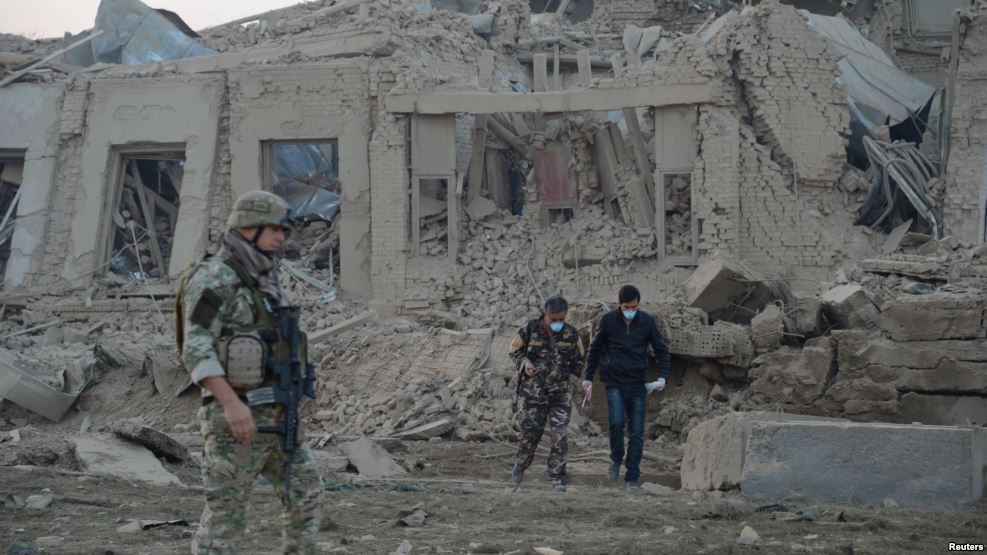
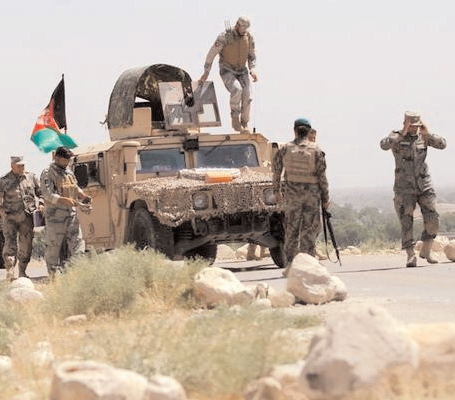
    KANDAHAR (TIP): At least 26 Afghan soldiers have been killed and 13 wounded in a Taliban attack on a military base in Kandahar province, the defence ministry said on July 26, the latest blow to struggling security forces.

    The militants “attacked an army camp in Karzali area of Khakrez district of Kandahar last night,” MoD spokesman General Dawlat Waziri said. Afghan soldiers “bravely resisted”, he said, killing more than 80 insurgents.

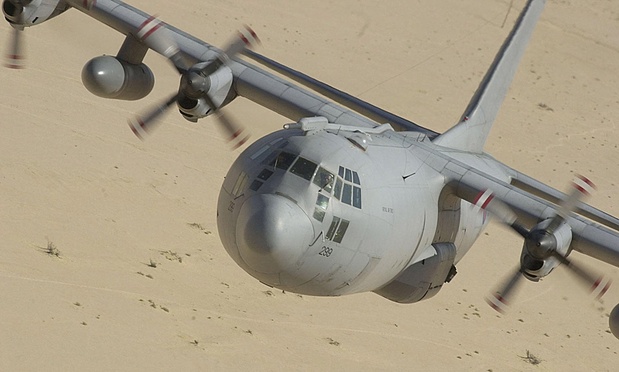
    Residents in the area described an hours-long attack launched by a 30- strong convoy carrying “hundreds” of Taliban who assaulted the base from multiple directions. Air support was called in, several residents said, though that was not immediately confirmed by officials.

    The insurgents claimed the attack via their Twitter account. The resurgent Taliban have been ramping up their campaign against beleaguered government forces, underscoring rising insecurity in the war-torn country throughout the warmer weather fighting season.

    Afghan security forces, beset by killings, desertions and non-existent “ghost soldiers” on the payroll, have been struggling to beat back insurgents since US-led NATO troops ended their combat mission in December 2014.

    According to US watchdog SIGAR, casualties among Afghan security forces soared by 35 percent in 2016, with 6,800 soldiers and police killed. The insurgents have carried out more complex attacks against security forces in 2017.

    In April more than 140 soldiers are believed to have been killed on a base outside the northern city of Mazar-i- Sharif, one of the deadliest ever Taliban attacks on a military installation.

    While in early March gunmen disguised as doctors stormed the Sardar Daud Khan hospital — the country’s largest military hospital — in Kabul, killing dozens. (AFP)

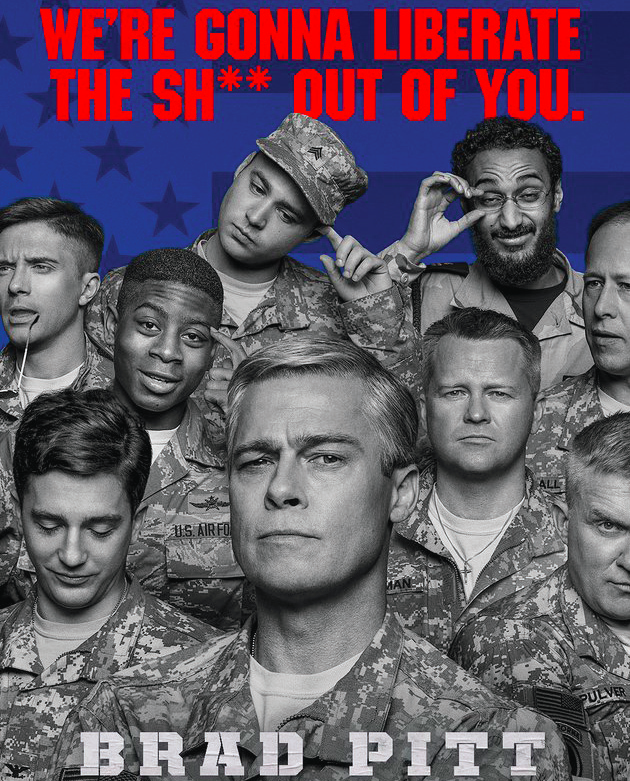
  • MOVIE REVIEW: WAR MACHINE

    MOVIE REVIEW: WAR MACHINE

    CAST: Brad Pitt, Anthony Hayes, John Magaro, Emory Cohen,
    Anthony Michael Hall, Topher Grace, Will Poulter, Tilda
    Swinton, Ben Kingsley
    DIRECTION: David Michôd
    GENRE: Comedy
    DURATION: 2 hours 2 minutes

    STORY

    David Michôd, the writer-director of War Machine, recreates a U.S. General’s roller-coaster rise & fall as part reality, part savage parody – raising the spectre of where the line between them lies today. At the story’s core is Brad Pitt’s sly take on a successful, charismatic four-star general who entered Afghanistan like a rock star to command NATO forces only to be taken down by a journalist’s no-holds-barred exposé.

    REVIEW

    ‘War Machine’ revolves around Glen McMahon (Brad Pitt) – a war-hardened general with one clear agenda: to put an end to the war. This solution is marred by the fact that US Marines are attempting to win over a war-torn Afghan population while hunting ISIS terrorists, resulting in a significant number of casualties at both ends. McMahon is a firm believer in the counterinsurgency and motivates his group of Marines to follow him into battle at the drop of a hat. His determination inspires an almost cultish reverence amongst his troops, who blindly trust him and his solutions even though there’s no evidence of their efficacy. They surround him in a sycophant cocoon, enabling a vicious cycle as they reinforce his unrealistic outlook, which only propels them further into misguided chaos – eventually leading to their downfall.

    Brad Pitt inhabits the brazen general in his entirety. Gone is the glamorous leading man of international appeal – in his place is a larger-than-life character who, like the actor portraying him, is no less of an iconic figure. Brad Pitt imbibes McMahon’s persona on various emotional levels ranging from bravado to vulnerability, but he goes a step further by incorporating physical peculiarities that display the toll war has taken on his body, along with his mind. This could have easily descended into an over-the-top depiction, but Pitt is a veteran of emotionally layered roles with a firm grasp of comedic timing and delivery.

    This skilled combination allows him a nuanced portrayal that’s grounded in subtlety, thereby keeping his character from becoming a caricature. Following the undeniably humorous predicament that McMahon and his cronies dig themselves into, there is a gutting sense of dismay and distress when the real face of combat is revealed. Writer-director David Michôd uses comedy to lower your defenses only to deliver the sucker punch, well into the last act of the film.

  • Trump orders “review” of leaks as US-UK special ties turn shaky and NATO shudders

    Trump orders “review” of leaks as US-UK special ties turn shaky and NATO shudders

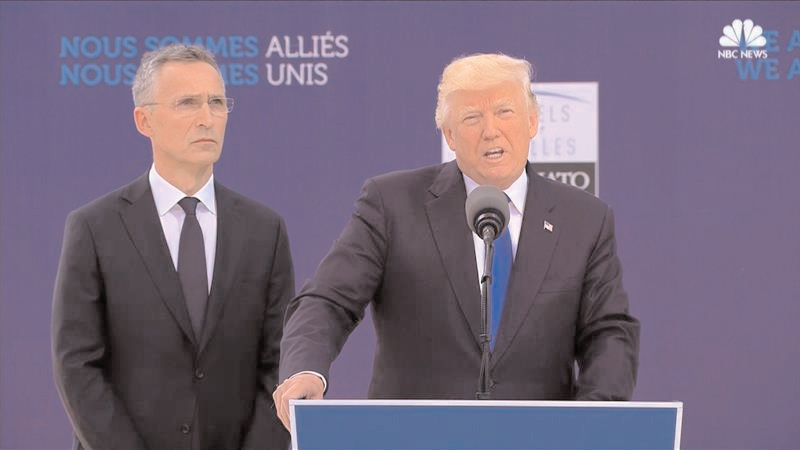
    WASHINGTON (TIP): President Trump on Thursday ordered ”complete review” by the Justice Department of leaks coming out of US government agencies as ties between Washington and London deteriorated sharply over American law enforcement agencies prematurely spilling information to the media on the Manchester bombing.

    The US move came after an outraged UK government said it would stop sharing intel with US because it is compromising investigations, and British Prime Minister Theresa May said she would raise the matter/raised the matter with Trump at the NATO summit in Brussels, grating that ”intelligence that is shared between our law enforcement agencies must remain secure.”

    The flap came after the US media published the suspected bomber’s name and other details of the probe even as British agencies moved to question his family and contacts. Photos of the blood smeared remnants of the attackers backpack and other evidence were also published in the U.S media, the information attributed to U.S law enforcement agencies.

    A furious British Counter Terrorism Policing, a body that includes the police, security and intelligence agencies, tweeted: ”Unauthorised disclosure of potential evidence in the middle of a major investigation undermines our work.” Trump ignored a reporter’s question on the matter during a photo-op in Brussels, but faced with British fury and threats to stop sharing intel, took the opportunity to initiate an omnibus ”review” into the leaks through a written statement.

    ”The alleged leaks coming out of government agencies are deeply troubling. These leaks have been going on for a long time and my Administration will get to the bottom of this. The leaks of sensitive information pose a grave threat to our national security,” the US President.

    Trump himself has been accused of sharing classified intel with Russian officials, something the President has said he has the ”absolute right” to do by virtue of the office he holds. He said he is ”asking the Department of Justice and other relevant agencies to launch a complete review of this matter, and if appropriate, the culprit should be prosecuted to the fullest extent of the law.”

    ”There is no relationship we cherish more than the Special Relationship between the United States and the United Kingdom,” Trump added, amid evident disquiet on the margins of the NATO summit in Brussels, where the U.S. President repeated charges that allies ”owe massive amounts of money” on defense and asked them to pony up. Trump had called Nato ”obsolete” during his election campaign, and although he has subsequently reeled back on his comments, the issue of financial burden sharing hung grimly over the alliance meeting. ”Members of the alliance must finally contribute their fair share and meet their financial obligations,” Trump said at the meeting. ”Twenty-three of the 28 member nations are still not paying what they should be paying and what they are supposed to be paying for their defense. This is not fair to the people and taxpayers of the United States.”

    Consequently, Trump also appeared to hold back on the mutual defense pledge and security guarantees for the alliance. Trump’s eight-day tour of the Middle- East and Europe has been relentlessly caricatured in the U.S for perceived flubs and faux-pas, including shoddy language and lack of grace.

    Meanwhile, trouble continues to brew at home over his campaign aides’ Russia ties and Obamacare repeal. On Wednesday, a Republican candidate locked in a crucial by-election to Congress was charged with assaulting a journalist from the Guardian newspaper, making an already shaky GOP even more jittery.

    But Trump supporters insist that he is making history, and the relentless criticism is part of liberal hysteria. Maintaining that the 45th U.S President had just made a ”titanic foreign policy shift” and the media had missed it, Trump surrogate Newt Gingrich wrote in an oped that ”Never before has an American president tried so clearly to unite the civilized world, including the nations of the Middle East and Africa, against the forces of terrorism,” through what the former Speaker called a ”reality based foreign policy.” (PTI)

  • Fake News Hyperventilating or Constitutional Crisis, with Brutus lurking in the Ides of March?

    Fake News Hyperventilating or Constitutional Crisis, with Brutus lurking in the Ides of March?

      By Ravi Batra
    The cascading events, generally are layered and rarely, as now, erupt into a crescendo from an approaching constitutional crisis.

    Initially, let me disclose that I am a registered Democrat, and seeing how Hillary’s team, including, DNC, illegally mistreated Sen. Bernie Sanders, and how Huma profited by quitting as Hillary’s deputy chief of staff and was immediately rehired as a “special government employee” and simultaneously got paid to work for the Clinton Foundation and Teneo Holdings – unethical and corrupt – I voted for Donald J. Trump to shake up the Establishment who, like Marie Antoinette, wanted Americans to “eat cake” when they couldn’t afford to “buy bread.” No hardworking American can get such a sweet Huma-Deal, soaked in conflicts of interests and influence peddling, without being shamed and maybe, going to jail. Leave aside Bill’s famous Tarmac Meeting with AG Lynch, forcing her recusal, and causing Comey to act as he did in 2016, where he, Comey cut Hillary a huge break by not indicting her for her planned-private email server, her housekeeper printing classified emails for Hillary’s review, and with full access to Bill to know all confidential matters without any “pillow talk” or an “audit trail” – due to password-sharing by Hillary to her housekeeper (and perhaps, Bill and Huma, etc.). General Petraeus ought get a presidential pardon from President Trump.

    I also admit that I didn’t like Preet Bharara being “fired,” after he was re-hired, as that hurt everyday New Yorkers from getting a government Lincoln decreed, while making those in power feel above-the-law again.

    Now, I turn to the issues at hand. Here is what we know, based upon the fast and furious reportage by The Washington Post, of Watergate fame, The New York Times and CNN, etc.

    President Trump likes General Flynn; even, after terminating him for lying to the Vice President. Perhaps, he likes Flynn too much. We know that Obama administration was told about Flynn-Russia contacts by our Special Allies in Europe. We know Obama warned then-president-elect Trump about Flynn. Yet, Trump as president appointed Flynn NSA, only, to fire him 18 days after he knew Flynn lied to the Vice President, with a termination oddly soaked with Flynn-love.  The bizarre Comey-termination, after a prior failed Loyalty-Pledge Request, was immediately followed by the incredulous Lavrov-Kislyak Oval Office visit with American Media barred, and POTUS later admitting to NBC’s Lester Holt that he, DJT, was thinking of the Russia Investigation when he fired Comey, hence, admitting his invisible state-of-mind worthy of self-immolation.

    If I was personal counsel to Donald J. Trump, not White House Counsel to the Office of the President of the United States, which requires the fiduciary duties protect the Office of the President and not necessarily the man who is president, I would want to know the answer to one critical bifurcated question, to wit: “Donald, did you create or approve of a plan, during your presidential campaign, that a “reachout” to Russia ought occur because you want to: (1)  “restart” US-Russia relations so as to defuse the ever-warming resurgence of the Cold War, as a matter of future US policy to cause Crimea’s return to Ukraine, NATO to refocus on defeating Terror, and Russian nuclear-armed submarines, ships and planes to join United States and NATO to enforce global peace and security? Or, (2) win the 2016 election with help from a foreign power, that is hostile to the United States, in violation of American democracy and rule of law and become the Manchurian President – remote-controlled by Russia?

    If Donald’s answer is YES to (1) and NO to (2), then he is like Nixon in 1968 delivering his famous China Speech at the Council on Foreign Relations, later to open up the world to China in 1971 and switch Taiwan’s United Nations Security Council seat from ROC to PRC. It’s all legal, even as history judges China the winner over Nixon, as China, instead of being a counterbalance to the then-Soviets, pulled a Veto along with Russia in 2013 in UNSC after Syria’s chemical war crimes.

    If Donald’s answer if NO to (1) and YES to (2), then he is in worse shape than Nixon’s Watergate Cover-Up, as here, it would be Trump’s Crime with Trump’s Cover-Up.

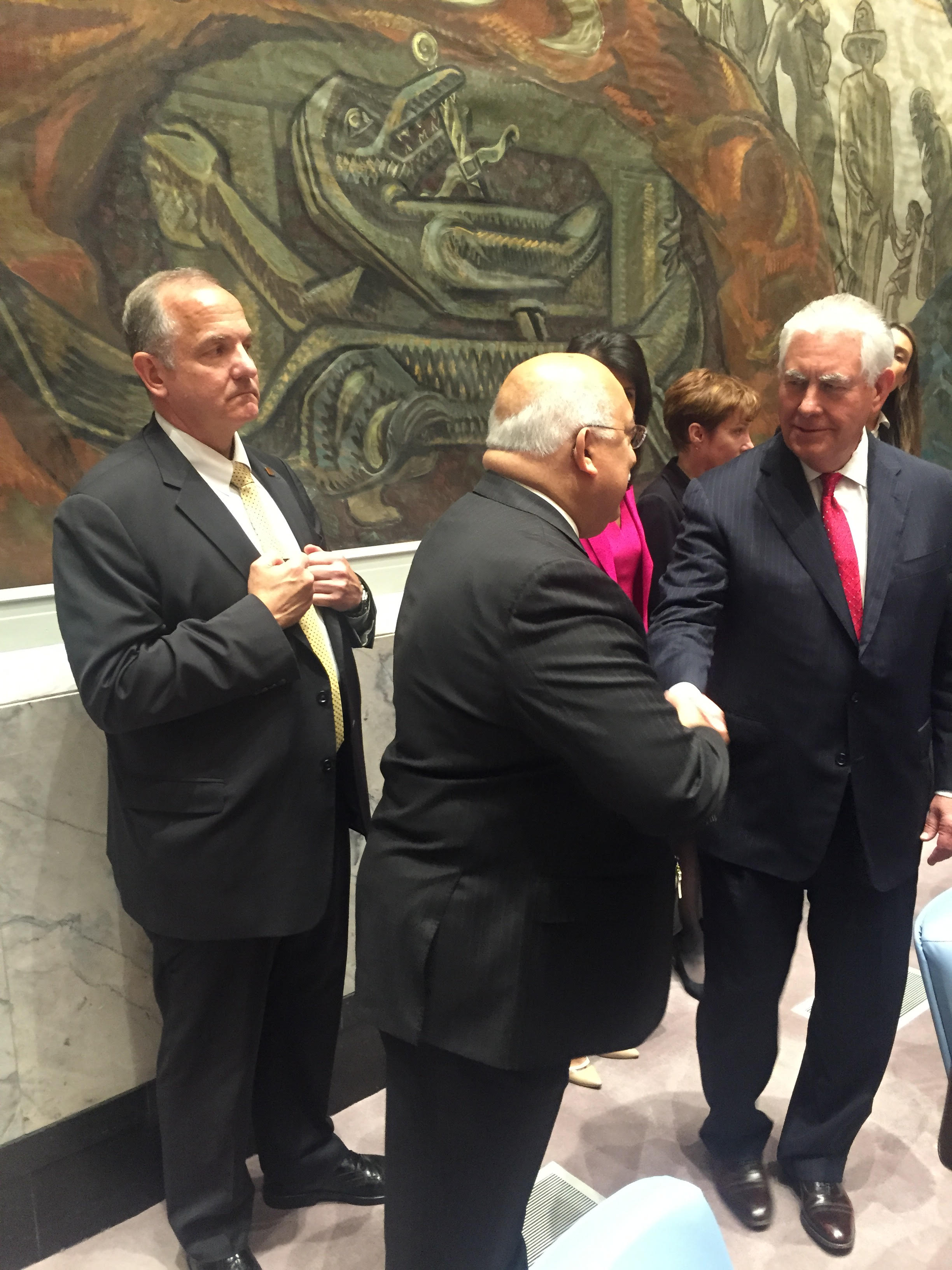
    Assuming DJT’s answers are YES and NO, not NO and YES, then I would advise him to cut loose everybody as President Reagan did in the Iran-Contra Affair, and let everybody, especially those who sought to make individual side profits from such Russian engagements to face the music, Congressional and Special Counsel Robert Mueller. For saving the Trump Presidency may be valuable to America and everyday Americans. Just look at what he has accomplished in his First foreign trip with the mature and uniquely capable Rex Tillerson by his side in Riyadh, Saudi Arabia. Just a few years ago, Saudi Arabia was so sick of our non-action against Syria, that after winning the coveted UN Security Council seat, Amb. Abdallah Y. Al-Mouallimi made history by declining the seat and Riyadh considered setting up an alternate multilateral system of government, given the void of American leadership in face of heart wrenching suffering caused by Syria and ISIS.

    However, there is a unique weakness that President Trump faces, that neither Nixon nor Reagan faced, in this early onset of the Impeachment Season: Both Houses of Congress are in Republican control. This is not so much a strength for the disruptive president, as it is a weakness. The Republicans want more than anything to retain both Houses in the 2018 Mid-Term elections. So, after getting the Tax Cut, they prefer to cause Impeachment to start out of righteous indignation, as then they get the normal-Establishment Mike Pence to be president – assuming he is not tainted and already-resigned by knowing about Flynn as Chair of Trump Transition Committee (for how could Flynn have lied to the Vice President in 2017, when Mike Pence already knew about Flynn-Russia and Flynn-Turkey in 2016) – well, then Speaker Paul Ryan is President. So, Mr. President, “beware the Ides of March” as “Brutus” lurks. Julius Caesar Act 1 Scene 2.

    (Ravi Batra, an eminent NY attorney, is a former NYS Commissioner, Joint Commission on Public Ethics; Chair, National Advisory Council South Asian Affairs)

  • EX-GREEK PM PAPADEMOS HURT IN CAR BLAST: STATE TV

    EX-GREEK PM PAPADEMOS HURT IN CAR BLAST: STATE TV

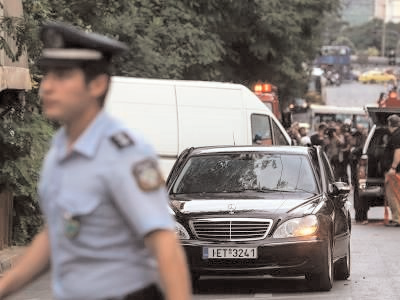
    ATHENS (TIP): Greek former prime minister Lucas Papademos was hurt on Thursday when an explosive device went off inside his car in Athens, state agencies said. State news agency ANA said Papademos was undergoing surgery for abdominal and leg injuries at an Athens hospital.

    State TV ERT earlier reported that he also had trouble breathing, but his life was not in danger. Two of his guards were lightly hurt, ERT said. “We are shocked. I wish to condemn this heinous act,” media minister Nikos Pappas told the station. ERT said Papademos, prime minister from 2011 to 2012, was wounded by a letter bomb as he read his post in the back of the car.

    Prime Minister Alexis Tsipras, who is attending a NATO summit in Brussels, has been informed of the incident, ANA said.

    A police source said a number of people had been hurt but could not say if Papademos himself was in the car at the time of the blast. Papademos, 69, a former Bank of Greece governor, was in an armoured Mercedes provided by the bank, which contained the blast and likely aggravated his injuries, ERT said.

    He headed an interim coalition government at the height of Greece’s fiscal crisis that in 2012 negotiated a massive write-down of the country’s privately-held debt.

    He served as prime minister from November 2011 to May 2012 after the resignation of George Papandreou’s socialist government, steering a batch of tough austerity measures through parliament before stepping down for elections to be held.

    An economist by training, Papademos was Bank of Greece governor from 1994 to 2002, and European Central Bank governor vice president from 2002 to 2010.(AFP)

  • HACKERS CAME, BUT THE FRENCH WERE PREPARED

    HACKERS CAME, BUT THE FRENCH WERE PREPARED

    HACKERS CAME, BUT THE FRENCH      WERE PREPARED

    PARIS (TIP): Everyone saw the hackers coming. The National Security Agency in Washington picked up the signs. So did Emmanuel Macron’s bare-bones technology team. And mindful of what happened in the American presidential campaign, the team created dozens of false email accounts, complete with phony documents, to confuse the attackers.

    The staff at Macron’s makeshift headquarters in the 15th Arrondissement at the edge of Paris didn’t need the NSA to tell them they were being targeted: In December, after the former investment banker and finance minister had emerged as easily the most anti-Russian, pro-Nato and pro- European Union candidate in the presidential race, they began receiving phishing emails.

    The phishing mails were “high quality”, said Macron’s digital director, Mounir Mahjoubi: They included the actual names of members of the campaign staff, and at first glance appeared to come from them.

    Even before then, the Macron campaign had begun looking for ways to make life a little harder for the Russians “We went on a counteroffensive,” said Mahjoubi. “We couldn’t guarantee 100% protection” from the attacks, “so we asked: what can we do?” Mahjoubi opted for a classic “cyber blurring” strategy creating false email accounts and filled them with phony documents the way a bank teller keeps fake bills in the cash drawer in case of a robbery. “We created false accounts, with false content, as traps. We did this massively, to create the obligation for them to verify, to determine whether it was a real account,” Mahjoubi said. “I don’t think we prevented them. We just slowed them down,” he said. “Even if it made them lose one minute, we’re happy,” he said.

    The Russians did a poor job of covering their tracks. The metadata tied to a handful of documents —code that shows the origins of a document — show some passed through Russian computers and were edited by Russian users. Some Excel documents were modified using software unique to Russian versions of Microsoft Windows. (NYT Services)

  • 2 killed, 100 wounded in suicide attack on German consulate in northern Afghanistan

    2 killed, 100 wounded in suicide attack on German consulate in northern Afghanistan

    MAZAR-I-SHARIF (TIP): A powerful Taliban truck bomb struck the German consulate in Afghanistan’s northern Mazar-i-Sharif city late on Nov 10, killing at least two people and wounding more than 100 in a major militant assault in the war-torn country.

    The Taliban called it a “revenge attack” for US air strikes in the volatile province of Kunduz earlier this month that left up to 32 civilians dead.

    The huge explosion, followed by sporadic gunfire, reverberated across the usually tranquil city, smashing windows of nearby shops and leaving terrified local residents fleeing for cover.

    “The suicide attacker rammed his explosives-laden car into the wall of the German consulate,” local police chief Sayed Kamal Sadat told AFP.

    The German foreign ministry said the attack had ended and that all German staff from the consulate were unharmed.

    “The consulate building has been heavily damaged. It is not yet clear how many Afghan civilians and security personnel died or were injured in the attack,” the ministry said in a statement.

    “Our sympathies go out to the Afghan injured and their families.”

    A diplomatic source in Berlin said Foreign Minister Frank-Walter Steinmeier had convened a crisis meeting.

    “There was fighting outside and on the grounds of the consulate,” a ministry spokesman said. “Afghan security forces and Resolute Support (NATO) forces from Camp Marmal (German base in Mazar-i-Sharif) are on the scene.”

    Afghan special forces cordoned off the consulate, previously well-known as Mazar Hotel. Helicopters were heard flying over the diplomatic mission early Friday as ambulances with wailing sirens rushed to the area, according to an AFP reporter near the scene.

    At least two dead bodies and more than 100 wounded people — including at least 10 children — had so far been brought to two city hospitals, said local doctor Noor Mohammad Fayez. Some of the wounded were in a critical condition, he added. The carnage underscores worsening insecurity in Afghanistan as Taliban insurgents ramp up nationwide attacks despite repeated government attempts to jump-start stalled peace negotiations. Taliban spokesman Zabihullah Mujahid said the “martyrdom attack” on the consulate had left “tens of invaders” dead. The insurgents routinely exaggerate battlefield claims. Posting a Google Earth image of the consulate on Twitter, Mujahid said the assault was in retaliation for American air strikes in Kunduz.

    US forces conceded last week that its air strikes “very likely” resulted in civilian casualties in Kunduz, pledging a full investigation into the incident.

    The strikes killed several children, after a Taliban assault left two American soldiers and three Afghan special forces soldiers dead near Kunduz city.

    The strikes triggered impassioned protests in Kunduz city, with the victims’ relatives parading mutilated bodies of dead children piled into open trucks through the streets. Civilian casualties caused by NATO forces have been one of the most contentious issues in the 15-year campaign against the insurgents, prompting strong public and government criticism.

    The country’s worsening conflict has prompted US forces to step up air strikes to support their struggling Afghan counterparts, fuelling the perception that they are increasingly being drawn back into the conflict. (AFP)

  • Britain, US sending planes, troops to deter Russia in the east

    Britain, US sending planes, troops to deter Russia in the east

    BRUSSELS (TIP): Britain said on Oct 26 it will send fighter jets to Romania next year and the United States promised troops, tanks and artillery to Poland in Nato’s biggest military build-up on Russia’s borders since the Cold War.

    Germany, Canada and other Nato allies also pledged forces at a defense ministers meeting in Brussels on the same day two Russian warships armed with cruise missiles entered the Baltic Sea between Sweden and Denmark, underscoring East-West tensions.

    In Madrid, the foreign ministry said Russia had withdrawn a request to refuel three warships in Spain’s North African enclave of Ceuta after Nato allies said they could be used to target civilians in Syria.

    The ships were part of an eight-ship carrier battle group – including Russia’s sole aircraft carrier Admiral Kuznetsov -that is expected to join around 10 other Russian vessels already off the Syrian coast, diplomats said. Nato secretary general Jens Stoltenberg said the troop contributions to a new 4,000-strong force in the Baltics and eastern Europe were a measured response to what the alliance believes are some 330,000 Russian troops stationed on Russia’s western flank near Moscow.

    “This month alone, Russia has deployed nuclear-capable Iskander missiles to Kaliningrad and suspended a weapons-grade plutonium agreement with the United States,” Stoltenberg said, also accusing Russia of continued support for rebels in Ukraine.

    Those ballistic missiles can hit targets across Poland and the Baltics, although Nato officials declined to say if Russia had moved nuclear warheads to Kaliningrad.

    Nato’s aim is to make good on a July promise by Nato leaders to deter Russia in Europe’s ex-Soviet states, after Moscow orchestrated the annexation of the Crimea peninsula in 2014.

    Nato’s plan is to set up four battle groups with a total of some 4,000 troops from early next year, backed by a 40,000-strong rapid-reaction force, and if need be, follow-on forces.

    As part of that, US Secretary of Defense Ash Carter announced a “battle-ready battalion task force” of about 900 soldiers would be sent to eastern Poland, as well as another, separate force equipped with tanks and other heavy equipment to move across eastern Europe. “It’s a major sign of the US commitment to strengthening deterrence here,” Carter said.

    Britain’s Defence Secretary Michael Fallon said Britain would send an 800- strong battalion to Estonia, supported by French and Danish troops, starting from May. The United States wants its troops in position by June. London is also sending Typhoon fighter aircraft to Romania to patrol around the Black Sea, partly in support of Turkey. “Although we are leaving the European Union, we will be doing more to help secure the eastern and southern flanks of Nato,” Fallon said.

    Syrian shadow

    Others Nato allies joined the four battle groups led by the United States, Germany, Britain and Canada to go to Poland, Lithuania, Estonia and Latvia. Canada said it was sending 450 troops to Latvia, joined by 140 military personnel from Italy. Germany said it was sending between 400 and 600 troops to Lithuania, with additional forces from the Netherlands, Norway, Belgium, Croatia and Luxembourg.

  • Turkey Coup

    Turkey Coup

    “In a nation, citizens proud to be Turks, that democratically elected their government, a military coup, even if patriotic in motive, is the ultimate insult of the people – to replace their choice of leadership.

    If the military feels that they are better, Turks, or anything else in any other nation, let them resign their military commission and face the voters’ judgment on a ballot – democracy’s judgment.

    Turkey is an important nation, not just on a Google map connecting the East with the West, but because it’s a bridge between cultures, continents and religions – and as America’s ally. That Turkey is a NATO member, makes the Coup even more offensive.

    As Kazakh president Nazarbeyev’s 21st century manifesto declared, in my words, “war on war,” any Coup anywhere is an offense against every nation under law.

    So, I humbly ask the patriotic but misguided Turkish soldiers to return to the barracks and defend Turkey’s sovereignty.”

  • NATO critical to security of United States: Barack Obama

    NATO critical to security of United States: Barack Obama

    WASHINGTON (TIP): US President Barack Obama has said Nato is “critical” to the security of America and its allies in Europe, a virtual rejection of Republican frontrunner Donald Trump’s views that the intergovernmental military alliance has outlived its utility.

    “Nato continues to be the linchpin, the cornerstone of our collective defence and US security policy,” Obama told reporters on Monday along with Nato secretary general Jens Stoltenberg in the White House.

    The Obama-Stoltenberg meeting came in the wake of Trump’s remarks.

    White House press secretary Josh Earnest has termed such remarks as “ill-advised”. Obama, however, did not make any direct comment on Trump’s comments.

    Obama said he had an excellent discussion that started with marking the tragedy that had taken place in Brussels, and reinforcing the importance of us staying focused on Islamic State (ISIS/ISIL) and countering the terrorism that has seeped up into Europe and around the world.

    “We agreed that one of the most important functions that Nato is performing and can continue to perform is to help in the training and assisting process for troops in Iraq, in Jordan, in many of the areas in the region.

    “And we are continuing to cooperate on an ongoing basis about operations potentially in areas like Libya, where you have the beginnings of a government and we can I think provide enormous help in helping to stabilize those countries,” Obama said. Obama and Stoltenberg also discussed situation in Afghanistan, Russia and Ukraine. “We continue to be united in supporting Ukraine in the wake of Russian incursions into Ukrainian territory. We continue to work in a train-and-assist fashion in helping support Ukraine develop its military capabilities defensively,” he said.

    Stoltenberg said Nato is as “important as ever”.

    “Because Nato has been able to adapt to a more dangerous world. We stand together in the fight against terrorism. Terrorism affects us all, from Brussels to San Bernardino, and all Nato allies contribute to the US-led efforts to degrade and destroy ISIL. And just last week, we started training Iraqi officers, and we will continue to support the efforts of the United States and other countries to fight ISIL,” he said.

    The US value the contributions it received from the large number of Nato members who are a part of counter-ISIL coalition, Earnest said.

  • Trump’s Isolationist Europe/NATO Policy

    Trump’s Isolationist Europe/NATO Policy

    Donald Trump’s attitude toward defense spending & his views on European security and the role of US alliances is extremely tricky. On one hand he wants to invest more money in the military, to make it so big and so strong that no one will “mess with us,” and on the other, he wants to reduce how much we spend on defense and also have the military do fewer things.

    As he revealed the first public members of his foreign policy team during a meeting with The Washington Post’s editorial board on Monday, March 21, Trump unveiled a new facet of his position on the NATO Alliance.

    Trump declared U.S. involvement in NATO may need to be significantly diminished in the coming years, breaking with nearly seven decades of consensus in Washington. “We certainly can’t afford to do this anymore,” Trump said, adding later, “NATO is costing us a fortune, and yes, we’re protecting Europe with NATO, but we’re spending a lot of money.”

    He said Americans are shouldering too much of a burden among NATO nations – particularly when it comes to Ukraine.

    “Ukraine is a country that affects us far less than it affects other countries in NATO, and yet we are doing all of the lifting, they’re not doing anything,” he said. “And I say, why is it that Germany is not dealing with NATO on Ukraine?”

    He added that the “concept” of NATO is good, but that it is a product of a different time, when the US was wealthier.

    Mr. Trump’s objection to the burdens of current US international commitments isn’t limited to Europe either. He also pointed to South Korea as a nation that needs to do more to compensate the US.

    “South Korea is very rich,” he said. “Great industrial country. And yet we’re not reimbursed fairly for what we do. We’re constantly, you know, sending our ships, sending our planes, doing our war games. We’re reimbursed a fraction of what this is all costing.”

    When told that South Korea pays roughly half of non-personnel costs, Mr. Trump wondered why it wasn’t 100%.

    According to Mr. Trump, the US needs to turn its focus to the problems it has at home.

    “I know the outer world exists, and I’ll be very cognizant of that, but at the same time, our country is disintegrating, large sections of it, especially in the inner cities,” he said.

  • Change in command of US-Nato forces in Afghanistan

    Change in command of US-Nato forces in Afghanistan

    KABUL, AFGHANISTAN (TIP): US Army General John W “Mick” Nicholson has taken command of US and Nato forces in Afghanistan, inheriting America’s longest war and a vicious insurgency.

  • Terrorist havens in Pakistan pose serious problem: US general

    Terrorist havens in Pakistan pose serious problem: US general

    WASHINGTON: Terrorist safe havens inside Pakistan, providing shelter to terrorist outfits like the Taliban and the Haqqani network, is a serious problem, a top US general nominated to be the commander of NATO forces in Afghanistan said on Thursday.

    “I view it (terrorist safe havens inside Pakistan) as a serious problem,” General John “Mick” Nicholson told members of the Senate Armed Services Committee during his confirmation hearing.

    If confirmed by the Senate, he would replace General John Campbell as commander of the US and NATO forces in Afghanistan at a time when serious concerns have been raised about the security situation in Afghanistan, where Taliban militants have caused large numbers of casualties and Islamic State affiliates have made some inroads.

    “One of the biggest problems has been the sanctuary, particularly for the Haqqani Network, particularly the involvement of the ISI in Pakistan, which in many cases have been supporting the Haqqani Network. Have you seen any progress in this whole problem?” Senator John McCain, chairman of the Senate Armed Services Committee, asked General Nicholson.

    In response, Gen Nicholson said continued presence of the terrorist safe haven has been a major problem.

    “This has been one of the principal challenges. It’s a sanctuary that our enemies, in particular the Haqqani Network, have enjoyed inside Pakistan,” he said.

    “I note that the Pakistanis have also suffered significant casualties in the tens of thousands in terms of their security forces and their civilians,” he noted.

    However, the US is not satisfied that there’s adequate pressure put on the Haqqanis, he told the Senators.

    The recent operations in northern Waziristan have helped, as well as stationing of additional soldiers in tribal areas.

    “Some of this has pushed some fighters into Afghanistan, which has contributed to some of the issues there,” he said.

    (PTI)

  • Putin rules out reconciliation with Turkey

    Putin rules out reconciliation with Turkey

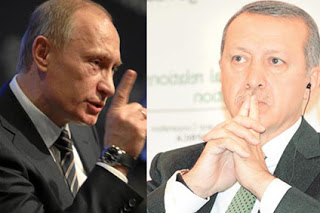
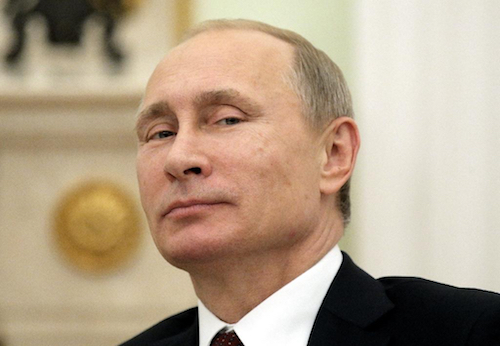
    MOSCOW (TIP): Russian President Vladimir Putin fired off an angry tirade against Turkey on Dec 17, ruling out any reconciliation with its leaders and accusing Ankara of shooting down a Russian warplane to impress the United States.

    In comments littered with crude language, Putin dismissed the possibility that the downing of the warplane over the Turkey-Syria border last month was an accident, calling it a “hostile act”. “We find it difficult if not impossible to come to an agreement with the current leadership of Turkey,” the Kremlin strongman said at his annual news conference. “On the state level, I don’t see any prospects of improving relations with the Turkish leadership,” he said of Turkish counterpart Recep Tayyip Erdogan. Ties between Russia and the NATO member have hit rock bottom since the November 24 incident, which led to deaths of two Russian military officers.

    Turkey has said the Russian jet strayed into its airspace and ignored repeated warnings, but Moscow insists it never left Syrian territory. Putin said he did not rule out that Ankara was acting with tacit approval from Washington, possibly so that the United States would look the other way to let Turkey “go onto Iraqi territory and occupy part of it”.

    “I don’t know if there was such a trade-off, maybe there was,” Putin said.

    “If somebody in the Turkish leadership decided to lick the Americans in one place… I don’t know, if they did the right thing,” he added. “Did they think we would run away now? Russia is not that kind of country,” Putin said, speaking of Moscow’s increased military presence in Syria.

    “If Turkey flew there all the time before, breaching Syrian airspace, well, let’s see how they fly now.”

    Turkey has voiced concern about Russian air raids in northern Syria because of the Turkmen minority in the area, a Turkic-speaking people who have had an uneasy relationship with the regime of President Bashar al-Assad.

    (AFP)

  • US successfully tests NATO missile defenses off Hawaii

    US successfully tests NATO missile defenses off Hawaii

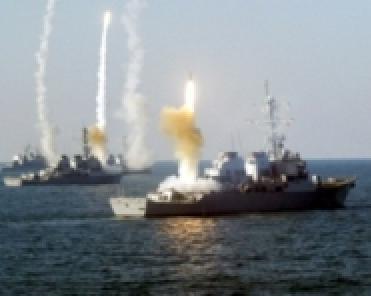
    HONOLULU (US): The US military says it has shot down a missile off Hawaii in a test of a missile defense system designed to protect NATO forces in Europe from attack.

    The Missile Defense Agency said yesterday that an Air Force C-17 aircraft launched a medium-range target over the ocean southwest of Hawaii on Dec 9.

    The Aegis Weapon System at the Pacific Missile Range Facility on Kauai launched an interceptor missile after radar detected the target. The SM-3 interceptor moved into the target’s path and destroyed it.

    Defense contractor Raytheon Co said the test’s success keeps the Aegis Ashore program on track for deployment in Romania by year’s end. It says it is expected to operate in Poland in 2018.

  • Putin swears to make Turkey regret plane downing

    Putin swears to make Turkey regret plane downing

    MOSCOW (TIP): Russian President Vladimir Putin, on December 3, vowed Turkey’s leadership would be made to regret the downing of one of Moscow’s warplanes as the top diplomats from both countries held their first high-level meeting since the incident.

    Moscow announced a halt to talks on a major gas pipeline with Nato member Ankara as Putin fired another salvo in their war of words, while Turkish leader Recep Tayyip Erdogan shot back by claiming he had “proof” Russia was involved in illegal oil trading with the Islamic State group.

    Turkey has become Moscow’s prime international sparring partner after it shot down a Russian jet on its border with Syria on November 24 — sparking fury and economic sanctions from the Kremlin. (PTI)

  • NATO to keep 12,000 troops in Afghanistan next year

    BRUSSELS (TIP): Nato will keep some 12,000 troops in Afghanistan for an extra year in 2016 to prevent the country again becoming a terrorist safe haven, alliance head Jens Stoltenberg said on Wednesday.

    Nato’s resolute support advice and training mission was supposed to end this year but Taliban battlefield successes, especially their recent brief capture of the northern city of Kunduz, prompted a radical re-think.

    “Today, Nato allies and Resolute Support operational partners have agreed to sustain the Resolute Support presence … during 2016,” Stoltenberg said after alliance foreign ministers endorsed the decision. “The mission … will continue to be kept under review and, if necessary, will be adjusted to ensure its effectiveness.” Troop numbers will be “12,000 approximately,” in line with current strength, he added.

    US-led Nato invaded Afghanistan in 2001 shortly after the 9/11 terror attacks to oust the Taliban from Kabul. US troop numbers peaked at around 90,000. The alliance ended combat operations at the end of 2014, leaving in place the Resolute Support mission. Taliban militants are still mounting attacks while the Islamic State is gaining a foothold in the country. (AFP)

  • Pakistan Taliban commander allegedly killed by drones

    Pakistan Taliban commander allegedly killed by drones

    A senior commander of Tehreek-i-Taliban Pakistan (TTP) has been killed in US drone strikes in Afghanistan’s Khost province, Pakistani intelligence officials told Al Jazeera.

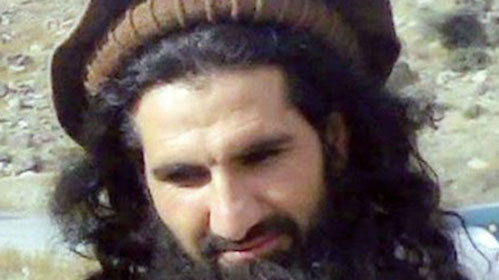
    Khalid Mehsud – alias Khan Said Sajna – was killed with 12 fighters on Wednesday when four US drones carried out strikes in the Damma area of Afghanistan, close to Pakistan’s North Waziristan province, the officials said on condition of anonymity.

    However, Azam Tariq, spokesman for Sajna’s faction of the Pakistani Taliban, denied the reports, saying the leader was still alive. Tariq said he was with Sajna hours before the alleged attack and would have known if he had been killed.

    Sajna, formerly chief of the TTP’s South Waziristan unit, has led a breakaway faction of the armed group that has waged a bloody rebellion against the Pakistani state.

    Do drone strikes create more terrorists than they kill?
    The US State Department listed Sajna as a “terrorist” on October 21 last year for his alleged involvement in the May 2011 attack on Mehran Naval Base in Karachi. That attack killed 10 people and destroyed two US-supplied maritime surveillance planes.

    The Pakistan Taliban commander had been fighting alongside the Afghan Taliban against US-led NATO forces in Afghanistan.

    He formed his own faction after Mullah Fazlullah was appointed TTP chief after the killing of Hakeemullah Mehsud in a US drone attack on November 1, 2013.

    The reported strikes on Wednesday come days after a US drone killed 45 fighters, mostly Pakistani Taliban fighters, in Afghanistan’s Khost province.

    Security officials said 25 bodies were taken to the Dir district of Khyber Pakhtunkhwa province in Pakistan.

    The controversial US drone programme in Pakistan has slowed sharply in recent months because of political opposition.

  • PAK-US NUCLEAR DEAL INDIA THREATENED

    PAK-US NUCLEAR DEAL INDIA THREATENED

    NEW DELHI / KARACHI(TIP): Pakistan’s refusal to rule out use of nuclear weapons in a conventional conflict with India and the military’s belief that a nuclear deterrent allows it to pursue terrorism against India sharply reduces the possibility of a civil nuclear deal with the US that imposes constraints on Islamabad’s atomic arsenal.

    Pakistan’s ambiguous nuclear doctrine that does not make it clear just when the nuclear option could come into operation is rooted in a belief system that the weapons are the only means of countering India’s larger armed forces.

    The threat to use “tactical” or battlefield nukes is supported by elaborate arguments based on conveniently edited history, a dire interpretation of Indian intent and far fetched comparisons with Nato strategies during the cold war.

    Given the military’s belief, shared by elite opinion including strategic affairs experts, that nuclear weapons are part of a triad comprising regular military and anti-India jihadi groups, there is hardly any likelihood of Pakistan agreeing to reduce or contain its armoury to a size that answers to a strategic deterrent.

    Pakistan’s reference to jargon like “full spectrum” deterrence amounts to a determination to use its nuclear weapons as a means to prevent India from using military options in response to terrorist attacks.

    This interpretation of deterrence – of using nuclear weapons to prevent retaliation for terrorist attacks – is uniquely Pakistan’s and has nothing in common with cold war doctrines that the military frequently quotes.

    India’s argument that any attempt to buy off Pakistan’s nuclear weapons is not only not likely to work but may be counter-productive is bolstered by the Nawaz Sharif government’s inability to chart a policy on its own.

    Having buckled to the military’s insistence that Pakistan pitch Kashmir to the top of its engagement with India in order to take the focus away from terrorism, the Sharif regime has even less elbow room on any nuclear deal.

    Though the Pakistan army has been, on the whole, spectacularly unsuccessful in achieving any of its objectives with regard to Jammu and Kashmir, the dispute remains a key rational for maintaining nuclear arms.

    The Kashmir dispute serves to block any real progress with India even if it is quite evident that the most intractable aspect of bilateral ties isn’t the best starting point and that cooperation on terrorism might actually make the region safer.

  • Transnationals | Tax Havens | Terrorism

    Transnationals | Tax Havens | Terrorism

    “Westphalian sovereignty is the principle of international law that each nation state has sovereignty over its territory and domestic affairs, to the exclusion of all external powers. The principle of non-interference in another country’s domestic affairs, and that each state (no matter how large or small) is equal in international law is recognized. This doctrine is named after the Peace of Westphalia, signed in 1648, which ended the Thirty Years’ War.” 

    “It is ironical that Terror organizations on one side and Tax havens on the other have completely undermined Westphalia consensus. In that context countries like India have every right to exercise its freedom to pursue terrorists who are undermining its existence whether sponsored by foreign countries or home grown. The concept of territorial jurisdictions and sovereignty are no more valid in the context of terror organizations since they damage both India and its own host countries over period of time. India must protect its national interests and institutions by challenging inimical forces wherever they are located without worrying about Westphalia consensus”.


    In the context of the strikes made against terror camps on the border of Manipur/Nagaland by the Indian Army; there has been number of discussions about national sovereignty and the role of individual States. Actually in the last few decades the activities of transnational corporations aided by tax havens on one side and terrorists on the other side have destroyed the concept of nation state and its sovereignty evolved after the 30 years’ war in 1648 in Westphalia. Westphalian sovereignty is the principle of international law that each nation state has sovereignty over its territory and domestic affairs, to the exclusion of all external powers. The principle of non-interference in another country’s domestic affairs, and that each state (no matter how large or small) is equal in international law is recognized. This doctrine is named after the Peace of Westphalia, signed in 1648, which ended the Thirty Years’ War .After that war major continental European states – the Holy Roman Empire, Spain, France, Sweden and the Dutch Republic – agreed to respect one another’s territorial integrity. As European influence spread across the globe, the Westphalian principles, especially the concept of sovereign states, became central to international law and to the prevailing world order.

    Scholars of international relations have identified the modern, Western-originated, international system of states, multinational corporations, and organizations, as having begun at the Peace of Westphalia. Henry Kissinger in his important book on “world Order” says:

    “No truly global “world order’ has ever existed. What passes for order in our time was devised in Western Europe nearly four centuries ago, at a peace conference in the German region of Westphalia, conducted without the involvement or even the awareness of most other continents or civilizations. A century of sectarian conflict and political upheaval across Central Europe had culminated in the Thirty Years’ war of 1618-48- a conflagration in which political and religious disputes commingled, combatants resorted to “total war” against population centers, and nearly a quarter of the population of Central Europe died from combat, disease, or starvation. The exhausted participants met to define a set of arrangements that world stanch the bloodletting. Religious unity had fractured with the survival and spread of Protestantism; Political diversity was inherent in the number of autonomous political units that had fought to a draw. So it was that in Europe the conditions of the contemporary world were approximated: a multiplicity of political units, none powerful enough to defeat all others, many adhering to contradictory philosophies and internal practices, in search of neutral rules to regulate their conduct and mitigate conflict.

    “The Westphalian peace reflected a practical accommodation to reality, not a unique moral insight. It relied on a system of independent states refraining from interference in each other’s domestic affairs and checking each other’s ambitions through a general equilibrium of power. No single claim to truth or universal rule had prevailed in Europe’s contests. Instead, each state was assigned the attribute of sovereign power over its territory. Each would acknowledge the domestic structures and religious vocations of its fellow states as realities and refrain from challenging their existence. With a balance of power now perceived as natural and desirable, the ambitions of rules would be set in counterpoise against each other, at least in theory curtailing the scope of conflicts. Division and multiplicity, an accident of Europe’s history, became the hallmarks of a new system of international order with its own distinct philosophical outlook. In this sense the European effort to end its conflagration shaped and prefigured the modern sensibility: it reserved judgment on the absolute in favor of the practical and ecumenical; it sought to distill order from multiplicity and restraint.

    “The seventeenth-century negotiators who crafted the peace of Westphalia did not think they were laying the foundation for a globally applicable system. They made no attempt to include neighboring Russia, which was then reconsolidating its own order after the nightmarish “Time of Troubles” by enshrining principles distinctly at odds with Westphalian balance; a single absolute ruler, a unified religious orthodoxy, and a program of territorial expansion in all directions. Nor did the other major power centers regard the Westphalian settlement (to the extent they learned of it at all) as relevant to their own regions.1

    The three core principles on which the consensus rested are:

    1. The principle of the sovereignty of states and the fundamental right of political self determination
    2. The principle of legal equality between states
    3. The principle of non-intervention of one state in the internal affairs of another state

    Interestingly, all three are questioned by contemporary leaders of West and radical Islam.

    Tony Blair the then Prime Minister of UK in his famous Chicago Address -1999-suggests

    “The most pressing foreign policy problem we face is to identify the circumstances in which we should get actively involved in other people’s conflicts. Non -interference has long been considered an important principle of international order….

    “But the principle of non-interference must be qualified in important respects. Acts of genocide can never be a purely internal matter. When oppression produces massive flows of refugees which unsettle neighboring countries then they can properly be described as “threats to international peace and security”.2

    The NATO intervention in Kosovo and Afghanistan as well as US intervention in Iraq provide recent examples of breakdown of idea of Westphalia. Similar is the humanitarian crisis faced by India regarding refugees from East Pakistan.

    Interestingly Radical Islam also considered that the world order based on Westphalian consensus will collapse. “In the aftermath of the 11 March 2004 Madrid attacks, Lewis ‘Atiyyatullah, who claims to represent the terrorist network al-Qaeda, declared that “the international system built up by the West since the Treaty of Westphalia will collapse; and a new international system will rise under the leadership of a mighty Islamic state.”3

    The spread of ISIS across countries and activities of Boko Haram based in Nigeria in Kenya and Chad re-emphasis this point. Radical Islam do not accept territorial boundaries since it works for a global regime for global Ummah.

    The recruitment by these terror organizations is also across continents and countries which does not respect territorial sovereignty. The talk about Caliphate indicates that they are trans-border organizations.

    On the other side we find global corporations transcending sovereignty in search of global profits. For this they use tax havens as a tool.

    Tax havens–numbering more than 70 jurisdictions–facilitate bank facilities with zero taxes and no-disclosure of the names and in many cases anonymous trusts holding accounts on behalf of beneficiary. Basically lawyers and Chartered accountants will deal with mattes. Sometimes a post box alone will be operative system. In the case of Bahamas one building seems to have had tens of thousands of companies registered there.

    Luxemburg (population half a million!) registered companies of various countries have evaded taxes significantly from their legal jurisdiction. The key findings of the activities of transnational companies cutting across territorial jurisdiction is given below.

    • Pepsi, IKEA, AIG, Coach, Deutsche Bank, Abbott Laboratories and nearly 340 other companies have secured secret deals from Luxembourg that allowed many of them to slash their global tax bills.
    • PricewaterhouseCoopers has helped multinational companies obtain at least 548 tax rulings in Luxembourg from 2002 to 2010. These legal secret deals feature complex financial structures designed to create drastic tax reductions. The rulings provide written assurance that companies’ tax-saving plans will be viewed favorably by Luxembourg authorities.
    • Companies have channeled hundreds of billions of dollars through Luxembourg and saved billions of dollars in taxes. Some firms have enjoyed effective tax rates of less than 1 percent on the profits they’ve shuffled into Luxembourg.
    • Many of the tax deals exploited international tax mismatches that allowed companies to avoid taxes both in Luxembourg and elsewhere through the use of so-called hybrid loans.
    • In many cases Luxembourg subsidiaries handling hundreds of millions of dollars in business maintain little presence and conduct little economic activity in Luxembourg. One popular address – 5, rue Guillaume Kroll – is home to more than 1,600 companies.
    • A separate set of documents reported on by ICIJ on Dec. 9 expanded the list of companies seeking tax rulings from Luxembourg to include American entertainment icon The Walt Disney Co., politically controversial Koch industries and 33 other firms. The new files revealed that alongside PwC tax rulings were also brokered by Ernst & Young, Deloitte and KPMG, among other accounting firms.4

    The big four accounting firms namely KPMG/E&Y/Deloitte and PwC have facilitated the movement of funds of clients across borders and territories to make tax “planning” easier for these companies. USA is literally waging war with major Giants like Amazon/Google/Microsoft etc. for not paying adequate taxes in USA in spite of being US based companies. Most of these companies have moved their profits to other Tax Havens.

    Global firms such as Starbucks, Google and Amazon have come under fire for avoiding paying tax on their British sales. There seems to be a growing culture of naming and shaming companies. But what impact does it have?5

    Royal Commission into tax loopholes a must—says a report in Australia.6

    There is an increasing clamor in USA about Congress Should Pass the Stop Tax Haven Abuse Act to Combat International Tax Avoidance. This has been highlighted by both TAX justice network as well as Global Financial Integrity.

    A simple method of trade mis-invoicing by global companies using tax-havens have impacted developing countries nearly 730Billion USD in 2012 says Global Financial integrity. Another interesting finding by GFI is about terror financing using Tax haven route.

    Because of the increasing wariness of MNCs using Tax havens for avoidance of taxes and the opaque ways of functioning of these off-shore structures, demands are growing about their activities and even closing down of these tax havens by European parliament etc.

    Due to relentless pressure from OECD as well as G20 many of these secretive jurisdictions are becoming more transparent.

    But the fact of the matter is these Trans National Companies and Tax Havens together have significantly undermined the concept of sovereignty and territorial jurisdictions.

    It is ironical that Terror organizations on one side and Tax havens on the other have completely undermined Westphalia consensus. In that context countries like India have every right to exercise its freedom to pursue terrorists who are undermining its existence whether sponsored by foreign countries or home grown. The concept of territorial jurisdictions and sovereignty are no more valid in the context of terror organizations since they damage both India and its own host countries over period of time. India must protect its national interests and institutions by challenging inimical forces wherever they are located without worrying about Westphalia consensus.

    (The author is Professor of Finance at IIM-Bangalore)

  • SUICIDE BOMBER ATTACKS NATO CONVOY IN KABUL

    SUICIDE BOMBER ATTACKS NATO CONVOY IN KABUL

    KABUL, AFGHANISTAN (TIP): A suicide attacker driving an explosives-packed vehicle targeted a Nato military convoy in the Afghan capital, Kabul, on July 1, police and a Nato official said.

    Police on the scene said casualties were expected. “It was a suicide car bomber, there are casualties but it is too early to know the extent of the damage,” said Kabul deputy police chief Sayed Gulagha.

    A spokesman for the Nato mission in Afghanistan, US Army Col Brian Tribus, said that a coalition convoy had been attacked.

    “We can confirm there was an attack on coalition forces. We are gathering information,” he said.

    SUICIDE BOMBER ATTACKS NATO CONVOY IN KABUL (inset)The explosion happened at 1.20pm on the main airport road in eastern Kabul. The blast sent a huge plume of black smoke over the city.

    It happened as government employees were leaving their offices and roads were choked with vehicles as the working day is shortened during the Ramadan fasting month.

    It comes a week after an audacious attack on the nation’s parliament, which highlighted the ability of insurgents, who have been fighting to overthrow the Kabul government for almost 14 years, to enter the highly fortified capital to stage deadly attacks.

    Also on Tuesday, a suicide attack on the police headquarters of southern Helmand province killed up to three people and wounded more than 50, including policemen, officials said.

    Omar Zawak, spokesman for the governor of Helmand province, said most of the injured in the Tuesday morning attack were women and children.

    Police spokesman Farid Hamad Obaid said a car packed with explosives was driven into the back wall of the police headquarters in an attempt to breach a gate. All the gunmen fled the area, he said.

    Also Tuesday in eastern Paktya province, three people were killed and one wounded when their vehicle hit a roadside mine, the provincial police chief Zalmai Oryakhel said.

  • European officials sing ‘we are the world’ at Nato meeting

    ANTALYA (TIP): In a distinctly different note for a military alliance meeting, European officials ended a Nato meeting with a spirited rendition of “we are the world.”

    Taking a break from issues such as the war in Ukraine and instability in the Middle East, Nato and other officials accepted an invitation by a Turkish band to sing a “last song for peace” at a dinner Wednesday hosted by Turkey as the alliance’s foreign ministers met near the Mediterranean city of Antalya.

    The foreign ministers of Greece and Turkey — Mevlut Cavusoglu and Nikos Kotzias — were seen singing and swaying arm-in-arm to the tune of the 1985 charity song. Nato secretary-general Jens Stoltenberg, EU foreign policy chief Federica Mogherini and others also joined in the sing-along.

  • Strategic Autonomy as an Indian Foreign Policy Option

    Strategic Autonomy as an Indian Foreign Policy Option

    [quote_right]For a large country like India, which has the potential of becoming a big power in the future, strategic autonomy is a compelling choice. By virtue of its demographic, geographic, economic and military size, India must lead, but does not have yet the comprehensive national power to do so. It cannot subordinate itself to the policies and interests of another country, however powerful, as its political tradition and the functioning of its democracy will not allow this. India may not be strong enough to lead, but it is sufficiently strong not to be led”, says the author.[/quote_right]

    In the joint statement issued during the Indian prime minister’s visit to France in April, the two sides reaffirmed “their independence and strategic autonomy” in joint efforts to tackle global challenges. In the French case, as a member of NATO it is not so clear what strategic autonomy might mean, but in our case it would essentially mean independence in making strategic foreign policy decisions, and, consequently, rejecting any alliance relationship. It would imply the freedom to choose partnerships as suits our national interest and be able to forge productive relationships with countries that may be strategic adversaries among themselves.

    In practical terms, this means that India can improve relations with the United States of America and China while maintaining close ties with Russia. It can forge stronger ties with Japan and still seek a more stable relationship with China. It can forge strong ties with Israel and maintain very productive ties with the Arab world, including backing the Palestinians in the United Nations. It means that India can have strategic partnerships with several countries, as is the case at present with the US, France, Germany, the United Kingdom, the European Union, Russia, China, Japan, Brazil, Saudi Arabia, Australia, Canada, Kazakhstan, Afghanistan, Vietnam, Iran and the like.

    It means that India can be a member of BRICS and the RIC dialogues, as well as IBSA, which exclude the West, and also forge closer political, economic and military ties with the Western countries. Our strategic autonomy is being expressed in other ways too. India is a democracy and believes that its spread favors its interests, but it is against the imposition of democracy by force on any country. If the spread of democracy is in India’s strategic interest, using force to spread it is against its strategic interest too, as is shown by the use of force to bring about democratic changes in West Asia by destroying secular authoritarian regimes and replacing them with Islamic authoritarian regimes. Likewise, India believes in respect for human rights, but is against the use of the human rights agenda to further the geo-political interests of particular countries, essentially Western, on a selective basis.

    For a large country like India, which has the potential of becoming a big power in the future, strategic autonomy is a compelling choice. By virtue of its demographic, geographic, economic and military size, India must lead, but does not have yet the comprehensive national power to do so. It cannot subordinate itself to the policies and interests of another country, however powerful, as its political tradition and the functioning of its democracy will not allow this. India may not be strong enough to lead, but it is sufficiently strong not to be led.

    India preserved its strategic autonomy even in the face of severe technology sanctions from the West on nuclear and missile issues. It preserved it by not signing the non-proliferation treaty and continuing its missile program. By going overtly nuclear in 1998, India once again exercised its strategic autonomy faced with attempts to close the doors permanently on its nuclear program by the permanent extension of the NPT and the comprehensive nuclear test ban treaty and fissile material cutoff treaty initiatives.

    In some quarters in India and abroad, the idea of strategic autonomy is contested as another manifestation of India’s non-aligned mindset, its propensity to sit on the fence, and avoid taking sides and assuming responsibility for upholding the present international order as a rising power should. These critics want India to join the US camp more firmly to realize its great power ambitions. These arguments ignore the reality that while the US has been crucial to China’s economic rise, China has been sitting on the fence for many years, even as a permanent member of the UN security council. Far from sacrificing its strategic autonomy, it has become a strategic challenger of the US.

    To be clear, the US government has officially stated its respect for India’s position on preserving its strategic autonomy, and denies any expectation that India would establish an alliance kind of relationship with it. It is looking for greater convergence in the foreign policies of the two countries, which is being realized.

    During Narendra Modi’s visit to the US in September, 2014, and Barack Obama’s visit to India in January this year, a strategic understanding on Asia Pacific and Indian Ocean issues, encapsulated in the January 2015 joint strategic vision for the Asia Pacific and the Indian Ocean has emerged. This document suggests a shift in India’s strategic thinking, with a more public position against Chinese maritime threat and a willingness to join the US in promoting partnerships in the region.

    Modi chose a striking formulation in his joint press conference with Obama in September when he said that the US was intrinsic to our Look East and Link West policies, which would suggest a growing role for the US in our foreign policy thinking. During Obama’s January visit, the joint statement noted that India’s Act East policy and the US rebalance to Asia provided opportunities for India, the US and other Asia-Pacific countries to work closely to strengthen regional ties. This was the first time that India implicitly endorsed the US rebalance towards Asia and connected our Act East policy to it.

    Rather than interpreting it as watering down our strategic autonomy, one can see it as strengthening it. So far, India has been hesitant to be seen drawing too close strategically to the US because of Chinese sensitivities. China watches closely what it sees are US efforts to rope India into its bid to contain China. At the same time, China continues its policies to strengthen its strategic posture in India’s neighborhood and in the Indian Ocean at India’s expense, besides aggressively claiming Indian territory.

    By strengthening relations with the US (which is strategically an Asian power), Japan and Vietnam, and, at the same time, seeking Chinese investments and maintaining a high-level dialogue with it, India is emulating what China does with India, which is to seek to build overall ties as much as possible on the economic front, disavow any negative anti-India element in its policies in our neighborhood, but pursue, simultaneously, strategic policies intended to contain India’s power in its neighborhood and delay its regional extension to Asia.

    In discussing the scope of our strategic autonomy, one should recognize that the strength of US-China ties, especially economic and financial, far exceeds that of India-US ties. India has to be careful, therefore, in how far it wants to go with the US with a view to improving its bargaining power with China. The other point to consider is the US-Pakistan equation. The US has just announced $1 billion of military aid to Pakistan; its position on the Taliban is against our strategic interests in Afghanistan; its stand on Pakistan’s sponsorship of terrorism against us is not robust enough.

    To conclude, strategic autonomy for India means that it would like to rely as far as possible on its own judgment on international issues, balance its relations with all major countries, forge partnerships with individual powers and take foreign-policy positions based on pragmatism and self-interest, and not any alliance or group compulsion.

    (The author is former foreign secretary of India. He can be reached at sibalkanwal@gmail.com)

  • Afghan soldier kills 1 US soldier, several others injured

    KABUL (TIP): An Afghan soldier shot and killed a US soldier and wounded several others Wednesday before being shot dead, the first so-called “insider attack” to target NATO troops since they ended their combat mission at the start of the year.

    The shooting happened after Afghan provincial leaders met a US Embassy official at the compound of the Nangarhar provincial governor in the city of Jalalabad. All US Embassy staff were accounted for and safe, the diplomatic mission said. ”Right after the U.S. official had left, suddenly an Afghan army soldier opened fire on the U.S. soldiers who were present in the compound,” said Afghan Gen. Fazel Ahmad Sherzad, the police chief for eastern Nangarhar province 

    The American troops returned fire, killing the Afghan soldier, whom Sherzad identified as Abdul Azim of Laghman province.

    The motive for his attack was not immediately known and no group claimed responsibility for the assault. In past attacks, Taliban insurgents have been known to wear Afghan police or military uniforms to stage attacks on the international troops.

  • 10 killed in Taliban siege on Afghan court complex

    MAZAR-I-SHARIF (Afghanistan) (TIP): At least 10 people died today when Taliban insurgents wearing military uniforms mounted a six-hour gun and grenade siege on a court complex in northern Afghanistan, in an assault highlighting the country’s fragile security situation.

    The attack in the usually tranquil city of Mazar-i-Sharif occurred just before the start of the Taliban’s traditional spring offensive, set to be the first fighting season when Afghan security forces battle insurgents without full NATO support.

    Explosions rang out as the assailants lobbed grenades and exchanged gunfire with Afghan security forces, setting ablaze one of the buildings in the compound, according to officials and an AFP reporter at the scene.

    Dozens of people were left wounded, with reports emerging of blood shortages in hospitals and urgent appeals for donors circulating on social media.

    “Around noon four assailants dressed in military uniforms breached the main gate of the Appeals Court in Mazar-i-Sharif and started firing gunshots and throwing hand grenades inside the complex,” said Abdul Raziq Qaderi, the acting provincial police chief of Balkh province.

    “Five security personnel and five civilians were killed and 66 others were wounded,” he added.

    Noor Mohammad Faiz, a senior doctor at the local public hospital, confirmed the toll, adding that some of the wounded were in critical condition.

    “Police, prosecutors, court staff, women and children are among those wounded,” Faiz told AFP.

    The insurgents were holed up inside the complex for six hours, surrounded by a large number of Afghan security forces before they were taken down.

    The Taliban claimed responsibility for the attack, which underscores Afghanistan’s precarious security situation as US-led foreign troops pull back from the frontlines after a 13-year war against the Taliban.

    “Our mujahideen have carried out a martyrdom attack… in Mazar-i-Sharif city,” Taliban spokesman Zabihullah Mujahid told AFP by telephone.

    Militant attacks are relatively rare in Mazar-i-Sharif, a city well-known as a melting pot of diverse cultures and religious influences where liberal attitudes coexist with conservative traditions.

    The United States’ embassy in Kabul strongly condemned today’s “horrific attack”.

    It “reminds us of the risks that police, prosecutors and judges face in going about their daily work pursuing impartial justice and rule of law in Afghanistan,” the embassy said in a statement.