Tag: NATO

  • CHINA NOW WORLD’S THIRD-BIGGEST ARMS EXPORTER: SIPRI

    CHINA NOW WORLD’S THIRD-BIGGEST ARMS EXPORTER: SIPRI

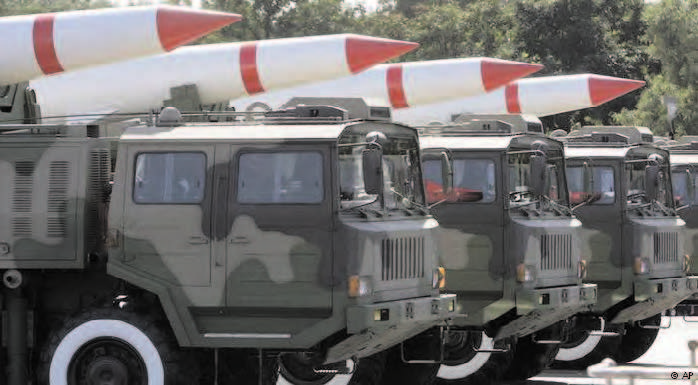
    BEIJING (TIP): China has overtaken Germany to become the world’s third-biggest arms exporter, although its 5 per cent of the market remains small compared to the combined 58 per cent of exports from the US and Russia, a new study says.

    China’s share of the global arms market rose 143 per cent during the years from 2010- 2014, a period during which the total volume of global arms transfers rose by 16 per cent over the previous five years, the Stockholm International Peace Research Institute said in a report released Monday.

    Its share of the world market was up from 3 per cent in the 2009-2014 period, when China was ranked ninth among exporters of warplanes, ships, side arms and other weaponry, said the institute, known as SIPRI.

    The data show the growing strength of China’s domestic arms industry, now producing fourth-generation fighter jets, navy frigates and a wide-range of relatively cheap, simple and reliable smaller weapons used in conflicts around the globe.

    China had long been a major importer of weapons, mainly from Russia and Ukraine, but its soaring economy and the copying of foreign technology has largely reversed the trend, except for the most cutting-edge designs and sophisticated parts such as aircraft engines.

    China supplies weapons to 35 countries, led by Pakistan, Bangladesh and Myanmar, SIPRI said.

    Chinese sales included those of armored vehicles and transport and trainer aircraft to Venezuela, three frigates to Algeria, anti-ship missiles to Indonesia and unmanned combat aerial vehicles, or drones, to Nigeria, which is battling the Boko Haram insurgency in its north.

    China’s comparative advantages include its low prices, easy financing and friendliness toward authoritarian governments, said Philip Saunders, director of the Center for the Study of Chinese Military Affairs at the US National Defense University.

    “Generally speaking, China offers medium quality weapons systems at affordable prices, a combination attractive to cash-strapped militaries in South Asia, Africa and Latin America,” Saunders said.

    Notable successes include a co-production deal with Pakistan to produce the JF-17 fighter, widespread sales of the basic but effective C- 802 anti-ship cruise missile, and an agreement to sell the HQ-9 air defense missile system to Turkey that has run into controversy over its incompatibility with NATO weapons systems.

    China also has exploited niche markets such as North Korea and Iran that the West won’t sell to, emphasizing its attractiveness to impoverished countries and pariah states, said Ian Easton, research fellow at The Project 2049 Institute, an Arlington, Virginia-based Asian security think tank.

    Both those US foes appear to have received satellite jamming and cyber warfare capabilities from China, along with technologies to break into private communications and spy on government opponents, Easton said.

    “All of these sales should be very disconcerting to American policymakers and military leaders,” he said, calling China’s rise to the third-place spot among exporters a “disturbing development” that could threaten the security of the US and its allies.

    China also offers leading-edge drone technology at competitive prices. One model, known variously as the Yilong, Wing Loong or Pterodactyl, has become especially popular with foreign buyers, although Chinese secrecy surrounding such sales makes it difficult to know how many are in service and where.

    Chinese state broadcaster CCTV quoted retired People’s Liberation Army Gen. Xu Guangyu saying at an air show two years ago that the unmanned aircraft, which can be armed with two guided missiles, would cost only about $1 million each. That is about 10 to 20 per cent of the price of a comparable US model such as the MQ-1 Predator. Rumored buyers include the United Arab Emirates, Uzbekistan and Saudi Arabia.

    However, China’s incremental growth and the yawning gap with industry leaders America and Russia show the limitations of its aspirations.

    The US retained a 31 per cent share of the global arms market, exporting to at least 94 recipients, SIPRI said. Countries in Asia and Oceania took 48 per cent of US exports, followed by the Middle East with 32 per cent and Europe at 11 per cent, it said.

    Russia was second with a 27 per cent global share, 39 per cent of which went to India — the world’s largest arms importer overall. China took 11 per cent of Russia’s exports, followed by Algeria.

    SIPRI uses a five-year moving average to account for fluctuations in the volume of arms deliveries from year-to-year and doesn’t provide monetary values, which are often distorted by governments providing weapons as gifts or at below-market prices.

  • Burqa-clad suicide bomber kills provincial Afghan police chief

    KANDAHAR (TIP): A suicide bomber wearing a burqa blew himself up in the Afghan capital Kabul, killing an influential provincial police chief, officials said March 19.

    The Taliban immediately claimed responsibility for the death of Matiullah Khan, head of police in central Uruzgan province, where he had worked closely with NATO troops during their combat mission.

    Afghanistan’s interior ministry said in a statement that a “terrorist clad in a burqa” had killed Khan and strongly condemned the murder.

    General Farid Afzali, head of the criminal police in Kabul, confirmed to AFP the attack, which took place late on Wednesday.

    “Last night, Matiullah Khan was targeted by a suicide attack in Kabul and killed,” said Dost Mohammad, a spokesman for the governor of Uruzgan.

    It was not immediately clear why Khan was in Kabul, more than 300 kilometres (miles) from his province.

    Taliban spokesman Qari Yousuf Ahmadi claimed responsibility for the killing, which comes as Afghanistan prepares to celebrate Persian New Year called Nowruz.

    Taliban insurgents have been waging a deadly campaign in Afghanistan since they were overthrown from power 14 years ago.

    They have stepped up suicide attacks on government targets following an Afghan army offensive which began in southern Helmand province two months ago, but are under pressure to enter peace talks.

    The offensive in Helmand is seen as a key test of the ability of Afghanistan’s military to curtail the insurgency following the end of the US-led NATO mission in late December.

  • Russia’s Northern Fleet on ‘full alert’ – NATO exercises near Russian Border

    Russia’s Northern Fleet on ‘full alert’ – NATO exercises near Russian Border

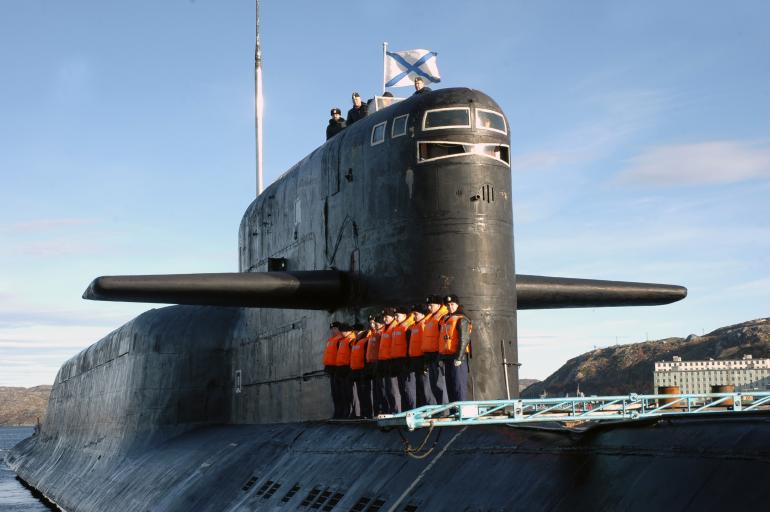
    U.S. and several Eastern European NATO countries conduct a series of military exercises near Russia’s border while Russian President Vladimir Putin has ordered his Northern Fleet “to full alert in a snap combat readiness exercise” in the Arctic, state-run media reported Monday.

    The Northern Fleet on snap readiness includes land, sea and air drill that will involve 38,000 troops, 41 ships, 15 submarines and 110 aircraft.

    “The main task of the (combat readiness drill) is to assess the armed forces from the Northern Fleet’s capabilities in fulfilling tasks in providing military security of the Russian Federation in the Arctic region,” Russian Defense Minister Gen. Sergey Shoigu told the media outlet. “New challenges and threats of military security demand the further heightening of military capabilities of the armed forces and special attention will be paid to the state of the newly formed strategic merging (of forces) in the North.”

    Despite a number of countries participating in various military drills in Eastern Europe, a Kremlin spokesman described the Northern Fleet inspection as routine practice aimed at improving military capabilities. 

    “The practice of snap checks will become regular, as it is beneficial for improving the mechanisms of control and operation of the armed forces. This is an absolutely regular process of the armed forces’ operation, of preparation and development of Russia’s armed forces,” Dmitry Peskov told Tass on Monday.

    “It is especially surprising that this is happening in Northeastern Europe, which is the most stable region not only on our continent, but also maybe in the whole world,” Russian Deputy Foreign Minister Alexey Meshkov said. “Such NATO actions lead to destabilization of the situation and increasing tensions in Northeastern Europe.”

    Among the recent drills in Eastern Europe:

    • In its largest military operation in decades, Norway sent 5,000 troops to conduct military exercises between Alta and Lakselv in Finnmark county, which borders Russia, according to the Barents Observer. 

    • About 100 U.S. soldiers are expected to conduct an exercise this month using a Patriot missile battery and a Polish air defense brigade “at a location on Polish territory,” Pentagon spokesman Col. Steve Warren said. The exercise is part of Operation Atlantic Resolve, which began in response to Russia’s involvement in Ukraine and its annexation of Crimea last year, the U.S. Defense Department said. 

    • Also as part of Operation Atlantic Resolve, the U.S. Army will soon send armored Stryker vehicles on a 1,100-mile convoy through six European countries to show solidarity with its allies. The “highly visible” convoy will travel through Estonia, Lithuania, Poland, Latvia and the Czech Republic en route to Vilseck, Germany, a U.S. Army Europe spokesman told the military newspaper, Stars and Stripes.

    • In a “regularly scheduled” exercise aimed at demonstrating NATO’s commitment to “collective defense” in the Black Sea, the Standing NATO Maritime Group Two — a collection of warships — will train with the Bulgarian, Romanian and Turkish navies and visit Varna, Bulgaria, to meet with local authorities and navy officials, NATO said. 

    • The U.S. Air Force moved a dozen A-10 Thunderbolt “tankbuster” attack jets to an air base in Germany and the U.S. military placed hundreds of tanks and military vehicles in Latvia, where they’ll be matched up with 3,000 troops from Fort Stewart, Georgia.

  • PUTIN COULD TARGET BALTICS NEXT: BRITISH DEFENCE SECRETARY

    LONDON (TIP): British defence secretary Michael Fallon on February 19 said the Baltic states of Latvia, Lithuania and Estonia could be Russian President Vladimir Putin’s next targets. He feared Russia would use covert tactics like those it used to annex Crimea and in the current Ukraine conflict.

    “I’m worried about Putin,” Fallon said. “I’m worried about his pressure on the Baltics, the way he’s testing Nato. You’ve tanks and armour rolling across the Ukrainian border and you’ve an Estonian border guard being captured and not yet still returned. When you’ve jets being flown up the English Channel, when you’ve submarines in the North Sea, it looks to me like it’s warming up.” 

    Warning “there is a real and present danger” of Russia trying to destabilise the Baltics, he asked Nato to be ready for aggression from Russia “in whatever form it takes”. Britain has decided to contribute up to 1,000 troops to a high-readiness force and deploy four RAF Typhoon jets for air policing in the Baltic States to boost Nato’s collective security.

    The comments came after Kiev called for UN peacekeepers to help implement a ceasefire between Ukrainian forces and pro-Russian rebels in the east of the country.

    Fallon confirmed the UK would be the lead nation for Nato’s Very High Readiness Joint Task Force (VJTF) in 2017 and then on rotation thereafter. The VJTF is a high-readiness, multinational force which will act as a
    ‘Spearhead force’, forming Nato’s first response in the face of aggression.

    Anders Fogh Rasmussen, the former secretary-general of Nato, said Putin had dangerous ambitions beyond Ukraine and aimed to test Western resolve in the Baltic states.

  • TALIBAN SUICIDE ATTACKERS ASSAULT AFGHAN POLICE STATION

    KABUL (TIP): Taliban suicide attackers assaulted an Afghan police station February 10, killing one officer as a separate roadside bombing targeted a prominent female politician in the country’s east, authorities said.

    The attack on a police headquarters in Afghanistan’s northern Kunduz province saw insurgents first detonate a suicide car bomb followed by a suicide bomber on foot, Interior Ministry spokesman Sediq Sediqqi said. Three more gunmen attacked following the bombings and died in a shootout with police, Sediqqi said.

    A statement from President Ashraf Ghani condemned the attack, saying it killed one police officer.

    Taliban spokesman Zabihullah Mujahid claimed the attack in a message on Twitter.

    Meanwhile, the roadside bomb in Jalalabad near a school exploded as Angeza Shinwari, a Nangarhar province councilwoman, drove past. The blast killed her driver and severely wounded Shinwari and another person, said Ahmad Zia Abdulzai, a spokesman for the provincial governor.

    No group immediately claimed responsibility for that attack.

    Taliban insurgents have stepped up their attacks on Afghan soldiers and police in recent months. US and NATO forces formally ended their combat mission at the end of last year, leaving Afghan security forces in charge of public safety in the country.

  • Taliban attack on checkpoint in Kandahar kills 5 Afghan policemen

    Taliban attack on checkpoint in Kandahar kills 5 Afghan policemen

    KABUL, AFGHANISTAN (TIP): An Afghan official has confirmed that an attack on a police checkpoint in the southern province of Kandahar has killed five policemen. The Taliban have claimed responsibility for the attack. Zia Durani, the spokesman for the provincial police chief, says the attack happened late on Sunday in Maiwand district and that an investigation is underway.


    Durani says there are indications one or more of the attackers wore a police uniform.


    Taliban spokesman Qari Yousaf Ahmadi claimed responsibility for the attack in a message to the media. The Taliban have stepped up their attacks on Afghan soldiers and security forces in recent months. U.S. and NATO forces concluded their combat mission at the end of last year and Afghan troops took full charge of the country’s security.

  • IMPLICATIONS OF AMERICAN WITHDRAWAL FROM AFGHANISTAN

    IMPLICATIONS OF AMERICAN WITHDRAWAL FROM AFGHANISTAN

    “The Taliban attacks within Afghanistan reached unprecedented levels in 2014. Moreover, while Washington proclaims that any process of “reconciliation” between the Taliban and the Afghan Government will be “Afghan led and Afghan driven,” the reality is that Rawalpindi will ensure that the entire “reconciliation” process will be controlled and driven by the ISI”, says the author.

    American military interventions in recent times – be these in Vietnam, Somalia, Lebanon, Libya, or Iraq -have undermined regional stability and left deep scars on the body politic of these countries. The society and the body politic of America have felt the tremors of these misadventures. The American military intervention in Afghanistan, code-named
    “Operation Enduring Freedom”, commenced in the aftermath of 9/11. Its combat role ended 13 years later on December 31, 2014. The Americans tried to win “Operation Enduring Freedom” cheaply, outsourcing many operations to the erstwhile Northern Alliance. Adversaries comprising the Mullah Omar-led Afghan Taliban, Al-Qaida, thousands of Islamic radicals from the Arab world, Chechnya, Uzbekistan, Tajikistan, China’s Xinjiang province and ISI-linked Pakistani terrorist groups escaped across the Durand Line, to safe havens under ISI protection, in Pakistan.

    The US has paid a heavy price for this folly. Some 2,200 of its soldiers were killed in combat, suffering heavy losses in the last four years after it became evident that it was pulling out. As the US was winding down its military presence and transferring combat responsibilities to the Afghan National Army (ANA), an emboldened Taliban and its Chechen, Uzbek, Uighur and Turkmen allies have emerged from their Pakistani safe havens and moved northwards. In subsequent fighting 4,600 Afghan soldiers were killed in combat in 2014 alone. The Afghan army cannot obviously afford such heavy casualties continuously, if morale is to be sustained. Its available tactical air support and air transport infrastructure are woefully inadequate. The Afghans do not have air assets which were available to the NATO forces.

    Apart from what is happening in southern Afghanistan, Taliban-affiliated groups are now increasing their activities in northern Afghanistan, along its borders with Turkmenistan, Uzbekistan, Tajikistan and China’s Xinjiang province. Afghanistan’s northern provinces like Kunduz, Faryab and Takhar have seen increased attacks by the Taliban allies, from Tajikistan, Turkmenistan and Uzbekistan. These Central Asian countries are getting increasingly concerned about the security situation along their borders. American forces are scheduled to be halved in 2015 and reduced to a token presence, just sufficient to protect American diplomatic missions by the end of 2016. Not surprisingly, President Ashraf Ghani has asked the US to review its withdrawal schedule.

    Afghanistan’s southern provinces, bordering the disputed Durand Line with Pakistan, are increasingly ungovernable. Following Gen Raheel Sharif’s assault on the Pashtuns in Pakistan’s tribal areas, over one million Pashtun tribals have fled their homes in Pakistan, with an estimated 2, 50,000 fleeing into neighboring Afghanistan. If Mullah Omar, his Taliban associates and Sirajuddin Haqqani’s terrorist outfit are finding safe havens in Pakistan, Mullah Fazlullah and his followers in the Pakistani Taliban (TTP) appear to have disappeared into the wilderness, in Afghanistan. Senator Kerry will likely secure a waiver on legislative requirements that Pakistan has stopped assistance to terrorist groups operating against Afghanistan and India, to enable the flow of American aid to Pakistan. The reality, however, is that even after the Peshawar massacre of schoolchildren, terrorist groups like the Haqqani network, Jaish e Mohammed and Lashkar e taiba receive safe haven and support in Pakistan.

    Despite professed American understanding of a “change of heart” in Islamabad and Rawalpindi, the reality remains that Mullah Omar is still leading the Afghan Taliban from a safe house in Karachi. The day-to-day conduct of operations in Afghanistan has reportedly been transferred by the ISI to one of his deputies, Mullah Akhtar Muhammad Mansour. The Taliban attacks within Afghanistan reached unprecedented levels in 2014. Moreover, while Washington proclaims that any process of
    “reconciliation” between the Taliban and the Afghan Government will be “Afghan led and Afghan driven,” the reality is that Rawalpindi will ensure that the entire
    “reconciliation” process will be controlled and driven by the ISI. China, now endorsed by the US as the new “Good Samaritan” to facilitate Afghan “reconciliation,” has maintained ISI-facilitated links with Mullah Omar’s Quetta Shura. Beijing will naturally endorse the wishes of its “all-weather friend,” Pakistan.

    Afghanistan’s Central Asian neighbors, which are members of the Shanghai Cooperation Organization (SCO), to which India was recently admitted, can expect little from this organization to deal effectively with their concerns, given the fact that China has been now joined by Pakistan as a member of the SCO. Given its growing economic woes and sanctions imposed by the US and its allies, Russia will have little choice, but to fall in line with China, though its special envoy Zamir Kabulov has expressed Moscow’s readiness to supply weapons to Kabul “when it will be necessary to supply them”. Past Russian policy has been to supply weapons to Kabul on strictly commercial terms.

    Adding to the prevailing uncertainty is the fact that Afghanistan is today ruled not by the provisions of its Constitution, but by a patchwork coalition of two formerly implacable political foes, President Ashraf Ghani and Chief Executive Abdullah Abdullah. The political gridlock in Kabul is tight. After the presidential elections, which were internationally regarded as neither free nor fair, the ruling duo, stitched together by Senator John Kerry, took months just to agree on the names of new ministers.

    India can obviously not countenance the return of an ISI-backed Taliban order in Afghanistan. The US-Afghanistan Bilateral Security Agreement envisages the possibility of a US military presence “until the end of 2024 and beyond.” Will it be realistic to expect a war-weary US and its NATO partners, now heavily focused on combating ISIL and radical groups across the Islamic world ranging from Iraq, Syria, Libya and Lebanon, to Somalia and Nigeria, to continue to bail out a politically unstable Afghanistan? Will the Americans and their allies continue providing Afghanistan adequate air support, weapons and financial assistance amounting to $5-10 billion annually?

    These are realities we cannot gloss over. A thorough review of issues like safety and security of Indian nationals and our missions in Afghanistan, access and connectivity through Iran and completion of assistance projects like Salma Dam and Afghan Parliament, has to be undertaken.

    By G Parthasarathy (The author is a career diplomat and author. He remained envoy of India to many countries, including Pakistan and was spokesperson of the Ministry of External Affairs and the Prime Minister’s Office)

  • Recognizing Taliban govt in

    Recognizing Taliban govt in

    Afghanistan was blunder: Musharraf

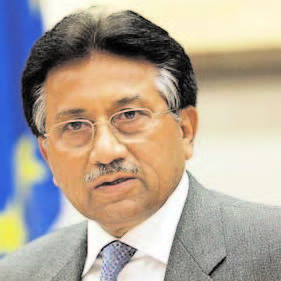
    KARACHI (TIP): Former military ruler General Pervez Musharraf on December 4 admitted that recognizing the Taliban regime in Afghanistan was a “blunder” on part of Pakistan, but he blamed the West and the US for the birth of al-Qaida. Speaking to the Youth Parliament here, Musharraf pointed out that Pakistan was the only country that recognized the Taliban government in Afghanistan from 1996 to 2001 as Saudi Arabia and the UAE later also backed out. The 71-year-old leader admitted that recognising the Taliban regime was a blunder on Pakistan’s part.

    The Soviet Invasion of Afghanistan in 1979 changed the political climate worldwide and “three blunders” were created by the US who left the region after withdrawal of Soviets, said Musharraf, who ruled over Pakistan from 1999 to 2008. The “first blunder was not to rehabilitation the 25,000 Afghan Mujahideen who fought in the war against USSR and they then came to Pakistan which led to the formation of al-Qaida,” he said. “The second blunder was the West’s refusal to recognize Taliban.” He said Pakistan was looked at negatively by the world because of recognizing the Taliban regime and conceded that in 2000 the then US President Bill Clinton came to Pakistan to reprimand the government for recognizing the Taliban.

    Moving on to the third blunder, the former president said the invasion of US-led NATO forces in Afghanistan pushed militants to mountainous areas. “A vacuum was created in Afghanistan which had to be overcome by changing military victory into a political victory,” he said, explaining an ethnically balanced government representing Pakhtuns was needed. “But because this did not happen, the Taliban started reviving in 2003.” Musharraf said the Taliban was selfcreated because of the environment that existed in Afghanistan at that time. “Some say Taliban are our children and we created them … but it’s not true,” the former president said. “During this tumultuous period, frankly, not one civilian government performed socio-economically for Pakistan.

    Not one. Other than the military government,” he claimed. Taking a jab at the current government, he said, “The economy is nose-diving and terrorism is prevalent in all provinces.” Musharraf also said tensions between Pakistan and India will always exist until the Kashmir issue is not resolved. “Political parties do not take better decisions in the greater interest of the nation and democratic governments have never performed well in Pakistan,” he claimed. “Progress was only made during Ayub Khan’s regime besides mine,” he said, adding that the Army must have a constitutional role in .

  • Suicide attack at Afghan funeral kills nine: Police

    Suicide attack at Afghan funeral kills nine: Police

    KUNDUZ (AFGHANISTAN) (TIP): A suicide attack at a funeral in northern Afghanistan killed at least nine people on December 2, officials said, underlining nationwide insecurity as Nato troops end their 13-year war this month. The blast followed a series of attacks in the capital Kabul which have heightened concerns that Afghanistan could tip into a spiral of violence as the US-led military presence declines.

    The embattled Kabul police chief who tendered his resignation on Sunday will stay on in the role, a spokesman said, as Afghanistan struggles to respond to rising militant unrest. Nato’s force in Afghanistan will change on December 31 from a combat mission to a support role, with troop numbers cut to about 12,500 — down from a peak of 130,000 in 2010. “A suicide bomber on foot detonated his explosives among people who were attending a funeral ceremony in Burka district this morning,” Aminullah Amarkhil, police chief of Baghlan province, told AFP. “Initial reports show nine people, including two police, were killed and around 18 wounded.” Amarkhil said the funeral was for a tribal elder in Baghlan, a province on the main road from Kabul to Mazar-e-Sharif that has suffered worsening security in recent years.

    Taj Mohammad Taqwa, the district chief of Burka, confirmed the death toll to AFP. “The target was probably a number of high-ranking police officials and provincial council members who were attending the ceremony,” he said. “They are unharmed.” There was no immediate claim of responsibility. A Taliban attack on Saturday in Kabul killed a South African father running an education charity and his two teenage children.

  • US increasing non-lethal military aid to Ukraine

    US increasing non-lethal military aid to Ukraine

    WASHINGTON (TIP): The United States plans to increase non-lethal military assistance to Ukraine, including deliveries of the first Humvee vehicles, having decided for now not to provide weapons, US officials said. The increase in non-lethal aid to Ukraine, which is grappling with a Russian-backed separatist movement in its east, is expected to be announced on Thursday during a visit to Kiev by vice president Joe Biden.

    The officials, who spoke to Reuters on condition of anonymity, described it as an expansion of US support for Ukraine’s armed forces, but one that was unlikely to significantly alter the conflict. The aid falls short of what Ukrainian President Petro Poroshenko requested during a visit to Washington in September when he appealed for lethal aid — a request echoed by some US lawmakers in response to what Nato allies say is Russia’s movement of tanks and troops into eastern Ukraine. Officials in the Obama administration had said Washington believed Ukraine had enough lethal aid and the types of weaponry requested for Ukraine would be of only marginal value.

    They had also emphasized the need for a diplomatic outcome. The United States and its European allies have imposed several rounds of economic sanctions on Russia for its seizure of Crimea and incursion into eastern Ukraine. The new non-lethal aid Biden will present in Kiev includes Humvees from excess supplies in the Pentagon’s inventory, as well as the delivery of previously promised radars that can detect the location of enemy mortars, officials said. They did not specify a dollar value for the assistance. Previous non-lethal aid to Ukraine includes $53 million announced in September for military equipment such as counter-mortar detection units, body armor, binoculars, small boats and other gear for Ukraine’s security forces and border guards in the east.

    Long debate

    President Barack Obama’s administration has long debated providing weapons to the Kiev government, but has so far concluded that it might only prompt Russia to escalate its aid to the separatist rebels. Lethal assistance “remains on the table. It’s something that we’re looking at,” Obama’s deputy national security adviser and nominee for deputy secretary of state, Tony Blinken, said at his Senate confirmation hearing on Wednesday.

    In response to Blinken’s comment, Russia warned the United States on Thursday against supplying arms to Ukrainian forces. Hours before Biden was due to arrive in Kiev, Russian Foreign Ministry spokesman Alexander Lukashevich cautioned against “a major change in policy of the (US) administration in regard to the conflict” in Ukraine. US Senator John McCain, an Arizona Republican, said he had not been briefed on the new non-lethal aid but called it “a continuation of the ridiculous.” “They are fighting against people with lethal weapons. They need lethal weapons to fight back. It is disgraceful and shameful that we won’t give them lethal weapons,” McCain told Mediapersons.

  • Afghanistan captures two Haqqani commanders

    Afghanistan captures two Haqqani commanders

    KABUL (TIP): Afghan security forces said on Thursday they have captured two senior leaders of the feared Haqqani network, a hardline group behind sophisticated attacks on Afghan and Nato forces. Anas Haqqani, the son of the network’s founder Jalaluddin Haqqani, was arrested on late Tuesday along with Hafiz Rashid, another commander, by the National Directorate of Security (NDS), the Afghan intelligence agency, officials said. “We hope that these two arrests will have direct consequences on the network and their centre of command,” NDS spokesman Haseeb Sediqi told AFP. Anas played an important role in the network’s “strategic decision-making” and frequently travelled to Gulf states to get funding, Sediqi said. A statement from the NDS described Anas as having special computing skills and said he was “one of the masterminds of this network in making propaganda through social networks.” The Haqqanis have been blamed for spectacular attacks on Afghan government and Nato targets across Afghanistan as well as for kidnappings and murders.

  • After-effects of the US drawdown on India

    After-effects of the US drawdown on India

    New Delhi cannot remain sanguine. A priority of the Obama Administration will be to smoothly take out its military equipment from Afghanistan, through Pakistan. The Taliban will then be viewed more benignly

    By G Parthasarathy

    Even as Prime Minister Narendra Modi was cautioning Americans in New York against any precipitate withdrawal, Afghanistan was preparing for a momentous change in Kabul. Mr Ashraf Ghani Ahmadzai was taking over as Afghanistan’s President from Mr Hamid Karzai, who had ruled Afghanistan for 12 turbulent years. Despite efforts to malign him and destabilise his Government by worthy Americans like Peter Galbraith and Richard Holbrooke and a vicious propaganda barrage from Pakistan, President Karzai succeeded in establishing a measure of effective governance in Afghanistan. He also skilfully brought together the country’s fractious ethnic groups, to deal with the challenge posed by the Pakistani-backed Afghan Taliban and the Haqqani network, together with their Islamist allies, including the Al Qaeda. The change of guard from Mr Karzai to Mr Ghani has been anything but smooth. The first round of elections in April produced no clear winner. The second round in June, which was expected to be close, produced a stunning result. It gave an unexpectedly large victory margin to Mr Ghani, over his rival, Mr Abdullah Abdullah, a former Foreign Minister and close aide of the legendary Ahmed Shah Masood. Mr Abdullah had a substantial lead in the first round of elections, securing 46 per cent of the votes, against 32 per cent for Mr Ghani. A Report by the European Union declared the second round of voting as “massively rigged”. A US report held that it was mathematically impossible for Mr Ghani to have secured the margin of victory that he did. With controversy over the electoral result spiralling out of control and assuming volatile ethnic dimensions, the Americans stepped in to broker and virtually impose an uneasy and tenuous compromise between Mr Ghani and Mr Abdullah.

    Following the agreement between the rival candidates, Mr Ashraf Ghani was sworn in as President and Mr Abdullah as ‘Chief Executive’, a post which has no constitutional sanctity. The roadmap for this transition includes the convening of a Loya Jirga to convert the post of ‘Chief Executive’ into that of an ‘Executive Prime Minister’. It remains to be seen whether the contemplated changes, with two separate centres of executive authority, can provide stable and effective governance, in a country beset with the ethnic rivalries and tensions, which have long characterised its politics. Within 24 hours of the assumption of power by President Ashraf Ghani and Chief Executive Abdullah, Afghanistan and the US inked a security agreement, which will result in the US stationing 9,800 troops in a training and counter-insurgency role in Afghanistan, beyond 2014. A ‘status of forces agreement’, giving immunity to foreign forces against prosecution in Afghan courts, was also inked. The agreements will also allow the Americans to retain air bases across Afghanistan. Pakistan has welcomed these developments. Apart from formal statements by National Security Advisor Sartaj Aziz and the Foreign Office, a meeting of the top brass of the Pakistan Army also welcomed this development as a “good move for peace in Afghanistan”. This is an astonishing turnaround for the Pakistani establishment, which has all along made its unease with the American presence in Afghanistan known. It comes at a time when an estimated 80,000 Pakistani troops and paramilitary, backed by air power, are pounding positions of the Tehreek-e-Taliban in North Waziristan – an operation resulting in an estimated one million tribal Pashtuns fleeing their homes. At the same time, the Mullah Omar-led Afghan Taliban have been on the rampage this year across Afghanistan, prompting the soft-spoken President Ghani to say, “We ask the opponents of the Government, especially the Taliban and the Hizb-e-Islami, to enter political talks”. Pakistan’s massive military offensive in the tribal areas bordering Afghanistan has been selectively undertaken. Long-term ISI assets including the Haqqani Network, the Mullah Omar-led Afghan Taliban and even the Al Zawahiri-led Al Qaeda have been spared and obviously accommodated in ISI safe houses. They will be kept in readiness to move into Afghanistan at a time of Pakistan’s choosing. Afghanistan is going to remain dependent on Nato for military and economic funding, for the foreseeable future. Nato funding of Afghanistan’s military of $5.1 billion annually till 2017 has been agreed upon. A similar amount of external funding would be required for Afghanistan’s administrative and developmental needs. The Joint Declaration issued after the Obama-Modi Summit spoke of “dismantling of safe havens for terrorist and criminal networks, to disrupt all financial and tactical support for terrorist and criminal networks such as Al Qaeda, Lashkar-e-Tayyeba, Jaish-e- Mohammed, the D-Company, and the Haqqanis”. Significantly, there is no mention in the Joint Declaration of the Mullah Omarled Taliban, which has been primarily responsible for the killing of 2,229 American soldiers in Afghanistan, the training of terrorists for jihad in Jammu & Kashmir and for colluding with the hijackers of IC 814. It has been obvious for some time that the Americans are keen to do a deal with the Taliban. They may pay lip service to statements that any internal reconciliation process has to be ‘Afghan-led’. But, the reality is different, ever since the US encouraged Qatar to host a Taliban office in Doha. An enraged Mr Karzai had torpedoed that American effort (with obvious Pakistani support), to grant international legitimacy to the Taliban. President Ghani will, however, have to reluctantly accept Pakistan-brokered American-Taliban ‘contacts’, as a prelude to giving Taliban control in parts of southern Afghanistan. India cannot be sanguine about these developments. A priority of the Obama Administration will be to smoothly take out its military equipment from Afghanistan, through Pakistan. The Taliban will be looked at rather more benignly than in the past. Militarily, the ISI/Taliban effort will be to seize control of large swathes of territory in southern Afghanistan, compelling a reduction of India’s assistance in that part of the country. Differences in the priorities and compulsions of President Ghani and ‘Chief Executive Abdullah in Kabul appear inevitable. Our membership of the Shanghai Cooperation Organisation will have to be utilised to fashion a more coordinated approach with its members – Russia, China, Iran and the Central Asian Republics. A more intensive approach on developing the port in Chah Bahar in Iran and on meeting Afghan requirements of defence equipment will be imperative. The post-9/11 ‘end game’ for the Americans in Afghanistan is just beginning. The Americans will continue to predominantly and very significantly shape the course of developments in Afghanistan.

  • US-Turkish militaries to meet on IS threat

    US-Turkish militaries to meet on IS threat

    WASHINGTON (TIP): A joint US-Turkish military team will meet next week in Ankara to discuss the fight against Islamic militants after Washington October 9 pressed Turkey to join a US-led coalition.

    Two top US envoys met Thursday in Ankara with Turkish leaders seeking to win their Nato ally’s support to defeat the Islamic State (IS) group, which has seized a swath of territory in Iraq and Syria.

    Although state department spokeswoman Jen Psaki did not outline any specific commitments made by Turkey, she said the two countries held “detailed and constructive talks.”

    Retired general John Allen and US pointman on Iraq, Brett McGurk, had “discussed several measures to advance the military line of effort against ISIL,” Psaki said.

    She highlighted that “a joint military planning team will visit Ankara early next week to follow up in military-to-military channels.”

    “Both sides also agreed that we will continue a dynamic and deepening bilateral consultation process across the multiple lines of effort against ISIL,” which included military support as well as battling foreign fighters and choking off funds to IS.

    The two US officials had “emphasized that urgent steps are immediately required to degrade ISIL’s military capabilities and ongoing ability to threaten the region,” Psaki said in a statement.

    There has been frustration in Washington that Ankara has yet to commit its well-equipped and well-trained forces to the fight against the militants, also known by the acronym ISIL.

    The crisis has been deepened by the battle for the Syrian Kurdish town of Kobane, just across the border with Turkey, amid fears it may soon fall into the militants’ hands.

    Psaki insisted earlier: “It’s not a situation where we are making demands.”

    “We are having a discussion with Turkey that’s been ongoing, but certainly will continue today about what role they’re willing to play in the coalition efforts.”

    But, she acknowledged, “there is no question that Turkey is well-positioned to contribute.”

    Turkish Foreign Minister Mevlut Cavusoglu however said earlier that Ankara could not be expected to act alone.

    “It’s not realistic to expect that Turkey will lead a ground operation on its own,” he said.

  • BRITAIN’S PRIME MINISTER ON SURPRISE VISIT TO AFGHANISTAN

    BRITAIN’S PRIME MINISTER ON SURPRISE VISIT TO AFGHANISTAN

    KABUL (TIP): Britain’s Prime Minister David Cameron on October 3 pledged support for Afghanistan’s newly sworn-in president and the country’s new unity government, saying during a surprise visit to Kabul that Britain is committed to helping Afghans build a more secure and prosperous future.

    Cameron was the first of world leaders to meet Ashraf Ghani Ahmadzai, Afghanistan’s second elected president, since his inauguration on Monday. The two had a meeting in Kabul on Friday morning and later held a joint press conference.

    “Britain has paid a heavy price for helping to bring stability to this country,” Cameron said, paying tribute to the 453 British servicemen and women who died while serving in Afghanistan.

    “An Afghanistan free from al-Qaida is in our national interest — as well as Afghanistan’s,” he said. “And now, 13 long years later, Afghanistan can — and must — deliver its own security.”

    But, “we are not leaving this country alone,” he added. “In Britain you will always have a strong partner and a friend.”

    Cameron arrived a day after visiting British pilots in Cyprus who are taking part in air strikes on Islamic State group targets in Iraq. British warplanes have been conducting combat missions over

    Iraq since Saturday, after Britain joined the US-led coalition of nations that are launching air strikes against the militants.
    “The work of defeating Islamist extremist terror goes on elsewhere in the world,” Cameron said in Kabul. “And because this threatens us at home, we must continue to play our part.”

    Ghani Ahmadzai thanked the British for their sacrifices in Afghanistan, especially the families who lost loved ones in the war. “They stood shoulder to shoulder with us and we will remember,” he said.

    Ghani Ahmadzai’s inauguration this week marked the start of a new era for his country, with a national unity government poised to confront a resilient Taliban insurgency.

    A day after he was sworn in, his administration signed a security agreement allowing the United States to keep about 9,800 troops in the country to train and assist Afghan national security forces.

    A separate agreement was signed with Nato, outlining the parameters of 4,000 to 5,000 additional international troops— mostly from Britain, Germany, Italy and Turkey — to stay in a non-combat role after Nato’s combat mission ends on Dec. 31.

    Former President Hamid Karzai had refused to approve the deal, and the results of a June presidential runoff to replace Karzai took months to resolve, finally coming to a conclusion with Ghani Ahmadzai’s swearing in and the establishment of a national unity government.

    Ghani Ahmadzai’s former rival for the presidency, Abdullah Abdullah, was appointed the country’s new chief executive, a post akin to prime minister.

    Cameron lauded both Afghan men, saying they put national interests ahead of “personal power” when they struck a power-sharing deal. “I look forward to working with both of you in the years ahead,” he said. Ghani Ahmadzai also praised his former rival, saying the two of them “have managed a first, which is really rare in the Muslim world — a democratic transfer of authority, not power.”

  • Leaders: US, UK will ‘not be cowed’ by militants

    Leaders: US, UK will ‘not be cowed’ by militants

    NEWPORT, WALES (TIP): Faced with a mounting militant threat in the Middle East, US President Barack Obama and British Prime Minister David Cameron declared on Thursday that their nations will “not be cowed” by extremists who have killed two American journalists. “We will be more forthright in the defense of our values, not least because a world of greater freedom is a fundamental part of how we keep our people safe,” the leaders wrote in a joint editorial in the Times of London.

    Their comments come as world leaders gather at a golf resort in Wales for a high-stakes NATO summit. While the official agenda will focus on the crisis in Ukraine and the drawdown of the NATO combat mission in Afghanistan, the rise of the Islamic State group in Iraq and Syria will dominate discussions on the sidelines of the summit. The militants have claimed responsibility for murdering two American journalists, releasing gruesome videos of their beheadings.

    Both the US and Britain are deeply concerned about the potential threat to their homelands that could come from the foreign fighters who have joined the violent Islamic State group. Cameron on Monday proposed new laws that would give police the power to seize the passports of Britons suspected of having traveled abroad to fight with terrorist groups. Obama and Cameron appear to suggest that NATO should play a role in containing the militants, but were not specific in what action they would seek from the alliance.

    The two leaders were to visit with students at a local school Thursday morning before joining their counterparts from France, Germany and Italy to discuss the crisis in Ukraine. New Ukrainian President Petro Poroshenko was also to join the discussion in a show of Western solidarity with his embattled nation. Ukraine and Russia have been locked in a standoff for months, with pro- Moscow forces stirring instability in eastern Ukrainian cities. On the eve of the NATO summit, Russia and Ukraine said they were working on a deal to halt the fighting, but Western leaders expressed skepticism, noting it wasn’t the first attempt to end the deadly conflict.

    NATO leaders are expected to agree this week on the creation of a rapid response force that would set up in nations in the alliance’s eastern flank to serve as a deterrent to Russia. Baltic nations and others in the region fear Moscow could set its sights on their borders next. “We must use our military to ensure a persistent presence in Eastern Europe, making clear to Russia that we will always uphold our Article 5 commitments to collective self-defense,” Obama and Cameron wrote.

    Under Article 5 of the NATO charter, an attack on one member state is viewed on an attack on the whole alliance. Obama reiterated his support for that principle Wednesday during a visit to Estonia, one of the newer NATO members set on edge by Russia’s provocations.

  • US sending 200 troops for drills in Ukraine: Pentagon

    US sending 200 troops for drills in Ukraine: Pentagon

    WASHINGTON (TIP): The United States will send about 200 troops to take part in a US-led annual exercise in Ukraine later this month, the Pentagon said on Wednesday, in a show of solidarity with Kiev.

    The presence of 200 soldiers from the 173rd Airborne Brigade will mark the first deployment of US ground troops to Ukraine since the Kiev government’s conflict with pro-Russia separatists erupted earlier this year. Dubbed “Rapid Trident,” the yearly exercise was set for September 13-26 and will involve more than a dozen countries, including “approximately 200 personnel” from the US military, spokesman Colonel Steven Warren said.

    “It’s a peacekeeping exercise,” said Warren, and would focus in part on countering homemade bombs. The drill was due to be held in Yavoriv, about 40 miles (60 kilometers) from Lviv in western Ukraine. US naval forces also were due to take part in a separate maritime exercise starting next week in the Black Sea which will involve forces from Ukraine, Turkey, Georgia and Romania, officials said.

    Two vessels from a NATO maritime group will also participate. Washington is sending the USS Ross, a guided missile destroyer, to join the naval drill, dubbed “Sea Breeze,” which runs from Monday to Wednesday. About 280 US sailors were due to take part.

    The aim of the exercise was “to improve interoperability while promoting regional stability and security” among allies and partners, spokeswoman Lieutenant Colonel Vanessa Hillman said. With Russia’s intervention in Ukraine raising alarm in Eastern Europe and beyond, the United States has held a series of high-profile military exercises in the region in a bid to reassure anxious allies on NATO’s eastern border.

    Ukraine, facing a separatist rebellion and suspected Russian military operations in its east, has asked for US military aid but Washington has declined so far to provide weapons to the Kiev government.

  • UN security council meets on Ukraine crisis

    UN security council meets on Ukraine crisis

    UNITED NATIONS (TIP): The UN security council met on August 29 in an emergency session on the growing crisis in Ukraine with some members expressing outrage. UN undersecretary-general of Political Affairs Jeffrey Feltman told council members, as the meeting began, that the latest developments mark a ” dangerous escalation in the conflict,” but that the international body had no way of verifying the latest ”deeply alarming reports.” The emergency security council meeting came hours after a top Ukrainian official said two columns of Russian tanks and military vehicles fired missiles from Russia at a Ukraine border post, then rolled into the country.

    That opened a new front in the war in eastern Ukraine between pro-Russia separatists and the new government of President Petro Poroshenko. Statements from Nato, Poroshenko, the separatists, the United States and the president of the security council left no doubt that Russia had invaded Ukraine. A top Nato official said at least 1,000 Russian troops have entered Ukraine with sophisticated equipment and have been in direct ”contact” with Ukrainian soldiers, resulting in casualties.

    The new southeastern front raised fears that the separatists are seeking to create a land link between Russia and Crimea, which Russia annexed in March. US ambassador Samantha Power told the council. ”Every single one has sent a straightforward, unified message: `Russia, stop this conflict. Russia is not listening.”’ ”Russia has come before the council to say everything but the truth,” Power said. ”We will continue working with G-7 partners to rachet up consequences on Russia,” Power said, and France also threatened that sanctions will be increased if the escalation continues.Prior to the meeting, Russian ambassador to the UN Vitaly Churkin told reporters ”You’re at a loss,” offering no further comment. UK ambassador Mark Lyall Grant told reporters: ”Russia will be asked to explain why Russia has its troops inside Ukraine. It’s very clear that Russian regular troops are now in Ukraine.”

  • Pakistan crisis puts army back in the driving seat

    Pakistan crisis puts army back in the driving seat

    ISLAMABAD (TIP): As tens of thousands of protesters advanced on the Pakistani capital last week to demand his resignation, Prime Minister Nawaz Sharif dispatched two emissaries to consult with the army chief. He wanted to know if the military was quietly engineering the twin protest movements by cricket star-turned-politician Imran Khan and activist cleric Tahir ul-Qadri, or if, perhaps, it was preparing to stage a coup.

    According to a government insider with a firsthand account of the meeting, Sharif’s envoys returned with good news and bad: there will be no coup, but if he wants his government to survive, from now on it will have to “share space with the army”. Even if, as seems likely, the Khan and Qadri protests eventually fizzle out due to a lack of overt support from the military, the prime minister will emerge weakened from the crisis.

    The army may have saved his skin, but its price will be subservience to the generals on issues he wanted to handle himself — from the fight against the Taliban to relations with arch foe India and Pakistan’s role in neighbouring, post-NATO Afghanistan. “The biggest loser will be Nawaz, cut down to size both by puny political rivals and the powerful army,” said a government minister who asked not to be named. “From this moment on, he’ll always be looking over his shoulder.” A year ago, few would have predicted that Sharif would be in such trouble: back then, he had just swept to power for a third time in a milestone poll that marked nuclear-armed Pakistan’s first transition from one elected government to another.

    But in the months that followed, Sharif — who had crossed swords with the army in the past — moved to enhance the clout of the civilian government in a country that has been ruled by the military for more than half of its turbulent history. He irked the generals by putting former military head Pervez Musharraf, who had abruptly ended his last stint as prime minister in a 1999 coup, on trial for treason. Sharif also opposed a military offensive to crush Taliban insurgents, sided with a media group that had accused the military of shooting one of its journalists and sought reconciliation with India, the perceived threat that the army uses to justify its huge budget and national importance.

  • 4 civilians killed in attack on Nato convoy in Kabul: Official

    4 civilians killed in attack on Nato convoy in Kabul: Official

    KABUL (TIP): A suicide attacker targeting a Nato troop convoy in Kabul on August 11 killed four civilians and wounded at least seven others, Afghan officials said, as emergency services rushed to the scene.

    “At around 11:30am, a convoy of foreign forces was targeted by a suicide bomber in police district 6, killing four civilians and wounding seven,” interior ministry spokesman Sediq Sediqqi said on his Twitter account. There was no immediate comment from the Nato

  • Hagel calls for US, Japan, India alliance

    Hagel calls for US, Japan, India alliance

    NEW DELHI (TIP):
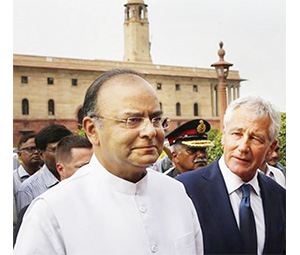
    The US Secretary of Defense Chuck Hagel, on August 9, proposed a trilateral military alliance involving India, Japan and the US, while advising New Delhi that it does not have to choose between Beijing and Washington, but continue to work with both. Hagel who ended his three-day visit to India by proposing the alliance, said “as US and Indian security interests converge, so should our partnerships with other nations”.

    “The United States and India should consider expanding their security cooperation with Japan … We should elevate our trilateral defense cooperation”, Hagel said. Japanese Prime Minister Shinzo Abe has been votary of such an alliance which could turn out to be the most powerful outside the US-led NATO.

    China, which has tense relations with Japan since the World War-II (1939-1945), in the past has protested against such a grouping. In May last year, the Communist Party-run Global Times newspaper reported “India gets close to Japan at its own peril”. Prime Minister Narendra Modi is slated to visit Tokyo at this month-end. Hagel was delivering a lecture, “achieving the potential of the US-India strategic partnership”, to mark 25 years of think-tank Observer Research Foundation in New Delhi.

    He chose to strike a balance in its strategy to bring India and Japan closer. “India need not choose between the closer partnership with America and the improved ties with China,” Hagel advised. In strategic circles, this is being seen as the US understanding India’s point of view which does not see a conflict with China – both nations share a 3,488-km disputed boundary called the Line of Actual Control (LAC). Hagel went on to highlight that China can work “cooperatively” with both India and the US.

    “In our relations with Beijing, both Delhi and Washington seek to manage competition but avoid the traps of rivalry. We will continue to seek a stable and peaceful order in which China is a fellow trustee”, Hagel said, probably fully knowing that his words are bound to resonate loudly in Beijing, Tokyo and Moscow – the last one being India’s trusted allay for five decades. Addressing the issue of the hydrocarbon rich disputed South China Sea, Hagel was candid “We ( India and US ) have a shared interest in maritime security across the region, including at the global crossroads of the South China Sea.

    We also have a shared stake in the security of global energy and natural resource supplies”. China has claimed total sovereignty over the South China Sea and consequently sole rights over the hydrocarbons under the seabed. Indian has gas-oil block off the coast of Vietnam in the same sea and most of its east bound trade passes through these waters. The dispute is pending in the United Nations.

    Hagel reiterated the promise to cooperate with India in co-production, co-development, and freer exchange of technology under the Defence Trade and Technology Initiative (DTTI), saying: “The DTTI now has on the table over a dozen cooperative proposals which would transfer significant qualitative capability, technology, and production knowhow”.

  • Afghan policeman turns on his colleagues, kills 7

    Afghan policeman turns on his colleagues, kills 7

    KABUL: A local official says an Afghan policeman has turned his gun on his colleagues at a checkpoint in the south, killing seven policemen. The shooting was the latest among socalled insider attacks in which Afghan forces or gunmen in Afghan police or army uniforms turn their weapon on Afghan colleagues or NATO allies.

    Doost Mohammad Nayab, a spokesman in southern Uruzgan province, says the attack happened Tuesday night in the provincial capital of Tirin Kot. After killing seven policemen, the attacker stole their weapons and fled in a police car. Nayab says the shooter had Taliban connections and blamed the insurgents for the attack.

    Earlier Tuesday, a gunman dressed as an Afghan soldier turned on allied troops, killing an American major general and wounding about 15 US and coalition forces.

  • To each superpower, its own near-abroad

    To each superpower, its own near-abroad

    The downing of MH17 puts the spotlight back on the Ukrainian crisis. It’s a warning to the West to eschew attempts to ‘contain’ Moscow and stop the provocative expansion of NATO across Russia’s borders.

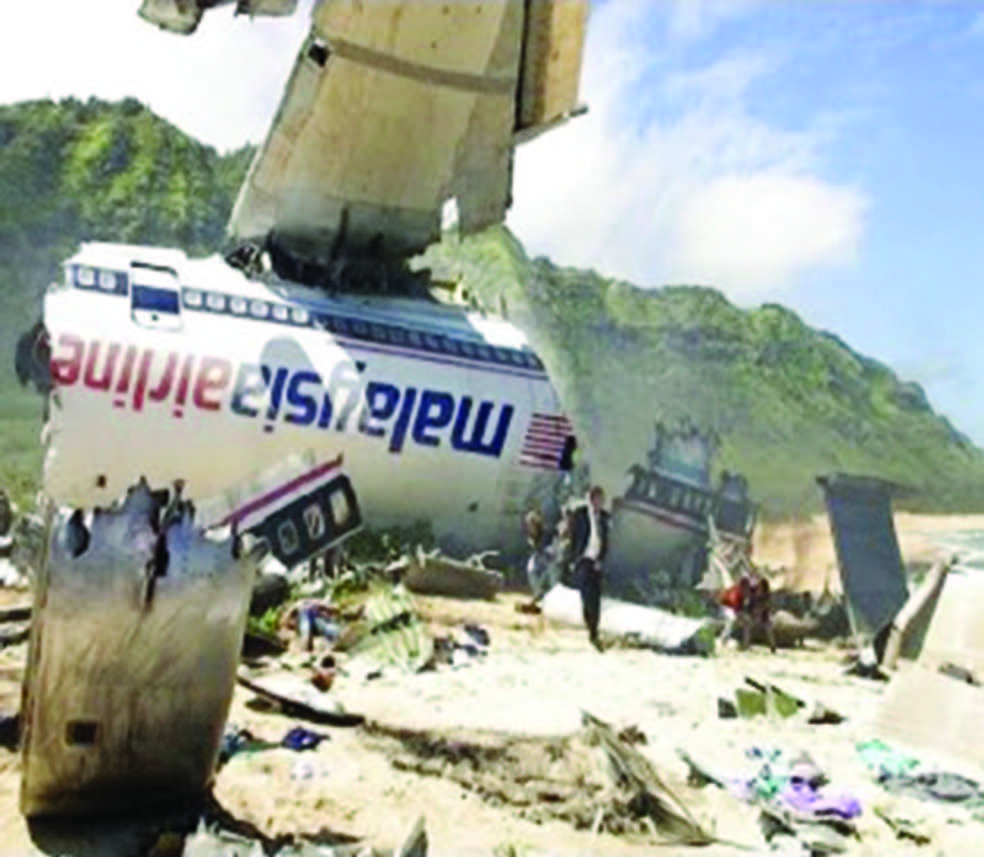
    In the early hours of the morning of July 17, Malaysian Airlines Flight MH17 with 298 people on board was shot down over eastern Ukraine, now controlled by Russian separatists, engaged in a civil war against the Kiev Government. The Russian speaking minority has evidently been reinforced and equipped by their kinsmen from across the Russia-Ukraine border. They carry heavy firepower including tanks, armoured personnel carriers and a range of surface-to-air missiles.

    The shooting down of MH17 came alongside rebel missile attacks over the past four weeks, which have downed two military transport and three state-of-the-art Sukhoi attack aircraft, of the Ukrainian Air Force. It is evident that the missile attack on MH17 was based on the mistaken assumption that it was a Ukrainian Air Force aircraft. There have been seven incidents of such inadvertent shooting down of civilian aircraft in the past. In recent times, South Korean Airlines Flight 007 with 277 passengers and crew strayed into Soviet airspace. It was shot down by a missile fired from a Soviet MiG.

    After the usual rhetoric, Presidents Ronald Reagan and Mikhail Gorbachev returned to business as usual. Thereafter, on July 3, 1988, Iran Air Flight 655, flying from Tehran to Dubai with 290 passengers, mostly pilgrims headed for Mecca, was shot down over Iranian territorial waters, by two missiles fired from the US Navy missile cruiser, USS Vincennes. The US refused to accept responsibility for the action. It paid a sum of $61.8 million as compensation to the families of the victims, following the ruling of an international tribunal.

    What the US paid was less than three per cent of what it got from Libya, for the Lockerbie bombing of Pan Am 103. The Captain of the USS Vincennes was awarded Combat Action Ribbons, shortly after shooting down a civil airliner. Washington, DC’s displeasure, about Russian supply of surface-to-air missiles to the Russian resistance in Ukraine, is surprising. It was the US that started the practice of providing lethal weaponry to non-state actors. The Central Intelligence Agency liberally provided lethal Stinger surface-to-air missiles to the anti-Soviet Mujahideen in Afghanistan, through Pakistan’s Inter-Services Intelligence.

    Three Indian Air Force aircraft – a MiG 21, MiG 27 and a helicopter gunship – were shot down and a Canberra bomber damaged, during and just prior to the Kargil conflict. The IAF aircraft were fired on by Pakistan’s Northern Light Infantry, using, what were assessed to be, Stinger surface-to-air missiles. Given the relentless US policy of strategic ‘containment’ of Russia after the disintegration of the Soviet Union, it was inevitable that, pushed to a corner by American and NATO pressures, the Russians would reach a position of saying: “Thus far and no further”.

    The erratic nature of the policies of President Boris Yeltsin and his advisers like Yegor Gaidar and Mr Andrey Kozyrev, immediately after the disintegration of the Soviet Union, evidently encouraged the US and its NATO allies to erode Russian influence in the Balkans and undermine Russian credibility in Kosovo. Simultaneously, members of armed Chechen separatist groups were openly welcomed in western Europe. Yeltsin’s incompetence in Chechnya and his inability to deal with the expansion of American-led influence just across Russia’s borders, contributed to his being eased out of office and replaced by Mr Vladimir Putin.

    Even as the Russians tried to increasingly integrate former Soviet Republics economically and strategically, the US and its NATO allies held out lucrative offers for economic integration with the European Union and membership of the NATO military alliance. Russia faced a challenge of economic isolation and military encirclement. The Russians have responded by developing economic partnerships with former Soviet Republics and the establishment of the Collective Security Treaty Organisation.

    The economic and security inroads made by the EU and NATO have, however, significantly eroded traditional Russian influence in its immediate neighbourhood. These Western moves, which the Russians naturally regard as strategic encirclement, have resulted in former Warsaw Pact members – the Czech and Slovak Republics, Hungary, Bulgaria, Romania and Poland – joining NATO In the Balkans, Croatia and Slovenia are now NATO members. Moreover, the former Soviet Baltic Republics, Estonia, Latvia and Lithuania have joined NATO.

    There are also moves to consider EU and Nato membership for Ukraine, Azerbaijan, Armenia, Kazakhstan, Moldova and Georgia. Ukraine was ruled by Russian tsars for three centuries prior to the formation of the Soviet Union. It was regarded as part of the sphere of Russian influence. Its eastern region bordering Russia was increasingly populated by Russians. Ukraine’s Crimean region was transferred by Soviet leader Nikita Khrushchev from the Russian Federation to Ukraine in 1954, as a “gesture of goodwill”, marking the 300th anniversary of Ukraine being a part of Tsarist Russia.

    Sevastopol in Crimea is vital strategically to Russia, constituting Russia’s access to the warm waters of the Black Sea. Former President Viktor Yanukovych of Ukraine and other Ukrainian leaders inevitably played off the Russians, who promised plentiful supplies of energy, against the EU, which promised prosperity. Mr Yanukovych signed an agreement in 2010 extending the lease of Sevastopol till 2042. The quite evidently American-backed movement that resulted in the ouster of Mr Yanukovych, led to the takeover of Sevastopol and the Crimean region, with a Russian majority population, by Russia.

    The US-led attempts to contain Russia have been marked by inconsistencies. The dismemberment of Yugoslavia and the independence of Kosovo were justified by Western powers on the lofty grounds of respect for “human rights”. But, today these same powers are raving and ranting against the “separatists” of the Russian minority in Ukraine, who are seeking independence, or merger with Russia.

    There is little doubt that Russia today faces serious internal problems arising out of falling birth rates, alcoholism, drug addiction, declining life expectancy and corruption. But, it will be a historical error to underestimate Russian resilience in the face of adversity. Attempts to dominate and marginalise the Russian minority in Ukraine will be fiercely resisted and reinforced by support from across the Ukrainian-Russian border.

    What is needed is a realistic political solution involving a united, but federalised Ukraine. More importantly, attempts at ‘containment’ of Russia, will have to be eschewed and the expansion of NATO across Russia’s borders ended. Given the imperatives of stability and energy security, responsible European countries like Germany and France will recognise this. Will the Americans do likewise?

  • Eight killed in Afghanistan market blast

    Eight killed in Afghanistan market blast

    KABUL (TIP): At least eight civilians died and 28 were injured on July 24 when a bomb planted on a motorcycle exploded in a market in northern Afghanistan, an official said. The bomb, activated by remote control, went off in the crowded market in Khwaja Ghar district in Takhar province, police spokesperson Abdul Khalid told Efe news agency. The province is not a usual scene of insurgent activities.

    Violence has been on the rise in Afghanistan since last year, when Afghan forces were handed back security tasks after the gradual withdrawal of the NATO-led International Security Assistance Force (ISAF). Forty two people died July 15 in one of the deadliest attacks in the last few years, carried out by a suicide bomber in a crowded market in the southeastern province of Paktika.

    The Taliban disassociated themselves from that attack and the Afghan government accused the Haqqani Network, a Pakistani insurgent group which operates between Pakistan and Afghanistan. In the first six months of this year, violence has claimed the lives of 1,564 civilians, 17 percent more than in 2013 over the same period, while the number of injured increased by 28 percent, to 3,289.

    ISAF will conclude its mission in Afghanistan at the end of 2014, but Washington has announced that it will maintain around 9,800 troops in the country until its complete exit at the end of 2016.

  • Militants kill eight Pakistani paramilitary members

    Militants kill eight Pakistani paramilitary members

    PESHAWAR, PAKISTAN (TIP): Militants killed eight members of a government paramilitary force in a midnight attack on a security checkpoint in Pakistan’s restive northwest, security officials said Friday. The militants bombarded the checkpoint with rocket-propelled grenades, two senior military officials said, before overrunning and ransacking it. Local residents said the gunfire began around midnight and continued for at least two hours.

    The attack, for which no militant group has so far claimed responsibility, comes amid a military offensive to push the Taliban out of North Waziristan, a remote northwestern region near the border with Afghanistan. Nato has long urged the military to take action against Taliban safe havens in North Waziristan, where many groups had bases they used to launch attacks in Afghanistan. North Waziristan was considered the key stronghold of the Taliban after other areas in Pakistan had been mostly cleared of militants.

    But residents say most militants moved out before the Pakistani army announced its offensive last month, raising fears that they may now be beefing up their presence in other areas. “The militants displaced from North Waziristan have returned to the Khyber agency and started attacks on security forces,” said one security official. The Khyber Agency is part of the semiautonomous areas where tribal law holds sway instead of Pakistan’s judicial system, and the government is represented by a political agent. Eight members of the state-run Frontier Corps men were killed and three others injured in the attack in the region’s Jamrud subdivision. Khyber is about 48 km (30 miles) north of North Waziristan, and also borders Afghanistan.

  • MILITANTS KILLED AFTER AUDACIOUS ATTACK ON KABUL AIRPORT

    MILITANTS KILLED AFTER AUDACIOUS ATTACK ON KABUL AIRPORT

    KABUL (TIP): Militants armed with rocket-propelled grenades attacked Kabul International Airport in the Afghan capital on July 17 in one of the most audacious assaults on the facility, used by both civilians and the military, in a year. The attack on the airport comes at a time of great uncertainty for Afghanistan as votes from the second round of a disputed presidential election are to be recounted.


    The poll is meant to mark Afghanistan’s first democratic transfer of power. The attack lasted about four hours after four unidentified militants armed with automatic rifles and rocketpropelled grenades opened fire on the airport from the roof of a building just to its north. “Four terrorists were killed by police special forces. The area is being cleared now, there are no casualties to our forces,” said Interior Ministry spokesman Sediq Sediqqi. The airport is home to a major operational base for NATO-led forces that have been fighting Taliban and other insurgents for 12 years and is bristling with soldiers and police, guard towers and several lines of security checkpoints. Militants fire rockets into the airport almost every week, causing little damage, but frontal attacks on the heavily guarded facility are rare and represent an ambitious target for insurgents.


    The attack was similar in tactics to last year’s assault on the airport, when seven Taliban insurgents including suicide bombers attacked after taking up positions inside a partially constructed building nearby. There was no immediate claim of responsibility for the latest attack. A Kabul airport official told Reuters all flights had been diverted to other cities. In such circumstances, passenger planes are immediately diverted to other Afghan cities such as Mazar-i- Sharif in the north or Herat in the west.


    “Due to the closeness of the attack to the runway, Kabul airport is now closed to all flights,” the official said. Planes could be heard circling above Kabul as the attack unfolded. A Reuters witness near the scene earlier saw black smoke billowing above the airport and heard several explosions. A car had been set on fire not far from the scene. On July 14, a car bomb detonated in a crowded market killed 43 people and wounded at least 74 in the eastern province of Paktika, close to Afghanistan’s porous border with Pakistan.