Tag: Nawaz Sharif

  • Blood And Water Can’t Flow Together, Says PM Modi Over Indus River Treaty

    Blood And Water Can’t Flow Together, Says PM Modi Over Indus River Treaty

    “Blood and water cannot flow together,” Prime Minister Narendra Modi said on Monday as he chaired a review meeting of 56-year-old Indus Water Treaty during which it was decided that India will “exploit to the maximum” the water of Pakistan-controlled rivers, including Jhelum, as per the water sharing pact.

    Held amidst heightened tension between the India and Pakistan, the meeting also decided to set up a inter- ministerial task forces to go into the details and working of the Treaty with a “sense of urgency”, senior government sources said.

    Attended by National Security Advisor Ajit Doval, Foreign Secretary S Jaishankar, the Water Resources Secretary, and senior PMO officials, the meeting also noted that the meeting of Indus Water Commission can “only take place in atmosphere free of terror”. The Commission has held 112 meetings so far.

    “Prime Minister’s Modi’s message at the meeting was that ‘rakt aur paani ek saath nahin beh sakta’ (blood and water cannot flow together),” sources said.

    Apart from deciding to exploit to the maximum the capacity of three of the rivers that are under Pakistan’s control – Indus, Chenab and Jhelum– in the areas of hydro power, irrigation and storage, the meeting also agreed to review the “unilateral suspension” of Tulbul navigation project in 1987.

    The sources asserted that the decision to maximise the water resources for irrigation will address the “pre-existing” sentiment of people of Jammu and Kashmir, who have complained in the past about the treaty not being fair to them.

    The meeting came as India weighed its options to hit back at Pakistan in the aftermath of the Uri attack that left 18 soldiers dead, triggering demands that the government scrap the water distribution pact to mount pressure on that country.

    Under the treaty, which was signed by Prime Minister Jawaharlal Nehru and Pakistan President Ayub Khan in September 1960, water of six rivers – Beas, Ravi, Sutlej, Indus, Chenab and Jhelum – were to be shared between the two countries.

    Pakistan has been complaining about not receiving enough water and gone for international arbitration in a couple of cases.nd Jhelum that flow from Jammu and Kashmir.

    Jammu and Kashmir has been demanding a review of the treaty as it robs the state of its rights to use the water of the rivers.

    India has been making diplomatic efforts to isolate Pakistan on the issue of “exporting terror” in the wake of the September 18 Uri attack. The meeting on the Indus Waters Treaty is being seen as an indication that the government could be looking at more options to exert pressure on Pakistan.

  • A Day of Protests in front of the United Nations

    A Day of Protests in front of the United Nations

    NEW YORK (TIP): September 21 was a day of protests in front of the United Nations. The most important, from the point of view of Indian American community were the protests against Pakistan, organized by Balochis and Indian Americans.

    There was another organized by the Bangladeshi BNP against Sheikh Hasina. Yet another was a protest organized against the Chinese government by the practitioners of Falun Dafa who alleged persecution of “100 million people” at the hands of the Chinese regime. Yet another, a little distance away on 2ndAvenue, was a protest against Iranian regime.

    We are presenting here the stories in brief in pictures. However, the protests against Pakistan by the Balochis and the Indian Americans are more detailed.

    BALOCHIS AND INDIAN AMERICANS PROTEST AGAINST PAKISTAN


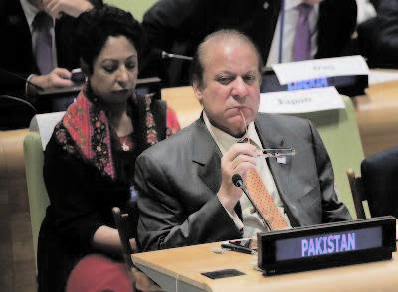
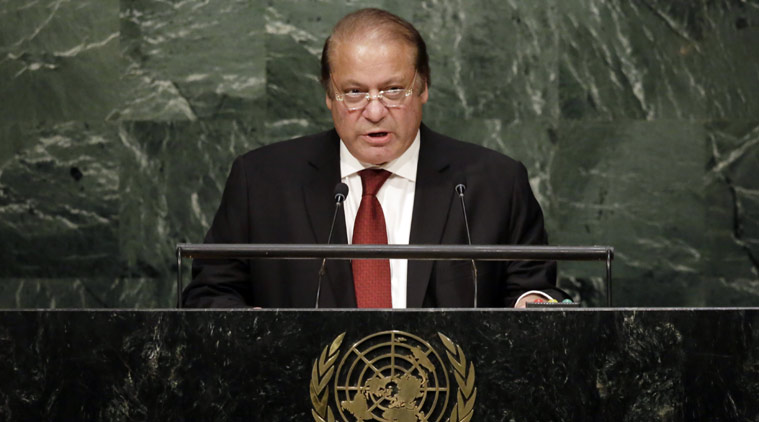
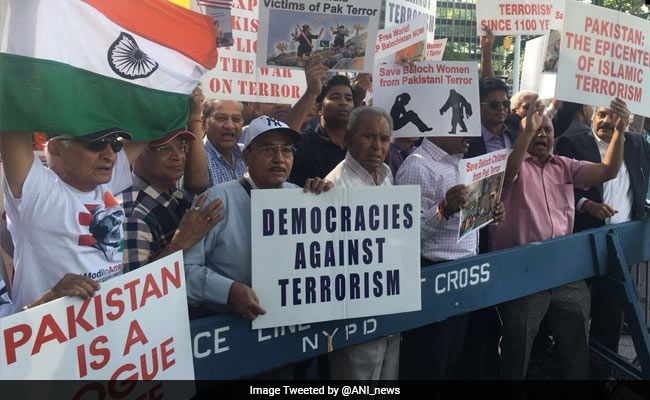
    Several Baloch and Indian activists held large-scale demonstrations outside the UN headquarters here while Pakistan Prime Minister Nawaz Sharif addressed the UN General Assembly as they were joined by other groups demanding that it stop “exporting” terror into India.

    The protestors converged across the street from the world body’s headquarters to condemn atrocities and human rights violations by Pakistan just as Mr. Sharif was addressing the General Debate of the General Assembly.

    The crowd shouted slogans of ‘Free Balochistan’, ‘Down Down Pakistan’, ‘Save World from Pakistan Terror’ as they waved banners and placards that read ‘US Government stop giving funds to Pakistan’, ‘Kashmiri Hindus are Humans, Wake up to their sufferings’, ‘Remove Pakistan from the UN’, ‘Stop Atrocities in Pakistan-occupied Kashmir’ and ‘Killing Fields of Pakistan -Sindh and Balochistan’.

    “Pakistan is a terror state and does not want the people of Balochistan to live in peace,” Ahmar Musti Khan, founder of the American Friends of Balochistan told Press Trust of India.

    He said Pakistan and its leaders are committing crimes against the residents of Kashmir, demanding that the country stop “exporting terror and let its neighbors live in peace”.

    He added the Pakistani leadership should respect the right to self-determination of the Baloch people.

    Mr. Khan said the Baloch people are “indebted” to Prime Minister Narendra Modi “for speaking out for Balochistan’s right and the right of the Baloch people to be the masters of our own destiny”.

    He slammed the Pakistani army for its brutalities against “innocent Balochis”, saying “the Pakistan Army is ISIS in uniform”.

    The Baloch National Movement (BNM) condemned the Pakistani atrocities and the ‘ongoing military operations’ in Sindh and Balochistan.

    “Baloch and Sindhi people appeal to the freedom loving citizens of America and the world to support our demands for freedom, peace, and justice. We, the victims of Pakistani state aggression and crimes against humanity, want to tell the world that ‘Pakistan is a nuclear-armed terrorist state’ and must be stopped,” the group said.

    Condemning the “barbaric” terror attack on the Uri camp in Kashmir and Pathankot air base, BNM said such attacks are part of Pakistan’s policy of “aggression, employing terrorist methods and outfits to escalate war in the region”.

    It said the Baloch people are grateful for the support extended by the Indian Prime Minister at “such a critical juncture when our nation is struggling to be free from the illegal military occupation of Pakistan since 1948”.

    Jayesh Patel, the former President of the Overseas Friends of BJP, said Pakistan should stop terrorism against India, saying countless innocent lives have been lost due to attacks in Kashmir, mostly recently on the army base in Uri that killed 18 soldiers.

    “The families of our soldiers are the worst sufferers,” he said.

  • Pakistan’s bogus claims exposed by own media in disastrous day

    Pakistan’s bogus claims exposed by own media in disastrous day

    WASHINGTON (TIP): She meant to say Nawaz Sharif’s ADDRESS before the UN General Assembly, but given all the tawdry drama surrounding it, ”actress” was indeed more appropriate.

    An embarrassing flub on social media by Pakistan’s UN Envoy Maleeha Lodhi, after she tweeted ”Entering the UN for the PM’s ACTRESS to the GA” set the tone for a disastrous day for Pakistan in New York after it tried to up the stakes against India over the ”Kashmir issue.”

    It wasn’t the only boo-boo. Pakistani officials were publicly called out for bluffing about talks by the United Nations, United States, and its own, and only, ally China, as it tried to construct a phony narrative on the Kashmir issue.

    It ended with a brutal take down by New Delhi, which sent a junior diplomat to call Pakistan a ”terrorist state” and other sulfurous insults seldom heard in the general assembly.

    Pakistan’s own media called out the country’s bluff by reporting that Prime Minister Nawaz Sharif media team ”concealed some important matters deliberately by issuing fragmentary handout about the meeting” with Secretary of State John Kerry.

    While a press release issued by the PM’s media team ”tried to give an impression that only the Kashmir issue was discussed in the meeting,” it turned out that Sharif was given an earful by Kerry, including asking Pakistan to stop giving safe havens to terrorists and to cap its nuclear arsenal.

    These remarks were censored by the largely plaint and often ISI media cell controlled Pakistani press.

    More snubs followed after China distanced itself from self-serving Pakistani claims about its support on the Kashmir issue. ”The issue of Kashmir is an issue leftover from history. Our stance on that is consistent.

    We hope that parties concerned will pursue a peaceful settlement through dialogue,” a Chinese spokesman said when asked about Pakistani claims, reported with overheated language about ”iron brother” forever to go with other popular formulations about ties being ”sweeter than honey, higher than mountains, deeper than oceans” etc.

    There were similar brush offs from the U.N Secretary General Ban ki Moon, who simply tweeted about ”Meeting P.M. H.E. Mr. Muhammad Nawaz Sharif, Prime Minister of the Islamic Republic of Pakistan” without confirming claims from the Pakistani side that he had expressed shock at situation in Kashmir etc., — claims meant ostensibly for domestic consumption in Pakistan.

    Sharif has brought along a huge media contingent from Pakistan who are briefed twice a day with fictional accounts of Pakistan’s grand success in UN, even as some independent (and rebellious) sections of the media are calling out the serial disappointments.

    Both Ban-ki Moon and President Obama did not make any reference to the so-called ”Kashmir issue” in their remarks and instead obliquely urged Islamabad to end its proxy wars and engage with India without resort to violence.

    Sharif may in fact have to return to Islamabad without meeting Obama (none was scheduled till the time of writing), and inasmuch as Pakistan thinks he is a lame duck president, its prospects don’t look particularly attractive under a Hillary Clinton administration or a Trump White House. Back home in Pakistan, the country’s defense minister Khawaja Asif, who has threatened to use tactical nuclear weapons on Pakistan’ s own soil if India captures Pakistani territory, continued to make a fool of himself.

  • Congress too slams Nawaz Sharif

    Congress too slams Nawaz Sharif

    #Congress too slammed Pakistan Prime Minister Nawaz Sharif for his Kashmir rant and glorifying terrorist Burhan Wani at the UN and said External Affairs Minister Sushma Swaraj should give a strong and a befitting reply when she addresses the world body on Monday.

    The main opposition party said the government should build a strong and factual case for India in front of the International community and wanted Prime Minister Narendra Modi to consult all political parties before deciding on “concrete and tangible steps” in the wake of the Pakistani onslaught.

    “Conspiratorial omission to Uri Attack in his speech is a public admission of guilt by Pakistan, of its direct involvement in this act of cowardice. There was nothing new in his address, except glorification of terrorists and extremism which Pakistan has adopted as ‘state policy’,” Congress’ chief spokesman Randeep Singh Surjewala said here.

    In “glorifying” a terrorist like Burhan Wani, a Hizbul Mujahideen commander who was killed in an encounter with security forces on July 8, Sharif only reiterated where his and his country’s sympathies and support lies, he added.

    “The international community must now understand fully that it is not only terrorists in Kashmir that Pakistan supports but its state policy is to provide an umbrella support and sustenance to all those who wreck havoc across the world, including in France, Bangladesh, USA,Britain and Belgium……,” he added.

    “We are confident that an already wary international community has seen through Pakistan’s vile designs”, he said.

    Surjewala ridiculed Sharif’s claim of an ‘intifada’ (uprising) in the Kashmir valley and said his “conspiratorial omission” to Uri Attack is a public admission of guilt.

    “In citing ‘intifada’ in Kashmir, Nawaz Sharif looks like that emperor who plays flute while his entire country, right from Khyber to Balochistan to Sindh is up in a violent intifada against his nation state,” the Congress leader said.

    Describing Pakistan as a ‘renegade state’ that has emerged as the ‘central processing unit’ (CPU) of global terror, he said in what has now become habitual, Sharif again invoked Kashmir at a multilateral forum, despite Pakistan being a signatory to the Shimla Accord.

  • NAWAZ SHARIF SPOKE LIKE SUPREME COMMANDER OF HIZBUL AT UNGA: BJP

    NAWAZ SHARIF SPOKE LIKE SUPREME COMMANDER OF HIZBUL AT UNGA: BJP

    NEW DELHI (TIP): The  BJP on September 22 (Thursday) demanded that Pakistan be declared a terrorist state, alleging that its Prime Minister Nawaz Sharif spoke like the “supreme commander” of Hizbul Mujahideen and openly campaigned for terrorists at UN General Assembly.

    The RSS also attacked Pakistan for committing atrocities in Baluchistan, Sindh and Pakistan-Occupied-Kashmir (PoK) and said its misadventure in Kashmir, where it is making Kashmiris kill their own people, will bring destruction to Pakistan.

    “Nawaz Sharif at the United Nations yesterday was at his pathetic best. He talked not like the supreme commander of Pakistan, but he talked like the supreme commander of Hizbul Mujahideen.

    “It clearly shows that there is no need for any further explanation. Pakistan should straight away be declared a terrorist state,” BJP general secretary Ram Madhav said.

    He said Sharif was openly campaigning for one of his terror commanders Burhan Wani of Hizbul Mujahideen.

    “It is so pathetic to see the Prime Minister of Pakistan campaigning for the cause of UN designated terror organization,” he said.

    Madhav also said that India has already given a befitting response to Pakistan at the diplomatic level and would respond accordingly to its Uri misadventure at various levels.

    RSS leader Indresh Kumar said thousands of people have been killed in Baluchistan, Sindh and Pakistan-Occupied Kashmir and lakhs have been displaced there and all this would prove costly for Pakistan.

    “Pakistan is trying to get Kashmiris killed by Kashmiris. Nawaz Sharif’s tune on Kashmir is not in sync and Pakistan’s misadventure in Kashmir will lead to its own destruction,” he told PTI.

    He said Baluchistan refused to be with Pakistan from the day it became independent and Nawaz Sharif should answer as to why they should not get independence.

    “Pakistan is suppressing people there and committing atrocities on them, with more than one lakh killed and 6 to 7 lakh displaced. Sindh is also demanding independence for many years now. Thousands have been killed there and many more thousands held captive and displaced.

  • Pakistan Must Stop Giving Safe Haven to Terrorists, John Kerry to Nawaz Sharif

    Pakistan Must Stop Giving Safe Haven to Terrorists, John Kerry to Nawaz Sharif

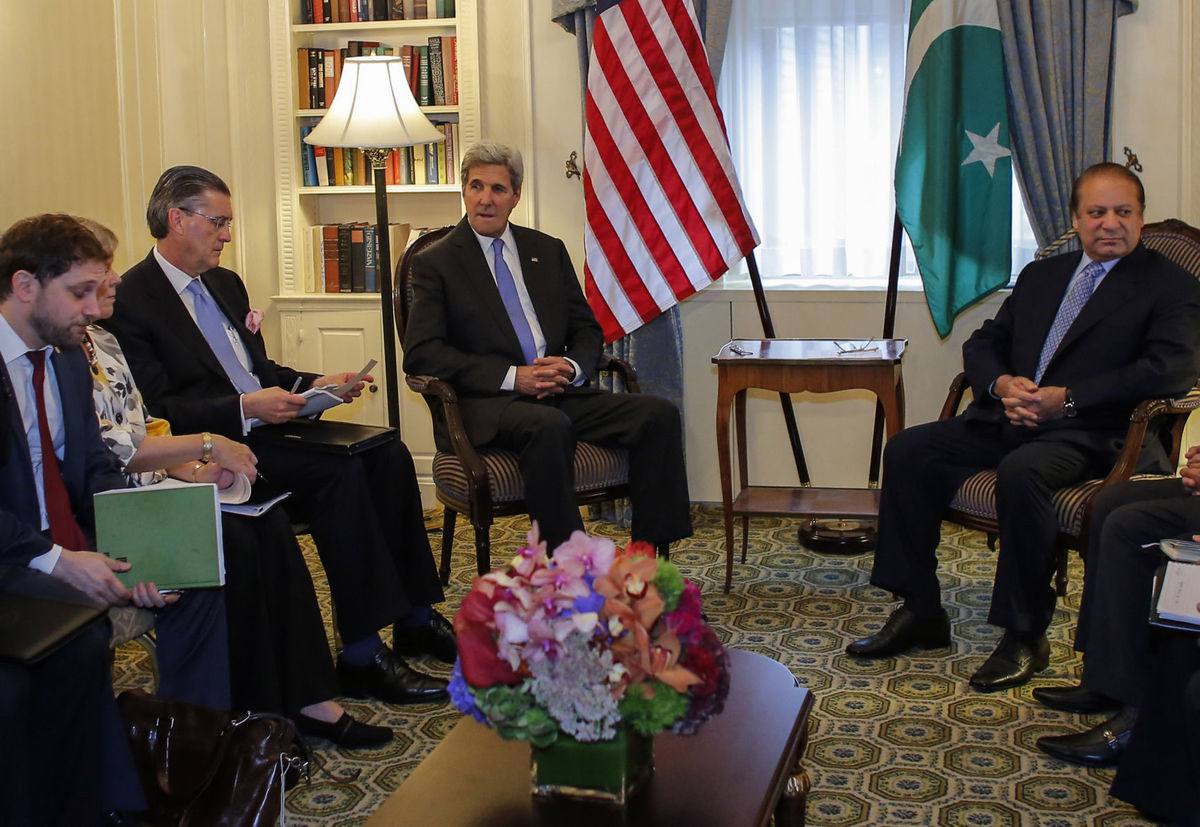
    NEW YORK – Pakistan must stop giving a safe haven to terrorists, US Secretary of State John Kerry told Pakistan Prime Minister Nawaz Sharif Sept. 19, while expressing “strong concern” over the attack on the Indian army base in Uri a day earlier.

    When they met here on Monday, Kerry “reiterated the need for Pakistan to prevent all terrorists from using Pakistani territory as safe havens,” State Department spokesperson John Kirby said in a statement Sept. 20.

    He said that “the Prime Minister and Secretary Kerry expressed strong concern with recent violence in Kashmir – particularly the army base attack – and the need for all sides to reduce tensions.”

    Kerry also “stressed the need for restraint in nuclear weapons programs,” Kirby said.

    Their discussions centered on the “strong, long-term bilateral partnership” and how “to build upon the US-Pakistan Strategic Dialogue,” Kirby said. Afghanistan also figured in their talks.

    Kerry made the remark about Pakistan stopping safe havens for terrorists “while commending recent efforts by Pakistani security forces to counter extremist violence,” Kirby said.

    Pakistani media reported that during the meeting Sharif had asked for U.S. help to resolve India-Pakistan issues.

    “I expect the U.S. administration and Secretary Kerry to use his good offices to help resolve issues between Pakistan and India,” Dawn quoted Sharif as saying. “I still remember President Bill Clinton’s promise that the U.S. will play its role to help out in resolving bilateral disputes and issues between Pakistan and India,” he said.

  • Pakistan shows the door to Indian Media during Briefing in New York

    Pakistan shows the door to Indian Media during Briefing in New York

    NEW YORK – Indian media were not allowed to attend a Sept. 19 press briefing addressed by Pakistan Foreign Secretary Aizaz Ahmad Chaudhry in New York, and an Indian journalist of NDTV news channel was asked to leave the room, in an apparent outcome of simmering bilateral relations.

    “Iss Indian ko nikalo (remove this Indian),” were the words directed at Namrata Brar, a journalist with NDTV, and she was asked to leave the room at the Roosevelt Hotel, where the Pakistan Foreign Secretary was to address the media on the sidelines of the United Nations General Assembly, NDTV reported.

    No Indian was allowed to attend the briefing, the news channel reported.

    Pakistan’s Prime Minister Nawaz Sharif also avoided Indian journalists during his trip to New York to attend the UN meet.

    Bilateral tensions between the two countries has escalated over the Kashmir issue, especially with Pakistan seen to openly back the separatist-fueled unrest in the valley and raising the issue of alleged human rights violations at the international forum.

    The incident also comes after the Sept. 18 terror attack on the Uri army base camp in Jammu and Kashmir which claimed the lives of 18 soldiers.

  • Balochis, Indians protest against Pakistan outside UN

    Balochis, Indians protest against Pakistan outside UN

    United Nations: Several Baloch and Indian activists held large-scale demonstrations outside the UN headquarters here while Pakistan Prime Minister Nawaz Sharif addressed the UN General Assembly as they were joined by other groups demanding that it stop “exporting” terror into India.

    The protestors converged across the street from the world body’s headquarters to condemn atrocities and human rights violations by Pakistan just as Mr Sharif was addressing the General Debate of the General Assembly.

    The crowd shouted slogans of ‘Free Balochistan’, ‘Down Down Pakistan’, ‘Save World from Pakistan Terror’ as they waved banners and placards that read ‘US Government stop giving funds to Pakistan’, ‘Kashmiri Hindus are Humans, Wake up to their sufferings’, ‘Remove Pakistan from the UN’, ‘Stop Atrocities in Pakistan-occupied Kashmir’ and ‘Killing Fields of Pakistan – Sindh and Balochistan’.

    “Pakistan is a terror state and does not want the people of Balochistan to live in peace,” Ahmar Musti Khan, founder of the American Friends of Balochistan told Press Trust of India.

    He said Pakistan and its leaders are committing crimes against the residents of Kashmir, demanding that the country stop “exporting terror and let its neighbours live in peace”.

    He added the Pakistani leadership should respect the right to self determination of the Baloch people.

    Mr Khan said the Baloch people are “indebted” to Prime Minister Narendra Modi “for speaking out for Balochistan’s right and the right of the Baloch people to be the masters of our own destiny”.

    He slammed the Pakistani army for its brutalities against “innocent Balochis”, saying “the Pakistan Army is ISIS in uniform”.

    The Baloch National Movement (BNM) condemned the Pakistani atrocities and the ‘ongoing military operations’ in Sindh and Balochistan.

    “Baloch and Sindhi people appeal to the freedom loving citizens of America and the world to support our demands for freedom, peace, and justice. We, the victims of Pakistani state aggression and crimes against humanity, want to tell the world that ‘Pakistan is a nuclear-armed terrorist state’ and must be stopped,” the group said.

    Condemning the “barbaric” terror attack on the Uri camp in Kashmir and Pathankot air base, BNM said such attacks are part of Pakistan’s policy of “aggression, employing terrorist methods and outfits to escalate war in the region”.

    It said the Baloch people are grateful for the support extended by the Indian Prime Minister at “such a critical juncture when our nation is struggling to be free from the illegal military occupation of Pakistan since 1948”.

    Jayesh Patel, the former President of the Overseas Friends of BJP, said Pakistan should stop terrorism against India, saying countless innocent lives have been lost due to attacks in Kashmir, mostly recently on the army base in Uri that killed 18 soldiers.

    “The families of our soldiers are the worst sufferers,” he said.

  • Pakistan Stock Markets Plunge Fearing Indian Retaliation After Uri Attack

    Pakistan Stock Markets Plunge Fearing Indian Retaliation After Uri Attack

    Pakistani stock markets witnessed a sharp decline on Thursday as reports of an imminent strike from India are speculated.

    The Karachi Stock Exchange (KSE) on Thursday closed at 39,771 points, noting a decline of 569 points. Dawn reports indicate that small investors, who contribute to a major portion of the market, ran in panic resulting in an overall 1.41% fall.

    Arif Habib, former Karachi Stock Exchange chairman stated that this panic was caused by the hype created in Pakistani media about the recent terror attack in Uri, Jammu and Kashmir. Many channels broadcasted that Indian troops had moved forward towards the Line of Control (LoC).

    It was reported on Wednesday that Pakistan International Airlines (PIA) had stopped blocked flights to the Gilgit-Baltistan region which added more fuel to the rumours.

    The Indian subcontinent continues to be tense ever since the terrorists stormed an army camp in Uri on Sunday where 18 Indian soldiers were martyred.

    India on Thursday called Pakistan a “terrorist state” and accused it of carrying out “war crimes” against Indians through its “long-standing policy” of sponsoring terrorism, hours after Pakistan Prime Minister Nawaz Sharif raked up Kashmir issue at the UN General Assembly session.

    In a strong rebuttal, India said the terrorists designated by the UN continued to roam Pakistan’s streets freely and operate with State support.

  • Suicide bomber kills 28 at mosque in northwest Pakistan

    Suicide bomber kills 28 at mosque in northwest Pakistan

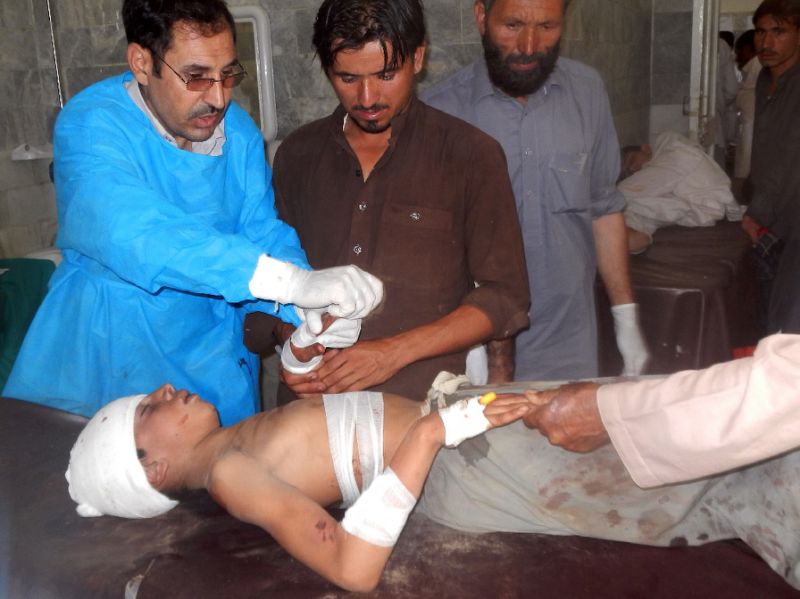
    Peshawar, Sep 16 (PTI) At least 28 people, including five children, were killed and 30 others injured when a Taliban suicide bomber shouting Allahu Akbar blew himself up inside a mosque packed with worshippers for Friday prayers in Mohmand Agency in Pakistans restive northwest tribal region,

    The attacker blew himself when the prayers were in progress at the mosque in the Anbar tehsil of the agency bordering Afghanistan.

    “A suicide bomber was in the mosque. He shouted Allahu Akbar and blew himself up,” Assistant Political Agent Naveed Akbar told reporters.

    Jamat-ul-Ahrar, a splinter group of Tehrik-i-Taliban Pakistan, today claimed responsibility for the attack.

    He said that Friday prayers were being offered around 2 PM when the powerful blast took place.

    At least 28 people, including five children, were killed in the attack and 30 others injured, Pakistani media reported, citing officials.

    “Many people were gathered inside the mosque when a suicide bomber blew himself up,” an eyewitness said.

    Rescue teams and police rushed to the spot. The bodies and the injured are being shifted to local hospitals for medical treatment.

    Injured were also taken to hospitals in Bajaur Agency, Charsadda and Peshawar for treatment.

    There was no immediate claim of responsibility, but Pakistani Taliban routinely targets courts, schools and mosques.

    Prime Minister Nawaz Sharif has expressed his grief over the loss of lives in the blast.

    “The cowardly attacks by terrorists cannot shatter the governments resolve to eliminate terrorism from the country,” he said in a statement.

    The attack came on a day when Sharif vowed to continue the war against militancy and terrorism till elimination of the last terrorist.

    During a meeting with Army chief General Raheel Sharif today, the prime minister expressed the resolve to continue the war against terrorism and militancy.

    The army had launched operation Zarb-e-Azb in June 2014 to flush out militant bases in the northwestern tribal areas.


  • Pak PM Nawaz Sharif to consult Hurriyat, PoK leaders before leaving for US

    Pak PM Nawaz Sharif to consult Hurriyat, PoK leaders before leaving for US

    ISLAMABAD: Prime Minister Nawaz Sharif will hold consultations with Hurriyat and Pakistan-occupied Kashmir (PoK) leaders on Sept 16 before leaving for the US to address the UN General Assembly, where he is likely to raise the Kashmir issue.

    “Prime Minister Nawaz Sharif will come here in Muzaffarabad on Friday before leaving for New York. He will consult the Kashmiri leadership regarding his speech at the UN session,” PoK Prime Minister Raja Farooq Haider said.

    He said the premier will hold separate meetings with PoK legislators and a delegation of the All Parties Hurriyat Conference, PoK chapter.

    “The prime minister wants to take the Kashmiri leadership into confidence over the content of his speech to be delivered at the UN General Assembly session on September 21,” the Dawn News quoted him as saying.

    Haider said the gesture would send a positive message across the Line of Control (LoC). Sharif is likely to leave for the US on September 17.

  • Another SAARC farce: Much ado about nothing in Islamabad

    Another SAARC farce: Much ado about nothing in Islamabad

    Another ministerial meeting of the South Asian Association for Regional Cooperation (SAARC) has come and gone, this time in Islamabad, with people of its eight-member nations none the wiser about the purpose of the get-together. The dysfunctional organization with a 31-year history is known more as a setting for repeated attempts by Pakistan and India to turn a new page in their embittered relationship. This time the violence in Kashmir, the attacks in Pathankot and Dinanagar and the earlier arrest of an alleged Indian spy in Baluchistan have blotted bilateral ties so badly that both sides decided to spurn the opportunity of an interaction between the Home Ministers of both countries.

    For the record, the meeting discussed a range of crucial issues. A limited progress on some of them would eliminate considerable discord not only between Pakistan and India but also Afghanistan and Pakistan. The issues on the table, constant and unresolved since the Interior Ministers’ forum was set up a decade back, are terrorism, corruption, narcotics and psychotropic substances and maritime piracy. The meeting also deliberated on the Conventions on Suppression of Terrorism and the Additional Protocol and Convention on Mutual Assistance in Criminal Matters. But ties between Pakistan and India have been in deep freeze for months and Afghan President Ashraf Ghani has pulled up Islamabad for its double talk on Taliban. The atmospherics certainly did not portend a breakthrough on any of the issues.

    Mercifully, the SAARC charter does not provide for countries to launder their bilateral disputes at the forum. So while the meeting of the Interior Ministers went through its motions peacefully, Pakistan Prime Minister Nawaz Sharif leveraged a meeting of Pakistani envoys to convey that the Kashmir issue is not India’s internal matter. Home Minister Rajnath Singh repeated the statements about terrorism and sanctuaries that he has repeatedly made in India. Prime Minister Narendra Modi will be hard- pressed to come up with some out-of-the-box ideas, an expression he is so enamored of, if the SAARC summit in Islamabad later this year does not turn out to be as vacuous as this SAARC ministerial meeting.

    (Tribune, India)

  • Guns cheaper than smartphones in Pakistani tribal town

    Guns cheaper than smartphones in Pakistani tribal town

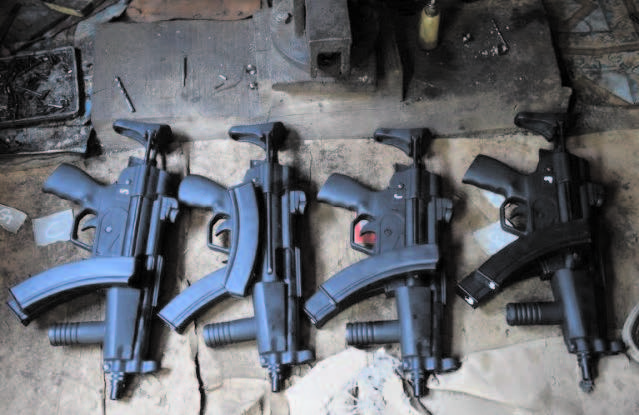
    DARRA ADAMKHEL (TIP): Gunfire echoes through a dusty northwest tribal town, the soundtrack to Pakistan’s biggest arms black market, where Kalashnikovs welded from scrap metal are cheaper than smartphones and sold on an industrial scale.

    Darra Adamkhel, a town surrounded by hills some 35 kilometres (20 miles) south of the city of Peshawar, was a hub of criminal activity for decades. Smugglers and drug runners were common and everything from stolen cars to fake university degrees could be procured.

    This generations-old trade in the illicit boomed in the 1980s: The mujahideen began buying weapons there for Afghanistan’s battle against the Soviets, over the porous border.

    Later, the town became a stronghold of the Pakistani Taliban, who enforced their strict rules and parallel system of justice — infamously beheading Polish engineer Piotr Stanczak there in 2009.

    Now Darra is clean of all but the arms, yet the gunsmiths in the bazaar say the region’s improved security and authorities’ growing intolerance for illegal weaponry are withering an industry that sustained them for decades.

    “(The) Nawaz Sharif government has established checkpoints everywhere, business is stopped,” said Khitab Gul, 45.

    Gul is known in Darra for his replicas of Turkish and Bulgarian-made MP5 submachine guns, one of the most popular weapons in the world, widely used by organisations such as America’s FBI SWAT teams.

    The MP5 can retail for thousands of dollars. Gul’s version, which comes with a one-year guarantee, costs roughly 7,000 rupees, or $67 — and, he claims, it works perfectly.

    Gul then puts on a demonstration, test-firing his MP5 in the small outer yard of his workshop — first the single shot mode, then firing in a burst.

    A Darra-made Kalashnikov, Gul says, can sell for as little as $125, cheaper than most smartphones. “The workers here are so skilled that they can copy any weapon they are shown,” he explains.

    “In past 10 years I have sold 10,000 guns, and had zero complaints,” he claims.

    In Gul’s sweltering workshop, employees shout over the roar of electrical generators as they expertly cut and drill through metal brought from the shipyards of Karachi, far to the south on the Arabian Sea.

    The main bazaar which cuts through the town used to hold nothing but tiny gun shops crammed together, their gleaming wares displayed openly on racks as customers test-fired into the air above. Trade was illegal, unlicensed and unregulated, but long tolerated by authorities with little power in the tribal areas between Afghanistan and Pakistan, where militants once operated with impunity. Residents, for their part, viewed the market as legitimate in an area dominated by Pashtun traditions, where gun culture is deeply embedded in male identity.

    But in recent years, the military has cracked down on extremism, particularly in the tribal areas, and security is the best it has been since the Pakistani Taliban were formed in 2007.

    Every second or third shop in Darra now sells groceries or electronics instead of weapons, the gunsmiths lament. The Wild West atmosphere is fading as the town embraces modern conveniences.

    Before the crackdown Gul’s workshop — just one of hundreds in the town –could produce more than 10 weapons a day, he says.

    Now they only produce four. “Demand has decreased,” he says.

    Gunsmiths put the blame squarely on the Pakistani government and military, particularly checkpoints on the way to Darra halting customers who once travelled to the town openly.

    Foreigners have been banned for security reasons.

    The military has not yet objected to the gun market in Darra directly, but residents say they have had to give sureties that they will not harbour militants, and a half-hearted attempt at licensing is now also being made.

    “I have been working here for 30 years but now I have no work to do,” says Muzzamil Khan, sitting idle outside his workshop. “I am ready to sell my lathe machine.”

    Muhammad Qaisar, making cartridges at his shop in the main bazaar, said at one point there had been up to 7,000 shops there — but now almost half have closed.

    If the government does not change its policies, he says, “I fear… Darra will be finished”.

    Darra trade union leader Badam Akbar confirmed that some 3,000 shops have closed, and said skilled workers are attempting to learn new trades. “Nothing is left in this bazaar now,” he says.

    (AFP)

  • INDIA ASKS PAKISTAN TO VACATE POK

    INDIA ASKS PAKISTAN TO VACATE POK

    NEW DELHI (TIP): India on July 21 (Thursday)accused Pakistan of providing state support to terrorists and asked the neighbouring country to vacate the territories it has been illegally occupying in Kashmir.

    New Delhi issued a strong statement a day after Pakistan observed “Black Day” to protest the “brutalities” on Kashmiris by the armed forces.

    The statement issued by the Ministry of External Affairs took note of the rallies and other events held in Pakistan and Pakistan-occupied Kashmir (PoK) over the last two days. Islamabad also observed “Kashmir’s Accession to Pakistan Day” on Tuesday.

    Hafiz Saeed, the founder of the militant organisation Lashkar-e-Toiba, and Hizbul Mujahideen chief Syed Salauddin addressed the rallies held in Pakistan and PoK on Tuesday and Wednesday. Quite a few of those who addressed the rallies threatened marches and protests before the High Commission of India in Islamabad.

    “We have also noted that the events were led by UN-designated terrorists, who had in the past protested the elimination of dreaded terrorists, including Osama bin Laden and Taliban leader Akhtar Mansour, in Pakistan,” Vikas Swarup, official spokesperson of the Ministry of External Affairs, said in New Delhi on Thursday.

    “In view of the threats of marches and protests at the High Commission of India in Islamabad, we ask the Government of Pakistan to ensure full safety and security of the High Commission, all its officials and their families in Pakistan,” he said. “India strongly condemns the encouragement and support which such terrorists and their activities receive from Pakistan,” added Swarup.

    Pakistan has of late been trying to raise its pitch on Kashmir in the wake of violent protests in the Valley against the killing of Hizbul Mujhahideen commander Burhan Wani by security forces of India. Pakistan Prime Minister Nawaz Sharif expressed “deep shock” over the killing of Wani and subsequent death of civilians in Kashmir due to police crackdown on protesters.

    New Delhi on Thursday once again asked Pakistan to stop “inciting and supporting violence and terrorism” in any part of India and refrain from its “deplorable meddling” in internal affairs of India in any manner.

    “The observance of Kashmir’s Accession to Pakistan Day (on Wednesday) exposes Pakistan’s longing for the territory of Jammu and Kashmir. India demands that Pakistan must fulfil the obligation to vacate its illegal occupation of PoK,” said Swarup. “It must also stop misleading the international community and Kashmiris through meaningless exercises such as the so-called elections today in PoK which Pakistan ironically calls
    ‘Azad’ (free).” He was referring to the elections being held for the 41 seats in the Legislative Assembly in PoK.

  • Nawaz Sharif faces major test in PoK election

    Nawaz Sharif faces major test in PoK election

    ISLAMABAD (TIP): The July 21 election in Pakistan Occupied Kashmir is one of the challenges PM Nawaz Sharif faces upon his return from London after undergoing a heart surgery.

    The region has traditionally voted for federal governing parties, but Sharif’s Pakistan Muslim League-Nawaz (PML-N) is facing stiff competition from the Pakistan People’s Party (PPP) and Pakistan Tehreek-i-Insaf (PTI).

    The PPP’s aggressive election campaign has revolved around Sharif’s pro-India polices with ” Modi ka jo yaar hai, ghadhar hai, ghadhar hai (whoever is Modi’s friend is a traitor)” being its slogan.

    “The election is very important for Pakistan because if the PML-N wins, then it would send out a message that Sharif’s policy of friendship with Narendra Modi has people’s support,” PPP chief Bilawal Bhuto Zardari said.

    Some believe the PPP’s anti-India stance is aimed at getting closer to the powerful military establishment. Imran Khan-led PTI too is seen as a serious contender as many PPP and PML-N members have joined the party.

  • Pakistani lawmaker abuses woman activist on TV debate; booked

    Pakistani lawmaker abuses woman activist on TV debate; booked

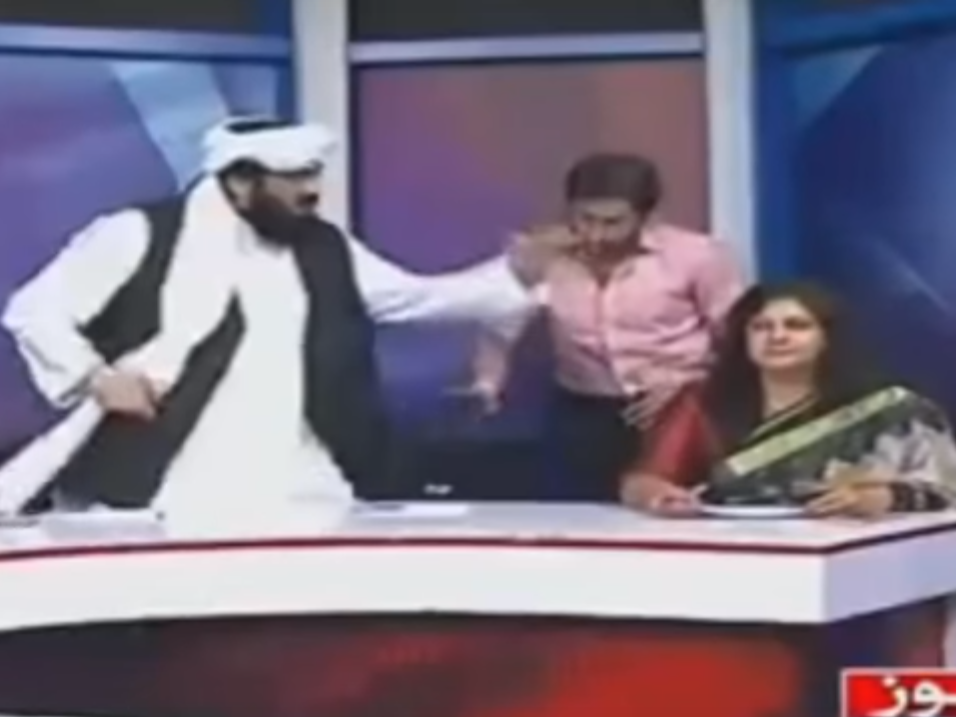
    ISLAMABAD (TIP): An influential lawmaker of Pakistan’s ruling coalition has been booked for allegedly verbally abusing and trying to physically attack a woman rights activist during a live TV debate on honour killing.

    The ugly incident happened during a private TV talk show last week when Hafiz Hamdullah of Jamiat Ulema-e-Isla Fazal (JUI-F) became furious at Marvi Sarmad for speaking against honour killing.

    According to the footage widely circulated on social media, the bearded lawmaker used foul language against the activist and tried to attack her.

    Marvi lodged a complaint with the Margalla police station and the case was registered on Tuesday, a police official said.

    The lawmaker’s JUI-F party is an ally of the government of Prime Minister Nawaz Sharif.

    At least 1,100 women were killed in the name of honour in Pakistan last year by their relatives on the pretext of defending what is seen as family honour.

    Police on Tuesday arrested the brother of a Pakistani woman for alleging burning her to death in an honour killing last week.

    An Islamic religious body in Pakistan on Tuesday declared that killing of women in the name of “honour” is un-Islamic, days after 40 influential clerics issued a fatwa against honour-killing.

    (PTI)

  • Pakistani military launches new offensive following Lahore bombing

    Pakistani military launches new offensive following Lahore bombing

    ISLAMABAD (TIP): The Pakistani military in coordination with law enforcement agencies launched a new offensive in southern Punjab, officials announced april 6, weeks after a suicide bomber killed more than 70 people in Lahore.

    “Coordinated operations are underway against terrorists and hardened criminals,” read a military statement.

    The statement also included images of military helicopters hovering over the plains of Punjab and paramilitary troops loading ammunition into trucks and preparing for an operation.

    The offensive comes after a Taliban suicide bomber killed 73 people in a popular Lahore park on Easter day. Jamaat-ul-Ahrar, the Taliban faction that carried out the bombing, said Christians were the target of the attack.

    The incident illuminated festering extremism in Punjab, the home province of three-time Prime Minister Nawaz Sharif and provincial authorities said they would launch a crackdown against militant groups in the province long considered a bastion of the establishment.

    Christians make up an estimated 1.6 percent of Pakistan’s 20 crore people and have long faced discrimination.

    Twin suicide attacks against churches in Lahore killed 17 people in March last year, sparking two days of rioting by thousands of Christians.

    The country is still scarred by a Taliban assault on a Peshawar school in 2014 that killed 150 people, mostly children.

    A military operation targeting insurgents was stepped up in response. Last year the death toll from militant attacks was the lowest since the Pakistani Taliban was formed in 2007.

  • US, India discuss Pakistan and the Pink Flamingo scenario

    US, India discuss Pakistan and the Pink Flamingo scenario

    WASHINGTON (TIP): The United States and India have begun conversations about Pakistan’s runaway nuclear weapons program, including its development and deployment of battlefield tactical nuclear weapons, in the backdrop of the nuclear security summit that opens here on March 31.

    Prime Minister Narendra Modi is expected in the US capital on Thursday morning, but ahead of his arrival, National Security Advisor Ajit Doval and his US counterparts and other senior American interlocutors have been discussing the progress in India’s ties with Pakistan, including complications arising from the patronage of terrorist groups by sections of the Pakistani establishment, and its nuclear posture.

    The Pakistani headache featuring in talks with Doval was revealed by US Secretary of State John Kerry, when he referred cryptically to Washington having “serious questions” about “some choices” being made in the region that “may accelerate possible arms construction.”

    “We’ve raised them with various partners in the region. So our hope is that this Nuclear Security Summit will contribute to everybody’s understanding about our global responsibilities and choices,” Kerry said, without directly naming Pakistan.

    There was little doubt Kerry’s remarks were directed at Pakistan, which has bailed out of the summit citing the terrorist attack in Lahore, one of dozens in the country over the past decade that has not persuaded its establishment to jettison a policy of fostering extremist groups.

    ”India has a very important role to play with respect to responsible stewardship of nuclear weapons and nuclear materials. India has a long record of being a leader, of being responsible, and it is particularly important right now at a time when we see in the region some choices being made that may accelerate possible arms construction, which we have serious questions about,” Kerry, with Doval beside him, said in a vote-of-confidence in New Delhi.

    Earlier, President Obama telephoned Pakistan’s Prime Minister Nawaz Sharif to condole the death of more than 70 persons n the Lahore bombing, while also “expressing his understanding of Sharif’s decision to cancel his visit to the United States and remain in Pakistan following this terrorist attack,” according to the White House.

    ”This callous and appalling attack against innocent civilians, many of them women and children, underscores the critical danger that terrorism poses inside Pakistan, throughout the region, and around the globe,” a White House readout of the call quoted Obama as saying.

    Pakistan has sent a low-level representation to the summit, evidently apprehensive about having to explain its decision to build tactical battlefield nuclear weapons in a situation where its home grown terrorists and mutinous extremist military personnel have attacked several military installations in the country, including the army headquarters and navy and air force bases.

    The possibility of a nuclear conflagration between India and Pakistan had been dubbed a ”pink flamingo” scenario, from a term coined by security analyst Frank Hoffman to describe events that are predictable and fully visible, but almost entirely ignored by policymakers (as opposed to Black Swans, which are unpredictable and unforeseen).

    Evidently, THIS pink flamingo is not something that will remain unnoticed or unaddressed.

    The choice of Doval to play Sherpa to the Prime Ministerial visit rather than external affairs minister Sushma Swaraj suggests the New Delhi and Washington are developing a deep security relationship in addition to extensive military and diplomatic ties. Enigmatic comments and cryptic statements bear this out without shedding too much light on the depth of the engagement.

  • Will Pakistan be able to counter expanding extremism?

    Will Pakistan be able to counter expanding extremism?

    Pakistan continues to be a major target of terrorism, most recently demonstrated by the attack on Bacha Khan University, which killed 20 people.

    Only a week before, three attacks in close succession at a UN-backed polio clinic in Quetta, a local broadcaster and the Pakistani consulate in Jalalabad killed at least 20 people and injured more than 30, which included civilians and security personnel.

    Slowly but surely, Pakistan’s terrorism crisis has morphed into an existential nightmare, one that is threatening to unravel any semblance of stability. As the country finds itself at the crossroads of prosperity and failure, its fight against terror is more important now than ever.

    Pakistan is one of the main victims of terrorism, a fact often ignored in the West. To put matters in perspective, Pakistan’s terrorism-related deaths from 2007 to 2014 numbered 1,592 – a 940 percent increase from 1998-2006, according to the 2015 Global Terrorism Index.

    The same study also ranks Pakistan fourth out of 124 in a list of countries most affected by terrorism with the tragic Peshawar army school attack in late 2014 serving as an ominous exclamation point.

    The Afghanistan connection

    Many of Pakistan’s problems stem from the political upheaval in Afghanistan. The US invasion after 9/11 turned the lawless border between the two countries into a breeding ground for terrorist activity.

    Nestled between three volatile borders, Pakistan is also situated in one of the most geopolitically sensitive areas of the world, with different players vying for competing interests.

    Ongoing US drone campaigns have radicalized segments of the local population and mobilized groups such as the Pakistani Taliban to carry out attacks against civilians and military targets. These attacks only exacerbate sectarian tensions between Pakistan’s Sunni and Shia communities and continue to bring into question the integrity of Pakistani statehood. With ISIL now in the mix, the situation can only degrade further.

    The military and … the ISI must take fundamental efforts to cease the practice of using terrorism as a foreign policy asset and avoid domestic blowback.

    External factors aside, Pakistan must also take a genuine stance against terrorism within its own borders, root out internal terrorist sympathies and take a leadership role in ending the use of proxies.

    The military and particularly Pakistan’s intelligence agency, the ISI, must make fundamental efforts to cease the practice of using terrorism as a foreign policy asset and avoid domestic blowback.

    With a projected GDP growth of over 5 percent for the next three years, an improved currency and recent consolidation of its three stock exchanges into the new Pakistan Stock Exchange, the country might be showing signs of economic progress after years of volatility.

    The $46bn China Pakistan Economic Corridor project, linking the Gwadar port to the Chinese city of Kashgar, has the potential to turn Pakistan into a strategic trading hub.

    Also given Iran’s post-sanctions reintegration into the world economy, a rekindling of the Iran-Pakistan gas pipeline to address the energy shortage also becomes a real possibility.

    Peace with India

    Indian Prime Minister Narendra Modi’s surprise visit last month also signals that peace with India, although difficult, might not be as elusive as some believe. Similarly, Afghanistan’s new President, Ashraf Ghani, has also shown signs that he is not willing to give up on improving ties with its eastern neighbor despite pressure from within his government.

    History has shown that Pakistan’s military remains the de facto power within the state. However, the head of Pakistan’s armed forces, General Raheel Sharif, has shown restraint by focusing on Operation Zarb-e-Azb in Northwest Pakistan and rooting out political mafias in Karachi rather than plotting coups.

    Nawaz Sharif’s civilian government continues to govern after what marked Pakistan’s first peaceful democratic transition in the country’s 68-year history.

    Often viewing India as a territorial threat, even the ISI might also be on board with improving relations.

    In a 2008 research report for his master’s degree at the US Army War College, the now Director-General of the ISI, Rizwan Akhtar, had argued that Pakistan should “aggressively pursue rapprochement with India”.

    Given that the recent Pathankot attack on an Indian army base is unlikely to deter ongoing dialogue, it seems that a substantial shift in the bilateral relationship based on cooperation and goodwill is under way. A similar approach with Afghanistan in the form of an inter-intelligence accord has both nations bolstering their fight against a shared threat.

    With these positive internal and external developments, it is imperative for Pakistan to capitalize on the political environment and continue to focus on the fight against terrorism in an effort to maintain economic and diplomatic momentum.

    Pakistan’s future, and its very soul, depends on it.

  • ISIS claims responsibility for attack on media house in Pakistan

    ISIS claims responsibility for attack on media house in Pakistan

    ISLAMABAD (TIP): The dreaded Islamic State militant group has claimed responsibility for the attack on a Pakistani media house that had injured one person.

    Unidentified assailants riding a motorbike lobbed a hand grenade on ARY News office and fired several shots on Wednesday.

    Security guards present at the office entrance retaliated forcing the attackers to flee away dropping pamphlets, ARY news said in a report.

    Global terror outfit ISIS’s Afghanistan chapter claimed responsibility of the attack in the pamphlets ‘in reaction to the channels coverage of ongoing operation Zarb-e-Azb’.

    In the attack, a non-linear editor was injured who was hit by a shrapnel in the head. He was immediately whisked to a hospital for medical attention.

    Prime Minister Nawaz Sharif denounced the attack in strongest words. He directed the authorities to provide security to ARY News employees.

    A probe is going on and no arrest has been made in the case, police said.

    Pakistani police said in December they arrested eight suspected IS extremists after a raid in the central province of Punjab, accusing them of planning attacks.

    Pakistan has officially denied that Islamic State organisation is operating in Pakistan, but authorities have expressed fears the extremists could find recruits among the country’s myriad Islamist militant groups.

    (PTI)

  • Pakistan constitutes team to probe links to Pathankot attack

    Pakistan constitutes team to probe links to Pathankot attack

    ISLAMABAD (TIP): Pakistan on Wednesday set up a Joint Investigation Team (JIT) comprising security and military officials to probe whether any Pakistani individual or organization was involved in the Pathankot terror attack in India.

    The JIT was set up following an order of Prime Minister Nawaz Sharif to ensure a thorough and fair probe by Pakistan.

    According to an official of the Prime Minister’s Office, the JIT would be led by Additional IG Counter Terrorism Department (CTD) Punjab, Rai Tahir.

    Other members of the team are Director, Intelligence Bureau (IB) Lahore Azeem Arshad, Additional Inspector General, Counter Terrorism Department (CTD) Khyber Pakhtunkhwa Salahuddin Khan, Director, Federal Investigation Agency (FIA) Lahore, Usman Anwar, Brigadier Noman Saeed, ISI, and Lt Col Irfan Mirza, Military Intelligence (MI). The team will investigate the involvement of any individual or organization from Pakistan in the Pathankot airbase attack on January 2 in which seven Indian security personnel were killed.

  • Musharraf threatens India with retaliatory measures

    Musharraf threatens India with retaliatory measures

    Former military dictator Pervez Musharraf has warned India against engaging in any mischief against Pakistan in the backdrop of Pathankot terror attack, saying his country can inflict retaliatory measures that will always haunt India.

    “In case India perpetrates something wrong against Pakistan, we will give such a fitting response that will always haunt India,” Musharraf was quoted by a Pakistani news channel.

    He said India should refrain from embarking on any “mischief” against Pakistan, it said.

    Musharraf’s remarks came in the backdrop of the terror attack on the Indian Air Force base in Pathankot by suspected terrorists affiliated to the dreaded Jaish-e-Mohammad group based in Pakistan.

    The attack killed seven Indian security personnel. Security forces killed all the six attackers.

    Defence minister Manohar Parrikar on Janaury 11 had said that any individual or organization causing pain to India should be paid back in the same coin but how, when and where “should be of our choice”.

    The attack has come in between a thaw in relations between India and Pakistan after Prime Minister Narendra Modi’s unscheduled visit to Lahore on Pakistan Prime Nawaz Sharif’s birthday.

  • TALKS ONLY IF PAK ACTS PROMPTLY, SAYS INDIA

    TALKS ONLY IF PAK ACTS PROMPTLY, SAYS INDIA

    NEW DELHI (TIP): India on Jan 7 made it clear to Pakistan that the proposed foreign secretary-level talks could be held only if Islamabad acts promptly against plotters of the Pathankot airbase attack.

    New Delhi put the onus on Islamabad to salvage the peace process which was recently reinitiated by Prime Minister Narendra Modi and his Pakistan counterpart M Nawaz Sharif.

    The dialogue process between the two countries came under a shadow after the recent attacks on the Indian Air Force base in Pathankot (Punjab) and the Consulate General of India at Mazar-e-Sharif in Afghanistan.

    “The ball is in Pakistan’s court,” Ministry of External Affairs spokesperson Vikas Swarup told journalists on Thursday.

    He, however, declined to comment on the proposed meeting between Foreign Secretary S Jaishankar and his Pakistan counterpart A A Chaudhry, which is scheduled to be held in Islamabad on January 15.

    “The immediate issue (for India) is Pakistan’s response to the terrorist attack (on IAF base in Pathankot) and the actionable intelligence provided to it,” he said.

    Prime Minister Narendra Modi’s National Security Advisor Ajit Doval on Monday shared with his Pakistani counterpart Naseer Khan Janjua details of the calls and transcripts of the conversations between the Jaish-e-Mohammed (JeM) terrorists, who attacked the IAF base in Pathankot, and the “commanders” of the terror organisation based in the neighbouring country.

    It was reported that New Delhi had asked Islamabad to immediately arrest JeM founder Moulana Masood Azhar and three other operatives of the terror organisations — Ashfaq Ahmad, Hafiz Abdul Shakur and Kasim Jaan.

    They were in constant touch with the terrorists and coordinating their assault on the airbase from a control room set up at the outfit’s headquarters in Bahawalpur in Pakistan.

    New Delhi suspects that Azhar’s brother Abdul Rauf Ashgar masterminded the attack. Modi on Tuesday asked Sharif to immediately act against the individuals and organizations responsible for the terrorist attack.

    Sharif assured Modi over phone that his government would take “prompt and decisive action against the terrorists”.

    “Actionable intelligence with regard to the terrorist attack and the links with the perpetrators in Pakistan have been provided to the Pakistani side. The Pakistani Prime Minister promised prompt and decisive action. We now await that prompt and decisive action,” the MEA spokesperson said on Thursday.

    “We had extended a hand of friendship to Pakistan but we will not countenance cross-border terrorist attacks,” said Swarup. The meeting between the two foreign secretaries on January 15 is expected to mark restart of the bilateral dialogue, which remained stalled since January 2013.

    Seven security-men were killed in the attack on the IAF base in Pathankot. The six JeM terrorists, who carried out the attack, were all eliminated by the security personnel in a three-day-long operation.

    The terrorist attack came just a little more than a week after Modi’s surprise visit to Lahore to greet Sharif on his birthday and to join celebration for the wedding ceremony of the Pakistan Prime Minister’s granddaughter. The visit added to the newly generated goodwill between the two neighbours, which saw a thaw in their ties with the December 9 announcement on resumption of the parleys as Comprehensive Bilateral Dialogue.

  • Nawaz Sharif chairs high-level meeting; discusses Pathankot attack

    Nawaz Sharif chairs high-level meeting; discusses Pathankot attack

    ISLAMABAD (TIP): Pakistan Prime Minister Nawaz Sharif on January 7 chaired a high-level meeting and discussed the Pathankot terror attack as he directed officials to speed up work on the leads given by India, sources said.

    “Issues pertaining to national and regional security were discussed during the meeting,” the prime minister’s Office here said in a brief statement.

    The meeting was attended by Ishaq Dar, minister for finance; Nisar Ali Khan, minister for interior; Sartaj Aziz, adviser on foreign affairs; Lt Gen (Retd) Nasser Khan Janjua, National Security Adviser; Aizaz Ahmad Chaudhry, foreign secretary; Aftab Sultan, chief of Intelligence Bureau and other officials.

    A source privy to the details said that the meeting discussed the Pathankot attack and the information shared so far by India.

    “The meeting decided to speed up work on the leads given by India,” he said on anonymity.

    Another official said that the information provided by India was not enough as it was just limited to telephone numbers and Pakistan might ask for additional information.

    “We would like to have solid information to build a case for action otherwise courts intervene and the suspects are bailed out,” he said.

    He added the meeting agreed that strong action would be taken after probe against anyone found guilty of involvement in the attack.

    The meeting came as India said it is waiting for “prompt and decisive action” as promised by Sharif to Prime Minister Narendra Modi during a telephone call on Tuesday.

    India has provided “specific and actionable information in this regard” to Pakistan.

    Yesterday, Pakistan’s army chief Gen Raheel Sharif reaffirmed zero tolerance for terrorist organisations and took a detailed review of overall internal and external security situation in the country. He made the remarks while presiding over the Corps Commander Conference held at General Headquarters, a statement issued by the Inter Services Public Relations (ISPR) said. In a pre-dawn attack on January 2, a group of heavily-armed Pakistani terrorists, suspected to be belonging to Jaish-e-Mohammed outfit, struck at the Air Force base in Punjab. (PTI)

  • INDIA IMPROVES ties with neighbors

    INDIA IMPROVES ties with neighbors

    Building upon Prime Minister Narendra Modi’s initiative of inviting all SAARC leaders to his swearing-in ceremony in May 2014, the neighbourhood continued to be the primary focus of India’s foreign policy in 2015. While relations with Pakistan and Nepal remained on a tricky path, there was some forward movement in the ties with Bangladesh, Afghanistan, Bhutan, Maldives and Myanmar. Relations between India and Sri Lanka more or less maintained a status quo.

    Nepal

    It began with an upswing in the ties but the relationship were strained by the time the year came to an end. Bilateral ties with Nepal took a hit after the neighbouring country promulgated a new Constitution. India argued that the new Constitution did not take into account the concerns of all sections of the population, particularly the Madhesis who enjoy close ties with India. However, Nepal did not pay heed to India’s protests and rebuked it for interfering in the country’s internal affairs.

    Earlier when Nepal was hit by a massive earthquake on April 25, India responded to the calamity and helped Nepal by launching its largest disaster response abroad, Operation Maitri. During External Affairs Minister Sushma Swaraj’s visit to Kathmandu in June, India pledged $1 billion grant for the reconstruction of the quake-hit country.

    Pakistan

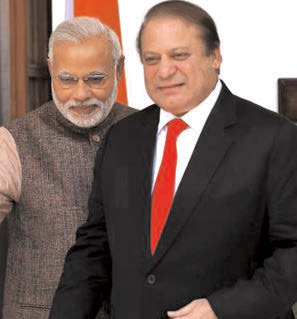
    File image of Narendra Modi with Pakistan PM Nawaz Sharif
    File image of Narendra Modi with Pakistan PM Nawaz Sharif

    Ties with Pakistan did not see any forward movement in the past one year despite two meetings between Modi and his Pakistani counterpart Nawaz Sharif. While pushing for better relations, India has maintained that talks are possible only in an atmosphere that is free of terror and violence.

    Sharif and Modi first met on the sidelines of the BRICS summit in Ufa in Russia. The two sides unveiled a five-point agenda to address concerns on terrorism and to promote people-to-people contact. Despite a number of hurdles including on account of terror attacks in the aftermath of Ufa, and cancellation of initial round of NSA-level talks, a significant breakthrough was achieved in December with the NSAs meeting in Bangkok, followed by Swaraj’s visit to Islamabad for the Heart of Asia Conference.

    Bangladesh

    Prime Minister Narendra Modi and Bangladesh Prime Minister Sheikh Hasina shake hands in Dhaka, Bangladesh, Saturday, June 6, 2015.
    Prime Minister Narendra Modi and Bangladesh Prime Minister Sheikh Hasina shake hands in Dhaka, Bangladesh, Saturday, June 6, 2015.

    Modi’s visit to Bangladesh in June saw the exchange of instruments of ratification of the landmark land boundary agreement. It was a relief for over 50,000 people living in 162 enclaves across both countries as India and Bangladesh swapped enclaves, bringing to an end the 68-year-old boundary dispute. The June 6-7 visit of PM Modi also saw India-Bangladesh developmental cooperation scaling new heights, with India pledging a $2 billion Line of Credit for Bangladesh. The two countries took a host of steps to enhance trade and connectivity, including the launch of two new bus services. The two countries are a part of the sub-regional cooperation between Bangladesh, Bhutan, India and Nepal to enhance connectivity and regional integration.

    Sri Lanka

    Not much change taken place in the ties between India and Sri Lanka in the year gone by. Within months of the newly-elected Sri Lankan President Maithripala Sirisena taking charge of the island nation, two-way visits were held by the leaders and foreign ministers of the two countries. During Modi’s visit to Sri Lanka in March, India pledged $318 million Line of Credit for railway upgradation (New Delhi’s development assistance is already about $1.6 billion), unveiled a currency swap agreement of US $1.5 billion to help stabilise the Sri Lankan rupee and to develop Trincomalee as a regional petroleum hub with the cooperation of Lanka IOC (Indian Oil Corp’s subsidiary in Sri Lanka) and Ceylon Petroleum Corporation.

    Both countries also signed four pacts regarding visa exemption for official passport holders, youth exchanges, customs agreement (to address trade concerns and reduce non-tariff barriers) and the construction of the Rabindranath Tagore auditorium at the Ruhuna University with India’s aid.

    Afghanistan

    Amid the backdrop of the unfolding transition in Afghanistan, India sustained its engagement with the war-torn country. During the visit of Afghan President Ashraf Ghani in April 2015, India reiterated its commitment to the reconstruction of the strife-torn country. The two sides focused on working towards a more liberalised business visa regime. Afghanistan welcomed India’s decision to extend the 1000 scholarships per year scheme by another 5 years as part of capacity building initiatives. India continues its assistance to the construction of the India-Afghanistan Friendship (Salma) Dam in Herat, expected to be completed in the first half of 2016. The Parliament Building in Kabul constructed with Indian assistance has already been completed as well as on the Doshi and Charikar power stations. But the resurgence of Taliban and Pakistan’s continued support to the group remain a huge hindrance. Taliban has regained control of large swathes of land in Afghanistan in the last few months and is now in a position to threaten the elected government once again.

    Bhutan

    India’s all-weather friendship with Bhutan continued on an upward curve. The visit of Bhutan’s Prime Minister Tshering Tobgay to India in January focused on optimising cooperation in the field of hydropower – the centerpiece of economic cooperation between the two countries. The two sides reiterated their commitment to the 10,000 MW initiative and in this context, to the early implementation of the four JV-model projects, totaling 2120 MW.

    Maldives

    India also engaged with the Maldives leadership despite political volatility in the island country. This was reflected in the meeting between the foreign ministers of India and the Maldives on the sidelines of the UN summit in New York in September. External Affairs Minister Sushma Swaraj followed it up with a visit to the island nation from October 10-11 to reinvigorate ties.

    Myanmar

    Bilateral relations with Myanmar improved with the first India-Myanmar Joint Consultative Commission (JCC) meeting held in New Delhi on July 16, 2015. Steps were taken to further enhance the existing air connectivity, extending a$500 million Line of Credit to the Government of Myanmar for development priorities, and a commitment to enhance the regional and sub-regional cooperation under the BCIM-EC and the BIMSTEC framework. India also played an instrumental role in providing disaster relief support to Myanmar in response to widespread floods and landslides caused by Cyclone Komen.