Tag: Nawaz Sharif

  • Pakistan to include ‘India’s role’ in school attack in dossier

    ISLAMABAD (TIP): Pakistan would include proof of alleged Indian involvement in the Taliban attack on a Peshawar army school last year, which killed 152 people mostly kids, in a dossier that it would handover to India.

    A top Pakistani government source told media this on Thursday and added Pakistan’s national security advisor (NSA), Sartaj Aziz, would hand over the dossier to his Indian counterpart, Ajit Doval.

    He said the dossier would include evidences of alleged Indian involvement “in sponsoring and promoting terrorism” in Karachi and Baluchistan as well.

    The source said the interior ministry was working on the dossier and gathering evidences from various departments and agencies.

    “The ministry after completion of its work will forward the document to foreign affairs ministry for its inputs,” the source said on the condition of anonymity.

    “The record to be shared with New Delhi will include proof of R&AW’s involvement in sowing seeds of separatism in Baluchistan. R&AW provides logistics, travel facilities and platforms to separatist Baluch elements.”

    Sources told media Pakistan has shared proof about India’s alleged involvement in Baluchistan earlier as well.

    “The evidences shared with India include a copy of Indian passport issued to exiled Baluch separatist leader Brahamdagh Bugti.”

    Brahamdagh, a grandson of slain Baluch nationalist Nawab Akbar Bugti, had earlier welcomed Indian support saying they consider any country that supports their cause as their friend.

    Pakistan’s foreign office spokesman, Qazi Khalilullah, told TOI the meeting of NSAs has not yet been finalized and it would be premature to talk about the issues Pakistan would raise.

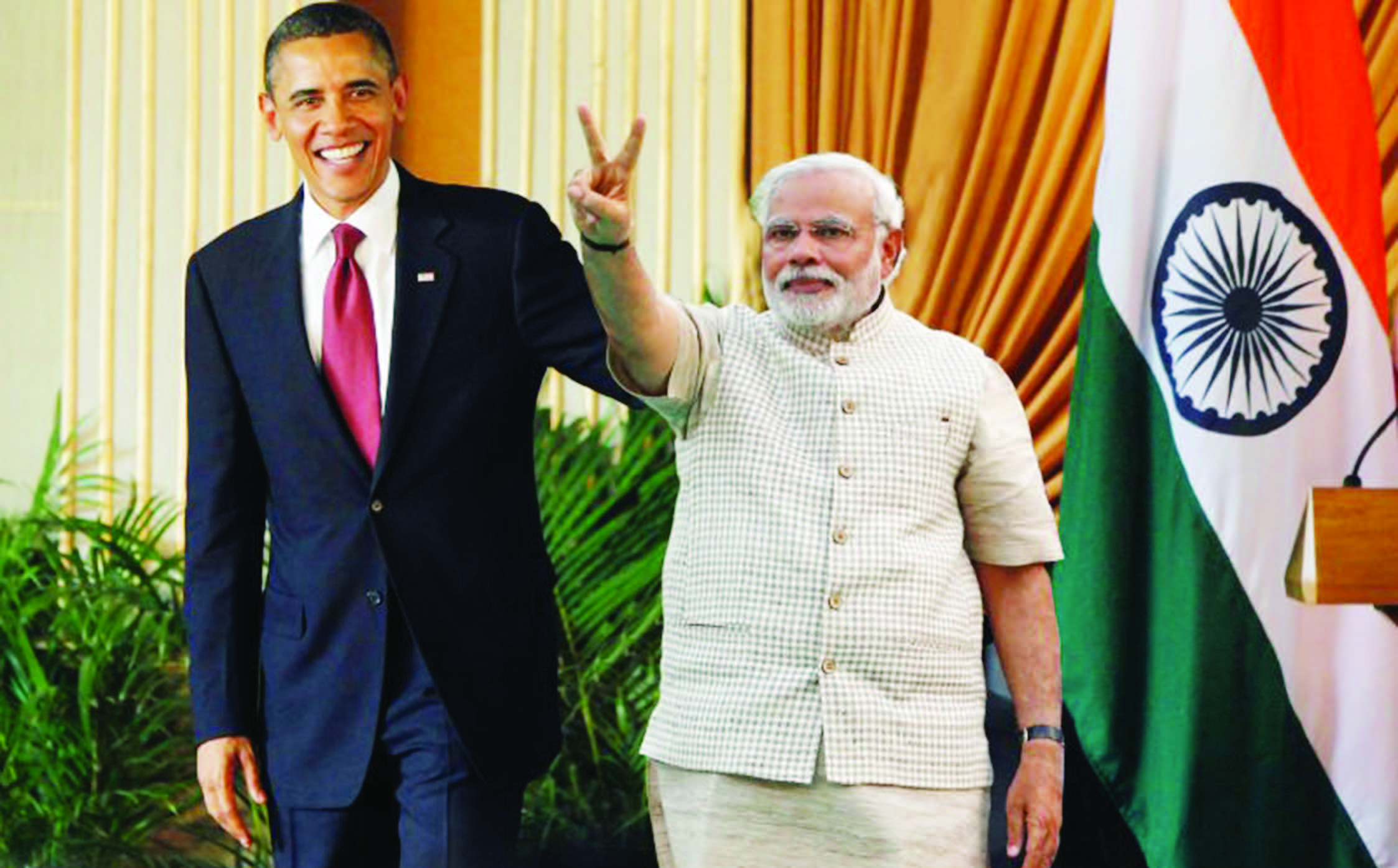
    The two countries decided to hold NSA-level talks after Prime Minister Narendra Modi met his Pakistani counterpart, Nawaz Sharif, in Russia recently.

    Sharif was criticized for not raising Kashmir, Samjautha blast case, water dispute and India’s alleged role in sponsoring terrorism in Pakistan at the meeting.

  • Lessons from Kargil war: Can another Kargil happen again?

    Lessons from Kargil war: Can another Kargil happen again?

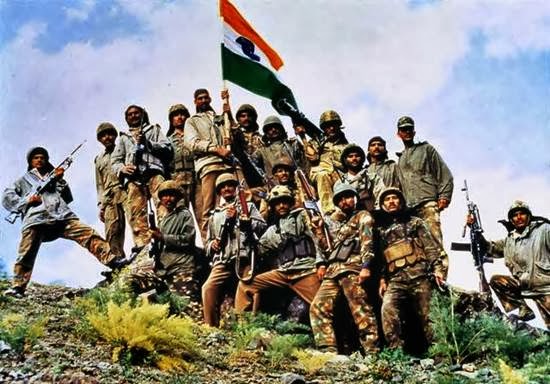
    It took over two months for the Indian forces to push back the intruders and reclaim the posts under an operation code named Op Vijay. India lost 527 officers and soldiers in the operation and hundreds of others were injured. Pakistan never officially admitted that its soldiers were involved, despite the fact that official documents recovered from bodies had confirmed that they were regular soldiers of Pakistan Army in civilian clothes.

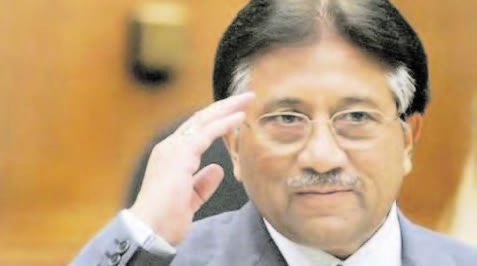
    On the eve of the 16th anniversary of the battle, its chief strategist and former Pakistan President Parvez Musharraf, who was then his country’s army chief, has raked up a controversy and has openly admitted the role of Pakistan armed forces.

    Addressing a convention of the youth wing of his party, the All Pakistan Muslim League (APML) earlier this week, Musharraf said that the Pakistani armed forces had caught their Indian counterparts by surprise in Kargil. He claimed that the Pakistani armed forces had won the Kargil battle in 1999 but the then Nawaz Sharif-led government had converted the success into a political defeat.

    “I don’t think India would ever be able to forget the three-month-long battle (Kargil war) when our gallant armed forces caught them by the throat,” Musharraf said.

    Musharraf, 71, who is facing several court cases and is presently based in Karachi, said the Pakistan Army along with the second-line force had entered Kargil district of Kashmir Valley and seized strategic positions at five locations, four of which were not even known to the Indian forces.

    “I can say it was our greatest military victory over India as they couldn’t even claim back half of one strategic location in one area but regrettably our politicians wasted this opportunity,” he said according to agency reports.

    Musharraf, who later seized power in Pakistan after overthrowing Sharif government in a bloodless coup, had been working on the plan to infiltrate in to Kargil even as the then Indian Prime Minister Atal Behari Vajpayee had visited Pakistan on a bus through the Wagah border at the invitation of Sharif. As it turned out later, even Sharif had no inkling of the plan being hatched by his Army chief.

    Ironically, even as Vajpayee was visiting Pakistan on a goodwill tour in February 1999, the Operation Kargil had already been put in force by Musharraf. About 200 Pakistan soldiers disguised as mujahideen had moved in to hold some of the posts vacated by Indian soldiers before the onset of winters in late 1998. The vacation of such posts during winters was a yearly exercise which was also very well known to the Pakistan Army. This time, however, they occupied the posts and Indians got a whiff of it only after the winters somewhere in May 1999 when some cattle grazers informed the authorities about the occupation of the posts.

    The most important factor behind the daring act by Musharraf and his men was the fact that Pakistan had developed a nuclear deterrent and was confident that India would dare not attack it or wage a full fledged war fearing a nuclear attack from Pakistan. If ever such an eventuality was to take place, Pakistan could have inflicted huge losses on India, particularly at its strategic and vulnerable locations, though in the bargain, India had the reserves to wipe out Pakistan from the face of the earth.

    Musharraf was, however, confident that other world powers would intervene before India could flex its nuclear muscles. That actually happened and even as India made veiled references, besides mounting a major operation including strafing by the Air Force, backdoor diplomacy ensured that such an eventuality did not take place. India claimed a comprehensive victory while Pakistan claimed that the Mujahideen had themselves withdrawn from some of the posts.

    The question now if whether such a battle can take place again given the fact that nuclear deterrent is very much in place and so is the hostility off and on displayed by Pakistan armed forces and militants sponsored by it.

    Despite the meetings between Indian Prime Minister Narendera Modi and his Pakistan counterpart, the two sides have been blowing hot and cold over the past year. In fact merely a couple of days after their last meeting in Ufa in Russia, the two sides exchanged firing along the international border and skirmishes were reported from several points along the Line of Control. The situation cooled off so quickly after the Ufa meeting that Pakistan Rangers did not even accept the traditional mithai offered by the Border Security Force personnel on the occasion of Eid.

    Senior Army officers, and those who are in the know of things, do not rule out skirmishes along the border but tend to rule out any largescale battle between the two nations. Kargil has taught a major lesson to India and it no longer allows its posts to be vacated during the winters. There has been a significant upgrade in the vigilance and surveillance equipment and strength along the border, particularly at vulnerable posts. They also hold the opinion that India is better prepared to ward off any such attempt and Pakistan can no longer expect to spring a surprise. Besides the nuclear deterrence, the two countries can ill afford to go in for a prolonged war with other nations, particularly the US, keeping a close watch so that the situation does not get out of control in the sensitive region despite provocations such as the latest one by Musharraf’s statement.

  • Civilian deaths and ‘spy drone’ put chill back in India-Pakistan tie

    Civilian deaths and ‘spy drone’ put chill back in India-Pakistan tie

    NEW DELHI (TIP): Amid heightened tension along their border resulting in casualties on both sides, India on July 16 warned Pakistan of “effective and forceful” response to unprovoked firing and cross-border terrorism.

    India’s blunt message followed a series of ceasefire violations along the LoC in Jammu and Kashmir by Pakistan which resorted to mortar shelling of Indian areas over the past two days. India responded in kind and both sides said they had suffered casualties.

    Pakistan on july 16 accused Indian troops of killing five civilians along the Line of Control.

    “Five Pakistani civilians were killed due to Indian unprovoked firing, the Pakistani military said in statements on the clashes along the international border.

    The escalating hostilities have chilled a brief thaw in ties after Prime Ministers Nawaz Sharif and Narendra Modi met in Russia, but appeared unlikely to thwart a planned meeting of national security advisers.

    “We remain committed to steps that contribute to peace and tranquility on the border,” Indian foreign secretary Subrahmanyam Jaishankar said after a meeting of top ministers in New Delhi on Thursday.

    “However, there should be no doubt that any unprovoked firing from the Pakistani side would meet with an effective and forceful response from our forces,” Jaishankar said.

    Hopes for warmer ties were raised last week when Modi and Sharif met on the sidelines of a summit in Ufa, Russia and agreed that their national security advisers would hold talks.

    Modi also agreed to visit Pakistan in 2016.

    On Wednesday, the Pakistani military said it had shot down an Indian surveillance drone. A photograph released by the military appeared to show a small, unarmed model.

    The Indians denied the drone was theirs, with Jaishankar saying it appeared to be “commercially available” Chinese design.

    “It appears to be a Chinese design which is available off the shelf,” the foreign secretary said.

    Jaishankar also countered Pakistan government’s charge over Heli manoeuvres by India near LoC on July 11, 2015 as an “offensive and threatening posture”.

    “In so far as the allegation of the helicopter manoeuvres is concerned, this has already been taken up and settled through an exchange of hotline messages between local formation commanders at Teetwal on July 12-13.

    “The helicopter flight was in connection with the counter-terrorism operation in which three terrorists were neutralised. The Pakistani side raised the issue of our helicopter flight and we had clarified that it was well within the mutually accepted distances from the LoC in India. That the Pakistani government four days later is raising a controversy on a settled issue speaks for itself,” he said.

    (With inputs from agencies)

  • Putting India Emphatically on Global Map – Part 2

    Putting India Emphatically on Global Map – Part 2

    Continued from Putting India Emphatically on Global Map – Part 1

    It defies logic that a country that is considered as our most serious adversary and whose policies in our region has done us incalculable strategic harm should have been accepted as India’s strategic partner during Manmohan Singh’s time. Such a concession that clouds realities serves China’s purpose and once given cannot be reversed. Pursuant to discussions already held during the tenure of the previous government, the Chinese announced during Xi’s visit the establishment of two industrial parks in India, one in Gujarat and the other in Maharashtra, and the “endeavour to realise” an investment of US $ 20 billion in the next five years in various industrial and infrastructure development projects in India, including in the railways sector. The Chinese Prime Minister’s statement just before Modi goes to China on May 14 that China is looking for preferential policies and investment facilitation for its businesses to make this investment suggests that the promised investment may not materialise in a hurry. While the decision during Xi’s visit to continue defence contacts is useful in order to obtain an insight into PLA’s thinking and capacities at first hand, the agreement, carried forward from Manmohan Singh’s time, to explore possibilities of civilian nuclear cooperation puzzles because this helps to legitimise China’s nuclear cooperation with Pakistan.

    Even as Modi has been making his overall interest in forging stronger ties with China clear, he has not shied away from allusions to Chinese expansionism, not only on Indian soil but also during his visit to Japan. During his own visit to US in September 2014 and President Obama’s visit to India in January 2015, the joint statements issued have language on South China Sea and Asia-Pacific which is China-directed. A stand alone US-India Joint Vision for Asia Pacific and the Indian Ocean Region issued during Obama’s Delhi visit was a departure from previous Indian reticence to show convergence with the US on China-related issues. India has now indirectly accepted a link between its Act East policy and US rebalance towards Asia. The Chinese have officially chosen to overlook these statements as they would want to wean away India from too strong a US embrace. During Sushma Swaraj’s call on Xi during her visit to China in February 2015 she seems to have pushed for an early resolution of the border issue, with out-of-the-box thinking between the two strong leaders that lead their respective countries today. Turning the Chinese formulation on its head, she called for leaving a resolved border issue for future generations.

    It is not clear what the External Affairs Minister had in mind when she advocated
    “out-of-the-box” thinking, as such an approach can recoil on us. That China has no intention to look at any out-of-the-box solution has been made clear by the unusual vehemence of its reaction to Modi’s visit to Arunachal Pradesh in February 2015 to inaugurate two development projects on the anniversary of the state’s formation in 1987. The pressure will be on us to do out-of-the-box thinking as it is we who suggested this approach. China is making clear that it considers Arunachal Pradesh not “disputed territory” but China’s sovereign territory. This intemperate Chinese reaction came despite Modi’s visit to China in May. The 18th round of talks between the Special Representatives (SRs) on the boundary question has taken place without any significant result, which is not surprising in view of China’s position on the border. The Chinese PM has recited the mantra a few days ago of settling the boundary issue “as early as possible” and has referred to “the historical responsibility that falls on both governments” to resolve the issue, which means nothing in practical terms. As against this, India has chosen to remain silent on the China-Pakistan Economic Corridor (CPEC) which will traverse territory that is legally Indian, and which even the 1963 China-Pakistan border agreement recognises as territory whose legal status has not been finally settled. The CPEC cannot be built if China were to respect its own position with regard to “disputed” territories which it applies aggressively to Arunachal Pradesh. Why we are hesitant to put China under pressure on this subject is another puzzle.

    Modi’s visit to Seychelles, Mauritius and Sri Lanka in March 2015 signified heightened attention to our critical interests in the Indian Ocean area. The bulk of our trade- 77% by value and 90% by volume- is seaborne. Modi was the first Indian Prime Minister to visit Seychelles in 34 years, which demonstrates our neglect of the Indian Ocean area at high political level and Modi’s strategic sense in making political amends. During his visit Modi focused on maritime security with agreement on a Coastal Surveillance Radar Project and the supply of another Dornier aircraft. In Mauritius, Modi signed an agreement on the development of Agalega Island and also attended the commissioning of the Barracuda, a 1300 tonne Indian-built patrol vessel ship for the country’s National Coast Guard, with more such vessels to follow. According to Sushma Swaraj, Modi’s visit to Seychelles and Mauritius was intended to integrate these two countries in our trilateral maritime cooperation with Sri Lanka and Maldives.

    In Pakistan’s case, Modi too seems unsure of the policy he should follow- whether he should wait for Pakistan to change its conduct before engaging it or engage it nevertheless in the hope that its conduct will change for the better in the future. Modi announced FS level talks with Pakistan when Nawaz Sharif visited Delhi for the swearing-in ceremony, even though Pakistan had made no moves to control the activities of Hafiz Saeed and the jihadi groups in Pakistan.

    The Pakistani argument that Nawaz Sharif was bold in visiting India for the occasion and that he has not been politically rewarded for it is a bogus one. He had a choice to attend or not attend, and it was no favour to India that he did. Indeed he did a favour to himself as Pakistan would have voluntarily isolated itself. The FS level talks were cancelled when just before they were to be held when the Pakistan High Commissioner met the Hurriyet leaders in Delhi. Pakistan’s argument that we over-reacted is again dishonest because it wanted to retrieve the ground it thought it had lost when Nawaz Sharif did not meet the Hurriyet leaders in March 2014.

    Modi ordered a robust response to Pakistani cease-fire violations across the LOC and the international border during the year, which suggested less tolerance of Pakistan’s provocative conduct. We have also been stating that talks and terrorism cannot go together. Yet, in a repetition of a wavering approach, the government sent the FS to Islamabad in March 2015 on a so-called “SAARC Yatra”. Pakistan responded by releasing the mastermind of the Mumbai attack, Lakhvi, on bail and followed it up by several provocative statements on recent demonstrations by pro-Pakistani separatists in Srinagar, without any real response from our side. Surprisingly, in an internal political document involving the BJP and the PDP in J&K, we agreed to include a reference to engaging Pakistan in a dialogue as part of a common minimum programme, undermining our diplomacy with Pakistan in the process.

    Pakistan believes that it is US intervention that spurred India to take the initiative to send the FS to Pakistan, which is why it feels it can remain intransigent. Pakistan chose to make the bilateral agenda even more contentious after the visit by the FS by raising not only the Kashmir cause, but also Indian involvement in Balochistan and FATA. On our side, we raised the issue of cross border terrorism, the Mumbai terror trial and LOC violations, with only negative statements on these issues by Pakistan. Since then the Pakistani army chief has accused India of abetting terrorism in Pakistan. The huge gulf in our respective positions will not enable us to “find common ground and narrow differences” in further rounds of dialogue, about which the Pakistani High Commissioner in Delhi is now publicly sceptical.

    Even though one is used to Pakistan’s pathological hostility towards India, the tantrums that Nawaz Sharif’s Foreign Policy Adviser, Sartaj Aziz, threw after President Obama’s successful visit to India were unconscionable. He objected to US support for India’s permanent seat in the UNSC and to its membership of the Nuclear Suppliers Group (NSG). He castigated the Indo-US nuclear deal, projecting it as directed against Pakistan and threatened to take all necessary steps to safeguard Pakistan’s security- in other words, to continue to expand its nuclear arsenal.

    Chinese President Xi’s April 2015 visit to Pakistan risks to entrench Pakistan in all its negative attitudes towards India. The huge investments China intends making through POK constitutes a major security threat to India. China is boosting a militarily dominated, terrorist infested, jihadi riven country marked by sectarian conflict and one that is fast expanding its nuclear arsenal, including the development of tactical nuclear weapons, without much reaction from the West. President Ashraf Ghani’s assumption of power in Afghanistan and his tilt towards Pakistan and China, as well as the West’s support for accommodating the Taliban in Afghanistan with Pakistan’s help will further bolster Pakistan’s negative strategic policies directed at India. Ghani’s delayed visit to India in April 2015 has not helped to clarify the scenario in Afghanistan for us, as no change of course in Ghani’s policies can be expected unless Pakistan compels him to do by overplaying its hand in his country. Modi is right in biding his time in Afghanistan and not expressing any undue anxiety about developments there while continuing our policies of assistance so that the goodwill we have earned there is nurtured.

    Prime Minister Modi, belying expectations, moved rapidly and decisively towards the US on assuming office. He blindsided political analysts by putting aside his personal feelings at having been denied a visa to visit the US for nine years for violating the US law on religious freedoms.

  • Pakistan PM, Army chief discuss India’s ‘terror funding’: report

    Pakistan PM, Army chief discuss India’s ‘terror funding’: report

    Pakistan’s Army chief General Raheel Sharif on Tuesday, June 30, discussed with Prime Minister Nawaz Sharif India’s alleged involvement in funding terrorism in the country, a media report said.

    According to Dawn Online, the two also discussed matters of internal security and the war against terrorism.

    The Dawn report claimed that alleged Indian funding for terrorism in Pakistan came up in the discussion.

    The BBC in a recent report had also alleged that India had been giving funds to Karachi-based Muttahida Qaumi Movement (MQM) party to carry out subversive activities.

    Pakistan has launched a formal probe into the BBC report and the top leadership is mulling whether to raise the matter in the UN over alleged Indian interference in internal matters of the country.

    MQM chief Altaf Hussain yesterday rejected the contents of the BBC report and said that he was ready to declare under oath that he and his party had no link with India’s external spy agency RAW.

    MQM leader Tariq Mir had reportedly confessed to the London police in an earlier interview that Hussain knew about alleged Indian funding of MQM’s activities.

    General Sharif also apprised the premier about progress in Operation Zarb-e-Azb against militants across Pakistan and the security situation at the eastern and western borders.

  • Putting India Emphatically on Global Map – Part 1

    Putting India Emphatically on Global Map – Part 1

    Prime Minister Modi has surprised his own people and, no doubt, external observers, by his foreign policy activism since he took office. In his year in power he has travelled abroad 16 times- and 19 if the forthcoming visits to China, Mongolia and South Korea are included- inviting some criticism that these peregrinations have meant less attention devoted to domestic affairs. This is misplaced criticism because today, with the change in the nature of diplomacy, the heads of governments play a critical role in external affairs. Frequent personal contacts at the highest political level have now become the norm, leaders often are on first name terms and difficult knots are untied by exertions at their level, sometimes in an unorthodox manner. Modi, even if seemingly inexperienced in the foreign policy domain, has had to, therefore, wade into the deep waters of diplomacy as soon as he took over because his position has demanded this. But no one was prepared for a Modi with a natural flair for diplomacy, to which he has brought a surprising degree of imagination and self-assurance. From the start, he seemed to have a clear idea of where the interests of his country lay and the initiatives needed to advance them.

    All Indian Prime Ministers on taking over give priority to ties with neighbouring countries. The belief is that either India has neglected its neighbours or has been insensitive and overbearing, leading to their alienation and consequent opportunities for external powers to intervene at the cost of India’s interests. Modi too began by reaching out to the neighbours, but in a manner not anticipated. He invited all the SAARC leaders to his swearing-in, with the intention no doubt to signal that his elevation to power would usher in a new era of South Asian relations, that the clear victory in elections of a supposedly nationalist party did not denote a more muscular policy towards neighbours and that, on the contrary, India intended to work together with them to move the whole region forward towards peace and prosperity. This gesture had most meaning for India-Pakistan relations, and Nawaz Sharif’s decision to attend the swearing-in was “rewarded” with the announcement of FS level talks between the two countries.

    Continuing the emphasis on the neighbourhood, he chose Bhutan as the first country to visit in June 2014. This made sense as Bhutan is the only neighbour that has not played an external card against us or politically resisted building ties of mutual benefit. His August 2014 visit to Nepal made a notable impact in local political and popular thinking about India as a well-wisher. His extempore address to the Nepalese parliament was a tour de force. He handled sensitive issues during his visit with finesse and played the cultural and religious card dextrously. External Affairs Minister Sushma Swaraj visited Bangladesh in June 2014. A very notable development is the approval of the Land Boundary Agreement with Bangladesh approved by the Indian parliament in May 2015. Modi visited Myanmar in November 2014 to take part in the East Asia summit and for bilateral discussions with this strategically placed neighbour whose honeymoon with China is waning.

    SAARC figures prominently in Modi’s foreign policy vision. He invited all SAARC leaders to his swearing-in ceremony, which was unprecedented. It is true that SAARC is one of the least integrated regions economically speaking, which means that the potential of the region remains unexploited. This also means that external actors find it easier to intrude into the loose equations in the subcontinent. While in terms of aspirations for the region, Modi is right in imagining a more tightly textured SAARC, India’s capacity to do this is limited in the face of Pakistani recalcitrance. A strengthened SAARC means a stronger Indian role in it, which is anathema to a Pakistan that is obsessed with countering Indian “hegemony” in South Asia. Pakistan will be reduced to its true importance if it ceases to confront India, which is why it will continue its confrontational policies. it also means that Afghanistan will not be adequately integrated into SAARC structures as that is contingent on Pakistan’s willingness to facilitate access to this landlocked country. At the Kathmandu SAARC summit in November 2014, Modi encouraged neighbours to benefit from opportunities provided by India’s growth, promised a special funding vehicle overseen by India to finance infrastructure projects in the region and announced India’s readiness to develop a satellite specifically for the region by 2016. He warned at the Kathmandu summit that regional integration will proceed with all or without some, which suggested that if Pakistan did not cooperate, others could go ahead without it, though under the SAARC charter this is not possible and other countries may not support a strategy of isolating Pakistan.

    Modi seems to admire China’s economic achievements, which would not be surprising given China’s spectacular rise. His several visits to China as Gujarat Chief Minister no doubt gave him familiarity with the country and take its pulse. His view that economic cooperation is the key driver in relations between countries and that all countries give more importance to economic growth and prosperity for their peoples than creating conditions of conflict evidently guides his thinking towards China. He was quick to court China after assuming power, with reinforcement of economic ties as the primary objective. The huge financial resources at China’s disposal, its expertise in infrastructure building, its need for external markets for off-loading the excess capacity it has built in certain sectors has made cooperation with China a theoretically win-win situation. The Chinese Foreign Minister was the first foreign dignitary to be received by Modi. He invited the Chinese President to make a state visit to India in September 2014, during which unprecedented personal gestures were made to him in an informal setting in Ahmedabad on Modi’s birthday. This imaginative courting was marred by the serious border incident in Ladakh coinciding with Xi’s visit- one more case of China reaching out to India and simultaneously staging a provocation so that India remains unsure about China’s intentions and finds it difficult to make a clear choice about what policy to pursue, and in the process has to accept faits accomplish that are to China’s advantage.

    Unlike the timidity of the previous government to treat such incidents as acne on the beautiful face of India-China relations, Modi raised the border issue frontally with XI at their joint press conference, expressing
    “our serious concern over repeated incidents along the border”. His call for resuming the stalled process of clarifying the Line of Actual Control (LAC) and mention of “India’s concerns relating to China’s visa policy and Trans Border Rivers” while standing alongside Xi Jinping at the joint press conference indicated a refreshing change from the past in terms of a more open expression of India’s concerns. With regard to Bangladesh-China-India-Myanmar Economic Corridor that China has been pushing hard, Modi was cautious. Why we accepted to discuss such a proposal in a working group in the first place is a puzzle. Engagement with China ought not to mean that we let it set the agenda when the downsides to us of what it seeks are clear. Equally importantly, he did not back another pet proposal of Xi: the Maritime Silk Road, which is a repackaged version of the notorious “string of pearls” strategy, as the joint statement omitted any mention of it. Since then China is pushing its One Belt One Road (OBOR) proposal which seeks to tie Asian and Eurasian economies to China, create opportunities for Chinese companies to bag major projects in this region financed by the Asian Infrastructure Investment Bank (AIIB) that China has floated. This ambitious concept is intended to establish China’s hegemony in Asia and outflank India strategically.

    On a more positive side, during Xi’s visit, the two sides agreed to further consolidate their Strategic and Cooperative Partnership, recognised that their developments goals are interlinked and agreed to make this developmental partnership a core component of this partnership.

    Read More : Putting India Emphatically on Global Map – Part 2

  • Nawaz Sharif slams remarks by Indian leaders as ‘imprudent’

    ISLAMABAD (TIP): Pakistan Prime Minister Nawaz Sharif on June 12 attacked the “irresponsible and imprudent” statements from the Indian political leadership and vowed to protect his country’s “vital interests at all costs”.

    Addressing a conference of Pakistan’s envoys here, he said such statements vitiate the atmosphere and take the two countries away from goals of regional peace and stability.

    “The entire nation is dismayed by the recent irresponsible and I must say imprudent statements from the Indian political leadership. This vitiates the atmosphere and takes us further away from our goal of regional peace and stability. We will protect our vital interests at all costs,” he said.

    This message, Sharif said, must be heard loud and clear. “At the same time we will not abandon our high moral ground because of provocations. We will continue our quest for a peaceful neighbourhood,” he said.

    Sharif said externally-sponsored terrorism and violent extremism were grave threats to a secure and prosperous Pakistan.

    He said the issue of Jammu & Kashmir cannot be relegated to the back-burner of history.

    The Prime Minister pointed out that only on last Tuesday during his meeting with the UN secretary general in Dushanbe, he urged him to play a proactive role in promoting peace in the region.

    Sharif said he also reminded him that it was incumbent on the UN security council to ensure early implementation of its resolutions on Jammu & Kashmir.

  • Pakistan rolls out Rs 45 billion bus service for Islamabad

    ISLAMABAD (TIP): Pakistan Prime Minister Nawaz Sharif on June 5 launched a (Pakistani) Rs 45 billion
    ($441,804,600) bus service network here with a commitment to revolutionize the transport and infrastructure system of the country.

    Launched in March last year, the service was supposed to be completed by the end of the year but suffered delays.

    Inaugurating the service, Sharif said that Pakistan was changing and those traveling in the modern buses will feel as if they were in another country.

    “The project is a gift to the people of the Rawalpindi and Islamabad. We will also launch similar projects in other major cities,” he said.

    The 23km dedicated lane links the twin cities of Islamabad and Rawalpindi with help of 68 airconditioned buses that would help about 135,000 commuters daily.

    The total length of the Rawalpindi-Islamabad Metro Bus Service corridor is approximately 23km, including a 8.6km elevated section, 10km at grade and a 4km trench section.

    Its 24 stations are decorated with glistening tiles, escalators, elevators and modern glass and steel structures with roofs. It is said to provide quality service at minimum cost of Rs 20 per person.

    The project was marred by allegations of inflated cost and delays which irked travellers and provided fodder to opposition parties.

    The brain behind the project is said to be Punjab chief minister and the premier’s brother, Shahbaz Sharif, who has a penchant for mega projects.

    He told media before the launch that the “bus service was a boon for people with low-income”.

    The twin-city metro bus service is the second project after the first was opened by Shahbaz in Lahore in 2013, which has also been popular with commuters.

  • A way with the world

    A way with the world

    The Prime Minister, Narendra Modi, scored most in foreign policy in his first year in power. No one anticipated Modi’s natural flair for diplomacy, to which he has brought imagination and self-assurance. Modi has been more emphatic than his predecessors in giving improvement of relations with neighbors greater priority. He invited all the SAARC leaders to his swearing-in, to signal that the decisive election victory of a supposedly nationalist party did not denote a more muscular policy towards neighbors. On the contrary, India would take the lead in working for shared regional peace and prosperity.

    Bhutan, the only neighbor that has not politically resisted building ties of mutual benefit, was the first country he visited in June, 2014. He handled his August 2014 visit to Nepal with sensitivity and finesse, and followed it up with exceptional leadership in providing immediate earthquake relief to Nepal in May, 2015. In obtaining Parliament’s approval of the land boundary agreement with Bangladesh in May, 2015, Modi showed his determined leadership again.

    He did falter with Pakistan, seemingly unsure about whether he should wait for it to change its conduct before engaging it, or engage it nevertheless in the hope that its conduct will change for the better in future. He announced foreign-secretary-level talks during Nawaz Sharif’s visit to Delhi, but cancelled them precipitately. He ordered a robust response to Pakistan’s cease-fire violations, yet sent the foreign secretary to Islamabad in March, 2015, on an unproductive SAARC Yatra. Relations with Pakistan remain in flux. In Afghanistan, President Ashraf Ghani’s tilt towards Pakistan and China has challenged the viability of India’s Afghanistan policy. Ghani’s delayed visit to India in April 2015 did not materially alter the scenario for us, but India has kept its cool.

    Modi’s foreign policy premise, that countries give priority today to economics over politics, has been tested in his China policy, which received a course correction. After courting China economically, Modi had to establish a new balance between politics and economics. President Xi’s visit to India in September, 2014, was marred by the serious border incident in Ladakh. Modi showed a sterner side of his diplomacy by expressing serious concern over repeated border incidents and calling for resuming the stalled process of clarifying the Line of Actual Control. During his China visit in May, Modi was even more forthright by asking China to reconsider its policies, take a strategic and long-term view of our relations and address “the issues that lead to hesitation and doubts, even distrust, in our relationship”. He showed firmness in excluding from the joint statement any reference to China’s One Road One Belt initiative or to security in the Asia-Pacific region. The last minute decision to grant e-visas was puzzling, especially as the stapled visa issue remains unresolved. The economic results of his visit were less than expected, with no concrete progress on reducing the huge trade deficit and providing Indian products more market access in China. The 26 “agreements” signed in Shanghai were mostly non-binding MoUs involving the private sector and included the financing of private Indian companies by Chinese banks to facilitate orders for Chinese equipment.

    Modi’s visit to Seychelles, Mauritius and Sri Lanka in March, 2015, signified heightened attention to our critical interests in the Indian Ocean area. Modi was the first Indian prime minister to visit Seychelles in 33 years. His visit to countries in China’s periphery in May, 2015, was important for bilateral and geopolitical reasons. During his visit to South Korea the bilateral relationship was upgraded to a “special strategic partnership’, but Korea nevertheless did not support India’s permanent membership of the United Nations Security Council. Modi’s visit to Mongolia was the first by an Indian prime minister to a country whose position is geopolitically strategic from our point of view.

    Belying expectations, Modi moved decisively towards the United States of America on assuming office. He set an ambitious all-round agenda of boosting the relationship during his September, 2014, visit to Washington. In an imaginative move, he invited Obama to be the chief guest at our Republic Day on January 26, 2015. To boost the strategic partnership with the US, he forged a “breakthrough understanding” on the nuclear liability issue and for tracking arrangements for US-supplied nuclear material. Progress on the defense front was less than expected with four low-technology “pathfinder” projects agreed under the defense technology and trade initiative. The important US-India joint strategic vision for the Asia-Pacific and Indian Ocean region, issued as a stand-alone document, high-lighted the growing strategic convergences between the two countries, with China in view. A special feature of Modi’s September, 2014, US visit was his dramatic outreach to the Indian community, which has since then become a pattern in his visits abroad, whether in Australia, Canada or Beijing. No other prime minister has wooed the Indian communities abroad as Modi has done.

    President Putin’s visit to India in December, 2014, was used to underline politically that Russia remains India’s key strategic partner. Modi was effusive in stating that with Russia we have a “friendship of unmatched mutual confidence, trust and goodwill” and a “Strategic Partnership that is incomparable in content”. He was careful to convey the important message that even as India’s options for defense cooperation had widened today, “Russia will remain our most important defense partner”. Civilian nuclear cooperation with Russia got a boost with the agreement that Russia will build “at least” ten more reactors in India beyond the existing two at Kudankulam. All this was necessary to balance the strengthened strategic understanding with the US and its allies.

    Modi bolstered further our vital relations with Japan, which remains a partner of choice for India. Shinzo Abe announced $35 billion of public and private investment in India during Modi’s visit to Japan in September 2014, besides an agreement to upgrade defense relations.

    Modi’s visit to France and Germany in April, 2015, recognized Europe’s all-round importance to India and was timely. He rightly boosted the strategic partnership with France by ensuring concrete progress in the key areas of defense and nuclear cooperation by announcing the outright purchase of 36 Rafale jets and the MoU between AREVA and L&T for manufacturing high-technology reactor equipment in India. Modi’s bilateral visit to Canada in April, 2015, was the first by an Indian prime minister in 45 years. Bilateral relations were elevated to a strategic partnership and an important agreement signed for long-term supply of uranium to India.

    Relations with the Islamic world received less than required attention during the year, although the Qatar Emir visited India in March, 2015, and the political investment we made earlier in Saudi Arabia aided in obtaining its cooperation to extract our people from Yemen. Gadkari went to Iran in May, 2015, to sign the important agreement on Chabahar. Modi did well to avoid any entanglement in the Saudi-Iran and Shia-Sunni rivalry in West Asia. He met the prime minister of Israel, Benjamin Netanyahu, on the sidelines of the UN general assembly meeting in September, last year, to mark the strength of India-Israel ties. So, Modi’s handling of India’s foreign policy in his first year is impressive. He has put India on the map of the world with his self-confidence and his faith in the nation’s future.

  • Why Is Pakistan Such a Mess? Blame India

    Why Is Pakistan Such a Mess? Blame India

    [quote_box_center]

    After a year in office, Modi’s gestures of conciliation toward Islamabad have gone nowhere. That’s because India’s founding fathers set Pakistan up to fail.

    “With rabid 24-hour satellite channels seizing upon every cross-border attack or perceived diplomatic affront, jingoism is on the rise. Indian strategists talk loosely of striking across the border in the event of another Mumbai-style terrorist attack; Pakistani officials speak with disturbing ease of responding with tactical nuclear weapons. From their safe havens in Pakistan meanwhile, the Taliban have launched one of the bloodiest spring offensives in years in Afghanistan, even as U.S. forces prepare to draw down there. If he truly hopes to break the deadlock on the subcontinent, Modi needs to do something even Gandhi could not: give Pakistan, a nation born out of paranoia about Hindu dominance, less to fear”, says the author.


    [/quote_box_center]

    Of all the hopes raised by Narendra Modi’s election as prime minister of India one year ago, perhaps the grandest was ending the toxic, decades-long rivalry with Pakistan. Inviting his counterpart Nawaz Sharif to the swearing-in — remarkably, a first since their nations were born out of the British Raj in 1947 — was a bold and welcome gesture. Yet within months of Modi’s inauguration, Indian and Pakistani forces exchanged some of the most intense shelling in years along their de facto border in Kashmir. Incipient peace talks foundered. And in April, a Pakistani court freed on bail Zaki-ur-Rehman Lakhvi, operational commander of the militant group Lashkar-e-Taiba (LT) and the alleged mastermind of the 2008 Mumbai terrorist attacks, infuriating many in India.

    Most Indians believe Pakistan’s generals have little interest in peace, and they’re not entirely wrong. For decades now, hyping the threat from across the border has won the army disproportionate resources and influence in Pakistan. It’s also fueled the military’s most dangerous and destabilizing policies — from its covert support of the Taliban and anti-India militants such as LT, to the rapid buildup of its nuclear arsenal. One can understand why Modi might see no point in engaging until presented with a less intractable interlocutor across the border.

    But however exaggerated Pakistan’s fears may be now, Indian leaders bear great responsibility for creating them in the first place. Their resistance to the very idea of Pakistan made the 1947 partition of the subcontinent far bitterer than it needed to be. Within hours of independence, huge sectarian massacres had broken out on both sides of the border; anywhere from 200,000 to a million people would ultimately lose their lives in the slaughter. Pakistan reeled under a tidal wave of refugees, its economy and its government paralyzed and half-formed. Out of that crucible emerged a not-unreasonable conviction that larger, more powerful India hoped to strangle the infant Pakistan in its cradle — an anxiety that Pakistan, as the perpetually weaker party, has never entirely been able to shake.

    Then as now, Indian leaders swore that they sought only brotherhood and amity between their two nations, and that Muslims in both should live free of fear. They responded to charges of warmongering by invoking their fealty to Mohandas K. Gandhi — the “saint of truth and nonviolence,” in the words of India’s first prime minister Jawaharlal Nehru. In fact, Nehru, and Gandhi himself — the sainted “Mahatma,” or “great soul” — helped breed the fears that still haunt Pakistan today.

    There’s little question, for instance, that Gandhi’s leadership of the Indian nationalist movement in the 1930s and 1940s contributed to Muslim alienation and the desire for an independent homeland. He introduced religion into a freedom movement that had until then been the province of secular lawyers and intellectuals, couching his appeals to India’s masses in largely Hindu terms. (“His Hindu nationalism spoils everything,” Russian writer Leo Tolstoy wrote of Gandhi’s early years as a rabble-rouser.) Even as Gandhi’s Indian National Congress party claimed to speak for all citizens, its membership remained more than 90 percent Hindu.

    Muslims, who formed a little under a quarter of the 400 million citizens of pre-independence India, could judge from Congress’s electoral victories in the 1930s what life would look like if the party took over from the British: Hindus would control Parliament and the bureaucracy, the courts and the schools; they’d favor their co-religionists with jobs, contracts, and political favors. The louder Gandhi and Nehru derided the idea of creating a separate state for Muslims, the more necessary one seemed.

    Ironically, Gandhi may have done the most damage at what is normally considered his moment of triumph — the waning months of British rule. When the first pre-Partition riots between Hindus and Muslims broke out in Calcutta in August 1946, exactly one year before independence, he endorsed the idea that thugs loyal to Mohammad Ali Jinnah, leader of the Muslim League, the country’s dominant Muslim party, had deliberately provoked the killings. The truth is hardly so clear-cut: It appears more likely that both sides geared up for violence during scheduled pro-Pakistan demonstrations, and initial clashes quickly spiraled out of control.

    Two months later, after lurid reports emerged of a massacre of Hindus in the remote district of Noakhali in far eastern Bengal, Gandhi fueled Hindu hysteria rather than tamping it down. Nearing 80 by then, his political ideas outdated and his instincts dulled by years of adulation, he remained the most influential figure in the country. His evening prayer addresses were quoted and heeded widely. While some Congress figures presented over-hyped casualty counts for the massacre — party chief J.B. Kripalani estimated a death toll in the millions, though the final tally ended up less than 200 — Gandhi focused on wildly exaggerated claims that marauders had raped tens of thousands of Hindu women. Controversially, he advised the latter to “suffocate themselves or … bite their tongues to end their lives” rather than allow themselves to be raped.

    Within weeks, local Congress politicians in the nearby state of Bihar were leading ugly rallies calling for Hindus to avenge the women of Noakhali. According to New York Times reporter George Jones, in their foaming outrage “it became rather difficult to differentiate” between the vicious sectarianism of Congress and radical Hindu groups like the Rashtriya Swayamsevak Sangh (RSS), whose cadres had begun drilling with weapons to prevent the Partition of India.

    Huge mobs formed in Bihar — where Hindus outnumbered Muslims 7 to 1 — and spread across the monsoon-soaked countryside.

    Huge mobs formed in Bihar — where Hindus outnumbered Muslims 7 to 1 — and spread across the monsoon-soaked countryside. In a fortnight of killing, they slaughtered more than 7,000 Muslims. The pogroms virtually eliminated any hope of compromise between Congress and the League.

    Equally troubling was the moral cover the Mahatma granted his longtime followers Nehru and “Sardar” Vallabhbhai Patel — a Gujarati strongman much admired by Modi, who also hails from Gujarat and who served as the state’s chief minister for over a decade. Echoing Gandhi’s injunction against pushing anyone into Pakistan against their wishes, Nehru and Patel insisted that the huge provinces of Punjab and Bengal be split into Muslim and non-Muslim halves, with the latter areas remaining with India.

    Jinnah rightly argued that such a division would cause chaos. Hindus, Muslims, and Sikhs were inextricably mixed in the Punjab, with the latter in particular spread across both sides of the proposed border. Sikh leaders vowed not to allow their community to be split in half. They helped set off the chain of Partition riots in August 1947 by targeting and trying to drive out Muslims from India’s half of the province, in part to make room for their Sikh brethren relocating from the other side.

    Jinnah also correctly predicted that a too-weak Pakistan, stripped of the great port and industrial center of Calcutta, would be deeply insecure. Fixated on building up its own military capabilities and undermining India’s, it would be a source of endless instability in the region. Yet Nehru and Patel wanted it to be even weaker. They contested every last phone and fighter jet in the division of colonial assets and gloated that Jinnah’s rump state would soon beg to reunite with India.

    Worse, Congress leaders threatened to derail the handover if they weren’t given power almost immediately. The pressure explains why Britain’s last viceroy, Lord Louis Mountbatten, rushed forward the date of the British withdrawal by 10 months, leaving Pakistan little more than 10 weeks to get established. (Excoriated ever since, the British seemed vaguely to believe they might keep governing Pakistan until the state had gotten on its feet.) Nehru and Patel cared little for Jinnah’s difficulties. “No one asked Pakistan to secede,” Patel growled when pressed by Mountbatten to show more flexibility.

    Yes, once the Partition riots broke out, Gandhi and Nehru strove valiantly to rein in the killings, physically risking their own lives to chastise angry mobs of Hindus and Sikhs. Yet to many Pakistanis, these individual efforts counted for little. Gandhi and Nehru couldn’t stop underlings from sabotaging consignments of weapons and military stores being transferred to Pakistan. They didn’t prevent Patel from shipping out trainloads of Muslims from Delhi and elsewhere, which raised fears that India meant to overwhelm its neighbor with refugees. They didn’t silence Kripalani and other Congress leaders, who warned Hindus living in Pakistan to emigrate and thus drained Jinnah’s new nation of many of its clerks, bankers, doctors and traders.

    Nor did the Indian leaders show much compunction about using force when it suited them. After Pakistan accepted the accession of Junagadh, a tiny kingdom on the Arabian Sea with a Muslim ruler but almost entirely Hindu population, Congress tried to spark a revolt within the territory — led by Samaldas Gandhi, a nephew of the Mahatma’s; eventually, Indian tanks decided the issue. When Pakistan attempted in October 1947 to launch a parallel uprising in Kashmir — a much bigger, richer state with a Hindu king and Muslim-majority population — Indian troops again swooped in to seize control.

    The pacifist Gandhi, who had earlier tried to persuade Kashmir’s maharajah to accede to India, heartily approved of the lightning intervention: “Any encroachment on our land should … be defended by violence, if not by nonviolence,” he told Patel. After Gandhi’s assassination in January 1948, Nehru continued to cite the Mahatma’s blessings to reject any suggestion of backing down in Kashmir.

    Gandhi’s motivations may have been pure. Yet he and his political heirs never fully appreciated how the massive power imbalance between India and Pakistan lent a darker hue to their actions. To this day, Indian leaders appear more concerned with staking out the moral high ground on Kashmir and responding to every provocation along the border than with addressing Pakistan’s quite-valid strategic insecurities.

    This serves no one except radicals on both sides. With rabid 24-hour satellite channels seizing upon every cross-border attack or perceived diplomatic affront, jingoism is on the rise. Indian strategists talk loosely of striking across the border in the event of another Mumbai-style terrorist attack; Pakistani officials speak with disturbing ease of responding with tactical nuclear weapons. From their safe havens in Pakistan meanwhile, the Taliban have launched one of the bloodiest spring offensives in years in Afghanistan, even as U.S. forces prepare to draw down there. If he truly hopes to break the deadlock on the subcontinent, Modi needs to do something even Gandhi could not: give Pakistan, a nation born out of paranoia about Hindu dominance, less to fear.

    (The author can be reached at syn2002@qatar-med.cornell.edu)

  • Pakistan warns India not to interfere in its internal affairs

    Pakistan warns India not to interfere in its internal affairs

    ISLAMABAD (TIP): Echoing similar concern expressed by the country’s top military leadership two days back, Pakistan on May 7 asked India to refrain from interfering in its internal matters, saying that Islamabad has provided proof to New Delhi about its involvement as recently as the secretary-level talks.

    At a weekly media briefing, Qazi Khalilullah, the newly appointed spokesperson of foreign office, said Pakistan has reminded to India with proof about its involvement in Pakistan’s internal affairs. “We have availed all possible opportunities to remind India to avoid interfering in Pakistan’s internal affairs. The recent time, we did it at foreign secretary-level talks,” he said.

    The statement appears to be the continuation of accusations leveled recently by the top military’s top brass. Pakistan army’s corps commanders on Tuesday accused India’s military spy agency – the Research and Analysis Wing (RAW) – of fuelling terrorism in Pakistan, at their conference headed by Army Chief Raheel Sharif.

    Days ahead of the corps commanders conference, PM Nawaz Sharif, in an interview with Saudi Gazette, had blamed India, , for not responding positively to vibes sent from Pakistan to improve shaky relations between the two countries. “India had unilaterally called off talks between the two countries and it has not been making any effort for resumption of dialogue,” Sharif said.

    At Thursday’s media briefing, the FO spokesman, while responding to a question about Dawood Ibrahim, said the government has always maintained that underworld don is not on Pakistani soil. “India had accepted Pakistan’s ignorance of his whereabouts,” he added.

  • Pakistan sends food with beef masala to Nepal, blames Indian media for row

    Pakistan sends food with beef masala to Nepal, blames Indian media for row

    ISLAMABAD (TIP): Pakistan on Aprl 30 blamed the Indian media for maligning its relief efforts for survivors of the devastating earthquake in Nepal.

    According to media reports, the food items in relief aid sent by Pakistan to Nepal included beef content (beef masala) in the food packets. Eating beef is prohibited in Hindu religion. Nepal is a majority-Hindu nation.

    During a weekly press briefing, Tasneem Aslam, Pakistan’s foreign office spokeswoman, said it was unfortunate that Indian media has not even spared a humanitarian mission and has, unnecessarily, tried to inject controversy into it.

    “The Meal Ready to Eat (MRE) is a pre-packed kit of 20 items for a full day’s meals. On each and every packet inside the kit the name of the dish is clearly written in English and Urdu so that people may choose whatever they like to eat or discard,” she said.

    “Both the languages are understood in Nepal,” she added.

    The Nepalese authorities, Tasneem Aslam said, found the MREs so effective that they specially requested for a full planeload of MREs on priority.

    The Pakistan foreign office reaction came the same day after Pakistan Prime Minister Nawaz Sharif contacted his Indian counterpart, Narendra Modi, to offer condolences over the loss of lives and devastation caused by the earthquake in India.

    Earlier, the spokesperson had said that she was not aware of the issue. “I am not responsible for the dispatch. The relief aid is sent by the National Disaster Management Authority,” Mail Today had quoted Aslam as saying.

    The controversy started when packets with “beef masala” and “potato bhujia”, were found in the food aid package sent for quake survivors by Pakistan. Pakistan’s National Disaster Management Authority (NDMA) sent the relief goods, according to the official handout, in collaboration with the army, Pakistan air force and ministry of foreign affairs.

    While the NDMA spokesman was not available to speak on the issue, another senior official requesting anonymity, said: “Beef and mutton are essential parts of the meal in most of the countries in Asia except large in India and Nepal which have a large Hindu population.”

    “If beef masala was really sent to Nepal, it may have been out of negligence. But making it controversial is like the proverb ‘making a mountain out of a molehill’,” he added.

  • Nuclear Fears in South Asia – Pak Vs Ind

    Nuclear Fears in South Asia – Pak Vs Ind

    The world’s attention has rightly been riveted on negotiations aimed at curbing Iran’s nuclear program. If and when that deal is made final, America and the other major powers that worked on it — China, Russia, Britain, France and Germany — should turn their attention to South Asia, a troubled region with growing nuclear risks of its own. 

    Pakistan, with the world’s fastest-growing nuclear arsenal, is unquestionably the biggest concern, one reinforced by several recent developments. Last week, Pakistan’s prime minister, Nawaz Sharif, announced that he had approved a new deal to purchase eight diesel-electric submarines from China, which could be equipped with nuclear missiles, for an estimated $5 billion. Last month, Pakistan test-fired a ballistic missile that appears capable of carrying a nuclear warhead to any part of India. And a senior adviser, Khalid Ahmed Kidwai, reaffirmed Pakistan’s determination to continue developing short-range tactical nuclear weapons whose only purpose is use on the battlefield in a war against India.

    These investments reflect the Pakistani Army’s continuing obsession with India as the enemy, a rationale that allows the generals to maintain maximum power over the government and demand maximum national resources. Pakistan now has an arsenal of as many as 120 nuclear weapons and is expected to triple that in a decade. An increase of that size makes no sense, especially since India’s nuclear arsenal, estimated at about 110 weapons, is growing more slowly. 

    The two countries have a troubled history, having fought four wars since independence in 1947, and deep animosities persist. Prime Minister Narendra Modi of India has made it clear that Pakistan can expect retaliation if Islamic militants carry out a terrorist attack in India, as happened with the 2008 bombing in Mumbai. But the latest major conflict was in 1999, and since then India, a vibrant democracy, has focused on becoming a regional economic and political power.

    At the same time, Pakistan has sunk deeper into chaos, threatened by economic collapse, the weakening of political institutions and, most of all, a Taliban insurgency that aims to bring down the state. Advanced military equipment — new submarines, the medium-range Shaheen-III missile with a reported range of up to 1,700 miles, short-range tactical nuclear weapons — are of little use in defending against such threats. The billions of dollars wasted on these systems would be better spent investing in health, education and jobs for Pakistan’s people.

    Even more troubling, the Pakistani Army has become increasingly dependent on the nuclear arsenal because Pakistan cannot match the size and sophistication of India’s conventional forces. Pakistan has left open the possibility that it could be the first to use nuclear weapons in a confrontation, even one that began with conventional arms. Adding short-range tactical nuclear weapons that can hit their targets quickly compounds the danger.

    Pakistan is hardly alone in its potential to cause regional instability. China, which considers Pakistan a close ally and India a potential threat, is continuing to build up its nuclear arsenal, now estimated at 250 weapons, while all three countries are moving ahead with plans to deploy nuclear weapons at sea in the Indian Ocean.

    This is not a situation that can be ignored by the major powers, however preoccupied they may be by the long negotiations with Iran.

  • Bringing Yemen’s tragedy to an end – Need for a fair Shia-Sunni deal

    The civil war in Yemen, exacerbated by the intervention of outside powers, is poised at a delicate stage which could impinge on the larger picture of the Middle East’s future trajectory. The truth is that the poorest country in the region lies along several fault lines.

    They are the Shia-Sunni schism in the Muslim world, the rivalry between Saudi Arabia and Iran, the interest of outside powers such as the United States and the major European trading nations and the broader state of US-Russian relations. Despite its appeals, the United Nations is, for the present, a spectator, rather than an effective actor.

    The military intervention of Saudi Arabia and its Gulf allies by launching air strikes on Houthi rebels in Yemen, who are aided by Iran and are in the process of capturing the better part of the country, has complicated the picture. In a sense, it was inevitable because Riyadh could hardly stand aside even as a Shia sect set about conquering a Sunni majority country. The Saudis are now demanding the surrender of the Houthis before stopping their bombing runs.

    The United States is helping the Saudis by providing logistical and other technical assistance, a delicate dance for US Secretary of State John Kerry. He decries Iranian help to the Houthis. Tehran denies even as he eyes a landmark deal with Iran on its nuclear program. Pakistan, on its part, is facing a cruel dilemma in accepting the Saudi demand to join the intervention against the backdrop of its substantial Shia population at home.

    For Pakistan, the dilemma is of a state beholden to Riyadh for its generous subsidies. A contingent of Pakistani troops is permanently stationed in Saudi Arabia in part payment for Saudi goodies. Prime Minister Nawaz Sharif himself is beholden to the Saudis for saving him from possible execution in the days of Gen Pervez Musharraf rule, first giving him refuge and then re-injecting him into the Pakistani political scene.

    Grave as the dilemmas for Pakistan are, the larger picture is more menacing because of the fault lines. The most salient is the Saudi-Iranian contest in the Middle East in which Tehran is seeking to spread its wings through fortuitous circumstances and its own activism. Thanks to the American invasion of Iraq, the latter, with its Shia majority, ultimately fell into its lap. Iran is well placed in Lebanon with its allied Hezbollah movement in a confessional division of political factions.

    Bahrain remains a tempting target because it is ruled by a Sunni monarch underpinned by Saudi power over a Shia majority. Saudi apprehension over the proposed nuclear deal with Iran, shared by Israel, is that it would give Tehran greater opportunities to strengthen its regional role.

    As if the picture were not complicated enough, the growth of Sunni extremists, first in the form of Al-Qaida and its affiliates, then their evolution into ISIS and ultimately into a caliphate holding territory in the shape of the Islamic State (IS), is a fact of life. Americans have reluctantly returned to the region by undertaking bombing runs on the IS and are ironically on the same side as Iran in trying to attain this goal.

    How then is the world, or the major powers, to unscramble the mess because of the very nature of the crises? If relations between the United States and Russia were not as frigid as they are over Ukraine and other issues, they could have joined hands to bring about at least a temporary ceasefire in Yemen. After all, in the five plus one (UN Security Council permanent members plus Germany) format of talks on Iran’s nuclear program, Russia was a participant. But the prevailing animosities in what was once the Big Two make the going tough.

    Individuals and circumstances have contributed to creating the Yemen crisis. Mr. Ali Abdullah Saleh, the long-time dictator, was eased out of office with the help of Gulf monarchies in the wake of the short-lived Arab Spring in 2011. He was nursing his wounds while keeping his powder dry and still had ambitions – for son, if not for himself. He chose to ally with the Houthis while still retaining the loyalty of sections of the country’s armed forces.

    Houthis, who traditionally control the north of the country, were ready to revolt against the Sanaa dispensation presided over by an unimpressive Sunni imposed by Saudis. They felt their interests were being sacrificed and, thanks to Saleh’s support, they had the strength to overrun the capital and even try to take over Aden, the principal city of South Sudan.

    The nature of the strikes being what it is, there are reports of increasing civilian casualties. Although some humanitarian aid has now got in and India, among other countries, has managed to evacuate most of its citizens, international demands are growing by the day to stop the bombing runs and seek a political solution.

    Houthis, being a minority, cannot hope to rule Yemen. Yet, given the military prowess they have demonstrated, they will insist on a fair share of the national cake in any future framework agreement. Saudi Arabia shares a long border with Yemen and will not tolerate a Shia-dominated dispensation despite the earlier long rule of Mr. Saleh, himself a Houthi.

    For its part, Iran has already suggested that the Saudi-led action is a “mistake” and the United States is seeking to maintain a balance between the hoped-for nuclear deal with Iran and warnings to Tehran to refrain from aiding the Houthis. Ultimately, the problem will land in the lap of the United Nations, but the question is how much longer the process will take and how long the regional contestants will drag their feet before a truce is called.

    The scale of the fighting and deaths is leading to growing demands for a ceasefire. The Saudis have made their point that there cannot be a Shia-dominated dispensation along its shared border. But a compromise must include a fair sharing of power with Houthis.

  • Pakistan tried to strike a deal with Osama?

    Pakistan tried to strike a deal with Osama?

    WASHINGTON (TIP): President Obama on Wednesday nominated career diplomat David Hale as the US ambassador to Pakistan amid continuous misgivings about the country’s commitment to fight terrorism, fueled by new disclosures that Islamabad tried to strike a deal with al Qaida and Osama bin Laden even as Washington was trying to hunt him down. Revelations in the Long War Journal, based on files recovered by US forces from Osama bin Laden’s compound in Abbotabad, which were presented as evidence in a terrorism trial in New York, show the Pakistani intelligence establishment reaching out in 2010 to al Qaida through its jihadist proxies to cut a deal in which terrorists will spare Pakistan of attacks in exchange for immunity in Waziristan and other areas they are present in.

    One of Pakistani intelligence’s emissaries was Fazlur Rehman Khalil, the longtime leader of Harakat ul Mujahedin (HUM, who was used to send al Qaida a letter.

    ”We received a messenger from them bringing us a letter from the Intelligence leaders including Shuja’ Shah, and others,” a bin Laden aide writes to the “Sheikh” as he calls bin Laden. ”They said they wanted to talk to us, to al Qaida. We gave them the same message, nothing more.”

    Shuja Shah is believed to refer to Ahmed Shuja Pasha, a former ISI chief who was received in Washington around the same time in the belief that he and the Pakistani intelligence establishment were fighting al Qaida.

    Despite copious accounts of Pakistani perfidy and terrorism sponsorship that US officials often talk about in private, successive US administrations routinely issue certifications about Pakistan’s fight against terrorism for public consumption. The Long War Journal disclosures in fact indicate that Prime Minister Nawaz Sharif’s brother Shahbaz Sharif, went to the extent of seeking protection for Punjab (his home province) from terrorism without worrying too much about other provinces. Pakistan’s current foreign policy advisor Sartaj Aziz too has recently suggested Islamabad had no reason to fight with terrorist groups that were anti-American but did no harm to Pakistan.

    The Obama administration is sending Hale into this complicated scenario. Indicative perhaps of Washington’s new policy of detaching Pakistan from South Asia as seeing it as a middle-east problem, Hale’s diplomatic experience is mostly in West Asia. He is currently the US ambassador in Lebanon, and previously served as the special envoy for Middle East peace from 2011-2013 and deputy special envoy for Middle East peace from 2009-2011. He was also the U.S ambassador to Jordan and has served in Bahrain and Saudi Arabia.

  • Musharraf kept Kayani in dark about Kargil plan, book claims

    Musharraf kept Kayani in dark about Kargil plan, book claims

    ISLAMABAD (TIP): Pakistan’s former army chief Gen Pervez Musharraf kept Gen Ashfaq Parvez Kayani in the dark about the Kargil operation in 1999 despite the latter heading forces responsible for guarding Pakistan-occupied Kashmir, according to a new book by a former general.

    In his book ‘Ham Bhi Wahan Mojod Thay’, former minister Lt Gen (retd) Abdul Majeed Malik asserts that Kayani headed the 12 Division that was responsible for guarding Kashmir (PoK) but he was not taken into confidence over the operation which brought Pakistan and India on the brink of a nuclear war.

    Kayani was later handpicked by Musharraf as his successor in 2007 as the army chief and he served for six years as head of army.

    In his book, Malik said that Gen Musharraf did not keep Kayani in the loop, who later opposed the operation.

    Kayani or Musharraf have not commented on the book yet.

    Malik said only Musharraf was entirely responsible for the operation and even Pakistan Prime Minister Nawaz Sharif was not told about the complete Kargil plan.

    Sharif maintains that he was cheated by his army chief over Kargil. But Musharraf has repeatedly denied it and said that the prime minister was properly briefed before operation.

    In the book, Malik claimed that Musharraf called on the phone his chief of general staff from China to discuss the Kargil operation which was tapped by Indian intelligence agencies.

    It was a grave breach of security to discuss such a sensitive issue on a telephone call, Malik said.

    He also criticized Sharif for appointing General Ziauddin Butt after dismissing General Musharraf in 1999 who refused to step down and removed Sharif instead and grabbed power.

    The book also shares how Pakistan conducted atomic tests.

    Malik has given full credit to Nawaz Sharif, who, according to him, was mentally ready to go for atomic tests despite opposition from certain close cabinet members.

    Malik was once very close to Sharif but later switched sides to join Musharraf after the 1999 coup.

  • Foreign Secretary Jaishankar to travel to Pakistan

    Foreign Secretary Jaishankar to travel to Pakistan

    Foreign Secretary S. Jaishankar will travel to Pakistan in March, seven months after India cancelled foreign secretary-level talks.

    “In accordance with the Prime Minister’s directive, will be undertaking a SAARC Yatra to all South Asian countries including Pakistan in March,” Spokesperson of the External Affairs Ministry Syed Akbaruddin said on Tuesday.

    However, he did not reveal the exact dates, saying that visit has to be finalised at mutually convenient dates.

    Replying to a question during a live session on Facebook, Mr. Akbaruddin said, “We stand ready to talk with Pakistan in accordance with the Simla Agreement on all issues including Jammu & Kashmir.”

    In an ice-breaking move earlier this month, Prime Minister Narendra Modi spoke to his Pakistani counterpart Nawaz Sharif after which it was announced that Jaishankar will visit Islamabad when he will “push bilateral agenda“.

    Using cricket diplomacy, Modi called leaders of four SAARC nations which, along with India, are participating in cricket World Cup. He conveyed best wishes to their teams.

    Thereafter, Mr. Modi announced that Mr. Jaishankar will undertake a “SAARC yatra” soon to strengthen relationship with them.

    Next month’s visit will be seven months after India broke off foreign secretary-level talks in August last at the eleventh hour because the Pakistan High Commissioner here held consultations with Kashmiri separatists.

    Sharif had welcomed the foreign secretary’s proposed visit .

    “to discuss all issues of common interest”.


  • SHARIF FOR ACTION AGAINST SEMINARIES SUPPORTING MILITANCY

    SHARIF FOR ACTION AGAINST SEMINARIES SUPPORTING MILITANCY

    ISLAMABAD (TIP): Pakistan Prime Minister Nawaz Sharif has ordered authorities to take stern action against madrasas involved in extremism and militancy in the country, in the wake of a series of deadly attacks on mosques.

    No terrorist or militant organisation should be spared, Sharif said February 19 while presiding over a meeting of the Balochistan Apex Committee, set up recently to deal with the menace of militancy in the southwestern province.

    These committees were formed in Pakistan’s other provinces as well after the horrific Peshawar School massacre that killed 150 people, mostly students.

    “No one will be allowed to wage insurgency and commit violence under the patronage of sectarian and other organisations,” Sharif was quoted as saying by the Dawn.

    Religious seminaries (madrasas) and organisations involved in terror activities should be identified and proceeded against, he said, adding that his government was committed to eradicate terrorism and extremism.

    Sharif asked the provincial governments to implement the National Action Plan (NAP) and take stern action against terrorist organisations, it said.

    “We will have to take tough decisions to achieve the objectives of the National Action Plan,” he said,

    He stressed that terrorism must be dealt with sternly and militant and terrorist groups which were not ready to hold peace talks with the government would have to face action.

    Pakistan faces the dilemma of how to deal with thousands of madrasas run by powerful mullahs in the country. It has been reported that several of them are linked to extremism and some of them were providing shelter to militants or sending jihadists.

    Sharif while supporting religious schools has indicated to take action against those involved in militancy but so far no action has been taken.

    At least three people were killed when a Taliban militant attacked a Shiite mosque in Rawalpindi yesterday, the latest incident of sectarian violence after over 60 people, including children, were killed in a similar suicide bombing during Friday prayers at a mosque in Pakistan’s Sindh province on January 30.

    Two weeks after the attack, Taliban suicide bombers stormed a crowded Shia mosque in Pakistan’s Peshawar province during Friday prayers, killing more than 20 people.

  • Pervez Musharraf claims “I brought ‘real’ democracy to Pakistan”

    Pervez Musharraf claims “I brought ‘real’ democracy to Pakistan”

    Musharraf the Ex. Pakistan Army chief and the Ex. President of Pakistan (Musharraf become president after a military coup in Pakistan) said in an exclusive interview with Indian media channel Zee News “People assume that just because there are elections, there is a democratic set-up in place,” 

    The former president said that India should start treating Pakistan as a sovereign state. “India should not ask us to submit to them, only then will it clear tensions between the two countries. And we will move forward through bilateral relations.”

    Musharraf said that he would not have attended Indian president Narendra Modi’s oath-taking ceremony – unlike Prime Minister Nawaz Sharif did.

    “I would certainly not visit India for Modi’s oath ceremony,” Musharraf said. Instead, the former dictator – who is currently facing several cases such as being tried for treason, and for the murders of former prime minister Benazir Bhutto and Nawab Akbar Bughti – said he would visit Modi separately after the ceremony was done with.

    “I would come separately, but only to discuss substantive issues,” he stated.

    Speaking about relations with former Indian prime minster Atal Bihari Vajpayee, Musharraf narrated a conversation he had with him.

    “I said to him, prime minster sahib, there appears to be somebody above both of us who has veto power on our decisions,” he said. He spoke of how he told Vajpayee that they were “both being humiliated”.

    Additionally, with the cricket World Cup in our midst, it was no surprise that the sport and its role in the relations between Pakistan and India would be a matter of discussion.

    “Cricket diplomacy can be done in a positive and negative sense,” he said. “We should use the sport to foster better ties,” Musharraf said.

  • Foreign Secretary S Jaishankar to visit Pakistan

    Foreign Secretary S Jaishankar to visit Pakistan

    NEW DELHI  (TIP): Foreign Secretary S Jaishankar will soon visit Pakistan in what will mark the first official high-level contact between the two countries since Pakistan PM Nawaz Sharif visited India last year for his counterpart Narendra Modi’s oath-taking.


    The decision to send Jaishankar to Pakistan though is another South Asia outreach by PM Narendra Modi which will see India’s top diplomat visiting all SAARC countries. Sources said they didn’t want to speculate about dates for Jaishankar’s visit to Pakistan. Modi himself informed his counterpart Nawaz Sharif about the decision to resume foreign secretary level dialogue with Pakistan. India had last year scheduled the same dialogue with Pakistan in August last year but cancelled it at the last moment after Pakistan high commissioner chose to meet Hurriyat leaders.


    Islamabad has maintained all along since then that India would have to take the initiative for any resumption of dialogue between the two countries.

  • INDIA’S RELATIONS WITH THE US MUST NOT BE ONE-SIDED

    INDIA’S RELATIONS WITH THE US MUST NOT BE ONE-SIDED

    ‘It is in the interest of both sides that the visit is seen as being successful. Both sides have invested considerable political capital in it…….This rapid exchange of visits and the decisions taken have to be justified, beyond the symbolism, which is no doubt important in itself. This opportunity to impart a fresh momentum to ties should not be missed………. What we need is a pragmatic approach by both sides. On the side this is assured by Modi. He has shown that he is essentially pragmatic. The only principle he is attached to is India First”, says the author. 


    Prime Minister Narendra Modi’s ready acceptance of United States President Barack Obama’s invitation to visit Washington in September 2014 came as a surprise against the background of the visa denial humiliation heaped on him for nine years.


    Modi’s invitation to Obama to visit India as chief guest at our 2015 Republic day celebrations came as an equal surprise, as did Obama’s acceptance at such short notice.


    The messaging from both sides is clear. Modi wants to give a fresh impetus to the India-US relationship, seen as languishing for some time now. Obama has conveyed that he is ready to respond.


    Now that Obama is coming and the two sides want to reinvigorate the relationship, the outcome of the visit will be watched closely not only in India and the US, but internationally too.


    To look ahead, we should look backwards a little bit so that the potential for the future can be seen through a better understanding of the past.


    There are no instant solutions to the issues in India-US relations. The US demands in many cases require policy, legislative and administrative responses by India, not to mention care by us that a balance in our external relations is maintained.


    Obama had said during his visit to India in 2009 that he saw the India-US relations as potentially a ‘defining partnership of the 21st century.’ It is very hard to define what a defining partnership is, but what he meant presumably is that relations between the oldest and the largest democracy, between the world’s foremost economic power and, in time, the third biggest economy will define the contours of international relations in the decades ahead.


    Our leaders say that India and the US are natural partners. This is not borne out objectively by the history of the relationship, the differences that currently exist on a whole host of issues and the inherently unequal nature of the relationship.


    The US is the world’s only superpower with global interests whose contradictory pulls and pressures they have to manage even in our region, and we are not even a credible regional power yet.


    If the argument is that it is the shared values of democracy, pluralism and respect for human rights make us natural partners, then the US relationship with Pakistan and China — often at our cost — which are not democracies, has to be explained. US interests often take precedence over its declared values.


    Even if rhetoric does not measure up to realities, the fact remains that improvement of India-US ties has been the most important development in India’s external relations in the last decade.


    It is the 2005 nuclear deal that opened the doors to a transformative change in bilateral ties. Reflecting the new intensity of bilateral engagement, about 28 dialogues were set up between the two sides covering the fields of energy, health, education, development, S&T, trade, defence, counter-terrorism, nonproliferation, high technology, innovation etc.


    The US now supports India’s permanent membership of the UN Security Council in principle. It is backing India’s membership of the four international export control organisations — the Nuclear Suppliers Group, the Missile Technology Control Regime, the Wassenaar Arrangement and the Australia Group.


    Trade in goods and services between the two countries has grown to almost $100 billion (about Rs 620,000 crore).


    A big breakthrough has been made in defence. In the last five or six years the US has bagged defence orders worth about $10 billion (about Rs 62,000 crore). These include C-130, C-17 and P-80 I aircraft and heavy lift, attack and VIP helicopters. The US has emerged as the biggest supplier of arms to India in this period.


    The US has proposed joint manufacture of several defence items in India under its Defence Trade and Technology Initiative. While India has overcome its mistrust of the US and fears that at critical moments the US may cut off spares for its equipment as part of its liberally used sanctions instrument, India has been reticent in its response to the DTTI, possibly because it is still not convinced that the US will transfer the technologies that India would want or not tag unacceptable conditions to it.


    The US proposed at one time three ‘foundational’ agreements covering the areas of logistics, interoperability and access to high technology equipment, but India has been cautious, presumably because it was concerned about slipping into the US defence orbit and losing its autonomy.


    To balance this, India and the US have been conducting a large number of military exercises, far more than with any other country. The naval exercises in the Indian Ocean to protect the sea lanes of communication are particularly important because of their geopolitical implications. Trilateral India-US-Japan naval exercises have obvious significance.


    In Obama’s second term, however, the ties lost momentum for various reasons. Economic reforms in India slowed down, its growth rates fell, India was seen as reluctant to deepen the strategic partnership, it was lukewarm to the US pivot towards Asia, US nuclear firms saw their business opportunities in India blocked because of our Nuclear Liability Act, major US corporations began campaigning against India’s trade, investment and intellectual property rights policies in the US Congress and instigated investigations into them by the US International Trade Commission and the US Trade Representative.


    The US began criticising India for being a fence sitter, a free-loader on the international system because of its reluctance to uphold it even at the cost of its interests as other Western powers were supposedly doing. This was the sense of the ‘burden sharing’ demand of the US.


    India had its own complaints against the US regarding the implications of the new US immigration legislation for India’s IT industry, the movement of its professionals, the increase in cost of H1B and L1 visas, the totalisation agreement and outsourcing.


    During his Washington visit, Modi struck an unexpectedly good rapport with Obama who accompanied him personally to the Martin Luther King Jr Memorial and later in Myanmar described him as a ‘man of action.’


    Modi clearly signalled during the visit that he intends to reinvigorate bilateral ties and that he views them as vital for his development agenda at home.


    The joint press conference by the two leaders and their joint statement set an ambitious agenda, with many positives, if all goes according to plan.


    The two leaders agreed to increase the bilateral trade five-fold to $500 billion (about Rs 36 lakh crore).


    Modi asked publicly for more openness and ease of access to the US market for Indian IT companies, even if Obama failed to give any response.


    In order to raise investment by institutional investors and corporate entities, it was agreed to establish an Indo-US Investment Initiative led by India’s finance ministry and the US department of treasury, with special focus on capital market development and financing of infrastructure.


    It was also agreed to establish an Infrastructure Collaboration Platform convened by the ministry of finance and the US department of commerce to enhance participation of US companies in infrastructure projects in India.


    Modi invited the US to send two trade missions to India in 2015 focused on India’s infrastructure needs with US technology and services.


    It was decided to activate the Trade Policy Forum that had not been convened for a long time. An empowered annual working group was approved for addressing IPR issues and it was agreed to set up a contact group for implementing the India-US civil nuclear deal.


    US involvement was sought in the railways sector and in smart city projects (Ajmer, Visakhapatnam and Allahabad).


    It was also agreed that USAID will serve as knowledge partner to support Modi’s 500 Cities National Urban Development Mission and Clean India Campaign.


    Obama offered to reinvigorate the higher education dialogue, which has languished. He welcomed India’s proposal to establish the Global Initiative of Academic Networks under which India would invite and host up to 1,000 American academics each year to teach in centrally-recognised Indian universities, at their convenience.


    The decisions and understandings reflected in the joint statement on the energy front are potentially problematic as they could give the US more handle to put pressure on India on climate change issues.


    Both leaders expressed their commitment to work towards a successful outcome in Paris in 2015 of the conference of the UN Framework Convention on Climate Change, including the creation of a new global agreement on climate change.


    The two leaders, in recognition of the critical importance of reducing greenhouse gas emissions and improving resilience in the face of climate change, agreed to ‘a new and enhanced strategic partnership’ on energy security, clean energy, and climate change, to further which a new US-India Climate Fellowship Programme to build long-term capacity to address climate change-related issues in both countries was launched.


    A MoU was concluded between the Export-Import Bank and the Indian Renewable Energy Development Agency, which would make up to $1 billion (about Rs 6,200 core) in financing available to bolster India’s transition to a low-carbon and climate-resilient energy economy, while boosting US renewable energy exports to India.


    Modi and Obama stated their intention to expand defence cooperation to bolster national, regional, and global security. This broad-based formulation has important geopolitical implications. They agreed to renew for ten more years the 2005 Framework for the US-India Defence Relationship with plans for more ambitious programs and activities.


    They welcomed the first meeting under the framework of the DTTI in September 2014 and its decision to establish a task force to expeditiously evaluate and decide on unique projects and technologies for enhancing India’s defence industry and military capabilities.


    To intensify cooperation in maritime security, the two sides considered enhancing technology partnerships for India’s Navy, besides upgrading their existing bilateral exercise Malabar.


    They committed to pursue provision of US-made mine-resistanta ambush-protected vehicles to India.


    On terrorism, they stressed the need for dismantling of safe havens for terrorist and criminal networks, to disrupt all financial and tactical support for networks such as Al Qaeda, Lashkar-e-Tayiba, Jaish-e-Mohammad, the D-Company, and the Haqqani Network.


    The two countries also expressed the intention to start a new dialogue on space situational awareness.


    Obama affirmed that India met MTCR requirements and was ready for NSG membership. Noting India’s ‘Act East’ policy and the United States’ rebalance to Asia, the leaders committed to work more closely with other Asia Pacific countries through consultations, dialogues, and joint exercises. They underlined the importance of their trilateral dialogue with Japan and decided to explore holding this dialogue among their foreign ministers.


    Modi spoke of great convergence on the issue of peace and stability in Asia-Pacific and more joint exercises with Asia-Pacific countries.


    Very significantly, he stated that the US was intrinsic to India’s Look East and Link West policies, according thus a central role for the US in India’s foreign policy.


    They agreed to continue close consultations and cooperation in support of Afghanistan’s future.


    The principal points agreed during Modi’s visit will serve as a guide to what can be realistically achieved during Obama’s visit. To assess that, we should take into account some limitations and negatives that mark the India-US relationship.


    Already, what was agreed to is mostly not capable of quick implementation or rapid results. These are largely medium term objectives and not always clear in implications. In the course of implementation, many issues will provoke internal political debates, will require detailed processing and negotiations, parliamentary approval and intensive diplomatic effort on the international front by both parties. In some cases real differences have been glossed over by use of diplomatic language.


    On IPR issues it will not be easy to reconcile US demands on IPRs and our position that our IPR policies are in conformity with the World Trade Organisation’s Trade-Related Aspects of Intellectual Property Rights agreement. Legal issues involving our courts are involved.


    The USTR decided to put unilateral pressure on India by investigating India’s IPR policies under Section 301, but this has been halted in November 2014 in view of some forward looking announcements by the Modi government. The USTR’s ‘cautiously optimistic’ statements during his Delhi visit in November suggest that the US will wait and watch what the Modi government actually delivers.


    The US Congress has extended the investigation of India’s investment, trade and IPR policies by the USITC by another year.


    On climate change issues, under cover of its ‘political’ agreement with China, the US seems determined to put pressure on India to agree to some reduction commitments. In actual fact, this is political pressure unrelated to the merits of India’s case. Climate change is a multilateral issue, but the US is making it a bilateral one, with the commercial interests of its companies in mind.


    While the US claims that what it is offering under the DTTI has the green light from all those in the US who control technology exports, it can be doubted whether the US will be as liberal in transfer of technologies as it would have us believe. The US record in this regard with even its allies and partners is not inspiring.


    The US has shown no activism in pushing for India’s membership of NSG or MTCR as a start. It is to be hoped that it is not looking


    for a resolution of the nuclear liability issue and the finalisation of the vexed question of ‘administrative arrangements’ that is needed to complete the India-US nuclear deal before


    it does the heavy lifting again to promote India’s membership of the cartels in question.


    Surprisingly, the list of terror organisations against whom US and India have agreed to work together excludes the Taliban, pointing to a crucial difference between the two countries on the issue of accommodating this extremist force with its close Pakistani links into the power structure in Afghanistan.


    In reaching out to the Taliban the US gives priority to orderly withdrawal of its forces from Afghanistan, treating India’s concerns as secondary. The language on Afghanistan in the Modi-Obama joint statement in Washington was remarkably perfunctory.


    Worse, the US wants to retain complete freedom of action in dealing with Pakistan, irrespective of India’s concerns about its continuing military aid to that country. General Raheel Sharif, the Pakistani army chief, was accorded high level treatment during his recent visit to the US, meeting Secretary John Kerry who indirectly endorsed the role of the Pakistani army in nation building and politics by terming it as a truly binding force.


    It is worth recalling that after accepting the invitation to visit India, Obama felt diplomatically obliged to phone Premier Nawaz Sharif to say he could not visit Pakistan now and would do so later.


    The US involvement in developing our inadequate infrastructure — our ports, airports, railways highways etc — seems unrealistic as its companies are hardly likely stand up to international competition in India.


    As regards our nuclear liability legislation, it appears that the US government may be moving away from its fundamentalist position that supplier liability cannot be accepted and may be open to some practical solution to the issue in terms of limiting the liability in time and costs. The lawyers at Westinghouse and General Electric will, of course, have to be convinced.


    This is a highly charged issue politically and it is doubtful whether the decks can be cleared before Obama’s visit. The larger question of the economic viability of US-supplied nuclear power plants remains, not to mention the fact that GE does not have as yet a certified reactor.


    Work on a bilateral investment treaty will take time It appears that our side wants to be able to announce a couple of projects under the DTTI during Obama’s visit. In this connection anti-tank missiles, naval guns, pilotless aircraft and magnetic catapult for our aircraft carrier are being mentioned as possibilities.


    The US would want at least one project to be announced. Defence Minister Manohar Parrikar has let it be known publicly that US proposals are being seriously examined.


    The announcement of a more ambitious Defence Cooperation Framework Agreement valid for another 10 years is a certainty.


    The government’s decision on the GST, raising the FDI ceiling in insurance, the amendment to the land acquisition law are advance signals of its commitment to reform and attracting FDI, which is a positive from the US point of view.


    The emphasis on Make in India and developing India’s manufacturing sector, coupled with a commitment to ease doing business in India, have begun to change investor sentiment towards India, and this creates a better atmosphere for Obama’s visit.


    It is in the interest of both sides that the US President’s visit is seen as being successful. Both sides have invested considerable political capital in it.


    This rapid exchange of visits between the two leaders, leaving little time to process the decisions taken in Washington in September, has to be justified, beyond the symbolism, which is no doubt important in itself. This opportunity to impart a fresh momentum to ties should not be missed.


    But there is need also to be clear-headed about the relationship that is not easy to manage given US power, expectations, impatience and constant endeavour to do things the way it wants.


    It is a bit disturbing that an atmosphere has been created in which the focus is on what we can do for the US and Obama and not what the US must do to meet our needs and concerns. The agenda has become one-sided.


    The US should not expect India to support all its demands and polices, however questionable. India does not have to prove it is a responsible country by supporting even irresponsible US policies. Of course, India too should not expect the US to always adjust its policies to suit us.


    What we need is a pragmatic approach by both sides. On the side this is assured by Modi. He has shown that he is essentially pragmatic. The only principle he is attached to is India First.


    (By Kanwal Sibal who is a former Foreign Secretary of India)
    (British English)

  • US, UK ask Pakistan to hand over 26/11 plotter Lakhvi to India

    US, UK ask Pakistan to hand over 26/11 plotter Lakhvi to India

    ISLAMABAD (TIP): The US and UK have asked Pakistan to hand over Zakiur Rehman Lakhvi, the mastermind of the 2008 Mumbai attacks, to India to improve bilateral ties or to them for his “independent trial”.

    During 54-year-old Lakhvi’s bail case the Islamabad high court (IHC) on Monday, January 19, the prosecution informed that the “two countries had demanded handing over of Lakhvi to India”.

    However, the prosecution lawyer did not name the countries in the court.

    However, it is learnt that the US and the UK had asked the Nawaz Sharif government to hand over Lakhvi either to India in order to “improve ties” with the neighboring country or to them for his “independent trial” as several nationals of different countries were killed in the 2008 Mumbai attack.

    The prosecution also requested the division bench of IHC headed by Justice Shaukat Aziz Siddiqui to expedite the case.

    On this, Siddiqui remarked, “Shift the case to the military court if the government is in such a hurry.”

    The judge also said handing Lakhvi over to any country was a “diplomatic issue” concerning the government and the court had nothing to do with it.

    Prosecution chief Chaudhry Azhar told media that Lakhvi’s lawyer did not attend Monday’s hearing.

    “The court in last hearing had issued summons for Lakhvi but his counsel did not appear. On this, the court adjourned the hearing,” he said.

    The court office will fix the next date for hearing. In the last hearing, the prosecution told the IHC the trial court had ignored testimony in the 26/11 case while granting bail to Lakhvi on December 18, 2014.

    Lakhvi will remain in jail under the Maintenance of Public Order (MPO) till February 18 after the government extended his detention for another month.

    Lakhvi and six others – Abdul Wajid, Mazhar Iqbal, Hamad Amin Sadiq, Shahid Jameel Riaz, Jamil Ahmed and Younis Anjum – have been charged with planning and executing the Mumbai attacks in November, 2008 that left 166 people dead.

    Lakhvi was arrested in December 2008 and was indicted along with the six others on November 25, 2009 in connection with the case. The trial has been underway since 2009.

    (Press Trust of India photo)

  • Kerry ignores India, brags of backing Pak’s PoK dam

    Kerry ignores India, brags of backing Pak’s PoK dam

    NEW DELHI (TIP): Disregarding New Delhi’s sensitivity, United States Secretary of State John Kerry has bragged about Washington’s support to Islamabad in mobilising funds to construct a hydroelectric and irrigation project in Pakistan occupied Kashmir (PoK). Kerry told journalists in Islamabad that Washington in October 2014 introduced the Diamer-Bhasha dam project to US investors to encourage them to invest in construction of the hydroelectric plant-cum-irrigation facility.

    He made the remark while addressing a news-conference jointly with Sartaj Aziz, National Security and Foreign Affairs adviser to Pakistan Prime Minister M Nawaz Sharif last week.

    New Delhi is understood to be upset over Kerry’s remarks. India has since long been objecting to the controversial Diamer-Bhasha dam project since it is proposed to come up at Gilgit-Baltistan in Pakistan-occupied Kashmir (PoK).

    The US support to Pakistan on the Diamer-Bhasha project has emerged as a new irritant in New Delhi’s ties with Washington ahead of American President Barack Obama’s visit to India.

    The joint statement issued after Kerry and Aziz chaired the US-Pakistan Strategic Dialogue on Tuesday also expressed “satisfaction” of both as the US Agency for International Development and the US Chamber of Commerce on October 8 last convened the Diamer-Bhasha Dam Project Business Opportunities conference.

    Kerry met Aziz in Islamabad and made the remark just two days after calling on Prime Minister Narendra Modi at Gandhinagar on the sideline of the “Vibrant Gujarat Global Investors’ Summit”. The US also “reaffirmed” its support for exploring “the potential of the Diamer-Bhasha project to meet critical energy and water needs of Pakistan”.

    Pakistan, according to the joint statement, looked forward to the “completion of the feasibility study of Diamer-Bhasha project being conducted by the USAID (a wing of the American government assigned to administer its civilian aid overseas)”.

    Sources in New Delhi told Deccan Herald that the government had in October 2014, taken note of the US bid to help Pakistan seek fund for the project.

    New Delhi had also used diplomatic channels to convey its objection to Washington.

    “The entire state of Jammu and Kashmir is an integral part of India. The PoK is under illegal occupation. Hence, any infrastructure project in the region by the Pakistani government, too, would have no legal basis at all,” a source familiar with New Delhi’s stand on the issue said. “Our position on the issue is well-known to the US and it will be reiterated again,” he added.

  • Pakistan must live in Peshawar

    Pakistan must live in Peshawar

    “The school was targeted because it was a symbol of everything the Taliban are opposed to: enlightenment and freedom.”
    By Reem Wasay – The pestilence of extremism must be purged,we must say this freely now, we must never think twice. Pakistan must live in Peshawar until this war is won”, says the author.

    For the last decade or so, Pakistanis seemed to have lost the ability to be easily moved by news of tragedy and misfortune – so frequent have been the numbers of dead, injured and displaced. However, what transpired on Tuesday, December 16, in Peshawar has shaken this country more than any earthquake, attack or battle ever could. The massacre of 132 children, who must have thought they were safe in the impenetrability of their school, by Taliban militants, has left a gaping wound that continues to splutter the rancid blood of our collective failure to protect the most vulnerable among us.

    Storming the Army Public School (APS) and Degree College premises in a hail of gunfire and explosives-laden suicide vests, the militants did not enter to take hostages and negotiate with power brokers and members of the government; they came to kill and strike a fatal blow to the last remaining vestiges of humanity left in this Pakistan, and they succeeded. Every passing minute, with the death toll rising and red tickers on television screens changing their statistics, left onlookers gasping for air, parents wailing for their trapped angels, newscasters fighting back tears and Special Services Group (SSG) commandos at the ready wondering how things could have gone so horribly, bloodily wrong.

    Brave teachers evacuated panicked students and were pumped full of bullets and the principal was burned alive in front of the children to instill maximum terror. Dressed as paramilitary personnel, the militants duped the children to reveal who among them were from army families; they naively shot up their little hands, thinking they were going to be rescued, but were instead shot between the eyes. Others played dead and cowered under desks and behind chairs only to be dragged out and gunned down. More than a dozen explosives rang out during the eight- hour-long siege – say that to yourself again: eight hours of defenseless children ambushed without the protective cover of a mother or father’s undying love, shielding their darlings from any and all harm. There is no greater human tragedy.

    Not a ‘blowback’ attack

    Running parallel to this calamity was the gloating statement from the Tehreek-e-Taliban Pakistan (TTP) claiming responsibility for the carnage, justifying it as revenge for army operations against them and their families. They were talking about Operation Zarb-e-Azb, a Pakistan military offensive being waged in North Waziristan since June this year, after the same militants attacked Karachi International Airport, killing some 36 people.

    Such excuses will simply not do now; this is not a ‘blowback’ attack for the deaths of militants’ families in drone attacks and military operations; it is an ideology that must be realized by the entire nation and eliminated.

    Some may argue that Pakistan was created in the name of Islam, and that debate will rage on for many more years to come, but what stands as clear as the pools of unblemished blood in the grounds of APS Peshawar is the fact that Islam is being used to destroy this country corner to corner, person to person. These militants did not fly in here overnight nor did they scale the walls of ironclad fortresses committed to the preservation of the Pakistani nation in a surprise attack. No, they have been allowed to fester and rot at the very core of what should have been a National Security Policy, a policy that only resulted in the limp bodies of this nation.

    No effective counterterrorism measures have been taken to root out a terror of our own making: a proxy scourge that has penetrated every city, every mind. It is the mindset in Pakistan that is the problem. From shrinking space for moderate voices on every platform to the public outpouring of sympathy we see for the killers of those accused of blasphemy, from minorities and anyone with secular, liberal leanings to the infantile projections of “my sect is bigger than your sect,” Pakistan is not surprised by the horror that unfolded in Peshawar -it has finally been numbed and struck down by the chilling awareness that this is a monster of our own making, the culmination of our Machiavellian pact with the primitive and the poisonous.

    We can lay blame on the TTP all we want, but the real criminals are those who apologies for their ideology by footing the blame on “foreign hands”; who seek excuses when they should have sought retribution; who move on when Ahmedis and Shias are ruthlessly burned, beaten, murdered for their faith; who offer media space to orthodox clerics to air their views for public consumption; and who allow the communal gathering of the likes of Jamaat-ud-Dawa Chief Hafiz Saeed riding in on a white stead, like some sort of repugnant messiah of the people, at a symbol of Pakistan’s newly found hope and pride all those years ago (Minar-e-Pakistan) that are to blame.

    For too long now, journalists like me have been urged to self-censor, to throw in the towel lest extremist ire is sparked, to tremble at the mere mention of change, repeal or amendment of the current mindset where sectarian differences cancel out universal convergence on humane notions of good and evil.

    Why a school was targeted
    The school was targeted because it was one where military officers sent their offspring and because it was a symbol of everything the Taliban are opposed to: enlightenment and freedom. Where their lies and propaganda brainwash ignorant minds, schools liberate future generations from their draconian claws. Malala Yousafzai (you either love her or hate her in Pakistan) was shot in the face by the same mentality in 2012 and many here sneered at her, calling her a U.S. agent. Were all 141 fatalities in Peshawar agents and were they 141 reasons to give up our misguided notion of strategic assets and proxy panhandling?

    Prime Minister Nawaz Sharif lifted the moratorium on the death penalty the day after the attack, after widespread public backlash and media frenzy demanded that all terrorists on death row be executed immediately. This is a fragile first step; it is a belated response to a plague that runs woefully deeper. Battered, bruised, bleeding and gone are our children – their hands shown grasping their copies and bags in photographs splashed all over social and other media. It is a harrowing vision, but it is necessary. We have, time and again, moved on and forgotten about the dead, swept away the fragments of their bodies by our own apathy and forgetfulness. Not this time Pakistan; do not forget this time. The pestilence of extremism must be purged, we must say this freely now, we must never think twice. Pakistan must live in Peshawar until this war is won.

    (Source: Daily Times. Reem Wasay is Op-ed Editor of Daily Times, Pakistan.)

  • Hang 3,000 terrorists in 48 hours: Pak army chief to Sharif

    Hang 3,000 terrorists in 48 hours: Pak army chief to Sharif

    KARACHI (TIP): Army chief Gen Raheel Sharif, arguably the most powerful man in Pakistan, tweeted on Wednesday, “Asked PM Nawaz Sharif to hang all terrorists. More than 3,000 terrorists should be hanged in next 48 hours.” A day later, Lashkar-e-Taiba’s commander Zaki-ur Rahman Lakhvi was out on bail.

    Gen Sharif, who has frontally taken on the Taliban, is credited to have changed the army’s approach towards extremist groups, from one of using them as allies — as “strategic assets” against “enemies” like India — to launching an uncompromising offensive against them.

    Gen Sharif’s Twitter profile makes for interesting reading. Overcome by the sheer horror of the Peshawar attack, he announced, “Enough is enough, now strict action should be taken against those who speak in favour of terrorists.” Even as his soldiers were battling the terrorists in the school, Gen Sharif announced on Twitter that the army “has launched massive air strikes in Khyber on the intelligence reports. More than 10 air strikes have been carried out in last 1 hour.”

    Threatening strong retribution against Taliban, Sharief tweeted,
    “#PakArmy will come at you #Taliban & will destroy you. And they will not target women & children. They are not coward like you.” Promising to go after terrorists, Sharief asked for popular support. “Dear people of #Pakistan stand & support #PakArmy in ops #ZarbeAzb & #Khyber1 & We will surly eliminate #TTP from our homeland InshaAllah!”

    Both these military campaigns in North Waziristan and Khyber Pakhtunkhwa were launched without political approval.

    In another tweet, Gen Sharif threatened Tehrik-i-Taliban, saying,
    “Message to TTP. You kill our child. Now you will see the deadly consequences and (be) ready to pay the price. Pak Army will revenge (sic) each & every single drop of blood of little departed angels. It’s my promise.”