Tag: Nawaz Sharif

  • Pakistan’s shrinking minority space

    Pakistan’s shrinking minority space

    By Farahnaz Ispahani

    The desire of Islamist extremists to ‘purify’ Pakistan has resulted in a major catastrophe for the minorities. The country cannot emerge as a modern pluralist state until the reversal of this culture of intolerance.

    “Pakistani laws, especially the one that deals with blasphemy, deny or interfere with the practice of minority faiths. Religious minorities are targets of legal as well as social discrimination”, says the author. .

    The murder in Gujranwala of an elderly woman, a seven-year-old girl and an infant in a mob attack on members of the Ahmadi community highlights the continuing deterioration of Pakistan’s treatment of its religious minorities. The mob was incited by an Ahmadi youth allegedly sharing blasphemous material on his Facebook page. But the cause of incitement is hardly relevant. Pakistan has been described by several human rights organizations as one of the nations with the least tolerance in religious matters.

    The latest incident should be viewed as part of a tragic pattern that has evolved over decades. Ironically, the intolerance that is now widely associated with Pakistan had little to do with its founder’s vision of a country where “in course of time Hindus would cease to be Hindus and Muslims would cease to be Muslims, not in the religious sense, because that is the personal faith of each individual, but in the political sense as citizens of the State.” The Ahmadis consider themselves Muslim but their beliefs are deemed by the orthodox as falling outside the tenets of Islam.

    The community recognizes Mirza Ghulam Ahmed of Qadian as messiah and an emissary from god, a concept that runs contrary to the Orthodox Muslim notion of Khatm-e- Nabuwwat or Finality of the Prophethood. Anti-Ahmadi agitations have often been used by religious-political groups, particularly in the Punjab, as an instrument of polarization. Violent attacks on Ahmadis in 1953 resulted in Pakistan’s first instance of limited martial law being imposed in the city of Lahore.

    Growing discrimination
    In 1974, another wave of violence led to Pakistan’s Parliament amending the Constitution to declare Ahmadis as non- Muslims for legal purposes. It was argued at the time that once the Ahmadis’ apostasy is legally recognized and they are classified legally as non-Muslims, their orthodox Muslim critics would be satisfied and anti- Ahmadi violence would decline. But that has not happened. Instead, attacks on Ahmadis have continued unabated and along with other minority religious communities, there is an effort to marginalize the community, convert them or push them out of Pakistan.

    Currently, the Ahmadis are barred by law from calling themselves Muslim or using Islamic terminology like “masjid” to describe their places of worship. Violation of that law entails criminal proceedings and imprisonment. But the community is not afforded any legal protection even as a non- Muslim minority. Over a one-and-a-half year period in 2012-2013, there were 54 recorded mob attacks against Ahmadis.

    The latest incident stands out because of the frivolousness of its ostensible cause and the innocence and helplessness of its victims. A grandmother and her seven-year-old granddaughter or an infant could hardly pose a threat to Islam in Gujranwala, a large city with millions of inhabitants and hundreds of mosques and madrasas. The desire of Islamist extremists to “purify” Pakistan has resulted in a major catastrophe for the country’s minorities.

    The violence of Partition denuded Pakistan of the majority of its Hindus and Sikhs, who would have otherwise constituted almost 20 per cent of the new country’s population based on the 1941 census. Now that a sizeable swathe of Pakistan’s Muslim population has been turned into zealots, communities such as the Ahmadis, who were considered Muslim at independence, have joined the ranks of endangered minorities. Even the Shia, almost 20 per cent of the populace, are being attacked by extremists who do not acknowledge them as being a part of Muslim society.

    The attempts to describe Shias as non-Muslims are particularly ironic in view of the fact that Pakistan’s founder, Quaid-e- Azam (the great leader) Muhammad Ali Jinnah was himself a Shia Muslim. Jihadist groups created and trained to fight “infidel” communists in Afghanistan and “Hindu” India have become a threat at home and no one in a position of power seems to have the will or the courage to shut them down.

    Such is the sway of extremist ideology that the murder in cold blood of Ahmadis, Shias, Christians, Hindus and now increasingly Barelvi or “soft Sunni” Muslims and other religious groups who do not belong to the majority Sunni Muslim interpretation of Islam no longer seems to have any shock value left. According to reports, crowds celebrated all night on July 27 after the bloodshed in Gujranwala.

    Erosion of diversity
    That this occurred in the month of Ramzan, a month meant to be spend praying and asking for forgiveness of one’s earthly sins, indicates the absence of any connection between violence against minorities and any notion of religious piety among the orthodox Sunnis who victimize them. More than three days have passed since the Gujranwala attack and most Pakistanis have seen the television images of the crowd who perpetrated this calumny, dancing in the streets all night in celebration.

    However, there was no condemnation heard from the Prime Minister of Pakistan, Nawaz Sharif or his brother, the Chief Minister of Pakistani Punjab. The utter irrationality of the rejection of the Ahmadiyya community in Pakistan is encapsulated in the manner in which one of its most famous sons, Dr. Mohammad Abdus Salam was spurned by his country. The physicist was the first and the only Pakistani as well as the first Muslim to win a Nobel Prize in science.

    After his death in 1996, Salam’s remains were returned to Pakistan and buried in an Ahmadi cemetery, with his tombstone describing him as the “First Muslim Nobel Laureate.” A magistrate subsequently ruled that the word “Muslim” on an Ahmadi grave was blasphemous and ordered it to be sanded off. It seems that nobody in Pakistan remembers Jinnah’s comments when confronted with the demand to exclude Ahmadis from the fold of Islam. Jinnah had said, “If someone describes himself as a Muslim, how can I judge him otherwise.

    Let God decide that matter.” When Pakistan was born on August 14, 1947, the new country’s capital, Karachi, was home to a religiously diverse community. The city’s architecture, too, reflected the traditions of several religions. In addition to mosques of various Muslim denominations, there were Catholic and Protestant churches, a Jewish synagogue, Parsi (Zoroastrian) fire temples, as well as Jain and Hindu temples devoted to various deities. The Muslim call to prayer (Azan) was called on loudspeakers by Shias, Sunnis and Ahmadis five times a day.

    Various religious holidays were observed openly and often across communities. Sixty seven years later, Karachi is no longer Pakistan’s capital. The country’s federal government now conducts its business from a purpose built capital, Islamabad, whose very name suggests a close relationship between Pakistan and Islam. Karachi’s synagogue has shut down as have several of its churches.

    The few remaining churches have a dwindling number of worshippers. Many Pakistani Christians have emigrated to North America or Australia. Most Jain and Hindu temples have either been destroyed or taken over by squatters or land-grabbers and property developers. The Parsi populations have also declined though their temples exist. The Muslim call to prayer no longer sounds from Ahmadi places of worship.

    Incremental intolerance
    Pakistan’s incremental intolerance in matters of religion is exemplified by the brutal assassination of former Punjab Governor Salmaan Taseer and its aftermath. Taseer had attempted to help a poor unlettered Christian woman, Asia Bibi who was facing false blasphemy accusations. He was accused of being a blasphemer himself and killed by his own bodyguard.

    His murderer, Mumtaz Qadri, was garlanded and showered with rose petals by educated middle class lawyers outside a courthouse at his arraignment. According to the independent Human Rights Commission of Pakistan (HRCP), the country’s problem is the tolerance of “pervasive intolerance” in the country. The commission’s director, I.A. Rehman, asserts that “Pakistan continues to offer evidence of its lack of respect for the rights of religious minorities.”

    He attributes it to “the virus of intolerance” that he maintains “has infested the Pakistani people’s minds.” Human rights advocates like Mr. Rehman demand “visible action to end abuse of minorities’ rights” instead of “half-truths and subterfuge in defending the state,” which they feel have been consistently employed by Pakistan officials over the years. Pakistani laws, especially the one that deals with blasphemy, deny or interfere with the practice of minority faiths.

    Religious minorities are targets of legal as well as social discrimination. Most significantly, in recent years, Pakistan has witnessed some of the worst organized violence targeting religious minorities. Over an 18-month period covering 2012 and part of 2013, at least 200 incidents of sectarian violence were reported, that led to 1,800 casualties, including more than 700 deaths.

    Those of us who have been born in Pakistan have seen and experienced the effects of the hatred fed to us through our textbooks, television sets, newspapers, religious clergy and military dictators about the purity of only one religion and one version of Islam.

    Their need to destroy any threat to its purity, and therefore the purity of the state, has ensured that the well of tolerance has by now been well and truly poisoned. Pakistan cannot emerge as a modern pluralist state until the reversal of this culture of intolerance.

  • Pakistan hands over Islamabad security to army

    Pakistan hands over Islamabad security to army

    ISLAMABAD (TIP):
    The Pakistan government on Friday handed over federal capital Islamabad’s security to the army for three months. The move is seen in light of opposition Pakistan Tehreek-e-Insaf (PTI) chief Imran Khan’s call for “decisive” march to Islamabad on the eve of the country’s independence day on August 14. Khan has been mounting pressure on the government to agree to an independent inquiry into the alleged rigging in the national polls last year. He said his dream of “new Pakistan” would be realized only by taking to the streets.

    “On the Independence Day, I would expose the whole team that had fixed the last general election match,” Khan said in Lahore. “The azadi (independence) march from Lahore will be a final battle to root out the corrupt and bring in a fair system in the country.” Political analysts believe the government is primarily trying to contain Khan’s march besides countering the terrorist threats in the wake of ongoing anti-Taliban military offensive in North Waziristan by calling the army.

    “The decision shows complete incompetence of civilian government to run the affairs. Such decisions in the past always resulted in paving the way for military intervention,” said Ihsanullah Tipu Mehsud, an Islamabad-based analyst. The government called the army by invoking the constitution’s article 245.article. Under the provision, it can call to the armed forces to defend Pakistan against any external aggression, threat or deteriorating internal law and order situation.

    The PTI said the move proves Prime Minister Nawaz Sharif-led government is scared of the march. “We have been demanding an independent verification of 2013 elections. This is our just, democratic and constitutional demand,” said PTI lawmaker Murad Saeed. “By involving the armed forces the government is bent upon snatching our basic democratic right of peaceful protest and such tactics would not stop us from marching on Islamabad on August 14.” He said the government involves the military in the business of state and then blames it for derailing democracy.

  • SHARIF FELT BELITTLED IN INDIA, CLAIMS PAKISTANI MEDIA

    SHARIF FELT BELITTLED IN INDIA, CLAIMS PAKISTANI MEDIA

    NEW DELHI (TIP): Even as Pakistani PM Nawaz Sharif reached out to his counterpart Narendra Modi by dispatching gifts for the Indian PM’s mother, Pakistani media reported that he was “not too happy” with the outcome of his meeting with Modi last week. Despite reservations expressed by the Pakistan army, Sharif accepted Modi’s invite to attend his swearing-in on May 26. Dawn quoted an anonymous leader in Sharif’s party PML (N) saying that Sharif felt “belittled” in Delhi.

    “Sharif is not too happy at his reception in India during his visit there to attend the oathtaking ceremony of Narendra Modi,” the report said, citing the leader. Pakistani government sources though reiterated the remark by Sharif’s foreign policy adviser Sartaj Aziz that the Modi-Sharif meeting was “better than expected”. They said Sharif’s gifts for Modi’s mother underlined his commitment to jointly work with the Indian PM for improving ties. Sharif, in fact, had seemed more optimistic after his meeting with Modi when he said in his statement that the two countries had agreed to a meeting between the two foreign secretaries.

    India, however, continues to maintain that the foreign secretaries would “remain in touch” and that does not necessarily mean meeting in person. Sources said a segment within Sharif’s party is not comfortable with the adverse media coverage in Pakistan of the visit and that the report may be a fallout of that. Sharif received some flak for not focusing on the Kashmir issue even as he apparently allowed Modi to talk at length on the need for Pakistan to address the issue of terrorism. A senior PML(N) member told Dawn that Sharif felt belittled when there was no joint press conference after the one-onone meeting between the two PMs, the report said.

  • Pakistani police lay siege to ‘militant hideout’ near PM’s house

    Pakistani police lay siege to ‘militant hideout’ near PM’s house

    LAHORE (TIP): Pakistani security forces laid siege on Thursday to a suspected militant hideout just a few kilometres from the family home of Prime Minister Nawaz Sharif in the eastern city of Lahore, officials said. One policeman was killed and three others wounded in the assault in the Raiwind area of Lahore, which came as a military operation against Taliban militants in the country’s restive northwest enters its second month amid rising fears of reprisal attacks. “A police team raided a house… around 2:00 am (2100 GMT Wednesday) on a tip off about presence of suspected militants, but they retaliated,” senior police official Malik Owais told AFP.

    “One terrorist has been killed and another injured in this operation has been arrested. Police have now occupied the compound,” he added. Waqas Nazir, another police official confirmed the incident, adding that the raid took several hours because civilians had to be evacuated from the area first. Television footage showed a bullet-ridden compound with a large hole blown into one its walls being swarmed by police. Police could not immediately confirm the group to which they belonged. The Raiwind area is home to the famous ‘Raiwind Palace’ — the residence of the powerful Sharif political family which also includes the chief minister of the Punjab province of which Lahore is the capital.

    It is also the base of the Tablighi Jamaat, a Sunni Muslim evangelical movement known for its ultra-conservative views. Pakistan launched a long-awaited operation in the North Waziristan tribal district last month aimed at eliminating Taliban and other militant bases after a dramatic attack on Karachi airport which marked the end of a faltering peace process with the Pakistani Taliban.

    More than 800,000 people have been forced to flee from North Waziristan by the offensive. Analysts have warned that the operation would likely lead to reprisal attacks in Pakistan’s major cities at the hands of sleeper cells of militant outfits linked to the Taliban. Thousands of civilians have died since Islamist militants rose up against the Pakistani state more than a decade ago.

  • 8 killed as police, protesters clash in Lahore

    8 killed as police, protesters clash in Lahore

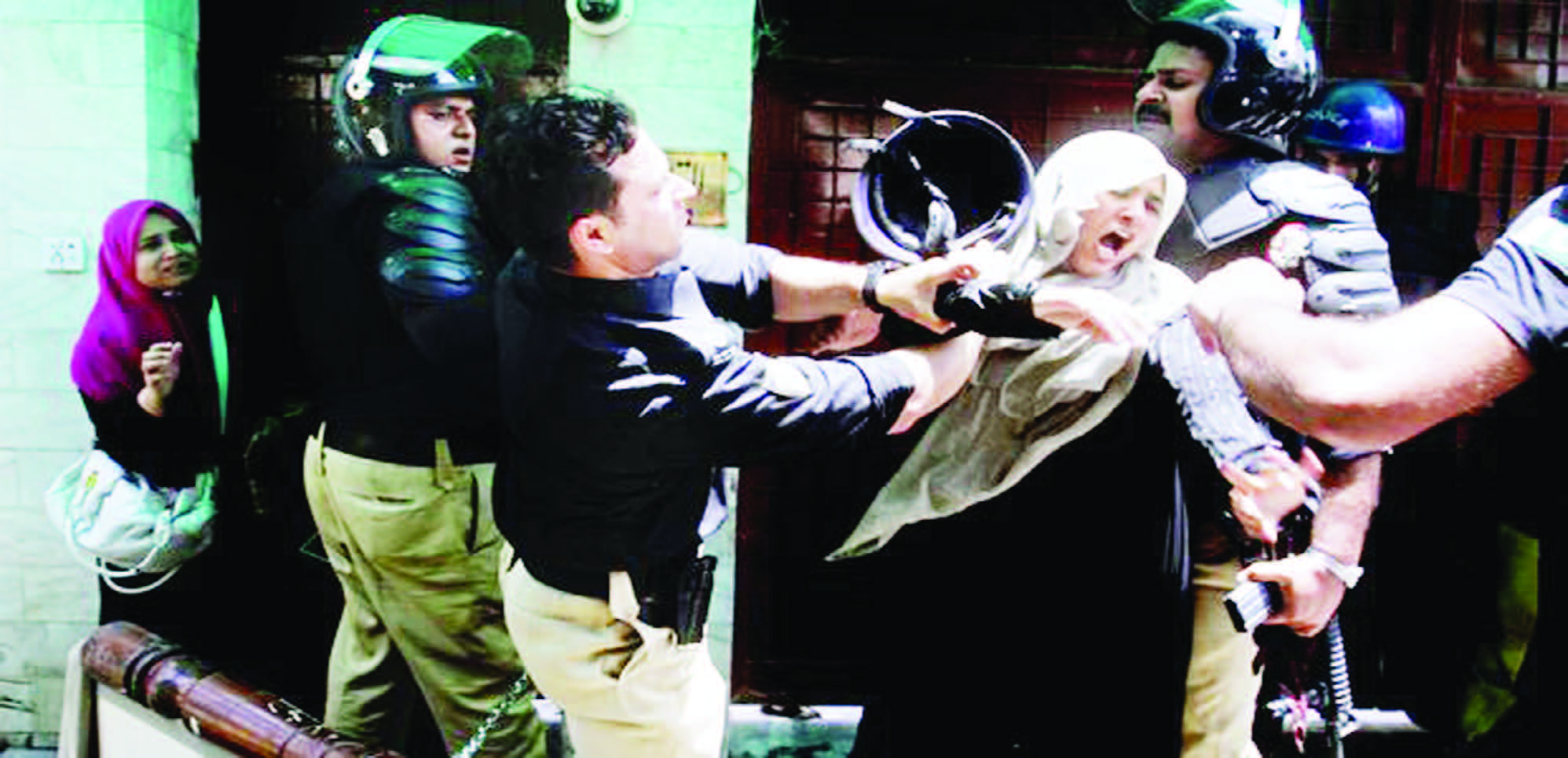
    ISLAMABAD: At least eight people were killed and 85 injured in Lahore on Tuesday when the police clashed with supporters of moderate cleric Dr Tahirul Qadri, a Canadian national of Pakistani origin, vowing to bring a soft revolution in the country.

    Qadri, a leader of the Pakistan Awami Tehreek (PAT), a religiopolitical party, has been trying to form a grand alliance against the government while demanding a change in the present system through a revolution. He has promised to return to Pakistan on June 23.

    The clashes started when PAT members tried to stop the police from removing barriers outside their leader’s house in Lahore’s Model Town Colony and the party secretariat. As police baton-charged and shelled the protesters, the latter retaliated by pelting stones.

    Meanwhile, the police started firing shots at the protesters, leading to the death of eight PAT supporters, including two women and a child, while more than 85 people were injured. “We received eight dead bodies including two women,” said Dr Abdul Rauf, a medical superintendent at Lahore’s Jinnah Hospital.

    “All of them had bullet wounds. We also received 85 injured, including 17 police personnel. About 40 of the wounded sustained bullet injuries.” The doctor said 22 of the injured were critical. A spokesman for PAT said 12 of its workers were killed.

    “They launched this operation to counter our peaceful movement and the ‘green revolution’ promised by Dr Tahir ul Qadri,” the spokesman said Responding to the use of force against his party workers, the PAT chief described it as “state terrorism” and lashed out at the Punjab government, saying an FIR would be registered against Prime Minister Nawaz Sharif and Punjab chief minister Shahbaz Sharif for the brutal killing of his supporters.

    Qadri said the police took action, on the orders of the government, because of his support for the army during the ongoing operation in North Waziristan. “Anyone who stands in support of the army is seen by the government as their biggest enemy,” he said, adding the government had been against the military since the 1990s.

    “The government was never in favour of the army operation in North Waziristan and had to approve it since they had no choice,” he said. PAT supporters staged protests in different cities — including Islamabad, Rawalpindi, Faisalabad, Karachi, Sialkot and Multan. All political parties strongly condemned the Lahore clashes. A joint opposition also staged a token walk out from Parliament.

    Opposition leader Syed Khursheed Shah said it was a conspiracy against democracy, which he said was allegedly hatched by Shahbaz Sharif against his elder brother. Later, the Punjab CM addressed a press conference saying he would resign if found responsible for the violence. “The deaths in Lahore’s Model Town are unfortunate,” Shahbaz Sharif said. “I have ordered the formation of a judicial commission to probe the incident.”

  • US depends on India, Pakistan for stability after US pullout from Afghanistan

    US depends on India, Pakistan for stability after US pullout from Afghanistan

    WASHINGTON (TIP): As President Barack Obama announced plans for Afghanistan after ending US combat mission by year end, the US hoped India, Pakistan and Afghanistan would help provide greater stability and security in the region. India’s new Prime Minister Narendra Modi and his Pakistani counterpart Nawaz Sharif had set a “constructive tone from the very beginning,” a senior administration official told reporters Tuesday in a background briefing on Obama’s plans.

    Under Obama’s plan to “bring America’s longest war to its responsible end,” the US which currently has 32,000 troops in Afghanistan will keep 9,800 troops there after December 2014. The US will then gradually withdraw troops keeping only a small residual force by the end of 2016 — just three weeks before his presidency ends. Obama said Americans have learned it was harder to end a war than to start one. “We have to recognize Afghanistan will not be a perfect place, and it is not America’s responsibility to make it one.”

    The role of US troops in Afghanistan after this year will be aimed at “disrupting threats caused by Al Qaeda, supporting Afghan security forces and giving the Afghan people the opportunity to succeed as they stand on their own,” he said. However, the US plan depends on the Afghans signing a bilateral security agreement. While current Afghan President Hamid Karzai has refused to sign such an agreement, both the candidates in next month’s runoff presidential election have indicated a willingness to do so.

    “With respect to India, I think we’ve seen a constructive tone set from the very beginning by Prime Minister Modi and by Prime Minister Sharif, who was one of the first leaders to speak to” Modi after his election victory, the US official noted. Noting that Sharif had traveled to India for Modi’s swearing in and the two had met Tuesday, he said: “We always encourage India and Pakistan to pursue dialogue that can reduce tension.” “We believe that that is in the interest of the entire region.

    And so we’ll continue to encourage that.” “So with that new leadership in India, the new leadership in Pakistan, and the new president coming to office in Afghanistan this year, I think we have an opportunity to have that discussion about how all the countries in the region can provide for a greater stability and security,” the official said. “And that’s certainly something we’re going to pursue,” he said. People have been wondering how “the region is going to respond in kind as the international community draws down in Afghanistan,” the official said as “regional dynamics, particularly with regards to their proxies, matters considerably to future stability in Afghanistan.”

    “But in recent and operational terms, the attack against the Indian consulate in Herat raised that very question,” he said. However, the US was “hopeful that the initial indication between both Islamabad and New Delhi is a positive one” he said taking note of Sharif’s attendance at the swearing in. Sharif’s “first such visit in many years” was “reminiscent of the last time there was significant progress” between the two countries when the Bharatiya Janata Party (BJP) came to power during Sharif’s previous term as Prime Minister in the late ’90s, the official said. “They made progress along lines that looked very much like what we have now,” he said. “So we’re cautiously hopeful that that could be a positive indicator, but we’re also mindful that this will be very important to the dynamic going forward,” the official said.

  • It’s a new era in India’s foreign policy as countries compete to woo Modi

    It’s a new era in India’s foreign policy as countries compete to woo Modi

    “The new majority government in power in New Delhi, freed from debilitating coalition politics and attaching priority to economic development, has aroused external interest”, says the author.

    In foreign policy, Prime Minister Modi has hit the ground running, taking unexpected initiatives. He reached out to our neighbors, taking the unprecedented step of inviting their leaders to his swearing-in ceremony. While invitations to Bangladesh, Nepal, Bhutan, Maldives and Afghanistan carried only positive connotations, those to Prime Minister Nawaz Sharif and President Rajapakse carried mixed political implications. It was felt that the plus points in extending invitations to Pakistan and Sri Lanka outweighed the negatives.

    Engagement

    In Pakistan’s case the dilemma is whether we should engage it at the highest level without any ground-clearing move by Nawaz Sharif on terrorism, the Mumbai trial and trade. The Pakistani premier has been, on the contrary, aggressive over Kashmir, invoking the UN resolutions and self-determination as a solution, seeking third party intervention, permitting tirades by Hafiz Saeed against India, maintaining the pitch on water issues and reneging on granting MFN status even under a modified nomenclature.

    In these circumstances, the move to invite him risked suggesting that, like the previous government, the new government too was willing to open the doors of a dialogue in the hope of creating a dynamics that would yield some satisfaction on the terrorism issue. In other words, practically delinking dialogue from terrorism, despite having taken a position to the contrary while in opposition.

    In Sri Lanka’s case, the whipped-up sentiments in Tamil Nadu against President Rajapakse for his triumphalist rather than reconciliatory policies on the Tamilian issue have upset the overall balance of India’s foreign policy towards Sri Lanka that requires that we adequately weigh the need to counter powerful adversarial external forces are at play there against our interests. Inviting President Rajapakse to New Delhi obviously risked provoking a strong reaction in Tamil Nadu, but the new government had to decide whether, like its predecessor, it would get cowed down by such regional opposition, or it would act in the greater interest of the country even when according importance to the sentiments of a section of our population.

    This dramatic outreach to the neighbors has elicited praise internally and externally, primarily focused on the invitation to the Pakistan president and its implication for the resumption of the Indo-Pak dialogue. Internally, those pro-dialogue lobbies that have espoused the previous government’s placative policies towards Pakistan have naturally welcomed the surprise move by Modi. Externally, India has always been counseled to have a dialogue with Pakistan irrespective of its conduct and its terrorist links, the argument being that these two South Asian nuclear armed neighbors with unresolved territorial conflicts risked sliding into a nuclear conflict unless they found a way to settle their differences for which a dialogue was an inescapable necessity. Such praise from within and without from predictable quarters should neither be surprising nor worth much attention.

    Outreach

    The new majority government in power in New Delhi, freed from debilitating coalition politics and attaching priority to economic development, has aroused external interest. The sentiment outside the country- as well as inside it – has been that the previous government lost its way, leading India into the quagmire of high fiscal deficits and tumbling growth, belying international expectations about its economic rise paralleling that of China.

    If India can be steered back into a high growth trajectory with stronger leadership and improved governance, more economic opportunities will open up for our foreign partners. This would also draw renewed attention to India’s geo-political importance which, though an accepted reality now, has receded from the foreground lately.

    Reassurance

    Modi is seen as the man of the moment. This would explain the telephone calls from world leaders to Modi and the invitations given and received. India is being courted, and Modi’s choice of the countries he first visits or foreign leaders he first receives, is drawing external attention as an indication of his diplomatic priorities.

    On this broader front too, Modi is following an unanticipated script of his own. He is being generous to the US despite its reprehensible conduct in denying him a visa, by prioritizing national interest over his individual feelings. He has not waited for the stigma of visa refusal to be erased by a US executive order removing his name from the State Department black-list. He is planning to meet President Obama in Washington in September – the first external visit to be announced – quickly relieving the Americans of fears that the visa issue could become a hurdle in engaging him.

    In another remarkable gesture that the State Department would have noted for its political import, he has agreed to a book launch by an American think-tank at Race Course Road. China wants to complicate moves by Japan to strengthen strategic ties with India. Its decision to send its Foreign Minister to India after the swearing-in seems to have been motivated by this rivalry, apart from seeking to build on the personal contacts established by China with Modi when he was Chief Minister. If the Chinese FM was allowed to be the first consequential foreign leader to meet Modi, it appears Japan may be the first foreign country – barring Bhutan – the latter may visit en route to the BRICS meeting in July in Brazil.

    The Bhutan visit underscores the importance Modi intends attaching to neighbors. Russia’s Deputy Prime Minister is visiting Delhi on June 18. It would seem that Modi’s immediate priority is to reassure all his important interlocutors, friends or adversaries, that they should have no misgivings about him and the direction of his policies, and that he seeks to engage with all power centers in a balanced manner.

  • US RESUMES DRONE STRIKES IN PAKISTAN

    US RESUMES DRONE STRIKES IN PAKISTAN

    Pakistan condemns US drone strikes in Waziristan

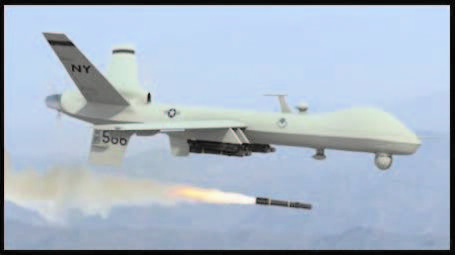
    ISLAMABAD (TIP): A missile strike from a suspected US drone has targeted a compound in a northwestern tribal district in Pakistan near the Afghan border, killing at least 10 people, Pakistani intelligence officials have said. The attack on June 12 came a day after a drone strike in the same area in North Waziristan, marking the resumption of the CIA-led program in Pakistan after a nearly six-month hiatus. The Pakistani government condemned the strikes, with a ministry of foreign affairs statement calling them a violation of Pakistani sovereignty and territorial integrity.

    The latest attack, early on Thursday, June 12, saw a pair of US drones drop three missiles on a compound and a vehicle in the town of Ghulam Khan, two Pakistani intelligence officials told the AP news agency, speaking on condition of anonymity because they were not authorized to talk to the media. Military sources told the Reuters news agency that six people, including four Uzbeks, were killed in Wednesday’s strike around 5km north of Miranshah, the capital of the North Waziristan tribal region, where Taliban fighters are holed up. Pakistan’s northwest, particularly the North Waziristan tribal area, is home to numerous armed groups, both local and al-Qaeda-linked foreign groups – who often work together, sharing fighters, money or expertise. Due to stricter rules on the use of drones, diplomatic sensitivities and the changing nature of the al-Qaeda threat, the number of drone strikes had dwindled. The missile strikes came in the wake of a siege on the international airport in Karachi, Pakistan’s busiest hub.

    The five-hour attack ended with 36 people dead, including the 10 attackers. The Pakistani Taliban, who have been fighting to overthrow the government and install their brand of Islamic law, killing thousands of people in the campaign, initially claimed responsibility for the attack on Jinnah International Airport. An Uzbek armed group, the Islamic Movement of Uzbekistan, also based in North Waziristan, later said it had also played a role in the attack. The statement appeared to be a sign of increased cooperation between armed groups in Pakistan.

    Shahidullah Shahid, a Taliban spokesman, said on Wednesday, June 11, that the Taliban had worked with the Uzbek group but did not give any details. The Pakistani government of Prime Minister Nawaz Sharif has tried to negotiate a peace deal with the Taliban ever since he took office last summer, but those talks have so far yielded little results. Meanwhile, Pakistan on Thursday condemned two U.S. drone strikes recently in the country’s restive North Waziristan tribal region that have killed nearly 16 suspected militants. After a break of some five months, the United States has once again started its drone mission in Pakistan with a late Wednesday attack, killing at least six people. Security officials said in a second U.S. spy aircraft attack early Thursday, 10 people were killed, lifting the death toll in two strikes to 16. Several people were also injured in the attacks.

    “The government of Pakistan condemns the two incidents of U.S. drone strikes that took place near Miranshah in North Waziristan on June 11 and 12,” the Foreign Ministry said. “These strikes are a violation of Pakistan’s sovereignty and territorial integrity,” a Foreign Ministry statement said. The Foreign Ministry said these strikes have a negative impact on the government’s efforts to bring peace and stability in Pakistan and the region. The drone strikes had been stopped for nearly five months in the wake of peace talks between the government and the Taliban.

    Pakistan had accused the United States of sabotaging the Taliban peace process when an unnamed aircraft killed the Taliban chief, Hakimullah Mehsud. The recent drone strikes were launched just three days after the Taliban launched a deadly attack on Karachi airport that killed over 30 people. The Taliban and an Uzbek militant group claimed responsibility for the attack. Security officials said the late Wednesday, June 11, U.S. strike had killed four Uzbek and two local Taliban militants. They added the pre-dawn attack targeted Afghan Taliban hiding in North Waziristan.

  • Iran held Nawaz Sharif’s jet to get $5k dues

    Iran held Nawaz Sharif’s jet to get $5k dues

    LAHORE (TIP): Iranian authorities refused to fuel the aircraft of Pakistan PM Nawaz Sharif during his visit to Tehran last month to make the state-run PIA clear its dues amounting to just over $5,000. “The Iranian airport authorities had refused to fuel the Pakistan PM’s aircraft at the Tehran airport on May 12 and warned it would not release the plane until the PIA cleared the outstanding payment,” a Pakistan International Airlines official said. The outstanding amount is just over $5,000.

    “The Iran Air officials responsible for handling the VVIP flight showed their annoyance over the PIA failure in clearing the pending invoice of PK-788 despite the passage of four months,” the official said. The warning alerted the PIA bosses who directed its official in Tehran to clear the amount forthwith and save Pakistan from the embarrassment. The PIA managed to hide the issue from the foreign office and the prime minister.

    PIA spokesman Mashhood Tajwar denied the PM’s aircraft was held at Tehran airport over payment issue. According to details, the PK-788 (London to Karachi flight) had to make an emergency landing at the Tehran Airport on January 18, 2014 when a passenger reported some serious health problem and died later.

  • Foreign ties will blossom under the new Modi government

    Foreign ties will blossom under the new Modi government

    For adversaries, habituated to passive and defensive responses to deliberate provocations, the likelihood of a less tolerant Indian response under a Modi-led government might induce rethinking on their part about the price they may have to pay for aggressive or assertive policies”, says the author.

    The BJP’s massive electoral victory brings us foreign policy gains. The prospect of a strong and stable government in India makes our external image more positive. Other countries could conclude that the new government will have a more self-confident foreign policy, and will defend the country’s interests with greater vigor. Since the BJP is widely characterized at home and abroad as a Hindu nationalist party, it will be assumed that the Modi-led government will be more “nationalistic” in its thinking and actions, and will pursue national goals more sturdily.

    Decisive

    Notwithstanding their rhetoric about India’s global role, big powers have for long seen us as a country too preoccupied by internal problems to be able to act on the international stage sufficiently energetically. Issues of poverty and managing our complex diversities apart, coalition politics in India has been seen by our external interlocutors as contributing to governmental delays in decision making and failures in implementation even in the foreign policy domain. Modi’s personality gives us cards to play externally with advantage. He is seen as a strong and decisive leader, committed to making India vibrant economically, and more secure. For those eyeing more economic engagement with India, Modi’s development agenda offers greater investment opportunities.

    For those seeking more engagement on security issues, Modi’s India will appear as a more confident partner. For adversaries, habituated to passive and defensive responses to deliberate provocations, the likelihood of a less tolerant Indian response under a Modi-led government might induce rethinking on their part about the price they may have to pay for aggressive or assertive policies. These real and psychological advantages that India obtains under Modi’s leadership should not be frittered away needlessly.

    Prudence and “responsible” conduct are often used as a cloak to cover diffidence and timidity. There will be those who would advise that having won such a massive mandate, with all the political strength that comes with it, a Modiled government, burdened by a negative ideological image that worries sections at home and abroad, should send re-assuring signals to all. There should be no requirement for this, as it is India that has been long sinned against. Sections of our political class, intellectuals and media personalities have done great disservice to the country by their incessant vilification and deionization of Modi, making untenable historical parallels with the rise of fascism in Europe and making egregious references to Hitler and abusively using words like “genocide” to castigate him.

    Initiatives
    That otherwise sensible people should have for so long lost all sense of proportion remains a puzzle.Maybe they felt their self-esteem rise in proportion to their revilement of Modi. This calumny of Modi has naturally colored outsiders’ views of him, which explains the negative commentaries on him in the liberal western press. Modi’s exceptional mandate, however, is derived from the masses of India, and they have chosen him for what he is and stands for, unbothered by the obloquy of his detractors. Questions are being asked as to what “initiatives” Modi could take on the foreign policy front now that he has got a strong mandate.

    This suggests it has become somehow incumbent on the new government to prove its credentials in some way to the international community. It also carries the nuance that India could not meet the expectations of select countries because his party hobbled the choices of the previous Prime Minister. A feeling also exists that the previous government missed opportunities and was too passive in its foreign policy, a situation that the new government should redress. The sub-text of most such criticism is that India failed to live up to US expectations and allowed the relationship to slip into a lower gear, besides not being able to push the then prime minister’s vision of peace with Pakistan.

    Assertiveness
    Not having engaged in any provocative act against either China or Pakistan, India would be right to wait for China and Pakistan to signal a change of thinking towards it. In reality, repeated provocations have come from their side, which the previous government preferred, in China’s case, either to downplay or not counter, or, in Pakistan’s case, avoid retaliation in order not to have to admit the failure of the policy of engagement despite terrorism and Pakistan’s enduring hostility towards us. China’s assertiveness on the border will have to be watched, especially because its conduct in the South China and East China Seas flashes red signals to us that at a time of its choosing its posture towards us can suddenly harden.

    The recent signals from Pakistan have been uniformly negative, whether on Kashmir, curbing anti-Indian religious extremists, trade and water, and these have been capped by the expulsion of two Indian journalists despite the much touted media role in improving relations as signified, for example, by the “Aman ki Asha” initiative. Nawaz Sharif’s congratulatory message to Modi should be taken as a routine diplomatic exercise, with the invitation to visit Pakistan as a way of making himself look good and win an easy diplomatic point. Our relationship with the US remains very important, but to reinvigorate it the US should not let short-term transactional considerations take precedence over the logic of the strategic relationship.

    Modi being the sole victim of the US legislation on religious freedom, the White House should be issuing an Executive Order to annul the State Department’s decision to blacklist Modi in the first place. While Obama’s gesture of telephoning Modi and alluding to a Washington visit by him can be appreciated, the fact that as Prime Minister he can now obtain an “A” category US visa does not erase the original insult.

  • Pakistan PM Nawaz Sharif Gifts Sari to Narendra Modi’s Mother

    Pakistan PM Nawaz Sharif Gifts Sari to Narendra Modi’s Mother

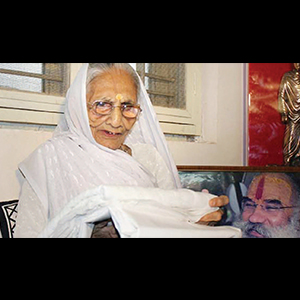
    GANDHI NAGAR (TIP): Pakistan Prime Minister Nawaz Sharif has sent a white sari for the mother of his Indian counterpart Narendra Modi. Obviously, it is a return gift from Pakistan Prime Minister whom Modi had gifted a shawl for his mother when he was in New Delhi to attend his swearing-in as Prime Minister of India.

    Modi thanked Sharif in a tweet, June 5: “Nawaz Sharif ji has sent a wonderful white Sari for my Mother. I am really grateful to him & will send it to my Mother very soon.” Immediately after being sworn-in on May 26, Modi took to Twitter to share his informal conversation with his Pakistani counterpart. He said Sharif had talked about pictures of Modi’s mother offering him sweets. “The visuals touched both Nawaz Sharifji and his mother.

    He (Sharif) told me after seeing the visuals, his mother got very emotional,” Modi had tweeted. He also tweeted, “Nawaz Sharif ji told me that he stays in Islamabad but goes to meet his Mother once in a week.” Modi had sent the shawl for Sharif’s mother with the Pakistani leader, whose daughter Maryam Nawaz Sharif had tweeted, “Thank u v much PM @narendramodi for the beautiful shawl for my grandmother. My father personally delivered it to her.” A good beginning on human level.

  • A new beginning to the peace chapter

    A new beginning to the peace chapter

    Despite reservations in some circles, most Pakistanis welcomed Prime Minister (PM) Nawaz Sharif’s decision to attend Mr Narendra Modi’s swearing-in as the new PM of India at the latter’s invitation.

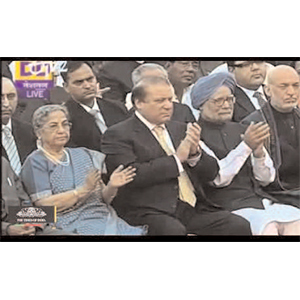
    Although similar invitations were extended to the heads of state and government of all the SAARC countries, all eyes were focused on the interaction between the PMs of traditional rivals Pakistan and India. And the warm welcome PM Modi extended to Nawaz Sharif raised the hopes of the hopeful, comprising most Pakistanis, while the sceptics, including the Kashmiris, seemed unconvinced. The body language and atmospherics at the first meeting between the two PMs seemed excellent. It could be claimed with confidence therefore, that a good beginning had been made.

    At the glittering swearing-in ceremony at Rashtrapati Bhavan (President’s House) in New Delhi, the SAARC leaders in attendance were joined by a large invited crowd, including political and business leaders and celebrities from all segments of Indian society, including Bollywood’s well known figures.

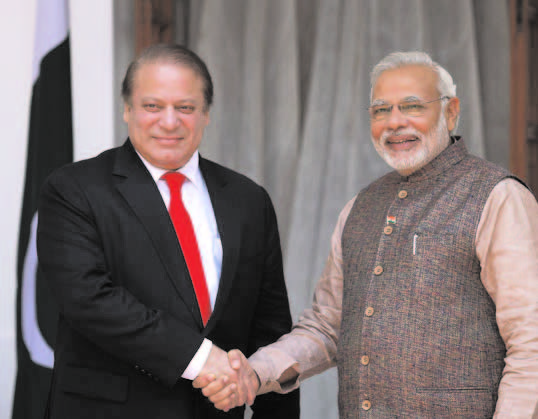
    Mr Modi’s vigorous welcoming handshake with Nawaz Sharif underlined the mutual desire of the two leaders to nudge their bilateral relationship towards normalisation. Apprehensions accompanying Modi’s rise to the apex office include the fears of the minorities in India, particularly Muslims, about the dark past of Mr Modi, especially in the Gujarat massacre of Muslims in 2002 when he was the chief minister.

    Perhaps aware of his polarising and divisive past, Mr Modi’s message after taking oath of office was to build an ‘inclusive’ India with a relatively lean cabinet, the latter reflecting his slogan: “Minimum Government, Maximum Governance”.

    This is intended to reinforce the election platform on which Mr Modi ran, emphasising good governance and economic development rather than the Hindutva agenda of the Bharatiya Janata Party (BJP) or the even more extreme stance of the BJP’s ‘mother’ movement, the Rashtriya Swayamsevak Sangh (RSS), which on the eve of the swearing-in ceremony and meeting with Nawaz Sharif, belligerently threatened that if Pakistan did not correct course vis-à-vis India, Mr Modi would be forced to press the nuclear button against it.

    On his part, PM Nawaz Sharif opened his innings in New Delhi with the statement that there existed a great chance to open a new chapter, starting from where he and former BJP PM Atal Bihari Vajpayee left off in 1999. He offered attractive investment opportunities to Indian businessmen, which no doubt went down well with the proven business-friendly Modi.

    It goes without saying that enhanced trade and business opportunities between Pakistan and India are to the mutual benefit of both despite the naysayers and sceptics in Pakistan. Trade between the two countries is officially at around $ 2.5 billion, with the balance heavily tilted towards India, whose exports account for $ 1.75 billion of the total.

    Around $ 3 billion trade is believed to be routed through Dubai, again tilted heavily in India’s favour and which deprives both countries of tax revenues. The issue of Most Favoured Nation (MFN) status, which India has long ago extended to Pakistan but has not been reciprocated, may now be revived under the new title of Non- Discriminatory Market Access (NDMA).

    While the positives of the warm welcome to PM Nawaz Sharif and the overwhelming run of opinion in Pakistan that it was the right decision to accept the invitation from Mr Modi are welcome, there are still many issues that remain to trouble relations between the two South Asian neighbours.

    Memories of 1999, when General Musharraf’s adventure in Kargil effectively sealed the fate of the Sharif- Vajpayee rapprochement, haunt the renewed process of normalisation. However, 2014 is a very changed scenario from 1999. Pakistan is beset with trouble on its western border, including a homegrown Taliban insurgency that has been described as an existential threat to Pakistan’s security rather than any external enemy.

    The military therefore appears, contrary to conspiracy theorists, to be on board regarding the critical need to normalise relations with India on the eastern border. That of course does not mean that long standing issues such as Kashmir and the Pakistan-India rivalry for influence in Afghanistan are about to disappear.

    They can cause tensions between Islamabad and New Delhi again as in the past. However, internally the fears of the minorities in India, particularly Muslims, at the rise to power of Modi have been underlined by a communal clash in his home province Gujarat on the very day he took oath. The underlying communal tensions lingering from 2002 burst forth into clashes between the Hindu and Muslim communities after an innocuous traffic accident.

    Reportedly, the first one-to-one meeting between PMs Nawaz Sharif and Narendra Modi yielded the expected positions of both sides. India raised the issue of terrorism and closure of the Mumbai attacks case. Pakistan seemed to agree on cooperation to overcome terrorism while emphasising the economic side of bilateral relations. Naturally, such summits are always followed up by experts and officials’ working out of the details of the vision of their leaders.

    Let us hope that that process will now proceed with dispatch, in contrast with the virtual halt during the Congress government’s later tenure. – The Daily Times

  • MAKING A FRESH START

    MAKING A FRESH START

    Photo caption: “We should remove fears and misgivings about each other……..We should rid the region of insecurity and instability”, said Nawaz Sharif .

    Nawaz Sharif’s India trip for the inauguration of Narendra Modi was in itself such a seismic event – the first time ever for a Pakistani leader – that it would have been unrealistic to expect any substantive breakthroughs. Instead, this was a battle for public relations and setting the ground for an improvement in relations further down the line.

    In this Nawaz excelled, particularly with the poignant touch of calling on former Indian prime minister Atal Behari Vajpayee at his residence. Vajpayee’s visit to Lahore to meet with Nawaz in 1997 is still fondly remembered as a rare high point in Pakistan-India relations and served as a reminder to Modi that there is a history of the BJP engaging Pakistan positively.

    The meeting between Nawaz and Modi hinted both at the prospects for peace and the likelihood of trouble in the months ahead. Nawaz focused, as he always has, on engagement but Modi spoke mostly of terrorism, particularly the Mumbai attacks of 2008.

    The way to work through these troubles, as Nawaz well understands, is by engaging in other issues first and broaching matters of disagreement once ties have improved. The Indian Foreign Secretary Sujatha Singh was more hopeful in her press briefing, expressing confidence that Pakistan would soon grant India Most Favoured Nation trading access, now rebranded as Non Discriminatory Market Access. She also said that Modi had accepted Nawaz’s offer of a return visit to Pakistan. In his own brief remarks to the press, Nawaz once again sung the song of peace.

    That the word “peace” can even be uttered with the hardline Modi in power is in itself a testament to the surprising developments of the past few days. A point to note was that the Indian side did bring up specific issues of concern but the Pakistani PM talked of our issues only in general diplomatic terms?

    While a measure of optimism is in order for this unexpected progress, we still need to be wary of likely challenges. Modi’s ideology remains what it is and any attack in India is still sure to be blamed on Pakistan, with the inevitable recriminations to follow. If Modi does indeed visit Pakistan, which could be a very distant prospect, we can also expect a lot of hostility stemming from his actions during the massacre of Muslims in Gujarat.

    The commitment of the military to peace with India is also in question. The two leaders have done what no one expected but the chances of reverting back to script still remain high. –

  • Stoning of woman outside Lahore court ‘unacceptable’: Nawaz Sharif

    Stoning of woman outside Lahore court ‘unacceptable’: Nawaz Sharif

    ISLAMABAD (TIP): Pakistan’s prime minister on May 29 ordered provincial officials to take “immediate action” over the brutal murder of a pregnant woman bludgeoned to death outside a top court. Farzana Parveen was attacked on May 27 outside the high court building in the eastern city of Lahore by more than two dozen brick-wielding attackers, including her brother and father, for marrying against the wishes of her family.

    Hundreds of women are murdered by relatives in Pakistan each year supposedly to defend family “honour”, but the brazen nature of the attack, in broad daylight and in the centre of the country’s second-largest city, has shocked rights activists. The fact that police officers guarding the court apparently did nothing to intervene to save the 25-year-old has added to the outrage. Prime Minister Nawaz Sharif has told the Punjab chief minister, his brother Shahbaz Sharif, to act.

    “I am directing the chief minister to take immediate action and report must be submitted by this evening to my office,” the prime minister said in a statement released by his office. “This crime is totally unacceptable and must be dealt with in accordance with law promptly.” Parveen, who was three months pregnant, had gone to court to testify in defence of her husband Muhammad Iqbal — who was accused by her relatives of kidnapping her and forcing her into marriage.

    Iqbal, 45, told AFP the couple had survived a previous attack during the first hearing of the case on May 12 and demanded justice for his wife. The incident gained prompt attention from the global media and international human right activists reacted to it.

    The UN high commissioner for human rights, Navi Pillay, also strongly condemned the killing on Wednesday, urging the Pakistani government to take “urgent and strong measures” to put an end to so-called honour killings in the country. Last year, 869 women died in so-called “honour killings” according to the independent Human Rights Commission of Pakistan.

    Conviction rates are very low due to Pakistan’s blood-money laws which allow kin to forgive perpetrators, usually family members in such cases.

  • BJP leaders greet SAARC Presidents and Prime Ministers

    BJP leaders greet SAARC Presidents and Prime Ministers

    NEW DELHI (TIP): OFBJP Global Convener Vijay Jolly stated, May 28, that the visiting SAARC Presidents & Prime Ministers at the Indian Prime Minister Narendra Modi’s oath taking ceremony, were separately welcomed & greeted with courtesy calls by senior Bharatiya Janata Party leaders in New Delhi.

    BJP General Secretary (Organization) Ram Lal, BJP MP Vijay Goel, BJP Spokeswomen Meenakshi Lekhi (MP) & Nirmala Seetharaman (now Union State Minister), senior RSS Pracharak Indresh Kumar, OFBJP Co- Conveners Dr. Rajni Sarin & Amit Thakar accompanied by Vijay Jolly called on the visiting SAARC leaders in New Delhi recently.

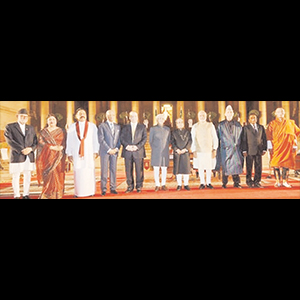
    SAARC leaders President of Maldives Abdulla Yameen Abdul Gayoom, Prime Minister of Bhutan Tshering Tobgay, Prime Minister of Nepal Sushil Koirala, Speaker of Bangladesh Parliament Shirin Sharmin Chowdhury, Prime Minister of Pakistan Nawaz Sharif, Prime Minister of Mauritius Dr. Navin Ramgoolam, President of Sri Lanka Mahindra Rajapaksa & President of Afghanistan Hamid Karzai attended the oath taking ceremony of BJP & Prime Minister Mr. Narendra Modi govt.

    The BJP leaders conveyed to the visiting SAARC leaders the strong resolve of the party to strengthen ties with India’s neighboring friendly nations. The historic decision to invite all the SAARC leaders by Prime Minister Modi will promote friendship, understanding, businesscommerce & enhance regional ties in the region, stated OFBJP Convener.

    OFBJP leaders from 35 nations of the world attended the oath taking ceremony. Nearly 95 overseas delegates attended a specially convened meeting at the BJP headquarters to honor them. They were presented with “Ganesh statues” & “safron lotus scarfs”. BJP leaders Ram Lal and Vijay Jolly addressed & greeted them for their special efforts to visit India and witness the historic event of BJP govt. formation in New Delhi.

  • Nawaz Sharif mulls attending Modi’s swearingin ceremony

    Nawaz Sharif mulls attending Modi’s swearingin ceremony

    ISLAMABAD (TIP): Pak PM Nawaz Sharif is still considering attending Narendra Modi’s swearing-in ceremony and a final decision will be taken by this evening, officials said on May 22. Foreign office has confirmed that formal invitation has been received but any decision by the Prime Minister to attend the ceremony on May 26 in New Delhi has not been taken as yet. Sources within Sharif’s Pakistan Muslim League-Nawaz (PML-N) said that Prime Minister wanted to normalize ties with India to promote commercial and business activities.

    “He is keen to improve ties which is also the official policy of the party but he needs to take various aspects of the relations into consideration,” a top PMLN leader told PTI. He said the invitation has come at a short notice and the premier needs time to accept it. He also said that any decision about going to India will be made by the evening after consultations with the civil and military leaders.

    Diplomatic sources said that unexpected move by India’s Prime Minister-designate has left Sharif with difficult choices. “If he skipped the invitation it will send a very negative message to India and the world but the acceptance may bring backlash from the hardliners and hawks who consider Modi as anti-Pakistani,” said a diplomat.

  • Modi invites Nawaz Sharif, SAARC Heads for swearing-in ceremony

    Modi invites Nawaz Sharif, SAARC Heads for swearing-in ceremony

    NEW DELHI (TIP):
    Pakistan Prime Minister Nawaz Sharif has been invited to attend Narendra Modi’s swearing-in ceremony at the Rashtrapati Bhavan on May 26, reports said on Wednesday, May 21. According to reports, the Pakistan Prime Minister will be among 3,000 dignitaries who have been invited to attend the function. Besides Pakistan Prime Minister, the heads of governments of the SAARC member countries have also been invited to attend the function.

    There is no recent precedent for inviting foreign heads of state when an Indian prime minister has been sworn in. SAARC nations include Bangladesh, Bhutan, India, Maldives, Nepal, Pakistan, Sri Lanka and Afghanistan and the invitation would send out a strong signal of a neighborfriendly new government. Praising the move, Jammu and Kashmir Chief Minister Omar Abdullah poster on Twitter, “Excellent move by @narendramodi to invite SAARC leaders, especially Pak PM for his swearing in.

    Hope this is beginning of sustained talks (sic).” Minutes later he tweeted again saying, “At the same time I can’t help wonder what BJP would have said if a PM designate Rahul Gandhi had done the same thing.” Modi will be administered the oath of office by President Pranab Mukherjee on May 26 at 6 pm. Following in the footsteps of a former Prime Minister of India, Atal Behari Vajpayee, Modi has preferred to be sworn in in the forecourt of Rashtrapati Bhavan where a larger number can be accommodated.

    Meanwhile, keeping in view the intelligence reports about terrorist strikes, unprecedented security arrangements are being made. Security will be “tighter than the annual Republic Day parade,” officials have confirmed. Sources say the Air Force and the Army will be “discreetly involved” but most of the arrangements are being overseen by the Delhi Police, along with paramilitary forces.

    Anti-aircraft guns of the air force are being positioned in strategic areas to take care of any flying threat. Modi is one of the most protected politicians in the country. His swearing-in ceremony has become a worse security nightmare after invites to world leaders, including Pakistan Prime Minister Nawaz Sharif, Afghan president Hamid Karzai and Sri Lankan President Mahinda Rajapaksa.

  • A MODI GOVERNMENT MUST PROJECT A MORE ROBUST FOREIGN POLICY

    A MODI GOVERNMENT MUST PROJECT A MORE ROBUST FOREIGN POLICY

    “Rather than debating a new conceptual framework for our foreign policy – more “nationalistic” or resting on an “India first” foundation – we could look at how some concrete issues should be addressed by a Modi-led government”, says the author.

    Now that it appears that the next government in New Delhi could well be Modi-led, questions about the possible changes in India’s foreign policy are being raised inside and outside the country. India’s external challenges are well known and policy responses have been examined over time by governments in power. Whether or not existing policies represent the best balance in coping with our external environment with the capacities we have can always be debated.

    Some say that our foreign policy is weak and accommodating, too risk-averse and lacking in self-confidence. Others argue that we are unsure of what we want and consequently we are reactive, allowing others to define the agenda on which then we position ourselves. ‘Modi is not above the law’: NaMo insists he has nothing to hide from snoopgate probe and denies corruption slur against Vadra Hurriyat supports Army Chief’s statement that Kashmir is the ‘jugular vein’ of Pakistan Pakistan Army chief calls Kashmir the country’s ‘jugular vein’ Such a foreign policy is not seen as compatible with India’s stature and role in international affairs.

    Refashion
    Some others advocate that the Modigovernment should make a break with the Nehruvian foreign policy that India has been practicing, even under the previous NDA government. The implications of this are unclear. It could mean that we should defend our interests more vigorously, worry less about international opinion and attenuate the moral overtones of our foreign policy. Inflammatory: Pakistan’s army Chief General Raheel Sharif recently termed Kashmir Pakistan’s ‘jugular vein’ More importantly, we should develop the necessary military sinews to pursue a more robust foreign policy, including accelerating our strategic programs and climbing down from the nuclear disarmament bandwagon.

    It could mean therefore a more muscular China and Pakistan policy. It could also mean discarding our allergy to alliances, getting rid of the malady of non-alignment that still afflicts us, shedding leftist, third world rhetoric and not allowing concepts of “strategic autonomy” to constrict more decisive foreign policy choices. Rather than debating a new conceptual framework for our foreign policy – more “nationalistic” or resting on an “India first” foundation – we could look at how some concrete issues should be addressed by a Modi-led government. Pakistan is a perennial problem, embodying the worst challenges India faces, whether of terrorism, religious extremism and nuclear threats, all linked to its territorial claims on us.

    The latest statements by Pakistan’s Interior Minister and its army chief reflect Pakistan’s abiding hostility towards us. Nawaz Sharif has been harping aggressively on the Kashmir issue, calling it Pakistan’s “jugular vein”, a phrase repeated by the current army chief. By speaking highly politically about Kashmir, the army chief has drawn a red line for Pakistan, besides signaling support to the separatists in Kashmir. An unreconstructed Nawaz Sharif is lobbying with the US and UK to intervene in the Kashmir issue.

    If by “jugular vein” Pakistan means that we can inflict death on Pakistan by thirst, it is dishonestly ignoring India’s strict adherence to the 1960 Indus Waters Treaty despite the 1965, 1971, 1999 armed aggressions by Pakistan, its terrorist onslaught against India since the mid-1980s, with the 2008 Mumbai terrorist attacks capping its emergence as the epicenter of international terrorism, and its policy of derailing our power projects on the western rivers allowed by the Treaty by dragging us into international arbitration.

    Mismanagement
    Meanwhile, by acquiring contiguity with China through its illegal occupation of parts of J&K and preventing our contiguity with Afghanistan, Pakistan’s “jugular vein” receives plentiful sustenance to counter us strategically. These Pakistani statements helpfully give room and reason to a Modi-led government to reject any hurried dialogue with Pakistan and exclude Kashmir and Siachen from any future structured agenda.

    Pakistan’s intransigence also argues against any back-channel contacts, because unless Pakistan can publicly speak of its willingness to compromise over its differences with India, the back-channel is simply a means to “soften” India and exploit its attachment to a come-what-may, dialogueoriented and “readiness to walk the extramile” approach to extract concessions. China presents a more complex case as it has outshone us in its diplomatic, economic and military performance and has decisively gained ground on us regionally and internationally. By mismanaging our democratic politics internally, neglecting our defense preparedness and failing to sustain high rates of economic growth, we have gravely weakened ourselves vis a vis China.

    Diminished
    China is thus setting the agenda for our bilateral engagement, advancing its interests, keeping us on the defensive with calculated provocations and evading any serious response to our concerns. We should continue our engagement of China but make it more balanced by calibrated countervailing steps by us like winding up the Special Representatives mechanism which is no longer serving the specific purpose for which it was set up, apart from allowing the Dalai Lama to call on India’s new leader after May 16, refusing visas to Tibetans in any Chinese delegation visiting India, avoiding any official meeting between the two sides on Tibetan territory and the new prime minister visiting Tawang and Japan before the expected visit of the Chinese president to India.

    The US seems to be giving diminished political attention to India while stepping up economic pressure on us. Its threats of isolating Russia and sanctioning powerful Russian political and business personalities for actions in Crimea in disregard of Russia’s nuclear armory, its huge resource base, European energy dependence on Russia, and the risk of losing Russian logistic support for Afghanistan and for dealing with Iran and Syria, contrasts with the US reluctance to punish Pakistan for its misdemeanors in the region that has cost American lives too. US’s domination of the global financial system and its readiness to use it as an instrument of coercion stresses the need for India to assess more carefully the future of the India-US strategic partnership. Much more than this will be on the new government’s plate, of course. But if the big morsels are chewed well, the smaller ones can be swallowed with ease.

  • Pakistan cuts prime minister’s electricity for not paying bills

    Pakistan cuts prime minister’s electricity for not paying bills

    ISLAMABAD (TIP): The Pakistani government on April 30 cut off the electricity supply to several major official buildings for non-payment of bills, including parliament, the prime minister’s offices and the president’s official residence. Pakistan is blighted by rolling power cuts, caused in part by people not paying their bills, with government offices among the worst offenders.

    Ordinary people struggle without electricity for 12 to 18 hours a day in the blistering heat of summer, but up to now little action has been taken against recalcitrant bureaucrats working in air-conditioned offices. Minister for water and power Abid Sher Ali announced an “indiscriminate drive” to recover unpaid bills and warned that all offices and customers who had defaulted would be cut off.

    “I have issued orders that the electricity supply to Parliament Lodges, Parliament House and President’s Secretariat should be disconnected immediately for nonpayment of millions of rupees of bills,” he said. The Capital Development Authority, Islamabad’s civic agency which is responsible for paying government offices’ bills, owes the Islamabad Electricity Supply Company (IESCO) 2.36 billion rupees ($24 million). The President’s Secretariat, which is the head of state’s office and residence, owes 28 million rupees, while lawmakers’ residential block, Parliament Lodges, had to pay 20 million rupees to IESCO, he added.

    Power company officials said that electricity supply to more than 100 government offices had been disconnected over non-payment of bills. Solving Pakistan’s energy crisis was a key campaign pledge for Prime Minister Nawaz Sharif in the runup to the 2013 general election. But the daily power cuts, known euphemistically as “load-shedding”, have already begun this year, even though there is still at least a month to go before the height of summer, when temperatures in some places top 50 degrees Celsius (120 Fahrenheit). The disconnections were not limited to electricity. The state-run gas company also disconnected the natural gas supply to the prime minister’s offices.

  • FAMINE STALKS SINDH AREA IN PAK, 160 DEAD

    FAMINE STALKS SINDH AREA IN PAK, 160 DEAD

    ISLAMABAD (TIP): The death toll from famine in Pakistan’s Hindudominated Tharparkar district has mounted to 160. More deaths are feared as two to three children are reported dead daily due to malnutrition and related diseases. The region in Sindh, which forms part of the bigger Thar Desert spread across a vast area in Pakistan and India, has been reeling under drought since December.

    But the government failed to take notice of the situation until the media highlighted its gravity. The provincial government maintains around 70 people have died, but reliable independent sources contest the figure and put it at 160. “The deaths are mostly caused by pneumonia, diarrhea, meningitis, neonatal sepsis and pre-mature deliveries,” said district hospital medical superintendent Dr Jalil. He said his 76-bed hospital is treating around 300 famished people.

    The calamity has forced thousands to migrate to other parts of Sindh. It has further killed livestock and forced famine-stricken people to sell the surviving ones at throwaway prices to buy food. Prime Minister Nawaz Sharif rushed to Tharparkar last week along with Bilawal Bhutto Zardari whose Pakistan People’s Party (PPP) rules the province and has drawn flak for mishandling the situation. He announced Rs one billion package for the region and directed federal government officials to monitor the situation. Drought is a regular phenomenon in the desert area and occurs every two to three years.

    But this time it has been very severe. Officials said the government has to warn people about drought-like situation and provide wheat and fodder on subsidized rates if the region does not receive three spells of monsoon rains before August 16. But the situation worsened since the Sindh government did not take any timely action. Journalist Shakir Solangi described the situation as an administrative disaster. “The negligence of concerned authorities caused the grim situation and multiplied the woes of downtrodden masses of the deprived area,” he said.

    Chief Minister Syed Qaim Ali Shah, who has come under fire, has sacked a provincial minister and top officials for negligence after the Supreme Court took suo moto notice of the situation. Residents blame the provincial government for the tragedy. “While children were dying in large numbers in Thar, the provincial government, under the leadership of Bilawal Bhutto Zardari, was celebrating the Sindh cultural festival last month,” analyst Naz Sahito told TOI from Tharparkar’s main city of Mithi.

    “Over half a billion rupees were spent on the festival aiming to build a political image for Bilawal. If a slight portion of that amount was diverted to Thar, the situation could have been controlled.” Tharparkar is spread over 22,000 sq km and has a population of about 1.5 million, majority of whom (52%) are Hindu belonging to Meghwar scheduled caste.

  • Sans US, Pak-TTP peace may disturb India’s serenity

    Sans US, Pak-TTP peace may disturb India’s serenity

    “Both India and Pakistan gained from the US military intervention in Afghanistan, albeit in different ways. Both will face problems, though in diverse forms, after the US military exits Afghanistan”, says the author.

    In the midst of widespread terrorist violence, the Nawaz Sharif Government in Pakistan has been trying to reconcile with the perpetrators of such violence through dialogue. Ever since his victory in the Pakistani national election, Prime Minister Sharif has not hidden his attempt to make peace with the Tehreek-e-Taliban Pakistan (TTP) – a coalition of diverse groups of militants in the country.

    The TTP, also known as Pakistani Taliban, is a distinct entity from the Afghan Taliban, which are the creation of the Pakistani ruling establishment; but the Pakistani Taliban are the declared enemy of the Pakistani Government. The Afghan Taliban ruled Afghanistan with the full support of Islamabad for about five years and sought to establish an extreme form of Islamic rule over that country. Taking cue from its Afghan counterpart, the Pakistani Taliban have vowed to establish a similar form of Islamic rule in Pakistan and naturally the call has given migraine to the Pakistani establishment.

    Although, the Pakistan Army, the ISI, various Islamic groups and Pakistani political parties have never been averse to the creation of an Islamic State with a Constitution and a judicial system based on Sharia Law in Afghanistan, but the same is not acceptable at home. Paradoxically, the TTP demands the implementation of Sharia Law and regards the current Pakistani Constitution as un- Islamic, but the Government has sought to negotiate peace with the TTP only under the terms and conditions of the country’s Constitution.

    The irony is successive Pakistani Governments have been rewarded as well as coerced by the United States to cooperate in the war against the Taliban insurgents in Afghanistan, but the Pakistan Army and the ISI have half-heartedly sided with the US and have kept their lines of communication and assistance open with sections of Taliban fighters, particularly the Haqqani Group. Pakistan’s clandestine support to selected groups of the Afghan Taliban and open war against the TTP is a double-edged sword that threatens Pakistan’s continued existence as a unified political entity.

    Other groups of the Afghan Taliban and the TTP seem to have combined their efforts to uphold their ideology giving nightmares to Islamabad. The sanctuaries TTP allegedly enjoys on the Afghan side of the Pak-Afghan border are obviously under the protection of the Afghan Taliban and not the Karzai Government. As the United States prepares for the exit of its military from Afghanistan, Islamabad has no option but to fight a lone battle against elements of the Afghan Taliban and the TTP.

    The danger that Pakistan military perhaps perceives comes from the well demonstrated capability of the Afghan Taliban to withstand the might of the American and NATO forces. American departure from Afghanistan will surely inspire the TTP as well to pursue its own goals of Italianization of the entire Pakistani society. While the Afghan Taliban is fighting the occupant Americans on their soil, the TTP has waged a war against both the Pakistani Government and the Americans.

    Three USrelated demands of the TTP as conditions to sign peace deal with the Pakistani Government happen to be: putting a full stop to US drone attacks, Pakistan’s withdrawal from US-led war on terrorism, and breaking of “all relations” with the United States. For all practical purposes, it appears to be an ultimatum to the Nawaz Sharif Government to choose sides between TTP and the United States. However, the first two demands are not difficult to achieve. Americans may terminate drone attacks after their military depart from Afghanistan.

    After 2014, there will be no US war on terrorism, at least in this part of Asia, and therefore Washington will not need Pakistani cooperation. But by demanding to end all relations with the US, the TTP is asking for the moon! Yet another duplicity that has landed Islamabad in trouble is clandestine permission to the CIA to launch drone attacks against selected targets and then publicly complain against the US “highhandedness”. Pakistan’s helplessness in tackling the TTP-inspired violence in the country is clearly discernible. The TTP is clearly more fearful of the US drone attacks then the Pakistani security forces.

    Can Pakistan stem the spread of the TTP influence and its control to large parts of Pakistan after the US ceases its drone operations? This is a Herculean task. Yet another puzzle in coming years will be Pakistan’s ability to draw foreign assistance after the US withdraws from Afghanistan. Billions of dollars of US money that flowed into the country is simply going to dry up. Rampant instability in the country and the lack of resources may immerse Pakistan in a whirlpool that could further embolden the TTP. All these possibilities have made it imperative for the Nawaz Sahrif Government to reach out to militant groups in general and the TTP in particular for reconciliation.

    The United States started the war against terrorism in Afghanistan and subsequently extended it to Pakistan under the Obama Administration. But the Obama Administration first ended its military intervention in Iraq, and is now planning to exit from Afghanistan. With the Af-Pak strategy gone, America’s tactical alliance with Islamabad will most likely finish off. The world has witnessed the fate of Iraq after the termination of US military operations. The situation will most likely replicate in the Af-Pak region. The fallout of instability in this region will be enormous on India. Rubbing salt into its wounds, India can do little to promote peace within Pakistan. Moreover, India’s soft power will be endangered in Afghanistan post 2014. If the militancy prevails, Pakistani State may just implode.

    However, even if the Nawaz Sharif Government manages a peace accord, the danger to India will be no less. Islamabad may just try to divert the ire of these militant groups towards India. The time has actually come for Islamabad and New Delhi to cooperate in tackling terrorism together, especially because the US will most likely wash its hands off regional terrorist activities. Pakistan’s peace and prosperity partly hinges on its peaceful ties and constructive cooperation with India.

    But the psychological baggage and negative historical legacy needs to be cleaned before one can think of such a scenario. Both India and Pakistan gained from the US military intervention in Afghanistan, albeit in different ways. Both will face problems, though in diverse forms, after the US military’s exit. Self-help in the region and abiding faith in bilateralism perhaps holds the answer.

  • Pieces from the Afghan puzzle are still missing

    Pieces from the Afghan puzzle are still missing

    One major problem is fitting Afghanistan into an effective regional framework. Neither the SAARC nor the SCO nor the Istanbul Process is willing to assume a leadership role

    At last count, there were some 1,365 policy papers on Afghanistan produced worldwide by recognized think-tanks and NGOs in the past five years. Here is one more, but substantially different paper, called Envisioning Afghanistan post- 2014: Joint Declaration on Regional Peace and Stability, produced by Friedrich-Ebert- Stiftung.

    Why is it different? It is truly regional, emanating from policy groups and 60 experts from the neighborhood who reconcile their national interests, through compromise, in seeking consensus to arrive at a common minimum interest paper, scripted, owned and driven by the Afghans. It took 18 months to produce. It was launched in Kabul, Istanbul, Islamabad, Brussels, Berlin, New York and Washington, DC – and will be launched in Central Asia and New Delhi later this year.

    The Regional Declaration seeks to make Afghanistan an asset for all, through actions at national, regional and international levels, encompassing the period of transition and transformation ending in 2025. The ultimate goal is to secure enduring neutrality for Afghanistan which it enjoyed for a 100 years, especially in the period between 1929 to 1978 which was the most prosperous. The paper on neutrality is a work-in-progress.

    If neutrality is accepted by the Pakistani Army, a grand bargain could follow. Pakistan agreeing to end its support for the Afghan Taliban in return for Afghanistan accepting the Durand Line as its international border. For Pakistan and the region there are a number of other benefits including reducing security concerns from two hostile fronts to one. The Regional Declaration recognizes a serious trust deficit between Afghanistan and Pakistan, and therefore, anoints Pakistan as the pivotal player – both as a spoiler and an enabler. The recommendations call for inclusive, transparent and democratic presidential and parliamentary polls, which are the conditions set by the international community for keeping their financial commitments.

    A National Transition Strategy coupled with a National Development Strategy constitutes Afghanistan’s national agenda. This agenda also includes capacity-building of Afghan National Security Forces to prevent civil war, the return of Al Qaeda and effectively combat the Afghan Taliban and other armed opposition. To put it mildly, the Declaration encourages all entities in Pakistan to genuinely cooperate in fighting cross-border threats and pursue its legitimate interests through peaceful means. It calls for the establishing of an Afghanistan-Pakistan Joint Experts’ Working Group to overcome historic bottlenecks and improve bilateral relations. Pakistan’s help is also sought for reconciliation with the Afghan Taliban in a dialogue with the High Peace Council. What emerges are two reconciliation processes: One with Pakistan, and the other with Afghan Taliban entities in Pakistan.

    The importance of Pakistan implementing the Afghanistan-Pakistan Trade and Transit Agreement is emphasized, as also its extension to India. Recognizing that India and Pakistan seem to be working at crosspurposes in Afghanistan, the Declaration encourages the two to end differences and tensions, and commence dialogue on Afghanistan. It also advocates a trilateral dialogue between Afghanistan, Pakistan and India. A bigger role is suggested for the UN Secretary General’s Special Representative in Afghanistan, and also the appointment of a dedicated UN Special Coordinator to assist in the peace dialogues. The Regional Declaration reminds the international community, the US and NATO in particular, of their commitment towards a responsible drawdown and to keep their pledges on funding the process of transformation.

    A key pillar of the Declaration is a noninterference mechanism which includes codification of ‘interference’ – what neighbors should and should not do. This has been pledged by regional players at Bonn I and II, the Istanbul Process and Geneva but never been implemented in letter and spirit. The UN Special Envoy, with endorsement of P5 countries, is recommended to observe, monitor and investigate any breach of the Code of Conduct (most recently the UN brokered a similar ‘Good Neighborliness’ code for neighbors of the Democratic Republic of Congo). However, noninterference is not about intent, but conduct. The Regional Declaration is thin on the vital aspect of transferring responsibility from international powers to a regional compact for the purpose of preserving the gains in Afghanistan.

    One of the key problems is fitting Afghanistan to an effective regional organization. Between the South Asian Association for Regional Cooperation, the Shanghai Cooperation Organization and the Istanbul Process (which is not an organization), none is willing or able to take charge since there is no one to assume leadership. Neither China, nor Russia, nor even India is willing to bell the cat. Instead, the region has sought collective leadership based on the Istanbul Process which has Track I institutions. At the very least, Afghanistan requires an active regional coordinator to channels the regional compact.

    With the US and West fast losing interest in Afghanistan, and India and Afghanistan both being in election mode, Pakistan appears to have assumed the role of a regional coordinator, at least to monitor inflow of funds and financial commitments made at Chicago, Tokyo, Brussels and by other international monetary institutions. The World Bank office in Islamabad is setting up a team, mainly of economists, to study the fallout of a shortfall in funds and drawdown of the economy in Afghanistan. Frequently, Afghans remind you of the fate suffered by President Mohammad Najibullah, after the Soviet Union switched off the money tap.

    Pakistan has rightly prioritized Afghanistan as its most important foreign policy issue, and also identified ‘a peaceful neighborhood for revival of its economic agenda’. The big concern is the likely increase in the burden of refugees (already three million) inside Pakistan, in the event of anarchy and civil war. In the last six months, Afghan President Hamid Karzai and Pakistani Prime Minister Nawaz Sharif have held three meetings. President Karzai has had meetings with former Pakistani Army chief General Ashfaq Parvez Kayani and his Director-General at the ISI on bringing the Afghan Taliban for talks to the table. Pakistan is seen as the most decisive player in the Afghan imbroglio.

    How is it that 30 million Afghans with the help of 2,00,000 US and ISAF troops, 3,50,000 ANSF personnel, supported by US air and drone power as well as Indian assistance, have not been able to disarm 20,000 Afghan Taliban? The reason is that instead of Pakistan acquiring strategic depth in Afghanistan, the Taliban have secured it inside Pakistan. Only Pakistan can rein in the Afghan Taliban but it says this is beyond its means. Pakistan has to make the right choice. Returning to the Regional Declaration, prospects of regionalization do not appear bright. Finding a regional political mechanism to address reconciliation among stakeholders in Afghanistan is also not bright, in the absence of any regional leadership. The Declaration has offered some ideas like neutrality and non-interference which are do-able. But let the Afghans decide.

  • SACO celebrates South Asian Women Empowerment

    SACO celebrates South Asian Women Empowerment

    EDISON, NJ (TIP):South Asian community Outreach (SACO) true to its Charter to serve the South Asian Community of New Jersey held its first ever by any South Asian Community organization; “South Asian Women Empowerment” Conference at Akbar Hotel on Feb. 11, 2014.

    The event was opened by Prachi Makkar with the beautiful rendition of US National Anthem. US born Prachi is known for her academic, theatrical, singing and leadership achievements in High School. At present she is a freshman in Leadership Development Business Honor Program at Seaton Hall University, New Jersey.

    During the course of the event well know South Asian women were honored for their contributions for serving the community and for their personal success in various field like Medical, Engineering, Computers, Financial Industry and Politics. Despite severe cold weather and working day still the event was attended by impressive list of well known individuals from the South Asian community surpassing more then 250 people.

    Those honored included Shumyla Rana known for her work for women in Pakistan who is also the current member of Pakistan Prime Minister Nawaz Sharif’s Party in Legislative Assembly of Pakistan, Dr. Anurita Kapur M.D. the founder and President of Universal Peace Organization, Dr. Nimisha Shukla, Dr. Kalpana Kumari, Dr. Rabia Awan, Varsha Naik, well known choreographer and CEO of Navarang Dance/Drama Academy, professional engineer Asma Hashmi, entrepreneur Anita Khawaja, insurance & financial planner Seema Jagtiani, educationist Nusrat Sohail, founder of popular Hindu religious event Dussehra Mrs. Chanchal Gupta, founder of first South Asian radio EBC Mrs. Alka Agrawal, an internationally famous singer Nida Irtaaza, civil rights attorney Nazish Agha, immigration attorney Jay Shree Patel, ITM founder working for humanity in India Sandhya Rao., and event planner Kajol Bishnoi. Seema Jagtiani hosted the honoring ceremony.

    SAWE Conference was also attended by NJ State Senator Linda Greenstein, Assemblyman Upendra Chivukula, Assemblywomen Nancy Pinkin, and Assemblyman Pat Diegnan. Middlesex County Freeholder Charles Tomaro, Metuchen Council Women Dorothy Rumsfield, Mayor of Edison Tom Lankey, Edison Councilman Alvero Gomez, NAACP Metuchen Edison Area Branch, President Reggie Johnson and Seton Hall Business Professor for over 30 years Dr. A.D. Amar. Dr. Nimisha Shukla M.D. on behalf of A.R.T.S spoke on Autism. There were many other women entrepreneur and activist from South Asian community along with the entire team of SACO who attended the SAWE Conference.

    Sam Khan founder SACO gave special thanks to H. R Shah, CEO TV Asia and Chairman SACO, Atma Singh, community leader and former President SACO, Mukul Bishnoi, founder Rudraksham Intl., Nilesh Dasondi, Col. Virendra Tavathia, all media persons for their special coverage, SACO volunteers, executive team and its committee members, sponsors and supporters of SACO for making the event yet another grand success. SACO South Asian Community Outreach is a New Jerseybased organization that promotes South Asian civic participation in the United States of America. SACO works with elected officials and candidates from all political parties including Democrats, Republicans and Independents.

  • INCREDIBLE COMPLEXITY

    INCREDIBLE COMPLEXITY

    India’s politics is in disarray at a time when Delhi needs to connect the various dots and come up with a policy matrix of incredible complexity involving several interlocking templates – security situation within Afghanistan; evolving US regional priorities toward Afghanistan, Pakistan and India to optimize its ‘pivot to Asia’; rising tensions in the US’ equations with both China and Russia; US-Iranian engagement; India- Pakistan dialogue,” says the author

    The US-Pakistan Strategic Dialogue took place early last week in Washington after an interruption of three years following the American raid on Osama bin Laden’s secretive residence in Abbottabad in May 2011. These three years have been marked by much US-Pakistan discord and public acrimony.

    A brave attempt was made by both sides during Prime Minister Nawaz Sharif’s visit to the White House last October to put behind the bitterness of betrayal and get on with the relationship. But such deep wounds as Abbottabad take time to heal. At best, they could be cauterized for temporary relief. Indeed, bin Laden’s ghost was present at this week’s cogitation in Washington, as is apparent from the recent US legislation to make financial aid to Pakistan $33 million conditional on Islamabad pardoning and releasing the Pakistani doctor Shakil Afridi (who secretly helped the CIA to track down the elusive al-Qaeda leader’s hideout).

    Whereas Pakistan sees Afridi’s collaboration with the CIA as an “act of treason”, Americans hail him as a hero. In turn, Pakistan seeks the release of lady doctor Aafia Siddiqui whom the US locked up for an 80-year jail term for allegedly firing at US soldiers. While Washington regards her as a cold-blooded murderer, she is the stuff heroism in the Pakistani folklore. Clearly, this is much more than a war of words between two estranged partners.

    There is a crisis of confidence in their “spirit of cooperation”, to borrow the expression from the Pakistani foreign ministry statement condemning the US decision to link Afridi’s case to American aid. Meanwhile, hovering above is also the CIA-controlled drone mission haunting the US-Pakistan ties with President Barack Obama vaguely promising that he’d exercise greater “prudence” when Pakistani air space is violated in future and its citizens killed in missile attacks. The cup of Pakistani anger is overflowing. The testiness in the US-Pakistani ties was apparent at the strategic dialogue.

    Washington tried to inject some romance in the run-up to the strategic dialogue with the US special representative for AfPak James Dobbins even penning an article in the Pakistani media affirming that the meet would be an “important opportunity to advance a comprehensive agenda of mutually beneficial initiatives” and a sign of the “firm US commitment to advancing our relationship with Pakistan.” But in the event, the strategic dialogue ended without a compass to navigate the journey ahead. Sharif has since unilaterally ordered talks with Pakistani Taliban. For the Obama administration, the key agenda item was the post- 2014 Afghan scenario. Pakistan’s foreign and security policy advisor Sartaj Aziz said in his opening statement at the strategic dialogue meeting that the Afghan endgame provided “the overbearing and sobering background in which we are meeting to explore ways and means for transforming the post- 2014 US-Pakistan transactional relationship into a strategic partnership.”

    Strategic relationship
    Pakistan needs to know what is there in it for its interests. To quote Aziz, “At what stage does a normal transactional relationship become strategic? Are there one or more thresholds that must be crossed before a relationship can qualify as a strategic partnership?” Interestingly, Aziz proceeded to spell out the three “important prerequisites” of a US-Pakistan strategic partnership. One, “mutual trust at all levels and among all key institutions”; two, respect for each other’s security concerns; and, three, US willingness to “convey” to India Pakistan’s “legitimate concerns” with the “same intensity” with which Washington exerts “a lot of pressure” on Pakistan over “issues of concern to India”.

    Aziz dwelt on the Afghan scenario at some length to underscore that Pakistan is willing to cooperate with a “responsible and smooth drawdown” in Afghanistan and to facilitate “a continued flow of the lines of communication” as well as to “help in every possible way” the stabilization of Afghanistan “including through a comprehensive reconciliation process” – provided, of course, Islamabad could “at the same time hope that our security concerns are comprehensively addressed.” He then summed up that a resolution of the Kashmir issue would have an all-round salutary effect on the range of issues. To be sure, major security challenges lie ahead for India in the period ahead in its region.

    The USPakistani tango is a high-stakes game for both sides and it has commenced in right earnest at a juncture when the Indian government is in limbo and during the next 3-4 months at the very least, a new political order will be struggling to be born on the Raisina Hills. India’s politics is in disarray at a time when Delhi needs to connect the various dots and come up with a policy matrix of incredible complexity involving several interlocking templates – security situation within Afghanistan; evolving US regional priorities toward Afghanistan, Pakistan and India to optimize its ‘pivot to Asia’; rising tensions in the US’ equations with both China and Russia; USIranian engagement; India-Pakistan dialogue.

    The last point becomes crucial since much time has been lost in engaging Pakistan in a meaningful dialogue due to our competitive domestic politics leading to the April poll. Maybe, the Bharatiya Janata Party estimates that a new government dominated by it can always pick up the threads of Atal Behari Vajpayee’s dalliance with Sharif and, therefore, what is the hurry today about. But, as the USPakistan strategic dialogue forewarns, it will be first-rate naivety to imagine things are as simple as that. Lost time is never found again.

  • Despite attacks, Pak PM for talks with Taliban

    Despite attacks, Pak PM for talks with Taliban

    ISLAMABAD (TIP): Despite a wave of deadly attacks unleashed by the Taliban across the country in recent months, Prime Minister Nawaz Sharif on January 29 announced the formation of a four-member committee to pursue peace talks with the militants.

    In a speech in the National Assembly, Sharif said terrorism must be defeated either by talks or force, but promised to give peace another chance. “I am sure the whole nation would stand behind the government if and when we launch a military operation against the terrorists, but I want to give peace a final chance,” he told lawmakers, adding that bitter experiences of the past had propelled the government to launch talks.

    “Acts of terror must stop. Terrorism and talks cannot continue simultaneously,” he said before announcing the formation of a four-member committee of nonparliamentarians to initiate the dialogue process between the government and militants.