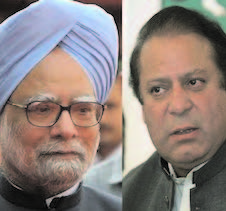
Tag: Nawaz Sharif

  • US hopes Pakistan is aware of its nuclear responsibilities

    US hopes Pakistan is aware of its nuclear responsibilities

    WASHINGTON (TIP): The US has said that it is confident that Pakistan is well aware of its responsibilities regarding its nuclear weapons. “The United States is confident that Pakistan is well aware of its responsibilities with respect to nuclear security and has secured its nuclear arsenal accordingly,” the State Department said in a statement on January 29.

    The US has stated this clearly earlier too, including in a State Department press statement of September 4, 2013 and the October 23, 2013 US-Pakistan Joint Statement issued as part of the visit of Pakistan Prime Minister Nawaz Sharif. This week’s Joint Statement was issued following the ministerial level US-Pakistan Strategic Dialogue stated that “Secretary Kerry expressed confidence in Pakistan’s commitment and dedication to nuclear security and appreciated Pakistan’s efforts to improve its strategic trade controls.”

    He also recognised that Pakistan is fully engaged with the international community on nuclear safety and security issues, the statement said. The US statement came after a new report in The New York Times raised questions over the security of the Pakistan’s nuclear arsenals. In Islamabad, Pakistan claimed that it follows best practises and standards set by the International Atomic Energy Agency to safeguard its nuclear assets and it has an impeccable record of safely operating nuclear power plants for over 40 years.

  • Pak PM Nawaz Sharif is a billionaire

    Pak PM Nawaz Sharif is a billionaire

    ISLAMABAD (TIP):
    Pakistani Prime Minister Nawaz Sharif is among the few parliamentarians who are billionaires, revealed statements of assets and liabilities of lawmakers for the year 2012-13 issued by the Election Commission of Pakistan (ECP). According to the declaration filed by Sharif, he owns six agriculture properties with over 1,700 canals worth Rs1.43 billion and a house in Upper Mall, Lahore valued at Rs 250m. The statement said that he has made investments of over Rs 13 million and has Rs 126 million in seven bank accounts. He has received Rs 197.4m in remittances from his son Hussain Nawaz as well. He owns a Toyota Land Cruiser (2010 model) as well as the 1973 and 1991 models of Mercedes Benz.

    The premier also owns a 1991 model tractor. His wife Kulsoom Nawaz owns a bungalow worth Rs100m. She owes Rs1.75m to two people. The other billionaires in the National Assembly are petroleum minister Shahid Khaqan Abbasi and three members from Khyber Pakhtunkhwa province – Khial Zaman, Raja Amir Zaman and Sajid Hussain Turi. The former speaker of National Assembly Fehmida Mirza declared property worth Rs 40 million. In the declaration, she priced her apartment at Global Lake View, Dubai, at Rs 1.6 million ($16000) which is being seen as an exceedingly low price. Independent Member of National Assembly Jamshed Dasti was declared the poorest parliamentarian with no assets apart from his salary.

    He did not fill his asset-declaration form and had informed the ECP of an account in a bank in the parliament house. He did not even show any cash in the account. The net assets of Imran Khan, chairman of Pakistan Tehreek-i-Insaf party, amounted to Rs29.6 million this year. Out of the 14 different properties he owned in Pakistan, he inherited eight while two were gifted. Khan has a Toyota Prado having estimated value of Rs 5 million. He also has Rs 13.6 million in a bank. Maulana Fazalur Rehman, chief of Jamiat Ulema-e-Islam party, declared his assets worth Rs6.5 million. He did not declare possession or ownership of any vehicle despite using SUVs for last many years.

  • India, Pak DGMOs agree on new peace mechanism along border

    India, Pak DGMOs agree on new peace mechanism along border

    ATTARI (TIP): After a year of hostility along the border in Jammu and Kashmir, India and Pakistan agreed to have in place new mechanisms to ensure peace and tranquility along the border. A decision to this effect was taken at a three-hour meeting between the Director Generals of Military Operations (DGMOs) of the two countries on the Pakistan side of the Wagah-Attari border today. The meeting, which was convened to draw up a “peace protocol” for the two armies, discussed ways to put in place additional mechanisms to ensure that the 2003 ceasefire in J&K was honoured.

    The ceasefire along the 198-km section of the International Border and the 749-km Line of Control (LoC) in J&K has been breached several times over the years. Indian Army’s DGMO Lt General Vinod Bhatia termed the meeting with his Pakistani counterpart Maj General Amir Riaz as “cordial, constructive and fruitful”. The two military officers discussed ceasefire violations. “We are looking forward to sustaining ceasefire and have decided to strengthen existing mechanisms for holding the ceasefire,” General Bhatia told mediapersons after the meeting. Major General Riaz walked up to the zero line along with the Indian officer as courtesy. The two delegations also had lunch with menu picked from shared culinary history of the two nations. On whether the matter of killing of five Indian soldiers was taken up during the meeting, Lt General Bhatia said: “We have discussed issues and we are moving forward.” The new mechanisms include two additional flag meetings at the level of Brigadier of either side in operational areas along the LoC.

    The number of points for flag meetings will remain unchanged. A joint statement issued later said: “A consensus was developed to make hotline contact between the two DGMOs more effective and result-oriented. It was also decided to inform each other if any innocent civilian inadvertently crosses the LoC in order to ensure his/her early return.” The Indian side had taken along figures of the 195 ceasefire violations that had taken place during 2013. The aim was to substantiate the fact that there was an attempt by Pakistani troops to counter any upcoming event in India by resorting to cross-border firing in Jammu and Kashmir. The dates showed increased activity ahead of major events, including political, sporting and cultural, in India.

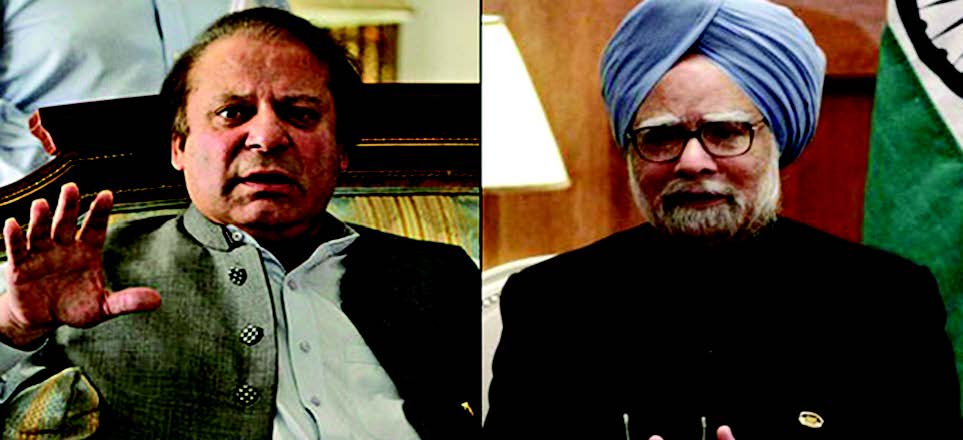
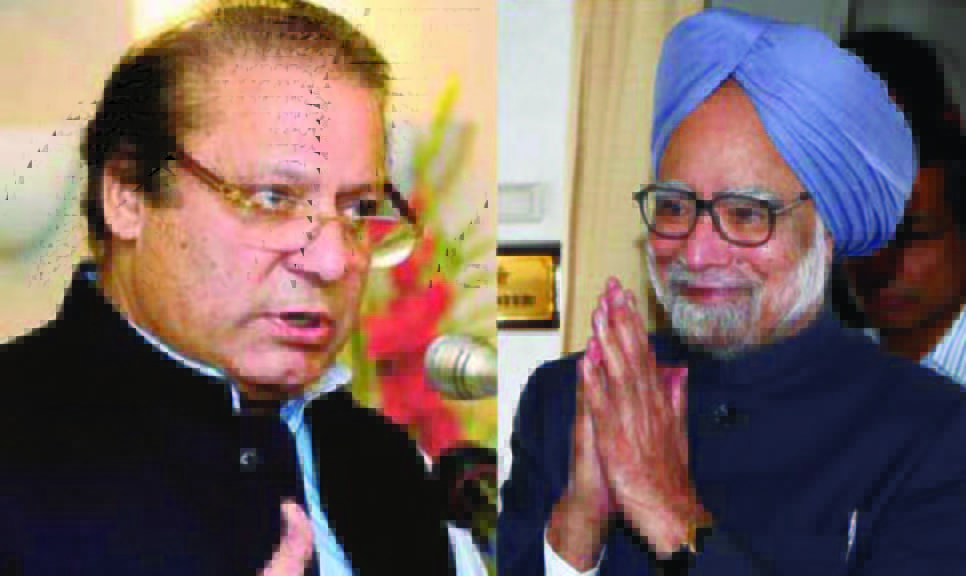
    Sources said the Pakistan DGMO reiterated his country’s old stand of allowing United Nationsappointed observers along the LoC to monitor peace. The Indian side turned down the request and the matter was not raised again. The United Nations Military Observers Group in India and Pakistan (UNMOGIP) was set up in 1949 following the Karachi agreement and New Delhi believed it had become redundant following the 1972 Simla Agreement, which talked about “bilateral resolution of all pending issues”. The meeting was an outcome of talks between Prime Ministers Manmohan Singh and Nawaz Sharif in New York in September at the height of tension triggered by the LoC flare-ups.

  • Shahbaz Sharif meets PM, extends invite to visit Pakistan

    Shahbaz Sharif meets PM, extends invite to visit Pakistan

    NEW DELHI (TIP): Pakistan Punjab Chief Minister Shahbaz Sharif met Prime Minister Manmohan Singh on Thursday and handed over an invitation from Pakistan Prime Minister Nawaz Sharif to visit Pakistan. Shahbaz Sharif, the younger brother of the Pakistan prime minister, was with Manmohan Singh for around 20 minutes in the morning. “He extended an invitation from Pakistan Prime Minister Nawaz Sharif to visit Pakistan and his village,” a source told IANS. Sharif called on the prime minister shortly after his arrival in New Delhi. Shahbaz Sharif “delivered a message of goodwill from Prime Minister Nawaz Sharif while emphasizing Pakistan’s desire to forge friendly and cooperative relations with India, in the interest of peace and prosperity of the people of the two countries and of the region”, said a Pakistan High Commission statement.

    The Pakistan Punjab chief minister also underscored the importance of resumption of dialogue and peaceful resolution of all issues. “The meeting was cordial, constructive and forward looking.” Shahbaz Sharif was accompanied by Special Assistant to the Pakistan Prime Minister Tariq Fatemi, Minister of State for Commerce Khurram Dastagir Khan and Provincial Minister for Education Rana Mashood Khan besides outgoing High Commissioner Salman Bashir. Shahbaz Sharif is here on the invitation of his Punjab counterpart in India, Parkash Singh Badal. He is to also to meet Commerce and Industry Minister Anand Sharma. He is slated to be the chief guest at the World Kabaddi Championship final in Ludhiana Saturday.

  • Kashmir a flashpoint for another India-Pak war, Nawaz Sharif says

    Kashmir a flashpoint for another India-Pak war, Nawaz Sharif says

    ISLAMABAD (TIP): Kashmir is a flashpoint that can trigger a fourth war between Pakistan and India anytime, Prime Minister Nawaz Sharif has said, seeking an early settlement of the issue. He also said he had a dream of seeing Indian Kashmir free and hoped to see it happen during his lifetime. “Kashmir is a flashpoint and can trigger a fourth war between the two nuclear powers at anytime,” he was quoted as saying by the Dawn daily in his brief address to the budget session of the ‘Azad Jammu and Kashmir (AJK) Council’ in Pak-occupied Kashmir yesterday.

    The press release issued by his office last night did not carry the above statement. The statement had however quoted Sharif as saying that the Kashmir issue should be settled according to the aspirations of the people and the UN resolutions as peace in the region was not possible without it. “The Prime Minister said that he had a dream of seeing held-Kashmir free from the Indian occupation and desired that this dream could turn into reality during his lifetime,” the statement said.

    About Indo-Pak relations, the Prime Minister categorically reiterated that it was India which indulged in the arms race, it said. “We were drawn into arms race by India,” he said. “If we had a choice, we could have diverted these expenditures to the social sector uplift and eradication of poverty,” he emphasised. Sharif also expressed his satisfaction over the improvement of situation on the Line of Control (LoC).

  • 26/11 ATTACKS / Five years on, Pak’s ‘sham’ trial continues

    26/11 ATTACKS / Five years on, Pak’s ‘sham’ trial continues

    NEW DELHI (TIP): Exactly a month back when Pakistan Prime Minister Nawaz Sharif met US President Barack Obama in Washington, the first thing the American leader inquired about was the progress in the trial of the seven accused in the 26/11 Mumbai terror attacks case in a Pakistani anti-terror court. Even the Americans are concerned over the fact that Pakistan has done precious little to bring to justice the masterminds of the audacious serial attacks on India’s financial capital, which left at least 166 persons killed and nearly 300 injured.

    Obama was only giving vent to his sense of frustration over the unending trial since there were four Americans among those killed. But the frustration is much more palpable in the corridors of power in New Delhi over the ‘sham trial’ as ties between India and Pakistan continue to plummet over justice being denied to the victims of the horrific attacks. As India observes the fifth anniversary of the Mumbai mayhem, Pakistan says New Delhi should not get fixated with Mumbai attacks while claiming that it was determined to take the Mumbai trial to its logical conclusion.

    There is little evidence to suggest that Pakistan is sincere about pursuing the trial while making tall claims about its commitment to proceed in the case. Not once but on several occasions in the past five years, Islamabad has complained that India has not provided it with sufficient evidence to proceed against the guilty. But an analysis of the amount of evidence India has submitted to Islamabad raises suspicions about Pakistan’s true intentions. Last month, India turned over five key documents to Pakistan, completing the full list of documents asked for by the neighbouring country for the trial of the accused.

    The Pakistan Judicial commission, which is probing h Mumbai attacks, was provided access to two key witnesses during its visit to Mumbai in September. The anti-terror court, which is conducting the trial of the seven accused presently in the custody of Pakistani authorities, has seen the change of judge on at least five occasions. Every time the court meets, it adjourns almost immediately without proceeding any further in the case.

  • Pak returns Sarabjit’s belongings, family says items incomplete

    Pak returns Sarabjit’s belongings, family says items incomplete

    ATTARI (TIP): Teary-eyed family members of late Sarabjit Singh received his belongings from Pakistan at the Attari border on November 28. While receiving the belongings, which were handed over to Indian authorities in three cardboard cartons, they said some items of Sarabjit, including his diary, were not returned by Pakistan. An emotional Dalbir Kaur, sister of Sarabjit, vowed not to rest until she got her brother’s diary back from Pakistan. “During my visits to Kot Lakhpat jail in Lahore, where Sarabjit was lodged, he had told me about his daily diary in which he had written about his and other Indian prisoners’ ill-treatment by the prison staff. He had also written that he was humiliated over small issues by Pakistani jail officials.

    That diary would have exposed Pakistan before the international community,” she said about the relevance of the diary of her brother. Dalbir also alleged that Pakistan leaders had betrayed her on the issue of release of her brother and once again they had done the same thing by not handing over Sarabjit’s diary. “Nawaz Sharif apnay aap ko Sharif kehta hai, par woh sharif nahi hai aur Pakistan pak nahi napak hai (Nawaz Sharif claims to be innocent but he is not and Pakistan is not pious but sinful),” she said.

    She also blamed Pakistan for sending only handful of belongings of her brother and not all the items he used in Lahore jail, including a Gutka (Sikh religious book). Earlier, Narain Singh, attache (consular), Indian high commission, Islamabad handed over 36 items of Sarabjit, including a copy of Quran, to Amritsar deputy commissioner (DC) Ravi Bhagat in presence of executive magistrate P S Goraya and deputy inspector general (border range) Lok Nath Angra. The items were then handed over to Sukhpreet Kaur, wife of Sarabjit, in presence of his sister Dalbir and daughters Poonam and Swapandeep Kaur, all of whom were wearing white clothes.

  • Planning wave of revenge attacks in Pakistan: Taliban

    Planning wave of revenge attacks in Pakistan: Taliban

    DERA ISMAIL KHAN (TIP): The Pakistani Taliban announced on November 8 they would orchestrate a wave of revenge attacks against the government after naming hardline commander Mullah Fazlullah as their new leader. The rise of Fazlullah, known for his fierce Islamist views and rejection of peace talks, by the Taliban shura, or leadership council, a day earlier follows the killing of Hakimullah Mehsud, the previous leader, in a US drone strike on November 1. “We will target security forces, government installations, political leaders and police,” Asmatullah Shaheen, head of the shura, told Reuters by telephone from an undisclosed location. He said the Taliban’s main target included army and government installations in Punjab province, the political stronghold of Prime Minister Nawaz Sharif. “We have a plan. But I want to make one thing clear. We will not target civilians, bazaars or public places. People do not need to be afraid,” Shaheen added. Pakistan publicly condemns US drone strikes as a breach of its sovereignty but in private officials admit the government broadly supports them. Militants are mainly holed up in remote areas on the Afghan border where the army has no presence.

    “Pakistan has full information about drone attacks,” said Shaheen. “Pakistan is a slave of America. It is an American colony.” The Pakistani Taliban are fighting to topple the government and impose Islamist rule in the nucleararmed nation. Attacks have been on the rise since Sharif came to power in May, a concern for global powers already unnerved by the possible security implications of the planned withdrawal of most US-led troops from neighbouring Afghanistan in 2014. Mehsud and his allies had been tentatively open to the concept of ceasefire talks with the government, but Fazlullah, whose men were behind the attack on schoolgirl Malala Yousafzai last year, strongly opposes any negotiations. No meaningful talks have taken place since Sharif’s election and Fazlullah’s rise could signal the start of a new period of uncertainty and violence in the already unstable region.

  • A great game that all sides can win

    A great game that all sides can win

    Pakistan is averse to discussing Afghanistan with India, fearing that would legitimize India’s interests in that country. But it would be in the interests of all three to do so, says the author.

    Two questions have increasingly taken centre-stage in discussions about what might happen in Afghanistan after United States withdrawal in 2014. One, if it will become a proxy battlefield for India and Pakistan, the two big South Asian rivals, and two, if anything can be done to prevent this.

    William Dalrymple, for instance, wrote in an essay for Brookings Institution this year that beyond Afghanistan’s indigenous conflicts between the Pashtuns and Tajiks, and among Pashtuns themselves, “looms the much more dangerous hostility between the two regional powers – India and Pakistan, both armed with nuclear weapons. Their rivalry is particularly flammable as they vie for influence over Afghanistan.

    Compared to that prolonged and deadly contest, the U.S. and the ISAF [International Security Assistance Force] are playing little more than a bit part – and they, unlike the Indians and Pakistanis, are heading for the exit.” The assertion is not new.Western commentators have long put out that the new great game in Afghanistan is going to be between India and Pakistan.

    The theory goes that India’s search for influence in Afghanistan makes Pakistan insecure, forcing Islamabad to support and seek to install proxy actors in Kabul to safeguard its interests, and that this one-upmanship is one of the biggest stumbling blocks to stability in that country. As 2014 nears, the idea has naturally gained better traction. India would have several problems with this formulation.

    The foremost is that such a theory panders to the Pakistan security establishment’s doctrine of strategic depth, in the pursuit of which it sees a third, sovereign country as an extension of itself. India, for its part, views its links to Afghanistan as civilization, and its own interests there as legitimate. Its developmental assistance to Kabul now tops $2 billion and it has undertaken infrastructure projects in Afghanistan.

    And, if the situation allowed, Afghanistan could become India’s economic gateway to Central Asia. New Delhi also believes the “proxy war” theory buys into Islamabad’s allegations against India that it refutes as baseless. Since about 2005, Islamabad has alleged that Indian consulates in Afghanistan, especially in Jalalabad and Kandahar, which are close to the Pakistan-Afghan border, are a cover for anti-Pakistan activities.

    It alleges that Afghanistan is where India arms and funds Baloch secessionists. And after the Taliban unleashed a relentless campaign of terror inside Pakistan, allegations are rife that sections of them are on India’s payroll. The Indian position would be that if there is a war, it will actually be a one-sided one, in which Pakistan targets Indian interests and Indians in Afghanistan through its proxies.

    The latest was the attempted bombing of the Jalalabad consulate in August. The deadliest, the bombing of the Kabul embassy in July 2008, was linked by the Americans too to the Haqqani network, a faction of the Taliban that is widely viewed as a proxy of the Pakistan security establishment. Despite repeated prodding by the Americans, the Pakistan Army has made it clear it will not go after safe havens of the Haqqanis in the Federally Administered Tribal Areas.

    NEW DELHI’S CONCERN

    Concerned that any instability in Afghanistan is certain to spill over across Indian borders, over the last two years New Delhi has suggested repeatedly to Islamabad that the two sides should talk about Afghanistan. But as Pakistan has emerged as a key player in facilitating talks with the Taliban, and while it has no problems talking to every other country with an interest in Afghanistan, including Russia and China, it has cold-shouldered India.

    The ideal course would of course be for trilateral talks involving Kabul, Islamabad and New Delhi. For, Afghanistan is not just a piece of strategic real estate but a sovereign country made up of real people. Right now, though, Pakistan is averse to any idea of talks on Afghanistan, believe as it does that India has no role in there, and that talking would give legitimacy to New Delhi’s claim that it does. It already resents the India- Afghanistan Strategic Partnership Treaty.

    DIVERGENCE ON VIEW

    The divergence surfaced starkly at a recent Track-2 dialogue convened by Friedrich Ebert Stiftung – a German think tank associated with the Social Democratic Party, which brought together retired bureaucrats, former generals, journalists, civil society representatives as well as one politician each from the two countries.

    One of the issues that came up for discussion was if there was at all a need for India and Pakistan to talk about Afghanistan. Most, but not all, Pakistani participants and some Indians too were of the view that talking about Afghanistan was impossible so long as tension between India and Pakistan remained, and that right now Islamabad was in any case too preoccupied with the ‘reconciliation’ process in Afghanistan.

    A suggestion was made by an Indian participant that in view of the approaching U.S.-set deadline for the withdrawal of its troops, and the possibility that a dialogue on other subjects between India and Pakistan was unlikely to resume until after the 2014 Indian elections, the two sides should consider discussing Afghanistan as a standalone subject in the interim. But this was dismissed by many Pakistani participants.

    Why should Pakistan jump to talk on something simply because India considered it important, asked one, when on every other issue, New Delhi behaves as if talks are a huge concession to Islamabad – including the recent Manmohan Singh-Nawaz Sharif summit in New York. But a far-sighted approach perhaps would be to consider that none of the likely scenarios in Afghanistan after the U.S.

    drawdown looks pretty, and to weigh the consequences for Pakistan itself especially if, as one Pakistani participant rightly suggested, the Taliban refuse to play Islamabad’s puppet; after all, they did not when they ruled Afghanistan from the late 1990s to 2001. As well, the Afghan presidential election, to be held in April 2014, is sure to have its own impact, though it is still anyone’s guess if it will be held and whether the country will make a peaceful democratic transition. In Pakistan, many commentators believe the backwash from Afghanistan post-2014 is dangerously going to end up on its western/north-western borders.

    Strategic depth no longer holds Pakistanis in thrall the way it used to in the last century. A Pakistani participant pointed out, only half-jokingly, that his country had ended up providing strategic depth to Afghanistan through its two wars, rather than the other way around.

    As for the view that Pakistan and India cannot talk about Afghanistan without repairing their own relations first, it might be worth considering if such a discussion could actually contribute to reducing bilateral tensions, given that the concerns over Afghanistan do not exist in a vacuum but arise from other problems in the relationship between the two.

    It could even provide the opportunity the Pakistan side has long wanted to bring up with New Delhi its concerns about Balochistan. By rejecting Kabul’s entreaties to New Delhi to play a bigger role in securing Afghanistan post-2014 than just training Afghan security forces, India has signaled it is sensitive to Pakistan’s concerns. As Afghanistan’s immediate neighbor, Pakistan is right to claim a pre-eminent stake in what happens in there, and India should have no quarrel with this. As was pointed out at the Track-2 meeting, Pakistan has suffered the most from the two Afghan wars; it provided refuge to Afghans during the first war in the 1980s. More than 100,000 Pakistanis live in that country.

    The two countries are linked by ethnicity, culture and religion; over 55,000 Afghans cross daily into Pakistan through the two crossing points Torkham and Chaman, not to mention the hundreds who cross over the Durand Line elsewhere. What Pakistan could do in return is to acknowledge that as an important regional actor, India too has legitimate interests in Afghanistan, and also as a route to Central Asia.

    After all, if Pakistan considers itself to be the guard at the geo-strategic gateway to Afghanistan, it must also recognize that squatting at the entrance can only serve to neutralize rather than increase the gate’s geostrategic importance. On the other hand, India-Pakistan cooperation in Afghanistan could open up a world of opportunities for both, and who knows,maybe even lead to the resolution of some old mutual problems. As both countries grapple with new tensions on the Line of Control, Afghanistan may seem secondary on the bilateral agenda. In reality, it may be too late already.

  • Doctor who helped track Osama bin Laden ‘not a hero’: Pakistan

    Doctor who helped track Osama bin Laden ‘not a hero’: Pakistan

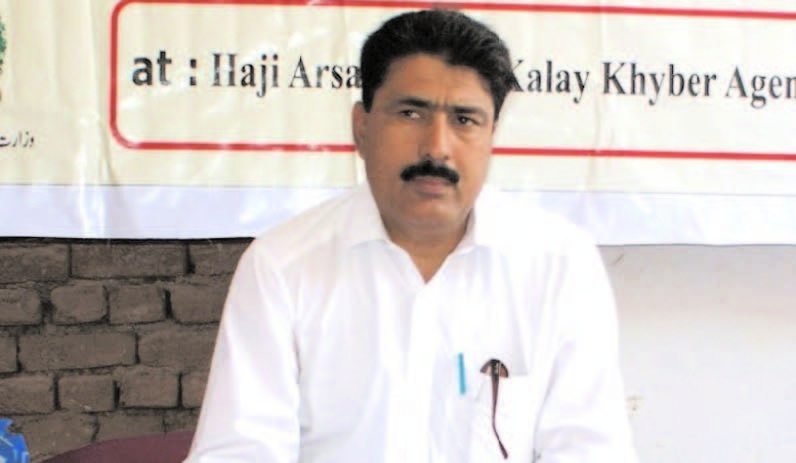
    ISLAMABAD (TIP): Pakistan has told the US that Shakil Afridi, the jailed doctor who helped the CIA track al-Qaida chief Osama bin Laden, is not a hero and his fate will be decided by the courts. Foreign secretary Jalil Abbas Jilani said Pakistan had told the US that Afridi was involved in “criminal activities” that violated the laws of the land. Addressing a news briefing in Washington on Prime Minister Nawaz Sharif’s ongoing visit to the US, Jilani said the doctor was “not a hero and was facing cases in courts”. Pakistan also told the US that the Lashkar-e-Taiba had been banned and action could be taken against its founder, Hafiz Mohammad Saeed, if substantial evidence is made available, he said. Responding to questions after the US house committee on foreign affairs demanded the release of Afridi, Jilani said that the Pakistani courts would decide his fate.

    The demand for Afridi’s release was raised during a meeting between the US house committee and a Pakistani delegation that included finance minister Ishaq Dar, Jilani and Sartaj Aziz, the premier’s adviser on foreign affairs and national security. The two sides discussed matters related to the war on terror, militant groups like the LeT, civil nuclear programme, drone strikes, energy crisis, educational reforms, regional stability and trade, Dawn newspaper reported. Afridi was arrested shortly after the May 2, 2011 raid by US commandos that killed bin Laden. He was subsequently convicted by a court in the tribal belt on a charge of treason for alleged ties to the Lashkar-e-Islam militant group. On August 29, a judicial official overturned the 33-year jail term given to Afridi and ruled that the judge in the tribal areas had exceeded his authority when he handed down the sentence last year. The official also ordered a fresh trial. The US has been pressing Pakistan to release Afridi, who ran a fake vaccination campaign in Abbottabad to gain access to bin Laden’s compound.

  • Former Pakistan PM, officials deny US drone collusion

    Former Pakistan PM, officials deny US drone collusion

    ISLAMABAD (TIP): Pakistani officials and former prime minister Yousuf Raza Gilani on October 23 denied a report that they had approved US drone strikes on the country’s soil.Washington Post on october 21 quoted leaked secret documents as saying Pakistan had been regularly briefed on strikes up till late 2011 and in some cases had helped choose targets.The purported evidence of Islamabad’s involvement came as Prime Minister Nawaz Sharif met US President Barack Obama at the White House and urged him to end the attacks, which are widely unpopular with the Pakistani public.A Pakistani foreign ministry spokesman said the anti-drone stance of the Sharif government, elected in May, was clear and any past agreements no longer applied. Pakistani security officials claimed the story was a US attempt to undermine Sharif’s position and reduce criticism of the drone campaign, days after an Amnesty International report warned some of the strikes could constitute war crimes.Washington Post’s revelations concerned strikes in a four-year period from late 2007, when military ruler Pervez Musharraf was in power, to late 2011 when a civilian government had taken over. Gilani, prime minister from 2008 until June last year, vehemently denied giving any approval for drone strikes. “We have never allowed Americans to carry out drone attacks in the tribal areas,” Gilani told AFP. “From the very beginning we are against drone strikes and we have conveyed it to Americans at all forums,” he added. Islamabad routinely condemns the strikes targeting suspected Taliban and Al-Qaeda militants in its northwest tribal areas. But evidence of collusion or tacit approval has leaked out in recent years.

  • Pak’s list of grouses grow, US unmoved

    Pak’s list of grouses grow, US unmoved

    WASHINGTON (TIP): Pakistan’s Prime Minister Nawaz Sharif trooped into the White House on October 21 for a meeting with President Obama in the face of multiple repudiations from the United States over Islamabad’s pet peeves: Drone strikes on Pakistan, its gripes against India over the Kashmir issue, and pleas that Washington treat it on par with New Delhi by accepting it as a nuclear equal. The meeting with the U.S President was going on at the time of writing and there was no readout yet, but the Obama administration made it clear on Tuesday that it did not particularly share Pakistan’s perception on any of these issues, starting with its handwringing over drone attacks on its lawless territory, accentuated by a well-timed Amnesty report highlighting some civilian casualties.White House spokesman Jay Carney set the stage for a rejection of Pakistan’s plea to stop drone strikes, saying U.S counterterrorism operations are precise, lawful, and effective, and they in fact minimize civilian casualties that would be greater if other conventional means were adopted to eliminate terrorists.

    “The United States does not take lethal strikes when we or our partners have the ability to capture individual terrorists. Our preference is always to detain, interrogate, and prosecute.We take extraordinary care to make sure that our counterterrorism actions are in accordance with all applicable domestic and international law and that they are consistent with US values and US policy,” Carney said, adding, “Before we take any counterterrorism strike outside areas of active hostilities, there must be near certainty that no civilians will be killed or injured, and that is the highest standard we can set,” he said. However, both sides are expected to project language that will minimize differences on this subject, with Washington promising to ease off the strikes as more and more suspected terrorists are eliminated, and praising Pakistan’s fight against terrorism despite its dubious credentials on this count. The U.S media was already predicting the pitch would be taking spin, with a headline in one newspaper reading, ”drones? What drones? Obama and Pakistan’s Sharif to accentuate the positive.”

    Various agreements, including one on science and technology cooperation, are being wheeled out to cover the tracks of disagreements, including over India’s role in Afghanistan, and more broadly the growing regional and global heft that Washington is helping New Delhi develop. Earlier this week, the Obama administration snubbed Sharif over his plea that Washington should mediate between India and Pakistan over the Kashmir issue, saying it was for the two sides to take care of this issue. In fact, despite the controversy over Sharif ’s reported putdown of Prime Minister Manmohan Singh (that he brings his complaints against Pakistan to Washington), it is Pakistan that has kept up an incessant reference to India, making it very much part of its gripe list. The Obama administration has entertained this only in the sense of trying to wean Pakistan out of its New Delhi complex of constantly seeking parity with it.Washington, US officials indicated ahead of the meeting, wants to have strong ties with Pakistan on its own without sharing its prejudice against India. The White House has not scheduled a media interaction at the Obama-Sharif meeting, much less an extended news conference, fearful of awkward questions.

    Even at a think-tank event on Tuesday, where Sharif made a speech, only the host former National Security Advisor Stephen Hadley posed three softball question before closing the meeting, keeping audience out of it. But it is not hard to discern that Sharif has had a torrid visit so far. There have been protocol putdowns, including him being entertained by Secretary of State John Kerry for dinner after he arrived on Sunday (while Obama was out playing golf with White House staffers), cooling his heels on Monday and Tuesday while the Obama dealt with other issues, and on Wednesday, having to breakfast with vicepresident Joe Biden (who, according to the White House schedule, then proceeded to have lunch with Obama) before the U.S President deigned to see him in the afternoon. The charitable explanation for all this is the Sharif is Pakistan’s Prime Minister, not President, but that brings to attention the extraordinary deference Obama has shown to Prime Minister Manmohan Singh. Sharif also faced a rough time on the Hill on Tuesday when he was questioned closely by the House Foreign Relations Committee over the continued incarceration of Dr Shakil Afridi, who helped the U.S nail Osama bin Laden, and Pakistan’s continued patronage of Lashkar-etaiba. “I specifically pressed the Prime Minister to release Dr. Shakil Afridi and encouraged him to ensure that his nation is in fact a responsible and effective partner in countering terrorism, proliferation and violent extremism in the region,” Committee chairman Ed Royce said later. His ranking colleague Eliot Engel was equally unsparing.

  • Obama asks Sharif why trial of 26/11 accused has not started

    Obama asks Sharif why trial of 26/11 accused has not started

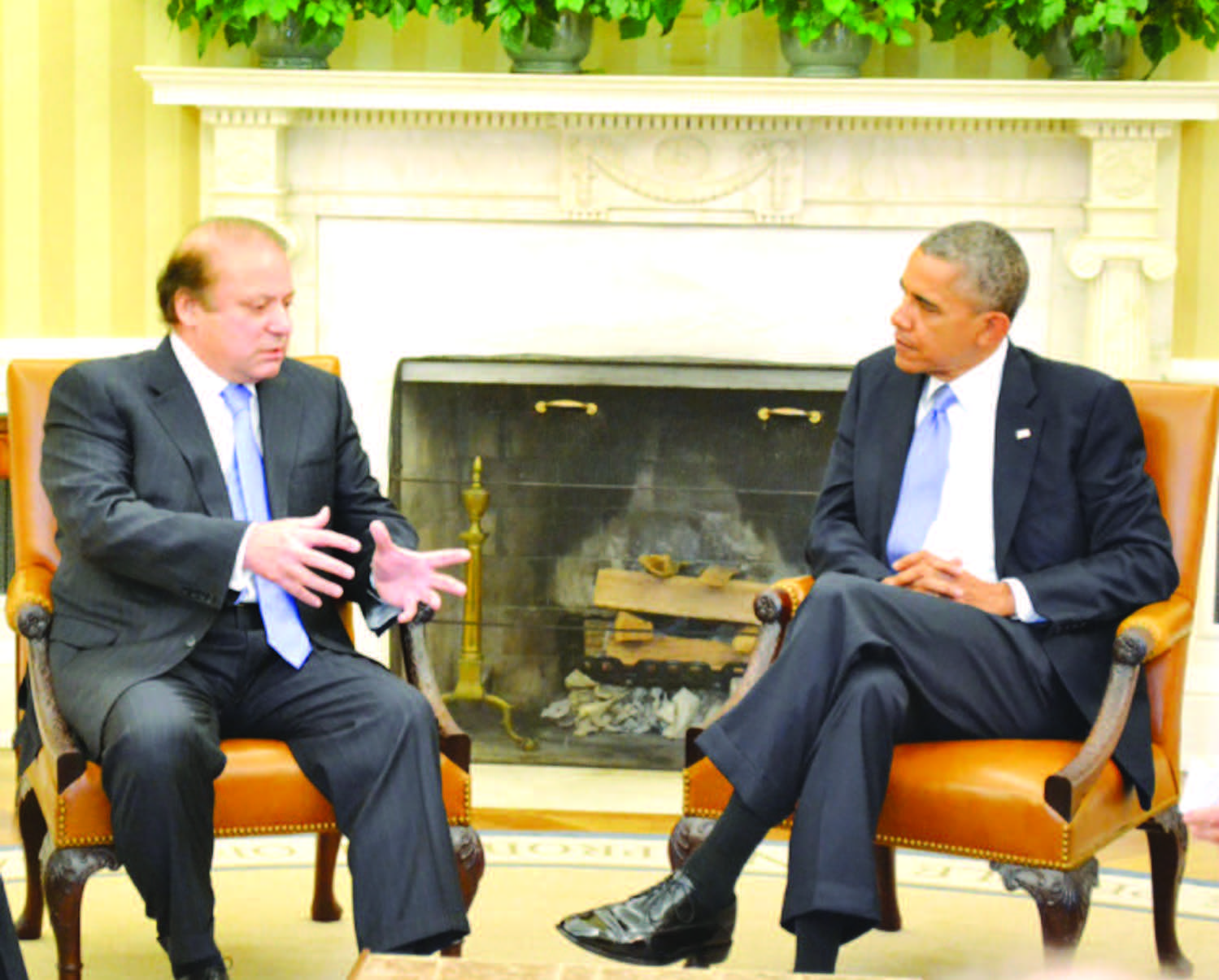
    WASHINGTON (TIP): Backing India’s concerns over the slow pace of progress in the 26/11 case in Pakistan, US President Barack Obama, October 24, asked the visiting Pakistan Prime Minister Nawaz Sharif why the trial of Mumbai attackers has not started. “He (Obama) asked, why the trial of the (Mumbai) terrorist attack in India has not started yet,” Sharif told reporters immediately after his over two-hour meeting with Obama at the Oval Office of the White House. During the meeting, the US President also raised the issue of Jamaat-ud-Dawa (JuD), cross border terrorism and Dr Shakil Afridi, the Pakistani doctor who helped the CIA track down al-Qaeda chief Osama bin Laden and has been imprisoned, Sharif said. “He (Obama) has raised the issue of (Dr Shakil) Afridi. He spoke about cross-border movement. He also talked about Jamaat-ud- Dawa,” the Pakistan Prime Minister said, without giving details. Speaking in chaste Urdu, Sharif told reporters that Pakistan’s relationship with India was discussed at length, including Kashmir, but did not give details of what aspect of Kashmir issue he raised; nor did he talk about the response from Obama on this issue.

    Obama, after the meeting with Sharif, said that the Pakistan Prime Minister was taking a “wise path” in exploring how decades of tension between India and Pakistan can be reduced. “I think he (Sharif) is taking a very wise path in exploring how decades of tension between India and Pakistan can be reduced, because, as he points out, billions of dollars have been spent on an arms race in response to these tensions and those resources could be much more profitably invested in education, social welfare programs on both sides of the border between India and Pakistan, and would be good for the entire subcontinent, and good for the world,” Obama told reporters in a joint media appearance with Sharif. In a joint statement issued after the meeting, Obama welcomed recent engagements between Sharif and Singh and expressed hope that this would mark the beginning of a sustained dialogue process between the two neighbors, aimed at building lasting peace in South Asia and resolving all outstanding territorial and other disputes through peaceful means. Obama said the two leaders had an opportunity to discuss India after the meeting of the Prime Ministers of India and Pakistan in New York on the sidelines of the UN General Assembly.

    Describing his meeting with Obama “a most cordial and comprehensive exchange of views” on matters of bilateral interest and issues of regional concern, Sharif said he told the US President about his sincere commitment to build a cordial and cooperative relationship with India. He also talked about “efforts to peacefully resolve all our outstanding issues, including Kashmir.” Sharif said that terrorism constitutes a common threat. “It is as much a concern to us as it is for India. We need to allay our respective concerns through serious and sincere efforts without indulging in any blame game. I also assured the President that as a responsible nuclear state, Pakistan will continue to act with maximum restraint and work toward strengthening strategic stability in South Asia,” Sharif said. In the joint statement, Obama and Sharif stressed that improvement in Pakistan- India bilateral relations would greatly enhance prospects for lasting regional peace, stability, and prosperity, as it would significantly benefit the lives of citizens on both sides of the border. “Obama welcomed steps taken by Pakistan and India to improve their economic relations, including by exploring electricity and gas supply agreements, developing a reciprocal visa regime, and expanding bilateral trade,” it said.

    Conceding that Pakistan is in the current situation today because of the action and deed of its own leaders in the past, Sharif said: “We need to keep our house in order. We have not taken care of our own house. As a result of which, the entire nation is suffering. We have to take Pakistan out of this situation.” He sought the support of the media, the civil society and people of Pakistan in this regard. “Both of us discussed strengthening and deepening of bilateral relationship. We had wide ranging discussions on issues including economy, Pakistan’s energy, education, extremism in Pakistan. We talked about Afghanistan; we talked about relationship with India. This included Kashmir. We talked on drones. We talked about Aafia Siddiqui,” Sharif said. Obama asked as to what the US can do for Pakistan, to which Sharif sought the policy of trade not aid. “When he (Obama) asked what we (US) can do for Pakistan, I said, I do not need any aid from you. We want to increase our economic relationship. Please open your market for Pakistani products. This is more than enough for us,” Sharif said. “He asked what we can do to address your energy issue. I said you should encourage your people, the private sector to come to Pakistan and invest in the energy sector. Pakistan is providing very good opportunities for them,” Sharif said. “We are trying to establish peace and stability in Pakistan. We hope that peace would be established in Karachi, a commercial hub. After lot of thought and determination, we have started operation there (in Karachi),” the Pakistan Prime Minister said. Sharif said he also appraised Obama on the peace talks with the Tehrik-e-Taliban Pakistan (TTP). Sharif left for Pakistan after the talks, concluding his four-day visit to the US, the first by a Pakistani head of State in more than five years.

  • US-India Relations Hit a Rough Patch

    US-India Relations Hit a Rough Patch

    The author feels that there are a number of vital issues which are unlikely to be settled within the tenures of either Obama or Singh, leaving a lingering note of ambivalence in the US-India relationship even as it deepens outside of the high politics.

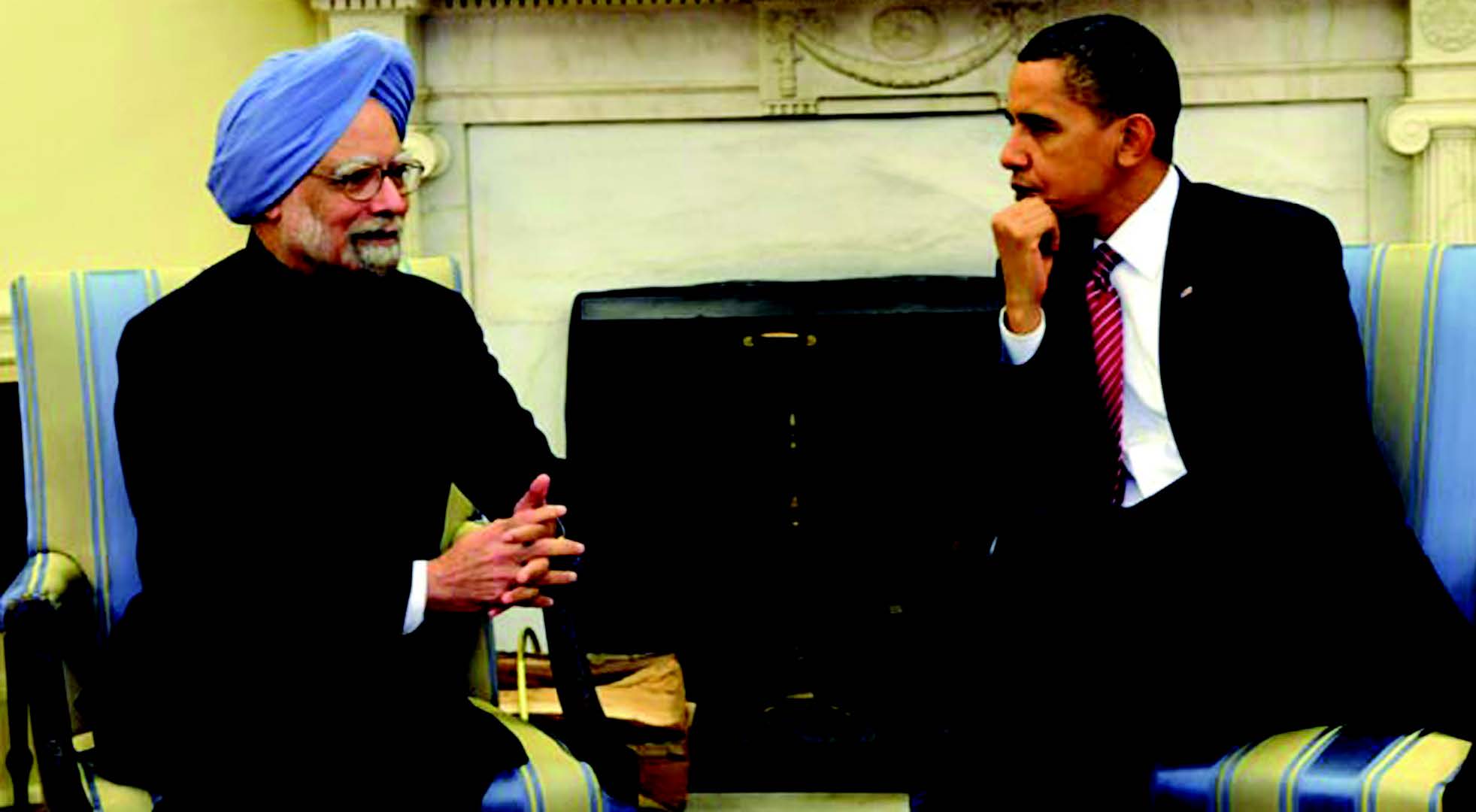
    When Indian Prime Minister Manmohan Singh visited Washington last month for the first time in four years, the mood was distinctly subdued. India’s once-stratospheric growth rate is stubbornly depressed. The Indian government is low on political capital and stuck in risk-averse mode until next year’s general elections, with a huge question mark over Singh’s personal future. Most Indians anyway focused on Singh’s New York meeting with his Pakistani counterpart Nawaz Sharif – underwhelming, as it turned out, and marred by a perceived slur – rather than his meetings with President Obama. More generally, the promise of USIndia relations remains far below the levels anticipated only a few years ago.

    Why the stasis?
    There are any number of reasons. Indian journalist Indrani Bagchi suggests that ‘there remains a strong lobby within this government starting with [ruling Congress Party chairwoman] Sonia Gandhi and [Defense Minister] AK Antony downwards, which retains an instinctive aversion to America’. That same government’s slow rate of economic reform irks American companies who want to invest in India. In particular, a strict nuclear liability law limits those companies’ ability to exploit a landmark civil nuclear cooperation agreement initiated by the Bush administration in 2005. Also, India’s Byzantine procurement rules madden the American defense companies eager to sell into what is one of the few growing arms markets in the world. A sense prevails that the low-hanging fruit in the bilateral relationship was picked some years ago. But one less-noticed problem is that the limited bandwidth of US foreign policy is presently occupied by issues in which India is either wary of US policy or simply apathetic.

    The Middle East
    In his speech to the United Nations General Assembly on 24 September, President Obama noted that ‘in the near term, America’s diplomatic efforts will focus on two particular issues: Iran’s pursuit of nuclear weapons and the Arab-Israeli conflict’. India has much to gain from a rapprochement between Iran and the United States, not least the ability to once again freely import Iranian oil. India was circumventing international sanctions by paying for a diminished flow of Iranian oil in rupees, but the new Iranian government is insisting that India can only pay for half this way. India is a bystander rather than active participant in the broader dispute, watching from the sidelines as the P5+1 bloc, which includes Russia and China, participates in negotiations. On Syria, India is sympathetic to the regime of President Bashar al-Assad. It views the issue through the lens of the Afghan jihad in the 1980s, which Indians see as indelibly associated with the subsequent uprising in Kashmir and the growth of anti- Indian militancy. When the Indian Government summoned the Syrian Ambassador in Delhi last month, it was not because of Syrian policies but because the ambassador had alleged that Indian jihadists were fighting with the rebels. The ambassador stated, tellingly, that ‘he was always deeply appreciative of India’s position on Syria’.

    India unsurprisingly opposes efforts to arm the Syrian rebels, tends to see the armed opposition as irredeemably compromised by jihadists and reflexively opposes US proposals for military action, particularly outside the ambit of the UN Security Council. India has already had to abandon several oil fields in Syria and, in September 2013, India’s foreign secretary even referred to an existing Indian line of credit to the Syrian government. Yet, despite these equities, India has no leverage over the parties to the conflict. In May, an Iranian suggestion of greater Indian involvement went nowhere. There is little that Singh would usefully have been able to say to Obama on the subject. At a broader level, the more the Middle East distracts from US attention to Asia- Pacific – including the so-called ‘pivot’ of American military forces eastwards – the less high-level attention India receives in Washington. India was not mentioned once in Obama’s UN address (to compare: China was mentioned once, Iran 26 times, and Syria 20).

    Afghanistan
    India’s attitude to US policy in Afghanistan is even more conflicted. India is ostensibly supportive of US policy, and has formally signed on to an Afghan-led peace process. But Indian officials and strategists scarcely disguise their discomfort towards what they see as undue American haste in withdrawing troops, an overeagerness to accommodate the Taliban as part of political reconciliation, and a continued indulgence of Pakistan despite its support for Afghan insurgents. India felt that its views were vindicated by the June debacle over the opening of a Taliban office in Doha, which deviated from the agreed protocol, handed a propaganda victory to the Taliban, and angered the Afghan government. Indian national security reporter Praveen Swami summed up many Indians’ views in complaining that the US was ‘subcontracting the task of keeping the peace in Afghanistan to the ISI’, Pakistan’s premier intelligence service.

    In recent months, Indians have taken offence at statements by James Dobbins, the US Special Representative for Afghanistan and Pakistan, echoing earlier Indian anger at the late Richard Holbrooke, and have chafed at what they see as a Western equivalence between Indian and Pakistani policy in Afghanistan. For their part, US and British officials have grown increasingly frustrated with India’s approach to the issue, arguing that India offers no plausible alternative to the policy of reconciliation given the long-term weakness of the Afghan state. Yet it is in Obama’s interests to assuage Indian concerns, emphasize that reconciliation with the Taliban will be constrained by the established ‘red lines’, that the US will not abandon counterterrorism efforts in Afghanistan after 2014, and that India’s role in Afghanistan is not only welcome, but also necessary to the strengthening of the Afghan state. India rebuffed Afghan President Hamid Karzai’s request for arms earlier this year, wary of provoking Pakistan. But one area that deserves more discussion is greater direct cooperation between India and the NATO-led coalition in Afghanistan to train and equip Afghan National Security Forces (ANSF).

    According to one report, Obama asked Singh last week for an ‘increased effort’ in Afghanistan, although it’s unclear whether this included an implied or explicit training dimension. India, entirely reasonably, sees a potential eastward flow of militants from Afghanistan and Pakistan as a major security threat, particularly with violent trends in Kashmir worsening this year. India would therefore be particularly receptive to a US commitment to monitor and disrupt militant movement in the years after 2014. In truth, it will be difficult to make progress on these issues until Washington settles its own internal debates over what its posture in Afghanistan will be after 2014 (for example, how many (if any) troops will remain in a training capacity?), which in turn will depend on the peace process itself, President Karzai’s domestic political calculations in the face of presidential elections next year, the integrity of that election, and trends in Afghanistan.

    Where next?
    The level of US-India tension should not be exaggerated. It is telling that recent revelations over US intelligence collection against Indian diplomatic targets have, unlike in the case of Brazil, had negligible impact on the relationship. Indian officials chose to brush the issue under the carpet, presumably hoping that the issue had little domestic salience and perhaps even tacitly acknowledging that the NSA’s activities against Indian internet traffic were indirectly beneficial to Indian policy objectives. Twenty years ago, the Indian response may have been very different. It is these changes in tone that convey strategic shifts as much as any large policy initiative. And although the two countries differ on the contentious big-picture issues outlined above, this has not prevented the relationship from advancing on other tracks. In September, US Deputy Secretary of Defense Ashton Carter visited India to push ahead with the bilateral Defense Trade Initiative (DTI), which Carter co-chairs with India’s National Security Advisor, Shivshankar Menon.

    Carter reiterated his suggestion, dating from last year, that US and Indian firms cooperate to produce military equipment – including helicopters, nextgeneration anti-tank missiles, mine systems, and naval guns – for both countries’ use. India has been bafflingly slow and reticent to respond to these overtures, despite the possibility of much-needed technology transfer to Indian industry (though many analysts are skeptical as to its capacity for technology absorption). The negotiations nevertheless reflect the US perception that the defense strand of its relationship with India are a priority. The road ahead is rocky. Over the next eighteen months, the US-India relationship will be severely buffeted by US policy towards Afghanistan. As the American drawdown accelerates, one possibility is that the US intensifies diplomatic efforts to peel away moderate factions within the Afghan Taliban, Whether that amounts to anything or not (and few are optimistic) the process is certain to involve at least a period of deeper USPakistan consultations, at the expense of India. Later this month, for instance, a fourth Afghanistan-Pakistan-UK trilateral summit will take place in London.

    India has quietly seethed at the previous three, viewing them as a coordinated effort to reduce Indian influence. Yet, for the United States at least, the centre of gravity of the US-India relationship is not Afghanistan, but China. The Middle East’s fast-moving and highly visible crises have briefly distracted from a slow-moving background trend: the political and economic rise of China. Yet this remains where Indian and American strategic interests are most collectively at stake, if not necessarily congruent. Following India’s most recent crisis with China, involving deep Chinese incursions into disputed territory a few months ago, New Delhi’s instinctive response was not to make a prominent feint towards Washington – something that might have been the natural response of other states eager to balance against Beijing – but to engage China more intensively, including on the border dispute itself. Indeed, Singh will make a trip to Beijing next month, with indications that he may sign an upgraded border agreement. Nothing better underscores how India’s internal debate over the desired scope of its relationship with the United States is unsettled, on-going, and erratic. More generally, much of India’s press and strategic community have accepted the popular narrative that American leadership, as well as American power, is in decline, and that US reliability is therefore in question. These issues are unlikely to be settled within the tenures of either Obama or Singh, leaving a lingering note of ambivalence in the USIndia relationship even as it deepens outside of the high politics.

  • Pakistan’s new envoy to US was once expelled from India

    Pakistan’s new envoy to US was once expelled from India

    WASHINGTON (TIP): Pakistan has appointed as its ambassador to the United States an envoy who was once expelled from New Delhi for “indulging in activities incompatible with his official status.” Typically, that’s officialese for spying, but in that 2003 episode, Jalil Abbas Jilani was packed off from New Delhi for allegedly supplying cash to the Hurriyat leadership. Jilani, currently Pakistan’s foreign secretary, has been named by the Nawaz Sharif government as the country’s ambassador to Washington, filling a high-profile post that has remained vacant for several months after the resignation of Sherry Rehman, who was appointed by the Zardari-Bhutto’s PPP and who quit when the new Sharif’s PML came to power. Jilani’s appointment comes just ahead of Sharif’s visit to the White House on October 23 on an invitation from President Barack Obama as the two countries attempt to revive a relationship that has gone into steep decline in recent years.

    Pakistan is clearly out of favor in Washington DC because of its inability or unwillingness to act against terrorism that it has engendered as a state policy. Even its most ardent supporters and apologists in the administration, on the Hill, and in the think-tank circuit, seem to have a bleak view of the country and its future. A typical Pakistan-related event based on one of the many dismal, negative themes and books on the country will take place next week when Council of Foreign Relations’ Senior Fellow Daniel Markey will launch his new work “No Exit from Pakistan: America’s Tortured Relationship with Islamabad.” While a few well-wishers on both sides keep up the fiction of an alliance, Markey sees it as a dead-end relationship in which American and Pakistani policy makers have been condemned to agony in the same way as the sinners in John Paul Sartre’s play No Exit discover their hell is a room where they antagonize one another forever. “Like Sartre’s sinners, the United States and Pakistan have tormented each other for decades, if in very different ways,” Markey writes. “Both sides believe they have been sinned against. Even at high points in the relationship there were still underlying irritations and disagreements that got in the way of building any sort of strong, sustainable cooperation.”

    But like many other Washington pundits, he too believes the United States has important national security interests in Pakistan, and “both countries will have to cooperate even as the relationship evolves.” The Sharif-Jilani combine will have an uphill task of changing the discourse, which depends on how free they are from the stranglehold of the country’s military. For a change though, it will be the first time in nearly a decade that Pakistan has posted a career foreign service official as its ambassador to Washington. Jahangir Ashraf Qazi (2002-2004) was the last career diplomat who served as ambassador. He was succeeded by General Jehangir Karamat and Gen. Mahmud Ali Durrani, followed by Hussain Haqqani and Sherry Rehman, both PPP political appointees. Jilani meantime has kissed and made up with New Delhi, where he counts many friends despite the 2003 contretemps. He has visited India many times since then and has even met BJP leader, L KAdvani, who was the home minister when Jilani was expelled. In fact, it is a measure of New Delhi’s inconsistent approach to Pakistan that Jilani was even allowed to meet the Hurriyat leadership some years after he was expelled for bankrolling them.

  • Passion of Pakistani Sufis infuriates Taliban

    Passion of Pakistani Sufis infuriates Taliban

    SEHWAN SHARIF, PAKISTAN (TIP): Yielding to the hypnotic beat of drums and the intoxicating scent of incense, the woman danced herself into a state of trance, laughing and shaking uncontrollably alongside hundreds of others at Pakistan’s most revered Sufi shrine. Swathed in red, the Sufi colour of passion, she shouted invocations to the shrine’s patron saint in an ecstatic ritual repeated daily in the dusty town of Sehwan Sharif on the banks of the river Indus. With its hypnotic rituals, ancient mysticism and a touch of intoxicated madness, Sufism is a non-violent form of Islam which has been practised in Pakistan for centuries – a powerful antidote to extremism in places such as the province of Sindh. It is scenes like this, where men and women dance together in a fervent celebration of their faith, that make Sufis an increasingly obvious target in the conservative Muslim country where sectarian violence is on the rise.

    At a crossroads of historic trade routes, religions and cultures, Sindh has always been a poor but religiously tolerant place, shielded by its embrace of Sufism from Islamist militancy sweeping other parts of Pakistan. But this year peace came to an end with a string of attacks across the province, including against Sufi places of worship, as militants seek new safe havens and new ways of destabilising the country. “They are trying to kill us,” said Syed Sarwar Ali Shah Bukhari, whose father, a Sufi cleric, was killed in a bomb attack on the family’s ancestral shrine in February. Bukhari, 36, is now the oldest living descendant of a prominent Sufi “saint” whose tomb his family has tended for generations in a tradition handed down from father to son. “It was never like this before,” Bukhari, wearing a black turban and silver embroidered slippers, said nervously outside the Dargah Ghulam Shah Gazi shrine, its vast dome shining bright above the bleak mud-brick homes of his native Maari village. “Suddenly everyone is hostile towards us. People are afraid,” added Bukhari, who took over as the shrine’s resident saint and custodian after the death of his father.

    Irredeemable heretics
    The influx of Taliban-inspired gangs into Sindh is a disturbing development in a country where Prime Minister Nawaz Sharif’s government is already struggling to contain a Taliban insurgency and escalating religious violence. “In Sindh, militancy was not common until now. It was known for its tolerance,” said Abdul Khalique Shaikh, a senior police officer who investigated this year’s Sufi attacks. “You can hardly find any Sindh-based religious extremists here.” Insurgents see Sufis as irredeemable heretics who deserve to die. Long entrenched in their tribal safe havens on Pakistan’s border with Afghanistan, militants are seeping quietly into vulnerable, less protected areas, establishing cells in unlikely new places such as rural Sindh. Sindh is home to Pakistan’s violent city of Karachi, long infiltrated by the Taliban. But until now, its rural interior has been of little interest to insurgents.

  • PM condemns terror attacks in J&K; says peace process with Pakistan will continue

    PM condemns terror attacks in J&K; says peace process with Pakistan will continue

    NEW YORK (TIP): Prime Minister Manmohan Singh, on September 26, strongly condemned the “provocative” terror strikes in Jammu region by the “enemies of peace”, but said such attacks will not succeed in derailing efforts to resolve all problems through a process of dialogue.Singh, who will be meeting Pakistan Prime Minister Nawaz Sharif in New York on Sunday for talks, said: “the terrorist menace” continues to receive “encouragement and reinforcement” from Pakistan and India is firmly resolved to combat and defeat such forces. “This is one more in a series of provocations and barbaric actions by the enemies of peace,” Singh said in a statement here en route to the US. “Such attacks will not deter us and will not succeed in derailing our efforts to find a resolution to all problems through a process of dialogue,” he said, indicating that the talks with Sharif will go ahead as per schedule. (Read the full story of attack on Page 23) At the meeting on September 29, the Indian side will see what the new Pakistan Prime Minister, who has made “some nice statements” about the relationship, has to offer to address its concerns over ceasefire violations on the Line of Control and International Border, continued terrorism and inaction against the perpetrators of the 2008 Mumbai attack.

    Bilateral relations soured after five Indian soldiers were killed by Pakistani troops along the Line of Control last month. India has also been urging Islamabad to take steps to stop terrorism emanating from Pakistani soil and to prosecute those responsible for the 2008 Mumbai attacks. The situation on the LoC and terrorism will be discussed, highly placed sources said about the talks that will take place against the backdrop of a chill in bilateral ties.Emphasizing the need for talks with Pakistan, the sources said it is all the more essential after the “barbaric incidents” on the LoC. The sources said the two leaders will review the status of bilateral relations to see “where we are and where we need to go”. They, however, sought to keep expectations low, emphasizing that any substantial outcome should not be hoped for. The sources further said there will be no joint statement. They underlined the need for talking to Pakistan, arguing that “you don’t need to make peace with friends but with enemies”. “We are ready to talk on all issues. We know what the issues are,” a source said.

  • Manmohan likely to meet Nawaz Sharif in NY, after all

    Manmohan likely to meet Nawaz Sharif in NY, after all

    “True, the political critics of the government would inevitably ask the question: why now? But the counter question is: why not? If the LoC tensions are the reason for not having any bilateral meetings with Pakistan, this can be the very reason why Manmohan Singh should meet Nawaz Sharif. He would be getting a chance to tell Sharif upfront what India feels about Pakistan’s continuing intransigence. After all, this is the maximum that the Indian PM can do with his Pakistani counterpart in a peacetime situation and tell him that the buck of terrorism stops here”, says the author.

    The die seems to have been cast. Prime Minister Manmohan Singh’s meeting with his Pakistani counterpart Nawaz Sharif seems to be a done deal, the straws in the wind suggest. This meeting may take place on 29 September in New York, one of the two days when the Indian Prime Minister would be in New York to attend the 68th United Nations General Assembly session. The drift of the thinking in the Indian diplomatic establishment suggests that Singh will have no option but agree to a meeting with Nawaz Sharif. This meeting, if it indeed takes place,may not be just a courtesy call but is likely to be a full-fledged structured meeting. The composition of the Indian Prime Minister’s team, which is scheduled to accompany Manmohan Singh for his 25 September- 1 October visit to the US, would reveal it all, once the visit and the PM’s team are finally announced. The Indian PM will be in New York from 28 September to 30 September. The brief window open to Manmohan Singh for bilateral meetings on the sidelines of the UN General Assembly would be then. This writer had written a fortnight back that Manmohan Singh may not meet Sharif in New York if the principal opposition party, the BJP, were to allow the India-Bangladesh Land Boundary Agreement in parliament in the monsoon session which ended on 6 September.

    The rationale was a deal between the UPA government and the BJP which could have taken place on quid pro quo basis. This did not happen as the government, because of strident opposition to the LBA bill from the BJP and the Trinamool Congress, could not pilot the bill. Since this has not happened, the UPA government is under no obligation to do what the BJP wants. The two issues were inter-linked. The behind-thescene negotiations between the government and the BJP boiled down to the basic compromise formula: you give us Bangladesh and we will give you Pakistan. In other words, the Congress- BJP negotiations, anchored by External Affairs Minister Salman Khurshid, were rooted in a give-and-take formula which envisaged that the BJP allows the government to pilot the LBA bill in parliament and in return the government would play out its Pakistan policy as per BJP wishes. The BJP has been pressuring the UPA government not to have any talks with Pakistan in view of Pakistan’s sins of omission and commission, exemplified by the developments on the Line of Control in the past few months. The UPA government has many reasons for going ahead with a meeting between Manmohan Singh and Nawaz Sharif. One, India should acknowledge and appreciate the systemic changes in Pakistan where democracy seems to be gaining roots. For the first time in its 68-year-old history, Pakistan has seen a change of government through the ballot, rather than the bullet.

    Nawaz Sharif has created a record with not just returning as the third-time PM of Pakistan but has also come as a Prime Minister of his country by defeating the ruling party electorally. Thus, the argument is that India as the biggest democracy of the world would be playing itself in the hands of authoritarian and extremist elements in Pakistan if the Indian PM were to ignore Nawaz Sharif. Two, Nawaz Sharif and his foreign policy advisor Sartaz Aziz have made all the right noises in past few weeks, stressing the need for having a meaningful dialogue with India. Three, India has to do business with anyone who is at the helm of affairs in Pakistan, irrespective of various flashes in the pan in the bilateral context. In a way, it is a continuation of the BJP’s only Prime Minister Atal Behari Vajpayee’s averments that India cannot change its neighbors and thus will have to do business with its neighbors, irrespective of the provocations. Four, the international community has been pressuring both India and Pakistan to stay engaged. United Nations Secretary General Ban Ki Moon has gone on record as saying that he would welcome and promote a meeting between the Indian and Pakistani prime ministers on the sidelines of the UNGA. The US too has been rather vociferous in its pronouncements on India- Pakistan issues and been saying that the two neighbors need to return to the negotiating table. On 18 September, the visiting US Deputy Secretary of Defence Ashton Carter said in New Delhi that Pakistan’s economic future will mainly depend on its peaceful relationship with India. “We (India and the US) talked about Pakistan and Afghanistan.

    There is new government in Islamabad and one thing I learnt there (in Pakistan) it gives high priority to economic development. Fundamentally, Pakistan’s future economically depends on its peaceful relations with India,” Carter said. India does not stand to lose anything by having a summit meeting with Pakistan in a neutral country. True, the political critics of the government would inevitably ask the question: why now? But the counter question is: why not? If the LoC tensions are the reason for not having any bilateral meetings with Pakistan, this can be the very reason why Manmohan Singh should meet Nawaz Sharif. He would be getting a chance to tell Sharif upfront what India feels about Pakistan’s continuing intransigence. After all, this is the maximum that the Indian PM can do with his Pakistani counterpart in a peacetime situation and tell him that the buck of terrorism stops here. It is another matter that the Pakistani intransigence would likely continue, be it along the LoC or in the form of fomenting terror attacks on India. That is because the real key to power lies with the Pakistani military establishment. But then India has to do business with the proclaimed leaders of Pakistan and not with back room generals of the Pakistan army who have been remote-controlling the Pakistani leadership.

  • PM Manmohan Singh to address United Nations General Assembly on September 28

    PM Manmohan Singh to address United Nations General Assembly on September 28

    NEW DELHI (TIP): India’s Prime Minister, Dr. Manmohan Singh, will address the 68th session of the United Nations General Assembly on September 28. During his visit to US, he will meet with President Obama in Washington on September 27. He is also likely to have a meeting with Pakistan Prime Minister Nawaz Sharif in New York, on the sidelines of United Nations General Assembly meeting. The UNGA, with the theme “Post-2015 Development Agenda: Setting the Stage!”- will be attended by nearly 193 member countries and is scheduled from September 17 to October 2. Dr Singh will address during the high-level meeting segment which will be from September 24 to October 1, Additional Secretary Navtej Singh Sarna (International Organizations) in Ministry of External Affairs said. Mr. Sarna also said the External Affairs Minister Salman Khurshid will hold bilateral talks with ministers of China, Egypt, Libya, Germany and UAE among others apart from attending ministerial meeting at the UN. Mr. Khurshid will also take part in G-77, NAM ministerial, BRICS, IBSA and G-4 meetings of Foreign Ministers.

  • ‘Rogue’ acts on LoC

    ‘Rogue’ acts on LoC

    Raise the cost for Pakistan army’s proxy war
    In recent months the Pakistan army has been behaving in a rather aggressive manner on the Line of Control (LoC) in Jammu and Kashmir in blatant violation of the mutually observed ceasefire. Its rogue actions have included the beheading of an Indian soldier in January 2013 and an ambush on the Indian side of the LoC, which resulted in the death of five Indian soldiers in the Poonch sector. Since then, there have been daily incidents of trans-LoC firing, including in the relatively quiet Kargil sector.

    The Indian army has responded appropriately to this unprovoked firing. The Pakistan army has denied that its personnel were involved in the ambush on August 6 and that so-called Kashmiri terrorists may have sneaked across the LoC and ambushed the Indian patrol. This preposterous denial lacks credibility as every military professional familiar with the LoC environment knows that incidents of this nature can occur only with the direct involvement, wholehearted operational planning and full logistics support of the Pakistan army. Complex operations by Border Action Teams (BATs) are invariably led by personnel of the Special Services Group (SSG, Pakistan’s Special Forces) and include specially selected regular soldiers.A large-sized terrorist group simply cannot get through the Pakistan army’s wellcoordinated forward defenses, navigate the anti-personnel minefields and then come back safely after several rounds of firing have taken place and plenty of noise has been generated. In short, explicit connivance is an inescapable prerequisite for a trans-LoC raid to succeed. Why did the Pakistan army orchestrate such an incident at a time when the Nawaz Sharif government wishes to reach out to India? General Kayani has himself admitted that India is not Pakistan’s number one national security threat and that the danger lies within. Quite obviously, the Pakistan army is not in sync with Prime Minister Sharif regarding his policy of normalizing relations with India and would like to keep the pot simmering in Kashmir.

    Though it has carefully calibrated the number of incidents of violence and the targets to be attacked, the army considers it necessary to keep the machinery created for terrorism and insurgency well-oiled so that the so-called Jihad can be ratcheted up when needed. Perhaps the Pakistan army is of the view that the Jihad in Kashmir is flagging and needs to be revived through a series of spectacular incidents designed to raise the morale of terrorists. Lt Gen Gurmit Singh, GOC, 15 Corps, has said that 28 hard core terrorists have been eliminated since June 24. Of these, 18 were killed while attempting to infiltrate. Approximately 500 terrorists now remain, including sleeper cells, and about 2,000 are waiting in Pakistan and PoK to be inducted.

    The Indian army is making it difficult for them due to sustained counter-infiltration operations. This summer has seen a major increase in the number of attempts that are being made to infiltrate newly trained terrorists. According to a statement made by Defense Minister A. K. Antony in Parliament, there have been 57 violations of the ceasefire agreement so far this year compared with 93 in 2012. Most such violations are of small arms fire to aid and facilitate infiltration across the LoC. On another plane, there could be a connection with the situation in Afghanistan. The incident on the LoC has come close on the heels of the ISIsponsored attack on India’s consulate in Jalalabad. Is the Pakistan army sending a message to India to reduce its involvement in Afghanistan, particularly its military aid and training support to the Afghan National Army? It is well known that the Pakistan army is deeply concerned with the support India enjoys in Afghanistan and India’s continuing commitment to Afghan reconstruction and would like to limit India’s influence.

    The real question to be asked is whether the Pakistan army can ever have a genuine change of heart about the futility of prolonged hostility towards India. The answer is very simple. Pakistan’s recent overtures towards India are a tactical ploy to tide over the army’s current difficulties, rather than a paradigm shift in the grand strategy and should not be seen as a change of heart at the strategic level. What should be India’s response? Should India continue to engage Pakistan and discuss peace and stability? Even during war it is always advisable to keep a channel of communication open with the adversary. In the case of India and Pakistan this is even more important as the two nuclear-armed nations have a long history of conflict and have come close to war at least twice in the last decade.

    Hence, it is important to continue the dialogue process, but after first giving a befitting response for the Pakistan army’s grave provocations on the LoC. Edward N Luttwak, a well-known military strategist, said a few days ago, “Be good to Nawaz Sharif, be harsh with the army.” This advice is appropriate under the circumstances. The aim of the peace talks should be to get Pakistan to end terrorism directed against India from its soil, bring the perpetrators of the Mumbai terror attacks to justice and stop the army’s ‘rogue’ acts on the LoC. The Indian army has been given a free hand to retaliate punitively at one or more places of its choosing on the LoC. The aim should be to cause maximum damage to the forward posts of the Pakistan army, particularly those through which recent attacks have been launched. This will raise the cost for the army and the ISI to continue to wage their proxy war. The selected instrument should be the firepower of the artillery – guns, mortars, multi-barrel rocket launchers – supplemented by infantry weapons like medium machine guns. Every single bunker visible on the targeted Pakistani post should be razed to the ground. Planning for these ‘fire assaults’ should be carefully undertaken so that collateral damage is avoided and civilians are not hurt. Every time acts of similar provocation are repeated in future, the quantum of punitive retaliation must be correspondingly enhanced. Fire assaults should be repeated as often as necessary. Quite soon, when it bleeds and hurts, the Pakistan army will get the message that wanton acts of violence do not pay.

  • Pak military official in Beijing for advice on top appointments?

    Pak military official in Beijing for advice on top appointments?

    BEIJING (TIP): General Khalid Shameem Wynne, chairman of Pakistan’s Joint Chiefs of Staff Committee (JCSC), met Chinese vicepremier Zhang Gaoli in Beijing on Aug 29. The meeting came just days before Pakistan is expected to make two important appointments in its armed forces: the next army chief and JCSC chairman. Wynne, one of the top two military officers of Pakistan, is believed to have consulted Beijing on the new appointments and assured it of Pakistan’s continued friendship.

    China is particularly worried about the upcoming retirement of Ashraf Parvez Kayani, the Pakistan Army chief, who is seen as having ensured that Taliban militants do not spill over the border into its restive Xinjiang province. Wynne is due to retire on October 6 and Kayani on November 28. Pakistani prime minister Nawaz Sharif has said he will not give an extension to Kayani and will choose the next army chief on the basis of merit. The Wynne-Zhang meeting also came days before Chinese and Pakistani air forces begin a joint drill (from September 2 to 22) in the Xinjiang Uygur Autonomous Region. The drill, codenamed ‘Shaheen-2’, comes after the first joint drill in Pakistan in March 2011. “Maintaining and deepening strategic cooperation between China and Pakistan is in the fundamental interests of the two countries and is also the common aspiration of the two peoples,” a Chinese government spokesman said

  • Karzai stresses need for Pakistani help in Taliban peace process

    Karzai stresses need for Pakistani help in Taliban peace process

    ISLAMABAD (TIP): Afghan President Hamid Karzai on Aug 25 stressed the need for Pakistan’s help in arranging peace talks with the Taliban in a meeting with Pakistani Prime Minister Nawaz Sharif who assured him of his support. Pakistan backed the Taliban’s rise to power in Afghanistan in the mid- 1990s and is seen as a crucial gatekeeper in attempts by the US and Afghan governments to contact insurgent leaders who fled to Pakistan after the group’s 2001 ouster. But Afghanistan has long accused Pakistan of playing a double game in the 12-year-old war, saying its neighbour, facing a Taliban insurgency of its own, makes pronouncements about peace, but allows elements of its military to play a spoiling role. Pakistan is keen to limit the influence of its old rival, India, in Afghanistan.

    Karzai, who has close ties with India, said he had “primarily and with emphasis” asked the Pakistanis to help with reconciliation as most foreign troops prepare to leave Afghanistan by the end of next year. He wants Pakistan to help arrange contacts between the Taliban and the Afghan High Peace Council, the government body tasked with reconciliation, or release highranking Taliban prisoners who might act as interlocutors. Sharif, who appeared with Karzai to deliver statements after their talks in the Pakistani capital, did not specifically address those requests. It is unclear whether the Afghan Taliban, in power from 1996 and 2001, will have a role in the next government.

    The Taliban, fighting to expel foreign forces and impose Islamist rule, have refused to talk to Karzai, accusing him of being an American puppet. “For the two countries, the primary concern is lack of security for their citizens and the continued menace of terrorism,” said Karzai. “It is this area that needs to have primary and focused attention from both governments.” ‘Strong, sincere support’ Sharif assured him of support and closed his address by listing economic deals the two countries had struck. “Pakistan (has) strong and sincere support for peace and reconciliation in Afghanistan. We fully agreed that this process has to be inclusive, Afghan-owned and Afghan-led,” Sharif said. The Taliban in June set up an office in Doha, touted as a conduit for peace talks with the United States, but the office infuriated Karzai the day it opened by displaying a flag bearing symbols from the time the Taliban ruled Afghanistan. Karzai accused the Taliban of running an embassy rather than an office.

    The office has now closed. Karzai has made 19 trips to Pakistan but this was his first meeting with Sharif since Sharif’s landslide election win in May. An Afghan-based analyst said people there might be disappointed that Karzai and Sharif had not show more solidarity on the question of the Taliban insurgency. “The two leaders were not on the same page,” said Barhan Osman of the Afghanistan Analysts Network think-tank. “One was talking about the peace process as the top issue and one was talking about trade as the top issue … it was not what the Afghans were looking for.” Even if Sharif wanted to persuade the Taliban to talk to Karzai, it was unclear how much influence he had, Osman said. Security and foreign policy in Pakistan is overseen by the military. Ever since Muslim Pakistan was carved out of British-ruled India in 1947, the military has seen India as Pakistan’s greatest threat.

  • EFFORTS ON FOR MANMOHAN-SHARIF MEETING IN NY

    EFFORTS ON FOR MANMOHAN-SHARIF MEETING IN NY

    New Delhi (TIP): Pakistan is in touch with India to explore the possibility of a possible meeting between the Prime Ministers of the two countries on the margins of the UN General Assembly in New York next month. It is learnt that the Special Envoys of the two countries — SK Lambah (India) and Shaharyar Khan (Pakistan) — have been asked to initiate back-channel diplomacy to see how tension could be brought down and a meeting between Prime Minister Manmohan Singh and his Pakistani counterpart Nawaz Sharif could take place. Lambah is likely to meet Khan in Dubai away from the media glare to hold free and frank discussions.

    Though Indian officials were tightlipped on ‘Track II’ diplomacy, Pakistan Foreign Ministry spokesman Aizaz Chaudhry confirmed in Islamabad that the two pointsmen for back-channel diplomacy were in touch with each other. “As for the meeting in New York, it has been the position of the government of Pakistan that should an opportunity arise, we believe that such a contact between the leadership of the two countries will be a useful occasion to discuss the steps required to improve relations,’’ he said. Pakistan has proposed a meeting between the two PMs on September 29. New Delhi has, however, remained ambiguous on the possibility of the meeting between the two PMs since the flare-up on the Line of Control (LOC) earlier this month. At the same time, it has reiterated time and again in recent days that Pakistan must ensure that its territory was not allowed to be used for terrorist activities against India so as to create an atmosphere for talks between the two nations. Hours after IM founder Yasin Batkal’s arrest was announced this morning, External Affairs Minister Salman Khurshid hoped that the thinking in Pakistan would change and it would hand over to New Delhi all those fugitives from the Indian law who have taken shelter in the neighbouring country.

  • PM TO MEET OBAMA ON SEPTEMBER 27

    PM TO MEET OBAMA ON SEPTEMBER 27

    NEW DELHI (TIP): US President Barack Obama will meet Prime Minister Manmohan Singh at the White House on September 27 in a meeting aimed at dispelling a common narrative in Washington and New Delhi that the Indo-US relationship has gone adrift. The visit will provide the two leaders an opportunity to chart a course toward enhanced trade, investment, and development cooperation between the US and India, said National Security Council spokeswoman Caitlin Hayden. The announcement coincided with Indian National Security Adviser Shivshankar Menon’s visit to Washington. Menon told reporters on Tuesday evening he was confident that preparations were underway for a “successful working visit”. “You must expect it to be a substantive meeting,” he said.

    Menon met National Security Adviser Susan Rice, Defence Secretary Chuck Hagel, Deputy Secretary of State William Burns, Energy Secretary Ernest Moniz and members of the intelligence community in Washington. Menon dismissed suggestions that the Indo-US relationship had gone adrift saying: “In every area we are doing more together.” Menon said there had been “steady” progress on the Indo-US civilian nuclear deal, but acknowledged that there were some people who would like it to move faster. In his meetings in Washington, Menon discussed the recent deadly incidents along the Line of Control (LoC). Amid the LoC flare-up, India has not taken any decision on whether Manmohan will meet Pakistan Prime Minister Nawaz Sharif when the two leaders attend the UN General Assembly session in New York next month. Menon said he discussed the violence along the LoC with his US interlocutors, but that the Americans did not share their opinion on a possible Manmohan- Sharif meeting.

    The US is “very correct about not getting involved in other people’s business,” he said. Hayden said the Manmohan- Obama meeting would “highlight India’s role in regional security and stability”. Menon and Rice reviewed the Indo-US strategic partnership. “Ambassador Rice reaffirmed US’ commitment to further expanding and strengthening our bilateral relationship, including economic and commercial ties,” Hayden said. “The two exchanged ideas on enhancing our security cooperation, reviewed progress on our civil nuclear and clean energy cooperation and explored greater collaboration on climate change.” The two officials also discussed India’s support for a stable, secure and prosperous Afghanistan. On proposed defence talks, he said: “It (defence ties) could be (path breaking). It is still a work in progress. But it is significant.”

  • Prove I Am A Terrorist: Hafiz Saeed Tells India

    Prove I Am A Terrorist: Hafiz Saeed Tells India

    ISLAMABAD (TIP): Jamaat-ud-Dawa chief Hafiz Mohammad Saeed, who is wanted in India for the 26/11 Mumbai terror attack, has said he was not a terrorist, and asked for an independent probe by judges from India and Pakistan to find out whether he was guilty.

    “You (India) are continuously calling me a terrorist. But I am not a terrorist, and if you are not satisfied, an independent judicial commission comprising senior lawyers and judges from India and Pakistan should investigate whether I am guilty,” the Dawn quoted Saeed as saying. “Whatever verdict the commission announces I will accept that,” he said. Saeed addressed a meeting in Lahore on Pakistan’s Independence Day on Aug 14, where he rejected India’s demand to Pakistan to hand him over The daily said participants at the rally raised slogans against India. “You (India) look to be very eager to get me.

    Don’t worry, I myself will visit India,” Saeed said. He said everyone in India called him a terrorist, but they should see his party’s relief work for flood-hit people. “Hafiz Saeed doesn’t threaten you but he is only exposing you before the world. You (India) are the country that ruined us through releasing floodwater into Pakistan every year,” he said. “You are generating electricity by using our water unlawfully. You are the people who are behind bomb blasts in Pakistan, mainly in Balochistan.

    You are killing innocent Kashmiris in occupied Kashmir,” he alleged. Saeed said the firing along the Line of Control (LoC) in Jammu and Kashmir was a “trick” to force Prime Minister Nawaz Sharif to hand him over to India. He urged Sharif not to make India a friend. “We are ready to make you friend, but prior to that you must avoid firing, shelling at the LoC, killing innocent freedom fighters in Kashmir, interfering in the affairs of Balochistan and releasing floodwater into Pakistan,” Saeed said.