Tag: Nawaz Sharif

  • A PICTORIAL HISTORY OF INDEPENDENT INDIA

    A PICTORIAL HISTORY OF INDEPENDENT INDIA

    A chronology of key events
    India has been home to several ancient civilisations and empires, some dating back to more than 2,000 BC. Culture and religions have flourished over the millennia, and foreign influence has ebbed and flowed. 1947 – End of British rule and partition of sub-continent into mainly Hindu India and Muslim-majority state of Pakistan.

    1947-48 – Hundreds of thousands die in widespread communal bloodshed after partition.
    1948 – Mahatma Gandhi assassinated by Hindu extremist.
    1948 – War with Pakistan over disputed territory of Kashmir.
    1951-52 – Congress Party wins first general elections under leadership of Jawaharlal Nehru. Regional tensions 1962 – India loses brief border war with China.
    1964 – Death of Prime Minister Jawaharlal Nehru.
    1965 – Second war with Pakistan over Kashmir.
    1966 – Nehru’s daughter Indira Gandhi becomes prime minister.
    1971 – Third war with Pakistan over creation of Bangladesh, formerly East Pakistan.
    1971 – Twenty-year treaty of friendship signed with Soviet Union.
    1974 – India explodes first nuclear device in underground test. Democratic strains
    1975 – Indira Gandhi declares state of emergency after being found guilty of electoral malpractice.
    1975-1977 – Nearly 1,000 political opponents imprisoned and programme of compulsory birth control introduced. 1977 – Indira Gandhi’s Congress Party loses general elections. 1980 – Indira Gandhi returns to power heading Congress party splinter group, Congress (Indira).
    1984 – Troops storm Golden Temple – Sikhs’ most holy shrine – to flush out Sikh militants pressing for self-rule.
    1984 – Indira Gandhi assassinated by Sikh bodyguards, following which her son, Rajiv, takes over.
    1984 December – Gas leak at Union Carbide pesticides plant in Bhopal. Thousands are killed immediately, many more subsequently die or are left disabled.
    1987 – India deploys troops for peacekeeping operation in Sri Lanka’s ethnic conflict.
    1989 – Falling public support leads to Congress defeat in general election.
    1990 – Indian troops withdrawn from Sri Lanka.
    1990 – Muslim separatist groups begin campaign of violence in Kashmir.
    1991 – Rajiv Gandhi assassinated by suicide bomber sympathetic to Sri Lanka’s Tamil Tigers.
    1991 – Economic reform programme begun by Prime Minister PV Narasimha Rao.
    1992 – Hindu extremists demolish mosque in Ayodhya, triggering widespread Hindu-Muslim violence. BJP to the fore
    1996 – Congress suffers worst ever electoral defeat as Hindu nationalist BJP emerges as largest single party. 1998 – BJP forms coalition government under Prime Minister Atal Behari Vajpayee.
    1998 – India carries out nuclear tests, leading to widespread international condemnation.
    1999 February – Vajpayee makes historic bus trip to Pakistan to meet Premier Nawaz Sharif and to sign bilateral Lahore peace declaration.
    1999 May – Tension in Kashmir leads to brief war with Pakistan-backed forces in the icy heights around Kargil in Indian-held Kashmir.
    1999 October – Cyclone devastates eastern state of Orissa, leaving at least 10,000 dead.
    2000 May – India marks the birth of its billionth citizen.
    2000 – US President Bill Clinton makes a groundbreaking visit to improve ties.
    2001 January – Massive earthquakes hit the western state of Gujarat, leaving at least 30,000 dead. 2001 April – 16 Indian and three Bangladeshi soldiers are killed in border clashes. A high-powered rocket is launched, propelling India into the club of countries able to fire big satellites deep into space.
    2001 July – Vajpayee meets Pakistani President Pervez Musharraf in the first summit between the two neighbours in more than two years. It ends without a breakthrough because of differences over Kashmir.

    2001 September – US lifts sanctions which it imposed against India and Pakistan after they staged nuclear tests in 1998. The move is seen as a reward for their support for the US-led anti-terror campaign. Kashmir tensions rise
    2001 October – India fires on Pakistani military posts in 1984 – Indira Gandhi assassinated by Sikh bodyguards, following which her son, Rajiv, takes over.

    1984 December – Gas leak at Union Carbide pesticides plant in Bhopal. Thousands are killed immediately, many more subsequently die or are left disabled.
    1987 – India deploys troops for peacekeeping operation in Sri Lanka’s ethnic conflict.
    1989 – Falling public support leads to Congress defeat in general election.
    1990 – Indian troops withdrawn from Sri Lanka.
    1990 – Muslim separatist groups begin campaign of violence in Kashmir.
    1991 – Rajiv Gandhi assassinated by suicide bomber sympathetic to Sri Lanka’s Tamil Tigers.
    1991 – Economic reform programme begun by Prime Minister PV Narasimha Rao.
    1992 – Hindu extremists demolish mosque in Ayodhya, triggering widespread Hindu- Muslim violence. BJP to the fore
    1996 – Congress suffers worst ever electoral defeat as Hindu nationalist BJP emerges as largest single party. 1998 – BJP forms coalition government under Prime Minister Atal Behari Vajpayee.
    1998 – India carries out nuclear tests, leading to widespread international condemnation. 1999 February –

    Vajpayee makes historic bus trip to Pakistan to meet Premier Nawaz Sharif and to sign bilateral Lahore peace declaration.
    1999 May – Tension in Kashmir leads to brief war with Pakistan-backed forces in the icy heights around Kargil in Indian-held Kashmir.
    1999 October – Cyclone devastates eastern state of Orissa, leaving at least 10,000 dead. 2000 May – India marks the birth of its billionth citizen.
    2000 – US President Bill Clinton makes a groundbreaking visit to improve ties. 2001 January – Massive earthquakes hit the western state of Gujarat, leaving at least 30,000 dead.
    2001 April – 16 Indian and three Bangladeshi soldiers are killed in border clashes. A high-powered rocket is launched, propelling India into the club of countries able to fire big satellites deep into space.
    2001 July – Vajpayee meets Pakistani President Pervez Musharraf in the first summit between the two neighbours in more than two years. It ends without a breakthrough because of differences over Kashmir.
    2001 September – US lifts sanctions which it imposed against India and Pakistan after they staged nuclear tests in 1998. The move is seen as a reward for their support for the US-led anti-terror campaign.

    Kashmir tensions rise
    2001 October – India fires on Pakistani military posts in the heaviest firing along the dividing line of control in Kashmir for almost a year.
    2001 December – Suicide squad attacks parliament in New Delhi, killing several police. The five gunmen die in the assault.
    2001 December – India imposes sanctions against Pakistan, to force it to take action against two Kashmir militant groups blamed for the suicide attack on parliament. Pakistan retaliates with similar sanctions, and bans the groups in January.
    2001 December – India, Pakistan mass troops on common border amid mounting fears of a looming war.
    2002 January – India successfully test-fires a nuclear-capable ballistic missile – the Agni – off its eastern coast.
    2002 February – Inter-religious bloodshed breaks out after 59 Hindu pilgrims returning from Ayodhya are killed in a train fire in Godhra, Gujarat. More than 1,000 people, mainly Muslims, die in subsequent violence. Police and officials blamed the fire on a Muslim mob, but a 2005 government investigation said it was an accident. In 2012 a court convicts 32 people over the Naroda Patiya riots in Ahmedabad. 2002 May – Pakistan test-fires three medium-range surface-to-surface Ghauri missiles, which are capable of carrying nuclear warheads.War of words between Indian and Pakistani leaders intensifies. Actual war seems imminent.

    2002 June – UK, US urge their citizens to leave India and Pakistan, while maintaining diplomatic offensive to avert war.
    2002 July – Retired scientist and architect of India’s missile programme APJ Abdul Kalam is elected president.
    2003 August – At least 50 people are killed in two simultaneous bomb blasts in Bombay. Kashmir ceasefire 2003 November – India matches Pakistan’s declaration of a Kashmir ceasefire. 2003 December – India, Pakistan agree to resume direct air links and to allow overflights.
    2004 January – Groundbreaking meeting held between government and moderate Kashmir separatists.
    2004 May – Surprise victory for Congress Party in general elections. Manmohan Singh is sworn in as prime minister.
    2004 September – India, along with Brazil, Germany and Japan, launches an application for a permanent seat on the UN Security Council.

    2005 7 April – Bus services, the first in 60 years, operate between Srinagar in Indianadministered Kashmir and Muzaffarabad in Pakistani-administered Kashmir.
    2006 February – India’s largest-ever rural jobs scheme is launched, aimed at lifting around 60 million families out of poverty. Nuclear deal 2006 March – US and India sign a nuclear agreement during a visit by US President George W Bush.

    The US gives India access to civilian nuclear technology while India agrees to greater scrutiny for its nuclear programme.
    2006 November – Hu Jintao makes the first visit to India by a Chinese president in a decade.
    2006 December – US President George W Bush approves a controversial law allowing India to buy US nuclear reactors and fuel for the first time in 30 years.
    2007 March – Maoist rebels in Chhattisgarh state kill more than 50 policemen in a dawn attack.
    2007 April – India’s first commercial space rocket is launched, carrying an Italian satellite.
    2007 May – At least nine people are killed in a bomb explosion at the main mosque in Hyderabad. Several others are killed in subsequent rioting.
    2007 May – Government announces its strongest economic growth figures for 20 years – 9.4% in the year to March. First woman president 2007 July – Pratibha Patil becomes first woman to be elected president of India. 2008 July – Congress-led coalition survives vote of confidence brought after left-wing parties withdraw their support over controversial nuclear cooperation deal with US. After the vote, several left-wing and regional parties form new alliance to oppose government, saying it has been tainted by corruption. India successfully launches its first mission to the moon, the unmanned lunar probe Chandrayaan-1. Mumbai attacks

    2008 November – Nearly 200 people are killed and hundreds injured in a series of coordinated attacks by gunmen on the main tourist and business area of India’s financial capital Mumbai. India blames militants from Pakistan for the attacks and demands that Islamabad act against those responsible.
    2009 May – Resounding general election victory gives governing Congress-led alliance of PM Manmohan Singh an enhanced position in parliament, only 11 seats short of an absolute majority.
    2009 December – The government says it will allow a new state, Telangana, to be carved out of part of the southern state of Andhra Pradesh. Violent protests for and against break out.
    2010 May – The solve surviving gunman of the 2008 Mumbai attacks, Ajmal Amir Qasab, is convicted of murder, waging war on India and possessing explosives. 2010 June – A court in Bhopal sentences eight Indians to two years each in jail for “death by negligence” over the 1984 Union Carbide gas plant leak. Thousands died in this, the world’s worst industrial accident.
    Ayodha ruling 2010 September – Allahabad High Court rules that disputed holy site of Ayodhya should be divided between Hindus and Muslims; the destruction of a mosque on the site by Hindu extremists in 1992 led to rioting in which about 2,000 people died.
    2011 March – Results of 2011 census put India’s population at 1.21bn, an increase of 181 million over ten years.
    2011 August – Prominent social activist Anna Hazare stages 12-day hunger strike in Delhi in protest at state corruption.
    2011 November – Fourteen people including a government minister go on trial in one of India’s biggest ever corruption scandals – a telecoms deal alleged to have involved the selling of mobile phone licenses at knock-down prices in exchange for bribes.
    2012 May – Manmohan Singh pays first official visit to Burma by an Indian prime minister since 1987. He signs agreements aimed at providing border area development and an Indian credit line. 2012 June – Police in Delhi arrest a key figure allegedly involved in planning the 2008 Mumbai attacks. They say Abu Hamza, also known as Syed Zabiuddin, was the “handler” of the 10 gunmen. 2012 July – Pranab Mukherjee from the ruling Congress party is elected as president, comfortably beating his rival P.A. Sangma.

    2012 August – Court convicts 32 people over the 2002 religious riots in Gujarat and acquits 29 others. Among those convicted in the Naroda Patiya killings in Ahmedabad are former state minister Maya Kodnani and Babu Bajrangi, a former leader of the militant Hindu group Bajrang Dal.

    2012 December – The rape and murder of a young woman in Delhi triggers nationwide protests and a debate about sexual violence.
    2013 February – Two explosions in crowded Dilsukhnagar area of central Hyderabad kill 16 people. Police suspect the Indian Mujahideen Islamist armed group.
    2013 March – Five policemen are killed in a militant assault in Indian-administered Kashmir – the first major attack in the region in three years
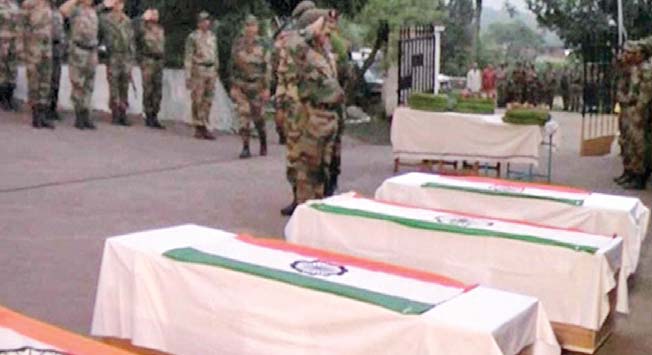
    2013 August – In a deadly instance of firing on Indian Army troops on the Line of Control from Pakistan-occupied Kashmir, five Indian soldiers died in Poonch sector in Jammu and Kashmir.

  • LOC ATTACKS SHOW ISI HOLD OVER SHARIF

    LOC ATTACKS SHOW ISI HOLD OVER SHARIF

    ISLAMABAD/NEW DELHI (TIP): The death of five Indian soldiers in Kashmir this week is being connected in Pakistan to the resumption of ties between Islamabad and New Delhi.

    “Every time someone talks of peace, we have incidents of such kind that end up souring any initiative,” says defence analyst and commentator Kamran Shafi. The incident is also seen as reflecting Prime Minister Nawaz Sharif ’s continuing inability to get some control over the Pakistan military’s Inter-Services Intelligence, seen as the main protector of the militant groups that operate in Kashmir. The question being asked in Islamabad is who was behind the attacks.

    Some suggest the Jamaat-ud Dawa — the new name for the Lashkar e Toiba — or its associates are likely to have been involved. The JuD is active in the Kashmir area and in a recent interview, JuD chief Hafiz Sayeed had threatened more attacks on the Indian side of Kashmir. “It is clear that the JuD has once again scored a victory for us,” commented Zaid Hamid, a political commentator close to the ISI. Hamid said on television that incursions by Pakistan-based groups into Indian Kashmir were legitimate attacks on an occupying force.

    The challenge remains for Sharif to contain such forces within Pakistan so he can move ahead with talks with India. “This is the hard part as the genie is out of the bottle,” says Shafi, who argues that Sharif ’s government does not have control over the militant groups any more. Sharif has been trying to get some leverage over the ISI but has so far been unsuccessful. Even to get a briefing on intelligence matters, the prime minister had to go to the ISI headquarters last month — instead of the other way round. “Right now the ISI calls the shots,” says another analyst, “but Sharif holds the trump card.”

    That trump card is the appointment of the army chief later this year. In Islamabad, most officials and analysts insist the Pakistan Army was not involved in the incident. The Pakistan Foreign Office and the Inter-Services Public Relations, the media wing of the Pakistan Army, insist these attacks may be by anti-Pakistan elements out to tarnish their image. But others believe the attack must have been carried out at the behest of Islamabad. “It doesn’t make sense otherwise,” says Aisha Siddiqa, who writes a column on defence and military issues. Siddiqa and other analysts, who prefer anonymity, say the Pakistan military may have sought to keep their involvement at an arm’s distance.

  • AN OPEN LETTER TO THE PRIME MINISTER OF INDIA

    AN OPEN LETTER TO THE PRIME MINISTER OF INDIA

    Sir, This is to express our condemnation of your plan to meet with Pakistan’s Prime Minister Nawaz Sharif during upcoming UN Assembly meeting in New York. We are wondering what has changed since the26/11 attack to call for this measure? The infiltration attempts have been doubled this year, and Pakistan Army’s daring overtures have only seen an upsurge. With terror activities on the rise, your meeting with PM Sharif will only embolden Pakistani Army and ISI’s resolve to ‘bleed India with a thousand cuts’.

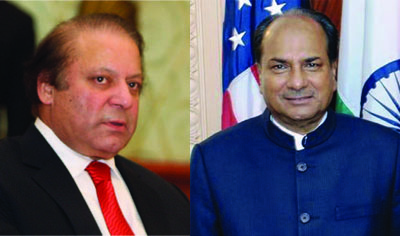
    The Indian diaspora was outraged by the unfortunate and uncalled for dilution of the army statement by Defense Minister A K Antony, giving clean chit to Pakistan in the brutal and provocative killing of five Indian soldiers on August 6th, 2013. This grave mistake was later corrected; however, some concrete action remains yet to be seen. Our heart goes out to the families of the brave soldiers for their loss. The loss of these five soldiers, namely, Naik Prem Nath Singh (21 Bihar Regiment), Lance Naik Shambhu Saran Rey (21 Bihar Regiment), Sipahi Vinay Kumar Rey (21 Bihar Regiment), Sipahi Raghu Nandan Prasad (21 Bihar Regiment) and Naik Pundalik Mane (Maharashtra Regiment), is a loss for a proud nation, and its every citizen.

    Instead of taking tough action against the perpetrators of this action, i.e. Pakistani Army and terrorists, government seems to be giving a clean chit to them. Immediately after the incidence Indian Army’s official briefing directly held Pakistani Army responsible for the dastardly act (press release # PRO/Jammu/425/Aug/2013). After this, Defense Minister Antony gave a statement in Parliament (press release # PRO/Jammu/426/Aug/2013) which took out the name of Pakistan Army. In another significant change he changed the location of the incident from “close to the Line of Control” to “our side of Line of Control”.

    Then in a clarification Mr. Antony said that he was not aware of the ground situation, and awaits an update from the Indian Army officers visiting the ground. If Mr. Antony was not aware of the ground situation, what was the need to give a statement in the parliament? Wasn’t this an irresponsible and demoralizing action for our soldiers and for our country, that knowingly we are avoiding calling the enemy by name? A similar incident took place on January 8th when two soldiers from 13 Rajputana Rifles, namely Lance Naik Hemraj and Lance Naik Sudhakar Singh, were killed and beheaded. Their heads were taken as trophies, and the perpetrators were openly rewarded inside Pakistan.

    Just one week after the incident, External Affairs Minister Salman Khurshid invited the Prime Minister for Chicken Biryani at his place. How can these treacherous and demoralizing acts be justified to the bereaved families of martyred soldiers? Particular when these acts are done by sitting ministers of the central government, who have no concrete measures to offer – except for cheap talk. It was proven beyond doubt that Ajmal Amir Kasab, one of the 26/11 attackers was a Pakistani national.

    It has been widely reported that India’s most wanted terrorist Dawood Ibrahim is living in Pakistan under military protection. Osama Bin Laden was found living near the army cantonment. The dubious dealings of Pakistan’s Army and ISI are known to everyone, and the proxy war they are waging against India is beyond doubt. Yet Government of India seems very wishy washy about these acts and moving forward with business as usual as if nothing has happened.

    We, as students, professionals and responsible citizens of India, unequivocally condemn these acts of terrorism, and their weak and demoralizing responses by the Government of India. By failing to curb these terror activities, by failing to give a fitting response, and by continuing normal relations with Pakistan you are not only hurting the moral of the nation, but also encouraging our enemies to continue these activities.

    We hope that you will take strongest possible measures to ensure safety of our borders, our soldiers, and our regional and geopolitical interests. We truly hope that members of your cabinet will be more sensitive in their actions, and careful in their professional conduct so as not to demoralize the citizens and soldiers of our country. Lastly, we emphatically call for a cancellation of your meeting with Pakistan’s Prime Minister. We firmly believe that unless there is peace on our borders and a significant reduction in terror activities – for an extended duration, relationships with Pakistan should be put on hold at all levels. Terror and talks cannot go together

  • Pakistan and the killings across the LoC: Tactical Offensive or a Strategic Defensive?

    Pakistan and the killings across the LoC: Tactical Offensive or a Strategic Defensive?

    “The fragile peace between India and Pakistan is once again under threat, but this time, the unease and tension may not be between India and Pakistan but between Pakistan and Pakistani Military establishment”, says the author.

    The recent killing of five soldiers in Poonch has reverberated the calculated and tested strategy of the Pakistan Army once again. Pakistan’s dubious track record of such events since the killing of Captain Saurabh Kalia and five other soldiers in May 15 1999 to the killing five of our brave men on Aug O5, 2013, inside our LoC are indicative of a revival of such dehumanization. The emotions and concerns raised by the nation each time may well be justified, but undue intensity in responses and reactions may often go to consolidate success of the perpetrators.

    In a contextual perspective, recurring events of this nature fall in line with the processes of authorization, routinization, and dehumanization, used by Kelman and Hamilton in studying My Lai and related events, to explain the dimension of Pakistan’s Military psychology. Pakistan military can learn from its record of atrocities in Bangladesh with larger ramifications of isolation in international relations, a possibility that Nawaz Sharif Government cannot allow.

    At a tactical level, Pakistan’s military psychology may be seen focused on a sense of achievement vis a vis India within the vacuum created by enormous disparities of conventional combat power or as a moral ascendancy/supremacy in the prevailing imbalance. While the dare exhibited in this raid may certainly be a shot of Adrenaline for the Pakistani military, but this may not be without a risk of escalation. India therefore, cannot and need not be cowed down by the hyped responses and talks of nuclear retaliation built up by Pakistani military establishment, to any action taken by the Indian Military and reiterated by every single Pakistani participant during television debates or panel discussions .

    Perhaps Our responses need to be fearless, timely and appropriate at the tactical level, and beyond glare of the media. While objectives of such or similar actions identified by India’s Security and Defence Experts during recent debates and discussions are extremely relevant, the outcome intended this time may well be more subtle and strategic. It is pertinent to bring here the internal security dynamic and declining influence of the Pakistani Military in the post elections scenario. The divergence in the civil military relationship between the Army, the PML-N and PTI on several security issues has been increasing .

    India’s role in Afghanistan, and cooperation between India and Pakistan towards peace and tranquility may well be the most serious differences that may threaten peace. In its first steps towards its strategic objectives of return to constitutional hierarchy, the Government’s focus is on the place of the Military denying it its traditional space of decision making on national issues.

    The federal government’s recent decision to initiate a high treason case against former military dictator Pervez Musharraf for subverting the constitution of Pakistan twice, which led to exile of Nawaz Sharif, and landing the shame/ humiliation of Kargil upon Pakistan are significant . Commencement of investigations , fully supported by the PTI and PPP’ have added to concerns of the Military , as any such prosecution would threaten many to similar fate. Silence of the Army chief, General Kayani during the entire process of campaigning and elections, and of keeping the Taliban at bay while propagating opportunities of their conditional return to main stream, while a step in the good and orderly direction, was viewed with serious reservations from many quarters within the Army.

    The implicit intent of the civil government may well be the nemesis of the Pakistan Army from a place of pre eminence and control, to a place of irrelevance or relative insignificance. The only field left where the Military can draw or perhaps redraw its significance is the LoC and issues of terrorism that may turn focus from civilian engagement to military incidents that tend to rally nations and people against each other reversing the entire process of restoring peace.

    Katharine Houreld from Reuters on 20 May this year, quoted Lieutenant Talat Masood who viewed the past five years significant in this context , in that, while the military remained the most powerful force behind the scenes, it no longer wanted to take direct power, Musharraf, the last military dictator, was in detention, Generals had been hauled up before Pakistan’s feisty courts and accused of voterigging, corruption and extrajudicial killings. The army does not have the monopoly of the power it once did.

    With a judiciary supportive of the Prime Minister s and a pro government media, an Army with a reformed, pro-democracy mindset, will complement the underpinnings for change in the overall environment in both Rawalpindi and Islamabad. Towards this, Nawaz Sharif will have to address the singular and greatest obsession of the Pakistan Military leadership and the rank and file, from its perceptions of India being the entire reason de etre of its existence to one of relevance in the national interests and internal contingencies. The fragile peace between India and Pakistan is once again under threat, but this time, the unease and tension may not be between India and Pakistan but between Pakistan and Pakistani Military establishment. For the latter, it may be a last strategic defensive for the Military’s relevance than a tactical victory vis a vis India.

  • LoC: Antony loses face, Nawaz Sharif saves his

    LoC: Antony loses face, Nawaz Sharif saves his

    NEW DELHI (TIP): Hours after Defence Minister A K Antony backtracked from his earlier statement in Parliament and squarely blamed the Pakistan Army for carrying out the attack on the Line of Control that killed five Indian soldiers, Pakistan Prime Minister Nawaz Sharif provided an “escape route” to the beleaguered government.

    Sharif, who had a briefing in the Pakistan Foreign Office on Thursday, expressed “sadness” over the loss of human lives and made it clear to his officials that it was “incumbent upon the leadership of both sides not to allow the situation to drift and to take steps to improve the atmosphere by engaging constructively with a view to building trust and confidence”. He went on to add that it was “imperative” for both sides to “take effective steps to ensure and restore the ceasefire on the Line of Control”.

    Military-to-military channels should be more “optimally utilized to prevent misunderstandings and not allowing the situation to escalate”. Further, Sharif suggested that both sides must also look to identify more measure to strengthen existing mechanisms at political and military levels. “The Prime Minister said that he was looking forward to his meeting with Prime Minister Manmohan Singh on the sidelines of the United Nations General Assembly in New York. During the meeting, we will discuss steps to further build trust and consolidate this relationship, the Prime Minister added,” stated a Pakistan Foreign Office release.

    But Sharif’s efforts to calm tempers were in stark contrast to the mood in New Delhi, where the government went back to adopt the hard line that it had first tried to avoid. Under pressure from the Opposition, Antony on Thursday made a second statement based on what he said was Army Chief Gen Bikram Singh’s feedback after visiting the scene of the killings. “Since then the Chief of the Army Staff has visited the area and has gone into the details of the matter, it is now clear that the specialist troops of Pakistan Army were involved in this attack when a group from the Pakistan Occupied Kashmir (PoK) side crossed the LOC and killed our brave jawans. We all know that nothing happens from Pakistan side of the Line of Control without support, assistance, facilitation and often, direct involvement of the Pakistan Army,” Antony told Parliament.

    This was a clear reversal of the UPA’s earlier stand that the attack was carried out by terrorists and some people in Pakistan Army fatigues. Antony sought to justify this change of stance by saying the earlier statement to Parliament was based on “fact as we knew them at that point of time”. Going beyond this, the Defence Minister linked this attack to the brutal killing of two Indian soldiers, one of whom was beheaded, earlier this year as well as the 26/11 attacks while claiming that the perpetrators will not be spared. “Those in Pakistan who are responsible for this tragedy and the brutal killing of two soldiers earlier this year should not go unpunished.

    Pakistan should also show determined action to dismantle the terrorist networks, organisations and infrastructure and show tangible movement on bringing those responsible for the Mumbai terrorist attack in November 2008 to justice quickly,” he said. As he made these connections, it became clear that the government had to also promise subsequent action on the lines of what had been done when each of these earlier incidents took place. Antony did so by linking this to the overall dialogue process and committing before Parliament that there will be consequences. “Naturally, this incident will have consequences on our behaviour on the Line of Control and for our relations with Pakistan.

    Our restraint should not be taken for granted, nor should the capacity of our Armed Forces and resolve of the Government to uphold the sanctity of the LC ever be doubted.” With the Defence Minister making amends, the BJP was more generous with praise. “I thank the Defence Minister for rectifying the mistake which he had made,” Leader of Opposition Sushma Swaraj said, adding “such a mistake should not be repeated.” The Rajya Sabha was adjourned due to an uproar barely after Antony began speaking. Deputy Chairman P J Kurien disallowed members from asking questions on the ground that Antony could not complete his statement nor had he allowed him to table it. Minister of State for Parliamentary Affairs Rajeev Shukla clarified later, “We will again request the Defence Minister to clarify…On Monday he will make the statement in the House again.”

  • LoC attack kills 5 jawans

    LoC attack kills 5 jawans

    JAMMU (TIP):In a deadly crossborder attack, five Indian Army personnel were killed and a sixth was injured by a group which the government said comprised “20 heavily armed terrorists along with persons dressed in Pakistan army uniforms” near the Line of Control (LoC) early on August 6 morning.

    The incident comes days after Pakistan expressed a desire to resume the stalled peace talks with India and a meeting between Prime Minister Manmohan Singh and his counterpart Nawaz Sharif was being fixed. The attack occurred at the Chakkan Da Bagh area in Poonch, which is a border trading point, in the early hours of Aug 6 when six Indian Army personnel were patrolling the LoC, several hundred metres ahead of the border fencing but 450 metres within the Indian side of the boundary.

    In his statement in Parliament, Defence Minister A K Antony said the men were ambushed on “our side of the LoC”, but stopped short of blaming regular Pakistan army

    troops for the attack. “The ambush was carried out by approximately 20 heavily armed terrorists along with persons dressed in Pakistan army uniforms,” he said. This was at variance with the Army’s statement which said the attack was carried out by terrorists “along with soldiers of Pak army”.

    The Army also said the attack was carried out by a “Pak Border Action Team”. However, within hours, the Army’s statement was revised to reflect what Antony had said in Parliament, to the effect that “persons dressed in Pakistan army uniforms” took part in the attack. No explanation was given for the revision. But Army sources backed the original statement, saying that soldiers of Pakistan’s 801 Mujahid battalion took part in the attack along with militants. “It was a well-planned and coordinated attack that clearly involved regular troops of the Pakistan army.

    It was a Pakistan Border Action Team (BAT) that executed the attack,” said these sources. Pakistan, meanwhile, denied the involvement of its troops. A PTI report from Islamabad quoted Foreign Office spokesman Pak troops Aizaz Chaudhry as saying that “these are baseless and unfounded allegations”. According to sources, the attack took place at a time when the 21 Bihar Regiment was in the process of handing over charge of its area of responsibility to the 14 Maratha Light Infantry (MLI) in Poonch.

    The time of handing over charge is considered vulnerable as Pakistani troops are known to target battalions that are being inducted before they get familiarised with the terrain. The patrol originated from the Cheetah post and was going along the LoC when it came under attack. Of the five personnel who were killed in the ambush, four belonged to the 21 Bihar Regiment — Naik Prem Nath Singh, Lance Naik Shambu Singh, Sepoy Vijay Kumar Roy and Sepoy Raghunandan Prasad — while the fifth, Sepoy Pundlik Mane, was from Maratha Light.

    The sole survivor of the attack, Sambhaji Kute, is from 14 MLI. While he was injured in the attack, Kute is said to be out of danger and has told his superiors that the patrol came under heavy fire from several directions while it was moving along the LoC. “A changeover of troops was in progress in Poonch and the advance party of the 14 MLI that was to take charge was being familiarised with the Sarla battalion area,” confirmed officials. Army Chief General Bikram Singh is expected to reach Poonch tomorrow and is likely to visit the area to take stock of the situation.

    It is unclear why Antony was guarded in his statement in parliament and did not directly name the Pakistani Army. In January, following an attack on Indian troops in Mendhar when one soldier was beheaded and mutilated, Antony had clearly said that the “Special Services Group of Pakistan Army” had executed the attack. Antony also told parliament that India has lodged a “strong protest with the Pakistan government through diplomatic channels” and said the Army is “fully ready to take all necessary steps to uphold the sanctity of LoC”.

    The minister said the number of infiltration attempts on the LoC have doubled this year as compared to the same period in 2012, adding that 57 ceasefire violations have taken place, which is 80 per cent more than last year. “The Indian Army successfully eliminated 19 hardcore terrorists in the recent months of July and August along the LoC and in the hinterland in J&K. The effective counter infiltration grid on the LoC has ensured that 17 infiltration bids were foiled this year,” he said. The Army statement also said the action is a “likely consequence of frustrations of the terrorists’ tanzeems and Pak Army due to successful elimination of 19 hardcore terrorists in the months of July and August in J&K.” It added that the “Pak Army’s desperation is also evident in the substantial increase in the number of ceasefire violations this year”.

  • US Drone Strikes In Pakistan Will End ‘Very Soon’: JOHN KERRY

    US Drone Strikes In Pakistan Will End ‘Very Soon’: JOHN KERRY

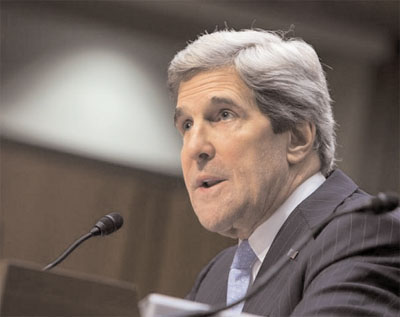
    ISLAMABAD (TIP): US secretary of state John Kerry told Pakistanis on August 1 that Washington planned to end drone strikes in their country soon – a message aimed at removing a major source of anti-American resentment in the strategically important country. After meeting Prime Minister Nawaz Sharif, Kerry said they had agreed to reestablish a “full partnership”, hoping to end years of acrimony over the drone strikes and other grievances including the US raid that killed Osama bin Laden.

    In a television interview later, Kerry said of the drone strikes: “I think the program will end as we have eliminated most of the threat and continue to eliminate it.” “I think the president has a very real timeline and we hope it’s going to be very, very soon,” he told Pakistan Television, when asked whether the US had a timeline for ending drone strikes, aimed at militants in Pakistan. US drone missiles have targeted areas near the Afghan border including North Waziristan, the main stronghold for various militant groups aligned with al-Qaida and the Taliban, since 2004.

    Pakistanis have been angered by reports of civilian casualties and what they see as an abuse of their sovereignty. It is unclear if, in their face-to-face talks, Sharif asked Kerry to halt the drone attacks. But when asked at a news conference whether Pakistan wanted the US to curtail the strikes, his foreign affairs adviser, Sartaj Aziz, replied: “We are asking them to stop it, not just curtail it.”

    Besides the drones and the killing of bin Laden in 2011, relations have been strained by Pakistan’s support for Taliban insurgents fighting Western troops in Afghanistan as well as a NATO air attack in which 24 Pakistani soldiers were killed. “I want to emphasize the relationship is not defined simply by the threats we face, it is not only a relationship about combating terrorism, it is about supporting the people of Pakistan, particularly helping at this critical moment for Pakistan’s economic revival,” Kerry told reporters.

    A new government in Pakistan and a new secretary of state in Washington have increased hopes the two sides can settle their grievances – something both hope to gain from, with Pakistan’s economy badly needing support and the United States aiming to withdraw the bulk of its troops from Afghanistan next year. Speaking after talks with Sharif in Islamabad, Kerry – who as a senator sponsored legislation to provide $7 billion in assistance to Pakistan over 5 years – said he had invited Sharif to visit the United States, Pakistan’s biggest donor, for talks with President Barack Obama.

    “What was important today was that there was a determination … to move this relationship to the full partnership that it ought to be, and to find the ways to deal with individual issues that have been irritants over the course of the past years,” he said. “And I believe that the Prime Minister is serious about doing that. And I know that President Obama is also.”

  • US, Pak Agree To Resume Stalled Strategic Dialogue

    US, Pak Agree To Resume Stalled Strategic Dialogue

    ISLAMABAD (TIP): Glossing over strained bilateral ties for over two years, the United States and Pakistan on August 1 agreed to resume the stalled strategic dialogue while Washington played down Islamabad’s concerns over continuing American drone strikes in its lawless northwestern tribal regions to take out Taliban militants. “We are here to speak honestly with each other, openly about any gaps that may exist and we want to bridge,” US secretary of state John Kerry said during his longanticipated visit to Islamabad, the first high-level contact after the Nawaz Sharif government took charge.

    “Our people deserve that we talk directly,” he said. Bilateral ties hit an all-time low in 2011 when US air strikes killed 24 Pakistani soldiers in the tribal region, bordering Afghanistan, and after al Qaeda chief Osama bin Laden was killed in the garrison town of Abbottabad in a daring secret raid by helicopter-borne US commandos. Pakistanis by CIA contractor Raymond Davis in Lahore.

  • India Born Mamnoon Hussain Is Pak’s 12th President

    India Born Mamnoon Hussain Is Pak’s 12th President

    ISLAMABAD (TIP): India-born Mamnoon Hussain, a close aide of Prime Minister Nawaz Sharif, was on August 1 elected as the 12th President of Pakistan and will replace incumbent Asif Ali Zardari in September. Hussain emerged as a clear winner in the one-sided contest with ex-judge Wajihuddin Ahmad of Pakistan Tehreek-i-Insaf party, state media reported. Pakistan People’s Party withdrew its candidate Raza Rabbani and boycotted the election in protest to the date of polls being changed.

    The polling started at 10.00am amidst tight security arrangements. Born in the historic city of Agra, Hussain, who belongs to an Urduspeaking ethnic group that migrated from India during partition in 1947, was the candidate of ruling PML-N government. Over 1,000 members of the national parliament and four provincial assemblies cast their ballots to elect largely ceremonial head of the state.

    The office of the president is ceremonial in Pakistan but he is still the constitutional chief of the armed forces but cannot order deployments. He also appoints the services chiefs at the recommendation of the prime minister. Pakistan so far had 11 presidents, out of which five were military generals. Four of them seized powers through coups, whereas first president Major Sikandar Mirza was elected in 1956 after the first constitution was adopted.

  • Hindus, Shias, Other Minorities Worse Off In Pakistan: Us Report

    Hindus, Shias, Other Minorities Worse Off In Pakistan: Us Report

    WASHINGTON (TIP): The already poor religious freedom environment for Christians, Ahmadis and Hindus has continued to deteriorate in Pakistan over the last eighteen months, according to a US body that monitors violations of religious freedom abroad. Releasing the findings of its Pakistan religious violence project on July 17, the US Commission on International Religious Freedom (USCIRF) said it had tracked 203 publicly-reported incidents of sectarian violence resulting in more than 1,800 casualties, including over 700 deaths.

    The Shia Muslim community has borne the brunt of attacks (77) from militants and terrorist organizations, with some of the deadliest attacks occurring during holy months and pilgrimages, the report said. “While Shias are more at risk of becoming victims of suicide bombings and targeted shootings, the already poor religious freedom environment for Christians, Ahmadis, and Hindus has continued to deteriorate, with a number violent incidents occurring against members of these communities,” it said.

    The report noted that between January 2012 and June 2013, there were 16 attacks against Hindus and 3 attacks against Sikhs resulting in the death of two Hindus and one Sikh. Four Hindus were also injured. There were three incidents of targeted shootings and seven rapes against Hindus, the report said. Noting that the project’s findings “paint a grim and challenging picture for the new government of Prime Minister Nawaz Sharif,” the report said “concrete, resolute action is needed to ensure that perpetrators of violence are arrested, prosecuted and jailed.”

    “To stem the rising tide of violent religious extremism, groups and individuals responsible for attacks on religious communities must be punished,” it said. “While banned militant groups and private citizens are responsible for the majority of attacks on religious communities, government actors are not blameless,” the report said suggesting that “police officers have turned a blind eye to mob attacks or have refused to file police reports when victims are religious minorities.”

  • Pakistan Prez Security Chief Killed In Suicide Attack

    Pakistan Prez Security Chief Killed In Suicide Attack

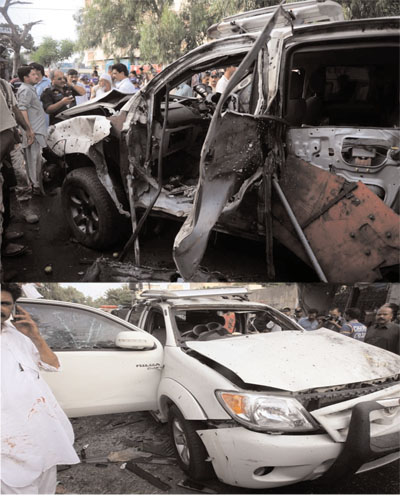
    ISLAMABAD (TIP): Pakistani President Asif Ali Zardari’s security chief was killed in a suspected suicide bomb attack in the volatile port city of Karachi on July 10 as he stopped his armoured vehicle to buy some fruit, police said. A senior officer in Pakistan’s financial capital told Reuters that Bilal Shaikh – Zardari’s close aide – was killed along with two other people in a prosperous area of eastern Karachi.

    About a dozen others were wounded. “It seems that the suicide attacker walked up to Bilal Shaikh’s vehicle and blew himself up outside the front passenger seat of the vehicle where Shaikh was seated,” said police officer Raja Umar Khattab.Pakistan has been hit by a spate of bombings since Prime Minister Nawaz Sharif was sworn in last month, underscoring the challenges facing the nuclear-armed nation in taming a Talibanlinked insurgency.

    A police escort was accompanying Shaikh’s white armoured sports utility vehicle when the attack took place. No one immediately claimed responsibility. Shaikh – who had survived an earlier assassination attempt near his home in Karachi about a year ago – used to change his routes several times while travelling around Karachi, one of Pakistan’s most violent cities.

    Both Zardari and Sharif have issued separate statements condemning the incident, a private television channel reported.

  • China hosts Antony, Sharif

    China hosts Antony, Sharif

    China hosts Antony, SharifNEW DELHI (TIP): Desperate to play ‘peace-broker’ in India-Pakistan ties, China on July 4 hosted Defence Minister AK Antony and Pakistani Prime Minister Nawaz Sharif separately, but projected it as a rare diplomatic event. As Sharif and Antony arrived in Beijing, the country’s State-television said China was setting off a new phase of cordial ties between the two nations by hosting top leaders from both the countries – . “Both India and Pakistan are very important countries in our neighbourhood,” Wang Shida, a researcher with the China Institute of Contemporary Relations, told CCTV news. “China-India have established strategic cooperative partnership since 2005. Meanwhile, China and Pakistan enjoyed an all-weather partnership for half a century. “It means both India and Pakistan are important diplomatically to China.

    Premier Li Keqiang’s visit to both the countries last month sets a very good example,” he said. Though their visits were a coincidence, Sharif and Antony were not expected to cross paths. Antony, who is the first Indian Defence Minister to visit China in seven years, is in Beijing on a four-day visit. The recent border incursion by Chinese troops, finalisation of the Border Defence Coordination Agreement (BDSA) to maintain peace at the disputed borders as well as resumption of bilateral Military exercises top Antony’s agenda for talks with the Chinese leadership. Hours before AK Antony arrived in Beijing for high-level talks on Thursday, a hawkish Chinese General warned India against provoking ‘new trouble’ by increasing its Military deployment at the border.

    Don’t provoke China with new trouble: PLA General warns India “There is no denying that there are tensions and problems between China and India particularly at the border areas,” Major General Luo Yuan, executive vice president and secretary general of China Strategy Culture Promotion Association, said. “The Indian side should not provoke new problems and increase the Military deployment at the border areas and start new trouble,” General Luo, known for his hawkish and extreme views on China’s strategic and military relations with its neighbours and the US, said. Sharif, who arrived in Beijing on his first foreign visit after returning to power, met Chinese President Xi Jinping and sought assistance in energy, transport and infrastructure projects. During his meeting, Sharif spoke about the numerous challenges that Pakistan was faced with, including pulling the economy out from its current difficulties.

  • China hosts Antony, Sharif

    China hosts Antony, Sharif

    NEW DELHI (TIP): Desperate to play ‘peace-broker’ in India-Pakistan ties, China on July 4 hosted Defence Minister AK Antony and Pakistani Prime Minister Nawaz Sharif separately, but projected it as a rare diplomatic event. As Sharif and Antony arrived in Beijing, the country’s State-television said China was setting off a new phase of cordial ties between the two nations by hosting top leaders from both the countries – .

    “Both India and Pakistan are very important countries in our neighbourhood,” Wang Shida, a researcher with the China Institute of Contemporary Relations, told CCTV news. “China-India have established strategic cooperative partnership since 2005. Meanwhile, China and Pakistan enjoyed an all-weather partnership for half a century.

    “It means both India and Pakistan are important diplomatically to China. Premier Li Keqiang’s visit to both the countries last month sets a very good example,” he said. Though their visits were a coincidence, Sharif and Antony were not expected to cross paths. Antony, who is the first Indian Defence Minister to visit China in seven years, is in Beijing on a four-day visit. The recent border incursion by Chinese troops, finalisation of the Border Defence Coordination Agreement (BDSA) to maintain peace at the disputed borders as well as resumption of bilateral Military exercises top Antony’s agenda for talks with the Chinese leadership. Hours before AK Antony arrived in Beijing for high-level talks on Thursday, a hawkish Chinese General warned India against provoking ‘new trouble’ by increasing its Military deployment at the border.

    Don’t provoke China with new trouble: PLA General warns India
    “There is no denying that there are tensions and problems between China and India particularly at the border areas,” Major General Luo Yuan, executive vice president and secretary general of China Strategy Culture Promotion Association, said. “The Indian side should not provoke new problems and increase the Military deployment at the border areas and start new trouble,” General Luo, known for his hawkish and extreme views on China’s strategic and military relations with its neighbours and the US, said.

    Sharif, who arrived in Beijing on his first foreign visit after returning to power, met Chinese President Xi Jinping and sought assistance in energy, transport and infrastructure projects. During his meeting, Sharif spoke about the numerous challenges that Pakistan was faced with, including pulling the economy out from its current difficulties.

  • Indian Americans host Reception in Honor of Congressional leaders in Washington, D.C.

    Indian Americans host Reception in Honor of Congressional leaders in Washington, D.C.

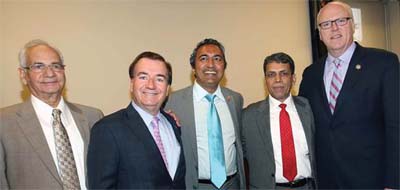
    WASHINGTON D.C.(TIP): The American India Public Affairs Committee (AIPACom) organized a reception in honor of Congressional leaders in Washington, D.C. on June 27th. Congressman Ed Royce, Chairman, Foreign Affairs Committee; Joe Crowley, Chair, India Caucus; Steve Chabot, Chairman, Subcommittee, South Asia; Gregory Meeks, Joe Wilson, Ami Bera, Grace Meng and several high-ranking officials from State Department, Senate and India Caucus participated. Joe Crowley Congressmen present expressed their whole-hearted support for India.

    Addressing the gathering, Mr. Jagdish Sewhani, President of the AIPACom said that the issue of pulling out the United States and its allied forces from Afghanistan by the end of 2014 and the rise of Taliban have created a sort of anxiety in the region. “There is a fear in the region that Taliban, supported by radicalized Pakistani army may make a forceful bid to take over Afghanistan and establish Sharia. This could trigger tension in the region,” he said.

    Disappointed over Pakistan’s sluggish pace of trial in the 26/11 Mumbai terror attack, Congressman Ed Royce, Chairman of the House Foreign Relations Committee demanded that the seven suspects, including LeT operational commander Zakiur Rehman Lakhvi, be handed over to the International Criminal Court to bring them to justice. Royce said there are rogue elements in the ISI who would use the opportunity of any instability in Afghanistan to go back to the Taliban era. “Ethnic cleansing is going on in Pakistan today against those who are speaking against it,” he said, alleging that the population of Hindus in Pakistan has now dropped to 1.5 per cent as against 25 per cent at the time of independence. Tracing the history of India Caucus, Sewhani said that the India Caucus has been a source of strength. It has done a commendable job to further cement an Indo-American relationship. Reminding the audience, Sewhani said that Pakistan is still the epicenter of terrorism.

    It is a wellknown fact that Pakistan is using terrorism as a tool to achieve its foreign policy objectives. At the moment, Pakistani society is the most radicalized society. Even though Pakistan Prime Minister Nawaz Sharif ostensibly wants to mend the relationship with India, Pakistan Intelligence Agency ISI is reported to have opened two new centers to train a large number of youngsters in terrorism on the other side of Jaisalmer in Indian state of Rajasthan. Trade between India and the USA has increased by 40% since the launch of Indo-US Strategic Dialogue by the Obama Administration 3 years ago and could cross $100 billion.

    The bilateral trade between India and the US could touch $500 billion mark over the next decade. Time has come for the oldest democracy in the world, the USA, to support the largest democracy in the world, the Republic of India and fourth economy in the world, in its bid to become the permanent member of the UN Security Council. “Both, USA and India are natural allies. Because of our mutual understanding and regard for each other, a new era in Indo-American relationship has dawned. The time has come to take this relationship from a mere friendship to a strategically meaningful relationship”, said Sewhany. (Based on a press release)

  • Real challenge for Sharif begins now

    Real challenge for Sharif begins now

    “Forces of destabilization are as active today as they were earlier. They are anxiously waiting for the withdrawal of the US-led troops from Afghanistan next year. The new scenario that will emerge in Afghanistan can affect Pakistan in various ways”, says the author.

    Most newspapers have preferred to highlight the fact that Nawaz Sharif is the first person in Pakistan to have become the democratically elected Prime Minister for a third time after a gap of 13 years. Thus, his success in capturing power is a historic development. In 1999 when his government was toppled in a military coup staged by the then Army Chief, Gen Pervez Musharraf, he had been written off as a politician with his party, the Pakistan Muslim League (N), struggling for survival.

    He was jailed and could have been hanged to death. That was the time when the world saw in his wife, Kulsoom, a fearless fighter for her rights. She made it clear to the General that she was not the one who would accept the designs of the dictator to throw her husband into the dustbin of history. She succeeded in making the Saudi rulers intervene in a clandestine cooperation with the US. Nawaz Sharif was forced to go on exile to Saudi Arabia.

    But the politician in him could not remain away from the hustle and bustle of politics forever. After all, he was destined to come back to power and change the course of politics in Pakistan. But this fact will be of no use to him as he begins his latest tenure at a time when most people in Pakistan are leading a miserable life because of daily power cuts for as long as 12 hours at some places. Pakistan during the PPP-led government somehow escaped having been declared a “failed state”.

    Its economy needs a surgical treatment to make it deliver the goods. Extremism promoted by elements like the Taliban has caused incalculable damage to the Pakistan economy. It invited drone attacks by the US which may now become history, as Nawaz Sharif has declared after taking over as Prime Minister. But how he manages to control extremists remains to be seen. Interestingly, the man who unsuccessfully tried to destroy Nawaz Sharif’s political career, Gen Musharraf, is in the dock when the PML (N) leader is in power.

    The world will be watching with interest whether Nawaz Sharif simply ignores him and allows the law to take its own course. He has no time to waste as people have great expectations from him. He was a successful business man before the PML (N) leader got inducted into politics during Gen Zia-ul-Haq’s rule. That is why Sharif’s approach has always been business-like. The privatization program with the setting up of the Privatization Commission of Pakistan began when he was at the helm of affairs.

    It’s a different matter that it was alleged those days that when government-owned undertakings were put on sale, his Ittefaq Group of Industries would purchase them. Despite this, Pakistan made some significant achievements on the industrial front during his past two tenures. But today the situation is different. Forces of destabilization are as active today as they were earlier. They are anxiously waiting for the withdrawal of the US-led troops from Afghanistan next year.

    The new scenario that will emerge in Afghanistan can affect Pakistan in various ways. But Pakistan can gain enormously by taking steps for the normalization of relations with India. Nawaz Sharif may face considerable pressure from businessmen to do all he can to increase business opportunities between India and Pakistan. Already the two countries are doing excellently on the bilateral trade front.

    Exports from India to Pakistan went up by around 15 per cent in 2012-13, adding $1.6 billion to bilateral trade between April 2012 and February 2013. Imports from Pakistan too increased to $488 million from $375 million, a rise of as much as 30 per cent. The new Prime Minister of Pakistan has a great opportunity available to him to change the economic profile of his country by concentrating on the Indo-Pak trade front.

  • The Issue Is Governance In Pakistan

    The Issue Is Governance In Pakistan

    “Pakistan has paid a heavy price for the slow pace of the change-over from a secret government to a transparent one. A closed system of governance undermines one of the salutary gifts of democracy – that in a democratic set-up the doings of the rulers become instantly known to the people unlike dictatorships whose mischief becomes public when it is often too late. Thus, it is absolutely necessary to ensure as transparent governance as possible”, says the author.

    As the dust of electoral controversy has settled down, the focus of the national debate should now be not only on what needs to be done first but also on the best possible way to move forward, for the central issue in Pakistan is still the mode of governance. The new Prime Minister may have to change his style of working and leading the government by realizing that the parliamentary system does not envisage a prime minister with overriding powers; it means rule by the Cabinet.

    The ultimate sanction for all government actions lies with the Cabinet and the advice a prime minister gives to the head of the state must be backed by the authority of the Cabinet. Also it is the cabinet that is collectively answerable to parliament. Strong prime ministers tend to treat the cabinet as a body that is good only for endorsing their own ideas and not as a vehicle for ensuring decision-making by consensus. A good Cabinet can offer effective checks to political leaders’ impulsive actions, the adoption of untested schemes and the temptation to bend the rules for a populist enterprise.

    Any attempt to make decisions or policies at the urging of an informal caucus (consisting of friends, family members, bureaucratic aides, etc) will amount to an encroachment on the rights of the Cabinet. Pakistan has paid a heavy price for the slow pace of the change-over from a secret government to a transparent one. A closed system of governance undermines one of the salutary gifts of democracy – that in a democratic set-up the doings of the rulers become instantly known to the people unlike dictatorships whose mischief becomes public when it is often too late.

    Thus, it is absolutely necessary to ensure as transparent governance as possible. A review of the right to information law appears to have become necessary so as to reduce the restrictions on disclosure and exemptions from the right to information to the absolute minimum. One is surprised at the absence of accountability from the list of priority tasks for the new government although it should be at the top of the agenda. A new, comprehensive and effective accountability mechanism must be put in place at the earliest.

    Without a system of across-the-board accountability good governance cannot be conceived; neither can the government enjoy due legitimacy nor will it be possible to relieve the courts of their unnecessary burden of going for the black sheep in the service of or among the politicians. One of the most encouraging observations made by Mian Nawaz Sharif during his predictably goodwill-laced address to his party’s newly elected parliamentarians related to his decision to take all parties along.

    This is in accord with the spirit of democracy which requires that once the electoral contest is over all, parties in parliament become collaborators in ensuring governance in accordance with the will of the people. While the opposition parties ought to continue their role as public watchdogs, they should also help the ruling party in moving away from majoritarian rule, sometimes by censuring it for its false steps and sometimes by supporting its fair initiatives.

    Despite its poor record in strengthening democratic conventions, Pakistan has certainly taken, over the past few years, some significant steps in the direction of participatory democracy. These included, for instance, increasing the role of multiparty standing committees of parliament, assigning the chairmanship of these committees to members of different parties, and giving the chairmanship of the Public Accounts Committee to the main opposition party. These experiments are in their initial stages and need to be nursed with care and imagination before they can achieve the goal of broadening the democratic base of governance.

    Another significant development in the recent past, for which the outgoing government deserves due credit, has been the opening of greater opportunities for private members to contribute to parliament’s legislative work. Indeed, further and consistent encouragement to private members, especially the women among them, to undertake public-interest legislation will consolidate the democratic dispensation.

    This will also balance the government’s preoccupation with legislative work designed to increase the state’s coercive or regulatory powers. It is perhaps time to take a critical look at the Rules of Business (Article 99 of the Constitution) for regulating the conduct of the federal government. These rules, originally framed by the viceroy in the colonial period, were revised by the government in 1973 and may have become due for changes required to strengthen the Cabinet’s role in decision-making, to streamline intra-government consultation, to increase interaction with the public, and to remove loopholes and anomalies that cause matters to be taken to the courts.

    The importance of the rules can be judged from the fact that Farooq Leghari, the then President, created a National Security Council by simply amending the rules. One wonders whether in a parliamentary system the prerogative to lay down the rules for the conduct of the federal authority should continue to vest in the head of state. The grand objective of taking everybody along is not realized by only making coalitions and giving ministries and parliamentary offices to persons outside the core ruling group.

    It demands the creation of mechanisms not only for parliament’s effective oversight of the executive’s functioning but also for guaranteeing all state organs’ regular and meaningful interaction with civil society. The sights must clearly be set on evolving a system that satisfies the ordinary women and men of Pakistan that their participation in governance does not start and end with the casting of ballots and that on everything that the government does or avoids doing their opinion matters. In fact, it is sought and considered or at least heard.

  • Pak PM To Progressively Pursue Normalcy In Ties With India

    Pak PM To Progressively Pursue Normalcy In Ties With India

    ISLAMABAD (TIP): Unveiling Pakistan’s foreign policy roadmap, Prime Minister Nawaz Sharif , on June 6, vowed to “progressively pursue” normalcy in ties with India while actively seeking solutions to outstanding issues, including Kashmir. Listing his government’s foreign policy priorities a day after assuming office, Nawaz in a message sent to the heads of all Pakistani missions, said neighbors will be the focus of “immediate attention”.

    “Unless the region is peaceful, our efforts for growth and development will not meet success,” he said. “With India, the Prime Minister stressed the need to progressively pursue normalcy in our bilateral relations, while actively seeking solutions for all outstanding issues, including Jammu and Kashmir,” said a statement issued by the Foreign Office.

    Nawaz (63), who was sworn in for a record third term as premier yesterday, had signaled even before the May 11 general elections that he intended to work on improving relations with India.

  • Nawaz Sharif seeks civil nuclear technology from China

    Nawaz Sharif seeks civil nuclear technology from China

    ISLAMABAD (TIP): Prime Ministerdesignate Nawaz Sharif on Thursday sought civil nuclear technology to overcome Pakistan’s energy crisis during a meeting with Chinese Premier Li Keqiang. Sharif called on Li at a hotel here this morning and discussed ways to strengthen bilateral relations in different fields.

    He focussed on civil nuclear technology, trade and foreign investment during his talks with Li, Geo News channel quoted its sources as saying. The PML-N chief said China had invested in Pakistani nuclear projects in the past and should provide more cooperation to help the country overcome its energy crisis, the channel reported. Premier Li, who is here on a two-day official visit to Pakistan as part of a four-nation trip, congratulated Sharif on his party’s victory in the general election.

    He expressed good wishes for the new government of Pakistan. Sharif expressed the hope that the two countries will continue working together for the mutual benefit of their people. The meeting was attended by former Punjab chief minister Shahbaz Sharif, PML-N leaders Chaudhry Nisar Ali Khan and Ishaq Dar, and foreign secretary Jalil Abbas Jilani.

  • NAWAZ SHARIF’S RETURN TO POWER BRINGS PAKISTAN’S CHALLENGES IN FOCUS

    NAWAZ SHARIF’S RETURN TO POWER BRINGS PAKISTAN’S CHALLENGES IN FOCUS

    Sharif will face three major challenges when he comes to power. He will have to restore electricity and boost the economy. He will have to deal with domestic terrorism. And he will have to work with the U.S., trying to strike a balance between managing relations with Washington while assuaging anti- American sentiment at home”, says the author.
    In 1999, Nawaz Sharif was overthrown in a military coup. His vanquisher, Gen. Pervez Musharraf, was broadly welcomed in Pakistan, and later, by the international community. Sharif was first thrown in jail, and later dispatched into exile for seven years.

    In his absence, some claimed that Sharif’s party – and his political career – was finished. Now, in an astonishing turn of history, Sharif is set to become Pakistan’s first-ever third-time Prime Minister, while his once powerful nemesis Musharraf is under arrest and possibly facing trial.

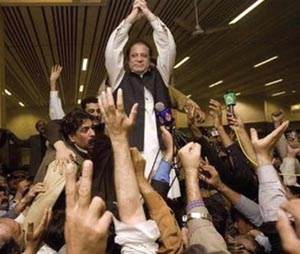
    Sharif beat expectations, cruising toward a convincing victory that will allow his Pakistan Muslim League-Nawaz party to have a majority in the national parliament and a two-thirds majority in the provincial parliament of Punjab, Pakistan’s wealthiest and most populous province. As the results became apparent in the early hours of Sunday morning, Sharif supporters spilled out into the streets of Lahore, the capital of Punjab, cheering.

    Young men whizzed through the streets, their speed lending a flutter to party flags attached at the back. “Look, look who has come? The tiger has come, the tiger has come!” they chanted, referring to Sharif’s election symbol. If the election could be boiled down to one issue, it was electricity. Throughout the country, voters listed a litany of their disappointments.

    They dreaded the neardaily terrorist attacks they suffer, not least during the campaign. At least 130 people were killed during the bloody election campaign, mainly supporters of Pakistan’s secular parties, in attacks on candidates, election rallies and campaign offices. The tales of legendary greed also repulsed Pakistanis that members of the outgoing cabinet are alleged to have committed.

    All former ministers of President Asif Ali Zardari’s Pakistan People’s Party (PPP) were voted out in the majority Punjab province. But for many voters, their principal concern was the crippling power shortages they endure – sometimes for up to 20 hours a day – and the effect it has on the economy. Economists estimate that Pakistan’s energy crisis shaves off up to 5% growth each year. In big industrial towns like Faisalabad, where Sharif’s party won many seats, factories have been forced to shut down and tens of thousands of workers laid off. If the next government can diminish power cuts substantially, it may be enough to win the next election.

    If they fail, they could suffer the fate of their predecessors. Sharif appealed to voters, particularly in his native Punjab, as a plodding businessman who has experience of governance and may be able to lift Pakistan’s economy out of its current misery. In a country shifting toward a more conservative direction, Sharif’s social conservatism and religiosity was a plus.

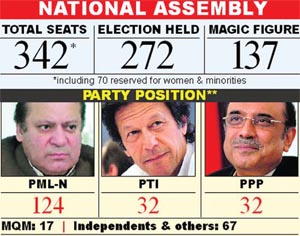
    In 1997, when he last won an election, Sharif told academic Vali Nasr, he wanted to be “both the [Turkish moderate Islamist leader Necmettin] Erbakan and the [economically modern former Malaysian prime minister] Mahathir of Pakistan.” It was a disappointing night for former cricket legend Imran Khan, who was mounting an aggressive and high profile campaign as the candidate for “change”. Despite a flood of publicity, claims of a solid youth vote behind him, and a wellfinanced party infrastructure, he failed to secure the breakthrough he craved, winning around 35 out of 242 seats in parliament.

    Khan came second in a vast number of seats, but failed to catch up to Sharif’s galloping tiger. Still, Khan will remain a force in Pakistani politics, and could become the Leader of the Opposition in parliament while his party, which swept the northwest militancywracked province of Khyber- Pakhtunkhwa, will form a provincial government there. On Sunday, Khan accepted defeat but said that his party was a victim of polling day rigging. Several Khan supporters have pointed out incidents of shady electoral practices at polling booths across Lahore.

    The PPP is licking its wounds, suffering its secondworst defeat ever, but holding on to its stronghold in Sindh province. Sharif will face three major challenges when he comes to power. He will have to restore electricity and boost the economy. He will have to deal with domestic terrorism. And he will have to work with the U.S., trying to strike a balance between managing relations with Washington while assuaging anti- American sentiment at home. Sharif’s aides say that he is best placed to boost the economy, thanks to his free-market approach.

    “The best way to deal with the electricity problem is to privatize the energy sector and give the business community a stake in it,” said Khawaja Muhammad Asif, a leading PML-N member. When it comes to the Pakistani Taliban, Sharif is less clear. In recent years, he has preferred to remain mostly quiet on the threat, as he did during the election campaign. While secular anti-Taliban politicians braved bomb attacks, Sharif and Khan were able to campaign mostly in peace.

    Sharif has said that he would like to negotiate with the Pakistani Taliban, an approach that is popular among conflict-weary Pakistanis but controversial. Critics point out that all peace deals with the Pakistani Taliban have failed and yielded them more space. In 2010, Sharif’s younger brother, Shahbaz Sharif, who was Chief Minister of Punjab made a controversial appeal to the Pakistani Taliban to spare his province because, like them, his party is “anti-U.S.”

    The statement was denounced as a dangerous capitulation by a party that is losing touch with the rest of the country. Under the younger Sharif’s rule of Punjab, he has also been criticized for not doing enough for religious minorities. The Ahmadi Muslim sect suffered its worst ever attack in 2010. And the province’s Christians have faced two tragedies, earlier this year and in 2009, when a mob of attackers torched clustered colonies in Lahore and Gojra as the police stood by.

    Many observers are nervous about this trend continuing. Sharif’s religious conservatism is what made the Bush administration wary of him during the Musharraf years. The general’s self-styled “enlightened moderation” was more to their liking than Sharif, who during his second term in power, attempted to crown himself “commander of the faithful”. But in meetings with U.S. officials, Sharif has said he is “pro- American” and keen to work with the U.S.

    In a meeting with former U.S. Ambassador Anne Patterson in 2007, according to a leaked State Department cable, Sharif’s ministers were “disappointed” and “hurt” to read that President Bush said he didn’t know Sharif. They also, according to the cable, “went to great pains to defend Nawaz’s pro-U.S., ‘anti-Mullah’ history.” Now, Sharif aides and U.S. officials say both sides are willing to work with each other.

    Sharif will also try to establish a new relationship with Pakistan’s powerful generals. Although he emerged as a protégé of Gen. Muhammad Zia-ul-Haq, Pakistan’s longest serving dictator, he ended up clashing with five successive army chiefs until he was ultimately ousted by Musharraf. Sharif was sharply critical of the army’s role in politics during Musharraf’s final years, but has cooled his rhetoric since.

    “I think the army will want to work with Nawaz Sharif,” said retired lieutenant general Talat Masood, an analyst. The relationship has been repaired over recent years with Sharif’s top aides often meeting Army Chief Gen. Ashfaq Parvez Kayani. During his last stint in power, Sharif was capable of destructive confrontations with not just the army, but also rival politicians and critical journalists, who were hurled into dark cells. Masood said that Sharif has matured over the years.

    “The time in exile has given him time to reflect and learn,” said Masood. Surveying the staggering election victory many Pakistanis hope that is true.

  • Zardari Agrees To Restore Cj To Office

    Zardari Agrees To Restore Cj To Office

    In March 2009, growing demonstrations led Zardari to agree to restore the chief justice to office; the government also subsequently announced it would appeal the banning of Sharif and his brother from politics. The supreme court overturned the ban in May, and in July it ruled that Musharraf’s emergency rule had been unconstitutional and illegal. In April, the government received pledges of .2 billion in foreign aid (over two years) to help finance social programs.

    As government forces moved to restore control over areas near Swat, the situation in Swat deteriorated, and in May the military mounted a major offensive against the militants there. In subsequent weeks Islamic militants in response mounted a number of suicide bomb attacks in Pakistani cities, and fighting also intensified in S and N Waziristan and other areas.

    Some 2 million people were displaced by the fighting. The fighting in Swat was declared largely over by late July and by September four fifths of the residents had returned to Swat. Militant attacks continued in Pakistani cities, however, and in Oct., 2009, the military launched a major offensive against militants based in S Waziristan; after some two weeks of fighting militants largely pulled back, ceding most of their main bases to the military by mid-November. In Mar., 2010, an offensive was launched in Orakzai agency in the Tribal Areas, against militants believed to have fled there from S Waziristan; some 200,000 people were displaced by the fighting.

    Fighting continued also in Bajaur and other parts of the Tribal Areas. In Dec., 2009, the supreme court ruled illegal a 2007 Musharraf decree that had declared an amnesty on corruption cases. Benazir Bhutto and the PPP had sought the amnesty in order to end prosecutions begun under Prime Minister Sharif that they asserted were politically motivated, but some 8,000 government officials, politicians, and others were ultimately absolved by the decree.

    The court also called for any case that was derailed by the decree to be reopened. Pakistan and India resumed talks in Feb., 2010; it was the first meeting since the 2008 Mumbai attacks, and agreed a year later to restart formal peace talks. In Apr., 2010, Pakistan adopted constitutional changes that reduced the powers of the president and increased those of the prime minister and parliament, making the president a largely ceremonial head of state; the powers of the provinces were also increased, and the North-West Frontier Province was renamed Khyber Pakhtunkhwa.

    Beginning in late July, the monsoon season resulted in devastating floods of unprecedented proportions along the Indus and its tributaries that impacted, to a greater or lesser degree, all of the country’s provinces and submerged roughly one fifth of its land area. Some 20 million people, the vast majority of them farmers, were affected by the floods, which continued in some areas through September. Some 1,800 died, and the damage was estimated at .7 billion.

    Zadari, who left the country during the crisis, was increasingly unpopular as a result, and the scale of the disaster overwhelmed the government’s ability to respond. Pakistan’s government, which was in financial difficulties before the floods, was faced with estimated rebuilding and recovery costs of billion. By December the financial difficulties threatened the government when the Muttahida Qaumi Movement (MQM) withdrew from the governing coalition over an impending fuel price increase.

    Prime Minister Gilani was forced to roll back the increase in early January in order to regain MQM’s support, and a sales tax overhaul—a condition imposed by the IMF for the release of additional loans—was postponed. The first week of January also saw the assassination of the governor of Punjab because of his support for reforms to Pakistan’s blasphemy laws; in March the minorities minister was similarly killed. In May, 2011, Osama bin Laden, who was in hiding in Abbottabad, Pakistan, was killed there by U.S. commandos, leading to tense relations between Pakistan and the United States; in July the U.S. government announced significant cuts in U.S. aid to Pakistan.

    In Sept., 2011, severe monsoon flooding again hit the country, mainly in Sind. Relations with the United States were further strained in November after U.S. forces, under unclear circumstances during nighttime operations, launched deadly air attacks on Pakistani forces by the Afghanistan border.

    In early 2012 the Pakistani supreme court sought to force the prime minister to ask Swiss officials to reopen a corruption case against President Zadari; the case was among those affected by the 2007 amnesty that the court overturned in 2009. Prime Minister Gilani refused, arguing that the president had immunity, leading the court to convict Gilani of contempt in Apr., 2012. The court then disqualified Gilani as a member of parliament and prime minister in June. Raja Pervez Ashraf, the minister for water and power and a PPP member, subsequently succeeded Gilani as prime minister; Ashraf subsequently also refused to ask the Swiss to reopen the Zadari corruption case.

    Ashraf’s arrest, on corruption charges relating to his previous post, was ordered by the supreme court in Jan., 2013, but anticorruption officials called the charges questionable and refused to arrest him.

    Historic elections
    May 11, 2003, saw historic elections in Pakistan. Despite the violence in the run-up to the elections, which saw regular bomb blasts and the kidnapping of the son of a former prime minister, May 11 votes marked the first time the country has transitioned from one democratically elected government to another. Former Prime Minister Nawaz Sharif is expected to be the new prime minister, based on preliminary results.

    KEY EVENTS IN PAKISTAN’S POLITICAL HISTORY
    -Aug. 14, 1947: Pakistan is founded when British rule over the region ends and the Asian subcontinent is partitioned into Islamic Pakistan, divided into East and West, and predominantly Hindu India.
    -Sept. 11, 1948: Pakistan founder Muhammad Ali Jinnah dies.
    -Oct. 16, 1951: Pakistan’s first prime minister, Liaquat Ali Khan, assassinated in gun attack, triggering political instability.
    -Oct. 27, 1958: Pakistani army chief Mohammed Ayub Khan seizes power.
    -March 25, 1969: After months of opposition rioting in West and East Pakistan, Mohammed Ayub Khan hands over power to army chief Gen. Yahya Khan.
    -Dec. 7, 1970: East Pakistan-based Awami League wins general elections. In response, Yahya Khan suspends the government, triggering widespread rioting in East Pakistan. Civil war breaks out in the wake of army action.
    -Dec. 16, 1971: Pakistan troops surrender in East Pakistan after India’s intervention in the civil war. East Pakistan becomes independent Bangladesh.
    -Dec. 20, 1971: Yahya Khan resigns, Zulfikar Ali Bhutto becomes president. A parliamentary system of government is adopted later, and Bhutto becomes prime minister.
    -July 5, 1977: Pakistani army chief Gen. Mohammed Zia ul-Haq seizes power.
    – April 4, 1979: Bhutto hanged after Supreme Court upholds his death sentence on charges of conspiracy to murder and Zia rejects his mercy petition.
    -Aug. 17, 1988: Zia dies in a mysterious plane crash.
    -December 2, 1988: Bhutto’s daughter Benazir becomes Pakistan’s first woman prime minister.
    -Aug. 6, 1990: Ms. Bhutto’s government dismissed amid charges of corruption and mismanagement.
    – Nov. 1, 1990: Nawaz Sharif becomes prime minister following election.
    -April 18, 1993: President Ghulam Ishaq Khan dismisses Sharif’s government on corruption charges but the Supreme Court revokes the order and reinstates Sharif.
    -July 18, 1993: Due to serious differences between President Khan and Prime Minister Sharif, then-army chief Gen. Waheed Kakar forces both to resign.

  • Musharraf’s Political Troubles

    Musharraf’s Political Troubles

    In March 2007, President Musharraf suspended Chief Justice Iftakar Mohammed Chaudhry, accusing him of abuse of power and nepotism. Supporters of Chaudhry took the streets in protest, claiming the move was politically motivated. In May, 39 people were killed in Karachi when dueling rallies—those in support of Chaudhry and others of the government—turned violent. Justice Chaudhry had agreed to hear cases involving disappearances of people believed to have been detained by intelligence agencies and constitutional challenges involving Musharraf ’s continued rule as president and head of the military.

    Chaudhry challenged his suspension in court, and in July, Pakistan’s Supreme Court ruled that President Musharraf acted illegally when he suspended Chaudhry. The court reinstated him. Radical Islamist clerics and students at Islamabad’s Red Mosque, who have been using kidnappings and violence in their campaign for the imposition of Shariah, or Islamic law, in Pakistan, exchanged gunfire with government troops in July 2007. After the initial violence, the military laid seige to the mosque, which held nearly 2,000 students. Several students escaped or surrendered to officials. The mosque’s senior cleric, Maulana Abdul Aziz was caught by officials when attempting to escape. After negotiations between government officials and mosque leaders failed, troops stormed the compound and killed Abdul Rashid Ghazi, who took over as chief of the mosque after the capture of Aziz, his brother.

    More than 80 people died in the violence. Violence in remote tribal areas intensified after the raid. In addition, the Taliban rescinded the cease-fire signed in Sept. 2006, and a series of suicide bombings and attacks followed. Musharraf’s political troubles intensified in the late summer. In August, the Supreme Court ruled that former prime minister Nawaz Sharif could return to Pakistan from exile in Saudi Arabia. Both Sharif and Benazir Bhutto, also a former prime minister, had sought to challenge Musharraf’s role as military leader and president. Days after the ruling, Bhutto revealed that Musharraf had agreed to a power-sharing agreement, in which he would step down as army chief and run for reelection as president.

    In exchange, Bhutto, who had been living in self-imposed exile for eight years, would be allowed to return to Pakistan and run for prime minister. Aides to Musharraf, however, denied that an agreement was reached. Shortly after, however, Musharraf said that if elected to a second term as president, he will step down from his post as army chief before taking the oath of office. Some opposition leaders, however, questioned whether he would follow through on his promise.

    In September, Sharif was arrested and deported hours after he returned to Pakistan. On Oct. 6, Musharraf was easily reelected to a third term by the country’s national and provincial assemblies. The opposition boycotted the vote, however, and only representatives from the governing party participated in the election. In addition, the Supreme Court said the results will not be formalized until it rules whether Musharraf was constitutionally eligible to run for president while still head of the military.

    The Return of Benazir Bhutto
    Bhutto returned to Pakistan on Oct. 18 amid much fanfare and jubilation from her supporters. The triumphant mood gave way to panic when a suicide bomber attacked her convoy, killing as many as 135 people. Bhutto survived the attack. On Nov. 3, Musharraf declared a state of emergency, suspended Pakistan’s constitution, and fired Chief Justice Iftakar Mohammed Chaudhry and the other judges on the Supreme Court. In addition, police arrested at least 500 opposition figures. Political opponents said Musharraf had in effect declared martial law. Analysts suggested that Musharraf was trying to preempt an upcoming ruling by the Supreme Court, which was expected to declare he could not constitutionally run for president while head of the military. Musharraf, however, said he acted to stem a rising Islamist insurgency and to “preserve the democratic transition.” On Nov. 5, thousands of lawyers took to the streets to protest the emergency rule.

    Many clashed with baton-wielding police. As many as 700 lawyers were arrested, including Chaudhry, who was placed under house arrest. Under pressure from U.S. officials, Musharraf said parliamentary elections would take place in Jan. 2008. On Nov. 9, thousands of police officers barricaded the city of Rawalpindi, the site of a protest planned by Bhutto. She was later placed under house arrest. On Nov. 15, the day that Parliament’s five-year term ended, Musharraf swore in a caretaker government, with Mohammedmian Soomro, the chairman of Pakistan’s senate, as prime minister. He also lifted Bhutto’s house arrest. Later that month, the Supreme Court, stacked with judges loyal to Musharraf, dismissed the case challenging the constitutionality of Musharraf being elected president while head of the military.

    Former prime minister Nawaz Sharif returned to Pakistan on Nov. 25 after eight years in exile and demanded that Musharraf lift the emergency rule and reinstate the Supreme Court justices that were dismissed on Nov. 3. Sharif, who has refused to share power with Musharraf, poses a formidable political threat to Musharraf. Musharraf stepped down as military chief on Nov. 28, the day before being sworn in as a civilian president. Gen. Ashfaq Parvez Kayani, the former head of Pakistan’s intelligence agency, Inter- Services Intelligence, took over as army chief.

    Since he no longer controls the military, Musharraf’s power over Pakistan has been significantly diminished. Musharraf ended emergency rule on Dec. 14 and restored the constitution. At the same time, however, he issued several executive orders and constitutional amendments that precluded any legal challenges related to his actions during and after emergency rule and barred the judges whom he fired from resuming their positions. “Today I am feeling very happy that all the promises that I have made to the people, to the country, have been fulfilled,” he said.

    Bhutto’s Assassination and Successor
    Benazir Bhutto was assassinated in a suicide attack on Dec. 27, 2007, at a campaign rally in Rawalpindi. President Pervez Musharraf blamed al Qaeda for the attack, which killed 23 other people. Bhutto’s supporters, however, accused Musharraf’s government of orchestrating the combination bombing and shooting. Rioting throughout the country followed the attack, and the government shut down nearly all the country’s services to thwart further violence. Bhutto had criticized the government for failing to control militants who have been unleashing terrorist attacks throughout Pakistan. In the wake of the assassination, Musharraf postponed parliamentary elections, which had been scheduled for Jan. 8, 2008, until Feb. 18. Scotland Yard investigators reported in February 2008 that Bhutto died of an injury to her skull. They said she hit her head when the force of a suicide bomb tossed her. Bhutto’s supporters, however, insist she died of a bullet wound. Also in February, two Islamic militants who had been arrested in connection to the assassination admitted that they armed the attacker with a suicide vest and a pistol.

    A New Government
    In the parliamentary elections in February, Musharraf’s party, the Pakistan Muslim League-Q, which has been in power for five years, suffered a stunning defeat, losing most of its seats. The opposition Pakistan Peoples Party, which was led by Bhutto until her assassination and is now headed by her widow, Asif Ali Zardari, won 80 of the 242 contested seats. The Pakistan Muslim League-N, led by Sharif, took 66 seats. Musharraf party’s won just 40. His defeat was considered a protest of his attempts to rein in militants, his coziness with President Bush, and his dismissal of Supreme Court Chief Justice Iftikhar Muhammad Chaudhry. The Pakistan People’s Party and the Pakistan Muslim League-N formed a coalition government.

    In March, Parliament elected Fahmida Mirza as speaker. She is the first woman in Pakistan elected to the position. In March, Zardari selected Yousaf Raza Gillani, who served as speaker of Parliament in the 1990s under Benazir Bhutto, as prime minister. One of Gillani’s first moves as prime minister was to release the Supreme Court justices that Musharraf ousted and detained in late 2007.

    The new government signaled a change of course with the announcement that it would negotiate with militants who live and train in Pakistan’s remote tribal areas. The policy met resistance from the United States, which, with approval from Musharraaf, has stepped up its attacks against the militants.

    In May, the coalition government reached a compromise agreement to reinstate the Supreme Court justices who were dismissed in Nov. 2007 by Musharraf. The agreement fell apart days later, when the Pakistan Muslim League- N said it would withdraw from the cabinet because the Pakistan Peoples Party insisted on retaining the judges who replaced those who were dismissed by Musharraf. In addition, the two parties disagreed on how to reinstate the justices. Sharif wanted the judges immediately reinstated by executive order; Asif Ali Zardari, the leader of the Pakistan People’s Party preferred it be done through Parliament, a process that may be protracted.

  • Political History Of Pakistan

    Political History Of Pakistan

    Pakistan was one of the two original successor states to British India, which was partitioned along religious lines in 1947. For almost 25 years following independence, it consisted of two separate regions, East and West Pakistan, but now it is made up only of the western sector. Both India and Pakistan have laid claim to the Kashmir region; this territorial dispute led to war in 1949, 1965, 1971, 1999, and remains unresolved today. What is now Pakistan was in prehistoric times the Indus Valley civilization (c. 2500–1700 BC).

    A series of invaders—Aryans, Persians, Greeks, Arabs, Turks, and others— controlled the region for the next several thousand years. Islam, the principal religion, was introduced in 711. In 1526, the land became part of the Mogul Empire, which ruled most of the Indian subcontinent from the 16th to the mid-18th century. By 1857, the British became the dominant power in the region.With Hindus holding most of the economic, social, and political advantages, the Muslim minority’s dissatisfaction grew, leading to the formation of the nationalist Muslim League in 1906 by Mohammed Ali Jinnah (1876–1949).

    The league supported Britain in the Second World War while the Hindu nationalist leaders, Nehru and Gandhi, refused. In return for the league’s support of Britain, Jinnah expected British backing for Muslim autonomy. Britain agreed to the formation of Pakistan as a separate dominion within the Commonwealth in Aug. 1947, a bitter disappointment to India’s dream of a unified subcontinent. Jinnah became governorgeneral. The partition of Pakistan and India along religious lines resulted in the largest migration in human history, with 17 million people fleeing across the borders in both directions to escape the accompanying sectarian violence.

    The New Republic
    Pakistan became a republic on March 23, 1956, with Maj. Gen. Iskander Mirza as the first president. Military rule prevailed for the next two decades. Tensions between East and West Pakistan existed from the outset. Separated by more than a thousand miles, the two regions shared few cultural and social traditions other than religion. To the growing resentment of East Pakistan,West Pakistan monopolized the country’s political and economic power. In 1970, East Pakistan’s Awami League, led by the Bengali leader Sheik Mujibur Rahman, secured a majority of the seats in the national assembly.

    President Yahya Khan postponed the opening of the national assembly to skirt East Pakistan’s demand for greater autonomy, provoking civil war. The independent state of Bangladesh, or Bengali nation, was proclaimed on March 26, 1971. Indian troops entered the war in its last weeks, fighting on the side of the new state. Pakistan was defeated on Dec. 16, 1971, and President Yahya Khan stepped down. Zulfikar Ali Bhutto took over Pakistan and accepted Bangladesh as an independent entity.

    In 1976, formal relations between India and Pakistan resumed. Pakistan’s first elections under civilian rule took place in March 1977, and the overwhelming victory of Bhutto’s Pakistan People’s Party (PPP) was denounced as fraudulent. A rising tide of violent protest and political deadlock led to a military takeover on July 5 by Gen. Mohammed Zia ul-Haq. Bhutto was tried and convicted for the 1974 murder of a political opponent, and despite worldwide protests he was executed on April 4, 1979, touching off riots by his supporters. Zia declared himself president on Sept. 16, 1978, and ruled by martial law until Dec. 30, 1985, when a measure of representative government was restored. On Aug. 19, 1988, Zia was killed in a midair explosion of a Pakistani Air Force plane. Elections at the end of 1988 brought longtime Zia opponent Benazir Bhutto, daughter of Zulfikar Bhutto, into office as prime minister.

    A Shaky Government
    In the 1990s, Pakistan saw a shaky succession of governments—Benazir Bhutto was prime minister twice and deposed twice and Nawaz Sharif three times, until he was deposed in a coup on Oct. 12, 1999, by Gen. Pervez Musharraf. The Pakistani public, familiar with military rule for 25 of the nation’s 52-year history, generally viewed the coup as a positive step and hoped it would bring a badly needed economic upswing. To the surprise of much of the world, two new nuclear powers emerged in May 1998 when India, followed by Pakistan just weeks later, conducted nuclear tests. Fighting with India again broke out in the disputed territory of Kashmir in May 1999. Close ties with Afghanistan’s Taliban government thrust Pakistan into a difficult position following the Sept. 11 terrorist attacks. Under U.S. pressure, Pakistan broke with its neighbor to become the United States’ chief ally in the region. In return, President Bush ended sanctions (instituted after Pakistan’s testing of nuclear weapons in 1998), rescheduled its debt, and helped to bolster the legitimacy of the rule of Pervez Musharraf, who appointed himself president in 2001. On Dec. 13, 2001, suicide bombers attacked the Indian parliament, killing 14 people. Indian officials blamed the attack on Islamic militants supported by Pakistan. Both sides assembled hundreds of thousands of troops along their common border, bringing the two nuclear powers to the brink of war.

    Musharraf Extends Power
    In 2002, voters overwhelmingly approved a referendum to extend Musharraf’s presidency another five years. The vote, however, outraged opposing political parties and human rights groups who said the process was rigged. In August, Musharraf unveiled 29 constitutional amendments that strengthened his grip on the country. Pakistani officials dealt a heavy blow to al- Qaeda in March 2003, arresting Khalid Shaikh Mohammed, the top aide to Osama bin Laden, who organized the 2001 terrorist attacks against the U.S. The search for bin Laden intensified in northern Pakistan following Mohammed’s arrest.

    In Nov. 2003, Pakistan and India declared the first formal cease-fire in Kashmir in 14 years. In April 2005, a bus service began between the two capitals of Kashmir— Srinagar on the Indian side and Pakistan’s Muzaffarabad—uniting families that had been separated by the Line of Control since 1947. Abdul Qadeer Khan, the father of Pakistan’s nuclear bomb, was exposed in Feb. 2004 for having sold nuclear secrets to North Korea, Iran, and Libya. Musharraf had him apologize publicly, and then pardoned him. While much of the world reviled him for this unconscionable act of nuclear proliferation, the scientist remains a national hero in Pakistan. Khan claimed that he alone and not Pakistan’s military or government was involved in the selling of these ultraclassified secrets; few in the international community have accepted this explanation.

    Relationship with Taliban
    Pakistan has launched major efforts to combat al-Qaeda and Taliban militants, deploying 80,000 troops to its remote and mountainous border with Afghanistan, a haven for terrorist groups. More than 800 soldiers have died in these campaigns. Yet the country remains a breeding ground for Islamic militancy, with its estimated 10,000–40,000 religious schools, or madrassas. In late 2006 and into 2007, members of the Taliban crossed into eastern Afghanistan from Pakistan’s tribal areas.

    The Pakistani government denied that its intelligence agency has supported the Islamic militants, despite contradictory reports from Western diplomats and the media. In Sept. 2006, President Musharraf signed a controversial peace agreement with seven militant groups, who call themselves the “Pakistan Taliban.” Pakistan’s army agreed to withdraw from the area and allow the Taliban to govern themselves, as long as they promise no incursions into Afghanistan or against Pakistani troops.

    Critics said the deal hands terrorists a secure base of operations; supporters counter that a military solution against the Taliban is futile and will only spawn more militants, contending that containment is the only practical policy. That agreement came under fire in the U.S. in July 2007 with the release of a National Intelligence Estimate. The report concluded that al-Qaeda has gained strength in the past two years and that the United States faces “a persistent and evolving terrorist threat over the next three years.” The report also said the deal has allowed al-Qaeda to flourish. An earthquake with a magnitude of 7.6 struck Pakistani-controlled Kashmir on Oct. 8, 2005. More than 81,000 people were killed and 3 million left homeless. About half of the region’s capital city, Muzaffarabad, was destroyed. The disaster hit at the onset of the Himalayan winter. Many rural villages were too remote for aid workers to reach, leaving thousands vulnerable to the elements.

  • Return Of The Tiger

    Return Of The Tiger

    NAWAZ SHARIF IS PAKISTAN’S NEW CAPTAIN
    ISLAMABAD (TIP): The Pakistan Muslim League-Nawaz (PML-N) is all set to form government in Islamabad as it has acquired majority in the National Assembly after as many as 17 independent winners of NA seats joined the Nawaz Sharif-led party. The News quoted sources as saying that a party meeting would be convened during the next two days to discuss formation of Cabinet. Nawaz’s brother Shahbaz Sharif met Jamiat Ulema-i-Islam-Fazl chief Maulana Fazlur Rehman and invited him to join the government in Islamabad. However, Fazl sought time to seek consent of his party’s central committee.

    The sources said that Fazl failed in convincing Sharif to form coalition government in Khyber Pakhtunkhwa, where Imran Khan’s Pakistan Tehreek Insaf (PTI) emerged as the largest party in May 11 polls. Toppled in a 1999 military coup, jailed and exiled, Pakistan’s Nawaz Sharif has made a triumphant election comeback and is certain to become the Prime Minister for a third time. The Pakistan Muslim League- Nawaz (PML-N) has taken an unassailable lead in the landmark elections with its main rivals — former cricketer Imran Khan’s Tehrik-i-Insaf (PTI) and the Pakistan People’s Party (PPP) — trailing far behind.

    To win a simple majority, a party or coalition would have to bag 137 of the 272 National Assembly seats for which polls were held. Another 70 seats in the 342- member National Assembly are reserved for women and minorities. Sharif is set to return to power at a time when Pakistan is facing several major challenges, including growing extremism, a strong Taliban presence in the country’s northwest, rampant corruption, uneasy relations with the US ahead of the withdrawal of foreign forces from war-torn Afghanistan and an economy that has virtually been in free fall for the past few years. Sharif ’s party is also set to form the government in the Punjab province where it was leading in 204 seats out of 304. The PTI was unexpectedly trailing far behind in Punjab though it was bracing for forming government in that province.

    Sharif won reminding people of the path of progress on which the country was moving under his rule in 1990s and five years of good governance under his brother Shahbaz Sharif in Punjab after the 2008 polls. During his rallies, Sharif blamed the PPP for crippling power outages that hit Punjab most, paralysing its industry, disrupting social and economic life and rendering millions of factory workers unemployed. Amid wave that he will be the next premier, influential politicians who had been shifting parties in the past, moved in a big way to join the PML-N giving it a major victory.

    img21

    The PML-N also got the backing of business houses, the middle class, factory workers and rural poor. Imran fascinated and motivated millions of youth, and educated middle class which turned up to vote in large numbers. Imran, who pledged to eliminate corruption, devolve power to lowest level in villages, recast relations with US, collect taxes from rich and run clean austere government, won on three seats — Peshawar, Rawalpindi and home district Mianwali — of the four he contested. He, however, lost to his former party loyalist Ayaz Sadiq of PML-N in Lahore.

    Sharif and Shahbaz Sharif won handily on two seats each and so did PTI’s president Javed Hashmi while its chairman Shah Mahmood Qureshi lost on both seats he contested. The PPP was routed in Punjab and was the case of its ally, ANP in Khyber Pakhtunkhawa, where its president Asfandyar Wali Khan also lost. Rudderless and leaderless, it failed to conduct any election campaign in the country. The Bhutto name, however, won for it Sindh province. It newly appointed presidents Manzoor Wattoo in Punjab and Anwar Saifullah in KP lost. The party could win only one National Assembly seat in Punjab. Former Prime Minister Raja Pervez Ashraf was also demolished badly. Individually, former minister Shaikh Rashid won in Rawalpindi with the PTI help and Ejazul Haq, son of ex-military dictator Ziaul Haq, won in Bahawalnagar.

  • Good Relations With Pak Vital For Resolving Tricky Issues, Says Shinde

    Good Relations With Pak Vital For Resolving Tricky Issues, Says Shinde

    NEW DELHI (TIP): Close on the heels of Nawaz Sharif — who is certain to be the new Pakistan Premier after his emphatic election win —seeking warmer ties with India, Union Home Minister Sushil Kumar Shinde said good relations with Islamabad were vital for resolving tricky issues between the two countries. “When Nawaz Sharif’s party was leading in majority of seats, Prime Minister Manmohan Singh had congratulated him and in return Sharif had invited the Prime Minister to attend his swearing-in. It’s a good initiative. Such initiatives can greatly help in resolving tricky issues,” Shinde told reporters. On being asked if government agencies have made an assessment of the situation in Pakistan after elections, Shinde said: “It was too early to make a review”.

  • Sharif for warmer ties with India

    Sharif for warmer ties with India

    Says tackling terror and economic revival top priorities for the PML-N govt
    ISLAMABAD (TIP): Nawaz Sharif, poised for a record third term as Pakistan Prime Minister after his party’s emphatic victory in the landmark General Election, has sought “warmer ties” with India and said his government would devise a national policy to tackle the problem of terrorism. “We will contact every party for the purpose of forming our policy on terrorism,” Sharif said during an interaction with a group of foreign journalists at his farmhouse on the outskirts of Lahore on Monday. Referring to the attack on PML-N leader Sanaullah Zehri in Balochistan, Sharif said it would be wrong to say that terrorism had not affected PML-N. He said the PML-N government would respect the mandate given to parties by the people from the areas where they have won. Claiming that Pakistan will become the Asian tiger under his leadership, Sharif said economic revival was a top priority for the PML-N government.

    Sharif was greeted by world leaders, including the Saudi royal family and the British premier. Sharif expressed resolve to have cordial ties with all neighbors, including Iran, Afghanistan, China and India. Sharif called upon Pakistan Tehreek-e- Insaf to respect the mandate of the people and accept the results of the elections. Sharif said he would be “very happy” to invite Prime Minister Manmohan Singh to Pakistan for his oath-taking ceremony as the new Premier. “We will be very happy to invite him. I got a call from him (Singh) yesterday. We had a long chat on the phone and then he extended an invitation to me and I extended an invitation to him,” said Sharif. He said it would be an honour if Manmohan Singh was present at the swearing-in. He further said he hoped to meet the Indian Prime Minister as soon as possible as he was keen on forging good relations between the two countries.

    The PML-N chief had earlier said he is keen on resuming the India-Pakistan peace process that was interrupted in 1999 by then Army chief Pervez Musharraf, who ousted Sharif’s government in a military coup. Prime Minister Singh had yesterday lost no time in congratulating Sharif on his election victory. Responding to questions on the drone strikes, Sharif said he would discuss the issue with the US leadership. Meanwhile, President Asif Ali Zardari on Monday telephoned Pakistan Muslim League-Nawaz (PML-N) leader Nawaz Sharif and congratulated him on winning the historic polls, according to dawn.com. Zardari expressed hope that Sharif would be able to strengthen the democratic process during his political tenure.