Tag: Ro Khanna

  • ‘Time to do the right thing’ on climate, Greta Thunberg tells U.S. Congress

    ‘Time to do the right thing’ on climate, Greta Thunberg tells U.S. Congress

    WASHINGTON (TIP): “I don’t believe for a second that you will actually do this,” she lectured the lawmakers of the House Oversight Committee’s environmental subcommittee. Swedish climate activist Greta Thunberg warned U.S. lawmakers Thursday, April 22 that history will hold them accountable for climate catastrophes if they do not stop subsidizing the fossil fuel industry before it is too late. Thunberg, 18, whose activism has inspired a global movement, testified virtually to a House of Representatives panel on the day President Joe Biden began a virtual two-day Earth Day summit pledging to slash U.S. greenhouse gas emissions in half by 2030. “The simple fact, and uncomfortable fact, is that if we are to live up to our promises and commitments in Paris, we have to end fossil fuel subsidies … now,” Thunberg said, referring to the international 2016 Paris Climate Change Agreement. The United States under Biden rejoined the Paris agreement in February, after former President Donald Trump pulled out. Thunberg, whose activism began at age 15 when she started skipping school on Fridays to protest outside the Swedish parliament for climate change, voiced pessimism. “I don’t believe for a second that you will actually do this,” she lectured the lawmakers of the House Oversight Committee’s environmental subcommittee. “You still have time to do the right thing and to save your legacies, but that window of time is not going to last for long,” Thunberg said. “We the young people are the ones who are going to write about you in the history books … So, my advice for you is to choose wisely.”

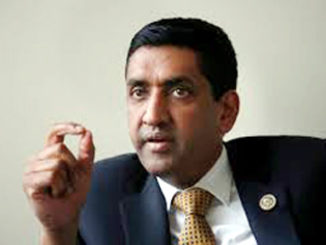
    The subcommittee chairman, Representative Ro Khanna, is pressuring Biden, a fellow Democrat, to keep a campaign promise to end fossil fuel subsidies such as tax breaks and regulatory loopholes. “We appreciate that President Biden ran on ending fossil fuel subsidies. But the details matter,” Khanna said in a statement released prior to the hearing.

    Khanna asked Thunberg if it would be a “gut punch” to the global environmental movement if fossil fuel subsidies are not eliminated in Biden’s current $2.3 plan to overhaul U.S. infrastructure.

    “Yes, pretty much, that’s a good description,” Thunberg replied.

    The senior Republican on the subcommittee, Ralph Norman, rejected “doomsday scenarios” about climate. He said children had been greatly affected by the fear of climate change, and asked Thunberg why she had said previously that she wanted people to “panic” about it. “By that I mean that I want people to step out of their comfort zones, and not just see the climate crisis as a distant threat, but rather as something that is impacting people already today,” Thunberg said.

    Thunberg, who was Time magazine’s person of the year in 2019 for her work on climate change, has denounced the “madness” of government subsidies for fossil fuel use. She says pledges by various countries to halve greenhouse gas emissions over the next decade are insufficient.

    Biden has called for replacing fossil fuel subsidies with incentives for clean energy production as part of his infrastructure plan, but the plan has not specified which tax breaks for fossil fuel companies would be targeted. Khanna listed some tax breaks he wants repealed, including one called intangible drilling costs, which allows producers to deduct most costs from drilling new wells.

  • Indian American lawmaker Pramila Jayapal leads push to end corporate personhood

    Indian American lawmaker Pramila Jayapal leads push to end corporate personhood

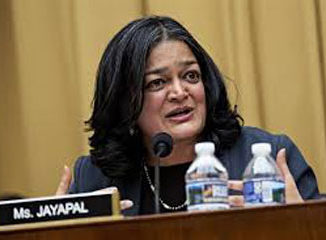
    WASHINGTON (TIP): Asserting that corporations are not people and money is not speech, 50 Members of US Congress led by Indian American Pramila Jayapal have introduced an amendment to the Constitution that would end corporate personhood. By specifying that the rights provided by the Constitution are for people — not corporations, the joint resolution introduced Tuesday, April 6, would reverse the Supreme Court’s Citizens United v. Federal Election Commission ruling, and “put power back into the hands of people.”

    The resolution co-sponsored among others by Indian American Rep. Ro Khanna also works to get big money and special interests out of politics after the most expensive election campaign in American history.

    Additionally, the joint resolution mandates that Federal, state, and local governments require that all political contributions and expenditures be publicly disclosed.

    “Corporations are not people and money is not speech,” said Washington Representative Jayapal in a press release.

    “After the most expensive election in American history in which special interests poured millions in dark money into campaigns across this country, the We the People Amendment finally returns the power to the people, ends corporate constitutional rights, reverses Citizens United, and ensures that our democracy is really of the people, by the people — not corporations.”

    Local and national groups including Move to Amend, the release said, endorse the us the People Amendment.

    As political spending by large corporations skyrocketed, the 2020 election easily became the most expensive in American history — more than doubling the total cost of the record-breaking 2016 election cycle, Jayapal noted.

    Spending for the presidential, House, and Senate races spiked to over $14 billion. While the presidential election drew nearly $6 billion, congressional races witnessed $8.7 billion in total spending.

    This resulted in nine of the 10 most expensive Senate races in history and half of the 10 most expensive House races in history occurring in the 2020 cycle, the release said.

    Additionally, the Center for Responsive Politics reported a shift to large donation strategies, with the top 10 donors contributing over $640 million during the cycle, mostly to independent PACs who are unbound by spending caps.

    There is extensive support for reining in campaign spending, the release said citing a survey saying more than 75% of people support limits on the amount of money individuals and organizations can spend on campaigns.

    This includes 71% of Republicans and Republican-leaning independents. Additionally, 90% of people say it is important that donors not have more influence than others in our political system.

    Meanwhile, in California, Democratic state Assembly members Alex Lee and Ash Kalra recently introduced AB-20, the Clean Money Act of 2021, which would outlaw candidates for state office from accepting campaign contributions from businesses, according to commondreams.org.

    Speaking Tuesday, April 6, at a Zoom press conference ahead of a San Francisco Board of Supervisors vote on a resolution backing AB-20, Kalra tied the bill to Jayapal’s proposed constitutional amendment, calling the measures “complimentary.”

    “Each individual should have an equal voice in the election process, but big corporate donations skew the narrative and creates a fracture in our democracy and hurts those of us who don’t have the resources to compete,” he said.

  • Indian American lawmakers say Biden, Harris will heal America

    Indian American lawmakers say Biden, Harris will heal America

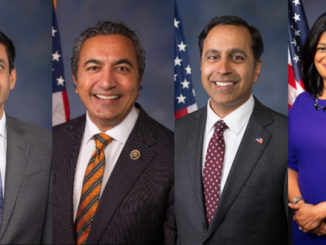
    WASHINGTON (TIP): Indian American lawmakers hailed the leadership of US President Joe Biden and Vice President Kamala Harris, expressing confidence that the two leaders will heal the country, courageously face challenges and build back better. During the Presidential Inaugural Committee’s official Asian American inaugural ball, hosted virtually by the leading Indian-American advocacy organization IMPACT, Congressman Raja Krishnamoorthi from Illinois said he is extremely happy that both Biden and Harris are finally able to take over leadership.

    Congressman Ro Khanna, who represents California’s 17th Congressional District, located in the heart of Silicon Valley, said he cannot stress “what an amazing moment this is for our community and the multi-racial democracy in America.” Congressman Ami Bera, representing California’s 7th Congressional District in the US House of Representatives, said Biden and Harris are humble people who get the importance of this moment in time to heal this country, to bring the nation together and “face with courage the challenges that are ahead of us.”

    Congresswoman Pramila Jayapal said at the AAPI ‘Inaugural Ball: Breaking Barriers’ that she is proud and excited to call Harris the next US Vice President – the first woman, first South-Asian American and the first Black American to ever be elected to this “position of public trust. “Today we prove that our democracy still works and that the power always belongs to the people through the power of our vote,” she said at the virtual inaugural ball held on Tuesday, Jan 19, and added that she cannot wait to see the brighter world that “we will build together.”

    Indian American Neera Tanden, nominated by Biden as the Director of Office of Management and Budget at the White House, said she is honored to be part of the Biden-Harris administration.

    “I know for many in our community there is so much to be proud of. Not only can we celebrate an incredibly diverse cabinet, but we can also celebrate the fact that we have the first vice president” who is of Asian descent.

    Following the swearing-in of Harris, IMPACT Executive Director Neil Makhija said generations of immigrants came to the US for a better life for their children. “Today, the daughter of an Indian immigrant, who made dosas on the campaign trail, and spoke to her ‘chithis’ in her nomination speech, took her oath of office as Vice-President of the United States. “And as Kamala Harris takes her place in the American story, the hearts of her countrymen and women are swelling with pride and hope for the future,” he said, adding that the inauguration of Harris is not only the culmination of an American dream but “marks the launching of millions of new dreams. Beginning today, a generation of American children will grow up knowing only an Indian-American and Black woman as vice-president of the United States.” As Harris has said, she may be the first, but she won’t be the last. “And, with her as an inspiration, we look forward to helping the next generation prove her right,” Makhija added. National, grassroots organization South Asians for Biden’s National Director Neha Dewan said Biden and Harris are the “right leaders” for this moment “when we are experiencing multiple, converging crises, and their leadership gives us all hope that we can emerge from this as a stronger country.” She said the organization is heartened by the fact that the South Asian community played a critical role in the 2020 election and looks forward to deepening the community’s engagement in government and politics in the months and years ahead. With Harris breaking barriers as the first Black and South Asian woman elected to national office, Dewan said: “for South Asians who wondered whether this moment could ever be possible, today affirms that America at its best is a land of limitless opportunities.”

  • Indian American Lawmaker Ro Khanna Sees Two challenges before America after Capitol riot

    Indian American Lawmaker Ro Khanna Sees Two challenges before America after Capitol riot

    WASHINGTON (TIP): In the aftermath of the Capital riot by supporters of outgoing President Donald Trump, Indian American lawmaker Ro Khanna believes America faces two challenges on the economic and cultural fronts to rebuild faith in democracy.

    “It’s a big challenge for us,” the third-term progressive Democrat in the House told Business Insider in a telephonic interview on Jan 8, two days after the riot when asked about the state of American democracy.

    “I think there’s two challenges for the country,” Khanna said. “The challenge of economically-left behind places and people where you don’t have economic wealth generation, without basic healthcare, without basic housing.”

    “And then you have the deeper question, and that is the cultural challenge,” he said noting “how we’ve become a multi-racial multi-ethnic democracy” thanks to the immigration post-’65 from non-European countries.

    “I mean we’re the most diverse we’ve ever been in our nation’s history — it’s easy to conceive of a nation on philosophical principles if there is also a cultural similarity,” Khanna said.

    “To conceive of a nation on philosophical principles, of a commitment to our constitution, when you have such incredible racial diversity, such incredible religious diversity and the racial history we do, is a very, very difficult project,” he said.

    “And I think a large part of our challenges — how do we begin to improve the communication between Americans who come perhaps from very different perspectives,” Khanna said.

    “I guess the point is we need a bold economic vision, but we need to couple that with leadership that looks for finding commonalities of Americans with great differences,” he said.

    “And it’s a difficult project, but there’s never been a multiracial, multiethnic democracy in the history of the world. And so what we’re trying to do is very hard as well,” Khanna said.

    “In the Congress, we need to begin a dialogue with each other in ways that lowers the volume of the screaming on cable news and looks for ways to respect Americans and understand their anxieties, understand their perspectives, and find some common fabric for this country,” he said.

    Khanna also stressed the “need to rethink the role that social media has had in encouraging diversion realities and how we try to structure and design social media so that there are common sources of information.”

    “We have to look at education across the country in terms of giving people the ability to sort out facts from conspiracy theory,” Khanna said.

    “And then we have to look at the communities that have been left out and why and why some of the anger may be there and the anxiousness may be there with the changes the country is going through, and how to respect the dignity of these places that have been left behind,” he said.

    “And if we can do that, you’re not going to get to everyone, but maybe you’ll get to some, and that builds a coalition of people going forward,” Khanna said.

    Khanna, who has made a name for himself as a strident opponent of the US government’s interminable support for the “forever wars”, hoped the US would end the war in Yemen and pull out the remaining US troops in Afghanistan.

    The Indian American lawmaker said he was also “working with Sen. Bernie Sanders on a war powers resolution to make sure that Congress has to be consulted before we get into any other wars.”

    Asked about his expectations from the Biden administration on the national security and foreign policy front, Khanna said, “I’m hoping we end the war in Yemen.”

    Encouraged by preliminary conversations with people in Biden’s team, he believed the new administration is “going to make it a priority to stop our support for the Saudis and stop the bombing in Yemen. That has to be a priority.”

    Favoring a pull out of the remaining US troops in Afghanistan, Khanna said, “There needs to be a peace negotiation, and then we ought to leave.”

    “We should make it clear that if there’s ever emerging threats or terrorist threats to our homeland from [Afghanistan], we reserve the right to conduct and we reserve the right to go in again,” he said. “But there’s no point in having a permanent presence there.”

    Asked if after the Capitol insurrection, Republicans will still support Trump, Khanna said, “It’s the first time I’ve seen a break. Not just by lawmakers, but also by [Trump’s] Republican friends.”

    “I think the images of the Capitol being stormed, it really shifted people’s mindsets,” Khanna said. “There’s something about the sacredness of the Capitol, about a belief in stability for American democracy.”

  • Indian American Hiral Tipirneni loses House race from Arizona

    Indian American Hiral Tipirneni loses House race from Arizona

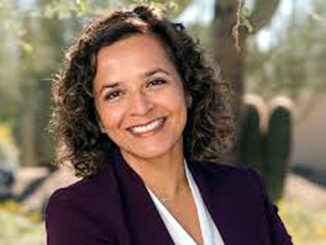
    ARIZONA (TIP): Indian American Democrat candidate Hiral Tipirneni has failed in her second bid to capture a House of Representatives seat from Arizona losing in a close contest to sitting Republican David Schweikert.

    Tipirneni called her defeat a “heartbreaking loss” but conceded the race as Schweikert pulled ahead with a 52% to 48% vote. He will continue to represent Arizona’s 6th District that he first won in 2011.

    Leading up to the election, many polls showed that the race was a toss-up between the two candidates. With Tipirneni’s defeat, “samosa caucus,” the Indian American members of the House call themselves will remain four strong. All the sitting members, Democrats Raja Krishnamoorthi, Pramila Jayapal, Ro Khanna and Ami Bera, have retained their seats. This marks the second time Tipirneni ran as a district representative in Arizona and lost to a Republican nominee. In 2018 Tipirneni was defeated by Republican Debbie Lesko for District 8 which covers suburban areas north and west of Phoenix including Peoria, Surprise, Sun City and New River.

    “From the very beginning, this race was about fighting for the issues that impact Arizona families,” she stated after calling Schweikert to concede on Saturday.

    “It was never about partisanship. It was about rooting out corruption and making the tax code more fair for middle-class Arizona families, small businesses, and retirees,” Tipirneni stated.

    “I ran for Congress with one ultimate goal in mind: to ensure that every single American has access to quality, affordable healthcare…”

    “Even today, after this heartbreaking loss, I stand by my decision to run wholeheartedly. And I’m proud to have joined the countless other women leaders nationwide who stepped up and demanded better,” she stated.

    Tipirneni said, “We need more women in positions of power. We need more women in politics. Their empathic voices, their ability to problem-solve, and their diversity of backgrounds and experiences will change this country for the better. Run and run hard – this country needs you…”

    “We have made an immense impact, make no mistake,” she stated hoping her constituents “use your voice, your passion, and your vote to create ‘the change you want to see in the world.’ I know I will.”

    Tipirneni, who is an emergency room doctor, immigrated to the US at the age of three with her family.

    Her campaign raised a record $5.4 million to Schweitkert’s r $2.1 million, according to Ballotpedia. In the Democratic primary, Tipirneni defeated journalist, Anita Malik to win the party nomination. Schweikert had been investigated by the House Ethics Committee on allegations that he misused official resources for re-election and violated campaign finance rules. He admitted to misconduct and paid a $50,000 fine, but that did not affect his reelection.

  • Four Democratic Indian American Lawmakers of “Samosa Caucus” Re-Elected to US House of Representatives

    Four Democratic Indian American Lawmakers of “Samosa Caucus” Re-Elected to US House of Representatives

    WASHINGTON  (TIP): In an impressive show, all the four Indian American Democratic lawmakers – Dr Ami Bera, Pramila Jayapal, Ro Khanna and Raja Krishnamoorthi – have been re-elected to the US House of Representatives.

    The Indian American community has emerged as a force to reckon with for the first time in the history of the US presidential election. Both the Democrat and the Republican campaigns had initiated several measures to woo the approximately 1.8 million members of the community who have emerged as a critical voting bloc in the battleground states of Florida, Georgia, Michigan, North Carolina, Pennsylvania, and Texas.The ‘Samosa caucus’ currently comprises five Indian American lawmakers, including the four members of the House of Representatives and Senator and Democratic vice-presidential nominee Kamala Harris, 56.

    Raja Krishnamoorthi, 47, easily defeated Preston Nelson, 30, of the Libertarian Party. When last reports came in, he had accounted for nearly 71 per cent of the total votes counted.

    Ro Khanna, 44, easily defeated fellow Indian-American Ritesh Tandon, 48, of the Republican Party with a margin of more than 50 percentage points. This was his third-consecutive win from the 17th Congressional district of California. Dr Ami Bera, 55, the senior most member of the ‘Samosa Caucus’, won the seventh Congressional District of California for the fifth consecutive term. When the last report came in, he had established an inaccessible lead by more than 25 percentage points against his Republican rival 65-year-old Buzz Patterson. The House of Representatives is the lower house of the US Congress, with the Senate being the upper house.

  • Indian Americans make a splash in yet another election cycle

    Indian Americans make a splash in yet another election cycle

    NEW YORK (TIP): Besides the four member ‘Samosa Caucus’ of Indian American lawmakers re-elected to the US House of Representatives, over a dozen others, including five women have won state level elections scoring a few firsts for the community.

    Among the five women, Democrat lawyer Jenifer Rajkumar, 38, became the first South Asian woman elected to the New York state assembly defeating her Republican rival Giovanni Perna.

    Rajkumar, a Stanford-educated lawyer and an immigrant rights advocate, is a professor at the City University of New York. She has previously served as the Director of Immigration Affairs and Special Counsel for New York state.

    Democrat Kesha Ram, who served in the Vermont House of Representatives from 2009 to 2016, became the first woman of color elected to the Vermont State Senate.

    Daughter of a Punjabi from India, she was one of the youngest ever to be elected to State Assembly at the age of 21.

    Other three elected to state houses were immigration attorney Nima Kulkarni in Kentucky, Vandana Slatter, a pharmacist, and scientist, in Washington and Democrat Padma Kuppa in Michigan. Kuppa was the first Indian immigrant and Hindu in the Michigan Legislature.

    “This year’s election represented a giant leap forward for the Indian Americans’ role in US politics,” says Neil Makhija, Executive Director of IMPACT.

    The leading Indian American advocacy and political action committee had raised a $10 million war chest to get Democratic vice-presidential candidate Kamala Harris and other Indian origin candidates elected. “Indian American voters and candidates demonstrated the burgeoning power and influence of this important voting bloc in decisive fashion,” he said.

    With a record number of Indian American candidates running for office across the nation, around two million Indian Americans voted in the 2020 election, according to the Center for American Progress.

    Winners

    US House:

    The longest serving Indian American House member Ami Bera, 55, won his fifth consecutive term to the House from California. Son of immigrant parents from Gujarat, Bera is a physician by profession. New Delhi-born lawyer Krishnamoorthi, 47, defeated his Libertarian Party rival in Illinois to win a third term.

    So did lawyer, academic Ro Khanna, 44, who defeated another Indian American challenger Ritesh Tandon of Republican Party in California.

    Chenna-born civil rights activist Jayapal, 55, the first and the only Indian American woman in the House, also won a third consecutive term from Washington State.

    States:

    In Arizona, Democrat Amish Shah, a doctor who defeated incumbent Ken Clark in 2018 was reelected to the State House from District 24.

    In California, Ash Kalra was re-elected to the California State Assembly for the third consecutive term.

    In Michigan, Democrat Ranjeev Puri was elected to 21st House District with a promise to help fight for a better Michigan.

    Also elected to Michigan state House 3rd District was Shri Thanedar, 65, millionaire businessman, scientist, who made an unsuccessful bid for governor two years ago,

    In New York,  Jeremy Cooney of Democratic Party, Working Families Party, was elected to the state senate from district 56.

    Born in an Indian orphanage, Cooney was adopted by a single-mother and grew up in the South Wedge neighborhood of the City of Rochester.

    Zohran Mamdani, son of filmmaker Mira Nair, won a New York State Assembly seat.

    In North Carolina, Democrat attorney and professor Jay Chaudhuri, who in 2016 became the first Indian American state legislator, was re-elected from State Senate’s 15th District.

    In Ohio, Republican Niraj Antani, 29, who in 2014 became the youngest member of the Ohio state house, has been elected as Ohio’s first Indian American state senator.

    He was the first Indian American Republican to serve in the Ohio House and second to get elected from the community to the statehouse.

    In Pennsylvania Democrat Nikil Saval, a writer and community organizer, was elected to District 1 of State Senate. He was the first Indian American elected to the Pennsylvania General Assembly.

    In Texas, Ravi Sandill, who in November 2008 became the first judge of South Asian descent elected in Texas, was re-elected as District Judge in Harris County.

    A number of Indian Americans also lost their races on Tuesday.

    In Maine, state house speaker Sara Gideon, 48, lost the US senate race to incumbent veteran Republican Senator Susan Collins.

    Gideon grew up in East Greenwich, Rhode Island, where her father was a pediatrician who emigrated from India and her Armenian American mother was a psychiatrist.

    In New Jersey, Republican Rik Mehta, 42, a pharmaceutical entrepreneur and political newcomer, lost to popular Democrat senator Cory Booker, a former mayor of New Jersey’s largest city and onetime Democratic presidential aspirant.

    In California, Republican Ritesh Tandon lost the US House race to fellow Indian American lawyer, academic Ro Khanna.

    So did Nisha Sharma, another Republican, to sitting Democrat Mark DeSaulnier.

    In Texas, former US diplomat Sri Preston Kulkarni, 42, lost to his Republican rival Troy Nehls in the state’s 22nd congressional district. He had narrowly lost the race in 2018, too.

    In Arizona’s 6th congressional district, Democrat Hiral Tiperneni is trailing narrowly at 10:30 am EST.

    In Virginia, Republican Manga Anantatmula failed to unseat Democrat Gerry Connolly.

  • Indian American Committee IMPACT raises $10 million war chest for Indian American candidates

    Indian American Committee IMPACT raises $10 million war chest for Indian American candidates

    NEW YORK (TIP): IMPACT, the leading Indian American advocacy and political action committee, has raised a $10 million war chest to get Indian origin candidates including Kamala Harris, the first Indian American on a national ticket, and Joe Biden, elected. Raised in just three months, the funds will be spent to support turnout efforts in the Asian American and Indian American community and to elect IMPACT’s 2020 slate of candidates, as well as Indian American candidates running up and down ballots in states across the country.
    Besides the Democratic presidential ticket of Biden and Harris, the slate includes six candidates for the US House and 16 candidates for Statewide and local offices: seven for State Senates, Five for State Houses and four others.
    “IMPACT’s fundraising strength reflects trends we’re seeing across the country,” IMPACT Executive Director Neil Makhija, said Monday, October 19, announcing the organization’s groundbreaking effort.
    “There’s a level of enthusiasm and excitement about this year’s election among Indian American voters that is palpable, and unrivaled in previous cycles,” he said.
    “With an Indian American on the presidential ticket for the first time in history, and a record number of Indian American candidates running for office, Indian American voters are poised to exert a considerable amount of influence in this year’s election, and IMPACT will help mobilize and harness this emerging power.”
    IMPACT said it will invest in the presidential, state-wide, and congressional races in battleground states across the country. Investments include committee contributions, paid advertising, targeted turnout operations, and infrastructure building.
    This groundbreaking investment comes at a time when Indian Americans — the second largest immigrant group in the US — are beginning to flex their political muscle on the national political stage, it said.
    In addition to an Indian American being a historic Democratic nominee for Vice President, the number of Indian Americans in Congress has grown five-fold in just the past eight years and the campaign arm charged with electing Democrats to Congress released its first-ever Hindi-language political ad earlier this year, it noted.
    All of these developments have come less than 75 years since South Asians began emigrating to the US, and 55 years after the Immigration and Nationality Act of 1965, which ended discriminatory quotas and opened the doors to Asian immigrants, IMPACT said.
    Besides four sitting members of US Congress — Ami Bera (California), Ro Khanna (California), Pramila Jayapal (Washington), Raja Krishnamoorthi (Illinois) — Impact is backing two more, Sri Kulkarni (Texas), and Hiral Tipirneni (Arizona) for the US House.
    Seven State Senate candidates backed by IMPACT are: Sara Gideon (Maine), Jay Chaudhuri (North Carolina), Jeremy Cooney (New York), Kevin Thomas (New York), Rupande Mehta (New Jersey), Kesha Ram (Vermont), and Nikil Saval (Pennsylvania).
    Five candidates for State Houses are: Nima Kulkarni (Kentucky) Padma Kuppa (Michigan), Jennifer Rajkumar (New York), Amish Shah (Arizona), and Vandana Slatter (Washington).
    Impact is also backing Nina Ahmad (Pennsylvania Auditor General), Ronnie Chatterji (North Carolina Treasurer), Pavan Parikh (Ohio Hamilton County Court of Common Pleas) and Ravi Sandill (Texas District Judge).


  • Indian American Congressman Ro Khanna Named ‘Best Officer’ for Constituent Services

    Indian American Congressman Ro Khanna Named ‘Best Officer’ for Constituent Services

    SAN JOSE, CA (TIP): On May 30, the Congressional Management Foundation (CMF) announced that Rep. Ro Khanna (D-CA) is a winner for the 2019 Democracy Awards, CMF’s honors program recognizing non-legislative achievement in operations and constituent service by congressional offices and Members of Congress. Rep. Khanna is recognized for excellence in the Constituent Service category, which focuses on how an office interacts with and serves constituents, especially how it utilizes and leverages specific, methodical, and consistent processes for achieving measurable results in constituent service.

    “I congratulate my team for this well-deserved recognition for their hard work,” said the Indian American Congressman. “From securing veterans’ benefits to navigating the complex immigration process, congressional work is centered on improving the lives of our constituents. I am incredibly proud of the tremendous job we have done for Silicon Valley.”

    “As a Democracy Award winner, Rep. Khanna’s office is one of the best in Congress,” said Bradford Fitch, President and CEO of the Congressional Management Foundation. “This designation demonstrates that Rep. Khanna has made a significant commitment to being the best public servant for his constituents in California. Rep. Khanna and his staff are to be congratulated for not only being a model for colleagues in Congress, but for helping to restore trust and faith that our democratic institutions can work,” he said.

    California’s 17th congressional district represents the only majority Asian district in the continental United States, and as a result manages an unusually high number of cases that fall into the general category of immigration. These cases constitute over 80% of their constituent services work, thus personal interactions with constituents play a significant role in their district. Due to the diverse origins of their constituents and the heavy immigration-related caseload, the office places a premium on language ability in both their interns and permanent staffers. To address these unique constituent needs, they have hired staffers with fluency in in Tagalog, Mandarin, Vietnamese, Hindi, and Russian, and this summer have paid interns fluent in Spanish, Cantonese, Hebrew and Hindi. Finally, the office continually updates their “Wall of Fame”, where emails of thanks from constituents are posted. They have received so many notes from appreciative constituents that they have now spread to a second wall.

    California’s 17th congressional district is one of two congressional offices across both chambers of Congress to receive this honor. A committee comprised primarily of former Members of Congress and former congressional staffers selected the two winners (one Democrat and one Republican) for each category. A ceremony to honor finalists and winners will be held on June 20, 2019.

  • Unprecedented congratulatory messages pour in for Modi from over 50 US leaders

    Unprecedented congratulatory messages pour in for Modi from over 50 US leaders

    WASHINGTON (TIP): In a testimony to the strength of India-US relations, unprecedented congratulatory messages have been received from over 50 US leaders in every domain, including the Administration, Congress, business, academia/think tanks on the historic electoral victory of India’s Prime Minister Narendra Modi.

    ADMINISTRATION

    President Donald Trump

    • Just spoke to Prime Minister @NarendraModiwhere I congratulated him on his big political victory. He is a great man and leader for the people of India -they are lucky to have him!

    Vice President Mike Pence

    • Congrats to an American ally & friend PM @narendramodi, on his party’s win in India’s parliamentary election. This was a strong display of the Indian people’s commitment to democracy! We look forward to continuing to work with India for a freer, safer, & more prosperous region.

    Secretary Mike Pompeo

    • Congratulations to @narendramodi and the NDA for their victory in India’s election, and to the Indian people for casting their votes in such historic numbers. As the world’s largest exercise in democracy, #India’s election is an inspiration around the world.

    Ivanka Trump, Advisor to the President

    • Congratulations @narendramodi on a great victory! Exciting times ahead for the wonderful people of India!

    Governor Phil Murphy (New Jersey)

    • Congrats to Prime Minister @narendramodi and the NDA on your historic election! New Jersey has a vibrant Indian American population and deep ties to the world’s largest democracy –we look forward to strengthening our relationship in the years ahead.

    Governor Greg Abbott (Texas)

    • Prime MinisterModi, Congratulations on your election win. I view it as a very important to the future of India. Texas looks forward to continuing to work with you as we advance the economies of India and Texas

    CONGRESS

    Senator Chris Coons (D-DE)

    • Congratulations to the new government and the people of India for concluding the world’s largest democratic election in which 600 million votes were cast for the country’s leadership.·I look forward to continuing my work to strengthen and deepen ties between the United States and India, two of the world’s great democracies, in the years ahead.

    Senator Mark Warner (D-VA)

    • As co-chair of the Senate India Caucus, I want to congratulate the Indian people on today’s historic election —the largest democratic election in history. I look forward to continuing our work with PM Modi’s administration to strengthen our important alliance with India.

    Senator Kevin Thomas

    • Congratulations to @narendramodi on his win in the Indian elections today. India and the U.S. share a great relationship and looking forward to continuing cooperation going forward.

    Senator John Cornyn

    • Congratulations @narendramodi on your historic victory. Looking forward to seeing you soon

    enator Dan Sullivan

    • I want to congratulate @PMOIndia@narendramodion achieving a commanding victory in his reelection bid today. Modi, a steadfast friend of America and free people everywhere, has clearly earned a strong and lasting confidence among the people of India.

    Congressman Ted Yoho (R-FL)

    • The world’s largest democracy and one of our strongest partners in the Indo-Pacific has chosen their leadership in free and fair elections. Congratulations to @BJP4India and @narenbramodi on your historic re-election.

    Congressman Jim Banks (R-IN)

    • Congratulations to @narendramodi and his party for their landslide victory in India’s election. The relationship between India and the United States has never been stronger!

    Congressman Tom Suozzi (D-NY)

    • Congratulations to @narendramodi on his re-election! The India-U.S. relationship is based upon shared values. This alliance will be very important overthe next 50 years & I am looking forward to continuing our work with PM Modi & Indian government to strengthen our alliance.

    Congressman Raja Krishnamoorthi

    • Congratulations to Prime Minister @narendramodi on his re-election —it was truly an inspiration to see so many Indians exercise their democratic rights, and I look forward to working with PM Modi and the Indian government to strengthen the US-India partnership.

    Congressman Steny Hoyer

    • Congratulations @NarendraModi on winning re-election this week. I look forward to strengthening the important U.S.-India partnership.

    Congressman Ami Bera

    • Great job to the people of #India on their historic election. Never before have so many voted in a single democratic election. Congratulations to PM Modi for his win and I look forward to working with his government to strengthen the ties between our two great nations.

    Congressman Ro Khanna

    • One lesson from Modi’s win is that dynastic, establishment candidates are weak. Democrats need to make sure that our candidate against Trump can connect with people’s frustration and offer a positive vision for change.

    Asm. Raj Mukherjee, Assembly Majority Whip, NJ Legislature

    • Congrats to @narendramodi on a decisive reelection and to the Indian people on the largest display of participation in democracy in the history of the world. Looking forward to furthering the strong bilateral ties between our two great democracies. @IndiainNewYork

    THINK TANKS/ ACADEMICS

    Ambassador Nikki Haley , Stand for America

    • India continues to have amazing potential and is a strong US partner. Congratulations to @narendramodi on your success with the elections and the direction you are taking India. We look forward to seeing our partnership continue to strengthen

    Ambassador Nicholas Burns, Professor, Harvard Kennedy School

    • A major victory for PM Modi and the BJP in #India. The Trump Administration now has an opportunity to expand our military and economic partnership with Delhi, particularly to limit China’s ambitions in the Indo-Pacific.

    Renu Khator, President of University of Houston ·Congratulations to Prime Minister Modi on his decisive victory in election…1.3 billion people have chosen their leader to continue to shape India’s future at home and abroad!

    BUSINESS

    Bill Gates, Microsoft

    • Congratulations @NarendraModi on a remarkable win in #IndianElections2019. Your continued commitment to improve health, nutrition, and development will significantly improve lives of many.

    IBM CEO Ginni Rometty

    • IBM congratulates Prime Minister Modi on his reelection, and I look forward to continuing to work with him on issues that are critical to India and its people -from skills to emerging technologies like AI.

    Ajay Banga, President & CEO, Mastercard

    • Congratulations to Prime Minister Narendra Modi on this historic win with this decisive mandate from the world’s largest democracy, he will propel the country further on all fronts. We are proud of our long-standing commitment to India and its citizens. And, we are excited to expand our investments and local partnerships in the country to deliver on the Digital India vision and help power it’s continued economic growth.
  • Indian American Congressman Ro Khanna says Trump’s budget proposal is ‘Budget of Broken Promises’

    Indian American Congressman Ro Khanna says Trump’s budget proposal is ‘Budget of Broken Promises’

    WASHINGTON (TIP): Indian American Congressman Ro Khanna, who represents the 17th District of California and a member of the House Budget Committee, heavily criticized President Trump’s FY 2018 budget proposal, describing it as one ‘that breaks President Trump’s promise to forgotten Americans.’ “This budget would leave millions of individuals and families at a loss to the critical programs they turn to in times of need and help keep them out of poverty.

    The administration wants to dismantle Medicaid, cut Social Security, eviscerate public education funding, weaken our ability to fight climate change and countless other damaging choices – all for a massive tax cut for the very rich”, he said. “The budget proposal also undermines how the government supports job growth and American innovation. The administration wants to eliminate the Appalachian Regional Commission, Economic Development Administration, and the Manufacturing Extension Partnership – just a few of the many successful programs that have led to the rapid growth of new 21st century industries across the U.S”, he further added.

    On May 24, Khanna joined the members of Congress questioning OMB Director Mick Mulvaney in a public hearing on the President’s Fiscal Year 2018 Budget.

  • Ro Khanna’s take on Trump’s Budget Proposal – Its “Dumb” & “Inhumane”

    Ro Khanna’s take on Trump’s Budget Proposal – Its “Dumb” & “Inhumane”

    Washington:  Indian-American Congressman Ro Khanna has termed as “dumb” some of the budget proposals of US President Donald Trump and described the move to cut foreign aid as “inhumane”.

    Khanna, the first-time Democratic lawmaker elected to the House of Representatives from a Congressional District in California, hoped that the ruling Republican party, which has majority in both the House and the Senate, would work against passage of the budgetary proposals of Trump.

    “I am really concerned about the community block grants, the USD three billion cut. It is shocking to me given someone campaigned on America first, building American cities. Here USD three billion that goes to building American cities, transportation, infrastructure, job training.

    “I cannot think of a more a dumb proposal than frankly than cutting that. Hopefully the Republicans will push back on that,” he told TYT Politics news YouTube channel yesterday.

    Khanna said he is concerned that the Republicans may not push back on foreign aid, given that the White House has proposed a massive budgetary cut in it.

    “Gorge Bush, I disagreed with about everything Bush/Cheney did. The one thing he did that we should all give him credit for is he helped save people in Africa with HIV. We put billions of dollars in foreign aid to help people with the antiviral drugs and we are going to cut that. That is so inhumane. So I think defending the foreign aid budget, which is less than one per cent, which is going to humanitarian causes,” Khanna said.

    “One of the things that annoyed me so much about Trump’s speech was when he said, ‘Well, it is America’s national interest and America first, and all nations follow their self- interest’. I thought the whole idea about American exceptionalism is we are not all nations. Yeah, other nations just follow their national interest, we care about morality.

    We care about humanity. That is what makes America exceptional, so we should care about the moral case, about what we are going to do for other countries,” he said.

    Alleging that the Republicans want to dismantle the New Deal Coalition, Khanna said this is the reason why they are “so much allowance” to Trump.

    “You talk to members of Congress and they do not agree with everything he says even Republicans. They are as embarrassed. But why do they give him such a pass? Why are not they speaking out? It is because he is helping achieve their vision, which is the dismantling of the administrative state.

    The dismantling of the New Deal in a way that even Ronald Reagan did and so they are saying, ‘Okay, we are going to make the bargain with the devil’. He is giving us what we want. Let us ignore everything else,” he said.

    Commenting on the Democratic party’s defeat, he said the party leadership have to come out with an economic platform that would appeal to people in states like Michigan, Ohio, Arkansas, Kentucky and places that they lost.

    “We have got to be willing to take a risk on something bold. I think that is really where the frustration with the base is, is they see the same type of incrementalism. It is not just a messaging problem. It is not just okay with we use some different word, or George Lakoff, we have the wrong frame. It is a vision problem. It is a substance problem. They are hurting,” Khanna said.

    He said globalization has eviscerated in part the middle class, and the money has gone to corporate interest.

    “The money has gone to CEOs. They feel that their wages have stagnated since 1979 to today for most middle-class families. The cost of healthcare has gone up. The cost education has gone up. Why would not you be upset? Why would not you be angry? They do not see the Democratic Party having done anything for them,” he said.

    Khanna said there is a stagnation of ideas in the Democratic party and there is need for a new vision.

    “We need people who are going to put out the bold ideas for the Democrats, just like Paul Ryan and Newt Gingrich and others did for the Republicans. Barry Goldwater, Reagan, they moved the Republican Party. We need that same energy. I had said somewhat facetiously but I believe it, let us fire all the Democratic consultants. Put Robert Reich, Stephanie Kelton and Paul Krugman in a room and they do a hell of a better job coming up with their agenda,” he said.

    Responding to a question, Khanna said American democracy is extraordinary.

    “I think that American democracy is still extraordinary. My own story: I am of Hindu faith, parents immigrated, was born in Philadelphia, I am 40 years old, I represent a district which is the most economically successful district in the world with Apple and Google,” he said.

    “There is an openness to the American political system that is extraordinary for all its flaws. That is what I hope people will understand that they do not feel disenfranchised.

    If the Democratic Party is the vehicle, great. If that is not the vehicle, go protest, go run as a third-party, but be engaged,” Khanna added.

  • Indian American Ro Khanna to Contest 2016 US House of Representatives Polls

    Indian American Ro Khanna to Contest 2016 US House of Representatives Polls

    Indian-American Ro Khanna has announced that he will contest for a US House of Representatives seat that represents most of the Silicon Valley in California for a second time after losing out in the 2014 polls by a narrow margin.

    “I am running to represent this community in Congress,” Mr Khanna said yesterday as he announced his bid for the 2016 elections. He lost to veteran Democrat and his own party colleague Mike Honda in his maiden Congressional bid in 2014.

    “I was raised to believe in the American Dream. My parents immigrated to the United States so that my brother and I could have a shot at it through a good education and hard work,” Mr Khanna said.

    “What’s heartbreaking is that today, for the first time, there’s an anxiety about whether that American Dream will exist for the next generation. It’s an anxiety driven by economics. We’re earning less, but working more. The cost of living, especially here in the Bay Area, is through the roof,” he said.Mr Khanna announced that this time too he would be contesting against his own party colleague Honda, who won the 2014 polls by a narrow margin of 3.6 per cent votes. California laws provides for contesting against own party colleague.Mr Honda has accepted the challenge.

    “Mike Honda welcomes the challenge and believes his long history of serving the district honourably and with principle will outweigh the determination of the wealthy interests backing his overly ambitious challenger,” a statement issued by Mr Honda’s office said.

  • IN PRIMARIES, TWO PIOS MAKE THE CUT IN CALIFORNIA

    IN PRIMARIES, TWO PIOS MAKE THE CUT IN CALIFORNIA

    WASHINGTON (TIP): Two Indian- American political rookies in California chalked up modest victories in nationwide primary elections on Tuesday for a long-shot challenge at established veterans in mid-term polls slated for November. In one of the most watched races nationally, Democrat Ro Khanna came a distant second to fellow Democrat Mike Honda in California’s 17th district, polling only about 25% votes to Honda’s 50%.

    But the top two candidates, regardless of party affiliation, qualify for the November poll, so there will be another face-off for the House of Representatives seat that Honda has won some half dozen times. Another Indian- American, Republican Vanila Singh, a professor at Stanford Medical Center, came third with 16.2% votes. In another race that has attracted nationwide interest, Indian-American Neel Kashkari, a former Treasury official and a moderate Republican, defeated a Tea Party favorite Tim Donelly in the primaries for the governorship of California to earn the right to challenge the incumbent three-term governor Jerry Brown in the general election in November.

    Brown, a Democrat seeking a fourth term, took 55% of the votes to run out an easy winner, with Kashkari a distant second with 18 per cent votes, and Donelly polling 15%. Both Kashkari and Khanna are long shots to displace the incumbents. The Japanese- American Honda, 72, is a political veteran endorsed by the party old guard, including President Barack Obama, House minority leader Nancy Pelosi, and the state’s two Senators Dianne Feinstein and Barbara Boxer. Khanna, 37, has strong support from the tech community in a Congressional district that includes the heart of the Silicon Valley, including endorsements from Yahoo CEO Marissa Mayer, Facebook Chief Operating Officer Sheryl Sandberg, and Google Chairman Eric Schmidt.

    Which is how Khanna has outraised and outspent Honda in one of the costliest Congressional primaries in the country, but he would still need to bridge the nearly 25% gap if he is to oust the labor union-backed incumbent. Kashkari has an even slimmer chance against Jerry Brown, who was one of California’s youngest governors when he was elected for the first time in 1975, and also the oldest governor when he re-elected in 2010 with a 28-year gap between his second and third terms.

    His father Pat Brown was also a two-term California governor in the 1960s. Although Kashkari is a moderate Republican, registered Republicans account for only 28.5% of California’s voters, compared with the Democrats’ 43.5%. Both races were marked by snide, raciallytinged attacks. Tea Party’s Donelly accused Kashkari of ties to Islamic fundamentalism all because he once participated in a Treasury department conference about Islamic Finance.

    Khanna, in a thinly disguised reference to his Indian origin, was attacked in campaign mailers over the possibility that he would outsource jobs if he won. Another Indian-American candidate, sitting Democratic Congressman Ami Bera of California’s 7th district, has a more realistic chance of winning a second term after a comfortable victory in the primaries. Some other Indian-American candidates, including Upendra Chivukula in New Jersey and Swati Dandekar in Iowa, failed to make the cut.

  • Strong Indian American challenge in US Congressional election in Silicon Valley

    Strong Indian American challenge in US Congressional election in Silicon Valley

    SAN JOSE (TIP): US Congressional election in Silicon Valley this year was being seen as a two-person race between incumbent Congressman Mike Honda (Democrat) and his main challenger Rohit “Ro” Khanna (Democrat) until recently. It all changed when Dr. Vanilla Mathur Singh (Republican), a member of Hindu American Foundation (HAF), entered the race in December 2013.

    The HAF first made headlines in 2005 with its failed attempt in California state to “improve 6th grade textbooks so that these books actually reflect their (Hindu) beliefs and their religious practices.” Media reports indicate that Singh was recruited to run by Shalabh “Shalli” Kumar, a Chicagobased Indian-American businessman and Republican fundraiser. Kumar is the founder of a super PAC, Indian Americans for Freedom, with close ties to Hindu Nationalists. He has been lobbying members of US Congress to help rehabilitate his “idol” Narendra Modi of India’s Hindu Nationalist Bharatiya Janata Party (BJP).

    Modi has been denied US visa multiple times by the State Department because of his widely suspected role in the killing of thousands of Muslims in 2002 Gujarat riots. Singh said that she raised $100,000 in the five days after declaring her candidacy, including $25,000 of her own money. The rest, she said, came from about “20 family and friends.” Kumar’s super PAC could change the dynamics of the South Bay race if he chooses to back Singh financially. In 2002, his super PAC spent $500,000 in an unsuccessful attempt to defeat Rep. Tammy Duckworth, D-Ill., including producing an ad set to Middle Eastern music that showed the double amputee Iraq war veteran wearing a headscarf during a visit to a local Muslim community center.

    Ro Khanna, a Silicon Valley patent attorney of Indian origin, is backed by many of Silicon Valley’s top VCs and executives at Google, Facebook, Yahoo and other tech companies. Other Notables include Marc Andreessen, the Netscape cofounder; John Doerr, the venture capitalist; and Randi Zuckerberg, the chief executive of Zuckerberg Media and the sister of Mark Zuckerberg and Sean Parker, former President pf Facebook. Four months before the primary, Khanna has $1,975,000 in cash on hand, or more than triple the incumbent’s $623,000, according to campaign finance records filed last Friday as reported by the New York Times.

    Khanna supporters expect him to win to push legislation in Congress to liberalize US visas for foreign workers needed to fill Silicon Valley tech jobs. He supports raising the number of H1-B visas, keeping a lid on capital gains taxes and cracking down on patent trolls while charting a progressive agenda on most social issues. Faced with the surprise new challenge from the Hindu Right, Ro Khanna has refused to denounce Narendra Modi for fear of alienating a significant chunk of the substantial pro-BJP Indian- American voters in Silicon Valley. Mike Honda, the incumbent congressman from 17th district, is a Japanese-American who was put by the United States in an internment camp as a child during World War II.

    He has been a featured speaker at many Muslim- American events where he has spoken out for American Muslims’ civil rights since the terrorist attacks of September 11, 2001. During a 2009 keynote speech at Human Development Foundation fund-raiser that I attended, Congressman Honda said the US foreign policy should have the same goals that the HDF has in Pakistan. Drawing from his experience as a US peace corps volunteer to support education and infrastructure development in Central America in the 1960s, he proposed a similar effort in restoring US credibility in Pakistan and Afghanistan. Honda praised the US emphasis on economic aid and said he supports the 80/20 rule that General Petraeus had outlined, with 80% emphasis on the political/economic effort backed by 20% military component to fight the Taliban insurgency.

    Honda says he has been a strong advocate for the tech industry in Congress. As a member of the House Appropriations Committee, he helped get millions of dollars in funding for BART extension to San Jose, a top priority for Valley leaders, as well as federal investment in nanotechnology research. His strong backing from organized labor and veteran Democrats reflects the decades he’s spent in public service. Honda also supports an increase in H1-B visas, although he’s also expressed concerns about its potential harm to the local labor pool.

    A number of polls in 17th district so far show that Honda enjoys a healthy lead over his challenger Khanna. Honda’s lead could increase if Singh takes a significant chunk of Indian-American votes away from Khanna. In spite of a powerful tech industry funded challenge by Ro Khanna, Honda remains a favorite to win. Honda also enjoys the strong endorsement of President Obama and Democratic Party’s establishment. Singh’s entry in the race could further help Honda extend his lead and keep his seat in Congress. I intend to vote for Mike Honda based on the Congressman’s strong record of service to Silicon Valley and his unambiguous procivil rights stance

  • Strong Indian American challenge in US Congressional election in Silicon Valley

    Strong Indian American challenge in US Congressional election in Silicon Valley

    SAN JOSE (TIP): US Congressional election in Silicon Valley this year was being seen as a two-person race between incumbent Congressman Mike Honda (Democrat) and his main challenger Rohit “Ro” Khanna (Democrat) until recently. It all changed when Dr. Vanilla Mathur Singh (Republican), a member of Hindu American Foundation (HAF), entered the race in December 2013.

    The HAF first made headlines in 2005 with its failed attempt in California state to “improve 6th grade textbooks so that these books actually reflect their (Hindu) beliefs and their religious practices.” Media reports indicate that Singh was recruited to run by Shalabh “Shalli” Kumar, a Chicago-based Indian-American businessman and Republican fundraiser.

    Kumar is the founder of a super PAC, Indian Americans for Freedom, with close ties to Hindu Nationalists. He has been lobbying members of US Congress to help rehabilitate his “idol” Narendra Modi of India’s Hindu Nationalist Bharatiya Janata Party (BJP). Modi has been denied US visa multiple times by the State Department because of his widely suspected role in the killing of thousands of Muslims in 2002 Gujarat riots.

    Singh said that she raised $100,000 in the five days after declaring her candidacy, including $25,000 of her own money. The rest, she said, came from about “20 family and friends.” Kumar’s super PAC could change the dynamics of the South Bay race if he chooses to back Singh financially. In 2002, his super PAC spent $500,000 in an unsuccessful attempt to defeat Rep. Tammy Duckworth, D-Ill., including producing an ad set to Middle Eastern music that showed the double amputee Iraq war veteran wearing a headscarf during a visit to a local Muslim community center.

    Ro Khanna, a Silicon Valley patent attorney of Indian origin, is backed by many of Silicon Valley’s top VCs and executives at Google, Facebook, Yahoo and other tech companies. Other Notables include Marc Andreessen, the Netscape co-founder; John Doerr, the venture capitalist; and Randi Zuckerberg, the chief executive of Zuckerberg Media and the sister of Mark Zuckerberg and Sean Parker, former President pf Facebook.

    Four months before the primary, Khanna has $1,975,000 in cash on hand, or more than triple the incumbent’s $623,000, according to campaign finance records filed last Friday as reported by the New York Times. Khanna supporters expect him to win to push legislation in Congress to liberalize US visas for foreign workers needed to fill Silicon Valley tech jobs. He supports raising the number of H1-B visas, keeping a lid on capital gains taxes and cracking down on patent trolls while charting a progressive agenda on most social issues.

    Faced with the surprise new challenge from the Hindu Right, Ro Khanna has refused to denounce Narendra Modi for fear of alienating a significant chunk of the substantial pro-BJP Indian-American voters in Silicon Valley. Mike Honda, the incumbent congressman from 17th district, is a Japanese-American who was put by the United States in an internment camp as a child during World War II. He has been a featured speaker at many Muslim- American events where he has spoken out for American Muslims’ civil rights since the terrorist attacks of September 11, 2001.

    During a 2009 keynote speech at Human Development Foundation fund-raiser that I attended, Congressman Honda said the US foreign policy should have the same goals that the HDF has in Pakistan. Drawing from his experience as a US peace corps volunteer to support education and infrastructure development in Central America in the 1960s, he proposed a similar effort in restoring US credibility in Pakistan and Afghanistan. Honda praised the US emphasis on economic aid and said he supports the 80/20 rule that General Petraeus had outlined, with 80% emphasis on the political/economic effort backed by 20% military component to fight the Taliban insurgency. Honda says he has been a strong advocate for the tech industry in Congress.

    As a member of the House Appropriations Committee, he helped get millions of dollars in funding for BART extension to San Jose, a top priority for Valley leaders, as well as federal investment in nanotechnology research. His strong backing from organized labor and veteran Democrats reflects the decades he’s spent in public service. Honda also supports an increase in H1-B visas, although he’s also expressed concerns about its potential harm to the local labor pool.

    A number of polls in 17th district so far show that Honda enjoys a healthy lead over his challenger Khanna. Honda’s lead could increase if Singh takes a significant chunk of Indian- American votes away from Khanna. In spite of a powerful tech industry funded challenge by Ro Khanna, Honda remains a favorite to win. Honda also enjoys the strong endorsement of President Obama and Democratic Party’s establishment. Singh’s entry in the race could further help Honda extend his lead and keep his seat in Congress. I intend to vote for Mike Honda based on the Congressman’s strong record of service to Silicon Valley and his unambiguous pro-civil rights stance.

  • Another Indian-American jumps into combative US House race

    Another Indian-American jumps into combative US House race

    WASHINGTON (TIP): An Indian-American Republican candidate has jumped into an already combative electoral House race in the Silicon Valley featuring a former aide of President Barack Obama challenging the sitting fellow Democrat.

    The new entrant to the race between the seven-term Democrat incumbent Mike Honda of San Jose and his main challenger, former Obama administration trade representative Ro Khanna, is Vanila Singh, a Stanford Medical Centre anaesthesiologist. India-born Singh, 43, who came to the US as a toddler, says she entered the South Bay contest because it is “time to do my civic duty”.

    But her critics, according to SFGate.com, say the man who recruited her to run, Chicago businessman Shalabh ‘Shalli’ Kumar, “has a far more divisive agenda”. Kumar is founder of the Indian Americans for Freedom, a super PAC or an independent-expenditure only Political Action Committee, which can spend unlimited amounts as long as it doesn’t coordinate directly with the candidate.

    Singh acknowledges that after “multiple conversations” with Kumar and other Republican insiders late last year, she filed to run Dec 26 – a day after switching her voter registration from “declined to state” to Republican. In recent weeks, Singh met Kumar, who chairs the Indian American Advisory Council of the House Republican Conference, in Washington, D.C. said SFGate. Kumar told ethnic publication IndiaWest that he approached Singh to be part of a “project” he founded with Republican House member Pete Sessions to build a Republican congressional “team” that supports a “pro-India” agenda.

    However his critics, according to SFGate.com, suggest his agenda includes securing a visa for Bharatiya Janata Party’s prime ministerial candidate Narendra Modi. Modi’s US visa was revoked in 2005 because of his alleged role or inaction during the 2002 Gujarat riots. Singh, according to SFGate, says she has received no money and “no promises” from Kumar or his super PAC. “I’m not part of his project per se,” and Kumar’s agenda “is not mine”, she was quoted as saying.

  • Indians a rising force in California politics

    Indians a rising force in California politics

    SACRAMENTO (TIP): When Neel Kashkari announced he was running for governor, he became the latest Californian of Indian descent to step onto the political stage, the most recent example of a rising trend in one of America’s most ethnically diverse states.

    Kashkari is part of a surge of second-generation Indians emerging in politics, despite their relatively small population in California. While Sikh Californians have been farming in California’s Central Valley for nearly a century, the last couple of decades have brought a wave of technology workers and entrepreneurs into Silicon Valley, where they have formed a tight-knit, supportive and financially successful community.

    Tapping into that donor base will be key to the Republican Kashkari’s campaign, even if many donors will have to cross party lines to support him. The growing roster of candidates and elected officials of Indian descent includes Democrat Ami Bera, a doctor who holds a Sacramento-area congressional seat; Democrat Ro Khanna, who is challenging for another in the San Francisco Bay Area; Vanila Singh, a Republican who recently announced she is entering the same Bay Area race; and Republican Ricky Gill, who attracted millions of dollars from Indian-Americans in the Central Valley before losing a tight congressional race two years ago.

  • Indian American introduces US government reform agenda

    Indian American introduces US government reform agenda

    WASHINGTON (TIP): Amidst widespread frustration surrounding the US shutdown and reckless brinkmanship over the debt limit, an Indian-American leader, seeking his maiden Congressional bid, has introduced a vision of bold government reform agenda. One of the top fund raiser, Rohit Ro Khanna, a former top Obama Administration official unveiled October 17 a five step plan to change the Congress. The proposal includes refusal to donations from political action committees (PACs) and federally registered lobbyists, refusal to Congressional pay raises, end of Congressional pension system, banning legislators from lobbying for five years after leaving office and Members of Congress from taking special interest-funded trips. “These proposals will help turn our Members of Congress back into the representatives of the people that they’re supposed to be,” Khanna said.

    “It will make them more like the voters who send them to office, who have to worry about supporting their families on paychecks that haven’t grown in years. “It will make them think twice about cutting Social Security benefits and blocking health coverage that millions of Americans rely on. It will make them more like you and me,” he said. He said America’s founders invented a government flexible enough that more and more Americans have become full shareholders in it. “Women, African Americans, Latino Americans, and Asian Americans have all obtained the right to vote, and a greater voice in our society. We’re making progress on LGBTQ, too, although we’ve still got a ways to go,” he said. “It’s because of this sometimes unsteady progress toward fairness and equality and freedom and citizenship that our country remains a model for the world. It inspired my grandfather, who joined Mahatma Gandhi’s movement for freedom and democracy in India and spent four years in jail for his activities,” he said. Khanna was addressing a gathering in California from where he is seeking to get elected to the House of Representatives from the Democratic Party. He is pitted against his own party colleague and incumbent Mike Honda and has raised more funds as compared to his rival. Khanna pledged to abide by all the five proposals if elected to the Congress. He said he has refused to accept donations from PACs, special interests, and Washington lobbyists.