Tag: Sanjaya Baru

  • Turbulence awaits India in Trump zone

    Turbulence awaits India in Trump zone

    There is uncertainty over whether his MAGA push will help Make India Great Again

    “Faced with such transactionalism, it would seem, India has hedged its bets by stabilizing relations with both Russia and China. Some analysts have expressed the hope that Trump may improve relations with Russia and that would in turn enable India to retain that relationship while continuing to deal with China. Whatever the facts, the point is that it will take time before some stability returns to the US-India relationship. Indeed, this would be true even for US relations with key allies and neighbors. Everyone is waiting and watching to see how much of Trumpism is bluff and bluster and how much he means business.”

    By Sanjaya Baru

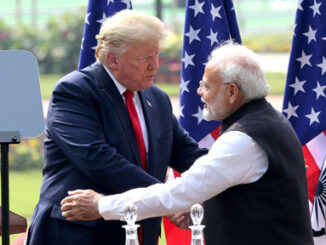
    During the US presidential election campaign, the commentariat in India was generally of the opinion that a second Trump presidency would be beneficial for India. Much hope was invested in the so-called personal chemistry and bonhomie between Prime Minister Narendra Modi and President Donald Trump. As events have unfolded over the past few weeks, it would appear that New Delhi now awaits Trump a bit nervously.

    Much has been made of Trump’s early invitation to Chinese President Xi Jinping to attend his inauguration. It took some diplomatic effort on External Affairs Minister S Jaishankar’s part to ensure that at least he received an invitation. More worrying, however, are Trump’s remarks about trade, tariffs and immigration. Along with the rest of the world, India is getting prepared for a period of turbulence in the bilateral relationship as well as in global geopolitics.

    Evan Feigenbaum, vice-president of Washington DC-based think tank Carnegie Endowment for International Peace, and a former member of the George W Bush administration, warns that Asian governments and markets should be prepared for Trump-induced turbulence. “Geopolitically, Asian governments, firms and especially markets should prepare to face a whirlwind of strategic turbulence,” says Feigenbaum.

    Jaishankar’s last air dash to Washington helped get the outgoing national security adviser, Jake Sullivan, to New Delhi. That visit sought to inject new energy into a sagging affair. During his proposed visit to Washington DC this weekend, the foreign minister will seek to inject even more energy into the relationship. Such activism draws attention to the concern with anticipated turbulence.

    In recent weeks, many within the ruling establishment in India have complained about the anti-India stratagems of the so-called American ‘deep state’, including influential individuals like George Soros. This kind of talk emanating from within the Sangh Parivar betrays nervousness in New Delhi despite the confidence exuded by diplomats and officials. At least one reason for this would be the uncertainty about the answer to a simple question — will MAGA help MIGA?

    Trump’s promise for his second presidency is primarily to Make America Great Again (MAGA). Modi’s promise to India has been MIGA — Make India Great Again. In the past, especially in the early years of the US-India strategic partnership during the tenures of President George W Bush and Prime Ministers Atal Bihari Vajpayee and Manmohan Singh, the template was that it would be in US interest to help India’s rise. It is this view, especially on the part of President Bush and his advisers that facilitated the US-India civil nuclear agreement. This view had to contend with doubts within the American establishment as to where India stood on matters of interest to the US. Doubts regarding the latter were renewed after India played footsie with Vladimir Putin following Russia’s invasion of Ukraine.

    In the United States, three schools of thought contend with each other on the US-India relationship. These can be classified as ideological, realist and transactional. The ideological school, never a decisive voice, has always placed great emphasis on the fact that India is a democracy and that its rise as a plural democracy is in the interests of the US. The West fought Soviet communism during the Cold War and now responds to Chinese authoritarianism. In both battles, the empowerment of a democratic India was viewed as a global public good.

    The realist view situates US-India relations within a global balance of power perspective that sees a stronger India as a helpful balancer against an aggressive and assertive China, at least within Asia. The fact is that US-India ties have improved over the past two decades against the backdrop of China’s rise.

    Hence, both the ideological and the realist views have contributed to an improvement in US-India relations, with the American establishment viewing India’s rise as being in its own interest and a positive development in itself. Making India Great Again suited US interests as long as India was viewed as an emerging counterforce to China.

    By contrast, the purely transactional view that Trump opted for during his first tenure has insistently asked the question, ‘what’s in it for me?’ Entering his second term Trump now asks that question with renewed vigor and force and the question is asked of the world as a whole, India included.

    The rise of transactionalism over realism means India has to show what it can do to MAGA for the US to do something to MIGA. Even though such transactionalism is associated with the first Trump presidency, it found new takers within the Biden administration after India went along with Russia in the wake of the Ukraine war. A growing number of officials within the Biden administration also became transactional and kept ticking off points as to what India was doing for or against US interests. Expect more of that going forward.

    Faced with such transactionalism, it would seem, India has hedged its bets by stabilizing relations with both Russia and China. Some analysts have expressed the hope that Trump may improve relations with Russia and that would in turn enable India to retain that relationship while continuing to deal with China. Whatever the facts, the point is that it will take time before some stability returns to the US-India relationship. Indeed, this would be true even for US relations with key allies and neighbors. Everyone is waiting and watching to see how much of Trumpism is bluff and bluster and how much he means business.

    Even as India hopes to stabilize and improve its relationship with the US, it has to be prepared for the anticipated turbulence. After all, Trump’s basic and fundamental policy objective will remain America First. The US is determined to retain its dominant global position, secure control over the trans-Atlantic alliance and ensure that allies spend more on their defense so that it can focus its resources on making its own economy more globally competitive and dominant.

    (Sanjaya Baru is a political commentator and policy analyst)

  • Trump 2.0 won’t be more of the same

    Trump 2.0 won’t be more of the same

    The world has changed since his previous tenancy at the White House

    “India, fortunately, has had a good equation with President Trump. Both Prime Minister Narendra Modi and External Affairs Minister S Jaishankar have retained links with people around Trump. However, the Indian leadership should proceed on the premise that Trump 2.0 will, in all probability, be unlike Trump 1.0. The policy areas of interest to India where Trump’s transactionalism and ‘America First’ approach could pose challenges would be trade, immigration and climate change. I am not a great enthusiast of a liberal US visa policy, given that it has contributed to the drain of talent from India. But trade may pose a challenge if some of Trump’s old advisers, especially people like former US Trade Representative Robert Lighthizer, are back in office.”

    Sanjaya Baru

    No election to a public office anywhere in the world attracts as much global attention as that to the office of the President of the United States of America. The US remains the world’s most consequential nation. Its President is the most powerful person in the world, presiding over the biggest economy, the biggest technological and scientific base and the biggest armed forces. It is, however, not yet ready to elect a woman as its President. Donald Trump defeated Hillary Clinton and Kamala Harris despite his misogynistic personality. In politics dominated by race and class, gender took a back seat. Opinion polls once again went off on a tangent.

    It is best that friends like Modi stay home for a while and allow US allies, especially the Europeans, to finish their anxious calls on the White House.

    From Berlin to Tokyo, Moscow to Beijing, Tel Aviv to Tehran and, indeed, New Delhi, every government will closely watch Trump’s selection of his team. This is because even though this is his second term, he has dumped many colleagues from the past and many have deserted him. The world will take a new measure of Trump both because there will be new faces around the President and because the world has changed since his previous tenancy at the White House.

    At home, Trump’s first charge would be to ensure stability and give hope to his less privileged supporters, especially the working class. The US economy is presently chugging along well, with economic growth at over 2 per cent; however, unemployment remains a concern for Trump’s core constituents. How he will balance the greed of his own class of millionaires and billionaires and the need of his low-income and socially and economically depressed supporters remains to be seen.

    Overseas, Trump’s hands will be full resolving conflicts in Europe and West Asia. He has promised to break out of the ‘Washington Consensus’ on economic and foreign policy. He is expected to reach out to Russia’s Vladimir Putin. He may stay the course getting tough with China, imposing high tariffs, but he may also seek a modus vivendi. In West Asia, he is expected to target Iran, perhaps pushing for regime change, but he may also keep Israel’s Benjamin Netanyahu on a short leash.

    Each of these expected actions will have long-term consequences for the US and the world, for Trump has promised to ‘Make America Great Again’ within the next four years. The trillion-dollar question is whether Trump will push for a change in the Constitution to seek a third term in office. At any rate, Trump 2.0 should be expected to be different from Trump 1.0 because age and time are not on his side.

    While Trump could have a lasting impact on how America is governed, the US capacity to fashion a world in its vision and after its preference is increasingly limited. The US will have to work with allies and friends. Both Europe and Japan have been nervous about a Trump presidency. Last time round, Europe had Angela Merkel and Japan had Shinzo Abe. Right now, there is no European or East Asian leader capable of standing up to Trump or reining him in. They will, perhaps, fall in line.

    Whether Putin secures a breather and Volodymyr Zelenskyy is asked to pipe down will depend on how much of a control Trump and his advisers secure on the US ‘deep state’ and the military-industrial complex, the movers and shakers behind the Joe Biden approach to Russia. One should expect, however, that both Putin and Chinese President Xi Jinping will, at least initially, seek to build bridges with the Trump administration. Ironically and counter-intuitively, Trump’s first year in office may be a quieter one globally than Biden’s last year.

    India, fortunately, has had a good equation with President Trump. Both Prime Minister Narendra Modi and External Affairs Minister S Jaishankar have retained links with people around Trump. However, the Indian leadership should proceed on the premise that Trump 2.0 will, in all probability, be unlike Trump 1.0. The policy areas of interest to India where Trump’s transactionalism and ‘America First’ approach could pose challenges would be trade, immigration and climate change. I am not a great enthusiast of a liberal US visa policy, given that it has contributed to the drain of talent from India. But trade may pose a challenge if some of Trump’s old advisers, especially people like former US Trade Representative Robert Lighthizer, are back in office.

    India will continue to keep the US engaged in buying defense equipment and linking up through supply chains to the US. However, the Modi government would be well advised to tread carefully and not get caught in US political crosshairs, as it has done in these past four years. Perhaps the Gurpatwant Singh Pannun case will not go away since it is already in the courts. The ripples from that case will continue to touch Indian shores.

    During Trump 1.0, Shinzo Abe was the first to knock on the doors of the White House, extending a friendly hand, flattering an egomaniac and selling ideas like Quad that benefited India. Abe was a statesman and a friend of India. His successors have been mere politicians, that too beleaguered ones and not too India-friendly. Trump may be friendly towards India, but this country is unlikely to be his immediate priority. It is best that friends like Modi stay home for a while and allow US allies, especially the Europeans, to finish their anxious calls on the White House.

    Trump has declared that he is returning to the White House because God has saved him. Political leaders who view themselves as ‘chosen by God and Destiny’ often do more harm than good. It is best to let them calm down and get their hands dirty before being too eager to demonstrate one’s friendship. 

    (Sanjaya Baru is a political commentator and policy analyst. He is Distinguished Fellow at United Service Institution of India, New Delhi)