Tag: Science & Technology

  • SAP to offer its business  apps on Google Cloud

    SAP to offer its business apps on Google Cloud

    FRANKFURT (TIP): Germany’s SAP is teaming up with Silicon Valley giant Google to allow customers to run SAP’s big business applications on Google’s cloud while offering Google’s suite of web-based desktop apps to users, the company said.

    Appearing on stage at Google’s Cloud Next conference in California, Bernd Leukert, SAP’s executive board member in charge of products and innovation, is set to announce the two companies are also working on joint machine learning initiatives to be unveiled at SAP’s own user conference in May.

    SAP has moved in recent years to encourage the multinational base of corporate customers using its financial planning and other business applications to switch from traditional packaged software running on clients’ own computers to cloud delivery.

    SAP, Europe’s largest technology company, said its flagship HANA database software was now running on the Google Cloud Platform (GCP) in order for customers to uncover real-time insights using big data from their operations on a grand scale.

    The pact will allow customers to run SAP’s powerful database from laptops and other memory-constrained computers using streamlined HANA express edition software, while off-loading more complex tasks to Google’s cloud delivery platform.

    SAP also said it was working over the next two months to make its own cloud platform ready to run on the Google cloud, allowing developers to take advantage of its containerisation features that allow technicians to automate software updates. Source: Reuters

  • Google vows fix for ‘inappropriate’ search results

    Google vows fix for ‘inappropriate’ search results

    WASHINGTON (TIP): Google said on Monday that it was working to fix a search algorithm glitch that produced “inappropriate and misleading” results from its search engine and connected speaker.

    The internet giant reacted after a blog post highlighted unsubstantiated search results indicating former president Barack Obama was planning a “coup d’etat’ and that four former US presidents were members of the Ku Klux Klan.

    The weekend post from Search Engine Land editor Danny Sullivan found Google delivered “terribly wrong” answers to some queries in its “one true answer” box at the top of search results and in queries to its Google Home speaker.

    “The problematic examples I review don’t appear to have been deliberate attempts,” Sullivan wrote. “Rather, they seem to be the result of Google’s algorithms and machine learning making bad selections.”

    Sullivan said when he asked the speaker if US Republicans were the same as Nazis, it answered in the affirmative.

    Similarly, he cited an example in which Google’s search engine listed four former US presidents as “active and known” KKK members, even though there has been no conclusive historical evidence supporting that.

    The news comes amid a growing controversy over “fake news” circulating online via Google or Facebook, and efforts by the internet giants to weed out hoaxes and misinformation.

    In a statement to AFP, Google said its boxed results at the top of a search query, known as “featured snippets,” are based on an algorithmic formula.

    “Unfortunately, there are instances when we feature a site with inappropriate or misleading content,” Google’s statement said.

    “When we are alerted to a featured snippet that violates our policies, we work quickly to remove them, which we have done in this instance. We apologize for any offense this may have caused.”

    Google also noted it includes a “feedback” link under these snippets that can allow the search giant to flag or remove inappropriate content.

  • AIRBUS POP.UP AKA VAHANA –THE FIRST FLYING ELECTRIC-CAR CONCEPT

    AIRBUS POP.UP AKA VAHANA –THE FIRST FLYING ELECTRIC-CAR CONCEPT

    Stuck in traffic? Look upwards and pray, “O God! Please get me out of here!” Then God sends his Vahana, lifts you out of the congestion and carries you to your destination by air!

    Fancy concept, right? Engineers at Airbus too thought so and designers at Italdesign then said, ‘Why not?’

    Enter Pop.Up, a fully-electric concept multimodal transport system that could ferry you through roads and if needed, airlift you out of traffic congestion.

    Not kidding! French aircraft major Airbus unveiled a concept of its Pop.Up at the Geneva International Motor Show on Wednesday, which the company claims “makes full use of the urban transportation space” in megacities like New York, London, Paris and Bejing. The company also has Mumbai, Delhi and Hyderabad on the map.

    The Pop.Up consists of three modules: A carbon-fibre capsule that would carry passengers or goods, a battery vehicle running on the ground and an aerial module electrically propelled by eight rotors. It essentially looks like a futuristic electric vehicle on the ground and like a drone-car in the air.

    The Pop.Up concept works like this:

    • You choose your destination and book a ride using an app.
    • Based on your preferences, the system gives you the best mode of transport.
    • The passenger capsule becomes an electric car and picks you up.
    • In case of congestion, the capsule disconnects from the car and is lifted by the aerial module, becoming a “self-piloted urban-air vehicle” that delivers you to your destination.
    • As the ride is completed, all components return autonomously to their nearest charging points (like a bus terminal) and await their next ride.

    Projects like Vahana, Skyways and CityAirbus are being sketched on the Pop.Up concept.

    Vahana, a Sanskrit word for vehicle, is essentially a single-seat electric vertical take-off and landing (VTOL) vehicle by A^3, a small innovation company of Airbus.

    The makers of Vahana are actively pursuing Vahana as a self-piloted flying vehicle platform for individual passenger and cargo transport, much like in the classic Hanna-Barbera cartoon show Jetsons.

    While the concept may sound fancy, the practicality of such an operation remains to be seen. CityAirbus is another project operating on the concept of a flying bus, more like a public chartered flight. CityAirbus Demonstration Chief Marius Bebesel says, “While Pop.Up relies on future technologies that are not yet mature enough, such as electric propulsion and sense-and-avoid technology, the basic idea of the vehicle is feasible.”

    Another brand associated with Pop.Up is Italdesign, famous for designing Lamborghinis and Alfa Romeos among other marquee cars. The company’s CEO Jörg Astalosch says on the Airbus website, “When we designed the concept, we always had in mind its accessibility to a wide public. The beauty of Pop.Up is that it could be an integral part of cities’ existing public metro or tram transport systems or integrate seamlessly into a future one. For example, the passenger capsule could easily be designed to be compatible with hyperloops.” While Hyperloop is still in its nascent stage, the Pop.Up is also expected to take 7-10 years for realisation.

    Meanwhile, Airbus is also keen on subletting their facilities to Amazon and DHL to deliver items. Amazon last year bought 40 Boeing 767 jets for faster product delivery and also delivered a product via drone to the customer 13 minutes after he ordered it.

    Source: HT

  • Payment via Aadhaar card to be a reality soon

    Payment via Aadhaar card to be a reality soon

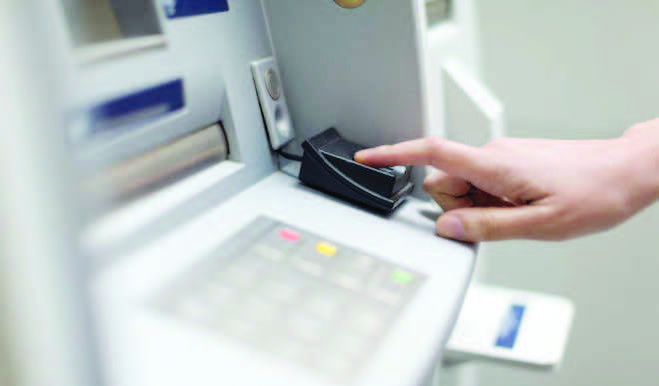
    NEW DELHI (TIP): Looking to make Aadhaar a more powerful financial tool, the government has instructed all banks across the country to launch Aadhaar Pay by the end of the month. It will facilitate financial transactions by using fingerprints. Reports said the banks would also have to enable ‘Pay to Aadhaar’ facility on the BHIM app by March 31.

    SBI and Punjab National Bank have been asked to provide the facility by the end of this week. This feature on BHIM app will help in making payments by simply entering the 12-digit Aadhaar number.

    Officials said this move would encourage the use of online payments among the poor and illiterate in rural areas and help the country move forward towards digitisation.

    The government has already prodded all banks to move to the Aadhaar Pay platform at the launch of IDFC Aadhaar Pay — the first Aadhaar-linked cashless merchant solution, offered by IDFC Bank Ltd. “All other banks must follow IDFC in adopting this model. If they don’t follow this lead, technology will make them redundant,” said Amitabh Kant, CEO, NITI Aayog.

    Aadhaar Pay is a service for merchants which will enable them to receive payments from customers without any physical payment instrument.

    The Aadhaar Pay app has to be downloaded by merchants on their phones and linked to an Aadhaar biometric reader. Once the merchant has this infrastructure in place, consumers can start transacting.

    To use this service, the customer has to first link his/her bank account to the Aadhaar number. To make a payment, the consumer just has to select the bank’s name and enter the Aadhaar number. The fingerprint is the password to authenticate the transaction.

    Aadhaar Pay works on any android-based phone, even a low-cost one, with an attached finger biometric device. A top government official said banks have been directed to take merchants on board for using BHIM, fitted with ‘Pay to Aadhaar’ feature and Aadhaar Pay.

  • SpaceX to send first paying tourists around moon next year

    SpaceX to send first paying tourists around moon next year

    CAPE CANAVERAL, FLORIDA (TIP): SpaceX plans to launch two paying passengers on a tourist trip around the moon next year using a spaceship under development for NASA astronauts and a heavy-lift rocket yet to be flown, the launch company announced on March 1.

    The launch of the first privately funded tourist flight beyond the orbit of the International Space Station is tentatively targeted for late 2018, Space Exploration Technologies Chief Executive Elon Musk told reporters on a conference call.

    Musk declined to identify the customers or say how much they would pay to fly on the weeklong mission, except to say that it is “nobody from Hollywood.” (Reuters)

  • NASA MAY SEND ROBOTIC SPACECRAFT TO SUN NEXT YEAR

    NASA MAY SEND ROBOTIC SPACECRAFT TO SUN NEXT YEAR

    WASHINGTON (TIP): NASA plans to send its first robotic spacecraft to the Sun next year that is slated to get within six million kilometres of the blazing star to probe its atmosphere.

    Humans have sent spacecraft to the Moon, Mars and even distant interstellar space. Now, NASA plans to launch the Solar Probe Plus mission to the Sun which is about 149 million kilometres from the Earth.

    “This is going to be our first mission to fly to the Sun,” said Eric Christian, a NASA research scientist at Goddard Space Flight Centre.

    “We can’t get to the very surface of the Sun,” but the mission will get close enough to answer three important questions, Christian said.

    First, the mission will hopefully unveil why the surface of the Sun, called the photosphere, is not as hot as its atmosphere, called the corona.

    According to NASA, the surface temperature of the Sun is only about 5,500 degrees Celsius. However, the atmosphere above it is a sizzling two million degrees Celsius.

    “You would think the farther away you get from a heat source, you would get colder. Why the atmosphere is hotter than the surface is a big puzzle,” Christian said.

    The scientists also want to know how solar wind gets its speed, ‘Live Science’ reported. “The Sun blows a stream of charged particles in all directions at a million miles an hour. But we do not understand how that gets accelerated,” he said. The mission may also ascertain why the Sun occasionally emits high-energy particles that are a danger to unprotected astronauts and spacecraft.

    NASA has designed a 11.4 centimetres carbon-composite shield, which is designed to withstand temperatures outside the spacecraft of 1,370 degrees Celsius.

    The unmanned probe will have special heat tubes called thermal radiators that will radiate heat that permeates the heat shield to open space, “so it does not go to the instruments, which are sensitive to heat,” Christian added.

  • New tool to reduce risk of  triggering man-made quakes

    New tool to reduce risk of triggering man-made quakes

    BOSTON (TIP): Stanford scientists have developed a new software tool which will enable energy companies to calculate the possibility of triggering manmade earthquakes from activities associated with oil and gas production.

    Oil and gas operations can generate significant quantities of “produced water” – brackish water that needs to be disposed of through deep injection to protect drinking water.

    Energy companies also dispose of water that flows back after hydraulic fracturing in the same way.

    This process can increase pore pressure – the pressure of groundwater trapped within the tiny spaces inside rocks in the subsurface – which, in turn, increases the pressure on nearby faults, causing them to slip and release seismic energy in the form of earthquakes.

    “Faults are everywhere in the Earth’s crust, so you can’t avoid them. Fortunately, the majority of them are not active and pose no hazard to the public,” said Mark Zoback, professor at Stanford’s School of Earth, Energy at Environmental Sciences.

    “The trick is to identify which faults are likely to be problematic, and that’s what our tool does,” said Zoback.

    The newly developed Fault Slip Potential (FSP) tool uses three key pieces of information to help determine the probability of a fault being pushed to slip.

    The first is how much wastewater injection will increase pore pressure at a site. The second is knowledge of the stresses acting in the earth.

    This information is obtained from monitoring earthquakes or already drilled wells in the area. The final piece of information is knowledge of pre-existing faults in the area.

    Such information typically comes from data collected by oil and gas companies as they explore for new resources.

    Researchers have started testing their FSP tool in Oklahoma, which has experienced a sharp rise in the number of earthquakes since 2009, due largely to wastewater injection operations.

    Their analysis suggests that some wastewater injection wells in Oklahoma were unwittingly placed near stressed faults already primed to slip.

    “Our tool provides a quantitative probabilistic approach for identifying at-risk faults so that they can be avoided,” said Rall Walsh, graduate student at Stanford.

    “Our aim is to make using this tool the first thing that is done before an injection well is drilled,” Walsh said.

  • SOON, A ‘MAGIC’ DNA  COMPUTER THAT GROWS ITSELF

    SOON, A ‘MAGIC’ DNA COMPUTER THAT GROWS ITSELF

    LONDON (TIP): Scientists have designed a new, super-fast form of a “magic” computer made of DNA molecules that grows as it computes and can outperform all standard systems in solving practical problems.

    Researchers from University of Manchester showed the feasibility of engineering a universal turing machine (UTM) -a computer that can be programmed to compute anything any other device can process.Electronic computers are a form of UTM, but no quantum UTM has yet been built.

    The theoretical properties of such a computing machine, including its exponential boost in speed over electronic and quantum computers, have been understood for many years but the breakthrough demonstrates that it is possible to physically create a UTM using DNA molecules.

    “Imagine a computer is searching a maze and comes to a choice point, one path leading left, the other right.Electronic computers need to choose which path to fol low first,” said researcher Ross King. “But our new computer doesn’t need to choose, for it can replicate itself and follow both paths at the same time, thus finding the answer faster.”

    “This `magical’ property is possible because the computer’s processors are made of DNA rather than silicon chips.” “As DNA molecules are very small a desktop computer could potentially utilise more processors than all the electronic computers in the world combined and therefore outperform the world’s current fastest supercomputer, while consuming a tiny fraction of its energy ,” he said.

  • Twitter adds more safety tools, will curb abusive accounts

    Twitter adds more safety tools, will curb abusive accounts

    Twitter is adding more tools to curb abuse on its service as part of its ongoing effort to protect users from hate and harassment. Among other things, the service will attempt to identify offenders on its own, even if no one has reported them first.

    It is the second time in three weeks the company has released new ways to root out abusive material on its service. It’s a sign Twitter is getting more serious about the issue; it’s faced criticism for not doing more in the decade since its founding.

    Twitter’s effort to automatically flag abusive accounts is a new twist. Previously, the company would take no action until users reported suspected abuse. Not that long ago, in fact, Twitter required the targets of abuse to make such reports themselves; it refused to take reports from friends, family or other third parties.

    Once it identifies accounts that repeatedly engage in abusive behaviour, Twitter will place temporary restrictions on them. For example, tweets from such accounts will be visible only to followers or other users who deliberately search them out.

    “We aim to only act on accounts when we’re confident, based on our algorithms, that their behaviour is abusive,” the company said in a blog post .

    In addition, Twitter is also giving users the option to filter the notifications they get when someone mentions them in a comment. For example, people will be able to filter out accounts without a profile photo, or unverified email addresses or phone numbers. This can be helpful in screening out accounts that have been set up solely for the purpose of harassment or trolling.

  • INSTAGRAM GOES LIVE WITH FULL SCREEN ADS ON ITS STORIES FEATURE

    INSTAGRAM GOES LIVE WITH FULL SCREEN ADS ON ITS STORIES FEATURE

    Facebook-owned photo-sharing platform Instagram on Thursday said that it was launching full screen advertisements on Instagram’s stories feature globally.

    “Ads in stories let your business use targeting and reach capabilities that make your ads personally relevant to the people you want to reach. That, paired with measurement tools giving you the confident to know it works, is unmatched in a stories experience,” the company said in a statement. Earlier, Instagram in January had said that the advertisements would go live soon.

    “Today, businesses of every size around the world can start running ads in stories through the Marketing API, Power Editor and Ads Manager optimized for reach. By optimizing for reach, you can show your ads to the maximum number of people in your audience and control how often they see your ads. The reach objective for ads in stories will begin rolling out today and will be available globally in the next few weeks,” the company said.

    In a bid to explain the benefit of running the advertisement campaigns, the company had tied up with over 30 businesses to test the ads feature.

    “We saw a double digit point increase in ad recall from our experiences on Airbnb campaign that further justifies our investment in ads within stories as they have made a measurable impact for us,” Eric Toda, global head of social marketing and content, said, adding that “our ability to apply existing targeting and measurement in an experience to reach the right audience, in the right mindset, with the right story at scale has allowed us to achieve the results we were hoping for in a partnership with Instagram.”

  • SOUND WAVES COULD TAKE A TSUNAMI DOWN A FEW NOTCHES

    SOUND WAVES COULD TAKE A TSUNAMI DOWN A FEW NOTCHES

    A tsunami’s immense wall of water may not be stoppable. But there may be a way to take the ferocious force of nature down a few notches, using a pair of counterwaves.

    If released at the right moment, a type of sound wave known as an acoustic-gravity wave could subdue a tsunami, applied mathematician Usama Kadri of Cardiff University in Wales reports January 23 in Heliyon. These acoustic-gravity waves, which reach deep below the ocean’s surface, can stretch tens or hundreds of kilometers and easily travel long distances at high speeds.

    In Kadri’s plan, two acoustic-gravity waves would be launched through the water at the earthquake-triggered ocean surge. The waves would be tuned to exchange energy with the tsunami as they speed past, spreading the tsunami out by redistributing its energy and thereby decreasing its maximum height.

    The tsunami sapper is still theoretical — scientists don’t yet have a way to create the high-energy waves needed. But Kadri suggests his approach could have shrunk the amplitude of the devastating 2004 Indian Ocean tsunami by almost 30 percent. Such a reduction translates to a five-meter decrease in the height the water reached above sea level, enough to potentially save lives and property.


    Source: Science news

  • New desalination tech could help quench global thirst

    New desalination tech could help quench global thirst

    The world is on the verge of a water crisis. Rainfall shifts caused by climate change plus the escalating water demands of a growing world population threaten society’s ability to meet its mounting needs. By 2025, the United Nations predicts, 2.4 billion people will live in regions of intense water scarcity, which may force as many as 700 million people from their homes in search of water by 2030.

    Those water woes have people thirstily eyeing the more than one sextillion liters of water in Earth’s oceans and some underground aquifers with high salt content. For drinking or irrigation, the salt must come out of all those liters. And while desalination has been implemented in some areas — such as Israel and drought-stricken California — for much of the world, salt-removal is a prohibitively expensive energy drain.

    Scientists and engineers, however, aren’t giving up on the quest for desalination solutions. The technology underlying modern desalination has been around for decades, “but we have not driven it in such a way as to be ubiquitous,” says UCLA chemical engineer Yoram Cohen. “That’s what we need to figure out: how to make desalination better, cheaper and more accessible.”

    Recent innovations could bring costs down and make the technology more accessible. A new wonder material may make desalination plants more efficient. Solar-powered disks could also serve up freshwater with no need for electricity. Once freshwater is on tap, coastal floating farms could supply food to Earth’s most parched places, one scientist proposes.

    Watering holes

    Taking the salt out of water is hardly a new idea. In the fourth century B.C., Aristotle noted that Greek sailors would evaporate impure water, leaving the salt behind, and then condense the vapor to make drinkable water. In the 1800s, the advent of steam-powered travel and the subsequent need for water without corrosive salt for boilers prompted the first desalination patent, in England.

    Most modern desalination plants use a technique that differs from these earlier efforts. Instead of evaporating water, pumps force pressurized saltwater from the ocean or salty underground aquifers through special sheets. These membranes contain molecule-sized holes that act like club bouncers, allowing water to pass through while blocking salt and other contaminants.

    The membranes are rolled like rugs and stuffed into meter-long tubes with additional layers that direct water flow and provide structural support. A large desalination plant uses tens of thousands of membranes that fill a warehouse. This process is known as reverse osmosis and the result is salt-free water plus a salty brine waste product that is typically pumped underground or diluted with seawater and released back into the ocean. It takes about 2.5 liters of seawater to make 1 liter of freshwater.

  • WHATSAPP TO SOON ROLL OUT SNAPCHAT LIKE STORIES FEATURE IN IOS

    WHATSAPP TO SOON ROLL OUT SNAPCHAT LIKE STORIES FEATURE IN IOS

    Facebook-owned WhatsApp might be planning to soon add a new feature that might be very similar to Snapchar’s Stories feature.

    However, the feature will come to iOS (for iPhones) first and then later might be rolled out to Android. This means that iPhone users will be able to put forth photos and videos in their Status with their contacts if the latest leaked image is believed to be true. The feature is similar to Snapchat Stories, which will disappear after 24 hours.

    WABetaInfo tweeted an alleged image of the upcoming feature on iOS along with the text that read, “Status introduction text updated in WhatsApp beta for iOS 2.17.4+.” The feature has been on the cards since November 2016.

    The image that was leaked also shows that the new feature will come with privacy settings as well and there is a high possibility that the update will be soon rolled out.

    Facebook has been emulating Snapchat features and the new speculative feature comes as no surprise. Earlier reports also indicate that WhatsApp will soon allow users to track friends and follow them. Another new feature is also on cards which will notify users once their contacts change their status. Users will also be able to comment on the new status.

    Other reports also indicate that the company might be working on a feature that helps users edit sent messages or revoke them altogether.

    Also Read Below – Facebook introduces ‘security key’ to protect data

    To minimise data breach, Facebook has added a new login option with ‘security keys’ that requires a user to enter a special security code from their phone in addition to the password when they login from a new browser.

    According to a Facebook blog post, though most people get security code for login approvals from a text message (SMS) or by Facebook app to generate the code directly on their phones, SMS is not always reliable and having a phone back-up may not work well for them.

    “You can register a physical security key to your account so that the next time you log in after enabling login approvals, you will simply tap a small hardware device that goes in the USB drive of your computer,” said Brad Hill, security engineer at Facebook.

    Security keys can be purchased through companies like Yubico, a key manufacturing firm, and the keys support the open Universal 2nd Factor (U2F) — an authentication technology initially developed by Google — standard hosted by the ‘Fast IDentity Online’ (FIDO) Alliance.

    FIDO Alliance is a group of big corporations that collaborate on ways to make sign-ins safer and easier online.

    According to a report in Fortune, “a security key ensures that only the person in possession of it (and password) can access accounts so protected,” the report noted.

    Users can set up a security key to protect their account by buying one online at an e-commerce shop and then go to the Facebook ‘settings’.

    Click on ‘security’, where they can see an option for ‘security keys’.

    Simply select ‘add key’ and the account is secured. To add a security key from computer, users need to use the latest versions of Chrome or Opera browser. However, security keys have their own limitations currently.

  • ISRO creates world record with 104 satellites launch

    ISRO creates world record with 104 satellites launch

    NEW DELHI (TIP): Isro successfully placing a record 104 satellites—101 foreign satellites and three Indian ones—in orbit in a single launch cements India’s position as a global leader in space technology.

    But, more important, it also underlines the fact that the space agency has made innovation in low-cost space technology somewhat of a habit, and that could pay rich dividends in the coming years. In the present instance, there were 103 small satellites—apart from the main satellite, India’s Cartosat-2, that formed the bulk of the launcher’s payload—88 of which were from Planet Labs, an Amercian company that acquired Google’s satellite imaging subsidiary recently; the company was using Isro’s PSLV for the second-time.

    In all, 96 of the 101 foreign satellites were from the US—the largest spender on space technology—while the rest were from Israel, Kazakhstan, the United Arab Emirates (UAE), The Netherlands and Switzerland. While UAE, whose own space agency was created only in 2014, plans to set up a human colony on Mars by 2117, Israel is a major spender on defence and agriculture, both of which require cutting-edge satellites in orbit to transmit critical intelligence.

    All this should throw into sharp relief the opportunity Isro—or rather, its commercial arm, Antrix—has in building up a reputation as a low-cost, high-efficiency launcher of small satellites (weighing less than 500 kg).

    According to a projection by Space Works Enterprise Inc, a research firm, roughly 5,000 “micro” (10-100 kg) and “nano” satellites (1-10 kg) need to be hurled into space in 2020—compared with just 92 launched in 2013. Over 60% of these satellites will be from the commercial sector—viz. companies with play in communication, weather-tracking, remote-sensing, providing high-speed internet in remote areas, etc. Softbank-funded OneWeb alone is looking to launch 648 small satellites, as per a Business Standard article.

  • METEORITE IN AFRICA OFFERS CLUES TO VOLCANIC ACTIVITY ON MARS

    METEORITE IN AFRICA OFFERS CLUES TO VOLCANIC ACTIVITY ON MARS

    NEW YORK (TIP): Examining a Martian meteorite found in Africa, scientists have uncovered evidence of at least two billion years of volcanic activity on Mars.

    The findings, published in the journal Science Advances, offer new clues to how the planet evolved and insight into the history of volcanic activity on Mars, said lead author of the study Tom Lapen, Professor at University of Houston in the US.

    Much of what we know about the composition of rocks from volcanoes on Mars comes from meteorites found on Earth.

    The meteorite, known as Northwest Africa 7635 and discovered in 2012, was found to be a type of volcanic rock called a shergottite.

    Eleven of these Martian meteorites, with similar chemical composition and ejection time, have been found.

    “We see that they came from a similar volcanic source,” Lapen said.

    “Given that they also have the same ejection time, we can conclude that these come from the same location on Mars,” Lapen noted.

    Together, these meteorites provide information about a single location on Mars. Previously analysed meteorites range in age from 327 million to 600 million years old.

    In contrast, the meteorite analysed by Lapen’s research team was formed 2.4 billion years ago and suggests that it was ejected from one of the longest-lived volcanic centers in the solar system.

    The finding confirms that some of the longest-lived volcanoes in the solar system may be found on the Red Planet.

  • SPACE TRAVEL MAY CAUSE GENETIC CHANGES: STUDY

    SPACE TRAVEL MAY CAUSE GENETIC CHANGES: STUDY

    WASHINGTON (TIP): Space travel may cause changes in gene expression and other biological markers in astronauts, a NASA study of twins has found.

    Scientists studied the genetic differences between astronaut Scott Kelly, who spent nearly a year in space, and his identical twin Mark.

    Measurements taken before, during and after Scott Kelly’s mission show changes in gene expression, DNA methylation and other biological markers that are likely to be attributable to his time in orbit.

    From the lengths of the twins’ chromosomes to the microbiomes in their guts, “almost everyone is reporting that we see differences,” said Christopher Mason, a geneticist at Weill Cornell Medicine in New York City.

    The challenge now is to untangle how many of the observed changes are specific to the physical demands of spaceflight – and how many might be simply due to natural variations.

    Since the Kelly twins are just two people, the results may not be generalisable to others, researchers said.

    Still, the work is some of the most detailed molecular profiling ever done, involving some of the most physically demanding environments.

    Scott Kelly spent 340 days in space in 2015-16, giving him a lifetime total of 520 days.

  • APPLE MOVES CLOSER TO IPHONE ASSEMBLY IN INDIA, MAY MANUFACTURE IN BENGALURU

    APPLE MOVES CLOSER TO IPHONE ASSEMBLY IN INDIA, MAY MANUFACTURE IN BENGALURU

    The government of Karnataka said on Thursday it welcomed a proposal from Apple Inc to begin initial manufacturing operations in the state, in a sign the tech company is slowly moving forward with plans to assemble iPhones in the country.

    “Apple’s intentions to manufacture in Bengaluru will foster cutting edge technology eco system and supply chain development in the state, which are critical for India to compete globally,” the Karnataka government said in a statement.

    A source familiar with the matter told Reuters, however, that no deal, or memorandum of understanding had so far been finalised with the Karnataka government.

    Apple has been asking for sops from the Indian government to start making iPhones in the country and as well as its own retail chain.

    However, Union finance minister Arun Jaitley in his budget speech announced a record figure of Rs 745 crore under modified special incentive package scheme (MSIPS) to boost electronic manufacturing. In a caveat, the government also has proposed a 2% special additional duty on import of PCBs. PCBs or in simple words printed circuit boards makes up for 20-30% of a smartphone’s cost and is generally imported as India still doesn’t have fabrication units to manufacture them domestically.

    The person, who asked not to be named, said if Apple did go ahead with plans to begin assembling the iPhone, it was likely to do so initially at a plant being set up by its Taiwanese manufacturing partner Wistron Corp at Peenya on the outskirts of the tech hub of Bengaluru, Karnataka.

    Cupertino, California-based Apple, is keen to assemble its phones in India, one of the world’s fastest growing smartphone markets.

    Apple representatives met with central and state government officials in India last week, as it is lobbying hard for a raft of tax and sourcing concessions, before it begins to assemble iPhones in the country.

    Following the meetings, Apple said it appreciated the open and constructive dialogue it held with Indian officials, around the expansion of its local operations in the country.

  • TWITTER REPLACES MOMENTS WITH EXPLORE TAB

    TWITTER REPLACES MOMENTS WITH EXPLORE TAB

    You do not have to wander around on Twitter to find its multiple features, as the micro-blogging site has rolled out a new tab called Explore that consolidates Moments, search, trending hashtags and live video features all in the same place.

    “During our research process, people told us the new Explore tab helped them easily find news, what’s trending and what’s popular right now,” said Angela Lam, Product Designer Twitter, in a blog post.

    According to a report on Redcode, as Twitter is replacing its Moments with Explore, none of the individual features in the tab are new — they are just currently scattered throughout Twitter’s app.

    “Now they will all be in the same place. The current search icon, a magnifying glass in the upper right hand corner on iOS, is going away,” a Twitter spokesperson was quoted as saying.

    The Moments feature — a collection of tweets publishers and users create around specific events — is being pushed a little deeper into Twitter’s app.

    onsidered as the most high profile product launch Twitter has ever had, with months of build-up from executives, Moments was launched late in 2015.

  • Now, a space radio to track every flight in real time

    Now, a space radio to track every flight in real time

    WASHINGTON (TIP): Researchers have developed a reconfigurable radio that could help air traffic controllers see in real-time the location of every plane in the air – even those flying across oceans.

    To design and develop the new reconfigurable, higher-bandwidth radio, NASA worked with Palm Bay, Florida-based Harris Corporation.

    With real-time global tracking, planes could fly with less space between them and take more direct routes.

    “It tremendously improves public safety and potentially saves a lot of fuel costs, because you no longer have to remain in the particular airline traffic lanes,” said Jeff Anderson from Harris Corporation.

    The biggest selling point of the new device, which Harris sells as the AppSTAR, turned out to be its flexibility.

    With hardware and software both fully reconfigurable, the company could quickly and cheaply redesign the radio to fit any customer’s needs, Harris programme manager Kevin Moran explained.

    The company has already entered into contracts with Virginia-based Aireon LLC that will use the radios to create the first space-based global air traffic control system.

    With Aireon flight tracking, powered by a radio developed by Harris Corporation, researchers hope that air traffic control agencies will be able to see in real time the location and heading of every plane in the air.

    For decades, airplanes have relied on radar surveillance via land-based radar stations. That has left huge gaps ?particularly over oceans ? where air traffic controllers have no real-time information.

    To compensate, pilots file detailed flight plans and are required to remain within prescribed lanes at different altitudes so air traffic controllers can estimate where they are and work to ensure there are no mid-air collisions.

    But that could change when a constellation of 66 satellites, owned by Iridium Communications Inc., goes into orbit equipped with AppSTAR radios.

    The radios are programmed to receive signals from new airplane transceivers called ADS-B, which automatically send out a flight’s number, location, heading and other details.

  • 13 Indian-American Students named Finalists in “Super Bowl of Science”

    13 Indian-American Students named Finalists in “Super Bowl of Science”

    Thirteen Indian-American students, including one each from New York and New Jersey, were among 40 high school students who were declared finalists Jan. 24 in the Regeneron Science Talent Search, the oldest and most prestigious science and math competition for high school seniors in the U.S.

    The Indian-American students include Archana Verma from Jericho Senior High School, Jericho, New York and Indrani Das from the Academy for Medical Science Technology, Hackensack, New Jersey.

    The finalists were selected, based on the scientific rigor and world-changing potential of their research projects.

    They will go to Washington, D.C. from March 9-15 to undergo a rigorous judging process to determine the top ten winners. They will also have the opportunity to meet with national leaders and share their projects with the public at the National Geographic Society.

    The selected students will compete for more than $1.8 million in top awards -more than half of the Regeneron Science Talent Search total annual award distribution of $3.1 million. The top 10 awards range from $40,000 to$250,000 for the first place winner. The winners will be announced at a formal awards gala at the National Building Museum on March 14.

    The finalists’ projects cover multiple disciplines of science, including behavioral and social science, biochemistry, cellular and molecular biology, chemistry, computer science, computational biology and bioinformatics, engineering, mathematics, medicine and health, physics, and space science.

    “These talented young scientists are already exploring life-changing solutions for the world’s problems and are poised to lead innovation for future generations,” said George D. Yancopoulos, President and Chief Scientific Officer of Regeneron.

    The Regeneron Science Talent Search, founded and produced by Society for Science and the Public, has been described as the “Super Bowl of Science.”

    Maya Ajmera, president and CEO of Society for Science and the Public and publisher of Science News, said in a statement that these 40 young scientists, engineers and mathematicians are poised to be the next generation of leaders in business and academia.

    “Science breeds curiosity, enabling innovators to develop solutions that will help solve our world’s most pressing challenges. We are proud to celebrate 75 years of recognizing new innovations and research demonstrating the outstanding capabilities of young minds,” Ajmera said.

    The finalists are from 34 schools in 17 states. Sixty-two percent of them are male while 38 percent are female. The 40 were selected from roughly 300 scholars and more than 1,700 entrants based on the originality and creativity of their scientific research as well as their achievement and leadership both inside and outside of the classroom, according to a Regeneron press statement.

  • World’s most heat resistant material found

    World’s most heat resistant material found

    LONDON: Scientists have identified materials that can withstand temperatures of nearly 4,000 degrees Celsius, an advance that may pave the way for improved heat resistant shielding for the faster-than-ever hypersonic space vehicles.

    Researchers from Imperial College London in the UK discovered that the melting point of hafnium carbide is the highest ever recorded for a material.

    Tantalum carbide (TaC) and hafnium carbide (HfC) are refractory ceramics, meaning they are extraordinarily resistant to heat. Their ability to withstand extremely harsh environments means that refractory ceramics could be used in thermal protection systems on high-speed vehicles and as fuel cladding in the super-heated environments of nuclear reactors.

    However, there has not been the technology available to test the melting point of TaC and HfC in the lab to determine how truly extreme an environment they could function in. The researchers developed a new extreme heating technique using lasers to test the heat tolerance of TaC and HfC.

  • ISRAEL’S FLYING CAR PASSENGER DRONE MOVES CLOSER TO DELIVERY

    ISRAEL’S FLYING CAR PASSENGER DRONE MOVES CLOSER TO DELIVERY

    The Cormorant, billed as a flying car, is capable of transporting 500kg (around half a tonne) of weight and travelling at 185 km (115 miles) per hour. It completed its first automated solo flight over terrain in November. Its total price is estimated at $14 million. (Reuters)

    After 15 years of development, an Israeli tech firm is optimistic it will finally get its 1,500 kg (1.5 tonne) passenger carrying drone off the ground and into the market by 2020.

    The Cormorant, billed as a flying car, is capable of transporting 500kg (around half a tonne) of weight and travelling at 185 km (115 miles) per hour. It completed its first automated solo flight over terrain in November. Its total price is estimated at $14 million.

    Developers Urban Aeronautics believe the dark green drone, which uses internal rotors rather than helicopter propellers, could evacuate people from hostile environments and/or allow military forces safe access.

    “Just imagine a dirty bomb in a city and chemical substance of something else and this vehicle can come in robotically, remotely piloted, come into a street and decontaminate an area,” Urban Aeronautics founder and CEO Rafi Yoeli told Reuters.

    Yoeli set up the company, based in a large hanger in Yavne, central Israel, in 2001 to create the drone, which he says is safer than a helicopter as it can fly in between buildings and below power lines without the risk of blade strikes.

    There is still plenty of work required before the autonomous vehicle hits the market.

    The Cormorant, about the size of a family car and previously called the ‘Air Mule’, is yet to meet all Federal Aviation Administration standards and a test in November saw small issues with conflicting data sent by on board sensors.

    With 39 patents registered to create the vehicle, Yoeli has little concern about competitors usurping him.

    One industry experts said the technology could save lives.

    “It could revolutionise several aspects of warfare, including medical evacuation of soldiers on the battlefield,” said Tal Inbar, head of the UAV research centre at Israel’s Fisher Institute for Air and Space Strategic Studies.

    Source: Reuters


  • NASA may build ice homes on Mars to protect astronauts

    NASA may build ice homes on Mars to protect astronauts

    WASHINGTON (TIP): To protect astronauts from the harsh Martian environment, the best building material for a new home on the Red Planet may lie in ice, say NASA researchers.

    The surface of Mars has extreme temperatures and the atmosphere does not provide adequate protection from high-energy radiation. The researchers believe that their “Ice Home” design provides a sound engineering solution to offer astronauts a safe place to call home. The Mars Ice Home is a large inflatable torus, a shape similar to an inner tube that is surrounded by a shell of water ice. This is just one of many potential concepts for sustainable habitation on the Red Planet in support of NASA’s journey to Mars. “After a day dedicated to identifying needs, goals and constraints we rapidly assessed many crazy, out of the box ideas and finally converged on the current Ice Home design, which provides a sound engineering solution,” Kevin Vipavetz from NASA’s Langley Research Center in Hampton, Virginia, said in a statement on Thursday.

    The Mars Ice Home design has several advantages that make it an appealing concept, according to the scientists.

    Source: IANS

  • ‘GOOGLE ASSISTANT WILL LEAD SMART SPEAKERS, VIRTUAL ASSISTANT SPACE’

    ‘GOOGLE ASSISTANT WILL LEAD SMART SPEAKERS, VIRTUAL ASSISTANT SPACE’

    Internet giant Google’s virtual assistant, Google Assistant, is expected to lead the smart speakers and virtual assistant space leaving products such as Amazon’s Alexa trailing behind, an analysis by market research firm IHS said.

    “Despite Amazon’s strong first-mover advantage and momentum, Google Assistant will eventually benefit from scale — a unified presence across all Google platforms; and fundamentals — the ability to enhance consumers’ everyday virtual assistance experience via its strength in search as well as deeper personalization thanks to data from Gmail, Chrome, Maps and other Google services,” Paul Erickson, senior analyst at IHS Markit, said.

    “Additionally, Google Assistant will be able to play media to the growing multi-brand Google Cast universe of devices –Chromecasts, smart TVs, speakers and Android TV devices,” he added.

    Smart speakers are an increasingly important anchor for virtual assistants in the smart home, and expected to grow to a base of 45 million units by the end of 2020. The long-term platform battle in this market is expected to be between Amazon’s Alexa and Google Assistant.

    IHS Markit expects that though Google’s ecosystem will help it eventually prevail, the affordability-based success of Amazon’s Echo Dot is a competitive challenge Google will need to address to succeed. “Echo Dot’s inexpensive pricing has proven a volume success for Amazon, and is helping to grow the entire category – and Alexa’s foothold into the mainstream,” Erickson explained.

    “Though Google possesses advantages in the virtual assistant race, Alexa’s Echo Dot-driven surge is a competitive development they will need to respond to quickly. The longer it takes for impulse-buy-priced Google Assistant Smart Speaker products to arrive, the more the future will be one where the Google-Amazon competitive relationship in the virtual assistant landscape will be one of co-existence rather than Google’s preferred position of dominance.”

    With Google Home and Assistant both relatively new, these advantages are expected to take time to combine and build momentum, IHS Markit analysis shows. Amazon capitalised on this in the fourth quarter of 2016 with a less-expensive Echo Dot, discounted Echo Dot multi-packs, and an aggressive Alexa television ad campaign — to highly successful results in the 2016 holiday buying season. Echo Dot has become Amazon’s Trojan horse for Alexa penetration into the smart home –similar to Google’s Chromecast and the Google Cast standard. However, Google’s advantages are expected to eventually pull Google Assistant ahead in both smart speakers and the overall virtual assistant race, strong developer momentum behind Alexa and surging Echo Dot sales will make this increasingly difficult.

    IHS Markit currently estimates 2017 platform shipments of Smart Speakers at a conservative 4.1 million units for Alexa, and 1.5 million for Google Assistant. Google Assistant is expected to eventually out-ship Alexa by 2020. Despite this, Alexa is still expected to remain the installed base leader in Smart Speakers for several years beyond thanks to the current momentum of Echo Dot.

  • FACEBOOK IS STILL THE ‘BIGGEST ENEMY’ OF YOUR SMARTPHONE BATTERY

    FACEBOOK IS STILL THE ‘BIGGEST ENEMY’ OF YOUR SMARTPHONE BATTERY

    According to Avast Software’s latest study into app use and performance drain, Facebook still tops the charts. What’s more, thanks to the impact of Instagram (6th place), Pages Manager (9th) and Facebook Messenger (10th), the company actually has four apps in the top 10.

    “These app performance charts are a great example of helping users understand how they can manage their app usage thoughtfully in order to get the most out of their devices, without limiting enjoyment of their favorite apps,” said Gagan Singh, SVP and GM Mobile Business, Avast.

    Avast puts together its quarterly charts by using anonymous data from 3 million Android handsets globally and by focusing only on the apps that are installed directly from Google Play and that are installed on at least 50,000 handsets in the sample. “Our research helps us identify all of the challenges our customers are facing in using their mobile devices and allows us to provide useful insights and advice [to consumers and developers],” said Singh.

    The top 10 list was compiled based on the apps that launch when a phone starts up and that have the biggest overall impact — i.e., data and storage use as well as battery drain.

    And while Facebook is still top, in at second place is a new entry, musical.ly, the lip syncing app. It can drain a Samsung Galaxy S6 battery completely in just two hours but, more worryingly, watching 25 clips a day via a 3G or 4G connection could add up to 3GB of data over a month.

    Avast points out that this could be a shock to parents as the app is aimed at teens who usually don’t pay the monthly network bills.

    Other new entries include WhatsCall — a Skype competitor that is always on is in fourth place — and the app for popular UK newspaper the Daily Mail debuts in fifth.

    Still there’s also good news. A host of previously resource-heavy apps have dropped out of the charts altogether thanks to some serious improvements. They include WhatsApp, SoundCloud, WeChat, ChatOn and the BBC iPlayer.

    Source: AFP