Tag: Science & Technology

  • Encrypt your chats on Facebook Messenger now

    Encrypt your chats on Facebook Messenger now

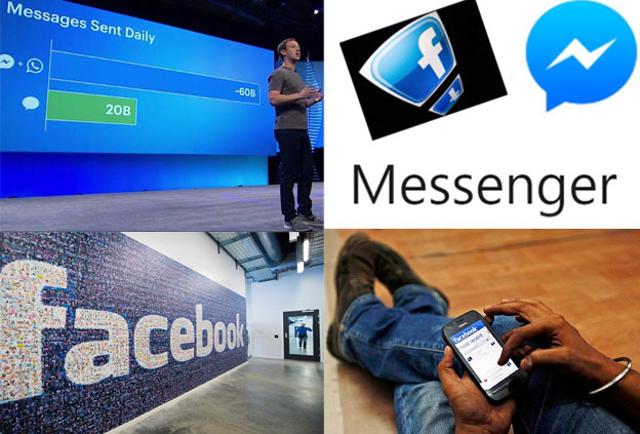
    After the popular mobile messaging platform WhatsApp, parent company Facebook has reportedly rolled out end-to-end encryption for its Messenger users.

    People can toggle the “Secret Conversations” feature on in settings to enable end-to-end encryption on Messenger, technology website Engadget reported on Wednesday.

    But here is the catch. Unlike WhatsApp, where all messages are automatically encrypted once you turn the feature on, nearly one billion monthly active Messenger users will have to activate end-to-end encryption for every new message.

    “Once folks download the new version, they’ll see the option to tap “secret” in the top right corner of the “new message” screen. Both sender and receiver need the latest edition of the app to enable the encryption,” the report added.

    In the case of WhatsApp, users need to have an updated version to ensure that their chats are end-to-end encrypted.

    “Messages you send to this chat and calls are now secured with end-to-end encryption. Tap for more info,” is the message that WhatsApp users currently receive.

    The encryption ensures that users’ messages, videos and photos can’t be read by anyone else — not even WhatsApp.

  • GOOGLE REBRANDS CLOUD BUSINESS, ADDS MORE ARTIFICIAL INTELLIGENCE

    GOOGLE REBRANDS CLOUD BUSINESS, ADDS MORE ARTIFICIAL INTELLIGENCE

    Alphabet Inc’s Google said on Thursday it renamed its business-to-business cloud computing brand and enhanced some enterprise applications using artificial intelligence, the company’s latest gambit to better compete with Amazon.com and Microsoft Corporation in the lucrative cloud business.

    Discussing the rebranded Google Cloud, Diane Greene, senior vice president of Google’s enterprise business, said the company has made good progress courting customers and improving its technology.

    Cloud computing uses remote internet servers to store, manage and process data, and Google offers a range of apps like word processing and email, as well as the ability to host data and offer resources for developers. The new name replaces the Google for Work brand.

    “We are closing the gap incredibly fast” with competitors, Greene, a former CEO of VMware who joined Google last year to ramp up its cloud business, told experts and journalists at an event.

    Analysts say Google trails Amazon and Microsoft in market share but is gaining under Greene. Although the business is not big enough to break out separately in its quarterly earnings statement, Google reported a 33 percent surge in

    “other revenue” in its most recent quarter, which analysts said was probably due largely to gains in cloud computing. Greene has moved quickly to streamline engineering and appointed new leadership to beef up the company’s cloud business. This has helped improve sales, Google Chief Executive Officer Sundar Pichai said during the company’s latest earnings call. Earlier this month, Google acquired cloud software company Apigee Corp in a deal valued at about $625 million.

    The company  also announced a partnership with consultant Accenture to develop cloud services for clients in industries such a retail, healthcare and finance.

    In addition, the company said it had woven more artificial intelligence into its apps to help employees work more efficiently. Using machine learning to crunch troves of data, Google says its apps will prompt users to, say, open files at certain times of day or propose meetings based on their habits.

  • METHOD TO CONTROL ‘HOT’ ELECTRONS COMES A STEP CLOSER

    METHOD TO CONTROL ‘HOT’ ELECTRONS COMES A STEP CLOSER

    LONDON (TIP): In a promising step towards being able to manipulate and control the behaviour of high energy, or ‘hot’, electrons, scientists have, for the first time, identified a method of visualising the quantum behaviour of electrons on a surface.

    Hot electrons are necessary for a number of processes and the implications of being able to manipulate their behaviour are far-reaching — from enhancing the efficiency of solar energy, to improving the targetting of radiotherapy for cancer treatment. “Hot electrons are essential for a number of processes — certain technologies are entirely reliant on them. But they’re notoriously difficult to observe due to their short lifespan, about a millionth of a billionth of a second,” said one of the researchers Peter Sloan from University of Bath in England. “This visualisation technique gives us a really new level of understanding,” Sloan noted.

    In the experiment, a Scanning Tunnelling Microscope was used to inject electrons into a silicon surface, decorated with toluene molecules. As the injected charge propagated from the tip, it induced the molecules to react and ‘lift off’ from the surface.

    By measuring the precise atomic positions from which molecules departed on injection, the team were able to identify that electrons were governed by quantum mechanics close to the tip, and then by more classical behaviour further away.

  • After Phones, Now Samsung Washing Machines Are ‘Exploding’!!!

    After Phones, Now Samsung Washing Machines Are ‘Exploding’!!!

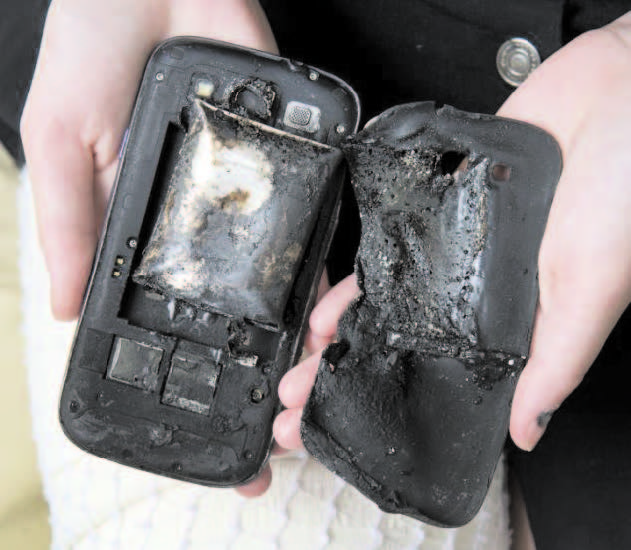
    Samsung’s woes just got worse. Close on the heels of the Galaxy Note 7 fiasco, Samsung has a new problem – exploding washing machines.

    A federal class action suit has been filed against Samsung for selling washing machines that explode.

    The lawsuit alleges that Samsung was aware of the problem but did nothing to warn customers. The plaintiffs in the case are demanding that the product be recalled, a safety warning be issued, and the manufacturing and distribution of the product be ceased.

    According to the company, the problem occurs while washing certain kinds of items although it didn’t specify which models were affected. It has said that the problem is confined to top-loading washing machines manufactured between March 2011 and April 2016 that have been sold in the US.

    A statement released by Samsung and the Consumer Product Safety Commission states that, “In rare cases, affected units may experience abnormal vibrations that could pose a risk of personal injury or property damage when washing bedding, bulky or water-resistant items.”

    The Commission has stated that it is actively working with the company to handle the safety concerns and arrive at a “remedy”.

    In the meanwhile, the company has advised customers to use in the lower-speed delicate cycle to wash items that may cause the vibrations. Samsung also pointed out that customers have “completed hundreds of millions of loads without incident since 2011.”

    The lawsuit however highlights a scary picture. One of the plaintiffs Melissa Thaxton states in the lawsuit that she was next to her machine when it exploded, sounding like “a bomb went off.”

    One complaint available on the SaferProducts.gov shows how dangerous it can get. According to the user, the machine, during the spin cycle, simply “broke free, throwing itself against walls and throwing parts and water everywhere. Had someone been nearby they could have been severely injured.”

    Samsung has provided a resource for consumers to check if their washing machines have the serial numbers that are affected by the defect.

  • Indian Doctor Dr Kamal Ahuja Offers Britain’s First ‘Order A Daddy’ App

    Indian Doctor Dr Kamal Ahuja Offers Britain’s First ‘Order A Daddy’ App

    London: An Indian-origin doctor from a UK sperm bank has launched a new mobile app for women who can browse and pick the right candidate online to father her child.

    Dr Kamal Ahuja, scientific director of the London Sperm Bank, believes the app is the first-of-its-kind in the world.

    “You make all the transactions online, like you do anything else these days. This allows a woman who wants to get a sperm donor to gain control in the privacy of her own home and to choose and decide in her own time. We think this is the first-of-its-kind in the world,” he was quoted as saying by the ‘The Sunday Times’.

    The London Sperm Bank’s app – dubbed ‘order a daddy’ app by the newspaper – allows women to order sperm just as they would carry out any other online transaction.

    It allows women to browse for potential fathers by choosing a donor with desired physical characteristics such as hair and eye colour or height.

    They can also filter applicants by educational level and occupation and read a description of their personality and create an online wish-list.

    A payment of 950 pounds, made via the app, is required for a donor’s sperm sample, which is then delivered to the fertility clinic where the woman is being treated.

    About half of Britain’s IVF clinics, including private and the UK’s state-funded National Health Service (NHS) institutions, are understood to have registered to use the service.

    The app is legal and meets the requirements of the Human Fertilisation and Embryology Authority (HFEA), Britain’s IVF regulator.

  • Google Station will bring pubic Wi-Fi to schools, Malls, and other paces in India

    Google Station will bring pubic Wi-Fi to schools, Malls, and other paces in India

    MUMBAI (TIP): Google, a unit of Alphabet Inc., said on Tuesday, September 27, it launched Google Station in India, a service that aims to deepen its reach across the country, as the search giant seeks to bring more people on to its Google platform.

    HIGHLIGHTS

    • Google will roll-out Wi-Fi hot spots in places most frequented
    • Google currently offers free Wi-Fi access at 53 railway stations in India
    • Company looking at monetizing the service it offers at railway stations

    Under the service, Google will roll-out Wi-Fi hot spots in places frequented by a large number of people, such as malls and transit stations, and in social hangout locations such as cafes and universities, the company said on Tuesday.

    “The goal is to give people many hot spots within a few minutes’ walk from their home, university, or workplace, unified by a simple login process that works across all of them,” Caesar Sengupta, Vice-President, Next Billion Users at Google was quoted as saying in the statement.

    Google currently offers free Wi-Fi access at 53 railway stations across India and plans to scale up the service to 100 by year-end, the company said.

  • Google rebrands cloud business, adds more artificial intelligence

    Google rebrands cloud business, adds more artificial intelligence

    MOUNTAIN VIEW (TIP): Alphabet Inc’s Google said on Sept 29 it renamed its business-to-business cloud computing brand and enhanced some enterprise applications using artificial intelligence, the company’s latest gambit to better compete with Amazon.com and Microsoft Corporation in the lucrative cloud business.

    Discussing the rebranded Google Cloud, Diane Greene, senior vice president of Google’s enterprise business, said the company has made good progress courting customers and improving its technology.

    Cloud computing uses remote internet servers to store, manage and process data, and Google offers a range of apps like word processing and email, as well as the ability to host data and offer resources for developers. The new name replaces the Google for Work brand.

    “We are closing the gap incredibly fast” with competitors, Greene, a former CEO of VMware who joined Google last year to ramp up its cloud business, told experts and journalists at an event.

    Analysts say Google trails Amazon and Microsoft in market share but is gaining under Greene. Although the business is not big enough to break out separately in its quarterly earnings statement, Google reported a 33 percent surge in “other revenue” in its most recent quarter, which analysts said was probably due largely to gains in cloud computing. Greene has moved quickly to streamline engineering and appointed new leadership to beef up the company’s cloud business. This has helped improve sales, Google Chief Executive Officer Sundar Pichai said during the company’s latest earnings call.

    Earlier this month, Google acquired cloud software company Apigee Corp in a deal valued at about $625 million.

    The company on Thursday also announced a partnership with consultant Accenture to develop cloud services for clients in industries such a retail, healthcare and finance. Source: Reuters

  • India launches eight satellites into two different orbits

    India launches eight satellites into two different orbits

    NEW DELHI: India on Monday, Sep 26 successfully launched eight satellites from one rocket into two different orbits, Hindustan Times reported.

    The mission was the longest for the polar satellite launch vehicle (PSLV C-35) that lifted off from Sriharikota at 9:12am carrying eight satellites.

    Out of the total eight satellites, three belong to India, including the weather satellite SCATSAT-1, three belong to Algeria, and one each belong to Canada and the United States.

    Indian Prime Minister Narendra Modi congratulated the ISRO on the successful launch.

    “Our space scientists keep scripting history,” added Modi.

    Modi has often hailed India’s budget space technology, quipping in 2014 that a local rocket that launched four foreign satellites into orbit had cost less to make than Hollywood film Gravity.

    Two of the satellites are student-made. Pratham, a 10-kg satellite, will help improve GPS accuracy and predict tsunamis. Pisat, a 5.25kg satellite, will take pictures of earth. The 371kg Scatsat-1 can study oceans, forecast weather and detect cyclones.

    The business of putting commercial satellites into space for a fee is growing as phone, Internet and other companies as well as countries seek greater and more high-tech communications. India is competing with other international players for a greater share of that launch market, and is known for its low-cost space programme.

  • INDIA TO LAUNCH EIGHT SATELLITES IN TWO ORBITS ON SEPTEMBER 26

    INDIA TO LAUNCH EIGHT SATELLITES IN TWO ORBITS ON SEPTEMBER 26

    CHENNAI (TIP): India on September 26 morning will launch its weather satellite #SCATSAT-1 and seven other satellites – five foreign and two domestic -with its Polar Satellite Launch Vehicle (#PSLV) rocket, said an official of Indian space agency on Thursday.

    According to Indian Space Research Organization (#ISRO) the PSLV rocket with eight satellites is expected to blast off at 9.12 a.m. on Monday from its rocket port in Sriharikota in Andhra Pradesh.

    The rocket’s main cargo will be the 377 kg SCATSAT-1 for ocean and weather related studies which will be placed into a 720 km polar sun synchronous orbit, the official, who didn’t want to be identified told IANS.

    According to ISRO, SCATSAT-1 is a continuity mission for Oceansat-2 scatterometer to provide wind vector data products for weather forecasting, cyclone detection and tracking services to the users.

    The satellite carries Ku-band scatterometer similar to the one flown onboard Oceansat-2.

    The mission life of the satellite is 5 years.

    The five foreign satellites are from Algeria, Canada and US and the two from Indian universities/academic institute satellites will be placed into a 670 km polar orbit.

    This is the first mission of PSLV in which it will be launching its payloads into two different orbits.

    The multiple burn technology was first tested by ISRO while flying its PSLV rocket on December 16, 2015

    Launching of multiple satellites with a single rocket is nothing new for ISRO and it has been doing that for several years. The challenge, however, is to launch several satellites at different orbits with one rocket, but the ISRO already did so successfully when the PSLV ejected out six Singaporean satellites on December 16, 2015.

    The PSLV rocket is a four stage/engine rocket powered by solid and liquid fuel alternatively.

    “Restarting a rocket engine soon after it is shut off is a critical technology that has to be mastered. Once a rocket engine is activated, then the heat generated is very high. The trick is to cool it down in the space and to restart it at a short gap,” an industry expert had told IANS.

    “This is entirely different from switching on and off the communication satellite’s engines in the space. The interval between two restarts of a communication satellite engine will be in days. But in the case of restarting a rocket engine, the time gap will be in hours,” the expert added.

    “By that time the rocket’s engine has to be cooled down. This part of the experiment is very critical,” he explained.

  • Google launches AI-integrated chat app Allo

    Google launches AI-integrated chat app Allo

    NEW DELHI (TIP): Internet search giant Google on Sept 21 (Wednesday) launched a new instant messaging (WhatsApp-like) platform named Allo that comes with Google Assistant integrated which can simplify small tasks for users and provide convenience while chatting or sharing files with a contact.

    Allo’s launch comes close at heels after Google launched its slow-networks adaptable video chat application named Duo. The Mountain View-headquartered company had showcased both the apps at the annual Google I/O conference this year.

    Here’s everything you need to know about it, including how it works and why you may use it:

    What is Google Allo?

    Google describes Allo as a messaging up for Android and iPhone users. But it does a lot more than just allow you to send messages to other people. It’s a smart messaging app in that it has the power of Google built-in and can apparently learn over time. Although the interface is similar to any chat application, the integration of the artificial intelligence takes Allo’s productivity and ease of use to a new level.

    How does Google Allo work?

    Similar to WhatsApp, Allo is based on your phone number, so you can use it to send text messages to anyone in your phonebook – not just other Allo users. Apart from that, Google at the I/O had highlighted three aspects of Allo that make it unique: Expression, Google Assistant, and Security.

    Expressions or using Allo

    During a demo at Google I/O, Google showed how you can use Allo to keep in touch with people. It looked like any other messaging app; chats appeared as bubbles, with one person’s chat bubbles appearing on one side in a certain colour, and another person’s chat bubbles appearing on the opposite side, and you could scroll up and down to see the entire threaded conversation.

    Like Facebook Messenger – you could send stickers, which Google said were sourced from artists around the world. You could also send emoji. But one of the hottest features is something called Whisper or shout. This will let you slide up or down on the send button to change the size of your reply, meaning there’s no need to write in caps all the time when you’re angry.

    Continuing with this theme of giving you more ways to express yourself, Allo offers a feature called Ink that lets you get creative with photos. You can doodle on them, for instance. Allo also took the Smart Reply feature from Google’s Inbox app, so now you can quickly respond while on the go. If someone asks if you want to grab dinner, Allo might serve up responses like “I’m in” or “I’m busy”.

    Allo also uses machine-learning and natural language processing in order to suggest replies on the fly, meaning it can anticipate what you want to say next and how you might say it. The more you use Allo, the better your suggestions become. And they will always be unique to you. However, because messaging isn’t just about texts, replies also contain stickers and emoji.

    You’ll even see smart reply options when someone send you a photo. Allo can understand the content and context of photos, thanks to Google’s computer vision capabilities. If someone sends you a photo of pasta, you will see smart replies that include mentions of pasta, yummy, or whatever. The idea here is that assistive technology can help you communicate with little to no effort.

    Google Assistant

    Google Assistant is Google’s latest iteration of a virtual assistant. It’s considered an upgrade or an extension of Google Now. During the main keynote at Google I/O 2016, Google’s CEO, Sundar Pichai, demoed Google Assistant and said he wanted people to experience “an ongoing two-way dialog” with the virtual assistant. Keep in mind this virtual assistant trend kicked off in 2011, when Apple introduced Siri.

    For instance, let’s say you are chatting with a friend who wants to eat French food for dinner. Google Assistant will then proactively suggest French restaurants nearby at the bottom of the app’s messaging window.

  • WANT TO EARN EXTRA BUCKS? TRY THESE APPS

    WANT TO EARN EXTRA BUCKS? TRY THESE APPS

    NEW DELHI (TIP): Is your pocket money falling short and are you not able to meet your daily expenses?

    Well, here are some apps for youngsters than can help you get those extra bucks.

    CoutLoot

    The service allows people to buy and sell authentic fashion from your own closets. It takes care of the entire value chain, from free doorstep pickups, sanitizing and ensuring authenticity to deliveries and returns so that the buyer and seller only have to focus on what to sell and what to buy to replace their style staples.

    Blogmint

    The app is a platform where influencers – both on Twitter and blogs – could list themselves and get paid for their tweets and blogs promoting a brand.

    Beck Friends

    This start-up allows travellers the opportunity to earn some extra money during trips.

    Zapak.com: This app provides people the opportunity to make money by testing games and finding faults in them.

  • Apple partners with Flipkart to sell iPhone 7

    Apple partners with Flipkart to sell iPhone 7

    BENGALURU (TIP): Apple has partnered with Flipkart to sell its iPhone 7 on the Bengaluru-based etailer’s platform from October 7. Flipkart will source iPhone 7 directly from Apple, unlike previous years when it would source the phones from third-party sellers.

    This is the first time that Apple has partnered with a consumer-facing online player to sell a new iPhone version. Infibeam, which has been an Apple partner for some years, will also receive the new iPhones directly, but it is known more as a bulk seller, one that does not deal with consumers directly.

    The development was first reported by online portal BGR.in. When contacted, Flipkart declined to comment on the matter while an e-mail sent to the Apple India spokesperson did not elicit any response.

    Flipkart, which has the largest etail market share in India, generates a major chunk of its revenues from sales of smartphones. Multiple smartphone brands, including Motorola and LeEco, sell exclusively on Flipkart. TOI reported on September 22 that Flipkart sold 1 lakh units of Motorola’s latest E3 range in 24 hours on Tuesday.

    The iPhone 7 deal should give Flipkart a leg up, at a time when it is facing stiff competition from American rival Amazon which has been investing heavily in the Indian market. The tie-up may help provide fresh excitement during the festival season sales.Amazon too may offer iPhone 7s on its platform, but the absence of a direct deal with Apple will mean the margins it gets will be lower, and it will probably have less flexibility in managing the supply chain.

  • VICTIM OF HACKS AND SCAMS? THE DOs AND DON’TS OF USING SOCIAL MEDIA & APPS

    VICTIM OF HACKS AND SCAMS? THE DOs AND DON’TS OF USING SOCIAL MEDIA & APPS

    Social networking sites and applications are increasingly becoming a part of our everyday lives. We use them to communicate with people around us, network for jobs, and connect with others with similar interests.

    However, using social networks and apps can be fraught with serious security risks, both for your person and your data.

    Here are some tips to make your social media experience better:-

    Do’s

    • Use a strong password and use privacy settings. Insist your friends do the same.
    • Do not share everything on social media or upload anything you wouldn’t want everyone to see. Make sure only your accepted friends or followers can see what you put up on Facebook and Instagram. On Twitter, share your opinion carefully so as not to hurt others’ sentiments or share something which is radical in nature.
    • Even after taking adequate “precautions”, leaks, hacks, and privacy policy revisions are not unheard of.
    • Don’t assume what you post is secure, despite the settings. Ensure that it is HTTPS protocol when connecting to social networking sites, especially when using public hotspot. Be wary if your social networking service only uses HTTP for login credentials.
    • Whenever possible, organise contacts into “categories”. Most of us do this between friends and family anyway, but from a security standpoint it might also make sense to separate “best friends” from “person I met yesterday afternoon”.
    • Verify friend/follower requests. Most scams start with someone bluffing their way into your friends list. Be sure of who you are sharing your information with. Verify links, attachments, downloads, emails; in short, anything you receive. Set up proper spam filters or report abuse or spam wherever applicable.
    • Even trusted friends could have had their accounts hacked. Don’t wire that “emergency money” until you can voice-verify. Investigate exactly what information any third-party add-ons, games, extensions, etc. will be privy to.
    • Does that poker game actually need access to your contacts list?Read up on the security tips and instructions provided by the social network itself, as well as what trusted security professionals and sources have to say.

    DON’Ts

    • Don’t give away your password or use the same password for any other services.
    • If a leak at Facebook causes your password to become public, you don’t want a hacker being able to use that same password to log into your gmail or Courseworks.
    • Don’t put more information about yourself than is absolutely necessary. Hackers, scammers, stalkers can use that information to do anything from guessing answers to security-questions, to impersonating you when trying to scam another user.
    • On that same note, be careful how much live information you’re putting out there.
    • Don’t advertise when you are going on vacation, when your possessions might be left unattended, or boast about that super expensive thing you just bought.
    • Be aware of auto-geotagging. Some services will automatically tag your status updates with GPS information.
    • If you don’t want everyone to know where you are, make sure your social networking service doesn’t turn on this “feature” for your “convenience” automatically.
    • Everything you post, share or upload stays on in the virtual world, nothing “disappear” from the internet. Even the picture that you deleted from your account is still sitting on Facebook’s server somewhere.
    • In a professional setting, be mindful of inadvertently letting slip sensitive information such as new security software, procedures, that could harm your company or may get you fired!
  • Instagram launches new tool to monitor offensive comments

    Instagram launches new tool to monitor offensive comments

    Instagram, the photo-sharing app owned by Facebook Inc on Monday launched a keyword moderation tool to allow its users to control the comments posted on their pictures.

    The feature allows its users to list words that they consider offensive or inappropriate and then comments with those words would be hidden from the user’s posts.

    Abusive comments and online trolling seen on social media platforms such as Facebook, Instagram and Twitter Inc have been garnering eyeballs as more celebrities deactivate their accounts as a result of the hate they receive online.

    Recently Twitter permanently suspended a number of user accounts for harassment after the exit of Ghostbusters actor Leslie Jones from the microblogging site as she faced severe abuse and harassment on the platform.

    The new feature from Instagram comes almost a month after pop star Justin Beiber quit the site after threatening to make his account private due to the backlash he received on a picture he posted.

    Instagram already allows its users to delete comments by swiping, reporting inappropriate comments and blocking accounts and now with the new tool users can either use their own curated list of inappropriate words or use the list of default words provided by Instagram to hide them from the comments.

  • SPACECRAFT SENT TO ASTEROID TO TRY AND STOP ARMAGEDDON

    SPACECRAFT SENT TO ASTEROID TO TRY AND STOP ARMAGEDDON

    #Nasa has sent a spacecraft chasing after an unexplored asteroid, in the hope that it might one day keep us from being destroyed.

    The OSIRIS-REx robotic hunter has blasted off to the asteroid Bennu. When it gets there it will scoop up bits of ancient space rock – which could eventually tell us not just about where we came from but whether there is life elsewhere as well.

    But before it helps us find aliens, the craft might help us save ourselves.

    Bennu comes past Earth every six years – and could come so close in 150 years that it hits us. The odds are tiny – less than one-tenth of 1 per cent – but that is still significant.

    And while the rock itself wouldn’t destroy Earth, though could cause huge destruction, there are asteroids flying around

    By sending the craft to Bennu, scientists will be able to learn more about the still somewhat mysterious paths of asteroids, and help them predict when one might collide with us. It might also help them learn more about what to do if one is.

    OSIRIS-REx will hover like a hummingbird over Bennu, according to Lauretta, as the spacecraft’s 10 ft (3m) mechanical arm touches down like a pogo stick on the surface for three to five seconds. Thrusters will shoot out nitrogen gas to stir up the surface, and the loose particles will be sucked up into the device. Spacecraft managers call it “the gentle high five.” They get just three shots at this, before the nitrogen gas runs out and the effort abandoned.

    The team opted for this touch-and-go procedure instead of landing to increase the odds of success. Despite extensive observations of Bennu from ground and space telescopes, no one knows exactly what to expect there, and it could be difficult if not impossible to anchor a spacecraft on the surface, Lauretta said.

    Osiris-Rex’s freed sample container – the same kind used for the comet-dust retrieval – will parachute down with the pristine asteroid treasure in Utah. The mother spacecraft, meanwhile, will continue its orbit of the sun.

    Among the 8,000 Nasa launch guests was the schoolboy who came up with the asteroid’s name for a contest.

    Twelve-year-old Mike Puzio of Greensboro, North Carolina, cheered as he watched his first up-close rocket launch: “It was awesome!”

    “Unbelievable,” added Dr. Larry Puzio, his pediatrician dad.

    The name Bennu comes from the heron of Egyptian mythology. Mike thought OSIRIS-REx looked like a bird, with its twin solar wings and long arm outstretched for a sample grab. And with the spacecraft named after the Egyptian god Osiris, Bennu was an obvious choice, he said.

    OSIRIS-REx is also a Nasa acronym for origins, spectral interpretation, resource identification, security-regolith explorer. The estimated cost of the mission is more than $800m (£603m).

    “Space exploration brings out the best in us,” Nye said shortly before OSIRIS-REx began its journey. “It is an extraordinary use of our intellect and treasure to elevate humankind, to help us know our place in the cosmos.” Source: The Independent

    Space agency starts to unfold

    atlas of 1 billion stars in 3D

    MADRID: If space is the final frontier, it will help to have an accurate map, and the European Space Agency says its mission to chart more than 1 billion stars in the Milky Way is on track for completion in a year’s time.

    The agency released the first data on Wednesday from its ongoing effort to draw the biggest and most precise three-dimensional map of our galaxy.

    Mission manager Fred Jansen told a news conference in Madrid that he is “extremely happy” with the precision of the data gathered so far. It is being distributed among scientists for analysis.

    At the heart of the five-year mission is the 10-meter (33-foot)-wide Gaia spacecraft, which resembles a barrel sitting on a saucer. It carries two telescopes and is orbiting slowly around the sun.

  • China launches second space station, Tiangong 2

    China launches second space station, Tiangong 2

    BEIJING (TIP): China has launched its  second space station in a sign of the growing sophistication of its military-backed program that intends to send a mission to Mars in the coming years.

    The Tiangong 2 was carried into space on Thursday night atop a Long March 7 rocket from the Jiuquan Satellite Launch Center on the edge of the Gobi Desert in northern China.

    Plans call for the launch next month of the Shenzhou 11 spaceship with two astronauts to dock with the station and remain on board for a month. The station, whose name means “Heavenly Palace,” is considered a stepping stone to a mission to Mars by the end of the decade.

    The Tiangong 2 module will be used for “testing systems and processes for mid-term space stays and refueling,” and will house experiments in medicine and various space-related technologies.

    China’s first space station, Tiangong 1, was launched in September 2011 and officially went out of service earlier this year after having docked with three visiting spacecraft.

    China conducted its first crewed space mission in 2003, becoming only the third country after Russia and the US to do so, and has since staged a spacewalk and landed its Yutu rover on the moon. Administrators suggest a manned landing on the moon may also be in the program’s future.

    China was prevented from participating in the International Space Station, mainly due to US concerns over the security risks of involving the increasingly assertive Chinese military in the multinational effort.

    A source of enormous national pride, China’s space program plans a total of 20 missions this year at a time when the US and other countries’ programs are seeking new roles.

    China is also developing the Long March 5 heavier-lift rocket needed to launch other components of the Tiangong 2 and other massive payloads.

    China plans to land a rover on Mars by 2020, attempting to recreate the success of the US Viking 1 mission that landed a rover on the planet four decades ago.

  • Volvo, Audi, Merc bet high on electric and hybrid cars

    Volvo, Audi, Merc bet high on electric and hybrid cars

    NEW DELHI (TIP): With regulation on pollution from automobiles getting stringent world over, carmakers finally moving towards electrics, but not in a hurry.

    Companies such as Mercedes-Benz, Audi, and Volvo plan to start off with eco-friendly models of vehicles in their portfolio.

    On Wednesday, Swedish carmaker Volvo launched India’s first plug-in hybrid SUV, XC90 T8 Excellence. On full charge, the car can cruise for 40km without consuming a drop of fuel.

    “Delhi is one of the most polluted cities in the world, and so there is a need for a plug-in hybrid car,” said Tom von Bonsdorff, managing director of Volvo India.

    To be sure this not an all-electric vehicles. Volvo will continue to have internal combustion gasoline engines alongside battery linked engines, before India builds enough charging stations. The all-electric cars run for only 100-150km.

    Moreover, the technology is not cheap. And apart from the 7.5% rebate on value added tax in Delhi, the government does not give a subsidy on electric vehicles. In Europe, owing to subsidy, electric cars cost the same or even less than gasoline models. That’s another reason why electric technology will first come to luxury cars. The price of a mid-size sedan (with an average price of ?10 lakh) becomes costlier by nearly 50% with electric technology. The same differential is 6-12% of a luxury car’s value.

    “Next-generation technology is first introduced in high-end cars… Thereafter, the adoption happens faster in the mass market,” said Wilfried Aulbur, India head of consulting firm Roland Berger that is headquartered in Munich.

    Volvo aims to sell a million electrified cars by 2025. The Centre, too, aims to get everyone to buy an electric car by 2030.

    German luxury car brand Audi is looking at a whole range of electric vehicles for India. “Some strategic models will come first. But it is unlikely that all models will have an electric vehicle,” said Joe King, head of Audi India. “But a lot of work needs to be done before we finally bring in the cars.”

    Nissan, Japanese auto major, will launch the Xtrail in October. “Some countries in northern Europe and in some states in the US, electric cars are working well, because the governments are giving subsidy,” said Guillaume Sicard, president of Nissan India.

    Mercedes-Benz, which is also working on a portfolio of electric cars, too, is studying the market but is waiting for the infrastructure to come up.

    As far as King is concerned, “In the next 10 years, Audi’s electric car portfolio will grow rapidly,” he said.

  • Microsoft’s Satya Nadella Believes Bots Will Change Customers’ Experience

    Microsoft’s Satya Nadella Believes Bots Will Change Customers’ Experience

    Artificial Intelligence-powered bots will become the next interface, shaping our interactions with the applications and devices we rely on and Microsoft’s latest solutions are set to change the way HP interacts with its customers and partners, Indian-born Microsoft CEO Satya Nadella has said.

    “Bots are now learning in human context and the relevant thing for us is to make them intelligent as we learn from customers’ experience. Our solutions are going to give HP a 360-degree view of its customer services,” Mr Nadella announced at the Global Partner Conference 2016.

    HP announced a six-year agreement to deploy Microsoft Dynamics customer relation management (CRM) online in order to enhance collaboration across marketing, sales and service operations.

    With Dynamics, as well as Azure, Office 365 and other Microsoft Cloud solutions, HP has invested in the sales and service collaboration platform to deliver a seamless sales experience for customers and partners.

    “This brings us a cloud-based solution that delivers a more effective and efficient collaboration engine across our business,” said Jon Flaxman, Chief Operating Officer, HP.

    In July, Microsoft unveiled plans to introduce a new approach to business process applications with Microsoft Dynamics 365 to help manage specific business functions.

    “We are building platforms to help customers. Going forward, we are looking at retail, banking and health care sectors to digitise everything that touches human life. Information technology is no longer just an enabler of office work. We now aim to deliver best services to our consumers,” the top Microsoft executive told the gathering.

    “Non-IT fields are going digital in a big way. Internet-connected cars, elevators, smart cities — you name it. Internet of Things (IoT) is the future and we at Microsoft are ready for the upcoming challenges,” he added.

    At Microsoft’s Worldwide Partner Conference in August, Nadella had said that AI-powered chatbots will “fundamentally revolutionise how computing is experienced by everybody.”

    According to him, there are nearly 360 million monthly active devices on Windows 10 adoption cycle.

    “Enterprise is what I am more excited about. With HP’s well laid out security track and our strong platform, I see tremendous opportunity to get more enterprises get on to Windows 10 with new devices,” Mr Nadella noted.

    “Custom app development is another field where we see fantastic traction coming. Windows 10 deployment on all connected devices is what we see happening now,” he pointed out.

    According to Mr Nadella, after PCs, 2-in-1 devices including convertibles are the future.

    “Bringing software and hardware together to create a new personal and immersive computing experience is what Microsoft is looking at,” the Microsoft chief said.

    “Microsoft Office 365, Dynamic 365 and Azure Cloud – these are the fastest growing and connected infrastructure which we are using to engage customers and employees in an efficient way,” Mr Nadella added.

    HP also introduced “Smart Device Services”, a set of Cloud tools and device-based sensing capabilities designed to enhance the service experience at the event.

    The “Smart Device Services” feature is compatible on HP printers and MFPs with “FutureSmart”, introduced in 2012, including the new A3 PageWide and LaserJet devices.

  • Indian American, Ramesh Raskar, MIT Scientist Bags $500,000 Lemelson-MIT Prize

    Indian American, Ramesh Raskar, MIT Scientist Bags $500,000 Lemelson-MIT Prize

    Indian American Nasik-born Ramesh Raskar, 46, has bagged the prestigious Lemelson-MIT Prize worth $500,000 for his groundbreaking inventions to create solutions to improve lives globally.

    Risker is founder of the Camera Culture research group at the MIT Media Lab and an Associate Professor of Media Arts and Sciences.

    “(Mr) Raskar is the winner of the 2016 $500,000 Lemelson-MIT Prize for his groundbreaking inventions, commitment to youth mentorship, and dedication to improving our world with practical yet innovative solutions,” a media release said on Tuesday, September 13.

    With more than 75 patents to his name, and having written more than 120 reviewed publications, Mr Raskar is the co-inventor of radical imaging solutions including Femto-photography, an ultra-fast imaging system that can see around corners; low-cost eye-care solutions for the developing world; and a camera that allows users to read pages of a book without opening the cover.

    Seeking to catalyse change on a massive scale by launching platforms that empower inventors to create solutions to improve lives globally, he combines the best of the academic and entrepreneurial worlds to achieve milestones in improving the lives and health of people in industrial and developing societies, the announcement said.

    The annual Lemelson-MIT Prize honors outstanding mid-career inventors improving the world through technological invention and demonstrating a commitment to mentorship in science, technology, engineering, and mathematics (STEM).

    “(Mr) Raskar is a multi-faceted leader as an inventor, educator, change maker and exemplar connector. In addition to creating his own remarkable inventions, he is working to connect communities and inventors all over the world to create positive change,: said Stephanie Couch, executive director of the Lemelson-MIT Program.

    Mr Raskar told MIT News that he plans to use a portion of the prize money to launch a new effort using peer-to-peer invention platforms that offer new approaches for helping young people in multiple countries to co-invent in a collaborative way.

    “Everyone has the power to solve problems and through peer-to-peer co-invention and purposeful collaboration, we can solve problems that will impact billions of lives,” he said.

    Mr Raskar said he was always fascinated with the idea of using super-human abilities to visually interact with the world via cameras that can see the unseen and displays that can alter the sense of reality.

    He founded the Camera Culture Group at the MIT Media Lab in 2008, where he focused on creating imaging devices for analysing light transport in computational imaging.

  • Chinese scientists successfully convert sand into soil

    Chinese scientists successfully convert sand into soil

    BEIJING (TIP): Chinese scientists have claimed to have converted sand into fertile soil using a new method which they hope will be useful to fight desertification.

    A team of researchers from Chongqing Jiaotong University has developed a paste made of plant cellulose that, when added to sand, helps it retain water, nutrients and air.

    A 1.6-hectare sandy plot in Ulan Buh Desert in Inner Mongolia Autonomous Region, north China, has been transformed into fertile land, yielding rice, corn, tomatoes, watermelon and sunflowers, after being treated with the new method.

    An issue of the English-language journal “Engineering,” published by the Chinese Academy of Engineering (CAE), will publish the research by the Chongqing scientists Yi Zhijian and co-author Zhao Chaohua.

    “The new method will hopefully help turn desert areas into an ideal habitat for plants,” state run Xinhua quoted Yi as saying.

    The plants in the sandy test plot needed about the same amount of water as those grown in regular soil, but required less fertilizer and bore higher yields, according to estimates by experts.

    Since 2013, scientists have been experimenting with outdoor cultivation at two sites with areas of approximately 550 and 420 square metres in Chongqing, where scientists simulated desert landform conditions.

    According to the scientists, the plants have survived the heavy rain and high temperatures, the typical climate conditions in Chongqing. The crops, including rice, corn and potatoes, flourished in the newly converted soil.

    To verify the method, a large-scale planting experiment in Ulan Buh Desert began in April this year. There is very little rainfall in the area.

    The converted sand has proved to be an ideal habitat for plant species with a strong resistance to wind erosion, according to the research findings.

    Source: PTI

  • TWITTER OFFERS VIDEO CREATORS SHARE OF AD MONEY

    TWITTER OFFERS VIDEO CREATORS SHARE OF AD MONEY

    Twitter on September 5 began offering video creators a cut of ad revenue in a move that could help it better compete with YouTube and Facebook for content viewers seek.

    A Twitter Amplify Publisher Program that was launched with select media and publishers such as Buzzfeed and Time is now open to individual video makers in the US, product manager Guy Snir said in a blog post.

    “We’re announcing product upgrades that will make publishing and monetizing on Twitter as effortless as sending a Tweet,” Snir said.

    “Creators can now upload, manage and publish media more efficiently and effectively than ever before.”

    Video creators approved to join the program will be able to have ads shown by simply “checking a box” prior to tweeting, and get a share of revenue generated from audiences they attract.

    Twitter did not reveal how the ad-money was divided, but US media reports said creators could get a 70 percent cut along the same lines as media partners.

    Twitter has been seeking to expand its reach with live video and an array of partnerships in sports and the political field, but the moves appear to have had little impact.

    Twitter streamed video from the Republican and Democratic conventions, and has added live video content around NBA basketball games.

    Earlier this year, Twitter struck a deal with the National Football League to stream Thursday night American football games, and also streamed content from the Wimbledon tennis tournament.

    Twitter has never posted a profit since its keenly anticipated stock market debut in 2013, but has been ramping up its advertising efforts to bring in revenue.

    Last month, the company reported that its losses narrowed to $107 million in the second quarter from $136 million a year earlier.

    Significantly for investors, the number of monthly active users edged up to 313 million, up three percent from a year ago and only slightly more than the 310 million in the past quarter.

  • CSIR DEVELOPS OMEGA-3 AND VITAMIN-E ENRICHED FROZEN NUTRITIONAL DESSERT

    CSIR DEVELOPS OMEGA-3 AND VITAMIN-E ENRICHED FROZEN NUTRITIONAL DESSERT

    NEW DELHI: India’s premier scientific research body, the Council of Scientific and Industrial Research’s (CSIR) Mysuru-based constituent laboratory, CSIR-Central Food Technological Research Institute (CSIR-CFTRI), has developed an Omega-3 and Vitamin-E enriched frozen nutritional dessert – called Nutrice – from vegetarian sources.

    “This product will provide the recommended dietary allowance (RDA) of omega-3 for children in one serving”, said the ministry of science and technology while announcing the properties of Nutrice cream, developed by the CSIR-CFTRI in association with the Oleome Biosolutions, Bengaluru and the Dairy Classic Ice Creams Pvt Ltd.

    It said, “Using the knowledge of traditional Indian food habits, the CSIR-CFTRI has developed a diverse array of food products such as nutri-chikki incorporated with spirulina, rice mix, high protein rusk, energy food, nutri sprinkle, sesame paste and fortified mango bar so as to address the varying nutritional requirements of people.

    “The products are analyzed for their nutritional composition and other parameters such as sensory, shelf-life, packaging and microbial safety”.

    Dietary supplementation of Omega-3 fats, which are the poly unsaturated fatty acids, are beneficial for brain development in children and good health in elderly population.

  • SpaceX rocket explosion burns Facebook’s plans of internet-for-all

    SpaceX rocket explosion burns Facebook’s plans of internet-for-all

    Facebook’s ambitious plans of bringing internet access across world partly went up in flames with the Space X rocket that exploded on Thursday, September 8.

    The social networking giant had contracted the aeropsace manufacturer to deliver the first satellite that would make its pet project Internet.org effective in sub-Saharan Africa.

    However, the explosion not only destroyed the Falcon 9 rocket but also its payload which included the Israeli communications satellite.

    Facebook founder Mark Zuckerberg, currently in Africa, almost immediately took to his social media account to share the bad news.

    “As I’m here in Africa, I’m deeply disappointed to hear that SpaceX’s launch failure destroyed our satellite that would have provided connectivity to so many entrepreneurs and everyone else across the continent,” he said.

    Despite the setback, he said they would “keep working until everyone has the opportunities this satellite would have provided”.

    “Fortunately, we have developed other technologies like Aquila that will connect people as well. We remain committed to our mission.”

    Facebook spent about $95 million to rent capacity on the satellite over the next five years along with French satellite operator, Eutelsat. The satellite, Amos-6, was built by Israeli satellite firm Spacecom.

    The cause for the rocket explosion on the launchpad at Cape Canaveral in Florida is yet unclear. Preliminary reports indicated it had to do with the upper stage oxygen tanks.

    The explosion though is not only a setback for Facebook, but for the California-based SpaceX itself. Internet entrepreneur Elon Musk founded SpaceX in 2002 with the goal of slashing launch costs to make travel to Mars affordable.

  • Facebook makes trending news feature more automated

    Facebook makes trending news feature more automated

    Facebook is further automating its “trending” stories feature, a move that will scale back human input to prevent personal bias from influencing which stories get highlighted.

    The social media giant will rely more heavily on an algorithm to operate the feature — which lists what news or events are hot topics — no longer requiring people to write descriptions, according to a Facebook blog post.

    The feature prompted controversy earlier this year, with critics alleging that Facebook’s news curators were deliberately omitting stories from politically conservative outlets, allegations the company denied.

    Facebook said relying more heavily on software will allow the feature to cover a wider scale, while lessening the risk that personal bias could manipulate the list of trending topics.

    “We looked into these claims and found no evidence of systematic bias,” Facebook reiterated in its blog post Friday, but added that “making these changes to the product allows our team to make fewer individual decisions about topics.”

    With the change, instead of seeing story summaries in the trending list, users will simply see topics and the number of people talking about them.

    Letting a cursor hover over a topic will show “an automatically selected original news story with an excerpt pulled directly from the top article itself.”

    Humans will still be involved in the process to ensure that topics are real-world news and not based on an internet trend like #lunch.

    Facebook in May made changes aimed at keeping political bias out of its “trending” stories list even though an internal investigation revealed no evidence that it was an issue.

    “Our investigation has revealed no evidence of systematic political bias in the selection or prominence of stories included in the Trending Topics feature,” Facebook general counsel Colin Stretch said in a letter responding to a query from Republican US Senator John Thune, who chairs the commerce committee.

    “In fact, our analysis indicated that the rates of approval of conservative and liberal topics are virtually identical in Trending Topics.”

    Facebook updated terminology in its guidelines to be clearer and gave reviewers refresher training that emphasized content decisions may not be based on politics or ideology, the letter said.

    The review team became subject to more oversight and controls, and Facebook stop relying on lists of external websites and news outlets to assess the importance of topics in stories.

    “We’ve built Facebook to be a platform for all ideas,” Facebook founder Mark Zuckerberg said on his social network page after a meeting at the company’s California headquarters to discuss the allegations about anti-conservative bias.

  • Scientific co-operation between India & US seeks to have greater social impact

    Scientific co-operation between India & US seeks to have greater social impact

    ATLANTA (TIP): The World Affairs Council of Atlanta and the American India Foundation [AIF] hosted, August 18, Dr. Rajeev Tayal, Executive Director of the Indo-US Science & Technology Forum [IUSSTF] for a breakfast presentation at the City Club of Buckhead in Atlanta. Set against the backdrop of the ever-increasing science and technology co-operation between India and the United States, Dr. Tayal delved into a range of issues including the start-up climate in India, the innovation landscape and how IUSSTF is striving to be an enabler of new ideas.

    India and U.S. Partners in Innovation-32In a Q&A format with Ambassador Charles Shapiro, World Affairs Council President, Dr. Tayal discussed how targeted investments can have a societal impact in India, the United States and beyond.

    Dr. Tayal highlighted the success of the Forum saying, “We have been able to connect about 25,000 scientists on both sides. This bridging has been one of our biggest successes. Half a dozen products have just reached the market.” He added,” “We are good value for money. We take care of educational and research activities, support bilateral workshops. Both parties (US & India) deliberate on scientific issues. We support virtual centers which provide unique opportunities for people to work and collaborate together.”

    India’s Consul-General Nagesh Singh who was present on the occasion said, “There are nearly 50 tracks of dialogue happening across the two countries. There is a greater acceptance of the importance of knowledge-sharing on both sides as we see scientists working at key research institutions. We are pleased to host Dr. Tayal in Atlanta and put the spotlight on the niche areas that IUSSTF is working on to strengthen the science and technology partnership between the two countries.”

    IUSSTF is a nodal agency established under an agreement between the Governments of India and the United States, is an autonomous, not for profit society in India, co-funded and co-governed by both the governments.

    Dr. Tayal pointed out that, “Although there are several other bi-lateral arrangements similar to this, the India-US engagement has been the most vibrant. We support the last-mile coverage of the R&D value chain.” He quoted examples of medical devices to address several health issues like diabetes, and a low-cost knee joint that is a collaborative effort between Stanford University and a hospital in Jaipur, Rajasthan, India. IUSSTF does not patent these innovations nor control the intellectual property and leaves it to the innovators.

    Chair of the AIF Atlanta Chapter Dr. Amitabh Sharma welcomed the gathering highlighting the role of AIF in nurturing an environment of collaboration and shared learning especially in the context of addressing the larger social issues of access to education, public health and skilling young people.

    Other key people in attendance included Tarun Mohindra, Counsellor, Science and Technology, Embassy of India, Georgia Tech Professor Suman Das, Arun Rai from Georgia State University and Shailesh Patel from the Chugh Firm.