Tag: Science & Technology

  • WhatsApp to share user’s phone nos with Facebook

    WhatsApp to share user’s phone nos with Facebook

    Messaging service WhatsApp has updated its global privacy policy, under which it will now share phone numbers of users with its parent company, Facebook.

    While the move will help Facebook offer more targeted advertisements on its own platform, WhatsApp will continue to be ad-free, a WhatsApp spokesperson told PTI.

    He added that this is the first time when WhatsApp has updated user privacy policy after being acquired by Facebook in 2014 in a USD 19-billion deal.

    Privacy advocates had raised concerns that Facebook would start mining WhatsApp accounts for data. However, both the companies have maintained that WhatsApp would operate separately from the parent company and that its user data would not be shared without users’ consent.

    WhatsApp has over one billion users globally, with a significant chunk coming from India. Facebook also runs photo-sharing platform, Instagram.

    “As part of the Facebook family of companies, WhatsApp receives information from, and shares information with, this family of companies. We may use the information we receive from them, and they may use the information we share with them to help operate, provide, improve, understand, customise, support, and market our services and their offerings,” the spokesperson said.

  • KODAK FORAYS INTO HD LED TVS WITH SPPL

    KODAK FORAYS INTO HD LED TVS WITH SPPL

    Eastman Kodak company, known for its films and cameras, on Thursday forayed into the HD LED TV business by entering into a partnership with Noida-based Super Plastronics Pvt Ltd (SSPL).

    SPPL, which manufactures TVs under the brand names of Prime, Suntek, Crown and Beltek, launched five HD LED TVs in screen sizes of 32, 40 and 50 inches at a price point of Rs 13,500 and upwards. The company would initially sell the TVs online with channel partners like Shopclues, Flipkart and Amazon. However, Shopclues will be launching its 32-inch series exclusively on its website.

    “Kodak has a great heritage in the consumer imaging marketplace. This heritage not only includes image capture, but image display. Kodak HD LED TV’s continue our brand presence in the consumer electronics market in a way that assures customers that they are getting a high quality product at a great price,” Avneet Singh Marwah, director, SPPL said.

    “The Indian TV segment is currently undergoing a transition phase fueled by the aspirations of the youth in the country, looking for products and services which match their values and expectations. To give a perspective, in 2015, over 14.5 million TV sets were sold across India and over 83 percent of these were LED/LCD sets. Furthermore, as a leading TV manufacturer in India we understand the pulse of our customers and look forward to a healthy response we foresee for our product range,” he added.

    The smart HD LED TVs (three models) have Wi-Fi, ARM Cortex A7 processor and runs on Android version 4.4. The TVs come with wide-viewing angles and have features such as ‘Progressive scan’, ‘YPrPb resolution’ and response time of less than eight miliseconds. For connectivity, the TV sets support HDMI, USB and VGA ports. A Kodak spokesperson confirmed that the company had tied up with SPPL as the company had demonstrated a keen understanding of the HD LED TV marketplace, consumer needs, and how the Kodak brand can deliver a high value solution. In addition, local manufacturing, R&D, and extensive customer support capabilities played a role in the selection.

    SPPL and Kodak have plans to launch 4K TV and curved TV series in the fourth quarter of this fiscal.

    “We would be very aggressive in the price point for these series,” Marwah added. The company would assemble Kodak range of LED TVs at its three units at Jammu, Noida and Una in Himachal Pradesh.

  • GOOGLE AIMING FOR DRONES WITH PROJECTORS FOR VIRTUAL MEETINGS

    GOOGLE AIMING FOR DRONES WITH PROJECTORS FOR VIRTUAL MEETINGS

    Heard of “virtual meetings”? With a new drone with a projector, this will soon be possible. US tech giant Google has been granted a patent by the US Patent and Trademark Office (USPTO) for an “unmanned aerial vehicle for collaboration” called mobile telepresence system.

    The objective of a telepresence system is to present interactive video and audio between users in geographically-dispersed locations.

    “Many drones come with cameras but Google thinks a drone with a projector could be the answer to mobile telepresence conferencing,” technology website zdnet.com reported on Friday.

    Google thinks that its unmanned drone could provide significant improvements in speed, maneuverability, energy consumption and facilitate access to cramped spaces. For stability reasons, Google’s quadcopter design is shaped like the letter ‘H’ with a propeller at the ends of each of the longer strokes, the report said.

    In one embodiment, a screen dangles off the front end of the drone while a projector perches at the rear of the vehicle. The display area of the screen is being described as semi-translucent so that images projected from the rear can be viewed from the front-facing surface of the screen.

    “The smartphone may receive images from the user at the remote location, and may project the received images through a projector included with the smartphone,” the report added.

    The setup could use two mirrors where one bounces an image from the phone to a screen, and a second is used to capture an image from a room and reflect that to the camera of a smartphone.

    Source: IANS

  • ICICI Bank introduces payment service using smartphone keyboard

    ICICI Bank introduces payment service using smartphone keyboard

    COIMBATORE: ICICI Bank on Thursday unveiled a payment service that uses a smartphone keyboard. Christened ‘iMobile SmartKeys’, this feature enables ‘iMobile’ users to make quick and secure payments on any mobile application including chat, messenger, email, games or search browser without having to exit their current application in their smartphone.

    “This is in lieu of customers having to switch tabs or applications within their smartphone to access ‘iMobile’. It provides the convenience of completing transactions in lesser steps than earlier, thereby reducing the transaction time,” ICICI Bank said.

    The ‘iMobile SmartKeys’ solution was developed by one of the winners at the ‘ICICI Appathon’, the virtual mobile app development challenge that was organised by the bank earlier this year. “As a testimony towards nurturing young developers, ICICI Bank has incorporated this innovative solution into its mobile banking app within a quarter of the completion of ‘ICICI Appathon’,” the bank stated.

    Using ‘iMobile SmartKeys’, customers can transfer money to their registered beneficiaries, pay their utility bills as well as recharge their mobile numbers, which are classified as ‘Favourites’ in their ‘iMobile’ app. They can access the ‘iMobile SmartKeys’ by long pressing the ‘globe icon’ on their smartphone keyboard while they are chatting, gaming, browsing the internet or even sending mails.

    This allows them to make payments without having to exit the current application and launching another tab. Available currently for iOS phones, this feature will soon be made available on the Android operating systems (OS) as well. Source: TOI

  • Indian-Origin Team Brings Hope For Wireless Implanted Devices

    Indian-Origin Team Brings Hope For Wireless Implanted Devices

    WASHINGTON: Taking us one step closer to internet-connected wireless implanted devices, a team of Indian-origin engineers has introduced a new way of communication that allows devices to talk to smartphones and watches.

    Such devices include brain implants, contact lenses, credit cards and smaller wearable electronics.

    This new “interscatter communication” developed by the team from University of Washington in Seattle works by converting Bluetooth signals into Wi-Fi transmissions over the air.

    Using only reflections, an interscatter device such as a smart contact lens converts Bluetooth signals from a smartwatch, for example, into Wi-Fi transmissions that can be picked up by a smartphone.

    “Wireless connectivity for implanted devices can transform how we manage chronic diseases,” said co-author Vikram Iyer, electrical engineering doctoral student.

    “For example, a contact lens could monitor a diabetics blood sugar level in tears and send notifications to the phone when the blood sugar level goes down,” Mr Iyer said.

    Due to their size and location within the body, these smart contact lenses are too constrained by power demands to send data using conventional wireless transmissions.

    The team demonstrated for the first time that these types of power-limited devices can “talk” to others using standard Wi-Fi communication.

    Their system requires no specialised equipment, relying solely on mobile devices commonly found with users to generate Wi-Fi signals using 10,000 times less energy than conventional methods.

    “Instead of generating Wi-Fi signals on your own, our technology creates Wi-Fi by using Bluetooth transmissions from nearby mobile devices such as smartwatches,” said study co-author Vamsi Talla.

    The team’s process relies on a communication technique called backscatter, which allows devices to exchange information simply by reflecting existing signals.

    Because the new technique enables inter-technology communication by using Bluetooth signals to create Wi-Fi transmissions, the team calls it “interscattering.”

    Interscatter communication uses the Bluetooth, Wi-Fi or ZigBee radios embedded in common mobile devices like smartphones, watches, laptops, tablets and headsets, to serve as both sources and receivers for these reflected signals.

    “Bluetooth devices randomise data transmissions using a process called scrambling,” noted Shyam Gollakota, assistant professor of computer science and engineering.

    Beyond implanted devices, the researchers have also shown that their technology can apply to other applications such as smart credit cards.

    This opens up possibilities for smart credit cards that can communicate directly with other cards and enable applications where users can split the bill by just tapping their credit cards together.

    The new technique is described in a paper to be presented at the annual conference of the Association for Computing Machinery’s Special Interest Group on Data Communication (SIGCOMM 2016) in Brazil on August 22.

  • 2 Indian Teens Among Global Finalists At Google Science Fair

    2 Indian Teens Among Global Finalists At Google Science Fair

    Two Indians and four other Indian-origin teenagers are among the 16 global finalists for the sixth annual ‘Google Science Fair 2016’ who will compete for the USD 50,000 scholarship.

    Fatima, 15, from the Sadhu Vaswani International School in Hyderabad has developed a control system to provide automatic water management system which controls the operation of the gates at the main reservoir and the supply at the field irrigation canals.

    Shriank, 15, studying in high school at National Public School, Indiranagar in Bangalore, has developed KeepTab which is a wearable-device that uses a cloud-based deep-learning framework to aid human-memory recall the location of their day-to-day objects.

    He was also a finalist at the FIRST LEGO League World Championships in 2012.

    The Indian-American teens who have made it to the global finalist of the Google Science Fair are Anika Cheerla (14), Anushka Naiknaware (13), Nikihl Gopal (15) and Nishita Belur (13).

    Indian-American Gopal, 15, from New Jersey was chosen as a finalist for his project, ‘Point of Care Testing for Malaria Using a Smartphone and Microfluidic ELISA.’

    Cheerla from California has been selected for her project, ‘Automated Prediction of Future Breast Cancer Occurrence from Non-Cancerous Mammograms.’

    Naiknaware, of Portland, Oregaon made it to the finals for her project, ‘Fractal Inspired Chitosan and Carbon Nanoparticle Based Biocompatible Sensor for Wound Management.’ Belur from California was selected as a finalist for her project detection of metal surface defects using laser light reflection.

    In addition, Advay Ramesh has been declared as the ‘Community Impact Award Winner’ for developing hand held terminal (Fish Ermen Lifeline Terminal (FELT)) to enhance the safety of fishermen and productivity using the Standard Position Services (SPS).

    Many Indians were among the regional finalists – Shobhita Sundaram, Aswath Suryanarayanan, Seerat Kaur, Siddharth Pullabhatla, Shreyas Kapur, Shivam Singh, Ayush Panda, Tejit Pabari, and Tanmay Vadhera.

    The Google Science Fair is a global online science and technology competition open to individuals and teams from ages 13 to 18.

  • POKEMON GO IS BEING USED TWICE AS MUCH AS FACEBOOK

    POKEMON GO IS BEING USED TWICE AS MUCH AS FACEBOOK

    Facebook has added 60 million monthly users in the last three months to reach a staggering 1.71 billion users while scoring $6.44 billion in revenue — blowing an earlier estimates of $6.02 billion.

    This is Facebook’s 16th best out of 17 quarters since it went public at $38 per share, Tech Crunch reported.

    “Our community and business had another good quarter. We’re particularly pleased with our progress in video as we move towards a world where video is at the heart of all our services,” Mark Zuckerberg, Facebook founder and CEO, said in a statement.

    However, massive popularity of the augmented reality game Pokemon Go has broken many records. While on a daily basis, it is being used twice as much as the Facebook app on Android, the insanely popular app from Niantic Labs has the most first-week downloads since Apple launched its iOS app store eight years ago.

    During its first week, Pokemon Go users spent about 75 minutes per day playing it, versus only 35 minutes on the Facebook app, reports Forbes.com citing information from 7Park Data, pulled from a multi-million panel of anonymous US Android users.

    When comparing daily usage, the week before and the week after Pokemon Go’s release, 7Park Data discovered that the game caused daily usage for YouTube to drop by nine percent and daily usage of Snapchat to drop by 18 percent. The augmented reality game has also become the most downloaded mobile app in its first week of release in the history of the app store, reported The Verge, with confirmation from Apple.

  • Twitter’s Android app goes easy on the eyes with  night-mode

    Twitter’s Android app goes easy on the eyes with night-mode

    Micro-blogging website Twitter has updated its Android app and added a dark-themed mode for night time viewing to make it a little easier on the eyes. The feature can be found in the app’s main menu (under your profile icon or the hamburger icon) where users can easily switch it on or off, tech website Mashable.com reported on Wednesday.

    Once on, Night Mode switches the app to a darker colour palette which is similar to what Tweetbot and a few other third-party Twitter clients have had for some time. There is no official word yet on a similar feature for iOS, the report added.

    In the meantime, iOS users can do so with Night Shift, Apple’s feature for changing the colour temperature of display at night. Rolled out with iOS 9.3, the feature will kick in automatically once it starts to get dark to make looking at devices at night a little less painful.

  • BLACKBERRY LAUNCHES WORLD’S MOST SECURE PHONE

    BLACKBERRY LAUNCHES WORLD’S MOST SECURE PHONE

    #BlackBerry has launched another Android-based handset on with a broad app catalogue for security and productivity features at a lower price (USD$320 ~Rs 20,000).

    The faded smartphone pioneer is hoping the DTEK50 will sell in greater numbers than the Priv, its first phone using the Android operating system, which Chief Executive John Chen has said suffered because of its high price.

    The company said the 5.2-inch touchscreen-only DTEK50 is available from Tuesday for pre-order from BlackBerry’s online shop in the U.S., Canada, UK, France, Germany, Spain, Italy and The Netherlands for $299. It plans to begin shipping the device on August 8.

    “This is a good marriage of proposition and price point for enterprises,” said John Jackson, an analyst at International Data Corp.

    Shares in the Waterloo, Ontario-based company were up 1.4 percent at $7.18 on the Nasdaq and rose 1.6 percent to C$9.50 in Toronto.

    At its November launch the Priv, which features a slide out keyboard, cost $699 without a contract in the United States and C$899 without a contract in Canada. The company trimmed the Priv’s price in April.

    Calling the DTEK50 “the world’s most secure Android smartphone,” BlackBerry said it will alert users if someone is making remote use of its camera or microphone, or accessing the phone’s location information. BlackBerry did not announce any distribution deals with major US carriers, with initial US sales instead expected to come mostly via Best Buy, Amazon and BlackBerry’s own online store.

    Canada’s biggest wireless carriers will all sell the device.

    “The lack of specific detail on operator channels outside Canada says that there’s still no path to massive volumes,” IDC’s Jackson added.

    BlackBerry recognized sales of roughly 500,000 devices in the three months to the end of May, down from some 1.1 million a year earlier as demand for its aging product portfolio sunk.

    Once a dominant force in smartphones, BlackBerry now holds just a sliver of the global smartphone market. Earlier this month it said it would cease production of its Classic handset, which uses its own BlackBerry 10 operating system.

    Chen last month expressed confidence the company’s trimmed-down handset business can turn a profit by a self-imposed September deadline, even as some analysts urge the company to ditch the unit.


  • HERE IS WHY AND HOW TO PROTECT YOUR SMARTPHONE DATA

    HERE IS WHY AND HOW TO PROTECT YOUR SMARTPHONE DATA

    The Pokemon Go app update doesn’t add new capabilities but fixes the privacy issues besides squashing some bugs. While the app can manage to get most of your information from the camera and GPS location, it also managed to get access to your Gmail and Google Drive too —even though it didn’t need to. This isn’t the first time an app has managed to get access to more information than you’d like it to. Flashlight apps have been known to take over the phone’s internet access, gain access to private files and even the camera. Why would an app whose function is to only control the flash on your smartphone need all this? Either to use it as a bot for DDOS attacks or spy on you.

    If you’re on anything other than Android Marshmallow or iOS, it is unlikely that you can do much about it, but here’s a guide to keep a check on what app is being more nosy than it should.

    iOS – Firstly, you can be careful about what you click on. When you open an app for the first time, it will ask you for access to things like camera, contacts, location and notifications. Only give permissions to the things that you deem necessary for it to function.

    If want to keep a check on the permissions you’ve already given to apps, navigate to the Privacy section in settings. This will let you activate or deactivate the access to information or data stored on your iPhone or other iOS devices.

    Android Marshmallow and newer Android 6.0 onwards, apps ask for permission when they are about to access things like files, camera or location. So, give access only if you think it is necessary.

    Otherwise, you can always navigate to the settings app, select apps, tap on permissions, choose the app concerned and use the permissions section to grant or deny access to particular data or information on the phone.

    Android Lollipop

    While Android Lollipop isn’t great at handling permissions, installing the app AppOps lets you monitor the access that you’ve given to apps and revoke them at any time. Since all the apps get access to whatever they ask for at the time of installation, it becomes far more necessary of your Android smartphone is older than Marshmallow.

    Google Data

    Visit myaccounts.google.com and select Security. Now click on the Get Started option under the Security Check-up. Provide the information you are requested for till you get to the point where you can disable access to apps that are less frequently used and manage the permissions apps have to your data on Gmail, Photos and Drive.

    Facebook

    You can manage which apps have access to your Facebook data by simply navigating to the settings in the Facebook website from the drop down menu on the top right. Then simply hover the mouse cursor over an app to edit or remove the access it has.

    Twitter

    When you’re in your settings section on the website, select the Apps tab from the list on the left and then simply “Revoke access” from apps linked to the social network.

  • Twitter now supports large GIFs

    Twitter now supports large GIFs

    Twitter has increased its animated GIF (graphics interchange format) size limit from 5MB to 15MB if uploaded on the web from a desktop, a media report said on Tuesday.

    However, the 5MB photo limit stays the same, along with the GIF limit, for mobile uploads on Twitter.

    But the micro-blogging website now allows for GIFs three times the size if they are uploaded on the web from a desktop computer.

    The update has not made its way to Tweet Deck which remains perennially behind the times when it comes to Twitter engineering improvements, The Verge reported.

  • Indian-Origin Researcher Finds Out Why Red Colour Evokes More Mischief

    Indian-Origin Researcher Finds Out Why Red Colour Evokes More Mischief

    NEW YORK: Certain personality types are more likely to rebel rather than comply when seeing the colour red, suggests a study led by an Indian-origin researcher.

    The study was inspired by a problem faced by a Dutch child helpline that offered free counselling to children aged 8 to 18.

    The Dutch child helpline that ran the counselling service were frustrated because of the high percentage of prank calls they received who had no interest in genuine counselling.

    Researchers launched an experiment that showed three different colours on the chat screen while callers were on hold for a counsellor. They expected that red would reduce the number of prank chats.

    “To our surprise, the prank chatting was higher with the red colour background than the white or blue. Prank chatting occurred about 22 per cent of the time with the red background, compared to 15 per cent for the white or blue,” said Ravi Mehta, Assistant Professor, University of Illinois.

    The researchers realised that the colour red can increase non-compliant behaviour in people with sensation seeking personality types.

    To test whether personality type influenced the response to red, the researchers conducted another study. In this experiment, college students completed an online questionnaire to assess their level of sensation seeking.

    They answered questions to evaluate their attitude toward compliant behaviour and the questions were presented on either a red or white screen. People high in sensation seeking who viewed the red background preferred statements that were resistant to compliant behaviour. This did not happen when they saw a white background.

    The findings suggest that the assumptions about the colour red may not apply to everyone and this could have implications for things like anti-smoking and safe sex campaigns.

    “Using red to promote these preventative health measures might not work for people who are high in sensation seeking, and it might even backfire,” added Mehta.

    Red could help some people comply with health eating recommendations, but for high sensation seeking personality types, this may not be the colour of choice, suggested the study published in the Journal of Consumer Psychology.

  • After WhatsApp, Facebook Messenger to get end-to-end encryption soon

    After WhatsApp, Facebook Messenger to get end-to-end encryption soon

    NEW DELHI (TIP): After introducing end-to-end encryption to WhatsApp, Facebook is now planning to bring it to Messenger soon. The social media giant announced today that it is testing a new feature Secret Conversations to support end-to-end encryption on demand.

    Unlike WhatsApp, in Facebook Messenger end-to-end encryption will not be turned on by default. While chatting on Messenger, if the sender wants to say something sensitive, they can opt for the “Secret Conversation” feature and select a suitable message expiry time which can range between 5 seconds and over 6 hours. The message will be available to the receiver during the selected time frame only. It will automatically get deleted after it is seen by receiver when the time expires.

    “Our technology uses the Signal Protocol developed by Open Whisper Systems,” said Facebook in an official post.

    End-to-end encryption is mainly meant for texts. Facebook currently is not supporting multimedia content like GIFs or videos or other features.

    Explaining the reason for making Secret Conversations as an optional feature, Facebook said, “That’s because many people want Messenger to work when you switch between devices, such as a tablet, desktop computer or phone. Secret conversations can only be read on one device and we recognize that experience may not be right for everyone.”

  • Turn your smartphone into a portable TV or projector using quirky accessories

    Turn your smartphone into a portable TV or projector using quirky accessories

    You’re smiling bright for a selfie, but there’s no flash on the front camera. You’re playing a great new video game on your phone, but you can barely see what you’re doing. There are some things an app just can’t fix – so vendors and e-stores are offering offline fixes instead.

    Slide your phone into a plastic box and watch your screen magnify by five times. Or slip it into a cardboard projector, and make every night movie night. You can also plug a miniature USB floodlight in for a twilight selfie – or attach a USB fan for that perfect breezy look.

    For those more serious about photography, there’s even a clip-on ‘telephoto lens’ that offers 8x the zoom.

    “I am passionate about photography. I took the mobile telescope along to Leh-Ladakh, and got some stunning, detailed photos of the hills, lakes and valleys,” says 25-year-old PR and marketing manager Vaidehi Desai. “It’s also lightweight and easy-to-use.”

    Mobile gaming, controller Gamers, unite. If touch screen gaming just doesn’t cut it for you, here’s a fix: connect your smartphone or tablet to a PlayStation/Xbox-style controller and get the full experience, on-the-go.

    You can either place your phone or tablet onto a telescopic holder attached to the controller, or connect via Bluetooth. The controller is compatible with Windows, Android and iOS platforms.

    “This product is perfect for a gamer like me, and I can now play heavy-duty racing and shooting games, anytime, anywhere. I prefer to play wirelessly over Bluetooth, and the controller also makes usual smartphone games such as Temple Run and Pacman more fun,” says Anzar Mohammad, 25, a marketing manager.

    Along with magnifying your screen five-fold, the 3D enlarger screen. It folds into a flat box, and can be carried along on your travels. You can also use it to read books or news online, without straining your eyes.

    “I would definitely recommend the screen for a great movie experience while you’re travelling – with the screen magnified significantly, the box becomes almost like a portable TV,” says graphic designer Chetna Pandya, 72.
    “However, the 3D effect did not work as well as advertised.”

    Smartphone projector
    Carry your home theatre around with the smartphone projector. Place your phone into the portable cardboard box, and have photos, movies or documents project onto any blank wall, magnified up to eight times.

    “I bought the projector four months ago, and I’m still using it,” says Nishi Shah, 21, a student at KC College, Churchgate. “I carry it to the office sometimes, where we get together for watching movies. “It’s user-friendly and gives you the cinema experience at home.”

  • GOOGLE MAKES MANAGING ADS AND PERSONAL DATA EASIER

    GOOGLE MAKES MANAGING ADS AND PERSONAL DATA EASIER

    Google is trying to make it easier for you to manage the vast pool of information that it collects about your online activities across phones, computers and other devices.

    Among other things, a new privacy tool will enable the more than 1 billion people who use Google’s search engine and other services to block certain ads from appearing on every device that they log into, instead of having to make a special request on each individual machine.

    Some users of Google’s search engine, Gmail and Chrome browser started receiving notices about the new option beginning Tuesday, but it will take several more weeks before it’s available to everyone.

    Google also is introducing a “My Activity” feature that will enable users to delete records of their online search requests and videos watched on YouTube in a single location instead of having to visit different websites or apps.

    Google’s business has been built on its longtime practice of monitoring its users’ online behaviour in an effort to learn about their interests so it can show ads most likely to appeal to them.

    Those customised ads shown alongside Google’s search results and the content on millions of other websites have turned Google’s corporate parent, Alphabet Inc., into one of the world’s most profitable companies.

    In an effort to minimise complaints about invading people’s privacy, Google has long allowed its users to impose limits on how much data is accumulated about them and how many customised ads they see.

    Last year, Google also opened a “My Account” hub to serve as a one-stop shop for setting privacy and security controls.

    If they choose, users will now be able to authorise Google to store their web browsing histories in the “My Account” center.

    Until now, Google had been keeping personal information in different digital dossiers that sometimes require users to take multiple steps to manage specific pieces of data.

    For instance, someone annoyed by a Google-generated ad on their personal computer can prevent it from appearing again by clicking on an “X’‘ in the corner. Taking that step currently won’t block the same ad from appearing on the targeted person’s smartphone a few hours later.

    Google says that will no longer happen if users allow it to stockpile web browsing histories in the “My Account” center.

    Source: AP

  • Facebook introduces new  buttons and Chrome extensions

    Facebook introduces new buttons and Chrome extensions

    Facebook has introduced new ways to let people share and save content with two new Chrome extensions, as well as update to its suite of Social Plugin buttons — the Share, Comment and Like button for Facebook you see on other websites.

    “The Like and Share buttons both use the Facebook “f” logo today. Our hypothesis was that more people would understand the thumbs up icon on the Like button, so we conducted qualitative and quantitative tests to measure them side-by-side. The results revealed an increase in engagement, so we are switching the Like button from the Facebook “f ” logo to the thumbs up icon,” said Facebook in a blog post.

    Facebook is taking on Pocket and Instapaper with their new save button that lets you save articles and web pages that you find around the web with a nifty Chrome browser extension. “Sharing and saving great content are two things that people love to do when browsing the web. Improving this experience for people drives greater engagement and distribution of content for sites and keeps visitors coming back for more.

    Now we’re making it easier for people to both Share and Save with our new Chrome extensions, Share to Facebook and Save to Facebook.

    We want to help people connect with each other through sharing the things that matter to them. Share to Facebook will give people more options to share any link on the web with their friends to Facebook, Groups, and Messenger,” said Facebook on a blog post.

    Source: HT

  • Gazing at your smartphone in dark may cause ‘blindness’

    Gazing at your smartphone in dark may cause ‘blindness’

    LONDON (TIP): Using your device just before sleep may lead to a condition called transient smartphone blindness, say doctors who reported a case of two women in the UK suffering from temporary vision impairment in one eye after looking at a bright cellphone screen in a dark room.

    In the first case, a 22-year-old woman had trouble seeing with her right eye at night while in bed. This happened multiple times a week for a year.

    However, her vision was fine in her left eye, and in both eyes the following day.

    In another case, a 40-year-old woman reported not being able to see with one eye when she woke up before sunrise.

    The vision problem lasted about 15 minutes, and happened on and off for six months, doctors said.

    In both cases, doctors later found that the vision problems occurred only after the women had viewed their smartphone for several minutes, while lying on their side in bed, “Live Science” reported.

    These problems happened because the patients were looking at their phone with just one eye, with the other eye blocked by a pillow when they were lying down, the doctors said.

    In this situation, the eye blocked by the pillow becomes adapted to the dark, while the other eye looking at the smartphone is adapted to the light, the doctors said.

    When the smartphone is turned off, the light-adapted eye is perceived to be “blind,” until it also adjusts to the dark.

    “As they can see well with the dark-adapted eye, it seems to them that they have lost vision in the eye which — a moment ago — was viewing the smartphone normally,” researchers wrote in a report published in New England Journal of Medicine.

    In an experiment, the patients were asked look at their phone with both eyes, and also with each eye individually.

    The patients said they did not experience symptoms when looking at their phone with both eyes, and if they looked at their phone with one eye, the symptoms were always in the eye that had been viewing the smartphone, the researchers said.

  • ‘Godless’ Android malware spreading fast in India: Report

    ‘Godless’ Android malware spreading fast in India: Report

    A family of mobile malware called “Godless” has affected over 850,000 Android devices worldwide with almost half of these devices in India alone, a new report said.

    Based on the data collected from cyber security firm Trend Micro’s “Mobile App Reputation Service”, malicious apps related to “Godless” are found in prominent app stores, including Google Play.

    “Godless” hides inside an app and exploits the root of the operating system (OS) on your phone. This creates admin access to a device, allowing unauthorised apps to be installed. “It contains various exploits to ensure it can root a device and it can even install spyware,” the report warned. By having multiple exploits to use,
    ‘Godless’ can target virtually any Android device running on Android 5.1 (Lollipop) or earlier.

    Almost 90 per cent of Android devices globally currently run on affected versions, the company claimed. Once the malware has finished its rooting, it can be tricky to uninstall. “When downloading apps, users should always review the developer. Unknown developers with very little or no background information may be the source of these malicious apps.Users should also have secure mobile security that can mitigate mobile malware,” said Nilesh Jain, Country Manager, (India and SAARC), Trend Micro.

  • Indian-Origin MIT Researcher Develops Phone-Based Eye-Tracking System

    Indian-Origin MIT Researcher Develops Phone-Based Eye-Tracking System

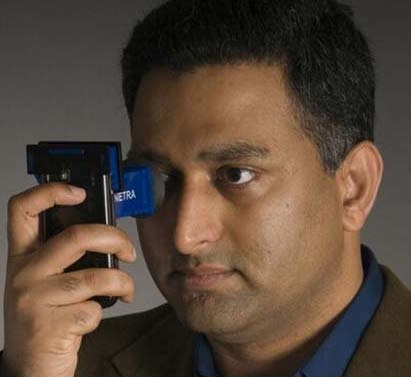
    BOSTON (TIP): Researchers led by an Indian-origin scientist have developed a software that can turn any smartphone into an eye-tracking device, a discovery that can help in psychological experiments and marketing research.

    In addition to making existing applications of eye-tracking technology more accessible, the system could enable new computer interfaces or help detect signs of incipient neurological disease or mental illness.

    Since few people have the external devices, there’s no big incentive to develop applications for them.

    “Since there are no applications, there’s no incentive for people to buy the devices. We thought we should break this circle and try to make an eye tracker that works on a single mobile device, using just your front-facing camera,” explained Aditya Khosla, graduate student in electrical engineering and computer science at Massachusetts Institute of Technology (MIT).

    Khosla and his colleagues from MIT and University of Georgia built their eye tracker using machine learning, a technique in which computers learn to perform tasks by looking for patterns in large sets of training examples.

    Currently, Khosla says, their training set includes examples of gaze patterns from 1,500 mobile-device users.

    Previously, the largest data sets used to train experimental eye-tracking systems had topped out at about 50 users.

    To assemble data sets, “most other groups tend to call people into the lab,” Khosla says.

    “It’s really hard to scale that up. Calling 50 people in itself is already a fairly tedious process. But we realized we could do this through crowdsourcing,” he added.

    In the paper, the researchers report an initial round of experiments, using training data drawn from 800 mobile-device users.

    On that basis, they were able to get the system’s margin of error down to 1.5 centimeters, a twofold improvement over previous experimental systems.

    The researchers recruited application users through Amazon’s Mechanical Turk crowdsourcing site and paid them a small fee for each successfully executed tap. The data set contains, on average, 1,600 images for each user.

    The team from MIT’s Computer Science and Artificial Intelligence Laboratory and the University of Georgia described their new system in a paper set to presented at the “Computer Vision and Pattern Recognition” conference in Las Vegas on June 28.

  • CHINA’S EXASCALE  SUPERCOMPUTER TO BE OPERATIONAL BY 2020

    CHINA’S EXASCALE SUPERCOMPUTER TO BE OPERATIONAL BY 2020

    BEIJING: China is developing a supercomputer capable of at least a billion billion calculations per second that will be operationalised by 2020, a top official has said.

    According to the national plan for the next generation of high performance computers, China will develop an ‘exascale computer’ during the 13th Five-Year-Plan period (2016-2020).

    “The government of Tianjin Binhai New Area, NUDT and the National Supercomputing Center in Tianjin are working on the project, and we plan to name it Tianhe-3,” said Liao Xiangke, head of National University of Defence Technology (NUDT).

    In 2010, China’s first petaflop supercomputer Tianhe-1 capable of at least a million billion calculations per second came into service in the supercomputing centre.

    At present, Tianhe-1 performs various tasks including oil exploration, high-end equipment manufacturing, biological medicine and animation design, and serves nearly 1,000 customers, state-run Xinhua news agency reported.

  • Robots to swim in Bay of Bengal for monsoon study

    Robots to swim in Bay of Bengal for monsoon study

    NEW DELHI (TIP): To better understand and predict South Asia’s seasonal monsoon, scientists are getting ready to release robots in the Bay of Bengal in a study of how ocean conditions might affect rainfall patterns. The monsoon, which hits between June and September, delivers more than 70%of India’s annual rainfall. Its arrival is eagerly awaited by hundreds of millions of subsistence farmers, and delays can ruin crops or exacerbate drought. Yet, the rains are hard to predict and depend on the complex interplay between global atmospheric and oceanic movements in ways not yet fully understood. They can be affected by weather phenomena such as El Nino, and could become even more erratic with climate change and even air pollution. “It’s such a complex system,” said oceanographer Ben Webber at the University of East Anglia’s School of Environmental Sciences, the UK university leading the $11 million project. Still, “the processes that occur in the Bay of Bengal are not well understood.” One of the biggest mysteries is how the water currents work, with colder and fresher water streaming into the northern part of the bay, while warmer and saltier water flows in further south from the Arabian Sea.

  • Scientists design protein to modify memory

    Scientists design protein to modify memory

    NEW YORK: Scientists have developed a new tool to modify brain activity and memory in targeted ways, without the help of any drugs or chemicals.

    The new tool is a protein that can be encoded in animal genomes to effectively switch off their inhibitory synapses — connections between neurons —increasing their electrical activity.

    The GFE3 protein may help researchers map the brain’s connections and better understand how inhibitory synapses modulate brain function, said lead author Don Arnold , professor at University of Southern California.

    It also may enable them to control neural activity and lead to advancements in research for diseases or conditions ranging from schizophrenia to cocaine addiction, Arnold said.

    “GFE3 harnesses a little known and remarkable property of proteins within the brain,” Arnold said.

    The protein takes advantage of an intrinsic process — the brain’s cycle of degrading and replacing proteins.

    Most brain proteins last only a couple of days before they are actively degraded and replaced by new proteins. GFE3 targets proteins that hold inhibitory synapses together to this degradation system and as a result, the synapses fall apart.

    “Rather than a cell deciding when a protein needs to be degraded, we sort of hijack the process,” Arnold explained. For the study, published in the journal Nature Methods, the team of scientists studied the protein’s effect in both mice and zebrafish.

  • WHATSAPP BETA GETS GIFS SUPPORT AND HINTS AT VIDEO CALLING

    WHATSAPP BETA GETS GIFS SUPPORT AND HINTS AT VIDEO CALLING

    WhatsApp beta users on iOS have started receiving an update that lets them share auto playing GIFs. After the recent update to emojis, the messaging is app seems to have been keeping a keen eye on its competitor Viber’s releases.

    The upcoming feature will add a feature that Slack, Facebook’ Messenger, Viber and the upcoming Hallo already have — ability to share animated photos called GIFs.

    However, it is unclear when the feature will be released to the public and how it will be implemented. For now, on sharing a link to a GIF?shared the autoplaying GIF?instead of just a link in the beta version of WhatsApp on iOS. The GIFs can also be saved to the phone’s gallery (camera roll) or quick instantly besides peek and pop are also supported.

    Besides the GIF feature, WhatsApp has also fixed some bugs besides adding providing hints that the video calling feature is definitely going to make its way the app in the future.

  • NEW SOFTWARE TURNS WEBCAMS INTO EYE-TRACKERS

    NEW SOFTWARE TURNS WEBCAMS INTO EYE-TRACKERS

    WASHINGTON (TIP): Scientists have developed a software that turns computer webcams into eye-trackers, an advance that may help developers optimize content and make websites more user-friendly.

    The software, called WebGazer.js , can infer where on a webpage a user is looking and can be added to any website with just a few lines of code and runs on the user’s browser.

    The user’s permission is required to access the webcam, and no video is shared. Only the location of the user’s gaze is reported back to the website in real time.

    “We see this as a democratization of eye-tracking,” said Alexandra Papoutsaki, a graduate student at Brown University in the US, who led the development of the software.

    “Anyone can add WebGazer to their site and get a much richer set of analytics compared to just tracking clicks or cursor movements,” said Papoutsaki.

    The use of eye tracking for web analytics is not new, but such studies nearly always require standalone eye-tracking devices that often cost tens of thousands of dollars.

    The studies are generally done in a lab setting, with users forced to hold their heads a certain distance from a monitor or wear a headset.

    “We’re using the webcams that are already integrated in users’ computers, which eliminates the cost factor,” Papoutsaki said.

    “And it’s more naturalistic in the sense that we observe people in the real environment instead of in a lab setting,” she said.

    The software employs a face-detection library to locate the user’s face and eyes. It converts the image to black and white to distinguish the whites of the eyes from the iris.

    Having located the iris, the system employs a statistical model that is calibrated by the user’s clicks and cursor movements.

    The model assumes that a user looks at the spot where they click, so each click tells the model what the eye looks like when it’s viewing a particular spot.

    It takes about three clicks to get a reasonable calibration, after which the model can accurately infer the location of the user’s gaze in real time.

  • CHINA PLANS TO LAUNCH HUBBLE-LIKE SPACE TELESCOPE

    CHINA PLANS TO LAUNCH HUBBLE-LIKE SPACE TELESCOPE

    BEIJING (TIP): China plans to launch an independent optical facility, which will function like the Hubble Space Telescope , along with the construction of a space station in the coming years, scientists said.

    The field of view of the optical cabin will be 300 times as large as that of the Hubble, and the cabin will be connected with the space station, said Gu Yidong , technology consultant of China’s manned space flight project and academician with the Chinese Academy of Sciences (CAS).

    The Hubble Space Telescope (HST), built by the Nasa and the European Space Agency, orbits just outside the Earth’s atmosphere, taking extremely high-resolution images of deep space. It was launched in 1990.

    “Currently, China has planned a series of scientific research platforms and facilities for the space station. The optical cabin is the biggest confirmed project so far,” Yidong said.

    The calibre of the telescope is about two metres, and its resolution is near that of the Hubble. The optical cabin will conduct heterochromatic photometry and slitless spectroscopy sky surveys, the ‘People’s Daily’ reported.

    According to Yidong, the cabin will stay in orbit with the space station, and will connect to the station when it needs maintenance or upgrades.

    China’s space station is expected to be completed in 2020.