Tag: Science & Technology

  • Facebook Member’s Offensive Tweet Creates Online Storm, Indians Furious

    Facebook Member’s Offensive Tweet Creates Online Storm, Indians Furious

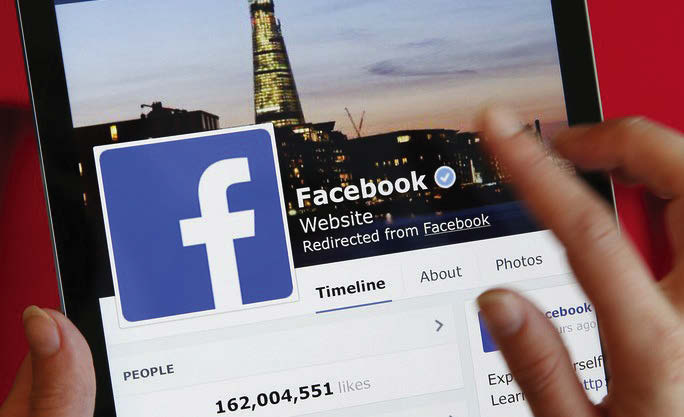
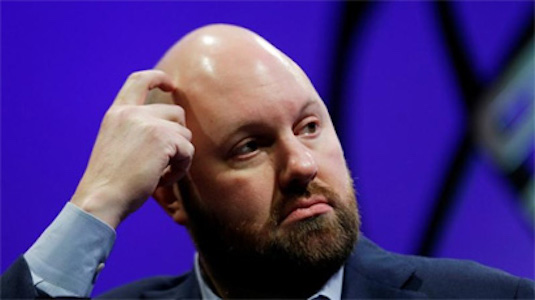
    NEW YORK: A tweet by Facebook board member Marc Andreessen implying that Facebook’s Free Basics is the same as colonialism created a storm on Twitter on Wednesday, with many Indians lashing out against him on Facebook as well as on Twitter.

    Andreessen wrote on Twitter: “Anti-colonialism has been economically catastrophic for the Indian people for decades. Why stop now?”

    ANTI-COLONIALISM HAS BEEN ECONOMICALLY CATASTROPHIC FOR THE INDIAN PEOPLE FOR DECADES. WHY STOP NOWAlthough the tweet was subsequently deleted, the comment — made after India’s telecom watchdog the Telecom Regulatory Authority of India said no to discriminatory pricing of data content — led to several Indians storming the social networking sites with angry reactions.

    “Now @facebook board director @pmarca suggests being colonized was good for India and we should’ve let Fb do so:),” posted prominent Indian investor Mahesh Murthy.

    “…wow, claims along the lines of “colonialism would be good for us”. Like East India Company?” wrote a Twitter user with the handle @raveeshbhalla.

    Andreessen, who co-founded Andreessen Horowitz, a venture capital firm, immediately retreated his tweet. “I hereby withdraw from all future discussions of Indian economics or politics. Carry on…” and then, “For the record, I am opposed to colonialism in any country,” he tweeted.

    Earlier in the day, Kirthiga Reddy, MD, Facebook India, who was attending a seminar organized by the Internet and Mobile Association of India in New Delhi, refused to comment on Free Basics.

    On Feb. 8, TRAI said in a much-awaited regulatory order that “No service provider shall offer or charge discriminatory tariffs for data services on the basis of content.”

    “No service provider shall enter into any arrangement, agreement or contract, by whatever name called, with any person, natural or legal, that has the effect of discriminatory tariffs for data services being offered or charged to the consumer on the basis of content,” the watchdog added.

    Reacting to the TRAI order, Facebook said it was “disappointed with the outcome,” but will continue its “efforts to eliminate barriers and give the unconnected an easier path to the Internet.”

    A day after India’s telecom watchdog said no to Facebook’s Free Basics, the social networking giant’s founder and CEO Mark Zuckerberg conveyed his disappointment in a post but reiterated his commitment to keep working to break down barriers to connectivity in India.

    “India’s telecom regulator decided to restrict programs that provide free access to data. This restricts one of Internet.org’s initiatives, Free Basics, as well as programs by other organizations that provide free access to data,” the 31-year-old billionaire posted on Feb. 9.

    “While I am disappointed with the decision, I want to personally communicate that we are committed to keep working to break down barriers to connectivity in India and around the world. Internet.org has many initiatives, and we will keep working until everyone has access to the internet,” Zuckerberg added.

    Everyone in the world should have access to the internet.

    “That’s why we launched Internet.org with so many different initiatives — including extending networks through solar-powered planes, satellites and lasers, providing free data access through Free Basics, reducing data use through apps, and empowering local entrepreneurs through Express Wi-Fi,” he wrote.

    Ironically, Facebook’s Internet.org was launched a year back in India, which was later named Free Basics.

    According to Zuckerberg, their work with Internet.org around the world has already improved many people’s lives as more than 19 million people in 38 countries have been connected through Facebook’s different programs.

    “Connecting India is an important goal we won’t give up on, because more than a billion people in India don’t have access to the internet,” he posted.

    “We know that connecting them can help lift people out of poverty, create millions of jobs and spread education opportunities. We care about these people, and that’s why we’re so committed to connecting them,” the Facebook CEO added.

    “Our mission is to make the world more open and connected. That mission continues, and so does our commitment to India,” he concluded.

  • SIGNS OF LIFE FOUND IN EARTH’S MANTLE

    SIGNS OF LIFE FOUND IN EARTH’S MANTLE

    LONDON (TIP): An international team of scientists –recently returned from a 47-day research expedition to the middle of the Atlantic Ocean – have collected an unprecedented sequence of rock samples from the shallow mantle of the ocean crust that bear signs of life, unique carbon cycling, and ocean crust movement.

    Led by Co-Chief Scientists Dr. Gretchen Früh-Green (ETH Zurich, Switzerland) and Dr. Beth Orcutt (Bigelow Laboratory for Ocean Sciences, USA), the team collected these unique rock samples using seabed rock drills from Germany and the UK – the first time in the history of the decades-long scientific ocean drilling program that such technology has been utilized.

    The aims of the expedition are to determine how mantle rocks are brought to the seafloor and react with seawater –such reactions may fuel life in the absence of sunlight, which may be how life developed early in Earth’s history, or on other planets. The team also hopes to learn more about what happens to carbon during the reactions between the rocks and the seawater – processes that could impact on climate by sequestering carbon.

    “The rocks collected on the expedition provide unique records of deep processes that formed the Atlantis Massif. We will also gain valuable insight into how these rocks react with circulating seawater at the seafloor during a process we call serpentinization and its consequences for chemical cycles and life,” stated expedition Co-Chief Scientist Gretchen Früh-Green.

    “During drilling, we found evidence for hydrogen and methane in our samples, which microbes can ‘eat’ to grow and form new cells,” explained Beth Orcutt, Co-Chief Scientist from Bigelow Laboratory. “Similar rocks and gases are found on other planets, so by studying how life exists in such harsh conditions deep below the seafloor, we inform the search for life elsewhere in the Universe.”

    The scientists are part of the International Ocean Discovery Program (IODP) Expedition 357, conducted by the European Consortium for Ocean Research Drilling (ECORD) as part of the IODP. The expedition set off from Southampton, UK, on October 26, 2015, aboard the Royal Research Vessel James Cook (operated by the National Environment Research Council, UK), returning on December 11, 2015. They brought with them the Rock Drill 2 from the British Geological Survey and the MeBo rock drill from MARUM in Bremen, Germany, for around-the-clock operations to collect rock cores from the Atlantis Massif, a 4,000-m tall underwater mountain along the Mid-Atlantic Ridge. The rock drills were equipped with new technologies to enable the scientists to detect signs of life in the rock samples.

    During the past two weeks, the science party has been studying the rock samples in detail at the IODP Bremen Core Repository in Bremen, Germany. The science party consists of 31 scientists (16 female/15 male) from 13 different countries (Australia, Canada, China, France, Germany, Italy, Japan, Korea, Norway, Spain, Switzerland, UK, USA), ranging from students to tenured professors. At the end of this sampling party, the first results of the expedition will be reported.

  • Mystery of Ice age causing missing CO2 solved

    Mystery of Ice age causing missing CO2 solved

    NEW DELHI (TIP): A long standing environmental mystery appears to have been solved – and it may contain lessons for today’s runaway global warming. Scientists have long puzzled over the fact that twenty thousand years ago, carbon dioxide concentrations in the atmosphere fell so low that the earth was enveloped in ice, the era now known as the Ice Age.

    A research published in the leading journal Nature on Thursday shows that a big part of the answer lies at the bottom of the world. Sediment samples from the seafloor, more than 3 kilometers beneath the ocean surface near Antarctica, support a long-standing hypothesis that more carbon dioxide was dissolved in the deep Southern Ocean at times when levels in the atmosphere were low.

    Among other things, the study suggests that during the ice age, the deep Southern Ocean carried much smaller amounts of oxygen than today. This indicates that photosynthetic algae, or phytoplankton, were taking up large amounts of carbon dioxide near the surface. As dead algae sank to the depths, they were consumed by other microbes, which used up the oxygen there in the process.

    The scientists found chemical fingerprints of the oxygen level by measuring trace metals in the sediments.

    The evidence “is a long-sought smoking gun that there was increased deep ocean carbon storage when the atmospheric CO2 was lower,” said Sam Jaccard, lead author at the University of Bern, Switzerland.

    Coauthor Robert Anderson, a geochemist at Columbia University’s Lamont-Doherty Earth Observatory, said the study “finally provides the long-sought direct evidence that extra carbon was trapped in the deep sea by the buildup of decaying organic matter from above.” He added, “It’s also clear that the buildup and release of CO2 stored in the deep ocean during the ice age was driven by what was happening in the ocean around Antarctica.”

    The study also shows that variations in carbon-dioxide storage in the Southern Ocean were probably behind a series of natural “wobbles” in atmospheric levels of about 20 parts per million that took place over thousands of years.

    It futher suggests that the wobbles were probably caused by changes in the amount of iron-rich dust, which fertilizes phytoplankton, being blown from land onto the ocean surface. Levels may also have been influenced by varying amounts of carbon being released from the deep ocean as ocean currents changed, said the authors.

    While the natural 20-part-per million wobbles took thousands of years to happen, carbon dioxide levels have risen that much in just the last nine years, due to human emissions.

    Levels are now about 400 parts per million, versus about 280 in the early 1800s. “The current rate of emissions is just so fast compared to the natural variations that it’s hard to compare,” said coauthor Eric Galbraith of the

    Autonomous University of Barcelona. “We are entering climate territory for which we don’t have a good geological analog.”

  • GOOGLER SHOWS OFF ANDROID-POWERED SMART MIRROR PROTOTYPE

    GOOGLER SHOWS OFF ANDROID-POWERED SMART MIRROR PROTOTYPE

    How about brushing your teeth and seeing Google Now cards on your restroom mirror? No, this is not a tease, well, at least for one Googler.

    Google software engineer Max Braun has designed such a ‘smart mirror’ powered by Android which shows him time, date, current weather, a 24-hour forecast and news headlines.

    Braun, who showcased his smart mirror in a blog post, had always wanted a smart mirror but he didn’t find one in the market thus leading him to make one for himself. The engineer used a two-way mirror, display panel, controller board and other components to design the mirror of his dreams just like the one from Arnold Schwarzenegger’s movie The 6th Day.

    The code behind the user interface leverages some simple Android APIs like TextClock for the date and time, as well as Forecast for the weather and the Associated Press for news. Braun is also trying to add traffic and reminders to the interface.

    “The idea is that you don’t need to interact with this UI,” he wrote. “Instead, it updates automatically and there’s an open-ended voice search interface for anything else,” he said adding that his prototype mirror was still a work in progress.

    Currently, the mirror is powered by an Amazon Fire TV Stick, which runs an Android API that drives the UI. The Googler had also experimented with Chromecast and Nexus Player before putting together his prototype.

  • WhatsApp groups can now have up to 256 members

    WhatsApp groups can now have up to 256 members

    WhatsApp has just bumped the user limit in chat groups on its platform to 256 members from 100 irrespective of the mobile platform -Android and iOS.

    The popular messaging app, which just crossed a billion users globally, had initially raised the number to 100 from 50 in November 2014. Currently, over 70 million people use the popular instant messaging platform in the country.

    Since February 2014 when Facebook acquired WhatsApp, several changes have been made to the messaging app. In April 2015, the messaging app officially added voice calling, a long-teased feature that was previously available only by invitation. Users now call their contacts worldwide for free over a WiFi or 3G/4G connection.

    Also, the app might soon get a video calling feature and a multi-tab user interface. A German website named Macerkopf had revealed screenshots that shows an ongoing video call in WhatsApp on iOS. If the screen shots are real, WhatsApp’s video calling interface is somewhat similar to its voice-calling one. Users would be able to mute calls and also switch between the front and back cameras.

    The app has also waived off the 99 cents yearly subscription charge but founder Jan Koum has however said that the company will be experimenting with different revenue models.

    Source: HT

  • Google Search Chief Amit Singhal to Step Down this Month

    Google Search Chief Amit Singhal to Step Down this Month

    MOUNTAINVIEW, CA (TIP): As one of Google’s earliest search pioneers steps down and the company’s leader in artificial intelligence takes his place, analysts say the move signals the company’s desire to make its search engine more sophisticated.

    Google parent Alphabet Inc said Wednesday that Amit Singhal, the longtime chief of its Internet search business, will retire.

    He will be replaced by John Giannandrea, the vice president of engineering who heads its efforts in machine learning, the process in which computers improve performance by analyzing users’ actions.

    Mr. Singhal joined Google in 2000, two years after the company was founded by Larry Page and Sergey Brin. During his tenure Google developed Adwords, the technology that targets ads based on users’ searches and one of its biggest moneymakers.

    His last day is Feb. 26. In a blog post announcing the move, Mr. Singhal said he will spend the next 15 years giving back to “people who are less fortunate.”

    Analysts’ said Google’s decision to replace Mr. Singhal with Mr. Giannandrea was a sign features dependent on machine learning, such as Google’s personal assistant, which answers questions and conducts searches with the push of a button, will play a larger part in the future of search.

    “The fact that they got the head of artificial intelligence to take over the

    role is very telling of where they expect to evolve going forward,” said Sameet Sinha, a senior equity analyst at B. Riley & Co.

    In an emailed statement, Google called machine learning “crucial to our Search vision of building a truly intelligent assistant that connects our users to information and actions in the real world.”

    Mr. Giannandrea’s work introduced the technology to products such as image recognition for Google Photos search, which searches through online images, and the smart reply for Google Inbox, which provides automatic reply suggestions for emails.

    Google’s stock fell after Mr. Singhal announced his retirement. While analysts were hesitant to cite his departure as the primary reason for the stock hit, several said it was a factor.

    “Amit was very well respected and had been at Google from the start and helped to define search as we know it,” said Mr. Sinha.

    Recon Capital Partners Chief Investment Officer Kevin Kelly said “weakness in tech stocks that are trading at high valuations” as well as Mr. Singhal’s departure were at play in the stock’s decline.

    Google closed down 4.03 percent at$749.38, the largest decline since August.

  • THE ANTIPODE: FLY FROM LONDON TO NEW YORK IN 11 MINUTES

    THE ANTIPODE: FLY FROM LONDON TO NEW YORK IN 11 MINUTES

    NEW DELHI (TIP): Charles Bombardier, the man behind the concept aircraft Skreemr which could travel at Mach 10, has now unveiled the Antipode, a hypersonic jet that he claims will cover the distance between London and New York in a mind-boggling 11 minutes.

    ANTIPODEBombardier, who is affiliated with the Canadian aircraft company Bombardier Inc, says the Antipode can reach Mach 24, twice the speed of the Skreemr and 12 times faster than the Concorde. In theory, he claims it can carry 10 people for a distance of up to 20,000km in less than an hour.

    Last year, the Canadian engineer designed the Skreemr, a four-winged scramjet that he claimed could carry 75 passengers at speeds of up to Mach 10.

    One Mach averages 1195km/hour, a speed equal to that of sound. An aircraft flying at Mach 2 is flying at twice the speed of sound, in the air.

    On his website, Bombardier says the Antipode can be an ideal business or military aircraft to fly senior officers anywhere in the world in almost no time.

    Antipode, he says, will be an aircraft with rocket boosters attached to its wings, which would propel the plane to 40,000 feet and help it reach Mach 5, before they separate and fly back to base.

    After that, the supersonic combustion engine will be ignited, shooting the jet up to a speed of Mach 24.

    To avoid overheating at such speeds, the jet will use NASA’s Long Penetration Mode concept, by which nozzles on the nose and wings would use the air flowing through to cool down the surface temperature of the plane.

    Interestingly, the images of the Antipode concept have been created by Abhishek Roy, the founder of Lunatic Koncepts, a design lab based in India. Roy has also created the renderings for the Subrocket car and the Korbiyor autonomous electric hearse concept.

  • STEM CELL CURE FOR DIABETES A REALITY: STUDY

    STEM CELL CURE FOR DIABETES A REALITY: STUDY

    BOSTON (TIP): Diabetes may soon be cured after scientists have managed to halt the condition in mice for six months, thanks to the use of insulin-producing cells that had been generated from human stem cells.

    Experts from US hospitals and institutions, including Harvard University, managed to transplant cells into mice, which immediately began producing insulin.

    The team was also able to show they could prevent the cells being rendered useless by the body’s own immune system, which was effectively “switched off”, thanks to scientific work. It means a cure for type 1 diabetes – which affects 400,000 people in the UK – could be much closer. Scientists are now working to replicate the results in humans with the condition. The findings build on the news at the end of 2014 that experts had discovered how to make huge quantities of insulin-producing cells.

    The man who led that breakthrough – Harvard Professor Doug Melton, who has been trying to find a cure for the disease since his son was diagnosed with type 1 diabetes as a baby – also worked on the new studies.

    The human islet cells used for the new research were generated from human stem cells developed by Professor Melton.

    “Encapsulation therapies have the potential to be groundbreaking for people with type 1 diabetes.

    “These treatments aim to effectively establish long-term insulin independence and eliminate the daily burden of managing the disease for months, possibly years, at a time without the need for immune suppression,” said Juvenile Diabetes Research Foundation (JDRF) vice-president of discovery research, Julia Greenstein.

    Source: PTI

  • Internet traffic may soon travel at the speed of light

    Internet traffic may soon travel at the speed of light

    LONDON (TIP): Scientists expect that, for the first time, the internet traffic could travel at the speed of light, while being completely open and programmable courtesy of revolutionary internet technologies.

    The current internet infrastructure is unable to support independent development and innovation at physical and network layer functionalities, protocols and services, while at the same time supporting the increasing bandwidth demands of changing and diverse applications.

    The research introduces new concepts of open source optical internet enabled by optical white box and software defined network technologies.

    “These technologies will hide complexity of optical networks and open them up for traditional programmers and application developers to create new type of internet applications taking advantages of speed of light,” said Reza Nejabati, from University of Bristol in UK.

    “New internet technologies frequently emerge, but most of them rarely result in new and revolutionary internet applications,” he said.

    “The technologies suggested could pave the way for the creation of new internet services and applications not previously possible or disruptive,” Nejabati said.

    “The technologies could also potentially change the balance of power from vendors and operators that are monopolising the current internet infrastructure to wider users and service providers,” he said.

    Source: PTI

  • MICROSOFT ADDS REAL TIME CO-EDITING IN BOX AND DROPBOX WITH MS OFFICE

    MICROSOFT ADDS REAL TIME CO-EDITING IN BOX AND DROPBOX WITH MS OFFICE

    Microsoft has announced a new set of integrations with Dropbox primarily aimed at offering more productivity and features while on the move.

    Starting Wednesday, Office subscribers will be able to work on documents, spreadsheets and presentations in real-time shared within Box and Dropbox.

    With these new set of integrations, Dropbox users will able to edit documents at the same time when using Office Online, allowing co-workers or users to be more productive while working on a project. To do so, just open a compatible file with Office Online via Dropbox.com. Once the file users wish to work on is open, they can start working on that a particular file simultaneously and see what changes are being made in real-time. Users can also make comments for chatting among themselves and any changes made are automatically saved in Dropbox.

    In addition, Office for iOS now also offers the same functionality with support for real-time co-editing directly from Box. Microsoft adds that the feature will also be rolled out to other cloud providers in the near future which include Edmodo, Egnyte and ShareFile.

    Besides the co-editing feature, Microsoft has also announced that Box and DropBox will soon be integrated with Outlook.com. This would essentially allow Outlook users to send attachments and saved files straight to Dropbox, Box and OneDrive. However, the company hasn’t specified an exact date as to when it’ll be available for users.

    “In the coming weeks, users of the new Outlook.com can attach files from Dropbox, Box and OneDrive right from their inboxes and they have the option to send these files either as traditional attachments or as cloud-based links,” Microsoft’s corporate vice president for the Office team Kirk Koenigsbauer, wrote in a blog post.

  • 67th Republic Day of India | Greetings from Dnyaneshwar M Mulay

    67th Republic Day of India | Greetings from Dnyaneshwar M Mulay

    I am happy to note that the Indian Panorama is bringing out a fully illustrated issue to mark the 67th Republic Day of India. On this occasion, I congratulate the Indian community based in US and convey my greetings and best wishes to the readers of The Indian Panorama.

    India in these 67 years of existence as a Republic has made tremendous strides at the national level as well as on the international stage. With its regular elections since 1952 and successful transfers of power, it has established an unmatched legacy as the largest democracy of the world.

    In our ever complex and increasingly challenging global environment, India with its strong heritage and equally strong capabilities has been playing an important role on the world stage. Whether it is peace keeping operations of the UN or technical assistance under its development partnership program (ITEC), India has always been ready to take on her responsibilities towards both international and regional partners. Towards this end, India has proactively cooperated with the major countries of the world and built strategic partnerships both at bilateral and multilateral levels.

    India-US relations have also reached a new high with cooperation extending to diverse fields such as nuclear energy, space, cyber security, counter-terrorism, science & technology, health and education as well as high level visits including two visits by the Hon’ble Prime Minister of India Shri Narendra Modi in 2014 and 2015 and the visit of the President of the United States Mr. Barack Obama as the Chief Guest at the Republic Day celebrations in 2015.

    The Indian Diaspora needs a special mention on this occasion. Overcoming formidable multiple challenges, over 4 million people of Indian origin have already created a strong imprint in the US. Their contributions in the fields of economic, culture, education, health and medical services, media and IT industry have been commendable and have built a strong bridge between their country of origin and their country of adoption.

    Through this Special Issue of the Indian Panorama, I once again convey my greetings and best wishes to the Indian Diaspora proud and auspicious occasion of the 67th Independence Day of India.

    ज्ञानेश्वर म. मुळे

  • UK Proposes Visa Fee Hike To Hit Indian Techies

    UK Proposes Visa Fee Hike To Hit Indian Techies

    LONDON:  Companies in the UK hiring non-European Union workers like Indians are expected to face a new 1,000 pound annual surcharge per employee.

    The UK’s Migration Advisory Committee (MAC) used the Indian information technology sector as an example in its latest set of recommendations to call for a review of the country’s intra-company transfer (ICT) route under the Tier 2 visa regime.

    “(Immigration) is not serving to increase the incentive to employers to train and upskill the UK workforce. Ready access to a pool of skilled IT professionals in India is an example of this,” the migration panel report said in its findings.

    “We did not see any substantive evidence of long-standing reciprocal arrangements whereby UK staff are given the opportunity to gain skills, training and experience from working in India,” it said.

    The new up-front charge of 1,000 pounds for each skilled non-EU migrant will apply per year, so a three year visa would carry a surcharge of 3,000 pounds for each employee.

    The migration committee believes by increasing the cost of hiring from abroad, the new surcharge would encourage employers to invest in training British workers instead.

    A UK Home Office spokesperson said, “We are grateful to the migration advisory committee for its report. We are considering its findings and will respond in due course.”

    As part of a series of measures to cut employee numbers under the Tier 2 system by 20 per cent a year, the committee also recommended the salary threshold for these workers entering Britain be raised from 20,800 pounds to 30,000 pounds.

    Its recommendations are expected to be adopted by the government soon.

    According to migration data, Indian skilled workers were given the largest number of visas under Tier 2 in the year ending September 2015 and Indian IT workers accounted for 90 per cent of visas issued under the ICT route.

    The committee noted that “some of the heaviest users of the intra-company transfer route are Indian companies, and the top ten employers using the intra-company transfer route are all largely employing IT workers from India”.
    “The evidence indicates that multinational companies with a presence in India have developed a competitive advantage in delivering IT projects in the UK. They have developed a delivery model, whereby significant elements of projects are delivered offshore in India, taking advantage of the fact that Indian salaries are lower than in the UK for equivalent workers,” it said.

  • Twitter sued by U.S. widow for giving voice to Islamic State

    Twitter sued by U.S. widow for giving voice to Islamic State

    FLORIDA (TIP): A Florida woman has sued Twitter for allowing the social media platform to be used by Islamic State (ISIS) militant group to spread its messages all over the world.

    Twitter is being sued by the widow of an American killed in Jordan who accuses the social media company of giving a voice to Islamic State, adding to the pressure to crack down on online propaganda linked to terrorism.

    Tamara Fields, a Florida woman whose husband Lloyd died in the Nov. 9 attack on the police training center in Amman, said Twitter knowingly let the militant Islamist group use its network to spread propaganda, raise money and attract recruits.

    Lawyers specializing in terrorism said Fields faces an uphill battle, though the case could lead to more calls for social media companies such as Twitter and Facebook Inc to take down posts associated with terrorist groups.

    In her complaint filed on Wednesday, Jan 13, Fields said San Francisco-based Twitter had until recently given Islamic State, also known as ISIS, an
    “unfettered” ability to maintain official Twitter accounts.

    “Without Twitter, the explosive growth of ISIS over the last few years into the most-feared terrorist group in the world would not have been possible,” according to the complaint, which was filed in the federal court in Oakland, California.

    Fields wants Twitter to pay her triple damages for violating the federal Anti-Terrorism Act by having provided material support to terrorists.

    Her lawyer said he believes it is the first case in which a social media company is accused of violating that law.

    “While we believe the lawsuit is without merit, we are deeply saddened to hear of this family’s terrible loss,” Twitter said in a statement about the civil lawsuit. “Violent threats and the promotion of terrorism deserve no place on Twitter and, like other social networks, our rules make that clear.”

  • TomTom’s new Spark watches to playback music, have GPS

    TomTom’s new Spark watches to playback music, have GPS

    NEW DELHI (TIP): TomTom, the Amesterdam-based technology company, is all set to return to India with another set of its smartwatches after exactly a year.

    The company had launched its GPS fitness watches with heart-rate monitors on January 21 last year at a starting price of Rs. 12,999. The company had justified its launches stating that the wearables category was growing in India with people becoming more concerned about their health. The company didn’t break out any specific sales figure of its previously launched devices in India.

    The watches were sold in exclusive partnership with e-tailer Flipkart.

    The new series showcased in IFA Berlin last year, called Spark and also to be sold at Flipkart, will be priced between Rs.13,999 and Rs.25,999. The Spark watches will come with music playback ability, GPS and heart rate monitors.

    The first of the three variants to be launched on Thursday will not come with the music playback option while the other variants will house all the three with the top end coming with a HP smartwatch bundle.

    The Spark will be the first of its kind smartwatch to have independent music playback letting users forget the smartphone at home. Although it cannot stream music, users can feed songs to the memory of the watch via a software bundle available separately for iOS and Windows.

    It will also be interesting to see how the company copes up with the rapidly changing market in India. While wearables like that of TomTom (which helps excercise, track activity and lets you read notifications) are getting cheaper and smaller, TomTom’s last launches were a little heavy and were impossible to be worn throughout the day without getting a numb wrist.

    Recently, foreign top players like Fitbit and Jawbone have entered India inspite of the world market making a shift towards smartwatches rather than simple activity trackers. Gartner’s research director Vishal Tripathi also had an interesting take about the wearables market.

    “Although the market is growing, it is still at a nascent stage. TomTom has lesser brand value than Apple or a Fitbit and hence will be tough for them to capture the market here. The high price of the product and the music playback feature can be the best differentiator,” he said adding that a lot of people are still depending on apps to measure their runs and fitness activities.

    Source: HT

  • GOOGLE SEARCH TO NOW SPORT ANIMAL SOUNDS

    GOOGLE SEARCH TO NOW SPORT ANIMAL SOUNDS

    NEW DELHI (TIP): Google Search has been including a lot of features to make its search engine easier, intuitive and fun to use.

    After launching the image search option, now the California-based Internet major is bringing animal sounds to its search engine. Under the new ‘animal sounds’ search, users can now ask, by either talking to the Google app on their phone or typing “What sound does the duck make?” And the search will throw back a picture of a duck and play a recording of the sound they make.

    According to Google, there are 19 animal sounds —ape, cat, cow, dog, duck, elephant, horse, lion, moose, owl, pig, raccoon, rooster, sheep, tiger, turkey, turtle, bowhead whale, humpback whale and zebra. The company also said that these sounds were all recorded from live animals.

    “The animals included are a combination of the top searched for animals in Google and animals with some of the most iconic sounds,” it said in a statement adding that the Search will work for Android, iOS and the Web.

  • SKYPE FOR WINDOWS IS ALSO A DIGITAL TRANSLATOR

    SKYPE FOR WINDOWS IS ALSO A DIGITAL TRANSLATOR

    Next time you wan to talk to someone in Chinese Mandarin, English, French, German, Italian, Portuguese, or Spanish, just call them on Skype.

    Or text in 50 different languages and the recipient will receive the texts in their default languages even if it’s Hindi or Urdu.

    The feature first caught our attention in 2014 when it was beta. But now, anyone using Skype on a Windows PC can use it. This is Skype’s attempt to break the language barrier by making multi-lingual conversations not just possible but as seamless as they can be. Voice and Text translations work in real time with the app acting as a translator. Without a third person involved, the conversations can stay as natural as possible.

    While other messaging apps are busy adding features like bots, Gadgets360 reports that company has already seen a 400% increase in calls since the feature launched, with English and French being the most popular pair.

  • 14-year-old receives first 3-D printed nose in United States’s Mount Sinai

    14-year-old receives first 3-D printed nose in United States’s Mount Sinai

    A 14-year-old boy has become the first patient in the US to undergo a successful nose transplant using 3D printing technology after his face was disfigured when he fell on a live power line.

    Reconstructive surgery on the human nose is not uncommon, but until now, doctors in the US had not been able to replicate and restore the body part to its full functionality.

    Dallan Jennet, a 14-year-old boy from the Marshall Islands, a country that lies near the equator in the Pacific Ocean, is the first patient in the US to undergo a procedure that did just that, Fox News reported.

    Jennet’s face became disfigured when he fell onto a live power line aged 9. Earlier this year he flew to New York Eye and Ear Infirmary of Mount Sinai, in New York City, to undergo multiple surgeries that would restore his sense of smell and taste.

    “The procedure is akin to a ‘nose transplant’ in that we were able to replace the nose with a functional implant,” lead physician Tal Dagan, associate adjunct surgeon, said in a Mount Sinai blog post.

    “This procedure may be a breakthrough in facial reconstruction because the patient will never have to deal with the standard issues of transplantation, such as tissue rejection or a lifetime of immunosuppressive therapies,” he said.

    Jennet’s first procedure, in early 2015, took place in the Marshall Islands, where doctors input expanders under the remaining skin of his nose to make room for the reconstructed body part.

    Benicia, California-based nonprofit Canvasback Missions Inc, an organisation that provides health care and health education to the Pacific Islands, funded Jennet and his mother’s travel and medical expenses to New York.

    To carry out the subsequent surgeries, Dagan and Dr Grigoriy Mashkevich, assistant professor of Otolaryngology, Division of Facial Plastic and Reconstructive Surgery at Mount Sinai, collaborated with Oxford Performance Materials Inc, a Windsor, Connecticut-based 3-D printing company.

    The team created Jennet’s 3-D nose graft by replicating the structure of his family’s noses.

    For the first 16-hour operation in New York, doctors used a laser-based technology to analyze his skin.

    They then harvested blood vessels and tissues from the boy’s thigh, removed excess scar tissue, inserted the graft, and reconstructed the skin over the 3-D implant. They carried out four more surgeries, and Jennet attended follow-up appointments between June and October.

    The surgeries were successful, and doctors said the 3-D printed implant will grow with him — preventing the need for additional reconstructive procedures.

  • THE FUTURE IS HERE: 2016 HAS ENOUGH TO KEEP TECH GEEKS EXCITED

    THE FUTURE IS HERE: 2016 HAS ENOUGH TO KEEP TECH GEEKS EXCITED

    There was a time when hoverboards and robots were popularised by sci-fi movies as the technology of the future. Well, that future has now arrived. From robots taking over the world to bots akin to Samantha from the film Her (2013) in the offing, 2016 has enough to keep technology buffs excited.

    Internet bots gain popularity 

    Internet bots are software applications that run automated tasks. Lately, companies have begun experimenting with more creative variants that help boost productivity and keep track of what others are doing. There is buzz on the web about Microsoft’s experimental Mandarin-language bot, Xiaolce, much like Samantha from Her. Experts also believe that 2016 is when bots will enter newsrooms to tag articles in real time, help users manipulate social media to their benefit, and even come to the aid of HR managers looking to train new recruits.

    Modular phone hits shelves

    Google’s Ara project aims to create a smartphone made up of several pieces, each corresponding to one of the components of the phone: processor, memory, camera, microphone, 3G chip. In early 2015, a prototype, referred to as Spiral 2, was presented that was supposed to be sold in several test markets. However, the heads of the project ultimately pushed its launch to 2016, explaining via Twitter that it required more tests and simulations than expected. The phone in expected to finally see the light of day this year.

    Homing in

    From shopping malls and hotels to museums and airports, Bluetooth-powered beacons have slowly gained popularity in the real world. These devices track the location of a
    smartphone or a smartwatch, and send real-time notifications. Experimental in 2015,
    these beacons are all set to go mainstream in 2016, offering tailored deals and personalised messages to the user as well as the next level of marketing and promotions to companies.

    RIP password

    The transition started in 2015, and this could be the year when the world finally does away with the password. With biometrics catching on with the makers of smartphones, laptops and tablets as well as the buyer, eye scans and fingerprint sensors are set to become the norm. So, the time to remember multiple passwords for various digital accounts could soon be a thing of the past.

    Bio-ware

    After years of discussion on whether or not they will make a mark, wearables finally arrived on the technology scene in 2015, with sales growing phenomenally. Experts believe that biosensing wearables, the next generation that will be used to track heart-rates, fitness levels, body temperature and a whole lot more, could slowly start gaining momentum in 2016. Research and experimentation has already started for smaller, lighter, and more efficient devices. The emerging concept has already attracted many major companies: Chaotic Moon is developing a temporary tattoo called Tech Tats. Containing electronic components, including a microcontroller and LED lights, it can detect if you’re stressed and monitor blood pressure, and then transmit all that data through electroconductive paint.

    Print run

    Last year was a turning point for 3D printers, with the biggest growth in printers that retail for under USD 1,000 (approx. Rs 66319.95). High-quality products, like the Dremel Idea Builder, became available at competitive prices. Manufacturers like the German 3D Freesculpt or the American XYZprinting launched inexpensive models, and brands like Discovery 200 even cut their prices. But in 2016, according to research company Gartner, around 4,96,475 3D printers are projected to be sold globally, which is more than double the forecast for 2015.

    So smart

    Virtual assistants on today’s smartphones are smarter than ever before. But the Siris, Cortonas and Google Nows of the mobile world still have to be told what to do before they start working on a task. However, research has already started on AI
    (artificial intelligence) advances that will allow virtual assistants to understand tasks we’re working on. In fact, Hsiao-Wuen Hon, corporate vice president of Microsoft Research Asia, has said that 2016 will see “significant adoption of artificial intelligence for personal assistant services”.

    Robots take over the world

    Task-oriented robots assigned to take over household chores, such as lawn mowing or vacuum cleaning, are set to become increasingly popular over the next few years, according to figures from Juniper Research. And with Softbank’s Pepper, Buddy from Blue Frog Robotics and other robots set to become more widely available in 2016, more consumers could be open to welcoming robots into their homes.

  • Twitter may be considering 10,000 character limit for tweets

    Twitter may be considering 10,000 character limit for tweets

    Twitter Inc is building a new feature that will allow users to post tweets as long as 10,000 characters, technology news website Re/code reported on Tuesday.

    Twitter, which currently has a 140-character limit, may launch the service toward the end of the first quarter but has not set an official date, Re/code reported, citing sources familiar with the plans.

    The sources said the character limit could change before the final version of the product is unveiled.

    The micro-blogging website, in an attempt to keep the current look for the Twitter timeline, is testing a version of the product which displays 140-character long tweets but expands to reveal more content when users click on the tweet, Re/code said.

    Twitter has been experimenting under Jack Dorsey – the company’s co-founder who returned as chief executive in October – to make the service more engaging.

    In the few months under Dorsey, Twitter introduced the ‘Moments’ feature, added polls to tweets, rolled out a “buy” button and replaced its star-shaped “favourite” icon with a heart-shaped icon called “like”.

    Twitter has come under increasing pressure to boost user growth and ad revenue. It faced its slowest user growth in 2015 – it now boasts just over 300 million users -and was eclipsed by photo-sharing app Instagram, owned by Facebook Inc, which surpassed 400 million users last year.

    However, some users took to Twitter to express their opposition to the new feature with the hashtag #beyond140.

  • LETV DEBUTS WITH VR HEADSET, BICYCLE AND EARPHONES

    LETV DEBUTS WITH VR HEADSET, BICYCLE AND EARPHONES

    Chinese electronics and content giant Letv, after delaying its entry into India for almost over a year, debuted their first products on Monday without letting know about their prices.

    The company showcased a 3D Helmet or a virtual reality headset (VR), a smart bicycle and LeMe bluetooth headphones at an event held here on Monday and said that it would launch their first smartphone –LeMax — in the country on January 20.

    “We wanted to dissociate as a brand which only sells smartphones. Hence, we brought the ecosystem first so as to show how serious we are about the country,” a Letv spokesperson said on the condition of anonymity.

    Letv’s 3D helmet, essentially a VR device, comes equipped with a 5.5-inch sharp 2K LCD display and a resolution of 2560 x 1440 pixels. The VR headset weighs around 450 grammes and comes with a Type C port.

    The company also launched a smart bicycle called the Super Cycle which is the first of its kind internet enabled urban bicycle. The cycle comes with a fingerprint sensor to avoid theft. It also has built-in walkie talkie, bluetooth and the user can control the cycle through an app.

    “At Letv, it is constant endeavour to provide consumers with the most innovative products that offer best in class experiences,” Dickson Lee, general manager for Asia Pacific smar devices division, Letv, said adding that the company was dedicated to offer Indians with lifestyle enabling products.

    The company also launched a LeMe bluetooth headphones that supports playback uptp 10 hours while getting charged in just two.

    Source: HT

  • India hits one billion mobile phone subscribers

    India hits one billion mobile phone subscribers

    New Delhi – India notched up its billionth mobile phone subscriber in October, the country’s telecoms regulator said, underscoring the importance of its fast-growing mobile market, the world’s second largest after China.

    Mobile phone subscriptions have boomed in India in recent years as aggressive cost-cutting by its 12 hyper-competitive operators has driven down prices, leading to some of the cheapest tariffs in the world.

    The number of mobile subscribers rose by nearly 7 million in October from the previous month to surpass one billion, the Telecom Regulatory Authority of India said Wednesday, hitting a milestone that China reached in 2012.

    “It is a matter of great pride for us. It shows an empowered India and an engaged India and a tech-savvy India,” Communications and IT minister Ravi Shankar Prasad told the Times of India newspaper.

    “It will mean more data, more government-to-government connectivity, more broadband,” he said.

    The figures do not indicate that India has one billion individual mobile phone users, however, as many people have more than one connection.

    “Dual sim” phones are particularly popular, allowing the country’s cost-conscious consumers to use two different mobile plans to get the cheapest rates for local or national calls, for example.

    In poorer Indian states such as Bihar, “teledensity” — the penetration of telephone connections for every hundred people — is as low as 54 percent, with a stark urban-rural divide.

    But it still represents remarkable growth in the market since 2000, when there were just two million mobile subscribers in the country, according to research firm Ipsos.

    “India is adding 10 to 15 million mobile subscribers every quarter — that’s big,” Bhasker Canagaradjou, head of business consulting at Ipsos in Mumbai, told AFP.

    “It is the fastest-growing market globally — even China is not growing as fast,” he said.

    With more than 200 million Indians mostly in rural areas yet to get their first phone and others rushing to trade up to smartphones, growth is unlikely to slow down dramatically, Canagaradjou said.

    For many people in India, a mobile phone represents their sole means of accessing the Internet, with smartphones leapfrogging desktops as the most common way of getting online.

    Cheap, mostly Chinese-made smartphone handsets are available from as little as around 1,000 rupees ($15), with many people waiting for free wifi connections to get online instead of buying expensive data plans.

    Seeking to capitalise on this, Google recently announced a plan to install free wifi at 400 Indian railway stations across the country over the next three years.

  • ‘Bharat Ko Janiye’ – Online Quiz launched for the Indian Diaspora

    ‘Bharat Ko Janiye’ – Online Quiz launched for the Indian Diaspora

    NEWYORK (TIP): A press release of the Indian Consulate says that in an effort to educate Indian Diaspora all over the world, Ministry of Overseas Indian Affairs has launched the “Bharat ko Janiye” quiz.

    It is intended to educate them about India’s progress in various fields like Science & Technology, Manufacturing, Industry, Communication & Information Technology etc and also about the different facets of Indian life.

    The aim of this quiz program is also to create awareness about India’s rich cultural heritage and its diversity. With this quiz program, the Ministry would like to help the Diaspora youth and NRIs to learn and understand the culture, history and the development of their ancestral country.

    The Quiz is open for both PIOs and NRIs between the age group of 18 – 35 years.

  • HYDRICITY MAY GENERATE 24X7 POWER

    HYDRICITY MAY GENERATE 24X7 POWER

    WASHINGTON (TIP): Scientists, including those of Indian-origin, have proposed a new “hydricity” concept for round-the-clock power by not only generating electricity from solar energy but also producing and storing hydrogen from superheated water.

    “The proposed hydricity concept represents a potential breakthrough solution for continuous and efficient power generation,” said Rakesh Agrawal from Purdue University in US. “The concept provides an exciting opportunity to envision and cre ate
    a sustainable economy to meet all the human needs in cluding food, chemicals transportation, heating and electricity,” he said.

    Hydrogen can be combined with carbon from agricultural biomass to produce fuel, fertiliser and other pro ducts. “If you can borrow carbon from sustainably available biomass you can produce anything: electricity chemicals, heating, food and fuel,” said Agrawal.

    Hydricity uses solar con centrators to focus sunlight producing high temperatures and superheating water to operate a series of electricitygenerating steam turbines and reactors for splitting water into hydrogen and oxygen.

    The hydrogen would be stored for use overnight to superheat water and run the steam turbines, or it could be used for other applications, producing zero greenhouse-gas emissions, researchers said.

    In superheating, water is heated well beyond its boiling point – in this case from 1,000 to 1,300 degrees Celsius -producing high-temperature steam to run turbines and also to operate solar reactors to split the water into hydrogen and oxygen.

    “In the round-the-clock process we produce hydrogen and electricity during daylight, store hydrogen and oxygen, and then when solar energy is not available we use hydrogen to produce electricity using a turbine-based hydrogenpower cycle,” said Mohit Tawarmalani, professor at Purdue. “Because we could operate around the clock, the steam turbines run continuously and shutdowns and restarts are not required.

  • Chinese TV channel hires robot as reporter

    Chinese TV channel hires robot as reporter

    BEIJING (TIP): For the first time, a Chinese news channel has employed an artificial intelligence robot as a weather reporter on its live breakfast show, raising concerns among the country’s journalists as it could threaten their jobs.

    “I’m happy to start my new work on the winter solstice,” robot XiaoIce said during her debut on Tuesday morning. Xiao-Ice is actually a piece of software developed by Microsoft using smart cloud and big data. In the first two days of her work, XiaoIce impressed many with her cute voice.

    She also comments on big news events on Shanghai Dragon TV.

    According to Microsoft, breakthroughs in text-to-speech artificial intelligence (AI) have helped Xiao-Ice score high points for linguistic naturalness, with hers being closer to the human voice than other speech synthesisers. Through unique emotional technology, she can make comments instantly based on weather data.

    After her successful debut, people are worried that XiaoIce could cause traditional TV anchors and weather reporters to lose their jobs. Song Jiongming, director of TV news for the Shanghai Media Group, pointed out that human anchors will not be completely replaced by XiaoIce in the near term, but the robot will supplement humans with big data analysis capability.

    Robot reporters could easily replace a lot of Chinese reporters like this nationwide, a Chinese journalist said. “I’ve heard about robot reporters for a long time, but thought they only operated in the United States and Europe,” Li Wei said, adding that “I’m not ready to compete with them yet.”

    In September this year, Chinese social and gaming giant Tencent published its first business report written by a robot this, stroking fears among journalists.

    The “flawless” 916 -word article, completed in just one minute by Dream writer, was released via the company’s online portal.

  • POTATOES TO BE GROWN ON EARTH UNDER MARS – LIKE CONDITIONS

    POTATOES TO BE GROWN ON EARTH UNDER MARS – LIKE CONDITIONS

    WASHINGTON (TIP): Scientists plan to grow potatoes in Mars-like conditions simulated on Earth, in a major step towards building a controlled dome on the red planet capable of farming the invaluable crop.

    The experiment, led by the International Potato Centre (CIP) in Peru and Nasa, demonstrates that potato can be grown in the most inhospitable environments to save millions of lives.

    The goal is to raise awareness of the incredible resilience of potatoes, and fund further research and farming in devastated areas across the globe where malnutrition and poverty are rife and climbing, researchers said.

    “We need people to understand that if we can grow potatoes in extreme conditions like those on Mars, we can save lives on Earth,” said Joel Ranck, CIP head of communications.

    By using soil almost identical to that of Mars, sourced from the Pampas de La Joya Desert in Peru, researchers will replicate Martian atmospheric conditions in a laboratory and grow potatoes.

    Understanding atmospheric changes on the surface of Mars will help build more dynamic and accurate simulation centres on Earth, providing further research for both CIP and Nasa, who are looking to pioneer space farming.