Tag: Science & Technology

  • IIT KHARAGPUR CODES UN-HACKABLE PASSWORD WITH US VARSITIES

    KOLKATA (TIP): If you are hassled using multiple passwords for accessing your accounts, you can breathe easy. Experts at IIT Kharagpur have come up with a solution that won’t tax your memory. Instead of a password, you may be asked a few questions such as what was the last call you received or the latest song you downloaded. Answer them and you get access.

    The innovation has been lauded by MIT and has gone viral in foreign media. The breakthrough claims to make you 95% safer online, which has taken the world by storm. Efforts are on to achieve the remaining five percent.

    The project has been jointly handled by the computer science engineering faculty of IIT Kharagpur and the universities of Texas and Illinois. Interestingly, the two investigators at Texas and Illinois are also alumni of IIT Kharagpur. The idea was to bypass the multiple passwords that we juggle at all times for the plethora of online and digital interactions that we engage in daily. The alternative system will allow you to bypass password-based authentication on your personal devices and instead ask you a set of questions based on your recent online/digital activity. If you are able to answer these correctly, a new password for the day would be generated that is unique to you and cannot be permeated.

    “Though it might sound a bit complicated, it is not so. We have been able to show how it is possible to extract ‘adequate secrets’ by observing the user’s activity logs from social networking sites, browsing history, call logs, and SMSes and then use those to frame questions,” explained Niloy Ganguly, a senior computer science faculty member and the principal investigator of the project.

    “In order to access a certain website on your smartphone, you could be asked, who called you from Mumbai last evening or which song did you listen to during lunch hour today,” he added.

    Questions could come in two formats, either text-based or multiple choice (MCQ). They change for every instance of authentication, and a single breach cannot cause permanent damage. For example, a user may be posed a set of three questions and will be authenticated even if he can answer two correctly. “A good mix of activity sources are considered during the challenge set generation which could comprise of three questions -one drawn from phone call history, one from face messaging and another from browsing history,” said Romit Roychowdhury, who has been leading the team from the University of Illinois. With a 95% success rate, the three institutions are now entering into understandings with e-commerce sites, especially those that deal with net flicks (online entertainment) to test run their system.

  • SCIENTISTS DEVELOP CHEAPER LED WITH 25 TIMES MORE POWER

    WASHINGTON (TIP): Scientists have developed a new type of light-emitting diode (LED) using an organic-inorganic hybrid that could lead to cheaper and brighter lights and displays in the future.

    The researchers used a class of materials called organometal halide perovskites to build a highly functioning LED. Perovskites are any materials with the same type of crystal structure as calcium titanium oxide. “The material glowed at about 10,000 candelas per square metre at a driving voltage of 12V,” reserchers said.

    “Such brightness is due to the inherent high luminescent efficiency of this surface-treated, highly crystalline nanomaterial,” said Hanwei Gao, assistant professor of physics. Present LEDs glow at about 400 candelas per square meter.

  • Nasa’s ‘chemical laptop’ to search for alien life

    WASHINGTON (TIP): In a bid to find concrete evidence of life outside Earth, Nasa is developing a ‘chemical laptop’ -the first portable, miniaturised laboratory built to detect both amino and fatty acids on other worlds. The battery-powered device analyses samples for materials associated with life.

    “If this instrument was to be sent to space, it would be the most sensitive device of its kind to lea ve Earth,” said Jessica Creamer, a Nasa postdoctoral fellow.

    Like a tricorder from Star Trek, the chemical laptop is roughly the size of a regular laptop, but much thicker to make room for chemical analysis components. But unlike a tricorder, it has to ingest a sample to analyse it, Nasa said.

    “It is a chemical analyser that can be reprogrammed like a laptop to perform different functions. As on a regular laptop, we have different apps for different analyses like amino acids and fatty acids,” said Fernanda Mora, a technologist.

    Amino acids are building blocks of proteins, while fatty acids are key components of cell membranes. Both are essential to life, but can also be found in non-life sources. Amino acids come in two types: Left-handed and right-handed.Like the left and right hands of a person, these amino acids are mirror images of each other but contain same components.

    Some scientists hypothesise that life on Earth evolved to use just left-handed amino acids because that standard was adopted early in life’s history. It is possible that life on other worlds might use the right-handed kind. “If a test found a 50-50 mixture of lefthanded and right-handed amino acids, we could conclude that the sample was probably not of biological origin,” Creamer said. “But if we were to find an excess of either left or right, that would be the best evidence so far that life exists on other planets,” she said.

  • Scientists refrigerate liquid using infrared laser

    WASHINGTON (TIP): In a breakthrough, scientists have for the first time used a laser to refrigerate water and other liquids under real-world conditions.

    Researchers used an infrared laser to cool water by about two degrees Celsius, becoming the first to solve a decades-old puzzle. The discovery could help industrial users “point cool” tiny areas with a focused point of light.

    Microprocessors, for instance, might someday use a laser beam to cool specific components in computer chips to prevent overheating and enable more efficient information processing.

    Researchers chose infrared light for its cooling laser with biological applications in mind, as visible light could give cells a damaging “sunburn”. They demonstrated that the laser could refrigerate saline solution and cell culture media that are commonly used in genetic and molecular research.

    To achieve the breakthrough, the team used a material commonly found in commercial lasers but essentially ran the laser phenomenon in reverse. They illuminated a single microscopic crystal suspended in water with infrared laser light to excite a unique kind of glow that has slightly more energy than that amount of light absorbed.

  • World’s first porous liquid to filter carbon emissions developed

    World’s first porous liquid to filter carbon emissions developed

    LONDON (TIP): In a breakthrough, scientists have developed the world’s first ‘porous’ liquid that can potentially be used to capture harmful carbon emissions to prevent them from entering the Earth’s atmosphere.

    Researchers at Queen’s University Belfast in UK, along with colleagues at the University of Liverpool and other international partners, invented the new liquid and found that it can dissolve unusually large amount of gas, which are absorbed into the `holes’ in the liquid. The research could pave the way for many more efficient and greener chemical processes, including the procedure known as carbon capture -trapping carbon dioxide from major sources, for example a fossil-fuel power plant, and storing it to prevent its entry into the atmosphere.

    “Materials which contain permanent holes, or pores, are technologically important. They are used for manufacturing a range of products from plastic bottles to petrol,” said Stuart James of Queen’s School of Chemistry and Chemical Engineering.

    “However, until recently, these porous ma terials have been solids.

    What we have done is to design a special liquid from the ‘bottom-up’ -we designed the shapes of the molecules which make up the liquid so that the liquid could not fill up all the space,” James said. “Because of the empty holes we then had in the liquid, we found that it was able to dissolve unusually large amounts of gas,” he said. “A few more years’ research will be needed, but if we can find applications for these porous liquids they could result in new or improved chemical processes,” James said.

  • INDIAN ASTRONOMERS FIND DYING GIANT RADIO GALAXY

    INDIAN ASTRONOMERS FIND DYING GIANT RADIO GALAXY

    Astronomers working at the National Center for Radio Astrophysics (NCRA) have discovered a giant radio galaxy that is dying. The galaxy was discovered using the Giant Meterwave Radio Telescope (GMRT) located in Kohad,located in the Pune district. It is located in the constellation Cetus and is about nine billion light-years away. The newly discovered galaxy has been given the scientific name ‘J021659-044920’ and emits powerful radio waves. The galaxy has an end-to-end extent of 4 million light-years. Radio galaxies measuring less than a million light years are common, but those of this size are extremely rare. The fact that the galaxy is in the process of dying has made this an extremely rare find.

    A radio galaxy is a galaxy that produces radiation that falls in the radio-frequency range of the electromagnetic spectrum. It is argued that the reason for such radiation is the presence of a supermassive black hole at the center of the galaxy. This black hole drives massive jets of hot plasma in diametrically opposite directions which eventually give rise to radio lobes. Under some rare circumstances, the black hole at the center may stop producing the jet. When this happens, the radio lobes fade away due to lack of replenishment, followed by the loss of energy. This loss is caused by the emission of radio waves and the transfer of energy to photons from the cosmic microwave background. The image of J021659-044920 shows that the jet has stopped and the radio lobes are starting to fade away.

    Low frequency radio telescopes like the GMRT are used to study dying radio objects. The GMRT is the world’s largest radio telescope operating at low frequencies. it is an array of 30 fully steerable, 45-meter diameter antennae that are spread over a 30 kilometer region around Khodad. It is built and operated by the NCRA of the Tata Institute of Fundamental Research since 2002. For their analysis, the team combined the observations of the GMRT with previous observations made using international ground and space based telescope facilities. Using data from multiple telescopes that span the electromagnetic spectrum, researchers were able to carry out a comprehensive analysis of the physical conditions around the galaxy.

  • Now, 3D print your own walking robot

    WASHINGTON (TIP): Researchers have developed a tool that can let even a novice build a customised 3D-printed walking robot. The user can specify the shape, size and number of legs for the robotic creature, using intuitive editing tools to interactively explore design alternatives. The system developed by Disney Research and Carnegie Mellon University also ensures that the resulting design is capable of moving as desired and not falling down; it even enables the user to alter the creature’s gait as desired.

    “Designing a functioning robot remains a difficult challenge that requires an experienced engineer,” said Markus Gross, vice president at Disney Research. “Our new design system can bridge this gap,” said Gross. The design interface features two viewports—one that enables editing of the robot’s structure and motion and a second that displays how those changes would likely alter its behaviour.

  • Disney adds digital features to traditional games, crafts

    WASHINGTON (TIP): Disney researchers have developed several prototype apps that add computer-generated animation, sound and visuals to activities such as colouring books and games like scavenger hunts that require physical interaction.

    Scientists at Disney Research say augmented reality with mobile devices serves as the perfect bridge between the two and can enhance creativity in the process.

    To demonstrate their concept, called Augmented Creativity, researchers have developed several prototype mobile apps for such activities as colouring books, scavenger hunts and team games.

    “Our research brings the seamless fusion of the real and virtual world together with an intelligent and creative gameplay,” said Markus Gross, vice president at Disney Research.

    “We believe that these concepts offer exciting virtual enhancements over real-world interactions,” said Gross.

    “We have been able to use the power and popularity of mobile devices to direct renewed emphasis on traditional activities of creative play,” said Robert W Sumner, principal research scientist.

    “One of our most compelling prototypes is an augmented-reality musical arrangement app that provides a tangible way for children to explore different music styles and arrangements by adding, removing, and re-arranging physical cards that represent different instruments and styles,” Sumner said.

    “Another app, based on colouring, allows children to customise 3D animated characters simply by colouring them as they normally would in a colouring book,” Sumner said. In a prototype for a multi-player game, players each use a mobile tablet to track a virtual object as they move around and talk with each other to cooperatively frustrate an invading alien force.

    They also developed a city-wide gaming framework, enabling the development of games such as scavenger hunts that get players outdoors, searching for interactive elements superimposed on buildings, parks and roads.

  • Acid fog dissolved rocks on Mars: Study

    NEW YORK (TIP): Mars has acid fog which eats away rocks and is caused by volcanic eruptions on the red planet, a new study suggests.

    A planetary scientist has found how acidic vapours may have eaten at the rocks in a 100-acre area on Husband Hill in the Columbia Hills of Gusev Crater on Mars. Shoshanna Cole’s research focused on the `Watchtower Class’ outcrops on Cumberland Ridge and the Husband Hill summit. “The special thing about Watchtower Class is that it’s very widespread which means that the rocks record environments that existed on Mars billions of years ago,” she said.

    By combining data from previous studies of the area on Mars, Cole saw some intriguing patterns emerge. Spirit examined Watchtower Class rocks and the chemical composition of these rocks, as determined by Spirit’s Alpha Proton X-ray Spectrometer, is the same, but the rocks looked different to all of the other instruments.

  • NZ TO TEST FIRST PVT ROCKET LAUNCH PAD

    AUCKLAND (TIP): The next revolution in space, what was long the special preserve of tax-funded giants like Nasa, will be launching next year from a paddock in New Zealand’s remote South Island.

    The rocket launch range is not just New Zealand’s first of any kind, but also the world’s first private launch range, and the rocket, designed by Rocket Lab, one of a growing number of businesses aiming to slash the cost of getting into space, will be powered by a 3D-printed rocket engine–another first.

    The 16-metre carbon-cased rocket will weigh just 1,190 kilogrammes, and with fuel and payload will be only about a third the weight of SpaceX’s Falcon 1, the first privately developed launch vehicle to go into orbit back in 2008.

    The remote launch site is no accident. “One advantage of New Zealand being small is that’s the perfect place to launch a rocket,” said Rocket Lab’s CEO Peter Beck.

    Ships and planes need re-routing every time a rocket is launched, which limits opportunities in crowded US skies, but New Zealand, a country of 4 million people in the South Pacific, has only Antarctica to its south.

    Rocket Lab is aiming for up to one launch a week from around 2018, costing just under $5 million each, a tenth of launch prices now, and vastly increasing business access to space.

    Even Nasa, struggling to shift its launch backlog, this month awarded Rocket Lab and rivals Firefly Space Systems and Virgin Galactic contracts totalling $17.1 million to launch tiny satellites into orbit from 2017. Rocket Lab recently signed a deal with Moon Express to send a rocket to the moon in 2017 in a bid to win Google’s $20 million Lunar X prize for the first company to send a probe that broadcasts images from the moon. Moon Express has already contracted for five launches with Rocket Lab and plans to send robotic spacecraft to the moon for exploration and commercial development of natural resources such as platinum.

  • GOOGLE MAPS ADDS OFFLINE NAVIGATION, SEARCH

    GOOGLE MAPS ADDS OFFLINE NAVIGATION, SEARCH

    NEW YORK (TIP): Google Maps is getting disconnected. With an update for Android phones, you’ll be able to search nearby businesses and get driving directions, including turn-by-turn voice prompts, even if your internet connection is spotty or non-existent.

    Google says a version for iPhones will come soon. The feature is ideal if you’re trying to leave an underground parking garage or a remote national park. It’s also great if you’re travelling abroad and want to conserve on expensive data plans. Google is also targeting users in emerging markets, where cellular speeds are slower and prices are higher relative to typical incomes.

    Mapping apps included with Windows Phone have long had this feature, but Windows has a tiny market share compared with iPhones and Android. Offline mapping is also available with some third-party apps, including Nokia’s Here.

    Google Maps has had a limited offline feature. It lets you save a small region ahead of time, but it’s the equivalent of displaying a paper map in a phone app. You can’t use it for navigation and other tasks we’ve come to expect in digital maps.

    With the new version, you’ll be able to do most of what you can do now.

    You’ll need to download databases ahead of time, preferably when you have a Wi-Fi connection. To do so, start by searching for a location, such as a city. Then pinch in or out to select what area you want to download. Larger areas will give you more flexibility for navigation, but they also take up more storage. As you change your selection, you’re told how large the file is and how much storage on the phone you have left.

    Once you download an area, Google will periodically refresh the data with new businesses and road changes. By default, that’s done only when you’re on Wi-Fi.

    What you won’t get with offline mapping is traffic information. Once you’re back online, Google Maps might suggest a detour if there’s unusual backup ahead. You also won’t get photos and user reviews for businesses. But you do get contact information, hours and an overall user rating.

    For directions, the feature initially works only with driving. It’s not yet available for walking, biking or public transit — so you might still be stuck in subway stations.

  • Facebook sets up safety check for Paris friends

    Facebook sets up safety check for Paris friends

    SAN FRANCISCO (TIP): Facebook launched a check-in feature to let people know that friends in Paris were safe after a series of bombings and shootings in the French capital killed at least 120 people on Friday.

    The “Paris Terror Attacks” safety check let people signal whether they were out of harm’s way, then notified all those they know at the leading social network.

    “Quickly find and connect with friends in the area,” a message at the Facebook Safety Check page read. “Mark them safe if you know they’re OK.”

    The feature also allowed people to check which friends listed as being in Paris had not yet checked in as safe.

    “We are shocked and saddened by the events unfolding in Paris,” a Facebook spokesman told AFP.

    “Communication is critical in these moments both for people there and for their friends and families anxious for news.”

    The death toll in the “unprecedented” series of attacks across Paris climbed through the night.

    Police said around 100 people were killed at the Bataclan music venue in eastern Paris alone, where one witness said an attacker yelled “Allahu Akbar” (God is greatest). (Source :AFP)

  • Twitter launches Make in India emoji

    NEW DELHI (TIP): The Indian government became the first non-US based brand to have a Twitter emoji –#MakeInIndia — which aims to promote the country as a global manufacturing hub.

    “As a key highlight of this government campaign, an emoji of a black lion on an orange background, a version of the national programme’s official logo, will now appear next to the #MakeInIndia hashtag in any Tweet worldwide,” Twitter said in a release following Commerce and Industry Minister Nirmala Sitharaman’s visit to its headquarters in San Francisco.

    “The #MakeInIndia emoji symbolises success of the brand campaign on Twitter with nearly 500 million impressions this year to promote India as a great place for foreign directinvestment to transform the country into a global manufacturing hub,” it added. #MakeInIndia is first non US based brand to get @Twitter emoji promoting India as a global manufacturing hub @jack pic.twitter.com/GHA28whCRC

    — Twitter India (@TwitterIndia) November 4, 2015

    Sitharaman met Twitter chief executive Jack Dorsey to discuss India’s importance as a strategic growth market and how the platform can be used to promote the country’s brand to rest of the world. “The ‘Make In India’ story is increasingly resonating with business leaders around the world and Twitter has proven to be a valuable and effective channel to tell the highly-engaging story to an influential global audience,” Sitharaman said.

    “We’ve seen tangible results with the ‘Make in India’ and ‘ease of doing business’ programmes that have made India the top investment destination worldwide and Twitter is one of the best ways we can shine a bright light on the country’s vibrant potential as a global manufacturing hub,” she added.

  • Facebook to launch news app, Notify

    Facebook is preparing to launch a new standalone news app called Notify next week, the Financial Times reported, citing people familiar with the plans.

    The app will feature content from dozens of media partners including Vogue, the Washington Post and CBS, the newspaper said.

    Facebook had earlier tied up with nine news publishers to launch ‘Instant Articles,’ which publishes their content directly to the social network’s mobile news feeds.

    The company’s new app will compete with Twitter’s recently launched service called Moments, which aims to provide a better way of curating and aggregating content for users and help them follow live events.

    Facebook was not immediately available to comment.

    Shares of the company, which is set to report quarterly earnings after market close on Wednesday, were up 1.2% at $103.8 on the Nasdaq.

  • Extinct Antelope Species identified in India | Rice University Anthropologist

    Extinct Antelope Species identified in India | Rice University Anthropologist

    A Rice anthropologist has identified a new species of extinct antelope that once roamed what is present-day India during the late ice age 10,000 to 100,000 years ago, reports Rice News

    August Costa, adjunct lecturer in anthropology and principal investigator of the study, and his colleagues at Yale University and the American Museum of Natural History discovered Sivacobus sankaliai, a member of an extinct family of Asian antelopes related to modern waterbucks. The finding was published in the June issue of the Journal of Vertebrate Paleontology.

    The researchers found that antelope — whose fossils have never been unearthed in the area before — persisted for more than a million years than previously thought and were of an Asiatic variety, unlike waterbucks, which today are found only in Africa.

    “The fossil postdates the last known waterbuck-like antelope in Asia by nearly a million years and demonstrates how little is known of late ice-age animal community in southern Asia,” Costa said.

    The antelope fossil was discovered by Costa’s team after a large piece of boulder broke free from a cliff above Gopnath Beach and fell to the beach. A horn was protruding from the cement-like sediment, and Costa was struck by the uniqueness of such a find. This was unlike anything they had come across in the area.

    “New species are often identified when various characteristics observed in a specimen are judged as unique,” Costa said. “In this case, the anatomy of the skull we found was different from what had been found in much older fossils in northern India.”

    Time and space also play an inherent role in many species determinations within the field of paleontology, Costa said. “In this case, the skull was similar enough to be grouped within the known Indian genus Sivacobus, but different enough to designate a new species,” he said.

    While the discovery of a new species is exciting in its own right, the new fossils recovered at the seaside Gopnath site could also help reshape scientists’ understanding on how humans first colonized South Asia.

    “For a very long time, researchers have had one idea of how early modern humans dispersed, and this challenges that,” Costa said. “This helps support the theory that ancient peoples used the coastline as a highway to move rapidly across southern Asia.”

    Artifacts found at the site, including various animal bones, fossils and stone tools, help paint a very different picture of what the environment looked like thousands of years ago. Land that ancient people and animals would have traversed is now underwater, and the excavation area is now a desert region bordering the Gulf of Khambhat.

    “The fossil comes from a unique site setting representing a lost world, now a mostly submerged landscape,” Costa said. “It is correlated with stone artifacts, indicating human presence nearby.”

    Costa said this is significant because the fossil site has a high potential to yield early human remains, which would put him one step closer to his ultimate goal.

    “This work will hopefully illuminate the origins of modern people in a nation, which constitutes a geographical missing link to the story of human evolution,” he said. “If confirmed, this research would show that early humans settled India tens of thousands of years before their arrival in Europe and help support an emerging picture of the earliest settlement of Eurasia.”

    The research was supported by a Fulbright Scholar Program, the National Science Foundation and the Leakey Foundation.

  • Indian American Penn professor co-creates Artificial Blood Vessels Made with 3D Printings

    Indian American Penn professor co-creates Artificial Blood Vessels Made with 3D Printings

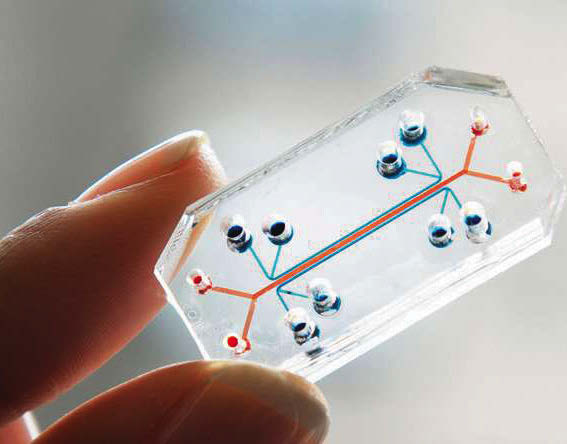
    One of the major challenges in the 3D printing of complex human tissue and complete organs has been the ability to 3D print blood vessels which can deliver oxygen and nutrients to all cells in an artificial organ or tissue implant.

    A team of bioengineers from Rice University and surgeons from the University of Pennsylvania have created an implant with an intricate network of blood vessels that points toward a future of growing replacement tissues and organs for transplantation.

    An Indian American assistant professor Pavan Atluri of surgery at Penn, led by assistant professor of bioengineering at Rice Jordan Miller were able to create a silicon construct with a complex network of blood vessels, using sugar, silicone and a 3-D printer, in which blood was able to flow normally to surgically attached, native blood vessels.

    While tissue engineers have, in the past, implanted engineered tissue and waited for the body to grow its own blood vessels to supply oxygen and nutrients to the tissue, Miller’s team instead opted fabricating the blood vessel network itself. This is one of the keys to As a result, there’s no need to wait for a native network to form, reducing the possibility that cells within the tissue die from a lack of oxygen.

    Detailing the research, Miller said, “We had a theory that maybe we shouldn’t be waiting. We wondered if there were a way to implant a 3D printed construct where we could connect host arteries directly to the construct and get perfusion immediately. In this study, we are taking the first step toward applying an analogy from transplant surgery to 3D printed constructs we make in the lab.”

    “What a surgeon needs in order to do transplant surgery isn’t just a mass of cells; the surgeon needs a vessel inlet and an outlet that can be directly connected to arteries and veins,”

    “They don’t yet look like the blood vessels found in organs, but they have some of the key features relevant for a transplant surgeon. We created a construct that has one inlet and one outlet, which are about 1 millimeter in diameter, and these main vessels branch into multiple smaller vessels, which are about 600 to 800 microns,”  added Miller. 

    Other authors on the study were Renganaden Sooppan, Jason Han, Patrick Dinh, Ann Gaffey, Chantel Venkataraman, Alen Trubelja, George Hung and Pavan Atluri, all from Penn.

    The research has been published in the journal Tissue Engineering Part C: Methods

  • SOON, CONTROL COMPUTERS WITH A SMILE, BLINK OR FROWN

    SOON, CONTROL COMPUTERS WITH A SMILE, BLINK OR FROWN

    WASHINGTON (TIP): Scientists are developing new technologies that will allow computers to recognise non-verbal commands like gestures, body language and facial expressions.

    For most people, using a computer is limited to clicking, typing, searching, and, thanks to Siri and similar software, verbal commands.”Compare that with how humans interact with each other, face to face -smiling, frowning, pointing, tone of voice, all lend richness to communication,” the researchers said. The new project titled Communication through gestures, expression and hared perception’ aims to evolutionise everyday interactions between humans and computers. “Current humancomputer interfaces are still everely limited,” said Pro essor Bruce Draper, from Colorado State University, who is leading the project. “First, they provide essentially one-way communication: users tell the computer what to do. This was fine when computers were crude tools, ut more and more computers re becoming our partners and ssistants in complex tasks. Communication with computers needs to become a two-way dialogue,” said Draper.

    The team has proposed cre ating a library of what are called Elementary Composable Ideas (ECIs). Like little packets of information recognizable to computers, each ECI contains information about a gesture or facial expression, derived from human users as well as a syntactical element that constrains how the information can be read.

    To achieve this, the researchers have set up a Microsoft Kinect interface. A human subject sits down at a table with blocks, pictures and other stimuli. The researchers try to communicate with and record the person’s natural gestures for concepts like `stop’ or,
    `huh?’.

    “We don’t want to say what gestures you should use,” Draper said. “We want people to come in and tell us what gestures are natural. Then, we take those gestures and say, OK, if that’s a natural gesture, how do we recognise it in real time, and what are its semantics? What roles does it play in the conversation? When do you use it?When do you not use it?” he said.

    According to the project proposal, the work could someday allow people to communicate more easily with computers in noisy settings, or when a person is deaf or hard of hearing, or speaks another language.

  • 6,000-YR-OLD ECO-HOME DISCOVERED

    6,000-YR-OLD ECO-HOME DISCOVERED

    LONDON (TIP): British archaeologists have discovered a 6,000year-old `eco-home’ close to the iconic prehistoric Stonehenge monument. The shelter -in a hollow left behind by a fallen tree -at Blick Mead was used over a 90-year period from 4336 BC, archaeologists believed. They said the minimalist property close to Stonehenge dates from between 4336BC to 4246BC, making it about 6,000 years old.

    Archaeologist David Jac ques, said: “They … used the stump of the tree, about three metres high, as a wall.”

    The finds are being shown to UN heritage experts, who are currently visiting Stonehenge, the ancient stone circle that has puzzled scholars for centuries. Archaeologists are concerned a planned 2.9 km tunnel being considered for the nearby A303 main road will damage the site.

    Discoveries have also shown stones were warmed up by the Mesolithic Period inhabitants and used in a hearth to emit heat in the earthy snug. Jacques, a senior research fellow at the University of Buckingham, has worked at Blick Mead for over a decade, making a number of discoveries about the inhabitants. The tree stump created a wall height similar to a “modern bungalow”.

    “They’ve draped probably animal skins or thatch around the basin and connect ed it to a post so it’s a very com fortable snug little place,” Jac ques was quoted as saying by the BBC. The wooden wall o the hollow was lined with flints and the large earthy pi created by the tree root lined with cobbles and decorated with “exotic” stones from out side the area. “There are some clever and sophisticated thi ngs going on, the hot stones that they put into this little type of alcove wouldn’t have been on fire,” said Jacques.

  • Scientists create the blackest material ever

    Scientists create the blackest material ever

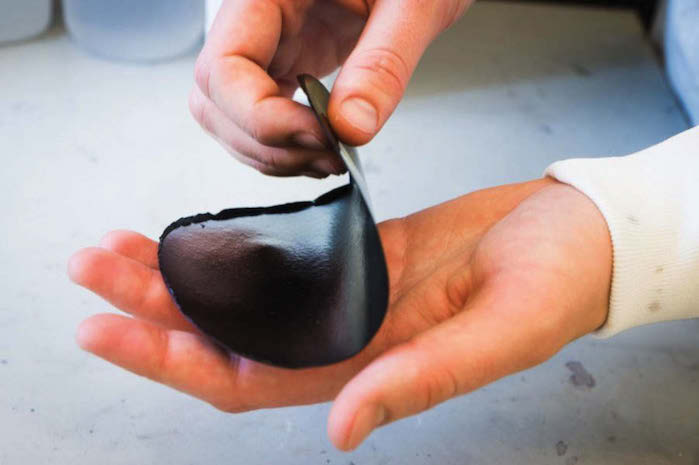
    Scientists have created the blackest material ever made, so dark that it can absorb almost all light that hits it. The researchers, who were inspired by a completely white beetle, hope that the superblack material could help develop better and more efficient solar panels or completely change the way that they are made.

    The material absorbs 99% of light, at all angles, making it 26% darker than carbon nanotubes, which are the darkest material before known. The ideal thing to absorb energy would be a dark material that “absorbs radiation and at all angles and polarisations”, the researchers write. That aim is probably impossible, but scientists still aspire to create ever darker materials. The study was published in Nature Nanotechnology.

    People who have seen record-breaking dark materials say doing so is “strange” and “alien” as it is so dark that the eye can’t comprehend it, and instead just sees an unending abyss.

  • Earthquakes can alter Earth’s crust, says study

    Earthquakes can alter Earth’s crust, says study

    WASHINGTON (TIP): Earthquakes can change elastic properties of the Earth’s crust up to 6,000 kilometres away, altering its ability to withstand stresses for up to a few weeks, a new study has found.

    The research demonstrates that the Earth is a dynamic and interconnected system, where one large earthquake can create a cascading sequence of events thousands of kilometres away, researchers said.

    “Earthquakes can fundamentally change the elastic properties of the Earth’s crust in regions up to 6,000 kilometres away, altering its ability to withstand stresses for a period of up to a few weeks,” said Kevin Chao, a postdoc in Massachusetts Institute of Technology’s Department of Earth, Atmospheric and Planetary Sciences and a member of a research team led by Andrew Delorey at Los Alamos National Laboratory.

    When a surface wave from an earthquake some way off passes through another fault region, it changes the balance between the frictional properties that keep the surfaces locked together, the elasticity that allows the crust to withstand strain, and the stress state that can cause it to fail, Chao said.

    “When surface waves pass through, all of these properties rearrange and change. If a fault with high stress is ready to fail, it will accumulate more stresses in the fault, meaning an earthquake could occur at any time,” Chao said.

  • Pocket-sized device to warn of asthma attacks

    Pocket-sized device to warn of asthma attacks

    WASHINGTON (TIP): Researchers have developed a pocket-sized device that plugs into a smartphone and can detect early warning signs of asthma attacks.

    The device, Wing, is a sensor that works with a companion app to accurately measure two important lung functions: FEV1 (how much air you can exhale in one second) and Peak Flow (how fast you can exhale).

    Using Wing consistently over time can help users visualise lung function, detect environmental and medication triggers that can cause symptoms, and know when to take action before asthma or related attacks occur, according to scientists at US-based Sparo Labs.

    Wing plugs in via the headphone jack and draws its power from the smartphone, so there is no charging or batteries necessary, ‘Gizmag’ reported. The accompanying app allows users to both monitor and collect readings, while also being able to share them securely with a physician through its cloud-based, HIPAA (Health Insurance Portability and Accountability Act) compliant system. Sparo Labs said Wing can help monitor and manage a variety of lung conditions other than asthma, including COPD (chronic obstructive pulmonary disease), CF (cyctic fibrosis) chronic bronchitis, emphysema, and pulmonary fibrosis.

  • Finally, Facebook to free users from Candy Crush game invites

    Finally, Facebook to free users from Candy Crush game invites

    The days of receiving continuous annoying Candy Crush invites may become a thing of the past, according to Facebook CEO Mark Zuckerberg. He has promised Facebook users freedom from the annoying Candy Crush game invites.

    Speaking at a Townhall Q&A session at the Indian Institute of Technology in Delhi, Mark Zuckerberg confirmed: “We are working on a solution to stop receiving Candy Crush requests.”

    “This is where these Q&As are really useful because I actually saw this question because it was the top voted question on the thread,” Zuckerberg said.

    “So I sent a message to the person who runs the team in charge of our developer platform and I said by the time I do this Town Hall Q&A, I think it would be good if we had a solution to this problem.”

    “We hadn’t prioritised shutting that down because we just had other priorities,” he said. “But if this is the top thing that people care about then we’ll prioritise that and we’ll do it. So we’re doing it.”

    Facebook has not yet announced how and when the changes will be made.

    As of now, users can turn off the notifications by going to their notification box and clicking ‘x’ next to the Candy Crush icon when they get a request. However, this only disables the notifications and their friends can still send the invites to play the game.

    This isn’t the only change that has been announced by Facebook lately. Last month, Facebook had come up with ‘reaction emoji’ in place of much demanded ‘Dislike Button.’ The emoji are still being tested in some markets and expected to roll out globally soon.


  • NOW, LEARN HOW TO GROW FOOD ON MARS

    NOW, LEARN HOW TO GROW FOOD ON MARS

    WASHINGTON (TIP): US scientists are helping students figure out how to farm on Mars, much like astronaut Mark Watney, played by Matt Damon, attempts in the critically acclaimed movie ‘The Martian’. Washington State University (WSU) physicist Michael Allen and and University of Idaho (UI) food scientist Helen Joyner teamed up to explore the challenge.

    Their five-page study guide was published at the National Centre for Case Study Teaching in the journal Science.

    Allen and Joyner have students identify potential challenges to producing crops indefinitely and develop criteria for selecting crops. Students then use a scoring system to select three optimal foods. In some 30 trial runs with students and teachers, “no two people have ever gotten the same answer”, said Allen. One particular challenge is that scientists have little idea of what Martian soil is actually like, he said. Probes have detected little carbon, the central element to life as we know it, or nitrogen, which is needed to make protein.

    Water is also likely to react with peroxides in the soil, bubbling off as gas. Like real astronauts, the tabletop astronauts are limited in what they can bring, so they won’t have a lot of tools to farm with. “You are starting with nothing. If I had to eat a single food for the rest of my life, could I do it?” Joyner said.But in a sense, farming and dining on the Red Planet is beside the point, Allen said. “I’m not teaching about growing food on Mars. I’m teaching about living with choices. I’m teaching about problem solving,” he said.

  • LED Lights to become the new Wi-Fi

    LED Lights to become the new Wi-Fi

    New technology created at Oregon State University can boost the bandwidth of Wi-Fi systems by about 10 times, using LED lights to transmit information.

    The technology uses ordinary LED room lights to transmit data around the house.

    The disadvantage of traditional Wi-Fi routers is that multiple devices in a space can interfere with each other. Li-Fi however can use multiple lights in a room without interference.

    As connected devices become more popular it is predicted that Wi-Fi networks will not be able to cope with demand.

    Li-Fi enables devices to use their in-built stand by LED lights to transmit data. The technology could be integrated with existing WiFi systems to reduce bandwidth problems in crowded locations, such as airport terminals or coffee shops, and in homes where several people have multiple WiFi devices.

    As LED lights become more popular, multiple companies are looking into using Li-Fi including, Disney Research and the Berlin-based, Fraunhofer Institute.

    The system can potentially send data at up to 100 megabits per second. Although some current WiFi systems have similar bandwidth, it has to be divided by the number of devices, so each user might be receiving just 5 to 10 megabits per second, whereas the hybrid system could deliver 50-100 megabits to each user.

    In a home where telephones, tablets, computers, gaming systems, and televisions may all be connected to the internet, increased bandwidth would eliminate problems like video streaming that stalls and buffers.

    The receivers are small photodiodes that cost less than a dollar each and could be connected through a USB port for current systems, or incorporated into the next generation of laptops, tablets, and smartphones.

    A provisional patent has been secured on the technology, and a paper was published in the 17th ACM International Conference on Modeling, Analysis and Simulation of Wireless and Mobile Systems. The research has been supported by the National Science Foundation.

  • App that hurts Android phones’ performance the most

    App that hurts Android phones’ performance the most

    There’s a new king of the apps that utterly destroy the performance on your phone: Snapchat.

    Online security company AVG Technologies analyzed data from over a million Android users, and found that Snapchat’s use of your camera, data, GPS, and more combined to make it the number one overall performance drain.

    The app dethroned previous performance drain heavyweights like Facebook and Spotify. And it definitely explains why Snapchat sucks your battery life down so fast.

    Though this analysis didn’t take iOS users into account, it’s probably not a rosy picture on that front either.

    avg-android-app-performance-report-q1-2015-19-638