Tag: Science & Technology

  • Google launches paid version of YouTube | Introducing YouTube Red

    Google launches paid version of YouTube | Introducing YouTube Red

    LOS ANGELES (TIP): YouTube on October 21 unveiled a new $10-a-month subscription plan in the US called Red that combines ad-free videos, new original series, movies from top YouTubers, and on-demand unlimited streaming music.

    Red builds on Google’s existing music streaming service by providing ad-free access to YouTube programming, along with features such as the ability to download videos to mobile devices and have music playing in the background while using other mobile apps.

    YouTube Red will expand to other major markets next year. For users of iPhones and other Apple Inc. devices, the service will cost $12.99 a month. The subscription price for Apple users is more expensive because Apple charges app makers a 30% fee on in-app purchases such as subscriptions, a Google spokeswoman said.

    “We’re realizing paid membership is a really hard business to be in,” said YouTube Chief Business Officer Robert Kyncl at a press event Wednesday at YouTube’s campus near the Los Angeles International Airport, a sprawling space where YouTube stars and mainstream artists frequently perform and make videos. To compete, Mr. Kyncl said the company focused on its exclusive content and the “most desired” features on subscription services, such as offline capabilities.

    YouTube’s new music app will also seek to differentiate itself from competitors. For instance, subscribers will have access not just to the same 30 million-song library that they do on Spotify and Apple Music, but also to an easily searchable database of each artist’s music videos, live performance videos, covers, remixes and other unofficial versions of their songs.

    The music app will be free to download and use, but subscribing will remove ads and unlock additional background and offline features. App users get a 14-day free YouTube Red membership without entering a credit card number, and can extend their trial for an additional 30 days after entering credit card information.

  • New 24 Month STEM OPT Extension Proposed – DHS | F1 Visa

    New 24 Month STEM OPT Extension Proposed – DHS | F1 Visa

    The New OPT Extension rule for STEM graduates has been approved by OMB on October 14th, 2015.

    The Proposed New STEM OPT Extension rule by DHS 2015 – Key Highlights

    • 24 Month STEM OPT Extension :  In the original proposed rule, STEM OPT Extension period was given for 17  months, now the proposed rule increased that 17 month OPT Extension period for STEM graduates to 24 months .
    • E-Verify Requirement :  Similar to the original past rule, the 24 month STEM OPT extension is only eligible for students who are employed by an E-Verified employer.
    • Addresses Court Ruling that Vacated the 2008 rule : The new proposed rule also mentions that it addresses the court decision that vacated the original 2008 rule on procedural grounds.
    • Cap – Gap Relief :  The previous cap-gap relief continues to be available in the new rule, similar to previous rule enabling students to automatically extend their F1 status and the employment authorization until October 1st, if they file H1B visa in a timely manner.
    • Accredited Schools :  The STEM OPT Extension will be available only to students with STEM degrees from accredited schools
    • 30 Day Comment Period :  All the speculations of 90 days, 60 days are gone. It clearly tells that the comment period would be 30 days.

    DHS HAS PROPOSED AN EXTENSION OF 24 MONTHS FROM THE EARLIER 17-MONTHS EXTENSION

    This 24-month extension would effectively replace the 17-month STEM OPT extension currently available to certain STEM students.

    As with the current 17-month STEM OPT extension, the proposed rule would authorize STEM OPT extensions only for students employed by employers enrolled in U.S. Citizenship and Immigration Services’ (USCIS’) E-Verify employment eligibility verification program.

    The proposal also includes the “Cap-Gap” relief first introduced in 2008 for any F-1 student with a timely filed H-1B petition and request for change of status.

    This Cap-Gap relief allows such students to automatically extend the duration of F-1 status and any current employment authorization until October 1 of the fiscal year for which such H-1B visa is being requested.

    Neither H-1B nor OPT is an immigrant visa—these programs are designed for people who want to return home eventually. But they’ve still been controversial, and some see H-1B especially as helping foreigners take American jobs.

    The number of international students in the U.S. hit a record high in 2014, with more than 880,000 students. As college students worry about choosing their majors and finding jobs for after graduation this fall, the stakes are especially high for international students.

    OPT lets international students with a U.S. student visa work for 12 months at jobs or paid internships that relate to what they studied without needing to apply for a work visa. What is OPT  – OPT stands for Optional Practical Training and it lets F1 students to work in US after their graduation ( or before) for 12 months. OPT is given to anyone who completes a degree like Bachelors, MS, MBA, or PhD from US Universities.  Also, if the degree you get falls under STEM ( Science, Technology, Engineering or Mathematics ) category, the F1 student can apply for an extension of the OPT.

    The new regulation is expected to re-authorize the STEM OPT program.  In addition, it is believed the new regulation could increase the STEM OPT extension period, expand the list of degree programs eligible for the benefit, and expand and clarify cap-gap protection for F-1 visa holders awaiting a change of status to H-1B.  The rule is also expected to require degree-granting schools to ensure that there is a direct relationship between an F-1 student’s degree and his or her proposed STEM OPT employment.

    Recent Changes to STEM OPT Program

    U.S. District Judge Ellen Segal Huvelleon (D.C.) on Wednesday, August 12, said the 2008 Department of Homeland Security rule that allows certain F-1 visa students with math and science-related degrees to have an additional 17 months of training in the U.S. is deficient because it wasn’t subjected to public notice and comment, but she allowed it to stay in place temporarily till Feb 2016..

    The lawsuit sought to prevent foreign students from having an opportunity to gain practical experience in the U.S. following their full-time course of study.

    The Court invalidated a 2008 U.S. Department of Homeland Security (DHS) rule which permits an F-1 student to receive up to a seventeen (17) month extension of their Optional Practical Training (OPT) on top of the twelve (12) months previously authorized (for a maximum of twenty-nine months), if their field of study is in a designated as a Science, Technology, Engineering or Math (STEM) field and the employer is registered in the E-Verify Program.

    The Court’s decision is based on the allegation that DHS did not lawfully issue the 2008 rule because DHS failed to provide the public with notice and an opportunity to comment in advance of issuing it – what is often commonly referred to as the normal “rule-making procedure”. DHS explained, at the time, that the STEM OPT extension was necessary because it would benefit the economy by reducing the disruption to U.S. high-tech employers that occurred when these F-1 STEM-degree graduates reached the end of their twelve-month OPT and their employers could not receive an H-1B classification for them to remain in the U.S. as highly-skilled workers because of the numerical limitations placed on H-1B visa numbers.

    Interestingly, the Court found that the substance of the rule itself was not unreasonable. The Court spoke specifically to the procedure DHS followed to issue the 2008 rule. In addition, the Court invalidated DHS’ later modifications of the rule that expanded the list of designated fields of study. The Court stayed its order until early-2016 to allow DHS to correct its procedural mistake. As many are aware, in November 2014, President Obama announced new policies and regulations to support U.S. high-skilled businesses and workers. Part of that initiative is directed at the development of regulations for notice and comment to expand the degree programs eligible for OPT and to extend the length and use of OPT while “ensuring that OPT employment is consistent with U.S. labor market protections to safeguard the interests of U.S. workers in related fields.”

    The “ripple effect” of the Court’s Order in Washtech is likely to be the impetus of the Administration to issue proposed regulations for notice and comment. The “soon to be issued” proposed regulations will likely be more expansive and will benefit foreign students as well as U.S. employers and all workers.

    STEM extension was created in 2008 to help F-1 students who were not selected in the H-1B lottery by allowing them to continue on OPT until they could try for the H-1B again the following year. The DHS estimated in 2008 that there were about 70,000 F-1 visa students on optional practical training, or OPT, and that one-third had earned degrees in a science, technology, engineering and math, or STEM, field, according to Judge Huvelle. And while the agency had not disclosed the current number of immigrants taking advantage of the extension, she had no doubt that vacating the rule would force “thousands of foreign students with work authorizations to scramble” to leave the country, she added, citing DHS’ opposition brief.“The court sees no way of immediately restoring the pre-2008 status quo without causing substantial hardship for foreign students and a major labor disruption for the technology sector,” the judge said. “As such, the court will order that the 2008 Rule — and its subsequent amendments — be vacated, but it will order that the vacatur be stayed.”Judge Huvelle did, however, disagree with the union’s argument there was not enough evidence to show that Congress was aware of DHS’ interpretation of F-1, saying in light of Congress’ broad delegation of authority to the agency to regulate the duration of a nonimmigrant’s stay and Congress’ acquiescence in DHS’ long-standing reading of F-1, the DHS’ interpretation was not unreasonable.

  • GIANT ALIEN ORBITING STAR FOUND NEAR MILKY WAY

    GIANT ALIEN ORBITING STAR FOUND NEAR MILKY WAY

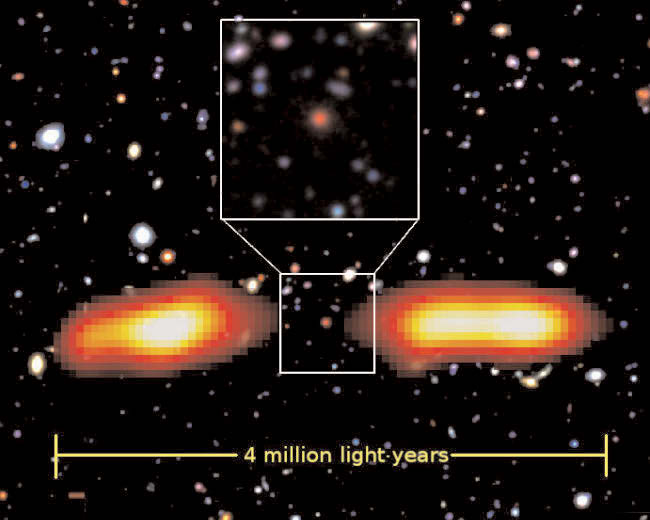
    A large cluster of objects in space look like something you would “expect an alien civilization to build”, astronomers have said.

    Jason Wright, an astronomer from Penn State University, is set to publish a report on the “bizarre” star system suggesting the objects could be a “swarm of megastructures”, according to a new report.

    “I was fascinated by how crazy it looked,” Wright told The Atlantic. “Aliens should always be the very last hypothesis you consider, but this looked like something you would expect an alien civilization to build.”

    The snappily named KIC 8462852 star lies just above the Milky Way between the constellations Cygnus and Lyra. It first attracted the attention of astronomers in 2009 when the Kepler Space Telescope identified it as a candidate for having orbiting Earth-like planets.

    But KIC 8462852 was emitting a stranger light pattern than any of the other stars in Kepler’s search for habitable planets.

    Kepler works by analysing light from distant places in the universe —looking for changes that take place when planets move in front of their stars. But the dip in starlight from KIC 8462852 doesn’t seem to be the normal pattern for a planet.

    Tabetha Boyajian, a postdoc at Yale told The Atlantic: “We’d never seen anything like this star. It was really weird. We thought it might be bad data or movement on the spacecraft, but everything checked out.”

    In 2011 the star was flagged up again by several members of Kepler’s “Planet Hunters” team – a group of ‘citizen scientists’ tasked with analysing the data from the 150,000 stars Kepler was watching.

    The analysts tagged the star as “interesting ” and “bizarre” because it was surrounded by a mass of matter in tight formation.

    This was consistent with the mass of debris that surrounds a young star just as it did with our sun before the planets formed. However this star wasn’t young and the debris must have been deposited around it fairly recently or it would have been clumped together by gravity – or swallowed by the star itself.

    Boyajian, who oversees the Planet Hunters project, recently published a paper looking at all the possible natural explanations for the objects and found all of them wanting except one – that another star had pulled a string of comets close to KIC 8462852. But even this would involve an incredibly improbable coincidence.

    That’s when Wright, the astronomer from Penn State University and his colleague Andrew Siemion, the Director of SETI (Search for Extra-Terrestrial Intelligence) got involved. Now the possibility that the objects were created by intelligent creatures is being taken very seriously by the team.

    As civilizations become more technologically advanced, they create new and better ways of collecting energy — with the end result being the harnessing of energy directly from their star. If the speculation about a megastructure being placed around the star system is correct, it could for instance be a huge set of solar panels placed around the star, scientists say.

    The three astronomers want to point a radio dish at the star to look for wavelengths associated with technological civilizations. And the first observations could be ready to take place as early as January, with follow-up observations potentially coming even quicker.

    “If things go really well, the follow-up could happen sooner,” Wright told The Atlantic. “If we saw something exciting… we’d be asking to go on right away.”

  • Facebook launches ‘3D Touch’ for faster postings

    Facebook launches ‘3D Touch’ for faster postings

    The Facebook social networking site has launched a new app that will help you take or upload photos and videos or update your status in a jiffy.

    Called “3D Touch”, the new application allows iPhone 6s and 6s Plus users to hard press the app icon that will offer a handful of shortcuts, technology website TechCrunch reported.

    “The addition is one of the more highly anticipated rollouts of third-party support for ‘3D Touch’, a new user interaction that’s something of a spinoff of the similar ‘Force Touch’ option on Apple Watch,” the report added.

    “3D Touch” is another gesture you can use with your device for faster access to apps.

    Facebook-owned Instagram was among the first to offer “3D Touch” support.

    WhatsApp, Messenger, Moments, Groups and other popular Facebook applications are yet to support the new interaction.

  • HOW GENES INFLUENCE WOMEN’S FIGURES, DIABETES RISK

    HOW GENES INFLUENCE WOMEN’S FIGURES, DIABETES RISK

    Now you know what conditions a woman’s body shape and how susceptible she is to diabetes: A genetic variant! This variant near the KLF14 gene regulates hundreds of genes that govern how and where women’s bodies store fat, which affects their risk of developing Type 2 diabetes, according to research presented at the American Society of Human Genetics (ASHG) 2015 Annual Meeting in Baltimore.

    Specifically, different ’alleles’ or ’versions’ of the variant cause fat-storing cells to function differently. At the whole-body level, these differences between alleles are not associated with changes to overall weight or body mass index, but they do affect women’s hip circumference, explained lead author Kerrin Small of King’s College London.

    “Previous studies have shown that on average, women who carry fat in their hips — those with a ‘pear-shaped’ body type –are significantly less likely to develop diabetes than those with smaller hips. Looking at the variant we studied, large-scale genome-wide association studies show that women with one allele tend to have larger hips than women with the other one, which would have a protective effect against diabetes,” she said.

    These findings have important implications as researchers move toward more personalised approaches to disease detection and treatment, Small said, noting that if they can identify the genes and protein products involved in diabetes risk, even for a subset of people, we may be able to develop effective treatment and prevention approaches tailored to people in that group.

    The researchers have found that women have higher baseline levels of the KLF14 mRNA transcript, a precursor to the KLF14 protein, than men. This suggests the possibility of a threshold effect, in which men rarely or never attain the levels necessary to cause an increased risk of diabetes. Another hypothesis is that a different, sex-specific protein may interact with the KLF14 protein, enhancing or diminishing its effect in men or women.

  • Mars pebbles carried for miles

    Mars pebbles carried for miles

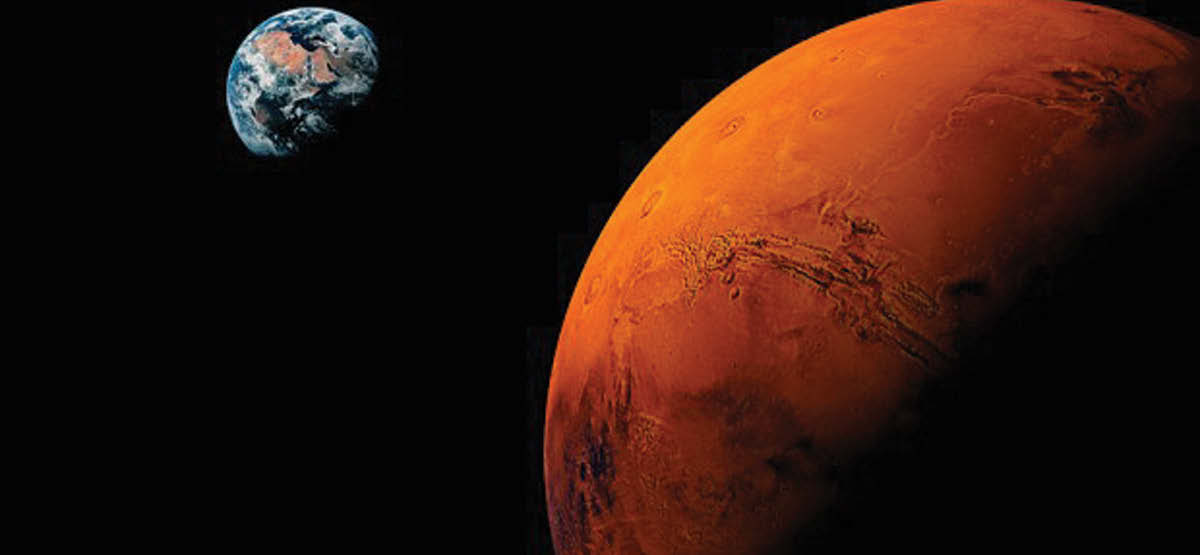
    WASHINGTON (TIP): Martian pebbles travelled roughly 50 kilometres down a riverbed from their source, according to a new study that provides evidence Mars once had an extensive river system, conditions that could support life.

    While recent evidence suggests that Mars may harbour a tiny amount of liquid water, it exists today as a largely cold and arid planet.

    Three billion years ago, however, the situation may have been much different, researchers said.

    In 2012 the Mars Curiosity rover beamed images back to Earth containing some of the most concrete evidence that water once flowed in abundance on the planet.

    Small, remarkably round and smooth pebbles suggested that an ancient riverbed had once carried these rocks and abraded them as they travelled.

    Douglas Jerolmack, from the University of Pennsylvania, and Gabor Domokos, of Budapest University of Technology and Economics, and colleagues report the first-ever method to quantitatively estimate the transport distance of river pebbles from their shape alone.

    The researchers’ estimate that the Martian pebbles travelled roughly 50 kilometres from their source, providing additional evidence for the idea that Mars once had an extensive river system, conditions that could support life.

    Determining how far pebbles have travelled could also be useful for studies on Earth, for example in identifying sources of river-transported resources, such as gold.

    “An object’s shape can itself tell you a lot. If you go to the beach, natural history is written underneath your feet. We started to understand that there is a code that you can read to begin to understand that history,” said Domokos.

    Rocks flowing in rivers evolve in shape from being abraded against other rocks in the riverbed, gradually losing mass and taking on a smoother, rounder shape.

    Domokos’ work showed that, when two particles of similar size bang together, the way in which they influence each other’s shape can be reduced to a purely geometric problem, regardless of the rock’s material or the environment in which it is moving.

    The research team went to the lab to test this theory, rolling limestone fragments in a drum and periodically pausing to record their shape changes and mass loss.

    The pattern of the rocks’ shape change closely followed the curve established by the mathematical theory.

    Next the researchers went to a mountain river in Puerto Rico.

    Plotting the data, they again found a trend between shape evolution and mass loss that agreed with the geometric model Domokos had developed.

    Applying their calculations to the basalt material found on Mars, with a correction that factored in the reduced Martian gravity, they arrived at the calculation that the pebbles had travelled an estimated 50 kilometres, or about 30 miles from their source.

  • Soon, a tree-planting drone to counter deforestation

    A British engineering firm is seeking international backing to develop the first automated tree-planting drones in order to help counter deforestation across the world. BioCarbon Engineering, an Oxford-based start-up company , believes drones may soon have the potential to plant around one billion trees per year, according to Horticulture Week.

    Addressing a recent UN Solutions Summit in New York, company engineer Susan Graham said the world is currently experiencing a net loss of six billion trees every year.

    Should the plan go ahead, the specially developed fixed -wing drones will take detailed images of a particular area to tell the company about its nutrients, biodiversity and topology .

    “We then churn that data through an algorithm to generate a precision planting pattern, which we upload into our quadcopter,” said Graham.

    “This flies at 2-3m above the ground and fires a biodegradable seed pod at each position, which contains all the nutrients for healthy tree growth.”

  • First nano-satellite functional: NASA

    WASHINGTON (TIP): A miniature satellite sent in the space aboard an Atlas V rocket from the Vandenberg Air Force Base in California on October 8 is working fine, Nasa has announced.

    The Optical Communications and Sensor Demonstration (OCSD) CubeSat spacecraft is in orbit and operational, said Nasa and The Aerospace Corporation of El Segundo, California.

    CubeSats are going to play a key role in exploration, technology demonstration, scientific research and educational investigations.

    They provide a low-cost platform for Nasa missions, including planetary space exploration, Earth observations, fundamental Earth and space science.

    “Technology demonstration missions like OCSD are driving exploration,” said Steve Jurczyk, associate administrator for the Space Technology Mission Directorate (STMD) at NASA headquarters in Washington, DC.

    “By improving the communication capability of small spacecraft to support data-intensive science missions, OCSD will advance the potential to become a more viable option for mission planners,” he said in a statement.

    CubeSats also allow an inexpensive means to engage students in all phases of satellite development, operation and exploitation through real-world, hands-on research and development experience.

  • Apple loses patent lawsuit over A7, A8 CPU chips, faces $862M Fine

    Apple loses patent lawsuit over A7, A8 CPU chips, faces $862M Fine

    Apple faces a hefty legal bill after a jury found it guilty of using technology owned by a US university without permission. The licensing arm of the University of Wisconsin claims Apple’s A7 chip infringes on a patent it filed in 1998.

    Apple denied the accusations and argued that the patent is invalid, Reuters reported. It had previously tried to convince the US Patent and Trademark Office to review the patent’s validity, but in April the agency rejected this bid.

    According to Reuters, the iPhone maker could face up to $862 million in damages for infringing on a patent that improves chip efficiency.

    The University’s non-profit patent management body, Wisconsin Alumni Research Foundation (WARF), sued Apple in January 2014, claiming Cupertino infringed on WARF patents with its A7, A8, and A8X processors, which are found in the iPhone 5s, 6, and 6 Plus, and the iPad.

    The court must decide how much Apple must pay.

    WARF last month filed a second lawsuit against Cupertino over its newer A9 and A9X chips, which are in the next-gen iPhone 6s, 6s Plus, and iPad Pro.

  • @twitter to cut 8% of its workforce in an organizational restructuring

    @twitter to cut 8% of its workforce in an organizational restructuring

     Twitter announced today, Oct 13, that it was laying off some of its work force, to cut costs while it tries to find ways to attract new users.

    The cuts are one of the first major moves by Jack Dorsey, the Twitter co-founder who was named chief executive of the social media company last week. The social network has announced that it’s axing up to 336 jobs, or about 8 percent of its total headcount.

    Dorsey argues that the move is necessary for a “streamlined” roadmap where Twitter focuses on fewer but bigger features, such as Moments. Most of the cuts will affect the engineering division, he says, since the company believes that a “smaller and nimbler” coding group would be more effective.

    Twitter also said that revenue and adjusted profit for the third quarter would be at or above its previous forecasts. The high end of the company’s previous forecast predicted revenue of $560 million and adjusted earnings of $115 million.

    Twitter said it would provide “generous” exit packages to those who lose their jobs. It intends to take a pretax charge of $5 million to $15 million in the fourth quarter in connection with the layoffs.

  • DHS proposes New STEM OPT Extension Rule | F-1 Visa Update | Complete Update

    DHS proposes New STEM OPT Extension Rule | F-1 Visa Update | Complete Update

    There has been so much of news and confusion around the 17 month OPT STEM extension cancellation by US District court.

    Finally, The Department of Homeland Security (DHS) sent its proposed regulation on the STEM Optional Practical Training (OPT) program to the Office of Management and Budget (OMB) early October 2015.

    A notice of proposed rulemaking (NPRM) is expected in the coming days or weeks, followed by a comment period of at least 30 days.

    UPDATE: F-1 Visa : OPT STEM EXTENSION INCREASE TO 24 Months : DHS PROPOSES NEW RULE- READ NOW

    Although the contents of the proposed regulation are unknown at this time, the regulation is expected to

    1) re-authorize the STEM OPT program, and

    2) provide additional benefits in line with the President’s executive action strategy released last Fall which may include a longer STEM OPT period and an expanded list of eligible degree programs.

    Neither H-1B nor OPT is an immigrant visa—these programs are designed for people who want to return home eventually. But they’ve still been controversial, and some see H-1B especially as helping foreigners take American jobs.

    The number of international students in the U.S. hit a record high in 2014, with more than 880,000 students. As college students worry about choosing their majors and finding jobs for after graduation this fall, the stakes are especially high for international students.

    OPT lets international students with a U.S. student visa work for 12 months at jobs or paid internships that relate to what they studied without needing to apply for a work visa. What is OPT  – OPT stands for Optional Practical Training and it lets F1 students to work in US after their graduation ( or before) for 12 months. OPT is given to anyone who completes a degree like Bachelors, MS, MBA, or PhD from US Universities.  Also, if the degree you get falls under STEM ( Science, Technology, Engineering or Mathematics ) category, the F1 student can apply for a 17 month extension of the OPT. This extension rule was passed by USCIS in April of 2008.

    The new regulation is expected to re-authorize the STEM OPT program.  In addition, it is believed the new regulation could increase the STEM OPT extension period, expand the list of degree programs eligible for the benefit, and expand and clarify cap-gap protection for F-1 visa holders awaiting a change of status to H-1B.  The rule is also expected to require degree-granting schools to ensure that there is a direct relationship between an F-1 student’s degree and his or her proposed STEM OPT employment.

    Timeline of Proposed Regulation – DHS proposed news regulation on the STEM Optional Practical Training (OPT) program just in time – Big Relief for International Students on F1 Visa

    Working backwards from the required effective date of February 12, 2016, then the first timeframe to take account of is the mandatory 60-day delay between the publication of the final rule and the effective date. Because the rule is a “significant rule” within the meaning of Executive Order 12866, a minimum 60-day delay between final publication and effective date is imposed. As such, to be effective on February 12, 2016, when the court’s order invalidates the STEM OPT rule, the final replacement rule must be published no later than December 14, 2015.

    To publish a final rule by December 14, a proposed rule should be published at least 60 days before that date. The 60-day timeframe is set by the APA, which requires that any proposed rule be released with at least 30 days for comment from the public. After the comment period, the agency will need time to evaluate and analyze the comments – at least 30 days – before publishing the final rule. So, the draft rule should be published no later than October 15.

    This deadline has been met by the DHS.

    OMB has now has a maximum of 90-120 days to review the proposed rule.  OMB will then either recommend changes to the rule or clear the rule for publication. Once the rule is published, individuals and organizations will have an opportunity to provide feedback during a comment period.  Comment periods typically last between 30-60 days.

    Recent Changes to STEM OPT Program

    U.S. District Judge Ellen Segal Huvelleon (D.C.) on Wednesday, August 12, said the 2008 Department of Homeland Security rule that allows certain F-1 visa students with math and science-related degrees to have an additional 17 months of training in the U.S. is deficient because it wasn’t subjected to public notice and comment, but she allowed it to stay in place temporarily till Feb 2016..

    The lawsuit sought to prevent foreign students from having an opportunity to gain practical experience in the U.S. following their full-time course of study.

    The Court invalidated a 2008 U.S. Department of Homeland Security (DHS) rule which permits an F-1 student to receive up to a seventeen (17) month extension of their Optional Practical Training (OPT) on top of the twelve (12) months previously authorized (for a maximum of twenty-nine months), if their field of study is in a designated as a Science, Technology, Engineering or Math (STEM) field and the employer is registered in the E-Verify Program.

    The Court’s decision is based on the allegation that DHS did not lawfully issue the 2008 rule because DHS failed to provide the public with notice and an opportunity to comment in advance of issuing it – what is often commonly referred to as the normal “rule-making procedure”. DHS explained, at the time, that the STEM OPT extension was necessary because it would benefit the economy by reducing the disruption to U.S. high-tech employers that occurred when these F-1 STEM-degree graduates reached the end of their twelve-month OPT and their employers could not receive an H-1B classification for them to remain in the U.S. as highly-skilled workers because of the numerical limitations placed on H-1B visa numbers.

    Interestingly, the Court found that the substance of the rule itself was not unreasonable. The Court spoke specifically to the procedure DHS followed to issue the 2008 rule. In addition, the Court invalidated DHS’ later modifications of the rule that expanded the list of designated fields of study. The Court stayed its order until early-2016 to allow DHS to correct its procedural mistake. As many are aware, in November 2014, President Obama announced new policies and regulations to support U.S. high-skilled businesses and workers. Part of that initiative is directed at the development of regulations for notice and comment to expand the degree programs eligible for OPT and to extend the length and use of OPT while “ensuring that OPT employment is consistent with U.S. labor market protections to safeguard the interests of U.S. workers in related fields.”

    The “ripple effect” of the Court’s Order in Washtech is likely to be the impetus of the Administration to issue proposed regulations for notice and comment. The “soon to be issued” proposed regulations will likely be more expansive and will benefit foreign students as well as U.S. employers and all workers.

    STEM extension was created in 2008 to help F-1 students who were not selected in the H-1B lottery by allowing them to continue on OPT until they could try for the H-1B again the following year. The DHS estimated in 2008 that there were about 70,000 F-1 visa students on optional practical training, or OPT, and that one-third had earned degrees in a science, technology, engineering and math, or STEM, field, according to Judge Huvelle. And while the agency had not disclosed the current number of immigrants taking advantage of the extension, she had no doubt that vacating the rule would force “thousands of foreign students with work authorizations to scramble” to leave the country, she added, citing DHS’ opposition brief.“The court sees no way of immediately restoring the pre-2008 status quo without causing substantial hardship for foreign students and a major labor disruption for the technology sector,” the judge said. “As such, the court will order that the 2008 Rule — and its subsequent amendments — be vacated, but it will order that the vacatur be stayed.”Judge Huvelle did, however, disagree with the union’s argument there was not enough evidence to show that Congress was aware of DHS’ interpretation of F-1, saying in light of Congress’ broad delegation of authority to the agency to regulate the duration of a nonimmigrant’s stay and Congress’ acquiescence in DHS’ long-standing reading of F-1, the DHS’ interpretation was not unreasonable.

  • Nasa captures Pluto’s moon Charon in stunning detail

    Nasa captures Pluto’s moon Charon in stunning detail

    Nasa’s New Horizons spacecraft has returned the best colour and the highest resolution images yet of Pluto’s largest moon, Charon, which show a surprisingly complex and violent history.

    The image combines blue, red and infrared images taken by the spacecraft’s Ralph/Multispectral Visual Imaging Camera (MVIC); the colours are processed to best highlight the variation of surface properties across Charon.

    Charon’s colour palette is not as diverse as Pluto’s; most striking is the reddish north polar region, informally named Mordor Macula, Nasa said.

    Charon is 1,214 kilometres across. The image resolves details as small as 2.9 kilometers.

    At half the diameter of Pluto, Charon is the largest satellite relative to its planet in the solar system.

    Charon’s cratered uplands at the top are broken by series of canyons, and replaced on the bottom by the rolling plains of the informally named Vulcan Planum.

    The scene covers Charon’s width of 1,214 kilometres and resolves details as small as 0.8 kilometres.

    Another image shows the details of a belt of fractures and canyons just north of the moon’s equator.

    This great canyon system stretches more than 1,600 kilometres across the entire face of Charon and likely around onto Charon’s far side.

  • NASA TESTS HEAT SHIELD FOR FUTURE MARS MISSIONS

    NASA TESTS HEAT SHIELD FOR FUTURE MARS MISSIONS

    WASHINGTON (TIP): Researchers at Nasa have successfully tested an umbrella-like heat shield made of carbon fabric that could protect future Mars exploration vehicles from extreme heat when entering the red planet’s atmosphere.

    As Nasa missions to Mars progress with science and complex human exploration missions, spacecrafts will require larger heat shields to protect against the extreme heat of entering a planet’s atmosphere and decelerating at a safe altitude in the thin Martian atmosphere, the US space agency said.

    Today’s rockets have limited space to accommodate spacecraft and their heat shields.

    However, engineers at Nasa’s Ames Research Centre may have a solution —Adaptive Deployable Entry and Placement Technology (ADEPT).

    ADEPT is a mechanically-deployable heat shield concept using carbon fabric— a flexible heat shield that expands to “open” like an umbrella.

    Ames’ engineers have successfully completed heating simulation testing of an ADEPT model under conditions akin to entering the Martian atmosphere.

    The test used a blast of hot air from a 21 inches diameter nozzle to simulate a bow shock wave in front of a 2 m wide ADEPT shield, which was attached to a water—cooled support arm.

    During the tests, temperatures on the shield reached 1,700 degrees Celsius while bluish streaks streamed away as a special resin—infused protective coating ablated from the stitching.

    Extensive instrumentation and imaging products from the test will be used to validate how materials respond to the testing conditions, and thermo—structural design codes.

    The testing approach demonstrated with this test will enable future, more extensive testing of the ADEPT configuration — towards possible future use of the system on missions bigger than anything NASA’s ever flown.

    The ADEPT project is led by Nasa’s Ames Research Centre, with contributions from multiple other Nasa centres.

  • TWITTER ROLLS MOMENTS, A FEATURE THAT SHOWCASES DAY’S BEST TWEETS

    TWITTER ROLLS MOMENTS, A FEATURE THAT SHOWCASES DAY’S BEST TWEETS

    Twitter Inc rolled out its much-anticipated “Project Lightning” on Tuesday, a feature that shows users the site’s best tweets and content as curated by a Twitter team.

    The feature, introduced a day after Twitter announced interim Chief Executive Officer Jack Dorsey would stay on permanently, is one of a slate of projects under Dorsey that aims to ramp up Twitter’s waning user engagement and growth.

    When users open the Twitter app on their mobile phones, they will see a lightening bolt tab that opens up a list of “moments.” An unknown number of employees curate the day’s best tweets – such as interactions between celebrities or the most shared news stories and photos – so that users can find them even if they do not follow certain accounts.

    Twitter also organizes moments by category, such as sports or entertainment.

    The microblogging service has long been criticized for being confusing to use and difficult for users to find popular content. Although more than 1 billion people have tried Twitter, the site has 316 million users worldwide, compared with Facebook Inc’s 1.5 billion and Instagram’s 400 million.

    Since Dorsey, widely heralded as a product visionary, assumed the interim chief executive officer job in July, Twitter has rolled out a number of updates and features that make it easier for users to locate the most interesting content.For example, Twitter recently introduced a “buy now” button that allows users to make purchases directly through Twitter.

    “Our work forward is to make Twitter easy to understand by anyone in the world, and give more utility to the people who love to use it daily,” Dorsey tweeted Monday after announcing he would serve as the company’s permanent CEO.

    Investors and analysts cheered Dorsey’s return, with shares rising as much as 6 percent on Monday. They have pointed to increased product rollouts since he took the helm in July – specifically citing Project Lightening – and said that what Twitter needs most to succeed is a regular slate of new features to simplify the site and keep users engaged.

  • Experts to hold space drill to save Earth

    Experts to hold space drill to save Earth

    Scientists are to send two spacecraft to knock an asteroid off course, as part of a test to block such rocks in future, which may threaten humanity.

    The joint US-European Aida (Asteroid Deflection & Assessment) mission will send a small spacecraft to crash into the egg-shaped rock, known as Didymoon.Though the asteroid is too small to pose any threat, the mission will be an important test if we do eventually come at risk of civilisation being wiped out by a space rock.

    The missions are set to be launched in October 2020 and are expected to reach Didymoon by May 2022. Nasa will send one craft in the mission, known as Double Asteroid Redirection Test (Dart), which will fire a probe to smack into the rock and see if it can throw it off course.

    Besides the nudging probe, scientists will send another spacecraft -the Europe an Space Agency’s Asteroid Impact Mission (Aim)–that will fly around Didymoon watching the effect of the Dart mission, as well as measuring the asteroid’s mass and density , and putting a small lander on the asteroid itself to look at its insides.

    “To protect Earth from potentially hazardous impacts, we need to understand asteroids much better–what they are made of, their structure, origins and how they respond to collisions,” said Dr Patrick Michel, lead investigator for the European Space Agency half of the mission.

    “Aida will be the first mission to study an asteroid bi nary system, as well as the first to test whether we can deflect an asteroid through an impact with a spacecraft.The European part of the mission will study the structure of Didymoon and the orbit and rotation of the binary system, providing clues to its origin and evolution,” Michel said. “Asteroids represent different stages in the rocky road to planetary formation, so they offer fascinating snapshots into the solar system’s history ,” he added.

  • UV light-enabled catheter to fix holes in heart without operation

    UV light-enabled catheter to fix holes in heart without operation

    WASHINGTON (TIP): Researchers have designed a specialised catheter for fixing holes in the heart using a biodegradable adhesive and patch, eliminating the need for open heart surgery.

    Pedro delNido, contributing author on the study, said, “This method also avoids suturing into the heart tissue, because we’re just gluing something to it,” said delNido.

    Catheterisations are preferable to open heart surgery because they don’t require stopping the heart, putting the patient on bypass, and cutting into the heart.

    Their newly designed catheter device utilises UV light technology, and can be used to place the patch in a beating heart. The catheter is inserted through a vein in the neck or groin and directed to the defect within the heart.

    Once in place, the clinician opens two positioning balloons: one around the front end of the catheter, and one on the other side of the heart wall.

    The clinician then deploys the patch and turns on the catheter’s UV light. The light reflects off of the balloon’s interior and activates the patch’s adhesive coating. As the glue cures, pressure from the positioning balloons on either side of the patch help secure it in place. Finally, both balloons are deflated and the catheter is withdrawn.

    Over time, normal tissue growth resumes.

  • Two Indian-Americans reach top ten in NASA’s 3-D Space Contest

    Two Indian-Americans reach top ten in NASA’s 3-D Space Contest

    Two Indian-American teenagers —  Rajan Vivek from Arizona and Prasanna Krishnamoorthy from Delaware featured in the prestigious 3-D Space Container Challenge held by NASA (National Aeronautics and Space Administration). The challenge asked young minds to make an innovative container that will make life of astronauts easier while they are in space. NASA has received number of innovative and revolutionary designs which will be used in upcoming Mars exploration project scheduled for 2017 and 2020.

    However, both Rajan Vivek from Arizona and Prasanna Krishnamoorthy from Delaware figured among 10 finalists of NASA’s national 3-D Space Container Challenge, however, failed to win the prestigious competition which went to Ryan Beam of California.

    Mr Beam’s ClipCatch design will allow astronauts on the space station to clip their fingernails without worrying about the clippings floating away and potentially becoming harmful debris.

    Mr Rajan’s Hydroponic Plant Box container tackles the challenge of containing water in a microgravity environment while still allowing plants to grow roots in it.

    Hydroponics, growing plants without soil, would be very effective in spacecrafts because it requires less space and plants grow faster and stronger, NASA said.

    Mr Prasanna on the other hand developed a Collapsible Container.

    In order to use the limited space on international Space Station, the Collapsible Container can expand and compress to perfectly fit its contents. When empty, it can compress fully for easy storage, NASA said.

    “The simplest tasks on Earth can be quite challenging, and even dangerous, in space,” said Niki Werkheiser, NASA’s In-Space Manufacturing project manager.

    “Being able to 3-D print technical parts, as well as the lifestyle items that we use every day will not only help enable deep space travel, but can make the trip more pleasant for astronauts,” he said.

    NASA, in partnership with the American Society of Mechanical Engineers Foundation, which managed the competition, announced the winners of the Future Engineers 3-D Space Container Challenge yesterday.

    The winning designs focused on making life in space a little more comfortable for astronauts, NASA said. The 3-D Space Container Challenge asked students to design models of containers that could be used in space.

    They could range from simple containers that could be used to hold collected rocks on Mars or an astronaut’s food, to advanced containers for experiments that study fruit flies.

    Students across the US spent part of their summer using 3-D modelling software to design containers that could be 3-D printed, with the ultimate goal of advancing human space exploration on the International Space Station, Mars and beyond.

  • SIGNS OF LIQUID WATER FOUND ON SURFACE OF MARS, SCIENTISTS SAY

    SIGNS OF LIQUID WATER FOUND ON SURFACE OF MARS, SCIENTISTS SAY

    Despite its reputation as a forebodingly dusty, desolate and lifeless place, Mars seems to be a little bit wet even today.

    Scientists reported definitive signs of liquid water on the surface of present-day Mars, a finding that will fuel speculation that life, if it ever arose there, could persist to now.

    “This, I think, gives a focus of where we should look more closely,” said Alfred S McEwen, a professor of planetary geology at the University of Arizona and the principal investigator of images from a high-resolution camera on Nasa’s Mars Reconnaissance Orbiter.

    In a paper published in the journal Nature Geoscience, McEwen and other scientists identified waterlogged molecules — salts of a type known as perchlorates — in readings from orbit.

    “That’s a direct detection of water in the form of hydration of salts,” McEwen said. “There pretty much has to have been liquid water recently present to produce the hydrated salt.”

    By “recently,” McEwen said he meant “days, something of that order.”

    Although young Mars was inundated by rivers, lakes and maybe even an ocean a few billion years ago, the modern moisture is modest. Scientists have long known that large amounts of water remain — but frozen solid in the polar ice caps. There have been fleeting hints of recent liquid water, like fresh-looking gullies, but none have proved convincing.

    In 2011, McEwen and colleagues discovered in photographs from the Mars Reconnaissance Orbiter dark streaks descending along slopes of craters, canyons and mountains. The streaks lengthened during summer, faded as temperatures cooled, then reappeared the next year.

    They named the streaks recurrent slope linae, or RSLs, and many thousands of them have now been spotted. “It’s really surprisingly extensive,” McEwen said.

    Scientists suspected that water played a critical role in the phenomenon, perhaps similar to the way concrete darkens when wet, with no change in the shape of the surface, and returns to its original color when dry.

  • PLASTIC EATING WORMS COULD SAVE THE WORLD

    PLASTIC EATING WORMS COULD SAVE THE WORLD

    A tiny worm, which is actually the larva of a beetle, eats Styrofoam and other forms of polystyrene, a Stanford University researcher has found. Microorganisms in the worms’ guts biodegrade the plastic in the process. This first ever finding holds out hope for a world that is being swamped by plastic.

    These findings, published studies in Environmental Science and Technology, are co-authored by Wei-Min Wu, a senior research engineer in the Department of Civil and Environmental Engineering at Stanford. “Our findings have opened a new door to solve the global plastic pollution problem,” Wu said.

    The world produced nearly 300 million tonnes of plastic according to 2013 data published by the Worldwatch Institute. In Europe, 26 percent, or 6.6 million tons, of the post-consumer plastic produced in 2012 was recycled, while 36 percent was incinerated for energy generation. The remaining 38 percent of post-consumer plastics in Europe went to landfills. In the United States, only 9 percent of post-consumer plastic (2.8 million tons) was recycled in 2012. The remaining 32 million tons was discarded.

    The new discovery is the first to provide detailed evidence of bacterial degradation of plastic in an animal’s gut. Understanding how bacteria within mealworms carry out this feat could potentially enable new options for safe management of plastic waste.

    “There’s a possibility of really important research coming out of bizarre places,” said Craig Criddle, a professor of civil and environmental engineering who supervises plastics research by Wu and others at Stanford. “Sometimes, science surprises us. This is a shock.” In the lab, 100 mealworms ate between 34 and 39 milligrams of Styrofoam – about the weight of a small pill – per day. The worms converted about half of the Styrofoam into carbon dioxide, as they would with any food source.

    Within 24 hours, they excreted the bulk of the remaining plastic as biodegraded fragments that look similar to tiny rabbit droppings. Mealworms fed a steady diet of Styrofoam were as healthy as those eating a normal diet, Wu said, and their waste appeared to be safe to use as soil for crops.

    Researchers, including Wu, have shown in earlier research that waxworms, the larvae of Indian mealmoths, have microorganisms in their guts that can biodegrade polyethylene, a plastic used in filmy products such as trash bags. The new research on mealworms is significant, however, because Styrofoam was thought to have been non-biodegradable and more problematic for the environment.

    Researchers led by Criddle, a senior fellow at the Stanford Woods Institute for the Environment, are collaborating on ongoing studies with the project leader and papers’ lead author, Jun Yang of Beihang University in China, and other Chinese researchers. Together, they plan to study whether microorganisms within mealworms and other insects can biodegrade plastics such as polypropylene (used in products ranging from textiles to automotive components), microbeads (tiny bits used as exfoliants) and bioplastics (derived from renewable biomass sources such as corn or biogas methane).

    As part of a “cradle-to-cradle” approach, the researchers will explore the fate of these materials when consumed by small animals, which are, in turn, consumed by other animals.

  • MUSHROOMS MAY BE KEY TO LONG-LASTING BATTERIES

    MUSHROOMS MAY BE KEY TO LONG-LASTING BATTERIES

    WASHINGTON (TIP) : Portabella mushrooms may be key to making efficient and longer-lasting batteries that could power cellphones and electric vehicles, scientists say.

    United States researchers at the University of California have created a new type of lithium-ion battery anode using portabella mushrooms, which are inexpensive, environmentally friendly and easy to produce.

    Engineers were drawn to using mushrooms as a form of biomass because past research has established they are highly porous, meaning they have a lot of small spaces for liquid or air to pass through.

    That porosity is important for batteries because it creates more space for the storage and transfer of energy , a critical component to improving battery performance.

    In addition, the high potassium salt concentration in mushrooms allows for increased electrolyte-active material over time by activating more pores, gradually increasing its capacity.

  • ‘ELECTROSMOG’ TO HELP FIGHT REAL SMOG

    ‘ELECTROSMOG’ TO HELP FIGHT REAL SMOG

    We are surrounded by “electrosmog” – invisible clouds of electromagnetic radiation that enable mobile and Wi-Fi networks. If captured, it can power small devices. Now, a former British science minister Paul Drayson, a peer in the UK’s House of Lords, has developed an efficient energy-harvesting system, called Freevolt, which uses an antenna to draw power from multiple wavebands of the electromagnetic spectrum while fitting into a unit the size of a credit card. “We can’t power a mobile phone, but we’ve found that the ambient energy density is sufficient to power sensors, beacons and some wearab les,” Drayson says.

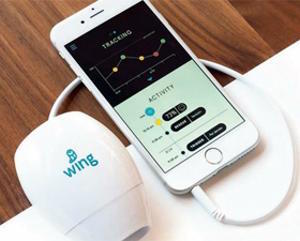
    The technology, launched on Wednesday, was placed inside a personal air pollution sensor called CleanSpace, to allow individuals to monitor the air quality around them. The sensor, called Tag, pairs with a mobile app to keep track both of carbon monoxide levels and transport choices made by an individual.

    Users earn points each time they walk, run or cycle. These can be traded for rewards from partners including Amazon, Boohoo.com and MaxiNutrition. The data from individual sensors is then aggregated to build up a map of the air quality.

    “This is the first commercial device that is powered solely from ambient radio frequency energy,” says Drayson, who stumbled upon the idea when he came across the work of Imperial College, London, PhD student Manuel Pinuela Rangel, who was researching inductive power transfer, and set up Drayson Wireless.

    The team decided to create a personal air quality sensor in recognition of the increasing public awareness of air pollution as a health problem. About 29,000 people die each year in the UK because of poor air quality each year.

    Drayson now plans to license the technology to other commercial partners looking to create sensor networks, beacon-driven retail marketing tools or low-powered wearables. As it stands, the inventor contends that Freevolt could generate enough power for devices like the Fitbit Charge or Jawbone UP3. Drayson also points out that because Freevolt works across multiple bands of radio frequency , even if there isn’t any 3G or 4G signal, it can gather energy from Wi-Fi or even broadcast signals.

  • Google to provide wi-fi at 500 Indian railway stations

    Google to provide wi-fi at 500 Indian railway stations

    Google will collaborate with Indian Railways to provide wi-fi services at 500 stations by next year, Prime Minister Narendra Modi announced as he visited the headquarters of the search engine giant on Sep 27, 2015.

    Sunder Pichai, the CEO of Google welcomed the Prime Minister and took him through the latest technology that powers the search giant. “We are proud of what is happening in India and share Prime Minister’s vision of digital India”, he said.

    The Prime Minister was also joined by Chairman Eric Schmidt and Google co-founder Larry Page in the tour of the headquarters.

    Hosted by the Indian IT industry trade body, the National Association of Software and Services Companies (NASSCOM), along with a clutch of start-ups in India and the United States, the hackathon is having a simultaneous session at Tech Mahindra’s Noida facility.

    Describing Modi as “amazing ambassador” of India, Chambers endorsed Digital India, saying it has the potential to bring about great changes in India. So we are very excited that we are starting with 100 of the busiest stations.

    Observing that two main things computing and connectivity – are foundation for a digital India, Pichai said android today is available in many Indic languages. He also announced Design India initiative and labs, saying it would help in “Make in India” program.

    Earlier, India-born Google CEO Sundar Pichai said the seach engine giant will provide high speed internet services at 100 railway stations in India initially and then expand it by 400 more by next year.

    Recalling his young days when he used to travel by train from Chennai to Kharagpur, Pichai noted that 25 million people daily ride the Indian Railways which has 7500 stations.

    According to an IAMAI-IMRB report, India is expected to have 213 million mobile internet users. That’s effectively 17 percent of India’s population.

    Ahead of Modi’s visit to the USA, the country’s ministry of information technology released draft rules for encryption that would have required users to store the plain texts of encrypted information for 90 days from the date of a transaction and provide the text to law enforcement agencies when required under the laws of the country.


  • ASTROSAT, India’s First Astronomical Satellite Launched

    ASTROSAT, India’s First Astronomical Satellite Launched

    A satellite launch vehicle carrying ASTROSAT, India’s first astronomy observatory to study distant celestial objects, was launched from Sriharikota in Andhra Pradesh today, Sep 28, 20.

    PSLV Polar Satellite Launch Vehicle C-30 lifted off from the launch pad at the rocket port of Satish Dhawan Space Centre at Sriharikota, around 80 km from Chennai, at 10 am IST, Sep 28. Minutes later, the Indian Space Research Organisation (ISRO) declared that its 30th successful Launch for the PSLV series,  and that they have successfully launched ASTROSAT into the orbit.

    PSLV-XL rocket lifted off with India’s first space-borne astronomical observatory along with one Canadian and one Indonesian satellite in orbit, as well as four American nano-satellites, a first.

    The time of launch coincides with Prime Minister Narendra Modi’s visit to Silicon Valley and on the same day as a planned visit to President Barack Obama. As The Guardiannoted, India’s Mars Orbiter Mission entered orbit around Mars just days before Modi’s visit to the US in September 2014.

    With its successful launch, India becomes the first country in the developing world to have its own telescope in space and joins a select club of US, European Union and Japan to have such a capability. China is still working on its first space telescope called the ‘Hard X-ray Modulation Telescope’.

    The turbo-charged ‘mini Hubble Telescope’ will be used to study black holes and analyse how stars and galaxies are actually born and how they ultimately die.

    This flight of the Polar Satellite Launch Vehicle (PSLV) is historic as, for the first time, American satellites are being launched by India. Till recently, the US had kept ISRO under sanctions and was denied the critical cryogenic engine technology which pushed back India’s foray into deep space by two decades.

    The four small LEMUR satellites are being launched for a San Francisco-based company.

    The 1,515-kilogram satellite has been assembled at the ISRO’s Satellite Centre in Bengaluru. It took the agency Rs. 178 crore and 10 years to make it. The idea was conceived more than 20 years ago.

    Top Indian institutions like Tata Institute of Fundamental Research (TIFR) in Mumbai, Indian Institute of Astrophysics (IIA) in Bengaluru, Inter-University Centre for Astronomy and Astrophysics (IUCAA) in Pune and the Raman Research Institute (RRI) of Bengaluru were involved in its development.

    With its successful launch, ISRO asserts, India will be the only country to have multi-wavelength space-based observatory capable of monitoring intensity variations in a broad range of cosmic sources.

    According to ISRO, the satellite will have concurrent wide spectral coverage over visible, ultra-violet, soft X-ray and hard X-ray regions of the spectrum.

    “Black holes, neutron stars, pulsars, white dwarfs, quasars, and active galactic nuclei are just some of the cosmic objects that the ASTROSAT will observe,” said Dr John Hutchings of the Herzberg Institute of Astrophysics in Canada, who was a part of the mission.

    The five instruments and one passive monitor on board ASTROSAT will all have switched on by December 13, 2015, 45 days from when ASTROSAT enters orbit. The switch-on sequence goes like:

    • Charged Particle Monitor – September 29
    • Scanning Sky Monitor – October 6
    • Cadmium-Zinc-Telluride Imager – October 6
    • Large Area X-ray Proportional Counter – October 20
    • Ultraviolet Imaging Telescope – December 10
    • Soft X-ray Telescope – December 13
  • NASA TECHNOLOGY TO HELP AIRLINES SAVE FUEL

    NASA TECHNOLOGY TO HELP AIRLINES SAVE FUEL

    WASHINGTON (TIP): Two US airlines will soon begin testing a new NASA-developed software that is designed to help air carriers save time, cut fuel consumption and carbon emissions.

    During the next three years, Virgin America and Alaska Airlines will use the Traffic Aware Planner (TAP) application to make “traffic aware strategic aircrew requests” (TASAR), the US space agency said in a statement.

    TAP connects directly to the aircraft avionics information hub on the aircraft.

    “It reads the current position and altitude of the aircraft, its flight route and other real-time information that defines the plane’s current situation and active flight plan,” explained David Wing, TASAR project lead at NASA’s Langley Research Center in Hampton, Virginia.

    Then, it automatically looks for a variety of route and/or altitude changes that could save fuel or flight time and displays those solutions directly to the flight crew.

    TAP also scans the signals of nearby air traffic to avoid potential conflicts in any proposed flight path changes, making it easier for air traffic controllers to approve a pilot’s route change request. For airlines with internet connectivity in the cockpit, TAP also can access information –such as real-time weather conditions, wind forecast updates and restricted airspace status — to further increase flight efficiency.

    The software is loaded onto a tablet computer, which many airline pilots already use for charts and flight calculations. Even four minutes of flight time shaved off of each leg of a trip made by an airline could result in massive fuel and time savings, according to researchers.

    The software provided similar results in flight tests. A second round of flight tests was recently completed to ensure readiness for operational use by partner airlines.

    “We are excited to partner with NASA to test this new technology that has the potential to help reduce fuel consumption and carbon emissions and save our guests time in the air,” commented Steve Forte, Virgin America’s chief operating officer in Burlingame, California.

  • Concorde set to fly again by 2019

    Concorde set to fly again by 2019

    Thanks to a fan club with a £180 million kitty, the supersonic airliner may soon return to the skies.

    Club Concorde, a group of ex-pilots, airline executives, engineers and Concorde enthusiasts have unveiled their plan to have the airliner back in the sky by 2019. Concorde was retired by its owners British Airways and Air France in 2003. The twin owners have since resisted the approaches of Richard Branson, who hoped to make the fleet commercially viable, much to the dismay of the members of Club Concorde.

    Club president Paul James told the Telegraph that the club has secured millions of pounds in investment to buy back the retired planes and get them back in action.The club’s aims are twofold: display an aircraft by the London Eye, above the Thames, and buy another to do up and fly . The club has reportedly secured £40 million in investment to buy a plane to display . It hopes to purchase one that is currently stationed near Orly Airport in Paris and charge £16 a ticket to visitors on the Thames as soon as 2017.

    A further £120 million reserve fund has been secured to buy and restore an aircraft on display at Le Bourget airport in Paris. Once operational, the club plans to use this craft for fly-pasts at airshows as well as corporate and special events. Flying at supersonic speeds, a Concorde could fly between London and New York in a little less than three hours. In comparison, a regular commercial flight can take around seven hours. It has been nearly 12 years since Concorde took its last flight, with the final journey occurring on October 24th, 2013. While Club Concorde is hoping to get the plane back in action, despite the fact that British Airways and Air France have no plans to restore or sell the planes, it may not be the only supersonic jet in the sky . Airbus has filed plans for Concorde Mark 2, a supersonic jet that could fly from London to New York in an hour, while Boston based Spike Aerospace hopes to have a supersonic jet in the skies by the 2020s.

    The worst seat on the plane set to get better

    The middle seat on an aeroplane is equivalent to the seventh circle of hell.But, with any luck, it’s about to get better.A new seating concept aims to speed up the boarding and subsequent exiting of a plane, could revolutionise air trave forever.

    The Side Slip Seat, developed by Hank Scott of Molon Labe Designs, consists of aisle seats which slide on top of middle seats, creating more room while getting on and off-board. To accommodate this, the middle seat is set lower and a few inches back, giving occupants room more elbow room. This design is yet to be certified for use in a commercial aircraft.