Tag: Science & Technology

  • YOU CAN BLOCK UNWANTED EMAILS IN GMAIL NOW

    Irritated with those spam and unwanted emails that only keep bugging your inbox? Well, Google has finally heard your plea.

    After enabling its users to ‘undo’ a sent mail, tech giant Google has now let launched a new ‘block’ or ‘unsubscribe’ feature in its Gmail service that will allow users to block email IDs and unsubscribe from newsletters with a few clicks.

    Using the new features, users can block specific email addresses in Gmail on the web and over the next week on Android, Google said in a blogpost.

    Future mail will go to the spam folder (and you can always unblock in Settings), Google product manager Sri Harsha Somanchi said.

    “In addition, the unsubscribe option is now making its way to Android, so you’ll be able to opt out of eligible mailing lists directly from the Gmail app. It’s perfect for those newsletters you subscribed to a while back but don’t read any more,” Somanchi added.

    In June, Google had introduced the ‘Undo’ option that allows users to cancel delivery of an email within 30 seconds of hitting the send button, helping them avoid misdirected or inappropriate emails.

    Gmail is one of the most popular email services with more than 900 million users globally.

  • Supermoon plus eclipse equals rare sky show

    CAPE CANAVERAL (TIP): Get ready for a rare double feature this weekend, starring our very own moon.

    A total lunar eclipse will share the stage with a so-called supermoon on Sunday night or early Monday, depending where you are. That combination hasn’t been seen since 1982 and won’t happen again until 2033.

    When a full or new moon makes its closest approach to Earth, that’s a supermoon. Although still about 220,000 miles away, this full moon will look bigger and brighter than usual. In fact, it will be the closest full moon of the year, about 30,000 miles closer than the average distance.(The moon’s orbit is far from a perfect circle.)

    NASA planetary scientist Noah Petro is hoping the celestial event will ignite more interest in the moon. He is deputy project for the Lunar Reconnaissance Orbiter, or LRO, which has been studying the moon from lunar orbit since 2009.

    “The moon’s a dynamic place,” Petro said Wednesday. “We’re seeing changes on the surface of the moon from LRO. We’re seeing that it’s not this static dead body in the sky … it’s this great astronomical object that we have in our backyard, essentially. So people should get out and start looking at it.”

    Many stargazers, professional and amateur alike, dislike the term “supermoon,” noting the visible difference between a moon and supermoon is slight to all but the most faithful observers.

    “It’s not like the difference between an ordinary man and Superman,” said Alan MacRobert, a senior editor at Sky & Telescope magazine. “It really ought to be called a tiny, slightly little bit bigger moon, rather than the supermoon.”

    The full eclipse of the moon will last more than an hour and be visible, weather permitting, from North and South America, Europe, Africa and western Asia. Showtime on the US East Coast is 10:11 p.m. EDT (0211 GMT); that’s when the moon, Earth and sun will be lined up, with Earth’s shadow totally obscuring the moon.

    There won’t be another total lunar eclipse until 2018.

    This weekend’s eclipse marks the end of a tetrad, or series of four total lunar eclipses set six months apart. This series began in April 2014.

    The 21st century will see eight of these tetrads, an uncommonly good run. From 1600 to 1900, there were none.

    Observatories are marking the celestial event with public telescope viewing, although magnifying devices won’t be necessary; the eclipse will be easily visible with the naked eye. Astronomers are urging stargazers to simply look to the east.

    In Los Angeles, Griffith Observatory also will serve up Beethoven’s “Moonlight Sonata” on the piano and other moon-themed music.

    NASA will provide a live video feed of the entire eclipse – an option in case clouds obscure your own view.

  • SHELTERS ON MARS TO BE 3D-PRINTED

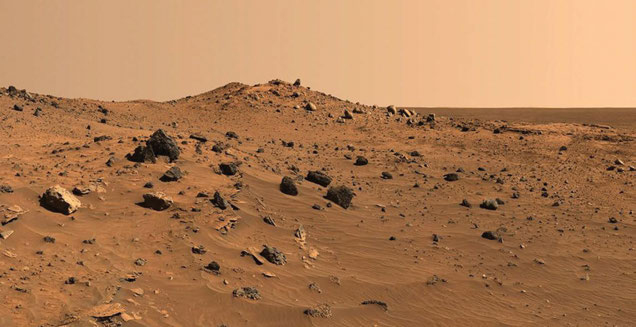
    LONDON (TIP): A French firm has designed a conceptual shelter for future astronauts on Mars that would be 3D-printed on the red planet using local materials.

    Resembling an igloo from the surface, the shelter, dubbed Sfero, would be partially buried beneath the ground. Access to it would be gained by its one long corridor, which contains an airlock.

    The interior comprises three floors. The uppermost floor measures just 3 sq m, and food can be grown here, while the next floor measures 29 sq m, comprising a work area and bathroom. The lowermost floor measures 40 sq m and contains sleeping quarters. The occupants would navigate between each floor by a spiral staircase.

    The firm, Fabulous, envisions that the red planet’s own substrata could be used as a raw material for 3D printing. The process would involve a central mast that can extract iron from the planet’s soil and rock, and also seek out permafrost to turn into water and use as insulation between the structure’s inner and outer shell, reducing the effect of solar radiation. The firm plans to test the shelter in California’s Mojave Desert or somewhere in Hawaii, while the Gale Crater is slated as the shelter’s final Mars location. The project has been created in response to Nasa’s call for designs for 3D-printed habitats for Mars, despite the competition being only officially open to US residents, according to Dezeen.

  • Indian American Astronomer Dheeraj Pasha’s Team Spots Mid-Size Black Hole

    Indian American Astronomer Dheeraj Pasha’s Team Spots Mid-Size Black Hole

    In a first, a team including an Indian-origin astronomer has found evidence for a new intermediate-mass black hole about 5,000 times the mass of the Sun.

    The discovery, made by Dheeraj Pasham from University of Maryland (UMD) and scientists from NASA’s Goddard Space Flight Centre, adds one more candidate to the list of potential medium-sized black holes while strengthening the case that these objects do exist.

    “The result provides support to the idea that black holes exist on all size scales. When you describe something for the first time, there is always some doubt,” said Mr Pasham, post-doctoral associate at the joint space-science institute, a research partnership between UMD and NASA Goddard.

    “Identifying a second candidate with a different instrument puts weight behind both findings and gives us confidence in our technique,” he added.

    Nearly all black holes come in one of two sizes – stellar mass black holes that weigh up to a few dozen times the mass of our Sun or supermassive black holes ranging from a million to several billion times the Sun’s mass.

    Astronomers believe that medium-sized black holes between these two extremes exist.

    The new intermediate-mass black hole candidate, known as NGC1313X-1, is classified as an ultraluminous X-ray source and is among the brightest X-ray sources in the nearby universe.

    Some astronomers suspect that ultraluminous X-ray sources are intermediate-mass black holes actively drawing in matter, producing massive amounts of friction and X-ray radiation in the process.

    NASA plans to launch a new X-ray telescope, the Neutron Star Interior Composition Explorer (NICER), in 2016.

    Mr Pasham has already identified several potential intermediate-mass black hole candidates that he hopes to explore with NICER.

    “Observing time is at a premium so you need to build a case with an established method and a list of candidates the method can apply to,” Mr Pasham noted.

    “With this result, we are in a good position to move forward and make more exciting discoveries,” he concluded in a paper published in Astrophysical Journal Letters.

  • Indian American scientist leading studies to regenerate dead heart muscle

    Indian American scientist leading studies to regenerate dead heart muscle

    WASHINGTON: An Indian-American researcher is leading clinical trials on an experimental technology that might be able to repair dead heart muscle, or even reverse heart failure, a media report said.

    For decades, Patel and other researchers have tried to figure out how to regenerate dead heart muscle in patients who have had massive heart attacks.

    Now he’s leading trials on an experimental technology that might be able to repair scarred heart tissue and freeze — or even reverse — heart failure.

    “The doctors say: ‘We’ll give you the beta-blocker, aspirin and the Lipitor and we can just hope to maintain you’ … but short of them getting worse or getting a heart transplant, there’s not too many options,” said Amit Patel, an associate professor in the division of cardiothoracic surgery at the University of Utah School of Medicine, Deseret News reported on Saturday.

    The procedure, in Phase 1 FDA clinical trial, goes as follows:

    1. Mix the “extracellular matrix” powder — a mixture of proteins and molecules isolated from heart muscle — with saline or water.
    2. Inject the mixture into the patient’s dead heart muscle via catheter.
    3. Wait three to six months to see if the patient’s heart muscle regenerates.

    It may sound like something out of “Frankenstein”, said Tim Henry, the director of cardiology at the Cedars-Sinai Heart Institute, “but the technology — inspired by stem cell research — is within our reach”.

    “(Patel) is clearly one of the most experienced stem cell people in the country,” Henry was quoted as saying.

    Scientists have been trying stem cell therapy and gene therapy to stop the degeneration of heart function that occurs after a massive heart attack, but they haven’t been much good at reviving completely dead scar tissue, Patel said.

    If the clinical trials are proven successful, the therapy would likely also be cheaper than either stem cells or gene therapy, according to Patel.


  • WINDOWS PRIVACY SETTINGS: THINGS TO KNOW

    WINDOWS PRIVACY SETTINGS: THINGS TO KNOW

    SAN FRANCISCO (TIP): Microsoft’s new Windows 10 system offers more personalization than before, but it also collects more data than people might be used to on PCs, from contacts and appointments to their physical location and even Wi-Fi passwords.

    The information is used by Cortana, Microsoft’s voice-activated digital assistant, and other new features that try to be helpful by remembering a user’s likes and habits. Apple and Google have developed similar services for smartphones in recent years. Microsoft’s new features are a big part of its strategy to make Windows more relevant in a world where people use multiple devices throughout the day.

    Most of these features get turned on when you set up Windows 10 with the ‘Get going fast’ option. But you can take back control and disable features in the settings. Here are some examples:

    Wi-Fi worries

    A feature called Wi-Fi Sense promises to make it easy for users and their friends to connect with new Wi-Fi networks. It lets Windows 10 computers log in automatically to known networks, so your friends don’t have to ask for the password when they visit.

    Despite some initial reports, Wi-Fi Sense doesn’t hand over your password to all your friends. Instead it stores your password online in an encrypted form. It then provides that encrypted code to your friend’s Windows 10 device so it can automatically log into your network. Your friends never actually see the password, and Microsoft says your friends won’t get access to other computers or files on the network.

    Even so, critics say the feature shares too freely, as you can’t choose which friends to share with — only with your full list of friends or contacts on Facebook, Outlook.com or Skype. To disable this, open the ‘Settings’ menu in Windows 10, select ‘Network & Internet’ and click on “Manage Wi-Fi Settings.” You can uncheck groups you don’t want to share with. You can also choose not to share access to a particular network when you log in for the first time; just uncheck the box next to ‘Share network with my contacts.’

    But if you let friends manually log into your network by giving them your password, be aware they might be able to share the password via Wi-Fi Sense with their friends. You can ask them not to, or completely block Wi-Fi Sense by changing your Wi-Fi network’s name to include the underscore followed by these characters: Optout.

    Cortana knows you

    Many people are used to voice-activated services like Apple’s Siri or ‘OK Google’ on smartphones and tablets. Windows 10 brings Microsoft’s digital assistant, Cortana, to desktops and laptops. Cortana can answer questions, remind you of appointments and even recommend nearby restaurants. But to do that, Cortana uploads and saves information about your web browsing, search queries and location, as well as some details from your messages, contacts and calendar.

    Microsoft says it doesn’t use the Cortana personalization to target ads. Nor will it use your emails, chats or personal files for advertising. But it does tailor ads to websites visited with its Edge browser and queries made on its Bing search engine, including queries through Cortana. (Google’s browser and search engine do this, too.) You can review what Cortana knows about you: Click on the search field in the lower left of your screen, then click the ‘Notebook’ icon and select ‘About Me’ to edit or delete individual items. If you want to turn Cortana off, open ‘Notebook,’ click on ‘Settings’ and toggle Cortana to ‘Off’. That clears information stored on the device, but not the data uploaded to Microsoft’s servers. To get to that, open ‘Notebook;, choose ‘Settings’ and click ‘Manage what Cortana knows about me in the cloud’.

    More privacy settings

    Anyone concerned about privacy should take a run through the ‘Privacy’ section of the Windows 10 ‘Settings’ menu. This is different from the ‘Settings’ menu for Cortana. You find it by clicking on the Windows icon in the lower left of your screen.

    Windows 10 assigns each user on each device a unique ‘advertising ID’, which lets app developers track how each person uses the device and apps. If that bothers you, you’ll find the button to turn it off by going to ‘Settings’ and opening the ‘Privacy’ section. You might have to hit the back arrow at the top left if you’re already in another section. Click on ‘General’ in the left-hand column to turn off advertising ID. You might still get ads, but they won’t be tailored to you.

    Similarly, open ‘Privacy’ and click on ‘Location’ to turn off location-tracking or clear the history of where you’ve traveled with your laptop, tablet or Windows phone.

    Another heading under ‘Privacy’ has the innocuous title of ‘Other devices’. That’s where you can turn off the ability to ‘Sync with devices’. That feature lets apps on your device share information with things like store-tracking beacons, which send you ads as you walk nearby. If that sounds creepy, turn it off.

    Some critics complain that Microsoft hasn’t been more up front about all the ways Windows 10 collects user information. But you can find most of them by scrolling through the nooks and crannies of the ‘Settings’ menu. That’s a good thing to do with any new software program or internet service. It’s also good to go back there from time to time to make sure the settings match your comfort level.

  • ROBOT JOURNALIST INTRODUCED IN CHINA

    ROBOT JOURNALIST INTRODUCED IN CHINA

    BEIJING (TIP): A Chinese internet company has developed a robot journalist, who has written its first news story. The company, Tencent, claims that the robot named “Dreamwriter” can write a 1,000 word news story in one minute.

    The development comes after a restaurant in South China’s Hainan province introduced a robot waitress last month. A Chinese company has also introduced a robot banker, which can handle some routine chores, provide banking information and guide customers.

    The first news item by the “robot journalist” used data from the National Statistics Bureau and quoted the bureau’s officials. Beijing Times, a local daily said the article, titled “August CPI a new high in the past 12 months” was no different in quality from reports by real journalists.

    The machine uses high speed calculating and information searching capabilities to produce a 1,000 word news just in one minute. But its forte is hard news writing. It cannot do in depth, analytical and feature pieces. For instance, a journalist can explain intricate issues like the effect of an increase in inflation on the lives of people which the robot cannot.

    The company, Tencent, has said that the robot will not take place of human journalists. They expressed the hope that the robot can free human journalists from some routine tasks and leave them free for more challenging and intelligent works. But observers said this task in itself can help employers reduce the number of journalists on hire.

    An interesting use of robots was demonstrated by the Israeli army recently when it tested a four-wheeled robot called EyeDrive at a crossing point between Israel and the northern West Bank to inspect the flow of Palestinian cars and trucks.

  • OUR MOON IS SURROUNDED BY NEON

    OUR MOON IS SURROUNDED BY NEON

    WASHINGTON DC (TIP): NASA’s Lunar Atmosphere and Dust Environment Explorer (LADEE) spacecraft has found neon in the lunar atmosphere.

    The moon’s thin atmosphere contains neon, a gas commonly used in electric signs on Earth because of its intense glow. While scientists have speculated on the presence of neon in the lunar atmosphere for decades, LADEE spacecraft has confirmed its existence for the first time.

    The presence of neon in the exosphere of the moon has been a subject of speculation since the Apollo missions, but no credible detections were made, said lead author Mehdi Benna.

    Benna added that they were very pleased to not only finally confirm its presence, but to show that it is relatively abundant.

    There’s not enough neon to make the moon visibly glow because the moon’s atmosphere is extremely tenuous, about 100 trillion times less dense than Earth’s atmosphere at sea level. A dense atmosphere like Earth’s is relatively rare in our solar system because an object has to be sufficiently massive to have enough gravity to hold onto it.

  • Facebook launches Signal, a news-finding tool for journalists

    Facebook launches Signal, a news-finding tool for journalists

    MENLO PARK (TIP): Facebook unveiled a new tool Thursday aimed at helping journalists using the social network track breaking and trending news, in a challenge to Twitter.

    The service called Signal, which is available for both Facebook and the Facebook-owned Instagram platform, is designed for journalists who are using social media as part of their reporting efforts.

    “We’ve heard from journalists that they want an easy way to make Facebook a more vital part of their newsgathering with the ability to surface relevant trends, photos, videos, and posts on Facebook and Instagram for use in their storytelling and reporting,” Facebook’s Andy Mitchell wrote in a blog post. “Today we’re excited to introduce Signal, for Facebook and Instagram, a free discovery and curation tool for journalists who want to source, gather, and embed newsworthy content from Facebook and Instagram, across news, culture, entertainment, sports, and more — all in one place.”

    With Signal, journalists “can monitor which topics are trending and then quickly display related content that has been shared publicly.” Journalists can also access lists of public figures ranked by who is being mentioned the most on Facebook, including “real-time conversations” involving politicians, authors, actors, musicians, athletes and others.

    The tool can also be used on Instagram for visual content, according to Mitchell.

    “Every Facebook post, every Instagram image or video, and every metric found in Signal can be easily saved into custom collections for later use,” he wrote.

    “This is a first step in helping journalists use Facebook and Instagram more effectively and we’ll gather feedback and iterate to make Signal as useful as possible for industry professionals.”

  • NASA PROBE REVEALS DWARF PLANET CERES IN INTRIGUING DETAILS

    NASA PROBE REVEALS DWARF PLANET CERES IN INTRIGUING DETAILS

    WASHINGTON (TIP): NASA’s Dawn spacecraft has shown the brightest spots on the dwarf planet Ceres that are gleaming with mystery.

    The closest-yet view of Occator crater, with a resolution of 450 feet per pixel, on its surface gives scientists a deeper perspective on these very unusual features.

    The new up-close view reveals better-defined shapes of the brightest, central spot and features on the crater floor.

    “Dawn has transformed what was so recently a few bright dots into a complex and beautiful, gleaming landscape,” said Marc Rayman, Dawn’s chief engineer and mission director from NASA’s Jet Propulsion Laboratory in California.

    Dawn is the first mission to visit a dwarf planet, and the first to orbit two distinct solar system targets.

    “Soon, the scientific analysis will reveal the geological and chemical nature of this mysterious and mesmerising extraterrestrial scenery,” he said in a statement.

    Because these spots are so much brighter than the rest of Ceres’ surface, the Dawn team combined two different images into a single composite view — one properly exposed for the bright spots, and one for the surrounding surface.

    Scientists also have produced animations that provide a virtual fly-around of the crater, including a colourful topographic map.

    Dawn scientists note the rim of Occator crater is almost vertical in some places, where it rises steeply for nearly two km. The spacecraft has already completed two 11-day cycles of mapping the surface of Ceres from its current altitude.

    Dawn will map all of Ceres six times over the next two months.

  • ARTIFICIAL ‘PLANTS’ COULD FUEL FUTURE CARS

    ARTIFICIAL ‘PLANTS’ COULD FUEL FUTURE CARS

    LOS ANGELES (TIP): Scientists have taken a big step towards creating artificial ‘plants’ that can use only sunlight to make gasoline and natural gas to run future cars without polluting the environment.

    A research team has created an artificial leaf that produces methane, the primary component of natural gas, using a combination of semiconducting nanowires and bacteria.

    The research builds on a similar hybrid system that yielded butanol, a component in gasoline, and a variety of biochemical building blocks.

    It is a major advance towards synthetic photosynthesis, a type of solar power based on the ability of plants to transform sunlight, carbon dioxide and water into sugars.

    Instead of sugars, however, synthetic photosynthesis seeks to produce liquid fuels that can be stored for months or years and distributed through existing energy infrastructure.

    In a roundtable discussion on his recent breakthroughs and the future of synthetic photosynthesis, Peidong Yang, a professor at the University of California, Berkeley said his hybrid inorganic/biological systems give researchers new tools to study photosynthesis – and learn its secrets.

    “We’re good at generating electrons from light efficiently, but chemical synthesis always limited our systems in the past,” said Yang, also a co-director of the Kavli Energy NanoSciences Institute.

    “One purpose of this experiment was to show we could integrate bacterial catalysts with semiconductor technology. This lets us understand and optimise a truly synthetic photosynthesis system,” said Yang.

    “Burning fossil fuels is putting carbon dioxide into the atmosphere much faster than natural photosynthesis can take it out. A system that pulls every carbon that we burn out of the air and converts it into fuel is truly carbon neutral,” said Thomas Moore, a professor of chemistry and biochemistry at Arizona State University.

    Ultimately, researchers hope to create an entirely synthetic system that is more robust and efficient than its natural counterpart.

    To do that, they need model systems to study nature’s best designs, especially the catalysts that convert water and carbon dioxide into sugars at room temperatures.

    “This is not about mimicking nature directly or literally,” said Ted Sargent, the vice-dean of research for the Faculty of Applied Science and Engineering at University of Toronto.

    “Instead, it is about learning nature’s guidelines, its rules on how to make a compellingly efficient and selective catalyst, and then using these insights to create better-engineered solutions,” said Sargent.

  • Smart pill with benefits for the brain

    Smart pill with benefits for the brain

    In 1998, the Food and Drug Administration (FDA) approved the drug modafinil as a treatment for narcolepsy, a condition in which the brain has trouble regulating its sleep-wake cycle and results in sudden “sleep attacks” where a person falls asleep at unwanted or inappropriate times.

    In the years since, modafinil has become popular for another, off-label use: to boost a person’s cognitive abilities -an effect that hadn’t been thoroughly studied by scientists.

    Now a team of researchers has reviewed the literature to find that modafinil does, in fact, increase a number of important activities in the brain, according to a study published in the journal European Neuropsychopharmacology.

    This finding, however, doesn’t ensure that your doctor will prescribe it to you to help you cram for an exam.

    Scientists still aren’t sure exactly how modafinil works, though past studies have found that the drug increases the levels of the neurotransmitters histamine and orexin, both of which regulate sleep and wake cycles. It also elevates levels of serotonin (which affects mood) and glutamate (which helps to excite brain cells). These chemical changes make modafinil effective at treating narcolepsy, but it also has some unintended effects on other brain functions.

    It makes the patient more attentive, a better learner, and more adept at “higher level” tasks that involve executive function and require inputs from several simpler brain functions, according to a press release. This is similar to how some ADHD medications, like Adderall, work, though they increase the activity of other neurotransmitters, norepinephrine and dopamine.

    The researchers reviewed 24 studies about modafinil’s effects on cognition that were published between 1990 and 2014 and found that modafinil did, indeed, provide a boost in tasks that require, “planning and decision making, flexibility, learning and memory, and creativity,” the press release states. It didn’t have a significant effect on working memory (how the brain temporarily stores information).

    Plus, the drug had very few serious side effects, making it a strong candidate to be a bona fide “smart pill.”

    The researchers were quick to point out that these findings don’t mean that modafinil is now approved as a cognitive enhancement – that decision is up to government regulatory bodies like the FDA.

    But their conclusions may encourage modafinil’s manufacturer to apply for the drug to be prescribed for this use. They also note that any cognitive enhancement comes with “ethical considerations” that would be important to explore in future studies.

  • APPLE LAUNCHES IPHONE 6S, 6S PLUS WITH 3D TOUCH – Fails to Impress

    APPLE LAUNCHES IPHONE 6S, 6S PLUS WITH 3D TOUCH – Fails to Impress

    NEW DELHI (TIP): Eight years after changing the way we use mobile phones with the first iPhone, Apple has once again heralded a big change in world’s best-selling gadget iPhone.

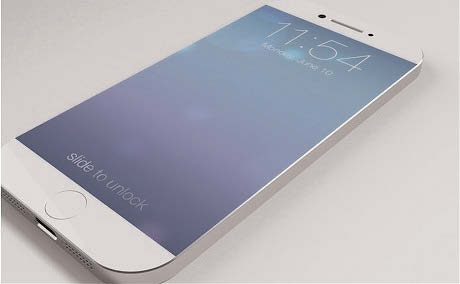
    The new iPhones, named iPhone 6S and 6S Plus, are not lighter, thinner or bigger anymore. They instead feature a new display technology called 3D Touch, a derivative of the Force Touch technology used in Apple Watch.

    According to Apple, 3D Touch will be able to differentiate between types of touches and taps in preloaded apps as well as on the homescreen. This new technology adds new functionalities to iPhones; for example, applying a little extra pressure on the screen may preview a photo in one app and open a file in another.

    3D Touch will deliver information like time taken in the journey in the Maps app with a force-touch, while a light tap would only bring up the directions. This display technology would also make it easier to navigate through apps; for example, you will be able to see all active apps with a long-press at the edge of the screen.

    The screen size and resolution of the two models will, however, remain the same as that of their predecessors: 4.7-inch HD screen for iPhone 6S and 5.5-inch Full HD screen for iPhone 6S Plus.

    Another addition that will distinguish iPhone 6S and 6S Plus from other models is rose gold colour option; the two iPhones, however, will also be available in space gray, silver and gold hues. The new iPhones feature faster-second-generation TouchID sensor and are made of tough aircraft grade aluminium, same as Samsung Galaxy S6 and S6 edge.

    Under the hood is the new 64-bit A9 chipset that is 70% faster at carrying out processes than the one seen in last year’s iPhones. Similarly, the graphics processing will be 90% aided by a new graphics processor.

    One of the biggest upgrades to iPhone 6S and iPhone 6S Plus is in the cameras. After being stuck with an 8MP sensor since iPhone 4S, the new iPhones get 12MP cameras that can take panorama pictures going up to 63MP. The rear camera has also got 4K recording to capture high-resolution videos, a feature that has been available on iPhones since last year.

    However, other than the 3D Touch and perked up camera features, the new iPhones may disappoint many users who have come to expect a major makeover from the company each year. In that sense, the likely contender would always be the iPhone launched every alternate years: so a completely new iPhone 7 next year could be that phone.

    Apple did disappoint fans by not announcing any major boosts to the battery life of iPhone 6S and 6S Plus. Considering that iPhone’s battery life in general is not anything to write home about, the buyers may have concerns due to new powerful cameras and display.

    The company’s website does mention though that the two smartphones will deliver the same battery life as their respective predecessors. Besides, iOS 9 includes major battery tweaks that may help the users.

    Apple said the iPhone 6S and 6S Plus will cost the same as their predecessors; iPhone 6S’ 16, 64 and 128GB variants will cost $199, $299 and$399 on contract, while the iPhone 6S Plus’ three variants have been priced at$299, $399 and $499 respectively.

    iPhone 5S has become the new entry-level model and will be available free on contract in the US, whereas iPhone 6 and 6 Plus (16GB variants only) will cost $99 and $199, respectively.

  • World’s first supersonic car to be unveiled on September 24

    LONDON (TIP): The world’s first supersonic car which aims to run at 1000 miles per hour (1,609km/h) will be unveiled to the world later this month.

    Speed enthusiasts will for the first time be able to lay eyes on a car with a jet engine — normally found in the Eurofighter Typhoon and a cluster of Nammo hybrid rockets — developed to power the next generation space launchers on September 24 in London’s financial hub — Canary Wharf.

    The machine will then go on display for the public over the next two days.

    Engineers putting together the Bloodhound Supersonic Car said the 135,000 thrust horse power (equal to 180 F1 cars) land speed racer will be presented without the carbon fibre bodywork on one side, in order to show the car’s inner engineering.

    The team said, “Visitors will see that 98% of the car is here including the Rolls-Royce EJ200 jet engine in place as it will be when Bloodhound targets 800mph in 2016, as well as the supercharged Jaguar V8 engine used to pump oxidiser into the rocket. The public will also be able to view the completed cockpit — Andy Green’s supersonic office — and see the first pictures from the car’s on-board cameras.” Project Director Richard Noble said “Public interest in Bloodhound is incredible and we simply can’t get enough people into our Bristol Technical Centre to satisfy demand. We realised too that we have a unique opportunity to show the car before its carbon fibre and titanium skins are fitted in place, so people can see the extraordinary engineering inside. With the car nearly complete our fund raising effort is now all about getting to South Africa and setting a new record in 2016”.

    Driver Andy Green breached the 500 mph (804km/h) recently – 50% of the speed the Bloodhound Supersonic car will ultimately travel.

    One hundred and ten man-years have been invested in the design, build and manufacture the car which is on track to challenge the land speed record later this year in the Kalahari Desert, South Africa.

    The Bloodhound team scoured the globe to find the perfect desert to run the car on, it needed to be at least 12 miles (19km) long, two miles (3km) wide and perfectly flat.

    The Hakskeen Pan, Northern Cape, South Africa was selected.

    At full speed Bloodhound will cover a mile (1.6km) in 3.6 seconds, that’s 4.5 football pitches laid end to end per second. Green is a serving fighter pilot with the Royal Air force in UK.

    “The trick at such high speeds is to keep the car on the ground. We need the track to be absolutely clear of even the smallest stone, ensure there are no wildlife or birds around and see to it that the air brakes and parachute works to stop the car after reaching the highest speed,” Green, who visited India last year to watch the Grand prix said.

  • ROBOTIC SUIT HELPS PARALYTIC MAN MOVE

    In a first, a robotic exoskeleton device has enabed a 39-year-old former athlete, who had been completely paralysed for four years, to control his leg muscles and take thousands of steps, scientists in the United States said.

    This is the first time that a person with chronic, complete paralysis has regained enough voluntary control to actively work with a robotic device designed to enhance mobility , said researchers. In addition to the device, the man was aided by a novel non-invasive spinal stimulation technique that does not require surgery . The athlete’s leg movements also resulted in other health benefits, including improved cardiovascular function and muscle tone.

    The new approach combines a battery-powered wearable bionic suit that enables people o move their legs in a step-like fashion, with a non-invasive procedure that the researchers had previously used to enable five paralytic men to move their egs in rhythmic motion.

    In the latest study, the researchers treated Mark Pollock, who lost his sight in 1998 and later became the first blind man race to the South Pole.

    In 2010, Pollock fell from a second-story window and suffered a spinal cord injury that left him paralysed from the waist down.

    The researchers do not describe the achievement as “walking”, because no one who is completely paralysed has independently walked in absence of he robotic device and electrical stimulation of the spinal cord.

    At UCLA, Pollock made substantial progress after receiving a few weeks of physical raining without spinal stimulation and then just five days of spinal stimulation training in a one-week span, for about an hour a day . “It will be difficult to get people with complete para ysis to walk completely independently , but even if they don’t accomplish that, the fact they can assist themselves in walking will greatly improve their overall health and quality of li e,” said V Reggie Edgerton, a UCLA professor. The robotic device manufac tured by California-based Ekso Bionics captures data tha enables the researchers to de termine how much the subjec is moving his own limbs, as op posed to being aided by the device. The data showed that Pol lock was actively flexing his lef knee and raising his left leg and during and after the electrica stimulation, he was able to voluntarily assist the robot du ring stepping.

    “For people severely injured but not completely paralysed there’s every reason to believe that they will have the opportu nity to use these types of interventions to further improve their level of function,” Edger ton said.

  • SOLAR IMPULSE CRAFT INSPIRES SOLAR TRAIN FOR INDIAN RAILWAYS

    NEW DELHI (TIP): India may soon be able showcase to the world a solar train, which uses a mix of thermal power and solar energy generated from panels on its roof.

    Science and technology minister Harsh Vardhan said he was inspired by Switzerland’s Solar Impulse project. “I got the inspiration when the Solar Impulse, the Swiss long range experimental solar powered aircraft landed in India,” he said.

    The minister described the project as the government’s bid to have a moving solar power plant. “We are looking into the project plan and once the demos are done we will collaborate with other concerned ministries,” he said.

    To start with, the government will do a pilot on a goods train and if successful it will be replicated to other trains.

    The train will meet 15% of the energy requirement when on the move from the solar energy. National solar energy expert tasked with engineering the project Gon Chaudhuri told HT, “A unique feature would be that when the train is stationary, 100% of the power will be exported to the grid. So it is like a mobile solar power plant”.

    When the solar radiation falls on a solar cell, direct current is generated which gets converted into an alternating current with a high efficient inverter. This is then synchronised with the grid. Since the train will be moving less dust will accumulate on the panels — a factor that reduces efficiency of solar rooftop systems, Chaudhuri explained.

    An average train would be able to generate 150kWh of power resulting in substantial revenue generation for the train operator. “This would be the first such initiative when a standing body is generating electricity and pushing it to the grid,” Chaudhuri said. “On a long run solar planes may not be commercially viable. But the solar trains have ample scope.”

    Generating power from renewable energy is high on the Narendra Modi government’s agenda, with solar generation target for next eight years hiked by five times to 100 Gegawatts. Of this, the generation capacity for 40,000 MW will be from roof-tops. The solar train, with its rooftop solar generation, could help the government achieve its goals in the green energy sector.

  • GSAT-6: India’s Second Military Satellite Launched

    GSAT-6: India’s Second Military Satellite Launched

    On August 27, 2015 India’s Geosynchronous Satellite Launch Vehicle has successfully deployed a communications satellite, with the rocket’s ninth flight lofting the GSAT-6 spacecraft. The launch was on schedule at 16:52 local time (11:22 UTC) with the launch taking place from the Satish Dhawan Space Centre on Sriharikota Island.

    This launch was important for two main reasons: one, India gaining mastery in launching heavy satellites into geostationary orbit (36,000 km above sea level); and, two, the rationale behind launching GSAT-6, which is also designated as INSAT-4E.

    In early January 2014, ISRO had conducted the first successful launch of a rocket (GSLV D-5) using indigenous cryogenic technology. The first ever attempt made by ISRO to undertake a GSLV launch using an indigenous cryogenic upper stage had failed in 2010. Now, with the consecutive second successful launch of the GLSV, ISRO has proved the reliability of its cryogenic rocket technology.

    First flown in April 2001, the GSLV has had something of a troubled history; of its eight launches to date, three completed their missions successfully, one reached a lower-than-planned orbit which was corrected at the expense of several years’ operational life for its payload, one reached an unusable low orbit that could not be corrected and three failed to achieve orbit altogether.

    Following the success of the previous launch – which carried the GSAT-14 spacecraft to orbit in January 2014 – ISRO was hoping for the GSLV’s first back-to-back successes since the type’s second and third flights in 2003 and 2004 respectively. That proved to be the case.

    With GSAT-6, ISRO is also for the first time experimenting with an antenna having a diameter of six metres. Communication satellites require huge antennas for appropriate transmission. According to ISRO, this S-Band unfurlable antenna would be utilised for five spot beams over the Indian mainland and very small handheld devices would be required to be used for data, video or voice transfer. The spot beams would exploit the frequency reuse scheme to increase frequency spectrum utilisation efficiency.

    The launch of the military satellite GSAT-6 needs to be analysed in the backdrop of India’s overall military space capabilities. India has announced that the GSAT-7 and GSAT-6 satellites have been developed for strategic purposes. Earlier, some remote-sensing (sub-metre resolution, matching with the best in the world) satellites were also launched by ISRO as dual-purpose satellites like the technology experimental satellite (TES, 2000) and the four cartographic satellites (CARTOSAT-1, 2, 2A and 2B in 2005, 2007, 2008, 2010). India has also launched (with Israeli assistance) two Synthetic Aperture Radar (SAR) satellites called RISAT II (2009) and RISAT I (2011) essentially to address terrorism related threats.

    Satellite based navigation is another important arena which has significant military utility. ISRO is developing a programme called Indian Regional Navigation Satellite System (IRNSS) to provide accurate position information services to civilian and military users. A position accuracy of better than 10 metres is expected to be provided to military users. IRNSS would have seven satellites, out of which four have already been placed in orbit and the system is expected to become operational shortly. All these satellites together constitute India’s military space investments.

    India’s increasing investments in space for strategic purposes clearly indicates the rising relevance of space assets for the armed forces. Space technologies have been considered a force multiplier for militaries for some time. Now, space technologies are fast becoming important constituents of war fighting itself. Various modern day weapon systems and military platforms have significant dependence on satellites systems for their operations. Hence, limiting the adversary’s access to its own satellite systems is fast becoming a critical component of military strategy. Under such circumstances there is a need to look beyond merely developing a capability for network centric warfare. The launch of satellites like GSAT-6 indicates that India has started factoring satellite technology as an important constituent for achieving net centricity.

  • Brazilian wasp venom kills cancer cells

    Brazilian wasp venom kills cancer cells

    A Brazilian wasp’s venom contains a powerful ingredient which targets and destroys cancer cells without harming normal cells and may lead to an entirely new class of anticancer drugs, scientists say, reports PTI.

    Researchers have found the social wasp Polybia paulista protects itself against predators by producing venom known to contain a powerful cancer-fighting ingredient. A Biophysical Journal study published September 1 reveals exactly how the venom’s toxin—called MP1 (Polybia-MP1)—selectively kills cancer cells without harming normal cells. MP1 interacts with lipids that are abnormally distributed on the surface of cancer cells, creating gaping holes that allow molecules crucial for cell function to leak out.

    “Cancer therapies that attack the lipid composition of the cell membrane would be an entirely new class of anticancer drugs,” said co-senior study author Paul Beales, of the University of Leeds in the UK. “This could be useful in developing new combination therapies, where multiple drugs are used simultaneously to treat a cancer by attacking different parts of the cancer cells at the same time,” he said.

    MP1 acts against microbial pathogens by disrupting the bacterial cell membrane. The antimicrobial peptide shows promise for protecting humans from cancer; it can inhibit the growth of prostate and bladder cancer cells, as well as multi-drug resistant leukemic cells. However, until now, it was not clear how MP1 selectively destroys cancer cells without harming normal cells.

  • New Study by Indian American researcher shows Anaesthesia may help fight flu

    New Study by Indian American researcher shows Anaesthesia may help fight flu

    Common anaesthetics used during surgeries may help combat viral and bacterial infections in the lung, including influenza and pneumonia, researchers including an Indian American, Krishnan Chakravarthy of Johns Hopkins Institute of Nanobiotechnology have found.

    A report on the experiments is published in the September 1 issue of the journal Anesthesiology.

    The Johns Hopkins and University of Buffalo research team built its experiments on previous research showing that children with upper viral respiratory tract infections who were exposed to the anesthetic halothane during minor surgical procedures had significantly less respiratory symptoms and a shorter duration of symptoms compared with children who did not receive halothane during surgeries.

    To examine just how some inhaled anesthetic drugs affect viral and bacterial infections, Krishnan Chakravarthy, M.D., Ph.D., a faculty member at the Johns Hopkins Institute of Nanobiotechnology and a resident physician in the department of anesthesiology and critical care medicine at Johns Hopkins University School of Medicine and Paul Knight, M.D., Ph.D., a professor of anesthesiology at the University of Buffalo School of Medicine and Biomedical Sciences, along with others, exposed mice to both influenza virus and Streptococcus pneumoniae bacteria.

    In use for more than a century, inhaled anaesthetics like nitrous oxide and halothane have made modern surgery possible. The team discovered that giving the animals volatile anaesthetics, such as halothane, led to decreased bacterial burden and lung injury following infection.

    The researchers report that the anaesthetics augmented the anti-bacterial immune response after influenza viral infection by blocking chemical signalling that involves type I interferon, a group of proteins that help regulate the activity of the immune system.

    Using a combination of genetic, molecular and knockout animal techniques, the researchers found that animals exposed to halothane had 450-fold less viable bacteria compared with non-halothane exposed animals with respect to the initial inoculum dose, and astoundingly, treatment made it as if the animals were never infected with a prior influenza virus.

    The investigators report that symptoms of piloerection (involuntary bristling of hairs of the skin), hunched posture, impaired gait, laboured breathing, lethargy, and weight loss (equal to or greater than 10 per cent of body weight at the time of infection) were significantly less in mice exposed to halothane and then infected with flu and S pneumonia.

    Similar results, they said, were seen in mice bred to lack the receptor for type I interferon and not exposed to halothane before infection.

    “Given that these drugs are the most common anaesthetics used in the operating room, there is a serious need to understand how they work and how we can use their immune effects to our advantage,” said Chakravarthy. Our study is giving us more information about how volatile anesthetics work with respect to the immune system,” he adds.

    The findings, he said, suggest that volatile anaesthetics may someday be helpful for combating seasonal and pandemic influenza, particularly when there are flu vaccine shortages or limitations.

  • Indian American engineer Ankur Bhatnagar’s startup skyTran gets investment from Eric Schmidt

    Indian American engineer Ankur Bhatnagar’s startup skyTran gets investment from Eric Schmidt

    skyTran, cofounded by Indian engineer Ankur Bhatnagar, a path-breaking transportation company headquartered in California, has received financial investment from Google chairman Eric Schmidt.

    Ankur_Bhatnagar-081Bhatnagar, a BTech engineer from IIT-Roorkee and an MTech from IIT-Kanpur is the sole Indian cofounder of skyTran, a Nasa Space Act company which is headquartered at the Nasa Ames Research Center. Ankur confirmed that Schmidt has invested in a Series-A round in this NASA Space Act company through his venture capital fund called Innovation Endeavors. He declined to reveal the amount invested.

    The business daily reported that skyTran has developed a “third-generation” Personal Rapid Transit (PRT) technology. With this technology, the firm is hoping to revolutionise the face of public transport across the globe.

    In next two years, Bhatnagar is looking forward to enable the service in India to make the country its biggest market. While elaborating about the project, Bhatnagar said, “skyTran can transport passengers above surface traffic cutting the journey between Mulund and Colaba in Mumbai or Bengaluru airport to Electronic City in 25 minutes.”

    skyTran is in talks with various industrial groups and state governments and is eying the PRT opportunities in cities that includes Jaipur, Bihar, Jharkhand, and Kerala. The company will have a network of computer-controlled levitating ‘jet-like’ vehicles which will transport passengers above surface traffic.

    “The average speed of travel in cities is expected to be 120 km/hour. That means a user can expect to travel from Gurgaon to Noida in less than 25 minutes, for example. The speed of travel would be 250 km/hour on intercity routes. A journey between Delhi and Chandigarh or Delhi to Jaipur would just take an hour,” said Bhatnagar.

    Earlier, skyTran had received funding from the US Department of Transportation.

  • 4 Indian-origin inventors Among MIT Technology Review’s ‘35 Innovators Under 35’

    4 Indian-origin inventors Among MIT Technology Review’s ‘35 Innovators Under 35’

    MIT Technology Review recently released the 2015 edition of its “35 Innovators Under 35” list, which included four young inventors of Indian origin. The annual list is broken up into six categories: biotechnology and medicine; computer and electronics hardware; energy; Internet and web; nanotechnology and materials; and software.

    The MIT Technology Review’s annual list of 35 Innovators Under 35 aims to illustrate the most important emerging technologies of the moment.

    Released this August, the 2015 list featured a number of robotics and AI visionaries. The institute says the individuals on the list are “inspiring and creative people” who “also illustrate the most important emerging technologies of the moment.”

    Here is a profile of these innovators who have worked to better many lives:

    Rahul Panicker, an engineer based in Bengaluru, studied at Stanford University but returned home to work on a technology solution that helps reduce infant mortality rate. The 34-year-old created an incubator that costs only 1% of the traditional solutions and can keep babies warm for up to six hours without electricity.

    In 2009, Panicker launched Embrace to mass-produce his prototype, which costs 99% less than the average warmer and can be run on hot water. His incubators have been used in 15 countries and has helped about 2,00,000 babies.

    Aaswath Raman, a research associate at Stanford, has used a nanoscale manufacturing technique to create a disc mirror that gets colder under direct sunlight, and stays around 5 degrees Celsius cooler than the surrounding air. The cooling material takes advantage of the fascinating phenomenon of objects cooling down by radiating heat—this is why dew forms on blades of grass at night.

    Raman’s nanoscale manufacturing method makes his mirror a lot more effective and is able to stay cool even during full daylight. The 30-year-old is now working on integrating the material into air-conditioning infrastructure and has a working prototype on the roof of Stanford’s Packard Electrical Engineering Building. If Raman’s prototype works, you wouldn’t have to pay a bomb for running your air conditioner.

    Rohan Paul, a 30-year-old post-doctoral fellow at IIT-Delhi, has created a Rs 3,250 obstacle-detection system for the visually challenged called SmartCane. The idea came to him in 2005 when he went to the National Association for the Blind while studying at IIT and heard how the students there frequently hurt themselves by walking into open windows, trees and parked vehicles.

    Paul created a foldable cane that can detect obstacles. It was first tested in 2012 and users reported 95% fewer collisions. The SmartCane has since been used by 10,000 people.

    “It is a ‘people’s product’—a humble tribute to the Mahatma, who inspired innovators to harness science and technology for the masses,” Paul told MIT technology review.

    Saurabh Srivastava, a research engineer with Xerox India in Bengaluru, has been creating gesture-based technology that makes it easier for people with limited literacy to use online services.

    In a recent project in Assam, 30-year-old Srivastava set up a system that allowed pregnant women to discuss medical problems via a web interface that referred them to free tests and services. The display included animated women health aides to guide the patients.

  • Indian American scientist Sona Patel uses voice response to detect Alzheimer’s

    Indian American scientist Sona Patel uses voice response to detect Alzheimer’s

    Indian American scientist & professor Sona Patel, Ph.D. of Seton Hall’s School of Health and Medical Sciences is conducting a new research that could one day make early detection of Alzheimer’s disease, Parkinson’s disease and other degenerative brain diseases as easy and inexpensive as using a smartphone app.

    The assistant professor of speech-language pathology is looking at errors in various speech tasks to search for voice clues in the early onset of the diseases.

    Funded by a three-year, $380,000 grant from the National Institute of Deafness and Communicative Disorders (NIDCD), Patel’s research looks at how people react when their auditory feedback is changed while they speak. The study combines brain activity analysis using electroencephalogram (EEG) testing with altered auditory feedback to detect differences in brain activity and vocal responses between people with normally aging brains and those with early cognitive impairment due to Alzheimer’s, Parkinson’s and other degenerative brain diseases.

    “We connect the research participants to an EEG system and a microphone and ask them to say a vowel sound while they listen to themselves through headphones,” said Patel. “They are asked to maintain a steady sound, but we make it tricky by changing the auditory feedback (the sound they hear) slightly, such as pitch or loudness, and measure their neural and voice responses.” Preliminary findings, in collaboration with Northwestern University, show differences between people with Parkinson’s disease and healthy individuals in how they react to changes in real-time auditory feedback.

    Having previously worked exclusively with Parkinson’s patients, Patel is now expanding her research to include patients with Alzheimer’s disease, mild cognitive impairment, and even those with trouble remembering things. She is currently seeking men and women, 50 years of age and older, to take part in the research and is collaborating with Hackensack University Medical Center and the Kessler Institute for Rehabilitation, among others.

    Patel is hopeful her research will lead to an easy-to-access and inexpensive diagnostic tool that can be used to detect cognitive decline in the early stages. In addition, she hopes that this tool can be used throughout the world, including in less developed nations where patients with neurological diseases often go undiagnosed and untreated.

    “What I would envision is to put this software on an app that can be used by the patient directly or in a medical facility,” said Patel. “A patient or doctor could do a quick test with a vocal recording, and the score would indicate the likelihood of a neurological problem. If patients can be diagnosed in an early stage of disease, treatment and drug therapies can start at that time, possibly slowing the disease progression.”

    Patel expects to have the results from her neuro-behavioral modeling research in the fall of 2016. At that point, Patel and her growing team of four graduate and undergraduate research assistants at the Voice Analytics and Neuropsychology Lab on Seton Hall’s South Orange, N.J. campus will look for ways to apply the research in practical and clinical settings.

  • ANDROID WEAR UPDATE BRINGS INTERACTIVE WATCH FACES

    ANDROID WEAR UPDATE BRINGS INTERACTIVE WATCH FACES

    Android Wear update brings interactive watch facesA new Android Wear update adds official support for interactive watch faces, allowing for even more at-a-glance information for you to digest on your smartwatch. Now, it can really show off its smarts.

    The update brings with it a whole lot of possibilities for the interactive watch faces of tomorrow. But Google has plenty to choose from right now. Under Armour’s interactive watch face, for example, puts fitness info front and center. This will be perfect for folks who use their Android Wear devices mostly for working out, tracking steps and watching the calories burn away.

    Bits is one that’s a little more of a practical choice for everyone. It stylishly displays general information like the weather, calendar appointments, the date, e-mails and, of course, the time.

    Strangely, the name of the update to Android’s watch OS is nowhere to be found on the announcement page. It’s no ground-shaking discovery, but the name Android Wear “v1.3” appears on the Bits app page.

    The update is rolling out today, but should be widely available, according to Google, in the coming weeks.

  • NOW, MOBILE APP TO TRACK YOUR KID’S SCHOOL BUS

    NOW, MOBILE APP TO TRACK YOUR KID’S SCHOOL BUS

    PUNE (TIP): Parents will be able to keep up with details of their child’s school bus, its driver and attendant as well as the school committee, formed under the state’s school transport policy, through a mobile application developed by Pune Regional Transport Office
    (RTO).

    The School Bus Safety Pune app also includes contact numbers of the bus driver in case of emergencies, the registration number of the vehicle in which the child is travelling, and details of every member of the school’s transport committee.

    Through the same app, the RTO can monitor the functioning of the school bus transport committees whereas school authorities can check the validity of bus drivers’ permits and monitor complaints against them, if any.

    Under the Motor Vehicles Act, 1988, the RTO plays a vital role in governing and administrating regulations meant for the safety of school buses. With the new mobile-based application, the RTO will get a report from all active vehicles and buses transporting school children under their jurisdiction.

    Pune regional transport officer, Jitendra Patil, explained, “School Bus Safety Pune allows schools to fill in the data of their respective institution, the buses operated by them and, buses contracted by schools or parents. Details of the driver, attendant, and their respective transport committees have also been incorporated in the application to help users.” With over 4,400 schools registering on the Pune RTO’s School Bus Safety website, information of almost all schools, with respect to contact details, names of the committee members and so on, is available on the app. The mobile application would also prove useful to the education department, app developer Anand Shinde claimed. “School Bus Safety Pune enables the education department to compile documents as per school bus rules. Formation of schools bus committees and their member’s details is open to all users so as to bring in transparency. It is an effective way to disseminate information, which will save time, effort and energy.”

  • NASA probe sends stunning images of dwarf planet

    NASA probe sends stunning images of dwarf planet

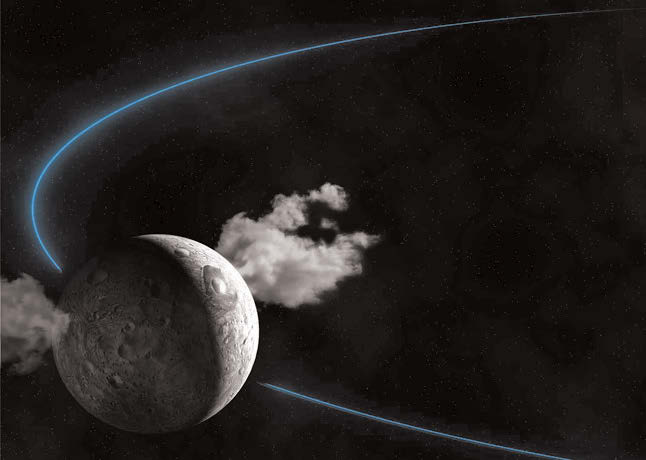
    WASHINGTON (TIP): NASA’s Dawn spacecraft has delivered the closest-yet views of the dwarf planet called Ceres that show the small world’s features in unprecedented detail.

    The new images show Ceres’ tall, conical mountain, crater formation features and narrow, braided fractures.

    “Dawn’s view is now three times as sharp as in its previous mapping orbit, revealing exciting new details of this intriguing dwarf planet,” said Marc Rayman, Dawn’s chief engineer and mission director at NASA’s Jet Propulsion Laboratory in California.

    Engineers and scientists will now refine their measurements of Ceres’ gravity field which will help mission planners in designing Dawn’s next orbit — its lowest — as well as the journey to get there.

    In late October, Dawn will begin spiraling toward this final orbit, which will be at an altitude of 375 km.

    At its current orbital altitude of 1,470 km, Dawn takes 11 days to capture and return images of Ceres’ whole surface.

    Each 11-day cycle consists of 14 orbits.

    Over the next two months, the spacecraft will map the entirety of Ceres six times.

    The spacecraft is using its framing camera to extensively map the surface, enabling 3-D modeling.

    Every image from this orbit has a resolution of 450 feet per pixel, and covers less than one percent of the surface of Ceres.

    At the same time, Dawn’s visible and infrared mapping spectrometer is collecting data that will give scientists a better understanding of the minerals found on Ceres’ surface.

    Dawn is the first mission to visit a dwarf planet, and the first to orbit two distinct solar system targets.

    It orbited protoplanet Vesta for 14 months in 2011 and 2012 and arrived at Ceres on March 6, 2015.