Tag: Science & Technology

  • Indian American Astronaut Sunita Williams in NASA’s First Commercial Crew

    Indian American Astronaut Sunita Williams in NASA’s First Commercial Crew

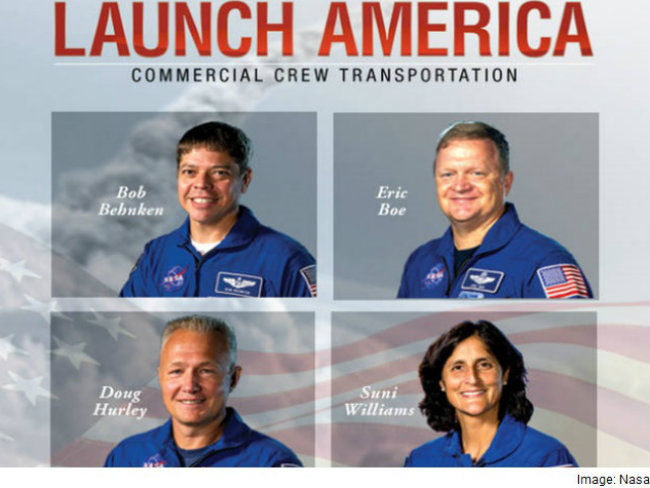
    Indian American astronaut Sunita Williams is among four astronauts who have been selected by NASA for commercial flights to the International Space Station (ISS) from US soil.

    They will work closely with company-led teams to understand their designs and operations as they finalise their Boeing CST-100 and SpaceX Crew Dragon spacecraft and operational strategies.

    Sunita Williams, Robert Behnken, Eric Boe and Douglas Hurley will be trained for commercial spaceflights that will return American launches to US soil and further open up low-Earth orbit transportation to the private sector, the US space agency said.

    “These distinguished, veteran astronauts are blazing a new trail — that will one day land them in the history books and Americans on the surface of Mars,” said NASA administrator Charles Bolden.

    Williams, a US Navy captain, received her commission in the Navy in May 1987 and became a helicopter pilot, logging more than 3,000 flight hours in more than 30 different aircraft.

    NASA chose Williams for the astronaut programme in 1998. She spent a total of 322 days in space and currently holds the record for total cumulative spacewalk time by a female astronaut (50 hours and 40 minutes).

    She now ranks sixth on the all-time US endurance list and second all-time for a female astronaut.

    “Their selection allows NASA to move forward with the training necessary to deliver on President Barack Obama’s ambitious plan for returning the launch of the US astronauts to US soil,” said John Holdren, assistant to the President for science and technology.

    “This is a new and exciting era in the history of US human spaceflight,” said Brian Kelly, director of flight operations at NASA’s Johnson Space Center in Houston.

    The Commercial Crew Transportation Capability (CCtCap) contracts with Boeing and SpaceX each require at least one crewed flight test with at least one NASA astronaut on board.

    To meet this requirement, the companies must also provide the necessary training for the crew to operate their respective vehicles. NASA is extensively involved with the companies and reviews their training plans.

    “Congratulations to Bob, Eric, Doug and Sunita and welcome to the Commercial Crew team,” noted John Elbon, Boeing vice president.

    “We look forward to working with such a highly-skilled and experienced group of NASA astronauts as we carve a path forward to launch in 2017.”

    The selections are the latest major milestone in the Obama administration’s plan to partner with the US industry to transport astronauts to space, create good-paying American jobs and end the nation’s sole reliance on Russia for space travel.

  • THE FUTURE OF TRAVEL? A TUBE CALLED HYPERLOOP

    THE FUTURE OF TRAVEL? A TUBE CALLED HYPERLOOP

    When asked to imagine the future of transportation, most might draw a car of the future, perhaps solar powered and autonomously driven. For a select few the way we’ll move ourselves across the world tomorrow is in a steel tube at speeds of almost 1,287 kmph.

    This was originally the brainchild of billionaire US entrepreneur Elon Musk, who envisioned being able to whisk passengers between San Francisco and Los Angeles in under half an hour.

    Two years after unveiling plans for a futuristic, high-speed Hyperloop transportation system, Musk has now announced plans for building a test track in southern California and a competition for prototype pods.

    Several firms soon announced plans for pilot projects in California, Texas and other sites, but Musk and his companies, which include privately-owned Space Exploration Technologies, or SpaceX, and Tesla Motors Inc electric car company , were not involved.

    Hyperloop Transportation Technologies and Dirk Ahlborn are one of those in the driving seat. “Well, imagine a capsule fil led with people that’s hovering inside the tube. Inside the tube you create a low pressure environment very similar to an airplane that’s at high altitudes. So now the capsule travelling inside the tubes doesn’t encounter as much resistance, and so therefore can travel really fast with very little energy ,” Ahlborn said. “It’s 100% solar-powered, that’s basically the invention here,” he said. The capsules would ride a cushion of air blasted from underlying skis, propelled by a magnetic linear accelerator, according to Musk’s plans, running above or below ground and along low pressure steel tubes.

    When Musk announced this idea in 2013, many were quickly excited -with the Hyperloop described as combining Concorde, a rail gun and air-hockey table; a 57page design brief imagines it carrying automobiles and people at speeds almost impossible for land-based vehicles. On June 15, SpaceX said it would be building a mile-long test track in California.

    But presenting the Hyperloop project to a European audience for the first time in Vienna at the Pioneer’s Festival in May , Ahl born said HTT were also on the cusp of building their own, 8-km track in California’s Quay Valley .

    “Quay Valley’s going to be full scale, we’re going to move around 10 million people a year, it’s going to be opening up in 2018,” he said, adding that he expects Quay Valley to be full commercially viable.”So we assume right now that in 2017 we will be finished with the building process and basically starting to do the optimization and testing before we open. I assume we will close very , very fast the contract for the first full length track.”

    With a strong business model Ahlborn says makes the railway industry look like a dinosaur, the cost, safety and reliability of Hyperloop can be a model for future, lightning fast transport.

  • Indian scientists develop e-Nose to sniff out hazardous gases

    Indian scientists develop e-Nose to sniff out hazardous gases

    NEW DELHI: Indian scientists have developed a sensor-based ‘Electronic Nose’ for sniffing out variety of gases at pulp and paper mill industries and environmental monitoring at other sensitive locations.

    The gases, emitted by these industries beyond certain concentration, may adversely affect human health and environment.

    This sophisticated portable device can measure odour concentration and odour intensity and thereby can immediately alert workers in such industrial units for remedial action.

    Though the ‘Electronic Nose’ is currently being successfully used in couple of paper mills in Karnataka and Tamil Nadu, the researchers are also working on its application to monitor gas emissions from any source, be it an industry or leakage of petroleum pipes going through fields or farms.

    The devices is developed by the Nagpur-based National Environmental Engineering Research Institute (NEERI) of the Council of Scientific and Industrial Research (CSIR) and the Centre for Development of Advanced Computing (C-DAC) of the Department of Electronics and Information Technology of the Government of India.

    “This has been the first attempt in India to develop such a product using odour sensors that make use of intelligent software to identify odorous molecules. It is also possible to train the software by feeding information based on observation of experts”, said a statement, issued by the ministry of science and technology on Wednesday night.

    The pulp and paper industry emits a variety of gases, namely, hydrogen sulphide, methyl mercaptan, dimethyl sulphide, and dimethyl disulphide. These gases beyond a certain concentration may adversely affect the environment and human health.

    “This newly developed ‘Electronic Nose’ helps in continuous monitoring of these gases, overcoming all limitations of the available analytical instruments that are not only expensive and time-consuming. The Electronic Nose can easily be operated at a pulp and paper mill industry”, said the ministry.

    The ‘Electronic Nose’ uses an array of sensors that function on the principle similar to that of human olfaction. The sensor array generates a pattern based on the type of aroma. The patterns obtained are trained to help interpret and distinguish amongst various odors and odorants as well as to recognize new patterns using advanced mathematical techniques, such as pattern recognition algorithms, principal component analysis, discriminant function analysis, cluster analysis, and artificial neural networks.

  • 5 schoolgirls from Bengaluru develop mobile App; win $10,000

    5 schoolgirls from Bengaluru develop mobile App; win $10,000

    Five teenage girl students from Bengaluru won the Technovation challenge at a global pitch event at San Francisco city in the US.

    Sanjana Vasanth, N. Anupama, Mahima Mehendale, Swasthi P. Rao and B. Navyashree, all aged 14, won the award for their app Sellixo which provides an online marketplace to buy and sell dry waste.

    Inspired by Prime Minister Narendra Modi’s Swachh Bharat Mission, the girls have have made an app where you can sell your garbage by just clicking on an ‘app, and a recycling unit comes to collect it!’

    The girls beat 400 other teams from 64 nations to bag $10,000 on June 25 with their app, which caters to dry waste producers like small shopkeepers, dry waste collectors (raddiwalas), recycling agencies and others. “In India, we have scrap dealers who go from house to house collecting waste. It is a tiring job, so we want to connect the buyers and sellers of dry waste,” said team member Swasthi P. Rao to media.

    “Once people know that they will get money for it, they will be motivated to actually collect it (dry waste), segregate it and dispose it properly,” added B. Navyashree to media.

    The girls competed under the team name Pentechan and pitched their idea to top female technology executives in the challenge organized by Adobe Foundation, CA Technologies, Google, Verizon, United Nations Women, UNESCO and MIT Media Lab.

    Pentechan started the app development process in January 2015 with the mentorship of Goldman Sachs company, and spent six months fine-tuning their business planning, marketing, communication, technology research and leadership.

    Technovation is a technology entrepreneurship programme for girls which aims to inspire the next generation of young women entrepreneurs.

    Sellixo is an android mobile application which provides an online marketplace for users to buy and sell dry waste. It targets the following customer segments: dry waste producers like small shopkeepers and apartment associations, dry waste collectors (raddiwaalas) and recycling agencies.

  • LG’s new touchscreens to make laptop thinner, lighter

    LG’s new touchscreens to make laptop thinner, lighter

    WASHINGTON (TIP): LG’s display subsidiary has announced that it is bringing drastically thinner, lighter touchscreens for notebooks later this year.

    According to the engadget.com, with full HD (1080p) resolution, the Advanced In-Cell Touch (AIT) screens substitute a touch panel layer for a touch sensor built into the LCD itself, which will makes it thin. It’s the same tech found in smartphones like LG’s G4.

    The new tech will make it thin by 25% whereas weight reductions could be as much as 35% compared to typical laptop touchscreen. The reduction in layers also means less light reflection, which LG Display reckons will make the new displays brighter and clearer.

    The company also plans to roll out multiple screen sizes, with stylus-compatible models also on the way.

  • New sensor chip to detect prostate cancer early

    LONDON (TIP): Researchers have developed a smart sensor chip that can detect prostate cancer more accurately and efficiently than current tests which rely heavily on antibodies.

    The sensor chip, able to pick up on subtle differences in glycoprotein molecules, will help improve the process of early stage prostate cancer diagnosis, researchers said.

    Glycoprotein molecules play an essential role in our immune response, because of which they are useful clinical biomarkers for detecting prostate cancer and other diseases.

    The team of chemical engineers and chemists at the University of Birmingham, created a sensor chip with synthetic receptors along a 2D surface to identify specific, targeted glycoprotein molecules that are differentiated by their modified carbohydrate chains.

    “There are two key benefits here. Crucially for the patient, it gives a much more accurate reading and reduces the number of false positive results,” said Paula M Mendes, professor of Advanced Materials and Nanotechnology at the University of Birmingham.

    “Furthermore, our technology is simple to produce and store, so could feasibly be kept on the shelf of doctors’ surgery anywhere in the world. It can also be recycled for multiple uses without losing accuracy,” she said.

    The findings show how the rate of false readings that come with antibody based diagnosis can be reduced by the new technology that focuses on the carbohydrate part of the molecule.

    The complex sugar structure in glycoprotein can be subtly different between samples from healthy and diseased patients.

    In order to achieve more accurate readings, the team wanted to identify the presence of disease by detecting a particular glycoprotein which has specific sugars in a specific location in the molecule.

    “Biomarkers such as glycoproteins are essential in diagnostics as they do not rely on symptoms perceived by the patient, which can be ambiguous or may not appear immediately,” Mendes said.

    “However, the changes in the biomarkers can be incredibly small and specific and so we need technology that can discriminate between these subtle differences -where antibodies are not able to,” Mendes said.

  • Indian Scientist from Jharkhand Finds Breakthrough Malaria Cure

    Indian Scientist from Jharkhand Finds Breakthrough Malaria Cure

    LONDON:  An Indian scientist, who suffered from malaria as a child, is among a group of top international scientists which has identified a key protein that if targeted stops the disease, paving the way for new treatments.

    Dr Mahmood Alam, from Lohardaga in Jharkhand, is among the authors of the new study published in the journal ‘Nature Communications’ today.

    Dr Alam and others at the Medical Research Council’s (MRC) Toxicology Unit based at the University of Leicester and the London School of Hygiene & Tropical Medicine identified a key protein, called a protein kinase, that if targeted stops malaria.

    “There has been a great deal of excitement among malaria scientists about the outcome of our research since it not only tells us about the biochemical pathways that are essential for the parasite to survive in our bodies but it also allows us to design drugs that can spot these essential pathways and thereby kill the parasite,” said Dr Alam.

    “As a kid I had malaria few times and I always wanted to study the malaria parasite so that effective drugs or vaccines could be developed,” said the scientist, who graduated in biotechnology in Ranchi and moved to Pondicherry for his Master’s in the subject from Pondicherry University.

    “To study the survival mechanisms of P falciparum, I joined the research group of Prof Andrew Tobin at University of Leicester and then at Medical Research Council, Toxicology Unit. Here I have used the cutting edge technology of phosphoproteomics to further study the biochemical pathways in malaria parasite,” he added.

    Malaria is caused by a parasite that lives inside an infected mosquito and is transferred into the human through a bite. Once inside the body, parasites use a complex process to enter red blood cells and survive within them. By identifying one of the key proteins needed for the parasite to survive in the red blood cells, the team has prevented the protein from working, thus killing the parasite. The discovery could be the first step in developing a new drug to treat malaria.

    The scientists – funded by the UK’s MRC and the Welcome Trust – used state-of-the-art methods to dissect the biochemical pathways involved in keeping the malaria parasite alive. This included an approach called chemical genetics where synthetic chemicals are used in combination with introducing genetic changes to the DNA of the parasite.

    They found that one protein kinase (PfPKG) plays a central role in various pathways that allow the parasite to survive in the blood. Understanding the pathways the parasite uses means that future drugs could be precisely designed to kill the parasite but with limited toxicity, making them safe enough to be used by children and pregnant women.

    Co-lead author of the study Professor Tobin said: “This is a real breakthrough in our understanding of how malaria survives in the blood stream and invades red blood cells.

    We’ve revealed a process that allows this to happen and if it can be targeted by drugs we could see something that stops malaria in its tracks without causing toxic side-effects.”

    According to the World Health Organisation, malaria currently infects more than 200 million people worldwide and accounts for more than 500,000 deaths per year.

  • NASA PROBE DETECTS METHANE ON PLUTO SURFACE

    MUMBAI (TIP): The Pluto-bound New Horizons spacecraft has confirmed the presence of methane on Pluto, Nasa stated on July 1.

    “The infrared spectrometer on Nasa’s spacecraft has detected frozen methane on Pluto’s surface,” the statement said.

    Earth-based astronomers first observed the chemical compound on Pluto in 1976, “but, these are our first detections,” said Will Grundy , the New Horizons surface composition team leader with the Lowell Observatory in Flagstaff, Arizona.

    With 13 days left for the historic Pluto encounter by New Horizons, designed and operated by the John Hopkins University Applied Physics Laboratory , at about 5.15 pm (IST) on July 14, after covering a distance of nearly three billion miles and flying for nine years, Nasa on Wednesday released images showing the view from the spacecraft. While zooming towards Pluto the spacecraft tapped its accelerator on Tuesday night and tweaked its path towards the system. It is now moving at 32,500 miles per hour and is about 10 million miles from the Pluto system.

    Henry Throop, a member of the spacecraft team, had said that he believed the mission will be successful in what is being held as humanity’s first exploration to Pluto.

  • SOON, ANIMAL FAT, FARM WASTE TO POWER FLIGHTS

    Sometime this summer, a United Airlines flight will take off from Los Angeles International Airport bound for San Francisco using fuel generated from farm waste and oils derived from animal fats.

    For passengers, little will be different -the engines will still roar, the seats in economy will still be cramped -but for the airlines and the biofuels industry , the flight will represent a long-awaited milestone: the first time a domestic airline oper ates regular passenger flights using an alternative jet fuel.

    For years, biofuels have been seen as an important part of the solution to reducing greenhouse gas emissions. And airlines, with their concentration around airports and use of the same kind of fuel, have been seen as a prom ising customer in a biofuels industry that has struggled to gain traction. Now that relationship is showing signs of taking off.

    United plans to announce a $30 million investment in one of the largest producers of aviation biofuels, Fulcrum BioEnergy , the biggest investment so far by a domestic airline in the small but growing field of alternative fuels.(Cathay Pacific, based in Hong Kong, last year announced a smaller investment in Fulcrum.) The quantities that United is plan ning to buy from Ful crum constitute a small drop in its vo luminous fuel con sumption. Last year, United’s fleet con sumed 3.9 billion gal lons of fuel, at a cost of $11.6 billion.

    But airlines are increasingly under pressure to reduce carbon emissions.

    The Obama adminis tration proposed this month that new limits on aviation emissions be developed, and the International Civil Aviation Organization, a United Nations agency , is expected to complete its own negotiations on limiting carbon pollution by February 2016.

    For the first two weeks, four to five flights a day will carry a fuel mixture that is 30% biofuel and 70%traditional jet fuel; after that, the fuel will be blended into the overall supply , United said.

  • Artificial blood transfusion may be reality by 2017

    Artificial blood transfusion may be reality by 2017

    LONDON (TIP): The world’s first human trial of artificial blood grown in a lab from stem cells is set to take place in the UK by 2017.

    The UK’s NHS (National Health Service) Blood and Transplant has announced that the manufactured blood will be used in clinical trials with human volunteers within two years.

    Research led by scientists at the University of Bristol and NHS Blood and Transplant used stem cells from adult and umbilical cord blood to create a small volume of manufactured red blood cells.

    It is hoped that when the production of this lab-produced blood is successfully scaled up, it will offer an alternative to patients with blood disorders such as sickle cell Anaemia and Thalassemia who require treatment with regular transfusions and for whom it is difficult to find compatible donors.

    The clinical trial of manufactured red blood cells is designed to compare the survival of red cells manufactured from stem cells with that of standard blood donor red blood cells. This will involve a group of 20 volunteers who will receive a small volume transfusion of between five and ten millilitre of the lab-produced blood. “Scientists across the globe have been investigating for a number of years how to manufacture red blood cells to offer an alternative to donated blood to treat patients,” said Dr Nick Watkins, NHS Blood and Transplant’s assistant director of research and development.”We are confident that by 2017 our team will be ready to carry out the first early phase clinical trials in human volunteers,” Watkins said.

    “These trials will compare manufactured cells with donated blood. The intention is not to replace blood donation but provide specialist treatment for specific patient groups,” he said.

    “Research has laid the foundation for current transfusion and transplantation practices. Continued investment in research and development is critical to our role in saving and improving lives through blood and organ donation,” said Dr Nick Watkins, NHS Blood and Transplant’s assistant director of research and development.

  • WILL TWEAKED MICROBES MAKE MARS EARTH-LIKE?

    WILL TWEAKED MICROBES MAKE MARS EARTH-LIKE?

    WASHINGTON (TIP): US defence scientists are planning to use genetically engineered algae, bacteria and plants to radically transform the climate of Mars and terraform it into an Earth-like planet.

    Scientists from Defense Advanced Research Projects Agency (DARPA) aim to warm up and potentially thicken Mars’ atmosphere by growing green, photosynthesising plants, bacteria, and algae on the barren surface of the red planet. “For the first time, we have the technological toolkit to transform not just hostile places here on Earth, but to go into space not just to visit, but to and stay,” Alicia Jackson, deputy director of DARPA’s new Biological Technologies Office said. recently at a DARPA-hosted biotech conference.

    For Since the last year, Jackson’s lab has been working on learning how to more the process to easily genetically engineer organisms of all types, not just e-coli and yeast, which are mostly commonly used in synthetic biology projects.

    “Out of There are anywhere from 30 million to 30 billion organisms on this Earth, we use two right now for engineering biology,” she said. “I want to use any organism that has properties I want — I want to quickly map it and quickly engineer it. If you look at genome annotation software today, it’s not built to quickly find engineer able systems [and genes],” she was quoted as saying by ‘motherboard.vice.com’.

    DARPA and some of its researchers partners have created a software called DTA GView, which Jackson calls the ‘Google Maps of genomes’, in which genomes of several organisms can be pulled up on the programme, which immediately shows a list of known genes and where they are located in the genome.

    “This torrent of genomic data we’re now collecting is awesome, except they sit in databases, where they remain data, not knowledge. Very little genetic information we have is actionable,” she said. “With this, the goal is to, within a day, sequence and find where I can best engineer an organism,” she added.

    The goal is to pick and choose the best genes from whatever form of life we want and to edit them into other forms of life to create something entirely new.

    This will probably first happen in bacteria and other microorganisms, but the goal may be is to do this with more complex, multicellular organisms in the future.

    DARPA plans to use specifically engineered organisms to help repair environmental damage. Jackson said that after a natural or man-made disaster, it would be possible to engineer new types of extremophile organisms capable of surviving in a scarred wasteland. As those organisms photosynthesised and thrived would naturally bring that environment back to health, she said.With enough practice turning Earth’s damaged landscapes back into places hospitable for life, Jackson thinks we’ll have what it takes to eventually try to colonise the solar system.

  • Heart disease deaths can be halved : Indian American researcher Dr. Shivani Patel

    Heart disease deaths can be halved : Indian American researcher Dr. Shivani Patel

    According to new research led by Indian American Dr. Shivani Patel of the Rollins School of Public Health at Emory University in Atlanta, Georgia – Half of heart disease deaths in the United States are caused by preventable factors which can be avoided and the number of deaths can be halved.

    Major modifiable cardiovascular risk factors collectively accounted for half of cardiovascular deaths in U.S. adults aged 45 to 79 years in 2009 to 2010 according to the analysis.

    Research showed that fatalities due to preventable risk factors like obesity and smoking etc account for 50% of the deaths and this ratio changes from state to state.

    Unexpectedly, “there wasn’t a huge difference” in cardiovascular-related deaths “between best off and worst off states,” said lead author Shivani A. Patel.

    To estimate how many heart disease deaths are due to preventable factors, Patel and her coauthors analyzed responses from more than 500,000 people, ages 45 to 79, to a landline phone-based behavioral risk factor survey in 2009 and 2010, as well as data from the National Health and Nutrition Examination Survey.

    The researchers write in Annals of Internal Medicine that had it been possible to completely eliminate every case of high cholesterol, high blood pressure, diabetes, obesity and smoking in the U.S., 54 percent of heart disease deaths among men and almost 50 percent of heart disease deaths among women in 2010 could have been prevented.

    Research further showed that if every state brought levels of such risk factors down to the best level any state has so far achieved, about 5 percent of heart disease deaths would be prevented.

    “Even the best states aren’t doing that well,” Patel said.

    Smoking is on the decline, and obesity and diabetes may soon become the number one risk factors for cardiovascular disease, Patel said.

    Health care providers should work to not only treat these risk factors, but also prevent them by intervening with patients at an early age, she said.

    In 2009 and 2010, the states with the lowest levels of risk factors were in the West, like Colorado, and those with the highest levels were in the South, including Kentucky, West Virginia, Mississippi, Alabama and Louisiana.

    The study’s complete findings can be found here : http://annals.org/article.aspx?articleid=2362308 | Cardiovascular Mortality Associated With 5 Leading Risk Factors: National and State Preventable Fractions Estimated From Survey Data

    The Research Team : Dr. Shivani A. Patel, PhD; Munir Winkel, MSc; Mohammed K. Ali, MBChB; K.M. Venkat Narayan, MD; and Neil K. Mehta, PhD

    About : Dr. Shivani A. Patel – Shivani Patel is a social epidemiologist who received her MPH from the University of Michigan and her PhD from the Johns Hopkins Bloomberg School of Public Health. Her dissertation focused on household- and community-level determinants of child neurocognitive development in the southern plains of Nepal. She prioritizes research that addresses health concerns of marginalized populations, particularly in South Asia.

    Dr. Patel joined the Emory Global Diabetes Research Center as a postdoctoral fellow in 2013, and was hired as assistant professor in January 2015. Her primary project includes quantifying the contribution of modifiable risk factors to state-level disparities in cardiovascular mortality in the US. In addition, she is collaborating with EGDRC faculty to investigate socioeconomic determinants of cardiometabolic health in India, including the study of urban-rural differences in weight status across the lifecourse.

  • Indian American researcher at Purdue Arun Ghosh finds Key to Curing MERS

    Indian American researcher at Purdue Arun Ghosh finds Key to Curing MERS

    Purdue University researchers, including an Indian American, have found molecules that shut down the activity of an enzyme essential to the Middle East Respiratory Syndrome virus replication. The virus is in the international spotlight again as South Korea faces the largest MERS outbreak outside the Middle East.

    The virus emerged in 2012 and was mostly confined to the Middle East until 2014 when cases were identified in the U.S., Britain, France and Italy. To date, 25 countries have reported cases, according to the WHO.

    “The virus affects people differently and for many the symptoms are not life-threatening, but for others it can lead to severe respiratory distress,” said Andrew Mesecar, Purdue’s Walther Professor of Cancer Structural Biology and professor of biological sciences and chemistry who leads the research team. “It is a threat to public health we take very seriously and there currently is no treatment or vaccine. We continue to study the virus to improve our understanding of how it works and ways to prevent its spread.”

    Mesecar and Arun Ghosh, Purdue’s Ian P. Rothwell Distinguished Professor of Chemistry and Medicinal Chemistry and Molecular Pharmacology, have been studying the virus and creating and testing molecular compounds that could lead to potential treatments since shortly after MERS was discovered.

    The team identified molecules that inhibit an enzyme essential to MERS virus replication, and also discovered a characteristic of the enzyme that is very different from other coronaviruses, the family of viruses to which MERS-CoV belongs, Mesecar said.

    “This enzyme is a prime target — an Achilles’ heel of the virus.”

    The team targeted an enzyme within the MERS virus, called 3C-like protease. Without the enzyme, the virus is unable to create more viruses to further an infection.

    “We captured the protease’s atomic structure through this work, which provides a map for designing potent new drugs to fight MERS,” said Mesecar.

    The MERS virus emerged in 2012 and was mostly confined to the Middle East until 2014 when cases were identified in the U.S., Britain, France and Italy. To date, 25 countries have reported cases, according to WHO.

    “It is a threat to public health, and there is currently no treatment or vaccine. We continue to study the virus to improve our understanding of how it works and ways to prevent its spread.”

    The study was published in the Journal of Biological Chemistry.

  • Apple Maps is getting an all new public transit feature that Google Maps doesn’t have

    Apple Maps is getting an all new public transit feature that Google Maps doesn’t have

    If you’ve ever taken the subway in a major city or have gotten lost in a large travel terminal like Grand Central, you probably understand how frustrating it can be to find the exit that brings you closest to your destination.

    Apple plans to make that a whole lot easier in iOS 9. In addition to adding public transit directions to Apple Maps, the company is also adding a feature that can tell you exactly which exit you should take when departing the subway or train station.

    So, for example, if you’re sitting at the front of the train, Apple may suggest that you take the exit in the middle or at the opposite end of the track because it might be closer to where you’re going.

    It’s a small feature, but one that’s bound to be really useful in a big city like New York, where getting out at the right exit could save a lot of time and confusion.

    Google Maps has an excellent public transit guide, but it doesn’t have this particular capability. It does, however, let you know which direction you’re facing so you can tell which way to walk. If you look closely at the little blue dot that tells you where you are in Google Maps, you’ll notice there’s an arrow pointing in the direction you’re facing.

    This is just one of several improvements coming to Apple Maps when iOS 9 launches in the fall. Siri will also be able to tap into Apple Maps, so you’ll be able t0 ask for specific directions to a given place without having to type in it.

    At launch, public transit directions for Apple Maps will be available in Baltimore, Chicago, Berlin, London, Mexico City, New York, Philadelphia, San Francisco, Toronto, and Washington DC.

  • Blood Tests May Spot Pancreatic Cancer Earlier – Research

    Blood Tests May Spot Pancreatic Cancer Earlier – Research

    An international team of researchers, including an Indian American, have found a blood test where with just a drop of blood doctors may one day be able to detect pancreatic cancer in its early stages, before it has become deadly.

    With this new study, researches could identify 100 percent of patients with late-stage pancreatic cancer, as well as those with earlier stage disease, by looking for a protein in the blood that is made in abundance by tumor cells.

    That protein turns up in tiny virus-sized particles, called exosomes, which are excreted by all of the body’s cells, according to the study published in Nature. But, by good fortune, the protein turns up in exosomes only when there is cancer, so its presence could be an early, and testable, marker for the disease.

    it’s rare to discover pancreatic cancer early, said study coauthor Dr. Raghu Kalluri, professor and chairman of the department of cancer biology at the MD Anderson Cancer Center. “People don’t feel any symptoms that make them want to go to the clinic until their cancer is stage 3 or stage 4,” he added. “Using this test we were 100 percent accurate at identifying all cancer patients.”

    Kalluri and his colleagues examined serum samples from 190 patients with pancreatic cancer, 32 patients with breast cancer and 100 healthy volunteers. They found levels of the protein in exosomes correlated with the severity of the disease — so there was more in patients with more advanced disease. It was not present in the healthy volunteers.

    Even more promising are the findings from the seven patients with early pancreatic cancer that were detectable through their protein levels. Further, levels dropped when patients had surgery to remove their tumors, so the marker could also be used to follow the progression of the disease, Kalluri said.

    Kalluri says that a screening test might be available in as little as a year. But, he said, “this is just a speculation based on the current strength of the study.”

    Had such a test been available, it might have save the life of Dr. Teresa Flippo-Morton, a prominent breast surgeon from Charlotte, N.C.

    “She was an expert in oncology,” said Dr. Derek Raghavan, a colleague and president of the Levine Cancer Institute where Flippo-Morton worked. “She did all the things you are supposed to do. She wasn’t a smoker. She lived a healthy lifestyle. She had a good work-life balance. She exercised. She took vacations. It is a good example of how this disease sneaks up on people and gives no warning.”

    A test for pancreatic cancer could save lives, perhaps even Flippo-Morton’s, Raghavan said.

    “If this study is confirmed, this will make a difference because it’s one of the cancers we don’t have any reliable screening test for,” he added. “It kills people and it kills them quickly.”

    A screening test could have a huge effect, said Dr. Timothy Donahue, an associate professor of surgery and molecular and medical pharmacology and chief of pancreas and gastrointestinal surgery at the University of California, Los Angeles.

    In 2015 48,960 Americans will be diagnosed with pancreatic cancer, according to estimates by the National Cancer Institute. And an estimated 40,560 will die from the disease. It is the most deadly cancer with just 7.2 percent surviving five years.

    “Pancreatic cancer is the fourth leading cause of cancer death in this country and it’s predicted, if the current prevalence and survival rate continues, that it will become number two within the next five to 10 years,” Donahue said. “Something like this could potentially flatten that curve and change the epidemiology of pancreatic cancer.”

  • Indian American scientist Neal Devaraj designs artificial cell membrane – AI

    Indian American scientist Neal Devaraj designs artificial cell membrane – AI

    Scientists led by Indian-American Neal Devaraj have designed an artificial cell membrane that can sustain continuous growth as a living cell.

    Devraj who is a professor at the University of California in San Diego said; “The membranes that we created, though completely synthetic, mimic several features of more complex living organisms, such as the ability to adapt their composition in response to environmental cues.”

    Now scientists can replicate more accurately the behaviour of the living cell membranes.

    He added, “For developing the growing membrane, we substituted a complex network of biochemical pathways used in nature with a single autocatalyst that simultaneously drives membrane growth.”

    The above video shows Growing cell membranes in a time lapse sequence (The numbers correspond to minutes of duration).

    According to the study conducted by Devraj and his team, the designs of simplified lipid-synthesizing membrane uses a synthetic, membrane-embedded catalyst that is capable of self-reproduction.”

  • FACEBOOK REVEALS NEW SECURITY TOOL TO REMOVE MALICIOUS SOFTWARE

    FACEBOOK REVEALS NEW SECURITY TOOL TO REMOVE MALICIOUS SOFTWARE

    WASHINGTON (TIP): Facebook announced that it has been using a new security tool to help detect and remove malicious software for users of the world’s biggest social network.

    Facebook said it was working with Kaspersky Lab, bolstering a program implemented with other online security firms including ESET, F-Secure and Trend Micro.”Thanks to the collaboration with these companies, in the past three months we have helped clean up more than two million people’s computers that we detected were infected with malware when they connected to Facebook,” said Trevor Pottinger, a Facebook security engineer.

    “In these cases, we present a cleanup tool that runs in the background while you continue using Facebook, and you get a notification when the scan is done to show you what it found.”

    Pottinger said the program uses “a combination of signals to help find infections and get the malware off of your computer for good, even if the malware isn’t actively spreading spam or harmful links.”

    Kaspersky Lab’s Kate Kochetkova said in a separate blog post that Facebook users are often targeted in online fraud schemes such as “phishing,” which are faked emails designed to get recipients to download malware.

    “Facebook is a major aim for phishers: one in five phishing scams targets Facebook notifications. So be vigilant when you receive emails appearing to be from Facebook: as they can be fake. There are lots of Trojans targeting Facebook users as well,” she said.

    Fraudsters may also use Facebook, Kochetkova said, to “‘like’ weird things and promote questionable goods and services on your behalf.”

  • NASA SPOTS MORE MYSTERIOUS BRIGHT SPOTS ON CERES

    NASA SPOTS MORE MYSTERIOUS BRIGHT SPOTS ON CERES

    WASHINGTON (TIP): New images of Ceres from Nasa’s Dawn spacecraft has provided more visible images of mysterious bright spots and also revealed a pyramid-shaped peak towering over a relatively flat landscape.

    Dawn has been studying the dwarf planet Ceres, the largest object in the main asteroid belt between Mars and Jupiter, in detail from its second mapping orbit, which is 4,400 km above Ceres.

    A new view of its intriguing bright spots, located in a crater 90 km across, shows even more small spots in the crater than were previously visible, the US space agency said.

    At least eight spots can be seen next to the largest bright area, which scientists think is approximately 9km wide.

    Although ice and salt are leading candidates that could explain these spots, scientists are considering other options, too.

    “The surface of Ceres has revealed many interesting and unique features. For example, icy moons in the outer solar system have craters with central pits but on Ceres central pits in large craters are much more common,” said Carol Raymond, deputy principal examiner for the Dawn mission, based at Nasa’s Jet Propulsion Laboratory in Pasadena, California.

    “These and other features will allow us to understand the inner structure of Ceres that we cannot sense directly.”

    Dawn’s visible and infrared mapping spectrometer allows scientists to identify specific minerals present on Ceres by looking at how light is reflected.

    Each mineral reflects the range of visible and infrared-light wavelengths in a unique way and this signature helps scientists determine the components of Ceres.

    So, as the spacecraft continues to send back more images and data, scientists will learn more about the mystery bright spots, Nasa said.

    In addition to the bright spots, the latest images also show a mountain with steep slopes protruding from a relatively smooth area of the dwarf planet’s surface.

    The structure rises about five km above the surface.

    Dawn is the first mission to visit a dwarf planet and the first to orbit two distinct targets in our solar system.

    It arrived at Ceres on March 6, 2015 and will remain in its current altitude until June 30.

  • Roach-inspired robot can traverse obstacles

    Roach-inspired robot can traverse obstacles

    LOS ANGELES (TIP): Researchers have taken inspiration from the cockroach to create a robot that can use its body shape to manoeuvre through a densely cluttered environment.

    Fitted with the characteristic rounded shell of the discoid cockroach, the running robot can perform a roll manoeuvre to slip through gaps between grass-like vertical beam obstacles without the need for additional sensors or motors. While many terrestrial robots are developed with a view to perform a wide range of tasks by avoiding obstacles, few have been specifically designed to traverse obstacles.

    “The majority of robotics studies have been solving the problem of obstacles by avoiding them, which depends on using sensors to map out the environment and algorithms that plan a path to go around obstacles,” said study author Chen Li, from the University of California. “However, when terrain becomes densely cluttered, especially as gaps between obstacles become comparable or even smaller than robot size, this approach starts to run into problems.”

    In their research, the scientists used high-speed cameras to study the movement of discoid cockroaches through an artificial obstacle course containing grass-like vertical beams with small spacing.

    Living on the floor of tropical rainforests, this specific type of cockroach frequently encounters a wide variety of cluttered obstacles, such as blades of grass, shrubs, leaf litter, tree trunks, and fungi.

    The cockroaches were fitted with three different artificial shells to see how their movement was affected by body shape when moving through the vertical beams. The shapes of the three shells were: an oval cone with a similar shape to the cockroaches’ body; a flat oval; and a flat rectangle.

    When the cockroaches were unmodified, the researchers found that, although they sometimes pushed through the beams or climbed over them, they most frequently used a fast and effective roll manoeuvre to slip through the obstacles.

    In these instances, the cockroaches rolled their body so that their thin sides could fit through the gaps and their legs could push off the beams to help them manoeuvre through the obstacles.

    As their body became less rounded by wearing the three artificial shells, it became harder for the cockroaches to move through the obstacles, because they were less able to perform the fast and effective roll manoeuvre.

    After examining the cockroaches, the researchers then tested a small, rectangular, six-legged robot and observed whether it was able to traverse a similar obstacle course.

    The researchers found that with a rectangular body the robot could rarely traverse the grass-like beams, and frequently collided with the obstacles and became stuck between them.

    When the robot was fitted with the cockroach-inspired rounded shell, it was much more likely to successfully move through the obstacle course using a similar roll manoeuvre to the cockroaches.

  • Cars’ bluetooth devices to help monitor traffic

    LONDON (TIP): Researchers have developed a new application that generates traffic information of cities and roads by detecting the Bluetooth device boarded on vehicles. The main goal of this system, developed by researchers from Universidad Politecnica de Madrid in Spain, is to generate information of city traffic and roads from the identification of Bluetooth devices boarded on vehicles.

    This information includes magnitudes such as travel time between two points or the distribution of traffic at intersections, among others, that will allow city councils and highway concessionaires to carry out a better management of traffic network in order to avoid congestion.

    The congestion problem makes each driver waste on average over 30 hours a year worldwide. This waste of time is translated in 88 billion Euros a year in US and 839 million Euros in the city of Madrid, researchers said.

    Thus, it is necessary to implement measures to improve mobility in both roads and urban road infrastructures to alleviate the current situation.

  • METHANE ON MARS ROCKS SUGGESTS POSSIBILITY OF LIFE

    METHANE ON MARS ROCKS SUGGESTS POSSIBILITY OF LIFE

    NEW YORK (TIP): In a clue to possibility of life below the surface of Mars today, an international team of researchers has discovered traces of methane in Martian meteorites.

    For the study, the researchers examined samples from six meteorites of volcanic rock that originated on Mars. All six samples also contained methane, which was measured by crushing the rocks and running the emerging gas through a mass spectrometer.

    The discovery hints at the possibility that methane could be used as a food source by rudimentary forms of life beneath the Martian surface. On Earth, microbes do this in a range of environments.

    “Our findings will likely be used by astrobiologists in models and experiments aimed at understanding whether life could survive below the surface of Mars today,” said study co-author Sean McMahon from Yale University in the US.

    “Even if Martian methane does not directly feed microbes, it may signal the presence of a warm, wet, chemically reactive environment where life could thrive,” McMahon said. The discovery was part of a joint research project led by the University of Aberdeen in Britain, in collaboration with the Scottish Universities Environmental Research Centre, the University of Glasgow, Brock University in Ontario, and the University of Western Ontario.

    “One of the most exciting developments in the exploration of Mars has been the suggestion of methane in the Martian atmosphere,” said University of Aberdeen professor John Parnell, who directed the research.

    Recent and forthcoming missions by NASA and the European Space Agency are looking at this. However, it is so far unclear where the methane comes from, and even whether it is really there, Parnell said.

    “However, our research provides a strong indication that rocks on Mars contain a large reservoir of methane,” Parnell pointed out.

  • ISRO’S ‘GAGAN’ TO PROVIDE NAVIGATIONAL SUPPORT TO RAILWAYS

    ISRO’S ‘GAGAN’ TO PROVIDE NAVIGATIONAL SUPPORT TO RAILWAYS

    AHMEDABAD (TIP): Isro has said it will provide navigational support to the country’s railways through ‘Gagan’ (GPS-aided geo-augmented navigation) system.

    “Isro will provide satellite-generated information to the railways through space technology-based tools that will provide safety at unmanned level crossings,” Isro chairman A S Kiran Kumar told reporters here yesterday in reply to a question on how will Isro help the railways in using the navigational support system.

    “There are host of requirements for using Gagan in railways. We are providing some solutions,” Kumar said.

    Gagan is an indigenous navigational guide system developed by Isro on the lines of GPS system of the US.

    Elaborating on it, Kumar said that at some places the railway tracks are under stress. If water accumulation happens, then based on digital elevation model data, other host of information which they generate, can be given.

    “There is specific information provided for aligning the railway tracks, particularly in mountainous regions, and also identifying tracks which are most stable when you are going through tunnels. In all these things, space technology is useful,” he said.

    “We are trying to provide space technology-based tools for enabling them to deal with unmanned level crossings,” he said.

    Gagan was jointly developed by the Isro and Airports Authority of India (AAI) with a view to assist aircraft in accurate landing.

    The Gagan signal is being broadcast through two Geostationary Earth Orbit (GEO) satellites – GSAT8 and GSAT10.

    With the use of Gagan software system, a train would know the location of any unmanned level crossing and soon a a warning signal can be given.

    As soon as the warning signal will be given, the train’s hooter will automatically start when it comes near an unmanned crossing.

  • World’s thinnest bulb created from graphene

    WASHINGTON (TIP): Researchers have created the world’s thinnest light bulb using graphene, an atomically thin and perfectly crystalline form of carbon, as a filament.

    Led by Young Duck Kim, a postdoctoral research scientist in James Hone’s group at Columbia University School of Engineering, a team of scientists from Columbia, Seoul National University, and Korea Research Institute of Standards and Science said that they have demonstrated — for the first time — an on-chip visible light source using graphene as a filament.

    They attached small strips of graphene to metal electrodes, suspended the strips above the substrate, and passed a current through the filaments to cause them to heat up.”We’ve created what is essentially the world’s thinnest light bulb,” said Hone, Wang Fon-Jen professor of mechanical engineering at Columbia Engineering.

    “This new type of ‘broadband’ light emitter can be integrated into chips and will pave the way towards the realisation of atomically thin, flexible, and transparent displays, and graphene-based on-chip optical communications,” said Hone.

  • GLASS FOUND ON MARS HINTS AT SIGNS OF PAST LIFE

    GLASS FOUND ON MARS HINTS AT SIGNS OF PAST LIFE

    MUMBAI (TIP): In a significant discovery, glass has been found on Mars, throwing up the possibility of past life on the Red Planet, Nasa announced on Tuesday. The breakthrough was attained by Nasa’s Mars Reconnaissance Orbiter which detected deposits of glass within impact craters on Mars.

    “Though formed in the searing heat of a violent impact, such deposits might provide a delicate window into the possibility of past life on the Red Planet,” Nasa said.

    According to Nasa, knowing that impact glass can preserve ancient signs of life – and now knowing that such deposits exist on the Martian surface today – opens up a potential new strategy in the search for ancient Martian life.

    One of the craters contain ing glass, called Hargraves, is near the Nili Fossae trough, a 650-km-long depression that stretches across the Martian surface. The region is one of the landing site contenders for Nasa’s Mars 2020 rover, a mission to cache soil and rock samples for possible return to earth. Nasa states that Nili Fossae trough is already of scientific interest because the crust in the region is thought to date back to when Mars was a much wetter planet.

    The region also is rife with what appear to be ancient hydrothermal fractures, warm vents that could have provided energy for life to thrive just beneath the surface.

    During the past few years, research has shown evidence about past life has been preserved in impact glass on Earth. A 2014 study led by scientist Peter Schultz of Brown University in Providence, Rhode Island, found organic molecules and plant matter entombed in glass formed by an impact that occurred millions of years ago in Argentina. He suggested that similar processes might preserve signs of life on Mars, if they were present at the time of an impact.

  • NEW SENSOR TO DETECT CANCER, HIV, HEPATITIS

    MOSCOW (TIP): Researchers have developed a highly sensitive nanomechanical sensor that can detect cancerous tumours as well as viral disease markers for HIV, hepatitis and herpes.

    Researchers from Moscow Institute of Physics and Technology (MIPT) developed the ultracompact nanomechanical sensor for analysing the chemical composition of substances and detecting biological objects.

    The sensor can detect viral disease markers, which appear when the immune system responds to incurable or hard-to-cure diseases, including HIV, hepatitis, herpes, and many others.

    The sensor will also enable doctors to identify tumour markers, whose presence in the body signals the emergence and growth of cancerous tumours.

    The highly sensitive sensor will allow for diagnosing diseases long before they can be detected by any other method, which will pave the way for a new-generation of diagnostics, researchers said.

    Calculations done by the researchers, Dmitry Fedyanin and Yury Stebunov, showed that the new sensor will combine high sensitivity with a comparative ease of production and miniature dimensions, allowing it to be used in all portable devices, such as smartphones, wearable electronics, etc.

    One chip, several millimetres in size, will be able to accommodate several thousand such sensors, configured to detect different particles or molecules, researchers said.

    The device, described in a study published in the journal Scientific Reports, is an optical or, more precisely, optomechanical chip.

    “We’ve been following the progress made in the development of micro- and nanomechanical biosensors for quite a while now and can say that no one has been able to introduce a simple and scalable technology for parallel monitoring that would be ready to use outside a laboratory,” the researchers said.

    “So our goal was not only to achieve the high sensitivity of the sensor and make it compact, but also make it scalable and compatible with standard microelectronics technologies,” researchers said.