Tag: Science & Technology

  • Now, aircraft wings that can ‘self heal’ on the fly

    NEW DELHI (TIP): Even the researchers involved in the project describe it as “verging on science fiction”. A team of British scientists has produced aircraft wings that can fix themselves after being damaged, suggesting that self-healing technology will soon become commonplace.

    Their research, due to be presented at a Royal Society meeting in London this week, is being billed as an important step in an emerging field which could soon produce self-healing nail polish and a cure for cracked mobile phone screens.

    A team at the University of Bristol has been quietly developing the technology for the past three years. Speaking exclusively to The Independent on Sunday, its leader, Professor Duncan Wass, said he expected self-healing products to reach consumers in the “very near future”.

    His team specialises in modifying carbon fibre composite materials, the strong but lightweight substances used increasingly widely in the manufacture of everything from commercial aircraft wings to sports racquets and high-performance bicycles.

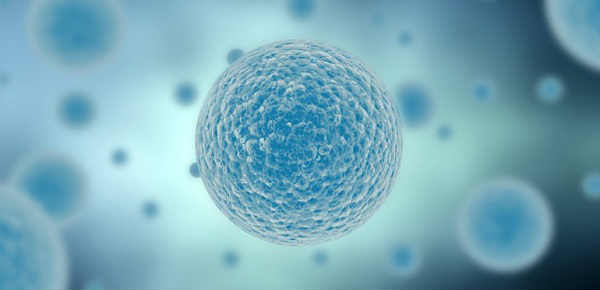
    Professor Wass and his team have been working with aerospace engineers at the university, who wanted to know if there was a way of preventing the tiny, almost undetectable cracks that form in an aircraft’s wings and fuselage. The team’s ingenious solution started “on the back of an envelope” but has since developed into useable technology. It involves adding tiny, hollow “microspheres” to the carbon material – so small that they look like a powder to the human eye – which break on impact, releasing a liquid healing agent.

  • Young solar system around nearby star discovered

    WASHINGTON (TIP): An international team has discovered a young planetary system that shares remarkable similarities to our own early solar system. The images reveal a ring-like disk of debris surrounding a Sun-like star, in a birth environment similar to our Sun.

    The disk appears to be sculpted by at least one unseen solar system-like planet, is roughly the same size as our solar system’s Kuiper Belt and may contain dust and icy particles.

    Located just beyond Neptune’s orbit, the Kuiper Belt contains numerous icy dwarf planets such as Pluto, Haumea, and Makemake.

    This work provides a valuable key to understanding the early formation of the Sun and planets.

    “The discovery of the bright ring of orbiting the star HD 115600 changes everything. It is kind of like looking at outer solar system when it was a toddler,” said lead astronomer Thayne Currie from the Subaru Telescope in Hawaii.

    Remarkably, the ring is almost exactly the same distance from its host star as the Kuiper Belt is from the Sun and it receives about the same amount of light.

  • Indian Scientist Builds New Tool Which Can Predict Solar Storms a Day in Advance

    Indian Scientist Builds New Tool Which Can Predict Solar Storms a Day in Advance

    An Indian-origin scientist has built a novel tool that can predict large solar storms more than 24 hours in advance and save systems on the Earth from the coronal mass ejections (CMEs).

    Developed by Neel Savani, visiting researcher at Imperial College London and space scientist at NASA, the new measurement and modelling tool takes a closer look at where mass ejections originate from on the Sun and makes use of a range of observatories to track and model the evolution of the cloud.

    Large magnetic storms from the Sun, which affect technologies such as GPS and utility grids, could soon be predicted more than 24 hours in advance.

    Coronal mass ejections (CMEs) are eruptions of gas and magnetised material from the Sun that have the potential to wreak havoc on satellites and Earth-bound technologies, disrupting radio transmissions and causing transformer blowouts and blackouts.

    These mass ejections can cause problems with GPS technology – used by all kinds of vehicles, from cars to oil tankers to tractors. For example, they can affect the ability of aircraft systems to judge precisely a plane’s distance from the ground for landing, leading to planes being unable to land for up to an hour.

    Currently, satellites can only tell with any certainty the orientation of a mass ejection’s magnetic field when it is relatively close to the Earth, giving just 30-60 minutes’ notice.
    These mass ejections can cause problems with GPS technology – used by all kinds of vehicles, from cars to aircraft systems.

    “As we become more entwined with technology, disruption from large space weather events affects our daily lives more and more. Breaking through that 24-hour barrier to prediction is crucial for dealing efficiently with any potential problems before they arise,” Dr Savani explained.

    Coronal mass ejections (CMEs) are eruptions of gas and magnetised material from the Sun that have the potential to wreak havoc on satellites and Earth-bound technologies, disrupting radio transmissions and causing transformer blowouts and blackouts.

    Dr Savani and colleagues have tested the model on eight previous mass ejections, with the results showing great promise at improving the current forecasting system for large Earth-directed Solar storms.

    Previously, forecasts relied on measuring the initial CME eruption but were not efficient modelling what happened between this and the cloud’s arrival at the Earth.

    If further testing at NASA supports these initial results, the system could soon be used by the National Oceanic and Atmospheric Administration (NOAA) in the US and the Meteorological Office in the UK for geomagnetic storm predictions.

    The paper appeared in the journal Space Weather.

  • Indian American in Spotlight Again: Researcher Uses Wi-Fi to Power Camera

    Indian American in Spotlight Again: Researcher Uses Wi-Fi to Power Camera

    Mr Talla simply connected an antenna to a temperature sensor, placed it close to a Wi-Fi router and measured the resulting voltages in the device and for how long it can operate on the remote power source alone.

    Even more ambitiously, the team also connected a camera to their antenna.

    This was a low-power sensor capable of producing 174 x 144 pixel black and white images, which requires 10.4 milliJoules(mJ) of energy per picture.

    To store energy, they attached a low leakage capacitor to the camera which activates when the capacitor is charged and continues operating until the voltage drops to 2.4 Volts.

    The images were stored in a 64 KB random access memory (RAM). In the subsequent tests, the camera performed remarkably well.

    “The battery-free camera can operate up to [about five metres from the router, with an image capture every 35 minutes,” Mr Talla told MIT Technology Review.

    By adding a rechargeable battery, he increased the distance to seven metres.

    The router could even power the camera through a brick wall, demonstrating that it would be possible to attach the device outside while keeping the power supply inside.

    “The technology would be hugely useful for surveillance, perhaps connected to a movement sensor to trigger the camera when something moves in its field of view,” Mr Talla noted.

    The team also connected their antenna to a Jawbone fitness tracker and used it to recharge the battery that powered it.

    “Using this, we charge a Jawbone device in the vicinity of the power-over-Wi-Fi router from a no-charge state to 41 per cent charged state in 2.5 hours,” the team pointed out.

    According to the MIT report, power-over-Wi-Fi could be the enabling technology that finally brings the “Internet of Things” to life.

  • PLUTO’S MOONS TUMBLING IN ABSOLUTE CHAOS: NASA

    PLUTO’S MOONS TUMBLING IN ABSOLUTE CHAOS: NASA

    WASHINGTON (TIP): NASA’s Hubble space telescope has provided the first glimpse of Pluto’s moons that wobble unpredictably, tumbling in absolute chaos.

    It means if you lived on one of Pluto’s moons, you might have a hard time determining when, or from which direction, the Sun will rise each day.

    “Hubble has provided a new view of Pluto and its moons revealing a cosmic dance with a chaotic rhythm,” said John Grunsfeld, associate administrator of NASA’s Science Mission Directorate in Washington, DC.

    When the New Horizons spacecraft flies through the Pluto system in July, we will get a chance to see what these moons look like up close and personal, he added in a NASA statement.

    Comprehensive analysis of the data shows that two of Pluto’s moons, Nix and Hydra, wobble unpredictably.

    The moons wobble because they are embedded in a gravitational field that shifts constantly.

    This shift is created by the double planet system of Pluto and Charon as they whirl about each other.

    Pluto and Charon are called a double planet because they share a common centre of gravity located in the space between the bodies.

    Their variable gravitational field sends the smaller moons tumbling erratically.

    The effect is strengthened by the football-like, rather than spherical, shape of the moons.

    Scientists believe it is likely that Pluto’s other two moons, Kerberos and Styx, are in a similar situation.

    The astonishing results were found by Mark Showalter of the SETI Institute in Mountain View, California and Doug Hamilton of the University of Maryland at College Park.

    They also found three of Pluto’s moons are presently locked together in resonance, meaning there is a precise ratio for their orbital periods.

    “We are learning chaos may be a common trait of binary systems,” Hamilton said. “It might even have consequences for life on planets if found in such systems.”

    “Pluto will continue to surprise us when New Horizons flies past it in July,” Showalter said.

    The New Horizons spacecraft may help settle the oddities uncovered by Hubble. The new findings will also provide important new constraints on the sequence of events that led to the formation of the system.

  • Young solar system around nearby star discovered

    WASHINGTON (TIP): An international team has discovered a young planetary system that shares remarkable similarities to our own early solar system.

    The images reveal a ring-like disk of debris surrounding a Sun-like star, in a birth environment similar to our Sun.

    The disk appears to be sculpted by at least one unseen solar system-like planet, is roughly the same size as our solar system’s Kuiper Belt and may contain dust and icy particles.

    Located just beyond Neptune’s orbit, the Kuiper Belt contains numerous icy dwarf planets such as Pluto, Haumea, and Makemake. This work provides a valuable key to understanding the early formation of the Sun and planets. “The discovery of the bright ring of orbiting the star HD 115600 changes everything. It is kind of like looking at outer solar system when it was a toddler,” said lead astronomer Thayne Currie from the Subaru Telescope in Hawaii.

    Remarkably, the ring is almost exactly the same distance from its host star as the Kuiper Belt is from the Sun and it receives about the same amount of light.

    The star itself is just slightly more massive than the Sun. Its birth cloud is very similar to the nebula in which the Sun formed some 4.5 billion years ago.

    It is also home to thousands of remnants from the earliest stages of icy planet formation, and thus provides a key to understanding the early solar system.

    The results are very promising.

    “The study of cold, Kuiper belt-like debris rings around nearby young Sun-like stars provides the best picture of what our own early, outer solar system might have been like,” the authors said.

    The paper is set for publication in the Astrophysical Journal Letters.

  • MOON FORMED 4.47 BILLION YEARS AGO: STUDY

    WASHINGTON (TIP): Moon may have been created about 4.47 billion years ago, according to a new study of meteorites that provides clues to the giant collision which formed Earth and the lunar body.

    A giant impact between a large protoplanet and the proto-Earth formed the Moon. The timing of this giant impact, however, is uncertain, with the ages of the most ancient lunar samples returned by the Apollo astronauts still being debated.

    Research indicates numerous kilometre-sized fragments from the giant impact struck main belt asteroids at much higher velocities than typical main belt collisions, heating the surface and leaving behind a permanent record of the impact event.

    Collisions on these asteroids in more recent times delivered these shocked remnants to Earth, which scientists have now used to date the age of the Moon.

    By modelling the evolution of giant impact debris over time and fitting the results to ancient impact heat signatures in stony meteorites, the team was able to infer the Moon formed about 4.47 billion years ago, in agreement with many previous estimates.

  • EVEREST GLACIERS MAY DISAPPEAR BY 2100

    EVEREST GLACIERS MAY DISAPPEAR BY 2100

    KATHMANDU(TIP) : Glaciers in Nepal’s Everest region could shrink at least 70% or even disappear entirely by the end of the century as a result of climate change, scientists warned.

    Researchers in Nepal, the Netherlands and France came to the conclusion after studying studied weather patterns on the roof of the world and then created a model of conditions on Everest to determine the future impact of rising temperatures on % its glaciers.

    “The worst-case scenario shows a 99% loss in glacial mass… but even if we start to slow down emissions somewhat, we may still see a 70% reduction,” said Joseph Shea, who led the study. Shea was also part of a team that published a major study research team last year, using who used satellite imagery to show how Nepal’s glaciers had already shrunk by nearly a quarter between 1977 and 2010.

    But The latest study, published Wednesday in international scientific journal in The Cryosphere, paints a grim picture of the impact of climate change on the world’s highest peak by 2100. “Once we had tested our model and got the weather patterns right, we increased temperatures according to different emission scenarios for a look at future scenarios,” Shea said.

    Shea, a glacier hydrologist at the Kathmandu-based International Centre for Integrated Mountain Development, said melting glaciers could form deep lakes which could burst and flood mountain communities living downstream. The centre is considered by experts to be the leading authority on glaciers in the Himalayas.

    The impoverished Himalayan nation was devastated this month by two major earthquakes. The first tremor also triggered an avalanche which killed 18 people on the 8,848-metre (29,035-foot) high peak.

    Shea said shrinking glaciers could Besides it would also affect water supplies in the Everest region, with lower volumes of snowmelt flowing into the Dudh Kosi river, which provides water for Nepalis downstream, Shea warned. “The decline during the pre-monsoon period will probably have an impact on any future hydropower projects due to lack of because there wont be enough rainwater to meet power needs,” he added.

    Glacial loss in Nepal raises concerns over future access to water resources, particularly in regions where groundwater is limited and monsoon rains are erratic.The IPCC, a group of scientists convened by the United Nations to warn governments around the world about the effects of climate change, was forced to apologise in 2009 for claiming that the Himalayan glaciers would melt by 2035.

  • Google seeks to make phones smarter with Android M

    Google seeks to make phones smarter with Android M

    SAN FRANCISCO (TIP): Google’s updated Android mobile software seeks to make the smartphone smarter, while keeping the search titan relevant in a world where people rely on apps on the go. At its annual Google developers conference, Google offered a preview of Android M, due for release later this year, with an upgraded version of ‘Google Now,’ the voice-activated assistant which competes with rivals like Apple’s Siri and Microsoft’s Cortana. Google will take the software a step further by allowing users to activate the assistant software, even if they are using another application, to find relevant information on their phones. “Your smartphone ought to be smarter,” Google Now director Aparna Chennapragada said while demonstrating the new feature on-stage at the developers conference in San Francisco.”Why can’t it tell you to pick up the milk that your spouse text messaged you about?”

    Google Now cards on smartphones already tap into calendars, emails and other information, with user permission, to do things such as remind people when to leave to catch flights or where they parked their cars.

    “Now on Tap” would build on that capability, and allow it to be layered over third-party applications on Android smartphones.

  • NASA TESTING MARS LANDER FOR 2016 MISSION

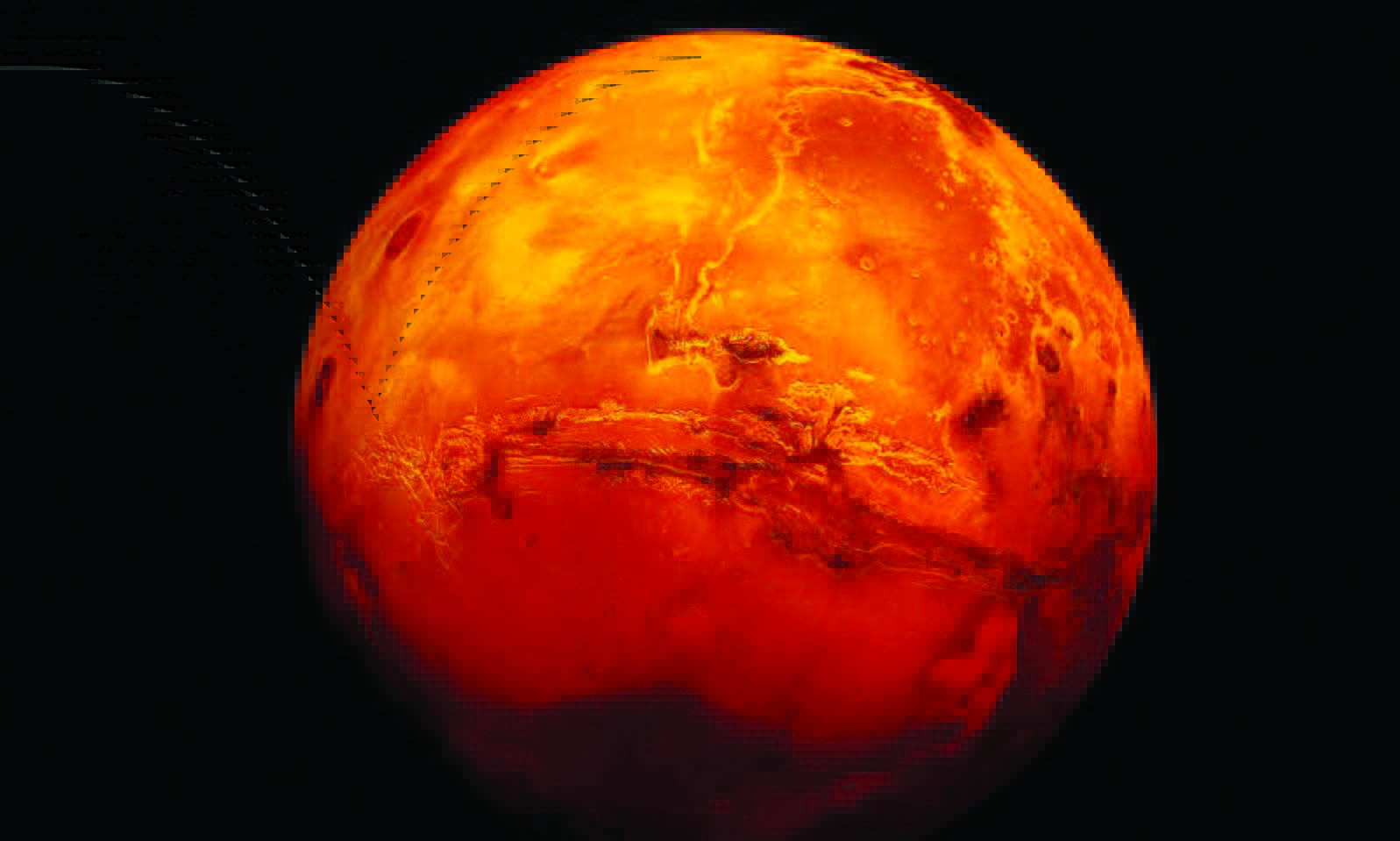
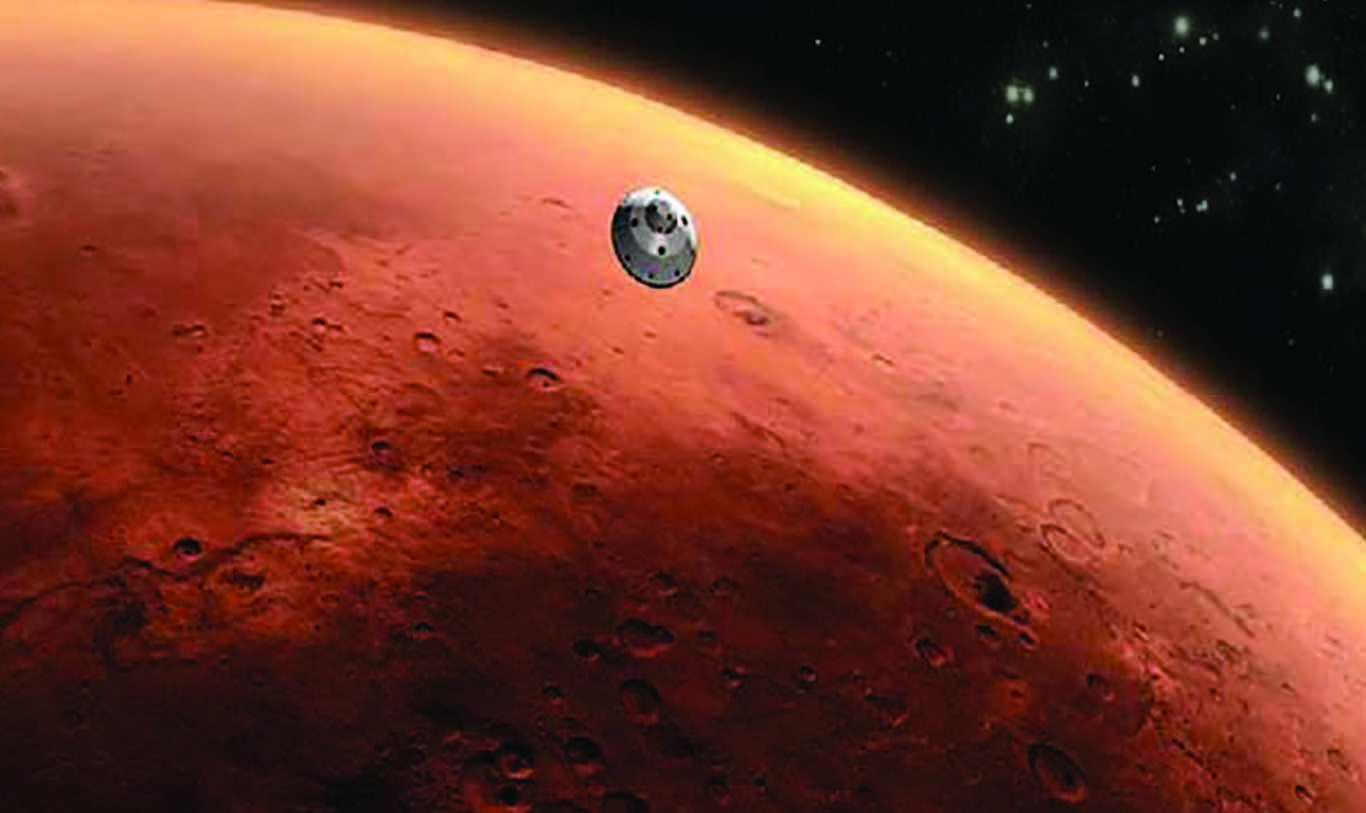
    WASHINGTON (TIP): NASA is testing a stationary car-sized Mars lander scheduled to launch in March 2016, that will be the first mission devoted to understanding the interior structure of the Red planet.

    Examining the planet’s deep interior could reveal clues about how all rocky planets, including Earth, formed and evolved, NASA said.

    The lander is called InSight or Interior Exploration using Seismic Investigations, Geodesy and Heat Transport.

    It is about the size of a car and will be the first mission devoted to understanding the interior structure of the Red planet.

    The current testing will help ensure InSight can operate in and survive deep space travel and the harsh conditions of the Martian surface.

    The spacecraft will lift off from Vandenberg Air Force Base in California, and land on Mars about six months later.

    The technical capabilities and knowledge gained from Insight, and other Mars missions, are crucial to NASA’s journey to Mars, which includes sending astronauts to the Red Planet in the 2030s, the US space agency said.

    “Today, our robotic scientific explorers are paving the way, making great progress on the journey to Mars,” said Jim Green, director of NASA’s Planetary Science Division at the agency’s headquarters here.

    “Together, humans and robotics will pioneer Mars and the solar system,” said Green.

    During the environmental testing phase at Lockheed Martin’s Space Systems facility near Denver, the lander will be exposed to extreme temperatures, vacuum conditions of nearly zero air pressure simulating interplanetary space, and a battery of other tests over the next seven months.

    The first will be a thermal vacuum test in the spacecraft’s “cruise” configuration, which will be used during its seven-month journey to Mars.

    In the cruise configuration, the lander is stowed inside an aeroshell capsule and the spacecraft’s cruise stage – for power, communications, course corrections and other functions on the way to Mars – is fastened to the capsule.

    “The assembly of InSight went very well and now it’s time to see how it performs,” said Stu Spath, InSight programme manager at Lockheed Martin Space Systems, Denver.

    “The environmental testing regimen is designed to wring out any issues with the spacecraft so we can resolve them while it’s here on Earth. This phase takes nearly as long as assembly, but we want to make sure we deliver a vehicle to NASA that will perform as expected in extreme environments,” said Spath.

    Other tests include vibrations simulating launch and checking for electronic interference between different parts of the spacecraft.

    The testing phase concludes with a second thermal vacuum test in which the spacecraft is exposed to the temperatures and atmospheric pressures it will experience as it operates on the Martian surface.

  • New human ancestor discovered in Ethiopia

    NEW DELHI (TIP): A new human ancestor species which roamed the Afar region of Ethiopia 3.3 to 3.5 million years ago has been discovered by an international team of scientists. Named Australopithecus deyiremeda, this new species joins ‘Lucy’ the famous hominin that is known to have lived in the same region. The discovery is described in the science journal Nature.

    Lucy’s species (called Australopithecus afarensis ) lived from 2.9 million years ago to 3.8 million years ago, overlapping in time with the new species. The new discovery is the most conclusive evidence that more than one closely related human ancestor species lived in the same period, more than 3 million years ago. The species name “deyiremeda” (day-ihreme-dah) means “close relative” in the language spoken by the Afar people, according to the Cleveland Museum of Natural History.

    Australopithecus deyiremeda differs from Lucy’s species in terms of the shape and size of its thick-enameled teeth and the robust architecture of its lower jaws. The anterior teeth are also relatively small indicating that it probably had a different diet.

    “The new species is yet another confirmation that Lucy’s species, Australopithecus afarensis, was not the only potential human ancestor species that roamed in what is now the Afar region of Ethiopia during the middle Pliocene,” said lead author Dr Yohannes Haile-Selassie of the Cleveland Museum. “Current fossil evidence from the Woranso-Mille study area clearly shows that there were at least two, if not three, early human species living at the same time and in close geographic proximity.”

    “This new species from Ethiopia takes the ongoing debate on early hominin diversity to another level,” said Haile-Selassie. “Some of our colleagues are going to be skeptical about this new species, which is not unusual. However, I think it is time that we look into the earlier phases of our evolution with an open mind and carefully examine the currently available fossil evidence rather than immediately dismissing the fossils that do not fit our long-held hypotheses,” said Haile-Selassie.

    Scientists have long argued that there was only one pre-human species at any given time between 3 and 4 million years ago, subsequently giving rise to another new species through time. This was what the fossil record appeared to indicate until the end of the 20th century.

    However, the naming of Australopithecus bahrelghazali from Chad and Kenyanthropus platyops from Kenya, both from the same time period as Lucy’s species, challenged this long-held idea.

  • FIRST HIDDEN, REAL-TIME, SCREEN-CAMERA COMMUNICATION CREATED

    FIRST HIDDEN, REAL-TIME, SCREEN-CAMERA COMMUNICATION CREATED

    WASHINGTON (TIP): Scientists have developed the first form of real-time communication that allows screens of electronic devices, such as TVs and laptops, and cameras to ‘talk’ to each other without the user knowing it.

    Using off-the-shelf smart devices, the new system supports an unobtrusive, flexible and lightweight communication channel between screens and cameras.

    The system, called HiLight, will enable new context-aware applications for smart devices, researchers said.

    Such applications include smart glasses communicating with screens to realise augmented reality or acquire personalised information without affecting the content that users are currently viewing.

    The system also provides far-reaching implications for new security and graphics applications.

    The idea is simple: information is encoded into a visual frame shown on a screen, and any camera-equipped device can turn to the screen and immediately fetch the information, researchers said.

    Operating on the visible light spectrum band, screen-camera communication is free of electromagnetic interference, offering a promising alternative for acquiring short-range information.

    But these efforts commonly require displaying visible coded images, which interfere with the content the screen is playing and create unpleasant viewing experiences.

    The team at Dartmouth College studied how to enable screens and cameras to communicate without the need to show any coded images like QR code, a mobile phone readable barcode.

    In the HiLight system, screens display content as they normally do and the content can change as users interact with the screens.

    At the same time, screens transmit dynamic data instantaneously to any devices equipped with cameras behind the scene, unobtrusively, in real time.

    HiLight supports communication atop any screen content, such as an image, movie, video clip, game, web page or any other application window, so that camera-equipped devices can fetch the data by turning their cameras to the screen.

    HiLight leverages the alpha channel, a well-known concept in computer graphics, to encode bits into the pixel translucency change.

    HiLight overcomes the key bottleneck of existing designs by removing the need to directly modify pixel colour values. It decouples communication and screen content image layers.

    “Our work provides an additional way for devices to communicate with one another without sacrificing their original functionality,” said senior author Xia Zhou, an assistant professor of computer science and co-director of the DartNets (Dartmouth Networking and Ubiquitous Systems) Lab.

    “It works on off-the-shelf smart devices. Existing screen-camera work either requires showing coded images obtrusively or cannot support arbitrary screen content that can be generated on the fly. Our work advances the state-of-the-art by pushing screen-camera communication to the maximal flexibility,” said Zhou.

  • REVOLUTIONARY BLADELESS WIND TURBINES SHAKE TO GENERATE ELECTRICITY

    REVOLUTIONARY BLADELESS WIND TURBINES SHAKE TO GENERATE ELECTRICITY

    WASHINGTON (TIP): These bladeless wind turbines can revolutionize the way wind energy is produced.

    A startup out of Spain called Vortex Bladeless, whose turbines look like stalks of asparagus poking out of the ground, is using pillars that shake back and forth from the vortices created by the movement of air around the structure to generate power, the Verge reported.

    Typically, a structure can only be optimized to oscillate at the specific frequencies caused by a certain wind speed, but Vortex says it is using magnets to adjust the turbine on the fly to get the most from whatever the wind speeds happen to be. Once the structure starts vibrating, an alternator in the base of the device then converts the mechanical movement into electricity.

    Vortex claims that energy produced by its turbines will cost around 40 percent less than energy made from today’s wind turbines and a large part of that cost reduction comes from maintenance as the Vortex doesn’t have moving parts or gears, it should last longer and won’t require periodic lubrication.

    The simpler design also means that manufacturing costs are about half that of a traditional wind turbine (those massive blades are expensive).

    As per Vortex, its bladeless design captures around 30 percent less energy than a regular turbine, but it’s possible to fit more of the “silent” Vortex models in the same area.

    Vortex is working on its “Mini,” a 41-foot model that should be ready for commercialization in 2016, while a larger, industrial model is in the works for 2018.

  • CANCER-FIGHTER RICE, GROWN IN BENGAL

    KOLKATA (TIP): Cancer patients may soon have an organic way to fight the dreaded disease. Black rice, a heritage variety of Bengal rice, is known for its high amount of antioxidants that prevent cancer.

    Anupam Paul, Assistant Director of Agriculture, Agriculture Training Centre, Fulia said, “Black rice has a high amount of antioxidants that help in fighting diseases like cancer. It is still in the process of experimentation. Once it is completely proven, we might grow more of this.”

    The source of these antioxidants are yellow pigments, which contain anthocyanins in the hull of the rice. Black rice is different from other organic rice as it has the highest amount of iron and zinc.

    Paul mentioned that most doctors treating cancer patients are not aware of the fact that black rice has minerals that are anti-cancerous. “The lack of marketing has led to this. Had people known about the positive effects, they would have opted for this. We are trying our best to reach out to doctors,” said Paul.

    Nirupam Das, an ex-government employee, said, “I buy only organic rice. I am a diabetic patient and my doctor has recommended organic rice and vegetables to avoid falling prey to kidney malfunction.”

    This is the only form of Japonica rice served in Bengal and it is not just used as a medicine. Black rice also helps diabetics.

    The seeds of black rice are mainly sourced from Manipur and Thailand. Das said he has been harvesting black rice since 2008. The ‘folk rice and seeds festival’, which hosted the organic food forum at Seva Kendra recently, had around 1,000 varieties of rice on display. More than 150 farmers and seed savers from Bengal, Assam, Odisha, UP, Bihar, Chhattisgarh and Jharkhand were part of this festival.

    Permanent counters will soon be set up in Baghbajar Ramakrishna Mission and Ballygunge Bharat Sevashram Sangha, where non-perishable organic items like rice, pulses and their products will be available directly from the farmers.

  • ANTI-AGING DRUG MAY BE JUST 5 YEARS AWAY

    LONDON (TIP): A new anti-aging drug may be just five years away , say scientists who have identified the role of an enzyme in muscle wasting and associated age-related problems.

    Researchers at the University of Birmingham believe that inhibiting the enzyme could hold the key to developing ways of preventing, or reversing, the adverse effects of aging.

    The research is a significant step in understanding the role played by the enzyme 11beta-HSD1 in the degenerative effects of aging -including sarcopenia (age related muscle wasting).

    Researchers claim the anti-aging drug could be available to the general public within the next five years. The expression of 11beta-HSD1, responsible for activating the steroid hormone cortisol, was increased in the muscles of older females.

    About 134 healthy volunteers, aged between 20-80, underwent physical and biochemical tests at a clinical research facility. The findings show that expression of 11beta-HSD1 in skeletal muscles is increased 2.72-fold in women over 60 years of age, compared to those aged between 20 and 40. In male participants, no difference was seen.

    “As yet, we don’t know why it appears to only occur in women, it is obviously an interesting area for further research. We are planning to look at whether hormones such as estrogens could be involved,” Dr Zaki HassanSmith, from the University of Birmingham, said. The researchers wanted to investigate novel ways of increasing healthy life span -the years in which people can maintain active lifestyles without the debilitating impact of muscle wasting.

    “Looking at this particular enzyme seemed like an intriguing way forward. We knew how it works in relation to Cushing’s Syndrome, which is characterised by similar symptoms, and thought it would be worthwhile applying what we knew to the aging population,” said Hassan-Smith.

  • MYSTERY DARK MATERIAL ON JUPITER’S MOON IS SEA SALT: NASA

    MYSTERY DARK MATERIAL ON JUPITER’S MOON IS SEA SALT: NASA

    WASHINGTON (TIP): The mysterious dark material coating some geological features of Jupiter’s moon Europa is likely sea salt from a subsurface ocean, discoloured by exposure to radiation, NASA scientists have found.

    Presence of sea salt on Europa’s surface suggests the ocean is interacting with its rocky seafloor – an important consideration in determining whether the icy moon could support life.

    “We have many questions about Europa, the most important and most difficult to answer being is there life?Research like this is important because it focuses on questions we can definitively answer, like whether or not Europa is inhabitable,” said Curt Niebur, Outer Planets Programme scientist at NASA Headquarters here.

    “Once we have those answers, we can tackle the bigger question about life in the ocean beneath Europa’s ice shell,” said Niebur.

    For more than a decade, scientists have wondered about the nature of the dark material that coats long, linear fractures and other relatively young geological features on Europa’s surface.

    Its association with young terrains suggests the material has erupted from within Europa, but with limited data available, the material’s chemical composition has remained elusive.

    “If it’s just salt from the ocean below, that would be a simple and elegant solution for what the dark, mysterious material is,” said research lead Kevin Hand, a planetary scientist at NASA’s Jet Propulsion Laboratory in California.

    One certainty is that Europa is bathed in radiation created by Jupiter’s powerful magnetic field. Electrons and ions slam into the moon’s surface with the intensity of a particle accelerator.

    Theories proposed to explain the nature of the dark material include this radiation as a likely part of the process that creates it.

    Previous studies using data from NASA’s Galileo spacecraft, and various telescopes, attributed the discolourations on Europa’s surface to compounds containing sulphur and magnesium.

    While radiation-processed sulphur accounts for some of the colours on Europa, the new experiments reveal that irradiated salts could explain the colour within the youngest regions of the moon’s surface.

    To identify the dark material, Hand and his co-author Robert Carlson, also at JPL, created a simulated patch of Europa’s surface in a laboratory test apparatus for testing possible candidate substances.

  • Unsinkable boats now closer to reality

    Unsinkable boats now closer to reality

    NEW YORK (TIP): Boats of the future may not sink despite damage to their structure, thanks to a new light weight composite material developed by researchers from Deep Springs Technology (DST) and the New York University Polytechnic School of Engineering, including one of Indian-origin.

    Researchers said a boat made of such material, so light that it can float on water, will not sink despite damage to its structure. The new material also promises to improve automotive fuel economy because it combines light weight with heat resistance. Although syntactic foams have been around for many years, this is the first development of a light weight metal matrix syntactic foam.

    Their magnesium alloy matrix composite is reinforced with silicon carbide hollow particles and has a density of only 0.92 grams per cubic centimetre compared to 1.0 gcc of water. Besides having density lower than water, it is strong enough to withstand the rigorous conditions faced in the marine environment. The new technology could be put into test within three years.

    Amphibious vehicles such as the Ultra Heavy-lift Amphibious Connector (UHAC), being developed by the US Marine Corps, can especially benefit from the light weight and high buoyancy offered by the new syntactic foams. “The ability of metals to withstand higher temperatures can be a huge advantage for these composites in engine and exhaust components, quite apart from structural parts,” said Nikhil Gupta, an NYU School of Engineering professor in the department of mechanical and aerospace engineering and the study’s co-author.

    The secret of this syntactic foam starts with a matrix made of a magnesium alloy , which is then turned into foam by adding strong, lightweight silicon carbide hollow spheres. A single sphere’s shell can withstand pressure of over 25,000 pounds per square inch (PSI) one hundred times the maximum pressure in a fire hose. The hollow particles also offer impact protection to the syntactic foam because each shell acts like an energy absorber during its fracture. The composite can be customized by adding more or fewer shells into the matrix to fit the requirements of the application.

  • NEW MICROSCOPE ALLOWS DEEP BRAIN EXPLORATION

    NEW MICROSCOPE ALLOWS DEEP BRAIN EXPLORATION

    WASHINGTON (TIP): Researchers have created a miniature, fibre-optic microscope designed to peer deeply inside a living brain, allowing high-resolution 3-D imaging of inaccessible brain regions.

    “Microscopes today penetrate only about one millimetre into the brain but almost everything we want to see is deeper than that,” said Professor Diego Restrepo, one of the paper’s authors and director of the Center for NeuroScience at the University of Colorado Anschutz Medical Campus.

    “You can manipulate this lens while most others are fixed. That means you can see neurons firing inside a living brain,” Restrepo said.

    The laser-scanning microscope, a prototype which will be further refined, uses fibre-optics and a tiny electrowetting lens. Compared to other small, focusing lenses, it’s fast and not sensitive to motion. This allows it to reliably focus on living tissue.

    At the same time, the lens allows a rapid shifting of focus by applying electricity across two different liquids, which actually changes the curvature of lens.

    The microscope, about half an inch in diameter, can be directly mounted onto the head of a mouse. A thin, fibre optic cord will allow the animal to freely roam while scientists look inside its brain and monitor reactions to certain stimuli.

    That means parts of the living brain like the amygdala, which had been virtually off-limits to microscopes, will soon be seen in real-time, high-resolution, 3-D images.

    “Using optical methods to stimulate and record from neurons is the future of neuroscience research,” said Baris Ozbay, a doctoral student in bioengineering at CU Anschutz and lead author of the paper.

    “But most researchers are adapting existing large microscopes to fit mice for head-fixed imaging which limits movement, is difficult to set up and has issues with motion. The solution is to put the microscope on the mouse, rather than putting the mouse on the microscope,” Ozbay said.

    Emily Gibson, assistant professor of bioengineering at CU Anschutz and senior author of the study, said the microscope opens a new world for scientists.

    “We can now measure a large region and sample more neurons. For example, we can image up to 100 neurons at the same time, as opposed to perhaps the 10 or so we could do in the past,” she said.

  • DOCTORS CAN NOW INJECT DRUGS DIRECTLY INTO BRAIN

    Doctors can now inject drugs straight into people’s brains, after making a major discovery in breaking through the barrier that keeps the nervous and circulatory systems apart.

    The blood-brain barrier (BBB) keeps us safe by ensuring that chemicals and microbes can’t get through to our clean brain and cause it problems. But it filters out good and intentional molecules too, and has proven a stumbling block for doctors’ aim to get drugs straight to where they are needed.

    But new study claims to have found a way, developing special molecules that can trick the BBB by exploiting the mechanism that let nutrients into the brain.

  • FACEBOOK RUINING MARRIAGES: STUDY

    FACEBOOK RUINING MARRIAGES: STUDY

    One in seven Britons have contemplated divorce because their partners spend too much time on various social media platforms, a top British legal firm has revealed.

    The study by Slater and Gordon Lawyers found that social networking site Facebook was considered the
    “most dangerous” place for ruining relationships.

    “Five years ago, Facebook was rarely mentioned in the context of a marriage ending but now it has become commonplace for clients to cite social media use or something they discovered on social media, as a reason for divorce,” Andrew Newbury, head of family law at Slater and Gordon, said in an online statement.

    “We are finding that social media is the new marriage minefield,” he added.

    According to the findings, while almost half of people secretly check their partner’s Facebook account, one in five also indulge in brawls related to Facebook with their partner.

    Nearly 25 percent of married couples said they “had at least one argument a week” because of social media use. Nearly 17 percent said they fight daily over something they find online about their partner, GeekWire.com reported.

    Over 58 percent of the people know their partner’s log-in details. The most common reasons for checking their partner’s social media accounts was to find out who their partner was talking to and find out if they were telling the truth about their social life.

    According to Newbury, pictures and posts on Facebook are now being routinely raised in the course of divorce proceedings.

  • SATURN’S SIXTH MOON MAY BE HARBOURING LIFE

    SATURN’S SIXTH MOON MAY BE HARBOURING LIFE

    WASHINGTON (TIP): Researchers have found a geochemical process on Saturn’s sixth largest moon that suggests life could exist on it, or could have previously existed.

    The team, including Christopher Glein from the Carnegie Mellon University, has revealed the pH of water spewing from a geyser-like plume on Saturn’s moon Enceladus.

    The pH tells us how acidic or basic the water is.

    Enceladus is geologically active and thought to have a liquid water ocean beneath its icy surface.

    “Knowledge of the pH improves our understanding of geochemical processes in Enceladus’ ‘soda ocean,’” Glein explained.

    The hidden ocean is the presumed source of the plume of water vapour and ice that the Cassini spacecraft has observed venting from the moon’s south polar region.

    Whenever there’s the possibility of liquid water on another planetary body, scientists begin to ask whether or not it could support life.

    The present team, including lead author Glein and John Baross of the University of Washington, developed a new chemical model based on mass spectrometry data of ice grains and gases in Enceladus’ plume gathered by Cassini, in order to determine the pH of Enceladus’ ocean.

    The team’s model shows that the plume, and by inference the ocean, is salty with an alkaline pH of about 11 or 12, which is similar to that of glass-cleaning solutions of ammonia.

    It contains the same sodium chloride salt as our oceans here on the Earth.

    Its additional substantial sodium carbonate makes the ocean more similar to our planet’s soda lakes such as Mono Lake in California or Lake Magadi in Kenya.

    The scientists refer to it as a “soda ocean.”

    The model suggests that the ocean’s high pH is caused by a metamorphic, underwater geochemical process called serpentinisation.

    On the Earth, serpentinisation occurs when certain kinds of rocks (low in silica and high in magnesium and iron) are brought up to the ocean floor from the upper mantle and chemically interact with the surrounding water molecules.

    This process is central to the emerging science of astrobiology.

    “Serpentinisation provides a link between geological processes and biological processes. The discovery of serpentinisation makes Enceladus an even more promising candidate for a separate genesis of life,” the authors wrote.

    The work demonstrates that it is possible to determine the pH of an extraterrestrial ocean based on chemical data from a spacecraft flying through a plume.

    This may be a useful approach to searching for habitable conditions in other icy worlds, such as Jupiter’s moon Europa.

    “The results open the door to an exciting new era of chemical oceanography in the solar system and beyond,” Glein concluded.

  • Thermometer-like device can diagnose heart attacks

    Thermometer-like device can diagnose heart attacks

    SEOUL (TIP): A simple, thermometer-like device that could make diagnosing heart attacks easier in remote or low-income locations has been developed.

    Diagnosing a heart attack can require multiple tests using expensive equipment. But not everyone has access to such techniques, especially in remote or low-income areas.

    Now scientists have developed a simple, thermometer-like device that could help doctors diagnose heart attacks with minimal materials and cost.

    Sangmin Jeon from the Pohang University of Science and Technology in South Korea and colleagues note that one way to tell whether someone has had a heart attack involves measuring the level of a protein called troponin in the person’s blood.

    The protein’s concentration rises when blood is cut off from the heart, and the muscle is damaged.

    Today, detecting troponin requires bulky, expensive instruments and is often not practical for point-of-care use or in low-income areas.

    Yet three-quarters of the deaths related to cardiovascular disease occur in low- and middle-income countries, researchers said.

    Early diagnosis could help curb these numbers, so Jeon’s team set out to make a sensitive, more accessible test.

    Inspired by the simplicity of alcohol and mercury thermometers, the researchers created a similarly straightforward way to detect troponin.

    It involves a few easy steps, a glass vial, specialised nanoparticles, a drop of ink and a skinny tube.

    When human serum with troponin – even at a minute concentration – is mixed with the nanoparticles and put in the vial, the ink climbs up a protruding tube and can be read with the naked eye, just like a thermometer.

  • Farthest galaxy found, over 13 billion light years away

    A stronomers have discovered a galaxy that is 13.1 billion light years away from earth, making it the farthest galaxy known currently. The Universe itself is estimated to be 13.8 billion years old. So this newly found galaxy, dubbed EGS-zs8-1, is also the youngest one ever seen.

    An international team of astronomers led by Yale University and the University of California-Santa Cruz made the calculation of its distance using the powerful MOSFIRE instrument on the W.M. Keck Observatory’s 10-meter telescope, in Hawaii. The galaxy was originally identified based on its particular colors in images from NASA’s Hubble and Spitzer space telescopes. It is one of the brightest and most massive objects in the early universe.

    Age and distance are vitally connected in any discussion of the universe. The light we see from our Sun takes just eight minutes to reach us, while the light from distant galaxies we see via today’s advanced telescopes travels for billions of years before it reaches us—so we’re seeing what those galaxies looked like billions of years ago.

    “It has already built more than 15%of the mass of our own Milky Way today,” said Pascal Oesch, a Yale astronomer and lead author of a study published online May 5 in Astrophysical Journal Letters. “But it had only 670 million years to do so. The universe was still very young then.” The new distance measurement also enabled the astronomers to determine that EGS-zs8-1 is still forming stars rapidly, about 80 times faster than our galaxy.

    Only a handful of galaxies currently have accurate distances measured in this very early universe. “Every confirmation adds another piece to the puzzle of how the first generations of galaxies formed in the early universe,” said Pieter van Dokkum, professor of astronomy and chair of Yale’s Department of Astronomy, who is second author of the study. “Only the largest telescopes are powerful enough to reach to these large distances.”

    The MOSFIRE instrument allows astronomers to efficiently study several galaxies at the same time. Measuring galaxies at extreme distances and characterizing their properties will be a major goal of astronomy over the next decade, the researchers said.

    The new observations establish EGS-zs8-1 at a time when the universe was undergoing an important change: The hydrogen between galaxies was transitioning from a neutral state to an ionized state. “It appears that the young stars in the early galaxies like EGS-zs8-1 were the main drivers for this transition, called reionization,” said Rychard Bouwens of the Leiden Observatory, co-author of the study.

    Taken together, the new Keck Observatory, Hubble, and Spitzer observations also pose new questions. They confirm that massive galaxies already existed early in the history of the universe, but they also show that those galaxies had very different physical properties from what is seen around us today. Astronomers now have strong evidence that the peculiar colors of early galaxies—seen in the Spitzer images—originate from a rapid formation of massive, young stars, which interacted with the primordial gas in these galaxies.

    The observations underscore the exciting discoveries that are possible when NASA’s James Webb Space Telescope is launched in 2018, note the researchers.

  • Rodents may predict the next big quake

    The 10 biggest earthquakes recorded since 1900 have taken more than 1.5 million lives — not counting the toll from the 7.8 magnitude temblor in Nepal, which has killed over 8,000 and counting. There’s some hope that the big quakes of the future could be less lethal — because we’ll see them coming. Or at least, the rats will.

    A research team working from three continents recently pored over data from a major earthquake in Peru and concluded that wild animals — especially rodents — know when the ground is about to buckle. Days before the 7-magnitude Contamana earthquake that struck a remote Andean village in 2011, motion-triggered cameras revealed that most wildlife in the Yanachaga-Chemillen national park had already fled the area, returning only after the quake had run its course.

    Investigators caution that any conclusions are still tentative, but the initial findings are intriguing. By tracking wildlife, the researchers say they might be able develop a data-based early warning system that could help governments and first responders to evacuate danger areas.

    Prior to the quake, rocks began to shift underground, generating electrical charges that reached surface water and released positive ions into the lower atmosphere. It was this ionized air that apparently made animals disoriented and hyperactive.

  • Indian American Team from Harvard develops novel gel for biomedical research

    Indian American Team from Harvard develops novel gel for biomedical research

    New York (TIP): Indian American researchers at the Harvard University have developed a biocompatible hydrogel that can speed up research and development of several promising applications in tissue engineering by using “Click Chemistry”.

    Wyss Core Faculty member Neel Joshi, Ph.D., has developed a novel, truly biocompatible alginate hydrogel in collaboration with Mooney that can be synthesized using “click chemistry”, which is a methodology for the quick and practical synthesis of substances using just a few reliable, chemoselective reagents.

    Indian American Joshi, who is also Associate Professor of Chemical and Biological Engineering at SEAS, leads a team at the Wyss Institute developing new synthetic biomaterials that mimic naturally–occurring materials. Joshi and Mooney’s new “click alginate” has been reported in the May 1 issue of Biomaterials.

    “It’s injectable, so it can be used to deliver cells or drugs to specific places in the body such as a location that has suffered a wound or has been invaded by a tumor,” said Joshi.

    “And we are already using it for lots of different things in the laboratory due to how easy it is to synthesize.”  Joshi leads a team at the Wyss Institute developing new synthetic biomaterials that mimic naturally-occurring materials.  “It’s a great material for studying how cells sense the mechanical environments around them,” said Desai.

    “Alginate hydrogels show promise for tissue engineering and drug delivery applications as they can be designed to dissolve away harmlessly in the body while releasing drugs, growth agents or living cells that can accelerate healing and regeneration,” said Wyss Institute Founding Director Donald Ingber, M.D., Ph.D

    The Wyss Institute for Biologically Inspired Engineering at Harvard University (http://wyss.harvard.edu) uses Nature’s design principles to develop bioinspired materials and devices that will transform medicine and create a more sustainable world.

    (Based on a Press Release)