Tag: Science & Technology

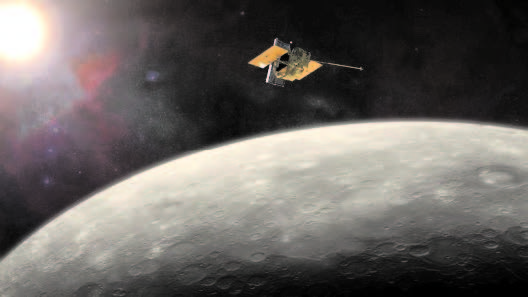
  • Nasa’s Messenger spacecraft makes crashing finale into Mercury

    Nasa’s Messenger spacecraft makes crashing finale into Mercury

    CAPE CANAVERAL, Florida (TIP): Nasa’s pioneering Messenger spacecraft ended its four-year study of the planet Mercury on Thursday by crashing into the planet’s surface, scientists said.

    Flight controllers at the Johns Hopkins University Applied Physics Laboratory in Maryland earlier estimated that Messenger, traveling at more than 8,700mph (14,000kph), would hit the ground near Mercury’s north pole at 3.26pm EDT (1926 GMT).

    Messenger, with no more fuel to maneuver, fought the downward push of the sun’s gravity until it impacted the planet’s surface. It likely gouged a 52-foot-wide (16 meter) crater into Mercury’s scarred face.

    During its final weeks in orbit, Messenger relayed more details about the innermost planet of the solar system, which turns out to have patches of ice inside some of its craters, despite its sizzling location more than twice as close to the sun as Earth.

    “We’ve been concentrating on getting as much of the data down on the ground,” lead researcher Sean Solomon, with Columbia University in New York, wrote in an email. “We will have years to think about the meaning of the measurements.”

    Messenger (Mercury Surface, Space ENvironment, GEochemistry, and Ranging craft) made the first close-up studies of Mercury since Nasa’s Mariner 10 spacecraft flew by the planet three times in the mid-1970s. It arrived at Mercury in 2011 after a circuitous six-year journey.

    During its 4,104 orbits of Mercury, Messenger made surprising detections of potassium, sulfur and other volatiles on the planet’s surface that presumably should have evaporated due to the planet’s high temperature. Mercury’s average surface temperature is 332 degrees Fahrenheit (167 degrees Celsius), with daytime highs of 801 degrees Fahrenheit (427 degrees Celsius.)

    Messenger also confirmed the existence of ices and other materials, possibly even carbon-based organics, on the floors of craters where sunlight never shines. During its final days, Messenger attempted to peer directly down into targeted craters, Solomon said.It also found evidence of past volcanic activity and signs the dense and shrinking planet has a liquid-iron core.

  • Why smartphone batteries sometimes explode

    Why smartphone batteries sometimes explode

    LONDON (TIP): Scientists have been able to track the entire process of what happens inside lithium-ion batteries that leads to their overheating and exploding.

    “Understanding how Li-ion batteries fail and potentially cause a dangerous chain reaction of events is important for improving their design to making them safer to use and transport,” said the scientists.

    “We combined high energy synchrotron X-rays and thermal imaging to map changes to the internal structure and external temperature of two types of Li-ion batteries as we exposed them to extreme levels of heat,” said first author Donal Finegan from University College London (UCL).

    The team looked at the effects of gas pockets forming, venting and increasing temperatures on the layers inside two distinct commercial Li-ion batteries as they exposed the battery shells to temperatures in excess of 250 degrees Celsius.

    The battery with an internal support remained largely intact up until the initiation of thermal runaway, at which point the copper material inside the cell melted indicating temperatures up to 1,000 degrees Celsius.This heat spread from the inside to the outside of the battery causing thermal runaway.

    In contrast, the battery without an internal support exploded causing the entire cap of the battery to detach and its contents to eject. Prior to thermal runaway, the tightly packed core collapsed, increasing the risk of severe internal short circuits and damage to neighbouring objects.

    “Hopefully from using our method, the design of safety features of batteries can be evaluated and improved,” said corresponding author Paul Shearing, also from UCL.

  • First 3D-printed implant saves lives of three babies in US

    WASHINGTON (TIP): Scientists have for the first time successfully implanted a groundbreaking 3D-printed device to save the lives of three babies in the US suffering from a life-threatening condition that prevents normal breathing.

    All the three babies had the same life-threatening condition: a terminal form of tracheobronchomalacia, which causes the windpipe to periodically collapse and prevents normal breathing. There was no cure and life-expectancies were grim, researchers said.

    The three boys became the first in the world to benefit from groundbreaking 3D printed devices that helped keep their airways open, restored their breathing and saved their lives at the University of Michigan’s CS Mott Children’s Hospital.

    “These cases broke new ground for us because we were able to use 3D printing to design a device that restored patients’ breathing through a procedure that had never been done before,” said author Glenn Green, from the CS Mott Children’s Hospital. “Before this procedure, babies with severe tracheobronchomalacia had little chance of surviving. Today, our first patient Kaiba is an active, healthy 3-year-old in preschool with a bright future. The device worked better than we could have ever imagined,” said Green.

    The findings also show that the patients were able to come off of ventilators and no longer needed paralytics, narcotics and sedation.

  • Mystery solved: Why knuckles crack

    WASHINGTON (TIP): We’ve all heard it — that loud “Crack!” when someone pulls on stiff knuckles. But what happens to make that sound? It’s something that scientists have puzzled over for decades. A new study has now used a high-speed camera to watch what happens to the joint. That popping sound comes from the formation of a bubble in the fluid between two bones in the finger, it finds.

    And these new data may just settle an age-old debate.

    In 1947, two researchers used a series of X-rays to probe why knuckles “Crack!” Their images indicated that the sound occurs when the bones at a joint rapidly separate, forming an air bubble. It’s a process known as cavitation. Twenty-four years later, a second study looked into the issue. Using similar methods, it concluded the pop was due to some bubble in the joint bursting.

    Two conflicting explanations. Both involved bubbles.

    Although most people came to believe the second explanation, some Canadian researchers wanted to know the real truth. So they formed a research team and conducted tests to settle the dispute.

    Gregory Kawchuk is a bioengineer and rehabilitation-medicine specialist at the University of Alberta in Canada. His team turned to magnetic resonance imaging, or MRI. It can study very fast processes. The team chose one of its members, Jerome Fryer, to lay on his stomach and put his hand inside the MRI machine. Why Fryer? He has an unusual ability. “We call him the Wayne Gretzky of knuckle cracking,” explains Kawchuk. “He can do it in all 10 fingers.”

    The team stuck one of Fryer’s fingers into a tube. As the MRI recorded what was happening, that tube slowly pulled on Fryer’s finger until it cracked. What this revealed “supports the original 1947 study,” says Kawchuk.

    As a finger is pulled, tension mounts in the knuckle joint. Fluid rapidly accumulates there. This shows up as a white spot on the MRI picture. Suddenly, a cavity — or bubble —opens. As it does, the knuckle makes a pop. It’s much like the sound that a suction cup makes as someone pulls it off of a glass window, Kawchuk says. The joint’s bubble can last for up to 20 minutes. And until it goes away, the knuckle will not be able to crack again.

    The researchers hope to repeat their study with more volunteers. It would include some people who can’t crack their knuckles and others with joint diseases. By the way, the researchers say that despite “old wives’ tales,” being able to crack your knuckles could be a sign of healthy joints.

  • ATOMIC CLOCK THAT WILL BE ACCURATE FOR 15 BILLION YEARS

    ATOMIC CLOCK THAT WILL BE ACCURATE FOR 15 BILLION YEARS

    PARIS (TIP): Physicists said they have fine-tuned an atomic clock to the point where it won’t lose or gain a second in 15 billion years – longer than the universe has existed.

    The “optical lattice” clock, which uses strontium atoms, is now three times more accurate than a year ago when it set the previous world record, its developers reported in the journal Nature Communications. The advance brings science a step closer to replacing the current gold standard in timekeeping: the caesium fountain clock used to set Coordinated Universal Time (UTC), the official world time. “Precise and accurate optical atomic clocks have the potential to transform global timekeeping,” the study authors wrote.

    Accurate timekeeping is crucial for satellite navigation systems, mobile telephones and digital TV, among other applications, and may open new frontiers in research fields like quantum science. The world’s official unit of time, the second, has since 1967 been determined by the vibration frequency of an atom of the metallic element Caesium 133 – a method of measurement similar to monitoring the pendulum swings of a grandfather clock.

    The instrument used to set international time is the caesium fountain clock, which has improved significantly over the decades and can keep time to within one second over 100 million years. But new, experimental optical clocks that work with strontium atoms at optical frequencies much higher than the microwave frequencies used in caesium clocks, have been shown in recent years to be even more accurate.

    The clock in the latest study, developed by scientists at the National Institute of Standards and Technology (NIST) and the University of Colorado in Boulder, measures time by detecting the natural vibrations or “ticks” of strontium atoms in red laser light, said the team.

    The clock’s stability — how closely each tick matches every other tick, “has been improved by almost 50 percent, another world record,” said an NIST statement.

    “This enhanced stability… brings optical lattice clocks closer to the point of replacing the current standard of measurement, the caesium fountain clock,” said a Nature press summary.

    The clock is also sensitive enough, the researchers said, to measure tiny changes in the passage of time at different altitudes — a phenomenon predicted by Albert Einstein a century ago and studied ever since.

    Einstein’s relativity theory states a clock must tick faster at the top of a mountain than at its foot, due to the effects of gravity.

    “Our performance means that we can measure the gravitational shift when you raise the clock just two centimetres (0.78 inches) on the Earth’s surface,” said study co-author Jun Ye.The team had built a radiation shield around the atom chamber of their clock, which means it can be operated at room temperature rather than in cryogenic conditions.

    “This is actually one of the strongest points of our approach, in that we can operate the clock in a simple and normal configuration,” said Ye.

  • Nasa scientists join search for extraterrestrial life

    Nasa scientists join search for extraterrestrial life

    WASHINGTON (TIP): Nasa scientists have joined the hunt for extraterrestrial life and will adapt a global climate model to simulate conditions on potentially habitable exoplanets.

    The effort by Nasa Goddard Institute for Space Studies (GISS) is part of a broader push to identify Earth-like worlds. Nasa’s space-based Kepler telescope has pinpointed more than 1,000 alien planets by observing the brief interruption of starlight that signals a planet passing in front of its parent star.

    At least five of these planets are similar in size to Earth and located in the ‘habitable zone’, where liquid water could persist.

    “We have to start thinking about these things as more than planetary objects,” said Anthony Del Genio, a climate modeller who is leading the GISS effort. “All of a sudden, this has become a topic not just for astronomers, but for planetary scientists and now climate scientists,” Del Genio said.

    Del Genio’s group is one of around 16 – ranging from Earth and planetary scientists to solar physicists and astrophysicists – that are participating in Nasa’s new Nexus for Exoplanet System Science (NExSS) programme, ‘Nature.com’ reported.

    “We are bringing together a bunch of different disciplines, and they all look at the formation and functioning of planets in different ways,” said Mary Voytek, who directs Nasa’s astrobiology programme and organised NExSS.

    NExSS will expand the network of researchers collaborating on exoplanets, she said.

    That should help scientists to make sense of existing data and observations from the James Webb Space Telescope and the Transiting Exoplanet Survey Satellite, which are both scheduled for launch in 2018. It could also help Nasa develop missions to hunt for exoplanets in the 2020s and beyond.

    At GISS, Del Genio’s team has started repurposing the institution’s workhorse Earth-system climate model.

    The researchers are trying to locate simple parameters that are fixed for Earth, such as 24-hour days and 365-day orbits, in order to create an exoplanet model that can be adjusted for different planetary systems.

    Initial simulations will focus on the Earth’s ancient past and the evolution of Venus and Mars. Although neither can support life today, each may have had liquid surface water at some time.

    The team’s ultimate goal is to explore the concept of a habitable zone by mixing and matching some of the key factors that determine whether a planet can support life.

    By feeding these parameters into the exoplanet model, the group will create a database of ‘hypothetical atmospheres’ with spectra that could be visible to astronomers.

  • First malaria vaccine clears final hurdle

    LONDON (TIP): The world’s first malaria vaccine has passed its final test but the results haven’t been emphatic.

    The results demonstrated that vaccination with RTS,S, followed by a booster dose administered 18 months after the primary schedule, reduced the number of cases of clinical malaria in children (aged 5-17 months at first vaccination) by 36% over an average follow-up of four years.

    This however was a fall in efficacy from the 50% protection against malaria which was seen in the first year after the vaccine was administered.

    In infants (aged 6-12 weeks at first vaccination) it reduced malaria cases by only 26% to the end of the study (an average follow-up of 38 months).

    Efficacy decreased over time in both age groups.

    Without the booster dose, the three-dose vaccine only reduced clinical malaria cases by 28% in children and 18% in infants to the study end.

    The vaccine against malaria, which does not exist at present, will therefore, be available in the market by next year. Pharma company GSK has submitted a regulatory application to the European Medicines Agency (EMA) for RTS,S.

    In an exclusive interview to TOI from Ghana, Dr Kwaku Poku Asante, the chair of the Clinical Trial Partnership Committee, which managed the RTSS Phase 3 trial in Africa said “The good news is that this a first generation malaria vaccine candidate and) actually the first human parasite vaccine that has been developed to this level. This trial was conducted at 11 African research centres in seven countries. The RTSS malaria vaccine has now been shown to prevent 1,700 cases of clinical malaria per 1000 children vaccinated on average and more than 6,000 cases averted in an area of high malaria transmission”.

    He added “It is true that the efficacy fell off over the four year period. But what we learned from the trial is that the booster dose enhanced efficacy over the longer term for both age groups. It will be up to the regulatory authorities to determine what efficacy is sufficient for recommendation, but it is likely that they will also look at the public health impact and the large number of cases averted through the use of the vaccine. The data from this trial has been submitted to the European Medicine Agency for review and an opinion on the data is expected sometime late this year”.

    “It is not a setback to see an efficacy of 26% in infants. Indeed beyond the low efficacy results, 983 cases of clinical malaria, on average, were prevented for every 1,000 infants vaccinated across trial sites over an average of 38 months of follow-up. More cases were averted in areas of higher malaria transmission. There are two paths in the future for the RTS,S candidate vaccine: the regulatory pathway and the research pathway”. “On the regulatory pathway, the EMA is currently reviewing the regulatory application for RTS,S. A positive opinion from the EMA together with a potential policy recommendation from the World Health Organisation (anticipated by the end of 2015), would be the basis for licensure applications. If positive, these regulatory decisions would help pave the way for the introduction of RTS,S through African national immunisation programmes”.

    “The next step in the research pathway is what we call Pharmacovigilance studies or phase 4 studies. These are very large-scale studies meant to identify very rare reactions or occurrences of clinical events to a vaccine,” he added

    Brian Greenwood, author and professor of clinical tropical medicine at London School of Hygiene and Tropical Medicine in the UK explains, “Despite the falling efficacy over time, there is still a clear benefit from RTS,S/AS01. An average 1363 cases of clinical malaria were prevented over 4 years of follow-up for every 1000 children vaccinated, and 1774 cases in those who also received a booster shot. Over 3 years of follow-up, an average 558 cases were averted for every 1000 infants vaccinated and 983 cases in those also given a booster dose”.

  • Indian American Develops Car Safety System That Spots Driver Errors

    Indian American Develops Car Safety System That Spots Driver Errors

    WASHINGTON:  Indian-American researchers have developed a new car safety system that anticipates what the driver is going to do a few seconds before it happens to prevent those behind the wheel from committing mistakes.

    By observing the driver’s body language and considering that in the context of what’s happening outside the car, a new computer algorithm determines the probability that the driver will turn, change lanes or continue straight ahead.

     
    “There are many systems now that monitor what’s going on outside the car,” said Ashutosh Saxena, assistant professor of computer science at Cornell University.

    “Internal monitoring of the driver will be the next leap forward,” said Mr Saxena who will describe the system with graduate student Ashesh Jain at the 2015 Robotic Science and Systems conference in Rome.

    “Combining driver anticipation with radar or cameras to locate other vehicles, the car’s safety system could warn the driver when the anticipated action could be dangerous. The warning might be a light, a sound or even a vibration,” Jain said.

    “If there’s danger on the left, the left side of the steering wheel or the seat could vibrate,” Jain said. 

    Drawing on street maps and GPS information, the system also might give an ‘illegal turn’ message if the driver was planning to turn the wrong way on a one-way street. 

    Cornell University researchers said some cars are already equipped with safety systems that monitor a car’s movement and warn if there is an unsafe turn or lane change. But that warning comes too late, after the driver has acted.

    To develop the system, Mr Saxena and colleagues recorded video of 10 drivers, along with video of the road ahead, for 1,899 km of freeway and city driving over a period of two months.

    A computer using face detection and tracking software identified head movements and learned to associate them with turns and lane changes, so that the final system can anticipate possible actions the driver may take.

    The computer continuously reports its anticipations to the car’s central safety system.

    In a test against another data set of videos with different drivers, the system correctly predicted the driver’s actions 77.4 per cent of the time, anticipating an average 3.53 seconds in advance. Those few extra seconds might save lives, Mr Saxena said.

    The system still needs refinement, the researchers noted. 

    Six per cent of the time, they found, face tracking was confused by shadows of passing trees and other lighting variations.

    he system also can be misled by drivers interacting with passengers. In some situations, such as turning from a turn-only lane, drivers don’t always give the same head cues. Sometimes they rely on short-term memory of traffic conditions and don’t turn their heads to check. It may come down to tracking eye movements, the researchers said.

  • NASA REVEALS FIRST-EVER COLOR IMAGE OF PLUTO

    NASA REVEALS FIRST-EVER COLOR IMAGE OF PLUTO

    WASHINGTON (TIP): NASA’s New Horizons spacecraft, set to fly by the Pluto system on July 14, has sent its first color image of the dwarf planet and its largest moon Charon.

    “The image reveals tantalising glimpses of this system,” Jim Green, director of NASA’s Planetary Science Division, said in a statement.

    Charon is seen dimmer than Pluto in the image taken from a distance of 115 million km.

    “The contrast may be due to a difference in composition of the two bodies or it could even be caused by a previously unseen atmosphere on Charon,” Green added.

    The uncertainty should clear up this summer when New Horizons gets history’s first good look at the two frigid, faraway objects.

    “We are going to Pluto because it is the human race’s first opportunity to study an entirely new class of world,” added William McKinnon, New Horizons co-investigator from the Washington University in St. Louis.

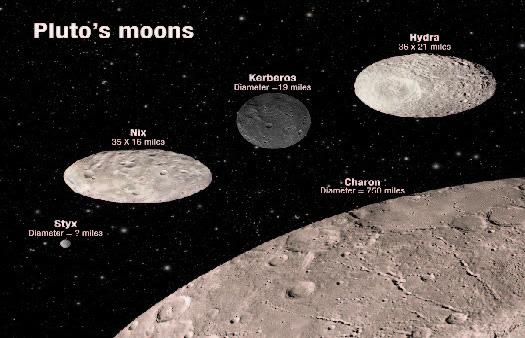
    Till date, astronomers knew about only one moon of Pluto called Charon which is nearly 50 percent as wide as the dwarf planet.

    Exactly 85 years after Pluto’s discovery, New Horizons has now spotted small moons orbiting Pluto.

    The moons, Nix and Hydra, are visible in a series of images taken by the New Horizons spacecraft at distances ranging from about 201 to 186 million km.

    The long-exposure images offer New Horizons’ best view yet of these two small moons circling Pluto which professor Clyde Tombaugh discovered at the Lowell Observatory in Flagstaff, Arizona Feb 18, 1930.

    Nix and Hydra were discovered by New Horizons team members in Hubble Space Telescope images taken in 2005.

    Hydra, Pluto’s outermost known moon, orbits Pluto every 38 days at a distance of approximately 64,700 km while Nix orbits every 25 days at a distance of 48,700 km.

    Pluto’s two other small moons, Styx and Kerberos, are still smaller and too faint to be seen by New Horizons at its current range to Pluto.

    There may be yet more moons waiting to be discovered, as well as a ring system or debris fields around Pluto.

    Such features could present a collision risk to New Horizons but mission team members are not too concerned, Space.com reported.

  • New blood test predicts breast cancer years ahead

    New blood test predicts breast cancer years ahead

    LONDON (TIP): A new blood test can predict if a woman would get breast cancer in the next two to five years and could create a “paradigm shift” in early diagnosis of the disease, reports a new study.

    “The method is better than mammography, which can only be used when the disease has already occurred,” said Rasmus Bro, professor of chemometrics at the University of Copenhagen in Denmark.

    “It is not perfect, but it is truly amazing that we can predict breast cancer years into the future,” Bro stressed.

    While a mammography can detect newly developed breast cancer with a sensitivity of 75 percent, the new metabolic blood profile is able to predict the likelihood of a woman developing breast cancer within the next two to five years with a sensitivity of 80 percent, the study noted.

    The research was based on a population study of 57,000 people followed by the Danish Cancer Society over 20 years.

    Inspired by research in food science, the researchers analysed all compounds a blood sample contains instead of – as is often done in health and medical science – examining what a single biomarker means in relation to a specific disease.

    “When a huge amount of relevant measurements from many individuals is used to assess health risks – here breast cancer – it creates very high quality information. The more measurements our analyses contain, the better the model handles complex problems,” continued professor Bro.

    The model does not reveal anything about the importance of the single biomarkers in relation to breast cancer, but it does reveal the importance of a set of biomarkers and their interactions, the researchers said.

    “No single part of the pattern is actually necessary nor sufficient. It is the whole pattern that predicts the cancer,” noted Lars Ove Dragsted from the University of Copenhagen.

    Managing stress uplifts mood in breast cancer patients

    Providing women with skills to manage stress early in their breast cancer treatment can improve their mood and quality of life many years later, says a new study.

    Published online in the journal Cancer, a peer-reviewed journal of the American Cancer Society, the findings suggest that benefits of stress management techniques during breast cancer treatment have long-term effects.

    “The results indicate that these skills can be used to reduce distress and depressed mood and optimise quality of life across the survivorship period as women get on with their lives,” said lead author Jamie Stagl from the Massachusetts General Hospital, in Boston.

  • SELF-POWERED CAMERA IS A REALITY

    SELF-POWERED CAMERA IS A REALITY

    NEW YORK (TIP): The world’s first selfpowered video camera that runs without a battery and can produce an image each second has been developed by researchers led by an Indian-origin scientist. To develop the prototype camera, researchers designed a pixel that can not only measure incident light but also convert the incident light into electric power.

    “We are in the middle of a digital imaging revolution,” said Shree K Nayar, TC Chang professor of computer science at the Columbia University , who led the study . He noted that in the last year alone, approximately two billion cameras of various types were sold worldwide.

    “I think we have just seen the tip of the iceberg. Digital imaging is expected to enable many emerging fields like wearable devices, sensor networks, smart environments, personalized medicine, and the Internet of Things. A camera that functions as an untethered device forever -without external power supply -would be incredibly useful,” said Nayar.

    Nayar realized that although digital cameras and solar panels have different purposes -one measures light while the other converts light to power -both are constructed from essentially the same components.

    At the heart of any digital camera is an image sensor, a chip with millions of pixels. The key enabling device in a pixel is the photodiode, which produces an electric current when exposed to light. This mechanism enables each pixel to measure the intensity of light falling on it.

    Nayar and colleagues used offthe-shelf components to fabricate an image sensor with 30×40 pixels.

    In his prototype camera, which is housed in a 3D printed body , each pixel’s photodiode is always operated in the photovoltaic mode. The pixel design is simple, and uses just two transistors.When the camera is not used to capture images, it can be used to generate power for other devices, such as a phone or a watch.

  • DEVICE TO HELP BLIND BOARD BUS

    MUMBAI (TIP): BEST has introduced on a trial basis a device which helps visually challenged persons board buses.

    The device helps users to identify the route number of buses at a bus stop and locate bus door, thereby enabling unsupervised boarding.

    Sources said that trials were conducted for more than two months. During the first phase of trials, units were fixed in 16 buses on routes 121 and 134, which led to over 100 boardings by visually impaired persons. The second phase saw the units in 24 buses operating from Backbay depot. The unsupervised boardings were successful, establishing the utility of the device in real settings, the sources said.

    The cost of the handheld device has not yet been determined. The pilot trials were largely funded by the Department of Science and Technology under their TIDE (Technology Interventions for the Disabled and Elderly) scheme. The next step will be to scale up the trials, officials said.

    M Balakrishnan, from ASSISTECH, IIT Delhi, said, “Nearly 350 unsupervised boardings over two months have given us immense confidence as well as feedback to take the project forward.” 

    BEST general manager Jagdish Patil said the transport undertaking was committed to provide safe and comfortable travel to all commuters. “It is a unique device that facilitates boarding of public buses by visually impaired persons,” he said.

  • Liquid Water on Mars – Nasa’s Curiosity rover

    Liquid Water on Mars – Nasa’s Curiosity rover

    Nasa’s Curiosity rover has found that water can exist as a liquid near the Martian surface.

    Mars should be too cold to support liquid water at the surface, but salts in the soil lower its freezing point – allowing briny films to form. 

    The results lend credence to a theory that dark streaks seen on features such as crater walls could be formed by flowing water.

    The results are published in the journal Nature.

    Scientists think thin films of water form when salts in the soil, called perchlorates, absorb water vapour from the atmosphere. 

    The temperature of these liquid films is about -70C – too cold to support any of the microbial life forms that we know about. 

    Forming in the top 15cm of the Martian soil, the brines would also be exposed to high levels of cosmic radiation – another challenge to life.

    But it’s still possible that organisms could exist somewhere beneath the surface on Mars, where conditions are more favourable.

    Evaporation cycle

    The researchers drew together different lines of evidence from the suite of instruments carried by the Curiosity rover.

    The Rover Environmental Monitoring System (REMS) – essentially the vehicle’s weather station – measured the relative humidity and temperature at the rover’s landing site of Gale Crater.

    Scientists were also able to estimate the subsurface water content using data from an instrument called Dynamic Albedo of Neutrons (DAN). These data were consistent with water in the soil being bound to perchlorates.

    Finally, the Sample Analysis at Mars (SAM) instrument gave the researchers the content of water vapour in the atmosphere.

    Gale crater
    Gale Crater once hosted a lake with conditions that could have been favourable to life
    Curiosity's Mast and deck where REMS sensors are located
    Curiosity’s Mast and deck where REMS sensors are located

    The results show conditions were right for the brines to form during winter nights at the Martian equator, where Curiosity landed. But the liquid evaporates during the Martian day when temperatures rise.

    Javier Martin-Torres, a co-investigator on the Curiosity mission and lead scientist on REMS, told BBC News the detection was indirect but convincing: “What we see are the conditions for the formation of brines on the surface. It’s similar to when people were discovering the first exoplanets.

    “They were not seeing the planets, but they were able to see the gravitational effects on the star.

    “These perchlorate salts have a property called deliquescence. They take the water vapour from the atmosphere and absorb it to produce the brines.” 

    He added: “We see a daily water cycle – which is very important. This cycle is maintained by the brine. On Earth we have an exchange between the atmosphere and the ground through rain. But we don’t have this on Mars.”

    Seasonal flows in Hale Crater
    Streaks known as recurring slope lineae may be caused by seeping water
    Mars infograpgic
    Scientists see a daily water cycle maintained by the brines

    While one might think that liquid water would form at warmer temperatures, the formation of brines is the result of an interaction between temperature and atmospheric pressure. It happens that the sweet spot for formation of these liquid films is at colder temperatures.

    The fact that the scientists see evidence for these brines at the Martian equator – where conditions are least favourable – means that they might be more persistent at higher latitudes, in areas where the humidity is higher and temperatures are lower.

    In these regions they might even be present all year round.

    Dark streaks on slopes seen by orbiting spacecraft have long been thought to be the product of running water seeping from the Martian soil. But this interpretation has been contested.

    “It’s speculation at this point… but these observations at least support or go in this direction,” said Dr Martin-Torres.

  • Signs of alien life will be found by 2025: NASA

    Signs of alien life will be found by 2025: NASA

    WASHINGTON (TIP): Signs of alien life will be detected by 2025, while “definitive evidence” of extra-terrestrial beings may be found within the next 20 to 30 years, top Nasa scientists say.

    “I think we’re going to have strong indications of life beyond Earth within a decade, and I think we’re going to have definitive evidence within 20 to 30 years,” Nasa chief scientist Ellen Stofan said.

    Stofan was speaking at a panel discussion that focused on Nasa’s efforts to search for habitable worlds and extra-terrestrial life.

    “We know where to look. We know how to look. In most cases we have the technology, and we’re on a path to implementing it. And so I think we’re definitely on the road,” Stofan added.

    John Grunsfeld, associate administrator for Nasa’s Science Mission Directorate, also predicted that signs of life will be found relatively soon both in our own solar system and beyond, ‘Space.com’ reported.

    “I think we’re one generation away in our solar system, whether it’s on an icy moon or on Mars, and one generation (away) on a planet around a nearby star,” Grunsfeld said.

    According to Grunsfeld, recent discoveries suggest that the solar system and broader Milky Way galaxy teem with environments that could support life as we know it.

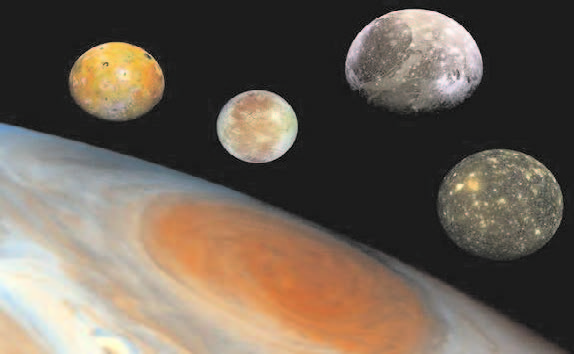
    Oceans of liquid water, for example, slosh beneath the icy shells of the Jupiter moons Europa and Ganymede, as well as that of the Saturn satellite Enceladus.

    Researchers have found that oceans covered much of Mars in the ancient past, and seasonal dark streaks observed on the Red Planet’s surface today may be caused by salty flowing water.

  • SEASONAL CHANGES ON SUN CAN BETTER PREDICT SOLAR STORMS

    SEASONAL CHANGES ON SUN CAN BETTER PREDICT SOLAR STORMS

    WASHINGTON (TIP): Not just planet Earth but the Sun too experiences seasonal changes, finds a significant research. By better understanding how these seasonal instabilities are formed one can greatly improve forecasts of space weather events.

    According to a team of researchers led by the Colorado-based National Centre for Atmospheric Research
    (NCAR), Sun undergoes a type of seasonal variability with its activity waxing and waning over the course of nearly two years.

    This behaviour affects the peaks and valleys in the approximately 11-year solar cycle, sometimes amplifying and sometimes weakening the solar storms that can buffet the Earth’s atmosphere.

    The quasi-annual variations appear to be driven by changes in the bands of strong magnetic fields in each solar hemisphere.

    These bands also help shape the approximately 11-year solar cycle that is part of a longer cycle that lasts about 22 years.

    “What we are looking at here is a massive driver of solar storms,” said Scott McIntosh, lead author and director of the NCAR’s high altitude observatory.

    The overlapping bands are fueled by the rotation of the Sun’s deep interior, according to observations by the research team.

    As the bands move within the Sun’s northern and southern hemispheres, activity rises to a peak over a period of about 11 months and then begins to wane. “The quasi-annual variations can be likened to regions on Earth that have two seasons, such as a rainy season and a dry season,” McIntosh added. McIntosh and his team detected the twisted, ring-shaped bands by drawing on a host of NASA satellites and ground-based observatories that gather information on the structure of the Sun and the nature of solar flares and coronal mass ejections (CMEs).

    Researchers can turn to advanced computer simulations and more detailed observations to learn more about the profound influence of the bands on solar activity.

    The findings can help lead to better predictions of massive geomagnetic storms in Earth’s outer atmosphere that sometimes disrupt satellite operations, communications, power grids, and other technologies, concluded the study published in the journal Nature Communications.

  • NEW BATTERY CHARGES PHONES IN A MINUTE

    NEW BATTERY CHARGES PHONES IN A MINUTE

    New battery charges your phone in just 60 seconds! Washington: A new inexpensive aluminium battery that could charge cellphones in just one minute has been developed by Stanford scientists.

    The new aluminium battery is much safer than existing lithium-ion and alkaline batteries in wide use today and does not catch fire, researchers said.

    “We have developed a rechargeable aluminium battery thatmay replace existing storage devices, such as alkaline batteries, which are bad for the environment, and lithium-ion batteries, which occasionally burst into flames,” said Hongjie Dai, a professor of chemistry at Stanford University. “Our new battery won’t catch fire, even if you drill through it,” said Dai.

    Aluminium has long been an attractive material for batteries, mainly because of its low cost, low flammability and high-char8ge storage capacity. An aluminium-ion battery consists of two electrodes: a negatively charged anode made of aluminium and a positively charged cathode.

    “People have tried different kinds of materials for the cathode,” Dai said. “We accidentally discovered that a simple solution is to use graphite, which is basically carbon. In our study, we identified a few types of graphite material that give us very good performance,” said Dai.

    The team placed the aluminium anode and graphite cathode, along with an ionic liquid electrolyte, inside a flexible polymer-coated pouch.

    “The electrolyte is basically a salt that’s liquid at room temperature, so it’s very safe,” said Stanford graduate student Ming Gong, co-lead author of the study.

    Aluminium batteries are safer than conventional lithium-ion batteries used in millions of laptops and cell phones today, Dai added.

    Smartphone owners know it can take hours to charge a lithium-ion battery. But the team reported “unprecedented charging times” of down to one minute with the aluminium prototype. ptiAluminium batteries developed at other laboratories usually died after just 100 charge-discharge cycles. But the Stanford battery was able to withstand more than 7,500 cycles without any loss of capacity.

    “This was the first time an ultra-fast aluminium-ion battery was constructed with stability over thousands of cycles,” researchers said.

    “Another feature of the aluminium battery is flexibility. You can bend it and fold it, so it has the potential for use in flexible electronic devices. Aluminium is also a cheaper metal than lithium,” Gong said.

  • Mummies reveal how TB ravaged 18th century Europe

    LONDON (TIP): Samples from mummies in a 200-year-old crypt in Hungary have revealed that infections by multiple strains of tuberculosis (TB) gripped 18th century Europe when the disease was at its peak.

    Analysis of the samples taken from the naturally mummified bodies found in the Dominican church of VAic in Hungary yielded 14 tuberculosis genomes, suggesting that mixed infections were common at that point of time.

    “Microbiological analyses of samples from contemporary TB patients usually report a single strain of tuberculosis per patient,” said lead author Mark Pallen, professor at the Warwick Medical School in Britain.

    “By contrast, five of the eight bodies in our study yielded more than one type of tuberculosis – remarkably from one individual we obtained evidence of three distinct strains,” he noted.

    Pallen said the discovery was significant for current and future infection control and diagnosis.

    The researchers also used the 18th century sequences to date the origin of the lineage of TB strains commonly found in Europe and the US to the late Roman period, suggesting that the most recent common ancestor of all TB strains occurred as recently as 6,000 years ago.

    The team used a technique called “metagenomics” to identify TB DNA in the historical specimens.

  • Google’s new update could affect your website’s ranking, is your business prepared?

    Google’s new update could affect your website’s ranking, is your business prepared?

    Google are making changes this April, are you aware of the impact it could have on your business?

    If you own a website then you’ll know how important it is to keep up to date with any changes that Google makes to the way it indexes web pages.

    Google is constantly changing and updating the way it ranks websites in an effort to make search results ‘smarter’ and more relevant for its users. By keeping informed about these updates you can stay one step ahead of the game (and your competitors!) and keep your website ranking highly on Google and your business visible online.

    In a recent announcement Google said that its latest change, due to come into effect on the April 21st 2015, will “significantly impact” mobile search results worldwide.

    Google’s changes this April will only further emphasize the importance of having a mobile-friendly website.

    This post will help you to understand what the changes mean, how it could affect your business and what you can do about it.


    So what’s changing?

    Google is making a change to the way that it ranks websites in its search results.

    Google uses an algorithm to rank web pages. The algorithm scans websites looking for particular ‘signals’ that it then uses to sort and rank them in its search results. There are over 200 signals in Google’s repertoire including things like quality and depth of content, geographic location, keywords, social activity, links, page load time, content length, usability, and many more.

    Any alterations made to the algorithm can result in dramatic changes to the position of individual web pages in search results – these changes could be either positive or negative.

    The most well-known algorithms are usually dubbed with names – some of the most famous include Hummingbird, Panda, Penguin and Pigeon.

    Google recently announced that the latest version of its algorithm was due to be released on April 21st 2015.

    The most important change that website owners should be aware of is the increased importance that will be given to mobile-friendly websites.

    This update doesn’t come as too much of a surprise as Google had already started making similar changes last year when they launched mobile-friendly labelling in search results.

    When searching on Google using your mobile phone you will notice that some of the results are marked as ‘mobile-friendly’, giving these results an advantage over those that aren’t.


    Mobile-friendly websites- how are they different?

    Did you know that the amount of people who browse the internet online using mobile devices is expected to overtake the number of people who browse using desktop or laptop computers very soon?

    If you regularly browse the internet using your mobile or tablet then you’ve probably noticed that some websites can be very difficult to use on smaller screens. If you find yourself having to pan around the screen or zooming in and out of different areas then the website you’re browsing isn’t mobile-friendly.

    Mobile-friendly websites usually have a ‘responsive’ design. Responsive websites are coded to automatically adapt the way they look to fit the screen of the device that they’re being used on, and in doing so they greatly improve the user’s experience. Responsive website designs are much better at converting mobile website traffic into sales. If your website isn’t mobile-friendly then you could be losing out on a lot of potential business.


    How will the changes affect my business?

    So how will the latest update to Google’s algorithm affect you? Unfortunately it’s difficult to say until the update has come into play.

    However it’s safe to say that if your website has a mobile friendly design then any changes to your website’s search engine ranking are likely to be positive, whilst if your website is not mobile friendly you may suffer a drop in your rankings.

    Web pages that have mobile-friendly designs are already being marked with a ‘mobile-friendly’ stamp of approval next to their listings in search results. This upcoming change in Google’s algorithm will further emphasise the importance of having a mobile-friendly website and give an even greater advantage to mobile-friendly websites.

    If your website is not mobile-friendly then you may see a decrease in the amount of traffic to your website. This could be caused by a drop in your website’s ranking on search engines and also people choosing to click on competitors’ websites over yours if their website is marked as mobile-friendly but yours isn’t.

    A decrease in traffic would likely then lead to a decrease in the number of leads and conversions that you gain from your website too.

    If your website IS mobile-friendly then happy days – you may notice your listings on search engines moving further towards the top of the search results and see an increase in traffic to your website.


    Other changes to note

    The new algorithm update will also improve the ranking of mobile apps. If your business has its own Android phone app then make sure that it has been indexed by Google using App Indexing.

    By indexing your app on Google you can connect pages on your website with content within your app.

    The new algorithm will see apps ranking higher and more prominently in mobile search results.


    What can I do to prepare for the changes?

    The first thing you should do is find out whether or not your website is mobile friendly. If you don’t already know then use Google’s handy ‘mobile-friendly test’ tool. All you have to do is enter your website’s URL into to find out for free whether or not your website is mobile-friendly.

    If it is, then great!

    If not then it’s either time for a new website; or you may be able to get your current website re-coded to include a mobile-friendly version.

    If your website isn’t responsive yet then now is a great time to take the plunge. The number of people browsing on devices like mobile phones and tablets is increasing all the time, if your website isn’t responsive then it is likely to quickly become outdated and ineffective. A responsive website is a fantastic investment for the future.

    If your business has its own mobile phone app then make sure that you have indexed it using Google App Indexing.

    For more info please visit the article sponsor @ web services@centrumtechnologies.com www.centrumtechnologies.com

  • COMET DUST COATING TURNS MERCURY DARK

    COMET DUST COATING TURNS MERCURY DARK

    Scientists believe that the planet is coated in billions of years’ worth of carbon dust, after millennia upon millennia of being ‘dumped on’ by passing comets.

    The planet Mercury has long enjoyed a certain glamorous sheen thanks to it being named after the fleet-footed messenger of the Roman gods.

    Now, however, it seems in danger of gaining an altogether less appealing association — as a celestial reminder of what happens if you don’t keep up with the dusting.

    American scientists believe that they have solved the mystery of why, compared with the Moon, its nearest airless neighbour, Mercury has a dark and decidedly non-silvery surface. The reason, they say, is that the planet is coated in billions of years’ worth of carbon dust, after millennia upon millennia of being “dumped on” by passing comets.

    The repeated showers of dusty “stealth-darkening agent”, they suggest, have in effect turned Mercury into “a painted planet”. Where to explore in the solar system. 

    The dim surface of the planet closest to the Sun, has long puzzled astronomers. Since it has the thinnest atmosphere of all the planets in the solar system, one possibility was that it was darkened by the effects of solar winds and the impacts of micro meteorites.

    Both processes, however, would leave a thin, dark coating of tiny, dark iron particles, and analysis found that there were in fact very few such particles on Mercury’s surface. the independentNow research, published in Nature.

    Geoscience and conducted by Megan Bruck Syal at Brown University in Rhode Island, has produced another possibility. “It’s long been hypothesised that there’s a mystery darkening agent that’s contributing to Mercury’s low reflectance,” she said. “One thing that hadn’t been considered was that Mercury gets dumped on by a lot of material derived from comets.” 

  • MOON’S FIRST SETTLERS MAY LIVE IN GIANT CITY-SIZED LAVA TUBES

    MOON’S FIRST SETTLERS MAY LIVE IN GIANT CITY-SIZED LAVA TUBES

    WASHINGTON (TIP): The first human settlers on the moon may live inside giant lava tubes large enough to house cities, which were formed by ancient volcanic eruptions, new research suggests.

    The volcanic features are an important target for future human space exploration because they could provide shelter from cosmic radiation, meteorite impacts and temperature extremes, researchers said.

    Lava tubes are tunnels formed from the lava flow of volcanic eruptions. The edges of the lava cool as it flows to form a pipe-like crust around the flowing river of lava. When the eruption ends and the lava flow stops, the pipe drains leave behind a hollow tunnel, said Jay Melosh, a Purdue University distinguished professor of earth, atmospheric and planetary sciences who is involved in the research.

    “There has been some discussion of whether lava tubes might exist on the moon,” he said. “Some evidence, like the sinuous rilles observed on the surface, suggest that if lunar lava tubes exist they might be really big,” said Melosh.

    Sinuous rilles are large channels visible on the lunar surface thought to be formed by lava flows. The rilles range in size up to 10kms wide, and the team explored whether lava tubes of the same scale could exist.

  • China plans huge solar power station in space

    BEIJING (TIP): China plans to build a huge solar power station 36,000km above the ground in an attempt to battle smog, cut greenhouse gases and solve energy crisis, much on the lines of an idea first floated in 1941 by fiction writer Isaac Asimov, state media reported on Monday.

    If realized, it will surpass the scale of the Apollo project and the International Space Station, and be the largest-ever space project.

    The power station would be a super spacecraft on a geosynchronous orbit equipped with huge solar panels. The electricity generated would be converted to microwaves or lasers and transmitted to a collector on Earth, staterun Xinhua news agency reported.

    In 1941, American science fiction writer Isaac Asimov had published a short story “Reason”, in which a space station transmits energy collected from the sun using microwave beams.

    Wang Xiji, an academician of the Chinese Academy of Sciences and an International Academy of Astronautics member, says Asimov’s fiction has a scientific basis. After devoting over 50 years to space technology research, Wang, 93, is an advocate for the station: “An economically viable space power station would be really huge, with the total area of the so lar panels reaching 5 to 6 sq km.” That would be equivalent to 12 of Beijing’s Tian’anmen Square, the largest public square in the world.”Maybe people on Earth could see at night, like a star,” says Wang.

    Wang says the electricity generated from the ground-based solar plants fluctuates with night and day and weather, but a space generator collects energy 99% of the time.Space-based solar panels can generate ten times as much electricity as ground-based panels per unit area, says Duan Baoyan, a member of the Chinese Academy of Engineering.”If we have space solar power technology”, hopefully we could solve the energy crisis on Earth,” Duan said. Wang says whoever obtains the technology first “could occupy the future energy market.” However, many hurdles lie ahead: A commercially viable space power station would weigh 10,000 tons. But few rockets can carry a payload of over 100 tons to low Earth orbit. “We need a cheap heavy-lift launchvehicle,” says Wang, who designed China’s first carrier rocket more than 40 years ago. “We also need to make very thin and light solar panels.” 

  • Speed bumps to generate power

    AHMEDABAD: Speed bumps have always been cursed by motorists for reducing vehicle efficiency and wasting petrol. But not any more. Eight engineering students of the state have come out with small speed bumps that can generate electricity through electro-spinning wheels installed beneath roads in heavy traffic zones, thereby powering streetlights and traffic signals.

    A conventional speed bump wastes a huge amount of kinetic energy when a car is forced to bring itself from a more efficient cruising speed to almost zero. Vicky Vyas, one of the students, explained: “A rotary is beneficial when the proportion of the right-turn traffic is extremely high; typically if it is more than 30%. They’re suitable when there are more than four approaches or if there aren’t separate lanes for right-turn traffic.” 

    By placing electro-mechanical units beneath speed breakers, we can conserve this energy. When vehicles pass over the spinning wheel, power is produced by the motion of wheels that is saved in a generator installed under electro-spinning wheels.

  • Bionic ants could power tomorrow’s industries

    Robotic ants the size of a human hand that work together could be the future of factory production systems.

    The developers, German technology firm Festo, say it’s not just the unusual anatomy of real-world ants that inspired the bionic version — the collective intelligence of an ant colony was also something they wanted to replicate.

    The bionic ants cooperate and coordinate their actions and movements to achieve a common aim — in the same way individual ants complete tasks for the whole colony. Festo says that in the future production systems will be based on intelligent individual components that adjust themselves to different production demands by communicating with each other. The ants are able to complete complex tasks like transporting large, heavy loads, that they wouldn’t be able to achieve individually, by working together.

    The robot features a stereo camera and a floor sensor that together allow the ant to work out its location and identify objects to be grabbed by grippers at the front of its “head”. The antennae double up as chargers for lithium batteries that power their movements. A radio module in the abdomen allows them to communicate with each other wirelessly. Just like their natural counterparts, the ants have six articulated legs.

    Festo says the way the ants are constructed is unique too. The bodies of the bionic ants are made from a 3D printed plastic powder melted layer by layer with a laser. The circuitry is also 3D-printed on top of the body. Festo says this is the first time the techniques have been combined.

    The ceramic legs and pincers are flexible actuators that move quickly and precisely without using much energy. Again, Festo says the application of this so-called ‘piezo’ technology to miniature robots like its bionic ants is a first.

  • WhatsApp launches Voice calls in India – Telcos feel threatened

    WhatsApp launches Voice calls in India – Telcos feel threatened

    Mumbai: There is no official word about this from the world’s largest social networking site Facebook Inc., but many users who have the upgraded WhatsApp installed on their Android phones can now make voice calls to their friends or contacts who also have the app.

    This development makes India’s over-a-decade long debate over Voice over Internet Protocol, or VoIP—the ability to make a voice call over the Internet—almost redundant since most companies anyway use a closed user group (CUG) network for VoIP calls which is legal. However, it will surely give Indian telecom services companies that are already burdened with high spectrum charges more cause for heartburn as they worry about a dent in their data revenue from over-the-top, or OTT, services providers like WhatsApp, WeChat, Line and Hike.

    OTT refers to delivery of instant messaging, video, audio and other media over an open Internet connection directly to user, without the need for carriage negotiations and without any infrastructure investment on the part of the provider. They have numbers that telcos need to reckon with.

    WhatsApp, which was acquired by Facebook for $19 billion in February 2014, had 700 million global users as of March, according to online statistics company Statista Inc. Of these, an estimated 10% users are from India. Facebook Messenger, on its part, has 600 million global users. Facebook.com itself has around 1.3 billion global users and about 110 million in the country. 

    As of now, a voice call made from WhatsApp will depend on the bandwidth that your data plan offers. It is similar to how you would use similar OTT applications and services like Skype, that is now a Microsoft Corp. product, Facebook Messenger or even Google Hangouts. But how long will the party last? Much will depend on how India’s telecom regulator handles the debate of security and telcos losing potential revenue to OTT services providers.

    Whatapp’s voice calling feature has been launched at a time when the Telecom Regulatory Authority of India, or Trai, is seeking comments on its consultation paper on ‘Regulatory Framework for Over-the-top (OTT) services’ that it released on 27 March. All comments and counter comments have to reach Trai by 8 May.

  • NASA SAYS MARS HAS NITROGEN, KEY TO LIFE

    NASA SAYS MARS HAS NITROGEN, KEY TO LIFE

    WASHINGTON (TIP): Nasa’s Curiosity rover has found nitrogen on the surface of Mars, a significant discovery that adds to evidence the Red Planet could once have sustained life, the space agency said.

    By drilling into Martian rocks, Curiosity found evidence of nitrates, compounds containing nitrogen that can be used by living organisms.

    The Curiosity team has already found evidence that other ingredients needed for life, such as liquid water and organic matter, once existed at the site known as Gale Crater.

    “Finding a biochemically accessible form of nitrogen is more support for the ancient Martian environment at Gale Crater being habitable,” Jennifer Stern of NASA’s Goddard Space Flight Center in Greenbelt, Maryland said in a statement.

    Nitrogen is essential for all known forms of life, because it’s a building block of DNA and RNA.

    However, “there is no evidence to suggest that the fixed nitrogen molecules found by the team were created by life,” NASA cautioned.

    “The surface of Mars is inhospitable for known forms of life.”

    The research team suggested that instead, the nitrates are ancient and likely came from meteorite impacts, lightning and other non-biological processes.

    On Earth and Mars, nitrogen is found in the form of nitrogen dioxide gas — two atoms locked together so tightly that they do not react easily with other molecules.

    The nitrogen atoms must be separated or “fixed” so they can participate in the chemical reactions needed for life.

    “On Earth, certain organisms are capable of fixing atmospheric nitrogen and this process is critical for metabolic activity,” NASA said.

    “However, smaller amounts of nitrogen are also fixed by energetic events like lightning strikes.”

    Curiosity is currently at the foot of Mount Sharp, an 18,000-foot (5,500- meter) mountain formed by sedimentary layers.

    In December, the robot detected regular methane emissions near the Martian surface, but its source is unknown. Scientists do not expect Curiosity to find aliens or living creatures on Mars, but they hope to use it to analyze soil and rocks for signs the key elements to life are present and may have supported life in the past.The $2.5 billion Curiosity rover also aims to study the Martian environment to prepare for a possible human mission there in the coming years. US President Barack Obama has vowed to send humans to the planet by 2030.