Tag: Science & Technology

  • Energy from rivers to heat UK homes

    Energy from rivers to heat UK homes

    More than one million homes across Britain could be heated using green Scandinavian-style technology that takes heat from nearby rivers and canals and pumps it into the home, the government will announce soon.

    The energy secretary Ed Davey is to leading a new drive to promote water-source heat pumps – carbon-free devices that extract thermal energy from waterways to heat water for radiators and showers. He has identified more than 4,041 rivers, estuaries, coastal sites and canals containing water warm and accessible enough to heat homes.

    More than one million homes are close enough to water to make use of the devices – with hotspots including buildings around the River Ouse in Selby, the River Trent in Nottingham and the Thames in London.

    Installing a water source heat pump reduces the need for dirty gas-fired domestic heating, and could allow the average household to reduce its carbon footprint by as much as 50%.

    The energy produced is both clean and renewable, and households could knock as much as 20% off their heating bills, Davey says. “We need to make the most of the vast amount of clean, renewable heat that lays dormant and unused in our rivers, lakes and seas,” Davey is likely to say when he launches the drive into the technology at Battersea Power Station. “Water source heat pumps will help contribute to an energy mix that maximizes clean, reliable home-grown resources rather than relying on foreign fossil fuels. It also provides a system that bolsters growth in our local economies, protects the natural environment and creates resilient communities that are capable of producing sustainable power systems.”

    Battersea hopes to install a series of water pump that could heat around 4,000 new homes, shops, offices and public amenities being built as part of the site’s redevelopment. It is working on a feasibility study for the project with SSE, one of the big six energy providers.

    Water-source pumps date back to the 19th century and are popular in Scandinavia where they are mainly used to heat individual homes.

    However, they are far less common in the UK and have been rarely used for the kind of larger scale community projects the government hopes will become common, alongside those used by individual houses.

  • ‘GOOD’ BACTERIA MAY HELP PREVENT MENINGITIS

    LONDON (TIP): Researchers have found that nasal drops of a “good” bacterial strain can help prevent the deadly disease meningitis. The findings could lead to a new approach that could help suppress meningitis outbreaks.

    “It is the first time that anyone has taken a bug — a friendly bacterium — and has shown that it changes the way that you can become colonised by the meningitis bacterium, Neisseria meningitidis,” said study author Robert Read from University of Southampton.

    Meningitis can be life threatening and the first symptoms of the disease are usually fever, vomiting, headache and feeling unwell.

    In the study, published online in the journal Clinical Infectious Diseases, researchers placed drops containing low doses of Neisseria lactamica, a related but harmless bacterial strain, into the noses of 149 healthy university students in Britain.

    A control group of 161 students received drops of saline instead. Nose swabs were taken at regular intervals over six months and tested for both types of bacteria.

    Among students who received the N lactamica drops and became colonised, the harmless bacteria appeared to prevent N meningitidis from colonising the students’ throats.

    The “good” bacteria also displaced the worrisome pathogen in those who were already carrying it when the study began.

    The effect was seen after just two weeks, when the number of students carrying N. meningitidis in their upper airway dropped by 9.5 percent among those who were also colonised by N lactamica using the drops. The effect lasted for at least four months, the researchers noted.

    The findings suggest that N lactamica may one day be used as a bacterial medicine to help suppress meningococcal outbreaks.

  • NEW EBOLA VACCINE FOUND SAFE IN EARLY HUMAN TRIALS

    BEIJING (TIP): A new Ebola vaccine has been found to be safe in the first phase one trial based on the 2014 strain of the virus.

    The experimental vaccine, developed by the Beijing Institute of Biotechnology and the Tianjin CanSino Biotechnology, also provokes an immune response in recipients, noted the study published in the journal The Lancet.

    Until now, all tested Ebola virus vaccines have been based on the virus strain from the Zaire outbreak in 1976.

    “On the basis of our findings, we believe that the Ebola vaccine we assessed has some potential,” said lead lead researcher Fengcai Zhu from the Jiangsu Provincial Center for Disease Prevention and Control in China.

    “A significant advantage of this type of vaccine is that stable and much easier to store or transport in tropical areas with inadequate cold-chain capacity, such as Africa,” Zhu added.

    The researchers tested the safety and immunogenicity of a novel Ebola vaccine, based on the 2014 Zaire Guinea Ebola strain, and delivered by a virus-like structure (known as a recombinant adenovirus type-5 vaccine).

    For the trial, 120 healthy Chinese adults were randomly assigned in equal numbers to receive placebo, a low dose, or high dose of the vaccine.

    The randomised trial took place at one site in Taizhou County, Jiangsu Province, China.

    The researchers found that 28 days after vaccination, 38 out of 40 participants in the low-dose group and all 40 of those in the high-dose group had a positive immune response to the vaccine, with participants in the high-dose group producing higher quantities of antibodies than those in the low-dose group.No specific immune response was recorded in the placebo group.However, the researchers noted that the study does not show whether the level of immune response observed might ultimately be able to offer protection against Ebola virus.

  • NASA MISSION DETECTS MYSTERIOUS DUST CLOUD ON MARS

    NASA MISSION DETECTS MYSTERIOUS DUST CLOUD ON MARS

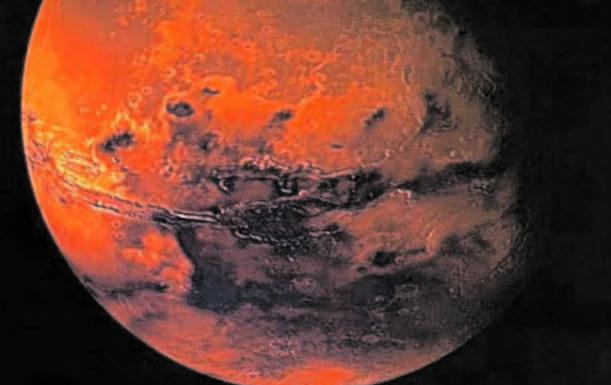
    WASHINGTON (TIP): Nasa’s Mars Atmosphere and Volatile Evolution (MAVEN) spacecraft has observed mysterious high-altitude dust cloud and aurora that reaches deep into the Martian atmosphere.

    The presence of the dust at orbital altitudes from 150 km to 300 km above the surface was not predicted earlier.

    Although the source and composition of the dust are unknown, there is no hazard to MAVEN and other spacecraft orbiting Mars.

    “If the dust originates from the atmosphere, this suggests we are missing some fundamental process in the Martian atmosphere,” said Laila Andersson from the University of Colorado’s Laboratory for Atmospherics and Space Physics (CU LASP), Boulder, Colorado.

    It is unknown if the cloud is a temporary phenomenon or something long lasting.

    The cloud density is greatest at lower altitudes.

    However, even in the densest areas, it is still very thin.

    So far, no indication of its presence has been seen in observations from any of the other MAVEN instruments.

    Possible sources for the observed dust include dust wafted up from the atmosphere; dust coming from Phobos and Deimos, the two moons of Mars; dust moving in the solar wind away from the sun; or debris orbiting the sun from comets.

    However, no known process on Mars can explain the appearance of dust in the observed locations from any of these sources.

    Earlier, MAVEN’s Imaging Ultraviolet Spectrograph (IUVS) observed what scientists have named “Christmas lights”.

    “What is especially surprising about the aurora we saw is how deep in the atmosphere it occurs – much deeper than at Earth or elsewhere on Mars,” added Arnaud Stiepen from the University of Colorado.

    The source of the energetic particles appears to be the sun.

    Billions of years ago, Mars lost a global protective magnetic field like Earth has, so solar particles can directly strike the atmosphere.

    The electrons producing the aurora have about 100 times more energy than you get from a spark of house current, so they can penetrate deeply in the atmosphere.

    The findings were presented at the 46th Lunar and Planetary Science Conference in the Woodlands, Texas recently.

  • Minor planet in solar system may have Saturn-like rings

    WASHINGTON (TIP): Scientists have detected a possible Saturn-like ring system around the minor planet Chiron, making it the sixth such object in our solar system.

    There are only five bodies in our solar system that are known to bear rings. The most obvious is Saturn; to a lesser extent, rings of gas and dust also encircle Jupiter, Uranus and Neptune.

    Scientists recently detected a ring system around Chariklo, one of a class of minor planets called centaurs.

    Now scientists at Massachusetts Institute of Technology (MIT) and elsewhere have detected a possible ring system around a second centaur, Chiron.

    In November 2011, the group observed a stellar occultation in which Chiron passed in front of a bright star, briefly blocking its light.

    The researchers analysed the star’s light emissions, and the momentary shadow created by Chiron, and identified optical features that suggest the centaur may possess a circulating disk of debris.

    The team believes the features may signify a ring system, a circular shell of gas and dust, or symmetric jets of material shooting out from the centaur’s surface.

    “It’s interesting, because Chiron is a centaur – part of that middle section of the solar system, between Jupiter and Pluto, where we originally weren’t thinking things would be active, but it’s turning out things are quite active,” said Amanda Bosh, a lecturer in MIT’s Department of Earth, Atmospheric and Planetary Sciences.

    Chiron, discovered in 1977, was the first planetary body categorised as a centaur, after the mythological Greek creature – a hybrid of man and beast.

    Like their mythological counterparts, centaurs are hybrids, embodying traits of both asteroids and comets. Researchers obtained precise observations of Chiron, using two large telescopes in Hawaii.

    They observed symmetrical, sharp features near the start and end of the stellar occultation – a sign that material such as dust might be blocking a fraction of the starlight.

    The researchers observed two such features, each about 300 kilometres from the centre of the centaur.

    In light of these new observations, the researchers said that Chiron may possess symmetrical jets of gas and dust.

    However, other interpretations may be equally valid, including the
    “intriguing possibility,” Bosh said, of a shell or ring of gas and dust.

    Researchers said it is possible to imagine a scenario in which centaurs may form rings: For example, when a body breaks up, the resulting debris can be captured gravitationally around another body, such as Chiron.

  • ARTIFICIAL LIGHT HURTS BODY’S SLEEP AND WAKE CYCLE

    WASHINGTON (TIP): Inadequate exposure to natural light during the day and overexposure to artificial light at night can actually mess up our body’s natural sleep/wake cycle, researchers say. “It’s become clear that typical lighting is affecting our physiology,” said Richard Stevens, cancer epidemiologist at the University of Connecticut. “But lighting can be improved. We’re learning that better lighting can reduce these physiological effects. By that we mean dimmer and longer wavelengths in the evening, and avoiding the bright blue of e-readers, tablets or smartphones,” said Stevens.

    Those devices emit enough blue light when used in the evening to suppress the sleep-inducing hormone melatonin and disrupt the body’s circadian rhythm, the biological mechanism that enables restful sleep. Stevens and co-author Yong Zhu from Yale University explained the known short-term and suspected long-term impacts of circadian disruption in an article in journal Philosophical Transactions of the Royal Society B. He said a study comparing people who used e-readers to those who read old-fashioned books in the evening showed a clear difference — the e-readers showed delayed melatonin onset.

  • TERMINATOR-INSPIRED 3D PRINTER GROWS OBJECTS FROM LIQUID

    VANCOUVER (TIP): A terrifying killer liquid metal robot portrayed in the movie ‘Terminator’, has inspired what was heralded here as a revolution in 3D printing. At the TED conference on Tuesday, chemist Joseph DeSimone displayed a 3D printer that let creations rise from pools of molten liquid in much the way the dreaded T-1000 robot from the second ‘Terminator’ film rose from a silvery puddle. “We were inspired by the ‘Terminator 2’ scene for the T-1000,” DeSimone said.

    DeSimone and co-inventors developed a technology they call Continuous Liquid Interface Production (CLIP) that harnesses powers of light and oxygen in a printer that brings designed objects quickly into existence from small reservoirs of elastic material with sophisticated properties. “We have a reservoir that holds the puddle like the T-1000,” DeSimone said. Printing finished parts at speeds competitive with current manufacturing processes is “a game changer,” he said. Current 3D printers rely on spraying layer upon layer of material, slowly building objects which takes hours. The time taken by such printers means it is not feasible to use resins that change chemically before the printing is finished. CLIP is 25 to 100 times faster than traditional 3D printers, and uses synthetic resins with mechanical properties strong enough to make them finished parts, said DeSimone. He saw the technology transforming manufacturing from cars, planes, and turbines to dental or surgical implants.

  • Soon, you may be told to use lift in emergencies

    In case of fire, use elevators.” It sounds like apostasy, as if a lifetime’s indoctrination had suddenly been invalidated. But it is exactly the instruction that office workers in New York’s tallest skyscrapers may receive in coming years. The fire department, buildings and city planning departments are planning occupant-evacuation elevators — cars that can, in special circumstances, be used to move people down in an emergency.

    That would upend the decade-old notion that elevators are perilous and undependable in fires or other emergencies. Experts also believe that building evacuations have become outmoded as extremely tall skyscrapers increasingly pierce the New York skyline. “We have to find a better way to evacuate people from high-rise buildings, including people with disabilities,” Edward T Ferrier, the deputy assistant chief of fire prevention, said.

  • India’s does its first hand transplant at AIMS

    India’s does its first hand transplant at AIMS

    India’s first hand transplant was carried out successfully at the Amrita Institute of Medical Sciences, Kochi, on January 13, 2015 though several have been performed globally over the last decade. The milestone has already been lauded by international experts.

    Hand transplants are considered to be more cost effective and efficient compared to prosthetic hands, especially in bilateral amputees. So far, hand transplants and other composite tissue transfers including the face have been done only in USA, European countries, China and Australia.

    The one carried out on January 13, 2015 was the first hand transplant in a coloured skin population in the world and the first in India.

    The transplant team was led by Dr. Subramania Iyer, Professor and Chairman of Plastic Surgery. The surgical team comprised of senior consultants in Plastic Surgery – Dr. Mohit Sharma, Dr. Sundeep Vijayaraghavan, Dr. Kishore P. and Dr. Jimmy Mathew. The immunosuppression management was under Dr. George Kurian supported by Dr. Anil Mathew, Dr. Rajesh and Dr. Zachariah. The rehabilitation was carried out by the team led by Dr. Surendran and Dr. Ravi. The center was approved for carrying out hand transplant by the Government of Kerala after the inspections by the medical education directorate.

    The operation lasted for 16 hours and ended by 8 PM on Tuesday. More than 20 surgeons participated in the procedure. Each of the hand required connecting two bones, two arteries, 4 veins and about 14 tendens. The immune suppressant drugs were started before the start of the surgery and continued after it.

    Internal organ transplants are very common. But the transplant of external parts like face and hand (called composite tissue allotransplant) is rare, but is getting accepted as the best modalities of rehabilitation for many patients. In bilateral hand amputees hand transplants are the best option. 

    The details of the transplant has been added to the international registry of hand transplants which maintains stringent standards in the followup of these cases.

  • PocketSurfer smartphones starting at Rs. 1,999 or $33

    PocketSurfer smartphones starting at Rs. 1,999 or $33

    Akash tablet maker DataWind is back with another product which will be the most affordable smartphone starting at just Rs 1,999 in collaboration with Reliance Communications. 

    The new range of PocketSurfer smartphones is powered with free unlimited internet browsing for one year on Reliance.

    The new PocketSurfer smartphones allow the consumers to join the digital age at an affordable cost. The PocketSurfer 2G4 has a 3.5 inch screen, Dual SIM, EDGE network while PocketSurfer 3G4 is a four inch, Dual SIM, Dual camera, 3G network compatible smartphone.

    The President and CEO of DataWind, Suneet Singh Tuli, emphasized on the power of internet. “Internet pervades our lives. From education to businesses, internet is everywhere. Today, no business model can effectively run without its online presence,” said Tuli. “With these ultra-low cost smartphones, we wish to create a digitised India and make technology accessible to every common man,” he added.

    The products will be available on Naaptol’s TV, print and online shopping platforms. The products will also be available from March 24 at Sangeetha Mobiles, Spice Hotspot Retail and retail partners. With this launch, DataWind targets tier II and tier III cities of the country.

    India will be the world’s second largest smartphone market. With a population of just over 1.2 billion, India has nearly as many people as China. Yet, unlike China, India’s smartphone penetration is still extremely low. More than 900 million Indians have a mobile subscription, but only about 110-120 million have a smartphone, according to most estimates.

    Samsung & Micromax control most of the smart phone market along with the Apple iPhone loyalists. The Indian touch screen smart phone market is estimated to grow the fastest in the world as per reports.


  • NASA LAUNCHES 4 SPACECRAFT TO SOLVE MAGNETIC MYSTERY

    NASA LAUNCHES 4 SPACECRAFT TO SOLVE MAGNETIC MYSTERY

    CAPE CANAVERAL (TIP): NASA launched four identical spacecraft Thursday on a billion-dollar mission to study the explosive give-and-take of the Earth and sun’s magnetic fields.

    The unmanned Atlas rocket — and NASA’s NASA — soared into a clear late-night sky, right on time, to cheers and applause.

    The quartet of observatories will be placed into an oblong orbit stretching tens of thousands of miles into the magnetosphere — nearly halfway to the moon at one point. They will fly in pyramid formation, between 6 miles and 250 miles apart, to provide 3-D views of magnetic reconnection on the smallest of scales.

    Magnetic reconnection is what happens when magnetic fields like those around Earth and the sun come together, break apart, then come together again, releasing vast energy. This repeated process drives the aurora, as well as solar storms that can disrupt communications and power on Earth. Data from this two-year mission should help scientists better understand so-called space weather.

    Each observatory resembles a giant octagonal wheel, stretching more than 11 feet across and 4 feet high, and weighing 3,000 pounds apiece. They’re numbered and stacked like tires on top of the rocket, with No. 4 popping free first more than an hour after liftoff, followed every five minutes by another.

    Once the long, sensor-laden booms are extended in a few days, each spacecraft could span a baseball field.

    Principal investigator Jim Burch from the Southwest Research Institute in San Antonio said measurements will be made down to the electron scale, significantly smaller than previous heliophysics missions. In all, there are 100 science sensors. Primary science-gathering will begin this summer, following a five-month checkout.

    The findings from the $1.1 billion mission will be useful in understanding magnetic reconnection throughout the universe. Closer to home, space weather scientists along with everyone on Earth hopefully will benefit.

    “We’re not setting out here to solve space weather,” Burch said. “We’re setting out to learn the fundamental features of magnetic reconnection because that’s what drives space weather.”

  • SOLAR PANEL STACKS GET MORE OUT OF SUN

    SOLAR PANEL STACKS GET MORE OUT OF SUN

    In yet another display of Gujarati ‘jugaad’, a team of scientists from Gandhinagar-based Gujarat Energy Research and Management Institute (GERMI) has designed solar panels that can be stacked one on top of the other. These solar panel stacks occupy much less space but harvest more of the sun’s energy.

    The GERMI team showed how stacking up photovoltaic (PV) cells (or solar panels) makes them up to 90% more efficient for harvesting and generating power without having to use huge plots of land to spread out the panels.

    The team led by GERMI director Prof T Harinarayana and Pragya Sharma simply stacked two solar panels, one on top of the other and separated by a distance of 3m, 5m and then by 10m. The idea was to eliminate the problem of shadow cast on the bottom panel by the solar panel on top during the following time periods in a day — from 9am to 12pm; 12pm to 3pm; and 3pm to 5pm.

    The team’s ‘jugaad’ lay in attaching a system of mirrors to the solar panel stack so that the former reflected sunlight directly on to those parts of the bottom solar panel that did not get light between 12pm and 5pm. With such an arrangement, the power output on a typical day in Gandhinagar increased to 479kWh with a two-layer solar panel stack. In the space occupied by this stack, a 756sqm spread of solar panels could produce only 252kWh power.

    “The distance between two solar panels works best if the distance is 5 meters. The height should be adjusted after detecting wind pressure.Such stacks would be useful for rooftop solar power generation, particularly on top of apartments where space is usually limited. Right now, the mirror system’s movement is mechanical. The advanced version will use sensors and automatically adjust mirrors,” said Harinarayana.

  • Milky Way 50% bigger than thought, reveals study

    Milky Way 50% bigger than thought, reveals study

    WASHINGTON (TIP): The Milky Way galaxy is at least 50% bigger than commonly estimated, according to a new study which found that the galactic disk is contoured into several concentric ripples.

    The research, conducted by an international team led by Professor Heidi Jo Newberg at the Rensselaer Polytechnic Institute in the US, revisited astronomical data from the Sloan Digital Sky Survey which, in 2002, established the presence of a bulging ring of stars beyond the known plane of the Milky Way. “In essence, what we found is that the disk of the Milky Way isn’t just a disk of stars in a flat plane – it’s corrugated,” said Heidi Newberg, professor of physics, applied physics and astronomy in the Rensselaer School of Science.

    “As it radiates outward from the Sun, we see at least four ripples in the disk of the Milky Way. While we can only look at part of the galaxy with this data, we assume that this pattern is going to be found throughout the disk,” Newburg said.

    The findings show that the features previously identified as rings are actually part of the galactic disk, extending the known width of the Milky Way from 100,000 light years across to 150,000 light years, said Yan Xu, a scientist at the National Astronomical Observatories of China, former visiting scientist at Rensselaer, and lead author of the paper.

    “Going into the research, astronomers had observed that the number of Milky Way stars diminishes rapidly about 50,000 light years from the centre of the galaxy, and then a ring of stars appears at about 60,000 light years from the centre,” said Xu.

    “What we see now is that this apparent ring is actually a ripple in the disk. And it may well be that there are more ripples further out which we have not yet seen,” Xu added.

  • Chinese find new ‘silk route’ to power next-gen batteries

    BEIJING (TIP): A ‘green’ material derived from natural silk can boost the performance of lithium-ion batteries used in portable gadgets and electric cars, scientists say.

    Carbon is a key component in commercial lithium-ion energy storage devices, including batteries and super capacitors. Most commonly, graphite fills that role, but it has a limited energy capacity, researchers said.

    Lithium-ion batteries have enabled many of today’s electronics, from portable gadgets to electric cars, but much to the frustration of consumers, none of these batteries last long without a recharge.

    To improve the energy storage, manufacturers are looking for an alternative material to replace graphite.

    Chuanbao Cao and colleagues at the Beijing Institute of Technology wanted to see if they could develop such a material using a sustainable source. The researchers found a way to process natural silk to create carbon-based nanosheets that could potentially be used in energy storage devices.

    Their material stores five times more lithium than graphite can – a capacity that is critical to improving battery performance.

    It also worked for over 10,000 cycles with only a 9% loss in stability. The researchers successfully incorporated their material in prototype batteries and su8percapacitors in a one-step method that could easily be scaled up.

  • PEN TO HELP DIABETICS MONITOR BLOOD SUGAR LEVELS

    PEN TO HELP DIABETICS MONITOR BLOOD SUGAR LEVELS

    WASHINGTON (TIP): Ballpoint pens filled with high-tech bio-inks can be used to draw sensors directly on the skin to help detect glucose levels in diabetics, scientists say. The research leads to an era when anyone will be able to build sensors, anywhere, according to researchers at the University of California, San Diego.

    The team has developed high-tech bio-inks that react with several chemicals, including glucose. They filled off-the-shelf ballpoint pens with the inks and were able to draw sensors to measure glucose directly on the skin and sensors to measure pollution on leaves. Researchers envision sensors drawn directly on smartphones for personalized and inexpensive health monitoring or on external building walls for monitoring of toxic gas pollutants.

    The team used pens, loaded with an ink that reacts to glucose, to draw reusable glucose-measuring sensors on a pattern printed on a transparent, flexible material which includes an electrode.

  • Soon, you could talk with computers like friends

    Soon, you could talk with computers like friends

    NEW YORK (TIP): Humans may soon be able to talk to computers and robots the same way they talk to their friends, scientists say.

    A new programme from the US Defence Advanced Projects Agency (DARPA) aims to get computers to express themselves more like humans by allowing them to use spoken language, facial expressions and gestures to communicate.

    “Today we view computers as tools to be activated by a few clicks or keywords, in large part because we are separated by a language barrier,” said Paul Cohen, DARPA’s Communicating with Computers (CwC) programme manager.

    “The goal of CwC is to bridge that barrier, and in the process encourage the development of new problem-solving technologies,” Cohen said.

    One of the problem-solving technologies that CwC could help further is the computer-based modelling used in cancer research.

    Computers previously developed by DARPA are already tasked with creating models of the complicated molecular processes that cause cells to become cancerous.

    But while these computers can churn out models quickly, they are not so adept at judging if the models are actually plausible and worthy of further research.

    If the computers could somehow seek the opinions of flesh-and-blood biologists, the work they do would likely be more useful for cancer researchers.

    To get computers up to the task of communicating with people, CwC researchers have devised several tasks that require computers and humans to work together toward a common goal, ‘Live Science’ reported.

    One of the tasks, known as “collaborative composition,” involves storytelling. In this exercise, humans and computers take turns contributing sentences until they have composed a short story.

    “This is a parlor game for humans, but a tremendous challenge for computers,” Cohen said.

    “To do it well, the machine must keep track of the ideas in the story, then generate an idea about how to extend the story and express this idea in language,” Cohen added.

    Another assignment that the CwC is planning is known as “block world,” which would require humans and computers to communicate to build structures out of toy blocks. But neither humans nor computers will be told what to build.

    Instead, they’ll have to work together to make a structure that can stand up of its own accord.

    Better communications technologies could help robot operators use natural language to describe missions and give directions to the machines they operate both before and during operations.

  • SUN’S HELIOSPHERE DOMINATED BY TWO SOLAR JETS: NASA

    SUN’S HELIOSPHERE DOMINATED BY TWO SOLAR JETS: NASA

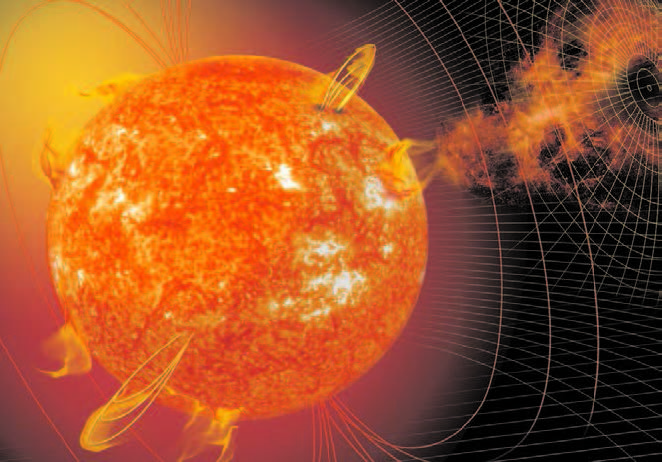
    WASHINGTON (TIP): Contrary to earlier visualisations, the sun’s heliosphere is dominated by two giant jets of material shooting backwards over the north and south poles of the sun.

    The heliosphere is created by the solar wind, the changed particles emitted by the sun. The heliosphere extends far beyond the planets of the solar system. These two jets are confined by the interaction of the sun’s magnetic field with the interstellar magnetic field.

    “Everyone’s assumption has been that the shape of the heliosphere was molded by the flow of interstellar material passing around it,” said Merav Opher, astronomer at Boston University and lead author of the NASA-funded study.

    Scientists have for decades visualised the heliosphere in the shape of a comet, with a very long tail extending some 464 billion miles. The two jets are similar to other astrophysical jets seen in space, so studying them locally could open doors to understanding such jets throughout the universe.

    “Scientists thought the solar wind flowing down the tail could easily pull the magnetic fields in the heliosphere along as it flowed by, creating this long tail. But it turns out that the magnetic fields are strong enough to resist that pull – so instead they squeeze the solar wind and create these two jets,” said Opher.

    The team could determine the new shape when they adjusted simulations of the heliosphere based on observations collected from NASA’s Voyager 1 spacecraft.

    The spacecraft recently moved outside of the heliosphere into interstellar space. “If there were no interstellar flow, then the magnetic fields around the sun would shape the solar wind into two jets pointing straight north and south,” said Jim Drake at the University of Maryland in College park.

  • USING INDIA MADE INSTRUMENT, NASA DISCOVERS PLANET IN 4-STAR SYSTEM

    USING INDIA MADE INSTRUMENT, NASA DISCOVERS PLANET IN 4-STAR SYSTEM

    NEW DELHI (TIP): Using a new instrument developed with Indian collaboration, Nasa astronomers have discovered a planet 136 light-years away which is attached to four parent stars. They also discovered another planet in the care of a three star family.

    The discoveries were made using the new Robo-AO adaptive optics system, developed by the Inter-University Center for Astronomy and Astrophysics located in Pune, India and the California Institute of Technology in Pasadena. This new system, along with the PALM-3000 adaptive optics system, developed by Nasa’s Jet Propulsion Laboratory in Pasadena, California, and Caltech are fitted to telescopes at the Palomar Observatory in San Diego.

    The four star system called 30 Ari is located in the direction of the constellation Aries. While the planet itself was known before, it was thought to have only three stars, not four. The new instruments helped scientists discover the fourth parent star.

    This is only the second time a planet has been identified in a quadruple star system. The first four-star planet, KIC 4862625, was discovered in 2013 by citizen scientists using public data from Nasa’s Kepler mission.

    “Star systems come in myriad forms. There can be single stars, binary stars, triple stars, even quintuple star systems,” said Lewis Roberts of JPL, lead author of the new findings appearing in the journal Astronomical Journal. “It’s amazing the way nature puts these things together.”

    The system’s gaseous planet is enormous, with 10 times the mass of Jupiter, and it orbits its primary star every 335 days. The primary star has a relatively close partner star, which the planet does not orbit. This pair, in turn, is locked in a long-distance orbit with another pair of stars about 1,670 astronomical units away (an astronomical unit is the distance between Earth and the sun). Astronomers think it’s highly unlikely that this planet, or any moons that might circle it, could sustain life.

    Were it possible to see the skies from this world, the four parent stars would look like one small sun and two very bright stars that would be visible in daylight. One of those stars, if viewed with a large enough telescope, would be revealed to be a binary system, or two stars orbiting each other.

    “About four percent of solar-type stars are in quadruple systems, which is up from previous estimates because observational techniques are steadily improving,” said co-author Andrei Tokovinin of the Cerro Tololo Inter-American Observatory in Chile.

    The new planet with a trio of stars is a hot Jupiter that circles its primary star tightly, completing one lap every three days. Scientists already knew this primary star was locked in a gravitational tango with another star, about 0.7 light-years away, or 44,000 astronomical units. That’s relatively far apart for a pair of stellar companions. The latest discovery is of a third star in the system, which orbits the primary star from a distance of 28 astronomical units — close enough to have influenced the hot Jupiter’s development and final orbit. The fourth star lies at a distance of 23 astronomical units from the planet.

  • Delhi is world’s worst in air pollution

    Air in Delhi is world’s worst, 13 other Indian cities aren’t far behind
    India is ending years of denial about its air quality, while the US Embassy in New Delhi plans to give daily accurate measures of air quality for tourists and expatriates.

    China’s dirty air often grabs global headlines with photos of its cities swathed in smog.

    But it is India where air quality has been plummeting for years and is now the worst in the world. The cost of India’s economic growth is partly recorded in the fact that 13 of the 20 most polluted cities in the world are in India, according to the World Health Organization. New Dehli, India’s capital, is now number one on the list of the most polluted.

    For many Indians, that news comes as a surprise. For years the Indian government has not shared data on air quality and has not initiated any serious public awareness about the rising problem. Debates on air pollution were largely dismissed as Western propaganda aimed at curtailing India’s growth.

    Few Indian cities have purchased or deployed the kind of monitoring equipment necessary to measure the levels of air quality, says Delhi-based environmentalist Sunita Narain. “We just don’t know how bad is the air we breathe,” he says.

    Nor is the news getting better. A recently released joint study from the University of Chicago, Harvard, and Yale found that air pollution and attendant nasty chemical particulate matter, especially one called PM2.5, are significantly reducing life expectancies.

    India recently crept into third place in the world for greenhouse gas emissions, as well. Yet unlike the deal forged this fall between President Obama and Chinese leader Xi Jinping on greenhouse gas reduction, Mr. Obama was unable to find the same kind of common ground with Indian Prime Minister Narendra Modi during his January visit to Delhi.

    A nationwide problem

    So grim is the current situation that Delhi has six times the level of airborne particulate matter identified by the US study as most likely to harm humans.

    While Delhi may be newly awakening to its problems, the issue is a national one. Indian cities like Gwalior, Raipur, Lucknow, Firozabad, Kanpur, Amritsar, and Ludhiana are also being described as needing to more fully recognize the man-made conditions of bad air.

    Delhi now records some 153 micrograms of PM2.5 per cubic meter. (The WHO’s safe standard for PM2.5 is below 10 micrograms.)

    But other Indian cities also record woeful figures. Patna has 149 micrograms. Gwalior has 144 and Raipur 134 micrograms. The other cities where the PM2.5 level is 10 times higher than WHO standard are Ahmedabad, Lucknow, Kanpur, Firozabad, Amritsar and Ludhiana. These figures are based on a spring 2014 WHO study and may not be the same today.

    India hasn’t made it simple to find out such information. Some 22 monitoring stations across the country check pollution in real time. But of these, only 12 are functional, and none check for PM2.5.

    Factories and other industrial units in India are required to send air pollution data to state government agencies. But it is an open secret that the figures are fudged or hidden. Most states simply report data in terms of “average figures” rather than giving real-time data about air quality.

    What’s more is that state governments don’t always update the figures. One official at the federal environment ministry points out that most data is more than two years old. The latest pollution data on the website of the state of Odisha is from 2006.

    Clearing the air
    Perhaps partly because of Mr. Obama’s evident displeasure at not getting a deal, and the witness of his delegation at the poor air, India’s air quality has received wider attention in the past month. The country’s regulators appear emboldened after years of official denial.

    Prakash Javedekar, India’s environment minister, says that air monitors have been installed on thousands of industrial units and in theory will send in accurate figures.

    “We are facing a real crisis in as many cities and the world is seeing. I am not bothered about who describes me the baldest or worst,” Mr Javedekar said in an interview on Headline Today, an Indian news broadcast. “We are the worst.”

    To improve air quality, India plans to initially track eight pollutants in 46 cities with populations exceeding a million people. After five years, the rest of the country will slowly be brought into the system.

    But US Secretary of State John Kerry recently announced what some analysts took as a spur to the monitoring project. He said the US Embassy in Delhi would employ its own monitoring device and release daily data on a website, including figures on PM2.5.

    The US launched a similar program in Beijing, following complaints from American tourists and expatriates.

    Source – The Christian Science Monitor

  • ARMBAND TO SOUND AN ALARM IF YOU HAVE FEVER

    ARMBAND TO SOUND AN ALARM IF YOU HAVE FEVER

    LONDON (TIP): Scientists have developed a fever alarm armband – a flexible, self-powered wearable device that sounds an alarm in case of high body temperature.

    The flexible organic components developed for this device by the University of Tokyo researchers are well-suited to wearable devices that continuously monitor vital signs including temperature and heart rate for applications in healthcare settings.

    The armband incorporates several first-ever achievements.

    It is the first organic circuit able to produce a sound output, and the first to incorporate an organic power supply circuit. The former enables the device to provide audible information when the flexible thermal sensor detects a pre-set value within the ranges of 36.5 oC to 38.5 oC, while the latter increases the range of operational illumination by 7.3 times in indoor lighting conditions.

    Constant monitoring of health indicators such as heart rate and body temperature is the focus of intense interest in the fields of infant, elderly and patient care.

    Sensors for such applications need to be flexible and wireless for patient comfort, maintenance-free and not requiring external energy supply, and cheap enough to permit disposable use to ensure hygiene. Conventional sensors based on rigid components are unable to meet these requirements, so the researchers have developed a flexible solution that incorporates organic components that can be printed by an inkjet printer on a polymeric film.

    The new device developed by research groups lead by Professor Takayasu Sakurai at the Institute of Industrial Science and Professor Takao Someya at the Graduate School of Engineering combines a flexible amorphous silicon solar panel, piezoelectric speaker, temperature sensor and power supply circuit created with organic components in a single flexible, wearable package.

    “Our fever alarm armband demonstrates that it is possible to produce flexible, disposable devices that can greatly enhance the amount of information available to carers in healthcare settings,” says Professor Someya. “We have demonstrated the technology with a temperature sensor and fever alarm, but the system could also be adapted to provide audible feedback on body temperature, or combined with other sensors to register wetness, pressure or heart rate.”

  • Now, a 10-min strip test for Ebola, dengue

    LONDON: A simple paper strip similar to a pregnancy test can now diagnose Ebola in less than 10 minutes besides viral haemorrhagic fevers like yellow fever and dengue.

    Unlike most existing paper diagnostics, which test for only one disease, the new strips are color-coded so they can be used to distinguish among several diseases.

    The researchers used triangular nanoparticles, made of silver, that can take on different colors depending on their size. They created red, orange and green nanoparticles and linked them to antibodies that recognize Ebola, dengue fever and yellow fever. As a patient’s blood serum flows along the strip, any viral proteins that match the antibodies painted on the stripes will get caught and those nanoparticles will become visible. This can be seen by the naked eye; for those who are colour-blind, a cell phone camera could be used to distinguish the colours.

    Scientists from MIT say that when diagnosing a case of Ebola, time is of the essence. However, existing diagnostic tests take at least a day or two to yield results, preventing health care workers from quickly determining whether a patient needs immediate treatment and isolation.

    Currently, the only way to diagnose Ebola is to send patient blood samples to a lab that can perform advanced techniques such as polymerase chain reaction (PCR), which can detect genetic material from the Ebola virus.

  • Nasa Europa mission to search for alien life

    WASHINGTON (TIP): Nasa is planning a mission to Jupiter’s moon Europa to search for signs of alien life on the icy, ocean-harbouring world.

    Nasa has asked scientists to consider ways that a Europa mission could search for evidence of alien life in the plumes of water vapour that apparently blast into space from Europa’s south polar region.

    These plumes, which Nasa’s Hubble Space Telescope spotted in December 2012, provide a possible way to sample Europa’s ocean of liquid water, which is buried beneath the moon’s icy shell, researchers said.

    Nasa is zeroing in on a flyby mission design, something along the lines of a long-studied concept called the Europa Clipper.

    As currently envisioned, Clipper would travel to Jupiter orbit, then make 45 flybys of Europa over 3.5 years, at altitudes ranging from 25km to 2,700km.

    The $2.1 billion mission would study Europa’s subsurface ocean, giving researchers a better understanding of the water’s depth, salinity and other characteristics.

    Nasa also wants to add plume sampling to the Europa mission’s task list, if possible.

    During a Europa plume workshop at the Ames Research Center in Silicon Valley earlier this week, Nasa science chief John Grunsfeld urged attendees to “think outside the box” and come up with feasible ways to study the moon’s plumes.

    Researchers would want to analyse bits of Europa material in well-equipped labs here on Earth, but bringing samples back is likely beyond the scope of the flyby mission currently under consideration.

    However, it may be possible to detect biomolecules onsite, using gear aboard a Clipper-like probe, researchers said.

    Spotting a set of amino acids that all display the same chirality, or handedness, in plume material would be strong evidence of Europan life, astrobiologist Chris McKay, of Nasa Ames, said at the workshop.

    Collecting enough plume material to perform such analyses will likely prove extremely challenging, ‘SPACE.com’ reported.

    It may require flying so low and so slowly that it makes more sense to send a lander down to the Europa surface through the plume, said astrobiologist Kevin Hand of Nasa’s Jet Propulsion Laboratory in Pasadena, California.

  • Now, same-sex couples can make babies

    LONDON (TIP): In a breakthrough, researchers led by an Indian-origin scientist, have shown that stem cells from the skin of two adults of the same sex can be used to make human egg and sperm cells.

    Scientists at Cambridge University collaborated with Israel’s Weizmann Institute of Science and used stem cell lines from embryos as well as from the skin of five different adults. Researchers have previously created live baby mice using engineered eggs and sperm, but until now have struggled to create a human version of these ‘primordial germ’ or stem cells.

    Ten different donor sources have been used so far and new germ-cell lines have been created from all of them, researchers said.

    The team has compared the engineered germ cells with natural human stem cells taken from aborted human fetuses to check that the artificially created versions of the cells had identical characteristics, The Times reported. A gene called SOX17, previously considered to be unimportant in mice, has turned out to be critical in the process of ‘reprogramming’ human cells, researchers said. “We have succeeded in the first and most important step of this process, which is to show we can make these very early human stem cells in a dish,” said Azim Surani, professor of physiology and reproduction at Cambridge, who heads the project. “We have also discovered that one of the things that happens in these germ cells is that epigenetic mutations, the cell mistakes that occur with age, are wiped out,” said Surani, who was involved in research that led to the birth of Louise Brown, the world’s first test-tube baby, in 1978.

    Jacob Hanna, the specialist leading the project’s Israeli arm, said it may be possible to use the technique to create a baby in just two years. “It has already caused interest from gay groups because of the possibility of making egg and sperm cells from parents of the same sex,” he said. The details of the technique were published in the journal Cell.

  • Nanotech poised to extend battery life – Indian-American Teen Developer

    Nanotech poised to extend battery life – Indian-American Teen Developer

    The days of frequent phone recharges may soon be over, if an award-winning experiment by Indian-American teenager, translates successfully to commercial production.  

    Saratoga, California-based Eesha Khare, then 18, won the $50,000 Young Scientist prize at the 2013 Intel International Science and Engineering Fair, for developing a Super Capacitor that recharges phone batteries in less than a minute and allows 10 times as many recharge cycles. Her device made of carbon nano-fibres and metal oxides, has to be fitted inside cell phone batteries.

    Daughter of an engineer and a biologist, Eesha has been fascinated by science for her entire life. This mobile device quandary was just the kind of challenge she’d been seeking—one that would allow her to stretch her brain, to fully utilize the computation power of her technology, and to address an issue that would serve millions of people just like her.  

    Eesha is the developer of a supercapacitor energy storage device, a carbon fiber with different metal oxides—primarily titanium dioxide and polyaniline—that uses nanotechnology to maximize the device’s surface area. It charges mobile devices much faster than previous technology has allowed, and has the ability to charge for many more cycles. Her innovation could be harnessed to charge more than cell phones and tablets; down the line, it could potentially energize cars. In the meantime: “My goal is to have a supercapacitor charge a mobile device in less than a minute.”

    Her high school teacher says Eesha showed the academic rigour of a PhD student in her work on the battery project. Eesha is now using her prize money to finance her studies at Harvard and to improve her invention before it can be offered for mass production. 


  • UFO pictured in the skies in UK | experts baffled

    UFO pictured in the skies in UK | experts baffled

    A mysterious alien object has been snapped in the skies above Cornwall.

    The UFO was caught on camera above a beach in Bude on Tuesday.

    Now experts want help identifying the strange aerial craft.

    Dave Gillham, founder of the Cornwall UFO group, told the West Briton : “It looks triangular – but I have no idea what it is.”

    Until December 2009, the Ministry of Defence (MOD) had a dedicated line for people to report UFOs, but ditched it to save money for other things.

    A statement read: “The MOD has no opinion on the existence or otherwise of extra-terrestrial life. However, in over 50 years, no UFO report has revealed any evidence of a potential threat to the UK. MOD will no longer respond to reported UFO sightings or investigate them.”

    Now UFO data is collected by independent organisations such as the British UFO Research Association or UK UFO.

    John Wickham, from BUFORA said: “Since the MOD line has shut, we have seen a massive increase in calls. Most things can be explained with a little bit of research, although if it’s a military craft the MOD are happy to call it a UFO to keep their secrets. But we always respect everyone’s beliefs.”