Tag: Shardiya Navratri

  • Shardiya Navratri: Devoted to nine forms of Goddess Durga

    Shardiya Navratri: Devoted to nine forms of Goddess Durga

    The nine-day Shardiya, or Shrad Navratri, is an important Hindu festival observed across India. It is devoted to the nine forms of Goddess Durga.
    Shardiya Navratri is commemorated in the Hindu month of Ashwin, which often falls between September and October on the Gregorian calendar.
    Out of the four Navratris—Magha (winter), Chaitra (spring), Ashadha (monsoon), and Sharad or Shardiya (autumn), it is regarded as the most significant, which is why it is also known as Maha Navratri. The nine-day Shardiya, also known as Shrad Navratri, occurs in the lunar month of Ashwin during Sharad Ritu, and it concludes on the tenth day with Dussehra or Vijaya Dashami.
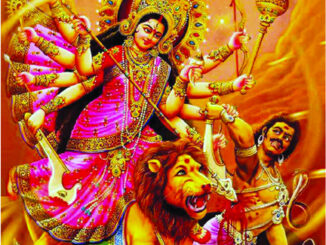
    It celebrates the killing of Mahishasura, a demon, by Goddess Durga after a long battle of nine days that culminated on the 10th day as Vijayadashami, which is why she is famously called Mahishasuramardini, or the slayer of Mahishasur.
    Additionally, the 10th day of Navratri is celebrated as Vijayadashami, the day Lord Rama won the battle against Ravana and recovered Goddess Sita.
    This year in 2024, Navratri will start on Thursday, October 2, at 12:18 pm, and conclude on October 4 at 02.58 am. The festival also signifies righteousness and the power of good to triumph over evil, teaching moral values like bravery and virtue.
    People observe fasting during the nine days or on the first two or last two days, while some keep it for all nine days. Starting on the Pratipada of Shukla Paksha in the month of Ashwin, devotees of Goddess Durga fast and worship her for nine days, reciting the Durga Stotra and Durga Chalisa, with a belief that worshipping Durga with devotion will grant wishes.
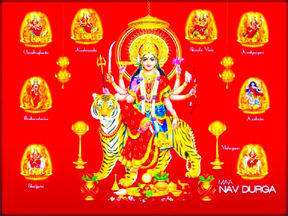
    Each day of Navratri has a distinct Durga avatar, such as Shailaputri, Brahmacharini, or Chandraghanta. The festival is also considered a harvest festival, praising the Goddess as the motherly power behind life and creation.
    The festival is associated with their symbolic connotation as epitome of courage, wealth and skill respectively. Broadly, on the first three days, devotees venerate Goddess Durga as she represents power in its divine form that removes negativity and proclivity towards immoral behavior. She is, invoked as Kumari, Parvati and Kali which are aspects of Ma Durga and represent her adolescence-to-maturity stage. During the next three days, Goddess Lakshmi blessings for material and spiritual prosperity are sought with puja and powerful mantra chantings. Over the next three days, Goddess Saraswati is invoked to seek blessings for erudition and skills in the arts. The devotee puts books and musical instruments near the deity to acquire true knowledge and wisdom to see him/her through this life and beyond. The ninth day of ‘Mahanavami’ , the concluding day of Navratri puja, is considered an auspicious day for conducting pujas such as ‘Aparajita’ puja and ‘Kanya Puja’. The tenth day celebrates the momentous events associated with Lord Rama as well as Ma Durga, who killed the demon ‘Mahisasura’.
    Rituals of Navratri
    Customs of Navratri which stand out prominently in terms of strict observance include the following:
    On the very first day, barley or ‘jowar’ seeds are sown in a decorated clay pot and by the tenth day, the tender shoots are distributed among the devotees. A photograph or an idol of the eight-armed Goddess seated on a lion, along with the ‘yantra’ is installed.
    ‘Kalash Sthapna’ is done which involves installing a water pot or ‘kalash’, sprinkled with holy water and filled with mango leaves and coconut.The morning ‘puja’ is performed after a bath, and the day-long fast is broken after doing the evening puja.
    During the puja, ‘shankh’ is blown, fresh flowers, ‘doob’ or sacred grass, ‘paan’ and fruits are offered to the deity, chapters from the sacred ‘Durga Saptshati’ and ‘Chandipath’ are recited, followed by ‘arti’ and prasad distribution.A very significant ritual is performing ‘Kanya Puja’ on ‘Ashtami’ and ‘Navami’, which involves worshipping nine young girls, in pre-puberty stage, representing the nine forms of goddess Durga. Each girl is treated to a meal comprising puri, sweet bread, halwa, a sweet dish, made of semolina and Bengal gram curry. After washing their feet, the devotees break their fast.
    Ayudha or Astra Puja is held on the eighth/ninth day. Tools, vehicles and equipments are worshipped on this day. Among some communities, it is also considered an auspicious time to initiate learning for children by invoking Goddess Saraswati. Hence, Lalita-puja and Saraswati-puja is done ritualistically to start formal education of children.A Garba performance precedes ‘aarti’ conducted in honor of Maa Durga.Fasting or ‘vrat’ from sunrise till sunset is undertaken for night days.In the Navratri Hindu festival, the devotee should observe abstinence and austerity. On the eight day, a ‘yagna’ is performed with offerings of ghee and til for mental and spiritual cleansing.
    Lemon or bhasma or ash is used for cleaning substances for ‘abhishek’.In Gujarat, a garbh-deep or a lamp is lit within an earthen pot with several perforations representing the unison of body and soul.
    Customs of Navratri
    Since all the nine days are dedicated to different incarnations of Ma Durga, it is customary to wear colors that symbolize the qualities of the deity. The first day venerates Shailputri Devi who embodies aspects of Brahma, Vishnu and Shiva. On this day, red clothes are worn. The second day is dedicated to Brahmacharini Devi who represents a life of abstinence. Wearing blue colored clothes is considered auspicious on this day. On the third day, Chandraghanta Devi, the bestower of glory and beauty, is invoked. On the fourth day, Kushmanda Devi is worshipped and yellow is the color to honor her. The fifth day is in honor of Skandmata Devi. Grey is the color to be worn on the sixth day and is dedicated to Katyayani Devi, while orange is the color for protection symbolized by Kalratri Devi on the seventh day. On the eighth day, pink clothes are worn to honor Mahagauri Devi. The ninth day is dedicated to Siddhidatri Devi, whose blessings earn devotees all ‘siddhis’.
    On all these nine days, devotees should meditate on the different forms of Ma Durga and seek her grace.

  • Chaitra Navratri: Worshipping the nine incarnations of Durga

    Chaitra Navratri: Worshipping the nine incarnations of Durga

    Chaitra Navratri is a nine-day Hindu festival celebrated annually from the first day of the Hindu New Year. This year, it will begin on April 9 and end on April 17. While there are four Navratri celebrated throughout the year, Chaitra Navratri and Shardiya Navratri are more popularly observed across the country. Devotees worship Maa Durga and her nine divine forms during Chaitra Navratri.
    Chaitra Navratri is a famous Hindu festival. Chaitra Navratri, also known as Vasant Navratri, is a Hindu festival celebrated in the month of Chaitra (March–April) every year. It is a nine-day festival that honors the nine forms of Goddess Durga or Shakti. It marks the beginning of the Hindu New Year. During this festival, devotees fast, pray and perform traditional rituals. The nine days of the festival are dedicated to nine different forms of the Goddess and each day is devoted to worshipping a different form. On the ninth day, the Goddess is worshipped in her full form. Chaitra Navratri is celebrated with much enthusiasm across India and is a joyous occasion for Hindus.
    In this festival of Navratri, the two seasons meet. Navratri is celebrated twice a year. This festival is called Chaitra Navratri and Ashwin Navratri. Chaitra Navaratri falls during the months of March or April. Chaitra Navaratri is also known as Vasant Navaratri.
    The festival is celebrated to honor the nine forms of Goddess Durga and her various powers and accomplishments. During the first three days of the festival, the Goddess is worshiped in her form of Shailaputri, Brahmacharini, and Chandraghanta. The next three days are devoted to worshiping the Goddess in the form of Kushmanda, Skandamata, and Katyayani. The remaining three days are dedicated to honoring the Goddess in her form of Kalaratri, Mahagauri, and Siddhidatri.
    Ram Navami, the birthday of Lord Rama is usually on the ninth day during the Navratri festival. Hence Chaitra Navaratri is also known as Rama Navaratri.
    Most of the customs and rituals that follow during Sharadiya Navratri are followed during Chaitra Navratri. Ghatasthapana Puja Vidhan is the same for Sharadiya Navratri and Chaitra Navratri.
    Chaitra Navratri is more popular in North India. In Maharashtra, Chaitra Navratri begins with Gudi Padwa and in Andhra Pradesh it begins with Ugadi.
    The festival is marked by traditional rituals such as chanting mantras, lighting diyas or small lamps, and offering prayers to the Goddess. Devotees also observe fasts and perform pujas or religious ceremonies.
    Chaitra Navratri is an important festival for Hindus, as it is believed to be an auspicious time to seek the blessings of the Goddess and to improve one’s spiritual and material
    What is ‘Chaitra’ month?
    According to Hindu scriptures, Lord Brahma started the creation of the world from the month of Chaitra, which is regarded as the first month of the Hindu calendar. It marks the beginning of the new season when new flowers and fruits start to blossom. Chaitra month fall in March- April, when the Sun starts its journey through the Zodiac cycle. Some people believe that Goddess Durga descended on the first day of Chaitra Navratri and Brahma started the work of creation of the universe at the behest of Mother Durga. Another belief is that Lord Shiva allowed his wife Durga to visit her parent’s house for nine days (Chaitra Navratri). During these nine days, it is said that the Goddess killed demon Mahishasura. This signifies the victory of good over evil. It is customary for Hindu women to visit their parents’ home during this auspicious time.
    During Navratri, we worship the nine incarnations of Goddess Durga, called Navadurga. Durga mata or Devi represents the omnipresent cosmic Energy, which permeates through the whole Creation. Some devotees fast for the whole period, during which they only eat fresh fruits, milk and water. We believe that Goddess Durga provides us with inner strength, gives us blessings where all our wishes are fulfilled. In the Chaitra Navratri, the Kalash is installed and a flame is lit for nine days.
    The festival honors the nine avatars of Goddess Durga and every day has its own significance & its own auspicious color, worn as clothing. Offering flowers to the deities during the Puja is considered to be one of the most important rituals, and there is a particular flower associated with each form of the Divine Mother. This makes the colourful spring season all the more fascinating and divine.
    Day 1: Devi Shailaputri
    Devi Parvati, the daughter of Himalaya, the King of mountains. She is the divine consciousness that surges from the peak. We pray that we may also attain the highest state of consciousness. Devotees wear yellow, which symbolises joy, happiness and nature and the special flower for offering is Hibiscus.
    Day 2: Devi Brahmacharini
    Brahma means divine consciousness and achar refers to behaviour. Brahmacharya is to be established in divine consciousness. This day is especially sacred to meditate and explore our inner divinity. This is the form of Devi Parvati in which she undertook severe penance to have Lord Shiva as Her consort. She blesses her devotees with a long, peaceful and pure life, particularly those who are going through a troubled married life. Devotees wear green & the special flowers are Chrysanthemums.
    Day 3: Devi Chandraghata
    who has half-moon on her head. Chandraghata is the form that Devi Parvati assumed at the time of Her marriage with Lord Shiva. Chandra means moon, and ghanta means a bell. The moon represents our mind, which keeps moving from one thought to another. The significance is that when our mind is established with Mother Divine, then our inner life force energy gets stabilised leading to peace & harmony. Devotees wear Grey and offer lotus flowers.
    Day 4: Devi Kushmanda
    Ku means little, ushma means energy and anda refers to egg. This entire universe which arose from the cosmic egg is manifested from the energy of Devi. By praying to her, we also get blessed with her divine energy, intellect, strength & power. Devotees wear orange, which represents brightness, happiness and energy, & the associated flower is Jasmine.
    Day 5: Devi Skandamata
    Mother of Skanda, This is the motherly aspect & affection of Devi Parvati. Worshiping this form of Devi brings abundance of wisdom, wealth, power, prosperity and liberation. The day represents purity and one should wear white colour & yellow flowers offered e.g yellow rose and bananas are offered as bhog.
    Day 6: Devi Katyayani
    It is a form who slayed the demon, Mahishasura. She was born from the anger of the gods. She is the anger that arises in creation to restore balance. She is puts an end to all our inner conflicts that are an obstacle on the path of spiritual evolution. Devotees wear red, which represents the anger of the Goddess towards the enemies. The flower for offering is Marigold.
    Day 7: Devi Kalaratri
    Mother Nature has two extremes. One is terrifying and devastating. The other is beautiful and serene. Devi Kalaratri is a fierce form of Devi. Kalaratri represents the infinite dark energy that houses innumerable universes. Night is also considered an aspect of Mother Divine as it is night that brings solace, rest and comfort to our souls. By praying to her, we invoke fearlessness & stress-free life. Devotees wear dark blue, representing the immense dark power, and the associated flower is Passiflora or Krishna kamal.
    Day 8: Devi Mahagauri
    Devi Mahagauri represents the beautiful and serene aspect of Nature. Goddess Durga took this form after Lord Shiva was pleased by her penance and appeared in front of her. This is when Lord Shiva poured Ganga Jal on the Goddess and her complexion became milky white. She is that energy which propels our lives and also liberates us. Devotees wear pink, which represents hope & self-refinement & the associated flowers are Mogra (Arabian Jasmine).
    Day 9: Devi Siddhidatri
    Siddhi means perfection. She brings perfection in life. She makes the impossible, possible. She blesses us with divine knowledge, energy, strength and wisdom. Devotees wear violet, which represents aspiration & power and the flower for offering is Champa. According to Hinduism, our spirit or eternal essence within us has always existed. This is the source of energy of this universe. The prayers, chanting, and meditation performed during Navratri connects us with our spirit, which invokes positive qualities and destroys laziness, pride, obsessions & cravings. The prosperity that we enjoy in our daily lives is a manifestation of Devi. Mother Divine serves us in so many forms: our mother, father, friend, wife, daughter and also our Guru. Through puja we say, “Oh Mother, whatever you give to me I give back to you.” E.g. during the Puja, we offer food grains to Devi as Nature provides us with food. The puja that we perform during the 9 days of Navratri is a way of honouring the Devi and showing our gratitude to the Mother Divine. While attending the puja we give up all our worldly activities for a while and enter into deep meditation. The enlightened ones will realise that “There is Devi energy (Shakti) within all of us. Devi is not somewhere else, not in some other world.”
    Ghatasthapana: Beginning
    of Chaitra Navratri
    As mentioned above, Ghatasthapana holds a very important place in the festival of Chaitra Navratri 2024. Ghatasthapana translates to the establishment of an earthen pot. For that, on the day of Pratipada Tithi of Shukla Paksha (Day 1 of Chaitra Navratri), after taking a bath in the morning, a resolution (sankalp) is taken.
    After taking the resolution, barley is sown in the earthen pot and this is then placed. The idol of Kuldevi (a clan/family’s deity) is installed on top of the pot and Durga Saptashati is recited, worshipping the Goddess. An akhand lamp may also be lit. With this Ghatasthapana, the Navratri begins!
    Here’s how the Hindu festival is celebrated in different parts of India
    Many people also associate this festival with the birth of Lord Ram, the seventh avatar of Hindu god Vishnu and son of King Dasharatha and Queen Kausalya of Ayodhya. Places associated with Ram’s birth and his life are decorated on this day and people come to these places to worship him.
    Celebrated as Ugadi or Yugadi, the festival marks the beginning of a New Year according to traditional calendars followed by the Hindu community. Ugadi formed by combining two Sanskrit words – ‘Yuga’ and ‘Adi’ – means new beginnings. While the day has a special significance for the people of Telangana, Andhra Pradesh and Karnataka who celebrate the day as Ugadi, people in Maharashtra and Goa celebrate the festival as ‘Gudi Padwa’. It is also celebrated as ‘Chaitra Navratri’ in some parts of the country.
    People celebrate Ugadi to mark the fresh beginnings and the joys of the upcoming year where ugadi symbolises that people should bask in the goodness of life and celebrate all flavours in the New Year. The festival also celebrates the onset of spring, which symbolises relief from the harshness of the winter weather.
    To mark new beginnings, people buy new clothes and decorate their homes with mango leaves and flowers. On the day of the festival, people use a mixture of water and cow dung and use it to sprinkle on the areas around their homes.
    They worship the Gods and welcome the New Year. In southern states, devotees start the day with an oil bath while relatives gather together to celebrate as well.

  • Shardiya Navratri

    Shardiya Navratri

    Navratri is one of the holiest Hindu festivals. Navratri is the festival of Goddess Durga who is the most powerful female god of Hindu mythology. Navratri is celebrated for nine nights during which people worship Goddess Durga and Her nine forms to seek Her blessings to remove of miseries of life . Goddess Durga blesses Her devotees with Her Love, protection, fearlessness, courage and confidence and many other divine blessings.

    According to the Hindu calendar, Navratri starts at the first day of the bright fortnight of Ashwin. The nine days have great religious significance as Goddess Durga, the divine mother, killed demon Mahishasura during this period.

    Nine days, nine indulgence

    • On the first day devotees can offer pure ghee made from cow milk. This will relieve the devotees from all the diseases.
    •  On the second day, devotees should offer sugar to the Goddess. This will increase the life span of the devotees.
    • On the third day, devotees can offer milk or the sweet kheer made from milk. This will relieve the devotees of all their sorrows and sufferings.
    • On the forth day, Malpua, This will help in the brain development of the devotees and increases the discreation power of the devotees.
    • On the fifth day, Bananas. This keeps the body healthy.
    • On the sixth day,Honey. This makes people attract towards the devotees.
    • On the Seventh day, Jaggery. This protects the devotees from the sudden misfortunes.
    • On the eighth day, devotees can offer Coconut to the Goddess. This relives the devotees from all the sufferings related to their children.
    • On the ninth day, devotees can offer Til or seasame seeds to the Goddess. This takes away the fear of death.

    Legend associated with Navratri

    Hindus commemorate the goddess Durga’s victory over the monster Mahishasura during the festival of Navratri. Because of Mahishasura’s devotion to him, Lord Brahma had granted Mahishasura the gift of immortality, ensuring that he would never die. The only individual who would be able to take down Mahishasura would be a woman, hence this gift did have one restriction. Mahishasura was pleased with the bargain because he didn’t believe any woman could kill him. No god was able to stop Mahishasura and his soldiers as they became stronger and began assaulting people on Earth. Finally, the three most potent Hindu gods—Lord Brahma, Lord Vishnu, and Lord Shiva—decided to unite and manifest the goddess Durga, a formidable woman whose mission would be to kill Mahishasura. Before fighting Mahishasura, the gods gave the goddess Durga a plethora of weapons. For ten days, Durga battled the demon, but it was challenging since he kept changing his appearance to trick the goddess. But when he at last transformed into a buffalo, Durga was able to triumph over him.

    Significance of Navratri

     Navratri is Hindi for “nine nights.” Nine and night are represented by the words “Nava” and “Ratri,” respectively. Devi stands for the eternal cosmic Energy. This Energy permeates the entirety of Creation.

    Navratri and the related Goddesses

     The festival commemorates the epic war between Durga and the evil Mahishasura to mark the triumph of good over evil. The Navadurga, Durga’s nine avatars, are the central objective of these nine days. Every day is linked to a different goddess avatar.

    Pratipada Tithi – Devi Shailaputri

     This day is referred to as Pratipada (first day) and is connected to Shailaputri (“Daughter of Mountain”), a manifestation of Parvati. In this incarnation, Durga is revered as Shiva’s wife and is shown riding the bull Nandi while holding a trishula in her right hand and a lotus in her left. According to legend, Shailaputri is Mahakali’s Avatar.

    Dwitiya Tithi – Devi Brahmacharini

     Goddess Brahmacharini, a different form of Parvati, is worshipped on Dwitiya (the second day). Parvati took on the form of Yogini, her unmarried self. Brahmacharini is revered for bestowing moksha, or liberation, as well as stability and prosperity.

    Tritya tithi – Devi Chandraghanta

     The third day, or Tritiya, marks the worship of Devi Chandraghanta another incarnation of Devi Parvati. She is called Chandraghanta because she wears a crescent moon on her head.

    Chaturthi Tithi – Devi Kushmanda

     On Chaturthi (the fourth day), devotees worship the goddess Kushmanda. The color of the day is orange because Orange color is the color of creativity and compassion and Devi Kushmanda, who is thought to represent the universe’s creative force, is believed to have created life on earth.

    Panchami Tithi – Devi Skandamata

    The goddess Skandamata, who is celebrated on Panchami (the fifth day), is Kartikeya’s mother who is also known as Skanda.

    Shashthi tithi – Devi Katyayini

     The sixth day of the Navratri is dedicated to Devi Katyayini. She is an incarnation of Durga who was born to the sage Katyayana and is depicted as displaying the boldness that the color red represents.

    Saptami Tithi – Devi Kaalaratri

     On Saptami, Kalaratri, thought to be the fiercest manifestation of Goddess Durga, is worshipped. According to legend, Parvati took on the avatar of a dark-skinned goddess out of rage in order to kill the demons Sumbha and Nisumbha.

    Ashtami Tithi –  Devi Mahagauri

     Ashtami (eighth day)of Navratri is dedicated to Devi Mahagauri. Mahagauri is a representation of wisdom and harmony.  Pink, a color that symbolizes optimism, is the color linked with this day.

    Navami Tithi – Devi Siddhidatri

     People pray to Siddhidhatri on the Navratri’s final day, also known as Maha Navami or Navami (the ninth day). She is regarded as possessing and bestowing all Siddhis while seated on a lotus .

  • Shardiya Navratri

    Shardiya Navratri

    Navratri is one of the holiest Hindu festivals. Navratri is the festival of Goddess Durga who is the most powerful female god of Hindu mythology. Navratri is celebrated for nine nights during which people worship Goddess Durga and Her nine forms to seek Her blessings to remove of miseries of life . Goddess Durga blesses Her devotees with Her Love, protection, fearlessness, courage and confidence and many other divine blessings. According to the Hindu calendar, Navratri starts at the first day of the bright fortnight of Ashwin. The nine days have great religious significance as Goddess Durga, the divine mother, killed demon Mahishasura during this period.

    Nine days, nine indulgence

    • On the first day devotees can offer pure ghee made from cow milk. This will relieve the devotees from all the diseases.
    • On the second day, devotees should offer sugar to the Goddess. This will increase the life span of the devotees.
    • On the third day, devotees can offer milk or the sweet kheer made from milk. This will relieve the devotees of all their sorrows and sufferings.
    •  On the forth day, Malpua, This will help in the brain development of the devotees and increases the discreation power of the devotees.
    • On the fifth day, Bananas. This keeps the body healthy.
    • On the sixth day,Honey. This makes people attract towards the devotees.
    • On the Seventh day, Jaggery. This protects the devotees from the sudden misfortunes.
    • On the eighth day, devotees can offer Coconut to the Goddess. This relives the devotees from all the sufferings related to their children.
    • On the ninth day, devotees can offer Til or seasame seeds to the Goddess. This takes away the fear of death.

    Legend associated with Navratri

    Hindus commemorate the goddess Durga’s victory over the monster Mahishasura during the festival of Navratri. Because of Mahishasura’s devotion to him, Lord Brahma had granted Mahishasura the gift of immortality, ensuring that he would never die. The only individual who would be able to take down Mahishasura would be a woman, hence this gift did have one restriction. Mahishasura was pleased with the bargain because he didn’t believe any woman could kill him. No god was able to stop Mahishasura and his soldiers as they became stronger and began assaulting people on Earth. Finally, the three most potent Hindu gods—Lord Brahma, Lord Vishnu, and Lord Shiva—decided to unite and manifest the goddess Durga, a formidable woman whose mission would be to kill Mahishasura. Before fighting Mahishasura, the gods gave the goddess Durga a plethora of weapons. For ten days, Durga battled the demon, but it was challenging since he kept changing his appearance to trick the goddess. But when he at last transformed into a buffalo, Durga was able to triumph over him.

    Significance of Navratri

    Navratri is Hindi for “nine nights.” Nine and night are represented by the words “Nava” and “Ratri,” respectively. Devi stands for the eternal cosmic Energy. This Energy permeates the entirety of Creation.

    Navratri and the related Goddesses

    The festival commemorates the epic war between Durga and the evil Mahishasura to mark the triumph of good over evil. The Navadurga, Durga’s nine avatars, are the central objective of these nine days. Every day is linked to a different goddess avatar.

    Pratipada Tithi – Devi Shailaputri

    This day is referred to as Pratipada (first day) and is connected to Shailaputri (“Daughter of Mountain”), a manifestation of Parvati. In this incarnation, Durga is revered as Shiva’s wife and is shown riding the bull Nandi while holding a trishula in her right hand and a lotus in her left. According to legend, Shailaputri is Mahakali’s Avatar.

    Dwitiya Tithi – Devi Brahmacharini

    Goddess Brahmacharini, a different form of Parvati, is worshipped on Dwitiya (the second day). Parvati took on the form of Yogini, her unmarried self. Brahmacharini is revered for bestowing moksha, or liberation, as well as stability and prosperity.

    Tritya tithi – Devi Chandraghanta

     The third day, or Tritiya, marks the worship of Devi Chandraghanta another incarnation of Devi Parvati. She is called Chandraghanta because she wears a crescent moon on her head.

    Chaturthi Tithi – Devi Kushmanda

    On Chaturthi (the fourth day), devotees worship the goddess Kushmanda. The color of the day is orange because Orange color is the color of creativity and compassion and Devi Kushmanda, who is thought to represent the universe’s creative force, is believed to have created life on earth.

    Panchami Tithi – Devi Skandamata

    The goddess Skandamata, who is celebrated on Panchami (the fifth day), is Kartikeya’s mother who is also known as Skanda.

    Shashthi tithi – Devi Katyayini

    The sixth day of the Navratri is dedicated to Devi Katyayini. She is an incarnation of Durga who was born to the sage Katyayana and is depicted as displaying the boldness that the color red represents.

    Saptami Tithi – Devi Kaalaratri

    On Saptami, Kalaratri, thought to be the fiercest manifestation of Goddess Durga, is worshipped. According to legend, Parvati took on the avatar of a dark-skinned goddess out of rage in order to kill the demons Sumbha and Nisumbha.

    Ashtami Tithi –  Devi Mahagauri

    Ashtami (eighth day)of Navratri is dedicated to Devi Mahagauri. Mahagauri is a representation of wisdom and harmony.  Pink, a color that symbolizes optimism, is the color linked with this day.

    Navami Tithi – Devi Siddhidatri

    People pray to Siddhidhatri on the Navratri’s final day, also known as Maha Navami or Navami (the ninth day). She is regarded as possessing and bestowing all Siddhis while seated on a lotus .