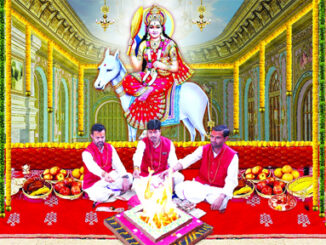
Sheetala Saptami is a significant Hindu festival dedicated to Goddess Sheetala, who is worshipped for protection against diseases, especially smallpox, chickenpox, and other infections. The festival is observed mainly in North India, including states like Rajasthan, Uttar Pradesh, Bihar, Gujarat, and Madhya Pradesh. Devotees observe rituals and fast on this day to seek the blessings of Goddess Sheetala for good health and well-being.
This festival falls on the seventh day (Saptami) of the Krishna Paksha (waning phase of the moon) in the Hindu month of Chaitra, which typically corresponds to March or April in the Gregorian calendar. It is closely associated with Sheetala Ashtami, which is observed the next day and is considered more popular among devotees.
Mythological Significance
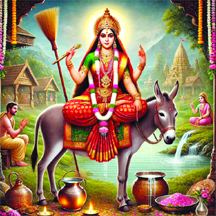
The worship of Goddess Sheetala is rooted in Hindu mythology. She is regarded as a manifestation of Maa Parvati and is depicted carrying a broom, a pot of water, and neem leaves, which symbolize cleanliness and healing. According to the Skanda Purana, Goddess Sheetala bestows health and protects her devotees from contagious diseases.
The Legend of Goddess Sheetala
One of the most prominent legends related to Sheetala Saptami revolves around King Birat and his kingdom. It is believed that once a severe outbreak of smallpox affected his people. After praying to Goddess Sheetala with devotion and following her prescribed rituals, the epidemic subsided. Since then, the practice of worshipping Goddess Sheetala became prevalent among devotees seeking her divine grace for protection from diseases.
Another legend suggests that Maa Sheetala was created by Lord Shiva upon the request of gods to protect humanity from the wrath of infectious diseases. She was given the power to cure and prevent ailments, and thus devotees seek her blessings to ward off illnesses.
Rituals and Observances
The festival of Sheetala Saptami is observed with great devotion, and devotees follow various rituals, including fasting, temple visits, and special pujas. Below are some common practices followed on this auspicious day:
1. Fasting (Vrat)
Many devotees observe a strict fast on Sheetala Saptami. Some follow a Nirjala Vrat (fasting without water), while others consume simple food like fruits and milk. Fasting is believed to purify the body and help devotees attain divine blessings.
2. Preparation of Basoda Prasad
One of the unique traditions associated with this festival is the preparation of Basoda Prasad. Basoda means “stale food,” and it is believed that cooking is prohibited on this day. Devotees prepare food a day before Sheetala Saptami and consume it as prasad after offering it to the Goddess. This practice symbolizes the importance of avoiding fire and ensuring that the body rests to prevent the spread of diseases.
Common Basoda Dishes Include:
– Bajra (millet) roti
– Curd (yogurt)
– Rice
– Pua or sweet fritters
– Cold vegetables like aloo sabzi
– Jaggery and buttermilk
3. Puja Vidhi (Worship Rituals)
– Devotees wake up early, take a holy bath, and wear clean clothes.
– They visit Sheetala Mata temples and offer flowers, turmeric, neem leaves, and rice to the deity.
– The Goddess is bathed with cool water, curd, and turmeric, signifying purification and healing.
– Special bhajans and kirtans are performed in praise of Goddess Sheetala.
– People also donate food, clothes, and essential items to the poor and needy as part of their devotion.
– Women especially pray for the well-being of their children and family members.
4. Use of Neem Leaves and Cooling Agents
Neem leaves are an essential part of this festival, as they possess medicinal properties and are believed to purify the surroundings. Devotees place neem leaves on doors and windows to ward off diseases. They also drink neem-infused water as a preventive measure. Some even bathe in neem-infused water to seek protection from skin ailments and infections.
Regional Celebrations
Sheetala Saptami is widely celebrated in different states, each having its unique customs and traditions.
1. Rajasthan
In Rajasthan, especially in Jaipur and nearby regions, Sheetala Mata temples see a large influx of devotees. Women observe a strict fast and offer bajra rotis (millet bread), curd, and jaggery to the deity. Folk songs dedicated to Goddess Sheetala are sung during the celebrations. Some prominent temples dedicated to Maa Sheetala include Sheetla Mata Mandir in Amer and Sheetla Mata Temple in Jhunjhunu.
2. Gujarat
In Gujarat, the festival is called Sheetala Satam and is observed with great enthusiasm. Families prepare food a day before and avoid cooking on the day of the festival. Special fairs and processions are held in honor of Goddess Sheetala. Devotees also offer chickpeas, curd, and sweetmeats to the Goddess.
3. Uttar Pradesh and Bihar
In Uttar Pradesh and Bihar, devotees worship Sheetala Mata at local temples and distribute food among the poor. People also visit water bodies and perform cleansing rituals to seek protection from ailments. Devotees often recite the Sheetala Mata Vrat Katha, narrating the divine stories of the Goddess.
4. West Bengal
In West Bengal, Goddess Sheetala is worshipped mainly in rural areas, where villagers gather to offer prayers and seek protection from contagious diseases. The festival is celebrated with simple rituals, where clay idols of the deity are often worshipped before being immersed in a river or pond.
Health and Scientific Relevance
The observances of Sheetala Saptami align with scientific principles of hygiene and disease prevention. The festival occurs at the transition from winter to summer, a period when infections like chickenpox and smallpox were historically prevalent. The use of neem leaves, turmeric, and pre-cooked food serves as a natural way to prevent bacterial contamination and maintain health.
Additionally, fasting and consuming cold food help regulate body temperature, making this festival not just a religious practice but also a practical approach to health and well-being. The significance of neem as an antiseptic and natural healer further validates the customs associated with this festival.
Temples Dedicated to Sheetala Mata
Many temples across India are dedicated to Goddess Sheetala, where grand celebrations take place on this occasion. Some of the prominent ones include:
– Sheetala Mata Temple, Gurgaon (Haryana) – One of the most famous shrines, visited by thousands of devotees.
– Sheetala Mata Temple, Jhunjhunu (Rajasthan) – Known for its historical and spiritual significance.
– Sheetala Mata Mandir, Varanasi (Uttar Pradesh) – A revered temple known for its healing powers.
Sheetala Saptami is an important festival that underscores the significance of health, hygiene, and devotion. By worshipping Goddess Sheetala, devotees seek protection from ailments and express gratitude for their well-being. The traditions followed during this festival have deep-rooted cultural and scientific importance, emphasizing the importance of cleanliness, natural remedies, and community well-being.
Tag: Sheetala Saptami
-

Sheetala Saptami
-

Sheetala Saptami
Sheetala Saptami is considered an important festival in Hinduism. On the day of Sheetala Saptami, women fast for the whole day. As the name suggests, this day is dedicated to Sheetla Mata. Sheetala Saptami is celebrated almost all over India. Sheetla Saptami is considered with special significance and enthusiasm in rural areas. On this day, women worship Goddess Sheetala to protect their children from infectious diseases like chickenpox and smallpox.
Goddess Sheetala is known by various names in India. For example, in the southern states of India, she is worshiped as ‘Goddess Poleramma’ or ‘Goddess Mariamman’.
In the Indian states of Karnataka and Andhra Pradesh, a similar festival like Sheetala Saptami is celebrated, which is known as ‘Polala Amavasya’.
Sheetala Saptami is celebrated twice a year. Earlier, this festival is celebrated on the seventh day of Krishna Paksha of Chaitra month. Sheetla Saptami has special significance in the month of Chaitra. For the second time, this festival is also celebrated on the Saptami of Shukla Paksha of Shravan month. According to the Gregorian calendar, these dates fall for the months of March-April and July-August respectively.
On this day this festival is celebrated with special importance and reverence in all the temples of India. The temple of Goddess Sheetla is situated in Gurugram near Delhi. On this day, a long line of devotees starts in the Sheetla Devi temple since morning and waits for the darshan and worship of the goddess.
Importance of Sheetala Saptami
Goddess Sheetla is believed to be an incarnation of Mother Parvati. The importance of Sheela Saptami has been described in the Skanda Purana. Shakti is worshiped in two forms in Hinduism. Out of which Goddess Sheetala liberates people suffering from infectious diseases like ‘Chickenpox’ or ‘smallpox’ and also represents the healing power by nature.
Goddess Sheetla has been described in Skanda Purana. Sheetlashtak sings the glory of Sheetla Devi, as well as inspires the devotees to worship her.
According to the belief, by observing this fast, Sheetla Devi is pleased and in the family of the fast, Dahjwar, yellow fever, explosive, foul-smelling boils, all diseases of the eyes, signs of Sheetla’s pimples and the defects caused by Sheetla are removed.
Legend
A legend says Goddess Durga has incarnated as Katyayani, the daughter of sage Katyayan to destroy evil demonic forces of the world. She killed many demons. Jwarasur, the demon of fever, started spreading incurable diseases. Katyayani cured the diseases. To relieve the world from all fevers and diseases, Katyayani took the form of Sheetala Devi. She held a broom, winnowing fan, a pot of water and a cup. She cured all the diseases of children. Katyayani requested her friend Batuk to confront the demon Jwarasur. A battle ensued between the young Batuk and demon Jwarasur. Batuk was defeated by Jwarasur. Batuk magically disappeared into dust. Jwarasur was shocked and wondered where he went. Batuk has assumed the form of an awful male figure with three eyes and four arms. He held an axe, sword, trident and demon head. He was black in color with flowing hairs, and his eyes were blazing with fury. He wore a tiger-skin and skull garland. Batuk took the form of Lord Shiva’s ferocious form, the Bhairav. A battle broke out between them. Jwarasur created many demons, but Bhairav managed to destroy all of them. Finally, Bhairav wrestled with Jwarasur and killed him with his trident.
Celebration and Rituals
Goddess Sheetala Devi is worshiped by her devotees. Devotees get up early in the morning and bath in cold water. They visit the temple to offer their prayers to Goddess. Rituals are performed on this day for a peaceful and happy life. On Sheetala Saptami some of the devotees shave their heads in honor of Goddess Sheetala.
Devotees do not cook food on Sheetla Saptami. They consume the food, which is prepared on the previous day. Eating hot food is strictly prohibited. Several devotees even keep a fast on this day. Women keep the fast for the well-being of her children.
Sheetala Saptami Vrat Katha
There are many legends and stories related to Sheetala Saptami fast. According to one of the most important legends associated with the festival, there was a king named Indradyumna. He was a generous and virtuous king who had a wife named Pramila and a daughter named Shubhakari. The daughter was married to Rajkumar Gunaban. In the kingdom of Indradyumna, everyone used to observe Sheetala Saptami fast every year with eagerness. Once during this festival, Shubhakari was also present in his father`s kingdom. Thus, he also observed the fast of Sheetala Saptami, which is celebrated as a ritual of the royal household.
To perform the ritual, Shubhakari left for the lake with his friends. Meanwhile, on their way to the lake, they wandered their way and asked for help. At that time, an old woman helped him and guided the way to the lake. He helped them in performing rituals and observing the vow. Everything became so good that even Sheetala Devi was pleased and gave a boon to Shubhakari. But, Shubhakari told the goddess that she will use the boon when she needs it or she wants something.
As they were returning to the state, Shubhakari saw a poor Brahmin family mourning the death of one of their family members due to a snake bite. For this, Shubhakari remembered the boon that Sheetala Devi had bestowed on her and Shubhakari prayed to Goddess Sheetala to give life to the dead Brahmin. The Brahmin regained his life. Seeing and hearing this, everyone understood the importance and auspiciousness of observing the Sheetala Saptami Vrat and worshiping. Thus, from that time everyone started observing the fast every year with perseverance and dedication.