Tag: Spain

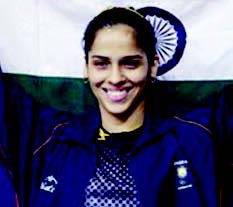
  • Saina Nehwal is World No. 1 badminton player

    Saina Nehwal is World No. 1 badminton player

    NEW DELHI (TIP): Indian ace Saina Nehwal’s ascent to the top of women’s badminton was
    officially confirmed on Thursday, April 2, with the release of the latest rankings by the game’s international governing body.

    In becoming the first Indian woman shuttler to attain the number one spot in world rankings, Saina took over the reins from China’s Li Xuerui, who slipped to third with Spain’s Carolina Marin claiming the second position.

    Saina, who had clinched the India Open Super Series title on March 29, was already assured of the top spot after her closest challenger for the position, Carolina, lost in the semifinals.

    Saina thus becomes only the second Indian overall to be world number one after Prakash Padukone had the distinction of being the numero uno men’s badminton player.

    Rising women’s shuttler PV Sindhu held her ninth position.

    Saina, who shuttled past former world champion Ratchanok Intanon of Thailand 21-16, 21-14 in the summit clash at the Siri Fort Sports Complex had said: “I think the consistency with which I am playing is great. I reached three finals in last two months and it is not easy.””Titles makes me hungry. Next I hope to win more and more titles, I hope to be fit and injury free. This result will motivate me to win more titles.”

    The London Olympic bronze-medallist has won a staggering 14 international titles in her glorious career and most recently became the first Indian woman to make the finals of the prestigious All England Championships in Manchester.

    In the men’s category, India Open Super Series winner Kidambi Srikanth stayed at the fourth spot with China’s Chen Long leading the rankings chart.

  • Serena Williams claws into 10th Miami Open final

    MIAMI (TIP): A frustrated Serena Williams clawed into her 10th Miami final on April 1, defeating Simona Halep 6- 2, 4-6, 7-5.

    Williams, apparently rattled by the Halep cheer squad who drowned out most of the chants for the home hope, saw her mighty forehand desert her in the second set, in which Halep converted the only break point of the set to force a third.

    World number one Williams, who captured her 19th Grand Slam title at the Australian Open this year, regrouped to seize a 5-2 lead in the third only for the world number three from Romania to battle back.

    Finally Williams found a way, and she will bid for an eighth Miami title against Carla Suarez Navarro.

    Spain’s Suarez Navarro earned her place in the biggest match of her career with a 6-3, 6-3 victory over Germany’s Andrea Petkovic.

    Williams has won all four of her matches against Suarez Navarro without dropping a set.

  • Azarenka through at Miami to face Jankovic

    Azarenka through at Miami to face Jankovic

    MIAMI: Two-time Miami Open winner Victoria Azarenka defeated Spain’s Silvia Soler-Espinosa 6-1, 6-3 on Wednesday to set up a second round meeting with Serbia’s Jelena Jankovic.

    Former world number one Azarenka made her name with victory in Miami in 2009 and followed that up with another triumph in 2011 but hampered by injuries, she has fallen down the world rankings in the past year to 36.

    The Belarusian, who has not been in Miami for three years, had to fight back from 3-1 down in the second set to ensure she advanced in straight sets.

    “I felt I played really good in the first set but in the second I dropped a little my aggressivity,” said Azarenka. “But it is nice to be back somewhere where I had a lot of success. I’ve always loved this city and this tournament.” 

    Azarenka will face a tough test in the next round with in form Jankovic coming off a run to the Indian Wells final before falling to Romanian Simona Halep.

    Third-seed Halep will face Czech Nicole Vaidisova, the former world number seven back on the tour after ending her retirement. The 25-year-old Vaidisova beat Hungarian Timea Babos 6-1 7-6 in what was her first WTA-level match since Memphis in 2010.

    Russian wildcard Daria Gavrilova advanced past New Zealand’s, Marina Erakovic who had to retire with an ankle injury when down 5-1.

  • SPAIN FALLS FROM TOP 10 OF FIFA RANKINGS; GERMANY STILL 1ST

    ZURICH (TIP): European champion Spain have fallen out of the top 10 in FIFA’s rankings for the first time since 2007.

    World Cup winner Germany are still No. 1 ahead of Argentina, Colombia, Belgium and the Netherlands.

    The only change in the top 10 is that Italy have rose two places into 10th, while Spain drop one spot to 11th.

    None of the elite teams played in the last month, but games played earlier in the four-year cycle of results lost ranking value.

    Romania rose two places at No. 14 and could be seeded in July when European qualifying groups for the 2018 World Cup are drawn.

    Costa Rica remain No. 13 to lead CONCACAF nations. The United States fell one spot to No. 32.

    Algeria at No. 18 lead African nations. Iran are Asia’s best at No. 42.

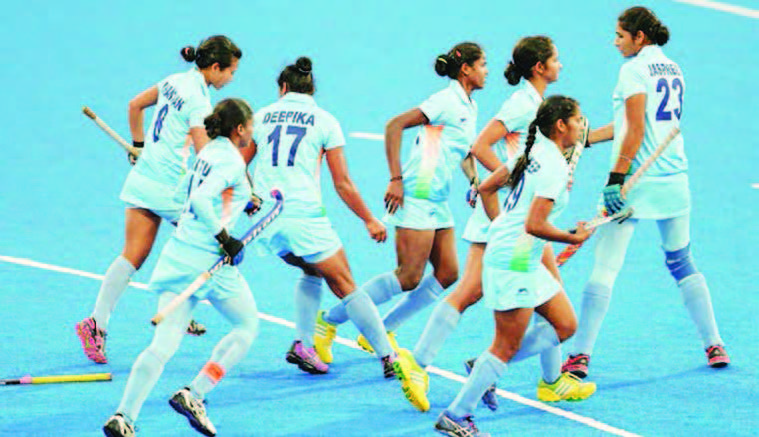
  • Indian eves defeat Germany 2-1 in Valencia

    Indian eves defeat Germany 2-1 in Valencia

    VALENCIA (SPAIN) (TIP): In a hard-fought match against Germany, Indian eves emerged victorious 2-1 in their final game of the Spain tour on February 23. The matches were played in preparation for the FIH World League Round 2, to be held in New Delhi from March 7 to 15. Both the teams started cautiously as neither team wanted to give the initial edge to the other. The two teams made desperate attempts to strike the goal post but all efforts went in vain. The entire first half of the game did not yield any result for the sides. It was Deepika, who opened the scoring for the Indians and surged ahead in the 40th minute by netting the ball.

    Germany then pressed hard in search of an equaliser but the Indian eves displaying some spectacular stick work as they dominated the game and kept the ball in their possession. It was Amandeep Singh, who successfully converted a penalty corner in the 55th minute to extend India’s lead. Germany then played with a single intention to score and finally broke the shackles when Marie Mavers slapped the ball towards the nets and pumped in a lone goal through a field effort in the 59th minute to reduce the margin.

    Thereafter none of the teams could score any more goals and the game ended in India’s favour.

    Ambassador of India to Spain Vikram Misri and the secretary Chander Parkash Gandhi were seen enjoying the match and supporting the Indian eves.

  • India asks Japan if it’s interested in Rs 50,000 crore submarine project

    India asks Japan if it’s interested in Rs 50,000 crore submarine project

    NEW DELHI (TIP): Russia, France, Germany and Spain, all better watch out. They may have to contend with Japan in the race to supply submarines to India. In keeping with their expanding strategic partnership, the Modi government has asked the Shinzo Abe administration whether it would be interested in the over Rs 50,000 crore project to build six stealth submarines in India.


    With Japan recently ending its decades old self-imposed arms export embargo, New Delhi has forwarded “a proposal” to Tokyo to “consider the possibility” of making its latest diesel-electric Soryu-class submarines in India, say sources.


    This “feeler” dovetails into PM Narendra Modi’s strategic outreach to Japan, as well as Australia and the US, since he took over last year. The possible sale of Japanese US-2i ShinMayva amphibious aircraft to the Indian Navy is already being discussed. Australia, too, is considering the Soryu submarines to replace its ageing Collins-class vessels.


    The US, on its part, has been pushing for greater defence cooperation among India, Japan and Australia to counter China’s assertiveness in the Asia-Pacific region. The recent Obama-Modi summit led to the “joint strategic vision for Asia-Pacific and Indian Ocean Region” with a direct reference to South China Sea, where China is locked in territorial disputes with its neighbours. Both Japan and Australia are also keen to participate in the annual Indo-US Malabar naval exercise on a regular basis, which has riled China in the past.


    But the 4,200-tonne Soryu submarines, manufactured by Mitsubishi Heavy Industries and Kawasaki Heavy Industries, may not meet Indian requirements. Japan will also be just one of the contenders for the mega programme, called Project- 75-India, if it agrees to throw its hat into the ring.


    Countries like France (ship-builder DCNS), Germany (HDW), Russia
    (Rosoboronexport) and Spain
    (Navantia) are already girding up, with the first three having the experience of building submarines for India.

  • IMF cuts global growth outlook, calls for accommodative policy

    IMF cuts global growth outlook, calls for accommodative policy

    BEIJING (TIP): The International Monetary Fund lowered its forecast for global economic growth in 2015, and called on Tuesday for governments and central banks to pursue accommodative monetary policies and structural reforms to support growth.

    Global growth is projected at 3.5 per cent for 2015 and 3.7 per cent for 2016, the IMF said in its latest World Economic Outlook report, lowering its forecast by 0.3 per centage points for both years.

    “New factors supporting growth – lower oil prices, but also depreciation of euro and yen – are more than offset by persistent negative forces, including the lingering legacies of the crisis and lower potential growth in many countries,” Olivier Blanchard, the IMF’s chief economist, said in a statement released by the Washington-based lender.
    The IMF advised advanced economies to maintain accommodative monetary policies to avoid increases in real interest rates as cheaper oil increases the risk of deflation.
    If policy rates could not be reduced further, the IMF recommended pursuing an accommodative policy “through other means”.

    The United States was the lone bright spot in an otherwise gloomy report for major economies, with projected growth raised to 3.6 per cent from 3.1 per cent for 2015. The United States largely offset prospects of more weakness in the euroarea, where only Spain’s growth was adjusted upward.

    Projections for emerging economies were also broadly cut back, with the outlook for oil exporters Russia, Nigeria and Saudi Arabia worsening the most.

    The IMF predicts that a slowdown in China will draw a more limited policy response as authorities in Beijing will be more concerned with the risks of rapid credit and investment growth.

    The IMF also cut projections for Brazil and India.

    Lower oil prices will give central banks in emerging economies leeway to delay raising benchmark interest rates, although “macroeconomic policy space to support growth remains limited,” the report said.

    Falling prices will also give countries a chance to reform energy subsidies and taxes, the IMF said.

    The prospects of commodity importers and exporters will further diverge.

    Oil exporters can draw on funds they amassed when prices were high and can further allow for substantial depreciation in their currencies to dull the economic shock of plunging prices.

    The report is largely in line with remarks by IMF Managing Director Christine Lagarde last week, in which she said falling oil prices and strong U.S. growth were unlikely to make the IMF more upbeat.

  • ASSERTION OF SELF IS KEY TO FEMININE POWER: NIRUPAMA RAO

    ASSERTION OF SELF IS KEY TO FEMININE POWER: NIRUPAMA RAO

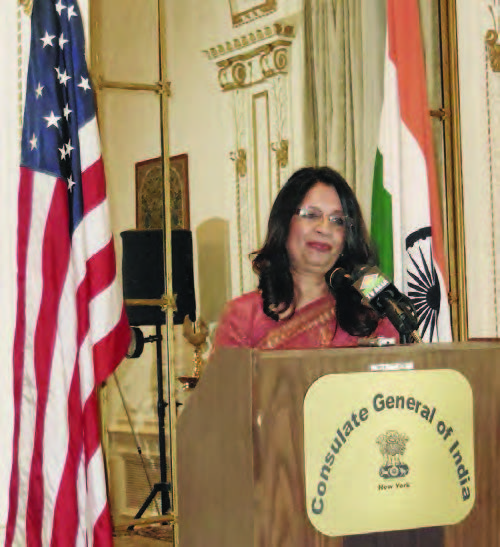
    NEW YORK CITY (TIP): The Consulate General of India, New York hosted its tenth Media India Lecture Series with a lecture “On Women who lead” by Nirupama Rao on December 16 at the Consulate Ballroom. She spoke about three leading ladies of India who brought ‘elemental changes’ in society -Hansa Mehta, Vijaya Lakshami Pandit, and Kamaladevi Chattopadhyay. Rao outlined how these three fought for social justice and demonstrated the power of women.

    FEMININE POWER NIRUPAMA RAO
    Consul General of India in New York Ambassador Dnyaneshwar M Mulay makes opening remarks

    Hansa Mehta represented India on the Nuclear Sub-Committee on the status of women in 1946. As the Indian delegate on the UN Human Rights Commission in 1947-48, she was responsible for changing the language of the Universal Declaration of Human Rights from “all men are created equal” to all human beings, highlighting the need for gender equality. She later went on to become the vice chairman of the Human Rights Commission of the United Nations in 1950. She was also a member of the Executive Board of UNESCO.

    Vijaya Lakshami Pandit was the first Indian woman to hold a cabinet post. Following India’s independence she entered the diplomatic service and became India’s ambassador to the Soviet Union, the United States and Mexico), and Spain. Between 1946 and 1968, she headed the Indian delegation to the United Nations. In 1953, she became the first woman President of the United Nations General Assembly.

    Kamaladevi Chattopadhyay is most remembered for her contribution to the Indian independence movement; for being the driving force behind the renaissance of Indian handicrafts, handlooms, and theatre in independent India; and for upliftment of the socio-economic standard of Indian women by pioneering the co-operative movement.

    Nirupma Rao said she had learnt from them many important lessons of her life .

    Prof. Manu Bhagavan of the department of History at Hunter College CUNY moderated a post lecture conversation with Rao where she shared her personal experiences as an Indian diplomat.

    Earlier Consul General Ambassador Dnyaneshwar M Mulay in his introductory remarks reiterated that the Consulate will continue to make every effort for the promotion of Indian intellectual heritage, Art and Culture through various cultural events and the Media India Lecture-Series, established in March 2014, with an objective to enlighten young students, mainstream American media and the American people as a whole, about India’s global image, identity, aspirations, role and projection in the contemporary world.

  • Crucial spy in Cuba paid a heavy Cold War price

    Crucial spy in Cuba paid a heavy Cold War price

    WASHINGTON (TIP): He was, in many ways, a perfect spy — a man so important to Cuba’s intelligence apparatus that the information he gave to the Central Intelligence Agency paid dividends long after Cuban authorities arrested him and threw him in prison for nearly two decades.

    Rolando Sarraff Trujillo has now been released from prison and flown out of Cuba as part of the swap for three Cuban spies imprisoned in the United States that President Obama announced Wednesday.

    Mr Obama did not give Mr Sarraff’s name, but several current and former American officials identified him and discussed some of the information he gave to the CIA while burrowed deep inside Cuba’s Directorate of Intelligence.

    Mr Sarraff’s story is a chapter in a spy vs. spy drama between the United States and Cuba that played on long after the end of the Cold War and years after Cuba ceased to be a serious threat to the United States. The story — at this point — remains just a sketchy outline, with Mr Sarraff hidden from public view and his work for the CIA still classified.
    The spy games between the two countries lost their urgency after the fall of the Soviet Union, but the spies have stuck to their roles for more than two decades: pilfering documents, breaking codes and enticing government officials to betray their countries. “There were a number of people in the Cuban government who were valuable to the U.S., just as there were a number of people in the U.S. government who were helpful to the Cubans,” said Jerry Komisar, who ran C.I.A. clandestine operations in Cuba during the 1990s.

    With Wednesday’s exchange of imprisoned spies and the leaders of the United States and Cuba talking in a substantive way for the first time in more than 50 years, some people who were part of the spy games between the two countries now wonder just how much it was worth it.

    In retrospect, Mr Komisar said, there was little need for American intelligence services to devote so much attention to Cuba — a country with a decrepit military that he said posed no strategic threat to the United States since the Soviet Union pulled its missiles off the island in 1962.

    After decades of cloak-and-dagger activities between the two countries, he said, it turned out to be “a draw.”

    “You have to ask yourself, ‘To what end?’ ” he said.

    Before he was arrested in November 1995, Mr Sarraff worked in the cryptology section of Cuba’s Directorate of Intelligence and was an expert on the codes used by Cuban spies in the United States to communicate with Havana. According to members of his family, he had studied journalism at the University of Havana and had the rank of first lieutenant at the intelligence directorate.

    It is not clear when Mr Sarraff, now 51, began working for the CIA Chris Simmons, who was the chief of a Cuban counterintelligence unit for the

    Defense Intelligence Agency from 1996 to 2004, said that he worked with another man — Jose Cohen, one of Mr Sarraff’s childhood friends — to pass encryption information to the C.I.A. that led to the arrest of a number of Cuban agents operating in the United States.

    Mr Simmons said that Cuba’s spy service regularly communicated with its agents in America using encrypted messages sent over shortwave radio. After Mr Sarraff helped the United States crack the codes, he said, the FBI was able to arrest Cuban spies years after Mr Sarraff was discovered and put in prison in Cuba.

    “When Roly was providing information, he was giving us insights about where there were weaknesses in the Cuban encryption system,” Mr Simmons said.

    Cuban authorities arrested Mr Sarraff in November 1995 and put him on trial for espionage, revealing state secrets and other acts against state security. According to one senior American official, the Cuban government learned of his plans to defect when he was on assignment in a third country and recalled him to Cuba and put him in jail.

    According to members of Mr Sarraff’s family, he went to work one day in 1995 and never came home. Cuban officials told the family for more than a week that Mr Sarraff was on a job in the country’s interior and would be back soon.

    He was sentenced to 25 years in prison. Mr Simmons, the former D.I.A. officer, said he believed that the reason Mr Sarraff was not executed was because his parents were officials in the Cuban government. “He has always maintained his innocence” his sister, Vilma Sarraff, said by telephone from Spain. She said that Mr Sarraff’s daughter was 7 when he was arrested.

  • METROSEXUALS OUT, BEARD BACK IN STYLE

    METROSEXUALS OUT, BEARD BACK IN STYLE

    WARSAW: Jakub Marczewski grew a beard six years ago because he was too lazy to shave.Now he finds himself in the middle of a global trend. The 21-year-old got his hair and beard trimmed at a new shop with a hip retro vibe, the Barberian Academy & Barber Shop, which opened in Warsaw last month to serve the growing number of Polish men with facial hair. A revival in the culture of barbering in this Eastern European capital is just one sign of how popular beards have become, with actors, athletes and hipsters leading the way .

    Metrosexuals be gone: Europe is agog for beards. “Worldwide, we are at the height of facial hair,” said Al lan Peterkin, a Toronto psychiatrist and author of “One Thousand Beards: A Cultural History of Facial Hair.” “It’s a delightful expression of masculinity, but not a super-macho expression.” After World War II, men were mostly clean-shaven, reflecting a military ethos that came to dominate corporate life, Peterkin said. Over the next decades facial hair was adopted by outcast groups like beatniks and hippies. Since the mid-1990s, it has been slowly spreading to the point that now the mountain man beard is all the rage across North America.

    The 2008 financial crisis added to the beard momentum, with some men who lost their jobs ditching the conformist look as they reinvented themselves. “To grow a beard is to start a new life and to have more confidence in yourself. You look a little older, so people have more respect,” said Salvador Chanza, a 31-year-old master barber from Spain who trains professionals. Sporting both a handlebar moustache and a substantial beard, he said the embrace of facial hair reflected a rejection of the previous clean-shaven metrosexual ethos. Now facial hair is hugely popular across Western Europe, especially in fashion-conscious Paris. And in Britain and many other nations, it’s the month of “Movember” — when men are encouraged to grow a mustache to raise awareness and funds for men’s health issues.

  • A first for science and humanity

    A first for science and humanity

    By James Vincent

    The Philae lander has become the firstever spacecraft to land safely on a comet after traveling through space for more than 10 years and covering a distance of some 4 billion miles. “We are there and Philae is talking to us,” confirmed Philae Lander Manager Stephan Ulamec from the European Space Agency (ESA) mission control. “The landing gear has been moved inside so we are sitting on the surface – and there’s more data to come but we are there: it’s done its job, we’re on the comet!” Although details of the landing are still emerging, the ESA

    operations

    hub say that it was “a fairly gentle touch down based on amount of landing gear damping,” but that the harpoons intended to secure the craft did not fire successfully as had first been thought. This means that there’s a possible danger that the lander will not be stable as the comet moves closer to the Sun and becomes more “active” (this happens as the Sun’s rays heat up the surface), but the ESA still stress that Philae is in “great shape” for the moment and that they will re-fire the harpoons shortly. “We have no reason to think it won’t work,” said Paolo Ferri, Head of Mission Operations at the ESA, “but we have no understanding of why it is doing this.” The comet itself is about as big as a mountain: 2.5 miles wide and around 2.3 miles high. If placed on Earth it would be taller than Mount Fuji, although early images of the 67P lent themselves to more unusual comparisons: apparently fused from two separate icy bodies, the comet was most often compared to a rubber duck. Rosetta and Philae have also sent back their first images to Earth – although none from the surface of the comet. Instead, they took snaps of one another as the lander detached from its parent craft. How big is 67P? Bigger than you think. Philae’s ten onboard sensors and instruments will now begin the important work of analyzing material from the comet’s surface as well as the surrounding atmosphere of gas and dust. Rosetta will stay in orbit around the comet for the next year, peeling off sometime around December 2015. The information Philae gathers from the surface of the comet will provide new insight into the mechanisms of our solar system and could even help us answer questions about the origins of life on Earth. It’s long been theorized that life was “seeded” on Earth after hitching an interstellar ride on a comet and previous fly-bys of similar bodies have detected complex organic molecules. If Philae manages to find any water ice or amino proteins (compounds that are key to life) then it could offer some evidence for the theory.

    Markers of the mission

    Cost: The total cost of the mission is 1.4 billion Euro, of which the total Philae costs are 220 million Euro. This includes the launch, the spacecraft, the science payload (instruments and lander) and mission and science operations. Launch: Rosetta was launched on March 2, 2004 by an Ariane-5 from Europe’s Spaceport in Kourou, French Guiana. Planned mission lifetime: Rosetta’s mission will last for almost 12 years – until December 2015. Spacecraft design: Rosetta resembles a large black box.

    The scientific instruments are mounted on the top of the box (the payload support module), while the subsystems are on the “base” (bus support module). On one side of the orbiter is the steerable 2.2 m-diameter communications dish, while the lander is attached to the opposite face. Two enormous solar wings extend from the other sides. Both panels can be rotated through ±180° to catch the maximum amount of sunlight. Mass & dimensions: Approximately 3,000 kg (fully fuelled), including 1,670 kg propellant, 165 kg scientific payload for the orbiter, and the lander weighs about 100 kg. The main spacecraft is 2.8 x 2.1 x 2.0 m, on which all subsystems and payload equipment are mounted. Two 14 m-long solar panels with a total area of 64 m2 provide electrical power.

    Facts about Philae lander

    Design: The lander’s structure consists of a baseplate, an instrument platform and a polygonal sandwich construction, all made of carbon fibre. Some of the instruments and subsystems are beneath a hood covered by solar cells. An antenna transmits data from the surface to Earth via the orbiter. The lander carries nine experiments, with a total mass of about 21 kg. A drill will sample the subsurface material. Alpha Proton X-ray Spectrometer – APXS: Lowered to within 4 cm of the ground, APXS will detect alpha particles and X-rays to gather information on the elemental composition of the comet’s surface. Rosetta Lander Imaging SystemÇIVA/ ROLIS: It is a CCD camera that will obtain high-resolution images during descent and stereo panoramic images of areas sampled by other instruments. Six identical micro-cameras will take panoramic pictures of the surface. A spectrometer will study the composition, texture and albedo (reflectivity) of samples collected from the surface.

    Comet Nucleus Sounding –

    CONSERT: It will probe the internal structure of the nucleus. Radio waves from CONSERT will travel through the nucleus and will be returned by a transponder on the lander. Cometary Sampling and Composition experiment – COSAC: It is one of two ‘evolved gas analysers’. It will detect and identify complex organic molecules from their elemental and molecular composition. Evolved Gas Analyser – MODULUS PTOLEMY is another evolved gas analyser that will obtain accurate measurements of isotopic ratios of light elements. Multi-Purpose Sensor for Surface and Subsurface Science – Mupus: This will use sensors on the lander’s anchor, probe and exterior to measure the density, thermal and mechanical properties of the surface.

    Rosetta Lander Magnetometer and Plasma Monitor – Romap: This is a magnetometer and plasma monitor that will study the local magnetic field and the interaction between the comet and the solar wind. Sample and Distribution Device – SD2: This device will drill more than 20 cm into the surface, collect samples and deliver them to different ovens or for microscope inspection. Surface Electrical, Seismic and Acoustic Monitoring Experiments – SESAME’s: These three instruments will measure properties of the comet’s outer layers. The Cometary Acoustic Sounding Surface Experiment will measure the way sound travels through the surface.

    The Permittivity Probe will investigate its electrical characteristics, and the Dust Impact Monitor will measure dust falling back to the surface. Operations Mission Operations Centre: European Space Operations Centre (ESOC), Darmstadt, Germany. Prime Ground Station: ESA Deep Space Antenna in New Norcia, near Perth, Australia. Rosetta Science Operations Centre: European Space Astronomy Centre (ESAC), in Villafranca, Spain. The European Space Agency has released the following information regarding the mission, its parameters and

    objectives:

    Rosetta is the first mission designed to orbit and land on a comet. It consists of an orbiter, carrying 11 science experiments, and a lander, called “Philae”, carrying 10 additional instruments, for the most detailed study of a comet ever attempted. Rosetta’s launch was originally scheduled for January 2003 on an Ariane-5 rocket. Rosetta’s target at that time was Comet 46P/Wirtanen, with the encounter planned for 2011. However, following the failure of the first Ariane ECA rocket, in December 2002, ESA and Arianespace took the joint decision not to launch Rosetta during its January 2003 launch window.

    Objectives ESA’s comet-chaser will be the first to undertake a lengthy exploration of a comet at close quarters. After entering orbit around Comet 67P/Churyumov-Gerasimenko in 2014, Rosetta will release its Philae small lander onto the icy nucleus as it did two days ago. Rosetta will orbit the comet for about a year as they head towards the Sun. Once they have passed perihelion (closest distance to the Sun), Rosetta will keep orbiting the comet for another half year, while the comet moves back out towards the orbit of Jupiter. As the most primitive objects in the solar system, comets carry essential information about our origins. Their chemical compositions have not changed much since their formation, therefore reflecting that of the solar system when it was very young and still “unfinished”, more than 4,600 million years ago.

    Rosetta will also help to discover whether comets contributed to the beginnings of life on Earth. Comets are carriers of complex organic molecules, delivered to Earth through impacts, and perhaps played a role in the origin of life. Moreover, volatile light elements carried by comets may also have played an important role in forming Earth’s oceans and atmosphere. During its long journey, Rosetta was scheduled to have two close encounters with asteroids of the main asteroid belt that lies between the orbits of Mars and Jupiter. The first was with (2867) Steins, a rare E-type asteroid. The flyby started on August 4, 2008 with optical navigation of the asteroid itself – a technique never before used in ESA spacecraft operations.

    Rosetta orbiter

    The orbiter’s scientific payload includes 11 experiments, in addition to the lander. Scientific consortia from institutes across Europe and the United States provided these state-of-the-art instruments. The Ultraviolet Imaging Spectrometer – ALICE will analyse gases in the coma and tail and measure the comet’s production rates of water and carbon monoxide and dioxide. It will provide information on the surface composition of the nucleus. Comet Nucleus Sounding Experiment – CONSERT will probe the comet’s interior by studying radio waves reflected and scattered by the nucleus. Cometary Secondary Ion Mass Analyser – COSIMA will analyse the characteristics of dust grains emitted by the comet, such as their composition and whether they are organic or inorganic. Grain Impact Analyser and Dust Accumulator – GIADA will measure the number, mass, momentum and velocity distribution of dust grains coming from the cometary nucleus and other directions (deflected by solar radiation pressure). The Micro-Imaging Dust Analysis System, MIDAS, will study the dust around the comet.

    It will provide information on particle population, size, volume and shape. Microwave Instrument for the Rosetta Orbiter – MIRO will determine the abundances of major gases, the surface outgassing rate and the nucleus subsurface temperature. Optical, Spectrocopic and Infrared Remote Imaging System – OSIRIS has a wide-angle camera and narrow-angle camera that can obtain high-resolution images of the comet’s nucleus. Rosetta Orbiter Spectrometer for Ion and Neutral Analysis – ROSINA will determine the composition of the comet’s atmosphere and ionosphere, the velocities of electrified gas particles and reactions in which they take part.

    Radio science investigation signals

    Rosetta Plasma Consortium – RPC will measure the physical properties of the nucleus, examine the structure of the inner coma, monitor cometary activity, and study the comet’s interaction with the solar wind. Radio Science Investigation – RSI will, by using shifts in the spacecraft’s radio signals, measure the mass, density and gravity of the nucleus, define the comet’s orbit, and study the inner coma. Visible and Infrared Mapping Spectrometer – VIRTIS will map and study the nature of the solids and the temperature on the surface. It will also identify comet gases, characterise the physical conditions of the coma and help to identify the best landing sites.

  • Emergency was a blunder; Operation Bluestar an unmitigated disaster

    Emergency was a blunder; Operation Bluestar an unmitigated disaster

    Operation Bluestar was grievously handled. Everything that could go wrong did go wrong. I know that Indira Gandhi’s instructions were disregarded by those who in Amritsar were in charge of the operation. The Golden Temple complex could have been cordoned, electric and water supply could have been switched off. Instead tanks entered the complex. The rest is too well known. It cost Indira Gandhi her life. The Sikh community both in India and abroad was not only outraged, it was deeply hurt, deeply offended”, says the author.

    What was I doing in the morning of 31st October 1984? I was getting ready to leave for Bharatpur to do some politicking. The RAX telephone rang. It was H.Y. Sharada Prasad, “Natwar, this is the worst day of our lives. PM has been shot. Come over to No 1 Akbar Road, as soon as you can.” I asked a dazed Sharada, “What happened. Who shot her?” “She was walking from 1 Safdarjung Road to 1 Akbar Road to be interviewed by film actor and producer Peter Ustinov.

    When she was walking on the glass “river” (presented by the government of Czechoslovakia), which led to 1 Akbar Road, she was shot by the two Sikh guards at the gate leading to 1 Akbar Road. I heard the shots, but thought it must be someone playing with fire crackers… it was over in a few seconds.” I walked up to the gate to see the spot where she had fallen. Her blood had not dried. Her spectacles, chappals and bag were still lying on the glass river. Peter Ustinov’s camera men had recorded the sound of the shots. It took Sharda and me a long time to persuade Ustinov not to use that portion of the film. He eventually agreed.

    I met him in 1997 at a seminar in Valencia, Spain, I reminded him our conversation on 31.10.1984. “I remember it well. I never used the ‘shots’ recording.” She was 19 days short of her 67th birthday on that fateful and searing day. Even after three decades her fame and name, her achievements, her qualities as a leader have not been forgotten. For me, it is not easy to sum up her life objectively. My affection and respect for her have not diminished. In more ways than one she enriched, uplifted my life. She broadened the contours of my vision. To some readers this may sound as crass sentimentalism and melodramatic. I worked in her secretariat for five years, 1966-71, meeting her every other day, sometimes three times a day.

    Jawaharlal Nehru never faced the challenges she did. Nehru’s leadership was never questioned for 15 years. In the last two years of his life he encountered serious dissatisfaction in the Congress party. Indira Gandhi’s road to power between 1966 and 1969 was strewn with boulders. The syndicate was breathing down her neck. Several were patronising and treated her as the daughter of Nehru and not as the Prime Minister. Krishna Menon referred to her as “that chit of a girl”. Ram Manohar Lohia was vicious.

    In Parliament she was nervy, tense and diffident. She was not comfortable in the Cabinet or in meetings with her elderly colleagues – Kamraj, Nijilingappa, Morarji Desai, S.K Patil, Swaran Singh, Y.B Chavan and Jagjivan Ram. They too felt uneasy with a woman Prime Minister. They did not take her seriously. Later they would. Gradually her diffidence and shyness began to erode. By 1970 she had come to grips with her job and responsibilities. The jeering stopped. The cheering began. She had a flair for foreign affairs. Her international image grew by the week.

    At the UN she was heard with respect. At NAM and Commonwealth summits, she often stole the show. In 1983 she was the chairperson of the NAM and Commonwealth summits, both held in New Delhi. She strengthened the Non- Aligned Movement – “the greatest peace movement in the world”, she called it. At the Commonwealth Summit she produced awe in Margaret Thatcher. I one day asked her what she thought of the Iron lady. Her response: “What Iron lady. I saw a nervous woman sitting at the edge of the sofa.” She wrote an article in the October 1972 issue of “Foreign Affairs” magazine.

    She wrote, “India’s foreign policy is a projection of the values which we have cherished through centuries as well as our present concerns.We are not tied to the traditional concepts of a foreign policy, designed to safeguard overseas possessions, investments, the carving out spheres of influence and the creation of cordons sanitaires.We are not interested in exporting ideologies.” Her finest hour came in 1971. She created a new nation – Bangladesh. She isolated Nixon and Kissinger, won over the Western media and liberal members of the US Congress.

    Teddy Kennedy was one of them. We now come to the other side of the Indira Gandhi coin. The Emergency was a blunder, Operation Bluestar an unmitigated disaster. In the words of P.N. Dhar, her Principal Secretary for half a decade, “the Emergency changed the basic relationship between the citizen and the state and indeed threatened to change the character of the Indian State.” During the Emergency I was the Deputy High Commissioner in London. There it was impossible to ‘sell’ the Emergency. I wrote to the PM, “I know what to say to our critics but do not know what to say to our friends”.

    Untypically she did not respond. Professionally it was the duty of High Commissioner B.K. Nehru and myself to defend the Emergency.We suppressed our conscience. Operation Bluestar was grievously handled. Everything that could go wrong did go wrong. I know that Indira Gandhi’s instructions were disregarded by those who in Amritsar were in charge of the operation. The Golden Temple complex could have been cordoned, electric and water supply could have been switched off. Instead tanks entered the complex. The rest is too well known. It cost Indira Gandhi her life.

    The Sikh community both in India and abroad was not only outraged, it was deeply hurt, deeply offended. If one were to take an overall view of Indira Gandhi’s life and labours, she would still rank very high in the Prime Ministerial pecking order. Even today her admirers outnumber her detractors. I remain an admirer. (The author is a diplomat turned politician) (British English. Courtesy The Tribune, Chandigarh)

  • Venezuela, New Zealand win UN security council seats but Turkey rebuffed

    Venezuela, New Zealand win UN security council seats but Turkey rebuffed

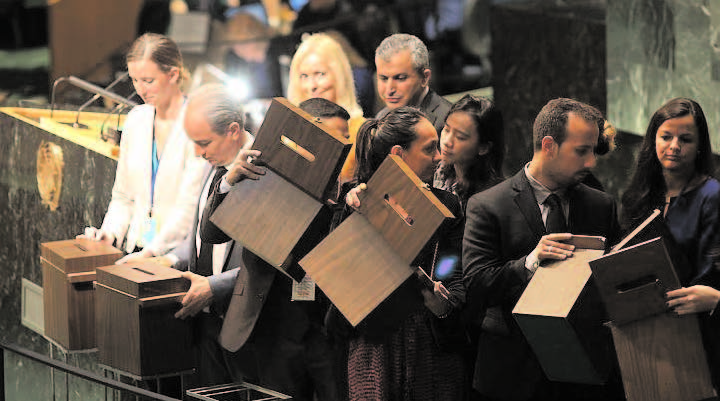
    UNITED NATIONS (TIP): Angola, Malaysia, New Zealand, Spain and Venezuela won coveted seats at the UN security council on October 16, but Turkey suffered a humbling defeat in its bid to join the world’s “top table.” The five countries garnered the required two-thirds support from the 193 countries of the UN General Assembly during three rounds of voting that ended with Turkey picking up only 60 votes.

    Turkey had been competing against New Zealand and Spain for two seats and had dispatched Foreign Minister Mevlut Cavusoglu on a high-profile mission to New York this week to lobby for votes. Angola, Malaysia and Venezuela were virtually assured to win election as their candidacies had been put forward by their region and they ran unopposed on their slates. After New Zealand’s resounding victory in the first ballot, Foreign Minister Murray McCully called the outcome a “strong vote of confidence” in his country, capping a 10-year campaign for the ultimate diplomatic prize.

    “To receive the success that we have had this morning means a lot to us and we will work very hard to make sure we give good service on the council,” McCully told reporters at UN headquarters. Venezuela won 181 votes despite criticism from rights groups and the United States over its support for Iran, Syria and other hardline regimes that are at loggerheads with the West. Venezuela’s President Nicolas Maduro called the vote “a victory, a world record of support, love and confidence. One hundred eight-one countries have said here we are, we support you.””We should feel happiness and joy in our hearts that Venezuela is beloved country in the world,” he added, speaking in Caracas. “To those birds of ill omen who say Venezuela is isolated in the world — who is isolated? The country that received 181 votes?” US Ambassador Samantha Power urged Venezuela to work cooperatively on the council.

    “Unfortunately, Venezuela’s conduct at the UN has run counter to the spirit of the UN Charter and its violations of human rights at home are at odds with the Charter’s letter,” she said. Rights groups have pointed to Venezuela’s record on the UN Human Rights Council as a cause for worry and diplomats have also expressed concern about its stance on the war in Syria. Over the three rounds of voting, Turkey saw its support dwindle from 109 votes to 73 and finally 60, surprising many who saw the regional player as a strong contender.

    Angola won 190 votes, Malaysia picked up 187, New Zealand 145 and Spain 132. The elections came at a busy time for the council, which is grappling with crises on many fronts, from the jihadist offensive in Iraq and Syria, to the Ebola outbreak in West Africa. Russia’s actions in eastern Ukraine, conflicts in Syria, South Sudan and Central African Republic and the faltering Israeli-Palestinian peace process are also at the top of the council’s agenda. A seat at the Security Council raises a country’s profile several notches, boosts influence and provides knockoff benefits in bilateral ties.

    The five elected countries to the 15- member council will join the five permanent powers — Britain, China, France, Russia and the United States — for a two-year term. Five other countries elected last year are mid-way into their term. These are Chad, Chile, Jordan, Lithuania and Nigeria. As the most powerful body of the United Nations, the security council can impose sanctions on countries and individuals, refer suspects for war crimes prosecution, endorse peace accords and authorize the use of force. It also oversees 16 peacekeeping missions in the world, with a budget of close to $8 billion. The five elected countries will replace Argentina, Australia, Luxembourg, Rwanda and South Korea, and begin their stint on January 1.

  • SCOTLAND READY TO MAKE HISTORY: INDEPENDENCE LEADER

    SCOTLAND READY TO MAKE HISTORY: INDEPENDENCE LEADER

    EDINBURGH (TIP): Scotland’s proindependence leader Alex Salmond said the “eyes of the world” were on a momentous referendum next week as officials reported record numbers registering to vote on breaking away from the United Kingdom. Salmond said the September 18 vote would be “a process of national empowerment”, as new figures came out showing a record 4.3 million people had registered to vote — higher than for any previous elections in Scotland. “Scotland is on the cusp of making history.

    The eyes of the world are upon Scotland,” Salmond, Scottish First Minister and the head of Scotland’s current devolved government, said in an Edinburgh speech. “On September 18, we the people hold our destiny in our own hands.” British media said new figures meant 97 percent of the electorate had now registered to vote, including many 16- and 17-year-olds who are allowed to take part under referendum rules.

    Polls show Scottish voters are almost evenly divided between the “Yes” and the “No” sides although one survey so far has put the pro-independence camp just ahead of the unionists. The most recent, published on Wednesday by Scotland’s Daily Record newspaper, showed 53 percent against independence and 47 percent in favour, without counting undecided.

    The vote would bring to an abrupt end a 307-year-old union between England and Scotland and create the newest state in Europe since the disintegration of Yugoslavia. – ‘Huge pressure on Madrid’ – 100 journalists from around the world were present at Thursday’s press conference, with many asking about what Scotland’s relation to their country would be. Many nations with separatist movements are following the campaign closely, including Spain where the government has ruled out a referendum for Catalan independence or devolution. On Thursday hundreds of thousands of Catalan nationalist demonstrators, some waving the blue and white Scottish flag, filled the streets of Barcelona in a mass rally to demand a vote like Scotland’s. “People in Catalonia don’t necessarily want independence but they want to have the right to vote.

    And they see that here it’s possible,” said Carles Costa from TV3 public television in Catalonia, who was at Salmond’s press conference. “A ‘Yes’ vote would put a huge pressure on Madrid. Scotland is not a remote country somewhere in the world. It’s just next door,” he said. “Even with a ‘No’, people in Catalonia will say, ‘Why is this not possible in Spain?’” But Shuhei Nakayama from Japanese broadcaster NHK said most people in Japan had “a confused idea of the situation”.

    “Most don’t know Scotland is already a region with many powers. Some think it’s a country already as they have a football team,” he said. “It’s very interesting to see a nation that might break away without any violence,” he said. The campaign — and the promise of greater devolution if the “No” camp wins the vote — has also bolstered demands from local authorities for greater powers within England and Wales. Deputy Prime Minister Nick Clegg is on Friday expected to launch a report calling for a major programme of devolution within England after the next general election in May 2015. – ‘Responsible and prudent’ – International Monetary Fund on Thursday warned that a vote for independence would raise “complicated issues” and could upset financial markets.

    “While this uncertainty could lead to negative market reactions in the short term, the longer term will depend on the decisions being made during the transition,” IMF spokesman Bill Murray said. The Royal Bank of Scotland has said it would relocate its registered offices in case of a “Yes” vote, saying this was the “responsible and prudent thing to do,” but underlining it would not mean moving jobs south. RBS was bailed out by the British government following the 2008 financial crisis and its announcement came after London-based Lloyds Banking Group also said it had plans on possibly switching key operations from Scotland to England.

    Edinburgh-based RBS is 81-percent owned by the British state, which also retains a 25-percent stake in bailed-out Lloyds. Big business leaders have mostly lined up against independence, although the chief executive of Scotland’s largest fund manager, Aberdeen Asset Management, has said that an independent Scotland would be “a big success

  • WORLD CUP FIRST ROUND LEAVES EUROPE ALL AT SEA

    WORLD CUP FIRST ROUND LEAVES EUROPE ALL AT SEA

    RIO DE JANEIRO (TIP): Cristiano Ronaldo, Wayne Rooney, Andrea Pirlo and Xavi have left Brazil with their tails between their legs highlighting the hard times for Europe at the World Cup. Having provided seven of the last eight World Cup semifinalists, Europe’s dominance appears to be on the wane after a brutal group phase for the continent’s teams.

    Where Latin American sides such as Chile and Costa Rica created sensations, Europe’s powerhouses flopped, with Italy, England, Portugal and defending champions Spain among seven teams from the UEFA zone eliminated in the first round. European superstars disappointed. In sharp contrast, World Cup crowds have thrilled to the virtuoso performances of Neymar and Lionel Messi, the swashbuckling football of Chile and Colombia, and the daring displays of giant-killing Costa Rica.

    While France, Netherlands, Germany, Belgium, Switzerland and Greece remain in contention for glory, the tournament has done little to encourage hope of a first European World Cup success in the Americas. “It cannot be a coincidence that a European team couldn’t win a World Cup held in South America,” declared Switzerland’s decorated German coach Ottmar Hitzfeld before the tournament. “Not in Uruguay, not in Mexico, not in Argentina, and for sure not in Brazil.”

    Europe’s World Cup difficulties may be part of an emerging trend. Whereas European teams filled 10 of the last-16 places in five of the first six tournaments after the round was introduced in 1986 (with nine getting there in 2002), only six made it in 2010 and this year. With tens of thousands of fans from neighbouring countries flooding into Brazil, the South American teams have clearly benefited from home advantage.

    Supporters from Argentina and Chile took over Rio de Janeiro’s Maracana when their sides played there in the group phase and France coach Didier Deschamps believes such mass support can make a difference. “We are in Brazil, so the South American teams certainly acclimatise better, and maybe the fact that they are playing so close to home and have so many supporters with them gives them added strength and energy,” he said on June 14. Developing Deschamps’s theme, Brazil striker Fred said: “I think the climate can make a bit of a difference, because we are better adapted to it.

    “The tactical aspect makes a difference, too. We see Colombia, Ecuador, Uruguay, Chile all playing technically good football. And as they are used to the very hot climate, it can end up helping a bit.” England manager Roy Hodgson feels that European sides are hindered by the strengths of their respective domestic championships. Citing the examples of Costa Rica and Iran, who almost held Argentina to a goalless draw in Group F, he said that it is easier for the tournament’s supposed weaker sides to gather together for pre-competition training camps, making them more well-drilled and tactically flexible. “Iran and Costa Rica have been together for months, so they’ve really had a chance to do the type of work that we’ve been happy to do for three or four weeks with our players,” he said after his side’s groupphase exit.

    “We’ll never get the access to our players that an Iran or a Costa Rica get.” One consolation for the Europeans is that only one of Brazil, Chile, Colombia and Uruguay can reach the semi-finals due to the configuration of the draw.

    And although only six teams from Europe reached the last 16 in 2010, three of those went on to reach the semi-finals, while the final between Spain and Holland was the second all-European affair in a row after France and Italy in 2006. France, Germany and the Dutch are again looking strong and confident. While it has been a chastening first fortnight for the old continent, the cream of European football can still rise to the top.

  • Spain’s new King Felipe aims to inspire his people

    Spain’s new King Felipe aims to inspire his people

    MADRID (TIP): Taking the Spanish throne on June 19, King Felipe VI sought to inspire his beleaguered countrymen amid troubled economic times and lift patriotic spirits a day after the national team’s humbling exit from the World Cup. “We are a great nation. Let us believe and trust in ourselves,” Felipe said at his swearing-in ceremony. Felipe, 46, became monarch after his father Juan Carlos announced his surprise decision to abdicate. The 76- year-old said he was stepping aside after a four-decade reign so younger royal blood could energize the country. Felipe, and Spain, face plenty of problems.

    The country is struggling to shrug off a double-dip recession and drive down its 26 per cent jobless rate. Scandals have tarnished the royal family and fuelled campaigns to abolish the monarchy, while influential groups in some Spanish regions continue to push hard for independence. Appearing self-assured in a dark military dress uniform, Felipe sought to draw a line under Spain’s recent past, promising “a reinvigorated monarchy for new times.”. Felipe made clear that he intends to restore public trust in the monarchy.

    “Today, more than ever, the people rightly demand our public lives be guided by … moral and ethical principles,” he told lawmakers, who shouted “Viva el Rey (Long live the king)!” Saying that he felt the suffering of those whose living standards were hurt by the economic crisis, Felipe urged Spaniards to shun resignation and unleash their ambitions.

    He said finding jobs for the unemployed was “a priority for society and the government”. In an oblique reference to separatist groups, Felipe insisted, “We all have our place in this diverse Spain.” He ended his speech by saying “thank you” in three regional Spanish languages — Catalan, Basque and Galician — where independence movements are strongest.

    Thousands of people lined the streets of Madrid streets as Felipe and Queen Letizia drove from parliament to the royal palace in an open-topped Rolls- Royce, waving to the crowds. The royal couple’s daughters, Princesses Leonor, 8, and Sofia, 7, accompanied them for most of the day. Authorities prohibited a demonstration by groups seeking to abolish the monarchy. The cheering crowds and pageantry provided a welcome distraction as Spaniards reeled from the embarrassment of the national team’s shock defeat by Chile in the World Cup, which ended Spanish hopes of winning a second consecutive title.

    Felipe’s inaugural speech came at a ceremony in the country’s parliament, where the 18th-century Spanish crown and 17th-century sceptre were on display. Later, a reception for 2,000 guests at the royal place featured finger foods instead of an elaborate banquet, a deliberately modest touch that acknowledged the financial hardships being endured by many Spaniards.

    Juan Carlos, who for most of his reign was held in high esteem for helping steer Spain from a military dictatorship to democracy, drew fierce criticism when he went on a luxurious elephant-hunting safari in Africa two years ago while many Spaniards were losing their jobs. In another scandal, Juan Carlos’ youngest daughter, Princess Cristina, testified this year in the fraud and money-laundering case engulfing her husband, Inaki Urdangarin.

  • Thank you, Spain, and goodbye

    Thank you, Spain, and goodbye

    SAO PAULO (TIP): Nothing lasts forever – empires, dynasties, life itself. That’s what makes the passing of one of the greatest sides in the history of any sport so poignant – and so human, because time takes its toll on the best of us. There was a certain inexorable inevitability about the end of Spain’s reign. It’s not that we did not see it coming. It’s the brutal suddenness with which it happened that has left the world in such a daze.

    The 1-5 humiliation by the Netherlands wasn’t about just another defending champion stumbling and falling; it was as if a hammer and nail had been employed to serve eviction notice. No one expected Spain to return to its magical best in their next game, against Chile; that’s what fairy tales are for. But we had hoped for at least a determined fight-back, a few flashes of the old self.

    What we witnessed instead was a dejected and directionless team (barring Iniesta, who stood like the boy on the burning deck), a pale shadow of the team that had won two successive European championships and a World Cup in between – and along the way, had redefined football with their tiki-taka style. Long before the final whistle was blown, the obituaries had begun to flow. An era had ended.

    It was a lump-in-the-throat moment, and not just for Spain. Sports fans (and the media) tend to be fickle, swinging from one extreme to another – heaping praise one moment, and ridicule, the other. But when you see true greatness finally laid to rest, the overwhelming emotion is one of sadness. So when Spain’s captain and once-vaunted goalkeeper, Iker Casillas – who let in seven goals in two games after having conceded none in the 10 games before – said, “We are sorry”, one of the country’s leading newspapers graciously responded saying, “Don’t be, you have given us so much. It was lovely while it lasted.” We couldn’t have said it better. To Xavi, Iniesta and the team, we say, thank you for the music.

  • GOPIO’s 25th Anniversary Jubilee Convention a historic success

    GOPIO’s 25th Anniversary Jubilee Convention a historic success

    PORT OF SPAIN (TIP): The Global Organization of People of Indian Origin (GOPIO International) concluded its 25th Anniversary (Jubilee) Convention 2014 in Port of Spain in Trinidad & Tobago, with a memorable and highly successful celebration from 27th May through 30th May, 2014 coinciding with the 169th anniversary of Indian Arrival Day commemoration in Trinidad & Tobago.

    The convention was a historic event in the Indian Diaspora attended by delegates from several countries where GOPIO is prominent and where persons of Indian origin reside in substantial numbers and even small numbers. Countries include: Australia, New Zealand, Fiji, Malaysia, Mauritius, Sri Lanka, India, South Africa, Netherlands and other countries of the European Union (EU), UK, Canada, USA, and the Caribbean region: Guyana, Trinidad & Tobago, Suriname, Belize, St. Vincent, Guadeloupe, Martinique, Grenada and St Lucia.

    Among the many events of the convention, some of the notable highlights include: Welcome reception at the Diplomatic Centre residence of Hon. Kamla Persad-Bissessar, Prime Minister of Trinidad & Tobago, GOPIO’s elections for new officers, all-day academic conference, special guests at cultural performances held at National Cultural of Indian Culture (NCIC), and unveiling of arrival monument marking the first arrivals of indentured Indian laborers in Trinidad.

    A significant highlight of GOPIO’s 25th Anniversary Jubilee Convention was the special welcome reception of GOPIO delegates at the Diplomatic Centre residence of the Hon Prime Minister Kamla Persad Bissessar on 28th May. The reception was hosted by Ministry of National Diversity and Social Integration with Minister Dr Roger Samuel making the initial remarks, followed by GOPIO International president Ashook Ramsaran and presentation of gifts.


    9
    GOPIO Jubilee Recognition Recipients with GOPIO officials, Indian High Commissioner G. Gupta,Trinidad & Tobago’s Minister Dr. Vasant Bharath MP and Minister Ramona Ramdial MP.

    Hon Prime Minister Kamla Persad Bissessar formally welcomed GOPIO’s delegates, recounted GOPIO’s special reception/dinner during the visit to the Kolkata Memorial on 12th January, 2012 and thanked GOPIO for holding its 25th Anniversary Jubilee Convention in Trinidad & Tobago. In attendance were several ministers and members of parliament of the Government of Trinidad & Tobago as well as the Indian High Commissioner HE Gauri Gupta. The evening included a special celebratory treat of Caribbean and Indian music with delegates joining in dancing. On 28th May, a Business-to-Business seminar featuring prominent scholars and business leaders was held at the Radisson Hotel.


    10
    Some of the Legacy Generation Residents of Trinidad & Tobago with GOPIO officials, Indian High Commissioner HE Gauri Gupta, With Trinidad & Tobago’s Min. Dr. Suruj Rambachan, Min. Ramona Ramdial, Counselors Abdool & Seepersad, Couva Regional Chairman Henry Awong. Unveiling of Indian Arrival Monument at Waterloo-by-the-Sea

    It was sponsored by Trinidad & Tobago’s Ministry of Trade & Investment. Sessions include: Investment & Trade Opportunities in Trinidad & Tobago; Investment & Trade Opportunities in St Vincent & Grenadines; Investment & Trade Opportunities in Guyana; Success Stories of Doing Business in the Caribbean; Free Enterprise, Market Economy and Business Successes; The Growth of Education and Medical Services for Bi-Lateral Trade; Media as Marketing Tool in Emerging Economies The Academic Conference segment of the convention was a full 1-day event held on 29th May at the Radisson Hotel.

    There were several sessions designed round the convention theme of “Indian Diaspora Today & Tomorrow” The chief guest at the Inaugural Session was Indian High Commissioner HE Gauri Gupta and the keynote speaker Dr Mahin Gosine, Professor of Sociology and Anthropology at SUNY, New York, USA. Prof Kumar Mahabir, Assistant Professor at University of Trinidad and Tobago, concluded the session. Other sessions with prominent and suitably qualified speakers from several countries were: Global & Regional Diaspora Investments & Economic Opportunities; The Indian Diaspora: Issues, Challenges & Opportunities; Diaspora’s Youth, Children, Gender & Inter-Generational Issues; Multi- Cultural Diversity & Inter-Ethnic Cooperation in the Indian Diaspora; Education, Science & Technology as Significant Assets in the Indian Diaspora; Health, Wellness, Lifestyle & Nutritional Factors in the Indian Diaspora; GOPIO’s 25th Anniversary Resolutions; Wrap-up & Conclusion. Elections were held by GOPIO International Council for several positions in GOPIO at the international level.

    The following officials were elected by unanimous vote: President – Ashook Ramsaran; Executive Vice President – Sunny Kulathakal; Senior Vice President – Dr. Piyush Agrawal; International Coordinator North America – Dr. Renuka Misra; and International Coordinator Caribbean, Dr. Arnold Thomas. Chairman Inder Singh was elected for another term. The Jubilee Recognition Gala was another highlight of GOPIO’s 25th Anniversary (Jubilee) Convention 201, held on 29th May, 2014 in the Grand Ballroom at the Radisson Hotel in Port of Spain. In attendance was Indian High Commissioner HE Gauri Gupta, Trinidad & Tobago’s Minister of Trade & Investment, Dr. Vasant Bharath; and Min. Ramona Ramdial, Minister in the Ministry of Environment & Water Resources. The event was emceed by prominent radio and television host Zelisa Boodoosingh.

    GOPIO’s Jubilee Recognition for outstanding achievements in selected categories were awarded to several persons “who contributed to the betterment of people of the Indian Diaspora. The Jubilee Recognition recipients achieved significant and prominent levels of stature and recognition in their respective fields of endeavor and have served interests of people in their respective countries of domicile and others as well, in addition to generating pride and respect among the Indian Diaspora and others in country of birth or domicile”. Posthumous: Henri Sidambaron (Guadeloupe); Dr. Najma Sultana (USA); Baleshwar Agrawal (India); Lall Paladee (Trinidad & Tobago). Friend of GOPIO: HE Dr. Ralph Gonsalves, Prime Minister of St. Vincent & Grenadines.

    Professional, Civic, Culture, Entrepreneurship, Media, Philanthropy: National Indian Cultural Centre (Trinidad & Tobago); John Barath (Trinidad & Tobago); Brenda Gopeesingh (Trinidad & Tobago); Dr. Hans Hanoomansingh (Trinidad & Tobago); Sattaur Gafoor (Guyana); Dr Yesu Persaud (Guyana); Chief Justice Carl Singh (Guyana); Dr. C. Baidjnath Misier (Netherlands); Dr. Lakshmi Persaud (United Kingdom); Ishwar Ramlutchman (South Africa); Nicole Vaitylingon (Guadeloupe); Dr. Vivian Rambihar (Canada); Dr. Parmatma Saran (USA); Dr. Sudhir Parikh (USA); TV Asia H R Shah (USA); India Abroad (USA); Kedar N. Gupta (India); Israel Khan (Trinidad & Tobago); Ashok Motwani (India). In addition to recognition of those who contributed to GOPIO’s formation in 1989 as well as all previous life members, GOPIO recognized the newest life members since 6th January, 2014 in attendance: Yamonee Barbaro (USA); Balkrishna Naipaul (Canada); Deo Gosine (Trinidad & Tobago); Sasenarine Sankar (Guyana); Claude Sheikboudhou (Guadeloupe); Elie Shitalou (Guadeloupe); Shaji SM Alex (India); Shaji Baby John (India). The National Council of Indian Culture (NCIC) hosted GOPIO delegates at its major events held at its Diwali Nagar in Chaguanas.

    NCIC president Dr. Deokinanan Sharma and Mr Surujdeo Mangaroo graciously welcomed GOPIO delegates as special guests. Special events were: 27th May: Concert — famous Bhojpuri singer, Kalpana Patowary from Assam, India; 29th May – Indian Arrival Day commemoration with a special treat of music, songs, dances, recitals and authentic Caribbean and Indian foods. GOPIO 25th Anniversary Jubilee souvenir brochure is 112-page bound, elaborate keep sake publication distributed at no cost to all convention delegates and visitors, as well as mailed subsequently to worldwide officials, businesses, organizations.

    The brochure messages of congratulations and well wishes, articles, program details, convention and international team, facts about GOPIO, its formation and history, as well as an extensive photo gallery. The convention team organized around the GOPIO chapter in Trinidad & Tobago, working diligently with dedicated and focused efforts to plan, coordinate and hold a magnificent GOPIO milestone convention in a country distant from the other regular venues which GOPIO has used over the years for its major events. Convention Convener: Ena Maraj, president of GOPIO International chapter of Trinidad & Tobago; General Convener: Dr. Arnold Thomas, GOPIO International Coordinator Caribbean; several chapter members serving in various capacities. The convention was endorsed and supported by a wide cross section of public and private sectors as well as civic and cultural organizations, academicians and academic institutions, media and others.

    In addition, prominent persons of Indian origin and several Pravasi Samman Awardees also participated in the convention. HE Shri Gauri Gupta, Indian High Commissioner to Trinidad and Tobago, provided unwavering support and participated as chief guest in several major events of the convention. The National Council of Indian Culture (NCIC) provided meeting facilities during the planning stages. Special support by various ministries of the Government of Trinidad & Tobago, as well as National Council of Indian Culture (NCIC). Grand patrons: Deo Gosine (Labidco Port Services Ltd, Trinidad & Tobago); Dr. Chandrikaersad Baijnath Misier (Surichange NV, Netherlands). Indian Arrival Monument at Waterloo-by-the- Sea The Indian Arrival Monument at Waterloo-bythe- Sea was unveiled on 30th May 2014, the 169th anniversary of Indian Arrival Day in Trinidad & Tobago, another significant and historic marker of the journey of Indian migration to other lands for better livelihood.

    The monument is another commemorative milestone marker in honored tribute and well deserved recognition of the first arrivals of indentured Indian laborers in Trinidad & Tobago. This unveiling was attended by Trinidad & Tobago’s Ministers Dr. Suruj Rambachan MP, supporter Mininister Ramona Ramdial, Counselors Abdool and Seepersad, Couva Regional Chairman Henry Awong, among many others officials. GOPIO International President Ashook Ramsaran and Indian High Commissioner HE Gauri Gupta unveiled the monument in the presence of hundreds of people including several “legacy generation” persons, a few over 100 years old.

    This was followed by an authentic Indian lunch served Caribbean style. The inscription, patterned after the Kolkata Memorial in India and Indian Arrival Monument at Highbury in Guyana, read as follows: In honour of Indian indentured labourers whose arrival in Trinidad and Tobago began on 30th May 1845. In recognition of their pioneering spirit, sacrifices, endurance and determination to seek better livelihoods for themselves and their descendants.

    In gratitude for their invaluable contribution to the social, spiritual, cultural, economic and political development of Trinidad and Tobago”. Remarked GOPIO International Chairman Inder Singh, “this is the best GOPIO convention since its formation in 1989”. GOPIO International President Ashook Ramsaran added that, “this silver jubilee convention is unparalleled in historical significance, with the special welcome, warmth and hospitality of the people of Trinidad & Tobago”. For more information, please contact GOPIO International at +1-718-969-8206, Email: ramsaran@aol.com. (Based on a press release).

  • BRAZILIAN RIOT OF COLOURS

    BRAZILIAN RIOT OF COLOURS

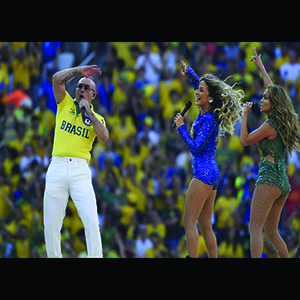
    SAO PAULO (TIP): The 2014 Fifa World Cup got under way with a colourful opening ceremony before hosts Brazil kicked off against Croatia. A cast of 660 dancers paid tribute to the country’s nature, people and football with a show around a “living” ball on the Arena de Sao Paulo pitch. The final act saw a performance of official World Cup song “We Are One” by Jennifer Lopez and rapper Pitbull.

    Many fans took to the streets to sing and chant their support for Brazil as excitement built in the hours before the tournament began. Performers dressed as trees, flowers and various musical instruments all performed in three acts before the central ball opened to reveal singers Claudia Leitte, Jennifer Lopez and rapper Pitbull as they sang the official World Cup song as the finale.


    2

    The 65,000-seater Arena de Sao Paulo chanted the official anthem during the opening There were also demonstrations from those unhappy with the expense of hosting the tournament. Police in Sao Paulo had to use tear gas to break up one protest, which involved about 50 people, while striking airport workers in Rio de Janeiro blocked a road outside the airport, demanding a wage increase and a World Cup bonus.

    No host nation have ever lost their opening World Cup game, with the previous 20 producing 14 victories and six draws for the hosts. Hosts Brazil start as favourites, while holders Spain are aiming to win a fourth major tournament in a row after winning the European Championship two years ago.

  • Desailly tips Argentina for World Cup, Belgium to surprise

    Desailly tips Argentina for World Cup, Belgium to surprise

    LONDON (TIP): Argentina are favourites to win the World Cup in Brazil, Belgium can reach the final and nobody expects much of England, according to former France international Marcel Desailly. The Ghana-born 1998 World Cup winner, who won the Champions League with Marseille and AC Milan, also predicted Ivory Coast could be the surprise team and Argentina’s Sergio Aguero the top scorer. Argentina have the talent to win even if Barcelona’s Lionel Messi does not play in every match, he told Laureus.com in an interview.

    “I am sure collectively Argentina will be able, with Messi at top or without Messi at his best, to win the World Cup,” said the Frenchman. “Honestly I see Argentina playing without Messi,” he continued. “Messi is not specially the key player of Argentina, you will see.” Desailly said champions Spain had the potential to defend the trophy, with fresh talent coming in to boost established players, but hosts Brazil could buckle under the burden of expectation.

    “The first game will be very important but I’m sure confusion will be in the team.” I’m sure it will be difficult for them to join altogether,” said the 45-year-old. “Brazil will face a lot of problems for this World Cup.” The former Chelsea centre back saw “no expectation” for 1966 winners England. “England do not have individual players who can make the difference,” he declared. “Obviously, people will talk about (Wayne) Rooney but in the previous World Cup he did not perform.

    “It will depend on the collective play of the team, good young players who fit in and the cleverness of your coaches,” Desailly added. “Otherwise, England will not go to the final stages. I think even Belgium have a better potential to go to the final stage than England, on their individual capacity.” France are managed by 1998 World Cup-winning captain Didier Deschamps and Desailly said individual talent was certainly there. “The only problem is collectively, France does not perform unless they are scared of getting eliminated,” said Desailly. “We are not expecting to win the World Cup. We are just there, hanging, hoping that game after game we can build up collective motivation.”

  • Sharapova marches into Stuttgart semis

    Sharapova marches into Stuttgart semis

    STUTTGART (Germany): Defending champion Maria Sharapova marched into the semifinals of Stuttgart’s WTA tournament with a 6-4, 6-3 win over topseed Agnieszka Radwanska in Friday’s quarterfinals. “That was a big win for me,” admitted Sharapova after picking up her 11th straight win in Stuttgart where she is bidding for a hat-trick of titles having won the 2012 and 2013 tournaments.

    Sharapova claimed her ninth win in 11 matches against world number three Radwanska of Poland, but the statuesque Russian did not have things her own way, despite needing only one hour, 39 minutes to claim victory. After a total of seven breaks at the start of the match, as the momentum swung back and forth, Sharapova finally won her first service game to take control of the first set. “That was one of the key moments,” she said after eventually needing eight match points to claim the win. She will now face either Spain’s Carla Suarez Navarro or Italy’s Sara Errani in Saturday’s semifinal.

  • Bubba Watson wins second Masters title

    Bubba Watson wins second Masters title

    AUGUSTA (UNITED STATES) (TIP):
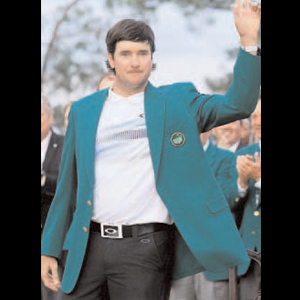
    Bigdriving Bubba Watson captured his second Masters title in three years on April 19, pulling away from Jordan Spieth on the back nine for a three-stroke victory at Augusta National. The 35-year-old American fired a threeunder par 69 Sunday to finish 72 holes on eight-under 288 and take his second major title, the top prize of $1.62 million from a record $9 million purse and another green jacket.

    “I never loved green so much,” Watson said. “After giving away that jacket last year, I wanted it back.” Spieth and Sweden’s Jonas Blixt shared second on 283 with 50-year-old Spaniard Miguel Angel Jimenez fourth on 284, Americans Rickie Fowler and Matt Kuchar sharing fifth on 286 and England’s Lee Westwood seventh on 287.

    Until a PGA triumph two months ago at Riviera, Watson had not won any title since defeating Louis Oosthuizen in a playoff to win the 2012 Masters, a slump he blamed this week on a hangover effect from his first major crown. But Watson bounced back in style this week in the year’s first major championship, becoming the 17th multiple winner of the Masters with his sixth career title.

    “The first one for me, it’s almost like I lucked into it,” Watson said in comparing his Masters triumphs. “This one was a lot of hard work.” Spieth, a 20-year-old Texan, was trying to become the youngest champion in Masters history. He also could have become the first golfer to win the Masters on his first try since Fuzzy Zoeller in 1979 and the youngest major winner since Tom Creavy took the 1931 PGA Championship.

    “It hurts right now,” Spieth said. “Even though it sits a little hard right now it was great and I’ll be back. “Didn’t come out on top but I can take a lot of positives out there.” Spieth owned a twostroke lead on the eighth tee but fell behind after Watson closed the front nine birdiebirdie while Spieth made bogeys at both holes. Spieth missed a five-foot par putt at the par-5 eighth while Watson tapped in for birdie to put them both on seven under. Watson curled in a tricky 12-foot birdie putt at the ninth while Spieth lipped out a fivefoot par putt.

    “Two two-stroke swings in a row, on this golf course, is very difficult to come back from,” Spieth said. “Hats off to Bubba. When he’s playing like that it’s hard to catch him.” Watson fell to seven under with a bogey to begin the back nine, his lead trimmed to a single shot, but Amen Corner — the course’s famed 11th, 12th and 13th holes — dampened Spieth’s bid to rewrite the Masters record book. Spieth found a slope at the par-3 12th and his ball rolled into Rae’s Creek on the way to a bogey.

    Watson drove the ball 360 yards at the par-5 13th on his way to a birdie that left him exiting Amen Corner on eight under, three ahead of Spieth and Blixt. From there, Watson parred his way to the clubhouse, risking an approach through trees at the par-5 15th and a draw around tree limbs at 17 that paid off to help produce pars. “I don’t remember the last few holes,” Watson said.

    “I just remember hanging on. I was just thinking, ‘Make pars. Make pars.’” Watson received a standing ovation from the crowd as he walked onto the 18th green and again moments later when he sank his final putt, after which he hugged caddie Ted Scott, picked up his two-year-old son Caleb and exchanged high-five hand slaps with the patrons around the green. Watson became only the third multiple winner over the past 22 majors, joining Rory McIlroy and Phil Mickelson with two wins in that span.

    Spieth fired a final-round 72 while Blixt shot 71, his fourth sub-par round. Spieth was the first Masters rookie in the final duo on Sunday since 1995 and only the third since 1937. Spieth, who began the round level with Watson on five under, was two strokes ahead on the fourth tee thanks to a birdie at the par- 5 second and a bogey by Watson at the third. Spieth made a spectacular birdie from a bunker at the par-3 fourth but Watson followed with a birdie to stay two strokes back.

    Spieth made bogey at the fifth, each birdied the par-3 sixth and Spieth birdied seven to lead by two. Blixt, also making his Masters debut and just his third major start, could have been the first Swedish man to claim a major crown and Europe’s first Masters winner since Spain’s Jose Maria Olazabal in 1999. World number one Tiger Woods, absent after surgery to ease a pinched nerve, kept his top ranking spot as those able to overtake him — 2013 Masters champion Adam Scott, fellow Australian Jason Day and Sweden’s Henrik Stenson — finished well back.

  • Britain’s MI5 files reveal Mata Hari’s secrets

    Britain’s MI5 files reveal Mata Hari’s secrets

    LONDON (TIP): The secret lives of some of the world’s most revered spies — including the most notorious exotic dancer Mata Hari – Dutch spy who was executed for spying for the Germans, has now been revealed. Britain on April 10 declassified the top secret files of spies during World War I held in the archives of the country’s intelligence agency MI5.

    More than 150 files are being made available in the digitized release as part of National Archives’ campaign to mark the centenary of WW1 in 2014. The documents include information on Arthur Ransome, author of the children’s novel Swallows and Amazons and Sidney Reilly, a Russian-born adventurer whose exploits with the British Secret Service were the inspiration for James Bond.

    The files contain a wealth of material about organisations such as the Bolshevik Party, British Communist Party and The Boy Scout Association and individuals like American poet Ezra Pound, political figures, from known fascists to communists and Russian leaders such as Leon Trotsky and Vladimir Lenin, who were involved in espionage or under surveillance during the period of WW1. The files include rare pictures, letters, post cards and interrogation reports.

    Dr Stephen Twigge, records specialist at the National Archives said “The files in The National Archives’ collection reveal the importance of the security service in safeguarding the nation during the WW1. Now that we have made the files available online, people across the globe can discover the secret history behind the war for themselves”. One of the most interesting releases is information on Mata Hari and the secrets in which she hey traded. The dossier talks about how Dutch-born Hari tried for causing the deaths of 50,000 soldiers by spying for German intelligence was arrested in February 1917 in Paris before being executed in France aged 41.

    Her file includes photos from publications and newspapers about her arrest, conviction and execution including letters and an interrogation report. Among the documents is an inventory of Mata Hari’s possessions when she was detained by Scotland Yard — a hat box with six hats, a feather boa, one veil, two fur necklets and an imitation peach. A MI5 memo, referring to the spy by her real name of Margreet Zelle MacLeod talks about how the agency was alerted by their contact in Paris about the woman.

    It says “He informs us that he has suspected her for some time and pretended to employ her in order, if possible, to obtain definite proof.” MI5’s informant in The Hague, codenamed “T” reported “Mata Hari is a demi-mondaine who is in relation with highly placed people and during her sojourn in France she made the acquaintance of many French and Belgian officers. She is suspected of having been to France on an important mission for the Germans”.

    Mata Hari was in November 1916 questioned by MI5 where she claimed that a French consul in Spain had subsequently asked her to go to Austria to spy on that country’s forces. A French intelligence report dating back to May 22, 1917, later shared with a MI5 officer in Paris noted “Mata Hari confessed that she has been engaged by Consul Cremer of Amsterdam for the German Secret Service. She was paid 20,000 francs in advance”. She was shot by a French firing squad in 1917. The documents also contain information about Edith Cavell — a British nurse, arrested, tried by German military court and executed. The documents contain photos of nurse Cavell’s grave at the site of the execution in Belgium.

    The photos were sent by the French authorities to MI5 to pass on to her mother. There is a letter in response from Cavell’s mother, thanking them for the photos. The dossiers made public also talks about George Bacon — a German spy in the WW1. An American journalist recruited in New York, he was sentenced to death in 1917, later commuted to life imprisonment. Bacon was found in possession of materials for writing invisible messages; these were discovered after chemical tests were carried out on socks in his possession.

    The files include a letter to the home secretary from Bacon begging for a pardon from the British government. In it he states “The adventure for which I was punished was a foolish and theatrical one not done through hatred of Great Britain or her allies, but simply for excitement.” He goes on to talk of his English ancestry and that Sir Frances Bacon is a relative of his. He also states that “there is no financial reason for asking for a pardon but the blood in my veins is English.”

  • Pak to beat India to associate membership to Cern

    Pak to beat India to associate membership to Cern

    LONDON (TIP): Pakistan is all set to beat India in becoming an associate member at Cern ( European Organization for Nuclear Research), the world’s largest particle physics laboratory that recently found the God Particle.

    A senior official of Cern told the mediaperson in London that bureaucratic red tape in India had slowed down the country’s intentions of joining Cern as an associate member. The official said, “Cern is very keen that India becomes an associate member and takes up a larger role in the experiments at Cern.

    But the final documents which India needed to submit have been stuck at the Prime Minister’s Office (PMO) for months now.” According to the official, Pakistan on the other hand moved swiftly to put “all documents in place” and “is all set to become an associate member before India”. To be an associate member, India will have to pay $10.7 million annually.

    The status of associate member is also the pre-stage to full membership. As an associate member, India would have been entitled to attend open and restricted sessions of the organization. Rolf Dieter Heuer, Director-General of Cern had recently said that Cern had become highly popular in India. Cern receives the highest number of applications for summer internships from India. Cern discovered the Higgs Boson popularly known as the god particle.

    The associate membership will open the doors of mega science experiments for Indian scientists and will also allow Indian industry to participate in bids for Cern contracts across various sectors. India was given “Observer” status in Cern in 2002. The Cern convention was signed in 1953 by the 12 founding states Belgium, Denmark, France, the Federal Republic of Germany, Greece, Italy, the Netherlands, Norway, Sweden, Switzerland, the United Kingdom and Yugoslavia, and entered into force on 29 September 1954.

    The organization was subsequently joined by Austria (1959), Spain (1961-1969, re-joined 1983), Portugal (1985), Finland (1991), Poland (1991), Czechoslovak Republic (1992), Hungary (1992), Bulgaria (1999) and Israel (2014). The Czech Republic and Slovak Republic re-joined Cern after their mutual independence in 1993.

    Cern now has 21 member states and Romania is a candidate to become a member state. Serbia is an associate member in the pre-stage to membership. “Observer” status allows non-member states to attend council meetings and to receive council documents, without taking part in the decision-making procedures of the organization. Over 600 institutes and universities around the world use Cern’s facilities. High-energy physicists from India mainly from the Tata Institute of Fundamental Research (TIFR) have been participating in experiments at Cern since the 1970s.

    Subsequently the TIFR-EHEP Group joined the L3 experiment contributing hardware for the endcap hadron calorimeter making major contributions to core software and participating in important physics analyses such as the line shape analysis, Higgs searches, QCD and b-quark physics. Some 10,000 visiting scientists from over 113 countries – half of the world’s particle physicists – come to Cern for their research.

  • GOPIO will hold 25th Anniversary May 27-29 in Trinidad & Tobago

    GOPIO will hold 25th Anniversary May 27-29 in Trinidad & Tobago

    NEW YORK (TIP): The Global Organization of People of Indian Origin (GOPIO International) has decided to hold its 25th (Jubilee) Anniversary in Port of Spain in Trinidad& Tobago, with a 2-day gala celebration on 27th May to 29th May, 2014 preceding the annual Indian Arrival Day commemoration in that country.

    GOPIO International Trinidad & Tobago Chapter will be the convention host, along with a well organized convention team which includes GOPIO’s regional and international chapters, executives, councils and life members, as well as businesses, government, organizations and academic supporters.

    Hosting of GOPIO 25th (Jubilee) Anniversary in Port of Spain has been enthusiastically endorsed and supported by the Government of Trinidad & Tobago, prominent persons of Indian origin and several chambers of commerce, businesses, organizations, academicians and academic institutions, media and others. The strong relationship between GOPIO and Trinidad & Tobago began with the formation of GOPIO in 1989 with high level representation of several prominent persons from Trinidad& Tobago, as well as other countries of the Caribbean region.

    This relationship blossomed to continuing participation in GOPIO at the highest levels at GOPIO’s major events and GOPIO’s many visits to Trinidad & Tobago over the years. In addition, the International Chapter of Trinidad & Tobago is among the most active and vibrant of GOPIO’s many chapters globally, addressing current and critical community issues such as spousal abuse, alcoholism, education, children and health concerns. GOPIO is proud to have hosted Hon.

    PM Kamla Persad Bissessar on 12th January, 2012 at special reception/dinner in Kolkata during her visit to India as the chief guest at Pravasi Bharatiya Divas 2012. GOPIO chapters in the Caribbean region are: Trinidad & Tobago; Guyana; Suriname; St Vincent; Belize; Guadeloupe and Martinique, with others in formation in Jamaica, St Lucia, Grenada and Barbados. Recently, GOPIO has held and collaborated on several major conferences in the Caribbean region: Trinidad & Tobago (2011); St Vincent (2012); Suriname (2013); Guyana’s 175th Indian Arrival Day Commemoration (2013; and Belize (2014). Minister Vayalar Ravi (India’s Ministry of Overseas Indian Affairs) visited Trinidad & Tobago and other countries in the Caribbean region in 2007, 2011 and 2013.

    “We feel privileged and are fully prepared to host GOPIO 25th (Jubilee) Anniversary in 2014 in Port of Spain in grand style that is fitting and well deserved”, said Ena Maraj, president of GOPIO International Trinidad& Tobago Chapter, who initiated the proposal to host the event. Dr Arnold Thomas, GOPIO International Coordinator (Caribbean Region) remarked that, “It is important to highlight this region of the Indian Diaspora, along with the many benefits and unique advantages of holding GOPIO’s 25th (Jubilee) Anniversary in Port of Spain”.

    Trinidad and Tobago is an independent island nation located just off the northern coast of South America, with a population of over 1,300,000 of which 45% are people of Indian origin whose ancestors were brought there as indentured sugar plantation laborers with the first arrivals on 30th May, 1845. For more information, please contact GOPIO International at +1-818-708-3885, Email: GOPIO-Intl@sbcglobal.net. GOPIO is a non-partisan, non-sectarian global organization formed in 1989 and has chapters in several countries, actively promoting the interests of people of Indian origin worldwide by monitoring and addressing current critical issues of concern, and by enhancing cooperation and communication between groups of Indians living in various countries.