Tag: Switzerland

  • London is the third most expensive city in the world to live in

    LONDON (TIP): London is the third most expensive city to live in, coming just behind super-wealthy cities in the Cayman Islands and Switzerland.

    According to figures from Expatistan, which uses crowdfunded data to create a cost of living index for a number of world cities, London comes in third in a list of cities by their cost of living, behind Grand Cayman, in the tax haven of the Cayman Islands, and Zurich, in Switzerland.

    According to the figures, bound to be depressing to Londoners, London has the second most expensive public transport in the world, the third most expensive utility costs, and the fifth most expensive theatre tickets. It’s the second most expensive city in Europe (after Zurich), and, obviously, the most expensive in the UK.

    By contrast, Madras in India was deemed the least expensive city to live in. The bottom end of the list was mostly made up of smaller cities in Eastern Europe. The cheapest city in Western Europe to live in is Lisbon in Portugal, boasting a cost of living index of 127 in comparison to London’s 308.

    It will be little consolation to Londoners that the capital has actually dropped down the global list. In July last year, it occupied the number two spot, but has since been overtaken.

    By contrast with other UK cities, London is significantly more expensive – 36 per cent pricer than Manchester, 38 per cent more than Glasgow, and 40 per cent more than Belfast. After London, the most expensive UK city is Aberdeen – which has notoriously high rents and prices due to it being a centre for Britain’s oil industry in the North Sea. While an interesting insight into skyrocketing prices in London, the new figures prove nothing new.

    The Independent reported in June that London rents were now more than double the national average, and in May is was announced by forecasting group Oxford Economics that it was likely the average home in London would cost £1 million by 2030.


  • US says Iran nuclear deal deadline may ‘slip’

    US says Iran nuclear deal deadline may ‘slip’

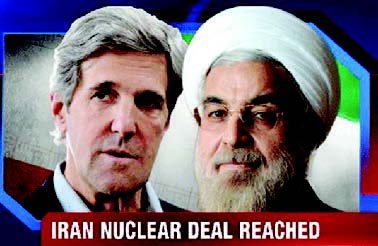
    VIENNA (TIP): High-stakes talks to nail down a historic deal with Iran to curtail its nuclear programme may “slip” past a June 30 deadline, a top US official admitted on June 25 ahead of crunch weekend negotiations in Vienna.

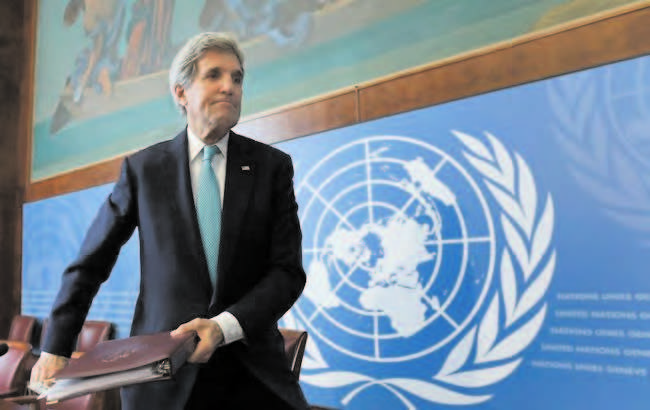
    “We may not make June 30, but we will be close,” the senior official told reporters as top US diplomat John Kerry prepared to head Friday for what could be the last talks between Iran and global powers on the deal.

    The official said the target date to finalise the historic deal — the main outlines were agreed in April in Lausanne, Switzerland –would only “slip” by a few days.

    “The intent of everybody here — the P5+1, the European Union, Iran — is to stay until we get this done, or find out we can’t. And our intent is to get it done,” the official told reporters, asking not to be named.

    Others, including Iranian Foreign Minister Mohammad Javad Zarif, who is due in Vienna on Saturday, have said the deadline may be missed by a few days but until now Washington had insisted it still aimed to get a deal on schedule.

    “We can truly see a path forward that gets us to a very good agreement here. We know what the pieces of it are,” the US official said, adding that in the end, Iran was facing
    “critical choices.”

    Kerry, addressing reporters after unveiling an annual rights report, said he was “always hopeful… I’m not conferring optimism, but I’m hopeful.”

    Iran, which has engaged in something of a rapprochement with the West since the election of President Hassan Rouhani in 2013, denies wanting nuclear weapons, saying its nuclear programme is exclusively peaceful.

    Under the Lausanne framework, which was also agreed several days late, Iran will downsize its nuclear activities in order to make any attempt to make a nuclear weapon all but impossible.

    This includes Iran cutting the number of centrifuges enriching uranium, which is used in nuclear power but also for a bomb when highly purified, as well as slashing its uranium stockpiles and changing the design of a new reactor.

    In return, UN and Western sanctions that have caused Iran major economic pain would be progressively lifted, although the six powers insist they can be easily “snapped back” in place if Tehran violates the accord.-

    – Spanners in the works –

    French Foreign Minister Laurent Fabius will also arrive in Vienna on Saturday, an aide said Thursday, while a source in Brussels said EU foreign policy chief Federica Mogherini was expected “this weekend.”

    The mooted final accord between Iran and the “P5+1” — Britain, China, France, Russia and the United States plus Germany — will be a highly complex agreement 40-50 pages long, including several appendices.

    It will set out an exact timetable of sanctions relief and reciprocal steps by Iran, as well as a mechanism for handling possible violations by either side.

    Tricky issues include how UN sanctions might be re-applied, the reduction of Iran’s uranium stockpile and its future research and development on newer, faster types of centrifuges.

    Iran must also address lingering questions about the possible military dimensions of its nuclear program to the satisfaction of the UN watchdog, the IAEA.

    Amid unease in Iran’s conservative-dominated parliament that Tehran is giving too much away, the country’s supreme leader, Ayatollah Ali Khamenei, on Tuesday appeared to throw several spanners in the works.

  • OFF THE BEATEN TRACK – ROMANTIC GETAWAYS FOR COUPLES

    OFF THE BEATEN TRACK – ROMANTIC GETAWAYS FOR COUPLES

    Goa, Shimla, Lonavala – trying to plan a trip with your partner, but stuck with these names in your head? Go beyond the usual, and explore some beautiful locations across the country that can serve as great options for your romantic escape. From the riverside view of Majuli in Assam to the snow-capped mountains of Tawang in Arunachal Pradesh, let your wanderlust take you places.

    [quote_center]Lachen, Sikkim[/quote_center]

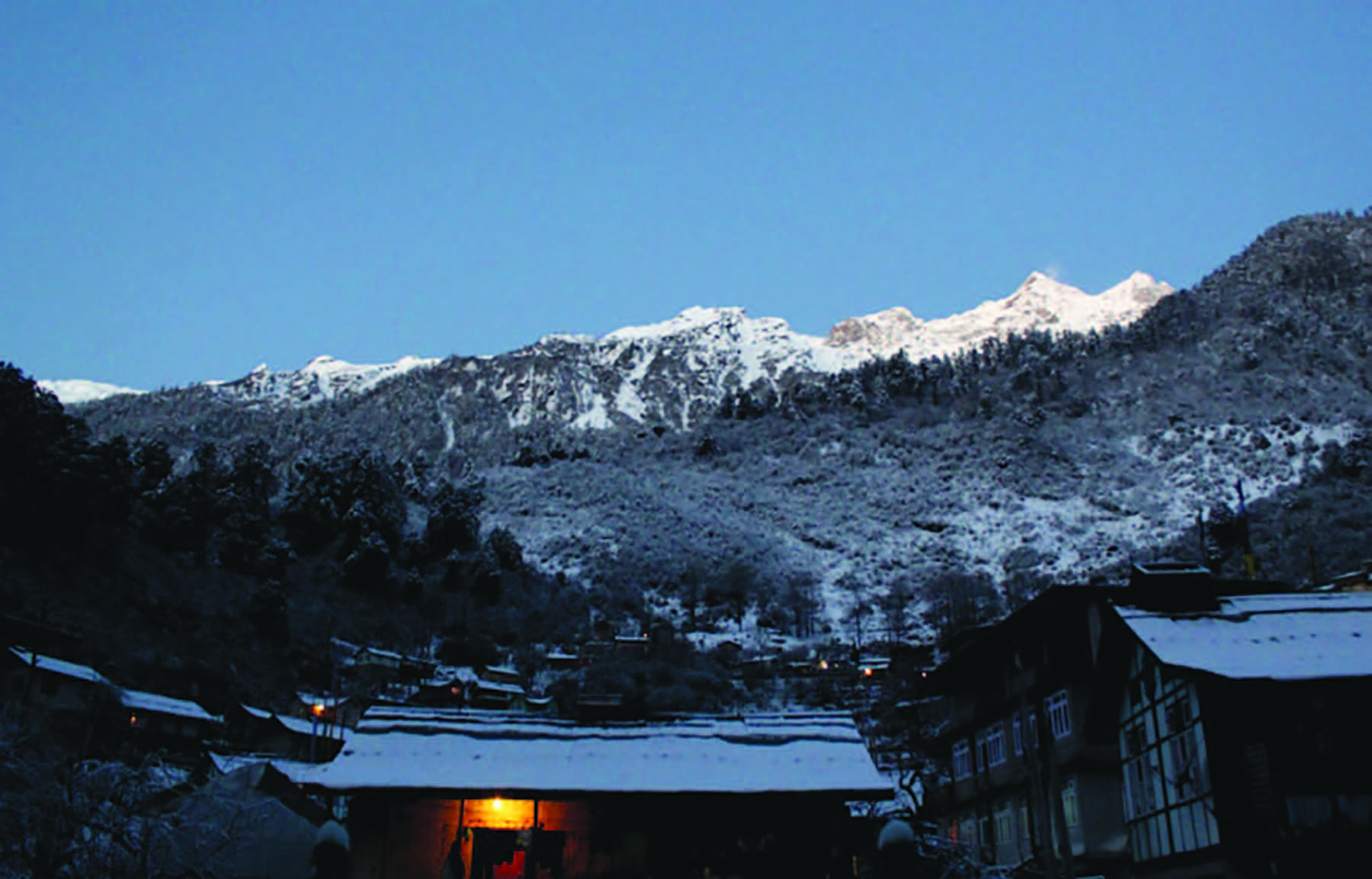
    Located 9,600 feet above sea level, at the confluence of Lachen and Lachung rivers, this picturesque town commands a panoramic view of the Himalayan range. The best time to visit the place is from November to June.

    On your itinerary

    • Thangu, a small village, not very far from Lachen, makes for a spectacular view.
    • Mountain treks.
    • Yumthang Valley is popularly known as the Valley of Flowers.
    • Gurudongmar Lake – one of the highest lakes in the world.

    [quote_center]Auli, Uttarakhand[/quote_center]

    Located in the Chamoli district, Auli has a generous population of coniferous and oak forests, and also offers a panoramic view of the Himalayas. With its moderate temperature during the summer months, it serves as a great vacation spot in the hot season.

    On your itinerary

    • Day hike to Gorson Meadows that provides scenic views.
    • A ride on one of the longest cable cars (Gondola) in Asia.
    • Chattrakund, a man-made lake close to Auli.

    [quote_center]Tawang, Arunachal Pradesh[/quote_center]

    This hill station is situated in the north-west part of Arunachal Pradesh. It shares its border with the Sela range in the east, Tibet in the north and Bhutan in the south-west. Away from the maddening buzz of a big city, Tawang serves as a quiet vacation spot.

    On your itinerary

    • Tawang Monastery is the largest monastery in India.
    • Jang Waterfalls are famous for its beauty.
    • Sela Pass remains covered with snow for most part of the year.
    • Tawang Handicrafts Centre promotes small-scale industries for local handicraft.

    [quote_center]Dhankar Gompa, Himachal [/quote_center]

    Dhankar Gompa is a village and also a Gompa (meditation room in urban Buddhist centres) in the district of Lahaul and Spiti in Himachal Pradesh. Gurgling rivers and crystal clear lakes dot the highlands of Lahaul, while an ancient civilisation has survived for nearly a thousand years, and has preserved its culture against the onslaught of modernity in Spiti.

    On your itinerary

    • Dhankar Monastery.
    • Dhankar Lake, which is a 1.5 km trek up from the monastery.
    • Nearby villages of Kaza, Key, Kibber and Tabo.

    [quote_center]Kovalam, Kerala[/quote_center]

    This small town in Kerala consists of three separated parts of three beaches – Hawah, Samudra and Light House. The largest among these is the Light House beach, which is a must-visit. It is close to Thiruvananthapuram.

    On your itinerary

    • Boating in the Karamana river provides spectacular views of the backwaters
    • Sunset at Edakkal.
    • Vizhinjam Rock Cut Cave temple has ancient sculptures on display.
    • Valiyathura Pier offers an amazing view of the coastline of Kovalam.

    [quote_center]Khajjiar, Himachal Pradesh[/quote_center]

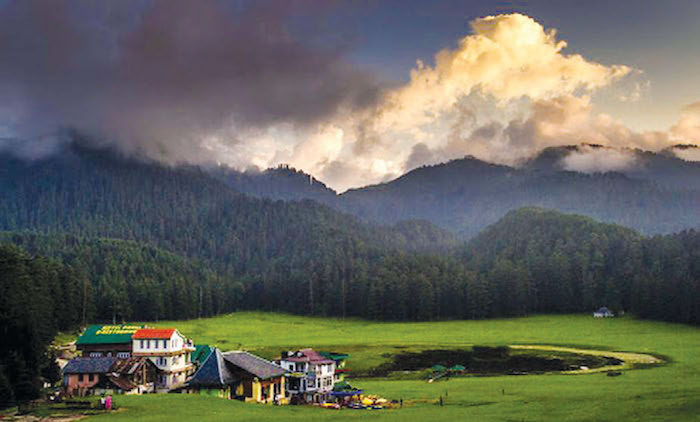
    Often referred to as the ‘Mini Switzerland of India’, Khajjiar is a beautiful hill station in the Chamba district of Himachal Pradesh. It has thick deodar forests covering the slopes, and a breathtaking snow-line that rests above these woods.

    On your itinerary

    • Exciting hikes through the deodar thickets of the Dhauladhar Mountains.
    • 12th century temple dedicated to Khajji Nag that houses life-size wooden images of the Pandav brothers.
    • Several equestrian sports, paragliding and horse riding.

    [quote_center]Majuli, Assam[/quote_center]

    This is a large river island, nestled amidst the Brahmaputra in the upper region of Assam. Majuli is considered as one of Assam’s most well-kept and unexplored secrets, which leaves visitors awestruck with its natural beauty. To explore the island, travellers can either book a motorised private boat or travel like the locals in a ferry. The cultural exhibitions, exotic Assamese cuisine and the friendly local population make Majuli a picture-perfect destination to spend time with your loved ones.

    On your itinerary

    • Several Satras or monasteries like Daksinpath, Garamur and Auniati.
    • Mask-making workshops.
    • Raja Maidam, which has a vault of King Purandar Sinha. The monument was built as a tribute to the king.

    ROMANTIC GETAWAYS2[quote_center]Wayanad, Kerala[/quote_center]

    This district-town was formed by extracting areas from the Kozhikode and Kannur districts. The rugged terrain of the Western Ghats is its main attraction. It is situated at the tip of the Deccan Plateau, and shares borders with Karnataka and Tamil Nadu.

    On your itinerary

    • Neelimala, a great trekking destination, located in the southeastern part of the region.
    • Meenmutty Falls, the largest waterfall in the district.
    • Caves in Pakshipathalam.
  • India at 100 on human capital index, Finland leads pack

    GENEVA (TIP): India has been ranked at a lowly 100 position on the global Human Capital Index, which measures countries on development and deployment of human capital.

    Finland has topped the 124-nation list. India is ranked lower than all its BRICS peers — Russia, China, Brazil and South Africa – – and smaller neighbours like Sri Lanka, Bhutan and Bangladesh. But Pakistan follows at 113.

    In the top 10 of the list, compiled by the World Economic Forum (WEF), Finland is followed by Norway, Switzerland, Canada, Japan, Sweden, Denmark, the Netherlands, New Zealand and Belgium. WEF said the list has been compiled on the basis of 46 indicators about “how well countries are developing and deploying their human capital, focusing on education, skills and employment”. “It aims to understand whether countries are wasting or leveraging their human potential,” it added.

    On India, the report said that although the educational attainment has improved markedly over different age groups, its youth literacy rate is still only 90 per cent, well behind the rates of other emerging economies.

  • IRAN NUCLEAR DEAL – framework announced

    IRAN NUCLEAR DEAL – framework announced

    LAUSANNE, SWITZERLAND (TIP): April 2, 2015 becomes historic as Iran Nuclear deal framework is announced. It is a significant step towards a landmark deal aimed at keeping Iran’s nuclear program peaceful. Iran would reduce its stockpile of low-enriched uranium by 98% and significantly scale back its number of installed centrifuges, according to the plan. In exchange, the United States and the European Union would lift sanctions that have crippled the country’s economy. “It is a good deal, a deal that meets our core objectives,” U.S. President Barack Obama said in a speech from the White House Rose Garden. “This framework would cut off every pathway that Iran could take to develop a nuclear weapon.”

    The deal would include strict verification measures to make sure Iran complies, he said.

    “If Iran cheats,” Obama said, “the world will know it.”

    Given below are the key parameters of a Joint Comprehensive Plan of Action (JCPOA) regarding the Islamic Republic of Iran’s nuclear program that were decided in Lausanne, Switzerland.  These elements form the foundation upon which the final text of the JCPOA will be written between now and June 30, and reflect the significant progress that has been made in discussions between the P5+1, the European Union, and Iran. Important implementation details are still subject to negotiation, and nothing is agreed until everything is agreed. “We will work to conclude the JCPOA based on these parameters over the coming months”, a White House statement said. 

    • Iran has agreed to reduce by approximately two-thirds its installed centrifuges. Iran will go from having about 19,000 installed today to 6,104 installed under the deal, with only 5,060 of these enriching uranium for 10 years. All 6,104 centrifuges will be IR-1s, Iran’s first-generation centrifuge.
    • Iran has agreed to not enrich uranium over 3.67 percent for at least 15 years.
    • Iran has agreed to reduce its current stockpile of about 10,000 kg of low-enriched uranium (LEU) to 300 kg of 3.67 percent LEU for 15 years.
    • All excess centrifuges and enrichment infrastructure will be placed in IAEA monitored storage and will be used only as replacements for operating centrifuges and equipment.
    • Iran has agreed to not build any new facilities for the purpose of enriching uranium for 15 years.
    • Iran’s breakout timeline – the time that it would take for Iran to acquire enough fissile material for one weapon – is currently assessed to be 2 to 3 months. That timeline will be extended to at least one year, for a duration of at least ten years, under this framework. Iran will convert its facility at Fordow so that it is no longer used to enrich uranium 
    • Iran has agreed to not enrich uranium at its Fordow facility for at least 15 years.
    • Iran has agreed to convert its Fordow facility so that it is used for peaceful purposes only – into a nuclear, physics, technology, research center.
    • Iran has agreed to not conduct research and development associated with uranium enrichment at Fordow for 15 years.
    • Iran will not have any fissile material at Fordow for 15 years.
    • Almost two-thirds of Fordow’s centrifuges and infrastructure will be removed. The remaining centrifuges will not enrich uranium. All centrifuges and related infrastructure will be placed under IAEA monitoring. Iran will only enrich uranium at the Natanz facility, with only 5,060 IR-1 first-generation centrifuges for ten years.
    • Iran has agreed to only enrich uranium using its first generation (IR-1 models) centrifuges at Natanz for ten years, removing its more advanced centrifuges.
    • Iran will remove the 1,000 IR-2M centrifuges currently installed at Natanz and place them in IAEA monitored storage for ten years.
    • Iran will not use its IR-2, IR-4, IR-5, IR-6, or IR-8 models to produce enriched uranium for at least ten years. Iran will engage in limited research and development with its advanced centrifuges, according to a schedule and parameters which have been agreed to by the P5+1.
    • For ten years, enrichment and enrichment research and development will be limited to ensure a breakout timeline of at least 1 year. Beyond 10 years, Iran will abide by its enrichment and enrichment R&D plan submitted to the IAEA, and pursuant to the JCPOA, under the Additional Protocol resulting in certain limitations on enrichment capacity. Inspections and Transparency 
    • The IAEA will have regular access to all of Iran’s nuclear facilities, including to Iran’s enrichment facility at Natanz and its former enrichment facility at Fordow, and including the use of the most up-to-date, modern monitoring technologies.
    • Inspectors will have access to the supply chain that supports Iran’s nuclear program. The new transparency and inspections mechanisms will closely monitor materials and/or components to prevent diversion to a secret program.
    • Inspectors will have access to uranium mines and continuous surveillance at uranium mills, where Iran produces yellowcake, for 25 years.
    • Inspectors will have continuous surveillance of Iran’s centrifuge rotors and bellows production and storage facilities for 20 years. Iran’s centrifuge manufacturing base will be frozen and under continuous surveillance.
    • All centrifuges and enrichment infrastructure removed from Fordow and Natanz will be placed under continuous monitoring by the IAEA.
    • A dedicated procurement channel for Iran’s nuclear program will be established to monitor and approve, on a case by case basis, the supply, sale, or transfer to Iran of 3 certain nuclear-related and dual use materials and technology – an additional transparency measure.
    • Iran has agreed to implement the Additional Protocol of the IAEA, providing the IAEA much greater access and information regarding Iran’s nuclear program, including both declared and undeclared facilities.
    • Iran will be required to grant access to the IAEA to investigate suspicious sites or allegations of a covert enrichment facility, conversion facility, centrifuge production facility, or yellowcake production facility anywhere in the country.
    • Iran has agreed to implement Modified Code 3.1 requiring early notification of construction of new facilities.
    • Iran will implement an agreed set of measures to address the IAEA’s concerns regarding the Possible Military Dimensions (PMD) of its program. Reactors and Reprocessing
    • Iran has agreed to redesign and rebuild a heavy water research reactor in Arak, based on a design that is agreed to by the P5+1, which will not produce weapons grade plutonium, and which will support peaceful nuclear research and radioisotope production.
    • The original core of the reactor, which would have enabled the production of significant quantities of weapons-grade plutonium, will be destroyed or removed from the country.
    • Iran will ship all of its spent fuel from the reactor out of the country for the reactor’s lifetime.
    • Iran has committed indefinitely to not conduct reprocessing or reprocessing research and development on spent nuclear fuel.
    • Iran will not accumulate heavy water in excess of the needs of the modified Arak reactor, and will sell any remaining heavy water on the international market for 15 years.
    • Iran will not build any additional heavy water reactors for 15 years. Sanctions o Iran will receive sanctions relief, if it verifiably abides by its commitments.
    • U.S. and E.U. nuclear-related sanctions will be suspended after the IAEA has verified that Iran has taken all of its key nuclear-related steps. If at any time Iran fails to fulfill its commitments, these sanctions will snap back into place.
    • The architecture of U.S. nuclear-related sanctions on Iran will be retained for much of the duration of the deal and allow for snap-back of sanctions in the event of significant non-performance.
    • All past UN Security Council resolutions on the Iran nuclear issue will be lifted simultaneous with the completion, by Iran, of nuclear-related actions addressing all key concerns (enrichment, Fordow, Arak, PMD, and transparency).
    • However, core provisions in the UN Security Council resolutions – those that deal with transfers of sensitive technologies and activities – will be re-established by a new UN Security Council resolution that will endorse the JCPOA and urge its full implementation. It will also create the procurement channel mentioned above, which will serve as a key transparency measure. Important restrictions on conventional arms and ballistic missiles, as well as provisions that allow for related cargo inspections and asset freezes, will also be incorporated by this new resolution.
    • A dispute resolution process will be specified, which enables any JCPOA participant, to seek to resolve disagreements about the performance of JCPOA commitments.
    • If an issue of significant non-performance cannot be resolved through that process, then all previous UN sanctions could be re-imposed.
    • U.S. sanctions on Iran for terrorism, human rights abuses, and ballistic missiles will remain in place under the deal.
    • For fifteen years, Iran will limit additional elements of its program. For instance, Iran will not build new enrichment facilities or heavy water reactors and will limit its stockpile of enriched uranium and accept enhanced transparency procedures. 
    • For ten years, Iran will limit domestic enrichment capacity and research and development – ensuring a breakout timeline of at least one year. Beyond that, Iran will be bound by its longer-term enrichment and enrichment research and development plan it shared with the P5+1.
    • Important inspections and transparency measures will continue well beyond 15 years. Iran’s adherence to the Additional Protocol of the IAEA is permanent, including its significant access and transparency obligations. The robust inspections of Iran’s uranium supply chain will last for 25 years.
    • Even after the period of the most stringent limitations on Iran’s nuclear program, Iran will remain a party to the Nuclear Non-Proliferation Treaty (NPT), which prohibits Iran’s development or acquisition of nuclear weapons and requires IAEA safeguards on its nuclear program.
  • Ajay Jayaram reaches quarterfinals of Swiss Open

    BASEL (SWITZERLAND) (TIP): Indian shuttler Ajay Jayaram inflicted a straight-game defeat on Tzu Wei Wang of Chinese Taipei to reach the quarterfinals of USD 120,000 Swiss Grand Prix Gold badminton championship here on March 12. Jayaram, who had won the Dutch Open last year, prevailed over 13th seed Wang 21-17, 21-16 in a 35-minute men’s singles match to set up a clash with Japan’s Kazumasa Sakai. Interestingly, the 27-year-old from Bangalore had beaten Wang early this month in the qualification round of All England Championship in Birmingham.

    Jayaram had notched up a hard-fought 21-7, 21-23, 21-19 win over Belgium’s Yuhan Tan to reach the pre-quarterfinals on Wednesday night. Anand Pawar, however, went down fighting 21-19, 19-21, 15-21 to Sakai in another pre-quarterfinal match that lasted for 57 minutes at St. Jakobshalle stadium.

  • Talks under way on ending UN sanctions on Iran

    Talks under way on ending UN sanctions on Iran

    UNITED NATIONS (TIP) : Major world powers have begun talks about a United Nations Security Council resolution to lift UN sanctions on Iran if a nuclear agreement is struck with Tehran, a step that could make it harder for the US Congress to undo a deal, Western officials said.

    The talks between Britain, China, France, Russia and the United States -the five permanent members of the Security Council – plus Germany and Iran, are taking place ahead of difficult negotiations that resume next week over constricting Iran’s nuclear ability.

    Some eight UN resolutions – four of them imposing sanctions – ban Iran from uranium enrichment and other sensitive atomic work and bar it from buying and selling atomic technology and anything linked to ballistic missiles. There is also a UN arms embargo.

    Iran sees their removal as crucial as UN measures are a legal basis for more stringent US and European Union measures to be enforced. The US and EU often cite violations of the UN ban on enrichment and other sensitive nuclear work as justification for imposing additional penalties on Iran.

    US Secretary of State John Kerry told Congress on Wednesday that an Iran nuclear deal would not be legally binding, meaning future US presidents could decide not to implement it. That point was emphasized in an open letter by 47 Republican senators sent on Monday to Iran’s leaders asserting any deal could be discarded once President Barack Obama leaves office in January 2017.

    But a Security Council resolution on a nuclear deal with Iran could be legally binding, say Western diplomatic officials. That could complicate and possibly undercut future attempts by Republicans in Washington to unravel an agreement.

    Iran and the six powers are aiming to complete the framework of a nuclear deal by the end of March, and achieve a full agreement by June 30, to curb Iran’s most sensitive nuclear activities for at least 10 years in exchange for a gradual end to all sanctions on the Islamic Republic.

    So far, those talks have focused on separate US and European Union sanctions on Iran’s energy and financial sectors, which Tehran desperately wants removed. The sanctions question is a sticking point in the talks that resume next week in Lausanne, Switzerland, between Iran and the six powers.

    But Western officials involved in the negotiations said they are also discussing elements to include in a draft resolution for the 15-nation Security Council to begin easing UN nuclear-related sanctions that have been in place since December 2006.

  • Nestle net profit soars 45%despite slipping sales

    Nestle net profit soars 45%despite slipping sales

    VEVEY, SWITZERLAND (TIP): The world’s leading food industry group Nestle posted a soaring net profit for 2014, boosted by the sell-off of its stake in French cosmetics group L’Oreal, even as sales slipped.

    Last year, the maker of Nespresso capsules, baby food and many other products, saw its net profit jump 44.6 percent to 14.5 billion Swiss francs ($15.4 billion, 13.4 billion euros), the company said in an earnings statement.

    That was well above the expectations of analysts polled by the AWP financial news agency, who had anticipated a net profit of just 10.3 billion Swiss francs.

    Not counting income from the sale of its L’Oreal holdings last year and a reevaluation gain on its Galderma medical unit stake, however, Nestle said its net profit rose just 4.4 percent in constant currencies.

    The company’s sales slipped 0.6 percent last year to 91.6 billion francs, meanwhile, mainly due to negative impact of exchange rate shifts, which eroded sales figures by 5.5 percent.

    The company’s organic growth, considered a key indicator of its performance, expanded 4.5 percent last year, it noted.

    That number was based on 2.3 percent real internal growth, with the remaining 2.2 percent attributable to pricing, Nestle said.

    “These are strong results, building on the good growth of past years and delivered in a soft trading environment,” company chief Paul Bulcke said in the earnings statement.

    Nestle’s board will propose increasing the dividend paid to share holders to 2.20 Swiss francs per share, up from 2.15 last year, the company said.

    Looking forward, the Nestle said it expected this year to be similar to 2014, adding that it aimed to see its organic growth swell about five percent.

    Following the announcement, the company saw its share price inch up 0.42 percent to 71.40 Swiss francs a piece, as the Swiss stock exchange’s main SMI index grew 0.17 percent.

  • DEFLATION ALARMS RING LOUDER AS EU, CHINESE FACTORIES STRUGGLE

    DEFLATION ALARMS RING LOUDER AS EU, CHINESE FACTORIES STRUGGLE

    LONDON/SYDNEY (tip): European and Chinese factories slashed prices in January as production flatlined, heightening global deflation risks that point to another wave of central bank stimulus in the coming year.


    While the pulse of activity was livelier in other parts of Asia — Japan, India and South Korea — they too shared a common condition of slowing inflation.


    Central banks from Switzerland to Turkey via Canada and Singapore have already loosened monetary policy in the past few weeks.


    The European Central Bank also announced a near-trillion-euro quantitative easing programme in a bid to revive inflation and drive up growth, though much of the bloc’s Purchasing Managers’ Index survey was collated before that announcement.


    “There are a lot of places where central banks are focusing on easing rather than anything else. In the euro zone the ECB is going all-out now,” said Jacqui Douglas, senior global strategist at TD Securities.


    “Looking at the rest of Europe we are expecting more easing from Sweden and Norway, that is where most central banks are leaning right now. There is no real rush to move ahead with rate hikes.” 


    Markit’s final PMI reading for the euro zone, published on Monday, was 51.0, in line with the flash estimate. Although at a six-month high, it was only just above the 50 mark that separates growth from contraction. In December the index came in at 50.6.


    Worryingly for policymakers, firms cut prices in January at the steepest rate since mid-2013. Data on Friday showed annual inflation was a record-equalling low of -0.6 per cent in January across the 19 nations using the euro.


    In Britain, manufacturing grew slightly faster but factories cut prices at the fastest pace since 2009. The Bank of England will keep interest rates at a record low until at least October, later than previously thought, a Reuters poll found last week.


    “With oil prices having stabilised at around $45 per barrel now, it seems likely that lower oil prices should continue to enable manufacturers to lower prices and so support demand,” said Paul Hollingsworth at Capital Economics.


    Still to come later on Monday is a sister manufacturing survey from Markit covering the United States, as well as the Institute for Supply Management’s US factory index, which is forecast to have slipped to 54.5 in January from 55.1.


    Easing China? 


    Earlier, a pair of surveys from China showed manufacturing struggling at the start of 2015 in the world’s second biggest economy.


    The Chinese HSBC/Markit PMI inched up a fraction to 49.7. But of more concern the official PMI, which is biased towards large factories, unexpectedly showed activity shrank for the first time in nearly 2-1/2 years.


    The reading of 49.8 in January was down from December’s 50.1 and missed a median forecast of 50.2. The report showed input costs sliding at their fastest rate since March 2009, with lower prices for oil and steel playing major roles.


    Ordinarily, cheaper energy prices would be good for China, one of the world’s most intensive energy consumers, but many economists believe the phenomenon is a net negative for Chinese firms because of its impact on demand.


    The PMIs only fuelled bets on a weaker yuan and that more monetary easing was in store in Beijing too.


    “China still needs decent growth to add 100 million new jobs this year, plus China is entering a rapid disinflation process,” ANZ economists said in a note to clients.


    “We (think) the People’s Bank of China will cut the reserve requirement ratio by 50 basis points and cut the deposit rate by 25 basis points in the first quarter.” 


    The downdraft has also spread into China’s hitherto buoyant services sector, the lone bright spot in the economy last year. Service activity expanded at its lowest level in a year.


    Slightly better news came from Japan, where the central bank has been pursuing an aggressive bond-buying campaign for over a year in a bid to revive growth and shake the country out of decades of deflation.


    The final Markit/JMMA PMI edged up in January as the sustained weakness of the yen drove up exports. Improving exports were also a feature of South Korea’s PMI which returned to growth for the first time in five months.


    India’s manufacturing activity continued to grow, though the headline index eased a touch but importantly for the prospect of more policy stimulus, cost pressures were the mildest in 70 months as commodity prices fell.

  • Internet will ‘disappear’, says Google boss Eric Schmidt

    Internet will ‘disappear’, says Google boss Eric Schmidt

    DAVOS, Switzerland (TIP): Google boss Eric Schmidt predicted on Thursday that the internet will soon be so pervasive in every facet of our lives that it will effectively “disappear” into the background.

    “It will be part of your presence all the time. Imagine you walk into a room and… you are interacting with all the things going on in that room.”

    “A highly personalized, highly interactive and very interesting world emerges.”

    On the sort of high-level panel only found among the ski slopes of Davos, a panel bringing together the heads of Google, Facebook and Microsoft and Vodafone sought to allay fears that the rapid pace of technological advance was killing jobs.

    “Everyone’s worried about jobs,” admitted Sheryl Sandberg, chief operating officer of Facebook.

    With so many changes in the technology world, “the transformation is happening faster than ever before,” she acknowledged.

    “But tech creates jobs not only in the tech space but outside,” she insisted.

    Schmidt quoted statistics he said showed that every tech job created between five and seven jobs in a different area of the economy.

    “If there were a single digital market in Europe, 400 million new and important new jobs would be created in Europe,” which is suffering from stubbornly high levels of unemployment.

    The debate about whether technology is destroying jobs “has been around for hundreds of years,” said the Google boss. What is different is the speed of change.

    “It’s the same that happened to the people who lost their farming jobs when the tractor came… but ultimately a globalize solution means more equality for everyone.”

    With one of the main topics at this year’s World Economic Forum being how to share out the fruits of global growth, the tech barons stressed that the greater connectivity offered by their companies ultimately helps reduce inequalities.

    “Are the spoils of tech being evenly spread? That is an issue that we have to tackle head on,” said Satya Nadella, chief executive of Microsoft.

    “I’m optimistic, there’s no question. If you are in the tech business, you have to be optimistic. Ultimately to me, it’s about human capital. Tech empowers humans to do great things.”

    Facebook boss Sandberg said the internet in its early forms was “all about anonymity” but now and everyone was visible.

    “Now everyone has a voice… now everyone can post, everyone can share and that gives a voice to people who have historically not had it,” she said.

    Schmidt, who said he had recently come back from the reclusive state of North Korea, said he believed that technology forced potentially despotic and hermetic governments to open up as their citizens acquired more knowledge about the outside world.

    “It is no longer possible for a country to step out of basic assumptions in banking, communications, morals and the way people communicate,” the Google boss said.

    “You cannot isolate yourself any more. It simply doesn’t work.” Nevertheless, Sandberg told the assembled elites that even the current pace of change was only the tip of the iceberg.

    “Today, only 40% of people have internet access,” she said, adding: “If we can do all this with 40%, imagine what we can do with 50, 60, 70%.”

    Even two decades into the global spread of the internet, the potential for opening up and growth was tremendous, she stressed.

    “Sixty percent of the internet is in English. If that doesn’t tell you how uninclusive the internet is, then nothing will,” said the tycoon. The World Economic Forum brings together some 2,500 of the top movers and shakers in the worlds of politics, business and finance for a four-day meeting that ends on Saturday.

  • A LOT IN PIPELINE FOR INVESTORS, SAYS JAITLEY

    A LOT IN PIPELINE FOR INVESTORS, SAYS JAITLEY

    DAVOS (TIP): Attending the World Economic Forum (WEF) here to showcase India as an investment destination, finance minister Arun Jaitley on January 21 promised India has a “lot in the pipeline” for global investors even as he plans to take up with Switzerland the issue of black money stashed in banks there.

    Jaitley, who marks a high-power Indian presence that includes power minister Piyush Goyal and top industrialists and bankers, is slated to meet his Swiss counterpart Eveline Widmer-Schlumpf when the issue of black money in Swiss banks will figure.

    The finance minister said the ongoing meet of the rich and the powerful would be an opportunity for India where a lot is happening. He said that competing economies are mostly not doing so well and if India continued in the course that it had taken in the last seven, eight months, “there is a lot that we can attract”.

    Shortly after arriving here, Jaitley said he would tell the investors that the government has done a lot and a lot is in the pipeline. Therefore, both the government of India and India as a state have embarked on a particular course and “this is what we are likely to do. So this is an opportunity to showcase India.”

    Jaitley, who will be here till January 23, said he would discuss the issue of black money with his Swiss counterpart when they meet on the sidelines of the WEF meet. He is expected to seek Swiss cooperation regarding details of Indian citizens holding unaccounted money in Swiss banks and ways to repatriate that money.

  • Hyderabad ranked 2nd best place in world to see in 2015: Magazine

    Hyderabad ranked 2nd best place in world to see in 2015: Magazine

    HYDERABAD (TIP): Hyderabad is the second best place in the world that one should see in 2015, according to an international travel publication. The Presidio of San Francisco in the US ranked first on the “Best of the World – 20 Places You Should See in 2015” list, published in the annual guide of ‘Traveler’ magazine of National Geographic. In the December 2014-January 2015 issue, the periodical ranked Hyderabad at second position on the list, which included cities Zermatt in Switzerland, National Mall in Washington D C, Corsica, Choquequirao in Peru, Sark in Channel Islands, Koyasan in Japan, Oklahoma City, and Maramures in Romania.

    “Stories of Hyderabad’s poetic past weave amid strings of programming code in this South Eastern India city that was home to one of the richest men in the world, Mir Osman Ali Khan, the last ruling nizam of Hyderabad,” the periodical said. It goes on to talk about how Hyderabad has now become a seedbed for many global IT brands, the opulent Taj Falaknuma Palace, Irani cafes, fifth generation pearl merchants and other attractions. According to Andhra Pradesh Reorganisation Act, 2014, Hyderabad will remain common capital of Andhra Pradesh and Telangana for a period not exceeding ten years; thereafter it will be part and parcel of Telangana.

  • REGULATORS FINE GLOBAL BANKS $4.3 BILLION IN CURRENCY INVESTIGATION

    REGULATORS FINE GLOBAL BANKS $4.3 BILLION IN CURRENCY INVESTIGATION

    LONDON/ZURICH (TIP): Regulators fined six major banks including Citigroup and UBS a total of $4.3 billion for failing to stop traders from trying to manipulate the foreign exchange market, following a year-long global investigation. HSBC, Royal Bank of Scotland, JP Morgan and Bank of America also face penalties resulting from the inquiry that has put the largely unregulated $5 trillion-a-day market on a tighter leash, accelerated the push to automate trading and ensnared the Bank of England.

    In the latest scandal to hit the financial services industry, dealers shared confidential information about client orders and coordinated trades to make money from a foreign exchange benchmark used by asset managers and corporate treasurers to value their holdings. Dozens of traders have been fired or suspended. Dealers used code names to identify clients without naming them and created online chatrooms with pseudonyms such as “the players”, “the 3 musketeers” and “1 team, 1 dream” in which to swap information.

    Those not involved were belittled and traders used obscene language to congratulate themselves on quick profits made from their scams. Britain’s Financial Conduct Authority (FCA) fined five lenders $1.77 billion, the biggest penalty in the history of the City of London, and the US Commodity Futures Trading Commission (CFTC) ordered them to pay a further $1.48 billion. “Today’s record fines mark the gravity of the failings we found and firms need to take responsibility for putting it right,” FCA chief executive Martin Wheatley said. Banks had to understand that responsibility for good business practice went beyond their compliance departments, which are tasked with ensuring internal and external rules are followed.

    “They must make sure their traders do not game the system to boost profits or leave the ethics of their conduct to compliance to worry about,” said Wheatley. The US Office of the Comptroller of the Currency, which regulates banks, also fined the US lenders $950 million and was the only authority to penalise Bank of America. Switzerland’s regulator FINMA ordered UBS, the country’s biggest bank, to pay 134 million francs ($139 million) after it found serious misconduct in both foreign exchange and precious metals trading. It also capped bonuses for dealers in both units at twice their basic salary for two years. FINMA will appoint a third party to monitor the bank’s observance of its rules after discovering it had received whistleblower reports about alleged trader misconduct in 2010 but failed to investigate them properly.

    Despite Wednesday’s payout, which brings the total fine for benchmark manipulation to over $10 billion in two years, banks still face further penalties as the US Department of Justice, the Federal Reserve and New York’s financial regulator conclude their own investigations. US authorities have tended to be more aggressive than their European counterparts in punishing big banks for misconduct. “We made the judgment that while more information is always better, we didn’t believe that the picture would materially change even if we spent additional years continuing to investigate,” said Aitan Goelman, director of enforcement at the CFTC.

  • Black money: Switzerland reminds India of terms for sharing bank information

    Black money: Switzerland reminds India of terms for sharing bank information

    NEW DELHI/BERNE (TIP): In a fresh threat to the flow of information about Indians holding accounts in foreign banks, Switzerland on Thursday, October 30, said that information exchanged with India under its tax treaty can’t be disclosed “in principle” to a court or any other body outside the proceedings of a “specific and relevant” case. This Swiss clarification came a day after the government was ordered by the Supreme Court to hand over all the 627 names of Indian account holders in HSBC Bank, Geneva, forcing the government to opt out from the signing of an international treaty on exchange of financial information.

    India’s last minute withdrawal from the Multilateral Competent Authority Agreement – which provides for automatic information exchange, starting 2017 – is bound to choke the flow of vital data to tax authorities and hinder attempts to act against unaccounted funds parked in overseas accounts. India can still sign the pact. Currently, it is awaiting clarity from the court. The source pointed out that India also has to sign the Inter-Governmental Agreement with the US for automatic exchange of information, which also comes with a confidentiality clause. Officials said that in case of a delay beyond December 31, all remittances from the US will face a 30% withholding tax.

    “For signing the agreement, the government has to give a commitment that it will follow international standards for the information received. But we could not give an assurance due to Supreme Court’s interpretation of confidentiality, which is critical for all governments to exchange information,” said a government official. Swiss authorities, too, are worried about sharing information and their comments come at a time when a SC-monitored Special Investigation Team is probing alleged stashing of black money by Indians aboard.

    Explaining the treaty provisions about disclosure of such ‘secret’ information, a Swiss finance ministry spokesperson told PTI from Berne that authorities from the two countries have “regular contacts on bilateral tax matters” but refused to comment on particular cases. The exchange of information on tax matters between India and Switzerland is based on the double taxation agreement (DTA) and the protocol that was signed in 2010 between the two countries.

    It has been in force since October 2011. “This agreement is in line with the international standards and provides for exchange of information on request,” the spokesperson said. “Accordingly, the information exchanged under the terms of the DTA can be provided to a court in situations where it is dealing with a specific case related to tax matters for which this information is relevant. Conversely, information cannot be disclosed in principle to a court or another body outside of such proceedings,” the official added.

    The spokesperson, however, declined to comment on “particular cases”, citing the confidentiality provisions of the Swiss-Indian DTA. There has been a heated debate here on whether the disclosure of names, without prosecution, could violate tax treaties under which these names and other details are shared by foreign countries. Replying to queries in this regard, the Swiss Federal department of finance spokesperson said the protocol to Swiss- Indian Double Taxation Agreement states that any information received “by a contracting state shall be treated as ‘secret’ in the same manner as information obtained under the domestic laws of that state…” The treaty further provides that any such information

    “shall be disclosed only to persons or authorities (including courts and administrative bodies) concerned with the assessment or collection of (information), the enforcement or prosecution in respect of, or the determination of appeals in relation to the taxes … or the oversight of the above.” The Swiss finance ministry spokesperson further said the treaty states that “such persons or authorities shall use the information ‘only’ for such purposes.

    They may disclose the information in public court proceedings or in judicial decisions”. Officials in India said that all countries which have legally shared information with India have done so under treaties, which contain a confidentiality clause. “That’s the way business is done internationally. We have to follow the same practice,” an official said.

  • Black money case: Can’t disclose names of foreign account holders: Govt to SC

    Black money case: Can’t disclose names of foreign account holders: Govt to SC

    NEW DELHI (TIP): The Union government on Friday filed an application in the Supreme Court, saying it cannot disclose details of foreign accounts held by Indians which are governed by bilateral double taxation avoidance treaties. Petitioner and senior advocate Ram Jethmalani said this is an attempt by Narendra Modi government to shield those who stashed black money abroad. Jethmalani said such a plea could be made only by crooks who have illegally parked their ill-gotten money abroad and not by a democratically elected government. The apex court agreed to hear Centre’s application on October 28.

    Outside the court, Jethmalani took a strong critical view of the finance minister and attorney general for making such an application to the court and said it could help only the criminals. Jethmalani told the court that he has written a letter to the Prime Minister on this issue conveying his strong views against the application and requesting the PM to take it as his last wishes. Switzerland agrees to help India As India steps up its pursuit of black money stashed abroad, Switzerland on Wednesday agreed to assist Indian authorities on a priority basis and provide requested banking information in a time-bound manner. The Swiss authorities would also “assist in obtaining confirmation on genuineness of bank documents on request by the Indian side and also swiftly provide information on requests related to non-banking information”.

  • INDIA SLIPS TO 71ST RANK IN GLOBAL COMPETITIVENESS LIST

    INDIA SLIPS TO 71ST RANK IN GLOBAL COMPETITIVENESS LIST

    GENEVA/NEW DELHI (TIP): Weighed down by challenging economic conditions for most part of the past year, India has slipped to 71st position — the lowest among BRICS countries — in an annual global competitiveness list, with Switzerland claiming the top spot.

    The annual list, released on September 3 by Geneva-based World Economic Forum (WEF), comes at a time when the new Indian government has completed 100 days in power and has promised further steps to revive its economy and the ease of doing business in the country. “Continuing its downward trend and losing 11 places, India ranks 71st.

    The country’s new government faces the challenge of improving competitiveness and reviving the economy, which is growing at half the rate of 2010,” WEF said. As per the Global Competitiveness Report 2014-15, Switzerland is the most competitive economy, followed by Singapore. Other countries in the top ten are Finland (4), Germany (5), Japan (6), Hong Kong SAR (7), Netherlands (8), United Kingdom (9) and Sweden (10). China, which has improved its position by one place to 28th spot, leads the BRICS grouping, among which India has the least ranking.

    Russia is ranked at 53rd position, followed by South Africa (56) and Brazil (57). “India’s decline of 11 places to 71st, set against the gains of the ASEAN 5 countries, suggests that the competitiveness divide South and Southeast Asia is becoming more pronounced,” WEF said. Besides India, WEF said that some of the world’s largest emerging market economies continue to face difficulties in improving competitiveness.

    These include Saudi Arabia (24th rank), Turkey (45), Mexico (61), Nigeria (127th), South Africa and Brazil — all of them have slipped in their rankings. According to the report, India’s slide in the competitiveness rankings began in 2009, when its economy was still growing at 8.5 per cent (it even grew by 10.3 per cent in 2010). “Back then, however, India’s showing in the Global Competitiveness Index (GCI) was already casting doubt about the sustainability of this growth. “Since then, the country has been struggling to achieve growth of 5 per cent.

    The country has declined in most areas assessed by the GCI since 2007, most strikingly in institutions, business sophistication, financial market development, and goods market efficiency,” it added. Noting that improving competitiveness would yield huge benefits for India, WEF said it would help re-balance the economy and move the country up the value chain ensuring more solid and stable growth. “This in turn could result in more employment opportunities for the country’s rapidly growing population,” it added. WEF further said that India needs to create a sound and stable institutional framework for local and foreign investors as well as improve connectivity.

    The rankings are based on WEF’s GCI which is based on scores covering 12 categories. They are institutions, infrastructure, macroeconomic environment, health and primary education, higher education and training, goods market efficiency, labour market efficiency, financial market development, technological readiness, market size, business sophistication and innovation.

    “The strained global geopolitical situation, the rise of income inequality, and the potential tightening of the financial conditions could put the still tentative recovery at risk and call for structural reforms to ensure more sustainable and inclusive growth,” WEF founder and executive chairman Klaus Schwab said. As per the report, there is uneven implementation of structural reforms across different regions and levels of development as the biggest challenge to sustaining global growth. Talent and innovation are the two areas where leaders in the public and private sectors need to collaborate more effectively in order to achieve sustainable and inclusive economic development, it added.

  • Swiss House worker tweets nude selfies

    Swiss House worker tweets nude selfies

    ZURICH (TIP): A secretary who posted nude pictures of herself in the Swiss parliament to more than 11,000 followers on Twitter told a newspaper on Wednesday that she did not believe she had broken any rules. Many of the “selfies” were taken in her office in the Federal Palace, a 162-year-old domed building in Berne where Switzerland’s government and parliament meet, according to Swiss daily Neue Zuercher Zeitung (NZZ). The unidentified woman, a secretary at the parliament, told the paper that the pictures did not violate guidelines for federal employees because they were part of her private life. The report did not say why she had posted the pictures. A spokesman for the government’s human resources department said he had only learned of the case from Wednesday’s news report.

  • Indian American Monica Gill Crowned Miss India Worldwide 2014

    Indian American Monica Gill Crowned Miss India Worldwide 2014

    NEW YORK (TIP): Miss India -U.S. Monica Gill was crowned Miss India Worldwide 2014 in Abu Dhabi, June 20, with the second place going to Miss India Switzerland and third to Miss India Bahrain. More than 40 contestants of Indian origin settled in various countries across the globe between the ages of 17 and 27 years, unmarried and citizens, residents, or born in the country they represent, participated in the Miss India Worldwide pageant.

    The finale took place at the Al Raha Beach Resort, Abu Dhabi in UAE, where Gill was announced as the winner. She was crowned by Miss India Worldwide 2013 Nehal Bhogaita. The pageant included rounds like evening gown, Indian dress, a talent contest and question-and-answer sections. Surat contestant Anugya Sharma represented India at Miss India Worldwide.

    The winner took home a cash prize of $8000 and various sponsored gifts, including photo sessions and modeling assignments apart from the crown. Gill is a graduate of Boston University, where she studied biology, psychology and women’s studies.

  • WORLD CUP FIRST ROUND LEAVES EUROPE ALL AT SEA

    WORLD CUP FIRST ROUND LEAVES EUROPE ALL AT SEA

    RIO DE JANEIRO (TIP): Cristiano Ronaldo, Wayne Rooney, Andrea Pirlo and Xavi have left Brazil with their tails between their legs highlighting the hard times for Europe at the World Cup. Having provided seven of the last eight World Cup semifinalists, Europe’s dominance appears to be on the wane after a brutal group phase for the continent’s teams.

    Where Latin American sides such as Chile and Costa Rica created sensations, Europe’s powerhouses flopped, with Italy, England, Portugal and defending champions Spain among seven teams from the UEFA zone eliminated in the first round. European superstars disappointed. In sharp contrast, World Cup crowds have thrilled to the virtuoso performances of Neymar and Lionel Messi, the swashbuckling football of Chile and Colombia, and the daring displays of giant-killing Costa Rica.

    While France, Netherlands, Germany, Belgium, Switzerland and Greece remain in contention for glory, the tournament has done little to encourage hope of a first European World Cup success in the Americas. “It cannot be a coincidence that a European team couldn’t win a World Cup held in South America,” declared Switzerland’s decorated German coach Ottmar Hitzfeld before the tournament. “Not in Uruguay, not in Mexico, not in Argentina, and for sure not in Brazil.”

    Europe’s World Cup difficulties may be part of an emerging trend. Whereas European teams filled 10 of the last-16 places in five of the first six tournaments after the round was introduced in 1986 (with nine getting there in 2002), only six made it in 2010 and this year. With tens of thousands of fans from neighbouring countries flooding into Brazil, the South American teams have clearly benefited from home advantage.

    Supporters from Argentina and Chile took over Rio de Janeiro’s Maracana when their sides played there in the group phase and France coach Didier Deschamps believes such mass support can make a difference. “We are in Brazil, so the South American teams certainly acclimatise better, and maybe the fact that they are playing so close to home and have so many supporters with them gives them added strength and energy,” he said on June 14. Developing Deschamps’s theme, Brazil striker Fred said: “I think the climate can make a bit of a difference, because we are better adapted to it.

    “The tactical aspect makes a difference, too. We see Colombia, Ecuador, Uruguay, Chile all playing technically good football. And as they are used to the very hot climate, it can end up helping a bit.” England manager Roy Hodgson feels that European sides are hindered by the strengths of their respective domestic championships. Citing the examples of Costa Rica and Iran, who almost held Argentina to a goalless draw in Group F, he said that it is easier for the tournament’s supposed weaker sides to gather together for pre-competition training camps, making them more well-drilled and tactically flexible. “Iran and Costa Rica have been together for months, so they’ve really had a chance to do the type of work that we’ve been happy to do for three or four weeks with our players,” he said after his side’s groupphase exit.

    “We’ll never get the access to our players that an Iran or a Costa Rica get.” One consolation for the Europeans is that only one of Brazil, Chile, Colombia and Uruguay can reach the semi-finals due to the configuration of the draw.

    And although only six teams from Europe reached the last 16 in 2010, three of those went on to reach the semi-finals, while the final between Spain and Holland was the second all-European affair in a row after France and Italy in 2006. France, Germany and the Dutch are again looking strong and confident. While it has been a chastening first fortnight for the old continent, the cream of European football can still rise to the top.

  • Man rescued from cave after 11 days

    Man rescued from cave after 11 days

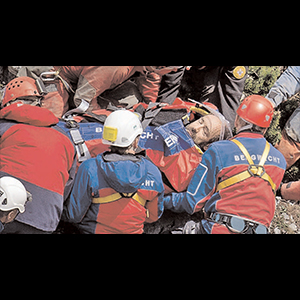
    BERLIN (TIP): German rescuers on June 19 brought to safety an injured caver, ending his 11-day ordeal and a massive recovery operation deep below the Bavarian Alps. “The victim has been brought to the surface and is receiving emergency medical care,” said a mountain rescue official after the team reached the mouth of the cave, where a helicopter was waiting. Explorer Johann Westhauser, 52, suffered serious head injuries in the accident about 1,000m below ground in the Riesending cave complex, Germany’s longest and deepest cavern. Since then, a multi-national team of hundreds of emergency personnel battled around the clock in a complex and costly operation to bring him to the surface.

    “It was one of the most difficult rescue operations in the history of the mountain rescue service,” said Klemens Reindl, who runs the service and who supervised the operation. He added in a statement, that 728 people from five countries took part in the rescue operation. Rescuers placed Westhauser on a fibreglass stretcher and negotiated a treacherous and labyrinth-like network of tunnels and chambers, underground lakes and ice-cold waterfalls.

    The rescue operation involved rest periods in five bivouac stops, followed by a major final hoist up a 180-metre vertical shaft near the entrance to the cave, officials said. The rescue effort, in the mountains near the Austrian border, involved professional cavers, medical personnel and helicopter crews, from Germany, Austria, Italy, Switzerland and Croatia. German Red Cross president Rudolf Seiters praised the effort and said that “the conditions under which the helpers had to rescue the seriously injured explorer Westhauserfrom the more than a 1,000m deep cave were extremely difficult.

  • Ukraine military helicopter shot down, 14 dead

    Ukraine military helicopter shot down, 14 dead

    SLOVYANSK (UKRAINE) (TIP): Rebels in eastern Ukraine shot down a government military helicopter on May 29 amid heavy fighting around the eastern city of Slovyansk, killing 14 soldiers including a general, Ukraine’s leader said. Acting President Oleksandr Turchynov told the parliament in Kiev that rebels used a portable air defense missile on Thursday to down the helicopter and said Gen.

    Volodymyr Kulchitsky was among the dead. Slovyansk has become the epicenter of fighting between pro-Russia insurgents and government forces in recent weeks. Located 100 miles (160 kilometers) from the Russian border, it has seen constant clashes and its residential areas have regularly come under mortar shelling from government forces, causing civilian casualties and prompting some residents to flee. An Associated Press reporter saw the helicopter’s go down and the trail of black smoke it left before crashing.

    Gunshots were heard around Slovyansk near the crash site and a Ukrainian air force jet was seen circling above. It was too dangerous to visit the site itself. The city of 120,000 is in the Donetsk region, one of the two sprawling provinces in eastern Ukraine that have declared independence from the government in Kiev. The Kiev government condemns the insurgency roiling the east as the work of “terrorists” bent on destroying the country and blames Russia for fomenting it. Russia denies the accusations, saying it has no influence over rebels, who insist they are only protecting the interests of Russianspeakers in the east.

    Still, fighters from Russia, including from the battled-hardened region of Chechnya, have been appearing recently in the ranks of the separatists. Also on May 29, an insurgent leader confirmed that his fighters were holding four missing observers from the Organization for Security and Cooperation in Europe and promised that they would be released shortly. Vyacheslav Ponomarev, the selfproclaimed “people’s mayor” of Slovyansk, told the AP that the monitors — who are from Turkey, Switzerland, Estonia and Denmark — were safe.

    “I addressed the OSCE mission to warn them that their people should not over the coming week travel in areas under our control. And they decided to show up anyway,” Ponomarev said. “We will deal with this and then release them,” he said, without setting a specific timeframe. The OSCE had lost contact with the team in Donetsk on Monday evening. Their teams have been deployed to Ukraine to monitor security situation following Russia’s annexation of Crimea and the rise of the pro-Russia separatist insurgency in eastern Ukraine.

    They also observed Sunday’s presidential vote, won by billionaire candy magnate Petro Poroshenko. Poroshenko has promised to negotiate with people in the east but also vowed to uproot the armed rebels. In the most ferocious battle yet, rebels in Donetsk tried to take control of its airport Monday but were repelled by Ukrainian forces using combat jets and helicopter gunships. Dozens of men were killed — some insurgent leaders said up to 100 fighters may have been killed. The mood in Donetsk was calm Thursday, although many businesses have stopped opening due to fears of renewed fighting.

    The separatists in Ukraine have pleaded to join Russia, but President Vladimir Putin has ignored their appeal in an apparent bid to de-escalate tensions with the West and avoid a new round of Western sanctions. Putin has supported an OSCE peace plan that calls for ending hostilities and launching a political dialogue and has said Russia would work with new leader Poroshenko. But Russia has repeatedly urged the Ukrainian government to end its military operation against the separatists. Russian foreign minister Sergey Lavrov on Thursday called for quick international mediation to persuade Kiev to halt what he described as a “punitive operation” in the east.

  • Hodgson: Everybody associates Brazil with football

    Hodgson: Everybody associates Brazil with football

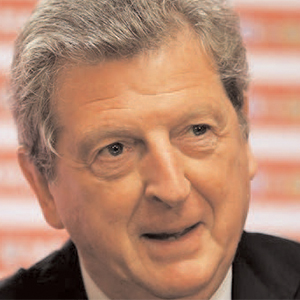
    In the final part of our three-part interview with Roy Hodgson, the England manager speaks about his FIFA World Cup™ memories from 1958, when he was just ten years old, to 1994 as coach of Switzerland. Having also toured Germany in 2006 as a member of FIFA’s Technical Study Group and worked as a pundit for the BBC in 2010, Hodgson has had a wide experience of World Cups from which to draw. And as the former Inter Milan and Liverpool boss told FIFA.com, he believes that Brazil 2014 will be a little special.

    ROY HODGSON: 1958 would be the first one, but mainly because of my time in Sweden when I sort of got reacquainted with it. It was something that should have interested England and Great Britain enormously, as I think it’s the last time all four home nations actually took part. I learned a lot about the ’58 World Cup in Sweden and in particular I became close friends with Orvar Bergmark,who for many years was the most-capped player in the world with his 92 caps. That’s been surpassed many times since, but around the 1958 mark he was right up there.

    And of course, playing against us, managers and colleagues, a lot of the people who played in that: Bengt Gustavsson and Agne Simonsson. All of these people were coaches in Sweden when I was there, and famous players from the ’58 team. Then when I went going to Italy I got to know Nils Leidholm and Gunnar Gren, so I got to know seven or eight of the team and took more interest, I suppose.

    The ’62 World Cup I don’t remember well. And the ’66 one I of course remember very, very well! WHERE WERE YOU DURING 1966? AT CRYSTAL PALACE, TRYING TO BE A PLAYER! Brazil is considered such a football crazy country,where the people basically live for the game. Being a footballer is as good as it gets for anybody in Brazil. WHAT ARE YOUR MEMORIES OF THE TOURNAMENT? DID YOU GO TO ANY OF THE GAMES? No.

    To be fair, aside from the games that were played at Wembley, a lot of the games were played around the country at that time. I was never in a position to get a ticket to be perfectly honest. So I watched the games on TV. I remember the games and the England games quite well. I remember the various moments and controversies. The same with ’70.We had high hopes of doing well because the ’70 team was as strong as the ’66 team on paper because we still had the remnants of the ’66 team and a few interesting younger players had come on the scene.

    In ’74 I was in South Africa, so I only saw the Final. And I saw that in retrospect. I drove from Pretoria to Johanesburg to Wits University. They actually bought the tape of the film for their students and me and my friend were playing in Pretoria,we drove up and got ourselves tickets and watched it in a hall. It was just a taped version of the Final.We knew the score. But that’s the only game we actually saw in ’74.

    Then obviously in ’78 I was in Sweden so I quite liked following that one. WHICH TEAMS OR WHICH MATCHES, PARTICULARLY OF THE LATER WORLD CUPS, STICK OUT FOR YOU? It has to be 1994 when I was involved with Switzerland. I remember all of the games, but in particular the first two, the ones played in Detroit against America and then Romania. I remember those very, very well. Both were in an indoor dome,where they rolled the grass in,which was quite revolutionary at the time. I think in Europe it was only Arnhem (GelreDome) that had a similar system,where they had a dome allowing them to roll in different surfaces. It was quite a novelty in that respect.

    THE HUMIDITY IN THE GAMES THERE WAS EXTREME,WASN’T IT? Our third game, in Palo Alto,was right in the midday sun. In terms of actual temperature it was the hottest. It was over 100 degrees Fahrenheit, because it was right in the heat of the day, with the sun right above you in California. But the worst, in terms of heat and humidity, I thought was the Silverdome in Detroit. They measured the temperature in the low 30s (Celsius) but because it was very hot outdoors, indoors it was even hotter and of course you get the humidity in there as well.

    Washington I don’t remember as being too bad. I think it was in the evening, a later kick-off, and I remember Washington being a normal summer’s day, in the mid-20s. WHAT DO YOU THINK WILL MAKE THE WORLD CUP IN BRAZIL SO SPECIAL? I think the real feeling that this World Cup is special because of Brazil’s relationship to football.

    Everybody associates Brazil with football. Partly because of the success the Brazilian national teams have had and the tournaments they’ve won. But it’s not just that, it’s all the Brazilian players who have played all over the world. They export so many thousands of players. We’re all used to seeing the Copacabana and other beaches filled with people playing on the sand and Brazil is considered such a football crazy country, where the people basically live for the game.

  • India ranks 102 out of 132 nations on social development index

    India ranks 102 out of 132 nations on social development index

    NEW DELHI (TIP): India ranks 102nd among the 132 countries on the Social Progress Index, a measure of human wellbeing that goes beyond traditional economic measures such as GDP or per capita income. Of the BRICS countries — Brazil, Russia, India, China and South Africa — only India ranked lower than the 100th position on the list of the Social Progress Index 2014 compiled by USbased non-profit group Social Progress Imperative. China was next lowest of the five, in the 90th position, and Brazil was the highest, at 46th.

    Using measures of access to basic human needs such as food and shelter and of equality of opportunity such as education and personal freedom, the index aims to measure quality of life throughout the globe. Last year the first Social Progress Index ranked 50 countries. This year, its ranking includes 132 countries around the world. New Zealand tops the list followed by Switzerland, Iceland and Netherlands. Chad ranks the lowest in the index.

    India ranks 102nd on social progress with challenges across all three dimensions with particularly low scores on shelter (39.77) in the basic human needs dimension, access to information (39.87) in the foundations of wellbeing dimension, and tolerance and inclusion (21.54) in the opportunity dimension. The basic human needs dimension comprises parametres of nutrition and basic medical care, water and sanitation, shelter and personal safety.

    The foundations of wellbeing includes parametres of access to basic knowledge, information and communications, health and wellness and ecosystem sustainability, while opportunity dimension includes personal rights, freedom and choice, tolerance and inclusion and access to education. The report said that while the BRICS are generally seen as areas of great economic growth potential, social progress performance is mixed at best.

    Only Brazil (46th) ranks better on social progress than it does on GDP per capita (57th). Russia has a higher GDP than Brazil (39th) yet ranks lower on the Social Progress Index (80th); South Africa is 58th on GDP and 69th on social progress; China is 69th on GDP and 90th on social progress; and India is 94th on GDP and 102nd on social progress. Central and South Asia trails all regions but Sub-Saharan Africa in terms of overall index performance.

    The top performers for the region are Sri Lanka (85th), Kazakhstan (86th) and Mongolia (89th). The worst performance belongs to Pakistan, which is ranked 124th. “Tracking social progress trends over time will be important for understanding the speed with which social progress responds to changes in economic performance.

    It remains to be seen how quickly fast-growing economies such as India and China, that currently underperform on social progress relative to their GDP per capita, can turn economic success into improving social conditions,” the report said. “The Social Progress Index provides evidence that extreme poverty and poor social performance often go hand-inhand,” it said.

  • US attorney probes Mt. Gox, bitcoin businesses

    US attorney probes Mt. Gox, bitcoin businesses

    NEW YORK (TIP): Manhattan attorney Preet Bharara has sent subpoenas to Mt. Gox, other bitcoin exchanges, and businesses that deal in bitcoin to seek information on how they handled recent cyber attacks, a source familiar with the probe said on Wednesday.

    In the attacks — known as distributed denial of service attacks — hackers overwhelmed bitcoin exchanges by sending thousands of phantom transactions. At least three exchanges were forced to halt withdrawals of bitcoins on February 7, including Mt. Gox, which was the largest at the time. Mt. Gox never resumed service before going dormant on Tuesday, leaving customers unable to recover their funds.

    The Tokyobased company’s chief executive, Mark Karpeles, said earlier on Wednesday that he is working with others to solve the problems. “As there is a lot of speculation regarding Mt Gox and its future, I would like to use this opportunity to reassure everyone that I am still in Japan, and working very hard with the support of different parties to find a solution to our recent issues,” Karpeles said in a statement posted on the Mt. Gox website.

    A spokesman for Bharara declined to comment. Bitcoin, a form of electronic money independent of traditional banking, relies on a network of computers that solve complex mathematical problems as part of a process that verifies and permanently records the details of every bitcoin transaction that is made. At current prices, the bitcoin market is worth about $7 billion. Investors deposit their bitcoins in digital wallets at specific exchanges, so the Mt. Gox shutdown is similar to a bank closing its doors — people cannot retrieve their funds.

    While proponents of bitcoin hail its anonymity and lack of ties to traditional banking, regulators have become increasingly interested in the digital currency due to its usage by criminal elements and its volatile nature. It has been a rough month for bitcoin investors, with cyber attacks on several exchanges, a sharp fall in bitcoin’s value, and rising pressure from regulators. Bitcoin’s price varies by exchange, but the losses were most dramatic on Mt. Gox, where it fell to about $135 from $828.99 before February 7. “Mt Gox has been broken and it was obvious there was something really bad going on there for nearly a year.

    They were processing withdrawals very slowly and generally being very opaque about what was going on there,” said Mike Hearn, a bitcoin developer in Zurich, Switzerland. A second source familiar with the case said US federal law enforcement is investigating Mt. Gox. A third source said the US Federal Bureau of Investigation was monitoring the situation. Japan’s finance ministry and police are also looking into the abrupt closure of Mt. Gox, according to the Japanese government’s top spokesman.

    MALLEABILITY
    Bitcoin has gained increasing acceptance as a method of payment and has attracted a number of prominent venture capital investors, including Andreessen Horowitz and Union Square Ventures. The digital currency has also caught the eye of hackers. The recent cyber attacks exploited a process used by some bitcoin exchanges that introduced “malleability” into the code governing transactions, experts said. Simply put, this allowed hackers to slightly alter the details of codes to create thousands of copies of transactions.

    These copies slowed the exchanges to a crawl, forcing them to independently verify each transaction to determine what was real and what was fake. A document circulating on the Internet purporting to be a crisis plan for Mt. Gox, said more than 744,000 bitcoins were “missing due to malleability-related theft,” and noted Mt. Gox had $174 million in liabilities against $32.75 million in assets. It was not possible to verify the document. If accurate, that would mean approximately 6 percent of the 12.4 million bitcoins minted would be considered missing.

    Developers are working on fixes to bitcoin’s software to guard against cyber attacks, though many larger service providers have already implemented such changes, according to Gregory Maxwell, one of the bitcoin software’s core developers. He said some malleability in the software protocol was necessary — for example, in transactions where multiple people can put in money, but the transaction is not valid until enough funds are contributed. “None of these fixes are especially complicated, but because the correctness of the software is important we use a conservative release process that avoids rushing anything out,” Maxwell said, adding that the bulk of the recent work on the software is being done by four people.

    BITSTAMP
    Jacob Dienelt, who trades bitcoins and sells paper bitcoin wallets, said people he knows in the bitcoin community in New York stopped using Mt. Gox when the exchange halted dollar withdrawals several months ago and said all withdrawals had to be in bitcoin. Dienelt said has not been subpoenaed. With Mt. Gox’s shutdown, Bitstamp has handled the most volume in the last two days, with more than 165,000 US dollar transactions, according to Bitcoincharts. Bitstamp had temporarily halted customer withdrawals earlier this month, citing “inconsistent results” and blaming a denial-ofservice attack.

    The price of bitcoin was lately at $588 on Bitstamp, up about 7% on the day. “Right now is a sweet buying opportunity. I don’t think you’re going to see bitcoin go this low for awhile — if ever again,” said Jordan Kelley, chief executive of Robocoin, which launched the world’s first Bitcoin ATM in Vancouver, Canada, in the fall. “The more that bitcoin is on the front pages, the more that people are discussing it and educating one another, the better for the currency.” Kelley said Robocoin has not been subpoenaed in the US regulatory probe; nor has New York-based exchange Coinsetter, according to a spokesperson. Bitstamp did not respond to requests for comment.

  • Pak to beat India to associate membership to Cern

    Pak to beat India to associate membership to Cern

    LONDON (TIP): Pakistan is all set to beat India in becoming an associate member at Cern ( European Organization for Nuclear Research), the world’s largest particle physics laboratory that recently found the God Particle.

    A senior official of Cern told the mediaperson in London that bureaucratic red tape in India had slowed down the country’s intentions of joining Cern as an associate member. The official said, “Cern is very keen that India becomes an associate member and takes up a larger role in the experiments at Cern.

    But the final documents which India needed to submit have been stuck at the Prime Minister’s Office (PMO) for months now.” According to the official, Pakistan on the other hand moved swiftly to put “all documents in place” and “is all set to become an associate member before India”. To be an associate member, India will have to pay $10.7 million annually.

    The status of associate member is also the pre-stage to full membership. As an associate member, India would have been entitled to attend open and restricted sessions of the organization. Rolf Dieter Heuer, Director-General of Cern had recently said that Cern had become highly popular in India. Cern receives the highest number of applications for summer internships from India. Cern discovered the Higgs Boson popularly known as the god particle.

    The associate membership will open the doors of mega science experiments for Indian scientists and will also allow Indian industry to participate in bids for Cern contracts across various sectors. India was given “Observer” status in Cern in 2002. The Cern convention was signed in 1953 by the 12 founding states Belgium, Denmark, France, the Federal Republic of Germany, Greece, Italy, the Netherlands, Norway, Sweden, Switzerland, the United Kingdom and Yugoslavia, and entered into force on 29 September 1954.

    The organization was subsequently joined by Austria (1959), Spain (1961-1969, re-joined 1983), Portugal (1985), Finland (1991), Poland (1991), Czechoslovak Republic (1992), Hungary (1992), Bulgaria (1999) and Israel (2014). The Czech Republic and Slovak Republic re-joined Cern after their mutual independence in 1993.

    Cern now has 21 member states and Romania is a candidate to become a member state. Serbia is an associate member in the pre-stage to membership. “Observer” status allows non-member states to attend council meetings and to receive council documents, without taking part in the decision-making procedures of the organization. Over 600 institutes and universities around the world use Cern’s facilities. High-energy physicists from India mainly from the Tata Institute of Fundamental Research (TIFR) have been participating in experiments at Cern since the 1970s.

    Subsequently the TIFR-EHEP Group joined the L3 experiment contributing hardware for the endcap hadron calorimeter making major contributions to core software and participating in important physics analyses such as the line shape analysis, Higgs searches, QCD and b-quark physics. Some 10,000 visiting scientists from over 113 countries – half of the world’s particle physicists – come to Cern for their research.