Tag: Switzerland

  • India-US talks may resume in March

    India-US talks may resume in March

    WASHINGTON (TIP): The India-US dialogue, which was marred by the row over the arrest of diplomat Devyani Khobragade, is likely to get back on track by March. US energy secretary Ernest Moniz will be on a two-day visit to India for the energy security dialogue from March 10.

    The trip ran into rough weather in December last year in the aftermath of Khobrgade’s arrest. India is keen on US help in exploring shale gas in the country. New Delhi is keen getting on US technology in the shale gas resource assessments as well as sharing lessons on its exploitation, officials pointed out.

    The other ongoing cooperation in the energy sector between the two nations include in the areas of electrical grid cooperation, energy efficiency, expanding markets for renewable energy technologies and addressing barriers to clean energy deployment, clean coal technology development, and civil nuclear energy. Meanwhile, the US continues to have reservations about India’s nuclear liability law and the slow progress in beginning the nuclear commerce.

    Moniz’s visit will signal the bilateral calendar of events being back on track. The visit of the commissioner of the US food and drug administration, Margaret Hamburg, will be next on the agenda. “The two ministers reviewed recent developments in India-US relations. They agreed that the bilateral relationship was very important for both countries. Both sides looked forward to the early realization of the mutually-agreed calendar of bilateral exchanges,” a statement issued after the meeting between external affairs minister Salman Khurshid and US secretary of state John Kerry in Montreux, Switzerland in January had said.

  • Federer returns to Davis Cup action this week

    Federer returns to Davis Cup action this week

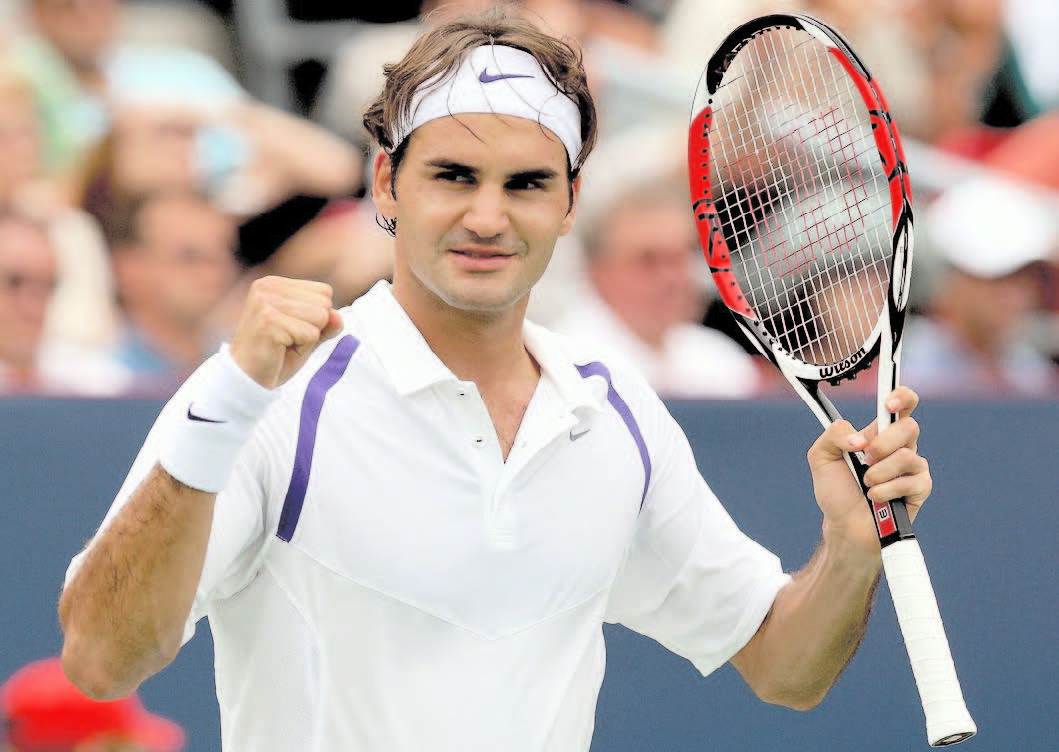
    NOVI SAD (TIP): Roger Federer will return to the Davis Cup this week in Switzerland’s first-round match in Serbia. The Swiss tennis federation confirmed Federer’s participation Wednesday after it was first announced on the tournament’s official Twitter account.

    Federer teams up with new Australian Open champion Stanislas Wawrinka, now the Swiss No. 1, against a Serbian side missing second-ranked Novak Djokovic. The winner plays Belgium or Kazakhstan in the quarterfinals in April. Federer has played only one first-round match since 2004. He last represented Switzerland in September 2012, helping win a relegation playoff against the Netherlands.

    Serbia, the 2010 champion, is hosting the match without any top-100 players after Djokovic pulled out. Dujan Lajovic at No. 102 is the highest ranked team member. The series opens Friday on indoor hardcourt at Novi Sad.

  • US vows stepped up support to oust Assad

    US vows stepped up support to oust Assad

    MONTREUX (SWITZERLAND) (TIP): The United States on January 22 led a fierce denunciation of the Syrian regime and vowed it would step up support for the opposition as it seeks to topple President Bashar al-Assad.

    The top US diplomat, John Kerry, set the tone when he stressed before 40 nations and international organizations gathered at a landmark peace conference in Switzerland that Assad could play no part in Syria’s future leadership. “There is no way — no way possible in the imagination — that the man who has led the brutal response to his own people could regain the legitimacy to govern,” Kerry insisted.

    “One man and those who have supported him can no longer hold an entire nation and a region hostage,” said the US secretary of state, who has led efforts with his Russian counterpart Sergei Lavrov to launch the peace talks and end the three-year war. At a later press conference in the Swiss city of Montreux, Kerry revealed that Washington and Moscow were also planning to work on other tracks to end the fighting which has left 130,000 people dead.

    “There will be parallel efforts being made, even while the talks are going on, to find different pressure points and find a solution,” he told reporters from the world’s media, refusing to go into detail. “I will just say to you that lots of different avenues will be pursued, including continued support, augmented support to the opposition.” Washington has provided more than $1.3 billion in humanitarian assistance to the Syrian people, and has been supplying non-lethal materiel such as body armour, communications equipment and night-vision googles to the armed rebels.

    But so far it has refused to directly supply weapons and machinery to the opposition forces — now fighting against both Assad and a wave of al-Qaida extremist groups flooding into the chaos. It remained unclear from Kerry’s remarks whether the Obama administration was now prepared to review its weapons ban. And he warned that even though President Barack Obama finally walked away from threatened military strikes against regime targets in September, the US leader “has never taken any option off the table”.

    As the Syrian sides are set now to start direct negotiations under the aegis of the UN later in the week, Kerry said: “I can tell you this, what you see in the direct talks between the opposition and the Assad regime will not be the full measure of effort being expended in order to try to find a solution here.” Syrian Foreign Minister Walid Muallem earlier dubbed the country’s opposition “traitors” and foreign “agents”. He hit back at Kerry’s comments, saying only the Syrian people could decide their president, and offered assurances that progress had been made on allowing aid organisations access to stricken populations.

    His comments were immediately dismissed by US officials. “Instead of laying out a positive vision for the future of Syria that is diverse, inclusive and respectful of the rights of all, the Syrian regime chose inflammatory rhetoric,” State Department spokeswoman Jen Psaki said in a statement. US officials said his claim of progress in humanitarian access was “laughable” and if Muallem was serious the regime should immediately open up safe corridors to aid convoys and lift restrictions for advance notice. Psaki also used her Twitter account @StateDeptspox to hammer away at the Syrian regime, suggesting the Syrian coalition led by Ahmad Jarba better represented the people. “At #Geneva2 Muallem stays at his del seat.

    Immovable. SOC has rotated: from Jarba to a Sunni, woman, Druze, Kurd, from all over Syria,” Psaki tweeted. “Which delegation represents Syrian society better?” she added. The conference marks the first time the regime has sat down at the negotiating table with the Syrian opposition since the uprising erupted in March 2011. US officials have worked hard behind the scenes for months to unite the divided Syrian opposition and bring them to the talks aimed at charting a path towards a transitional government.

  • RANBAXY INKS PACT WITH EPIRUS SWITZERLAND

    RANBAXY INKS PACT WITH EPIRUS SWITZERLAND

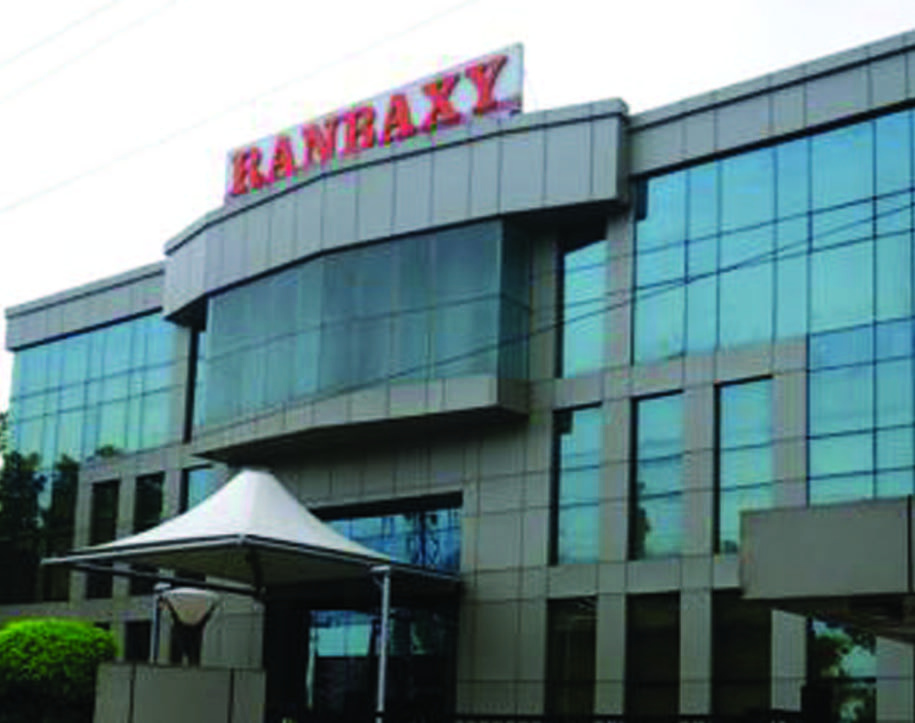
    NEW DELHI (TIP): Drug maker Ranbaxy Laboratories has entered into a licensing agreement with Epirus Switzerland GmbH, the Swiss arm of Boston-based Epirus Biopharmaceuticals Inc, for introducing a biosimilar version (BOW015) of infliximab, a drug currently sold by Johnson & Johnson under brand Remicade for treatment of rheumatoid arthritis. According to the agreement, the Swiss firm will develop and supply the product, and upon regulatory approval, Ranbaxy will market the same in India and other emerging markets, the Indian drug maker said in a statement on Thursday. Currently, no biosimilar of Infliximab approved in India. Biosimilar is the generic version of a biotechnology-based product. According to experts, once Ranbaxy gets an approval and launches the product in India, the drug’s price is expected to come down significantly.

    The medicine, available in the form of injection, is priced at Rs 82,000 for a single course, sources said. “We are pleased to partner with Epirus for biosimilar infliximab. We will utilise our strong frontend capabilities in making this product available in India and other parts of the world,” said Sanjeev I Dani, executive vice-president and head (global strategy) at Ranbaxy. While there have been some domestic companies such as Biocon dedicated towards biotechnology products, recently even pharmaceutical companies such as Cipla, Ranbaxy and Lupin have turned their attention towards the segment. Recently, Biocon secured approval in India for the first biosimilar version of Roche’s Herceptin, the world’s best-selling breast cancer drug.

    The biotech company had also jointly developed the product with US-based generic drug maker Mylan Inc. Experts say some of the recent regulatory developments may have prompted the move. In mid- 2012, the Department of Biotechnology along with the Drugs Controller General of India framed the guidelines for biotech products to be developed and marketed in the country. The norms outline data requirements for pre-clinical and clinical trials and also talk about pre-marketing and post-marketing data. Before this, there was no separate set of guidelines for biosimilars in India, and such drugs were approved on the basis of general guidelines.

  • American Association of Cardiologists of Indian Origin Honors 4 at 2013 Fall Meeting

    American Association of Cardiologists of Indian Origin Honors 4 at 2013 Fall Meeting

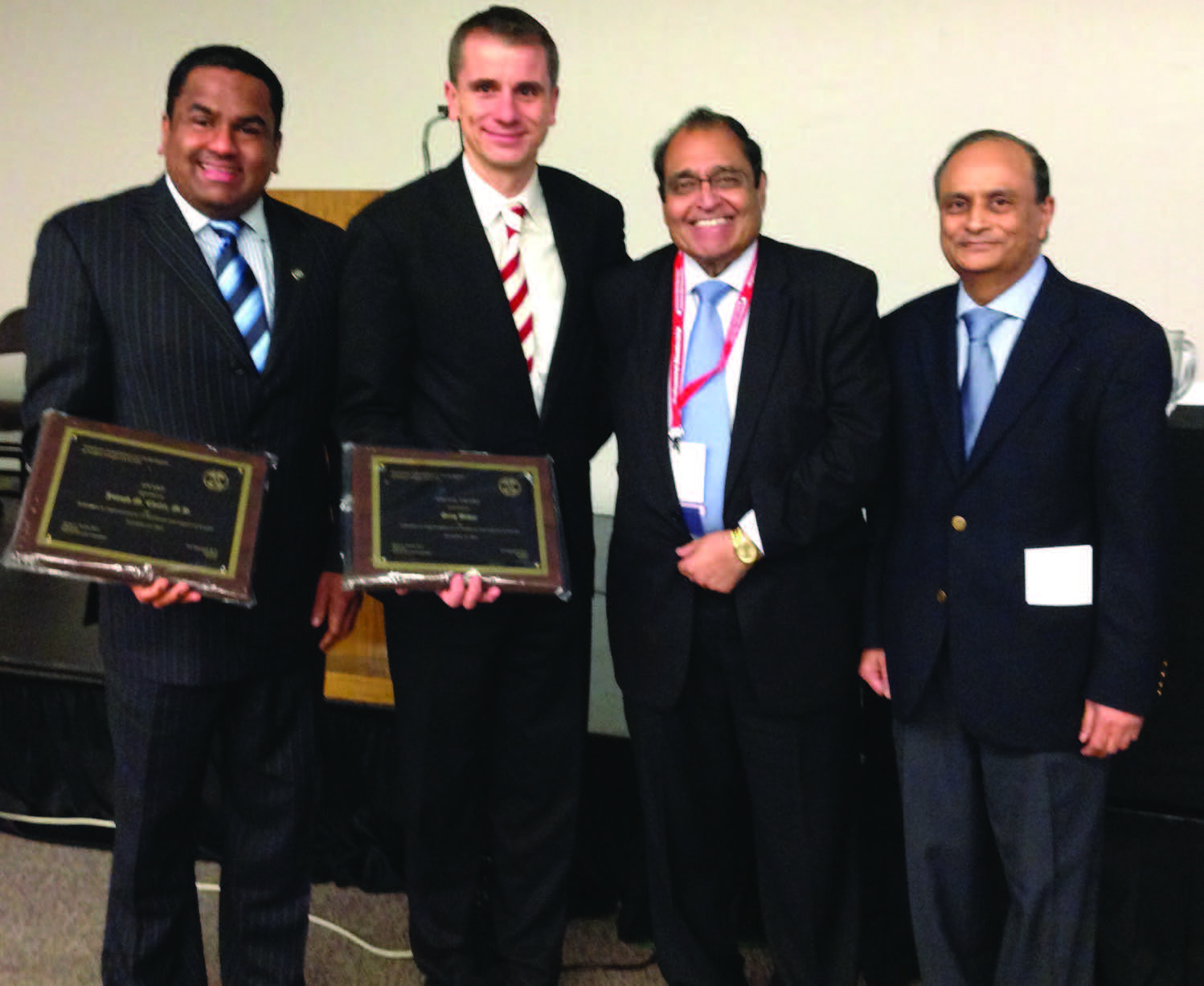
    DALLAS (TIP): American Association of Cardiologists of Indian Origin (AACIO), at its Fall meeting December 4, honored Greg Behar, President and CEO of Boehringer lngelheim Pharmaceuticals, Inc., Dr. Joseph M. Chalil, Associate Director, Health Science Executives, Boehringer Ingelheim USA, and Dr. Dinender K. Singla, a graduate of Post Graduate Institute of Medical Education and Research, Chandigarh, India for their achievements in the field of Cardiology.

    In addition, AACIO Young Investors Award was given to Dr. Ganesh Athappan and the Dr. Madhukar Deshmukh awards were given to Dr. Forum Kamdar and Dr. Manavjot Siddhu. AACIO awards the Dr. Krishna Ramaswamy and two Dr. Madhukar Deshmukh Young Investigator Awards at the AACIO dinner meetings held each year during the American College of Cardiology and the American Heart Association annual convention in March and November. The finalists presented their abstract at the meeting and each received $1000.00 award and a plaque The Fall 2013 annual event, organized by AACIO in coordination with Texas Indo- American Physicians Society (TIPS), North East Chapter and American Association of Physicians of Indian Origin was held at the Dallas Convention Center Theater Complex in Dallas, TX on November 17th, and was attended by over 200 physicians from around the nation.

    Dr. Navin Nanda, the Founding President and Chairman of the AACIO Board of Directors, while lauding honorees for their contributions and achievements, said, “AACIO is proud to honor some of the stalwarts of the pharmaceutical industry like Greg Behar and Chris Kaplan as well as some of the upcoming personalities like Jo Chalil. They have made significant contributions to medical therapeutics in the area of cardiology.” Dr. Nanda is a Distinguished Professor of Medicine and Cardiovascular Disease, Senior Scientist, Minority Health and Research Center and UAB Center for Aging, and UAB Comprehensive Cardiovascular Center, University of Alabama at Birmingham, Alabama. Dr. Ravi Jahagirdar, President Elect, who had represented AAPI at the event, congratulated AACIO for its consistent good work, both in the academic and the applied fields, and reaching out successfully to American Heart Association, and working in tandem with them in many spheres.

    He had special praise for the three Scholarship Awards that are given out each year to young aspiring medical students for poster sessions and in investigative sectors. “We at the national AAPI are proud of these activities,” he said. Dr. Jahagirdar, who will assume charge as the president of the national AAPI in June next year, pledged AAPI’s continued support in the future. In his inaugural address, Dr. Kul Aggarwal, president of AACIO, and Professor of Clinical Medicine, University of Missouri and Chief, Cardiology Section, Harry S. Truman Veterans Hospital, Columbia, Missouri, stated that AACIO provides a central forum for physicians and scientists of Indian origin, living in the United States, who have interest in Cardiovascular Medicine. “Indian Cardiologists are playing an increasingly important role in the provision of Cardiovascular services and also as academic thought leaders in the United States. We are proud of our colleagues.

    AACIO is your organization and joining it adds strength to all of us,” he said. The American Association of Cardiologists of Indian Origin (aacio.org) was formed in 1986 and after crossing puberty, the organization has reached the excited stage of youth after nineteen years. A Symposium, which was part of the meeting was organized by Drs. Navin C. Nanda and Kul Aggarwal. In his insightful presentation on “Newer anticoagulants in the management of a trial fibrillation and stroke prevention” Dr. Sanjeev Saksena, Clinical Professor of Medicine, Rutgers-RWJ Medical School Medical Director, Piscataway, New Jersey, Electrophysiology Research Foundation, Warren, New Jersey & Editor-in- Chief, Journal of Interventional Cardiac Electrophysiology, provided an overview of modern trends. Dr. Amit Khera, Associate Professor, Director, Preventive Cardiology Program, Program Director, Cardiology Fellowship and Dallas Heart Ball Chair in Hypertension and Heart Disease, UT Southwestern Medical Center, Dallas Texas, addressed the audience on “Emerging therapies in dyslipidemia management, beyond statins.” Dr. Nanda educated the audience on “Choice of anti-platelet therapy in acute coronary syndromes.”

    With more than 15 years in the pharmaceutical industry, Greg’s experience includes leadership roles in marketing, sales, business operations and general management. Greg joined Boehringer lngelheim in 2009 as Corporate Vice President of the Cardiovascular and Metabolic Franchise. That same year he became Vice President, Corporate Division Prescription Medicine, leading 14 countries including Northern Europe, Canada and Australia. Prior to Boehringer lngelheim, Greg worked at Novartis Pharma AG in roles of increasing responsibility in Spain and at global headquarters in Switzerland. Another honoree, Dr. Singla has received numerous honors and awards, and has been invited to give talks throughout the world. He also served as a chair/co-chair for scientific meetings, and well published in various peer reviewed journals. He is funded by the National Institute of Health and the American Heart Association grant awards since 2004.

    He has served as an editorial board member for different journals, and is the current Academic Editor for Plos one and Associate Editor for Canadian Journal of Physiology and Pharmacology. Srinivas Reddy Gunukula serves on the Board of Directors of The Heart Hospital Baylor Plano and Director of Center for Advanced Cardiovascular Care at the Heart Hospital McKinnney Campus. He is well known among the Cardiology community in Dallas. Dr. Joseph M. Chalil is a Fellow of American College of Healthcare Executives and is Board Certified in Healthcare Management. He serves as Co-Chair, AAPI Industry Physician Committee and Scientific Advisor, AAPI Cardiovascular, Diabetes and Stroke Network. Dr. Chalil holds three US Patents involving usage of sensors inside Human Body in addition to other applications. His research background includes Clinical Trial Management in Cystic Fibrosis, Multiple Myeloma, and publications in American Journal of Respiratory and Critical Care Medicine. The Asian American Business Development Center, NY has awarded Dr. Chalil the 2013 Outstanding 50 Asian Americans in Business Award. He is a Visiting Professor at various Universities and serves on various company Boards. He is an expert in US Healthcare policy and a strong advocate for patient centered care.

  • Lakshmi Mittal’s London home street among world’s most expensive areasa

    Lakshmi Mittal’s London home street among world’s most expensive areasa

    LONDON (TIP): London’s leafy Kensington Palace Gardens – home to Indian steel tycoon Lakshmi Mittal has been found to be the world’s second-most-expensive street. Mittal owns house number 9a and 18-19 on this treelined street. He has however put his neo-Georgian mansion on sale. The selling price for the 14,736 square feet property (9a) has been earmarked at just £110 million- seven million pounds below what Mittal had bought it in 2008. The 12-bedroom palatial home was the most expensive in Britain when he had bought it for £117 million. It was bought for Mittal’s son Aditya from Israeli- American financier Noam Gottesman.

    Realtors say properties here change hands for as much as £122 million on an average. The road is also home to Formula 1 chief Bernie Ecclestone’s daughter Tamara, French, Russian and Japanese embassies and some of the world’s most famous billionaires including Roman Abramovich. At an average price per square metre being as high as $107,000 or £69,900, (Rs 69 lakhs) the avenue whose latest tenant is the future kings of England – the Duke of Cambridge prince William and his toddler son prince George is second only to The Peak in Hong Kong. With its panoramic views over Hong Kong Island and Victoria Harbour, the prestigious Pollock’s Path has been found to be the world’s most-expensive street priced at $120,000 per square metre.

    According to the recently released Wealth-X and UBS Billionaire Census 2013, the total real-estate holdings of the world’s billionaires are estimated at $169 billion, which equates to an average of $78 million per billionaire. Billionaires own an average of four homes, many of which are based in trophy cities such as London, New York and Paris.

    Monaco’s Avenue Princesse Grace – home to Roger Moore, Lewis Hamilton and Helena Christensen is the third most expensive street followed by France’s Boulevard du General de Gaulle with an average price per square metre being $79,000. It is home to Brad Pitt and Angelina Jolie, Paul Allen and Charlie Chaplin. Singapore’s Paterson Hill is the fifth most expensive road followed by Chemin de Ruth in Geneva. Located in the heart of Switzerland’s Cologny, Chemin de Ruth is Switzerland’s most-expensive street.

    Romazzino Hill in Sardinia is the 7th most expensive street while property prices at Ostozhenka in Moscow hover around $29,000 per square metre. The world’s most famous Fifth Avenue in New York is the 9th most expensive street in the world. Incase you want to buy a property here, you would have to shell out $28,000 per square metre. New York’s rich and famous have flocked to Fifth Avenue since the 1900s.

    The street is home to the most iconic landmark buildings and shopping centres in the US, including the Empire State Building, the Rockefeller Center and Saks. Property agents are currently listing a six-bedroom fifth-floor apartment at 995 Fifth Avenue for $29.9 million. The final entry at the top 10 most expensive streets list is Avenue Montaigne from Paris.

  • World’s 6th largest number of billionaires in India

    World’s 6th largest number of billionaires in India

    NEW DELHI (TIP): Indian billionaires, the sixth largest group in the rich world, have thrown up an interesting trend found nowhere else in the world — holding on to one’s roots. Despite popular notions of billionaires being jet-setting, cosmopolitan individuals, most Indian billionaires remain where they were raised. The World Billionaire Census 2013 released on Wednesday shows that 95% of Indian billionaires who currently have their primary business in India, also grew up there. The trend globally is very different. Around 23% or just 1 in 4 billionaires globally made their home city the city of their primary business. Only 39% of all billionaires globally have the same home state as the state of their primary business Billionaire hotspots such as Singapore, Switzerland and Hong Kong have emerged as favoured destinations for the ultra-rich. However, only 36, 34, and 25% of their billionaire populations respectively, grew up in these countries. Another significant finding is that not all these Indian billionaires have college degrees, let alone attending Ivy League for a degree in business management. Three of every 10 billionaires in India don’t even have a college degree.

    5.5% dip in India’s billionaire population
    India’s billionaire contingent (103- strong) is narrowly behind Russia (108). However India’s billionaire population has decreased by 5.5% and the total billionaire wealth has fallen by $10 billion since last year. Mumbai is among the top 5 billionaire cities in the world and the only Indian entry in the top 10 list and New York remains the business city of choice for the world’s billionaires. Asia takes eight out of the top 20 spots for billionaire cities, the most for any region in the world. Moscow accounts for more than two thirds of Russia’s billionaires. The total number of billionaires who are based in the top 20 cities is 661, representing 30% of the world’s billionaires. India is one of the few countries where finance, banking and investments are not the most significant industries. Instead, industrial conglomerates and pharmaceuticals are the first and second most significant industries for Indian billionaires. Only 3% of Indian billionaires are female, the joint lowest of any focus country. The majority of Indian billionaires are college-educated with 72% possessing at least a bachelor’s degree (Switzerland and the US are the only other two focus countries that have a higher proportion of universityeducated billionaires). The Wealth-X and UBS Billionaire Census 2013 showed that Asia is where the largest number of newly-minted billionaires is based — since July 2012, 18 new billionaires came up in Asia with a total wealth of $136 billion. Asia was followed by North America (11).

    Five of the top 10 countries with the highest percentage of self-made billionaires are from Asia. Every region increased in wealth terms, with Asia the fastest growing at 12.9%. The global billionaire population reached a record 2,170 individuals in 2013 and total billionaire wealth in Asia surged nearly 13% making it the fastestgrowing region. At current growth rates, the census, the first-ever comprehensive global study on this ultra-wealth tier, forecasts that Asia will catch up with North America in five years. Asia also saw the highest percentage rise in billionaire population (3.7% from 2012) and total wealth (13%) in 2013, suggesting that it is driving the tectonic shifts in wealth globally. The report also shows that 810 individuals became billionaires since the 2009 global financial crisis. The billionaire population’s combined net worth more than doubled from $3.1 trillion in 2009 to $6.5 trillion in 2013 — enough to fund the United States’s budget deficit until 2024, and greater than the GDP of every country except the US and China. Wealth-X forecasts that the global billionaire population will increase by 1,700 individuals to nearly 3,900 by the year 2020. Europe is home to the most billionaires (766 individuals). However, North America has the most billionaire wealth ($2,158 billion). Around 60% of billionaires are selfmade, while 40% inherited their wealth or grew their fortunes from inheritance. Only 17% of female billionaires are selfmade, while 71% gained their fortunes through inheritance.

  • India gets 101st rank on global gender gap index

    India gets 101st rank on global gender gap index

    NEW DELHI/GENEVA (TIP): Indicating a poor state of affairs on gender parity front, India was today ranked at a low 101st position on a global Gender Gap Index despite an improvement by four places since last year. The index, compiled by Geneva-based World Economic Forum (WEF), has ranked 136 countries on how well resources and opportunities are divided between men and women in four broad areas of economy, education, politics, education and health. While India has been ranked very high at 9th place globally for political empowerment, it has got second-lowest position (135th) for health and survival. Its rankings for economic participation and opportunity are also low at 124th and for educational attainment at 120th. The high rank for political empowerment is mostly because of India getting the top-most score in terms of number of years with a female head of state (President), as its political scores is not very good for factors like number of women in Parliament and women in ministerial positions. While India has moved up four positions from its 105th position in 2012, it still remains lowest-ranked among the five BRICS nations.

    Top-four positions on the global have been retained by Iceland, Finland, Norway and Sweden. Philippines has moved up to 5th place, while Ireland has slipped one position to sixth rank. They are followed by New Zealand, Denmark, Switzerland and Nicaragua in the top ten. Other major countries on the list include Germany at 14th, South Africa at 17th, UK at 23rd, Russia at 61st, Brazil at 62nd and China at 69th. Those ranked lowest include Pakistan at 135th and Yemen at 136th. The countries that are ranked below India also include Japan (105th), UAE (109th), Republic of Korea (111th), Bahrain (112th) and Qatar (115th). About India, WEF said that India continues to struggle to demonstrate solid progress towards gender parity. Its economic participation and opportunity score has actually gone down in the past twelve months, although it has done well on political empowerment front. “This is largely down to the number of years it has had a female head of state and for the other two indicators — women in parliament and women in ministerial positions — it ranks 106 and 100 respectively,” it said. While no country has reached parity in terms of years with a female head of state, India has managed to get top rank for this indicator, whereas 65 per cent of countries have never had a female head of state over the past 50 years.

    India’s ninth position on political empowerment front is also its best-ever rank for this sub-index, where it was ranked 17th in 2012 and its lowest score was 25th in 2008. The overall ranking of 101st is also its highest in the past seven years. India had ranked better at 98th position in the WEF’s inaugural Gender Gap Index in 2006. WEF said that increased political participation has helped narrow the global gender gap across the world. A total of 86 countries have improved their rankings since last year, while Iceland has maintained narrowest gender gap for fifth year running. Globally, progress is being made in narrowing the gender gap for economic equality, but women’s presence is economic leadership positions is still limited in both developing and developed countries alike. “Countries will need to start thinking of human capital very differently ? including how they integrate women into leadership roles. This shift in mindset and practice is not a goal for the future, it is an imperative today,” WEF founder and executive chairman Klaus Schwab said. “Both within countries and between countries are two distinct tracks to economic gender equality, with education serving as the accelerator,” said Saadia Zahidi, co-author of the Report and Head of the Women Leaders and Gender Parity Programme at WEF. “For countries that provide this basic investment, women’s integration in the workforce is the next frontier of change. For those that have not invested in women’s education, addressing this obstacle is critical to women’s lives as well as the strength of economies,” Zahidi added.

  • ARMSTRONG RETURNS OLYMPIC BRONZE MEDAL

    ARMSTRONG RETURNS OLYMPIC BRONZE MEDAL

    AUSTIN (TIP): Disgraced cyclist Lance Armstrong has handed over his 2000 Olympic bronze medal to US Olympic officials, nine months after the International Olympic Committee demanded it back, he said on September 12. “The 2000 Bronze is back in possession of @usolympics and will be in Switzerland asap to @Olympics,” Armstrong said on Twitter, posting a photo of the medal. USOC spokesman Patrick Sandusky confirmed on Twitter that the American body had the medal. “I can confirm that The United States Olympic Committee has received the bronze medal awarded to Lance Armstrong at the 2000 Olympic Games in Sydney,” Sandusky said. “The International Olympic Committee and the USOC had previously requested that the medal be returned.

    The USOC has made arrangements to return the medal to the IOC.” Thomas Bach, who was elected president of the IOC in Buenos Aires on Tuesday, had revealed on Monday in his role as head of the IOC judicial commission that Armstrong had yet to return the medal. The IOC had written to Armstrong — who was third in the time-trial event in Sydney — in January to ask him for it. The IOC had to wait to punish the American until world cycling’s governing body, the International Cycling Union (UCI), sanctioned Armstrong, which it did on December 6 last year. It then had a further three-week wait in which the Texan had recourse to appeal his lifetime doping ban at the Court of Arbitration for Sport (CAS). Armstrong was stripped of his seven Tour de France titles and banned from the sport for life in October, 2012, after the US Anti-Doping Agency (USADA) produced evidence of widespread doping by him and his former team-mates.

  • OBAMA AT 50TH ANNIVERSARY EMBODIES KING’S DREAM

    OBAMA AT 50TH ANNIVERSARY EMBODIES KING’S DREAM

    WASHINGTON (TIP): President Barack Obama was set to lead civil rights pioneers on Aug 28 in a ceremony for the 50th anniversary of the March on Washington, where Dr Martin Luther King’s “I Have a Dream” speech roused the 250,000 people who rallied there decades ago for racial equality. Large crowds gathered at the Lincoln Memorial, where the first black US president was expected to speak just after 1900 GMT _ the time when King delivered his spellbinding speech early in the turbulent 1960s.

    The landmark Civil Rights Act and Voting Rights Act to outlaw discrimination were signed into law in the next two years. Obama has said King is one of two people he admires “more than anybody in American history.” The other is Abraham Lincoln. Obama will be joined by former Presidents Jimmy Carter and Bill Clinton, with thousands of people expected to attend. Obama will offer his personal reflections on the civil rights movement, King’s speech, the progress achieved in the past 50 years and the challenges that demand attention from the next generation. International commemorations will be held at London’s Trafalgar Square, as well as in the nations of Japan, Switzerland, Nepal and Liberia. London Mayor Boris Johnson has said King’s speech resonates around the world and continues to inspire people as one of the great pieces of oratory.

    On Aug. 28, 1963, as King was ending his speech, he quoted from the patriotic song, “My Country `tis of Thee” and urged his audience to “let freedom ring.” “When we allow freedom to ring _ when we let it ring from every city and every hamlet, from every state and every city, we will be able to speed up that day when all of God’s children, black men and white men, Jews and Gentiles, Protestants and Catholics, will be able to join hands and sing in the words of the old Negro spiritual, `Free at last, free at last, great God almighty, we are free at last,” King said. The civil rights leader was assassinated five years later. The Rev Bernice King opened the celebration Wednesday at an interfaith service.

    King said that her father is often remembered as a freedom fighter for equal rights and human rights, but he was most importantly a man of faith. Obama considers the 1963 march part of his generation’s “formative memory.” A halfcentury after the march, he said, is a good time to reflect on how far the country has come and how far it still has to go, particularly after the recent acquittal of George Zimmerman in the fatal shooting of Trayvon Martin, an unarmed black teenager. Race isn’t a subject Obama likes to talk about in public, but the Martin case is one time he has done so. In an interview Tuesday on Tom Joyner’s radio show, Obama said he imagines that King “would be amazed in many ways about the progress that we’ve made.” He listed advances such as equal rights before the law, an accessible judicial system, thousands of African-American elected officials, African- American CEOs and the doors that the civil rights movement opened for Latinos, women and gays. “I think he would say it was a glorious thing,” he said.

    But Obama noted that King’s speech was also about jobs and justice. “When it comes to the economy, when it comes to inequality, when it comes to wealth, when it comes to the challenges that inner cities experience, he would say that we have not made as much progress as the civil and social progress that we’ve made, and that it’s not enough just to have a black president, it’s not enough just to have a black syndicated radio show host,” Obama said.

  • PRIVATE EQUITY FLOWS INTO WATER SECTOR

    PRIVATE EQUITY FLOWS INTO WATER SECTOR

    MUMBAI (TIP): Private equity funds are eyeing investments in the country’s water sector. Singaporebased CLSA Capital Partners invested $9.2 million (Rs 55 crore) in Gurgaonbased Luminous Water Technologies in end-July, through its two funds. Last year, the alternative asset management firm had invested $15 million in Delhi-based Earth Water Group,

    which is into water and wastewater treatment projects. Similarly, Capvent AG, a Switzerland-based private equity (PE) fund, picked up 51 per cent stake for Rs 12 crore in Morf India Ltd, a Chennai-based water engineering company. Earlier this month, Organica Water, which is into treatment and recycling of wastewater, completed a Series B round of financing.

    Led by the International Finance Corporation and WLR China Energy Infrastructure Fund, existing investors RNK Capital and Gamma Capital Partners also participated in the funding. The Hungarian firm has offices in New Delhi, and has signed contracts with several Indian water companies for design and equipment supply of water treatment plants. Currently pegged at Rs 3,500 crore, analysts estimate by 2015, private equity investment in the water sector is set to touch Rs 7,500 crore.

    A report by TechSci Research has noted that India’s water purifiers market is expected to grow at a compounded annual growth rate of 24 per cent between 2013-18. Approximately 70 per cent of the country’s water purifier market is dominated by organised players such as Eureka Forbes, Hindustan Unilever, Tata Chemicals and Kent. With the level of water contamination considerably higher in Rajasthan, Andhra Pradesh, and Odisha, the report said the demand for water purifiers was bound to increase there. Kent, the largest water purifier manufacturer in the Reverse Osmosis (RO) segment, is not looking at raising funds through the PE route, for now. However, Managing Director Mahesh Gupta said that of late, there has been a lot of activity in the water space, with many new players entering the segment.

    Hot property

    “We have been approached by several players (for a stake), but we are not looking at it right now. But I am not totally against the idea too,” Gupta told Business Line, adding that some 30-40 companies in Ahmedabad and Delhi dealing in water, were indeed looking for funds.

    Gupta said PEs would not provide any technical expertise to these companies, but help them expand faster. An IDFC official told Business Line that foreign PE consider India’s water sector as “hot property” and many Indian water and wastewater companies have raised funds to fuel their expansion activities.

  • MANIPUR – A Jewel Of India

    MANIPUR – A Jewel Of India

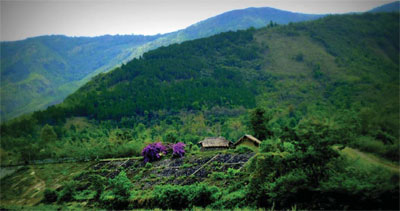
    Manipur, a little Shangarila located in North-East India, is a Jewel of India. This little corner is a paradise on Earth where Mother Nature has been extra generous in her bounty. Least touched and least discovered Manipur promises to be the great tourist discovery of the 21st century. An oval shaped valley surrounded by blue green hills, rich in art and tradition has inspired description such as the Switzerland of the East? with its cascading rapids, tripling rivers, varieties of flowers, exotic blooms and lakes.

    The people of Manipur include Meitei, Nagas, Kuki-Chin-Mizo and Gorkhas groups and Muslims and other colourful communities which have lived in complete harmony for centuries. These are the people whose folklore, myths and legends, dances, indigenous games and martial arts, exotic handlooms and handicrafts are invested with the mystique of nature and an indefatigable Joie de vivre.

    Shaheed Minar
    The indomitable spirit of the patriotic Meitei and tribal martyrs, who sacrificed their lives while fighting the British in 1891, is commemorated by this tall Minar at Bir Tikendrajit Park in the heart of Imphal city.

    Khwairamband Bazar/ Ima Market
    A unique all women’s market, having 3,000 or more “Imas” or mothers who run the stalls. It is splited into two sections on either side of a road. Vegetables, fruits, fishes and household groceries are sold on one side and exquisite handlooms and household tools on the other.

    Kangla
    The centre of Manipur’s power till 1891, the historical embodiment of Manipur Rulers and the people of Manipur, Kangla have a significant place in the heart and mind of the people of Manipur Govindajee temple, outer and inner moat and other relics are perfect reflections of the rich art and culture of Manipur and her civilization.

    Shree Shree Govindajee Temple
    A historic Vaishnavite centre, adjoining Manipur’s former Maharajas’ Royal Palace, the Govindajee temple is one of the most attractive sights for the tourists. Twin domes, a paved courtyard, and a large raised congregation hall form a perfect backdrop for priests who descend the steps, to accept offerings from devotees in the courtyard. The shrines of Lord Krishna and Balaram and Jagannath flank the two sides of the presiding deity. Early hours Prayer (Aarti) is a must for devoted followers, exudingspiritual fervour and ecstasy.

    Manipur State Museum
    This interesting Museum near the Polo Ground has a fairly good collection and display of Manipur’s tribal heritage and a collection of portraits of Manipur’s former rulers. Particularly interesting items are costumes, arms & ammunitions, relics and historical documents.

    War Cemetery
    Commemorating the memories of the British and Indian soldiers who died during the World War II, these War Cemeteries are managed by the Commonwealth War Graves Commission. Serene are well maintained, the War Cemetery carries little stone markers and bronze plaques recording the sacrifice of those gallant soldiers.

    Manipur Zoological Garden
    Manipur Zoological Garden at Iroisemba is only 6 kms. on the Imphal-Kangchup Road at the foot of the pine growing hillocks . Here apart from various endangered species, tourists can have an opportunity to see the graceful brow antlered deer (Sangai), one of the rarest & endangered species in the world, in sylvan surroundings.

    Loukoi Pat
    This tiny lake located near the Tiddim Road on N.H. 150 at Bishnupur is a retreat for visitors from within and outside the state. Boating facilities and the scenic beauty of the place is able to mesmerise the visitors.

    Khonghampat Orchidarium
    10 kms. from Imphal on National Highway No. 39 is the Central Orchidarium which covers 200 acres and houses over 110 rare varieties of orchids, which include dozens of endemic species. The peak blooming season is March- April.

    Bishnupur
    27 kms. from Imphal on the Tiddim Road, is a picturesque town situated at the foot hills that rolls down to the valley. The 15th century Vishnu Temple built of peculiarly small bricks supposedly of Chinese influence during the reign of King Kiyamba is of a historical importance. Bishnupur is also famous for its chiselled stoneware.

    Red Hill (Lokpaching)
    Red Hill is a hillock about 16 kms. from Imphal on Tiddim Road (NH – 150). It is a thrilling spot where the British and the Japanese fought a fierce battle during World War II. War Veterans had constructed “India Peace Memorial” a monument in memory of Japanese soldiers who died in the battle. It is a place of pilgrimage for Japanese tourists.

    Sadu Chiru Waterfall
    About 20 Kms. from Imphal beside the Tiddim Road (NH150) is a picturesque site famous for its perennial Water Fall in a scenic foot hill. There are three waterfall spots. This is a newly open tourist spot.

    Kangchup
    16 kms. from Imphal towards west, is a health resort on the hills over-looking the Manipur valley. The scenery is picturesque and worth seeing. With the construction of Singda Dam here, the place has become one of the important picnic spots.

    Loktak Lake
    48 Kms. from Imphal, is the largest fresh water lake in the North East Region. From the Tourist Bunglow set atop Sendra Island, visitors get a bird’s eye view of life on the Lake small islands that are actually floating weeds on which the Lake-dwellers live in the backdrop of the shimmering blue water of the Lake, labyrinthine boat routes and colourful water plants. The Sendra Tourist Home with an attached Cafeteria is an ideal tourist spot. Boating and other water sports are organised here in Takmu Water Sports Complex.

    Moirang
    45 kms. from Imphal, and situated near the Loktak lake, this town is one of the main centres of early Meitei folk culture with the ancient temple of the pre-hindu deity, Lord Thangjing, situated here. In the month of May, men and women, dressed in colourful traditional costumes sing and dance in honour of the Lord at the Moirang “Lai Haraoba” which is a ritual dance festival held every year.

    This town also has a special place in the history of the Indian Freedom struggle. It was at Moirang that the flag of the Indian National Army was first unfurled on April 14, 1944. The INA Museum containing letters, photographs, badges of ranks and other memorabilia reminds the visitors of the noble sacrifices made by the INA under the charismatic leadership of Netaji Subhas Chandra Bose.

    Keibul Lamjao National Park
    The only floating National Park in the world, on the Loktak Lake is the last natural habitat of the Sangai (Rucervus eldii eldii) the dancing deer of Manipur. A glimpse of the deer in this unique wetland ecosystem is a must for any wildlife enthusiast. Other wildlife to mention a few are: Hog deer, Otter and a host of water fowls and migratory birds can also be sighted during November to March. The forest Department of Manipur maintains watch towers and two rest houses within the park.

    Khongjom War Memorial
    Khongjom War Memorial, 36 kms. from Imphal on the Indo-Myanmar road is a major historical place. It was here that Major General Paona Brajabashi, one of the great warriors of Manipur proved his valor against the superior might of the invading British Army in 1891. The hillock at the foot of which he laid down his life in defence of his motherland, is reminiscent of the past heroic deeds of Manipuri warriors. A war memorial has been constructed on the top of Kheba hill; and Khongjom day is celebrated every year on 23rd April.

  • Panchgani The Switzerland Of India

    Panchgani The Switzerland Of India

    Panchgani, literally mean the place of five hills, is a renowned hill station in Maharashtra. This majestic hill resort is located at 1,334 mt altitude. Panchgani is a vibrant scenic destination and its beauty multiplies with the backdrop of hilly terrains at one side and coastal plains at the other side. This place had been used by the British officials as their summer resort. The Panchgani hill station is known for its unpolluted air and it is believed that the oxygen content in atmosphere is more here compared to other regions. Due to this many people select this for convalescing from diseases. The ambience is very cool and calm and the exquisite environment is a perfect background for rejuvenation.

    Panchgani is spotted with many attractive colonial period cottages with all luxurious facilities for the tourists to spend their vacation in perfect seclusion and enjoyment. This place is bestowed with buildings of British architecture, Parsi houses and the boarding schools. The town, a natural relaxation spot, adds its comforts with the soothing effect of cool breeze rustling through the thick woody regions. Panchgani has many western plant species including poinsettia and silver oaks, which are originally planted by British people. Fresh air, unspoiled natural beauty, breathtaking panoramic views and lush greeneries make this place one of the most sought hill station in Maharashtra. This place is renowned for international quality education and there are at least three dozen schools offering high standard facilities for the children. The Mahabaleshwar Hill Station and Venna Lake are some attractions nearby.

    ATTRACTIONS
    Devil’s Kitchen

    The Devil’s Kitchen is situated to the south of Table Land with a bit of mythological interest attached to it. It is believed that the Pandavas stayed here for a while and used this place to cook their food. There are some legends regarding this, though most of them appear to be mere tall tales. Some people claim that Pandavgad Caves (near Wai) are also built by them and bear their name.

    Rajapuri Caves
    Rajapuri Caves is situated at a distance of 7 km from Panchgani. The cave is a virtual delight for adventure lovers and is famous for the beautiful Lord Karthikeya Temple. The temple itself is constructed out of the sand taken from the caves. The journeys to the Rajapuri caves from Panchgani through serene, greenish villages will rejuvenate the mind of the visitors. The several water kunds in the premises resemble the Tiveni Sangam Temple at Prayag. It is said that the water kunds have curative powers.

    Table Land
    Privilege of being Asia s second longest mountain Plateau, the Table Land has a mythological story attached to it. It is believed that the Pandavas halted here and used it as a cooking place for themselves.

    Lord Karthikeya Temple
    The Lord Karthikeya temple is located at Rajapuri Caves in Panchgani. The temple is dedicated to Lord Karthikeya (Lord Muruga, Son of Lord Shiva). The temple premise is a calm and cool place and is best suited for people looking for serene environment for relaxation and meditation. The spiritual atmosphere adds impetus to relaxing moments. Rajapuri caves got the religious importance due to this famous temple. Thaipooyam festival during January- February month is celebrated here with lots of enthusiasm. Thousands of devotees visit this temple during this period.

    Bhilar Water Falls
    The Bhilar Waterfalls are named after the village where it is located. It descends from a height of 4500 feet with mist. During the monsoons, you can enjoy the full force of the water gushing down.

    Dhom Dam
    Dhom Dam near Panchgani is an amazing tourist spot for water sport lovers. The elegant Krishna River along with its green environs augments the pleasure of adventure water sports. A beautiful boating spot where one can enjoy with Scooter and Speed boats. Sporting in Krishna river stream with the beautiful natural surrounding is a wonderful experience in itself.

    Sherbaug
    Sherbaug is a panoramic destination in Panchgani with well laid out gardens, mini zoo that showcases small animals for children s amusement. Children s Park and a landscaped Rose Garden add elegance to the place. One can also visit the Parsi Point and Table Land that are close by.

    View Points At Panchgani
    Panchgani has quite a few renowned view spots that offer panoramic views of the picturesque lush green mountains and valley.

    How To Reach
    By Air- Pune is the nearest airport which is 100 km away from Panchgani. Pune is connected to Mumbai, Goa and Bangalore by air. Tourist taxis cost about Rs. 2000 from Pune to Panchgani. Railway route- The nearest railway station is Wathar, 45 km from Panchgani on the Miraj-Kolhapur section of South Central Railway. However, convenient railhead is Pune from where you hire tourist taxis and buses to reach Panchgani. Bus route- Panchgani is well connected by state road transport public bus services. Regular bus services are available from Pune to Panchgani. Super fast and Deluxe A/C buses are also available on this route. Road route- Panchgani is very well connected with Pune and Mumbai. NH4 and NH17 are popular routes to reach the place.

  • Indian American Entrepreneur To Pay $2.5 Million Fine For Concealed Income

    Indian American Entrepreneur To Pay $2.5 Million Fine For Concealed Income

    WATCHUNG, NJ (TIP): Sanjay Sethi, 52, of Watchung in Somerset County, New Jersey and who owns SanVision Technology Inc., Jan. 7 admitted to using corporations in the Cayman Islands and the British Virgin Islands to conceal hundreds of thousands of dollars he held in secret bank accounts in India and Switzerland, Attorney Paul J. Fishman and Assistant Attorney General Kathryn Keneally of the Justice Department’s Tax Division announced. Sethi admitted to charges that he concealed from U.S. tax authorities nearly $7.9 million that he held in secret bank accounts in India and Switzerland, and agreed to pay $2.4 million penalty for not disclosing them. Sethi pleaded guilty before U.S. District Judge Jose L. Linares in Newark federal court to the charges of conspiracy to conceal assets in undeclared bank accounts from the IRS.

    Sethi also failed to file a Report of Foreign Bank or Financial Accounts with respect to his foreign accounts, according to the Justice Department. U.S. citizens who have an interest in, or signature or other authority over, a financial account in a foreign country with assets in excess of $10,000 are required to disclose the existence of such account on Schedule B, Part III, of their individual income tax returns. They must file an FBAR with the U.S. Treasury disclosing any financial account in a foreign country with assets in excess of $10,000 in which they have a financial interest, or over which they have signature or other authority.

    “Our criminal laws do not tolerate those who use foreign accounts to conceal their assets,” U.S. Attorney Fishman said. “Cheating the government out of tax dollars hurts all honest taxpayers.” “This guilty plea serves as another warning to those who still think they can hide their assets offshore through the use of shell companies, nominees, and foreign bank accounts,” said Keneally. “On behalf of all honest taxpayers, we will continue to seek out and prosecute those who engage in these criminal activities.” According to documents filed in this case and statements made in court, Sethi schemed with bankers from the United States, United Kingdom, and Switzerland to conceal his assets and income derived from those assets. He used nominee and shell companies formed in tax-haven jurisdictions to conceal his ownership and control of assets from the IRS.

    Sethi and his co-conspirators used bank accounts in the name of shell companies and nominees, and filed false and fraudulent tax returns with the IRS in order to conceal his ownership of the foreign accounts. From 2001 to 2009, Sethi met with his co-conspirators and opened numerous undeclared bank accounts in India and Switzerland, and used shell companies to transfer millions of dollars to undeclared offshore accounts. The total tax loss to the government was between $80,000 and $200,000, said the Department of Justice press release. The conspiracy to conceal assets count to which Sethi pleaded guilty is punishable by a maximum potential sentence of five years in prison and a fine of $250,000, or twice the gain from the offense, together with the costs of prosecution.

    Sethi has agreed to file true and accurate tax returns and to pay to the IRS all taxes and penalties owed, in addition to the $2.4 million penalty imposed for his failure to disclose the foreign accounts. Sentencing is scheduled for April 18, 2013. Sethi is not the first Indian American to face charges of hiding income and assets. In April 2011, New Jersey businessman Vaibhav Dahake pleaded guilty to hiding his Indian accounts from the IRS. And last year, federal jurors convicted a Milwaukee neurosurgeon, Arvind Ahuja, of filing a false tax return and failing to file an FBAR related to his accounts in India. Also last year, Ashvin Desai, the owner of a medical device company, was indicted in federal court in San Jose, Calif., on charges that he filed a false tax return and failed to file FBARs related to accounts in India.

  • UBS to Pay $1.5 Billion to Settle Libor Charges

    UBS to Pay $1.5 Billion to Settle Libor Charges

    NEW YORK (TIP): UBS AG became the second bank to settle accusations that it tried to rig benchmark interest rates, agreeing to pay roughly $1.5 billion in a deal with authorities in multiple countries that points to a broader manipulation scandal than previously known. As part of the deal, UBS acknowledged that dozens of its employees were involved in widespread efforts to manipulate the London interbank offered rate, or Libor, as well as other benchmark rates, which together serve as the basis for interest rates on hundreds of trillions of dollars of financial contracts around the world. UBS’s unit in Japan, where much of the attempted manipulation took place, pleaded guilty to one U.S. count of fraud.

    Authorities on Wednesday, December 19 painted a picture of “routine and widespread” attempts by UBS employees to rig Libor and the euro interbank offered rate, or Euribor. The U.K. Financial Services Authority said it had identified more than 2,000 such attempts between 2005 and 2010 with the participation or awareness of at least 45 UBS traders and executives. Regulators on Wednesday released a trove of internal UBS emails and other communications-many of them colorful and expletive-laden-in which bank traders, sometimes with the knowledge of their managers, sought to manipulate the rates in order to boost their trading profits or mask the Swiss bank’s mounting financial problems in 2008. Adding to the severity of the allegations, British and Swiss authorities said UBS engaged in collusive efforts with other financial institutions to rig the benchmarks.

    Among other things, the Swiss bank made “corrupt brokerage payments” to so-called inter-dealer brokers to reward them for helping to coordinate attempted manipulation among multiple banks, the FSA said. In September 2008, for example, an unidentified UBS trader told a broker that he wanted to “do one humongous deal with you,” according to the FSA. “I’ll pay you, you know, $50,000, $100,000…whatever you want…. I’m a man of my word.” UBS traders and outside brokers referred to each other by nicknames such as “Superman,” “Captain Caos” [sic] and “the three muscateers” [sic], the FSA said. Regulators said the extent of the collaboration between UBS employees and the outside brokers suggests that banks might have been successful in their attempts to manipulate Libor-as opposed to merely trying unsuccessfully to fudge the rate. UBS acknowledged the regulators’ findings.

    “We are disappointed to discover what happened,” UBS Chief Executive Sergio Ermotti said in an interview. “We are taking responsibility for what happened.” In the U.S., law-enforcement authorities on Wednesday are expected to arrest people with ties to UBS, likely representing the first time that anyone faces criminal charges stemming from the long-running rate-fixing investigation, according to people familiar with the case. The UBS settlement-which UBS reached with the U.S. Justice Department and Commodity Futures Trading Commission, the U.K. FSA and the Swiss Financial Market Supervisory Authority-is likely to be followed by a string of deals between big banks and regulators in coming months. Until Wednesday, only one other bank, Barclays BARC.LN +2.05% PLC, had settled charges that it tried to rig benchmark rates. Barclays last June paid roughly $450 million to resolve the investigations.

    An ensuing public furor over the scale of the wrongdoing and the involvement of senior bank executives, both of which Barclays acknowledged, led to the abrupt resignations of Barclays’s chief executive and his top deputy, as well as the bank’s chairman. UBS is paying a fine that is more than triple what Barclays paid, despite previously having reached partial immunity agreements with authorities in the U.S. and elsewhere. The penalty’s size partly reflects authorities’ conviction that the Swiss bank was near the center of the scandal, with employees helping to coordinate attempted rate-manipulation at other banks, according to people briefed on the investigation. Among other things, UBS was accused on Wednesday of trying to manipulate the Japanese yen iteration of Libor.

    As part of the settlements, UBS acknowledged on Wednesday that its employees repeatedly tried to manipulate multiple versions of Libor and Euribor. The FSA described the culture of rate manipulation as “pervasive,” noting that “the manipulation was conducted openly and was considered to be a normal and acceptable business practice by a large pool of individuals.” As a result of the fine, UBS said on Wednesday it expects to report a loss for the fourth quarter of up to 2.5 billion Swiss francs ($2.3 billion). Mr. Ermotti said that 36 people left the bank, most of them earlier this year, as the bank cleaned house after completing its internal investigation into the rate-rigging allegations. He said he doesn’t expect additional departures because nobody connected to the scandal remains at UBS. Mr. Ermotti added that he hopes the settlement closes a difficult chapter in the Swiss bank’s history.

    In the past 15 months, UBS has been battered by a $2.3 billion rogue-trading scandal, has been forced to exit large portions of its investment banking business, and now is caught up in the rate-rigging scandal. “It allows us to move forward,” he said. “I’m confident that we have identified over the last years the issues we need to address.” The guilty plea by UBS’s Japanese subsidiary is a milestone in authorities’ efforts to crack down on banks for improper behavior during the financial crisis. It is extremely rare for authorities to pursue criminal sanctions against large companies. Indictments are often regarded as a death sentence for institutions, especially those like banks that rely on market confidence and a steady stream of funding from potentially skittish investors. Ultimately, authorities decided on a compromise approach by charging UBS’s Japanese unit but not the Zurich-based parent company.

    In a sign of what authorities view as UBS’s centrality, one of the bank’s former Tokyo-based traders, Thomas Hayes, was arrested last week by British fraud prosecutors as part of their investigation into rate-rigging, according to people familiar with the case. Mr. Hayes hasn’t been charged with a crime, but U.K. authorities are examining whether he played a role coordinating attempted manipulation among multiple different banks, these people said. Mr. Hayes, who also worked at Citigroup Inc., C +0.79% hasn’t been available for comment. The investigations over banks’ attempted rate-rigging kicked off in April 2008, after articles in The Wall Street Journal raised questions about the reliability of Libor.

    Since then, it has mushroomed into arguably the marquee financial scandal of recent times. The day that the Journal’s first story was published, a UBS manager-in a communication to a trader documented in the settlement-referred to a “great article in the WSJ today about the Libor problem.” Two hours later, the FSA said, the manager asked the trader to boost the bank’s Libor submissions in an apparent effort to rig the rate. Libor, Euribor and their brethren are calculated every weekday by panels of banks. Each bank estimates what it would cost to borrow from fellow banks. Those estimates are compiled into an average, stripping out the highest and lowest figures. The result underpins interest rates on everything from residential mortgages to corporate loans to complex derivatives. Banks tried to manipulate the benchmarks for at least two reasons, according to regulatory filings in several countries.

    Barclays, for example, at times understated its borrowing costs during the financial crisis to assuage concerns that higher costs were a sign of financial distress. Separately, traders at UBS and Barclays, and possibly other banks as well, sought to manipulate rates to increase profits on their portfolios of derivatives and other products whose values are tied to the benchmarks. In addition to Barclays and UBS, more than a dozen other banks remain under investigation by authorities in the U.S., U.K., Switzerland, the European Union, Japan, Canada and other countries. In addition to Libor and Euribor, the Tokyo interbank offered rate, known as Tibor, also faces scrutiny. Royal Bank of Scotland Group RBS.LN +2.41% PLC is likely next in line to settle the allegations, with a deal expected early in 2013, according to people familiar with that investigation.

  • Zardari graft cases: Pak SC approves Swiss draft letter

    Zardari graft cases: Pak SC approves Swiss draft letter

    ISLAMABAD (TIP): After weeks of wrangling, Pakistan Supreme Court on Wednesday approved a third draft of a letter that will ask Swiss authorities to revive graft cases against Asif Ali Zardari, with the government making it clear that any proceedings in that country would be conditional to the immunity available to the president.

    Law minister Farooq Naek submitted the draft letter to a five-judge bench headed by Justice Asif Saeed Khosa, which approved the document after examining it behind closed doors.

    The draft letter — the third presented by the government before the court which had objected to the contents of the previous two — made it clear that any proceedings in Switzerland would be conditional to the immunity provided to the president by the constitution and Pakistani and international laws.

    Referring to a letter written to Swiss authorities in 2007 by the then attorney general Malik Qayyum for closing the cases against Zardari, the latest draft said that document should be considered as retracted and “never written”. Restoration of legal assistance between the two countries was also referred to in the draft. However, the apex court turned down Naek’s request to withdraw a contempt notice issued to Prime Minister Raja Pervez Ashraf, saying a decision in this regard could be taken only after the issue of approaching the Swiss authorities is fully resolved. On being asked by the bench how long it would take to send the letter to Switzerland, Naek said the draft would have to be translated into French and then sent through the foreign ministry.

    He sought four weeks to complete the process and the court accepted his request. The court subsequently adjourned the case till November 14. Over the past few weeks, the government and the court have sparred on the issue of framing the formal request for the revival of cases against Zardari over the alleged laundering of some USD 60 million.

  • Hina-Bilawal love rumour sets Pak abuzz

    Hina-Bilawal love rumour sets Pak abuzz

    ISLAMABAD (TIP): It’s a story that’s got all the makings of a huge political scandal. A rumoured romance between Bilawal Bhutto Zardari and the attractive and much-toasted foreign minister, Hina Rabbani Khar, has got all of Pakistan talking. And it’s reportedly prompted her husband to seek her phone details.

    Officials denied the affair, but some privately confirmed that Khar’s millionaire husband Firoze Gulzar on Tuesday submitted an application to the Federal Investigation Agency for subscriber details and call data record of two “suspected” numbers.

    Discussed in hushed tones in Islamabad for the past couple of weeks, the romance came out in public following a story in a Bangladeshi weekly tabloid, Blitz. According to the article, the 24-year-old chairperson of the Pakistan Peoples’ Party and the minister, 11 years older, are in love and plan to settle in Switzerland.

    President Asif Ali Zardari, it says, is vehemently opposed to his son’s eagerness to marry the mother-of-two. He fears such a move would jeopardize Bilawal’s political career and spell doom for the party.

    The report claims Zardari caught the two in a compromising position at his residence and in an effort to break them up, unsuccessfully used government machinery against Gulzar’s business interests.