Tag: Texas

  • ITT Technical Institute to Close all Campuses

    ITT Technical Institute to Close all Campuses

    DALLAS (TIP): The company that runs ITT Technical Institute announced Tuesday, September 6 that it was shutting down academic operations at all of its campuses and thousands of its employees will lose their jobs.

    The move comes after the federal government banned the for-profit chain last month from enrolling students who use federal loans to pay for classes.

    “It is with profound regret that we must report that ITT Educational Services, Inc. will discontinue academic operations at all of its ITT Technical Institutes permanently after approximately 50 years of continuous service,” ITT Educational Services, Inc. said in a release. “With what we believe is a complete disregard by the U.S. Department of Education for due process to the company, hundreds of thousands of current students and alumni and more than 8,000 employees will be negatively affected.”

    ITT operates vocational schools at more than 130 campuses in 38 states, often under the ITT Technical Institute name. Last year, it enrolled 45,000 students and reported $850 million in revenue.

    In Texas, ITT operated 10 campuses including locations in Arlington, Austin, DeSoto, Houston (3), Richardson, San Antonio (2) and Waco.

    Officials with the Department of Education announced on Aug. 25 the ban on enrolling students with federal loans and other measures against the Indiana-based chain, which has been the subject of state and federal investigations focusing on its recruiting and accounting practices.

    Among the measures, ITT was ordered to pay $152 million to the department within 30 days to cover student refunds and other liabilities in case the company closed. ITT is still paying another $44 million demanded by the department in June for the same reason.

    The education department also prohibited ITT from awarding its executives any pay raises or bonuses, and said it must develop “teach-out” plans that would help current students finish their programs at other colleges if the chain shut down.

    Under the new measures, current students would have been able to continue receiving federal grants and loans.

    “The actions of and sanctions from the U.S. Department of Education have forced us to cease operations of the ITT Technical Institutes, and we will not be offering our September quarter,” the company said on Tuesday. “We reached this decision only after having exhausted the exploration of alternatives, including transfer of the schools to a non-profit or public institution.”

    The firm said its focus and priority with remaining staff was “on helping the tens of thousands of unexpectedly displaced students with their records and future educational options.”

    Last month, a group that accredits ITT found that the chain failed to meet several basic standards and was unlikely to comply in the future.

    One of the biggest for-profit chains in the nation, ITT has been under increasing scrutiny from the education department following allegations of misconduct.

    The Massachusetts attorney general sued the company in April, alleging that it misled students about the quality of its programs. The federal government had previously sued the chain, saying that it pushed students into high-cost private student loans knowing they would likely end in default.

    Department officials have been closely monitoring ITT’s operations since 2014, when the chain was late to submit an annual report of its finances to the government.

    Under President Barack Obama, the Education Department has led a crackdown on for-profit colleges that have misled students or failed to deliver the results they promised. In 2014, the department cut off federal aid to the Corinthian Colleges chain amid allegations of fraud, leading it to close or sell all of its schools.

    “We were not provided with a hearing or an appeal,” ITT Educational Services, Inc. said of the government’s actions. “Alternatives that we strongly believe would have better served students, employees, and taxpayers were rejected. The damage done to our students and employees, as well as to our shareholders and the American taxpayers, is irrevocable.”

  • Dallas Indian-American Teen Selected for Prestigious Poet Program at White House

    Dallas Indian-American Teen Selected for Prestigious Poet Program at White House

    DALLAS (TIP): Two Indian-American teens are among five students selected for the prestigious National Students Poets Program, the White House has announced.

    US First Lady Michelle Obama would welcome the budding poets, including Indian-Americans Maya Eashwaran and Gopal Raman, at the White House on September 8, an official announcement said.

    Raman is from Dallas in Texas and Eashwaran (17) is from Alpharetta in Georgia. The other three are Stella Binion from Chicago, Joey Reisberg from Towson in Maryland and Maya Salameh from San Diego in California.

    Since its inception in 2011, the National Student Poets Program has showcased the essential role of writing and the arts in academic and personal success for audiences across the country.

    Each year, the five National Student Poets are chosen from a pool of outstanding writers, grades 9-11, who have received a national Scholastic Art and Writing Award for poetry.

    A first generation Indian-American, Eashwaran writes about foreigners, often incorporating personal experiences dealing with assimilation in the modern age.

    For Raman, a senior at St Mark’s School of Texas, poetry distills images and emotions into a form that brings people together. He cites poets like Billy Collins, Wallace Stevens, and Walt Whitman as his inspirations.

    This is the first time that Indian Americans have made it to the prestigious program.

  • Rep. Darrell Issa Introduces Bipartisan Bill to Thwart #H-1B Abuse

    Rep. Darrell Issa Introduces Bipartisan Bill to Thwart #H-1B Abuse

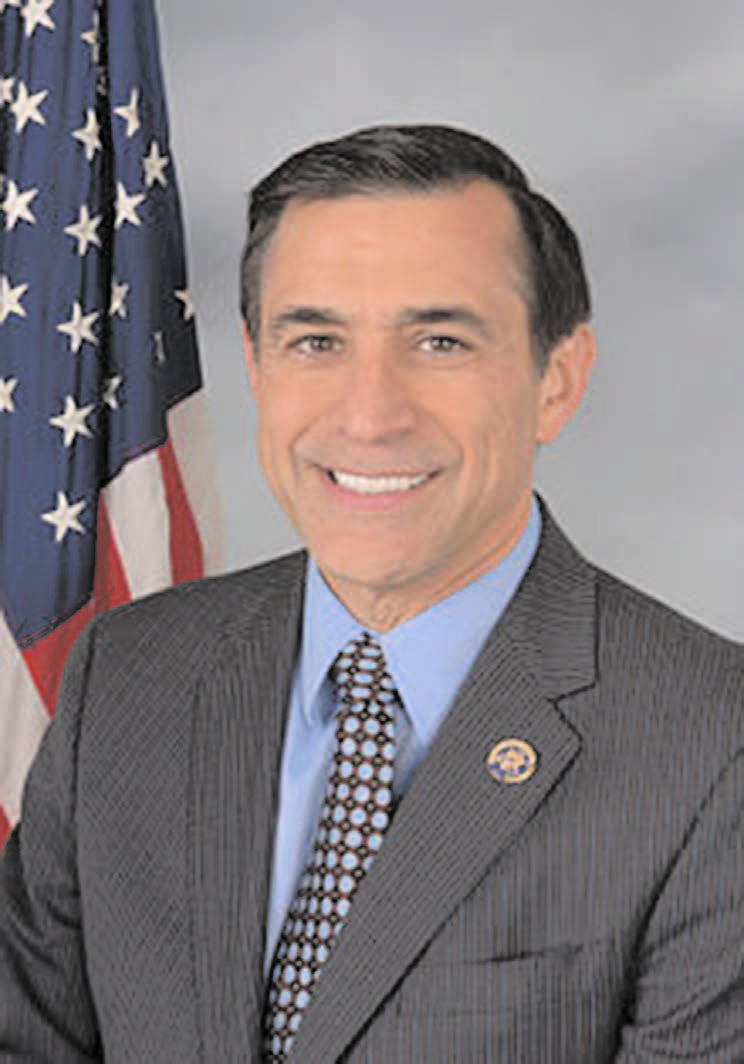
    WASHINGTON (TIP): With the topic of U.S. jobs filled by foreign workers fanning the heat of the presidential campaign, Rep. Darrell Issa introduced, August 31, a bipartisan legislation designed to close loopholes in the H1-B temporary visa program to ensure that only the most highly skilled foreign applicants can work in the United States.

    The “Protect and Grow American Jobs Act” bill, H.R. 5801, led by Issa, was introduced with support from the entire San Diego congressional delegation, industry stakeholders and immigration policy leaders, including Congressman Lamar Smith, R-Texas, according to a statement released by Issa’s office.

    U.S. Rep. Darrell Issa is proposing to change certain exemptions that allow companies to hire more foreign workers when qualified U.S. candidates are not available.

    “First and foremost, this bill is about protecting American jobs,” Issa said in a statement.

    The program ensures American companies can attract the best talent worldwide, he said. “Unfortunately, in recent years, this important program has become abused and exploited as a loophole for companies to replace American workers with cheaper labor from overseas,” he said.

    “The bill we’ve put forward is simple, bipartisan and will go a long way to fixing one of the many problems with our broken immigration system,” he added.

    Issa pointed to what he called abuses by Southern California Edison, the Rosemead-based utility, one of many U.S. companies hiring foreign workers under the H-1B program.

    Last year, federal officials investigated two outsourcing firms used by the company to hire foreign workers and found no wrongdoing. The company’s hiring practices came under scrutiny in 2014, after Edison announced it would lay off hundreds of workers, including information technology employees. Critics charged some of those workers were replaced by foreign hires.

    Issa’s bill seeks to change certain exemptions to a cap on the visas as they apply to employers with more than 15 percent of their employees on H-1B visas.

    The employers are required to attest they are unable to fill their positions with qualified U.S. workers when they seek more of the H-1B visas.

    But companies can bypass the “attestation” requirement if the foreign workers have a master’s degree or higher, or is paid more than$60,000 per year.

    Issa proposes doing away with the master’s degree exemption, and raising the salary cap from $60,000 to $100,000, thus making it harder for companies to add to their H-1B employees.

    A large share of H1-B visas goes to workers from India. Shikha Bhatnagar, director of the South Asian Network in Artesia, opposes the bill and argues there’s a demand for foreign workers.

    “It is my impression that there is a need for bringing in qualified tech professionals from overseas,” she said.

    Some H-1B visa critics don’t think the bill goes far enough. John Miano, co-author of a book that takes aim at the program, said lawmakers don’t want to impose too many restrictions on the visas.

    “There is too much money being made here,” said Miano. “There is a chain of people making money off replacing Americans with foreign workers.”

    Miano said since the exemptions in question apply only to companies with a share of H-1B workers above 15 percent, the impact of the bill if it passes would be limited.

    The federal government limits the number of H-1B visas to 65,000 each fiscal year. But another 20,000 can be exempted from the cap if the foreigners hold a U.S. master’s degree or higher.

    Colleges and universities, related nonprofits and government research organizations can also petition for exemptions from the 65,000 limit when hiring H-1B employees.

    Attempts to reform the H-1B program have been pushed by both Republicans and Democrats who argue that the visas allow companies to pay lower wages to foreign workers while displacing U.S. workers.

    Issa’s bill, which would be taken up by the GOP-controlled House, has seven co-sponsors, including four Democrats.

  • Indian-American Inducted In Texas Women’s Hall Of Fame

    Indian-American Inducted In Texas Women’s Hall Of Fame

    Renu Khator, Indian American woman academic, will be inducted into the Texas Women’s Hall of Fame for making significant contribution for the benefit of the US’ second largest state.

    Ms Khator, 61, Chancellor and President of the prestigious University of Houston (UH) said, “Thank you, Governor! I am honoured and humbled”, after being inducted in Texas Women’s Hall of Fame.

    Ms Khator, the first Indian-American to lead a major research university in the US, is also the president of University of Houston’s main campus.

    Born in Uttar Pradesh’s Farrukhabad district, she is largely credited with pushing the UH once known as “Cougar High” towards the nation’s top-tier of research universities.

    During her eight-year tenure, the UH has lured numerous members of the prestigious national academies of science and engineering. Incoming undergraduates are making better grades and returning at a higher rate, a sign that the university’s sluggish graduation rate could pick up.

    Ms Khator, who earned her Bachelors degree from Kanpur university in 1973, is the eighth chancellor of the UH System and the 13th president of the UH. She is the first foreign-born president of the university and the second woman to hold the position.

    She is the “first Indian immigrant to head a comprehensive public research university in the United States,” according to the statement announcing her induction.

    She will be inducted into the hall of fame at the Texas Women’s University of Denton on October 21 along with Selena; Emma Carter Browning, a pilot, businesswoman and aviation pioneer; Susie Hitchcock-Hall, an entrepreneur, businesswoman and founder of Susie’s South Forty Confections in Midland; and Ginger Kerrick, the division chief of the Flight Operations Directorate Integration Division at NASA’s Johnson Space Center, which provides support to the astronauts and flight directors.

    “I am honoured to welcome these five extraordinary women into the Texas Women’s Hall of Fame.”

    “Whether in public service, the arts, business or education, these leaders have inspired generations of Texans to reach new heights, achieve new goals and elevate the Lone Star State. I would like to thank each of the honorees and their families for their enduring contributions to the State of Texas,” Governor Greg Abbott said.

    The Texas Women’s Hall of Fame accepts nominations biannually and is open to any native or current residents of Texas, living or deceased, who have made significant contributions that have benefited the State of Texas.

  • Volume 4 Issue 32 | Dallas, Texas | Aug 19

    Volume 4 Issue 32 | Dallas, Texas | Aug 19

    10 years
    Celebrating 10 Years of The Indian Panorama

    Print Edition

    Reimagined for the Web 

    Volume 04 Issue 32 ~ Dallas ~ Aug 19


  • Rep. Darrell Issa Introduces Bipartisan Bill to Thwart #H-1B Abuse

    Rep. Darrell Issa Introduces Bipartisan Bill to Thwart #H-1B Abuse

    With the topic of U.S. jobs filled by foreign workers fanning the heat of the presidential campaign, Rep. Darrell Issa has introduced bipartisan legislation designed to close loopholes in the H1-B temporary visa program to ensure that only the most highly skilled foreign applicants can work in the United States.

    The new House bill that would restrict the controversial visa program for highly skilled overseas employees, specially from the Technology (IT) sector.

    The “Protect and Grow American Jobs Act” bill, H.R. 5801, led by Issa, was introduced with support from the entire San Diego congressional delegation, industry stakeholders and immigration policy leaders, including Congressman Lamar Smith, R-Texas, according to a statement released by Issa’s office.

    U.S. Rep. Darrell Issa is proposing to change certain exemptions that allow companies to hire more foreign workers when qualified U.S. candidates are not available.

    “First and foremost, this bill is about protecting American jobs,” Issa said in a statement.

    The program ensures American companies can attract the best talent worldwide, he said. “Unfortunately, in recent years, this important program has become abused and exploited as a loophole for companies to replace American workers with cheaper labor from overseas,” he said.

    “The bill we’ve put forward is simple, bipartisan and will go a long way to fixing one of the many problems with our broken immigration system,” he added.

    Issa pointed to what he called abuses by Southern California Edison, the Rosemead-based utility, one of many U.S. companies hiring foreign workers under the H-1B program.

    Last year, federal officials investigated two outsourcing firms used by the company to hire foreign workers and found no wrongdoing. The company’s hiring practices came under scrutiny in 2014, after Edison announced it would lay off hundreds of workers, including information technology employees. Critics charged some of those workers were replaced by foreign hires.

    Issa’s bill seeks to change certain exemptions to a cap on the visas as they apply to employers with more than 15 percent of their employees on H-1B visas.

    The employers are required to attest they are unable to fill their positions with qualified U.S. workers when they seek more of the H-1B visas.

    But companies can bypass the “attestation” requirement if the foreign workers has a master’s degree or higher, or is paid more than $60,000 per year.

    Issa proposes doing away with the master’s degree exemption, and raising the salary cap from $60,000 to $100,000, thus making it harder for companies to add to their H-1B employees.

    A large share of H1-B visas go to workers from India. Shikha Bhatnagar, director of the South Asian Network in Artesia, opposes the bill and argues there’s a demand for foreign workers.

    “It is my impression that there is a need for bringing in qualified tech professionals from overseas,” she said.

    Some H-1B visa critics don’t think the bill goes far enough. John Miano, co-author of a book that takes aim at the program, said lawmakers don’t want to impose too many restrictions on the visas.

    “There is too much money being made here,” said Miano. “There is a chain of people making money off replacing Americans with foreign workers.”

    Miano said since the exemptions in question apply only to companies with a share of H-1B workers above 15 percent, the impact of the bill if it passes would be limited.

    The federal government limits the number of H-1B visas to 65,000 each fiscal year. But another 20,000 can be exempted from the cap if the foreigners hold a U.S. master’s degree or higher.

    Colleges and universities, related nonprofits and government research organizations can also petition for exemptions from the 65,000 limit when hiring H-1B employees.

    Attempts to reform the H-1B program have been pushed by both Republicans and Democrats who argue that the visas allow companies to pay lower wages to foreign workers while displacing U.S. workers.

    Issa’s bill, which would be taken up by the GOP-controlled House, has seven co-sponsors, including four Democrats.

  • Volume 4 Issue 31 | Dallas, Texas | Aug 12

    Volume 4 Issue 31 | Dallas, Texas | Aug 12

    10 years
    Celebrating 10 Years of The Indian Panorama

    Print Edition

    Reimagined for the Web 

    Volume 04 Issue 31 ~ Dallas ~ Aug 12


    ● VOL 4 ISSUE 31 ● DALLAS ● AUG 12 - AUG 18, 2016
    ● VOL 4 ISSUE 31 ● DALLAS ● AUG 12 – AUG 18, 2016


  • Hyderabad Man Murdered Allegedly By Indian Roommate In US

    Hyderabad Man Murdered Allegedly By Indian Roommate In US

    HYDERABAD (TIP): A young man from Hyderabad was stabbed to death allegedly by his roommate in the US.

    Sankeerth, 25, was found murdered in his room in Austin, Texas late on Monday.

    The police have detained one of his roommates, Sai Sandeep Goud, and are questioning him.
    The two had fought, another roommate of Sankeerth told the police.

    Sankeerth, who came to the US a little over two years ago, had started working in Austin three months ago after completing his Master of Science programme.

    Sai Sandeep Goud reportedly checked into his room early this month through a consultancy. Two others shared the room.

    Sankeerth’s father G Vijaykumar, a government employee, and mother Ramadevi, learnt about the death of their son yesterday.

    Relatives say efforts are on to bring the body home by the weekend.

  • Indian-Origin Schoolgirl Raises Funds to distribute Free LED Bulbs to Poor

    Indian-Origin Schoolgirl Raises Funds to distribute Free LED Bulbs to Poor

    NEW DELHI (TIP): Meera Vashisht, an Indian-origin girl living in the US, has raised around Rs. 1.4 lakh through crowd funding to distribute LED bulbs to underprivileged sections in India.

    Meera, who learnt about India’s ‘Unnat Jyoti by Affordable LEDs for all’ (UJALA) program while working on her 7th class science project, collected $2,079.51 with the help of her parents and reached out to 500 people in her vicinity in Houston, Texas, the Power Ministry said.

    She purchased LED bulbs from the Energy Efficiency Services Ltd (EESL), the implementing agency for UJALA, and distributed them to residents of JJ clusters in Keshavpuram in New Delhi today, it added.

    Six hundred families will benefit from 1,800 LED bulbs to be provided under the UJALA scheme from the funds collected by Meera.

    “LED bulbs use less than half the energy of an incandescent bulb and runs for over 7-8 years. I am very happy to have been able to carry out the distribution of LED bulbs and hope to inspire young minds across the globe for working towards energy efficiency,” she said.

    Meera also believes that her effort will result in lighting up 46 houses for one year, reducing electricity bills by Rs. 2,500 and most importantly there will be significant reduction in CO2 emissions every year, the Ministry said.

    Under UJALA, over 12.60 crore LED bulbs have already been distributed across India, which is leading to a daily energy savings of about 4.48 crore kWh and resulting in avoidance of about 3,278 MW of peak demand, it added.

    Through the scheme, the estimated cumulative cost reduction of bills of consumers, per day, is Rs. 17.94 crore and is part of the government’s efforts to spread the message of energy efficiency in the country.

    Project Manager of UJALA scheme in Delhi Jitender Kohli said: “It is inspiring to see the young generation taking lead in conserving the environment.” The UJALA scheme will play a key role in huge energy savings in the state by use of energy efficient LEDs. LEDs, in long term, serve as a cost effective and a safe alternative to the traditional lighting, he added.

  • Nitin Gadkari Tells Investors that it is a Golden Opportunity to Invest in India

    Nitin Gadkari Tells Investors that it is a Golden Opportunity to Invest in India

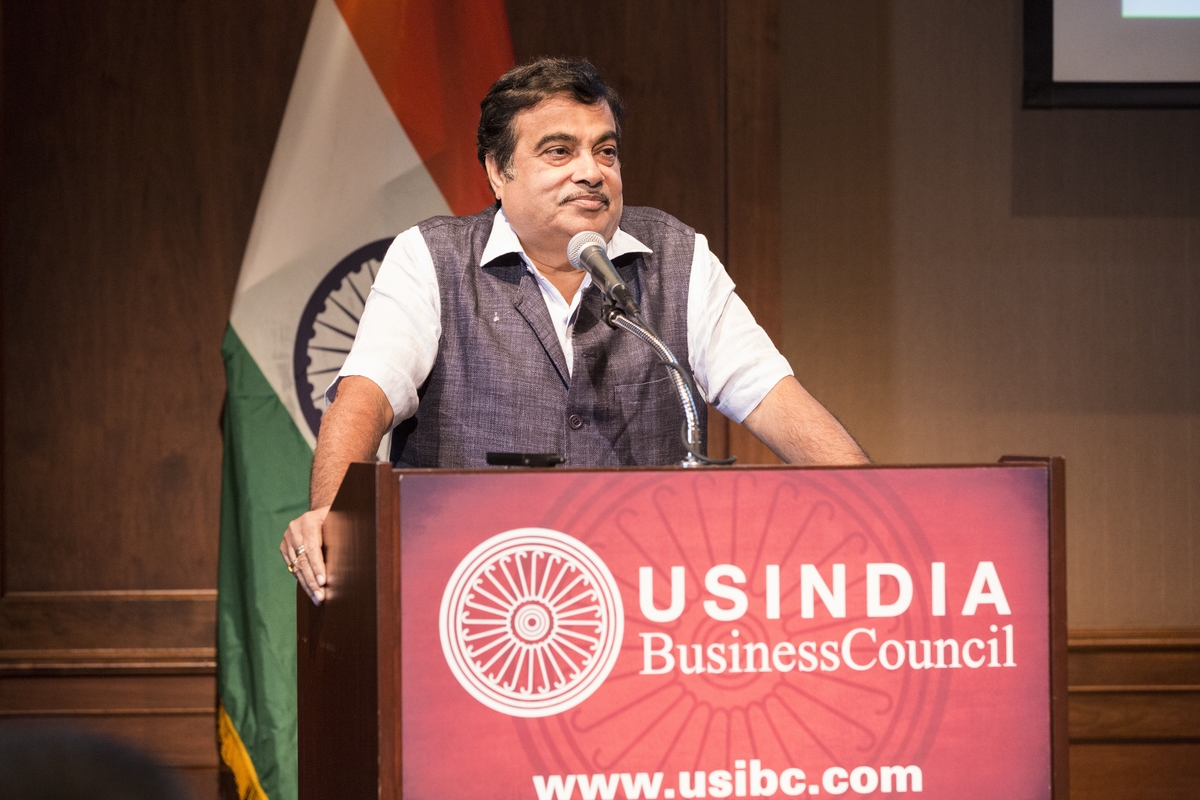
    July 11, 2016 – Washington, DC – The U.S. India Business Council (USIBC) today hosted a luncheon discussion with Indian Union Minister for Road Transport and Highways & Shipping Shri Nitin Gadkari. The roundtable was attended by senior executives of U.S. and Indian companies that included TransAsia Infrastructure, Uber, Bentley Systems, Tata, Caterpillar, Moody’s, DLZ Corporation and Texas Instruments. The discussion was focused around Minister Gadkari’s plans and vision to strengthen India’s infrastructure, investment opportunities in road construction and port-led industrialization, and how U.S. industry can collaborate with the Government of India.

    Speaking to investors, Minister Gadkari said, “Prime Minister Modi has made the country’s infrastructure development the top-most priority of the government. We are committed to improving the country’s road, highways, and port connectivity in a time-bound, result oriented, corruption-free and transparent manner that includes e-governance and fast-tracking decision-making. The pace of road construction has accelerated to an all-time high of 20 kilometers per day and next year we plan to increase it to 41 km per day. This is a golden opportunity to invest in India.” The Minister also spoke on the new highways under construction in the country, financing mechanisms under PPP models, framing policies for logistics parks, modernization of roads, building intelligent traffic systems for road safety and further innovation and technology to India’s logistics sector Minister Gadkari’s team also outlined the progress that has already been made in the roads, highways, and shipping sectors. Rohit Kumar Singh, Joint Secretary, Ministry of Road Transport and Highways, highlighted specific investment opportunities in the highways sector; whereas Alok Srivastava, Additional Secretary, Ministry of Shipping, shared details on the Sagarmala Program – the Ministry’s flagship port-led development initiative to bring down logistics cost and boost investment, exports, and jobs.

    USIBC President Dr. Mukesh Aghi said, “With an upsurge in India’s e-commerce markets and the unprecedented growth in Indian cities, there is a critical need for advanced logistical services and better transportation infrastructure. India needs $1 trillion for developing new roads, ports, rail lines, and airports over the next few years and U.S. companies can provide the necessary expertise as well as capital to enable the robust growth of this sector. We are excited to witness the rapid growth of this sector— under Minister Gadkari’s leadership, road construction rates have gone up, infrastructure spending has received a boost and India has jumped ranks in the Logisitics Performance Index. It is timely and urgent to explore the full potential of U.S.-India collaboration in this sector.”

    Dr. Ravindra Verma, Managing Director of TransAsia Infrastructure Group, a confederation that manages and executes multi-modal integrated transport and logistics infrastructure in Asia provided an industry perspective during the discussion. Dr. Verma said, “Under Minister Gadkari’s leadership, the Indian highways sector is now at a critical turning point. More than $100 billion in capital is now needed over the next several years to expand existing corridors and build new ones to keep up with the growth in traffic. This presents an opportunity for all players in North America to mobilize resources on a major scale. We are now actively gathering over $1 billion in global capital towards a dedicated multi-modal surface transport platform RoadStar, with major focus on India.”

    About the U.S.-India Business Council: Formed in 1975 at the request of the U.S. and Indian governments, the U.S.-India Business Council is the premier business advocacy organization, comprising 400 top-tier U.S. and Indian companies advancing U.S.-India commercial ties. USIBC is the largest bilateral trade association in the United States, with liaison presence in New York, Silicon Valley, and New Delhi.

  • Indian-American Prof Dr Kinshuk Named As Dean Of University Of North Texas College

    Indian-American Prof Dr Kinshuk Named As Dean Of University Of North Texas College

    Dr Kinshuk, who goes by single name, has been named the dean of University of North Texas College of Information in the US.

    He received his doctoral degree from De Montfort University in England, a master of science in mechanical computer aided engineering from Strathclyde University in Scotland and a bachelor’s degree in mechanical engineering from University of Rajasthan in India.

    Prior to joining UNT, Kinshuk was the associate dean of the faculty of science of technology at Alberta, Canada-based Athabasca University, where he had been since 2010.

    In that role, he helped start new graduate programmes, gained external research funding, developed strategies for student recruitment and promoted senior students and alumni to serve as mentors for new students.

    Prior to this, he served as director in the School of Computing and Information Systems.

    Kinshuk also served as Industrial Research Chair in Adaptivity and Personalisation in Informatics for the National Science and Engineering Council of Canada.

    “Dr Kinshuk brings with him great leadership and research experience,” Finley Graves, provost and vice president for academic affairs at UNT, said in a statement.

    “We look forward to Dr Kinshuk working with our faculty to articulate a clear vision for the future of the College of Information.”

    Kinshuk will start his new position from August 15.

    “I’m really looking forward to joining such a progressive university and my esteemed new colleagues,” Kinshuk, who also served as the president and chief executive officer of Smart Informatics Ltd., said in a statement. “I know the College of Information has high expectations and I hope to meet them and raise those even more. I am keen to contribute to the college’s success and help make the University of North Texas even more prestigious.”

    Kinshuk’s career also includes a variety of other academic positions.

    At Massey University in New Zealand, Kinshuk was the director of the Advanced Learning Technologies Research Center, as well as an associate professor, and before that, a senior lecturer.

    He also was a research fellow for the German National Research Centre for Information Technology in St. Augustin, Germany.

    Earlier in his career he was an instructor at the Academy of Computer Education in India, as well as a part-time lecturer at the Government Polytechnic College in India.

  • July 4th, India and the USA

    July 4th, India and the USA

    Upon declaration of our independence on July 4, 1776, the first three states in the world to recognize the sovereignty of the United States were; the Kings of Dutch Republic, Morocco and Mysore (India).

    According to Dr. Range Gowda, Tipu Sultan’s historiographer, the congratulatory letter to America is preserved in a French Library and in 1776; there is a record of celebration of America’s independence through fireworks in the capitol of Mysore; Sriranga Patna.

    It was a coincidence, that General Cornwallis who surrendered to George Washington in the battle of York Town in 1781 was a hired gun to defeat Tipu, the Sultan of Mysore through deceit in the 4th war of Mysore against colonialism.

    One of the folk stories about Tipu Sultan was that he supported the freedom struggle of America; indeed, the British were the common enemy for both the nations. Lord Cornwallis and Lord Wellesley ruled both the nations. We hope to search for the documents for authenticity, right now it is a folk tale.

    Tippu Sultan of Mysore is one of the few rare heads of the states in the world who adopted pluralistic form of governance and humbly signed the documents as citizen of the state.

    July 4th means everything to Indians and Americans, and the biggest one is the freedom. One is the oldest democracy and the other one is the largest democracy. Both the people are inherently secular in nature despite the expression of bigotry from a handful of men and women on both sides.

    Both the nations have chosen the path of separation of Church and State, even though a few fanatics on both sides want their nations to go back to the dark days of dictating others what they can eat, drink, wear or believe on the one hand, and push the others to conformity in the other land.

    Both the nations are collectively made up of Adivasis/ Native Americans, Atheists, Bahai’s, Bos, Buddhists, Christians, Dalits, Hindus, Jains, Jewish, Muslim, Sikhs, Tribals, Zoroastrians and every possible grouping.

    Both India and the United States are represented by every race, nationality, ethnicity, language, culture and religion. We see God as one, none and many; and in every form; male, female, genderless and non-existent, being and non-being, nameless and with innumerable names.

    We are proud of our heritage – a multi-faith, multicultural, multi-regional and multi-linguistic society, where we have come to accept and respect every which way people have lived their lives. For over 5000 years, India has been a beacon of pluralism – it has embraced Islam, Christianity, Judaism, Baha’i and Zoroastrianism to include in the array of the indigenous religions; Hinduism, Jainism, Buddhism and Sikhism, and America has become a beacon of freedom of faith and it has embraced all the diversity God has created.

    We may want to consciously start thinking and acting as one people, one people within a nation and a community and one people globally. It’s like home when we are conflict free. I do hope each one of us purges any bias towards the other, there is joy in being free from ill-will. Try to be free from it this day forward… free from anything that prevents you from being a part of the whole.

    Let me remind you how a Chinese man embarrassed me some 12 years ago. I volunteered to decorate one of the floats for July 4th parade in Plano, Texas. When we got it all ready and joined the parade with our truck he said, you will see my (Chinese) People along the roads and your (Indian) people will not show up. I did not like his statement, but was waiting to pounce on him. It was a three mile route and he was snubbing me all along, damn it there were no Indians. I eagerly wanted to see some Pakistanis or Bangladeshis to claim as Indians, every one disappointed, only 2 Indians and a Pakistani joined me in carrying our banner; we took turns in carrying it.

    I urge you to at least go out on July 4th and watch the parade. I will join the parade in Louisville this year with a Flag.


  • Five Indian Americans win Regional ‘EY Entrepreneur of the Year’ Award

    Five Indian Americans win Regional ‘EY Entrepreneur of the Year’ Award

    EY recently announced the regional winners of the Entrepreneur of the year award who will now can compete at the national level.

    According to EY, the awards program recognizes entrepreneurs who demonstrate excellence and extraordinary success in such areas as innovation, financial performance and personal commitment to their businesses and communities.

    The business leaders were selected by a panel of independent judges.

    Among the dozens of Indian-American finalists for the regional prize the winners were Jyoti Bansal, Dr. Subhash Makhija, Shri Thanedar, Raj Malik and Anurag Jain.

    Bansal, the founder, executive chairman and chief strategist of San Francisco-based AppDynamics won in the technology category of the California Regional.

    Makhija, the co-founder and chief executive officer of Clark, N.J.-based Global eProduce, was chosen in the New Jersey regional at a June 23 gala event.

    Thanedar is the owner, chief executive and chief scientist at Ann Arbor, Mich.-based Avomeen Analytical Services.

    Malik is the president and chief executive officer of the Dallas/Fort Worth, Texas-based BIOWORLD Merchandising. He won in the consumer products category at the Southwest regional June 25 banquet.

    Malik’s company is a leading design and distribution company of licensed and private-label apparel and accessories with a focus on pop culture and youth brands. The company went from a one-man operation to now having more than 250 employees.

    Jain is the chairman at Access Healthcare, a Dallas, Texas-area company. The company, which is an outsourcer of healthcare information technology and business process related work, was honored in the technology and tech services category.

    For winning their respective regional competitions, Bansal, Makhija, Thanedar, Malik and Jain will advance to the EY Entrepreneur of The Year national program.

    Award recipients in several national categories, as well as the EY Entrepreneur of The Year Overall National Award winner, will be announced at the EY Entrepreneur Of The Year National Awards gala in Palm Springs, Calif., on Nov. 19, 2016. The awards are the culminating event of the Strategic Growth Forum.

    The winner of the national program then will have the chance to compete in the EY World Entrepreneur of the Year in Monaco in June 2017.

  • Democrats stage sit-in on guns, Republicans unmoved

    Democrats stage sit-in on guns, Republicans unmoved

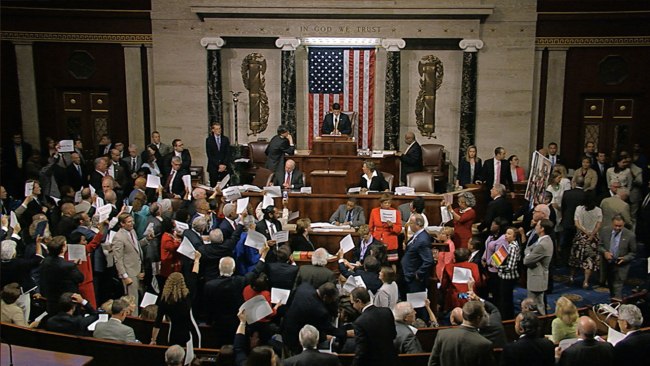
    WASHINGTON (TIP): A drained and dwindling group of Democrats, some draped in blankets and toting pillows, carried their remarkable House floor sit-in past daybreak June 23, disrupting the business of Congress in the wake of the Orlando shooting rampage with demands for gun-control votes in an extraordinary scene of protest broadcast live to the world.

    Unyielding Republicans who control the chamber branded the move a publicity stunt and summarily adjourned the chamber at around 3:15 am. EDT until after the Fourth of July. By 6:30 am. Thursday — 19 hours after the protest commenced— some 16 Democrats remained including Minority Leader Nancy Pelosi, giving speeches that mixed victory declarations with vows to never back down in their drive to curb firearm violence.

    “While the Americans don’t always expect us to win, they do expect us to fight,” said Rep. Al Green, D-Texas, as dawn broke and the few remaining lawmakers sat in a paper-cluttered chamber beneath empty visitor galleries. “We demonstrated to the American why we can’t get votes on common sense safety measures.”

    When Republicans streamed to the exits hours earlier, Democrats remained on the House floor, shouting “No bill no break!” and waving papers with the names of gun victims written in black. Rep. Maxine Waters of California said she was ready to stay “until Hell freezes over.”

    With a crowd cheering them on from outside the Capitol and many more following the theatrics on social media, Democrats declared success in dramatizing the argument for action to stem gun violence. “Just because they cut and run in the dark of night, just because they have left doesn’t mean we are taking no for an answer,” said Pelosi, D-Calif.

    Republicans fiercely resisted the Democratic pressure, saying their colleagues had accomplished nothing other than disrupting the business of the House to score political points. House Speaker Paul Ryan called it “a publicity stunt.”

    Rep. John Lewis, D-Ga., who had participated in the civil rights sit-ins in the South in the 1960s, said Democrats had “crossed one bridge.”


  • Supreme Court Tie a Jolt to Obama Immigration Policy

    Supreme Court Tie a Jolt to Obama Immigration Policy

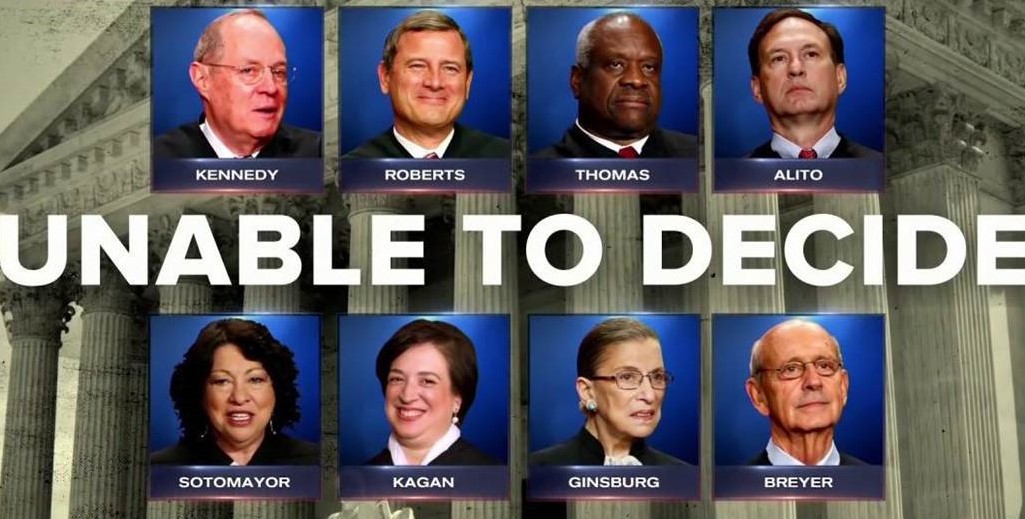
    WASHINGTON (TIP): The U.S. Supreme Court split 4-4 Thursday, June 23 over a challenge to President Barack Obama’s immigration policy, a result that prevents the administration from putting the program into effect during the rest of his term.

    The split was reflected in a one-sentence statement from the court: “The judgment is affirmed by an equally divided Court.”

    Announced in late 2014, the policy sought to shield more than 4 million people — mostly Latinos — from deportation. But lower courts blocked its implementation after Texas and 25 other states sued, claiming the president had no power to order the changes.

    The ruling deals a blow to both a White House that has used executive measures to push forward immigration reform in the wake of congressional inaction and to Obama, who has sought to rewrite a legacy that had some in Latino activist circles calling him “the deporter-in-chief.”

    There have been more than 2 million deportations in Obama’s tenure.

    The president on Thursday stressed that people who have been in the country for a long time and are otherwise law abiding will remain lower deportation priorities.

    He added that the tie was “heartbreaking” for millions of immigrants.

    Of those who opposed his executive actions, the president said: “I guarantee you at some point, every one of us has somebody in our background who people didn’t want coming here.”

    However, the tie “takes us further from the country we aspire to be,” Obama added.
    And ultimately, the president said, the nation has a choice to make.

    “We’re going to have to make a decision about whether we are a people who tolerate the hypocrisy of a system where the workers who pick our fruit or make our beds never have the chance to get right with the law — or whether we’re going to give them a chance, just like our forebears had a chance, to take responsibility and give their kids a better future,” he said.

    The death of Justice Antonin Scalia left the Supreme Court evenly divided on the issue. Thursday’s tie vote means the justices were unable to announce a ruling, an outcome that leaves in place the lower court rulings against enforcing the plan.

    The lack of a decision by the Supreme Court, Obama said, is a direct result of Congress failing to confirm his Supreme Court nominee, Judge Merrick Garland, to the bench.

    Under the proposal, adults in the United States illegally could remain if they meet certain residency requirements and have children who are American citizens or lawful permanent residents. It would also expand another program, now in effect, that allows young people to stay in the country if they were brought here under age 16.

    With 11 million undocumented migrants living in the U.S., the administration argued that it’s impossible to deport everyone here illegally. The policy was based on setting priorities — concentrating on criminals and terrorists and deferring removal for others who have established ties to the U.S.

    It would not offer permanent legal status but would defer for three years any effort to seek deportation for those qualified.

    The states argued that Congress has never given presidents a blank check for granting lawful status to people here illegally. They said the policy would do far more than simply abandon removal proceedings by converting illegal presence into lawful status and granting permission to seek work permits.

    Sixteen other states urged the justices to let the policy take effect.

    Thursday’s tie vote does not strike down the Obama proposal. In bringing the case to the Supreme Court, the government sought authority to begin enforcing the policy while the lawsuit brought by the states works its way through the lower courts.

    That process will play out for at least another year, and the next president would decide whether to continue defending it in court. Presumptive Democratic nominee Hillary Clinton has vowed to expand the program, but her GOP rival Donald Trump has said he would abandon it.

    House Speaker Paul Ryan, a Republican, applauded the effect of the split vote.

    “This is a win for the Constitution, this is a win for Congress,” he said. “Presidents don’t write laws, Congress writes laws.”

  • 2 Indian Americans sentenced 7 Years For H1B Visa Fraud in Texas

    2 Indian Americans sentenced 7 Years For H1B Visa Fraud in Texas

    Two Indian-American brothers have been sentenced to over seven years in prison for committing fraud in H1B visa programme, popular among IT and software professionals, to create a low-cost workforce in the US.

    Atul Nanda, 46, and his brother, Jiten “Jay” Nanda, 45, were each sentenced by Judge Barbara M. G. Lynn, the Chief U.S. District Judge for the Northern District of Texas, to 7 years and two months in federal prison, according to U.S. Attorney John Parker. The brothers were recently convicted by a jury following a trial.

    U.S. authorities had filed an indictment in 2013 alleging that the firm created by the brothers, Dibon Solutions, sponsored H-1B workers for jobs that didn’t necessarily exist. The visa holders were only paid if the company was able to place them.

    Dibon was headquartered in Carrollton, Texas.

    Each was convicted on one count of conspiracy to commit visa fraud, one count of conspiracy to harbour illegal aliens and four counts of wire fraud. The brothers, who have been out on bond, were remanded to the custody of the US Marshals Service.

    “The H-1B visa program is a powerful and positive tool for businesses and foreign workers alike when properly used. When employers abuse the program, the foreign workers become a captive stable of cheap labour, victimised to the company’s financial benefit,” said US Attorney John Parker.

    Owners of Dibon Solutions, an IT consulting company located in Texas, Nanda brothers recruited foreign workers with expertise who wanted to work in the US. They sponsored the workers’ H-1B visa with the stated purpose of working at Dibon headquarters in Carrolton, Texas but did not have an actual position at the time they were recruited and knew the workers would ultimately provide consulting services to third-party companies located throughout the US.

    Contrary to representations made by the conspirators to the workers (and the government), Jay and Atul directed that the workers only be paid for time spent working at a third- party company and only if the third-party company actually first paid Dibon for the workers’ services.

    They falsely represented that the workers had full-time positions and were paid an annual salary, as required by regulation to secure the visas. This scheme provided the conspirators with a labour pool of inexpensive, skilled foreign workers who could be used on an “as needed” basis.

    The scheme was profitable as it required minimal overhead and Dibon could charge significant hourly rates for a computer consultant’s services, the Department of Justice said.

    Thus, the Nandas earned a substantial profit margin when a consultant was assigned to a project and incurred few costs when a worker was without billable work.

    This scheme is known as “benching”. Dibon actively recruited H-1B workers for the “bench”, the Department said. They made the H-1B visa candidates to pay the processing fees that according to the law should be paid by the company.

    Three others Siva Sugavanam, 37, Vivek Sharma, 48, and Rohit Mehra, 39, who each pleaded guilty before trial to one count of aiding and abetting visa fraud, were each sentenced earlier this month by Judge Lynn to two years’ probation.

    Sugavanam was the lead recruiter for Dibon, Sharma acted as Dibon’s office manager and Mehra recruited employees for the bench and transported benched employees to and from Dibon Headquarters. All three had knowledge of and/or involvement in the filing of false documents with the Department of Labour and the Department of Homeland Security (DHS) in securing recruits’ employment with Dibon.

  • ‘DON’T CARE ABOUT PRICES’: OPEC TO KEEP OIL GUSHING, FAILS TO AGREE ON CEILING

    ‘DON’T CARE ABOUT PRICES’: OPEC TO KEEP OIL GUSHING, FAILS TO AGREE ON CEILING

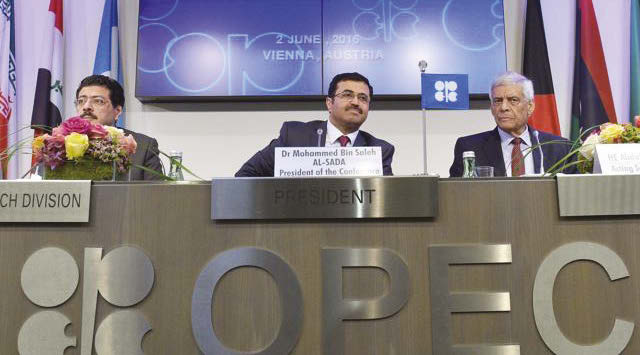
    VIENNA (TIP): OPEC decided on June 2 to keep oil gushing after a moderate recovery in the crude eased the pressure to limit output, with Saudi Arabia saying the cartel is “very satisfied” with the market.

    A final statement from the Organization of the Petroleum Exporting Countries after a meeting in Vienna made clear that the 13-nation group had not set a new output target.

    It said that since its last meeting in December, “crude oil prices have risen by more than 80 percent, supply and demand is converging and oil and producer stock levels in the OECD have recently shown moderation.”

    This was echoed by kingpin Saudi Arabia’s energy minister, newly appointed by the kingdom’s dynamic new deputy crown prince, expressing confidence that the recovery in the oil prices would continue.

    “Everybody is very satisfied with the market. The market is rebalancing as we speak,” said Khaled al-Falih said at the start of the bi-annual gathering.

    Traditionally OPEC, which pumps around a third of the world’s oil, has cut production to boost falling prices.

    But in the most recent drop, tumbling from over $100 in 2014 to close to $25 in January, OPEC — driven by Riyadh — has changed tack, keeping oil flowing to maintain market share and squeeze competitors.

    It has taken some time — straining even Saudi Arabia’s finances, to say nothing of on-the-brink OPEC member Venezuela — but the tactic now appears to be working at last.

    Non-OPEC output is falling and prices last week briefly broke above $50 for the first time in six months.

    While oil prices fell after the OPEC meeting, they shot higher after US inventory data showed signs of stronger than expected demand.

    In late afternoon London deals, Brent North Sea crude for August delivery gained 42 cents to $50.14 per barrel.

    New York’s West Texas Intermediate (WTI) crude for July rose 24 cents to
    $49.25, compared with Wednesday’s closing level.

    Animosity between Saudi Arabia and Iran — bitter regional OPEC rivals engaged in proxy conflicts in Syria and Yemen — means that any agreement to cut output is highly unlikely in any case.

    Since Iran’s 2015 nuclear deal entered into force in January and sanctions were lifted, Tehran has aggressively ramped up output, and is unwilling to stop now.

    “A doubling of exports of Iranian oil has had no negative impact on the market and has been absorbed well,” Iranian Oil Minister Bijan Zanganeh said Wednesday.

    A group production target of 30 million barrels per day — in any case flouted, currently around 32 million bpd — was abandoned at OPEC’s last meeting in December.

    On Thursday Zanganeh said that setting a collective OPEC ceiling “means nothing” without agreeing production quotas for members.

    “We’re not now in a position to talk about putting a ceiling, because the strategy and our assessment of the strategy is working, the market is reacting very positively,” said Suhail al-Mazrouei, United Arab Emirates oil minister.

    Saudi Arabia is undergoing change with the powerful young Deputy Crown Prince Mohammed bin Salman, 30, seeking to revamp the country’s economy to reduce dependence on oil.

    His “2030 Vision” includes a partial floatation of national oil giant Aramco and creating a gargantuan sovereign wealth fund. This week it pumped $3.5 billion into Uber.

    This conflict between the Saudis and the Iranians — soothed by the price recovery — could return with a vengeance if oil prices dip again, however, for example on the back of a stronger US dollar.

    This worries poorer OPEC members, not least Venezuela, racked by severe food shortages and inflation projected to hit 700 percent in 2016.

    This is unlikely to sway the Saudis, however.

    “We don’t care about oil prices — $30 or $70, they are all the same to us,” Prince Salman said in an interview with Bloomberg published in April.

    One thing which could perhaps smooth the waters was the appointment on Thursday of Nigeria’s Mohammed Barkindo as new OPEC secretary general, replacing Abdalla El-Badri of Libya.

  • NASA tries again to inflate spare room in space

    NASA tries again to inflate spare room in space

    WASHINGTON (TIP): Nasa tried again Saturday to inflate an add-on room at the International Space Station, after the first attempt ran into problems due to too much friction.

    Efforts to inflate the flexible habitat, known as the Bigelow Expandable Activity Module (Beam), got under way at about 9am.

    Space scientists monitoring the expansion at mission control in Houston, Texas, early Saturday expressed optimism that they were having early success this time around, as images on Nasa television showed the module slowly expanding after receiving three initial bursts of air.

    “Beam (is) continuing to slowly expand,” said Nasa spokesman Daniel Huot.

    “Everything going smoothly so far this morning, seeing good expansion both along the length and the diameter of BEAM. The pressure is well within what was expected.”

    Nasa is testing expandable habitats astronauts might use on the Moon or Mars in the coming decades. Operations to expand the module were led by Nasa astronaut Jeff Williams. A first attempt on Thursday was not successful. Nasa said that after a series of leak checks and other preparations, space station astronauts will enter the habitat through the station’s Tranquility module.

  • UCLA Gunman Identified as Indian-American Techie Mainak Sarkar

    UCLA Gunman Identified as Indian-American Techie Mainak Sarkar

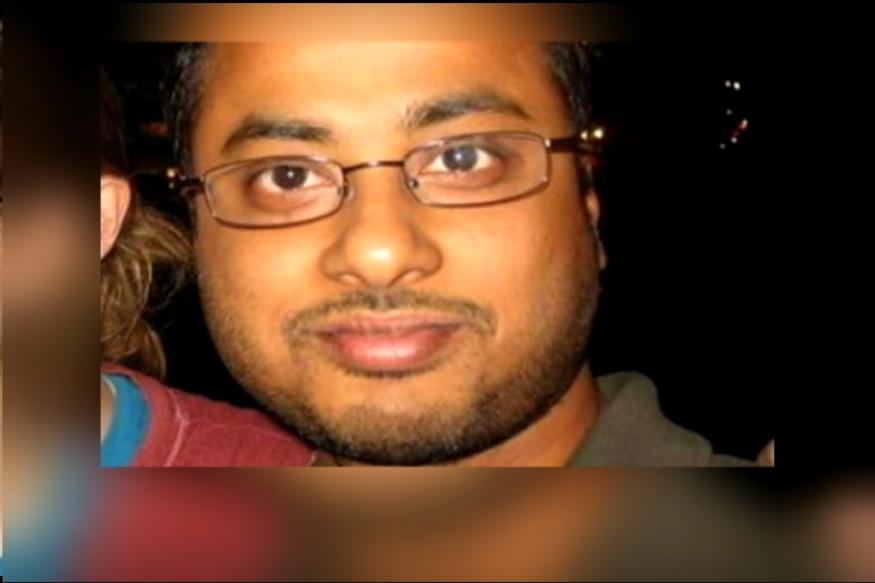
    LOS ANGELES, CA (TIP): The gunman who killed a UCLA professor has been identified as his former doctoral student Indian-American Mainak Sarkar, who had accused him of stealing his computer code and giving it to someone else, a media report said.

    Mainak Sarkar, an alumnus of IIT-Kharagpur, shot and killed professor William Klug in a small office in University of California Los Angeles (UCLA) before killing himself on Wednesday, June 1, The Los Angeles Times reported, citing sources.

    The shooting prompted a complete lockdown of the campus and deployment of hundreds of police officers as well as federal agents.

    All university classes were cancelled on Wednesday. The lockdown was lifted shortly after noon. Some 43,000 students are enrolled at the UCLA campus, according to its website.

    Klug, 39, was an associate professor of mechanical and aerospace engineering and had been the target of Mainak Sarkar’s anger on social media for months, the paper said.

    He accused the professor of stealing his computer code and giving it to someone else, it said.

    “William Klug, UCLA professor is not the kind of person when you think of a professor. He is a very sick person. I urge every new student coming to UCLA to stay away from this guy,” Mainak Sarkar wrote on March 10.

    “He made me really sick. Your enemy is my enemy. But your friend can do a lot more harm. Be careful about whom you trust,” he wrote.

    In his doctoral dissertation, submitted in 2013, Mainak Sarkar had expressed gratitude to Klug for his help and support, the paper said. “Thank you for being my mentor,” he wrote.

    Before enrolling at UCLA, Mainak Sarkar earned a master’s degree at Stanford University, according to his LinkedIn page.

    In 2000, he graduated from the Indian Institute of Technology, Kharagpur with a degree in Aerospace Engineering.

    He also had a stint as a research assistant at the University of Texas and worked as a software developer.
    After UCLA, Mainak Sarkar worked remotely as an engineering analyst for an Ohio-based rubber company, Endurica LLC where he worked until August 2014.

    Reportedly, Sarkar had also killed his ex-girlfriend Ashley Hasti in Minnesota a day before the UCLA shooting.
    They had broken up and had stopped being friends on Facebook.

  • 47-year-old Sikh man shot dead in New Jersey: family suspects hate crime

    47-year-old Sikh man shot dead in New Jersey: family suspects hate crime

    NEWARK, NJ (TIP): A Sikh man was shot dead at his gas station in Newark, New Jersey, May 30th, in an incident described as a hate crime by his family, who believe he was killed because of his religion.

    Police said they found Davinder Singh, the 47-year-old victim who came to the US from India 25 years ago, unresponsive at his gas station on Monday. He was pronounced dead at a hospital.

    His son, Jatinder Singh, told a TV news network, “There was no robbery, no struggle, no confrontation. I don’t know what else it could be other than a hate crime.”

    His father had just stepped out of office to get some fresh air when a man “came up to my dad, pointed a gun and shot him point-blank”, Jatinder said.

    Police have not yet called the shooting a hate crime.

    Sikhs have been the target of many hate crime incidents since the September 11, 2001 terror attacks, most of them men mistaken for people from the Middle East for their turban. More than 300 incidences of hate crimes against Sikhs have since been reported, according to the Sikh Coalition. Below is a list of hate crimes and bias incidents against Sikhs since 9/11.

    Sept. 15, 2001 — Mesa, Ariz.: Four days after the infamous attacks of 9/11, Balbir Singh Sodhi, a 49-year-old Sikh, is shot and killed outside the gas station he owned by Frank Silva Roque.
    When police approached to arrest him, Roque said, “I’m a patriot and an American. I’m American. I’m a damn American.”

    Nov. 18, 2001 — Palermo, N.Y.: Three teens burn down Gobind Sadan, a gurdwara (Sikh temple) in New York, because they thought it was named for Osama bin Laden.

    Dec. 12, 2001 — Los Angeles, CA: Surinder Singh Sidhi, a liquor store owner in Los Angeles who took to wearing an American flag turban after 9/11 out of fear of being attacked, is beaten in his store by two men who accuse of him of being Osama bin Laden.

    Aug. 6, 2002 — Daly City, CA: Sukhpal Singh, brother of Balbir Singh Sodhi, who was the first Sikh murdered following 9/11, is shot while driving his cab.

    May 20, 2003 — Phoenix, Ariz.: Fifty-two-year-old Sikh immigrant and truck driver Avtar Singh is shot in his 18-wheeler while waiting for his son to pick him up. As he is being shot, he hears someone say: “Go back to where you belong.”

    Aug. 5, 2003 — Queens, N.Y.: Members of a Sikh family are beaten outside of their home by drunk individuals yelling, “Go back to your country, Bin Laden.”

    Sept. 25, 2003 — Tempe, Ariz.: Sukhvir Singh, a 33-year-old convenience store owner, is stabbed to death by Bruce Phillip Reed. It is not labeled as a hate crime. Representatives of the Phoenix Sikh community issue a statement that says, in part, “Together we can help others to evolve past hate and fear by continuing to organize to reach out to others with increased understanding, respect, and support. May our collective prayer be that God preserve and protect the honor of all people, our nation, and our world.”

    March 13, 2004 — Fresno, Calif.: Gurdwara Sahib, a local Sikh temple, is vandalized with graffiti messages: “Rags Go Home” and “It’s Not Your Country.

    July 12, 2004 — New York, N.Y.: Rajinder Singh Khalsa and Gurcharan Singh, cousins on their way to dinner at a restaurant, are beaten by two drunk white twentysomething men. The attackers describe Gurcharan’s turban as a “curtain.” When Rajinder tries to intervene, saying that Sikhs are peaceful, he is beaten unconscious and suffers a fractured eye socket, among other injuries.

    May 24, 2007 — Queens, N.Y.: A 15-year-old student has his hair forcibly cut by an older student at his high school. The scissor-wielding 17-year-old showed the Sikh a ring inscribed with Arabic, saying, “This ring is Allah. If you don’t let me cut your hair, I will punch you with this ring.” Afterward, he cuts the younger boy’s hair. A main pillar of the Sikh faith compels followers to keep their hair uncut.

    May 30, 2007 — Joliet, Ill.: A decorated U.S. Navy veteran of the Gulf War, Kuldip Singh Nag is approached by a police officer outside of his home for an expired vehicle registration tag. The officer reportedly assaults Nag with pepper spray while hurling expletive-laced anti-immigrant statements.

    Jan. 14, 2008 — New Hyde Park, N.Y.: A 63-year-old Sikh, Baljeet Singh, has his jaw and nose broken when attacked outside his temple by a man who lived next-door. David Wood, the attacker, had apparently disturbed members of the gurdwara in the past.

    Feb. 28, 2008 — Bryan, Texas: A Sikh man is assaulted in a Wal-Mart parking lot. Though the assailant called him a terrorist, punched him in the face and head and knocked his turban off, the Sikh man does not suffer major injuries.

    June 5, 2008 — Queens, N.Y.: A ninth grade Sikh is attacked by another student, who tried to remove his patka, or under-turban, and had a history of bullying the boy.

    June 5, 2008 — Albuquerque, N.M.: A vehicle belonging to a Sikh family is defaced with the message “F*** Allah!” and a picture of male genitalia.

    Aug. 4, 2008 — Phoenix, Ariz.: Inderjit Singh Jassal is shot and killed while working at a 7-Eleven. No clear motive is found.

    Oct. 29, 2008 — Carteret, N.J.: A Sikh man, Ajit Singh Chima, goes for a walk in his neighborhood. He is attacked by a man who casually leaves the scene afterward. Nothing is stolen.

    Jan. 30, 2009 — Queens, N.Y.: Three men attack Jasmir Singh outside of a grocery store. Racial slurs are heard. A broken glass bottle is used. Singh loses vision in his left eye.

    Nov. 29, 2010 — Sacramento, CA.: Harbhajan Singh, a cab driver, is attacked by passengers, who call him Osama bin Laden. Singh believes the attackers, who were later convicted, would have killed him.

    March 6, 2011 — Elk Grove, CA.: Two elderly Sikh men in traditional garb, out for a daily afternoon walk, are shot and killed. The perpetrator is not found.
    May 30, 2011 — New York, N.Y.: Jiwan Singh, an MTA worker and the father of Jasmir Singh, who was assaulted in early 2009 in Queens, is attacked on the A train and accused of being related to Osama bin Laden.

    Feb. 6, 2012 — Sterling Heights, Mich.: A gurdwara (Sikh temple) is defaced with graffiti that includes a gun and references to 9/11.

    Aug. 5, 2012 — Oak Creek, Wis.: A gunman is shot dead by police after he opened fire in a gurdwara during Sikh prayer services, killing six.

    In the outrage following the killing of six Sikhs at a Wisconsin gurudwara in 2012 by a white supremacist, the FBI has begun tracking hate crimes against the community.

    FBI is the lead investigating agency in hate crimes, defined as traditional offences like murder, arson, or vandalism with “an added element of bias”.

    Meanwhile, Davinder Singh was cremated, according to Sikh traditional rites, June 2. A large number of community attended the cremation.

  • Nihar Janga, just 11, wins Scripps National Spelling Bee Contest

    Nihar Janga, just 11, wins Scripps National Spelling Bee Contest

    Nihar Janga, at age 11, made record by becoming the youngest winner of the bee on record at the annual Scripps National Spelling Bee, which ended in a tie for the third consecutive year, with Jairam Hathwar and Nihar Janga declared co-champions after a rollercoaster finish. Jairam, 13, is the younger brother of 2014 co-champion Sriram Hathwar.

    “I’m just speechless. I can’t say anything,” Nihar said as he hoisted the trophy. “I mean, I’m only in fifth grade.” The 11-year-old breezed up to the microphone with confidence, and most of his words, he knew right away. He looked like the strongest speller onstage, stronger even than his eventual co-champion, 13-year-old Jairam Hathwar, a blue-chip speller whose older brother hoisted the trophy two years ago.

    Nihar, from Austin, Texas; and Jairam, from Painted Post, New York, were declared co-champions. It was the third year in a row that the bee ended in a tie. Scripps made the bee, broadcast on ESPN, tougher after two consecutive ties, forcing the last two spellers to get through three times as many words as in years past.

    Bee organizers insisted they’d be OK with another tie, but they changed the rules to make it less likely. Instead of a pre-determined list of 25 “championship words” for the final three spellers, the bee instead forced the top three to go through up to 25 rounds. And the difficulty of the words could be adjusted as necessary.

    Third-place finisher Snehaa Kumar of Folsom, Calif,, bowed out in the first championship round. Nihar and Jairam had to spell 24 words apiece before it was over. Nihar and Jairam have grown close over the past year, communicating mostly online. They chatted while others were spelling, high-fived after their words and embraced after they won. The timing of Nihar’s misses was almost too perfect to believe, and Nihar denied afterward that he misspelled on purpose. He said he just didn’t know the words.

    “I wanted to win, but at the same time, I felt really bad for Jairam,” he said. Both were inspired by their favorite athletes. As the confetti fell, Nihar crossed his arms in homage to Dez Bryant’s touchdown celebrations. The Dallas Cowboys receiver responded with a congratulatory tweet.

    Jairam, whose dad takes him to play golf when he’s had enough spelling practice, channeled his favorite player, Jordan Spieth. “When he hits a bad shot, he always bounces back, on the next shot or the next hole,” Jairam said. “When I missed those two words, I didn’t let them get to my head, and I just focused on the next word.”

    This was the 89th bee, and while Scripps’ records from early years are incomplete, the youngest known champion was Wendy Guey, who won 20 years ago at age 12. The last to win in his first attempt was Pratyush Buddiga in 2002.

    Nihar said he didn’t feel pressure to become the youngest winner for two reasons. First, he never expected to win. Second, most of the crowd’s attention was on an even younger speller: 6-year-old Akash Vukoti. “He did pretty good for a first-grader,” Nihar said. “He’s going to go places.”

    Nihar and Jairam’s parents are immigrants from south India, continuing a remarkable run of success for Indian American spellers that began in 1999 with Nupur Lala’s victory, which was later featured in the documentary “Spellbound.” The bee has produced Indian American champions for nine straight years and 14 out of the last 18.

  • COMPARING PARTNER COULD MAKE OR BREAK YOUR RELATIONSHIP

    COMPARING PARTNER COULD MAKE OR BREAK YOUR RELATIONSHIP

    Your happiness in a relationship and how much energy you devote to maintain that relationship depend on how the partner compares with other potential mates you may have, suggests new research.

    The findings suggest that how well our partner fulfils our ideal preference is not very important.”We do not need ideal partners for relationship bliss. Instead, satisfaction appears to come, in part, from getting the best partner available to us,” said one of the researchers Daniel Conroy-Beam from the University of Texas at Austin in the US.

    For the study, published in the journal Evolution and Human Behavior, the researchers surveyed 259 adults — 119 men and 140 women — who had been in relationships for an average of seven and a half years.

    Each participant rated the importance of 27 traits in an ideal mate and the extent to which they felt each trait described both their actual partner and themselves.

    Participants also reported their relationship satisfaction and happiness.

    The study discovered that satisfaction was not reliably dependent on how a partner compared with a person’s idea of the perfect mate, but rather whether other potential mates better matched a person’s ideal preferences.Those with partners more desirable than themselves were satisfied whether or not their partners matched their ideal preferences. But, participants with partners less desirable than themselves were happy with their relationship only if their partner fulfilled their ideal preferences better than most other potential mates in the group, Conroy-Beam said.

    In a follow-up study, the researchers again tested relationship satisfaction but also surveyed participants’ mate retention efforts — energy devoted to maintaining their relationships.They found that people with partners difficult to replace, either because their partner was more desirable than themselves or their partner more closely matched their ideal preferences than others in the group, reported being happier and devoted more effort to mate retention.

    Read more 

  • Indian-American Rishi Nair wins National Geographic Bee contest

    Indian-American Rishi Nair wins National Geographic Bee contest

    WASHINGTON (TIP): Indian-American students have swept the prestigious national bee competitions, securing the first three positions for this year’s National Geographic Bee championship finals.

    Rishi Nair, 12, a sixth grader from Florida took top honors at the 28th annual National Geographic Bee held at the National Geographic headquarters in Washington.

    As National Geographic Bee champion, Rishi received a USD 50,000 college scholarship and a lifetime membership in the National Geographic Society. This is the fifth consecutive year that an Indian-American has won the prestigious national tournament.

    Eighth-grader Saketh Jonnalagadda, 14, from Massachusetts was the runner up and recipient of the USD 25,000 college scholarship. Third place and a USD 10,000 college scholarship was grabbed by Kapil Nathan, a 12-year-old sixth-grader from Alabama.

    The final question, which clinched the win for Rishi, was: “A new marine sanctuary will protect sharks and other wildlife around Isla Wolf in which archipelago in the Pacific Ocean?”. The answer was: “Galapagos Islands”.

    Rishi is the second Florida student to win the National Geographic Bee. In 2010, eighth-grader Aadith Moorthy of Palm Harbor was the national champion.

    In fact, it was a nail-biting, seven-question final round between Rishi and Saketh. Seven of the 10 finalists were Indian-Americans.

    The seven other finalists, who each won USD 500, were Grace Rembert of Montana, Rishi Kumar of Maryland, Pranay Varada of Texas, Lucas Eggers of Minnesota, Samanyu Dixit of North Carolina, Thomas Wright of Wisconsin and Ashwin Sivakumar of Oregon.

    Indian-American students have consistently performed exceptionally well at various bee competitions over the years. The spelling bee competition has produced Indian-American champions for eight consecutive years, and 13 of the past 17, a run that began in 1999.

  • “I’m answerable to the public, to you, the voters” Nassau County Comptroller George Maragos

    “I’m answerable to the public, to you, the voters” Nassau County Comptroller George Maragos

    More often than not Mr. Maragos has been caught in controversies, much because of the nature of his job. Recently, he was embroiled in a running argument with Nassau County Police Chief over his audit report which took the Police department to task for having exceeded the budgetary provisions. Well, that’s the job of the Comptroller, as he said in the interview he gave to The Indian Panorama on May 3, to ensure tax payer’s money is spent wisely.

    Here are excerpts from the interview

    TIP: You took over in 2010?
    M. That’s right

    TIP: And you are the 13th comptroller of Nassau County?
    M: I don’t know if 13 is considered a lucky number or not. But it is number 13.

    TIP: So, you have a wonderful background of Finance; you come from that background?
    M: Yes

    TIP: And this particular position requires to be dealing with Finance only?
    M: No it’s a multi-discipline position like any other senior position in government or in Private Industry. It requires a wide range of skills and talent. This is the Comptroller’s office. There is a large administrative responsibility to manage the office. There’s a lot of accounting and package management that goes with it Finance is very important to control the expenditures to ensure that the county has cash flow, works wisely and cost-effectively but also delivers for the community; make sure that the government and all these agencies are running efficiently; money is spent wisely and they deliver services.

    TIP: Somehow or the other, it’s a very huge responsibility. Nassau County I believe is one of the biggest counties?
    M: Yes. It’s one of the biggest counties but if we were a state we would be about the 33rd biggest We were ranked 33 of all the states. We are bigger than Rhode Island; we are bigger than the state of Delaware, some examples

    TIP: That’s interesting.
    M: you can go down the line; and our budget is more than 3 billion dollars.

    TIP: Sorry for interrupting you. But in terms of budget, do you think you’re bigger than any other state?
    M: Yes. That’s how we measure. In terms of budget and population, as I said we were ranked 33. So we would be bigger than about 17 other states.

    TIP: that gives you a much bigger stature than the comptroller of a state?
    M: Absolutely. We don’t compete with California, Texas or Florida though.

    TIP: One of the greatest responsibilities that probably you shoulder, and you were mentioning so many things. But you said money is to be spent wisely. What do you mean by that?
    M: Well to have the maximum benefit to our residents, in terms of Public Safety services that we provide; maintaining our roads; our infrastructure; makingsure street lights work; we have a fair business environment; provide incentives to business to stay here’ to relocate here. Those are big responsibilities that require significant expenditures of our funds. To provide clean water, some of the basic security, clean water sewage-that we all take for granted. Those are very costly services.

    TIP: If I’m not mistaken, and please correct me if I’m, you don’t have any legislative powers as comptroller?
    M: That’s correct

    TIP: And it is the policies framed by the legislature that you implement?
    M: That’s correct

    TIP: So how do you say that it is the job of the Comptroller to ensure that water is properly given, proper taxes are there? What do you mean by that?
    M: Well the comptroller’s office does not make policies. We don’t say how to spend the money; what are the public priorities. That is up to the county executive and the legislature. But once they decide that they are going to spend (we have 300 billion dollars in expenditure) and they say that we’re going to spend hundred billion dollars on police services, then it’s my responsibility to manage the budget to ensure that the police department stays within its budget and they do a relatively good job in terms of keeping the crime low. That is our responsibility to manage and report. We don’t manage the police department but we have the authority and responsibility to oversee how they spend the money; how they spend it as intended by the legislature and that they operate efficiently and we have low crime. If we are not meeting those objectives, it is our responsibility to go in an audit, find out why and report back to the legislature and the county executive.

    TIP: Do you think you can describe yourself a man with a whip?
    M: Yes; sometimes a whip and a whip stick.

    TIP: That’s where audit comes
    M: That’s where audit comes.

    TIP: I think that is one of the primary jobs of the Comptroller?
    M: It is one of the primary jobs, yes. But the comptroller’s office has functions beyond. Besides audit function we have, as part of our audit function, subpoena power similar to the District Attorney’s. We have an accounting department to monitor and manage the budget for all departments. Then we pay all the bills. All the claims that come through this office will be audited and approved and paid by the Comptroller’s office. We approve the contracts. So, although the County Executive Office submits the contract, the legislature votes on approving those contracts, we are part of the approval process as well. And in some cases even if the county executive estimated the contract, the legislature has approved it we can reject it because we find it’s not good value for the payment and the milestones and performance requirements are clearly defined.

    TIP: But that objection can be overruled by the legislature?
    M: No. They cannot. Actually we have a situation now where we are saying that you want to spend 1.5 million to buy a little app. We think that you can have that app developed in-house or have an outside software firm develop it for 25000 dollars or something like that. So we are refusing that purchase order. We are separate, like almost a third branch of the government.

    TIP: You have that kind of Independence?
    M: Yes. That’s why I am elected. The Comptroller is independently elected from the county executive and the legislature.

    TIP: But you’re answerable to the legislature?
    M: No. I’m not. I’m answerable to the public, to you, the voters. That is a huge difference.

    TIP: Are you not bound by what the legislature decides to do with the spending?
    M: you know I am bound to execute what they vote in terms of approving funding for me. The Comptroller’s office cannot spend money without the legislative approval. But once they decide they want to spend a billion dollars on public safety I need to accept that and make sure that that money is well-spent in terms of contracts that are issued in terms of police overtime. That all the factors that go into maintaining Public Safety, the systems are in place. We manage the payroll; we manage personal benefits. That’s all done in the Comptroller’s office.

    TIP: So what I understand is that you oversee that the funds are ethically used
    M: Yes, and we get value.

    TIP: And that is why sometimes there are issues, like in your latest audit report on the police you took objection to so much money being spent on overtime and you said that there was some kind of a mismanagement kind of thing?
    M: Yes. We pointed that out that they have been consistently, year after year, been exceeding the budget for overtime. And furthermore, we found that there were no processes in place for the management to be aware that a precinct was, let’ssay, using excessive overtime and there was no feedback mechanism for the management to know. And furthermore there were no clear directives as to how overtime should be managed at the precinct level resulting in year over year of overspending on overtime.

    TIP: Well, Mr. Maragos, it’s a question I’m addressing to you to know. Overtime came to be paid because there were not enough hands to perform the duties. So, do you think, as a comptroller, it is better to give employment to more people to avoid overtime which means more than the normal hourly wages. I believe when it is overtime, one gets paid more than the normal hourly wage.
    M: Yes.

    TIP: At the same time, why is it necessary to give them overtime, because probably there are not enough hands?
    M: You see, that is the responsibility of the commissioner. To manage the police force.

    TIP: You find him deficient?
    M: Right so it’s up to him to say look I anticipate I have fifteen hundred officers. Ok, maybe that’s too few or too many. Ok. But that’s what I’m going to have. During this year I’m going to need X dollars in salaries. And I’m going to need Ydollars in overtime. It’s his decision. He is the manager. But once he decides that this is the people that I’m going to have and this is the amount I’m going to spend on over time we expect him to live within the budget. We’re not going to tell him how many officers he should have. He needs to tell the legislature. That he needs X number of officers. To maintain a certain level of public safety and maintain crime law. That’s his job. But once he makes those statements, as a manager he signs up to them. And we expect them, as a comptroller, as an oversight, as a watchdog to live within the commitments that he makes. That’s true in any business, and even the most basic of management responsibilities. To manage within certain guidelines and achieve those results with those guidelines. And normally in business you know that you normally do. Budget conservatively. Promise conservatively. Make conservative goals and try to exceed them. So we want them to do better. But as a minimum, we expect him to do what he promised to do. In terms of managing the budget, interms of the number of resources and stuff that he’s going to need to achieve a certain level of public safety.

    Part Two : https://apple.news/ASS9nB_HYQcyK0dgsHxbajg or theindianpanorama.news/united-states-america/need-powerful-ec…ptroller-maragos/