Tag: Texas

  • Tulsi Gabbard, the first Hindu in the US Congress, on Modi, Hinduism, and linking Islam to terror

    Tulsi Gabbard, the first Hindu in the US Congress, on Modi, Hinduism, and linking Islam to terror

    Washington has no shortage of politicians struggling to be seen as a maverick. But Tulsi Gabbard isn’t one of them.

    As one of the first two female combat veterans elected to US Congress and also its first Hindu and first American Samoan representative, she wears the label quite easily. And this week, the 34-year-old congresswoman from Hawaii reminded everyone of it, as she broke ranks with the Democratic party establishment and relinquished her post as vice chair of the Democratic National Committee on Feb. 29 to endorse Bernie Sanders for president. (Her role with the DNC, the party’s governing body, would have required to stay neutral in the election.)

    Described last October by the Washington Post as “the Democrat that Republicans love and the DNC can’t control,” Gabbard offered a sample of her independent streak a year ago, when she spoke out of sync with her fellow Democrats and criticized US president Barack Obama’s handling of Islamic extremism—specifically over his unwillingness to brand ISIL an “Islamic” group. “[Obama] is completely missing the point of this radical Islamic ideology that’s fueling these people,” Gabbard told Fox News last February.

    Her viewpoint on this subject is all the more notable given her military experience in the Middle East, where she served in a field medical unit in Iraq and was a trainer for the Kuwait National Guard.

    But it also aligns nicely with the stance toward Islam held by India’s right-wing Bharatiya Janata Party (BJP) and its Hindu nationalist leader, Narendra Modi, with whom Gabbard shares a great rapport.

    Gabbard was among the few to criticize the US government’s decision to deny a visa to Modi before he was prime minister, in the wake of accusations that his government in the state of Gujarat did not do enough to save Muslims during the horrific communal violence carried out there in 2002. The Gujarat riots claimed more than 1,000 people, including close to 800 Muslims. Gabbard had called the no-visa decision a “great blunder.”

    And in November 2013, five months before Modi would win election as prime minister, Gabbard opposed a House resolution that called for “religious freedom and related human rights to be included in the United States-India Strategic Dialogue and for such issues to be raised directly with federal and state Indian government officials,” saying it would weaken the friendship between India and US.

    Critiques of her stance, like this one published on the American social-justice site Alternet.org, accused her of putting politics before policy:

    Rather than review the litany of abuses that have occurred in the country, Gabbard mused she did “not believe that the timing of this hearing is a coincidence….I am concerned that the goal of this hearing is to influence the outcome of India’s national elections.” She went on to state that even holding a hearing on the issue was “an attempt to foment fear and loathing purely for political purposes.” In other words, her concern was that Modi’s electoral chances would be hurt by an honest look at religious persecution in India.

    Speaking at a fundraising event for the BJP in August 2014, where she articulated the plight of Hindus around the world who have suffered persecution, Gabbard said that Modi’s election victory was only possible because “people stood up, one by one by one by one, and said we will demand that this change occurs.”

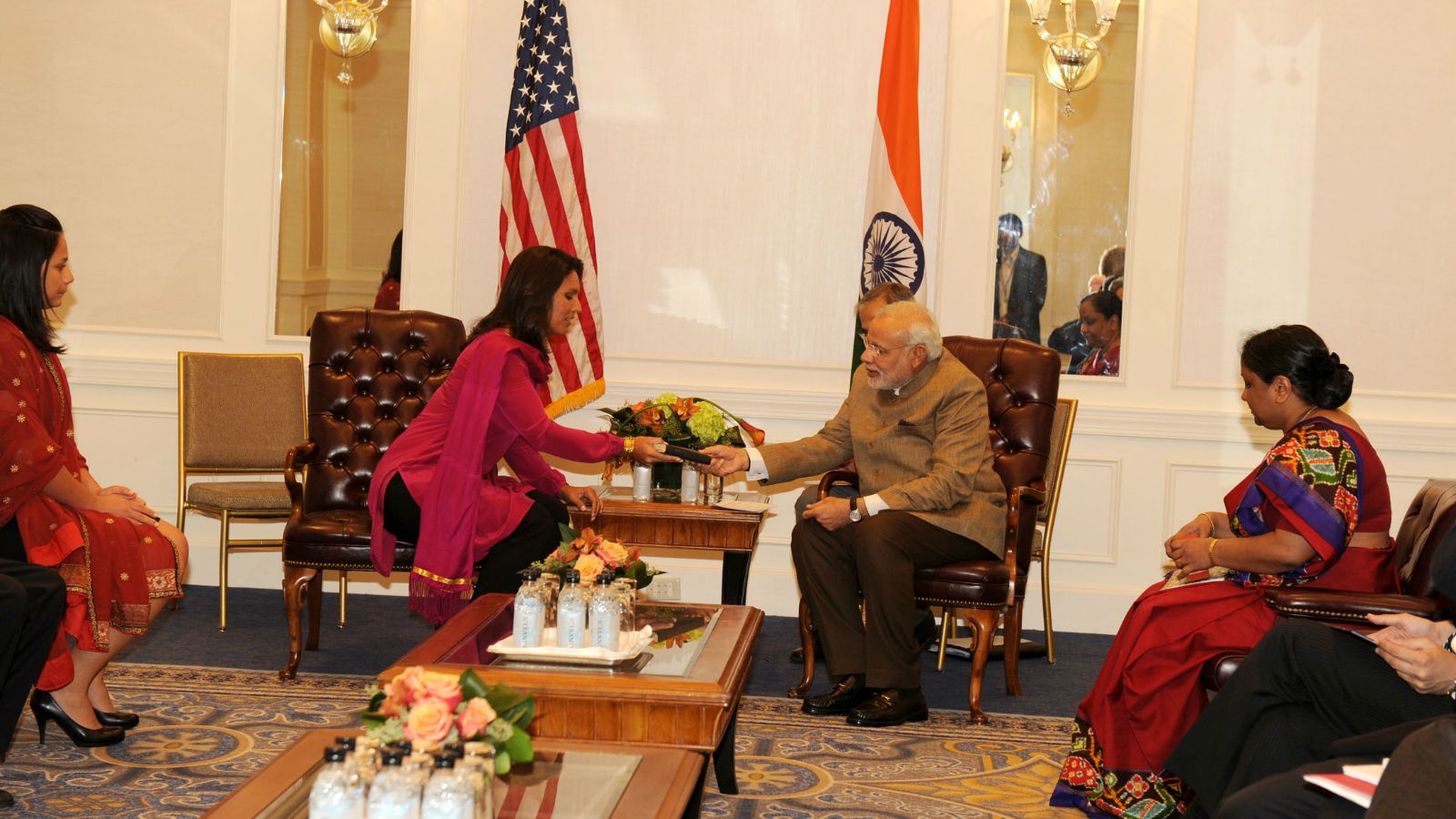
    In September 2014, the new Indian prime minister made it a point to meet Gabbard following his historic post-election speech at New York’s Madison Square Garden. And the congresswoman gave Modi a gift—a copy of the Bhagwad Gita that she swore by when elected to office—and assured him of her support for a Modi pet project of declaring an International Yoga day.

    “We had a wide-ranging discussion on several issues our countries have in common, including how America and India can work together to help combat the global threat posed by Islamic extremism,” Gabbard said after the meeting.

    For all that and more, Gabbard was treated as royalty on her visit to India last year. As she hobnobbed with the Indian prime minister and foreign minister among others, The Telegraph, a Kolkata-based newspaper, called her “the Sangh’s mascot” in the US. The Sangh, a moniker for the Rashtriya Swayamsevak Sangh (RSS), is a right-wing hindutva organisation and the ideological guardian of the BJP party that rules India now.

    With Modi set to stay in power until 2019, and Sanders doing better than expected in the Democratic primaries (or at least was up until March 1, when Democratic frontrunner Hillary Clinton handily won key states like Texas and Virginia in the “Super Tuesday” state contests), it can’t hurt the BJP and India to have a friend like Gabbard in the US.

    On March 2, Gabbard answered questions from Quartz via email about her support of Modi, her approach to Hinduism, and the connection she draws between Islam and terrorism. The transcript below has been condensed and lightly edited:

    Quartz: Could you tell us about your reasons for supporting the BJP and Narendra Modi, and why you referred to him being denied a visa as a “great blunder”?

    Tulsi Gabbard: There are many different areas and sectors where the United States and India’s growing friendship can cover mutually beneficial ground such as defense, renewable energy, bilateral trade, and global environmental concerns such as climate change. Modi impressed me as a person who cares deeply about these issues and as a leader whose example and dedication to the people he serves should be an inspiration to elected officials everywhere.

    It is very important that the US and India have a strong relationship of mutual respect. The denial of a visa to prime minister Modi could have undermined that relationship had he used it as an excuse to reject having a strong bilateral relationships with America. This would have been bad for both of our countries. For many reasons—not the least of which is the war against terrorists—the relationship between India and America is very important.

    QZ: You took on the US president for his reluctance to name ISIS as an Islamic extremist group. Do you still stand by this criticism?

    TG: In order to defeat the terrorists who have declared war on the United States and the rest of the world, we need to understand their ideology. In other words, the war can’t be won just militarily. We must defeat them in the ideological war, not just on the battlefield. In order to defeat their ideology, we need to recognize what their ideology is.

    The ideology of these terrorists is “Islamism.” It is a radical political ideology of violent jihad aimed at bringing about an establishment of a totalitarian society governed by a particular interpretation of Islam as state law. Referring to terrorists as “Islamist extremists” is simply an accurate way to identify ISIS and other Islamist extremist organizations whose ideology is rooted in one form of Islamism or another.

    The majority of Muslims are practicing the spiritual path of Islam within their own lives in a pluralistic, peaceful way. So by calling organizations like ISIS Islamic or Islamist extremists [emphasis hers], we are making a distinction between the vast majority of Muslims who are not extremists and a handful of those who are.

    QZ: How much of that sentiment is influenced by your experience serving in the military in the Middle East, versus your interest in Hindu/Muslim conflicts in India?

    TG: My experience serving in the Middle East has shaped many of my views. This has nothing to do with any “Hindus/Muslim” conflict in India or anywhere else. It comes from the understanding that in order to defeat the terrorists who have declared war on the United States and the rest of the world, we need to understand their ideology.

    My two deployments in the Middle East reinforced the fundamental military wisdom that you can’t defeat an enemy if you don’t understand him. We cannot win this war if we do not understand our enemy’s goals, [or the] ideology that inspires them and fuels their recruitment propaganda. And the first step to understanding an enemy is correctly identifying him in a way that makes clear his ideology.

    QZ: You referred to the suffering of Hindu minorities across the world, in a speech you gave during a fundraiser attended by some of the top leaders of the BJP. Do you think that in India there exists a similar situation?

    TG: Throughout the world, Hindus are victims of discrimination. Recently, a Hindu priest in Bangladesh was brutally hacked to death by ISIS terrorists and two others were injured trying to help him. Unfortunately, even in the United States, as well as different pockets of India, such discrimination exists.

    While there is no doubt there is some discrimination directed toward different “religious minorities” in India, throughout India you will find Muslims, Christians, and people of all kinds of religions free to practice their faith. However, you will not find this degree of tolerance or openness in countries like Pakistan, Saudi Arabia, Iran, or other Muslim countries. In fact, if you are not a member of the government-approved religion in those countries, it is government policy that you will be punished and discriminated against. To my knowledge, this does not exist in India. However, if India were to enact government policies that punish their citizens simply for being of a “minority religion,” I would condemn that action.

    The essence of the Hinduism that I practice is karma yoga and bhakti yoga, which means to love God and all [emphasis hers] of His children, regardless of their race, religion, etc., and to use my life working for the well-being of everyone.

    QZ: A report in The Telegraph, an Indian newspaper, referred to you as the mascot for the right-wing RSS in India. How do you respond to that? Do you think that is true and would you like to be associated with the RSS?

    TG: Both in India and here in the US, I have held meetings with members of both the BJP and the Congress Party. As a member of the US Congress, my interest is in helping produce a closer relationship between the United States and India, not just between the United States and one political party of India.

    I have no affiliation with the RSS. Sometimes people on both sides, for their own purposes, try to say I somehow favor, or am part, of the BJP or take photos of me at Indian events and circulate them for their own promotional reasons. But the fact is, I’m not partial to BJP, the Congress Party, or any other particular political party in India.

    QZ: Some media reports suggest that you seem to be supporting the Indian diaspora, mostly because they are huge contributors to your campaign, especially with your Hindu identity. How do you respond?

    TG: Through my election to Congress and my swearing in on Bhagavad-gita, those in the national media, my colleagues in Congress, and regular Americans across the country have all been very respectful, and even proud of America’s diversity. I assume the reason Hindus all across the country have been so supportive of me, is because when they see me, they see the potential for themselves and their sons and daughters.

    There are many Hindus in America who feel they need to convert to Christianity or take “Christian” names if they or their children are to succeed in this country. I have found that simply being the first Hindu elected in Congress has been liberating to so many because it shows that every American, regardless of their background, race, or religion, has the opportunity serve our community in any capacity he or she may choose.

  • Super Tuesday: Hillary Clinton and Donald Trump rack up more wins

    Super Tuesday: Hillary Clinton and Donald Trump rack up more wins

    WASHINGTON (TIP): Democrat Hillary Clinton and Republican Donald Trump have each won the most states on the biggest day of the race for the US presidential nominations.

    The Frontrunners - Democrat Hillary Clinton and Republican Donald Trump
    The Frontrunners – Democrat Hillary Clinton and Republican Donald Trump

    Key Points

    • Republican Donald Trump and Democrat Hillary Clinton dominate ‘Super Tuesday’ primaries
    • Clinton wins seven states but Democrat rival Bernie Sanders has four
    • In Republican race, Senator Ted Cruz wins Texas, Oklahoma and Alaska to prevent a Trump clean sweep. Trump won seven
    • Florida Senator Marco Rubio wins his first state in the race in Minnesota caucuses
    • After earlier votes in four states in recent weeks, Trump leads the Republican field and Clinton the Democratic contest
    • Mr. Trump won seven states while his closest rival, Ted Cruz, took three. The third-placed Republican, Marco Rubio, came in with one.

    Speaking in his home state of Texas, Mr. Cruz urged other Republicans to quit the race and join him against Mr. Trump.

    Democrat Bernie Sanders had wins in four states.

    Super Tuesday saw 11 states voting, from Massachusetts in the east to Alaska in the north-west. A 12th state, Colorado, held a caucus – won by Mr. Sanders – but does not actually select its delegates until April.

    Tuesday allocates nearly a quarter of Republican delegates, and about a fifth of Democratic delegates, who will elect their respective presidential candidates at party conventions in July. No candidate has yet won enough delegates to secure their party’s nomination.

    Mrs Clinton, a former secretary of state, and Mr. Trump, a property tycoon, entered Super Tuesday as favorites to win the vast majority of states for their respective parties.

    The Democratic frontrunner won in Alabama, Georgia, Tennessee, Virginia, Arkansas, Texas and Massachusetts, polling well among blocs of black voters.

    Delivering her victory speech from Miami, having moved her campaign to Florida for the primary there on 15 March, in common with other candidates, she appeared to already be looking towards a potential presidential race against Mr. Trump.

    “The stakes in this election have never been higher and the rhetoric we’re hearing on the other side has never been lower,” she said.

    Donald Trump won the Republican primaries in  Alabama, Georgia, Massachusetts, Tennessee, Virginia, Arkansas and Vermont.

    The billionaire insisted he had “expanded the Republican party”, referring to higher turnout from a broad demographic in states that have already voted.

    He described himself as a “unifier” who could put internal fighting in the Republican party behind him and told reporters in Florida: “Once we get all this finished, I’m going after one person – Hillary Clinton.”

    Super Tuesday states won:

    Donald Trump (Republican): Alabama, Georgia, Massachusetts, Tennessee, Virginia, Arkansas, Vermont

    Ted Cruz (Republican): Texas, Oklahoma, Alaska

    Marco Rubio (Republican): Minnesota

    Hillary Clinton (Democrat): Alabama, Georgia, Tennessee, Virginia, Arkansas, Texas, Massachusetts, and the South Pacific territory of American Samoa

    Bernie Sanders (Democrat): Vermont, Oklahoma, Minnesota, Colorado

  • INTERESTING THINGS THAT HAPPEN TO LONG-TERM COUPLES

    INTERESTING THINGS THAT HAPPEN TO LONG-TERM COUPLES

    Being with someone for a long time changes the way you see the world. It also changes you. More importantly, close relationships may spark an entirely different way of thinking and acting, something Joshua Wolf Shenk, author of “Powers of Two,” chalks up to having a “shared mind.” So, how do you and your significant other stack up? Check out these signs psychologists have observed in long-term couples that they say point to having such a shared mind:

    Private language

    Ever get a text from your significant other that means absolutely nothing on its own but carries a certain significance that you can’t quite explain?

    This “insider” language is one of the first signs that the two of you are operating in sync, writes Shenk. According to a study from Robert Hooper, a University of Texas professor of communication, secret communication accomplishes two things: It helps deepen your bond —romantic or platonic — and establishes a unique, shared identity.

    Private language can include everything from inside jokes to nicknames, writes Ohio State University psychologist Carol Bruess in a study of romantic couples. Bruess’ research suggests a link between how often partners use these private words and how satisfied they are with their relationship. Bruess found that the more often couples used secret words and phrases, the happier they tended to say they were.

    You stop self-censoring

    The way most of us speak with strangers, acquaintances, and even close friends is markedly different from how we talk when we’re alone with our partner. When we’re with others, most of us “self-monitor.” That is, we try to please the people around us by adapting our behavior to suit theirs.

    But when we’re with an intimate partner, we let go of this pattern of behavior and instead “talk fluidly and naturally,” Shenk writes. In other words, we stop having to constantly check ourselves before we speak. We’re more candid and open.

    Many of the pairs Shenk talks to in his book have such a relationship. University of California at Berkeley psychologist Daniel Kahneman, for example, tells Shenk: “Like most people, I am somewhat cautious about exposing tentative thoughts to others.” But after he’d spent a few years working with his research partner, cognitive psychologist Amos Tversky, “this caution was completely absent.”

    You start to look alike

    In his influential 1987 study, psychologist Robert Zajonc found that there’s a very obvious reason that married couples start to look alike. They use the same muscles so often that, over time, they start to mirror each other.

    This coordination of movement isn’t accidental, says Shenk. Instead, it “reflects what psychologists call a “shared coordinative structure,” which includes how we harmonize our gaze and body sway and the little mannerisms and idiosyncrasies of how we speak.

    You start to sound alike

    In addition to having their own private vocabulary, long-term couples eventually “start to match each other in the basic rhythms and syntactical structures of their speech,” writes Shenk.

    Part of that is a result of a phenomenon that psychologists call “emotional contagion.” Basically, when two people spend enough time together, they begin to match each other’s speech patterns. We mimic everything from the other person’s accent to the amount and length of pauses he or she puts between words and sentences. There’s some evidence to suggest that these changing speech patterns can even serve as one indicator of how long a couple might stay together. Part of a 2010 study of language use among couples that looked at their text messages, for example, found that when two people “sounded” more alike — in terms of the words and language structure they used in their messages — they were also more likely to still be dating three months later.

    (Source: Business Insider. Photo credit / http://w1.msswao.com/prod/56f85410-5651-4d95-bff1-5056de057af7/0534be48-e947-4527-be18-26e494c0feef)


  • As we approach Super Tuesday, why most Indian Americans are saying ‘Hillary Clinton Zindabad’

    As we approach Super Tuesday, why most Indian Americans are saying ‘Hillary Clinton Zindabad’

    In my discussions with several fellow Indian Americans, I have heard a common theme when I inquired why they are supporting Hillary Clinton over Bernie Sanders and why they will support her in November over the Republican nominee; Clinton has the most domestic as well as foreign policy experience out of any candidate running and has built close friendships with the Indian American community over the years.  Currently, her key advisors are Indian American and we will likely have more Indian Americans appointed to key posts during a Hillary Clinton administration than any previous administration.

    Super Tuesday

    h-clintonAs we approach Super Tuesday on 1 March, I believe we will see a lot of Indian Americans active in their communities Getting Out The Vote (GOTV) in support of Hillary Clinton.  On Super Tuesday, a total of 865 delegates are up for grabs on the Democratic side.  Alabama, American Samoa, Arkansas, Colorado, Georgia, Massachusetts, Minnesota, Oklahoma, Tennessee, Texas, Vermont, Virginia and democrats abroad will cast their votes.

    I am currently in Virginia joining fellow veterans who are supporting Hillary Clinton as a part of Operation Rolling Victory for Hillary.  Veterans and military families have convened in Virginia to canvass and make calls to Get Out The Vote for Hillary.  Campaign surrogates kicked off the event on Saturday and hundreds of Hillary supporters joined us in Arlington and Alexandria, Virginia.  Senator Tim Kaine (D – Virginia) joined us during a stop at a Latinos for Hillary event in Arlington, Virginia.  He highlighted why he is supporting Hillary over Bernie Sanders and why forty out of forty-four of his democratic colleagues in the United States Senate, who have worked with both Bernie and Hillary have endorsed Hillary instead of Bernie.  He said the reason for their endorsement is definitely not because they believe she is the “establishment” candidate, but it is because they have seen her get things done and keep her promises over and over again.

    Conversations with Indian Americans

    I recently spoke with Mr. Frank Islam, an Indian American business leader and entrepreneur who is my colleague on Hillary for America’s India Policy Working group. Frank currently heads the FI Investment Group, a private investment holding company that he established in 2007 after he sold his information technology firm, the QSS Group.  Frank founded the QSS Group in 1994 and built it from 1 employee to more than 2,000 employees and revenues of approximately $300M before its sale.

    Frank IslamFrank Islam | Frank is a major fundraiser for Hillary’s Campaign and serves on the Campaign’s National Finance Committee.  He has worked hard to engage the Indian American community to get involved and contribute to help Hillary.  Frank told me he is supporting her because Secretary Clinton “has a lifetime of accomplishments and will be able to govern effectively on day one. More importantly, she also has a demonstrated history of concern, compassion and commitment to fighting for the rights of all people no matter their caste, color or creed.  I support the Secretary because she will make America and the world a better place for everyone.”

    My friend Puja Mukherjee, who attended undergraduate studies with me, recently moved to Washington, DC and works for an IT recruiting firm.  While discussing her thoughts on the 2016 race, Puja stated that she is supporting Hillary because she has seen how her policy platforms relate to disability rights and heard her speak about issues pertaining to the protection of minority groups, which are not just limited to racial identities, but include gender identities, sexual identities, and labor groups as well.

    Puja MukerjeePuja Mukherjee | “My family, as immigrants from India have worked so hard to get to where we are now and I believe Hillary Clinton understands the struggle immigrants go through to make it in America. I identify with her not only as a woman, but as a seeker of the path to righteousness, unlike Bernie Sanders who seeks the easy road without paying attention to the groups who have struggled the most.   I also believe she has the best chance to win in November.  The anti-minorities and divisive rhetoric coming from the Republican side is troubling.  I will talk to all my Indian American friends and encourage them to support Hillary.”

    While chatting with my friend Anuj Patel, who went to law school with me, I asked him whom he was supporting for president.  I wasn’t surprised to hear his response.  He was also supporting Hillary Clinton.

    Anuj PatelAnuj Patel | He told me he’s supporting her because “he believes she is the right person to represent us in the world.” As Secretary of State, Hillary Clinton traveled to 112 countries, more than any other Secretary of State.  The international community respects her and with Hillary as our President we can probably bring new allies and partners to join the fight against terrorism and promote world peace.


    “Email Scandal”

    While I was at an event supporting Hillary on Saturday, someone asked me about the “email scandal,” and I’m sure a lot of us have seen misleading media reports about Hillary Clinton’s use of her personal email and that “classified information” may have been exchanged and that she is under FBI investigation. In my discussions with former senior military intelligence officials, they believe Hillary Clinton did not break the law and operated in a similar fashion as her predecessors Colin Powell and Condoleezza Rice.  Any information that has been marked as “classified” has been done retroactively, after she left the State Department.  The FBI also probed former Secretary of State Colin Powell and aides to former Secretary of State Condoleezza Rice.  This has turned into a fishing expedition into finding anything negative about Hillary Clinton and her staff, although her opponents have not had much luck so far. As someone who recently attained my JD from The George Washington University Law School, the key concept I learned while taking Evidence was that you need evidence to prove your case.  There is currently no evidence against Hillary.

  • India’s Consul General at Houston attends  as Guest Speaker Texas A&M University School of Law Distinguished Speaker Series

    India’s Consul General at Houston attends as Guest Speaker Texas A&M University School of Law Distinguished Speaker Series

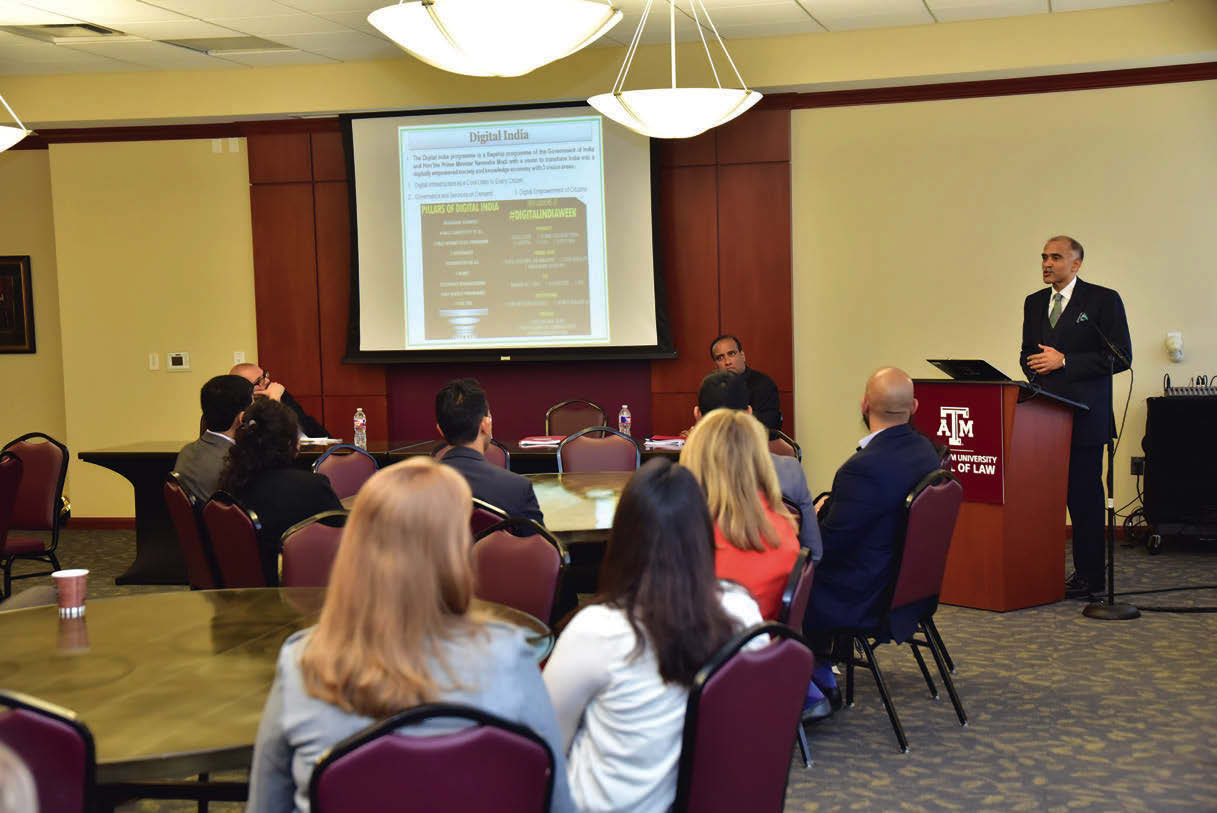
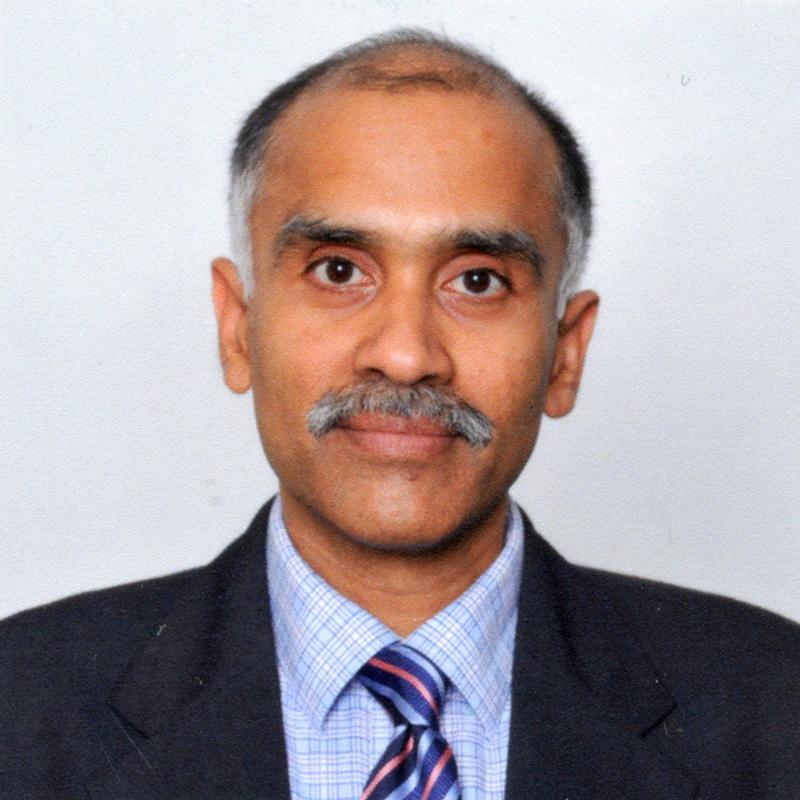
    FORT WORTH, TX (TIP): Mr. Harish Parvathaneni, Consul General of India at Houston attended as Keynote Speaker at the Center for Law and Intellectual Property Distinguished Speaker Series followed by a Panel Discussion co-hosted by Texas A&M University School of Law and Confederation of Indian Industry (CII) on Wednesday, 24 February 2016 at Texas A&M School of Law, Fort Worth, TX.

    Dean Andrew P. Morriss welcomed Consul General at the Texas A&M University School of Law. Consul General Harish gave an overview of the Indian economy, recent changes affecting the legal and business ecosystem, and flagship schemes and incentives of the Government for business and investors. He said that India has a robust Intellectual Property Rights (IPR) regime covering different kinds of IP such as Patents, Trade Marks, Industrial Designs, Plant Varieties, Copyrights, Geographical Indications and Semiconductor Integrated Circuits Layout. He stressed on India’s compliance with World Trade Organization (WTO) agreement on Trade Related Aspects of Intellectual Property (TRIPS) and World  Intellectual  Property Organization (WIPO).

    A view of the gathering at the Panel discussion co-hosted by Texas A&M University School of Law and Confederation of Indian Industry (CII) on Wednesday, 24 February 2016 at Texas A&M School of Law, Fort Worth, TX
    A view of the gathering at the Panel discussion co-hosted by Texas A&M University School of Law and Confederation of Indian Industry (CII) on Wednesday, 24 February 2016 at Texas A&M School of Law, Fort Worth, TX

    Consul General Harish highlighted India’s strong engagement with the U.S. and partner countries on IPR. He said that the Draft National IPR Policy has been released and discussions have taken place with all stakeholders regarding Government of India’s pro-active role in leveraging the strengths of the IPR regime for effective development and transfer of technology, promoting creative industries, stimulating innovations and empowering local communities in securing benefits from their knowledge base. The IPR regime is an integral part of the flagship projects of the Government of India such as Make in India and Digital India encouraging foreign companies to invest and establish their manufacturing, R&D and outsourcing bases in India.

    Professor of Law, Ms. Srividhya Raghavan moderated a panel discussion followed by Q&A featuring Consul General Harish and representatives of Indian industry, Mr. Kapil Sharma, Vice President Government and Public Affairs, WIPRO Inc. and Mr. Mani Iyer, President, Mahindra USA, who in their presentations explained the positive changes in business environment in India. They gave account of their hands-on experience of operations in India and the U.S. The event concluded with a healthy discussion between Professors specializing in IPR, students of the law school, the local bar, Chambers of Commerce, Indian lawyers and representatives of business and industry in the Dallas / Fort Worth areas.

  • Actor Farhan Akhtar’s Music Band to tour US

    Actor Farhan Akhtar’s Music Band to tour US

    Actor Farhan Akhtar has announced the “first ever” tour dates for his band Farhan Live’s music concert in the US.

    The six-day tour will start on May 20 from Dallas, Texas and will conclude on May 29 in Washington, D.C.

    The “Wazir” star, who will next be seen in the upcoming film “Rock On 2″, took to Twitter to announce about the tour.

    “Pleased to announce our first ever US tour…Dates and cities listed below. Details to follow…shine on,” Farhan tweeted on Tuesday.

    He shared a poster, which showed the actor holding a mic in one hand and singing. The poster also shared the tour schedule.

  • University of Texas allows guns in classrooms

    University of Texas allows guns in classrooms

    CHICAGO: The University of Texas at Austin begrudgingly agreed Wednesday to allow students to carry guns into classrooms, months after state lawmakers passed a bill outlawing gun bans at public universities.

    “I do not believe handguns belong on a university campus, so this decision has been the greatest challenge of my presidency to date,” university president Gregory Fenves said in a statement.

    “I empathize with the many faculty members, staffers, students and parents of students who signed petitions, sent emails and letters, and organized to ban guns from campus and especially classrooms.”

    Some faculty members have threatened to quit rather than allow students to carry guns in their classrooms, saying the presence of such weapons is too threatening in an environment that is meant to encourage debate.

    The issue is particularly sensitive given that the University of Texas at Austin was the scene of one of the nation’s first mass shootings on a college campus.

    Troubled former Marine Charles Whitman killed 14 people and wounded some 30 others after opening fire from an observation platform on the university’s clock tower in 1966.

    Gun rights activists have responded to a series of more recent campus shootings by arguing that students cannot trust the police to protect them from random acts of violence and should be able to arm themselves.

    Lawmakers in the politically conservative state with a cowboy ethos and frontier history agreed and passed a bill in August prohibiting gun bans on public college campuses.

    Fenves noted that the presidents of every large private institution in Texas — including Baylor University, Southern Methodist University and Rice University — have exercised their right to continue to ban guns on campus.

    “The presence of handguns at an institution of higher learning is contrary to our mission of education and research, which is based on inquiry, free speech, and debate,” he said.

    “However, as president, I have an obligation to uphold the law.”

    Guns can still be banned at sporting events, in university bars and medical facilities, certain laboratories and college dorms.

    The University of Texas at Austin is one of the largest public institutions in the United States with more than 51,000 students and a stellar academic reputation. It is the flagship of the University of Texas system, which educates more than 214,000 students.

  • Volume 4 Issue 07 | Dallas Texas EDITION

    Volume 4 Issue 07 | Dallas Texas EDITION

    Celebrating 10 Years of The Indian Panorama

    10 years

    A New Way to Read This Week’s Print Edition

    Reimagined for the Web
    Volume 4 Issue 07 | Desktop Edition | Feb 19

    Resolution Normal (PDF)


    Introducing Home Delivery Subscription:

    As a home delivery subscriber to The Indian Panorama, you enjoy the convenience and reliability of having the printed newspaper delivered to you first thing in the morning every Saturday.

    This incredible offer is available for 2016 at an introductory price of $5 per month (including shipping & handling – US Only). To know more email subscriptions@theindianpanorama.news

    Your subscription includes free Digital Access to www.theindianpanorama.news at no additional charge.


    Advertise with The Indian Panorama 

    alexa ranking feb 2016
  • 3 Indian-Americans Could Be US Supreme Court Judge Nominees

    3 Indian-Americans Could Be US Supreme Court Judge Nominees

    WASHINGTON:  Three Indian-American legal luminaries may be among the possible candidates whom US President Barack Obama could nominate as a Supreme Court judge following the sudden death of conservative icon Justice Antonin Scalia.

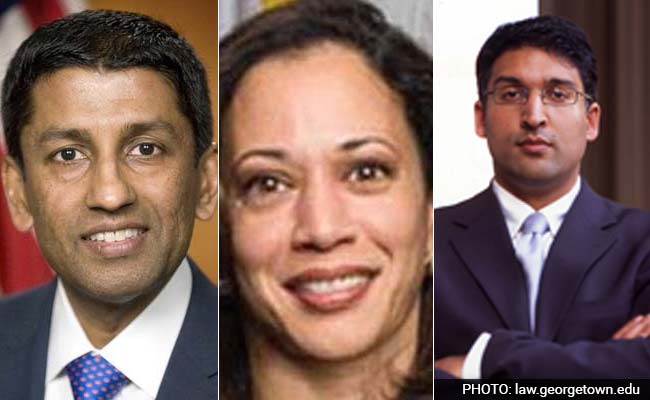
    Within hours of the death of Mr Scalia at a ranch in Texas, the name of Chandigarh-born Sri Srinivasan popped up as the top contender to the post.

    Sri Srinivasan, 48, is currently the US Circuit Judge of the United States Court of Appeals for the District of Columbia Circuit which many call as a stepping stone to the Supreme Court.

    He is not only considered as a favourite of Barack Obama, who has called him as a trailblazer, but also his nomination to the Court of Appeals was confirmed by a record 97-0 votes, which is an achievement given the bitter political divide in the US Senate.

    The White House yesterday refused to give any indication of the list of persons President Obama is looking into to zero in on his nomination for the next Supreme Court judge.

    But given his track record – wherein he has appointed a record number of Indian-American judges to various US courts – and him publicly praising some of them, it would not be a big surprise that in addition to Mr Srinivasan a few other individuals from the community too figure up in his list.

    Among them could be his home town resident Neal Katyal, who served as Acting Solicitor General of the US from May 2010 until June 2011 and California Attorney General Kamala Harris, who is considered to be very close to President Obama.

    Ms Harris, who traces her roots to Chennai, is currently running for the US Senate seat in California.

    On Monday several media outlets mentioned Ms Harris as among the potential ones who could replace Mr Scalia in the Supreme Court.

    Ms Harris, 51, who was among the six people mentioned by New York Times, has not reacted to the speculation so far.

    In 2011, she became the first African-American, Asian-American, Indian-American and woman to hold the post of California attorney general.

    Many say Mr Katyal, who would turn 46 on March 12, could emerge as a dark horse in the process.

    With extensive experience in matters of patent, securities, criminal, employment, and constitutional law, he has orally argued 27 cases before the Supreme Court of the United States, with 25 of them in the last six years.

    Barack Obama intends to nominate someone as Supreme Court judge who honours constitutional responsibilities, have impeccable credentials and understands how laws affect the daily realities of people’s lives, the White House said.

    “I would not anticipate an announcement this week, especially given that the Senate is out on recess,” White House Press Secretary Eric Schultz told reporters. Schultz refused to engage in speculation about lists and names.

    When asked about what kind of individual President Obama is looking to nominate someone to be the next Supreme Court judge, Schultz said President’s judicial nominees should adhere to a number of basic principles.

    “Number one, I’d say the President’s judicial nominees are all eminently qualified with a record of excellence and integrity. The President looks for individuals who have impeccable credentials,” he said.

    “Number two, the President intends to nominate individuals who honor constitutional responsibilities. These are individuals who have a commitment to impartial justice, respect the integrity of the judicial process, and adhere to precedent. The President seeks judges who will faithfully apply the law to the facts at hand,” he said.

    “And lastly, the President is also mindful that there are rare cases where the law is not clear, and we acknowledge that those incidents occur most often at the Supreme Court,” he said, adding that in those times, a judge will have to bring his or her own ethics and moral bearings into a decision.

    –  PTI

  • Indian American Teenager Found Dead in Texas Apparent Suicide

    Indian American Teenager Found Dead in Texas Apparent Suicide

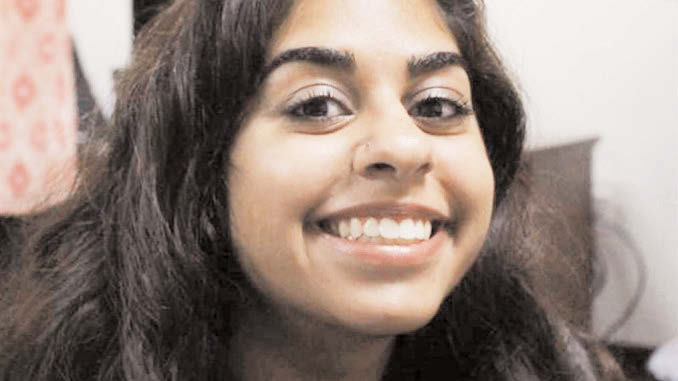
    DALLAS (TIP): Ritu Sachdeva, 17, an Indian American teenager was found dead Jan. 31 in her Murphy, Texas home, on the same day a school friend’s body was found in nearby woods. Ritu died of an overdose of multiple medications, Murphy Police Chief Arthur Cotten told media. Sachdeva’s parents found her dead body in her bedroom and called police, said Cotten. Within several hours, the remains of Hillary Kate Kuizon, 17, were found by Murphy officers. Kuizon died by hanging in an apparent suicide, said Cotten.

    Both girls attended Plano East Senior High and knew each other, said the police chief, noting that investigators are still trying to determine if there is a connection between the two deaths. Sachdeva’s parents gave no indication as to what might have occurred before their daughter died, said Cotten, adding that police had not previously been called out to the home. Both deaths continue to be an open investigation, pending final reports from the medical examiner.

    No evidence of foul play has been detected in either case, said Cotten. “Our thoughts and prayers are with the two families,” said the police chief in a press statement. “We are treating these two cases with the care and compassion they deserve, and will continue to seek answers for the families.”

    Prachi Sachdeva, Ritu’s mother said she was not yet ready to talk about her daughter’s death. The family has set up a Facebook memorial page and will hold a memorial service for Ritu on Feb. 7, 2 p.m., at Charles W. Smith and Sons Funeral Home in Sachse, Texas.

    “Everyone loved Ritu so so so much,” Suchi Sachdeva, Ritu’s older sister, wrote on her Facebook page. “She was so bright, beautiful, quirky, and just all around amazing, inside and out. Gone too soon, only 17 years young.”

    “It’s going to be extremely difficult to move on from this tragic loss. Nothing is going to be the same; her birthday, holidays, going to restaurants, going on family vacations, etc. I’ll always be thinking of her when doing anything good,” said Suchi Sachdeva.

    Autumn Hinze, a friend of Sachdeva’s, has set up a $2,000 gofundme.com page called “Flowers for Ritu,” with the aim of filling Sachdeva’s home with flowers and aiding a suicide prevention organization. A sum of$1,926 had been raised in a single day.

    “Ritu Sachdeva changed all of our lives. Her bold, beautiful personality infiltrated our hearts and now we are all feeling her loss. I know I can’t process her being gone and I’m sure many feel the same,” said Hinze.

    “Even if you didn’t know her that well, you probably know how her personality could fill a room and how she could make a joke about anything. She was a vital member of every group she was ever in and it will take us a very long hard time to feel normal again,” she said.

    In 2014, Sachdeva won an honorable mention in the Medicine and Health sciences division for her entry at the Beal Bank Dallas Regional Science and Engineering Fair.

    Teen suicide is on the rise in the Asian American community. One out of every ten children struggles with mental health issues, reports the National Alliance on Mental Health, noting that Asian American teenage girls have the highest rates of suicide of any U.S. population. (IW, July 10, 2013)

    While there is a lack of data related to depression in the South Asian American community, a study released by the Asian and Pacific Islander American Health Forum reported that a higher percentage of South Asian Americans, especially between the ages of 15 to 24, tested positive for symptoms of depression. However, South Asian Americans are the lowest users of mental health services because of the perceived cultural stigma attached to mental health issues, noted the APIAHF report.

    (Source: Agencies)

  • 4 Indian-Americans Selected To US National Academy Of Engineering

    4 Indian-Americans Selected To US National Academy Of Engineering

    WASHINGTON:  Four Indian-Americans have been selected to the prestigious US National Academy of Engineering (NAE) to be part of its new list of 80 members for their valuable contributions to the society.

    Anil K Jain, Dr Arati Prabhakar, Ganesh Thakur and Dr K R Sridhar were formally made part of the NAE during a ceremony at its annual meeting here, the academy announced in a statement yesterday.

    Mr Jain, a distinguished professor in the department of computer science and engineering at the Michigan State University in East Lansing, was elected for his contributions to the field of engineering and practice of biometrics.

    An IIT-Kanpur alumnus, Mr Jain’s research focuses on pattern recognition, computer vision and biometric recognition.

    Dr Prabhakar, director of the US Defense Advanced Research Projects Agency (DARPA) in Virginia, was chosen for national leadership to advance semiconductor and information technologies.

    Beginning her career as a Congressional Fellow, Dr Prabhakar has also chaired the Efficiency and Renewables Advisory Committee for the US Department of Energy.

    Mr Thakur, who is the president of Thakur Services Inc. in Houston, Texas, was named a member for leadership in the implementation of integrated reservoir management techniques.

    Mr Sridhar, the principal co-founder and chief executive officer of Bloom Energy Corporation in California, was selected for the “contributions to transport phenomena and thermal packaging of electrochemical systems and generation of clean, reliable and affordable power”.

    Earlier, Mr Sridhar was director of the Space Technologies Laboratory (STL) at the University of Arizona where he was also a professor of aerospace and mechanical engineering.

    His contributions to the NASA Mars programme to convert Martian atmospheric gases to oxygen for propulsion and life support was recognised by Fortune magazine which cited him as “one of the top five futurists inventing tomorrow, today.”

    Along with the new members, the total US NAE membership has up to 2,275, selection to which is considered the highest professional distinctions accorded to an engineer.

    Founded in 1964, the NAE is a non-profit institution that provides engineering leadership in service to the nation.

  • Judge sanctions prominent Dallas lawyer for misconduct

    Judge sanctions prominent Dallas lawyer for misconduct

    DALLAS (TIP): In a scathing ruling issued last month a state judge in Lubbock declared that prominent Dallas trial lawyer Bill Brewer committed misconduct when he used so-called push polling to improperly influence potential jurors in a West Texas wrongful death and products liability case.

    State District Judge Ruben Reyes described Brewer’s conduct as “unprofessional” and “unethical” – findings that Brewer adamantly denies – and ordered the hard-charging trial lawyer to pay more than $133,000 in sanctions and take 10 hours of legal ethics courses.

    Reyes found that Brewer and his law firm conducted a push poll with questions and statements “designed to influence or alter the opinion or attitude of the person being polled.”

    Brewer represented Titeflex Corp. in a multimillion-dollar case in which a West Texas family said that the company’s poorly made steel pipelines led to a gas explosion that killed their son, Brennen Teel.

    In the weeks before the case was to go to trial, Brewer hired a professional polling firm to survey Lubbock-area residents about issues in the lawsuit.

    The judge ruled that the questions were designed to shift blame from Titeflex to those who installed the pipeline or to city employees in charge of inspections.

    In court documents, lawyers for Brewer dispute that the survey was a push poll. They also argued that there is nothing illegal or unethical about Brewer hiring a professional polling firm to gauge public sentiment on issues related to the case.

    Brewer said that those contacted by the polling firm were selected randomly and that any contact with people directly involved in the case was inadvertent.

    “We have the greatest respect for Judge Reyes, but respectfully disagree with the court’s findings,” Timothy T. Pridmore, a partner at McWhorter, Cobb & Johnson who is representing Brewer, said in a written statement.

    “There is nothing Mr. Brewer and the firm take more seriously than their professional responsibilities and ethical duties,” he said.

    Bickel & Brewer, known for aggressive litigation tactics, changed its name last year to Brewer, Attorneys & Counselors, after founding partner John Bickel retired and later joined Fish & Richardson in Dallas.

    The parties in the Teel vs. Titeflex case settled for an undisclosed amount in 2014. Reyes held hearings on the sanction motions against Brewer last year.

    In a four-page ruling issued late Friday, the judge found that the decision to conduct the survey “falls into the category of misconduct, which is highly prejudicial and inimical to a fair trial by an impartial jury.”

    “The court finds Mr. Brewer’s attempt to avoid responsibility and accountability for his conduct to be at the very least unpersuasive and at worst in bad faith, unprofessional and unethical,” the judge concluded.

    If Brewer appeals the sanctions order and loses, the judge said, the sanctions would increase to $173,000.

  • Death row inmates’ final words are more positive than negative: Psychologists

    Death row inmates’ final words are more positive than negative: Psychologists

    WASHINGTON (TIP): Inmates on death row facing imminent execution use more positive than negative words in their final statements, according to new research.

    In a new paper, Frontiers in Psychology, researchers Dr Sarah Hirschmuller and Dr Boris Egloff examined the emotional language used by prisoners, minutes before their executions, in the US state of Texas.

    Comparing positivity in these last words with those who “contemplated death and attempted or actual death by suicide”, the psychologists found that the inmates on death row were much more likely to display positive emotions as they faced their impending executions.

    The report, they add, contributes to the growing literature suggesting elevations in positive language as coping strategy for the immense threat of death.

    In order to test this theory the researchers worked with a database of 407 inmates’ last words between 1982 and 2015 – all of which are available on the Texas Department of Criminal Justice website. Using the popular terror-management-theory (TMT) – a framework used to examine human reasoning in a situation of threat or uncertainty – the authors attempted to investigate how inmates on death row seek to make sense of what is about to happen to them.

    “Initiatively, one might imagine that thoughts of one’s own death should evoke fear and anxiety as death may be associated with a broad range of frightening aspects,” the authors of the report write.

    They add: “Without any doubt, the psychological ‘terror’ felt in the situation of self-decided death by suicide is extreme. However, there may be one situation where individuals face an even greater amount of terror: directly before death by execution. This situation is characterized by a complete absence of controllability and a maximal subjection to powerful others who have the right to end one’s life.”

    The report concludes: “Considering real deaths by both execution and suicide, it remains an important task to further investigate why individuals facing execution use an even greater number of positive emotion words.

    “Psychologists, taking account of the perspectives of death row inmates, victims, and society as a whole, should continue to shed light on individuals’ immediate coping with human mortality reflected in their words before death.”

    (The Independent)

  • Sarah Palin endorses Donald Trump

    Sarah Palin endorses Donald Trump

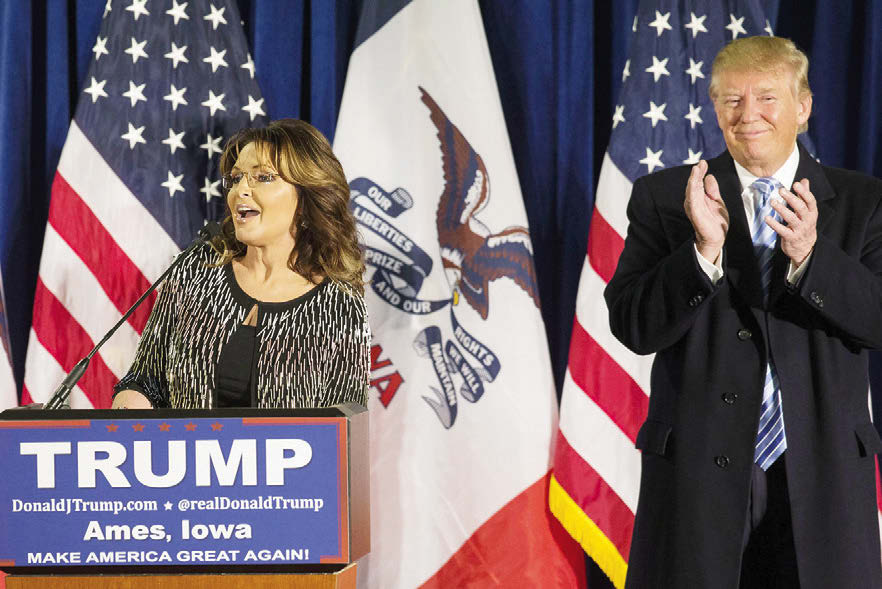
    AMES, IOWA (TIP): Republican presidential front-runner Donald Trump received a key endorsement Tuesday, January 19, from Tea Party darling and conservative heavy weight Sarah Palin, potentially giving the billionaire business-man a boost with some voters less than two weeks before voting begins with the Iowa caucuses.

    “Media heads are spinning,” she said after taking the stage at a Trump rally at Iowa State University in Ames. “This is going to be so much fun.”

    Palin is a former Alaska governor and was the running mate of Arizona Sen. John McCain in his 2008 bid for the White House. She said that with Trump as president, America would no longer apologize.

    “No more pussy-footing around,” she said, adding that Trump would allow the military to do its job and destroy the Islamic State in Iraq and the Levant (ISIL). “He’s going rogue left and right. That’s why he’s doing so well.” Her memoir was titled “Going Rogue” after a remark made by a McCain staffer who said she was off-message during the campaign.

    “I am greatly honored to receive Sarah’s endorsement,” Trump said in a statement announcing her support. “She is a friend and a high-quality person whom I have great respect for. I am proud to have her support.”

    He is in a tight contest with Sen. Ted Cruz of Texas for the support of Iowa Republicans, who lean conservative and whose evangelical Christians make up a major voting bloc.

    Joe Brettell, a Republican strategist in Texas, said he thought Palin would not help Trump much “beyond a jolt in the news cycle.”

    Lindsey Graham – a Republican senator from South Carolina said, “Sarah Palin can’t save Donald Trump from being crazy,” referring to some of Trump’s proclamations, such as a plan to bar Muslims from entering the U.S., which Graham said made Trump unelectable.

    Trump also received an endorsement from Aissa Wayne, the daughter of movie star John Wayne. Standing in front of a life-size rifle-toting model of the actor in full cowboy gear, Trump accepted her endorsement at the John Wayne Birthplace Museum in Winterset, Iowa.

    “America needs help, and we need a strong leader, and we need someone like Mr. Trump with leadership qualities, someone with courage, someone that’s strong, like John Wayne,” she said.

  • 67th Republic Day of India | Greetings from Harish Parvathaneni

    67th Republic Day of India | Greetings from Harish Parvathaneni

    I extend my greetings and best wishes on the joyous occasion of Republic Day, through this Special Illustrated Issue of The Indian Panorama commemorating the 67th Republic Day of India, to Indian Citizens, the Indian American community and Friends of India in Texas and other States of USA served by the Consulate General of India, Houston.

    The Republic day is an occasion to rededicate ourselves to the values and ideals of the Indian constitution and the vision of the leaders of our Freedom Struggle.  These values have helped consolidate our democracy, strengthened our diverse society, nurtured our plural polity and bind our countries and peoples.

    I am fortunate to be serving in Houston at a time of a huge upswing in bilateral relations cemented by high level visits undertaken by Prime Minister Shri Narendra Modi and President Mr. Barack Obama. Texas has been the focus state for Indian investments in the US with the largest share of inbound Indian investments and jobs created in the US. Texas and Houston are home to numerous Indian oil and gas companies and manufacturing sector industries, and Dallas hosts numerous Indian companies in the Information Technology sector. We look forward to the first shipments of LNG from the US to India next year from Sabine Pass Terminal, further strengthening our energy sector cooperation.

    We have had a successful high level trade delegation led by the then Mayor of Houston Honorable Annise Parker in April 2015 and look forward to arranging a high level visit and accompanying trade delegation to India this year led by Texas Governor Honorable Greg Abbott.

    This is a special occasion for members of the Pravasi Bharatiya community who have distinguished themselves in India and the US by their hard work, contributions to nation building and community service. I specifically mention the numerous Indian students and faculty in institutions of higher learning in our consular jurisdiction who by their efforts and personalities bring together academia and research communities in India and US.

    On this joyous occasion of Republic Day, my best wishes to all for peace, progress and prosperity!

    Harish Parvathaneni


  • Economic crisis is not far away

    Economic crisis is not far away

    The next financial crisis is coming. It’s just a matter of time – and we haven’t finished fixing the flaws in the global system that were so brutally exposed by the last one.

    Massive monetary policy stimulus has rekindled growth in developed economies since the deep recession that followed the collapse of Lehman Brothers in 2008; but what the IMF calls the “handover” to a more sustainable recovery – without the extra prop of ultra-low borrowing costs – has so far failed to materialize.

    Meanwhile, the cheap money created to rescue the developed economies has flooded out into emerging markets, inflating asset bubbles, and encouraging companies and governments to take advantage of unusually low borrowing costs and load up on debt.

    “Balance sheets have become stretched thinner in many emerging market companies and banks. These firms have become more susceptible to financial stress,” the IMF says.

    Meanwhile, the failure to patch up the international financial system after the last crash, by ensuring that banks in emerging markets hold enough capital, and constraining risky borrowing, for example, means that a new Lehman Brothers-type shock could spark another global panic.

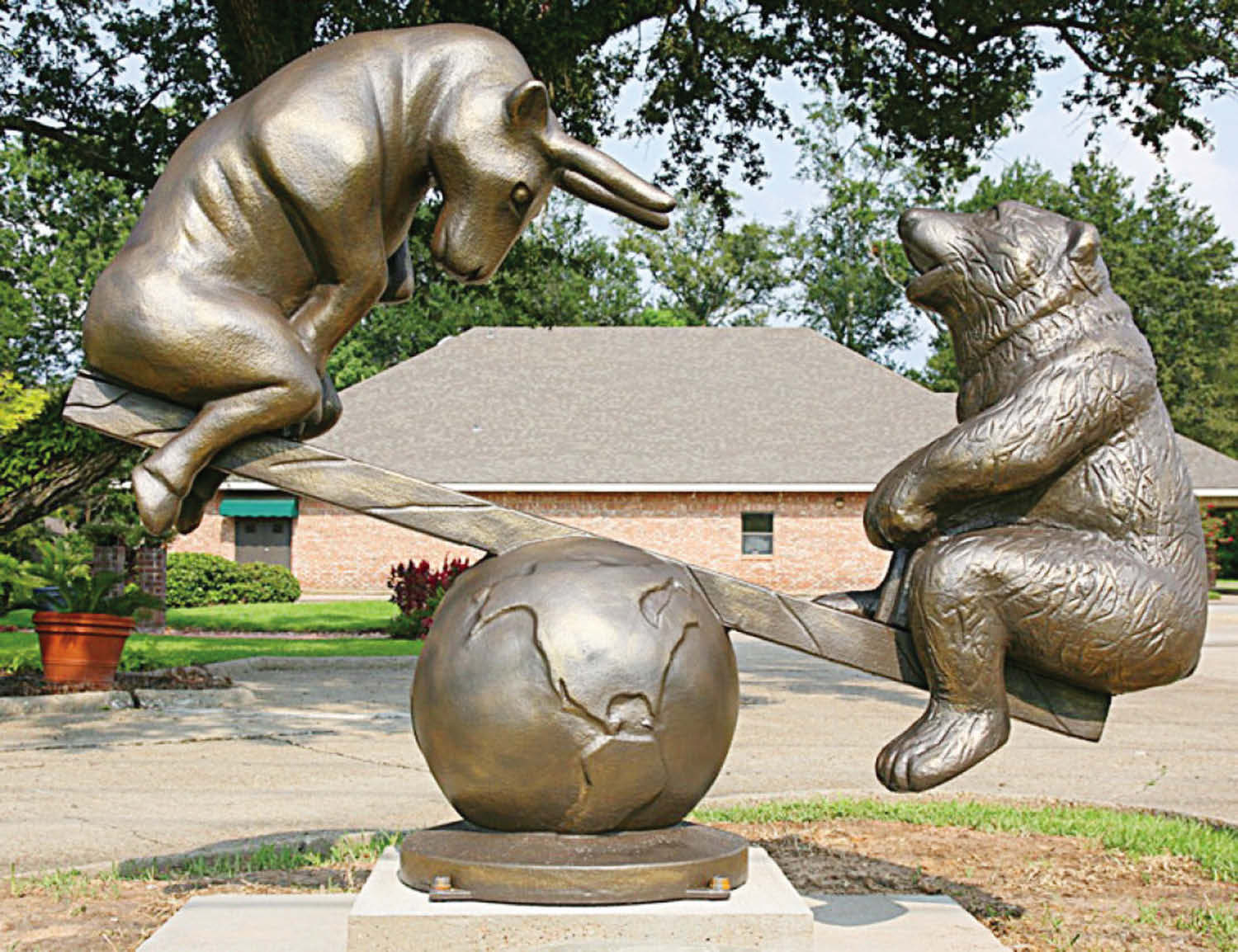
    VOLATILITY IN STOCKS AROUND THE WORLD

    Jan 13, 2016: Asian shares have tumbled after a heavy sell-off on Wall Street added to nervousness among investors.

    Japan’s Nikkei 225 was down more than 4% at one point – dropping below 17,000 for the first time since September – before closing down 2.7% at 17,240.95.

    US shares had fallen by more than 2% as oil prices continued to decline and worries grew over prospects for US company earnings.

    Weak economic data from Japan also dented investors’ confidence.

    Government data showed that core machinery orders fell 14.4% in November from the previous month.

    The orders were down for the first time in three months in the world’s third largest economy.

    Plunging oil prices

    Brent crude prices, meanwhile, fell 0.9% to $30.05 a barrel after earlier hitting a fresh 12-year low of $29.73.

    Bernard Aw, market strategist at trading firm IG, said oil prices would not see much recovery this year amid a supply glut.

    “Oil prices should continue to remain low, where a sustained pick-up is expected only in the third quarter of 2017,” he said in a note on Thursday.

    Australia’s S&P/ASX 200 share index ended 1.6% lower at 4,909.40, despite the release of better-than-expected employment data.

    The unemployment rate in the country was 5.8% in December, with fewer jobs lost than economists were expecting.

    The country lost 1,000 new jobs, as against expectations of 10,000.

    In South Korea, the benchmark Kospi index closed down 0.9% at 1,900.01 after its central bank kept interest rates unchanged for the seventh consecutive month.

    Hong Kong’s Hang Seng index ended the day down 0.6% at 19,817.41.

    Investors were spooked by Wednesday, Jan 13, sharp falls on Wall Street, when the Dow Jones and S&P 500 fell 2.2% and 2.5% respectively.

    There are fears that the continuing low crude price reflects a slowdown in some economies and could weigh on growth in emerging markets, many of which rely on oil revenues.

    Jan 13, Russia’s Prime Minister, Dmitry Medvedev, warned tumbling oil prices could force his country to revise its 2016 budget.

    He said that the country must be prepared for a “worst-case” economic scenario if the price continued to fall.

    Oil and gas projects worth $380bn have been postponed or cancelled since 2014 as companies slash costs to survive the oil price crash, including $170bn of projects planned between 2016 and 2020, according to a report from energy consultancy Wood Mackenzie.

    Mainland shares recover

    The Shanghai Composite index was the only bright spot in the region, reversing early losses to close up nearly 2% at 3,007.65.

    Regulators had announced late on Wednesday that they had stepped up monitoring share-selling by listed companies’ major shareholders.

    The securities commission also said that its transition to a US-style registration system for listings would be a gradual process and not lead to a surge in initial public offerings (IPOs).

    The announcement was the latest in a series of measures to support the market after heavy losses since last week.

    Elsewhere in the region, Indonesia’s Jakarta composite index closed down 0.5% at 4,513.18 points. The index had fallen more 1.7% earlier as multiple bomb blasts rocked the capital city on Thursday.

    Indonesia’s central bank continued its meeting throughout the attacks and cut its benchmark interest rate to 7.25%from 7.5%. The bank’s move is in an attempt to give its struggling economy a boost and comes despite a weakening currency.

    Jan 14, 2015: US stocks have closed higher, but European markets have continued to suffer from worries over oil prices and economic growth.

    The three main US indexes all gained between 1.4% and 2%, lifted in part by a 2% rise in the US oil price.

    Earlier in London, the FTSE 100 closed 0.7% down, while the main Frankfurt and Paris indexes fell 1.7%and 1.8% respectively.

    Those falls followed a heavy sell-off in some Asian markets.

    The pound hovered close to five-and-half-year lows against the dollar.

    Alongside the rise in the price of US West Texas Intermediate crude, Brent oil also rose in afternoon trading. The price was up 2.5% to $31.03 a barrel, having briefly drifted below $30 on Wednesday.

    The falls in European shares followed overnight losses in Asia. Japan’s Nikkeiindex closed down 2.7%, having dropped more than 4% at one point.

    Hong Kong’s Hang Seng eased off two-and-a-half-year lows to finish down 0.6%. The Shanghai Composite, which has endured torrid trading in recent months, was one of the few bright spots, rebounding nearly 2%.

  • GUN VIOLENCE  Another bloody 12 months in America

    GUN VIOLENCE
    Another bloody 12 months in America

    There were the six children, their mother and her boyfriend in Houston, Texas. The nine worshippers in a church in Charleston, South Carolina. The 53-year-old father who tried to stop three men ransacking a metalworker’s minivan in Brooklyn. The 28-year-old mother of two in Indianapolis whose new husband shot her in the face 13 times. The two young reporters shot to death during a live news broadcast in Moneta, Virginia. And the thousands just like them whose deaths did not make the front page.

    While many victims’ names may quickly disappear from the public eye, their stories live on in the statistics that help us to understand the scale of gun violence in the United States. Below is a compilation of numbers that added up to a significant year in gun debate in 2015.

    According to the Gun Violence Archive (GVA), a nonprofit website that scours more than 1,200 sources to track gun deaths and injuries in the United States, there have been more than 50,000 incidents of gun violence in 2015.

    The numbers include everything from homicides and multiple-victim gang assaults to incidents of self-defense and accidental shootings. The organization’s records show that more than 12,000 people have been killed with guns this year, but what its numbers do not record – due to government reporting practices – is a massive hole in the data: the nearly 20,000 Americans who end their lives with a gun each year. Nor does its already high injury tally capture the full extent of the victims who continue life with debilitating wounds and crushing medical bills. When the federal statistics for 2015 are released two years from now, the government’s models will show tens of thousands more gun-related injuries.


    Major Incidents / Shootings (order by severity)


    1. San Bernardino
    2. Roseburg, Oregon
    3. Charleston, South Carolina
    4. Chattanooga, Tennessee.
    5. Colorado Springs, Colorado
    6. Garland, Texas

    Gun Violence in America: By the Numbers

    MORE THAN 4 MILLION: Number of American victims of assaults, robberies, and other crimes involving a gun in the last decade

    MORE THAN 30,000: Number of gun deaths in America each year

    MORE THAN 20,000: Number of children under 18 killed by firearms over the last decade

    MORE THAN 20,000: Number of Americans who commit suicide with a firearm each year

    466: Number of law enforcement officers shot and killed by felons over the last decade

    As of December 23, a total of 12,942 people had been killed in the United States in 2015 in a gun homicide, unintentional shooting, or murder / suicide.


    Terrorism dominates headlines and budget lines while a more lethal scourge persists at home.


    In his remarks following the mass shooting at Umpqua Community College on October 1, President Obama said he knew his outrage over the country’s unrelenting gun violence would be interpreted by critics as “politicizing” the issue. Fine, he said, and asked news organizations to check the facts: “Tally up the number of Americans who’ve been killed through terrorist attacks over the last decade and the number of Americans who’ve been killed by gun violence, and post those side-by-side.” Several did, and Obama’s point was made: Amid the government’s massive, justifiable effort to squelch terror threats, comparatively little has been done to address a problem that has claimed exponentially more U.S. lives. According to an October poll, 40 percent of Americans say they know someone who was fatally shot or committed suicide with a gun.

    Mass shootings – as measured by four or more people shot, regardless of total fatalities – have taken place in nearly 100 metro areas over the past 12 months.

    According to the Mass Shooting Tracker, a crowdsourced database of shootings in which four or more people are injured or killed, all but one major American city has had a mass shooting since 2013, with Austin, Texas as the lone exception. This year alone, nearly 100 metro areas have experienced mass shootings. The Tracker counts domestic homicides in its tally, as well as sprays of gunfire that wound several people at once – but often aren’t counted among the San Bernardinos or Umpquas because the victims survived. Two such incidents year-old Adam Lanza fatally shot 20 children and 6 adult staff members occurred on Father’s Day this year, when 10 people were shot at a block party in West Philadelphia, Pennsylvania, and 12 people were shot at a child’s birthday party in Detroit, Michigan.

    “This is not the time to be fearful,” said Detroit Police Chief James Craig. “These are urban terrorists who do nothing positive for our neighborhoods.”

    School kids who fell victim to shootings at Sandy HookElementary School in Newton, Connecticut on December 14, 2012 when 20-children & 6 adults were shot
    School kids who fell victim to shootings at Sandy HookElementary School in Newton, Connecticut on December 14, 2012 when 20-children & 6 adults were shot

    The vast majority of the nation’s gun violence does not look like Umpqua or Charleston or San Bernardino.

    Though mass shootings demand nonstop coverage, it’s the shootings taking place in parking lots, bars, schools, bedrooms, and street corners across America that are responsible for most gun injuries and deaths.

    Black men are disproportionately affected by gun violence.

    A November ProPublica article noted that half of American gun death victims are men of color in “poor, segregated neighborhoods that have little political clout.” Timothy Heaphy, a former U.S. attorney in Virginia, says this is precisely why they don’t capture the public’s attention. “I don’t think we care about African-American lives as much as we care about white lives,” he said.

    At a rate of more than twice a day, someone under 18 has been shot and killed.

    A remarkable 75 percent of children killed with guns this year have been under the age of 12. Since the mass shooting at Sandy Hook Elementary in Newtown, Connecticut, three years ago, an American child under 12 has died by intentional and accidental gunfire every other day, according to analysis by NBC News. And those children are far more likely to die from guns held by family members and acquaintances than strangers, according to an NBC News analysis of FBI data.

    On August 18, 9-year-old Jamyla Bolden was killed by a bullet fired into her Ferguson, Missouri, home as she did her homework on her bed. “Usually when we hear the gunshots, she’s the first one who yells ‘Mom, they’re shooting!’” her mother told KMOV.com, a local news station. “I noticed Jamyla wasn’t saying anything. That’s the main thing I remember: her not moving.”

    Unsecured guns have turned dozens of toddlers into killers – and many more into victims.

    Kids younger than three have gotten ahold of guns and shot someone at least 59 times this year, a disturbing trend first reported by Christopher Ingraham at the Washington Post in October. Most often, these toddlers injure or kill themselves, but more than a dozen have shot other people, sometimes fatally. Gun violence prevention advocates say that gun storage requirements and the adoption of smart guns that only fire for their owners could reduce these deaths, but the gun lobby vehemently opposes such mandates. In November, after the Post’s report, 20 Democrats in the U.S. Senate asked the Government Accountability Office to issue a report on the safe storage of guns in American homes.

    Guns are now ending as many American lives as cars.

    The comparative mortality rates – also first flagged by the Post’s Christopher Ingraham – come from CDC figures released earlier this month. They reflect a larger story: While motor vehicles have been getting progressively safer, guns have killed people at a consistent clip over the past 15 years. Unpacking the numbers further reveals that firearm fatalities are holding steady while suicides by firearm have climbed along with the number of guns in circulation. Some theorize that medical advances are saving shooting victims who formerly would have died of their injuries.

    A gun in a troubled home continues to raise the risk of death

    This enduring statistic from a decade-old California Attorney General report emphasizes just how dangerous it is to introduce firearms into a turbulent relationship. In no state is that more pronounced than in South Carolina, which ranks first in the rate of women killed by men – a rate that is more than twice the national average. After several frustrated starts, South Carolina finally passed legislation this year limiting firearms access for domestic abusers -along with Alabama, Delaware, Maine, Oregon, and Vermont. But 17 states still do not have their own equivalent of a federal law banning criminal domestic misdemeanants from possessing guns, according to the Law Center to Prevent Gun Violence.

    In one of those states, Georgia, Vanessa Soyer was gunned down in front of her 13-year-old son in their Lawrenceville apartment on November 16. A mother of four, the Harlem-bred Soyer, 47, authored a book about domestic violence. Her husband of 15 years, from whom she was in the process of separating, was arrested for the murder. “Nobody would’ve ever thought that the words from the pages of her books would become her reality,” her GoFundMe page reads.

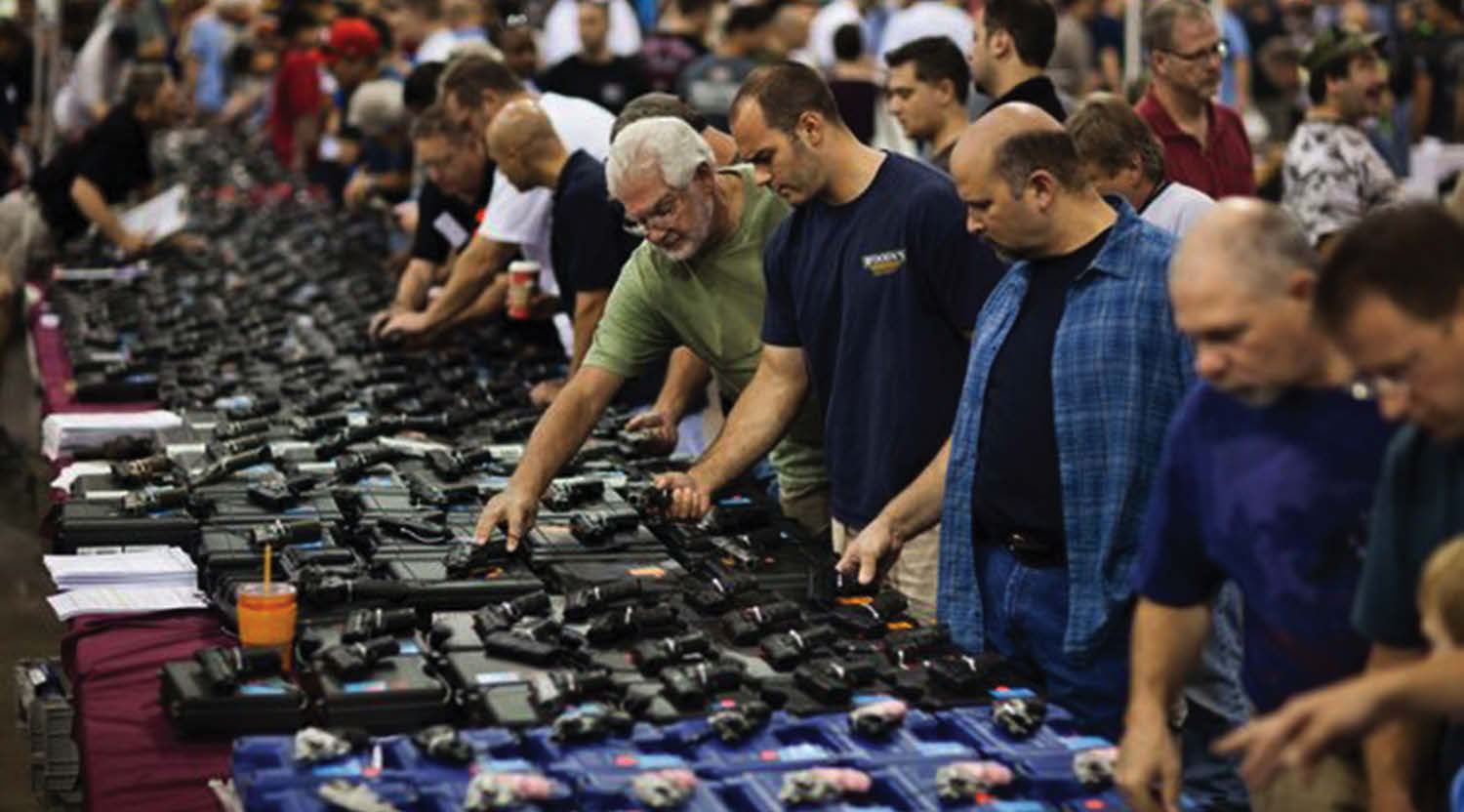
    Gun sales in 2015 continued at a blistering pace.

    The same day Robert Lewis Dear opened fire at a Planned Parenthood in Colorado Springs, Colorado, killing three and wounding nine, the FBI reported five percent more NICS checks than Black Friday last year, setting an all-time single-day record. If each of those checks resulted in a gun sale, it would means Americans bought enough new firearms to arm every active duty Marine.

    8 % of gun owners own a stockpile of 10 or more weapons.

    In an online survey of 3,000 people, Harvard’s Injury Control Research Center found that 22 percent of Americans professed to own guns – and 25 percent of those gun owners own five or more guns. The Center’s director, Dr. David Hemenway, told The Trace in October that guns in fewer hands might actually lower rates of gun suicide and accidental shootings. But the fact that these gun owners feel they must compile an arsenal raises another set of questions. “Who are these people and why do they have so, so many guns?” Hemenway asked. “And are they really responsible?”

    Tens of thousands more stolen guns entered the illegal market – many a result of theft.

    The advisories echoed from sheriffs in Jacksonville, Florida; St. Louis, Missouri; and Lafayette, Louisiana: Lock up your guns. More than 400 firearms were stolen from cars in Duval County, Florida, this year – and 60 percent of those were from unlocked cars. In St. Louis, reports of gun theft were up 70 percent in August, and cars and trucks were targeted far more than homes. A gun stolen out of a car in Lafayette was used to wound a police officer last year, and in Pinellas County, Florida, a gun stolen from an unlocked car was used to kill another officer. Stolen guns, which are increasingly showing up at crime scenes, were called “the engine of violence in Chicago” by police spokesman Anthony Guglielmi in August.

    The increase in such thefts has sparked a debate about personal responsibility and gun ownership. The town of Orange, Connecticut, went so far as to charge a resident with misdemeanor reckless endangerment after he reported his loaded .38-caliber revolver stolen from his unlocked truck. Pro-gun advocates argue that stadiums and schools should be removed from gun-free zone designations, so people can carry their guns with them instead of leaving them in their cars. The bottom line, Jacksonville Sheriff Mike Williams said in November, is “be a responsible gun owner, take care of your weapon, lock it up.”

    American cities continue to seize illegal guns at an astounding rate.

    The Chicago Police Department announced earlier this month that it confiscated 6,521 illegal guns in 2015, which it said works out to one gun every 90 minutes. But Newsweek analyzed the department’s own figures and concluded that it’s been more successful than advertised. “With 335 days so far this year and 6,521 guns removed, that is about 19 guns a day, or about one every 74 minutes,” Polly Mosendz wrote. (In July, Adam Sege conducted a similar audit for The Trace, and determined Chicago Police were removing a gun off the streets every 75 minutes.)

    Officers in Little Rock, Arkansas, took 118 guns off the street as of November 2015. Baltimore, Maryland, police estimate that they’ve seized nearly 3,500 illegal guns in the last 12 months.

    Tyshawn Lee was the second 9-year-old boy murdered in Chicago in the last 15 months.

    The gunshot wounds to his temples had to be sealed with wax. He wore a white tuxedo, red bow tie, white gloves, and red, size 5 gator-skin shoes, and his 25-year-old mother wore a white dress and a red hat to match. Tyshawn Lee was the second 9-year-old boy to be targeted and killed by gangs within the last 15 months in Chicago, and he was lured from a swing set in the Auburn Gresham neighborhood and murdered in an alley because his father allegedly belonged to a gang that may have been involved in the murder of the brother of one of the suspects. Peter Nickeas, the overnight crime reporter at the Chicago Tribune, detailed the days after the boy’s death – during which a battle-hardened city found it still had the capacity for shock.

    The 114th Congress is still hesitant to engage with the gun issue.

    At a hearing on the third anniversary of the Sandy Hook shooting, California Representative Mike Thompson, chairman of the House Gun Violence Prevention Task Force, noted that Congress has held more than two dozen moments of silence since the massacre – but has not approved any gun safety bills. In March, Thompson, a Democrat, and Representative Peter King of New York, a Republican, introduced a bipartisan bill that would implement background checks on private gun sales. Since then it’s been bouncing from one House subcommittee to another.

    This was also the year that saw a backlash against politicians who offer “thought and prayers” after mass shootings but no legislative action. Left-leaning reporters noticed that the same lawmakers who only offered empty platitudes were highly rated by the NRA. On the evening of the San Bernardino shooting, Igor Volsky, a contributing editor at ThinkProgress, began Twitter-shaming them. One by one, he replied to three dozen Republican legislators’ “thoughts and prayers” tweets with the amount they’d been given by the NRA – a total of $12.5 million.

  • Two men arrested in US on terrorism charges

    Two men arrested in US on terrorism charges

    SACRAMENTO (TIP): US authorities said on Thursday that two people have been arrested on terrorism-related charges in California and Texas, including a refugee from Iraq who is charged with lying to federal investigators about his travels to Syria. A criminal complaint unsealed on January 7 accused Aws Mohammed Younis Al-Jayab, 23, of traveling to Syria to fight alongside terrorist organizations and lying to investigators about it.

    The complaint said Al-Jayab, a Palestinian born in Iraq who came to the United States as an Iraqi refugee in October 2012, communicated on social media about his intent to return to Syria to fight for terrorist organizations, discussing his previous experience fighting against the regime in Syria. When he was interviewed by citizenship officials, he lied about his travels and ties, the complaint alleges. Ben Galloway of the federal defender’s office is the suspect’s attorney. He did not immediately return telephone and emailed messages Thursday. The US Attorney’s Office in Sacramento said Al-Jayab was arrested on Thursday morning in Sacramento. Meanwhile, the governor and lieutenant governor of Texas praised the arrest in Houston of what Lt Gov Dan Patrick called a terror suspect.

    “Based on the facts, as we know them, today’s action may have prevented a catastrophic terror related event in the making and saved countless lives,” Patrick said in a statement. Federal officials in Houston did not immediately provide more details. Federal officials say a separate arrest in Milwaukee that grew out of the Sacramento investigation is not related to national security.

    (AP)

  • To New Year’s Kisser

    To New Year’s Kisser

    Time is ticking for sure,
    With two days for midnight of new year-And people are trolling
    About a midnight kiss with a cheer!But this is not a simple kiss,
    Rather, it’s a security for love-
    For the future years to come and go, Like a mating plan of dove!
    Laughing and blushing incessantly
    Is part of the chore-
    Followed by drinking and dancing,
    Till the clubs close the door!
    Hopes for a romance engulfs
    The drag queen in a rush-
    While the knight looks for the night
    To thicken and say the word hush!
    So, out there, awaiting the midnight kiss, Whoever you are-
    I send my best wishes to you,

    The New Year’s kisser!!

    Hillol RayBy Hillol Ray

    Garland, Texas

    Email:  Ray.Hillol@epa.gov

  • Nigerian charged in sophisticated email scam is in custody in Dallas

    Nigerian charged in sophisticated email scam is in custody in Dallas

    DALLAS (TIP): A Nigerian man living in the U.S. on a student visa faces federal wire fraud charges in connection with a sophisticated email phishing scam targeting businesses.

    Amechi Colvis Amuegbunam, 28, of Lagos, Nigeria, was arrested in Baltimore in August and charged with scamming 17 North Texas companies out of more than $600,000 using the technique. He remains in federal custody in Dallas. If convicted, he faces up to 30 years in prison and a fine of up to $1 million.

    He is accused of sending emails that looked like forwarded messages from top company executives to employees who had the authority to wire money. Amuegbunam tricked the employees into wiring him money by transposing a couple of letters in the actual company email, authorities said.

    The FBI issued an alert earlier this year about the new cyberattack it called the “Business Email Compromise.” The FBI said it is a “growing fraud that is more sophisticated than any similar scam the FBI has seen before.”

    Federal officials say more than 7,000 U.S. businesses have been scammed out of a total of about $740 million.

    “It’s a prime example of organized crime groups engaging in large-scale, computer-enabled fraud, and the losses are staggering,” said Maxwell Marker, an FBI agent who oversees an organized crime section, in a recent bulletin.

    The FBI said it’s the work of organized crime groups from Africa, Eastern Europe and the Middle East.

    The Dallas investigation began in 2013 when two North Texas companies reported falling victim to the scheme, each losing about $100,000, according to an FBI complaint.

    In the case of Luminant Corp., an electric utility company in Dallas, an employee with the authority to wire money received an email from someone who appeared to be a company executive, the complaint said.

    But the email domain name had two letters transposed. For example, someone created the email with a domain name of lumniant.com.

    The duped employee wired $98,550 to a bank account outside Texas.

    The FBI subpoenaed information about the email account and learned it was created by someone named Colvis Amue, the complaint said.

    Agents determined that person was Amuegbunam and that he scammed another company out of $146,550, according to the complaint. A third company realized the phishing email was fake and did not send the $381,903 requested.

    “The Dallas FBI quickly learned that this was a widespread scheme,” the complaint said.

    The FBI has identified five other conspirators who live in Nigeria who are subjects of the investigation.

    In these scams, “money mules” are employed to accept the initial transfers into their personal bank accounts. They then are told to quickly transfer the money elsewhere, usually to a bank account outside the U.S. The money usually ends up in Asian banks, including those in China and Hong Kong, the FBI alert said.

    The criminals have become experts at imitating invoices and accounts, agents say. The fraudulent emails are typically well worded and specific to the type of business being targeted, the FBI says. The phrases, “code to admin expenses” and “urgent wire transfer,” are frequently used.

    In one recent case provided by the FBI, a company accountant received an email from her chief executive, who was on vacation outside the country. He asked her to transfer money for a “time-sensitive acquisition” before the day’s end, according to the FBI. The executive said a lawyer would contact her with more information.

    The accountant said such requests were not unusual.

    The lawyer sent her an email with her CEO’s signature on a letter of authorization with the company’s seal that was attached. The email gave her instructions to wire more than $737,000 to a bank in China.

    The accountant learned about the scam when the CEO called the next day, saying he knew nothing about the wire transfer request.

    The FBI said criminal groups usually target businesses that have foreign suppliers or regularly make wire transfer payments.

    “They have excellent tradecraft, and they do their homework,” Marker said. “The days of these emails having horrible grammar and being easily identified are largely behind us.”

    (Source: Dallas Morning News)

  • UNT student dies after being shot in the head in suspected road rage incident

    UNT student dies after being shot in the head in suspected road rage incident

    DALLAS (TIP): A 20-year-old University of North Texas junior died Friday, January 1 night after she was shot in what police suspect was a road rage incident.

    Denton officers found Sara Mutschlechner about 2 a.m. near a car that had smashed into a utility pole in the 1700 block of North Elm Street by Texas Woman’s University.

    Witnesses reported that she was shot in the head after a dark-colored or black Toyota or Lexus SUV carrying five or six men drove up next to her car.

    People in the SUV exchanged words with the passengers in Mutschlechner’s vehicle, police said. As the two vehicles crossed University Drive, someone in the SUV fired multiple shots at her car.

    Mutschlechner’s car struck another vehicle before crashing into the pole.

    Witnesses said she had been a designated driver for her companions on New Year’s Eve and had not been drinking.

    One of her four passengers sustained minor injuries and was treated and released from Denton Regional Medical Center.

    Mutschlechner also was taken to the medical center, where she remained on life support for most of Friday before she died, police said.

    The junior from Martindale studied radio, television and film at UNT, according to her Linkedin profile.

    “Growing up I was entranced by the beauty of cinema and as an avid movie-goer I one day decided that this — this beautiful thing I so enjoyed watching — was what I wanted to dedicate my life to,” she wrote. “I want to inspire change just as much as I want to inspire future filmmakers, like myself, to continue creating beautiful and original works of art.”

    Jordan Wright, president of the Short Film Club, said she attended classes with Mutschlechner.

    “Sara was a very sweet person, always friendly, and talented in the Media Arts program and Short Film Club organization on campus,” Wright said in an email Friday. “Nobody could have been prepared for what happened early this morning … we are all still having trouble registering the events that have taken place so rapidly and tragically.”

    According to Mutschlechner’s Facebook page, she was also a member of the Zeta Tau Alpha sorority.

    Thank you so much to everyone in our community for your support during this time. Our thoughts and prayers are with Sara and her family ❤️ — North Texas ZTA (@unt_zta) January 1, 2016

    “Thank you so much to everyone in our community for your support during this time,” a message posted to the sorority’s Twitter page said Friday. “Our thoughts and prayers are with Sara and her family.”

    Mutschlechner’s family could not be reached for comment Friday.

    UNT spokeswoman Margarita Venegas expressed condolences to Mutschlechner’s family and friends.

    “It’s a very sad for thing for us whenever we lose a member of the university community,” she said.
    A candlelight vigil will be at 8 p.m. Saturday at the university’s Greek Life Center, according to the Student Government Association.

    Police provided no physical description of the men in the SUV except that they were black, but witnesses told police that at least two of them had been at a New Year’s Eve party on Crisoforo Drive overnight.

    The DJ at the party, Denis McInerny, said he saw no fights or other disturbances at the party, though there might have been a scuffle outside.

    “The whole shooting thing caught me off-guard judging by the crowd that was there,” he said. “I didn’t think the events were related in any way.”

    Police said about 60 people attended the New Year’s Eve party.

    Anyone who attended the party or has information about the case may call investigator Eric Beckwith at 940-349-7974 or eric.beckwith@cityofdenton.com. Police also are looking for anyone who may have pictures or videos from the party.

    (Source: Dallas Morning News)

  • Frantic US fight against record floods

    Frantic US fight against record floods

    CHICAGO (TIP): Soldiers and volunteers packed sand bags Wednesday in a frantic effort to stave off floodwaters in the US state of Missouri, where 13 people have been killed and several towns have been engulfed.

    The Mississippi River is already more than 14 feet (4.2 meters) above flood stage in some areas and is forecast to rise another eight feet before cresting on Friday, according to the National Weather Service.

    “We’ve never seen water this high,” Missouri Governor Jay Nixon told CNN. “We’re in a massive flood fight.”

    Don Smith, the mayor of Rockaway Beach, a small resort town in the southern part of the state, calling the flooding “absolutely devastating” and pleaded for help.

    “I don’t even know how we’re going to deal with the clean-up,” Smith told CNN. “One of the business owners has an antique shop: there were minnows inside.”

    The images shown by local media were dramatic.

    Muddy water inundated homes and businesses nearly to the rooftops. Hundreds of volunteers formed human chains to spread sandbags on levees before the rapidly rising water could overflow them.

    A man and his dog were rescued by boat from the roof of a home that was almost completely submerged near the Missouri town of Eureka. Another man was towed out of the floodwaters with his legs dangling out the back window of his pickup.

    Nixon urged residents to stay out of the frigid and fast-moving waters. Most of the 13 victims in Missouri died when their cars were swept away.

    “It’s cold,” the governor said. “It’s dangerous.”

    President Barack Obama called Nixon from Hawaii, where he is on vacation, to offer federal assistance if it is needed.

    “The president thanked the governor for his leadership during this challenging time and expressed condolences on behalf of the First Lady and himself for those who lost their lives,” spokesman Eric Schultz said.

    The United States has been hit by a wave of wild weather — tornadoes, floods and rain — that has claimed at least 51 lives in the past week and stranded millions trying to get home after the Christmas holiday.

    So far, the flooding in Missouri has only affected small towns and rural areas.

    But the Mississippi is forecast to approach or even exceed record highs in the heavily-populated St. Louis area on Thursday, and Nixon said he is “very concerned” about the safety of residents there.

    “You don’t know where that water is going to go,” he said.

    It could take about a week for the river to drop back down below flood level, the weather service forecast.

    The flooding began last week after a massive storm system dumped as much as 10 inches (25 centimeters) of rain in some parts of the state.

    Nixon declared a state of emergency on Sunday and called in the National Guard Tuesday to help local officials deal with the rare winter flooding — the result of a monster storm system that also unleased tornadoes and freezing rain.

    Neighboring Illinois has also been hard-hit. The storm claimed the lives of five people swept away while driving on a flooded roadway, and a state of emergency was declared in seven counties.

    The wild winter weather has killed 11 people in Texas, 11 people in Mississippi and six in Tennessee.

    Alabama and Arkansas each reported two storm-related deaths while Georgia blamed one death on the nasty weather.

    More misery came Wednesday as heavy rain led to renewed flash flood warnings in Alabama, Florida, Georgia, North and South Carolina and West Virginia. (AFP)


  • Indian American Physical Therapist Gets Into OneStar National Service Commission

    Indian American Physical Therapist Gets Into OneStar National Service Commission

    Indian American Physical Therapist Sonal Bhuchar has been appointed to OneStar National Service Commission in Texas that promotes volunteerism and oversees administration of the AmeriCorps programmes in the US state.

    Ms Bhuchar, a professional physiotherapist at Therapeutic Concepts and office manager at Sugar Land Med-Ped was appointed to the OneStar National Services Commission by the Texas Governor, Greg Abbott, with her term lasting up to March 15, 2018.

    Originally from Mumbai in India, Ms Bhuchar got her bachelor’s degree in physical therapy from Bombay University.

    She currently serves as a board of member in leadership positions for Child Advocates of Fort Bend, chairman for the Literacy Council of Fort Bend, board member for Fort Bend Cares and board member for the City of Sugar Land PARCS.

    She has formerly served as a board of trustee and board president for the Fort Bend Independent School District.

    Along with Ms Bhuchar, Mr Abbott appointed Ronnie Hagerty as the chairman, Lisa Lucero as vice chairman along with Laura Dixon, Roger O’Dell, Annette Juba, Kate Williamson, James Senegal and Kirk Beckert as members of the Commission.

    Sonal Bhuchar is married to Dr. Subodh Bhuchar and has three children. They have lived and worked in Sugar Land for the last two decades.

  • Indian American Inventor Named Fellow Of US Academy

    Indian American Inventor Named Fellow Of US Academy

    A prominent Indian-American bioengineering researcher has been named as a fellow in the US’ National Academy of Inventors for his work in inventing path-breaking healthcare technologies.

    C Mauli Agrawal, an IIT-Kanpur alumnus, is the Vice President of Research at the University of Texas at San Antonio. He will be formally inducted in April next year.

    His work in orthopaedic implants, cardiovascular biomaterials and diabetic foot products has drawn recognition.

    His bioengineering research has resulted in 28 patents.

    Mr Agrawal, 56, will be among 582 fellows in the National Academy of Inventors (NAI). He was selected for the honour because of his research and innovations in orthopaedic and cardiovascular biomaterials and implants.

    “It is a great honour. Some of the greats, at least in my field, are members of this academy. It’s good for San Antonio that we get more people there. Any recognition like this puts the spotlight on UTSA and I think that’s great,” Agrawal was quoted as saying by San Antonio Express News yesterday.

    He has been in San Antonio since 1991. He worked at the UT Health Science Centre for 12 years before joining UTSA (University of Texas at San Antonio) in 2003.

    Most of his work in San Antonio has focused on developing implants from orthopaedic and cardiovascular materials. His research group’s work led to the formation of an engineering company that developed scaffolding that can be implanted in patients to help develop cartilage or bone.

    Dr Steven Bailey, the cardiology division chair at the health science centre and a longtime colleague of Mr Agrawal’s, said the recognition is well-deserved.

    “He’s been incredibly insightful in terms of not only what can be demonstrated in an academic and research environment but, more importantly, what will translate in terms of meaningful patient progress as well,” Bailey said.