Tag: Texas

  • Religious Accommodation in the Workplace and U.S. Constitution

    Religious Accommodation in the Workplace and U.S. Constitution

    Defying the Supreme Court and saying she was acting “under God’s authority,” Ms. Kim Davis, a county clerk in Kentucky denied marriage licenses to gay couples on Tuesday [09/01/15]. Ms. Davis has preferred to go to jail, in contempt of court orders, than to do something that is against her religious belief, raising a pertinent question of ‘conflict between an employee’s employment obligations and employee’s religious obligations’.

    Ms. Davis has filed an appeal against her ‘contempt of court order’ sentencing, now. A matter that would have been trivial otherwise, becomes a Tinderbox resulting in a celebrity status for Ms. Davis. Political candidates have jumped into fray, some strongly in support of Ms. Davis. Senator Ted Cruz of Texas said, “every Believer, every Constitutionalist, every lover of liberty to stand with Kim Davis.” Senator Rand Paul of Kentucky told CNN, “I think it’s absurd to put someone in jail for exercising their religious liberty.” Former Gov. Mike Huckabee of Arkansas said, “We must end the criminalization of Christianity!” Gov. Bobby Jindal told, The Huffington Post, “I don’t think anyone should have to choose between following their conscience and religious beliefs and giving up their job and facing financial sanctions”. Some other candidates, such as, Gov. Chris Christie (NJ), Sen. Lindsey Graham (SC) and Carly Fiorina, the former Silicon Valley executive, said that as a government employee Ms. Davis was obligated to carry out the law, despite personal religious objections. (‘Candidates Respond to Kim Davis Case With Varying Intensity’ By Trip Gabriel, The New York Times 09/03/2015)

    Surprising, Bobby Jindal has dramatically changed his opinion from an earlier one. In 2009, when Louisiana’s Justice of the Peace Keith Bardwell refused to officiate an interracial couple’s wedding, Louisiana Governor Bobby Jindal called for Bardwell to be fired. “This is a clear violation of constitutional rights,” Jindal said in 2009. (‘Republican Supporter of Kim Davis Contradicts His Own Stance’ By Matt Baume THE BLOG 09/05/2015)

    A few days back, the Council on American-Islamic Relations’ Michigan chapter filed a complaint with the Equal Employment Opportunity Commission (EEOC) challenging that a [Muslim] flight attendant was placed on administrative leave because she refused to serve alcohol to passengers. ‘The complaint accuses Express Jet Airlines of withdrawing its religious accommodation for the employee’. (…A Detroit-based flight attendant who objects to serving alcohol based on her religious beliefs as a Muslim. By Melissa Nann Burke, The Detroit News  09/01/2015).

    On May 30, 2012, the Sikh Coalition and the Transit Authority reached a settlement in Federal Court that allows Sikh MTA workers to wear their turbans freely at work. (‘Sikh MTA Workers Relieved They Can Wear Turbans Freely’ By Smriti Rao 06/06/12 www.dnainfo.com)

    In a recent case, a federal court has given Hofstra University student Iknoor Singh permission to enroll in the U.S. Army’s Reserve Officer Training Corps without shaving his beard, cutting his hair, or removing his turban. US district court judge Amy Berman Jackson issued the ruling, saying 20-year-old Iknoor Singh’s adherence to his religious beliefs would not diminish his ability to serve in the military. (‘Court rules New York Sikh student can serve in US army with beard and turban’ Associated Press 06/15/2015)

    “In other such cases, Capt. (Dr.) Tejdeep Singh Rattan, a dentist, and Capt. (Dr.) Kamaljeet Singh Kalsi, a doctor, were told to remove their turbans and cut their hair and beards for active duty in the U.S. Army. However, in 2010, special exceptions to Army Regulation 600-20 were allowed so Rattan and Kalsi could wear their dastaars (turbans) and keep their unshorn hair and beards as part of their uniform, and also retain their other articles of faith. (Sikh Soldiers allowed to serve, retain their articles of faith By Steve Elliott  www.army.mil News Archives United States Army 03/25/ 2010).”

    In the U. S., freedom of religion is a constitutionally protected right under the First Amendment. Freedom of religion is also closely associated with separation of church and state. (Wikipedia) Title VII of the Civil Rights Act prohibits employment discrimination based on religion. A religious practice may be sincerely held by an individual even if newly adopted, not consistently observed, or different from the commonly followed tenets of the individual’s religion. (www.eeoc.gov)

    This protection to the accommodation of religious beliefs did not exist in the original Title VII of 1964, and was incorporated in 1972. It was in Dewey v. Reynolds Metals Co ?(429 F.2d 324 (6th Cir. 1970), aff’d , 402 U.S. 689 (1971) that this omission was realized. Plaintiff, Dewey was an employee of defendant, Company. He became a member of the Faith Reformed Church, 10 years after working with the defendant. Plaintiff’s religious beliefs prevented him from working on Sundays, which were contrary to the collective bargaining agreement between employer and employees. Dewey refused to work on a Sunday, and filed a lawsuit against defendant. The U. S. Supreme Court denied relief to Dewey. That eventually resulted in an amendment to Title VII of 1964. This amendment of 1972, to Title VII, requires employers to reasonably accommodate an employee’s religious practices.

    A common request for religious accommodation is modification of a work schedule due to conflicts with religious beliefs or practices. The problems sometimes arise in the workplace concerning religious observance when an employer discharges an employee for failure to report to work on what the employee considers a holy day. Federal law requires an employer to “reasonably accommodate” an employee’s religious observances, practices and beliefs unless the employer can show that accommodation would cause an “undue hardship” to the employer. Similarly, New York State law requires employers to permit workers to observe holy days, unless doing so would cause an “undue hardship.” Employers must also attempt to accommodate other religious practices, including religious dress and appearance requirements and prayer during the workday (www.ag.ny.gov/).

    This ‘undue hardship’, somehow, has not been clearly defined in the statutes. In Trans World Airlines V. Hardison (432 U.S. 63, 1977), the Supreme Court ruled that an employer need not incur more than minimal costs in order to accommodate an employee’s religious practices. Accordingly, A reasonable accommodation is “subject to the limit of more than de minimis cost or burden.” If the employer claims that accommodation is not feasible because it would result in undue hardship, the employer must demonstrate an actual effect that accommodation would have on the business. An employee must notify his or her employer first regarding a request for a day off for religious observance for the employer to recognize that the religious observance will conflict with work. (EEOC Compliance Manual). The EEOC Guidelines provide detailed information on employer’s accommodation to employee’s on religious matters. (29 C.F.R. § 1605.2(d))

    The Establishment Clause bars the government from advancing or inhibiting religion and ensures that government remains neutral. That government may not promote or affiliate itself with any religious doctrine or organization, may not discriminate against persons on the basis of their religious beliefs and practices, may not delegate a government power to a religious institution and may not involve itself too deeply in such an institution’s affairs. (County of Allegheny v. ACLU, U.S. S.Ct. (1989)). Prayer at meetings violates Title VII and establishment clause. (Warnock v. Archer 8th Cir. 2004). The court ruled that incorporating prayer into required meetings violates employees’ rights. [Requiring an employee to be present for unwelcome prayer would also violate Title VII, even if the employee were excused from the meeting, perhaps with consequences of missing out on important work information.]. Atheists are afforded the same protections under Title VII as those who belong to other “religious” beliefs. This protection is based on the theory that the law also protects the freedom not to believe. (Reed v. Great Lakes Companies, Inc. 7th Cir. 2003). Membership in the Klu Klux Klan is not protected “religious” belief. In Slater v. King Soopers, Inc. (D. Colo. 1992), the court concluded that “. . . the KKK is not a religion for purposes of Title VII. Rather the KKK is political and social in nature.” (Religion in the Workplace, By: Robert Gregg, Boardman and Clark LLP, Attorneys at Law)

    Under Title VII, an employer has an affirmative obligation to maintain a work environment free of harassment, intimidation, and insult. In Harris V. Forklift Systems Inc., (114 S.Ct. 367, 371, (1993)), the Supreme Court held that harassment need “not seriously affect employees’ psychological well being” in order to be actionable under Title VII “so long as the environment would reasonably be perceived, and is perceived, as hostile or abusive.” The employer’s obligation extends to situations where he or she knows of the harassment or has reason to know of it and does nothing to correct the situation.

    In EEOC v. Abercrombie & Fitch Stores, Inc. (Docket No. 14-86, Author Scalia, Opinion 06/01, 2015), ‘the issue was whether an employer can be liable under Title VII for refusing to hire an applicant or discharging an employee based on a religious observance and practice only if the employer has actual knowledge that a religious accommodation was required’. The court concluded, by 8-1 vote, that an employee’s (or prospective employee’s) failure to explicitly mention their religious beliefs or practices does not necessarily absolve an employer of the duty to explore accommodations. In this case, a practicing Muslim showed up for her job interview wearing a head scarf. The assistant store manager found the applicant qualified, but was concerned that her head scarf would put her in conflict with the company’s dress code (its “look policy”). The assistant manager believed, but did not know, that the applicant wore the scarf for religious reasons (she does). (‘EEOC wins Supreme Court case on religious accommodation’ By Paul Mirengoff in Powerline 06/02/2015).

    The courts are flooded with numerous such cases. A recent survey of American workers suggests that religious discrimination is a growing workplace concern. (What American Workers Really Think About Religion: Tanenbaum’s 2013 Survey of American Workers and Religion 5/2013). Therefore, one is to maintain a ‘balance between one’s conscience and laws of this land’ at one’s workplace.

    (The author works as an attorney with Anand Ahuja Associates, Attorney at Law and
    International Business Consultants. He can be reached at anandesq@hotmail.com or via
    phone (516) 502-3262, (718) 850-1952.)

  • Baby dies after being left in hot car in Texas

    TEXAS (TIP): Police say a 4-month-old boy died but his sister survived after their father left them in a hot car for at least 40 minutes in South Texas.

    Corpus Christi Police Sergeant Marc Harrod says the father drove home with the children on Sept 9 afternoon, but entered the family home without them. Harrod says the father remembered the children at least 40 minutes later and summoned help.

    The baby died at a Corpus Christi hospital. His 16-month-old sister was treated at the scene and released to relatives.

    Police have not released the names.

    Harrod says the children’s mother was not home during the incident.

  • Oil prices down ahead of US energy report

    Oil prices down ahead of US energy report

    SINGAPORE (TIP): Oil prices eased in Asia on September 10 as dealers focused on an upcoming US energy report for clues about production and demand in the world’s top crude consumer amid abundant global supplies.

    US benchmark West Texas Intermediate for October delivery fell 65 cents to US $43.50 while Brent crude for October dropped 76 cents to US $46.82 in late-morning trade.

    “We have seen US production levels slowing in recent weeks, and those figures will next be in focus for investors seeking answers on the oversupply issue,” Ric Spooner, chief market analyst at CMC Markets in Sydney, said.

    The Department of Energy (DoE) will release its weekly report on Thursday, a day later than usual because of Monday’s Labour Day holiday.

    Analysts expect commercial crude-oil inventories rose 250,000 barrels in the week to September 4, according to a Bloomberg News survey.

    At the same time, the DoE on Wednesday had predicted in a new report that US crude oil production would decline through the middle of next year in response to low prices, before picking up again in late 2016 on an expected recovery in prices.

  • US BUSINESS MAGAZINE HONOURS INDIAN-AMERICAN WOMAN

    US BUSINESS MAGAZINE HONOURS INDIAN-AMERICAN WOMAN

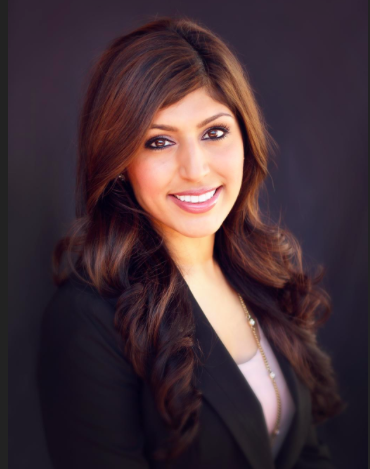
    An Indian-American woman has made it to the list of the top 30 female Business leaders in Austin Business Journal’s “2015 Profiles in Power & Women of Influence”, a media report said.

    Rina Patel, area president for Wells Fargo in Austin, was recognised as a “female powerhouse on the Austin business scene” during the 21st annual Profiles in Power awards last month, according to the business magazine.

    “Rina Patel has shown tremendous flexibility in her career, as illustrated by her career path. She has been willing to take on new roles and to relocate to new communities to develop her leadership skills and knowledge — and it’s paid off,” the Austin Business Journal reported on Friday.

    On her career progression, it said that Patel has grown over the past 11 years by jumping from teller, to banker, to service manager, to store manager in various stores, to district manager overseeing 15 stores, to her current role as an area president. At Wells Fargo, she manages more than 375 team members.

    Patel also serves on the boards of the Girl Scouts of Central Texas.

    “Often times as women, we focus on working on ourselves and how to become a better leader through our interpersonal skills. What is often missed in our development is having a strong balance of these three areas. This is a critical key piece to further your career path into leadership roles,” Patel was quoted as saying by the business magazine.

  • OIL PRICES RETREAT AS DEALERS EYE US DATA

    OIL PRICES RETREAT AS DEALERS EYE US DATA

    SINGAPORE (TIP): Oil prices edged lower in cautious Asian trade on September 4  as investors await the release of a US jobs report for August that could determine the Federal Reserve’s timetable for hiking interest rates.

    US benchmark West Texas Intermediate for October delivery fell 17 cents to USD 46.58 while Brent crude for October eased 16 cents to USD 50.52 in late-morning trade.

    “With the Federal Reserve closely eyeing employment figures in order to gauge the strength of the economy, US non-farm payrolls should be crucial,” said Daniel Ang, investment analyst at Phillip Futures in Singapore.

    “If non-farm payrolls turn out lower than expected, this could suggest a December 2015 rate hike instead,” Ang said.

    A rate hike would likely strengthen the greenback, making dollar-priced oil more expensive to holders of weaker currencies, hurting demand and prices.

    However, Ang said crude retained some support after the European Central Bank (ECB) on Thursday indicated more stimulus could be on its way for the eurozone.

    ECB president Mario Draghi said the bank was ready to ramp up its vast bond-buying scheme — known as quantitative easing (QE) — if needed to kick-start the stuttering eurozone economy.

    The bank also cut its growth and inflation forecasts for 2015-2017, noting the downside risks from low oil prices and the economic slowdown in China.

    Ang said Draghi’s comments “caught the attention of the markets more, allowing markets to remain bullish”.

    Prices have fluctuated wildly in recent weeks on uncertainty about Fed monetary policy as well as worries about the economy of number-one energy consumer China.

    Tuesday saw them turn sharply lower after weak manufacturing data from China and the United States clouded the outlook. They had surged more than 25 percent over the three days before that.

  • THREE INDIAN-AMERICANS AND 3 INDIANS NAMED AS FELLOWS BY AMERICAN SOCIETY FOR METALS

    THREE INDIAN-AMERICANS AND 3 INDIANS NAMED AS FELLOWS BY AMERICAN SOCIETY FOR METALS

    SACRAMENTO, CA (TIP): Three Indian-Americans and as many persons from India are among 29 people, who have been named as Fellows this year by the American Society for Metals, for their contributions in the field of materials science and engineering.

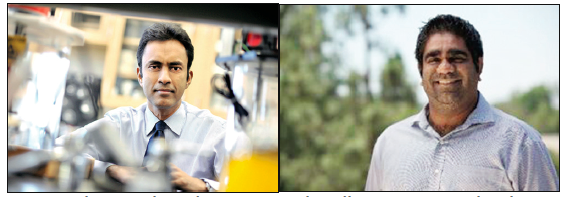
    The Indian-Origin Fellows are Pranesh Aswath, Suveen Mathaudhu, Muthukumarasamy Sadayappan – while the achievers from India are – Pradeep Goyal, Vivekanand Kain, and Gankidi Madhusudhan Reddy.

    Aswath is a professor and associate dean for the University of Texas at the Austin College of Engineering. He was selected for his significant contributions to the science of tribology through establishing fundamental relationships between lubricant additive chemistry, tribofilm formation and friction and wear.

    Mathaudhu is an assistant professor at U.C. Riverside. He was selected for his scientific leadership, management, and advocacy of the U.S. Army materials research efforts, and in particular for the development and support of new advanced lightweight metals and bulk nanostructured materials.

    The fellowship was created in 1969 to provide recognition to ASM members for their distinguished contributions to materials science and engineering, and to develop a broad-based forum of technical and professional leaders to serve as advisers to society.

    The fellows will be presented with their awards for the recognition during the Materials Science and Technology 2015 event in Columbus, Ohio, in October.

  • ISLAMIZATION OF AMERICA | Sharia Law vs. U.S. Constitution

    ISLAMIZATION OF AMERICA | Sharia Law vs. U.S. Constitution

    Sharia or sharia law is the Islamic legal system derived from the religious precepts of Islam, particularly the Quran and the Hadith (Wikipedia, The Free Encyclopedia). Various recent studies demonstrate that the Islamization of America is accelerating at fast pace and is gradually penetrating into America’s courts and judicial system. Today, Islamization is visible not only in American political system but in education system also, and is spreading rapidly into American culture. Newt Gingrich, the former House Speaker, has called Sharia “a mortal threat to the survival of freedom in the United States and in the world….” According to him, Muslims in the U.S. want to manipulate Sharia into U.S. legislation. New York City’s Mayor, De Blasio has already added Muslim holidays to the school calendar whereas Hindu holidays are to be considered by his administration.

    Due to high rates of birth, immigration and conversions, the Muslim population in USA is growing at a much faster rate than the national. ‘Islam’s growth in American prisons is particularly troubling. About 80%of Americans who convert to a religion while in prison become Muslims, who now comprise about 20% of American prison population’. (www.billionbibles.org/sharia/islamization-of-america). ‘Sharia law has been advancing in other American institutions as an increasing number of public American schools with Muslim students are holding Islamic prayers towards Mecca. In 2013, Skokie School District 68 in Illinois became the first US school district to celebrate Eid al-Adha, a Muslim high day, as a school holiday, in lieu of Veterans Day. In 2014, Rocky Mountain High School in Fort Collins, Colorado became the first high school to recite the Pledge of Allegiance in Arabic, replacing “One nation under God,” with “One nation under Allah.” In 2000, the Republican National Convention became the first US presidential convention to open with a Muslim prayer to Allah, the moon god. In 2007, Quran for the first time was used to swear into office a new US Congressman, Keith Ellison.’ (www.billionbibles.org/sharia/islami zation-of-america.html)

    According to the report, a group of Muslims in northern Texas has created what may be the first official Shariah law system in the United States. (The State Of Texas Accepts Sharia Law, And Will Have The First Sharia Court In The United States: By Ted, Shoebat.com 02/04/2015). However, Mayor Beth Van Duyne of Irving, Texas, is advocating for a law that would ban any such Sharia courts there. Recently, concerned that Muslims residents weren’t buying enough homes in his city, Seattle’s Democrat Mayor Ed Murray had appointed a committee to investigate it. Last year, Minneapolis Mayor Betsy Hodges donned a hijab when she met with Somali leaders in her city. (Major U.S. city poised to implement Islamic law: By Leo Hohmann, Published in WorldNetDaily 07/23/2015 www.wnd.com/major-u-s-city-poised-to-implement.). As per National Report, the city council of Dearborn, Michigan became the first US city to officially implement all aspects of Sharia Law. (Nationalreport.net/city-michigan-first-fully-implement-sharia-law).

    In 2009, Hudson County Superior Court Judge Joseph Charles Jr. ruled in S.D. v.
    M.J.R. that the Muslim ex-husband is entitled to sexually assault his Muslim ex-wife, both before and after their divorce. Evidence at trial established, among other things, that the husband told his wife, “You must do whatever I tell you to do. I want to hurt your flesh” and “this is according to our religion. You are my wife, I c [an] do anything to you.” However, the judge denied the ex-wife’s request for a permanent restraining order against her ex-husband, citing the Muslim man’s “belief” and “practices”: “The court believes that [defendant] was operating under his belief that it is, as the husband, his desire to have sex when and where he wanted to, was something that was consistent with his practices.” (S.D. v. M.J.R, Docket No. A-6107- 08T2, Superior Court of New Jersey, Appellate Division, Decided July 23, 2010).

    The sexual submission (tamkin) by wife to her husband is prevalent under Sharia. This Sexual submission is traditionally regarded as unconditional consent for the remainder of the marriage. Under Sharia law, man is considered superior to woman. Further, under Sharia: A woman becomes subservient to her husband and needs his permission to: “leave the house, take up employment, or to engage in fasting or forms of worship other than what is obligatory.” A man, under Sharia, is entitled to up to four wives, but a woman may only have one husband. A man can divorce his wife by making a declaration (talaq) in front of an Islamic judge irrespective of the woman’s consent. Even her presence is not required. For a woman to divorce a man (khula), his consent is required. There is no joint property; the man owns all property, except for what the woman owned before the marriage. (Women’s Rights Under Sharia: An overview of the lack of equality and oppression of women under Sharia – the position of women in Muslim majority societies. By Elliot Friedland, Wed, February 19, 2014)

    Sharia, which is a religiously-based legal system, conflicts with the America’s secular legal system. Under Title 5 Section 3331 of the U.S. Code, all elected and appointed officials are to take oath of the U.S. Constitution. As per Article VI of U.S. Constitution, the Constitution is the supreme law of the land and, “…all Executive and Judicial officers…….., shall be bound by Oath or Affirmation, to support this Constitution.” Further, under U.S. Constitution, sovereignty lies with its People. However, under Sharia the emphasis is on the sovereignty of Allah (God) and submission to Him: “Sovereignty in Islam is the prerogative of Allah Almighty alone.” (Principles of Islamic Jurisprudence, Mohammed Hashim Kalamali)

    The premise of the U.S. Constitution is ‘Equality, Liberty and Justice for all. The 14th Amendment states: “… nor shall any State deprive any person of life, liberty, or property, without due process of law; nor deny to any person within its jurisdiction the equal protection of the laws. Under Sharia laws, non-Muslims are not considered equal to Muslims before the law. Under Shariah law, women, girls, apostates, homosexuals and “blasphemers” are all denied equality under the law. (Shariah: The Threat to America, www.shariahthethreat.com). Under Sharia law, women are equated to property. It says, “When one is given a woman, servant, or cattle, one should seize its forehead and pray to Allah” (Ibn-i-Majah vol.3 no.1918 p.157. See also Muwatta’ Malik 28.22.52). From intelligence point, women are considered not Half as Intelligent as men. According to the Muslim Sharia (Law), the witness of a woman is equal half that of a man, “because of the deficiency of the woman’s mind.” (Bukhari vol.3 no.826 p.502), Mohammed said that a nation will never succeed that makes a woman their ruler (Bukhari vol.9 no.219 p.170-171) (Quoted from www.MuslimHope.com/OriginsOfIslam.htm).

    ‘Freedom of Religion’ is provided under the First Amendment of U.S. Constitution. It states, “Congress shall make no law respecting an establishment of religion, or prohibiting the free exercise thereof…..” The U.S. Constitution guarantees the freedom to practice one’s faith and religion without government interference. Sharia, on the other hand, restricts any such freedom in religious matters. It states: “Fight and slay the unbeliever wherever you find them and lie and wait for them in every stratagem of war” (Quran 9:5); and “But take not friends from their ranks until they flee in the way of Allah. But if they turn away from Islam, seize them and slay them wherever you find them, and take no friends or helpers from among their ranks.” (Quran 4:89) “Whoever changed his [Islamic] religion, then kill him” (Sahih al-Bukhari, 9:84:57).

    Under U.S. Constitution (First Amendment) ‘Freedom of Speech’ is guaranteed. It states, “Congress shall not abridge “the freedom of speech.” There is no such freedom of speech under Sharia. Any speech that defames Islam or Muhammad is considered “blasphemy”, and is punishable by death or imprisonment. First Amendment, further, provides ‘freedom to dissent’. It states, “Congress cannot take away the right of the people “to petition the Government for a redress of grievances.” However, under Sharia, Non-Muslims are not to harbor any hostility toward the Islamic state or give comfort to those who disagree with Islamic government. (Shariah: The Threat to America www.shariahthethreat.com).

    Right to due process and fair trial is provided under 5th, 6th and 7th Amendments of U.S. Constitution. Fifth Amendment states, “no person shall be held to answer for a capital or otherwise infamous crime… without due process of law.”, and Sixth Amendment guarantees a “public trial by an impartial jury.” Whereas Seventh Amendment provides “the right of trial by jury shall be preserved.” Under Sharia, according to Hadith Sahih al-Bukhari quoting Muhammad, “No Muslim should be killed for killing a Kafir (infidel).” Non-Muslims are prohibited from testifying against Muslims. Under 8th Amendment of U.S. Constitution, cruel and unusual punishment is prohibited. On the other hand, under Sharia, punishments are barbaric.

    “Cut off the hands of thieves, whether they are male or female, as punishment for what they have done – a deterrent from Allah.” (Quran 5:38). A raped woman, under Sharia is not considered a victim and is punished. “The woman and the man guilty of adultery or fornication – flog each of them with a hundred stripes”. (Sura 24:2). (Shariah: The Threat to America www.shariahthethreat.com).

    The imposition of Sharia on American citizens is in direct conflict with the U.S. Constitution and U.S. Federal Code. (Sharia and the U.S. Constitution By John Guandolo Posted on June 22, 2014 at his blog: Understanding the Threat). It is, therefore, morally imperative for us to mitigate Sharia’s influence in the USA.

    (The author is an Attorney at Law with Anand Ahuja Associates, Attorney at Law and
    International Business Consultants. He can be reached at anandesq@hotmail.com or via
    phone (516) 502-3262, (718) 850-1952)

  • Love Field vendors win Dallas council’s OK to raise prices by 10%

    Love Field vendors win Dallas council’s OK to raise prices by 10%

    DALLAS (TIP): The Dallas City Council signed off Wednesday, August 5, on allowing vendors at the airport to raise prices for food and other retail items by 10 percent. The change was authorized after three of the seven companies operating concessions at the airport said they were struggling to make a decent profit.

    The council voted 10-5 to allow the increase to those vendors who agree to pay their employees at least $10.37 an hour. The minimum wage in Texas is $7.25.

    Those who opposed the price increases, including Mayor Mike Rawlings, objected that the city should not let vendors out of contracts they signed.

    Rawlings noted that one vendor, Gilbert Aransas, the owner of Star Concessions, was quoted in The Dallas Morning News as saying he knew he would try to change the terms of the deal even as he was submitting his bid.

    The mayor, a former Pizza Hut CEO, said he saw no evidence that Love Field vendors were losing money. He noted that 26 companies sought concession contracts at the airport and didn’t get them.

    “I’m sure in 10 minutes I can get somebody to take his [Arena’s] business,” the mayor said, adding, “This is about enriching concessionaires. Let’s be honest.”

    Council member Scott Griggs, who supported the price hikes, argued that he saw no problem with renegotiating contracts so long as doing so was in the interest of both sides. He endorsed the idea of tying the price increases to raises for vendors’ workers, something he opposed when the council last discussed the matter in June.

    “This is about the employees who are making the least, working hard and serving as ambassadors to Dallas,” he said.

    Jennifer Steinbach Gates said if contracts need to be changed, they should be re-bid. She expressed concern that the city was changing the rules for its friends. Aranza has donated $22,000 in the last seven years to council candidates, including Griggs, Philip Kingston, Monica Alonzo, Mark Clayton and Tiffinni Young.

    Those five, plus Adam McGough, Adam Medrano, Erik Wilson, Carolyn King Arnold and Casey Thomas, voted to change the contracts. The mayor, Gates, Lee Kleinman, Rickey Callahan and Sandy Greyson were opposed.

  • Sikh Asylum-Seekers Freed From US Jail After Hunger Strike

    Sikh Asylum-Seekers Freed From US Jail After Hunger Strike

    WASHINGTON:  Twenty of the 22 Indian Sikh asylum-seekers, who were on hunger strike for over two weeks at a detention centre in Florida protesting against alleged unfair practices by immigration department, have been released on bond to fight their cases.


    These 20 asylum-seekers went on hunger strike on July 25 to protest ICE’s decision to deny them bond and Immigration Judge Rex Ford’s policy of refusing to grant bond to immigration detainees without family members in the US.


    These asylum seekers travelled through several countries for more than six months and arrived on foot at the Texas border, and went on a hunger strike on July 25, to protest Immigrations and Customs Enforcement (ICE)’s decision denying them bond and an immigration judge’s policy of refusing bond to immigration detainees without family members in the US.


    Although they are released from the jail, their future is uncertain in the US even if they will be able to get the immigration status. There will be too much hardship for them to establish themselves here, Chahal said.


    “Things should never have reached this extreme point,” said American Civil Liberties Union of Florida staff attorney Shalini Agarwal, who wrote a letter to ICE last week seeking their release.


    “ICE needs to honor immigration enforcement priorities enumerated by the Department of Homeland Security and use its prosecutorial discretion to not detain asylum seekers without bond, especially where they have demonstrated credible fear of persecution if returned to their home countries.


    “Their granting of bond to some of these men is an important step, but there are many more detainees like them who should not be kept behind bars while their asylum proceedings are underway,” she said.


    Jessica Shulruff, Supervising Attorney, Detention and Immigration Programs, at Americans for Immigrant Justice said, “Americans for Immigrant Justice has become increasingly concerned about the prolonged detention of bona fide asylum seekers with no criminal history who are availing themselves of protection under our immigration laws.”


    “ICE routinely denies asylum seekers at Broward Transitional Center bond or release from detention even though they pose no flight risk or danger to the community, resulting in serious humanitarian and economic costs,” she said.

  • Unique $11 million Hindu Hanuman Temple opens in Texas

    Unique $11 million Hindu Hanuman Temple opens in Texas

    FRISCO, TEXAS (TIP): Frisco (Texas) now has a 34,000 square-foot Marakata Karya Siddhi Hanuman Temple, reportedly costing over $11 million.

    This Temple, which opens daily, besides Hanuman as the main deity, also carries the murtis of Hindu deities Ganapati, Shiva, Rajeshwari, Ram Parivar, Venkateshwara, Dattatreya, Subramanyam, Ayyappa and Nagendra. Its history goes back to 2007 and it conducts aarti twice daily and offers free lunch on Saturdays. It already has a Cultural Center and intends to build a library and a museum, reports suggest.

    Meanwhile, distinguished Hindu statesman Rajan Zed, in a statement in Nevada today, commended efforts of Temple leaders and area community for realizing this unique Hindu temple complex.Rajan Zed, who is President of Universal Society of Hinduism, further said that it was important to pass on Hindu spirituality, concepts and traditions to coming generations amidst so many distractions in the consumerist society and hoped that this new Temple would help in this direction. Zed stressed that instead of running after materialism; we should focus on inner search and realization of Self and work towards achieving moksh (liberation), which was the goal of Hinduism.

    Besides regular worship services, this Temple also offers classes on yoga; art; Carnatic music; bhajans; Hindi, Telugu, Marathi, Tamil, Kannada and Gujarati languages; Bhagavad-Gita chanting; Kuchipudi dance; and Sri Vishnu Sahasranama. It also conducts Datta Kriya Yoga workshops, youth activities and religious instruction for children and youth under Bala Datta program, etc. It also performs Vaahana Puja (vehicle prayer) for divine blessing for the new vehicle; and requires five lemons, one coconut, few flowers and few fruits for this prayer ceremony.

    Built under the guidance of Sri Ganapathy Sachchidananda Swamiji of Avadhoota Datta Peetham of Mysuru (India), it also has a multi-purpose hall, homa-kund, yoga center and six classrooms. Temple Chairman is Prakasa Rao Velagapudiand; while Priests include Narasimhamurthy Garudadri, Vishwaksena Chandrasekhara, Shardul Pandya, Ganapati Rama Aiyer Kalyana Krishnan and Harihara Sastry. Food with onion and garlic is not allowed inside.

    Lord Hanuman, who is greatly revered and worshipped in Hinduism, is known for incredible strength and was a perfect grammarian. Hinduism is oldest and third largest religion of the world with about one billion adherents. There are about three million Hindus in USA. Frisco, formed in 1902 and an affluent city part of Dallas-Fort Worth metroplex, is one of the fastest-growing cities in USA and has been ranked as one of the “best places to live” in the nation.

  • Burglars Targeting Indian Americans – Texas Police

    Burglars Targeting Indian Americans – Texas Police

    After a burglary at the home of an Indian American in the US state of Texas, police fear that a notorious crime syndicate that primarily targeted people of Indian descent have resurfaced in the area.

    On July 17, two persons broke into the house in Plano, a city in Texas, through the back door – and in full view of a surveillance camera perched just above the back patio, the Dallas Morning News reported.

    Police fear that the home invasion past week could be the handiwork of a group of burglars notorious for targeting Indian-Americans last year.

    “These suspects might possibly be the Asian/Indian residential burglars that have hit in the past,” said David Tilley, spokesman for the Plano police.

    He, however, stresses that this is just a hunch, but one based on reliable intel.

    In December several people were arrested in connection with home invasions and a carjacking, where the victims were of Indian descent.

    The suspects in last year’s robberies were from Houston and Colombia.

    Mr Tilley said that “Houston has had repeated problems with this group” in the past.

    Mr Tilley said last week Irving Police reported “having a similar incident where the victim was [of] Asian/Indian decent (just as ours was).”

    “We have asked Irving police for further information and will update when they respond.”

    “We want to get the word out early even though this is our first suspected incident,” Mr Tilley said.

    “Again, this is just suspected at this time, and we have nothing to prove they are in fact this group, but we want to warn those who might be affected to stay alert.”

  • Companies in India create thousands of US jobs

    Companies in India create thousands of US jobs

    “The 100 Indian-based companies surveyed for the study have made an aggregate $15.3 billion investment in their U.S. operations. That, in turn, has created 91,000 jobs in the U.S., which by any measure is a substantial contribution to the American economy. Those jobs are scattered throughout the country. In fact, the survey found that Indian companies have a presence in all 50 states.”

    “In the U.S., IT comprises 40 percent of Indian-company investment, according to the survey. The rest is highly diversified. Life sciences, pharmaceuticals and health care companies make up 14 percent of Indian investment here. Another 14 percent are manufacturers and mining companies. 16 percent offer financial, engineering, construction and entertainment services. The remainder is companies in the automotive, energy, hospitality and food businesses.”

    “The exchange is good for both nations and should be encouraged. The U.S. and India have much in common. They are the largest democracies in the world. They are also economic powerhouses that are helping each other grow in a dynamic global marketplace. We have a stake in each other’s economic future – and that future is very bright.”

    A remarkable story that has often escaped public attention in the overall context of the vibrant India-U.S. relationship is that Indian companies have been pouring investment dollars into businesses in the U.S. and creating tens of thousands of American jobs. A new report from the Confederation of Indian Industry and the accounting firm Grant Thornton reveals that not only is Indian investment in the U.S. large, it’s also extremely widespread and clearly growing.

    The 100 Indian-based companies surveyed for the study have made an aggregate $15.3 billion investment in their U.S. operations. That, in turn, has created 91,000 jobs in the U.S., which by any measure is a substantial contribution to the American economy. Those jobs are scattered throughout the country. In fact, the survey found that Indian companies have a presence in all 50 states.

    The U.S. isn’t just a favored destination for the time being; it is likely to remain attractive for Indian investors for years. When asked if they plan to invest in the U.S. in the next five years, 84.5 percent of the Indian companies surveyed said yes. Only 4 percent said no. Asked if they plan to hire more employees locally in the U.S. over the next five years, 90 percent of the companies answered in the affirmative.

    The survey also challenges the greatest stereotype about the kinds of Indian companies in the U.S. They are not all information technology companies. Far from it. In the U.S., IT comprises 40 percent of Indian-company investment, according to the survey. The rest is highly diversified. Life sciences, pharmaceuticals and health care companies make up 14 percent of Indian investment here. Another 14 percent are manufacturers and mining companies. 16 percent offer financial, engineering, construction and entertainment services. The remainder is companies in the automotive, energy, hospitality and food businesses.

    The average investment received from Indian companies per state is substantial: $433 million. The top five states with the highest volume of investment – $1 billion or more – are Texas ($3.85 billion), Pennsylvania ($3.56 billion), Minnesota ($1.8 billion), New York ($1.01 billion) and New Jersey ($1 billion).

    In terms of employment generated by Indian companies, the top five states are New Jersey and California, each with about 9,000 jobs, Texas (6,000 jobs), Illinois (5,000 jobs) and New York (4,000 jobs).

    All of these numbers have been rising steadily, a sign that the U.S. market is among the strongest investment destinations in the world. These substantial investments are also a testament to the trust and openness that India and the U.S. enjoy both at the people-to-people and government-to-government levels. According to Select USA, India is now the fourth-fastest growing source of foreign direct investment into the United States. The significant and growing contributions of Indian investments in the U.S. remain a vital component of the bilateral relationship.

    American firms, of course, have long been major investors in India. Foreign direct investment by U.S. firms in India has been more than $1 billion a year. Efforts by Prime Minister Narendra Modi to make economic growth a hallmark of his administration have accelerated U.S. investment there.

    India has been lowering barriers to investment and encouraging business expansion. For example, the Indian government has over the past year raised limits on foreign investment in sectors such as insurance, medical devices, railways and defense. This will no doubt provide myriad opportunities for U.S. companies to increase their presence in India and will strengthen Indian companies so that they can enlarge their footprint in the U.S.

    The exchange is good for both nations and should be encouraged. The U.S. and India have much in common. They are the largest democracies in the world. They are also economic powerhouses that are helping each other grow in a dynamic global marketplace. We have a stake in each other’s economic future – and that future is very bright.

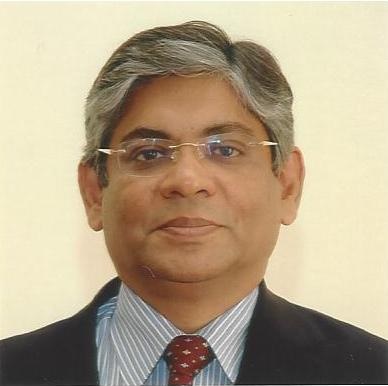
    By Ambassador Arun K. Singh (The author is India’s ambassador to the U.S.)

  • 100 Indian companies invested $15 billion in United States creating 91,000 jobs so far: Report

    100 Indian companies invested $15 billion in United States creating 91,000 jobs so far: Report

    New York (TIP) July 15: A total of one hundred India-based companies have invested over $15 billion across the US and have created more than 91,000 jobs in a wide range of sectors across 35 American States, according to a latest report released by the Confederation of Indian Industry (CII) and Grant Thornton (GT).

    The southern State of Texas received the maximum ($3.84 billion) foreign investment from Indian companies followed by Pennsylvania ($ 3.56 billion), Minnesota ($1.8 billion), New York ($1.01 billion) and New Jersey ($1 billion), said the report titled “Indian Roots, American Soil”.

    More than 20 top lawmakers including Senators, John Cornyn and Mark Warner, attended the report released yesterday at the Capitol Hill.

    “As India surges forward to become the fourth fastest growing source of FDI into the US, it is critical that we recognise the positive impact of Indian business investments in the country,” said Senator Warner, co-chair of the Senate India Caucus.

    The top five states where the Indian companies have generated maximum employment are New Jersey (9300 jobs), California (8400), Texas (6,200), Illinois (4,800) and New York (4,100) and are home to the most Americans directly employed by Indian companies.

    The CII study draws attention to the growing contribution and influence of the Indian industry, which forms an important component of our growing and vibrant relationship with the United States, said Indian Ambassador to the US Arun K Singh.

    “Today Indian companies are not just investing and creating jobs, they have also become significant stakeholders in the growth and prosperity of their local communities,” Mr Singh said.

    Highlights

    * Together, 100 Indian companies employ more than 91,000 people across 35 states and the Washington DC, the American capital.

    * The total value of tangible investments made by these 100 companies exceeds $15.3 billion.

    * The top five states in which Indian companies have generated maximum employment are: New Jersey (9,278 jobs), California (8,937 jobs), Texas (6,230 jobs), Illinois (4,779 jobs) and New York (4,134 jobs).

    * The top five states in which Indian companies have contributed the highest foreign direct investment are: Texas ($3.84 billion), Pennsylvania ($3.56 billion), Minnesota ($1.8 billion), New York ($1.01 billion) and New Jersey ($1 billion).

    * The average amount of investment received from Indian companies per state is $443 million.

    * 84.5% of the companies plan to make more investments in the US.

    * 90% of the companies plan to hire more employees locally in the next five years.

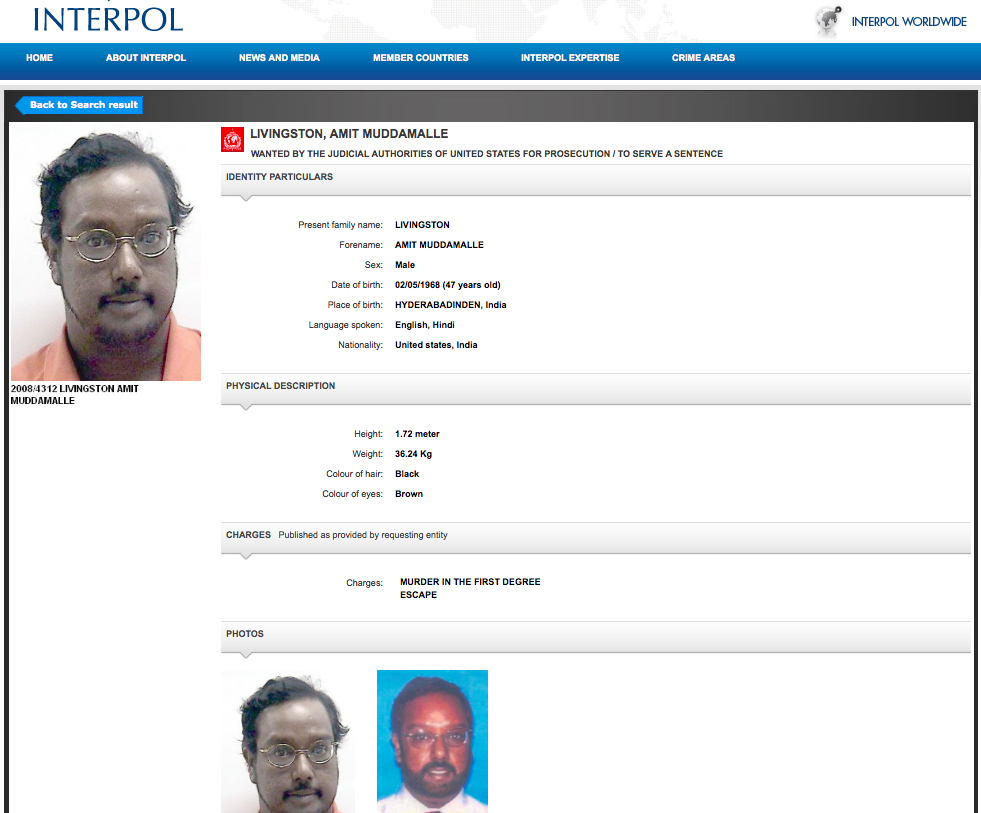
  • Murderer Texas Fugitive Amit Livingston extradited from India to Texas will serve 23 years

    Murderer Texas Fugitive Amit Livingston extradited from India to Texas will serve 23 years

    Convicted murderer Amit M. Livingston a.k.a Andy Livingston was extradited to the United States on July 13. Livingston was arrested by the Indian Police after a manhunt lasting over 7 years.

    Former state district Judge Abel Limas sentenced Livingston to 23 years in state prison in 2007, but allowed him 60 days to put his affairs in order. Livingston, however, managed to escape to India, and was on the run before being arrested in Hyderabad on May 6, 2014.

    Amit, an American medical billing specialist, was convicted over the killing of Hermila Hernandez, a married mother of three children, in southern Texas in 2005. Livingston had admitted to having killed her. He pleaded guilty to the crime and was sentenced in Cameron County, Texas, to a 23-year prison term on February 13, 2007.

    Livingston was listed by Interpol as a person wanted in the United States, and his mugshot was featured on America’s Most Wanted in June 2007.

    In 2008 the U.S. Marshals Service (USMS) requested assistance in the case from the Diplomatic Security Service (DSS).

    When local Indian authorities discovered Livingston was using a false name, they charged him with having used a false identity. This pending case held up Livingston’s extradition back to the United States for more than a year.

    Finally, Livingston’s false identity case was dropped, and he was cleared for extradition. On July 13, 2015, DSS special agents boarded a flight with Livingston out of New Delhi International Airport. Upon arriving at Newark International Airport in New Jersey, they handed him over to U.S. Marshals, who escorted him to Culver County, Texas, the U.S. State Department said Tuesday, July 14.

  • Dalai Lama’s 80th birthday at Southern California summit

    Dalai Lama’s 80th birthday at Southern California summit

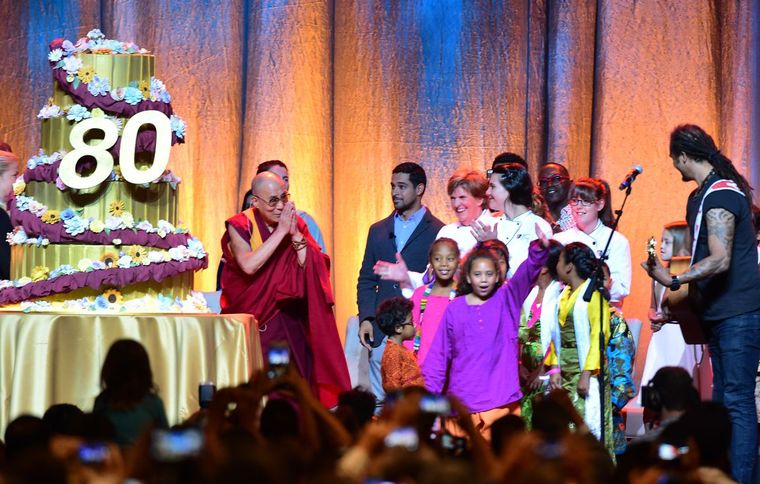
    The Dalai Lama celebrated his 80th birthday last weekend in Southern California, with hundreds of well-wishers attending a three-day Global Compassion Summit to mark the exiled Tibetan spiritual leader’s big day, with events being held at Anaheim’s Honda Center and the University of California, Irvine.

    During his remarks Sunday, the Dalai Lama spoke of “awakening compassion” and the “transformative power of creativity and art,” India’s Economic Times reported.

    The world renowned peace advocate drew cheers and even some protests during his Southern California stop.

    “On this very special birthday we will have a chance to celebrate his accomplishments in many areas and hear his exciting view for the years to come,” said Venerable Lama Tenzin Dhonden, founder of the Friends of the Dalai Lama. “This milestone occasion is a joyous opportunity for people to come together in celebration of His Holiness’ life and achievements.”

    Plans for the festivities included an 8-foot-tall birthday cake complete with maroon-and-gold frosting — the colors of the Dalai Lama’s Tibetan robes.

    The Dalai Lama, known the world over for his peace crusade, remains a controversial figure wherever he goes. The Chinese government accuses him of trying to separate Tibet and labels him “a wolf in sheep’s clothing.”

    The Nobel Peace Prize winner also attended discussions at the University of California-Irvine. He arrived in Southern California after spending time with former president George W. Bush in Texas.

  • Satnam Singh drafted in NBA, selected by Dallas Mavericks

    Satnam Singh drafted in NBA, selected by Dallas Mavericks

    NEW DELHI (TIP): Indian hoopster Satnam Singh Bhamara, on Friday, became the first player from the country to be drafted in NBA. Satnam, a versatile center player, was selected by Dallas Mavericks with the 52nd pick of the 2015 NBA draft.

    The youngster, who hails from a remote village in Punjab and stands 7 feet 2 inches tall, was hoping to become the first player born on the subcontinent to make the league. Mavericks had invited India’s biggest basketball hope, Satnam, for a pre-draft workout on Tuesday. It was the first time that the scouts of the Texas-based team witnessed the skills of the 290-pound Indian center. Confirming the development, Satnam had told TOI before boarding the flight to Dallas from Florida, “I am very excited to have a workout with Dallas Mavericks -one of the best and experienced team in the NBA. I will give my best and try to impress the selectors there.”

    NBA History has been made! #SatnamSingh has been picked by @dallasmavs-NOW the 1st Indian national in the NBA. pic.twitter.com/wkR21OAP9j — NBAIndia (@NBAIndia) June 26, 2015

    RT @Ananth_Pandian: First Indian to ever be drafted into the NBA – Satnam Singh https://t.co/1NmVwX4lCs – — Nathan (@Neshan_Nathan) June 26, 2015

    Satnam’s young age, giant frame and relatively little pro-league experience in basketball make him an intriguing prospect. However, it’s Satnam’s size and ability to guard multiple positions which is believed to have attracted the Mavs scouts as being a prospective contributor to a team on the defensive side of the ball.

  • Facing backlash, US Muslims counter with new advertising campaign

    Facing backlash, US Muslims counter with new advertising campaign

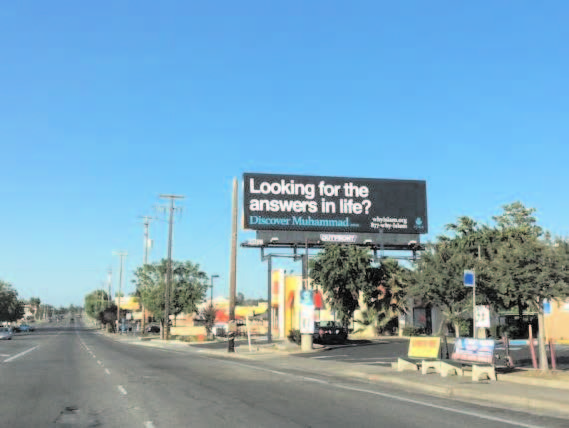
    SACRAMENTO (TIP): In California’s capital city of Sacramento this month, stark black billboards loomed over highways and faded commercial strips, offering solace to the troubled: “Looking for the answers in life?” one asked. “Discover Muhammad.”

    With messages that are part religious invitation to explore the Muslim faith and part public relations, the billboards anchor a national campaign to showcase Islam as a religion of love and tolerance, aimed at Muslims and non-Muslims alike.

    But the campaign by the mainstream Islamic Circle of North America, which is sponsoring billboards in other cities to publicize the Muslim prophet’s message, could also spark a backlash amid a spike in anti-Islamic sentiment marked by protests, advertising campaigns and sometimes vandalism and violence.

    “We thought a proper approach would be to actually educate the larger public about his personality, which exemplifies love and brotherhood,” said Waqas Syed, ICNA Deputy Secretary General.

    The billboard campaign is not the first high-profile bid by a Muslim group to bolster Islam’s image in America, tarnished by militant attacks. But it is the largest such effort by ICNA, the group most closely identified with billboard campaigns in recent years, and it includes some billboards that are clearly evangelical.

    “Under the circumstances, it’s a pretty bold move,” said Todd Green, a professor who studies Islamophobia, or fear of Islam, at Luther College in Iowa. “When you’re a minority religion, you face a lot of pressure from the majority population not to proselytize.”

    By asking Americans to discover Mohammad, the campaign is similar in some ways to efforts by evangelical Christians whose roadside billboards, especially in the US heartland, have sought to draw Americans into their fold with messages promoting Jesus as the Messiah, he said.

    Organizers said they launched the program as a response to a deadly Paris attack by Islamist militants on the French satirical magazine Charlie Hebdo in January over its anti-Muslim cartoons, aiming their message in part at other Muslims to say that violence is not an appropriate response to provocation.

    By coincidence, the first billboards went up days after two US Muslim gunmen were killed in May as they tried to attack a Texas exhibit of cartoons depicting Mohammad, and shortly before heavily armed anti-Islam protesters demonstrated outside a Phoenix mosque.

    A previous billboard campaign by ICNA two years ago invited Americans to see similarities between Christianity and Islam, which views Jesus as a prophet but not as the son of God as Christians do. A campaign by another US Muslim group tried to show non-violent interpretations of jihad, such as a holy struggle to lead a moral life.

    Both campaigns prompted angry responses, and in the case of the “My Jihad” campaign, an opposing group put up signs and billboards linking Islam with violence.

    Message of peace, women’s rights

    The latest campaign, paid for by local ICNA chapters, will eventually include about 100 billboards from Philadelphia to Baltimore, Atlanta and Miami.

    Some signs, like those in Sacramento, are clearly invitations to explore the Muslim faith while others aim to portray Mohammad as a supporter of women’s rights and religious tolerance.

    “Kindness is a mark of faith,” a billboard in Elizabeth, New Jersey, reads. In Miami, another offers, “Muhammad believed in peace, social justice, women’s rights.”

    Sharing that view of Mohammad is more important to ICNA than proselytizing, Syed said, though newcomers who want to convert would be welcomed.

    Muslims make up 0.9 percent of the US population, but the number is expected to double by 2050, driven by immigration, high birth rates and a young population, the Pew Research Center says.

    The first wave of signs, including those in Sacramento and Los Angeles, came down last week. New ones will be posted in San Francisco, Dallas and other cities in coming weeks. Despite tensions, the billboards have not been defaced, and negative responses have been few, said Imam Khalid Griggs, vice president of ICNA and leader of a mosque in North Carolina.

    Last week, a group that fears radical Islam will grow in the United States erected billboards around St. Louis showing cartoon drawings of Mohammad, meant to flout the religion’s ban on depicting his image. In February, a Washington, D.C. mosque was vandalized twice in one week.

    In Elizabeth, New Jersey, where one ICNA billboard went up, Tyler Coltelli, a 23-year-old Catholic, said the sign made him uncomfortable: “You should be able to practice your own faith, but I don’t necessarily agree with trying to convert people from the streets.”

    But Bodia Wardany, a parishioner at the Salam Islamic Center in Sacramento said: “I think it’s a great idea, considering all the misperceptions about the faith and the terrorist, fanatical groups misrepresenting the faith itself.”

  • Top Indian American Doctor Shot Dead

    Top Indian American Doctor Shot Dead

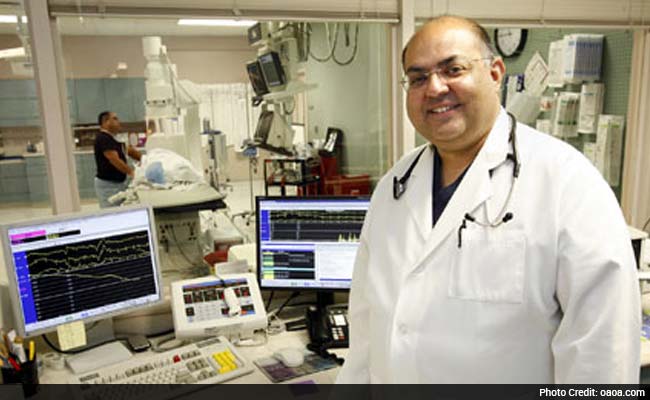
    HOUSTON, TEXAS:  Renowned Indian-American cardiologist Suresh Gadasalli, who performed the world’s first simultaneous hybrid revascularisation, was shot dead by his friend and business associate who then committed suicide in Odesaa in the US state of Texas, police said.

    Dr Gadasalli, 53, was shot dead by 60-year-old patient and business associate Ayyasamy Thangam at the ‘Healthy Heart Centre’ on Thursday, according to a release issued by the Odessa Police Department.

    Thangam then closed the door of the room the two men were in and witnesses heard another, single gunshot, it added.

    According to Corporal Steve LeSueur, the two men were close friends and business associates.

    Dr Gadasalli’s brother-in-law said that the two families knew each other for a decade, and that the last rites will be held in Odessa likely on Wednesday.

    The incident shocked the city, popular for Laura and George Bush’s home city of 2.5 lakh people.

    LeSueur on Friday declined to release a possible motive for the killings and the police had no information on why Thangam was being treated.

    Dr Gadasalli hailed from Bangalore and was educated at the Jawaharlal Nehru Medical College in Belgaum, Karnataka, before studying at the Internal Medicine and Cardiology at the University of Wisconsin Medical School and the Sinai Samaritan Centre in Milwaukee.

    He was recruited by Medical Centre Hospital in Odessa, Texas in 1994.

    The Healthy Heart Centre profile mentions that Dr Gadasalli was recognised as a leading physician of the world by the International Association of Cardiologists.

    He was named “super doctor” by Texas Monthly in 2008.

    In 2005, he performed the world’s first simultaneous hybrid revascularisation, which involved two major procedures – coronary artery bypass and stent replacement, using a robotic system known as the Da Vinci Surgical System.

    Gadasalli was previously investigated in a federal court case on a currency structuring charge. The FBI began their investigation into the Healthy Heart Center in June of 2012.

    He was accused of violating federal law in structuring transactions to avoid reporting requirements, according to previous reports.

    According to court records, Gadasalli’s case was closed on January 22, 2014.

  • Dallas Teacher Fired After Disturbingly Racist Post

    Dallas Teacher Fired After Disturbingly Racist Post

    A teacher has been “relieved of her teaching duties” after posting a racist Facebook rant in response to recent events at a McKinney, Texas, pool party, according to a statement from Frenship Independent School District.

    Karen Fitzgibbons was a fourth-grade teacher a Bennett Elementary school of Frenship ISD in Wolfforth, Texas. On Tuesday, she posted an article to her page about Eric Casebolt, a police officer who recently resigned after being involved in a racially charged incident last Friday. Casebolt, who is white, was caught on tape throwing a black, bikini-clad teenage girl to the ground when responding to reports of a disturbance at a community pool. He also pointed his gun at other youths.

    “This makes me ANGRY!” reads the post from Fitzgibbons, referring to Casebolt’s resignation, according to Texas outlet the Lubbock Avalanche-Journal. “This officer should not have to resign. I’m going to just go ahead and say it…the blacks are the ones causing the problems and this ‘racial tension.’ I guess that’s what happens when you flunk out of school and have no education.”

    The post continues, “I’m sure their parents are just as guilty for not knowing what their kids were doing; or knew it and didn’t care. I’m almost to the point of wanting them all segregated on one side of town so they can hurt each other and leave the innocent people alone. Maybe the 50s and 60s were really on to something. Now, let the bashing of my true and honest opinion begin….GO! #imnotracist #imsickofthemcausingtrouble #itwasatagedcommunity.”

    The post has since been deleted.

    The statement from Frenship ISD says the district “is deeply disappointed in the thoughtlessness conveyed by this employee’s post. We find these statements to be extremely offensive, insensitive, and disrespectful to our Frenship community and citizens everywhere. These comments in no way represent the educational environment we have created for our students.”

    “Employees are held to the same professional standards in their public use of electronic media as they are for any other public conduct. This recent conduct was unacceptable,” says the statement from the district.

    Spokespeople from Frenship ISD did not respond to further requests for comment.

    Fitzgibbons later issued an apology, according to local outlet KCBD-TV.

    “First, to anyone, of any race, that I have offended, I sincerely apologize. That was not my intent. I let my emotions get the best of me, and instead of taking a deep breath, vented in an inappropriate way. I am truly sorry,” it says in part.

    The apology goes on to say that Fitzgibbons teaches her students to treat others with dignity, and she is now “ashamed” of her previous Facebook post.

  • Pentagon chief urges China to stop island building

    Pentagon chief urges China to stop island building

    WASHINGTON (TIP): US secretary of defense Ashton Carter has called on Beijing to stop building artificial islands in the disputed waters of the South China Sea, as he hosted a top Chinese general.

    The visit to the Pentagon of General Fan Changlong, vice chairman of China’s central military commission, was relatively low key amid simmering tensions over the maritime dispute and a massive hack of US federal employees.

    China insists it has sovereignty over nearly all of the South China Sea, a major global shipping route believed to be home to oil and gas reserves, but rival claimants accuse it of expansionism.

    “Carter reiterated US concerns on the South China Sea and called on China and all claimants to implement a lasting halt on land reclamation, cease further militarization and pursue a peaceful resolution of territorial disputes in accordance with international law,” the Pentagon said in a statement.

    Carter had previously accused China of being out of step with international rules in its conduct in the South China Sea.

    Unlike previous trips, including one last year, there was no joint press conference.

    “The Chinese did request that there not be a lot of media attention around this trip,” Pentagon spokesman Colonel Steven Warren said.

    Also raising tensions is this month’s revelation by the US government that hackers accessed the personal data of at least four million current and former federal employees.

    The vast cyberattack is suspected to have originated in China, though Beijing has said the charge was
    “irresponsible” and stressed that Chinese laws prohibit cybercrimes.

    Prior to visiting Washington, Fan went to California and Texas.

    His trip is part of a years-long effort to build a regular dialogue between the American and Chinese armed forces to defuse potential tensions and avoid miscalculations.

    Carter’s predecessor, Chuck Hagel, visited China in 2014 in a trip that was marked by friction, with each side trading sharply worded criticism.

  • ‘The Challenge of Journalism is to Survive in the Pressure Cooker of Plutocracy’

    ‘The Challenge of Journalism is to Survive in the Pressure Cooker of Plutocracy’

    Thank you for allowing me to share this evening with you. I’m delighted to meet these exceptional journalists whose achievements you honor with the Helen Bernstein Book Award.

    What happens to a society fed a diet of rushed, re-purposed, thinly reported “content?” Or “branded content” that is really merchandising — propaganda — posing as journalism? But I gulped when [New York Public Library President] Tony Marx asked me to talk about the challenges facing journalism today and gave me 10 to 15 minutes to do so. I seriously thought of taking a powder. Those challenges to journalism are so well identified, so mournfully lamented, and so passionately debated that I wonder if the subject isn’t exhausted. Or if we aren’t exhausted from hearing about it. I wouldn’t presume to speak for journalism or for other journalists or for any journalist except myself. Ted Gup, who teaches journalism at Emerson and Boston College, once bemoaned the tendency to lump all of us under the term “media.” As if everyone with a pen, a microphone, a camera (today, a laptop or smartphone) – or just a loud voice – were all one and the same. I consider myself a journalist. But so does James O’Keefe. Matt Drudge is not E.J. Dionne. The National Review is not The Guardian, or Reuters The Huffington Post. Ann Coulter doesn’t speak for Katrina Vanden Heuvel, or Rush Limbaugh for Ira Glass. Yet we are all “media” and as Ted Gup says, “the media” speaks for us all.

    So I was just about to email Tony to say, “Sorry, you don’t want someone from the Jurassic era to talk about what’s happening to journalism in the digital era,” when I remembered one of my favorite stories about the late humorist Robert Benchley. He arrived for his final exam in international law at Harvard to find that the test consisted of one instruction: “Discuss the international fisheries problem in respect to hatcheries protocol and dragnet and procedure as it affects (a) the point of view of the United States and (b) the point of view of Great Britain.” Benchley was desperate but he was also honest, and he wrote: “I know nothing about the point of view of Great Britain in the arbitration of the international fisheries problem, and nothing about the point of view of the United States. I shall therefore discuss the question from the point of view of the fish.”

    So shall I, briefly. One small fish in the vast ocean of media.

    I look at your honorees this evening and realize they have already won one of the biggest prizes in journalism — support from venerable institutions: The New Yorker, The New York Times, NPR, The Wall Street Journal and The Christian Science Monitor. These esteemed news organizations paid — yes, you heard me, paid — them to report and to report painstakingly, intrepidly, often at great risk. Your honorees then took time — money buys time, perhaps its most valuable purchase — to craft the exquisite writing that transports us, their readers, to distant places – China, Afghanistan, the Great Barrier Reef, even that murky hotbed of conspiracy and secession known as Texas.

    And after we read these stories, when we put down our Kindles and iPads, or — what’s that other device called? Oh yes – when we put down our books – we emerge with a different take on a slice of reality, a more precise insight into some of the forces changing our world.

    Although they were indeed paid for their work, I’m sure that’s not what drove them to spend months based in Beijing, Kabul and Dallas. Their passion was to go find the story, dig up the facts and follow the trail around every bend in the road until they had the evidence. But to do this — to find what’s been overlooked, or forgotten, or hidden; to put their skill and talent and curiosity to work on behalf of their readers — us — they needed funding. It’s an old story: When our oldest son turned 16 he asked for a raise in his allowance, I said: “Don’t you know there are some things more important than money?” And he answered: “Sure, Dad, but it takes money to date them.” Democracy needs journalists, but it takes money to support them. Yet if present trends continue, Elizabeth Kolbert may well have to update her book with a new chapter on how the dinosaurs of journalism went extinct in the Great Age of Disruption.

    You may have read that two Pulitzer Prize winners this year had already left the profession by the time the prize was announced. One had investigated corruption in a tiny, cash-strapped school district for The Daily Breeze of Torrance, California. His story led to changes in California state law. He left journalism for a public relations job that would make it easier to pay his rent. The other helped document domestic violence in South Carolina, which forced the issue onto the state legislative agenda. She left the Charleston Post and Courier for PR, too.

    These are but two of thousands. And we are left to wonder what will happen when the old business models no longer support reporters at local news outlets? There’s an ecosystem out there and if the smaller fish die out, eventually the bigger fish will be malnourished, too.

    A few examples: The New York Times reporter who rattled the city this month with her report on the awful conditions for nail salon workers was given a month just to see whether it was a story, and a year to conduct her investigation. Money bought time. She began, with the help of six translators, by reading several years of back issues of the foreign language press in this country… and began to understand the scope of the problem. She took up her reporting from there. Big fish, like The New York Times, can amplify the work of the foreign language press and wake the rest of us up.

    A free press, you see, doesn’t operate for free at all. Fearless journalism requires a steady stream of independent income. It was the publisher of the Bergen Record, a family-owned paper in New Jersey who got a call from an acquaintance about an unusual traffic jam on the George Washington Bridge. The editor assigned their traffic reporter to investigate. (Can you believe? They had a traffic reporter!) The reporter who covered the Port Authority for the Record joined in and discovered a staggering abuse of power by Governor Chris Christie’s minions. WNYC Radio picked up the story and doggedly stuck to it, helped give it a larger audience and broadened its scope to a pattern of political malfeasance that resulted in high-profile resignations and criminal investigations into the Port Authority. Quite a one-two punch: WNYC won a Peabody Award, the Record won a Polk.

    A Boston Phoenix reporter broke the story about sexual abuse within the city’s Catholic Church nine months before the Boston Globe picked up the thread. The Globe intensified the reporting and gave the story national and international reach. The Boston Phoenix, alas, died from financial malnutrition in 2013 after 47 years in business.

  • US lawmakers push for export of natural gas to India

    WASHINGTON (TIP): Influential American lawmakers have pushed for removing of restrictions on export of natural gas to India and sought to implement the civil nuclear deal to meet the country’s ever-growing energy needs.

    Referring to fast tracking of economic reforms and acceleration of development by India, Chairman of powerful House Foreign Relations Committee Ed Royce said nuclear energy is important to have uninterrupted power supply.

    Speaking at a Congressional briefing on India-US nuclear trade organized by the US-India Political Action Committee, Royce and other Congressmen hoped that the remaining hurdles in the implementation of the civil nuclear trade would soon be removed so that the full potential of nuclear energy could be realized by India.

    Congressman Mike Honda exuded confidence about the optimistic future of civil nuclear co-operation.

    The lawmakers also pushed for export of natural gas to India.

    “Export of liquefied natural gas would have a very important impact on India,” said Congressman Ami Bera, the only Indian-American lawmaker in the current Congress.

    Excited about the prospects of increase in energy trade with India, Congressman Pete Olson hoped that before this year end the first ship with American natural gas would be shipped to India.

    Olson said the US has energy and technology to ensure that every Indian has the electricity they need. “I am committed to improve India US relationship,” he said.

    Congressman Ted Poe from Texas also batted for export of natural gas from the US to India.

    Calling for expediting the process of exporting natural gas to India, he said he has introduced legislation in this regard.

    In his remarks, BJP Lok Sabha MP Udit Raj said that the relationship between India and the US is not only important for the two countries, but also for the entire world. Transfer of nuclear technology would help India in many ways, he said.

    Referring to the speeches by US lawmakers, Raj said they are very enthusiastic to strengthen relationship with India. -PTI

  • US military says it mistakenly shipped live anthrax samples

    US military says it mistakenly shipped live anthrax samples

    WASHINGTON (TIP): The Centers for Disease Control and Prevention said it is investigating what the Pentagon called an inadvertent shipment of live anthrax spores to government and commercial laboratories in as many as nine states, as well as one overseas, that expected to receive dead spores.

    “At this time we do not suspect any risk to the general public,” CDC spokeswoman Kathy Harben said Wednesday.

    A Pentagon spokesman, Col. Steve Warren, said the suspected live anthrax samples were shipped from Dugway Proving Ground, an Army facility in Utah, using a commercial delivery service.

    Warren said the government has confirmed one recipient, a laboratory in Maryland, received live spores. It is suspected, but not yet confirmed, that anthrax sent to labs in as many as eight other states also contained live spores, he said. Later he said an anthrax sample from the same batch at Dugway also was sent to a U.S. military laboratory at Osan air base in South Korea; no personnel there have shown signs of exposure, he said, and the sample was destroyed.

    “There is no known risk to the general public, and there are no suspected or confirmed cases of anthrax infection in potentially exposed lab workers,” Warren said.

    A U.S. official said Wednesday evening that four people in three commercial labs had worked with the suspect anthrax samples and the CDC has recommended the four be provided “post-exposure prophylaxis,” or preventive treatment. The official was not authorized to discuss the details because they involved non-government lab employees, and so spoke on condition of anonymity.

    The anthrax samples were shipped from Dugway to government and commercial labs in Texas, Maryland, Wisconsin, Delaware, New Jersey, Tennessee, New York, California and Virginia.

    The Defense Department, acting “out of an abundance of caution,” has halted “the shipment of this material from its labs pending completion of the investigation,” Warren said.

    Contact with anthrax spores can cause severe illness.

    Harben said one of the laboratories contacted the CDC to request “technical consultation.” It was working as part of a Pentagon effort to develop a new diagnostic test to identify biological threats, she said. “Although an inactivated agent was expected, the lab reported they were able to grow live Bacillus anthracis,” she said, referring to the bacteria that cause anthrax disease. The CDC is working with state and federal agencies on an investigation with the labs that received samples from the Defense Department, she said.

    Harben said all samples involved in the investigation will be securely transferred to the CDC or other laboratories for further testing.

  • Texas Legislature OKs budget containing $3.8B in tax cuts

    Texas Legislature OKs budget containing $3.8B in tax cuts

    AUSTIN, TX (TIP): Final tweaks to Texas’ $209 billion budget allowing for $3.8 billion in tax cuts have passed the Legislature and are headed to Gov. Greg Abbott, according to an AP report.

    On a 30-1 Senate vote, the only bill lawmakers must pass during the 140-day session was approved Friday. The House later endorsed it 115-33.

    The House and Senate for weeks wrestled over whose tax cut proposal was best, between plans lowering property or sales taxes. But they reached a recent agreement, making the final votes drama-free.

    Beginning Jan. 1, homeowners will stand to save roughly $120 annually in property taxes.

    Abbott, who demanded tax cuts, can trumpet Texas’ biggest tax rollbacks in a decade when he soon signs them into law.

    Other big-ticket governor priorities: $3.7 billion for transportation and $800 million for border security.

  • Bill allowing open carry of handguns clears Texas Legislature

    Bill allowing open carry of handguns clears Texas Legislature

    AUSTIN, TX (TIP): Texas lawmakers on Friday, May 29, approved carrying handguns openly on the streets of the nation’s second most-populous state, sending the bill to Republican Gov. Greg Abbott, who is expected to sign it and reverse a ban dating to the post-Civil War era.

    Gun owners would still have to get a license to carry a handgun in a visible holster.

    The state known for its wild west, cowboy history and some the nation’s most relaxed gun laws, has allowed concealed handguns for 20 years. Concealed handgun license holders are even allowed to skip the metal detectors at the state capitol, as state troopers providing security assume they’re armed.

    But Texas was one of only six states with an outright ban on so-called open carry, and advocates have fought to be allowed to keep their guns in plain sight. Cast as an important expansion of the Second Amendment right to bear arms in the U.S. Constitution, it became a major issue for the state’s strong Republican majority.

    Nudged by Abbott’s pledge to sign open carry into law, House and Senate Republicans muscled the bill through the Legislature. The House gave final approval on a mostly party-line 102-43 vote, drawing gleeful whistles from some lawmakers. A short time later, the Senate passed it 20-11, also along party lines, with all Republicans supporting it and all Democrats opposing.

    Both did so after making concessions to law enforcement groups, who had been upset by an original provision in the bill barring police from questioning people carrying guns if they have no other reason to stop them.

    The final bill scrapped that language, meaning police will be able to ask Texans with handguns in plain sight if they have proper licenses to be carrying them.

    Before Friday’s vote, police groups demanded that Abbott veto the bill.

    Gun control advocates have argued that open carry is less about personal protection than intimidation. Gun rights groups have staged several large public rallies in recent years, sometimes at notable historical landmarks such as the Alamo, where members carried rifles in plain sight, which is legal.

    The open carry debate also stirred drama at the Capitol early in the legislative session, when gun rights advocates confronted one state lawmaker in his office. The lawmaker, Democrat Poncho Nevarez, was assigned a state security detail and House members voted to make it easier to install panic buttons in their offices.

    Just like the current concealed handgun law, the bill requires anyone wanting to openly carry a handgun to get a license. Applicants must be 21, pass a background check and receive classroom and shooting range instruction — although lawmakers have weakened those requirements since 2011.

    Texas has about 850,000 concealed handgun license holders, a number that has increased sharply in recent years.