Tag: Travel

  • Backwater destinations in Kerala

    Backwater destinations in Kerala

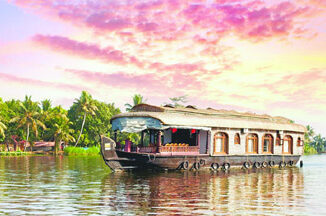
    Placed in the South-Eastern part of India on the Malabar Coast, the state of Kerala lies in between the Arabian Sea in the West, the Western Ghats in the East. Backwater destinations in Kerala are one of the prime attractions of ‘god’s own country’. Peaceful ride along these palm-fringed backwater destinations in Kerala with thrilling view of the sunset, lush paddy fields, the moonlight and the gentle lapping of water as you meander along on a kettuvallams (the traditional rice barges which have now been tastefully converted into houseboats in Kerala) make it an experience of a lifetime. The backwaters are uninterrupted through the entire length of Kerala, initially used as a mode of transferring goods like coconut, rubber, spices, and others. However, now it serves for the activity of backwater tourism. The cruise ride will open up to a different world of backwater villagers, fishing operation and take you through other scenery.
    Alleppey
    Alleppey also known as Alappuzha or the ‘Venice of the East’ is an attractive town in Kerala. It is one of the most significant tourist centers in the state because of the large network of inland canals. Many of the Kerala backwater cruises either start or end at this point and is known as the center of the coir industry.
    Alleppey used to be the busiest centers of trade in the past, till now the canals are the source of livelihood among the villagers. Alleppey presents a scenic view of the intertwined backwaters, beaches, and lagoons.
    A houseboat cruise in these backwaters is a pleasurable experience. You will also get to witness a lighthouse once used for uploading goods.
    Kumarakom
    The view offered from Kumarakom is like no other; the green paddy fields and the Mangrove forests fight for the attention; along with the canals which are bedded by white lilies draw tourists to this spot from all over the world.
    Kumarakom is situated about 16 km from Kottayam along the Vembanad Lake. A journey through the vast canals and streams in the country boats will take you across the lovely villages of Kerala. The soothing surroundings, placid lakes, lush greenery bestow Kumarakom with a physically and spiritually uplifting ambiance. It is no wonder Kumarakom is one of the best places in Kerala for Ayurveda.
    Another attractive feature of this place is the Bird Sanctuary that extends a long way; it is home to many migratory birds. Some of the exotic birds leave the tourists fascinated. The area is also famous for handicrafts which are made in a traditional way.
    Kasaragod
    Kasaragod is far from the tourist hubs but is a beautiful village that offers backwater facilities and is more secluded and free of commercialism. This place is perfect for peaceful boat rides and sightseeing. Kasaragod is placed in the Northernmost District of Kerala, at Padanna and holds its own essence.
    This area has kept up to the traditional ways and can be seen in their hospitality system as well, the locals play host during your stay at the retreat. They have not embraced the modern lifestyle in any form and visiting this part will make you come close to the original lifestyle of the locals.
    Kollam
    One of the finest backwater destinations in Kerala to start your houseboat ride is Kollam. Kollam is one of the oldest ports on the Malabar Coast and is renowned for its Cashew industry. 30 percent of the backwaters of this town is occupied by the famous Ashtamudi Lake.
    The sight that the ride offers across Kollam is spectacular; blooming water lilies, canals and the songs from the birds leave you content. Kollam houseboat cruises serve the longest backwater ride in Kerala, lasting for 8 hours from Kollam to Alleppey. The traditionally designed houseboats come along with the authentic cooks, who serve you freshly cooked meals along the way.
    Kuttanad
    The appealing geographical feature of Kuttanad is that it is the lowest place in India and lies below the sea level. Rice is grown in abundance in this area, hence holding the name “The Rice Bowl of Kerala”. Kuttanad is a part of the Alapuzha District and covers the very heart of the backwaters.
    Besides the stretches of paddy fields, it has a rich growth of banana, yam, and cassava, making agriculture the main source of income for the locals. Owing to the variety of crops that grow in Kuttanad, with the added milieu of blue water bodies, green paddy fields and numerous birds it automatically makes this place vibrant and beautiful.

  • Ujjain: The home of Mahakaleshwara

    Ujjain: The home of Mahakaleshwara

    Ujjain, considered to be one of the holiest cities of India, is an ancient city situated on the eastern bank of the Shipra River in the Malwa region of Madhya Pradesh. Ujjain is one of the four sites for the Kumbh Mela, the largest peace-time gathering on the planet that attracts 100 million people to the festival.
    This makes Ujjain an important place of Hindu Pilgrimage. To add to that, it is also home to the Mahakaleshwar Jyotirlinga, one of the twelve Jyotirlinga shrines to the god Shiva. Ujjain is one of the most glorious cities of ancient India as it was also known to be the educational hub of various Indian scholars.
    The immense wealth of Ujjain in terms of religion, architecture, and educational value makes this is a top attraction amongst not only Indian travellers but also amongst foreign tourists as well. Ujjain is located at a distance of 52 km from Indore, which is also the nearest major airport.
    Mahakaleshwar Jyotirlinga
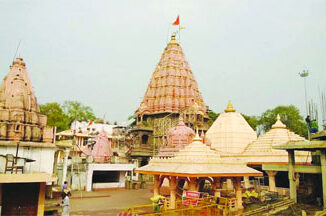
    Mahakaleshwar Temple, located in the ancient city of Ujjain in the state of Madhya Pradesh, is one of the 12 Jyotirlingas in India. Dedicated to Lord Shiva, the Mahakal lingam at this temple is believed to be Swayambhu (self-manifested), obtaining currents of Shakti (power) from within itself. Mahakaleshwar is also one of the 18 Maha Shakti Peethas in India.
    Another factor that makes Mahakaleshwar one of the most revered Jyotirlingas in India is the fact that the Mahakaleshwar idol is Dakshina Mukhi, facing south, unlike all the other Jyotirlingas. Considered no less than a Hindu pilgrimage, the Bhasma-Aarti of Mahakaleshwar Temple is hugely popular amongst the devotees.
    The Mahakaleshwar Temple complex is a spacious courtyard with sculptural finery and sophistication that is influenced by Maratha, Bhumija and Chalukya styles of structural design and is complete with impressive lingam sculptures of Mahakaleshwar. It also has the inscriptions of Omkaresvara and Nagachandresvara and images of Ganesha, Kartikeya and Parvati. The temple, which is spread over five levels, sees a huge throng of devotees during the Maha Shivaratri festival.
    Kal Bhairava Temple
    Bhairav is a fierce manifestation of Lord Shiva, and Kal Bhairava is the most important among the eight Bhairavas. If ancient scriptures are to be believed, Kal Bhairav temple is said to be related with the Tantra cult, a secret religious sect who thrived upon black magic.
    There is a Shivalinga in this temple which during Mahashivratri attracts thousands of visitors to this religious site.
    Ram Mandir Ghat
    Ram Mandir Ghat is of immense religious significance to Hindus because it is one of the four locations where the Kumbh Mela takes place every 12 years.
    It is considered to be one of the oldest bathing Ghat in connection with the Kumbh celebrations. Millions of people throng this place during the mega Kumbh festival as it is believed that a dip here can wash off all you sins. Watching the sunset from the Ram Mandir Ghat is one of the most enchanting scenes you’ll experience.
    Kumbh Mela, Ujjain
    The Kumbh Mela is one of the most extraordinary human gatherings on the planet. Held in India, the fair commemorates the legendary Samudra Manthan event in Hindu Mythology. The fair takes place only once in every twelve years for twelve days which are equivalent to the twelve years of the Hindu gods in the mortal world. The banks of river Ganga at Haridwar, river Godavari at Nashik, the confluence of river Ganga, Yamuna and Saraswati at Allahabad and river Kshipra at Ujjain serve as the venues for this huge carnival.
    The Kumbh is held every three years in one of the four cities, Haridwar, Allahabad, Nasik and Ujjain. The last Kumbh Mela was held in Ujjain in 2016. The next Kumbh Mela will be held in Ujjain in 2028.
    Kumbh Mela is a Hindu pilgrimage of faith in which Hindus and people from all over the world gather together at a place to bathe in a sacred river. From ancient times, four fairs are widely recognised as the Kumbh Melas: the Haridwar Kumbh Mela, the Allahabad Kumbh Mela, the Nashik-Trimbakeshwar Simhastha and the Ujjain Simhastha.
    These four fairs are held periodically at one of the four places by rotation. The main festival site is located on the banks of the river Ganga at Haridwar, Sarasvati at Allahabad; the Godavari at Nashik; and the Shipra at Ujjain. Bathing in these rivers is believed to clean people of all sins.
    The Ujjain Kumbh Mela is a pompous and colourfl event and is a treat for travellers. It is an enriching experience which immerses the attendees of the fair in the colours of spirituality and old world charm. One is never too young or too old to attend the Kumbh Mela.
    A ceremonial bath in these holy rivers is considered to be the essence and most significant ritual of this festival. It is believed that a holy dip in these rivers cleanses the soul of individuals and frees them from all their sins, as the rivers turn into the areas of sanctity during the favourable time of the Kumbh Mela.
    Harsiddhi Temple
    The Harsiddhi Temple boasts of an idol of Annapurna painted in dark red colour between the idols of Mahasaraswati and Mahalaxmi.
    This temple, was almost in an irreparable condition, until the Marathas decided to reconcile it. This is the reason why the temple has a Maratha touch to it.

  • Mahabalipuram: Drenched in an enigmatic old-age charm

    Mahabalipuram: Drenched in an enigmatic old-age charm

    Famous for its intricately carved temples and rock-cut caves, Mamallapuram or Mahabalipuram as it is famously known, is a historically important and well-loved tourist location situated on the Coromandel Coast along the Bay of Bengal, in the state of Tamil Nadu. Once the abode of the famous demon king Mahabali, Mahabalipuram was later renamed Mamallapuram.
    The serenity, the alluring atmosphere and the impressive setting with many beautiful white sandy beaches dotted with casuarina trees are all reasons as to why one would want to visit this wonderful town. Some famous tourist spots include the UNESCO world heritage site Group of Monuments like the Shore Temple and the Five Rathas, the Crocodile Bank which is home to some exquisite species of crocodiles and alligators, and the beach resorts in Kovalam and Sadras.
    Shore Temple
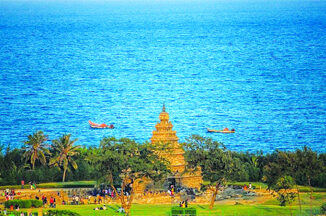
    Built during the 7th century, Shore Temple is one of the oldest South Indian temples constructed in the Dravidian style and depicts the royal taste of the Pallava dynasty. The work of the temple has been listed amongst the World Heritage Sites by UNESCO. It is located in Mahabalipuram and is one of the most photographed monuments in India situated on the shores of Bay of Bengal.
    As per legends, the Shore Temple was a part of the Seven Pagodas in Mahabalipuram. Seven Pagodas is an old Hindu legend. As history has it, Prince Hiranyakasipu did not believe in Lord Vishnu. However, his son Prahlada was a great devotee of Lord Vishnu which forced Prince Hiranyakasipu to banish Prahlada from the kingdom. Prahlada was the welcomed after a while after which he went on and became the king. He had a grandson named Bali who also founded Mahabalipuram.
    Shore Temple was given the name ‘Seven Pagodas’ after they saw such a tall structure standing alongside the seashore. This temple was like a landmark for the navigating ships. Also, the structure resembled that of a Pagoda and hence the familiarity.
    After Tsunami hit the coastline of Coromandel in 2004, an old distorted temple was exposed in the process. This temple was made up of granite only. After this event, the news of Mahabalipuram being a part of the Seven Pagodas as mentioned in the diaries of Europeans began doing the rounds. It was also stated that out of temples, six of them remain sunken in the sea. The Tsunami also brought to light some old sculptures of elephants, peacocks and lions which were used to decorate the walls of the temples during the reign of the Pallavas in the 7th and 8th century.
    Five Rathas
    The Five Rathas, also known as Panch Rathas, is a exemplary set of rock temples. They are excellent examples of the evolution of Dravidian style architecture.
    These temples are built in the same shape as pagodas, and greatly resemble Buddhist shrines and monasteries. The rathas are associated with the great epic Mahabharata. The first ratha that is located right by the entrance gate is Draupadi’s Ratha. It is shaped like a hut and is dedicated to the goddess Durga. Next comes Arjuna’s Rath. This one has a small portico and carved pillar stones and is dedicated to Lord Shiva. There are no carvings inside this temple, but many are on the outside. Directly in front of Arjuna’s Rath is the Nakula Sahadev Rath. This ratha has some huge elephant sculptures included that are a huge draw for the Five Rathas. It is dedicated to the God of Rain, Lord Indra. The Bhima Rath is huge. It measures 42 ft in length, 24ft in width, and 25ft in height. The pillars there do contain lion carvings even though the ratha as a whole is incomplete. The largest of the Five Rathas is the Dharamraja Yudhistar’s Rath. This rath is also dedicated to Lord Shiva and is a gr
    Arjuna’s Penance
    The Arjuna’s Penance is an enormous rock-cut relief, one of the largest in the whole world, situated in Mahabalipuram of Kanchipuram district, Tamil Nadu. It is also known by the name ‘Descent of the Ganges’ because the structure depicts either or both of these two significant and symbolic events of Hindu mythology; thus making this attraction spot a favourite among historians, scholars, academics as well as tourists who are enthusiastic about the cultural past of India.
    Mahabalipuram Beach
    Also known as Mamallapuram by locals, Mahabalipuram Beach is 58 km from Chennai city in Tamil Nadu. The beach lies on the shore of the Bay of Bengal and comprises some rock-cut sculptures. The scintillating beach has golden sand all along the stretch and is also famous for caves, massive rathas, chariots and temples. The surfers and swimming lovers are bound to have an amazing time at the beach.
    The beach also has interesting places to attract tourists, including a crocodile bank with about 5000 crocodiles belonging to 6 different species, a school of art & sculpture and a snake venom extracting centre. There are also numerous resorts along the beach offering delicious food joints.
    Mahabalipuram is a town mostly known for its shore temples which were constructed by Rajasimha, the king of Pallavas in old times. The coast stretches for about 20 km, and numerous lovely beaches are along the coastline. Also, at this captivating beauty of Mahabalipuram a dance festival is organised by the Department of Tourism of the Government of Tamil Nadu every year, where one can see extremely talented classical dancers performing against the backdrop of the sea.

  • Varkala: The paradisiacal destination of Kerala

    Varkala: The paradisiacal destination of Kerala

    Varkala is a coastal town in the southern part of Kerala known for the unique 15m high ‘Northern Cliff’ adjacent to the Arabian Sea. It is popular for its hippie culture, shacks on the cliff serving great seafood and playing global music and the samadhi of Kerala’s saint Sree Narayana Guru. Varkala is also known for Jardana Swami Temple, also known as Dakshin Kashi. Varkala has some of the best pristine beaches, hills, lakes, forts, lighthouses, natural fisheries and springs – all of this together makes this town a little paradise. You will also find a lot of shops with signboards in Hebrew selling Yoga mats, oxidised silver jewellery and harem pants made of cotton. Ayurvedic spas, affordable resorts, hostels, clean beaches make it a must-visit city of Kerala.
    Varkala Beach
    Set amid a beautiful setting about 10 km away from the calm and quiet hamlet of Varkala, Varkala Beach, also known as Papanasam Beach, is a beautiful stretch of sand renowned for its solitude unlike other commercial beaches of Thiruvananthapuram, Kerala. Also known as the Papanasam Beach meaning ‘Destroyer of Sins’, is unlike any other beach in the area with impeccable beauty. The water of Varkala Beach is regarded to own medicinal and curative properties. A dip in the hoy water is said to cleanse the body of impurities and all sins and thus the name Papanasam Beach meaning ‘Destroyer of Sins’. The beach itself is divided into two parts, the southern area of the beach lying at the end of the road leading from Janardhana Swamy Temple regarded as sacred by Hindus. However, if you are a tourist, the north part of the beach right at the bottom of the cliff is worth going renowned for its natural mineral spring.
    The sublime beauty of Varkala beach is one of a kind. The backdrop of crystal blue waters against the cliffs of Kerala is a unique one since these sedimentary formation peaks are not found anywhere in the otherwise flat coastline of Kerala. These cliffs are the venue for spas, spouts, sunbathing and relaxing swims which are quite popular among visitors and if you’re lucky you might also spot a few dolphins frolicking around. Sunsets at the Varkala Beach are especially pristine and call for a serene walk along the beach. Also if you are a seafood lover, then the place is a paradise for you.The eating joints nearby offer some of the India’s best moth watering and affordable food.
    Edava Beach
    Untouched and unspoilt by tourist activities, the Edava beaches are the virgin stretches circling a blue lagoon where sea and backwaters run parallel divided by a more-than-one km of straight road. There is also an estuary that connects the sea with the backwaters here.
    Thiruvambadi Beach
    Lying 1 km off Thiruvamdabi road, this black sand beach adjacent to the North cliff is an ideal picnic spot amidst lush coconut groves to relax and unwind.
    Anjengo Fort
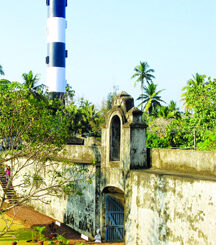
    Anjengo Fort, situated 12 km off Varkala at Anjengo, is believed to have been built in 17th century. Presently the fort is protected by the National Heritage monuments. The cemetery in the fort shelters the deceased occupants of the fort. The popular Muthalapuzhi Lake is situated very close to the Fort. Autos or cabs can be taken to reach the fort.
    Sivagiri Mutt
    Located at Varkala in Thiruvananthapuram district of Kerala is the one of the popular ashrams of Shri Narayana Guru, Sivagiri Mutt. This ashram celebrates Guru Deva Jayanti (in August) and the Guru Deva Samadhi (in September) every year.
    Janardhana Swami Temple and Varkala Beach are some nearby attractions which one should never miss during their visit to Sivagiri Mutt. Sree Narayana Guru (1855-1928), a saint, social reformer, philosopher and a leader of Ezhava community, made Varkala his headquarters. Sivagiri mutt, instituted by Sree Narayana Guru, is another major pilgrim centre here. The ‘Sivagiri Pilgrimage’ is usually conducted between 30th December and 1st January every year. Even decades after the Guru breathed his last breathe here in 1928; his Samadhi (resting place) continues to be thronged by thousands of pilgrims. The Sivagiri Mutt is also the headquarters of the Sree Narayana Dharma Paripalana Sangham, a religious organization established by the Guru to propagate his concept of ‘One Caste, One Religion, One God’.

  • Pachmarhi: The Queen of Satpuras

    Pachmarhi: The Queen of Satpuras

    Panchmarhi has a number of waterfalls and lakes. Known as the Queen of Satpuras, Panchmarhi is an enchanting place. It is always full of life and has a great cultural heritage. It is a place that dates back to the time of the Mahabharatas because legend has it that the Pandavas stayed in these hills. The waterfalls in Panchmarhi are among the prime tourist destinations of the place.These cascading falls fallings in torrents from a height are a spectacle to watch.
    The silver cascades of water falling down from sandstone rocks amidst the surrounding greenery make the waterfalls in Panchmari gracious. Geographically Panchmarhi is a collection of waterfalls. There are a number of Waterfalls in Panchmarhi in India, and the most well known among them is the “Bee Fall”or the Jamuna Prapat. Rajat Prapat or the big fall is ideal for those who want to have adventure. It is just 10 mins walk from the Apsara Vihar.The Duchess Falls or the Jalwataran has a steep fall and it takes 4kms to reach the base of the first cascade of the fall.
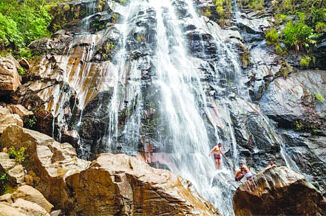
    “Bee Fall” provides drinking water to Panchmari. The Bathing pools above the fall are frequented regularly and are popular.The fall gently cascades about 50 meters down the face of the rock and is shaded beautifully. In the nearby trees giant squirrels play on the branches and different types of birds provide soothing music.There are many Waterfalls in Panchmarhi but Bee Fall is the most accessible one. It is just 10 mins walk from Apsara Bihar.
    There are many waterfalls in Panchmarhi that are lesser known. Clinging to the rounded sandstone structures these falls have an aura of their own. The Sunlight falling on Panchmarhi Waterfalls make for good visuals and you have a chance to trek as none of these are accessible by cars.
    Rajat Waterfall
    Rajat waterfall is one of the essential waterfalls in Pachmarhi and the 30th highest fall in India. With a height of 350 feet, the waterfall will surely amaze you with its natural beauty. As the waterfall is located quite close to Apsara Vihar, you will have to make an uphill journey to reach there. Most tourists love to trek to enter Rajat Prapat because the view offered in the passage is quite beautiful, and adventure seekers do not want to miss that. Apart from being a beautiful waterfall, the area surrounding the waterfall is perfect for having a nice picnic with your family. Do not forget to bring your camera to click gorgeous pictures of the waterfall.
    Bee Waterfall
    Bee waterfall is one of the most famous waterfalls located in Pachmarhi because of its intensity and the view of the area surrounding it. As the waterfall originates from perennial rivers, a pool is formed below the waterfall that is perfect for taking part in different water activities including swimming. The reason so many people love this fall is that the water available in the pool is quite clean. To reach the waterfall, you will have to climb down more than 400 steps though the route where the stairs are located is covered in the lush greenery of thick forests. You will fall in love with the ambiance of the area.
    Duchess Waterfall
    Duchess waterfall is located in the Bhrant Neer area of Pachmarhi that can be reached after undergoing a 4 km uphill trek. The reason this waterfall is immensely popular among nature lovers is that the waterfall originates as one stream by getting bifurcated into three different streams. When you reach there, you will be stunned by the gorgeousness of the streams of the cascading water.
    A considerable number of people do not visit the fall, so the surrounding area of the falls is quite clean and well-maintained. If you are a bird-lover, you will love this area as there are several different categories of birds living there in the forest. You must bring your binocular as well as your camera when you visit the falls.
    Apsara Waterfall
    Apsara waterfall is a hidden gem located in Pachmarhi. To reach there, you will have to hike approximately 3 km, and among the trail, you will have to do a steep climb of 1.5 km. The journey to reach the waterfall is not quite easy. Many tourists cannot go there due to the arduous journey to reach the falls. When you ultimately reach there, you will find all your tiredness to be washing out because the area where the fall is located is breathtakingly beautiful. The water of the fall is entirely fresh, and most tourists drink the water to replenish themselves. You will get to enjoy a break from the hustle and bustle of the city.
    Pavas Prapat Waterfall
    Pavas Prapat is commonly known as little falls in Pachmarhi because it is located quite close to the Rajat waterfalls. This tiny fall may not be immensely popular among tourists, but it serves a great picnic spot for all the tourists and the local people living out there. On the weekends, the area surrounding the falls stays quite crowded. Like other waterfalls in Pachmarhi, this one is also best enjoyed in the monsoon. Even though the waterfall is not that massive, it is quite beautiful.

  • Mysore: The royal city

    Mysore: The royal city

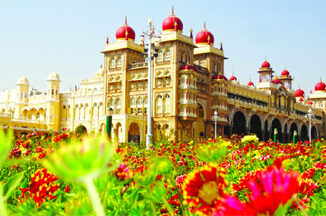
    Mysore, now officially known as Mysuru, is a small city tucked in the foothills of the western ghats in the Indian state of Karnataka. It is a city of royal heritage and rich culture as it served as the capital of the Mysore Kingdom for almost 6 centuries under the Wodeyar Dynasty. It still maintains a royal feel and atmosphere and is ideal for a weekend getaway. Contrasting to Bangalore, the busiest metropolitan city in Karnataka, in Mysore life is slow paced. It is an epitome of peace, great weather, and humble people. The primary language spoken here is Kannada but most people also speak Hindi and English. The city is small and can be easily covered over a weekend. Nearby places like Srirangapatna, Bandipur, Madikeri, Wayanad etc. are also as mesmerizing and great for road trips.
    The best time to visit Mysore is throughout the year but September to January is perfect for sightseeing. The weather is pleasant throughout the year except for three months of summer from February to April when the temperatures soar up to 29-30 degree Celsius. The nearest airport is in Bangalore, from there direct buses ply to Mysore. You can also drive down from Banglore or take the train to reach Mysore within 3 hours.
    Sri Chamundeshwari Temple
    It is a Hindu temple dedicated to Goddess Durga, overlooking the city of Mysore situated at an elevation of about 900 feet from sea level. It is the main temple of Karnataka called the Naada Devathe ( State Goddess). Among the many festivals celebrated here, Navratri or Mysore Dasara is the most grandly celebrated festival in the month of September-October by decorating the goddess in 9 ways to depict the 9 different aspects of the Goddess. It’s one of the oldest temples in Mysore and one among the 18 Maha Shakti Peethas. During Dasara, the whole city lights up and twinkles like a crown jewel. Food Melas, exhibitions and the royal procession of the idol of the Goddess in a Gold Mantapa consorted by the majestic elephants and horses on the streets of Mysore are the main attractions during the festival. Nearby you can also see the Lakshminarayana Temple and Jwalamuki Thirupurasundari Temple.
    The Mysuru Palace
    It is located in the center of the city facing the Chamundi Hill. It’s a historical heritage and the seat of the royal kingdom of Mysore. It is a three-story stone structure with Marble domes. Its unique architecture is what attracts the tourists to this Palace. During the day tourists are allowed to enter a part of the Palace and the gardens. At night the whole Palace and its three gateways light up for about an hour making it the most beautiful sight in Mysore.
    The Mysuru Zoo
    The Mysore zoo is a 4 km walk and a nice place to spend a day with kids. It has various animals and birds most fascinating of them being the White Peacock, the Royal Bengal tiger, Ostriches, and Owls. It’s a plastic-free zone with a small eatery inside. Best time to visit is early in the morning as soon as it opens at 8:30 am. It is closed on Tuesdays!
    Karanji Lake
    Just beside the zoo is a small lake surrounded by lush greenery called the Karanji Lake. Boating is allowed in the lake and there is a walk-through aviary where you can see birds of various kinds and a butterfly park. The lush green nature park with a lake view makes it an ideal location to spend the day relaxing in natures lap.
    Ranganathittoo Bird Sanctuary
    This bird sanctuary is located 16 km from Mysore in the Mandya district. It comprises of islets on the banks of the Kaveri river. You can enjoy a variety of flora and fauna here. Roughly 170 species of birds are found here including the painted stork,black-headed ibis, spoonbill, pelican, egret, Asian open bill stork, etc. Boating is available throughout the day where you can spot, up close, crocodiles basking in the sun on the rocks or swimming beside you. Best time to visit is June to November.
    Brindavan Gardens
    Situated on the KRS dam road, this is the second most famous place in Mysore after the Palace. This garden lies adjoining the Krishnarajasagara Dam across the river Kaveri. This terraced garden was built in 1927 – 1932 spread across 60 acres speckled with trees, fountains and colorful ornamentation. The main attraction is the light and sound show which starts at 7 pm.
    St. Philomena’s Cathedral
    It is a beautiful Catholic church constructed in 1936 inspired by the Cologne Cathedral in Germany. It is Asia’s second largest church with twin spires of about 175 feet. It has stained glass windows depicting scenes from the bible and can seat p to 800 people in the main hall.

  • Hyderabad, the city of pearls

    Hyderabad, the city of pearls

    Sixth largest city of India by population, Hyderabad nevertheless is still not very touristy and we must insist a little so that it reveals its beautiful face. A face with oriental features, reflecting its past as “city of pearls”, when it was a hub of the Indo-Persian culture under the reigns of the Golkonda and Nizams Muslim rulers. Hyderabad was founded by Muhammad Quli Qutb Shah in 1591 near Golkonda which was the capital of the Sultanate Bahmani, the first independent Muslim kingdom of southern India. Hyderabad is often referred to as the ‘city of pearls’, but it can be as well as referred to as the ‘city of diamonds’ as there was a time when India possessed the only known diamond mines in the world. The legendary Golkonda mines, 11 km from Hyderabad, are home to one of the biggest diamonds in the world, including the Koh-i-Noor (British crown), the Darya-i-Noor (the biggest pink diamond in the world), the Hope diamond, Pitt, and the 187-carat Jacob diamond.
    Charminar
    The Charminar is the icon of Hyderabad as the Taj Mahal is for Agra or the Golden Temple for Amritsar.
    The monument was built in 1591 by Mohammed Quli Qutb Shah, the fifth leader of the Qutb Shahi dynasty, after transferring his capital from Golkonda to Hyderabad. The Charminar was built at the intersection of the historic trade route that connects the markets of Golkonda to the port city of Machilipatnam. Originally, the town was divided around the Charminar in four quadrants. The structure is of Indo-Islamic architecture, integrating Persian architectural elements. It has a mosque and 45 prayer rooms.
    Mecca Masjid
    Two hundred meters south-west of Charminar, one sees the Mecca Masjid (the mosque of Mecca), called this way because the bricks were brought back from Mecca to build the central arch. The Qutb Shahis rulers never finished building the mosque, it was completed by the Mughal emperor Aurangzeb in 1694.
    Laad Baazar
    Laad Baazar is the oldest market of the city nestled in one of the arteries that lead to the Charminar. He has been active since the days of the Qutub Shahis and Nizams. This bubbling and colorful market is famous for its pearls, semi-precious stones and traditional glass and stone bangles. ‘Laad’ indeed means ‘resin’ in reference to the resin used to insert the artificial stones and diamonds on the bracelets. If you have to buy bangles, the laad market is the perfect place.
    Chowmahalla Palace
    Located in the old city of Hyderabad near the Charminar, the Chowmahalla Palace is surely the most beautiful heritage building in Hyderabad. It consists of 4 palaces (Afzal Mahal, Mahtab Mahal, Tahniyat Mahal and Aftab Mahal) and was the seat of the Asaf Jahi dynasty and the official residence of the Nizams of Hyderabad when they ruled the city. The palace remains the property of Barkat Ali Khan Mukarram Jah, heir to the Nizams.
    Salabat Jung initiated its construction in 1750 and was completed during the reigns of Afzal ad-Dawlah and Asaf Jah V between 1857 and 1869.
    Chowmahalla is unique for its style and elegance; Its architecture blends harmoniously different architectural influences. This is one of the first examples of European neo-classical architecture in Hyderabad.
    The Khilwat Mubarak or Durbar hall, the hall of ceremonies, is the heart of the Chowmahalla Palace. It is adorned with 19 huge crystal chandeliers from Belgium and a platform of white marble on which the Takht-e-Nishan or the royal seat is laid.
    Badshahi Ashurkhana
    Hidden in a corner near the Charminar this “house of mourning” is worth the detour. The Badshahi Ashurkhana is a mourning place for the Shia Muslims built in memory of the martyr Imam Hussain. Iman Hussain was the grandson of the Prophet Muhammad and the son of Ali ibn Abi Talib, the first Imam Shiite. The exterior aspect of the building is modest but the mosaics inside are splendid.
    Golkonda Fort
    Golkonda is one of the famous forts of India and was the capital of the rulers Qutb Shahi. The origins of the fort date back to the Yadava dynasty of Deogiri and the Kakatiyas of Warangal. The first three Shahi kings of Qutb rebuilt Golconda over a period of 62 years.
    Golkonda consists of four distinct forts surrounded by a 10 km long outer wall. Inside are several apartments and royal halls, temples, mosques, stables, etc. It is said that Golkonda fort possessed a safe where the famous ‘Koh-i-Noor’ and ‘Hope’ diamonds were locked up. The fort remained the capital of the Qutb Shahi dynasty until 1590 when the capital was transferred to Hyderabad. The fort will fall in ruin from 1687 after a long siege of a year leading to the capture of the fort by the Mughal emperor Aurangzeb. About one kilometer from the Golkonda Fort are the seven tombs of the kings of the Qutb Shahi dynasty. These granite tombs are part of the oldest historical monuments of Hyderabad. Very elegant, they are built in Persian and Hindu architectural styles.
    Paigah tombs
    Paigah tombs or Maqhbara Shams al-Umara are the tombs of members of the Paigah family, aristocrats, loyalists of the Nizams. The Paigah had the task of defending and securing the princely state of Hyderabad. The ties between the Nizams and the Paigahs were such that one of the Paigahs, Fakhrudin Khan, married the daughter of the second Nizam of Hyderabad in 1797.
    The marble tombs are adorned with genealogical trees or decorated with beautiful Persian geometric designs and jalis reflecting the aesthetic and artistic taste of the nobility of the time.
    Hussain Sagar Lake
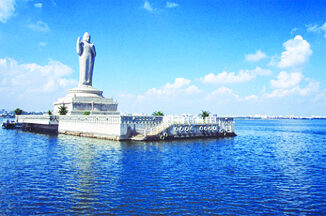
    Hussain Sagar is a heart-shaped lake built by Ibrahim Quli Qutub Shah in 1563. It is spread over an area of 5.7 square kilometers and is fed by the river Musi. A large monolithic statue of Gautama Buddha, erected in 1992, stands in the middle of the lake. the lake also separates Hyderabad from its twin city Secunderabad. Boats often return from the lumbini garden to the statue.
    Birla Mandir
    Birla Mandir is a Hindu temple, built on an 85-meter hill called Naubath Pahad. The construction lasted 10 years and was inaugurated in 1976 by Swami Ranganathananda of the Ramakrishna Mission. The temple was built by the foundation of the wealthy industrial Birla family, who also built several similar temples in India, all known as Birla Mandir. The temple, built with 2000 tons of pure white marble is a mixture of dravidian, rajasthani and odishi architecture. The divinity presides over the temple is Lord Venkateswara, a form of the god Vishnu.

  • Nalanda: The ancient seat of knowledge

    Nalanda: The ancient seat of knowledge

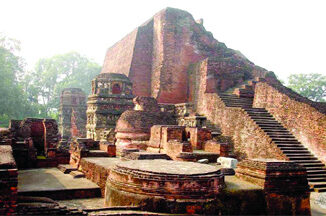
    The most popular Mahavihara of the ancient times, a significant Buddhist seat of academic excellence and a modest pilgrim center, all wrapped in a wisp of spirituality, Nalanda continues to be an equally enriching location in the present. It offers vibrant substance of spirituality, history, culture, architecture, and tourism. This city houses one of the world’s oldest and finest residential universities which itself was an architectural masterpiece. Although in ruins, the entire complex presents a pretty picture and is flocked by tourists day in and day out. It has “viharas” or monasteries to the east and “chaiyas” or temples to the west. In addition to this, the complex houses a charming little museum, which has a collection of several of original Buddhist stupas, Hindu and Buddhist bronzes, coins, terracotta jars, a sample of burnt rice etc. The district is believed to be a cradle of religions. Apart from Buddhism, it is an important center for Jainism, Hinduism, and Sufism as well. Considering the rich heritage and the historical importance, it is a hot tourist destination.
    Nalanda University
    Nalanda University is a UNESCO world heritage site is located South Bihar. Considered as one of the oldest universities in the world and known as Nalanda Mahavira back in time, its origins date back to the 3rd century. Mahavira is a Sanskrit term for a great ‘Vihara'(Buddhist Monastery). Located about 85 km away from Patna, it is regarded as one of the greatest and oldest universities recorded in history. It finds references in the oldest epics of India as well as in the travels of Hiuen Tsang. The Gupta kings built various monasteries in old Kusan style of architecture. Emperor Ashoka and Emperor Harshavandhana were also patrons of this university who built few temples, viharas, and monasteries for the university. Former President Dr. APJ Abdul Kalam pitched the idea of reviving the university in March 2016. With reference found in the Tibetan and Chinese culture, the university was a centre of advanced Vedic learnings until it was ransacked by Bakhtiyar Khilji in the 12th century. Lord Buddha visited Nalanda several times during his lifetime, but the university became popular in the later years when Hieun Tsang stayed here in the 7th century AD and he left a detailed description of the education system and monastic life of this place. The site was recovered by Archeological Survey of India in 1915. It’s said that the library of the university had so many books and manuscripts that it kept on burning for six months after the entire structure went up in flames.
    The Great Stupa
    Present amongst the ruins of the Nalanda University, this Stupa was built in the 3rd century by Ashoka in the honour of Sariputra. After the seven accretions to it, this structure is shaped like a pyramid and is flanked by flights of steps and splendid sculptures as well.
    Hiuen Tsang Memorial Hall
    The Hiuen Tsang Memorial Hall was built in memory of the Chinese scholar in the location where he was said to have resided for over 12 years during his time in the country. The memorial hall is home to writings of the scholar about his observations regarding medieval India, which forms the basis of much of the knowledge of that time.
    Pawapuri
    Pawapuri is a holy site for the Jains. It is situated in the Nalanda district of Bihar state in Eastern India. A long time ago, Pawapuri was the twin capital of Mall Mahajanpad. Mahajanpad later became a part of the kingdom of Magadha and Ajatshatru was a devotee of Lord Mahavira. During the rule of Ajatshatru, the king of Pawapuri was known as Hastipal. When in Pawapuri, Mahavira stayed in the Rajikshala of the king. It is considered as a sacred place because Lord Mahavira was buried here in 500 BC.
    Nalanda Archaeological Museum
    Housing the ancient relics of Nalanda University, this museum offers a glance into the culture of ancient Nalanda. Pala Art is displayed through the assorted artifacts maintained here.The statues here are mainly engraved on basalt stone, but others made out of stucco, bronze, stone and terracotta are also present.
    Kundalpur
    Located just outside Nalanda, Kundalpur is the place which is believed to be the birthplace of Lord Mahavira, the 24th and last of Jain Tirthankaras. It is also the place of birth of Gautam Swamiji who was the first disciple of Lord Mahavira.A grand temple with beautiful spires has been built here to mark the birthplace with a four and half feet tall idol of Bhagwan Mahavira Padmasana. Within the complex, there is a serene Trikal Chaubeesi Jinmandir where there are 72 idols of Tirthankaras, representing 24 each of the past, present and the future age.

  • Gokarna: Land of palm trees, blue seas and golden sands

    Gokarna: Land of palm trees, blue seas and golden sands

    With its pristine beaches and breathtaking landscapes, Gokarna is a Hindu pilgrimage town in Karnataka and a newly found hub for beach lovers and hippies. Situated on the coast of Karwar, every year Gokarna welcomes hordes of tourists from around the world in search of sanctity and relaxation. The out-of-town beaches like Kudle beach and Om Beach are a different contrast to life inside the town.
    Palm clad beaches are dotted with foreign tourists in a majority and very few Indians are seen across. Gokarna is not very conventionally touristy. The beaches are meant for a slow, relaxed holiday and everything on the beach goes at the same relaxed pace. Full of coconut and palm trees, the ocean and clean sands, Gokarna is a ‘one of a kind’ place in the country.
    Om Beach
    Om beach is a wonderful beach located in the town of Gokarna. Shaped like the symbol ‘Om’, this beach offers plenty of adventure sports to the thrill-seekers. The view of this beach during sunset is one to be cherished forever. It is usually lined with shacks on the sides offering cheap accommodation and restaurants with global menus. There is also a bunch of fun water sports activities available on Om Beach, including speedboats, surfing etc. Visitors can even enjoy boating here.
    Om beach derives its name from its shape, which is formed by two semi crescents joined together. The unique black rock formations here attract a lot of travellers. One can spot fishermen boats, small cafes and eateries and crows swirling up in the sky at this beautiful beach. The beauty of this beach compels many visitors even to cross the danger area (marked by red) and play in the splashing waves. This place is a heaven for all the shutterbugs, with some mind-blowing sceneries amidst the rocky terrain.
    Mahabaleshwara Temple
    A 6 feet tall Shiva Linga here at the temple is known as the Atmalinga is worshipped here. Built using white granite, it is a classic example of the beauty of Dravidian architecture. A 1500 years old carved stone Lord Shiva idol in the standing position represents the main deity. The temple has been mentioned in the Hindu Mythics of Mahabharata and Ramayana and it is said to be as significant as Kashi, hence it earning the title, Dakshin (South) Kashi.
    The top of the Atmalinga is the only part of the Linga that is visible to devotees. But during the Ashta Bandana Kumbhahishekam, a festival that happens once every 40 years, is when the entire Atmalinga is shown to the devotees. As per custom, devotees must first take a dip in the Karwar Beach, where the temple faces, visit the Maha Ganapathi Temple that is opposite the temple, then only visit the Mahabaleshwar Temple.
    Kudle Beach
    Kudle Beach is one of the many beaches of Gokarna, situated only a short trek from Om Beach. A complete recluse, this beach offers the most silent and serene atmosphere to enjoy a sunset, a walk along the shore or simply sit and observe the never-ceasing tides. Many local people prefer this beach for a morning or evening walk or practising yoga, as the Kudle beach is not invaded by large groups of tourists and as a result, has a very little crowd and quite serene.
    The beach is usually deserted, except for the peak months from November to February, when it is flocked by foreign travellers and backpackers who choose Kudle beach for its privacy. The sea is calm and shallow enough to have a bath or simply for dipping your feet, but it is always better to be careful. If you are planning to stay here overnight, there are a few proper hotels, which tend to be full during the peak seasons. However, from around October to March, the local people also put up temporary shacks and huts for makeshift accommodation and food. They are not the best option, but an option nevertheless. If you are of the adventurous type a night spent on the beach in a small hut listening to the sound of the waves is as perfect as it can get.
    Water Sports in Gokarna
    Known for its idyllic beaches and pristine waters, Gokarna is a favorite among travelers who seek a peaceful vacation. It is the more laid-back and less commercialized version of Goa. Other than the famous Om beach, it has Kudle beach and the more secluded Half Moon and Paradise beach.
    Gokarna is an ideal destination for adventure seekers as well those want a break from the chaos of everyday life. Travellers have the option of simply strolling down the beautiful serene beaches or participating in the myriad water sports that it has to offer. The popular water sports are parasailing, banana boat ride and jet-skiing.

  • Shillong: An abode of clouds, rolling hills

    Shillong: An abode of clouds, rolling hills

    An abode of clouds, the rolling hills around the town and the hill station of one of the smallest states of India, Meghalaya. With the best places to visit in Shillong, it is geography synonymous to heaven, is the painting hung on your drawing-room wall, a collage of memories yet to be lived.
    This prepossessing land is a beauty that floats on high over vales and hills, where the tall pine trees are seen fluttering and dancing in the breeze, and the clouds find a space along the margins of a hill unfolding the enchanting blue sky. The mystique land perched on an escarpment is more than enough to leave your imagination spell-bound.
    The capital city of the state Meghalaya – a perfect blend of old charm and fresh essence, this bliss of solitude carries a number of things like falls, parks, peaks, landscapes and museums to keep a traveller’s head tossing in sprightly dance.
    With the best places to visit in Shillong, this surprising holiday destination will make you forget to stop the shutters of your cam. The god’s honest harvest is ready to find a space among the favourites in your travel diary.
    What to see
    Living Root Bridge
    In Meghalaya, bridges aren’t built, they are grown. The Living Root Bridge is an example of that. About a two-hour drive from Shillong, near Mawlynnong, the bridge is made of sturdy roots and is often used by villagers. While this bridge is a popular tourist attraction because of its accessibility, the one situated in Cherrapunji is not for the weak-hearted; it involves trekking down over 3,000 steps.
    Mawlynnong
    You’ll pass through this village on your way to the Living Root Bridge. We suggest making a pit stop here, on your way back. The village is very clean and the people from the village are friendly and welcoming. Walk through the tiny lanes and make it a point to check out the neatly-divided residential areas, small drainage canals built along the huts and the bamboo dustbins installed every few meters. Make it a point to grab a meal at the local shacks; these offer a peek into the cuisine from the state. A vegetarian meal here consists of plain dal, rice and a curry, and a non-vegetarian meal is usually chicken cooked with bamboo shoots and served with rice and spicy pickle.
    Dawki, Umngot River
    Crystal clear water is not just an expression, but a reality at Dawki. Passing through the India-Bangladesh border, the Umngot River makes for an ideal spot for camping and barbecues, or just to laze around. Take a boat ride (priced at `400 per hour) along the river and go nuts gawking at the large pebbles on the river bed. Yes, you can see through the water — even 15ft deep at some places.
    Mawphlang Sacred Forest
    The Khasi Hills have many forests that have been preserved by local religious sanctions, which means that these forests cannot be harmed or tampered with. “Don’t even dare picking up a leaf as a souvenir,” instructed our guide. About 25km from Shillong, this sacred forest is an ideal spot for nature lovers, and those who are looking for a moment of peace and quiet. Dense trees, orchids and butterflies are in abundance, and so are religious stones that stand tall in the forest.
    Elephant Falls
    Named after an Elephant like stone at its foot, the Elephant Falls are amongst the most popular falls in the North-East, situated next to Shillong. It is a tourists’ paradise with three layers of the falls accessible to the layman from different vantage points. The Britishers named this fall so owing to the presence of an elephant-shaped rock on one side of the fall. However, the stone disintegrated and was washed away due to an earthquake in 1897. Elephant Waterfalls is a superb place for spending some time in the midst of nature while capturing the incredible moments for your keepsake.
    The breathtaking Elephant falls were referred to as ‘Ka Kshaid Lai Pateng Khohsiew’ by the local Khasi people, which means ‘The Three Step Waterfalls’, as these falls consist of three mesmerising falls in succession. The first of the three waterfalls are tucked between the dense trees and are very broad. The second waterfall reduces to thin strands of water and is almost negligible in winters due to the receding water levels. The third and the most visible waterfall is the tallest with clear water flowing like a sheet of milk on the dark rocks in the backdrop. Out of the three, the third waterfall tends to strike the visitors as the most impressive. Elephant Falls is a great stopover destination before one head for further journeys into Meghalaya. Located 12 km away from the capital city of Shillong, it is one of the most visited falls in the beautiful state.
    Umiam Lake
    Umiam Lake, a mesmerizing man-made reservoir, is located at a distance of 15 kilometres north of Shillong which is the capital of the north-eastern Indian state of Meghalaya. The lake was formed after a dam was constructed to generate hydroelectric power. The scenic Umiam Lake is encircled by lush green East Khasi hills that form one of the best panoramic sights for nature-lovers in the country. The sunrise at the lake is a treat to watch and shouldn’t be missed. The Umiam Lake has a park adjoining it which is a hotspot for picnics and frequented by locals for a getaway from their busy scheduled.
    The serene lake or the reservoir is surrounded by thick coniferous forests and expands over an area of about 222 square kilometres.

  • Uttarakhand: Mystical land of mountains and mythologies

    Uttarakhand: Mystical land of mountains and mythologies

    Uttarakhand is one of the most beautiful northern states of India located on the southern slope of the Himalayan range. Mighty Himalayan peaks and glaciers are on its north where it borders Tibet. Nepal is on its east, Indian state of Uttar Pradesh is on south and Himachal Pradesh lies on its west and northwest. 65% of its area is covered by dense forests that are home to Royal Bengal tiger, leopards and many other endangered animal and plant species. The glaciers of two of the most important rivers—Ganga and Yamuna—are located here.
    It has something to offer to every kind of traveller. For wildlife lovers, Jim Corbett National Park—the oldest national park of the Indian subcontinent is a must visit. Many rare Himalayan birds can also be spotted here besides Pangot and Sattal. For adventure seekers there are some of India’s best trekking trails like Valley Of Flowers, Roopkund, and Chopta-Chandrashila. It also provides immense opportunities for adventure sports, such as skiing at Auli and white water rafting at Shivpuri. Popularly known as the ‘Land of Gods’, it is home to numerous holy places like Gangotri, Yamnotri, Kedarnath, Badrinath, Rishkesh and Haridwar. Therefore, thousands of pilgrims throng the state every year. Amazing hill stations like Chakrata, Mukteshwar, Dhanaulti and Munsiyari make Uttarakhand a sought after tourist destination for leisure trips. Here’s a list of destinations in Uttarakhand that every nature lover would love to visit.
    CHAKRATA
    Having breakfast with the view of snow-covered Himalayan peaks on a lazy morning while soft rays of winter sun embrace your body and soul while cool breeze kisses you is something city people always crave for. Chakrata located at a distance of 330 km from Delhi, is a tiny hamlet which is a perfect place to do so. There are two routes to drive from Delhi to Chakrata, one is via Panipat and Kurukshetra and the second one is via Loni and Saharanpur, which supposedly is more beautiful and has less traffic.
    Chakrata is a small cantonment town in Dehradun district resting at an elevation of about 7500 ft. The town gets a magnificent view of the snow covered Himalayas and is covered in deodar, Himalayan oak and rhododendron forest. Many day trips to places like Deoban, Koti, Kanasar can be done with Chakrata as base. There are some easy treks also around Chakrata that your hotel guys can arrange for you. There are not many hotels in the area so make sure to book your accommodation in advance. Chakrata is a year round destination; the winter season is perfect to experience snow, greenery is at its best during the monsoon season and the summer season too is quite pleasant.
    AULI
    Auli is one of the most beautiful places of Uttarakhand. Bordered by snow-covered Himalayan peaks, Auli is enveloped in dense golden oak and pine forest with green meadows and slopes ranging from a height of 2519 m to 3049 m. It is considered to be a world-class spot for skiing. GMVN winter resort here provides skiing facility, besides ski training for aspirants. Almost from everywhere in Auli, you can enjoy stunning views of the lofty mountain ranges—Nanda Devi, Mana Paravat and Kamat. The golden rays of sun on the snow-laden peaks fill the atmosphere with a divine glow. The 3rd highest peak of the world—Nanda Devi gleams like the crown of the region. There is an open cable-car to go up to the spot where skiing is done. Even if you do not want to ski, you have plenty of things to do. Climb up the slopes, play with snow, ride a sledge and who knows you might feel like trying skiing too. The best time to visit Auli is in between December and March.
    CORBETT
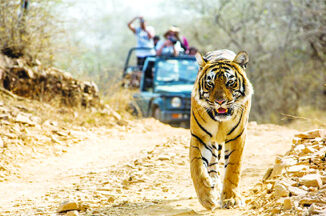
    Spread across an area of 520.8 sq km, Jim Corbett National Park is located in Nainital district of Uttarakhand. It is the oldest national park, and is named after Jim Corbett who was the main person behind this establishment. The park is divided in 5 zones—Bijrani, Jhirna, Durgadevi, Dhikala, Sitavani—and is inhabited by royal Bengal tiger, leopard, jungle cat, barking deer, hog deer, cheetal, sloth bears, otters, Himalayan goral, Indian pangolins, langur and many other wild animals. Many rare birds can also be spotted in the region.
    Gorgeous Corbett National Park is one of the favourite destinations equally for wildlife lovers and weekenders. It is just 235 km away from capital city and can be reached in couple of hours. It features splendid landscapes and offers a good amalgam of hills, rivers, forests, marshlands and grasslands. The park is open from the months of November through June. The park is kept closed in the monsoon season as the roads inside the park get washed away due to rain. After the monsoon season, repair work starts and ends only by November.
    MUKTESHWAR
    Staying in middle of fruit orchards in tents and eating garden fresh meals while looking at the Himalayan peaks covered in fresh snow are a few of the many beautiful memories I have of Mukteshwar. You can walk through the dense pine forest and enjoy stunning views of the mighty mountains. Situated at an altitude of 7500 ft in the lap of Kumaon hills, Mukteshwar is an ideal nature get away from Delhi. It just takes 7 hrs from Delhi to reach Mukteshwar via Gajraula, Rampur, Haldwani and Bhowali. Summer months (March to July) are the best months to visit Mukteshwar. If you want to experience snow, visit during Jan or Feb when the whole area is covered in snow and looks stunningly beautiful. If you happen to visit this place around the month of June, the harvesting season, you’d find many fruits like peaches, plum and apricot. And if you still did not have your fill, Mukteshwar has many fruit orchards and you might get lucky to get offered the fruits just plucked from the trees by villagers. The taste of crunchy fresh peaches plucked from a road side tree of an orchard that belonged to a generous local who gladly offered us to pluck as many as we want, is still fresh in my mouth. Mukteshwar has recently got very popular among those looking for holidays in offbeat destinations and hence there is a wide range of options to stay starting from camps to budget hotels to boutique hotels.

  • Mahabaleshwar: A hill station in Western Ghats

    Mahabaleshwar: A hill station in Western Ghats

    Well known for its juicy strawberries, lush evergreen forests, breezy weather, and picturesque vistas, Mahabaleshwar is the most popular hill station in the Sahyadri Mountain Ranges. Flocked by locals and tourists alike, it is just 285 kilometers from Mumbai and 120 kilometers from Pune. Bound by valleys, this verdant picnic spot is a nature lover’s paradise located in the Western Ghats, in the Satara district of Maharashtra. Mahabaleshwar is a hill station located in the Western Ghats, in Satara district of Maharashtra. Known for its captivating beauty and the beautiful strawberry farms, the city comprises of ancient temples, boarding schools, manicured and lush green dense forest, waterfalls, hills, valleys. The city is definitely among the most sought after weekend getaways from Mumbai. Charming views, enticing valleys, serene lakes and a refreshing delight for your taste buds – the best way to summarize this natures gift.
    Elephant’s Head point
    Elephant’s Point is famous for the beauty and peace that one gets by being there. The greenery around is worth appreciating, and nature around is stunning and gives one a sense of comfort away from the fast moving life of the city. The rock formations at the site are present in a way that forms the trunk of an elephant. It is one of the most visited and famous attractions of Mahabaleshwar which is flocked in by tourists from near and far.
    Elephant’s Point got its name from the age prevalent during the British Raj and the Governor of Bombay at the time, Sir Mount Elphinstone. It is believed that it was founded in the year 1930 by Dr Murray who also has an old mansion present nearby.
    Today, only the ruins of this hotel are present in the place of which a picnic shed for the tourists is being constructed by the local authorities. The elephant’s point justifies its name and give one a picture of an elephant’s head and trunk. One must surely not miss out on the place.
    Chinaman’s falls
    A visit to Mahabaleshwar is less or more incomplete without witnessing the tantalizing descend of the Chinaman’s fall, one of the most significant falls in the state.
    The place is named after the Chinese prison located in the vicinity. It serves as a perfect holidaying spot enthralling a bewitching experience.
    Dhobi waterfall
    These set of fascinating waterfalls connect Lodwick and Elphinston point and further join petit road with Old Mahabaleshwar road. Surrounded by greenery and rocks, these are ideal for a surreal experience amidst nature.
    Arthur’s seat
    Arthur’s seat or Suicide point is also known as the Queen of all points. It offers the most mesmerizing and fascinating view of the dense valleys of Brahma-Arayana and the Savitri river. The point is a huge table that stands on a natural pillar. On the way up, one can also see window point and Tiger’s spring.
    Venna Lake
    Venna Lake is a beautiful and scenic lake in Mahabaleshwar and is frequently flocked by visitors from all over India. It is one of the most famous tourist attractions of Mahabaleshwar, and its serenity is what speaks for the place. The lake is covered with tall trees and grass all over. Venna Lake is a man-made lake and is not a natural one. It surely is one of the most eye-catching places and is a must-visit for all nature lovers out there.
    Venna Lake was built by Shri Appasaheb Maharaj who was the ruler of Satara and a descendant of Chhatrapati Shivaji Maharaj, in the year 1942. Appasaheb was the leader in the 19th century, and the ancient tower which is present in the centre is a mark of the history surrounding the place. The lake is spread over an area of 28 acres with a periphery of 7 to 8 km. It was initially built with the aim of catering to the water needs of the city of Mahabaleshwar. The lake has one or two thirths (place of pilgrimage) submerged to nearly 1 to 2 km. Chhatrapati Pratapsihn Garden is present on the banks of the lake.
    The lake offers exciting boat rides to the visitors and hence is usually very crowded. Tourists can even opt for horse rides nearby, which are mainly liked by children. People prefer to take a brisk walk to reach here from the market area and bus stand nearby. There are some eateries and restaurants nearby Venna Lake that attracts even more travellers.
    Wilson Point
    A wide plateau by the name of Wilson Point, tends to be one of the best places in the town to start your day. Catch a breathtaking view of the sunrise from any of the three watch points here. Enjoy the wide sceneries here as this also happens to be the highest points in the town.
    Mahabaleshwar Temple
    Located at a distance of 6 km from the city of Mahabaleshwar; Mahabaleshwar temple is an ancient shrine and an ideal example of the Maratha heritage. Popularly known as the Mahabali, the temple is flocked by tourists and devotees throughout the year to bask in the serenity and tranquillity offered here. The temple is extremely popular among the Hindus, as Lord Shiva is the presiding deity here. Set up amidst the hilly terrain, this picturesque temple glorifies the Maratha Empire and its rule during the 16th century.
    The Mahabaleshwar temple near Satara is one of the ancient temples of Maharashtra. It was built by Chanda Rao More dynasty in the 16th century. The magnificent temple is guarded by a five feet wall and has two sections- the inner area and the outer area. The inner part, known as the sanctum sanctorum, has Shiva as the presiding deity. There are many belongings of Lord Shiva in the premises of this temple, like his bed, damru, Trishul, carvings of his sacred bull and Kalbhairav (his bodyguard); that aptly defines his presence here.
    The main and central attraction of this temple is the 6 feet long Shiva lingam of which only the tip is visible, depicting the stone incarnation of Lord Shiva. The Mahabaleshwar Temple has a very serene and spiritual environment. Devotees visit the temple around the year to witness the calm and peaceful aura of Lord Shiva. The site has two more temples nearby, namely the Atibaleshwar temple and the Panchganga temple. Mahabaleshwar Temple is quintessential of the authentic Hemadant architectural style of South India.

  • Varanasi: The spiritual capital of India

    Varanasi, or Benaras, (also known as Kashi) is one of the oldest living cities in the world. Varanasi`s Prominence in Hindu mythology is virtually unrevealed. Mark Twain, the English author and literature, who was enthralled by the legend and sanctity of Benaras, once wrote : “Benaras is older than history, older than tradition, older even than legend and looks twice as old as all of them put together. ”
    The land of Varanasi (Kashi) has been the ultimate pilgrimage spot for Hindus for ages. Hindus believe that one who is graced to die on the land of Varanasi would attain salvation and freedom from the cycle of birth and re-birth. Abode of Lord Shiva and Parvati, the origins of Varanasi are yet unknown. Ganges in Varanasi is believed to have the power to wash away the sins of mortals. Ganges is said to have its origins in the tresses of Lord Shiva and in Varanasi, it expands to the mighty river that we know of. The city is a center of learning and civilization for over 3000 years. With Sarnath, the place where Buddha preached his first sermon after enlightenment, just 10 km away, Varanasi has been a symbol of Hindu renaissance. Knowledge, philosophy, culture, devotion to Gods, Indian arts and crafts have all flourished here for centuries. Also a pilgrimage place for Jains, Varanasi is believed to be the birthplace of Parsvanath, the twenty-third Tirthankar.
    Kashi Vishwanath Temple
    Situated on the western bank of holy river Ganga in Varanasi, Kashi Vishwanath Temple is one of the 12 Jyotirlingas or temples dedicated to Lord Shiva. The main deity of Kashi Vishwanath Temple is Lord Shiva, also known as Vishwanatha or Vishweshwarar meaning ‘the ruler of the universe’. The city of Varanasi, the cultural capital of India, is thus known as the city of Lord Shiva. The temple has 800 kg of gold plating on its tower.
    Dashashwamedh Ghat
    Dashashwamedh Ghat, situated on the Ganges River in Varanasi, holds immense religious significance and cultural vibrancy. Renowned for its daily Ganga Aarti, it offers a mesmerizing experience with spiritual rituals, pilgrim activities, and a lively atmosphere. Every evening, Dashashwamedh Ghat hosts the renowned Ganga Aarti, a spiritual ceremony featuring priests conducting rituals with brass lamps and hymns. This captivating spectacle attracts large crowds, creating a divine ambiance.
    Dashashwamedh Ghat serves as a pilgrimage site where devotees take ritualistic dips in the Ganges to cleanse themselves. The ghat’s steps are adorned with numerous shrines, creating a sacred atmosphere. Visitors can engage in boat rides on the Ganges, offering a unique perspective of Dashashwamedh Ghat and the city of Varanasi. The ghat’s proximity to the Kashi Vishwanath Temple adds to its religious aura, creating a significant spiritual hub in Varanasi.
    Sankat Mochan Hanuman Temple
    The Sankat Mochan Hanuman Temple is situated by the River Assi and was built in the 1900s by the freedom fighter Pandit Madan Mohan Malviya. It is dedicated to Lord Rama and Hanuman. Varanasi is always related to Sankat Mochan Temple and is an essential part of this holy city. Every person visiting Varanasi visits this temple and pay their respects to Hanuman.
    The laddoo offered at this temple is essentially famous among the locals.While visiting Sankat Mochan be aware of the monkeys who throng the temple premises and tend to steal away the prasad. However, they are totally harmless if you let them be on their own.
    Varanasi has also been a great center of learning for ages. Varanasi is associated with promotion of spiritualism, mysticism, Sanskrit, yoga and Hindi language and honored authors such as the ever-famous novelist Prem Chand and Tulsi Das, the famous saint-poet who wrote Ram Charit Manas. Aptly called as the cultural capital of India, Varanasi has provided the right platform for all cultural activities to flourish. Many exponents of dance and music have come from Varanasi. Ravi Shankar, the internationally renowned Sitar maestro and Ustad Bismillah Khan, (the famous Shehnai player) are all sons of the blessed city or have lived here for major part of their lives.
    Arts, Crafts and Architecture of Banaras: You will be amused to see that Varanasi is a Museum architectural designs. It presents changing patterns and movements in course of history. It has a rich and original variety of paintings and sculptor styles and equally rich treasures of folk art. During the ages Varanasi has produced master craftsmen and Varanasi has earned name and fame for its Sarees, handicrafts, textiles, Toys, ornaments, metal work, clay and wood work, leaf and fibre crafts. With ancient crafts, Banaras has not lagged behind in Modern Industries.
    The Capital of all knowledge- Discover the most ancient seat of education in India World the famous scholars and their `Shastrarthas’, the great scholars, universities, college, schools, Madarsas and Pathshalas and Guru Shishya traditions, the epics, famous literary works, languages and dialects, journalistic traditions- newspapers and magazine, and famous libraries.
    Organisation of sacred complex and social spaces, the cultural pluristic, linguistic and ethnic groups. Discover the city of affluence, intellectuals, oral traditions, castes and customs, personalities, professions, communal harmony . Discover the rural Varanasi. And finally (and with deep insight) peep into, the pleasure of Pans, Thandai, Gamcha, Bahri Alang and Mauj Masti. Banaras has been famous for its Music both vocal instrumental, it has its own dance tradition. Add to this a very rich stock of folk Music and drama (esp. Ramlila), the tradition Musical soirees, fairs and festival the rich tradition of Akharas, games and sports.
    Discover the ancient College of Plastic Surgery, Sushruta, Dhanvantri (God of Medicine), Divodas, and practice of all the ancient and modern systems of medicine in action.
    Discover the spots around Varanasi, instituions, story of freedom struggle and the martyrs, history of Kashiraj, history of Sarnath, history of Bhadohi (Carpet town), of Mirzapur, of Ghazipur, know about the famous travellers and tourists, of the `Nijam’. And finally having seen the Panorama of Banaras, its continuity of culture, discover the identity of Banaras.

  • Puducherry Tourism Hosts an Exclusive Roadshow in Bengaluru

    Puducherry Tourism Hosts an Exclusive Roadshow in Bengaluru

    The Department of Tourism, Government of Puducherry, organised an exclusive roadshow in Bengaluru on July 26, 2024, to promote the state as a premier tourist destination in India. This event highlighted Puducherry’s scenic tourist spots and unique products, providing a platform for travel agents, tour operators, media personnel, and travel trade partners from Bengaluru to discover the state’s diverse attractions. The roadshow showcased Puducherry’s rich cultural heritage, tranquil beaches, delicious cuisine, and vibrant local art. Participants had networking opportunities and access to first-hand information on the latest tourism initiatives in the region.
    Under the guidance of K. Lakshminarayanan – Hon’ble Tourism Minister, Govt. of Puducherry the Puducherry Tourism delegation was led by Dr. Jayanta Kumar Ray, IAS – Secretary (Tourism), Govt. of Puducherry, K. Muralidharan – Director of Tourism, Government of Puducherry and Managing Director Puducherry Tourism Development Corporation. Around 15 representatives from Puducherry Tourism were present to interact with attendees, share insights, and forge collaborations to enhance tourism experiences in Puducherry. The event aimed to strengthen ties with the travel industry in Karnataka and foster partnerships for mutual growth and development.
    The roadshow was attended by the travel-trade of Karnataka along with the Key industry delegates, and media representatives and had an enriching session to discover the charm and allure of Puducherry.
    One of India’s eight Union Territories, Puducherry, popularly known as Pondicherry, is bordered by the southern state of Tamil Nadu. This former French colony offers the ideal fusion of elegant French buildings and traditional Indian aesthetics. Puducherry is a beautiful getaway with lots to offer visitors, including delicious French cuisine and enjoyable beach activities. In addition to beach sports, the fascinating marine life of Puducherry offers thrilling scuba diving off the East Coast of the nation. The town provides you with the best of everything, including exquisite cuisine, peaceful surroundings, stunning architecture, etc. Puducherry is a picturesque location where tourists can discover their adventurous spirit and feel revitalized.
    The roadshow had networking session, presentations and cultural performances that showcased the destination along with its hidden gems and also opened up new avenues to showcase Pondicherry in a new light to the travel and trade community.

  • Hampi: A historical town of Karnataka

    Hampi: A historical town of Karnataka

    Hampi is a village and temple town recognised as a UNESCO World Heritage Site, listed as the Group of Monuments at Hampi. in northern Karnataka, India. It was one of the richest and largest cities in the world during its prime. It is located within the ruins of the city of Vijayanagara, the former capital of the Vijayanagara Empire.
    Hampi is a place like no other and so are the activities that you can indulge in when here. Test yourself at bouldering over the hills, ride a bicycle all across the village, row a coracle in the calm waters of River Tungabhadra, spot some Indian sloth bears or get blessed by an elephant—Hampi has a lot to keep you busy. Watching a sundowner across its famous temple ruins is, of course, a delight.
    BOULDERING
    Hampi is a boulderers’ heaven. With its endless trails of boulder hills and right terrain, it has emerged as the country’s hotspot for anyone with a love for the sport. While the more experienced ones can get bouldering and rock climbing equipment from one of the many stores and travel operators in the village, newbies can learn sport tactics with experts who often camp by the boulders. A closely-guarded secret, bouldering in Hampi came into spotlight with Pilgrimage, the much acclaimed climbing movie by Chris Sharma, Katie Brown and Nate Gold; climbers from all over the world made Hampi a favourite soon after its release. You would know the lure of those flat, looming boulders once you set eyes on them. A must-do in Hampi.
    BEAR WATCHING
    Wildlife lovers can head off the Daroji Sloth Bear Sanctuary for jungle safaris. The sanctuary is some 20 km away from Hampi and doubles up as a conservation centre for the Indian sloth bear. Perfect to escape to from the more touristy lanes of Hampi, it is quite offbeat and houses more than 100 sloth bears, 90 bird species and an impressive variety of butterflies as well. You can either drive across the sanctuary or sit in the watch tower with a pair of binoculars and picnic lunch. Great place for kids.
    GET BLESSED BY AN ELEPHANT
    This one would never lose its charm! Lakshmi, the temple elephant at Virupaksha Temple, blesses visitors early in the morning with a gentle touch of her trunk. Anyone looking for a greater adrenalin rush should get into the river when she is in for a bath; a gentle shower from her awaits everyone who is eager enough to go near. Those not in a mood to get drenched can stay at the banks and watch the ritual-like bathing ceremony when Lakshmi splashes in the water, eagerly listening to her mahout’s calls.
    BICYCLE TOURS
    If there is one thing that you must do in Hampi, it is to get a bicycle and roam around the ruins and this sleepy village at a pace that keeps you discovering its beauty. Hampi is not a place to strike off from your wishlist in a rush; so let it work its magic on you—slowly. A number of bicycle rental points are in the lane that houses Virupaksha Temple.
    CORACLE HOPPING
    A walk by riverside is passe when you can go right in the middle of one in coracles, the coolest designed boats ever. Crossing River Tungabhadra to reach Anegundi, the hippie side of Hampi and back, becomes all the more inviting when you wade across it in a coracle. Watch a brilliant sunset, visit the drum circle and other live music sessions on the other side, photograph the Hampi ruins that look all the more fascinating from across the river or just enjoy some calm, away from the touristy clamour of the village in one.
    VIRUPAKSHA TEMPLE
    Dedicated to Lord Virupaksha, the main deity of the Vijayanagara rulers, the temple is an important pilgrimage centre and one of the main attractions of Hampi. Also known as Pampapati Temple, it has a 50-metre high tower at the entrance and displays beautiful architecture throughout. The miniature paintings on the ceilings make your visit worthwhile. Built in the beginning of the 7th century, it is one of the oldest functioning temples in India. The temple received a major overhaul and renovation at the beginning of the 19th century.
    VITTALA TEMPLE
    Dedicated to Lord Vittala, a form of Lord Vishnu, the temple was built in the 15th century. It is an exemplary symbol of the Vijayanagara style of art and architecture and one of the top attractions of Hampi. No words can describe the magnificence of the hundred pillared pavilion or mandapa that lies in the south-west part of the temple. The sculptures that adorn the eastern and northern gateways are also splendid. The composite pillars of the ‘sabha mandapa’ are massive and when tapped gently produce musical notes. The temple complex houses a number of important monuments including the famous stone chariot.
    STONE CHARIOT
    Considered as the most popular attraction of Hampi, this architectural marvel is located within the Vittala Temple complex. It is actually a shrine built in the form of a chariot and rests on a platform that is about a feet high. The shrine is dedicated to Garuda who is the carrier of Lord Vishnu. This stunning piece of architecture is among the three famous stone chariots in India, others being Konark (Odisha) and Mahabalipuram (Tamil Nadu). The carvings and sheer beauty of this structure make it a ‘must-visit’ attraction of Hampi.
    UGRA NARASIMHA SWAMY STATUE
    This is the largest statue in Hampi and depicts Lord Narasimha in a terrifying or angry form. Narasimha which means half-man and half-lion is one of the ten incarnations of Lord Vishnu. This monolithic structure, which is 6.7 m in height, has the lord sitting cross-legged position on the coil of a giant seven-headed snake Adishesha. Originally the statue also had Goddess Lakshmi sitting on lord’s lap, but according to history it was vandalised and damaged in the year 1565. The statue of Goddess Lakshmi can now be seen in Kamalapura Museum.

  • Valley of Flowers: Where nature blooms in full glory

    Valley of Flowers: Where nature blooms in full glory

    With a stunning backdrop of the mighty Himalayan ranges, the Valley of Flowers National Park presents an ethereal view and an unforgettable experience for visitors. Spread over an area of 87 sq km in the Chamoli district, the Valley of Flowers National Park is a UNESCO World Heritage Site and forms one of the two core zones (the other being the Nanda Devi National Park) of the Nanda Devi Biosphere Reserve.
    The valley is believed to have been discovered in 1931, when three British mountaineers – led by Frank S Smythe – lost their way and chanced upon this spectacular valley. Attracted by the beauty of this place they named it the “Valley of Flowers”.
    As the name suggests, Valley of Flowers is a destination where nature blooms in full glory offering a breathtaking experience. Exotic flowers (over 600 species) like orchids, poppies, primulas, marigold, daisies and anemones are an eye-catching spectacle. Sub-alpine forests birch and rhododendron cover parts of the park’s area. The trek to the valley offers eye-catching spectacles like cascading waterfalls and wild streams. Situated at an altitude of around 3,600 m above the sea level, the valley is also home to such rare and amazing wildlife species like the gray langur, the flying squirrel, the Himalayan weasel, and black bear, the red fox, the lime butterfly, the snow leopard and Himalayan monal, to name a few.
    When to visit
    The flowers here can be best viewed between the months of May and October, a time when the area turns into a botanical wonderland although maximum abundance of flowers is during July to September.
    Valley of Flowers National Park
    Resting in the Western Himalayas, the Valley of Flowers in Uttarakhand is a lively and beautiful national park famous for its meadows of alpine flowers. Combined with Nanda Devi National Park, the two of them together constitute the Nanda Devi Biosphere Reserve. It was also included in the list of the World Heritage Sites by UNESCO in 2005. Initially known as Bhyundar Valley, its name was changed to Valley of Flowers by the British mountaineer Frank S Smythe in the year 1931. Gifted with a diverse range of flora and fauna, this picturesque beauty is one of its kind. Situated high in the lofty Himalayas of the Garhwal region, this enchanting valley is also considered as the place from where Hanuman collected Sanjeevani Buti to cure Lakshmana.
    The verdant pastures, beautiful mountains, and running streams attract millions of tourists every year from all over the world. No human settlements are present inside the park and grazing is completely banned. Since it is a UNESCO World Heritage Site, many international travellers visit the biosphere reserve. Situated in the transition zone between Eastern and Western Himalayan flora, seven restricted-range bird species are prevalent in this part of the Himalayas. The trek to the valley of flowers is indeed a one to remember for it is lined up with wild rose bushes, perfumed wildflowers and wild strawberries. It is a must-visit place for all those who love serenity combined with nature’s beauty.
    Flora and Fauna
    The entire valley is covered with flowers of every colour and type which gives a magical quality to the place. It has more than 650 species of flowers present including Blue Poppy, Cobra Lily, and Brahmakamal. The area is also home to several rare and engendered animals. A diverse population of fauna can be found in the valley including Asiatic black bear, blue sheep, brown bear, blue sheep, black and brown bears, and yellow-throated marten. A variety of birds too can be found here including the Himalayan golden eagle, Himalayan snow cock, sparrow, snow pigeon, and Himalayan monal.
    The park also contains a high diversity as well as a density of flora and fauna of the west biographic zone with threatened species including Himalayan musk deer, snow leopard and other plant species. Spread over an area of 71,210 hectares, the park has a buffer zone surrounding it measuring 514,857 hectares. Populations of Galliformes and mountain ungulates which are prey to snow leopard and other carnivores are supported in this entire area located in the Western Himalayas Endemic Bird Area.
    The trek of Valley of Flowers is bound to give you one of the most beautiful trekking experiences. The trek begins at the Pulna Village or Govindghat after crossing the Alaknanda River across the hanging bridge. You can view the snow-clad peaks between the green and the Rocky Mountains after passing the Pulna village. The 7 km track between Pulna and Bhyundar Village comprises of cold water springs and waterfalls. The area appears pink and dark red due to the presence of Rhododendrons in the region.
    After resting for some time, the trek continues on the right bank of the Laxman Ganga till a log bridge is encountered. After crossing over to the left bank, the trail becomes steeper. You will reach Ghangharia which is the base camp of treks to Valley of Flowers 2 km from here.

  • Sri Lanka tourism boosts Indian engagement with dynamic and exclusive networking events

    Sri Lanka tourism boosts Indian engagement with dynamic and exclusive networking events

    Sri Lanka Tourism is intensifying its promotional strategies towards Indian travellers by highlighting the country’s diverse tourism offerings in one of the largest key markets, Kolkata. Sri Lanka Tourism conducted a networking evening on a Cruise over the Ganges on 10th July 2024, where Kolkata’s travel agents, key figures in the industry, and media representatives met a delegation led by Sri Lanka Convention Bureau (SLCB), Sri Lanka Tourism Promotion Bureau (SLTPB) and around 30 Destination Management Companies (Leisure and MICE), leading hotels & resorts, homestays, tour operators and other service providers from Sri Lanka.
    The goal is to strengthen the bonds between Sri Lanka and India, paving the way for mutually beneficial partnerships in the tourism sector. The notable increase in Indian visitors to Sri Lanka has been a driving force behind the upsurge in tourist arrivals, with 198,161 Indian tourists having explored Sri Lanka from January to 7th July 2024.
    In June 2024, Sri Lanka conducted a series of B2B roadshows and networking events in Indore, Vadodara, and Surat on the 10th, 12th, and 14th of June 2024 to establish a robust and enduring brand presence in India. The main aim of these gatherings was to draw more visitors from Madhya Pradesh and Gujarat, positioning Sri Lanka as a destination suitable for tourists throughout the year. By highlighting Sri Lanka’s tourism sector, varied attractions, and progress, the events sought to reinforce the connection between Sri Lanka and India.
    Mr. Harin Fernando, the Honourable Minister of Tourism, Lands, Sports, and Youth Affairs, expressed gratitude to India for consistently supporting Sri Lanka’s tourism development. He highlighted Sri Lanka’s progress into a middle-income nation with strong economic indicators, overcoming past challenges. In 2023, tourism earnings exceeded $2 billion, and by April 2024 revenues had already surpassed $1.25 billion. The goal for 2024 is to attract 2.5 million touristsand this looks achievable since almost 1 billion tourists have arrived to date.To achieve this goal, a global marketing campaign called “You’ll Come Back for More” was launched. Sri Lanka has actively promoted its attractions at major international events and conducted roadshows in key cities worldwide.India remains our top source with 18% of total tourism arrivals being Indians in the past 5 months and the extension of visa-free entry for Indian tourists further aims to boost visitor numbers.
    Mr. Chalaka D. Gajabahu, Chairman of the Sri Lanka Tourism Promotion Bureau, emphasized tourism as the third-largest revenue stream for the island, noting its growth beyond beach tourism to encompass sports, culture, spirituality, and history. Since 2023, Sri Lanka established a strong presence in India with B2B roadshows in cities like Bengaluru, Chennai, Cochin, Kolkata, Ahmedabad, Pune, Mumbai, and New Delhi, in addition to participating in major travel trade shows like Outbound Travel Mart (OTM) in Mumbai and South Asia’s Travel & Tourism Exchange (SATTE) in New Delhi. The strategy shifted towards impactful events in the West and Middle East, including participation in prominent trade shows such as World Travel Market in London, ITB in Germany, and Arabian Travel Mart in Dubai. Furthermore, B2B roadshows were conducted in Brisbane, Sydney, and Melbourne in Australia, as well as in Turkey, complemented by B2C initiatives involving influencers and media programs by hosting around 300 media personnel from 15 countries, showcasing Sri Lanka’s readiness to welcome tourists.
    Mr. Thisum Jayasuriya, Chairman of the Sri Lanka Convention Bureau, highlighted Sri Lanka’s growth as a preferred MICE destination, with enhanced venues and accessibility attracting corporate events. The country’s MICE sector saw success with the 3rd MICE expo in May 2024, featuring 100 international buyers and 113 local suppliers. India remains a key target market for MICE travel, with efforts to increase revenue from this segment. The collected data shows that the MICE arrival comes to 9.5% in 2023 compared to the overall tourist arrival and is expected this percentage to grow up to 12% in 2024, aiming for earnings of over $550 million. By 2026, the target is $1.36 billion in earnings and 10% of total arrivals from MICE tourism. The bureau aims for an 11% increase in MICE arrivals annually, as MICE travellers spend significantly more than other tourist segments.
    The networking evening will emphasise Sri Lanka’s stunning landscapes, vibrant cultural heritage, and welcoming atmosphere through discussions and presentations, encouraging travellers to revisit this captivating island destination. Attendees will be treated to a showcase of Sri Lanka’s varied attractions, ranging from pristine beaches to ancient temples, marking a new chapter of tourism excellence for the island nation.
    Sri Lanka Tourism Promotion Bureau
    Sri Lanka Tourism Promotion Bureau (SLTPB) is the official government agency responsible for managing all marketing and promotional initiatives pertaining to Sri Lanka’s travel and tourism sector. The Chairman, Managing Director, and Board of Directors of the Bureau are composed of representatives from various organizations such as the Association of Small and Medium Enterprises in Tourism, the Sri Lanka Association of Inbound Tour Operators, and the Tourist Hotels Association of Sri Lanka. The primary goals of SLTPB are to work with the Sri Lanka Tourism Development Authority, the Sri Lanka Conventions Bureau, the Sri Lanka Institute of Hotel Management, and other travel and tourism stakeholders to market and advertise Sri Lanka both directly and indirectly as an exceptional tourist and travel destination that complies with the Tourism Development Plan. The promotion of Sri Lanka as a gateway into South Asia and its establishment as the region’s leader in tourism development and management are the main objectives of these initiatives.
    Sri Lanka Convention Bureau:
    Sri Lanka Convention Bureau (SLCB) is the official governmental body and the primary goal is to promote the growth of the MICE (Meetings, Incentives, Conferences, and Exhibitions) Industry in Sri Lanka. SLCB is the go-to organisation for meeting planners, incentive houses, corporations, and associations interested in arranging and executing events in Sri Lanka. From handling inquiries to providing support for events, SLCB offers a comprehensive range of services.

  • Odisha: The gem of East India

    Odisha: The gem of East India

    A true extraordinaire, Odisha is the quiet and serene part of India. Fringed by the Bay of Bengal, and flaunting a long coastline, this east Indian gem has some of the most stunning beaches that are often less-frequented. Home to a plethora of Hindu and Buddhist pilgrimage sites, Odisha is a place that will take you back to the glorious time of Ashoka the Great. Explore the majestic Jagannath Temple at Puri and learn about its many mysteries, view the medieval architecture of Odisha’s temple and Buddhist monasteries, attend the annual Sand Art Festival, go boating in the Chilika Lake, or walk on the sea at Chandipur Beach. There’s so much to do in Odisha.
    At this time, Odisha remains the center of attraction for the country, because the Jagannath Rath Yatra is going to take place on 7th July.
    On the day when the Jagannath Rath Yatra starts from the holy land of Odisha, Krishna devotees from every corner of the country and the world reach here to join the Yatra. Apart from joining this Yatra which takes place in July, many people also come here to enjoy the monsoon.
    Yes, July is such a month of the year when it rains heavily along the sea coasts from West Bengal to Odisha. In this article, we are going to tell you about some such places where you can enjoy the monsoon to the fullest.
    Chilika Lake
    When it comes to visiting a beautiful place in Odisha during drizzling rains, many people first name Chilika Lake. Many people also know this beautiful lake by the name of Chilika Lake.
    Chilika Lake is said to be Asia’s largest and the world’s second largest saltwater lagoon. This lake is also considered home to migratory birds. It is said that during monsoon, birds come here from places like Siberia, Australia, Russia, Canada, France, Iran, Iraq and Afghanistan.
    Daringbadi
    Daringbadi, located in the Kandhamal district of Odisha, is a beautiful and charming tourist destination. Many people also consider this beautiful place as a popular hill station of Odisha . It is the dream of many people to explore Daringbadi in monsoon.

    The high mountains, dense forests and lakes and waterfalls add to the beauty of Daringbadi. For your information, let us tell you that this beautiful place is called ‘Kashmir of Odisha’. This place is considered a paradise for nature lovers. Here you can enjoy monsoon trekking.
    Khandadhar Waterfall
    If you want to see the beauty of a magnificent and famous waterfall during your trip to Odisha, then you should reach Khandadhar Waterfall. This beautiful waterfall is located in Nandapani of Bonaigarh in Sundargarh district. It is said about Khandadhar waterfall that when water falls here from a height of 800 feet, one feels like just watching the surrounding scenery. The greenery around this waterfall also attracts a lot of tourists. For your information, let us also tell you that Khandadhar waterfall is considered to be the 9th highest waterfall in India.
    Konark
    It is very rare to talk about visiting any wonderful and popular place in Odisha during monsoon and not mention Konark located in Puri district. Konark, located at a short distance from the Jagannath temple, is considered a world famous tourist destination.
    Konark is not only known for its beauty but also for the world famous Konark Sun Temple. Thousands of domestic and foreign tourists visit Konark Sun Temple every month. Being located on the beach, there is a different fun in visiting Puri and Konark during monsoon. You can also visit Lord Jagannath Temple in Puri.
    The Land of Unique Temples
    Jagannath Temple
    The Jagannath Temple at Puri, Odisha is among the most revered Hindu temples in India and is dedicated to Lord Jagannath, an incarnation of Lord Vishnu. Being among the 4 Char Dham temples, Jagannath Temple attracts hordes of people every year who come to visit this religious site. Built in the 10th century, the holy temple is equally puzzling as it is lovely and is known for its unexplained mysteries.
    Panchalingeswar Temple
    Named after the 5 Shivalingas within the temple, the Panchalingeswar Temple is located near the Nilagiri Hill and is dedicated to Lord Shiva which makes it a popular pilgrimage site for the Shaivites. The temple has a perennial stream through which the shiva lingas are forever bathed. According to legends, the shiva lingas were installed here by Goddess Sita, the wife of Lord Rama during their exile whereas another story tells that they were put here by the demon king Banasure to appease Lord Shiva.
    Ghanteswari Temple
    The beautiful Ghanteswari Temple is dedicated to the Goddess Ghanteswari and is adorned with bells all over, which the devotees have offered to the Goddess as a prayer. A must visit place in Odisha, the temple is based along the River Mahanadi, and its bells made it work as a lighthouse in the past. Since the river near the temple could get rough and cause boats to drown, the bells in the temple alerted the boats beforehand during strong winds caused by the sound of the bells.

  • Ooty: The mesmerizing hill station

    Ooty: The mesmerizing hill station

    She is charming, she is classy, she is unique – she is the Queen of Hill Stations in India. Udhagamandalam, popularly known as Ooty is a hill station that will surely mesmerise you with its beguiling beauty. A chain of misty hills spread across a lush green carpet – with plenty to see, enjoy and experience. Ooty is much more than a visitor’s paradise. It lends a piece of itself to its guests that they will be thrilled to take back. One of the most beautiful hill stations in India, Ooty nestles in the Nilgiri district of Tamil Nadu. An erstwhile summer resort of the British Raj in India, Ooty has transformed over the years into one of the most sought-after tourism destinations in Tamil Nadu.
    With a cool and soothing climate almost all year round, Ooty welcomes tourists from far and wide. It’s not just about the mountains and hills, Ooty offers much more to discerning travellers who drive up the winding roads to reach the pinnacle. Lakes, gardens, parks, peaks, waterfalls and simply amazing accommodation options. No wonder Ooty is called the ‘Switzerland of India’, of such grandeur is the scenic beauty the destination is so well acclaimed for. If you would love to relax over a cup of tea, sitting back and gazing at the vastness of nature, Ooty is indeed the place to be. Besides that, the Nilgiri biosphere is rich in flora and fauna, allowing you to escape into the depths of mystic jungles and explore once-in-a-lifetime experiences.
    Also, you just can’t afford to miss the Toy Train ride from Mettupalayam to Ooty, which is the only daily operational meter-gauge, rack railway in India, providing you with mesmerising views of the Nilgiris.

    Top Attractions Botanical Garden
    The Government Botanical Garden in Ooty, spread over 55 acres, is a mesmerizing tourist site that has been attracting visitors for years. Situated about 2400 – 2500 mts above sea level, the botanical garden was established by Marquis of Tweedale in 1897 with William Graham McIvor as the architect.
    The Ooty Government Botanical Garden has a lot to offer for Nature lovers with its 600 varieties of plant species cultivated and exhibited here. The verdant lawns and the exotic varieties of flora are pleasing to the eye because they are very well maintained by the Tamil Nadu Horticulture Department. The mighty Doddabetta peak can be viewed from the garden.
    Some of the enticing attractions here are the Cork tree, which is probably one of the very few of its kind in India, the paperbark tree, monkey puzzle tree, the majestic 20-million-year-old fossil tree trunk and the Toda mund or Toda hill.
    There is a garden built in Italian pool-style by the Italian prisoners of war from the First World War. It is remarkable for its many varieties of colourful annuals and the lily pond where aquatic plant species are grown.
    Ooty Lake
    The picturesque Ooty Lake, also known as the Ooty boat house, is a much sought-after tourist attraction located in the midst of serene greenery. The Ooty Lake is an artificially constructed lake, built by John Sullivan in 1824.
    Surrounded by the majestically-tall eucalyptus trees and dotted with green bushes along the shores, the Ooty Lake is an impressive spot in Nilgiris district. The Lake, spanning over 65 acres, was originally constructed for fishing. It was later transformed into a tourist park when the Tamil Nadu Tourism Development Corporation took over it in 1973. There are many fun activities that tourists can indulge in when they are at the Ooty Lake. Cycles are available for rent to ride around the Lake. Boating is another attraction. A tranquil ride through the waters is an attractive pastime as it lets one take in the entire beauty of the Lake. Paddle boat-, motor boat- and rowing boat services are also available. The ride offers a view of the serene greenery around and also of the distant hills.
    Pine Forest
    A journey of just 15 minutes from Ooty town centre will take you to the famed Pine Tree Forests of Ooty. These scenic woodlands, obscured in a fleeting veil of mist, offer a delightful experience to all travellers.
    Deer Park
    Spread over 22 acres in Udhagamandalam town is another tranquil spot near the Ooty Lake, that is home to a vast number of deer. About six acres of the lake have been used to develop the park. The park was inaugurated in 1986 and is maintained by the Tamil Nadu Forest Department. Although the name suggests that the park is exclusively for deer, the Deer Park is also home to a wide variety of birds and rabbits. This is one of the high-altitude animal parks in India and is easily accessible by road.
    The Sambar and Chital species of deer can be found in the park. The Deer Park in Ooty is a haven for Nature lovers as it is wrapped in a chilly climate and surrounded by enticing flora and fauna.
    Avalanche Lake
    Hidden away from the commotions of urban jungles is the Avalanche Lake, a natural, crystal blue freshwater body. Nestled between the green slopes of the Nilgiris, the Avalanche Lake is a picture-perfect location set just over 20 km from Ooty town. The lake, with its refreshing blue waters and soothing greenery of the surrounding woods, is a treat for anyone in search of a getaway destination to escape the fatigue of mundane life. The lake has some of the best views of the Nilgiris, overlooking the undulating hills draped in perfectly aligned tea shrubs and the opulent greenery of the woods, all in the background of a picturesque lake always veiled in a white fog. The Avalanche Lake and its surroundings are a pristine tract of the Western Ghats, immaculately maintained with the help of local tribes. The Avalanche Lake will be an enthralling experience for anyone who wants a getaway spot to escape into the raw beauty of Nature and be lost and undisturbed in its serenity. Avalanche Lakeshore is one of the best camping spots in Ooty.

  • Hill stations in West India for an exhilarating journey

    Hill stations in West India for an exhilarating journey

    For a traveler with an insatiable thirst to discover new places, no other place offers choices as better as India, a land where different cultures, languages, and religions thrive together. It’s a country with vast geographical diversity, the very trait every seasoned traveler looks for while choosing a destination. If you are in search of a region where you get to view all kinds of landscapes India is known for, then head to its Western shores. The Western part of India is studded with many distinct geographical features that pose a wonderful contrast against each other, bringing out their real worth.
    So if you get a sight of a hillock while hitting a desert or view mammoth cliff tops near the beaches, it’s perfectly fine to stop and ponder over the amazing spectacle. To fully absorb the geographical details of western India, taking a trip to its hill stations is the best thing you can do. The location of these green hillocks is ideal to scan the variegated landscapes situated at their base. Take a look at this Hill Stations in West India to unearth the hidden treasures that deserve every bit of your attention in West India Tours.
    Mahabaleshwar
    Mahabaleshwar is a vivacious town that takes everyone by surprise with its enchanting greenery and serene views. Situated in Maharashtra this beautiful hill station is enveloped by the Sahyadri mountain range offering a host of natural vistas that are a treat for the eyes. Mahabaleshwar is bestowed with multiple beautiful waterfalls and lakes and every inch of this mesmerizing hill station is drenched in purity and calmness that has a wonderful effect on your soul. The town has earned a significant position in Indian history as it was ruled by many Hindu and Muslim kings who built several ancient structures including a 500 years old temple and a scenic fort situated at the edge of a cliff.
    Panchgani
    This pretty hill refuge located within the five mountains in Sahyadri Mountain range proposes many delightful prospects for seekers of nature and peace. Its short distance from Mahabaleshwar makes it a must-visit destination for travelers who plan a trip to Mahabaleshwar. This place has lots of scenic spots to spend your time in tranquility. The dense patches of greenery you come across on your way to Panchgani put you in a relaxed state and prepare you to be ready for other strikingly beautiful natural treasures hidden in its different locations.
    Mount Abu
    This charming hill station has been rightfully named ‘An oasis in the desert’ as it’s the only hill station in Rajasthan. Throughout its history, this place has remained the preferred escape from the sweltering heat of Rajasthan for many Rajput rulers who built their beautiful summer palaces here. The climate of this hilly resort is quite unlike the climate in deserts; hence it makes for an ideal refuge to escape the sweltering heat of deserts in Rajasthan Tour India. The forests of Mount Abu host fledgling wildlife worth observing.
    Khandala
    A revered holiday spot for a majority of folks residing in Mumbai and Pune, Khandala holds a veritable existence as one of the best hill stations in India because of its pleasant weather. It is home to a great number of hillside forts, waterfalls and cliff tops giving a distinct feel to its hilly landscape. The trails and terrains leading up to the cliffs and valleys nearby introduce you to the massive variety of plant and wildflower species growing in the region. This is one place that lets you enjoy every season in the best way as the weather here does not get harsh.
    Saputara
    Being one of the few hill stations in the state of Gujarat, Saputara is a popular tourist getaway that sees a great influx of tourists from in and around Gujarat for an up-close experience with nature. Venturing into this gorgeous piece of land is a breathtaking experience for those who have spent some days touring the salt deserts of Gujarat. The cascading waterfalls, lush forests and gardens create a beautiful harmony enough to compel the visitors to prolong their stay in India Tours.
    Lonavala
    For decades, Lonavala has remained a favored holiday destination for city dwellers as well as for those on a lookout for a peaceful place away from the noise and traffic of cities. Inspite of the modernization that took place in all these years, this place still carries a natural charm that appeals to visitors of all kinds. You can find many cafes in Lonavala surrounded by a thick green patch to sip coffee and read your favorite book.
    Chorla Ghats
    Chorla Ghats in Goa is no less than a paradise for travelers who wish to escape the beach atmosphere for a while to wallow in the beauty of nature’s treasures that are found in a hill station Tours. The soothing sights of waterfalls, Dams, and forests located near Chorla Ghats have a positive influence on your mind. The forests here own great biodiversity which includes many species of wild animals and birds and its worth it to visit the Wildlife sanctuary to take stock of different animal species and their natural habitats.
    Kamshet
    This hill station in Maharashtra is mostly thronged by adventure lovers as it happens to be a popular site for paragliding. You can find many flying academies in Kamshet owing to this reason. But if you are the one who just wants a peaceful escape, then this place is a treasure in its own right as it houses many enchanting sites to make your stay a dream one. Source: State Express

  • Mount Abu: A beautiful hill station in Rajasthan

    Mount Abu: A beautiful hill station in Rajasthan

    The only hill station of Rajasthan, Mount Abu is located in the Aravali range. The most important attraction, however, are undoubtedly the Dilwara temples, which is one of the most stunning pieces of architecture in the country. Travellers can enjoy calm and relaxed boating in Nakki Lake, and a view of the sunset from the vista points. The restaurants and eateries around the lake are great places to eat local food and chill. The highest peak of the Aravali Range – Guru Shikhar also lies in Mt. Abu. Mount Abu Forest Sanctuary with an abundance of flora and fauna is also a highlight.
    The exceptionally intricate architecture of the Dilwara temples are of course the main attraction here, and you can easily spend hours wondering how these temples were built over 2 centuries, almost 1000 years back. The temples were specifically made so that they are plain from the outside to avoid the attraction of plunderers, and have withstood the test of time extremely well.
    NAKKI LAKE
    Believed to be have been dug out by a god using his nails, the sacred Nakki Lake is one of the landmarks of the hill town of Mount Abu. About half a mile long, the lake is deeper towards the dam on the west. Carry your picnic hamper, a book and camera and spend a peaceful afternoon on the banks of the lake. Boat riding is another activity that interests visitors here. A pleasant stroll around the lake will lead you to Toad Rock, a boulder that looks just like a toad about to hop into the lake. The 14th-century Raghunath Temple stands near the lake’s southern shore.
    ACHALGARH FORT
    Bordered by massive walls that enclose a few beautiful temples inside, the Achalgarh Fort offers interesting glimpses of Mewar architecture. Built in the year 1452 by the famous Rajput ruler of Mewar, Rana Kumbha, the fort is situated 11 kms to the north of Mount Abu. Various viewpoints from the fort offer scenic lookouts onto the hill town, the Aravali ranges and the picturesque sunset views.
    ADHAR DEVI TEMPLE
    Situated atop a cliff in a cave, a visit to the Adhar Devi Temple, also known as Arbuda Devi Temple requires you to climb 365 steep steps, but the strenuous journey is worth the effort. Offering a bird-eye-view of the hill-station from the top, the temple is constructed out of a large rock, and visitors have to stoop and crawl to enter the inner shrine. Located 3 km away from Mount Abu, the temple is dedicated to Goddess Durga and is considered as one of the prominent religious spots in the hill town. The temple is visited by hordes of Hindu pilgrims during Navratri, a nine-day Hindu festival that is celebrated with full gusto.
    Adhar Devi Temple is quite old and legend has it that ‘Adhar’ of the Goddess fell here. It is also believed that goddess’s image hangs in the mid air. Besides, the temple has a number of gorgeous statues that you can admire and looking at those arts will make you praise the artists from the bygone era. And the view of mountains and forests you get to see after climbing those hundreds of stairs will make you forget all the tiredness and fatigue. It is recommended you wear proper and comfortable clothes and footwear because the climb uphill is really tiring.

  • Mahabaleshwar: The hill station of Western Ghats

    Mahabaleshwar: The hill station of Western Ghats

    Mahabaleshwar is a hill station in India’s forested Western Ghats range, south of Mumbai. It features several elevated viewing points, such as Arthur’s Seat. West of here is centuries-old Pratapgad Fort, perched atop a mountain spur. East, Lingmala Waterfall tumbles off a sheer cliff. Colorful boats dot Venna Lake, while 5 rivers meet at Panch Ganga Temple to the north.
    PLACES TO VISIT
    There are many places to visit in Mahabaleshwar, which add to the laidback vibe of this gorgeous hill town. From the serene Venna Lake (where you can go boating too), and the cliff-tops which are the best vantage points here, to the Pratapgarh Fort soaked in history, and the lush Mapro gardens—there’s lots to do here. Ideal for family vacationers, backpackers and couples, Mahabaleshwar is an ideal getaway for those who want to immerse themselves in nature’s splendour and enjoy the tranquil surroundings.
    Mapro Garden
    One of the most popular tourist places in Mahabaleshwar is the Mapro Garden. It is located at Gureghar on Mahabaleshwar-Panchgani road which is approximately 11 km from Mahabaleshwar. This isn’t an ordinary garden; it encompasses attractions that would entice both children and adults like a Chocolate factory, a small nursery and a children play area. There is a restaurant serving mouth watering refreshments like sandwiches, fruit salads, strawberry shakes and ice creams. Visitors can also purchase the Mapro products like jams, preserves, marmalade, toppings, syrups and squashes, from the retail outlet here. Around March/April, the Mapro conducts a fascinating four days, Strawberry Festival. Where they present variety of strawberry based delicacies like strawberry pizza, strawberry bhel, chocolate dipped strawberries and strawberry sandwiches. This would make an amazing time to visit the Mapro Garden.
    Wilson Point (Sunrise Point)
    Stand tall at 4,710 ft above the sea level and mesmerise yourself as you watch the sun rise from the Wilson Point. The rising sun brightens up your life and rejuvenates you for the journey ahead. There are three stone platforms built for tourists to sit and conveniently admire the pristine nature. The Wilson point, which is also known as the Sunrise point is the highest point in Mahabaleshwar. It is named after Sir Leslie Wilson, who was the Governor of Bombay when the British ruled. This Sunrise point has three watch towers, from where tourists can see the breath taking scenic beauty of Mahabaleshwar.
    Mumbai Point
    The Sunset Point at Mahabaleshwar is known as the Mumbai Point, as it is situated on the old road to Mumbai. Several tourists consider this as one of the must places to visit in Mahabaleshwar. Each time the sun sets it paints the sky with varied colours luring its spectators. Standing atop the hill you see the sun submerge in the valley and vanish. The soothing atmosphere and a pleasant weather, makes this place a perfect spot for rejuvenation. One can plan a picnic with friends and family at this the Mumbai Point, an age old tourist attraction. The Mumbai Point is open for visitors on all days.
    Arthur’s Seat
    Amongst the several places to visit in Mahabaleshwar, one of the most popular is the Arthur’s Seat. It is also known as the Queen of the Points or the Madhi Mahaal. The Arthur’s seat is at a height of 1470m and is located approximately 13 KM from the market in Mahabaleshwar. The speciality of this point is that, in case you throw light weighed thing in the valley, it comes up again due to air pressure. The Arthur’s seat is situated amidst fascinating panorama, one can admire the Konkan and the Deccan on another. The best time to visit the Arthur’s Seat is from the month of October to the month of June. The temperature throughout is moderate, the winters are cool and the summers are moderate.
    Mahabaleshwar Temple
    The Mahabaleshwar Temple that is located 6 km to the north of the main city is dedicated to Lord Shiva. This temple is one of the significant pilgrimage sites for the Hindus. It was built in the 16th century and it portrays a typical South Indian architectural style. The temple is very beautifully built, it has stone walls and is divided into two parts, one being the sanctum sanctorum and the other is the central hall.

  • Lakshadweep: Exotic and sun-kissed beaches

    Lakshadweep: Exotic and sun-kissed beaches

    Lakshadweep, the group of 36 islands is known for its exotic and sun-kissed beaches and lush green landscape. The name Lakshadweep in Malayalam and Sanskrit means ‘a hundred thousand islands’.
    Formerly known as Laccadive Islands, Lakshadweep translates to ‘one hundred thousand islands’ in Malayalam. Home to a few of the most beautiful and exotic islands and beaches of India, Lakshadweep lies 400km off the southwest coast of the Arabian Sea. The smallest union territory of India has 36 islands having a total area of 32 sq. kilometres. It’s made up of 12 atolls, 3 reefs and 5 submerged banks out of which ten Islands are inhabited. The main attraction of Lakshadweep lies in its stunning coral reefs, making it a haven for snorkeling, scuba diving, and other water sports enthusiasts. The islands are also famous for their rich cultural heritage, with influences from Indian, Arab, and European traditions.
    Lakshadweep is typically accessed from Kochi (Kerala) and a permit is required to visit Lakshadweep for all tourists (including Indians). After permit, foreigners are permitted to just visit Agatti, Bangaram and Kadmat Islands. Permits can be obtained from Kochi itself. Permits are exempted to government officials, armed force members, and their families who are either working or visiting these islands. Additionally, embarking on the Lakshadweep Samudram Cruise aboard MV Kavaratti is a maritime adventure like no other. This 5 day cruise takes you Kavaratti, Minicoy and Kalpeni islands. Another such extraordinary 5-day voyage is from Mumbai to Lakshadweep on the Cordelia Cruise.
    The islands are also known for their delicious seafood cuisine, featuring fresh catches from the surrounding waters. Visitors can indulge in local delicacies such as grilled fish, prawn curry, and coconut-infused dishes, offering a tantalizing culinary experience. In addition to water sports and culinary delights, Lakshadweep also boasts a rich cultural heritage worth exploring. Visitors can visit traditional island villages, interact with local communities, and learn about the unique customs and traditions of the region. The islands are also home to several historic sites and monuments, including ancient mosques and temples, showcasing the diverse cultural influences that have shaped Lakshadweep over the centuries.
    Perhaps the charm of Lakshadweep islands lies in their remoteness. Far off the beaten track, they attract no hordes of merrymakers to their shores. The islands, though all equally mystical and beautiful, each offers a unique blend of tourist spots. Some islands have been promoted for diving and water sports, still, others have been developed so that people enjoy the charm of relaxation.
    Minicoy Island
    One of the 36 small islets of Lakshadweep group of Islands, Minicoy, also known as Maliku in the local language is one of the best-kept secrets of India. It is located amidst the vast expanse of Arabian Sea, just 398 km or 215 nautical miles from the shores of Cochin. The small island encompasses the total area of 4.801 sq. km and is exclusively known for its vibrant coral reefs, quaint white-sand beaches and the freshwater of the infinite ocean.
    Agatti Islands
    Agatti Island stands as a captivating gem within the Lakshadweep archipelago, known for its pristine beauty and tranquil atmosphere. As one of the few inhabited islands in the Lakshadweep group, Agatti offers visitors a rare glimpse into the local way of life amidst its stunning natural surroundings. The island, spanning across approximately 8 square kilometers and home to around 8000 residents, boasts lush vegetation and picturesque landscapes at every turn, making it an ideal destination for nature lovers and adventurers.
    Kalpeni Island
    Kalpeni Island, nestled in the pristine Lakshadweep archipelago, offers a tranquil and idyllic escape for travelers seeking sun, sand, and sea. Located approximately 287 kilometers off the coast of Kochi, Kerala, Kalpeni is renowned for its breathtaking coral reefs, crystal-clear waters, and powdery white beaches. The island’s untouched natural beauty and vibrant marine life make it a haven for snorkelers, divers, and beach lovers alike. The key reason to visit Kalpeni is to immerse oneself in its untouched tropical paradise, away from the hustle and bustle of city life.
    Kavaratti
    Kavaratti, a pristine island nestled in the Lakshadweep archipelago, spans approximately 3.93 square kilometers, making it one of the jewels of the region. Being the capital of the Lakshadweep archipelago, it is a serene and enchanting island destination located in the Arabian Sea. With its picturesque landscapes and breathtaking views of the Arabian Sea, Kavaratti is a haven of tranquility and natural beauty. The island is renowned for its lush coconut groves, expansive marine life, and stunning white-sand beaches, offering visitors a serene retreat amidst the wonders of nature.
    Bangaram Island
    Bangaram Island is a beautiful tiny island in the Union Territory of Lakshadweep, India. The Bangaram Island encompasses an area of 1.234 km2 and is the largest island in the chain of islands in the region (also known as an atoll) with a beautiful lagoon. With a population of only 10 and just one beach resort, it is an apt destination for people who want to disconnect entirely from the fast-paced world.
    Marine Museum
    The Marine Museum, located in Kavaratti, serves as a captivating showcase of marine-related artifacts, emphasizing the promotion and preservation of marine products. One of its highlights is the aquarium, boasting an array of striking sea fishes and aquatic animals. Visitors are treated to a visual feast of colorful and ornamental species, making it a delightful sight for all. Moreover, the museum provides a valuable educational experience for those keen on learning more about marine life and related subjects, making it a must-visit destination for enthusiasts and curious minds alike.

  • Into the wild: Best destinations

    Into the wild: Best destinations

    A country like India, renowned for its rich and diverse wildlife, has myriad destinations that will fill your adventurous soul with a new kind of excitement and energy. So this summer, all the animal lovers must plan their trips to these remarkable and thrilling wildlife destinations in India. Here is a list of the most prominent national parks in India, where you can seek refuge this summer and quench your thirst for adventure.
    Jim Corbett National Park, Uttarakhand
    A perfect retreat from the heat of plains, the Jim Corbett National Park is quite a rage among adventure seekers. With its breathtaking landscape and natural uniqueness, this place has captured the imagination of various nature and animal lovers. Also one of the oldest in the country, this park was earlier known as Hailey National Park, but was renamed after the famous James Edward Corbett. He was a well-known hunter-turned-conservationist of his time. The park is home to a myriad of wildlife species and enthusiasts mainly come here to spot tigers and tuskar elephants. The entire park is divided into six ecotourism zones, namely Bijrani, Dhikala, Jhirna, Sonanadi, Durgadevi and Dhela. Staying options are various but make sure to book beforehand.
    Nearest railhead: Ramnagar Railway Station
    Prominent attractions/things to do: Jungle safari, elephant ride, Corbett Museum and birdwatching
    Kaziranga National Park, Assam
    Assam, as we are all aware of, is noted for its breezy weather and diverse wildlife. Spread across the Golaghat and Nagaon districts of Assam, the Kaziranga National Park is home to exotic one-horned rhinoceros along with elephants, tigers, swamp deer and wild buffaloes, which combine to become the ‘Big Five’. This world heritage site attracts nature enthusiasts, wildlife photographers and animal lovers from all across the globe in hordes, each year. There are several lodging options available inside the park, where travellers can stay and experience the life amidst wilderness.
    Nearest railhead: Guwahati Junction railway station
    Prominent attractions/things to do: Jungle safari, elephant ride, birdwatching and explore the tea gardens
    Periyar National Park, Kerala
    Periyar National Park or the Periyar Tiger Reserve is perfect for those wishing to escape to greenery and tranquillity. The park bewilders everyone with is mystic charm, abundant natural bounty and rich biodiversity. Picturesque to the core and filled with mystery, you won’t have a single dull moment while exploring this park. Just be ready with your camera and tripods as you can easily spot elephants, leopards, sambars and, of course, tigers here. Keep your eyes and ears open or else you might experience ‘blink and miss’ moment! Here, you can also opt for Periyar Lake boat safari, which is another fun moment. Staying options in Periyar are many so you need not worry, but it’s advisable to have your accommodations booked in advance.
    Nearest railhead: Ernakulam Junction railway station (Kochi)
    Prominent attractions/things to do: Jungle safari, bird watching and boat safari
    Hemis National Park, Jammu Kashmir
    One of the famous high-altitude national parks in India, the Hemis National Park in Ladakh district is recognised for its unique bio diversity. The park is home to a number of endangered species such as Eurasian brown bear, leopards, Asiatic ibex, Tibetan wolf and red fox. The entire region is simply astounding and reminds you of some romantic Hollywood movies.
    A treat for the sore eyes, this place will have your heart after you have been here. Though reaching here is another story. The nearest railheads are at Kalka and Jammu; from there, one will have to hire a cab or taxi to reach somewhere close to the park. Also, staying here might be a little problematic as there are no hotels in proximity or inside the park; but there are a few villages around where travellers can take shelter and stay in the basic facilities available. Sounds like real adventure, right?
    Nearest railhead: Kalka and Jammu Tawi railway stations
    Prominent attractions/things to do: Jungle safari, trekking, camping, visiting Hemis Monastery,
    The Great Himalayan National Park, Himachal Pradesh
    Awarded UNESCO World Heritage Site status in 2014, The Great Himalayan National Park is noted for its conservation of rich bio diversity. Located in Kullu district of Himachal Pradesh, this national park is a must visit for every nature and wildlife aficionado as the destination is a natural habitat to myriad flora and around 375 spices of animals. Is that not just amazing? Surrounded with snow-clad mountains and verdant forest, this national park will have you enthralled throughout your expedition. Besides, exotic birds, one can also spot snow leopards, musk deer, Asiatic brown bears, blue sheep, red fox, black bear, goral and Himalayan tahrs. Also keep your eyes open for the Western tragopan, the state bird of Himachal Pradesh, little forktail and blue whistling thrush. Staying here won’t be an issue as there are a few modest accommodation options (government) available inside. Book before though!
    Nearest railhead: There’s no railway station nearby so one will have to take a bus till Kull-Manali and Kullu is well-linked with major Indian cities via road
    Prominent attractions/things to do: Trekking, walking along the jungle, boating in Tirthan Riverm camping, jungle safari
    Nanda Devi and Valley of Flowers National Parks, Uttarakhand
    Away from humid sun and pollution, the Nanda Devi National Park in Chamoli district of Uttarakhand is a boon for weekenders from Delhi, Chandigarh, Haryana and other neighbouring regions. Founded in the year 1982, this national park is built around the majestic Nanda Devi peak. The park was given the status of UNESCO World Heritage Site in 1988 and later, in the year 2005, got renamed as Nanda Devi and Valley of Flowers National Parks. Animals that can be easily spotted here include Himalayan musk deer, Himalayan tahr, langurs, snow leopard, Himalayan black bear, and if you get lucky, you can also get up, close and personal with a brown bear (remember the famous movie ‘The Revenant’). The destination binds you with its exotic collection of wilderness and captivating views of the surroundings. Staying inside can be a little tricky as there aren’t much options inside. Nevertheless, there are various hotels available in Joshimath and Badrinath (close to the park), catering to all kind of budget.
    Nearest railhead: Rishikesh railway station
    Prominent attractions/things to do: Hiking till Nanda Devi Peak, walking in the valley, jungle safari

  • The many wonders of coastal Karnataka

    The many wonders of coastal Karnataka

    Karnataka is a treasure trove of many wonders – a state that is many worlds at once. From Karwar in the north to Someshwar in the south, the coastline of this beautiful land stretches over three-hundred kilometres, with every major beach offering a unique experience. The scope of these experiences is not just limited to the scenery, but spans across aspects like culture and cuisine.
    Besides inviting beaches, coastal Karnataka is also popular for its range of ancient temples. While, some temples in Coastal Karnataka are small, others are big and empowering. While some tourists visit Karnataka’s holy places along with other places/attractions, many visit Udupi/Mangalore districts exclusively for its places of worship. Some are in the city, while others are far away amidst the Western Ghats. All these temples have long-standing history and the power of these gods and goddesses are feared and respected by the devotees. In this article, let us familiarise ourselves with some of the popular temples in Karnataka. On your next visit to Karnataka, do not forget to seek divine blessing from these places.
    KOLLUR MOOKAMBIKA TEMPLE
    Mookambika Devi Temple in Kollur is about 130 km from Mangaluru and 440 km from state capital Bengaluru. It is located amidst the hills of Kodachadri in Western Ghats, next to river Souparnika. Mookambika Temple in Kollur is believed to be over 1200 years old. As per the legend, Parvathi came down to earth to eliminate a demon named Kamasura, who with his devil mischief was creating lots of trouble to the local people. Goddess made him dumb first to rein him (Mooka in Kannada) but when his trouble making habit didn’t stop, he was eventually killed. Thanking Goddess Parvathi for relieving them from the trouble of Kamasura, local people started worshipping Parvathi devi and the temple was formed in Kollur. Kollur temple celebrates its annual festival during Navarathri and attracts lakhs of devotees during this period. Temple complex offers free meals to all visitors. During special occasions when crowd is large, special queue for darshan is facilitated for those who can pay extra. Lots of budget accommodations are available in Kollur. KSRTC runs buses to Kollur from Bengaluru and other major cities. Kundapura is a nearby city. Private buses are also available in large numbers. However, after 8 pm it will be difficult to get public transportation.
    KATEEL DURGAPARAMESHWARI TEMPLE
    At a distance of just about 20 km from Mangaluru is the popular Durgaparameshwari Temple in Kateel. This holy temple is located in the middle of River Nandini. The name Kateel is derived from two words?‘Kati’ meaning waist and ‘Ile’ meaning earth. Kateel means the central area of earth.
    History: Arunasura was a demon growing strong with powers and was disrupting peace on earth. Gods were helpless as Arunasura had secured special powers from Brahma that he cannot be killed by any two or four legged creatures. When Arunasura’s bad deeds grew beyond control, Adhishakti came down on earth as a beautiful woman, lured him and teased Arunasura to agitate him. An angry Arunasura tried to kill Adhishakti, she turned herself into a rock. Arunasura tried to break open the rock, during which a series of big furious bees emerged and stung him repeatedly till his death, thus eliminating one more bad soul on earth. On this success, saints and sages performed abhishekam to lord Adhishakti who later took the form of a linga in the middle of river Nandini. Thus the Durga Parameshwari Temple is built around this. Kateel is well connected by public transportation and accommodation is available. Mangalore is the nearest town.
    UDUPI SRI KRISHNA TEMPLE
    Udupi is considered as the final resting place of Lord Krishna. Sri Krishna Temple and matha was set up in the 13th century by Madhvacharya. Legend has it that once Kanakadasa, a worshipper of Lord Krishna was denied entrance into the temple. Determined to see god, Kanakadasa kept praying hard from the outside itself. Impressed by his devotion, it is believed that Lord Krishna’s idol turned to face Kanakadasa and a small hole formed on the wall so that Kanakadasa can get a glimpse of Lord Krishna. This spot is now known as Kanakana kindi (window of Kanaka). Apart from Sri Krishna temple, there are two other temples in Udupi?Chandreshwara and, Anantheshwara. Once in every two years, a grand festival named ‘Paryayotsava’ is held in Udupi. During this time, temple management changes hand from one of the 8 mathas (Asta matt) to another. When in Udupi, do not miss to enjoy mouth watering Gadbad ice cream at Diana. Udupi is well connected by road and rail from all over Karnataka. Maple Beach, St Mary’s Island, Manipal End point, Kapu light house are some of the other attractions near Udupi. Mangalore airport is about 60 km away.
    SRINGERI SHARADA TEMPLE
    Goddess Saraswati resides in Sringeri, a temple town some 100 km away from Mangaluru and 330 km from Bengaluru. To foster the sacred tradition of Sanatana Dharma, Jagadguru Sri Adi Shankara Bhagavatpada established the first of the four vedic Peethams at Sringeri in 14th century. The hills around Sringeri was used by Sage Rishyashringa who performed strong Tapas. Adi Shankara Acharya was very confident about the divine power of the land. It is also believed that on the banks of River Tunga, a cobra was spreading its hood to cover a frog, (which is Cobra’s meal in the food chain), who was in labour pain and cobra was giving it protection from harsh sun above. Such sanctity inspired acharya to set up his first math here in Sringeri.Sringeri also serves as a centre for vedic learnings. Temples of Horanadu is nearby. Agumbe hills, Kundadri hills, Kuppalli are nearby attractions. Sringeri is well connected by public transportation and basic accommodations are available in town. Shivamogga, Udupi and Chikmagalur are the major towns closer to Sringeri.