Tag: United Nations Security Council

  • India’s Response to Russian Invasion of Ukraine legitimizes rape of a democracy

    India’s response to Russian invasion of Ukraine has surprise and shocked  democracies and Indians living in democratic countries of the world. India’s abstention from UNSC and UNGA resolutions to condemn Russia for its invasion of Ukraine is being interpreted as legitimizing Russian rape of democratic Ukraine. The Hindu scriptures say that the person who does not object to a wrongdoing to another person is equally guilty as the person doing wrong. Going by that high moral standard, India in siding with the wrongdoer is guilty of being an accomplice of Russia in the genocidal act.

    If one closely studied the mind of the present rulers in Delhi, one would clearly see that Modi government believes in choosing  interests over principles, notwithstanding the declarations of high moral standards and “Ram Rajya” of Modi and his company.

    Suddenly the age-old support to Palestinians disappeared and Israel became a darling of India. What was the motivation? One, Israel offered defense equipment and training to Indian commandos to fight insurgency in J & K. Two, Israel offered technology, including the spying  equipment, and of course, technologies in other fields including agriculture. However, the most gluing factor between Modi and Netanyahu was the latter’s autocratic style of functioning. It was for the same reason that Modi felt drawn to Trump who he endorsed as India’s choice of the President of America in 2020 when at a rally of Indian Americans in Houston  on September 22, 2019  he gave the slogan “Abki bar Trump Sarkar” (Next it is Trump administration), which was an utter violation of the US laws which prohibit a visitor to the US interfering in the internal political affairs of the country. But Modi, as Prime Minister of India, a country that the US considersits  “strategic partner” committed the violation and got away with it.

    India’s response to Russian invasion of Ukraine, some foreign policy experts will argue,  is guided by the harsh geopolitical circumstances. India has to deal with China, a growing and ambitious power in India’s neighborhood. India needs the support of both the US and Russia. Hence, India treaded a path whereby it will not annoy either. However, by abstaining from the US vote to condemn Russia for aggression against Ukraine, India has clearly indicated its preference for now, whatever explanation the foreign ministry of India may give.

    Once again, it has become clear to the world where the sympathies of the present government of India lie. Not with democracies. Surely not. The pattern we have seen of Modi’s preference for autocrats holds.

    One of the reasons which most India watchers either deliberately keep quiet about or have failed to see is the history of the political party governing  India. It is the party that admired Adolf Hitler. It is the party that considers Nathuram Godse, the assassin of Mahatma Gandhi as a patriot who rid India of a man who , according to the perception of this party, was pro-Muslim and responsible for the division of India in 1947. It is the party that wants a theocratic Hindu state by 2025 when the Rashtriya Swayamsevak Sangh ( the party’s volunteer corps) celebrates centenary of its foundation.

    The government of India’s foreign policy is not only guided by the tough geopolitical conditions but also by the desire to have the nations on its side when it goes in for a declaration of a theocratic state. Democracies of the world, including the US are not going to be supportive of the anti-democratic move of the Indian rulers. In fact, they will oppose any such move. India will then need Russia, a country that has no qualms about democratic decencies or human rights.

    Modi and his people have long been preparing to realize their dream of a Hindu Nation. They want to amend the constitution and act democratically, for now, but the way they are losing power in State after States , they may fail to have the required  numbers in the Rajya Sabha (the upper house, much like the US Senate) to carry out the constitutional amendment and fail in their democratic bid. So,  they have plan  B to ensure they achieve their dream. And that will not be a democratic way. It is then that they will need Putins of the world.

    Does the scenario frighten you? I wish the world is spared  another genocide.

  • Russia, Ukraine agree on  setting  up evacuation corridors

    Russia, Ukraine agree on  setting  up evacuation corridors

    Negotiators also discussed maintaining a temporary ceasefire in areas where the humanitarian corridors will be located.

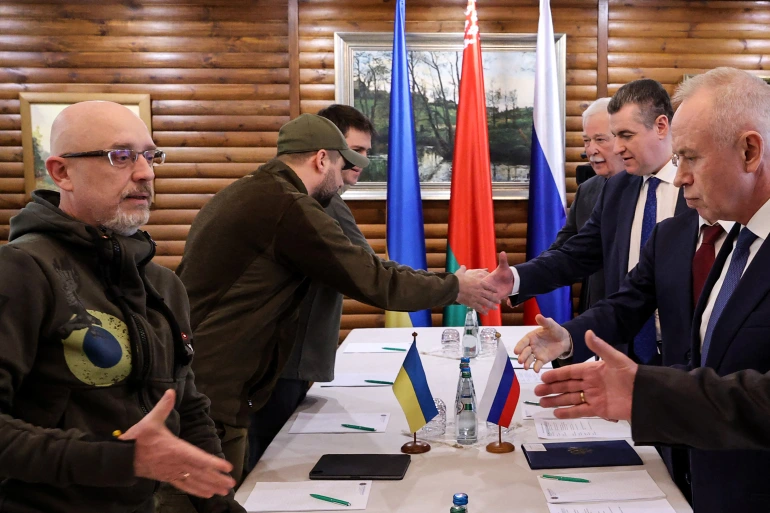
    BREST, BELARUS (TIP): Russia and Ukraine have agreed on the need for humanitarian corridors to deliver aid and help civilians exit besieged Ukrainian cities, in the first apparent sign of progress in talks between the warring sides, according to an Al Jazeera report.

    Russian negotiator Vladimir Medinsky reported “substantial progress” at Thursday’s talks –  the second round of negotiations since Russia launched its invasion of Ukraine – saying the “main issue that we settled today is the salvation of people, civilians who have found themselves in a zone of military clashes”.

    However, he did not indicate when the safe corridors may be established. The tentative agreement, reached in Belarus, came as Russian forces continued to surround and attack Ukrainian cities, including the capital, Kyiv, and the second-biggest city of Kharkiv.

    Thousands are thought to have died or been wounded in the eight-day conflict, while more than one million people have fled the fighting in what the United Nations has called the swiftest exodus of refugees this century.

    Ukraine’s negotiator, Mykhailo Podolyak, said the two sides have agreed to set up “communication and cooperation lines” as soon as possible to facilitate the evacuation of civilians. A temporary halt to fighting in select locations was also possible, he said.

    “That is, not everywhere, but only in those places where the humanitarian corridors themselves will be located, it will be possible to cease fire for the duration of the evacuation,” he said. The two sides also saw eye-to-eye on the delivery of medicines and food to the places where the fiercest fighting was taking place, Podolyak said, adding that the two sides will continue the work at “the third round at the earliest possible time”. The delegations also discussed “the military aspect” and “a future political settlement of the conflict”, according to the Russian negotiators. The third round will take place “in the coming days”, also in Belarus, they said. John Herbst, a former United States ambassador to Ukraine, called the agreement on humanitarian corridors a “positive sign”. “If the political will is there to make it happen, it could be a matter of one day or two days,” he told Al Jazeera. “It’s interesting that even as Moscow is dictating unconditional surrender terms to the conflict, they are willing to consider this. I think that may be because of the pounding they are receiving globally for their barbarous campaign,” he added.

    (Source: Al Jazeera)

  • India abstains on UNHRC resolution to investigate human rights violations, crimes in Russia-Ukraine war

    India abstains on UNHRC resolution to investigate human rights violations, crimes in Russia-Ukraine war

    The resolution was adopted with 32 votes in favor, two against (Russia and Eritrea) and 13 abstentions, including India, China, Pakistan, Sudan and Venezuela

    GENEVA/ UNITED NATIONS (TIP): India on Friday, March 4,  abstained in the UN Human Rights Council on a vote to urgently establish an independent international commission of inquiry to investigate alleged human rights violations and related crimes following Russia’s military operation in Ukraine. The 47-member Council voted on a draft resolution on the ‘Situation of human rights in Ukraine stemming from the Russian aggression.’ The resolution was adopted with 32 votes in favor, two against (Russia and Eritrea) and 13 abstentions, including India, China, Pakistan, Sudan and Venezuela.

    The countries voting in favor included France, Germany, Japan, Nepal, UAE, UK and the US.

    The resolution, which strongly condemned Russia’s aggression against Ukraine, decides to “urgently establish an independent international commission of inquiry” to “investigate all alleged violations and abuses of human rights and violations of international humanitarian law, and related crimes, in the context of the Russian Federation’s aggression against Ukraine, and to establish the facts, circumstances, and root causes of any such violations and abuses.”

    A day before the resolution was adopted, India said at the Urgent Debate Thursday regarding the human rights situation in Ukraine at the 49th Human Rights Council Session in Geneva that it is greatly concerned over the steadily worsening humanitarian situation in Ukraine.

    India urged for an immediate cessation of violence and an end to hostilities. “No solution can ever be arrived at the cost of human lives. Dialogue and diplomacy are the only solution for settling differences and disputes,” India said.

    India called for respect and protection of human rights of people in Ukraine and safe humanitarian access to conflict zones.

    “We are also deeply concerned over the safety and security of thousands of Indian nationals, including young Indian students, who are still stranded in Ukraine. We are working together with neighboring States for their evacuation,” it said.Three human rights experts will be appointed to the Commission of Inquiry by the President of the Human Rights Council for an initial duration of one year. The Commission will be mandated to “identify, where possible, those individuals and entities responsible for violations or abuses of human rights or violations of international humanitarian law, or other related crimes, in Ukraine, with a view to ensuring that those responsible are held accountable.’ The resolution expressed grave concern at the ongoing human rights and humanitarian crisis in Ukraine and calls on Russia to “immediately end its human rights violations and abuses and violations of international humanitarian law in Ukraine”.

    It also calls for the “swift and verifiable” withdrawal of Russian troops and Russian-backed armed groups from the entire territory of Ukraine, within its internationally recognized borders.  India has abstained on two resolutions on Ukraine in the 15-nation Security Council and one in the 193-member General Assembly in the last one week. The UN General Assembly this week overwhelmingly voted to condemn Russian aggression against Ukraine and demanded that Moscow “completely and unconditionally” withdraw all of its military forces from the territory of Ukraine. India abstained on the resolution, which received 141 votes in favor, five against and a total of 35 abstentions.

    (Source: PTI)

  • Indian American Congressman Ro Khanna expresses disappointment over India abstaining UNSC resolution on Russia

    Indian American Congressman Ro Khanna expresses disappointment over India abstaining UNSC resolution on Russia

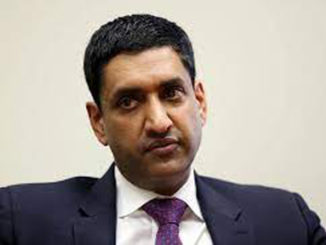
    WASHINGTON, D.C. (TIP): Prominent Indian-American Congressman Ro Khanna has expressed disappointment over India’s decision to abstain from the UN Security Council resolution on Russia’s aggression against Ukraine, saying it is the US and not Russia that will stand with New Delhi against China’s current expansionist plans. India, China and the United Arab Emirates on Friday, February 25,  abstained from the US-sponsored resolution against the Russian aggression which was vetoed by Moscow. As many as 11 of the 15 members of the UN Security Council voted in favor. Five countries—the US, the UK, Russia, China and France—are permanent members of the council and have veto powers. India is a non-permanent member and its current two-year term expires this year.

    “In 1962, President (John F) Kennedy stood with India against China’s invasion. It is the US, not Russia, that will stand with India against China’s current expansionist plans,” Khanna tweeted on Friday, February 25. “This is the time for India to stand with the free word against Putin. Abstention is not acceptable,” said the three-term Democratic Congressman from California.

    Echoing Khanna, Congressman Eric Swalwell also termed India’s move as “disappointing”.

    “Rep Ro Khanna and I represent the largest Indian-American districts and this vote is contrary to what we hear from our constituents. Indian-Americans believe in territorial integrity and human rights,” said Swalwell, who is serving as representative for California’s 15th congressional district that covers most of eastern Alameda County and part of central Contra Costa County.

    Abstaining from the UNSC resolution that “deplores in the strongest terms” Russia’s “aggression” against Ukraine, India on Friday said dialogue is the only answer to settle differences and disputes. In the country’s explanation of vote in the Council, India’s Permanent Representative to the UN Ambassador T S Tirumurti said New Delhi is “deeply disturbed by the recent turn of developments in Ukraine and urge that all efforts are made for the immediate cessation of violence and hostilities”.

    He said that no solution can ever be arrived at, at the cost of human lives. “Dialogue is the only answer to settling differences and disputes, however daunting that may appear at this moment. It is a matter of regret that the path of diplomacy was given up. We must return to it. For all these reasons, India has chosen to abstain on this resolution,” Tirumurti said.

  • Tears, anger at airport as Indian students return from Ukraine

    Tears, anger at airport as Indian students return from Ukraine

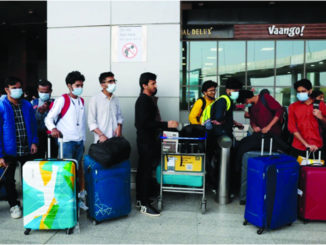
    Family members of Indians trapped in Ukraine wait for their arrival at Delhi airport. (Photo: [Bilal Kuchay/Al Jazeera])

    As soon as Chahat Yadav walked out of the airport and saw her family, she tossed away her luggage and ran towards them, crying inconsolably. Yadav’s father Narendra Kumar and other relatives had reached Delhi’s Indira Gandhi International Airport on Wednesday, March 2,  to receive the second-year medical student studying in Ukraine’s Ternopil city. The relieved family could not hold back their emotions as they saw Yadav and huddled around her, hugging, kissing and in tears. Yadav was among nearly 200 Indian students who had just landed in New Delhi from Poland on Wednesday after trying for days to escape the Russian invasion of Ukraine that began last Thursday, forcing nearly 20,000 Indian students to flee the former Soviet nation. “The Ukraine military was only letting the Ukrainians and Europeans across the border,” Chahat told Al Jazeera as she held a bouquet of red flowers handed to those returning from Ukraine by Indian authorities at the airport. “But I don’t know why Indians were being stopped and pushed back,” the young student said, alleging many Indians were beaten by the Ukrainian forces as they tried to cross the border.

    ‘Sleepless nights’

    When a Russian attack on Ukraine became imminent, Yadav’s father Kumar tried to book a ticket for her. But it was not easy with high demand and few flights. Kumar, who lives with his extended family in Gurugram on the outskirts of the Indian capital, bought an online ticket for Yadav for February 20 but the airline did not confirm the ticket. He later booked a transit flight to India via Qatar for February 23 at a steep cost of 50,000 rupees ($660). Yadav, who was double-vaccinated against coronavirus and was carrying her RT-PCR report along with her, was not allowed to board the flight to Qatar, Kumar said.

    The problem: Yadav had taken an Indian-made Covaxin shot, which, Kumar said, was only “partially approved [by Qatar]”. “They refused to consider her RT-PCR report… A serology antibody test [was required] to board the flight,” he said.

    When Russia invaded Ukraine the next day on February 24, Kumar said the thought of losing her daughter “gave him sleepless nights”.

    “I would be lying if I said the thought of losing my daughter in Ukraine did not cross my mind. It happened several times and took away my sleep,” Kumar told Al Jazeera. “When I saw my daughter today, I couldn’t believe that she was finally back.”

    Getting home was not easy for Yadav and other Indian students. On the evening of February 25, a day after Russian troops entered Ukraine, Chahat and her friends left Ternopil for Poland on a private bus they had hired for the trip.

    They reached the Poland border around midnight, only to find a 35km line of vehicles desperate to leave the country. They had no choice but to cover the remaining distance on foot. Many students threw away some of their luggage to be able to make the journey.

    They walked all night in bone-chilling cold and reached the border the next morning. But crossing into Poland was not easy, with thousands camped there. Yadav spent two nights at the border in sub-zero temperatures before she was allowed to cross.

    ‘Near-death experience’

    Another medical student, Rajarshi Shyam, 21, reached Delhi on Wednesday. He had travelled from Ukraine’s Vinnytsia to Romania. “We faced problems at the border. It was very crowded. It was a near-death experience,” he told Al Jazeera.

    Like Chahat, Rajarshi also had to walk for several kilometres on foot to reach the Romania border. He was also forced to dump some of his luggage, including his clothes, on the road.

    Still, says Rajarshi, he was lucky to have crossed the border in his first attempt, unlike many of his friends who were either turned back or forced to spend days at the border.

    Many Indian and African students have alleged facing racial discrimination and violence from Ukrainian officials at the borders.

    Meanwhile, thousands of Indians remain stranded in Ukraine as Russia escalates its attack on cities such as Kharkiv, Ukraine’s second-largest, where many Indian students study medicine.          -Source: Al Jazeera

    No food, water: Over 600 students stranded in Ukraine city cry for help

    Even as the Indian government has successfully evacuated thousands of citizens from war-torn Ukraine, over 600 students from the country stuck in the northeastern city of Sumy are crying for help. A student asserted that hope they will soon be evacuated as “continuous firing and bombing” by the Russian forces has left them completely terrified. They also complain of an acute shortage of food and water. Considering Sumy lies in the northeastern peninsula of Ukraine, it is difficult for the students to travel to the western border, from where they can reach neighbouring Poland, Hungary, Romania, Slovakia and Moldova, under the current circumstances.

    Not a single Indian student has been evacuated from the Sumy State University, located close to the Russian border has been evacuated. “More than 600 Indian students are stuck here in Sumy university. The embassy has neither evacuated us nor given any assurance to that effect. Since the last five days, there has been continuous firing, shelling and bombing in the city,” Viraj Walde, who hails from Nagpur in Maharashtra, told news agency PTI.

    “Before Russia’s invasion of Ukratine, temporary advisories were given to the students and the university informed us that those having exams can wait. Hence, we waited for the exams to start,” Walde added.

    “But now, the students are terrified and their mental state is deteriorating. Food and drinking water supplies are depleting. Even the banks and ATMs are running out of cash,” he said.

    Meanwhile, the Indian embassy has sent advisories asking them to use only the western border of Ukraine and reach the neighbouring countries of Poland, Hungary, Romania, Slovakia and Moldova. Since Sumy city is located in the north-eastern part of Ukraine, it is impossible for them to travel all the way to the western part of the country amidst the current situation.

    “The border in Ukraine’s western part is located almost 1,500 kms away from Sumy, whereas the Russian border is just 50 kms away. The railway station in Sumy has also been closed due to bombing, and traveling via road is like committing suicide since Russian and Ukrainian forces are fighting against each other at such places,” he told PTI.

  • After Pandemic Corona JLF starts again in Jaipur from March 5

    After Pandemic Corona JLF starts again in Jaipur from March 5

    Jaipur Literature Festival to pick up topical issues of Ukraine-Russia Conflict, climate Change

    Dr. Yashpal Goyal,
    Special Correspondent

    JAIPUR (TIP): After Pandemic Corona outbreak since 2020 in India, Jaipur Literature Festival’s 15th edition beginning in Pink City from March 5 will pick up a some of the topical issues of Ukraine-Russia Conflict, Geo-politics of war, Climate Change, new world order besides holding a whole range of literary sessions.

    Sanjoy K Roy, Managing Director of Teamwork addresses the press conference in Jaipur on March 2.

    Sanjoy K Roy, its Managing Director of Teamwork, told a press conference here on March 2 that finally the JLF organizer has chosen a five star hotel by leaving the old heritage ‘Diggi Palace’ due to traffic problems and other administrative regulations. It will be in a hybrid mode, March 5 to 9 on virtual mode, and from March 10 to 14 the sessions would be on ground and visitors would be allowed to witness the live discussions among noted writers, Roy added.Like the previous years’ edition, JLF will have 500 speakers, including four Nobel laureates and will have sessions covering art of fiction, poetic imagination, travel, science, history etc. The prestigious festival will showcase a variety of exhibiting numerous dialects of Rajasthan-Centric literature.

    In a statement, Rajasthan Tourism Minister Vishvendra Singh said he was delighted to note that JLF was returning on-ground in the Pink City after two years. The festival will truly provide an exceptional platform for both Indian and global authors and thought leaders to engage and strengthen literary heritage and culture.

    This time both the literary sessions as well as music in the evening will be held in the hotel campus, Apurav Kumar, MD of the Clarks Group, told the joint press conference. On a question on the impact of the Ukraine-Russia war, they said, “We may lose a few good speakers as two writers have already cancelled their visits to India”.

    The rich programme will feature, among others, a session with Bruno Maçães, decorated author, international commentator and advisor to some of the world’s leading companies on geopolitics and technology, who will be exploring the study of an emerging world order that is competitive and driven by the need to adapt and survive in increasingly hostile natural environments. In conversation with former diplomat and author Navtej Sarna, Maçães will discuss book Geopolitics for the End Time: From the Pandemic to the Climate Crisis. On clean energy, Rahul Munjal, the Chairman & Managing Director at Hero Future Energies, one of India’s leading Independent Power Producer, is committed to positive environmental impact by increasing the share of renewables. Joining him will be, Amitabh Kant, the CEO of the National Institution for Transforming India (NITI Aayog) and a key driver of initiatives such as Make in India, Startup India, Incredible India and God’s Own Country and academician Siddharth Singh, author of The Great Smog of India. Munjal and Kant will discuss the future of clean energy and climate action. Simon Mundy, Financial Times journalist and author of Race for Tomorrow: Survival, Innovation and Profit on the Front Lines of the Climate Crisis, will speak on the question of what impact a single person can have in the face of the global climate crisis. The earth has witnessed five major mass extinction events over the last 500 million years – responsible for the erasure of nearly three-quarters of its species each time.  A series called The Urgency of Borrowed Time will feature Pranay Lal, natural history writer, biochemist and public health advocate who is also author of the celebrated books Indica: A Deep Natural History of the Indian Subcontinent and Invisible Empire: The Natural History of Viruses. The session will explore the fate of dinosaurs and species sealed by extinction events, and the role of humankind in the surging climate crisis.

  • NRIs worried as Russia-Ukraine conflict delaying flights

    NRIs worried as Russia-Ukraine conflict delaying flights

    AMRITSAR/TORONTO (TIP): While the conflict between Russia and Ukraine has worried the families of those stranded in Ukraine, it has also troubled the NRIs ready to return to Canada after spending their winter in Punjab. The NRIs said flights, especially those connecting via Montreal and Toronto were getting delayed. They, however, said that flights going via Vancouver were comparatively less troublesome.

    Kanwaljit Singh Sekhon of Wadala village, near Baba Bakala, who took the flight to Canada via Vancouver on Wednesday, March 2  morning, said he had to wait for six hours at the Delhi airport as the flight was late.” He said due to delay from Delhi, he would now have to spend eight hours extra at the Vancouver airport. Sekhon had to go to Edmonton, but now there was no flight available from Vancouver to Edmonton. So, he had booked a ticket for Calgary, from where he would take another flight. “Those travelling via Montreal and Toronto have to face delay of almost 25 to 26 hours,” said Gurjant Singh, who took a flight from Delhi on February 2 after a 24-hour delay. Gurjant said as the airlines did not provide boarding during the delay, they had to sleep at the airport itself. With such stories of hardships, those who had plans to return to Canada shortly are worried. Some are even planning to leave children and women behind.

    “It is very difficult to travel in such crisis especially with small children,” said Gurpreet Singh, who was scheduled to travel next week. He said he was making calls to his travel agent and co-travelers, but nobody had any concrete information.

    (Source: TNS)

  • What is going oninside Vladimir Putin’s head? 12 experts weigh in

    What is going oninside Vladimir Putin’s head? 12 experts weigh in

    By Brendan Cole

    Nearly a week into the largest military campaign in Europe since World War Two, Russian forces have encountered fierce resistance from Ukraine while global condemnation has spurred sanctions that have roiled the Russian economy. Before the invasion, Putin humiliated his spy chief, Sergei Naryshkyn in a Russian Security Council meeting which showed the president relishing being in control. But now with the status of global pariah, Putin’s invoking of his country’s nuclear threat has raised alarm at what his actions might be if he felt cornered.

    Newsweek spoke to a selection of experts about what they believed could be going through Putin’s mind. Their responses varied widely—from those who said his apparent erratic behavior was part of a calculated grand strategy, to others who  believe his increased isolation since the COVID pandemic has made him more emotional and unstable.

    Questions surround the state of mind of Russian president Vladimir Putin. After his invasion of Ukraine, there are concerns at how far he might go to secure victory.

     Michael McFaul, former U.S. ambassador to Russia

    “Putin listens to no one inside Russia. He’s been in power for over two decades, so does not take advice from anyone anymore. He also is very isolated. He is the only decision maker that matters. He alone can end this war.

    “[Chinese President] Xi is the only leader in the world he respects.”

    Rose Gottemoeller, ex-deputy Secretary General of NATO

    “Vladimir Putin has always cultivated a cool and calculating demeanor, but now he is showing increasingly erratic and emotional behavior—so there is a shift. “From our perspective, it certainly looks irrational, but no doubt that is not how Putin sees it. He’s considering himself a figure of destiny, to bring the Russian-speaking peoples together again. For him, it seems, it is a vital historical objective.”

    Steve Pifer, former U.S. ambassador to Ukraine

    “We are seeing a different Vladimir Putin from 10 or 15 years ago. He now seems more emotional, particularly when it comes to Ukraine, and he is taking a much larger risk with the invasion than one would have expected from him earlier.

    “One also has to wonder about the effect of the isolation in which he has lived and worked the past two years, apparently out of concern about COVID.”

    Gustav Gressel, senior policy fellow, European Council on Foreign Relations (ECFR)

    “He sees himself as the recreator of imperial Russia. The thing is with the ‘madman’ theory, he is playing a bit with that.

    “He is rational if you know his mindset and that is a social Darwinian mindset, where military power and military strength form the core essence of the state and the core momentum of Russian identity. “If you know his mindset, what he does is perfectly rational. It is not mad, is just that you have to adopt to this mindset. “Everything he does today, at some point, he has written or said. It is just that we have continuously excused him for doing so, in saying, “that’s just basically rambling, he’s a hobby historian, he meant that as a joke,’ etc. No, he didn’t. He was serious and we are seeing it now. “

    Douglas Page, assistant professor of political science at Gettysburg College, Pennsylvania

    “While evidence may emerge about Putin’s mental instability, we also should consider the persona that Putin may be willingly crafting during this intense crisis, even when that persona reflects desperation. “The idea that one’s opponent is irrational and crazy is enticing, but this idea also can serve an important purpose for an opponent like Putin. An irrational opponent is more unpredictable and can be viewed as more willing to incur absurdly high costs in a conflict. “For example, nuclear war would doom Russia, but an irrational Putin could raise more questions in the West about his willingness to use nuclear weapons. This perception in the West may follow Putin’s objectives regarding nuclear deterrence and limiting Western involvement in Ukraine.

    Ian Johnson, assistant professor of military history at the University of Notre Dame, South Bend, Indiana

    “His historical rhetoric suggested aspirations beyond Ukraine, restoring Russian primacy over areas formerly in Russia’s orbit across Eastern Europe. “Putin is well-versed in history. He clearly believes that he has an opportunity for a historic legacy, one that puts him in line with those figures he cites so frequently in his speeches—Peter the Great and Stalin, among them — both of whom expanded the borders of the Russian or Soviet state at the expense of their neighbors.”

    William Muck, political science professor, North Central College, Naperville, Illinois

    “It does appear that Putin has shifted how he understands and engages with the international community. The tone and language from his recent speeches are particularly telling. Putin has been much more aggressive, provocative, and nationalistic. “One gets the sense that he now sees himself as a historic figure. That his war in Ukraine is about rewriting the end of the Cold War and making Russia great again. “People talk of Putin as this brilliant chess player who skillfully outplays his rivals in the international system. That may have been the case in the past, but I think the better current metaphor for his mindset is poker. Putin is a gambler, and his invasion of Ukraine suggests he is all-in on this hand.

    “If he wins, it is possible he goes down in history as the figure who restored Russian greatness. However, if he loses, this may be the beginning of the end of the Putin regime in Russia.”

    Matt Qvortrup, political science professor, Coventry University, U.K.

    “He is very out of touch and that is why he expected things to go differently.” “Rationality means you get what you want and what is good for you. For Vladimir Putin, what is good for him is not good for Russia, it is not what is good for the world, it is what will keep him in power. “He does not want to suffer the fate of [Ex-Serbian leader] Slobodan Milosevic, or [Ex-President of Zimbabwe] Robert Mugabe, and for that reason, he would want to use any available means. “The shocking thing is that he will be willing to go all the way. It is conceivable that he will use nuclear weapons if he is desperate and for him that might be a rational thing because that might keep him in power.”

    William Hague, former British Foreign Secretary

    “While it is clear that a great many Russian diplomats and officials think he has made a terrible mistake, there will be nothing they can do now to restrain their isolated, paranoid, obsessive and increasingly angry president.

    “Tragically for the people of Ukraine, he will have no doubts about what he must do. He will be telling his generals to go deeper, faster, more brutally and destructively if necessary.” — The Times of London

    ‘This Madness Must be Stopped’. – Lord Owen, former British Foreign Secretary

    “He is a very able, intelligent person, never underestimate people who you are dealing with who you don’t agree with…it’s easy to dismiss them as being mad. I don’t believe that is a reasonable judgement of him. But he does seem to be more imperious.

    “There is no check on this leader of Russia. In the old Communist days, there was a Politburo, in which you could see collective decision making. That’s all gone for Putin.

    “He’s one single autocratic dictator and he’s isolated for the last two years under COVID…you get the feeling there’s nobody to even argue with him, let alone contradict him.”— Channel 4

    Fiona Hill, former U.S. National Security Council advisor on Russia.

    “I think a lot of people are noticing that something seems to have flipped somewhat with Putin almost as if he’s made a rather emotional and, on the surface, a somewhat unexpected decision.

    “He’s usually pretty cynical and calculating and very calm. Always very sarcastic and kind of harsh in the way that he talks about things. But the announcement that he was basically going to invade Ukraine, he was viscerally emotional.

    “This is what happens if you have got the same person in power for 22 years, he’s been in a bubble, especially over the last two and a half years.” — MLive

    Tatiana Stanovaya, founder of analysis firm R.Politik firm.

    “There are people who go crazy and believe that they serve some higher power, God, or something else, perceiving themselves only as a…tool in the hands of great forces. “Putin is not there yet, but there is something in common. For him, this higher power is the State, as it has been historically understood and he sees himself as its servant.

    “The problem is that personal responsibility is diminished and you feel that you are acting on behalf of history.

    “With such a vision you can go very far without remorse.”— Telegram

    (Source: Newsweek)

  • Hard times for the state of the union

    Hard times for the state of the union

    Foreign policy challenges and domestic hurdles confront U.S. President Biden in his quest for a policy legacy

    By Narayan Lakshman

    “At the end of the day the old adage of “It’s the economy, stupid”, continues to resonate deeply across the country as the tagline for the American Dream. The realization of this — the Biden administration appears to concede — will require the adoption of strong self-interest as a guiding value for policymaking even when it comes at the cost of a gradual erosion of the global rules-based order and the globalization consensus, and the repudiation of older, constitutional values such as equal protection of the laws.”

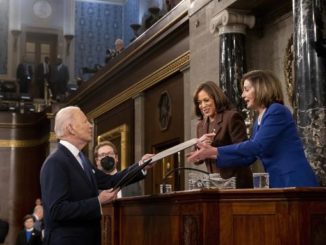
    When U.S. President Joe Biden stepped up to the podium to deliver his first State of the Union address before both houses of Congress this week, it was a historic moment for several reasons. Not only have none of his successors since 1945 delivered this address during an ongoing ground war of a similar magnitude to Russia’s invasion of Ukraine, but the optics of his speech captured another rare event. The two top Congressional officials who stood behind Mr. Biden as he spoke, the Speaker of the House of Representatives and the Vice President, were both women for only the second time in the country’s history.

    The hurdles, Ukraine too

    Notwithstanding the epochal times marking this event, the reality is that Mr. Biden faces grim challenges on the foreign policy front and a steep upward climb to overcome domestic hurdles before he can claim credit for any policy legacy that purports to improve the lot of his fellow citizens. On the foreign policy side, Russian President Vladimir Putin’s move to call the West’s bluff and kick off a military assault of Ukraine has posed complex strategic questions to the Biden administration, which are difficult to explain away to a U.S. domestic audience. Why did Mr. Biden leave Kyiv hanging in the balance without North Atlantic Treaty Organization (NATO) membership and with a virtual target on its back vis-à-vis Moscow’s guns, when many among Ukraine’s neighbors are treaty allies of NATO? Why, despite so many explicit signs that Russia would invade Ukraine if NATO carried on expanding its footprint eastwards across Europe, did Mr. Biden’s administration not do more to either make it harder for Moscow to act in this regard or at least buy more time by persuading Mr. Putin to engage diplomatically?

    Shadow of midterm elections

    Now that the sweeping economic sanctions that Washington has slapped on Russian political elites and institutions associated with Kremlin have roiled the Russian economy and brought the rouble down to historic lows, how will the Biden administration contain the spill-over effects of economic collapse and prevent them from causing a broader global recession? With the conflict intensifying and the human toll rising fast as Russian troops march on Kyiv, the U.S.’s capabilities as a superpower nation will be scrutinized closely on the world stage in the days and weeks ahead. They will almost certainly be attacked by Republicans back home as the midterm election cycle gains momentum — former U.S. President Donald Trump has already set the tenor for the debate by describing Mr. Putin’s Ukraine invasion as “genius” and “savvy”.

    At home, much depends on the outcome of the midterm elections, especially regarding the prospects for a Democratic White House to carry out any meaningful policy reform in the two years that the Biden administration will have from the time the midterms are complete. Democrats and Republicans are evenly split in the Senate with 50 seats each, while Democrats are clinging on to a narrow 221-212 margin in the House of Representatives, both of which advantages could be lost to Democrats if the 2022 midterm election results do not favor them.

    Critical issues

    The keystone issues that Mr. Biden needs to convince voters on, if he is to stave off a deleterious shift in the balance of power on Capitol Hill this November, include jobs and economic recovery in the post-COVID-19 climate of uncertainty, preventing the pandemic from wreaking further havoc in future waves, if any, inflation, and social security and education reforms to ease the financial burden on middle class budgets. Almost without exception, Mr. Biden will need the support of Congress to get the heavy lifting done in these policy areas, particularly where budgetary apportionments require lawmakers’ sign off. Certainly, it will matter in the foreign policy space. A recent example demonstrating the importance of Congress here is the fact that negotiations over a $6.4 billion security and humanitarian aid package for Ukraine hit a stalemate in the Senate over the source of these funds — military spending allocation already agreed, or emergency provisions above and beyond that level. Similarly, on the domestic front, Mr. Biden’s omnibus mega-bill in late 2021, seeking $1.85 trillion for social security and climate change, came to naught in the face of cohesive opposition from Senate Republicans and some rebel Democrats who voted across the line.

    The Trump impact

    At the heart of the Democratic conundrum is the fact that the Mr. Trump’s term in office unleashed forces that have tectonically shifted the ground under Washington politics. Whatever the charges of criminality or wrongdoing by the 45th President of the U.S., whether in terms of tax evasion or his role in spurring on the January 6, 2021 assault on the buildings of Capitol Hill, Mr. Trump’s nativist call to white America to reassert its purported supremacy has firmly embedded itself in the broader discourse and heralded a new era where political correctness is eschewed, and facts sometimes matter less than opinion.

    Indeed, it is evident that Mr. Biden is seeking to walk a tightrope between traditional mainstream Democratic values and the new paradigm when he spoke at the State of the Union of “the rebirth of pride” and “the revitalization of American manufacturing”, which, if it materializes, could help his administration “Lower your cost, not your wages”, and ensure the U.S. builds “more cars and semiconductors in America. More infrastructure and innovation in America. More goods moving faster and cheaper in America. More jobs where you can earn a good living in America. Instead of relying on foreign supply chains, let’s make it in America”.

    At the end of the day the old adage of “It’s the economy, stupid”, continues to resonate deeply across the country as the tagline for the American Dream. The realization of this — the Biden administration appears to concede — will require the adoption of strong self-interest as a guiding value for policymaking even when it comes at the cost of a gradual erosion of the global rules-based order and the globalization consensus, and the repudiation of older, constitutional values such as equal protection of the laws.

    (The author is an editor with The Hindu)

  • The anatomy of India’s Ukraine dilemma

    The anatomy of India’s Ukraine dilemma

    New Delhi has taken a subtle pro-Moscow position on the question of Russian attacks against Ukraine

    By Happymon Jacob

    “New Delhi has taken a subtle pro-Moscow position on the question of Russian attacks against Ukraine. This pro-Russia tilt is not just the position of the Indian government, but is something, somewhat surprisingly, shared by much of the Indian strategic community as well. More notably, one is increasingly hearing subtle, though indirect, justifications of the Russian military actions from the doyens of the Indian strategic community. India’s Russia tilt should be seen not just as a product of its time-tested friendship with Moscow but also as a geopolitical necessity.”

    New Delhi’s response to the Russian aggression against Ukraine appears to have been shaped by harsh geopolitical circumstances, that it is in the middle of, than its normative beliefs or preferences. Late last week, India abstained from a United Nations Security Council (UNSC) resolution which called for condemning the Russian military action against Ukraine, but it went on to note its uneasiness of the Russian action in writing (a first).

    Prime Minister Narendra Modi, who spoke to Russian President Vladimir Putin as the war broke out, called for an “immediate cessation of violence” and has so far refused to pay heed to Ukrainian Ambassador to India Igor Polikha’s impassioned pleas urging Mr. Modi to mediate with Mr. Putin to halt Russian military advances. With the UNSC deadlocked, friends with both the United States/West and Russia, and passionately urged by Ukraine, New Delhi is uniquely placed to undertake some much-needed mediation between the rival sides. But it has chosen to stay on the margins and do no more than the unavoidable minimum. New Delhi just wants this to be over with. Let us call it what it really is: New Delhi has taken a subtle pro-Moscow position on the question of Russian attacks against Ukraine. This pro-Russia tilt is not just the position of the Indian government, but is something, somewhat surprisingly, shared by much of the Indian strategic community as well. More notably, one is increasingly hearing subtle, though indirect, justifications of the Russian military actions from the doyens of the Indian strategic community. India’s Russia tilt should be seen not just as a product of its time-tested friendship with Moscow but also as a geopolitical necessity.

    The Russia tilt

    There are four potential options India can/could choose from: Condemn Russian aggression, support Russian aggression, stay silent on Russian aggression, or express displeasure (short of condemning) and call for diplomacy. The first option will pit India against Russia, the second will pit it against the U.S. and its allies, the third option will be read as pro-Russia, and the fourth option — which it has taken — is the least harmful. And yet, a position that does not condemn Russian aggression and one that abstains from voting on a UNSC resolution calling for “condemning Russian aggression and withdrawal of Russian forces from Ukraine” is indeed a pro-Russia position. There are understandable reasons for India’s (subtle) pro-Russia position. Let me put it this way: an aggressive Russia is a problem for the U.S. and the West, not for India. North Atlantic Treaty Organization (NATO) expansion is Russia’s problem, not India’s. India’s problem is China, and it needs both the U.S./the West and Russia to deal with the “China problem”. I would view India’s response to the crisis in Ukraine in the light of this rather simple logic.

    Let us look at the big picture first. There is today a sobering recognition in New Delhi about the weakening of the U.S.-led global order and the rise of China as a counter-pole, geographically located right next to India. U.S. withdrawal from the region and its decline as the principal system shaper has complicated India’s place in regional geopolitics. Neighboring China as the rising superpower and Russia as its strategic ally challenging the U.S.-led global order at a time when China has time and again acted on its aggressive intentions vis-à-vis India, and when India is closest to the U.S. than ever before in its history, throws up a unique and unprecedented challenge for India. Therefore, having Russia on its side is crucial for India, more than ever. Moscow may or may not be able to moderate Chinese antagonism towards New Delhi, but an India-Russia strategic partnership may be able to temper New Delhi’s growing isolation in a rather friendless region. Second, there is an emerging dualism in contemporary Indian strategic Weltanschauung: the predicament of a continental space that is reeling under immense pressure from China, Pakistan and Taliban-led Afghanistan adding to its strategic claustrophobia; and, the emergence of a maritime sphere which presents an opportunity to break out of the same. Herein lies the dilemma for India. New Delhi needs Moscow’s assistance to manage its continental difficulties be it through defense supplies, helping it ‘return’ to central Asia, working together at the Shanghai Cooperation Organization (SCO) or exploring opportunities for collaboration in Afghanistan. Russia, to put it rather bluntly, is perhaps India’s only partner of consequence in the entire Asian continental stretch.

    On the other hand, when it comes to the vast maritime sphere, the Indo-Pacific to be precise, Russia is not of great consequence to India. That is where its American and western partners come into play. India is simply not in a position to address the China challenge in the maritime space without the active support of American and western navies and, of course, the Quad. This unavoidable dualism in the contemporary Indian strategic landscape necessitates that India balances the two sides, but doing so without a subtle Russia tilt may not be feasible at this point of time.

    That said, the war on Ukraine could have major implications for India’s strategic calculus. For one, Russian action in Ukraine dismissing the concerns of the rest of the international community including the U.S. will no doubt embolden China and its territorial ambitions. Second, the new sanctions regime may have implications for India’s defense cooperation with Moscow. Third, the longer the standoff lasts, the closer China and Russia could become, which certainly does not help India. Finally, the more severe the U.S.-Russia rivalry becomes, the less focus there would be on the Indo-Pacific and China, which is where India’s interests lie.

    Impact on foreign policy

    India’s responses to the Russian aggression on Ukraine underline the fact that India is operating from a position of geopolitical vulnerability. While the Indian stand does reek of realpolitik, it reeks more of strategic weakness. Here is a country located in a hostile neighborhood trying to make the best of a terrible situation it finds itself in. This then means that, going forward, India’s ability to be a “swing state”, “major power” or a “leading power” stands diminished. So, we must expect more middle-of-the-road behavior from New Delhi rather than resolute positions on global strategic developments. India’s position also shows the unmistakable indication that when it comes to geopolitics, New Delhi will choose interests over principles. This is nothing new: New Delhi has chosen interests over principles even in the past — for instance, India has violated the principle of non-intervention in the domestic affairs of neighbors. The difference this time may be that India is choosing interests over principles even though the issue at hand is not directly pertaining to India. And yet, a careful reading of India’s statements and positions taken over the past few days also demonstrates a certain amount of discomfort in having to choose interests over principles. There is perhaps a realization in New Delhi that a dog-eat-dog world, where rules and good behavior do not matter, does not help India in the long run either.

    Going forward, if tensions between Russia and the West persist, balancing extremes will be a key feature of Indian diplomacy. India is perhaps already mastering the art. Consider India’s “explanation of vote” during the recent vote on Russia’s aggression against Ukraine: even though New Delhi abstained from voting on it (thereby siding with Moscow), it made its unhappiness about the Russian action clear in the written note.

    On strategic autonomy

    Finally, what does this mean for India’s ‘strategic autonomy’? For sure, India’s strategic autonomy has been under a lot of stress for some time now. However, New Delhi’s response to the recent crisis, especially its “explanation of vote” at the UNSC indicates a careful recourse to the principle of strategic autonomy: India will make caveated statements and will not be pressured by either party. In that sense, India’s indirect support to the Russian position is not a product of Russian pressure but the result of a desire to safeguard its own interests. Therefore, while we may witness a steady erosion of India’s strategic autonomy in the longer term – primarily as a function of the need to balance against China — we will continue to witness instances where Indian diplomacy will take recourse to the principle of strategic autonomy.

    (The author teaches India’s Foreign Policy at the School of International Studies, Jawaharlal Nehru University, New Delhi)

  • Relationship with India stands on its own merit, not impacted by tensions with Russia: US

    Relationship with India stands on its own merit, not impacted by tensions with Russia: US

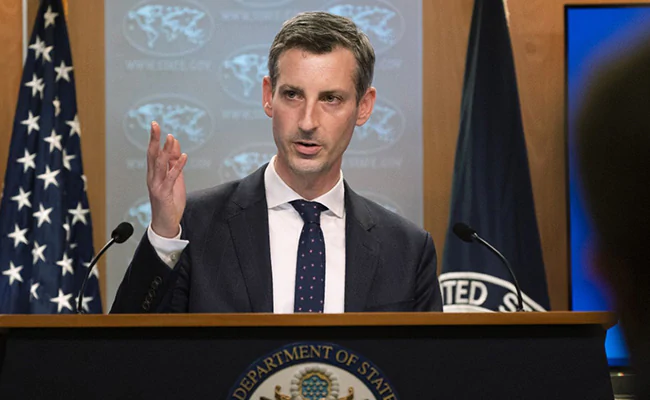
    WASHINGTON, D.C. (TIP): America’s relationship with India stands on its own merit and has not been impacted by the ongoing tension with Russia, the Biden administration said. “We have a relationship with India that stands on its own merits,” State Department spokesperson Ned Price told reporters at his daily news conference on Thursday, February 3. He was responding to a question if the US ties with India have been impacted due to the tension with Russia over Ukraine crisis. For the second time this week, the State Department spokesperson refrained from responding to questions related to India’s position on Ukraine in the United Nations Security Council. “I will leave it to our Indian partners to discuss their stance in the UN Security on this particular issue,” Price said. “We have been in touch with literally dozens of countries around the world, including our Indian partners, on our concerns regarding Russia’s military buildup and its unprovoked potential aggression against Ukraine,” he maintained. These are conversations that the United States is having at different levels, he said. “As I was saying in a different context earlier, Russian aggression against Ukraine and a Russian invasion of Ukraine would have implications for the security environment well beyond that neighborhood. Whether it is the PRC or India or countries around the world, the implications would be far-reaching. And I think there is a broad understanding of that,” the official added.

    (Source: PTI)

  • GENERAL DOUGLAS MacARTHUR & CHURCHILL ARE NEEDED IN 2021

    GENERAL DOUGLAS MacARTHUR & CHURCHILL ARE NEEDED IN 2021

    By Ravi Batra

    The world has not seen a weapon that without a bomb launched or a bullet fired could devastate economies of all nations on earth in one fell swoop, and render their citizenry dead or fearing for life itself.

    2020, to paraphrase FDR, is a year that will live in infamy, and it is also the year when Neville Chamberlain reigned supreme. Indeed, no less than President Trump – who has stood taller than any before him, including, Richard M. Nixon, when he was a Communism-buster up until prior to his 1967 abdication in Foreign Affairs’ pages with a quid pro quo op-ed entitled “Asia After Viet Nam” – called the Virus the “China Virus,” yet, then incredulously declared: that we are fighting “an invisible enemy.” No, we are not Mr. President. The Virus isn’t our enemy, just as on December 7, 1941 the Japanese bombs and bullets weren’t the enemy; Imperial Japan was, by attacking us at Pearl Harbor, in Hawaii. Then, FDR, after sentencing that day “to live in infamy,” unleashed the indominatable General Douglas MacArthur. The same General, who when first expelled from Philippines, left written messages for the people of Philippines:  “I shall return.” And, return he did. Promise made; promise kept. Indeed, a short few years later on September 2, 1945 there was a Surrender Ceremony. A visit to the USS Missouri website proudly shows that the infamous history started at Peral Harbor was in-fact stopped, and a new history of American Freedoms, for all, was made to wit:

    “On the teak decks of USS Missouri, WWII finally came to an end on 2 September 1945. The Surrender Ceremony, which formally brought an end to the bloodiest conflict in human history, lasted a mere 23 minutes. It began at 0902 with a brief opening speech by General Douglas MacArthur. In his speech, the General called for justice, tolerance, and rebuilding. After MacArthur’s speech, Foreign Minister Mamoru Shigemitsu, representing the Emperor of Japan, signed the Instrument of Surrender. He was followed by the Chief of the Army General Staff, General Yoshijirō Umezu, who signed for the Japanese Army. After this, General MacArthur signed the Instrument of Surrender as the Supreme Allied Commander with 6 pens. Of these pens, he gave two to former POWs Lt. General Jonathan Wainwright and Lt. General Lt. General Arthur E. Percival. Following MacArthur, other allied representatives followed in this order:

    Fleet Admiral Chester W. Nimitz signed for the United States; General Xu Yongchang for the Republic of China; Admiral Sir Bruce Fraser for the United Kingdom; Lt. General Kuzma Derevyanko for the Union of Soviet Socialist Republics (USSR); General Sir Thomas A. Blamey for the Commonwealth of Australia; Colonel Lawrence Moore Cosgrave for the Dominion of Canada; General Philippe Le Clerc for the Provisional Government of the French Republic; Lt. Admiral Conrad E. L. Helfrich for the Kingdom of the Netherlands;Air Vice Marshal Leonard M. Isitt for the Dominion of  New Zealand.

    5-Star General MacArthur’s Remarks – that day – on the deck of the USS Missouri are illuminating, and hence, worthy of reproduction so we may escape, even belatedly, History’s “curse of repetition” upon those who forget the past, while cuddling up to happy-amnesia:

    “We are gathered here, representatives of the major warring powers, to conclude a solemn agreement whereby peace may be restored. The issues involving divergent ideals and ideologies have been determined on the battlefields of the world, and hence are not for our discussion or debate. Nor is it for us here to meet, representing as we do a majority of the peoples of the earth, in a spirit of distrust, malice, or hatred.

    But rather it is for us, both victors and vanquished, to rise to that higher dignity which alone befits the sacred purposes we are about to serve, committing all of our peoples unreservedly to faithful compliance with the undertakings they are here formally to assume. It is my earnest hope, and indeed the hope of all mankind, that from this solemn occasion a better world shall emerge out of the blood and carnage of the past — a world founded upon faith and understanding, a world dedicated to the dignity of man and the fulfillment of his most cherished wish for freedom, tolerance, and justice. The terms and conditions upon which surrender of the Japanese Imperial Forces is here to be given and accepted are contained in the Instrument of Surrender now before you. As Supreme Commander for the Allied Powers, I announce it my firm purpose, in the tradition of the countries I represent, to proceed in the discharge of my responsibilities with justice and tolerance, while taking all necessary dispositions to insure that the terms of surrender are fully, promptly, and faithfully complied with. I now invite the representatives of the Emperor of Japan and the Japanese government and the Japanese Imperial General Headquarters to sign the Instrument of Surrender at the places indicated.”

    [After the Instrument of Surrender was executed by all, he concluded with:]

    “Let us pray that peace be now restored to the world, and that God will preserve it always. These proceedings are closed.” (Emphasis added)

    InWWII – we were united with USSR and China (not today’s Chinese Communist Party’s (CCP’s) People Republic of China (PRC)), but the Republic of China (ROC) – today, known as Taiwan, when General Chiang Kai-shek was head of ROC.  I cite the above snippet of history to document the gross geopolitical malpractice of leaders, here at home and abroad, since 1945. Indeed, CCP’s brilliant Chairman Mao, who had originally joined under the leadership of General Chiang, revolted, caused a civil war, and finally expelled him in 1949 from Mainland China to a mere island, Formosa, aka Taiwan. CCP’s China is a new world order – different from feudalism, communism, socialism, corporate-capitalism and our cherished Bill of Rights embedded in our Separated Powers regime – as it is an amalgam of all. Indeed, there are 99 million members of CCP – think corporate governance and the now-disappeared “Avon Lady.” Everybody in China is directly and intimately known by a CCP Member.

    From Chiang Kai-shek, to Harry Truman, to Pandit Nehru, and above all others, to Richard Nixon who rolled out the red carpet for CCP’s China and gifted the critical multi-polar Permanent Seat on the United Nations Security Council – after unilaterally amending History and taking it away from ROC – the world could not, and sadly did not, see the slowly moving tortoise of CCP-China as a threat greater than the fast-moving Adolf Hitler.

    We are at the Third Act of CCP’s “rejuvenation” of the Ming Dynasty’s Tribute System. Indeed, President Xi has honestly stated his China Policy to be “rejuvenation” – almost with as much delight as Edgar Allen Poe had in writing the Purloined Letter.  What former National Security Advisor H.R. McMaster warned about in The Atlantic on May 19, 2020 – “What China Wants” – but left off at, I have continued – as I must warn as Paul Revere did – that our “Emperor wears no clothes,” to metaphorically assert without doubt, that our China Policy – created and effectuated by our Deep State and Executive and Legislative Leaders – is both a misdiagnosis, and a mistreatment that embraces de facto, if not de jure, impotent Chamberlain while rejecting the necessary Churchill, who to them is truly “invisible,” let alone “necessary.” Giving us governmental malpractice that is both decrypt, as it is impotent.

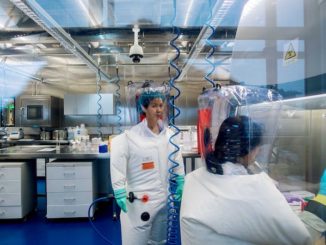
    The world has not seen a weapon that without a bomb launched or a bullet fired could devastate economies of all nations on earth in one fell swoop, and render their citizenry dead or fearing for life itself. Coronavirus, with its transplanted from Bats’ “Spike Glycoprotein (S)” – which I wrote about in my Open Letter to President Trump on April 14, 2020, and the next day United States opened its then-Preliminary Investigation of China – is now the very piece of protein that Pfizer and Moderna’s mRNA-based vaccines now – in error – implant in every patient, and after the initial 2-shots, require a booster shot every 3 months, for life. Result: the enemy get refreshed, while our body’s “T cell” get exhausted or run out. Indeed, Merck’s CEO Kenneth C. Fraizer has correctly said: we don’t even understand the Virus yet, let alone treat it. How right he is. This vaccine frenzy is nothing short of a global clinical trial – worse than if you signed up for one – for now, as a patient, you don’t get paid, and if you suffer a severe reaction, you can’t sue as they have a liability shield, courtesy of Operation Warp Speed that didn’t have to do 10 years of public health studies to identify its efficacy, but its side effects. Risks vs Benefits. A patient with a migraine headache would never accept decapitation as a solution; yet, now, we are to accept this vaccine with a public health study over 10-years of time. Yes, we need a vaccine; but, we need the raw truth about the creation of SARS-CoV2, its escape from the Wuhan lab, its variations, etc., before we can figure out the correct cure.

    Kompromat – is a term used to suggest Russia’s ability to control another person or nation through some act or knowledge that the target would not like exposed. Blackmail. In our social media-connected world, with data that documents one’s hallucinations as if “fact,” our exceptional separated powers regime is sadly checkmated. As 2021 is the Year of Hope, like never before, I end with a wish that just as the Ming Dynasty voluntarily gave up its Tribute system, so does President Xi Jinping; and, instead, he joins in transparent disarming of SARS-CoV2 and dismantles his Jaws of War (which I have previously described). Otherwise, let Churchill be re-born as an American – worthy of everyday hardworking Americans who toil to achieve the American Dream, as merit alone can – and uphold our Flag high and free, as those who died doing so in 1814 at Fort McHenry and caused lawyer-poet Francis Scott Keys to be so moved by their undying courage and national pride to write “The Star-Spangled Banner.”

    (Ravi Batrais a senior attorney and  advisor to many governments. Twitter @RaviBatra)

  • India Secures UNSC Non-Permanent Membership with Unanimous Support of Asia-Pacific Group

    India Secures UNSC Non-Permanent Membership with Unanimous Support of Asia-Pacific Group

    UNITED NATIONS (TIP): In an extremely significant diplomatic victory for India, the Asia-Pacific group of the world body, including Pakistan and China, unanimously endorsed India’s candidature for a non-permanent seat at the United Nations Security Council for a two-year term.

    “A unanimous step. Asia-Pacific Group UN unanimously endorses India’s candidature for a non-permanent seat of the security council for two-year term in 2021-22. Thanks to all 55 members for their support,” India’s Permanent Representative to the UN Ambassador Syed Akbaruddin tweeted on June 25.

    The Council is composed of 15 Members: Five permanent members: China, France, Russian Federation, the United Kingdom, and the United States, and ten non-permanent members elected for two-year terms by the General Assembly. Each year the 193-member UN General Assembly (UNGA) elects five non-permanent members for a two-year term.

    Previously, India has been elected as a non-permanent member of the Council for the years 1950–1951, 1967–1968, 1972–1973, 1977–1978, 1984–1985, 1991–1992 and most recently in 2011–2012.

  • Germany urges ‘restraint’ from North Korea, Trump

    Germany urges ‘restraint’ from North Korea, Trump

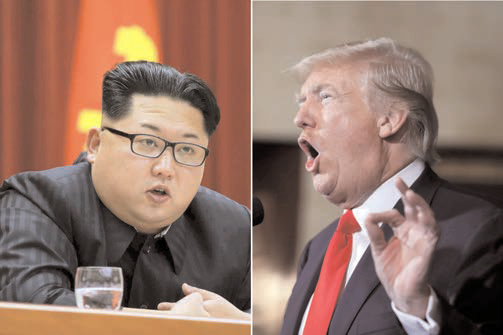
    BELIN (TIP): Germany on August 9 urged North Korea and the United States to show “restraint” after apocalyptic threats from President Donald Trump and Pyongyang in their mounting war of words.

    “We are watching the increasing rhetorical escalation regarding the Korean Peninsula with the greatest concern,” foreign ministry spokesman Martin Schaefer told reporters. “That is why we call on all sides to use restraint.” Schaefer said Berlin was convinced a “military option” could not be “the answer in the quest for a nuclear weapon-free Southeast Asia”.

    He urged the international community to “thoroughly implement” the latest round of sanctions against North Korea approved by the United Nations Security Council.

    And he backed a call by US Secretary of State Rex Tillerson to resume talks with Pyongyang if it halts ballistic missile tests.

    “We must all continue our diplomatic efforts — it is the only way to ensure that the threat of the illegal North Korean nuclear weapons programme can be contained,” he said. (AFP)

  • Fake News Hyperventilating or Constitutional Crisis, with Brutus lurking in the Ides of March?

    Fake News Hyperventilating or Constitutional Crisis, with Brutus lurking in the Ides of March?

      By Ravi Batra
    The cascading events, generally are layered and rarely, as now, erupt into a crescendo from an approaching constitutional crisis.

    Initially, let me disclose that I am a registered Democrat, and seeing how Hillary’s team, including, DNC, illegally mistreated Sen. Bernie Sanders, and how Huma profited by quitting as Hillary’s deputy chief of staff and was immediately rehired as a “special government employee” and simultaneously got paid to work for the Clinton Foundation and Teneo Holdings – unethical and corrupt – I voted for Donald J. Trump to shake up the Establishment who, like Marie Antoinette, wanted Americans to “eat cake” when they couldn’t afford to “buy bread.” No hardworking American can get such a sweet Huma-Deal, soaked in conflicts of interests and influence peddling, without being shamed and maybe, going to jail. Leave aside Bill’s famous Tarmac Meeting with AG Lynch, forcing her recusal, and causing Comey to act as he did in 2016, where he, Comey cut Hillary a huge break by not indicting her for her planned-private email server, her housekeeper printing classified emails for Hillary’s review, and with full access to Bill to know all confidential matters without any “pillow talk” or an “audit trail” – due to password-sharing by Hillary to her housekeeper (and perhaps, Bill and Huma, etc.). General Petraeus ought get a presidential pardon from President Trump.

    I also admit that I didn’t like Preet Bharara being “fired,” after he was re-hired, as that hurt everyday New Yorkers from getting a government Lincoln decreed, while making those in power feel above-the-law again.

    Now, I turn to the issues at hand. Here is what we know, based upon the fast and furious reportage by The Washington Post, of Watergate fame, The New York Times and CNN, etc.

    President Trump likes General Flynn; even, after terminating him for lying to the Vice President. Perhaps, he likes Flynn too much. We know that Obama administration was told about Flynn-Russia contacts by our Special Allies in Europe. We know Obama warned then-president-elect Trump about Flynn. Yet, Trump as president appointed Flynn NSA, only, to fire him 18 days after he knew Flynn lied to the Vice President, with a termination oddly soaked with Flynn-love.  The bizarre Comey-termination, after a prior failed Loyalty-Pledge Request, was immediately followed by the incredulous Lavrov-Kislyak Oval Office visit with American Media barred, and POTUS later admitting to NBC’s Lester Holt that he, DJT, was thinking of the Russia Investigation when he fired Comey, hence, admitting his invisible state-of-mind worthy of self-immolation.

    If I was personal counsel to Donald J. Trump, not White House Counsel to the Office of the President of the United States, which requires the fiduciary duties protect the Office of the President and not necessarily the man who is president, I would want to know the answer to one critical bifurcated question, to wit: “Donald, did you create or approve of a plan, during your presidential campaign, that a “reachout” to Russia ought occur because you want to: (1)  “restart” US-Russia relations so as to defuse the ever-warming resurgence of the Cold War, as a matter of future US policy to cause Crimea’s return to Ukraine, NATO to refocus on defeating Terror, and Russian nuclear-armed submarines, ships and planes to join United States and NATO to enforce global peace and security? Or, (2) win the 2016 election with help from a foreign power, that is hostile to the United States, in violation of American democracy and rule of law and become the Manchurian President – remote-controlled by Russia?

    If Donald’s answer is YES to (1) and NO to (2), then he is like Nixon in 1968 delivering his famous China Speech at the Council on Foreign Relations, later to open up the world to China in 1971 and switch Taiwan’s United Nations Security Council seat from ROC to PRC. It’s all legal, even as history judges China the winner over Nixon, as China, instead of being a counterbalance to the then-Soviets, pulled a Veto along with Russia in 2013 in UNSC after Syria’s chemical war crimes.

    If Donald’s answer if NO to (1) and YES to (2), then he is in worse shape than Nixon’s Watergate Cover-Up, as here, it would be Trump’s Crime with Trump’s Cover-Up.

    Assuming DJT’s answers are YES and NO, not NO and YES, then I would advise him to cut loose everybody as President Reagan did in the Iran-Contra Affair, and let everybody, especially those who sought to make individual side profits from such Russian engagements to face the music, Congressional and Special Counsel Robert Mueller. For saving the Trump Presidency may be valuable to America and everyday Americans. Just look at what he has accomplished in his First foreign trip with the mature and uniquely capable Rex Tillerson by his side in Riyadh, Saudi Arabia. Just a few years ago, Saudi Arabia was so sick of our non-action against Syria, that after winning the coveted UN Security Council seat, Amb. Abdallah Y. Al-Mouallimi made history by declining the seat and Riyadh considered setting up an alternate multilateral system of government, given the void of American leadership in face of heart wrenching suffering caused by Syria and ISIS.

    However, there is a unique weakness that President Trump faces, that neither Nixon nor Reagan faced, in this early onset of the Impeachment Season: Both Houses of Congress are in Republican control. This is not so much a strength for the disruptive president, as it is a weakness. The Republicans want more than anything to retain both Houses in the 2018 Mid-Term elections. So, after getting the Tax Cut, they prefer to cause Impeachment to start out of righteous indignation, as then they get the normal-Establishment Mike Pence to be president – assuming he is not tainted and already-resigned by knowing about Flynn as Chair of Trump Transition Committee (for how could Flynn have lied to the Vice President in 2017, when Mike Pence already knew about Flynn-Russia and Flynn-Turkey in 2016) – well, then Speaker Paul Ryan is President. So, Mr. President, “beware the Ides of March” as “Brutus” lurks. Julius Caesar Act 1 Scene 2.

    (Ravi Batra, an eminent NY attorney, is a former NYS Commissioner, Joint Commission on Public Ethics; Chair, National Advisory Council South Asian Affairs)

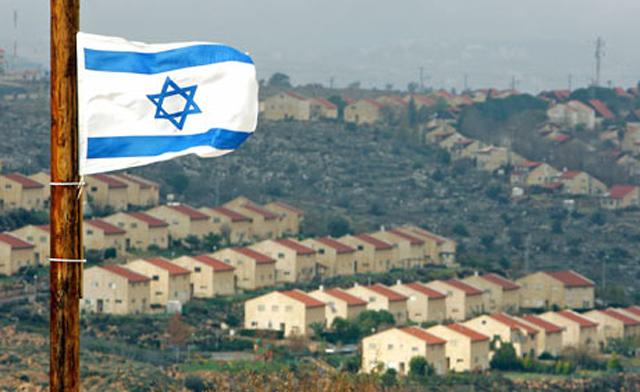
  • In shift, Donald Trump warns Israel against new settlements

    In shift, Donald Trump warns Israel against new settlements

    WASHINGTON (TIP): President Donald Trump on Feb 2 warned Israel that constructing new settlements “may not be helpful” to Middle East peace efforts, striking a tougher line with Israeli Prime Minister Benjamin Netanyahu’s government.

    Trump has been perceived as sympathetic to the settlements, which are considered illegal by most of the international community. Shortly before taking office, he vigorously criticized the Obama administration for not vetoing a United Nations Security Council measure condemning settlements.

    But in a statement Thursday, the White House said, “While we don’t believe the existence of settlements is an impediment to peace, the construction of new settlements or the expansion of existing settlements beyond their current borders may not be helpful in achieving that goal.”

    The White House said the administration “has not taken an official position on settlement activity” and the president would discuss the issue with Netanyahu when he travels to Washington later this month. The two leaders are scheduled to meet at the White House on Feb. 15.

    The US statement came hours after Netanyahu vowed to establish the first new West Bank settlement in over two decades “as soon as possible,” promising to make up for the court-ordered demolition of an illegal settler outpost. It was his latest step to expand Israeli settlement construction in the wake of Trump’s inauguration.

    Netanyahu repeatedly clashed with President Barack Obama during the Democrat’s eight years in office, and Trump has vowed to be a better partner for Israel. Following the U.N. vote, Trump tweeted, “Stay strong Israel, January 20th is fast approaching!” _ referring to the date of his inauguration.

    Trump has already appeared to slow his promises to move the US Embassy in Israel from Tel Aviv to Jerusalem – a promise often made by presidential candidates, but never carried out in office because of fears the move would inflame tensions in the region.

    Newly sworn-in Secretary of State Rex Tillerson spoke by phone Thursday with Netanyahu.

    The prime minister’s vow to establish new West Bank settlements came as Israeli security forces were completing the evacuation of Amona, where they broke into a synagogue to remove dozens of Israeli protesters who had barricaded themselves inside. Netanyahu’s pro-settler government had unsuccessfully tried to block the evacuation of Amona, but Israel’s Supreme Court rejected all appeals after determining the outpost was built illegally two decades ago on private Palestinian land.

    Speaking at a ceremony in the West Bank settlement of Ariel, Netanyahu expressed “great pain” over the removal of Amona. (AP)

  • Battle vs ISIS, battle for the Middle East

    Battle vs ISIS, battle for the Middle East

    ISIS or the Islamic State, also known as IS, ISIL or its Arab acronym, Da’esch, dominated the headlines for 2015. The year saw the terror group spread its hateful and vitriolic ideology beyond the borders of its “caliphate,” which encompasses large swathes of Iraq and Syria, as well as “provinces” in several Mideast and African countries.

    With millions of dollars in their pockets, and the Internet as their main channel to propagate evil, ISIS went “global” – with trained militants as well as radicalized individuals and groups carrying out the group’s mission to spread terror. Their targets ranged from a newspaper office, to a museum, from a concert hall to mosques, from military convoys to civilian planes. The toll: nearly a thousand people, from Paris to Beirut to San Bernardino.

    The spread of ISIS has further complicated the already twisted state of affairs in strife-torn Syria, already entering its fifth year in a civil war. World powers, in their attempt to untangle the mess and to gain influence in the region, bicker over which to tackle first: Bashar al-Assad, the iron-fisted dictator whose violent regime in many ways ignited the current conflict, or the terror group. Assad’s allies (namely Russia and Iran) are trying to have him stay put, while the US-led coalition wants him out.

    The year saw military movements from every side, with airstrikes targeting ISIS strongholds – and some say legitimate Syrian opposition groups. Countries around Syria and Iraq are also on their toes, with some nations such as Turkey serving as launch areas for military operations.

    Amid the mess, the peace process is still in the cards, despite several attempts to convene all sides in the past few months that yielded little results. Thanks to a landmark 18-month plan endorsed by the United Nations Security Council, the UN is preparing for another round of talks starting January 25, 2016.

  • Fighting the Islamic State: Role of the P-5 Nations and India

    Fighting the Islamic State: Role of the P-5 Nations and India

    In the course of one week in November 2015, militants from Abu Bakr Al-Baghdadi’s self-proclaimed Islamic Caliphate – also called ISIS, ISIL and Daesh – struck multiple targets in Beirut, Paris and Mali. Earlier, on October 31, ISIS claimed to have brought down a Russian civilian aircraft flying from Sharm al-Sheikh to St. Petersburg.

    The ISIS militia, numbering between 20,000 and 30,000, now controls approximately 300,000 square kilometre of territory straddling the Syria-Iraq border. Its brand of fundamentalist terrorism is gradually spreading beyond West Asia and the militia is slowly but surely gaining ground. In Africa, ISIS fighters and their associates have been active in Algeria, Lebanon, Libya, Mali, South Sudan and Tunisia in recent months. Boko Haram, the militant Islamist group in Nigeria, has pledged allegiance to ISIS.

    Fighting Back
    Recent acts of terrorism have steeled the resolve of the international community. Significant help is being provided to the government of Iraq by the US and its allies. The Peshmerga, forces of the Kurdistan Regional Government (KRG) which had captured oil-rich Kirkuk, have joined the fight against the ISIS and recaptured the Syrian (Kurdish) border town of Kobani.

    The US began launching air strikes against the ISIS militia about a year ago, while simultaneously arming anti-Assad forces like the Free Syrian Army with a view to bringing about a regime change in Syria. The US has been joined in this endeavour by Australia, Britain, Canada, Denmark, France and Netherlands as well as five Arab countries (Bahrain, Jordan, Saudi Arabia, Qatar and the United Arab Emirates). The air strikes have resulted in substantial collateral damage. It is being gradually realised that the ISIS militia cannot be defeated from the air alone.

    Putin’s Russia joined the fight on September 30, 2015 with the twin aims of defeating the ISIS and destroying anti-Assad forces. However, the initial air strikes launched by the Russian Air Force were directed mainly against the forces opposed to President Assad of Syria. Russian ground troops are also expected to join the fight soon. The Russians have also descended on Baghdad to establish a military intelligence coordination cell jointly with Iran, Iraq and Syria – a move that has not been appreciated by the Americans.

    In a rare show of unity after the Paris attacks, the United Nations Security Council passed a unanimous resolution stating that “The Islamic State in Iraq and the Levant constitutes a global and unprecedented threat to international peace and security,” and called upon all member states to join the fight against the ISIS.

    Diplomatic moves have been initiated to coordinate operations and work together for peace and stability in the region. The US and Russia agree that the objective of their interventions should be to end the civil war in Syria through a political deal and that both Iraq and Syria should retain their territorial integrity. They also agree that the ISIS extremists must be completely eliminated. Iran has agreed to join the negotiations to resolve the conflict in Syria. However, while the political objectives are similar, the methods being used to achieve them are different and are designed to extend the influence of each of the protagonists in the region.

    Implications for South Asia
    Al-Baghdadi has openly proclaimed the intention of ISIS to expand eastwards to establish the Islamic state of Khorasan that would include Afghanistan, the Central Asian Republics, eastern Iran and Pakistan. The final battle, Ghazwa-e-Hind – a term from Islamic mythology – will be fought to extend the caliphate to India. An ISIS branch has already been established in the Subcontinent. It is led by Muhsin al Fadhli and is based somewhere in Pakistan. Some factions of the Tehrik-i-Taliban Pakistan have declared their allegiance to al-Baghdadi. Afghanistan’s new National Security Adviser, Mohammad Hanif Atmar, has said that the presence of Daesh or the ISIS is growing and that the group poses a threat to Afghan security. And, some ISIS flags have been seen sporadically in Srinagar.

    Instability and major power rivalry in West Asia do not augur well for India’s national security and economic interests. Combined with the increase in force levels in the Indian Ocean, the heightened tensions in West Asia may ultimately lead to a spill-over of the conflict to adjacent areas. India now imports almost 75 per cent of the oil required to fuel its growing economy and most of it comes from the Gulf. The long-drawn conflicts of the last two decades of the 20th century had forced India to buy oil at far greater cost from distant markets, with no assurance of guaranteed supplies. The 1991 oil shock had almost completely wrecked India’s foreign exchange reserves. The situation could again become critical. Oil prices had shot up to USD 115 per barrel in June 2014, soon after the Caliphate was proclaimed, but have since stabilised around USD 50 to 60 per barrel.

    Since the early 1970s, Indian companies have been winning a large number of contracts to execute turnkey projects in West Asia. The conflict in the region has virtually sealed the prospects of any new contracts being agreed to. Also, payments for ongoing projects are not being made on schedule, leading to un-absorbable losses for Indian firms involved, and a dwindling foreign exchange income from the region.

    India also has a large Diaspora in West Asia. A large number of Indian workers continue to be employed in West Asia and their security is a major concern for the government. Some Indian nurses had been taken hostage by ISIS fighters, but were released unharmed. All of these together constitute important national interests, but cannot be classified as ‘vital’ interests. By definition, vital national interests must be defended by employing military force if necessary.

    US officials have been dropping broad hints to the effect that India should join the US and its allies in fighting ISIS as it poses a long-term threat to India as well. India had been invited to send an infantry division to fight alongside the US-led Coalition in Iraq in 2003. The Vajpayee government had wisely declined to get involved at that time as it was not a vital interest.

    It must also be noted that India has the world’s third largest Muslim population. Indian Muslims have remained detached from the ultra-radical ISIS and its aims and objectives, except for a handful of misguided youth who are reported to have signed up to fight. This could change if India sends armed forces to join the US-led coalition to fight the ISIS militia.

    Prime Minister Narendra Modi proposed at the G-20 summit in Antalya last week that the war against terrorism must isolate and contain the sponsors and supporters of terrorism. He clearly implied that India is willing to join the international coalition against the ISIS and other non-state actors. Besides contributing to the global war against terrorism, India’s participation would help to isolate the Pakistan Army and the ISI – the foremost state sponsors of terrorism.

    Direct Indian military intervention against the ISIS militia would depend on the manner in which the situation unfolds over the next one year. It could become necessary if ISIS is able to extend the area controlled by it to the Persian Gulf as that would affect the supply of oil and gas from the Persian Gulf to India – clearly a vital national interest. For the time being, India should cooperate closely with the international community by way of sharing information and intelligence and providing logistics support like port facilities if asked for. India should also provide full diplomatic support and work with the United Nations for evolving a consensual approach in the fight against the ISIS.

    A concerted international effort is needed to first contain and then comprehensively defeat the ISIS and stabilise Iraq and Syria, failing which the consequences will be disastrous not only for the region, but also for most of the rest of Asia and Europe. Helping the regional players to gradually eliminate the root causes of instability will not be an easy challenge for the international community to address. As an emerging power sharing a littoral with the region, India has an important role to play in acting as a catalyst for West Asian stability.


  • A way with the world

    A way with the world

    The Prime Minister, Narendra Modi, scored most in foreign policy in his first year in power. No one anticipated Modi’s natural flair for diplomacy, to which he has brought imagination and self-assurance. Modi has been more emphatic than his predecessors in giving improvement of relations with neighbors greater priority. He invited all the SAARC leaders to his swearing-in, to signal that the decisive election victory of a supposedly nationalist party did not denote a more muscular policy towards neighbors. On the contrary, India would take the lead in working for shared regional peace and prosperity.

    Bhutan, the only neighbor that has not politically resisted building ties of mutual benefit, was the first country he visited in June, 2014. He handled his August 2014 visit to Nepal with sensitivity and finesse, and followed it up with exceptional leadership in providing immediate earthquake relief to Nepal in May, 2015. In obtaining Parliament’s approval of the land boundary agreement with Bangladesh in May, 2015, Modi showed his determined leadership again.

    He did falter with Pakistan, seemingly unsure about whether he should wait for it to change its conduct before engaging it, or engage it nevertheless in the hope that its conduct will change for the better in future. He announced foreign-secretary-level talks during Nawaz Sharif’s visit to Delhi, but cancelled them precipitately. He ordered a robust response to Pakistan’s cease-fire violations, yet sent the foreign secretary to Islamabad in March, 2015, on an unproductive SAARC Yatra. Relations with Pakistan remain in flux. In Afghanistan, President Ashraf Ghani’s tilt towards Pakistan and China has challenged the viability of India’s Afghanistan policy. Ghani’s delayed visit to India in April 2015 did not materially alter the scenario for us, but India has kept its cool.

    Modi’s foreign policy premise, that countries give priority today to economics over politics, has been tested in his China policy, which received a course correction. After courting China economically, Modi had to establish a new balance between politics and economics. President Xi’s visit to India in September, 2014, was marred by the serious border incident in Ladakh. Modi showed a sterner side of his diplomacy by expressing serious concern over repeated border incidents and calling for resuming the stalled process of clarifying the Line of Actual Control. During his China visit in May, Modi was even more forthright by asking China to reconsider its policies, take a strategic and long-term view of our relations and address “the issues that lead to hesitation and doubts, even distrust, in our relationship”. He showed firmness in excluding from the joint statement any reference to China’s One Road One Belt initiative or to security in the Asia-Pacific region. The last minute decision to grant e-visas was puzzling, especially as the stapled visa issue remains unresolved. The economic results of his visit were less than expected, with no concrete progress on reducing the huge trade deficit and providing Indian products more market access in China. The 26 “agreements” signed in Shanghai were mostly non-binding MoUs involving the private sector and included the financing of private Indian companies by Chinese banks to facilitate orders for Chinese equipment.

    Modi’s visit to Seychelles, Mauritius and Sri Lanka in March, 2015, signified heightened attention to our critical interests in the Indian Ocean area. Modi was the first Indian prime minister to visit Seychelles in 33 years. His visit to countries in China’s periphery in May, 2015, was important for bilateral and geopolitical reasons. During his visit to South Korea the bilateral relationship was upgraded to a “special strategic partnership’, but Korea nevertheless did not support India’s permanent membership of the United Nations Security Council. Modi’s visit to Mongolia was the first by an Indian prime minister to a country whose position is geopolitically strategic from our point of view.

    Belying expectations, Modi moved decisively towards the United States of America on assuming office. He set an ambitious all-round agenda of boosting the relationship during his September, 2014, visit to Washington. In an imaginative move, he invited Obama to be the chief guest at our Republic Day on January 26, 2015. To boost the strategic partnership with the US, he forged a “breakthrough understanding” on the nuclear liability issue and for tracking arrangements for US-supplied nuclear material. Progress on the defense front was less than expected with four low-technology “pathfinder” projects agreed under the defense technology and trade initiative. The important US-India joint strategic vision for the Asia-Pacific and Indian Ocean region, issued as a stand-alone document, high-lighted the growing strategic convergences between the two countries, with China in view. A special feature of Modi’s September, 2014, US visit was his dramatic outreach to the Indian community, which has since then become a pattern in his visits abroad, whether in Australia, Canada or Beijing. No other prime minister has wooed the Indian communities abroad as Modi has done.

    President Putin’s visit to India in December, 2014, was used to underline politically that Russia remains India’s key strategic partner. Modi was effusive in stating that with Russia we have a “friendship of unmatched mutual confidence, trust and goodwill” and a “Strategic Partnership that is incomparable in content”. He was careful to convey the important message that even as India’s options for defense cooperation had widened today, “Russia will remain our most important defense partner”. Civilian nuclear cooperation with Russia got a boost with the agreement that Russia will build “at least” ten more reactors in India beyond the existing two at Kudankulam. All this was necessary to balance the strengthened strategic understanding with the US and its allies.

    Modi bolstered further our vital relations with Japan, which remains a partner of choice for India. Shinzo Abe announced $35 billion of public and private investment in India during Modi’s visit to Japan in September 2014, besides an agreement to upgrade defense relations.

    Modi’s visit to France and Germany in April, 2015, recognized Europe’s all-round importance to India and was timely. He rightly boosted the strategic partnership with France by ensuring concrete progress in the key areas of defense and nuclear cooperation by announcing the outright purchase of 36 Rafale jets and the MoU between AREVA and L&T for manufacturing high-technology reactor equipment in India. Modi’s bilateral visit to Canada in April, 2015, was the first by an Indian prime minister in 45 years. Bilateral relations were elevated to a strategic partnership and an important agreement signed for long-term supply of uranium to India.

    Relations with the Islamic world received less than required attention during the year, although the Qatar Emir visited India in March, 2015, and the political investment we made earlier in Saudi Arabia aided in obtaining its cooperation to extract our people from Yemen. Gadkari went to Iran in May, 2015, to sign the important agreement on Chabahar. Modi did well to avoid any entanglement in the Saudi-Iran and Shia-Sunni rivalry in West Asia. He met the prime minister of Israel, Benjamin Netanyahu, on the sidelines of the UN general assembly meeting in September, last year, to mark the strength of India-Israel ties. So, Modi’s handling of India’s foreign policy in his first year is impressive. He has put India on the map of the world with his self-confidence and his faith in the nation’s future.

  • INDIA TO TURN UP HEAT ON PAK FOR ACTION AGAINST WANTED TERRORISTS

    NEW DELHI (TIP): After being left red faced over the fiasco on Dawood Ibrahim with Home Minister Rajnath Singh forced to explain in Parliament that his Ministry had no doubt that the don was in Pakistan, the government has decided to ratchet up legal pressure on Pakistan on other most-wanted terrorists.

    Senior Home Ministry officials have told ET that a Letter Rogatory (LR) will be sent soon to Pakistan to ask about the “location” of Indian Mujahedeen (IM) top leader Riyaz Bhatkal as India believes he is hiding in Karachi, and “confirmation” of the Pakistani identity of IM’s chief bomb-maker Zia-ur-Rehman alias Waqas who was arrested by the Delhi Police last year. The government has also decided to approach the United Nations Security Council to obtain UN sanctions against the Hizbul Mujahedeen chief Syed Salahuddin, who is based in Pakistan-Occupied Kashmir (PoK), and declare him an international terrorist under UN Security Council Resolution 1267 of the Al-Qaida Sanctions Committee. India’s case before the UN is that Salahuddin had headed the United Jehad Council which is related to the Al-Qaeda. Dawood was listed by the UN similarly in 2003 for his association with Al-Qaeda.

    The LR regarding Riyaz Bhatkal and Waqas will be sent through a court in a case of the National Investigation Agency (NIA) regarding the Dilsukhnagar blasts in Hyderabad in 2013 in which both are named as an accused, ministry officials said.

  • Talks under way on ending UN sanctions on Iran

    Talks under way on ending UN sanctions on Iran

    UNITED NATIONS (TIP) : Major world powers have begun talks about a United Nations Security Council resolution to lift UN sanctions on Iran if a nuclear agreement is struck with Tehran, a step that could make it harder for the US Congress to undo a deal, Western officials said.

    The talks between Britain, China, France, Russia and the United States -the five permanent members of the Security Council – plus Germany and Iran, are taking place ahead of difficult negotiations that resume next week over constricting Iran’s nuclear ability.

    Some eight UN resolutions – four of them imposing sanctions – ban Iran from uranium enrichment and other sensitive atomic work and bar it from buying and selling atomic technology and anything linked to ballistic missiles. There is also a UN arms embargo.

    Iran sees their removal as crucial as UN measures are a legal basis for more stringent US and European Union measures to be enforced. The US and EU often cite violations of the UN ban on enrichment and other sensitive nuclear work as justification for imposing additional penalties on Iran.

    US Secretary of State John Kerry told Congress on Wednesday that an Iran nuclear deal would not be legally binding, meaning future US presidents could decide not to implement it. That point was emphasized in an open letter by 47 Republican senators sent on Monday to Iran’s leaders asserting any deal could be discarded once President Barack Obama leaves office in January 2017.

    But a Security Council resolution on a nuclear deal with Iran could be legally binding, say Western diplomatic officials. That could complicate and possibly undercut future attempts by Republicans in Washington to unravel an agreement.

    Iran and the six powers are aiming to complete the framework of a nuclear deal by the end of March, and achieve a full agreement by June 30, to curb Iran’s most sensitive nuclear activities for at least 10 years in exchange for a gradual end to all sanctions on the Islamic Republic.

    So far, those talks have focused on separate US and European Union sanctions on Iran’s energy and financial sectors, which Tehran desperately wants removed. The sanctions question is a sticking point in the talks that resume next week in Lausanne, Switzerland, between Iran and the six powers.

    But Western officials involved in the negotiations said they are also discussing elements to include in a draft resolution for the 15-nation Security Council to begin easing UN nuclear-related sanctions that have been in place since December 2006.

  • Shinzo Abe becomes first Japanese PM to visit Sri Lanka in 24 years

    Shinzo Abe becomes first Japanese PM to visit Sri Lanka in 24 years

    COLOMBO (TIP): Shinzo Abe on October 12 became the first Japanese prime minister to visit Sri Lanka in 24 years, on the second leg of a South Asian tour that sought to assert Tokyo’s interest in a region where it has ceded influence to China. Abe was greeted by Sri Lankan President Mahinda Rajapaksa at Colombo’s international airport, where a new passenger terminal will be built with the help of a $330 million Japanese development loan.

    The two leaders struck “a new partnership between maritime countries” that reflects Japan’s interest in keeping open shipping lanes that supply oil and liquefied natural gas from the Middle East to feed its energydependent economy. “The president and I shared the view on building friendly ties and partnership between the two maritime countries,” Abe said after the meeting. Asian great-power diplomacy has stirred into life since the rise to power of Indian nationalist Narendra Modi, who announced his intent to play an active role on the world stage by inviting regional leaders to his inauguration in May.

    Abe comes to India’s backyard after hosting Modi for summit talks that yielded a Japanese pledge to invest $34 billion in India and launched a “special, strategic global partnership” to deepen security cooperation. The Japanese premier pre-empts Chinese President Xi Jinping, who travels to India and Sri Lanka later this month. “They (the Japanese) are aware that we are beholden to China’s influence in many ways, so they would like to counter that,” Nanda Godaga, a retired Sri Lankan diplomat who follows Japanese foreign policy, said before Abe’s visit.

    China has financed the construction of a $500 million port terminal for Colombo as part of efforts to build a ’21st-century maritime silk road’, but Tokyo plays down any notion that Asia’s two largest economies are entering a geopolitical contest. “We are not going to become a big superpower … we have a lot of investment in China,” Abe’s spokesman, Kenko Sone, told a briefing in the Bangladeshi capital Dhaka on Sunday morning. “We have some difficulties with them but we prefer to solve those issues through discussions.” In Bangladesh on Saturday, Abe followed up on commitments for Japanese business to invest 600 billion yen ($5.7 billion) in infrastructure projects, and won Dhaka’s support for Tokyo’s bid for a temporary seat on the United Nations Security Council.

  • GAZA DEATH TOLL NEARS 100, ISRAEL DOES NOT RULE OUT GROUND OFFENSIVE

    GAZA DEATH TOLL NEARS 100, ISRAEL DOES NOT RULE OUT GROUND OFFENSIVE

    GAZA/JERUSALEM (TIP): Israel said on July 12 it would not bow to international pressure to end air strikes in Gaza that officials there said had killed almost 100 Palestinians, despite an offer by US President Barack Obama to help negotiate a ceasefire with militants. Asked if Israel might move from the mostly aerial attacks of the past four days into a ground war in Gaza to stop militant rocket fire, Prime Minister Benjamin Netanyahu replied, “we are weighing all possibilities and preparing for all possibilities.” “No international pressure will prevent us from acting with all power,” he told reporters in Tel Aviv a day after a telephone conversation with Obama about the worst flare-up in Israeli- Palestinian violence in almost two years.

    On Friday Washington affirmed Israel’s right to defend itself in a statement from the Pentagon. But defence secretary Chuck Hagel told Israeli defence minister Moshe Ya’alon he was concerned “about the risk of further escalation and emphasized the need for all sides to do everything they can to protect civilian lives and restore calm.” A rocket caused the first serious Israeli casualty — one of eight people hurt when a fuel tanker was hit at a service station in Ashdod, 30 km (20 miles) north of Gaza, and Palestinian militants warned international airlines they would fire rockets at Tel Aviv’s main airport.

    Medical officials in Gaza said at least 75 civilians, including 23 children, were among at least 99 people killed in the aerial bombardments which Israel began on Tuesday. They included 12 killed on July 12. Palestinian President Mahmoud Abbas urged the United Nations security council to order an immediate truce. But Israel said it was determined to end cross-border rocket attacks that intensified last month after its forces arrested hundreds of activists from the Islamist Hamas movement in the occupied West Bank following the abduction there of three Jewish teenagers who were later found killed.

    A Palestinian youth was killed in Jerusalem in a suspected Israeli revenge attack. Israel’s campaign “will continue until we are certain that quiet returns to Israeli citizens”, Netanyahu said. Israel had attacked more than 1,000 targets in Gaza and there were “more to go.” Israel’s military commander, Lieutenant-General Benny Gantz, said his forces were ready to act as needed — an indication of a readiness to send in tanks and other ground troops, as Israel last did for two weeks in early 2009.

    “We are in the midst of an assault and we are prepared to expand it as much as is required, to wherever is required, with whatever force will be required and for as long as will be required,” Gantz told reporters. Western-backed Abbas, who is based in the West Bank and agreed a powersharing deal with Gaza’s dominant Hamas in April after years of feuding, called for international help: “The Palestinian leadership urges the security council to quickly issue a clear condemnation of this Israeli aggression and impose a commitment of a mutual ceasefire immediately,” he said.

    Race for shelter
    After the failure of the latest USbrokered peace talks with Israel, Abbas’s accord with Hamas angered Israel. The rocket salvoes by the hardline movement and its allies, some striking more than 100 km (60 miles) from Gaza, have killed no one so far, due in part to interception by Israel’s partly-US funded Iron Dome aerial defence system. But racing for shelter had become a routine for hundreds of thousands of Israelis and their leaders have hinted they could order troops into the Gaza Strip, a 40-km sliver of coastline that is home to nearly two million people. Some 20,000 reservists have already been mobilized, the army says.

    Hamas’s armed wing said it would fire rockets at Tel Aviv’s Ben-Gurion international airport and warned airlines not to fly to Israel’s main gateway to the world. The airport has been fully operational since the Israeli offensive began and international airlines have continued to fly in, with no reports of rockets from Gaza — largely inaccurate projectiles — landing anywhere near the facility, inland of the coastal metropolis. It is within an area covered by Iron Dome. The Israeli military said it launched fresh naval and air strikes early on Friday on Gaza, giving no further details.

    An air strike on a house in the city of Gaza killed a man described by Palestinian officials as a doctor and pharmacist. Medics and residents said an aircraft also bombed a three-storey house in the southern town of Rafah, killing five people. Later a four-year-old boy killed when a neighbour’s house was targeted by an Israeli raid, a Palestinian hospital official said. Two other people aged 70 and 80 were killed in a missile strike elsewhere in Gaza, the Palestinian Heath Ministry said.

    Homes, many belonging to militants, have been targeted frequently in attacks that have sent Palestinian families living nearby running into the streets in panic. Explosions echo constantly across the densely populated territory. The Palestinian interior ministry in Gaza said an Israeli strike targeted the home of a senior Islamic Jihad leader after darkness fell, at a moment when Israel reported heavy rocket barrages on its southern cities. There were no reports of any casualties in these raids. White streaks arcing into a blue sky, ending abruptly in flashes and dark puffs of smoke marked what the military said was the interception of three rockets over Tel Aviv.

    Lebanese rockets
    Fire was also exchanged across Israel’s northern border. Lebanese security sources said two rockets were fired into northern Israel on Friday but they did not know who had fired them. Israel responded with artillery fire. Palestinian groups in Lebanon have often fired rockets into Israel in the past.

  • Reps. Joe Crowley (D-NY) and Ami Bera (D-Calif.) commend elections in India

    Reps. Joe Crowley (D-NY) and Ami Bera (D-Calif.) commend elections in India

    NEW YORK (TIP): Rep. Joe Crowley (D-NY)who has represented New York City Congressional districts since 1999 and Rep.Ami Bera (D-Calif.) who has represented California’s 7th Congressional District since 2013, have commended elections in India. “At a time when democracy is under pressure in many corners of the globe, officials are currently tallying votes in the largest exercise of democracy in the world: the elections in India.

    “The numbers are staggering. In an election that took place over several weeks, nearly 815 million voters were eligible to vote at 930,000 polling locations. Indians cast their ballots for control of the Lok Sabha, Parliament’s lower house and the body that chooses the country’s prime minister. “To put this in perspective, the number of eligible voters in the Indian election surpasses the entire population of Europe.

    The number of new voters alone in India exceeds 100 million – just shy of one third of the entire population of the United States. It’s extraordinary to see a country of more than one billion people that could be the world’s most populous nation within a decade, carrying out another election. The world is truly watching history being made. “India’s commitment to democracy is something the United States, as well as other nations, should remember, acknowledge and respect.

    That respect is returned by the Indian people — our country’s common values are one reason why a clear majority of Indians, from all generations and educational levels, hold high opinions of the U.S., according to a recent Pew Research Center Survey. “This dynamic of respect and a desire for greater mutual support is especially visible to those of us who have traveled to India to help strengthen ties between our two countries.

    For all of our differences, we are struck by the many similarities in our political systems: the competing parties, the vigorous debates, the vibrant media and the independent judiciary are signs of democracy in action. “Our ties, however, go far beyond similarities and respect. We have many common underlying interests: we share goals in standing up against terrorism, ensuring stability in South Asia and globally, in growing our economies, and increasing development.

    Indians have also faced many problems similar to our own – after all, it was only weeks after 9/11 that the Indian Parliament was attacked. “If the United States and India can move our relationship further ahead, it could benefit our own constituents, as well as people throughout the world. Working on a path for India’s ascension to the United Nations Security Council is one important way to take concrete steps forward.

    Deepening our technological, security, educational and economic ties in a way that creates more high-paying American jobs is another. Beyond these priorities, India and the United States can collaborate on countless individual initiatives, in areas like research, transportation or development. “One thing is certain: moving closer together will do more good for our two countries than moving apart.

    In many ways, this is already happening organically. With more than 3 million Indian-Americans in the United States, many of whom remain close to families still in India, our people- to-people ties are stronger than ever and expanding by the day. Most Americans interact daily with Indian-American community members, who are visible and active in all aspects of our national life, whether it is business, entertainment, public service, medicine, religion, education and more.

    “The elections in India are a good reminder about the importance of democracy, our countries’ shared histories, and the potential for future growth. But they are also an opportunity to review, renew and reinvigorate our ties with a natural friend and partner”.

  • Congressman Crowley Honored for His Work on Behalf of Indian American Community

    Congressman Crowley Honored for His Work on Behalf of Indian American Community

    Jackson Heights Indian Merchants’ Association, Queens community members laud Crowley’s leadership, policy victories on Indian American, Sikh issues

    NEW YORK (TIP): Rep. Joe Crowley (DQueens, the Bronx), Vice Chair of the Democratic Caucus, was honored by the Jackson Heights Indian Merchants’ Association and broader Queens Indian American community for his efforts on behalf of Sikh Americans and the greater Indian American community, in Jackson Heights on Thursday, January 30.

    Crowley was recognized by the community leaders that included, among others, the JHIMA officials- Shiv Dass, Jaswinder Singh, Subhash Kapadia, Nitin Vora and Mohinder Verma-, and community leaders that included Ravi Batra, Pritam Singh Gilzian and Darshan Singh Bagga, among others, for his successful efforts to convince the federal government to begin collecting data on hate crimes committed against Sikh-Americans and Hindu-Americans; in the U.S. Congress in October 2013; and his ongoing work to end the presumptive ban on Sikhs serving in the U.S. military.

    3Crowley is flanked by Deepak Bhardwaj (JHIMA Board of Director) to his right, and Jaswinder Singh (Chairman, JHIMA) to his left. Others seen in the picture are Pritam Singh Gilzian, Former President of Gurdwara Baba Makhan Shah Lobana and President of Richmond Hill Punjabi Merchants’ Association (extreme left) and Darshan Singh Bagga, Sikh community leader, with association with a number of organizations (extreme right)

    “I am humbled to be recognized by Shiv Dass and the Jackson Heights Indian Merchants Association, members of the Queens Sikh community, and the greater Indian-American community in Queens,” said Rep. Crowley, who serves as the cochair of the Congressional Caucus on India and Indian-Americans in the U.S. House of Representatives.

    “The Indian-American community is an integral part of Queens and our city, contributing to our economic success and enriching our culture. I am proud to have fought for and won concrete victories on behalf of the community and I will continue to do so.” Nearly 100 community members and leaders from New York’s Sikh-American and the broader Indian-American community attended the event.

    4Crowley joins Jackson Heights Indian Merchants Association members and members of the Sikh
    community.

    Over the past two years, Crowley has been at the forefront of a major effort in Congress to convince the U.S. Department of Justice (DOJ) and Federal Bureau of Investigation (FBI) to begin collecting data on hate crimes committed against Sikh- Americans and Hindu-Americans – introducing legislation and sending multiple letters to DOJ and FBI.

    In July 2013, then-FBI Director Robert Mueller announced that the bureau would begin to implement this program. Crowley is leading the call on the U.S. military to end its presumptive ban on Sikh articles of faith, including turbans and beard. He is spearheading a bipartisan letter requesting that the U.S. Armed Forces update their appearance regulations to allow Sikh Americans to serve while abiding by their articles of faith.

    In October 2013, Crowley led his colleagues in creating the first-ever Congressional Diwali celebration. The event brought together members of Congress, prominent Indian leaders, and members of the Indian-American community to build a greater understanding of differing cultural backgrounds and increase understanding and tolerance.

    5Council Member Daniel Dromm with JHIMA members and community members
    “I’m so pleased the FBI is going to begin tracking hate crimes against Sikhs and Hindus, because that is the first step toward preventing the crimes in the first place. But, there is much, much more we need to do. One of my top priorities is ensuring that Sikh Americans can serve in our nation’s military – we took some steps forward on this issue last week but there is more that must be done.

    I also think it is high time that India become a permanent member of the United Nations Security Council – and I am going to be focusing my efforts on that,” added Crowley. On the occasion, a few community members were honored by Crowley for rendering useful services to the community.

    They included Jaswider Singh and Deepak Bhardwaj of Apna Bazar; Mahindra Patel and Harshit Patel of Patel Bros. ; Srinivas Ranga of New York Life; Daniel Thomas of Thomson Travels, and Neeta Bhasin of ASB Communications who brought Diwali to Times Square in 2013. Those who were recognized included Pritam Singh Gilzian and Harbaksh Singh Tahli, editor of Shaane- Panjab weekly Punjabi newspaper.

    Politicians present included State Senator Toby Stavisky, Council Member Daniel Dromm, and Queens Borough Deputy President Leroy Comrie. Mohinder Verma, who has been serving in the capacity of Secretary of the association for almost 35 years, the longest period any Indian has served an organization in a responsible position, and Harshit Chugh thanked the gathering and ensured all had a good fill before leaving.