Tag: United States Politics


  POLITICS & POLICY  

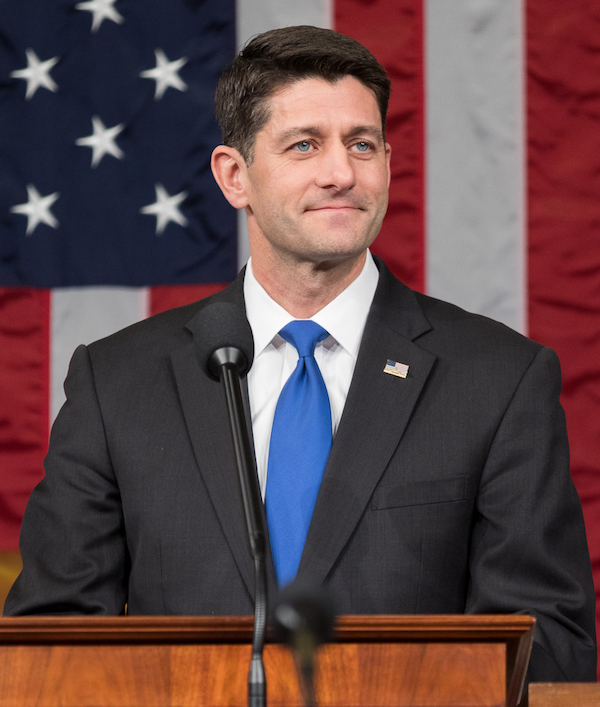
  • Speaker Paul Ryan Announces Retirement

    Speaker Paul Ryan Announces Retirement

    Does not want to be known by his children as “only a weekend dad”

    WASHINGTON(TIP): Congress’ most powerful lawmaker Speaker Paul Ryan said Wednesday, April 11th, he would not stand for another term in his Wisconsin district this November.

    Republicans already face a tough challenge from Democrats to keep control of the lower chamber.

    Ryan joins nearly 30 House Republicans who have announced this year they are retiring outright.

    Democrats need 23 seats to take over the House.

    In an April 11 morning news conference, Ryan said the decision was family-related.

    “You all know that I did not seek this job,” he said. “I took it reluctantly.

    “But I have given this job everything. I have no regrets whatsoever for having accepted this responsibility.”

    He continued: “But the truth is it’s easy for it to take over everything in your life and you can’t just let that happen.”

    The 48-year-old father-of-three said he did not want to be known by his children as “only a weekend dad”.

    Ryan said he would retire in January after finishing his congressional term.

  • Indian American Senator Vin Gopal introduces Firearms Restrictions Bill Package

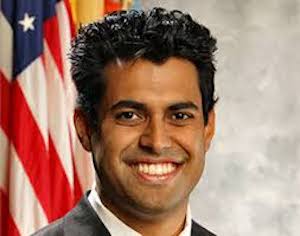
    Indian American Senator Vin Gopal introduces Firearms Restrictions Bill Package

    Bills concern those convicted of animal cruelty, safe storage of firearms, and seizure of firearms from those considered a threat.

    TRENTON, NJ (TIP): Senator Vin Gopal introduced, March 7, three pieces of legislation to better regulate firearms in the wake of the tragic Parkland, Florida, shooting that claimed 17 innocent lives and the subsequent national outcry for more stringent gun laws.

    The three-part bill package includes a bill that prohibits an individual who has been convicted of animal cruelty from possession or purchasing a firearm; a bill requiring the safe storage of a firearm and establishing penalties for improper firearm storage; and a bill which establishes a process by which a family or household member, law enforcement agency, or an employee of a high school or institution of higher education may petition a court to have a person’s firearms temporarily seized upon finding that the person poses a significant danger of causing personal injury to self or others.

    “These are common sense measures designed to keep gun owners, their families and their fellow New Jersey residents safe,” Sen. Gopal said.

    “Animal abuse and human violence tend to be linked. The FBI sees animal cruelty as a predictor of violence against people and considers past animal abuse when profiling serial criminals. In assessing youth at risk of becoming violent, the U.S. Department of Justice stresses a history of animal abuse.

    “There is absolutely no reason for individuals with violent histories towards animals to obtain the weapons necessary to continue their acts of violence against humans.

    “In the Parkland, Florida, shooting, there were multiple institutional failures and as a result, we have seen a national call for increased preventative measures. In keeping weapons out of the hands of individuals who have proven their propensity for violence, or who pose a threat to the safety of others, it is my hope that we can prevent future tragedies and save innocent lives.

    “I implore New Jersey firearms owners to embrace the tenets of responsible gun ownership and keep all weapons stored securely.

    “This is a simple, common sense measure that can and will go a long way in keeping gun owners, their families and their communities safer. If a firearm is not in use, there is no reason for it to be left out and accessible. Responsible gun ownership extends beyond when a weapon is in use. New Jersey gun owners must take responsibility for keeping their firearms secure at all times to prevent unnecessary accidental discharges and the resulting injuries or fatalities.”

    “As we saw in Parkland, school district officials, law enforcement officials, students and staff members were aware of the shooter’s propensity for violent outbursts and troubling behavior. In establishing a process by which those closest to a dangerous individual can petition a court to remove their weapons, citizens are empowered to speak out. If a troubled individual even makes it on to school property with a weapon, we have already failed. By removing a weapon from a troubled individual with a documented history of violence or concerning behavior, we are significantly reducing the likelihood of that individual carrying out a violent attack on a large scale.

    Prohibiting Possession and Purchase of Firearms by Individuals Convicted of Animal Cruelty

    Bill S2239 prohibits a person convicted of animal cruelty from possessing a firearm and from being issued a firearms purchaser identification card or a permit to purchase a handgun.

    Current law provides that a person who is convicted of certain crimes is prohibited from purchasing, owning, possessing, or controlling a firearm.  These offenses include, but are not limited to, aggravated assault, arson, burglary, homicide, robbery, aggravated sexual assault, and certain animal cruelty crimes, such as dog fighting, harming or killing a law enforcement animal, and harming or killing a service animal or guide dog.

    The bill provides that a person who has been convicted of any animal cruelty offense also would be prohibited from possessing a firearm.  A violation of the bill’s provisions would be a fourth degree crime. Fourth degree crimes are punishable by a term of imprisonment of up to 18 months, a fine of up to $15,000, or both. Additionally, the bill disqualifies a person who has been convicted of an animal cruelty offense from being issued a firearms purchaser identification card or a permit to purchase a handgun.

    Safe Storage of Firearms

    In New Jersey, there are storage requirements and penalties that protect minors from accessing loaded firearms when they are not in use in the home.  However, there currently are no general requirements for storing firearms when they are not in use.

    Bill S2240 requires a legal owner of a firearm that is not in use at a premises under the owner’s control to store the firearm: in a securely locked box or container; in a location which a reasonable person would believe to be secure; or to secure the firearm with a trigger lock.  If the owner of the firearm fails to properly store the firearm as required under the bill, the owner will be guilty of a disorderly person’s offense punishable by up to six months imprisonment, a fine of up to $1,000, or both.

    Under current law, the legal owner of a firearm is authorized to lawfully keep or carry a firearm at the owner’s place of business, residence, premises, or other land owned or possessed by the owner, and is permitted to transport the firearm under limited circumstances, as specified under current law.  The bill clarifies that these provisions of current law regarding a legal owner’s right to keep or carry a firearm are not modified by the bill. Current law also provides that the legal owner of a firearm may temporarily transfer a firearm to another person under certain circumstances, whether or not that person has a firearms purchaser identification card or a permit to carry a handgun.  The bill clarifies that its provisions do not apply to or modify current law regarding the temporary transfer of a firearm.

    Process for Seizure of Firearms

    Bill S2238 establishes a process by which a family or household member, law enforcement agency, or an employee of a high school or institution of higher education may petition a court to have a person’s firearms temporarily seized upon finding that the person poses a significant danger of causing personal injury to self or others.

    Under the bill, a family or household member, law enforcement agency, or school employee would be permitted to petition the court for an extreme risk protection order which would allow a law enforcement agency to hold a person’s firearms for one year.

    The bill requires a court to hold a hearing and issue an extreme risk protection order upon a finding by a preponderance of the evidence that the person poses a significant danger of causing personal injury to self or others by having a firearm in the person’s custody or control, or by purchasing, possessing, or receiving a firearm. In determining whether grounds for an extreme risk protection order exist, the court may consider: a recent act or threat of violence by the person against self or others, whether or not the act or threat of violence involves a firearm; a pattern of acts or threats of violence by the person within the past twelve months; any dangerous mental health issues of the person; and other factors.

    Under the bill, a family or household member, law enforcement officer or agency, or school employee, by motion, may request a renewal of an extreme risk protection order at any time before the order expires.


  • Indian American Aruna Miller wins Maryland 6th district straw poll

    Indian American Aruna Miller wins Maryland 6th district straw poll

    MARYLAND (TIP): Maryland Democrat Aruna Miller, who is running for Congress from the state’s open 6th district, won a straw poll held after the “Our Revolution” candidate forum on March 3.

    Miller, a Maryland statehouse delegate, thanked the party faithful who attended the forum. “It’s exciting to see so many people come out on a Saturday(March 3) afternoon to hear from candidates running in a Congressional primary,” she said. “It’s even more exciting to see that our message is resonating with these engaged voters.”

    “After a vigorous 3-hour debate involving six candidates, Delegate Miller won the post-debate straw poll,” the campaign said in a press release on March 6.

    The campaign also announced reaching the $1 million donations. It said the $1 million mark was reached as of February 28, 2018.

    The Miller campaign said more than 97 percent of the contributions have come from individuals and it  has “far outpaced her rivals in both the number of contributions (1,723) and individual donors (1,402).”

    “By comparison, in 2017, the other six Democrats in the CD6 race as a group only had raised approximately $600,000 in donations from 500 individual supporters and political action committees,” the campaign said.

    “Our campaign is continuing to gain momentum and strong support,” Miller said. “While the million-dollar milestone is notable, l am most excited about taking my issue-oriented message directly to the voters when the Maryland legislative session ends next month.”

    The campaign also cited a series of high-profile endorsement it received. Among the Democrats who endorsed Miller are Montgomery County Executive lke Leggett, former Maryland Democratic Party Chair Terry Lierman and Maryland House Speaker Michael Busch.

  • Indian American Sri Preston Kulkarni finishes first in Texas 22nd district

    Indian American Sri Preston Kulkarni finishes first in Texas 22nd district

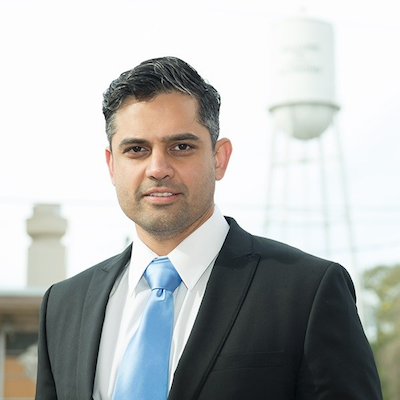
    HOUSTON , TX (TIP): Indian American Sri Preston Kulkarni finished first in the Democratic primary in Texas’ 22nd congressional district with nearly 32 percent of the vote.

    He will now have to face fellow Democrat Letitia Plummer in the May 22 runoff to earn the right to take on the incumbent GOP Rep. Pete Olson.

    According to Texas election law, if a candidate doesn’t get more than 50 percent of the votes, there will be a runoff between the top two finishers.

    With all the 129 precincts reporting, Kulkarni received 9,466 votes, while Plummer got 7,230 votes (24.3 percent). Mark Gibson, the Democratic nominee in 2016, finished last in a field of five, with 3,046 votes (10.2 percent). The other two candidates in the race, Steve Brown and Margarita Johnson, received 6,246 (21 percent) and 3,767 (12.7 percent) votes, respectively.

    Olson, who has been representing the district since 2009, was the winner of the Republican primary, trouncing his nearest rival by nearly 65 percentage points.

    Kulkarni, a former US diplomat who served in Iraq and Russia, among other places, had expressed cautious optimism ahead of the primaries.

    But his acknowledgement, two weeks before the election, that he was arrested at the age of 18, in 1997, for possessing less than a gram of cocaine may have denied Kulkarni outright victory on March 6th  night.

    The charges were dropped after a two-year probation — which is usual for first-time drug offenders.

    Acknowledging the incident, the candidate said it was due to youthful indiscretion and he did it at a time when his father was terminally ill and he was going to through a difficult time.

    “We should not be stigmatizing our youth for the rest of their lives,” Kulkarni said.

    His father Venkatesh Kulkarni, a professor and novelist, died in 1998 after battling leukemia for a year. His mother Margaret Preston Kulkarni is from West Virginia.

    If elected, the biracial Kulkarni will become the first Indian American congressman from the state of Texas.

    He is one of the nearly two-dozen Indian Americans who are running for Congress this year.

  • Indian American Deep Sran is ending his campaign for the Democratic Party nomination

    Indian American Deep Sran is ending his campaign for the Democratic Party nomination

    MARYLAND (TIP): Indian American Deep Sran, who announced his candidature for the Virginia 10th Congressional District last summer, has announced that he is ending the campaign for the Democratic party nomination.

    In a press release posted on his official website, Sran thanked his supporters and family for helping him run the campaign.

    “I want to thank my wife, daughters, friends, staff, and community for all of their sacrifice and work. Together, we ran a campaign that was about listening to the people of the 10th District,” he said. “I was able to talk about vision and long-term solutions in a time of anxiety and division. And I had a chance to share how important a positive, shared vision is to the future of this country.”

    Sran, a teacher, technology entrepreneur and a lawyer, said the decision to run was made with a strong will and with a vision for the future and it is with the same optimism that he has decided to end the campaign.

    “I was able to talk about vision and long-term solutions in a time of anxiety and division. And I had a chance to share how important a positive, shared vision is to the future of this country,” he said.

    “I will continue to work for true education reform through innovation and greater equity, to prepare the next generation of leaders and to build a better world,” Sran said. “I will also continue to work for more representative government, so minority and marginalized communities are engaged and heard. I will build on the work we’ve done to show that politics must be about finding common ground to implement policies that leave our children and grandchildren a better world.”

    Sran was born and raised in Montgomery County, Maryland.


  • Indian American Hirsh Singh announces candidacy from New Jersey

    Indian American Hirsh Singh announces candidacy from New Jersey

    NEW JERSEY (TIP): Indian American businessman Hirsh Singh, who ran for the New Jersey governor last year, has announced his candidacy for the state’s open 2nd Congressional District.

    Singh, a Republican, has pledged to defend President Donald Trump’s agenda, while making the announcement.

    Rep. Frank LoBiondo, who has been representing the South Jersey district since 1992 unexpectedly announced his retirement on Election Day after serving 24 years in Congress.

    Trump carried the district in the last presidential election by more than 3 percentage points—only the second time a Republican won the district in the past seven presidential elections.

    “South Jersey deserves a conservative champion in Congress – someone who will defend the President’s agenda, fight to bring our fair share of tax dollars back to South Jersey, and stand up to Nancy Pelosi and the radical left,” he said. “The president’s agenda of slashing regulations, cutting taxes, and returning decision-making to state and local governments is working to grow the economy and must be supported.”

    Other candidates include former Atlantic County Freeholder Seth Grossman, Somers Point City Councilman James Toto, former FBI agent Robert Turkavage, defense and aerospace contractor Brian Fitzerhert and activist Mark McGovern.

    Last year, Singh had finished third in the Republican gubernatorial primary.

    He has also pledged to challenge House Minority Leader Nancy Pelosi (D-Calif.), if elected to Congress.

    Singh holds a degree in engineering from the New Jersey Institute of Technology. He has worked with several top government organizations such as NASA, the Department of Homeland Security, the Federal Aviation Administration, the Pentagon, and the United States military.

    “In the coming weeks, I look forward to meeting with the residents of the 2nd Congressional District, listening to their concerns and sharing my vision for a stronger and more prosperous South Jersey,” he said in a statement. “We need a new voice in Washington who will fight for all of the residents of South Jersey.”


  • New York banking regulator seeks Kushner Cos loan details

    New York banking regulator seeks Kushner Cos loan details

    NEW YORK (TIP): New York state has asked three banks to supply information about their relationships with the real estate business of Jared Kushner, a senior White House adviser and President Donald Trump’s son-in-law, a source said on Thursday, March 1.

    Maria Vullo, Superintendent of the Department of Financial Services (DFS), sent letters last week to Deutsche Bank, Signature Bank and New York Community Bank asking for details on their financial arrangements as well as loans made to or sought by Kushner Companies, the source told AFP.

    The lenders were given until March 5 to respond.

    The DFS has refused to comment on the matter, as has Deutsche Bank.

    But Kushner Companies said the inquiries were politically motivated and amounted to harassment.

    “We have not received a copy of any letter from the New York State Department of Financial Services,” a spokesman said.

    “Our company is a multi-billion enterprise that is extremely financially strong. Prior to our CEO voluntarily resigning to serve our country, we never had any type of inquiries.

    “These types of inquiries appear to be harassment solely for political reasons.”  Also, The New York Times reported Kushner Companies received major loans from Apollo Global Management, one of the world’s largest private equity firms, and Citigroup, shortly after Kushner held White House meetings with representatives from the two companies.

    The paper quoted Don Fox, the former acting director of the Office of Government Ethics during the Obama administration, as saying the loans raised questions about the appearance of conflicts of interest.

    Kushner met Joshua Harris, a founder of Apollo, multiple times over the course of 2017 and even discussed a potential White House position which never materialized, the paper said.

    In November 2017, the firm loaned Kushner Companies USD 184 million—triple the size of its average property loan.

    He also met Citigroup’s chief executive in the spring of 2017, Michael L Corbat, shortly before Kushner Companies received a USD 325 million loan from the firm, the Times reported.

    The White House referred questions to Kushner’s lawyer, Abbe Lowell, whom the paper said did not dispute that the meetings took place but denied any impropriety.

    Kushner, who is married to the president’s daughter Ivanka Trump, has been a key figure in the administration of his father-in-law, entrusted among other things with finding a peace deal between Israelis and Palestinians.

    A Harvard graduate with a law degree from New York University, Kushner took the reins of his family business before announcing in January 2017 — just ahead of his appointment to the Trump administration—that he was stepping down from his management role.

    While Jared Kushner voluntarily left high-level positions in more than 200 entities related to his family’s real estate empire, he still retains shares in most of these companies from which he is likely able to derive income, according to documents published by the White House in April 2017.

    It is not the first time Kushner’s business interests, which include real estate assets in the states of New York and New Jersey, have been in the spotlight.

    In May 2017, the company was forced to apologize for mentioning Jared Kushner during a presentation of one of its projects to a group of Chinese investors, in a possible breach of conflict of interest rules.

    (Source AFP)

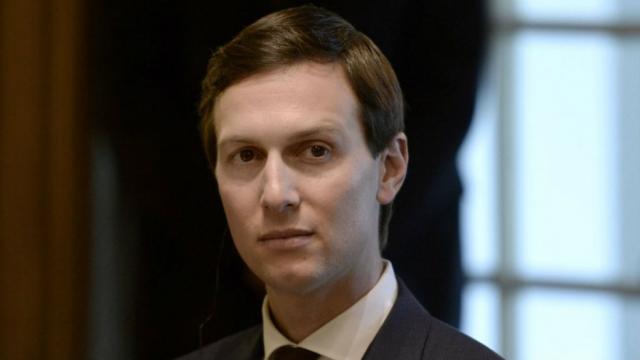
  • Jared Kushner loses “Top Secret” security clearance: report

    Jared Kushner loses “Top Secret” security clearance: report

    The new security clearance level will restrict Kushner’s access to top secret intelligence

    WASHINGTON (TIP): Jared Kushner, son-in-law to President Donald Trump, is one of the many White House aides to have his security clearance downgraded, according to Politico. Kushner, along with other aides, received the news via a memo on Friday, Feb 23. The downgraded security clearance level will restrict access to highly classified intelligence, in contrast to the access Kushner enjoyed while operating under the highest interim security clearance – Top Secret/SCI-level.

    Concerns around interim security clearances surfaced after White House aide Rob Porter resigned due to domestic abuse allegations. Porter was also operating under an interim security clearance.

    Many insiders and pundits scratched their heads as to the reasoning behind Kushner receiving top secret security clearance in the first place. Indeed, Kushner’s background is in real estate and business; he has no previous government nor foreign policy experience. Democrats spoke of suspending his clearance back in 2017, after news leaked that Kushner omitted details of his meetings with Russians on his security clearance application.

    On Feb. 16, Chief of Staff John Kelly wrote a five-page memo addressing ongoing security clearance concerns regarding White House staff, in addition to ordering actions that would impact those operating under interim security clearances. In this memo, Kelly decreed that those with interim security clearances whose background investigations had been ongoing since June 1 should see those clearances revoked on Feb. 23. However, it was unclear how this would impact Kushner — especially since his father-in-law, President Donald Trump, had the power to grant Kushner a permanent clearance.

    Many suspected that the notoriously clannish president would intervene on behalf of his son-in-law. Yet Trump told reporters on Friday, according to Politico, that he would leave the fate of Kushner’s security clearance in the hands of Kelly.

    “I will let General Kelly make that decision,” Trump said. “I have no doubt he’ll make the right decision.”

    While Kelly did not sign the memo that was released on Friday that informed aides about the security clearance downgrades, Kelly’s previous memo from Feb. 16 was likely the trigger for the downgrades.

    The White House has declined to comment on Kushner’s security clearance; White House press secretary Sarah Huckabee Sanders brushed past the issue when speaking to reporters on Tuesday.

    “We actually haven’t commented on Jared’s issue indicated, but we have commented on his ability to do his job. Which, he’s a valued member of the team and he will continue to do the important work that he’s been doing since he’s started in the administration,” she told reporters.

    Kushner’s attorney Abbe Lowell told Politico in a statement the changes would “not affect Mr. Kushner’s ability to continue to do the very important work he has been assigned by the president.”

    However, others saw that as wishful thinking. Quoting exclusive sources, CNN reported:

    “Republican sources close to the White House said the clearance downgrade could undercut Kushner’s ability to influence policy decision-making in the West Wing. Without a top-level clearance, Kushner will be unable to attend meetings where the most sensitive national secrets are discussed.”

    Since Porter’s dismissal, Kushner’s security clearance has been scrutinized — even by some Trump loyalists.

    Fox News host Shepard Smith told viewers last week that there was “a Kushner problem at the White House.”

    “Jared Kushner submitted his application – his ‘SF-86’ as they call it – and did not include 100 contacts with foreigners, and then later had to go back and include them. But then later he did not include the meeting at Trump Tower with the Russian lawyer and the Russian translator. He didn’t include that. So that was another amendment to this thing,” Smith explained. “And that took this past June.”

    Officials can be imprisoned for omissions on a security clearance, as Salon previously reported.

    Kushner has not been able to receive a full clearance in part because of special counsel Robert Mueller’s probe into the dealings of Trump and his associates.

    (Source: Salon)

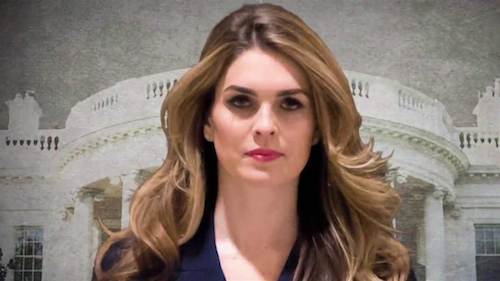
  • President’s longest-serving and closest aide Hope Hicks quits as WH communications chief

    President’s longest-serving and closest aide Hope Hicks quits as WH communications chief

    Hope Hicks’s first association with the Trump family was working with President Trump’s eldest daughter, Ivanka, on her personal apparel and licensing brand about six years ago.
     Hicks had no political experience when she joined Trump’s tumultuous campaign for the White House. She initially served as a press secretary within the White House, before taking on the role of communications director
    Hicks led strategic messaging for administration priorities such as the historic passage of tax reform and worked with Press Secretary Sarah Sanders to stabilize the press and communications teams after initial phases of transition

    WASHINGTON (TIP): Hope Hicks, one of Donald Trump’s longest-serving and trusted aides, on March 1, announced her resignation as the powerful communications director, in a major blow to the US President and the embattled White House amidst the intensifying inquiry into alleged Russian meddling in the 2016 election.

    The 29-year-old former model, though considered a political novice, was known as one of the few aides of Trump who understood his style and could influence his views. Her surprise resignation came a day after she testified before the House Intelligence Committee she testified for eight hours on allegations related to the Russian interference during the presidential campaign.

    During her testimony, Hicks told the panel that in her job, she had occasionally been required to tell white lies but had never lied about anything connected to the investigation into Russia’s interference in the election, US media reported.

    Although Hicks maintained an unusually low profile over the past three years, she recently attracted scrutiny after Special Counsel Robert Mueller escalated his probe into potential collusion between the Trump campaign and Russia.

    She is leaving the White House after serving Trump for three years in various capacities. This included being his campaign spokesperson and Director of Strategic Communication when Trump was sworn in as the President.

    “There are no words to adequately express my gratitude to President Trump,” Hicks said in a statement. President Trump praised Hicks for her outstanding work. The White House did not announce the exact day of her departure but said it could be sometime in the next few weeks.

    In a little over 13 months of the Trump administration, Hicks is the fourth individual to resign as the White House Director of Communications. The other three being Sean Spicer, Mike Dubke and Anthony Scaramucci.

    (With inputs from PTI)

  • Indian American Entrepreneur Anita Malik to Run for Congress in Arizona

    Indian American Entrepreneur Anita Malik to Run for Congress in Arizona

    KANSAS (TIP): Indian American Entrepreneur Anita Malik, a Democrat, announced her candidacy to run against Congressman David Schweikert in Arizona’s 6th Congressional District.

    The daughter of immigrants from India, Anita was born in Kansas City, Missouri. When she was 7, her family moved to Arizona. Her father, a mechanical and computer engineer, instilled in her the importance of leading with empathy and listening; her mother, a stay-at-home mom with a passion for the arts, taught her to appreciate the journey. She attended Scottsdale schools, graduating from Chaparral High School in 1994.

    Anita went on to graduate summa cum laude with degrees in both computer information systems and finance from Arizona State University. She later earned her master’s in journalism from the University of Southern California in 2002.

    Anita started her career in the early days of Arizona tech, working for MicroAge as a business analyst. She went on to work at the The Arizona Republic, and was Deputy Director of ASU’s Donald W. Reynolds National Center for Business Journalism. More recently, Anita was COO of marketing tech startup, ClearVoice. Over the years, she developed a unique blend of content and technology experience that put her at the forefront of digital media.

    Anita’s entrepreneurial projects have often struck a chord nationally. In 2004, she founded East West Magazine, a national publication celebrating the pan Asian-American life. She was featured on FOLIO’s “40 Under 40” list for her ability to eloquently promote and support a multicultural America. Anita was also a regular guest on NPR’s “Tell Me More.”

    Her more recent projects include BrideRush, an online booking tool for event planning; ListenforHer, resources to help women at work; and process consulting for local startups and government agencies.

    Anita’s motivations in business changed when she lost her father to cancer in 2003. No success in business matters, he reminded her, if you don’t have your health. Since then, Anita’s energy has been focused on creating healthy, compassionate and balanced workplaces. She hopes to continue this mission with legislation to support affordable childcare options, wellness programs and equal pay.

    Anita and her husband live in Scottsdale.

  • Indian American Democrat congressional candidate Aruna Miller endorsed by Emily’s List

    Indian American Democrat congressional candidate Aruna Miller endorsed by Emily’s List

    MARYLAND (TIP): Aruna Miller, an Indian-American politician and a member of the Maryland House of Delegates representing District 15 in Montgomery County, Maryland, picked up the endorsement of the women’s political group Emily’s List in the race for Maryland’s 6th District congressional seat.

    Miller, a former Montgomery County transportation engineer, is the only woman running in the race to replace Rep. John Delaney, who is running for president.

    Miller was sworn in as a member of House of Delegates on January 12, 2011 and appointed to the Ways and Means Committee (revenue, transportation & education subcommittees). She is a member of the Land Use and Transportation Committee of the Montgomery County Delegation and a member of the Women Legislators of Maryland where she serves on the executive board.

    After re-election in 2014, Miller was appointed to serve on the Appropriations Committee where she is Chair of the Oversight of Personnel Subcommittee and vice-Chair of the Transportation & Environment Subcommittee and in 2016 was appointed as vice-Chair of the Capital Budget. In the 2017 Miller was elected to Chair of the Women’s Legislative Caucus.

    In 2011, while serving as a Delegate, Miller encouraged strengthening economic and cultural development between Maryland and India and accompanied Governor Martin O’Malley on six-day trade mission to India, which resulted in nearly $60 million in business deals for the state of Maryland. Delegate Miller took a lead role in working with the Office of the Secretary of State and the Department of Economic Development to coordinate the Governor’s arrangements for his first stop to Hyderabad.

    In 2013 Delegate Miller was one of ten Maryland lawmakers named to the Maryland Business Climate Workgroup designed to make recommendations and develop long-term plans to streamline business regulations, encourage business innovation, and develop public-private partnerships to finance infrastructure.

    In 2013 Governor Martin O’Malley appointed Delegate Miller as a Commissioner to the Interstate Commission on the Potomac River Basin (ICPRB). The ICPRB’s mission is to enhance, protect, and conserve the water and associated land resources of the Potomac River and its tributaries through regional and interstate cooperation.

    Miller maintains her activism in community organizations, including serving on the boards of the Black Rock Center for the Arts, the Montgomery County Public Schools Educational Foundation, & the Indian Biomedical Association. She is a graduate of Leadership Montgomery (class of 2013) and in 2012, Miller served as an at large Delegate to the 2012 Democratic National Convention.


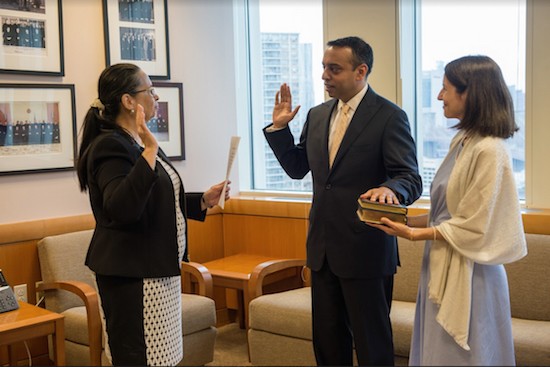
  • Indian American appointed as U.S. Magistrate Judge in New York

    Indian American appointed as U.S. Magistrate Judge in New York

    NEW YORK (TIP): Indian American lawyer Sanket Bulsara, who recently served as acting general counsel to the U.S. Securities and Exchange Commission, has been appointed as a magistrate judge in the Eastern District of New York and is the first South Asian American to serve on the bench in the Second Circuit.

    “We are thrilled to welcome Judge Bulsara into the Eastern District family,” Chief Judge Dora Irizarry said. “Judge Bulsara was chosen by the Board of Judges from among five highly qualified and stellar candidates recommended by the Magistrate Judge Merit Selection Committee composed of members of the bar and citizens of the Eastern District.”

    Judge Bulsara received an A.B. degree magna cum laude in 1998 from Harvard College and a J.D. degree cum laude from Harvard Law School in 2002.  He is a graduate of Edgemont High School.

    Upon graduating from law school, Judge Bulsara was a law clerk to Judge John G. Koeltl of the Southern District of New York.  Thereafter, he was an associate at Munger Tolles & Olson in Los Angeles and Wilmer Cutler Pickering Hale and Dorr in New York, where he worked from 2005 to 2015, including as a partner of the firm.  In 2015, he became the Deputy General Counsel for Appellate Litigation, Adjudication, and Enforcement at the Securities and Exchange Commission in Washington, DC.

    As the Acting General Counsel of the SEC, he served as the agency’s chief legal officer.  He also oversaw the agency’s appellate, adjudication and enforcement related legal policy functions.  Bulsara also served as Special Kings County Assistant District Attorney while he was at Wilmer Hale and successfully tried felony and misdemeanor cases.

    Bulsara received several awards related to his numerous pro bono matters that have included working on prisoner rights cases and a Hague Convention child abduction matter.

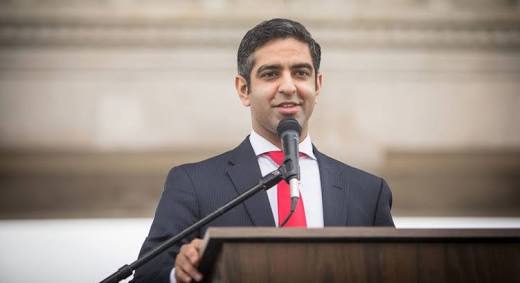
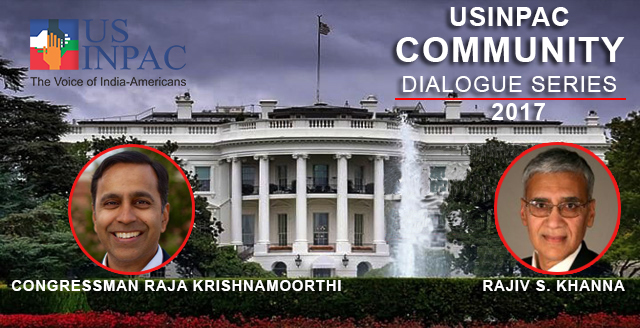
  • USINPAC Engages with Congressman Raja Krishnamoorthi and Rajiv Khanna on Immigration policy

    USINPAC Engages with Congressman Raja Krishnamoorthi and Rajiv Khanna on Immigration policy

    WASHINGTON (TIP): The US-India Political Action Committee (USINPAC) hosted an interactive Community Dialogue series, last month with Congressman Raja Krishnamoorthi representing Illinois’ 8th district and Immigration lawyer Rajiv S. Khanna. The interaction focused on issues surrounding Trump Administration’s immigration reform and its impact on US-India relations.

    Asked about the Trump Administration positions around H1B visa and family immigration, Congressman Krishnamoorthi remarked that though America is a country of laws it is also a country of immigrants. There is a shortage of skilled labor, reform is needed to attract highly professional taskforce that is vital to grow our economy. In a hostile immigration environment, the IT Companies will move jobs offshore. Skilled immigration should figure in the talks between Prime Minister Modi and President Trump to be held on 26 June.

    Congressman Krishnamoorthi did not think H1B visa program is to blame for massive US unemployment, as unemployment is at a historic low, the House just passed a rewrite of the Perkin’s Act on career and technical education for building a skilled workforce for the 21st century. Regarding worker shortage in the Silicon Valley, the Congressman remarked if President Trump wants to grow the US economy at 3-4%, immigration reform must not be reckless, should not fail to retain and attract high tech workers in AI and Big Data.

    Well known immigration expert Khanna suggested a detailed economic, statistical and legal bipartisan study on the effects and benefits of the H1B program to close the gap between perception and reality. Krishnamoorthi agreed, the study would guide us on how to grow our talent pool. Krishnamoorthi has co-sponsored the abolition of per country caps for H1B visa, favors both skill based and family immigration. Rajiv Khanna voiced the gap on readiness between the US Government and the real world, and encouraged USINPAC to drum up support for effective immigration reform.

    Sanjay Puri, Chairman of USINPAC, said, “I thank Congressman Krishnamoorthi and Rajiv Khanna for engaging with us, on issues vital to the Indian American community. We look forward to more conversations on this topic with you.”

  • Lies, Plain and Simple : James Comey

    Lies, Plain and Simple : James Comey

    “We are under Siege”: President Trump Trump’s personal counsel accuses Comey of leaking “classified information”
    I.S. Saluja

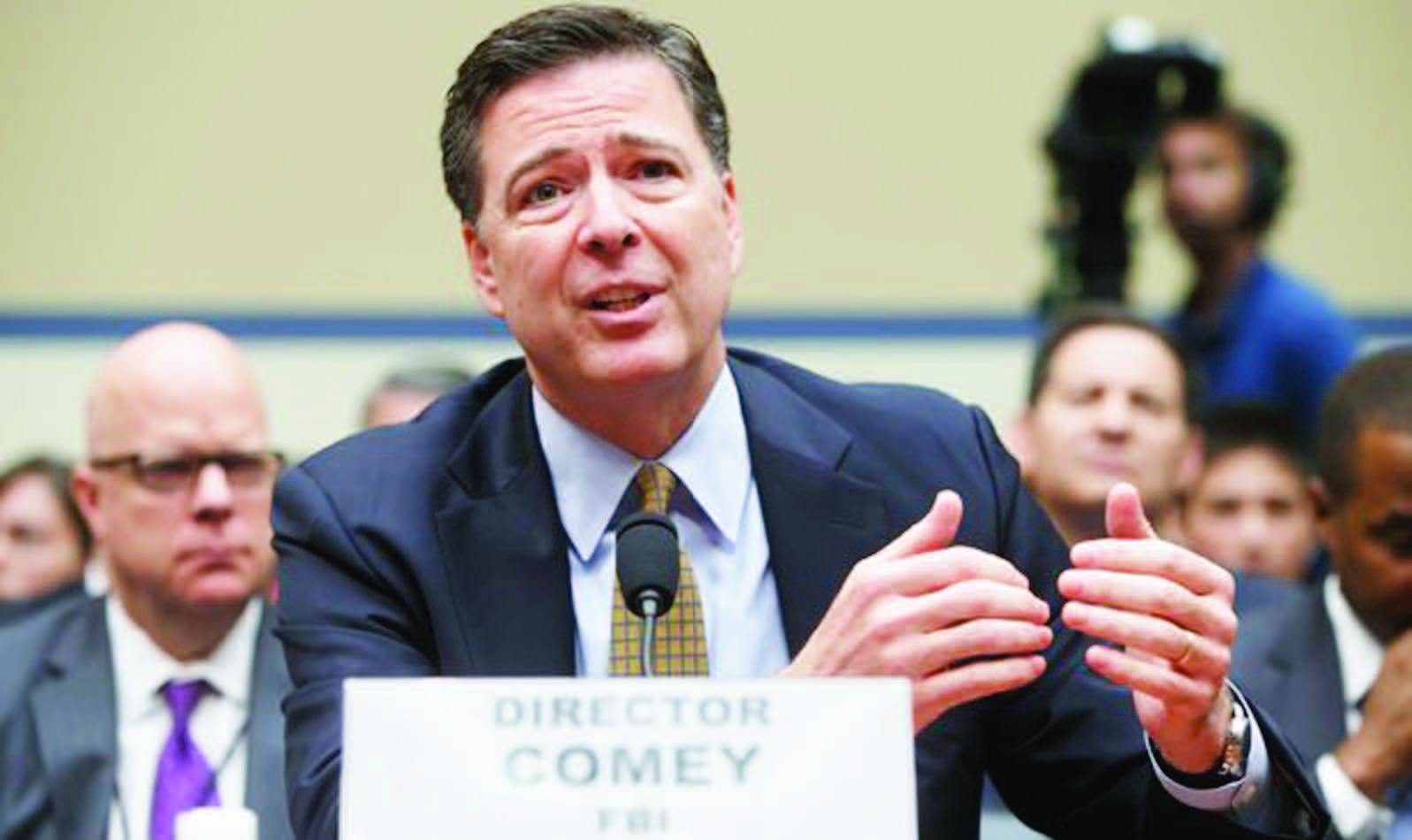
    WASHINGTON (TIP): In the Atlantic season of hurricanes, one political hurricane could turn out to be historic- the Comey testimony. In his testimony before the Senate Intelligence Committee, June 8, former FBI Director James Comey affirmed his belief that President Trump fired him “because of the Russia investigation.” He did not accuse the president of obstructing justice, leaving that question up to Robert Mueller, the appointed special counsel. In response, Trump’s personal lawyer accused Comey-inaccurately though-of leaking “classified information”, referring to the memos Comey had drafted regarding his conversations with the president.

    Ousted FBI director James Comey testified before the Senate Intelligence Committee on Thursday, June 8, and didn’t pull any punches when discussing President Trump. Here are five takeaways from his blockbuster testimony.

    “Lies, plain and simple”: Throughout his testimony, Comey accused Mr. Trump of misleading Americans about the nature of his tenure at the Bureau and his  firing in May. “The administration then chose to defame me and more importantly the FBI, by saying the organization was poorly led,” Comey said at the onset of his testimony.

    “Those were lies, plain and simple.” Mr. Trump and his allies have criticized Comey’s tenure numerous times since his firing. The president even reportedly called Comey a “real nut job” during his meeting with Russian diplomats. Last month, Deputy White House Press Secretary Sarah Huckabee Sanders said that Comey had “lost the confidence” of the FBI’s rank-and-file agents, which Comey, among others, dispute.

    Why he was fired: Comey told the committee that he does “take him at his word” on one thing — that he was terminated over the Russia investigation. Comey said the “shifting explanations” for his ouster “confused” and increasingly, “concerned” him, as the White House’s official explanation for his firing contradicted that of the president’s. Comey said he couldn’t be sure of why the president fired him, but that he believes the president’s public comments.

    After firing Comey, Mr. Trump told NBC’s Lester Holt he thought of the thought of “made-up” story of ties between Russia and the Trump campaign when he fired Comey, and he told Russian diplomats that firing Comey relieved “great pressure” on him from the FBI’s Russia probe.

    “I take the president at his word that I was fired because of the Russia investigation,” Comey said in the hearing. And he went further, suggesting that the president hoped to “change” the way the Russia probe was being conducted. “I was fired in some way to change the way the Russia investigation was being conducted,” Comey said. “That is a big deal. On top of that, the Russia investigation itself is vital because of the threat. And if any American were part of that, that is a very big deal.”

    Comey leaked: How did the existence of Comey’s memos make it to the press? He leaked them. Comey says he believes the memos were his personal property and written in his capacity as a private citizen, although he has now turned them over to Special Counsel Robert Mueller. In fact, Comey says he hoped that by sharing what he had written in the memos with the news media, he could help trigger the appointment of a special counsel to investigate Russian interference in the 2016 election.

    Comey, however, did not leak the memos to the press himself. Nor did he rely on his friend Benjamin Wittes, a legal blogger who frequently teases new revelations in the Russia investigation with his Twitter account. Instead, Comey said that he turned to a “good friend” who teaches at Columbia Law School to share what he had written with the memos. That friend, CBS News’ Andres Triay reports, is Daniel Richman, a law professor at Columbia.

    “Lordy, I hope there are tapes” : Mr. Trump tweeted after firing Comey last month that the ex-FBI chief “better hope that there are no ‘tapes’ of our conversations before he starts leaking to the press!” Comey says this tweet inspired him to leak the contents of his memos to the press, because he felt he “needed to get that out into the public square.”

    “Lordy, I hope there are tapes,” Comey said during a back-and-forth with Sen. Dianne Feinstein, D-California, to laughter from the crowd. He later said that if Mr. Trump had indeed recorded any of their conversations that he hoped they would be released. He also disclosed that Special Counsel Robert Mueller has his memos.

    Loretta Lynch’s strange request: Comey said his reasoning behind his much-criticized July 2016 announcement that the FBI would not recommend charges against Hillary Clinton over her private email server had a lot to do with then-Attorney General Loretta Lynch holding a private meeting with former President Bill Clinton on a Phoenix, Arizona tarmac.

    But that wasn’t the only reason he decided to make the announcement. “Probably the only other consideration that I guess I can talk about in open setting is that at one point the attorney general had directed me not to call it an investigation, but instead to call it a ‘matter,’ which confused me and concerned me, but that was one of the bricks in the load that led me to conclude I have to step away from the department if we’re to close this case credibly,” Comey said.

    Trump is not under investigation — or, rather, he wasn’t: As Comey said in his written statement before the hearing, Comey did in fact inform Mr. Trump three times that he was not personally under investigation. Mr. Trump, Comey said, was frustrated that the FBI did not make this public, and asked Comey to make it so several times. But Comey had serious reservations about letting it be known that Mr. Trump wasn’t under investigation, among them that if that information were to be made public, the FBI would then have to announce that Mr. Trump was under investigation if that ever became the case.

    Of course, whether Mr. Trump is under investigation now is impossible to know, since Comey was fired on May 9, and the Russia investigation may have expanded since then. Who all are the guys on Intelligence Committee who questioned James Comey?

    Richard Burr, Republican of North Carolina: The chairman of the committee, which he joined in 2007, Mr. Burr embraced President Trump during the campaign. But he has earned praise from his peers in both parties in recent weeks for the seriousness with which he has taken his role in leading the Senate’s investigation.

    Mark Warner, Democrat of Virginia: Mr. Warner, the highest-ranking Democrat on the committee, has thrived in the spotlight that the investigation brings. He has in the past expressed presidential ambitions and has praised Mr. Burr, whom he calls a friend, for his leadership of the committee.

    Jim Risch, Republican of Idaho: Mr. Risch was elected to the Senate in 2009 and has been a member of the committee since then. He is one of Mr. Trump’s strongest supporters in Congress and has expressed significant concern about leaks to the news media. He is a former governor of Idaho.

    Dianne Feinstein, Democrat of California: Ms. Feinstein, who was once the head of the committee, has in the past criticized Mr. Comey for his actions in the investigation into Hillary Clinton’s email server. But she expressed concern after he was fired in May and said then that she believed he should “absolutely” testify before the other committee on which she sits, the Senate Judiciary Committee.

    Marco Rubio, Republican of Florida: A candidate for president in 2016, Mr. Rubio joined the Intelligence Committee in 2011. Mr. Rubio has been willing to criticize Mr. Trump, his former campaign rival, and has been dismissive of the president’s complaints that the Russia investigation is a “witch hunt.”

    “We are nation of laws, and we are going to follow those laws,” Mr. Rubio said recently. Ron Wyden, Democrat of Oregon: Mr. Wyden, who has been on the panel since 2001, has been a strong critic of the Trump administration and had early on called for Mr. Comey to appear in front of the committee.

    Susan Collins, Republican of Maine: Ms. Collins, who has been on the committee since 2013, is known as one of the more moderate Republicans now serving in the Senate. She has been tougher on the president than many colleagues in her party. “I really want to know the truth no matter who is implicated, no matter where the evidence leads,” she told The Times last month.

    Martin Heinrich, Democrat of New Mexico: Mr. Heinrich joined the committee when he arrived in the Senate in 2013. He pushed the F.B.I.’s acting director, Andrew McCabe, to assert that Mr. Comey still enjoyed “broad support” among the agency’s rank and file.

    Roy Blunt, Republican of Missouri: Mr. Blunt, along with Ms. Collins, has been a strong supporter of Congress’s investigation into Russia’s actions in the 2016 presidential election. A former acting house majority leader, he has been on the panel twice, leaving after 2012 and rejoining in 2015.

    Angus King, Independent of Maine (Caucuses with Democrats): Mr. King, a former governor of Maine, has been on the committee since he joined the senate in 2013. One of the most steadfast members of the committee, he caused a stir on Wednesday when he pressed Mr. McCabe and other intelligence officials on why they could not elaborate on earlier conversations they had with Mr. Comey.

    James Lankford, Republican of Oklahoma: Mr. Lankford, who was once a Baptist youth minister, joined the committee in 2015. He has insisted on the seriousness of its investigation into Russia’s alleged interference and has said that he hopes that Mr. Comey’s hearing will “hopefully end speculation and lead us to facts.”

    Joe Manchin, Democrat of West Virginia: Mr. Manchin, a moderate Democrat and a former governor of West Virginia, is known for crossing the aisle. He joined the Senate in 2011 and was assigned to the committee this year. He told the news media that Mr. Comey, shortly before his firing, had sought more resources for the Russia investigation.

    Tom Cotton, Republican of Arkansas: A former member of the U.S. Army and the youngest U.S. senator, Mr. Cotton has expressed skepticism of Mr. Comey’s accounts of his interactions with Mr. Trump. He joined the committee in 2015.

    Kamala Harris, Democrat of California: Ms. Harris was ferocious in her calls for a special prosecutor to supervise the F.B.I.’s Russia investigation. Often named as a potential presidential candidate, Ms. Harris, a former attorney general of California, was assigned to the committee this year when she joined the Senate. She has expressed impatience with the Senate’s probe, saying that she thinks it needs to be sped up.

    John Cornyn, Republican of Texas: Mr. Cornyn, the majority whip, only recently joined the panel. He is one of Mr. Trump’s stronger allies in Congress and was reportedly being considered to replace Mr. Comey before taking himself out of the running last month.

    Jack Reed, a Democrat from Rhode Island, and John McCain, Republican of Arizona, also questioned Mr. Comey on Thursday. As the leaders of the Armed Services Committee, they are “ex officio” members of the Intelligence Committee, as are the Senate majority leader, Mitch McConnell, and the Senate minority leader, Chuck Schumer.


  • US House passes Bill to repeal Obamacare with 217 Ayes and 213 Nays

    US House passes Bill to repeal Obamacare with 217 Ayes and 213 Nays

    Next test of strength in the Senate


    The rich to benefit from new Republican Healthcare plan

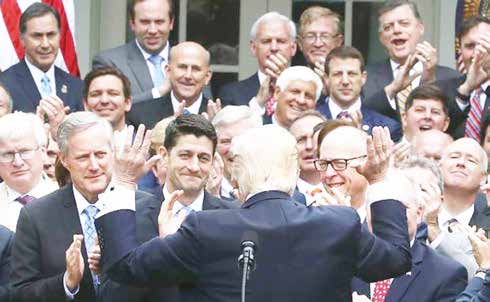
    In what could be seen as arare victory on the domestic turf for President Trump, the US House of Representatives approved a Bill on Thursday, May 4, to repeal major parts of Obamacare and replace it with a Republican healthcare plan. The passage of the Bill which Republican leadership has been struggling with and having met with disappointment earlier, is the legislative victory for President trump and House Speaker Paul Ryan.

    With the 217-213 vote, Republicans obtained just enough support to push the legislation through the House, sending it to the Senate for consideration. No Democrat voted for the Bill. The Bill’s passage represented a step toward fulfilling a top Trump campaign pledge and a seven-year Republican quest to dismantle Democratic former President Barack Obama’s signature healthcare law.

    But the effort now faces new hurdles in the Senate, where the Republicans have only a 52-seat majority in the 100-seat chamber and where just a few Republican defections could sink the Bill.

    Thursday’s vote was also a political victory for House Speaker Paul Ryan, demonstrating his ability to pull together a fractured Republican caucus after two failed attempts this year to win consensus on the healthcare law.

    Democrats are hoping that the Republicans’ vote to repeal Obamacare will spark a voter backlash in next year’s midterm congressional poll.

    Some 20 million Americans gained healthcare coverage under Obama’s 2010 Affordable Care Act, which has recently gathered support in public opinion polls. But Republicans have long attacked it, seeing the program as government overreach and complaining that it drives up healthcare costs.

    The Republican Bill, known formally as the American Health Care Act, aims to repeal most Obamacare taxes, including a penalty for not buying health insurance.

    But, the battle is not over yet. It is over to senate now. Though the Bill’s passage represented a seven-year Republican quest to dismantle former President Barack Obama’s signature healthcare law, the American Health Care Act now faces new hurdles in the Senate

    The Republicans have only a 52-seat majority in the 100-seat chamber and just a few Republican defections in the Senate could sink the Bill. The Democratic senators remain firmly unified against any repeal of Obamacare

    The new Bill repeals the individual mandate requiring those who can afford it to have health insurance. Those have who been without coverage for more than two months would face a 30% surcharge for new policy

    It repeals Obamacare’s requirement for companies with 50 or more staff to provide insurance coverage for employees

    Meanwhile, reactions to the bill passed in the House on May 4 are pouring in. Generally, hospitals, doctors, health insurers and some consumer groups, with few exceptions, are speaking with one voice and urging significant changes to the Republican health care legislation.

  • JACK MARTINS ANNOUNCES RUN FOR NASSAU COUNTY EXECUTIVE

    JACK MARTINS ANNOUNCES RUN FOR NASSAU COUNTY EXECUTIVE

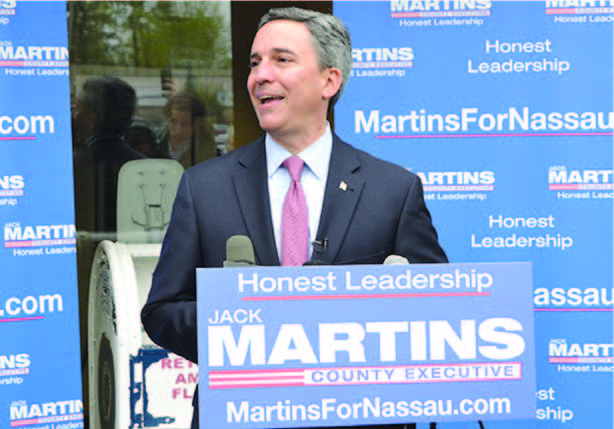
    MINEOLA, NY (TIP): On the steps of Mineola Village Hall, former Mineola Mayor and State Senator Jack Martins announced, April 26, his candidacy for Nassau County Executive.

    “For the first hundred years of its existence, Nassau County was the nation’s preeminent suburb and a magnet for investment, growth and prosperity,” said Martins. “Unfortunately, Nassau County’s second century has been marred by high taxes, corruption and fiscal instability.”

    Surrounded by dozens of supporters including Mayors from across Nassau County, Martins articulated his vision to restore the public’s trust and reimagine county government. Through fiscal responsibility and accountability, Martins stressed the importance of making Nassau County more affordable for middle class families and returning local control of the county’s finances.

    “One hundred and eighty-nine days ago, I called for a change in leadership in Nassau County,” Martins said. “Today, that change begins and we turn the page to begin a new chapter in Nassau County’s history.”

    As the state senator representing North Hempstead and portions of the towns of Hempstead and Oyster Bay for three terms, Jack Martins worked to cap property taxes and state spending, roll back the MTA Payroll tax, end the unfair Gap Elimination Adjustment that redirected Long Island’s state school aid to New York City and passed the constitutional amendment stripping corrupt elected officials of their taxpayer funded pensions. Martins also led the Senate’s Workforce Development Task Force and chaired Senate committees on labor and local government.

    “Jack Martins is exactly the person Nassau County needs right now,” said Mineola Mayor Scott Strauss. “Jack has the integrity, and the leadership we need in our elected officials.

    Jack’s track record as Mayor of Mineola speaks for itself. He restructured Mineola’s finances and put the village on the right track,” concluded Strauss.

    As mayor of the Village of Mineola, Jack Martins inherited many of the same challenges facing Nassau County–budget deficits, soaring debt and challenges to its assessment system. As mayor, Martins developed balanced, fiscally responsible budgets and debt management plans that substantially reduced Mineola’s debt and returned the village to a sound financial footing. He also led the effort to create Mineola’s award-winning master redevelopment plan that expanded the village’s economic base through smart growth principles.

    “Jack Martins is a leader whose integrity speaks for itself. He will represent Nassau County well. Jack is honest and has the experience to solve the fiscal challenges that Nassau County faces every day,” said Stewart Manor Mayor Michael Onorato. “I’m proud to stand here with Jack and support him for county executive because he will provide honest leadership in Nassau County.”

    “Jack Martins will provide the honest leadership Nassau County needs,” said Massapequa Park Mayor Jeffrey Pravato. “As the Mayor of Mineola, Jack distinguished himself as a bipartisan problem solver and I’m confident that, through Jack’s leadership, Nassau County will have a bright future,” concluded Pravato.

  • President Trump to meet Australian PM in New York on May 4

    President Trump to meet Australian PM in New York on May 4

    Staff Reporter NEW YORK (TIP): Donald Trump comes to New York as President on May 4. It will be his first visit to New York since moving into the White House.

    The White House Press Secretary Sean Spicer disclosed that the president will visit the U.S.S. Intrepid, the decommissioned aircraft carrier on the West Side of Manhattan, where he will meet with Prime Minister Malcolm Turnbull of Australia to commemorate the 75th anniversary of a naval battle the countries fought alongside one another during World War II.

    Malcolm Turnbull
    Malcolm Turnbull

    Aboard the Intrepid, Mr. Trump will be meeting Mr. Turnbull in person for the first time since a terse phone call in February between the two leaders ended abruptly over Mr. Trump’s unwillingness to abide by an agreement to accept 1,250 refugees being held in an Australian detention center. The event will commemorate the 75th anniversary of Battle of the Coral Sea, in which the United States and Australia fought Japan. Vice President Mike Pence met with Mr. Turnbull in Sydney last week.

    Mr. Trump has a long relationship with the Intrepid Sea, Air and Space Museum. He has donated to the museum, and landed his helicopter on the flight deck during an episode of his reality television show, “The Apprentice,” said Bill White, a former president of the museum. “I’m very happy to hear he’s visiting and bringing awareness to the Intrepid yet again,” Mr. White, who is a major Democratic Party fund-raiser, said in an email. “There’s no bigger honor than having the president of the United States come to visit.”

    Meanwhile,”the city, where protests against Trump policies have erupted in parks, airports, schools, churches, synagogues, mosques, museums, restaurants and streets, to name just a few locations, is girding for what, in the inflamed atmosphere, may be a battle of its own”, said the New York Times.

    At 5:56 p.m. on Tuesday, April 25, organizers for the Working Families Party got word of the visit via Twitter. By 6:02 they had agreed to hold a protest the day he returns, said Nelini Stamp, the party’s national membership director. In less than 24 hours since the event was posted on the group’s Facebook page and with protest plans still being figured out, more than 2,000 people had expressed interest in going.

    “We want to make it as difficult as possible for him to be able to just walk onto the Intrepid and give this speech,” Ms. Stamp said.

    “We want to make sure he knows he can’t just come back again,” she added. “It’s not a homecoming.”

    “The mayor embraces this as an opportunity to remind the president that New York is the greatest city in the world because of, not in spite of, our diversity and inclusiveness,” said Eric Phillips, a mayoral spokesman. The New York City Police Department, he said, “is plenty prepared to handle the president’s security and the expected outpouring of New Yorkers who look forward to greeting him.”

    The New York Police Department has estimated that it will cost $308,000 a day to protect the president when he is in town. “We recognize that this will be the president’s first official visit to New York City since taking office,” Stephen P. Davis, the chief spokesman for the police, said in an email, “and the N.Y.P.D. will assign the resources necessary for the security of this event.”

    It is unclear if Mr. Trump will stay at his penthouse triplex in Trump Tower on Fifth Avenue, where his wife, Melania, and son Barron live. He may instead choose to stay at his country house in New Jersey, on the grounds of the Trump National Golf Course in Bedminster, about an hour’s drive from New York in the middle of horse country. The 1939 red brick Georgian Revival mansion has been referred to as Mr. Trump’s Camp David North. He met there with candidates for his cabinet during his time as president-elect.


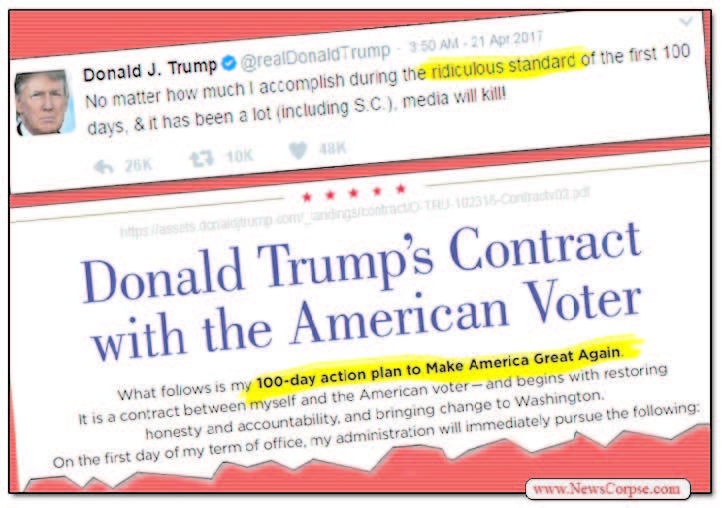
  • Trump’s first hundred days; Democratic voices have slowed presidential recklessness down

    Trump’s first hundred days; Democratic voices have slowed presidential recklessness down

    The American presidency remains undoubtedly the most powerful office in the world. The man who sits in the Oval Office can mug anyone of his happiness. The relief, if any, of these first hundred days is Trump has not been allowed to be reckless. Institutional constraints, liberal pieties and a vigorous media have combined to subject him to the rites of scrutiny and accountability. And, this should be a matter of enormous satisfaction to democratic voices and forces even beyond the United States”, says the author – Harish Khare.

    April 29 is Donald Trump’s 100th day in the White House. When on November 8 last year he got himself elected to the office of President of the United States, the rest of the world wondered how could have the Americans opted for this man; how could America – the land of Harvard and Yale, Princeton and MIT, the New York Times, Washington Post, the New Yorker – elect a man who is gratuitously boorish, determinedly anti-intellectual, and just a greedy businessman, with no record whatsoever of any public service? Well, democracies do sometimes produce false and flawed results. Donald Trump assumed charge on January 20th this year. Has he dismantled and destroyed the United States as his detractors feared; or, has he created the kind of global chaos that the world capitals had apprehended?Perhaps the first hundred days may be too short a period to allow any definitive conclusions, but it is feasible to believe that the fears of an American meltdown were vastly exaggerated. The curative power of democracy has had its impact.

    Though Donald Trump won the Presidency in November 2016 he did not win the popular vote. Those who did not vote for him thought they had a right to deny him the kind of honeymoon the Presidents are normally granted. The first hundred days have been full of confrontation and cock-ups. Washington’s in-crowd resents him, as it resents anyone who is seen as an outsider, just as it had scorned the Jimmy Carters and the Bill Clintons. On his part, the cantankerous and quarrelsome Trump is not the one to turn the other cheek. He has, in fact, not passed up any chance to throw a brick through his rivals’ glass window.

    Trump is an aberration. The Americans’ sense of disappointment can be traced to the simple fact that these last eight years the United States and the world had got used to a substantive, and at times searing, presidential rhetoric. Nobody has yet accused Trump of eloquence. A distinct sense of shoddiness emanates from the fact that unlike his predecessor, who was often suspected of being too professorial, Donald Trump has positioned himself as a street brawler. And, he has lived up the part, using Twitter as a knuckle-duster, throwing 140-letter punches at rivals at home and abroad.

    Authority in Washington, as per the American constitutional arrangements, is a divided proposition. Presidential effectiveness invariably depends on the White House’s ability to work with different groups, build up consensus, lead a coalition almost on every issue; despite his self-belief as a wonderful deal-maker, Trump has yet to demonstrate the skills and the attitudes needed to work with other institutional players in Washington. Consequently, the others keep snipping at his heels; and, he is happy to bark back. The last hundred days have seen unhappy departures from good presidential manners. This constant brawling and an itch for confrontation have necessarily deprived the President of an aura of respectability.

    Democracies look for a sense of moral authenticity and gravitas in their leaders; there is an implicit need to have confidence in their leaders and to believe that they are being led by an exemplary personality of virtuosity and moral luster. Citizens need to respect their leaders. But Donald Trump refuses to climb on to the pedestal.

    Because he came to office tapping the resentments and frustrations of the American voters with the so-called elites and at the foreigners who had taken away jobs out of the United States, Trump feels he needs to keep his legions’ anger simmering. Unsurprisingly, his very first executive decisions were directed against the immigrants, at least the undocumented ones, but he found himself having to deal with judicial challenges. As if the sense of confrontation with the judicial branch was not enough, the President has thoughtlessly engaged the media in a hit-and-run campaign. All this has not helped the President garner any kind of respectability at home.

    The Americans remain unsure whether the President has satisfactorily insulated his office from his complicated and not-so-honorable business interests; they are definitely not amused that the Trump Family seems to be acquiring so much say in the day-to-day functioning of the presidency. The President remains unconcerned; perhaps his obduracy stems from the fact that he never had a political office before and therefore remains uneducated in the leader’s obligation to appreciate and respect public sensibilities.

    Because Trump has put in place a new culture of disruptive disagreement in the domestic discourse, it is bound to have implications in the United States’ relationship with the world. A President who is not respected at home finds it difficult to earn applause abroad. The domestic combativeness means that President Trump cannot be relied upon to provide and articulate any kind of ideological or political global leadership, an obligation that the American Presidents since Franklin D Roosevelt have invariably discharged.

    Trump came to the Oval Office after accusing the external forces – the Chinese, the Mexicans, the Europeans -of being unfair to the United States and being a cause, direct or indirect, of American economic decline. He promised protectionism and isolationism. He promised to stay at home, refusing to play the global sheriff; he declared himself unimmured of the so-called global architecture; his preference, he declared, would be for bilateral deals and duels.

    Much to the relief of the globalists on the east coast, he, as President, seems inclined to hew the conventional line. He has not stayed home. He has gone and dropped the mother of all bombs in Afghanistan; fired missiles at Syria because the Assad regime was being bad boys; and, this week sent his Vice-President to do a bit of macho-posturing against North Korea.

    The Chinese seem to have sorted Trump out. Demonstrating diplomatic dexterity, they have refused to be provoked but have expressed themselves strongly when it was felt necessary to do so; they have baffled him, practicing simultaneously confrontation, cooperation and cooption.

    The Europeans are no longer alarmed by Trump’s isolationism; he has found some merit in NATO. They realize that they have to put their own house in order and they are relieved that they do not have to deal with Trump’s disruption of the European project. The Russians, on the other hand, are happy to take him for a ride, too.

    The American presidency remains undoubtedly the most powerful office in the world. The man who sits in the Oval Office can mug anyone of his happiness. The relief, if any, of these first hundred days is Trump has not been allowed to be reckless. Institutional constraints, liberal pieties and a vigorous media have combined to subject him to the rites of scrutiny and accountability. And, this should be a matter of enormous satisfaction to democratic voices and forces even beyond the United States.

    (The author is editor-in – chief of Tribune group of publications)


  • Preet Bharara On Why He Was Fired: ‘Beats The Hell Out Of Me.’

    Preet Bharara On Why He Was Fired: ‘Beats The Hell Out Of Me.’

    New York: In his first public appearance since being fired last month, former U.S. attorney of Manhattan Preet Bharara on Thursday, April 7, offered a brutal and sometimes humorous critique of President Donald Trump’s administration, saying that draining “the swamp” requires more than a “slogan.”

    “There is a swamp, a lot of the system is rigged and lots of your fellow Americans have been forgotten and have been left behind. Those are not alternative facts. That is not fake news,” Bharara said during an hour-long speech at the Cooper Union for the Advancement of Science and Art.

    “But I would respectfully submit you don’t drain a swamp with a slogan. You don’t drain it by replacing one set of partisans with another. You don’t replace muck with muck. To drain a swamp you need an Army Corps of Engineers, experts schooled in service and serious purpose, not do nothing, say anything neophyte opportunists who know a lot about how to bully and bluster but not so much about truth, justice and fairness.”

    Bharara, who was appointed by former president Barack Obama, was one of 46 U.S. attorneys asked by the Trump administration to resign last month. The order is not unusual at the beginning of a new administration. But in Bharara’s case it came as a surprise. Trump had asked him to stay after a meeting at Trump Tower in November and Bharara initially was unclear about whether the order to resign applied to him.

    “I was asked to resign. I refused. I insisted on being fired and so I was,” Bharara said Thursday. “I don’t understand why that was such a big deal. Especially to this White House. I had thought that was what Donald Trump was good at.”

    Asked why he was fired, Bharara said: “Beats the hell out of me.”

    During more than seven years on the job, Bharara built a reputation as an aggressive prosecutor willing to go after public officials from both political parties and Wall Street. Bharara indicted more than a dozen prominent New York politicians for malfeasance, including some Democrats, and pursued more than 70 insider trading cases. He won major convictions against terrorists, including the son-in-law of Osama bin Laden, Sulaiman Abu Ghaith.

    But Bharara also had his critics. Some accused him of overreach – he had to dismiss several insider trading cases after an appeals court ruling. Others complained he was not aggressive enough, noting that Bharara did not secure any convictions of big bank CEOs for financial-crisis-era misdeeds.

    Bharara has repeatedly dismissed speculation that he would eventually run for public office, a position he emphasized Thursday.

    “I do not have any plans to enter politics just like I have no plans to join the circus,” he said, “and I mean no offense to circus.”

  • Senate Republicans exercise Nuclear option to confirm Gorsuch

    Senate Republicans exercise Nuclear option to confirm Gorsuch

    WASHINGTON (TIP): Senate Majority Leader Mitch McConnell, R-Ky., set a new precedent in the Senate that will ease the confirmation for President Trump’s Supreme Court nominee Neil Gorsuch on Friday, after 30 more hours of debate on the floor.

    “This will be the first, and last, partisan filibuster of a Supreme Court justice,” said McConnell in a closing floor speech.

    Senate Democrats voted against ending debate on Gorsuch’s nomination on a near party-line vote, leaving Republicans shy the 60-vote hurdle required by Senate rules to move on to a final confirmation vote.

    Democrats opposed Gorsuch for a variety of reasons, including his conservative judicial philosophy, dissatisfaction with his answers during his confirmation hearings and a simmering resentment towards McConnell’s decision to block any consideration of President Obama’s nominee Merrick Garland last year.

    “We believe that what Republicans did to Merrick Garland was worse than a filibuster,” said Senate Minority Leader Charles Schumer, D-N.Y.

    So, McConnell then, as promised, used the power of his position and with all of his GOP colleagues lined up behind him, to essentially change the rules of the Senate – to lower that threshold on Supreme Court nominations to end debate from 60 to 51 votes. The change did not affect the legislative filibuster.

    McConnell made a point of order that ending debate on the nomination only requires a simple majority. The motion was not sustained by the chair because Senate rules required 60 votes, so McConnell then made a motion to overturn that ruling. And once that motion passed on a party-line vote, the Gorsuch nomination only needed 51 votes to clear the hurdle.

    That mild-sounding parliamentary maneuver has the most destructive nickname, “the nuclear option,” because it contains sweeping impact on the Senate, President Trump and all of his successors -and the nation as a whole.

    By essentially eliminating the filibuster for Supreme Court nominees – an extension of the 2013 nuclear option triggered by then-Senate Majority Leader Harry Reid, D-Nev., for all lower court and executive branch nominees – all presidential nominees will now face a far easier path navigating through the Senate confirmation process. It also could make it easier for presidents to appoint more overtly partisan justices to the Supreme Court. The change will also test the character of the Senate and the people who serve in it, and lay bare whether the upper chamber is slowly lurching towards becoming more like the majority-driven and reactionary House of Representatives, where the minority party has little substantive role.

    Opponents of easing the filibuster warn that the next and likely step is to eliminate the legislative filibuster, which allows any one senator to hold up a piece of legislation and requires a 60-vote threshold to break the logjam and move such a bill forward. Critics of the filibuster say the maneuver is abused and used so regularly that it has rendered the Senate incapable of acting on even routine legislative matters.

    The filibuster and the rights it gives to individual senators and the minority party are reasons why the Senate has long considered itself “the greatest deliberative body in the world.”

    But the use of filibusters and the polarization between the two parties have dramatically increased in the past two decades, making it harder and harder for the Senate to reach bipartisan consensus even on matters like the annual 12 spending bills.

    “Today’s vote is a cautionary tale about how unbridled partisan escalation can ultimately overwhelm our basic inclination to work together, and frustrate our efforts to pull back, blocking us from steering the ship of the Senate away from the rocks,” Schumer said.

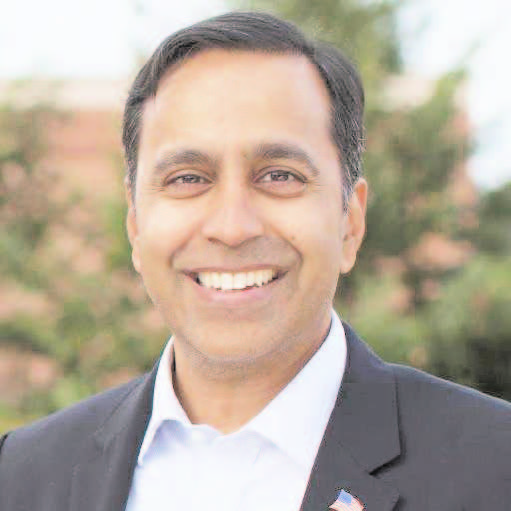
  • Indian American Congressman Raja Krishnamoorthi Denounces Trump’s Executive Order Rolling Back American Commitment to Growing Green Technology Sector

    Indian American Congressman Raja Krishnamoorthi Denounces Trump’s Executive Order Rolling Back American Commitment to Growing Green Technology Sector

    WASHINGTON (TIP): Indian American Congressman Raja Krishnamoorthi denounced President Trump’s executive order eliminating President Obama’s climate-change protections as an attack on the growing green economy and as another example of the Trump administration’s effort to govern by decree. Krishnamoorthi is the author of the Executive Order Transparency Act, which would require executive orders to be posted to the White House website seventy-two hours in advance of signing, to reveal their contents. The Congressman also introduced H. Res. 85, a resolution in support of the United States continuing its Paris Agreement commitments to address climate change and develop clean energy.

    “Through this sudden and reckless order, the Trump administration has continued to cede American leadership in green technology while endangering our environment and ambushing our economy in the process,” Krishnamoorthi said.

    “The need to deal with climate change is imperative, but by doing so, we can also lead the world in the development of green technology. That is why I introduced a resolution specifically calling for our country to continue to address climate change and to embrace the new economic developments that come with it. Through rolling back these environmental protections, President Trump has allowed other nations to lead on this vital technology.”

    “I’ve also introduced legislation to push back against the White House’s efforts to ambush the country with radical overnight orders by requiring executive orders to be disclosed three days before their signing. By issuing this order so suddenly and without providing warning to the necessary Agencies, the administration has left clean energy and green technology firms to face a suddenly more hostile business environment for no discernible advantage”, he further added.

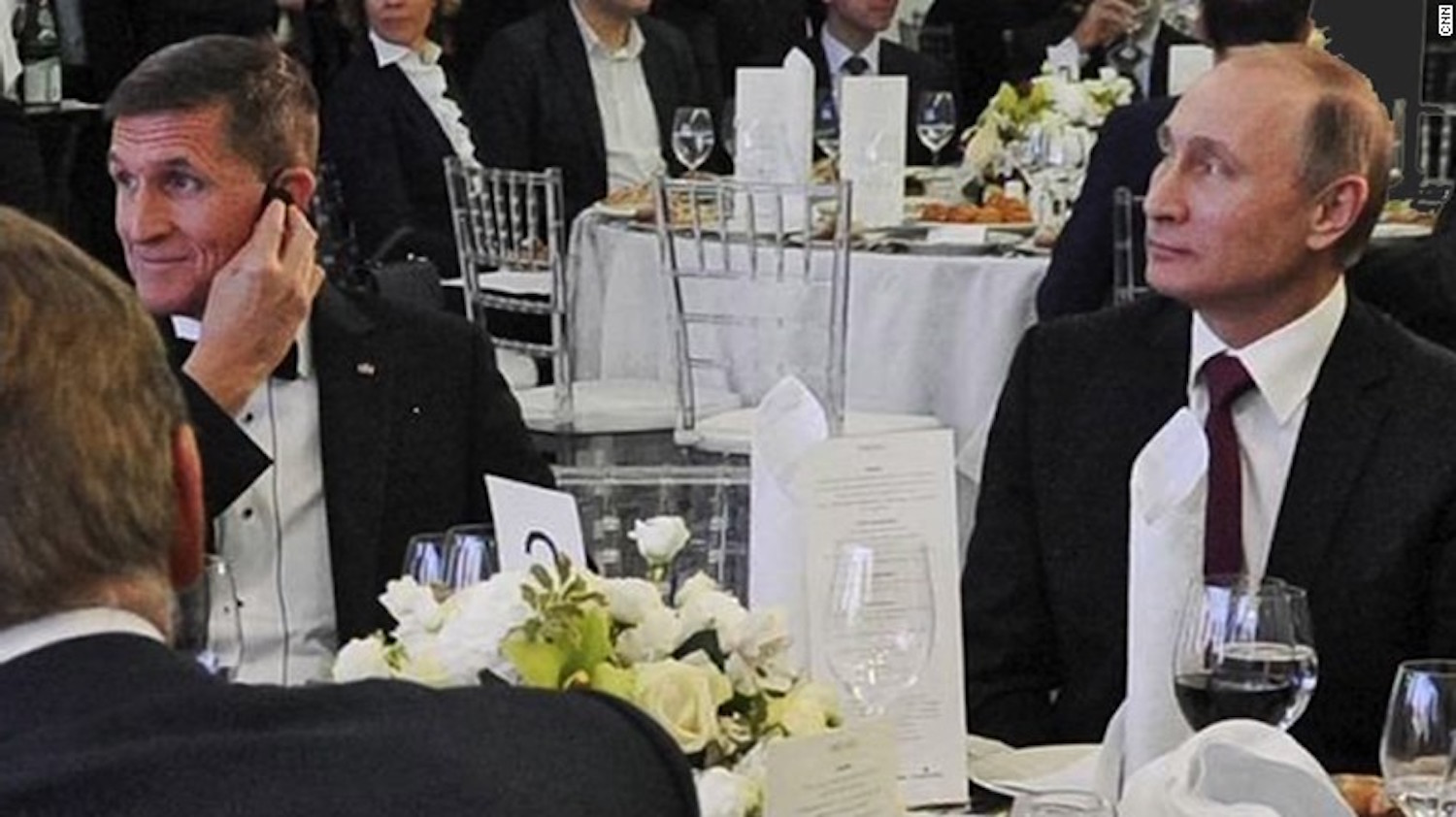
  • Trump’s discredited NSA Michael Flynn offers to testify in exchange for immunity

    Trump’s discredited NSA Michael Flynn offers to testify in exchange for immunity

    Flynn resigned in February, barely a month after he was appointed NSA, after it was reported that he misled White House staff on his interactions with Russia

    Not entirely unexpectedly,President Trump’s former National Security Adviser Michael Flynn has reportedly told the FBI that he is willing to testify about the Trump campaign’s potential ties to Russia, in exchange for immunity from prosecution, the Wall Street Journal reported.

    Flynn resigned in February, after it was reported that he misled White House staff on his interactions with Russia and had discussed sanctions with Russian ambassador Sergey Kislyak ahead of President Trump’s inauguration.

    The Journal reported, citing officials familiar with the matter, that the FBI and the House and Senate Intelligence committees that are investigating Russia’s attempts to interfere in the U.S. election have not taken Flynn’s lawyers up on the offer.

    Flynn’s lawyer said in a statement that “General Flynn certainly has a story to tell, and he very much wants to tell it, should the circumstances permit.”

    “Notwithstanding his life of national service, the media are awash with unfounded allegations, outrageous claims of treason, and vicious innuendo directed against him. He is now the target of unsubstantiated public demands by Members of Congress and other political critics that he be criminally investigated,” Flynn’s lawyer Robert Kelner said in a statement.

    “No reasonable person, who has the benefit of advice from counsel, would submit to questioning in such a highly politicized, witch hunt environment without assurances against unfair prosecution,” he added.

    Kelner said there have been discussions with the House and Senate Intelligence panels.

    Flynn spoke with Kislyak multiple times during the transition, including on Dec. 29, the day then-President Obama retaliated against Moscow for its hacking of Democratic political groups and individuals, which intelligence agencies say was done to aid Trump’s campaign.

    Trump’s former campaign chairman Paul Manafort, whose ties to Russia have been under scrutiny, and son-in-law Jared Kushner earlier this week volunteered to be interviewed by the House Intelligence Committee. Former aides Roger Stone and Carter Page, who have also been in the spotlight in the Russian investigations, have also offered to talk with the committees -but none with any conditions of immunity.

  • Ro Khanna’s take on Trump’s Budget Proposal – Its “Dumb” & “Inhumane”

    Ro Khanna’s take on Trump’s Budget Proposal – Its “Dumb” & “Inhumane”

    Washington:  Indian-American Congressman Ro Khanna has termed as “dumb” some of the budget proposals of US President Donald Trump and described the move to cut foreign aid as “inhumane”.

    Khanna, the first-time Democratic lawmaker elected to the House of Representatives from a Congressional District in California, hoped that the ruling Republican party, which has majority in both the House and the Senate, would work against passage of the budgetary proposals of Trump.

    “I am really concerned about the community block grants, the USD three billion cut. It is shocking to me given someone campaigned on America first, building American cities. Here USD three billion that goes to building American cities, transportation, infrastructure, job training.

    “I cannot think of a more a dumb proposal than frankly than cutting that. Hopefully the Republicans will push back on that,” he told TYT Politics news YouTube channel yesterday.

    Khanna said he is concerned that the Republicans may not push back on foreign aid, given that the White House has proposed a massive budgetary cut in it.

    “Gorge Bush, I disagreed with about everything Bush/Cheney did. The one thing he did that we should all give him credit for is he helped save people in Africa with HIV. We put billions of dollars in foreign aid to help people with the antiviral drugs and we are going to cut that. That is so inhumane. So I think defending the foreign aid budget, which is less than one per cent, which is going to humanitarian causes,” Khanna said.

    “One of the things that annoyed me so much about Trump’s speech was when he said, ‘Well, it is America’s national interest and America first, and all nations follow their self- interest’. I thought the whole idea about American exceptionalism is we are not all nations. Yeah, other nations just follow their national interest, we care about morality.

    We care about humanity. That is what makes America exceptional, so we should care about the moral case, about what we are going to do for other countries,” he said.

    Alleging that the Republicans want to dismantle the New Deal Coalition, Khanna said this is the reason why they are “so much allowance” to Trump.

    “You talk to members of Congress and they do not agree with everything he says even Republicans. They are as embarrassed. But why do they give him such a pass? Why are not they speaking out? It is because he is helping achieve their vision, which is the dismantling of the administrative state.

    The dismantling of the New Deal in a way that even Ronald Reagan did and so they are saying, ‘Okay, we are going to make the bargain with the devil’. He is giving us what we want. Let us ignore everything else,” he said.

    Commenting on the Democratic party’s defeat, he said the party leadership have to come out with an economic platform that would appeal to people in states like Michigan, Ohio, Arkansas, Kentucky and places that they lost.

    “We have got to be willing to take a risk on something bold. I think that is really where the frustration with the base is, is they see the same type of incrementalism. It is not just a messaging problem. It is not just okay with we use some different word, or George Lakoff, we have the wrong frame. It is a vision problem. It is a substance problem. They are hurting,” Khanna said.

    He said globalization has eviscerated in part the middle class, and the money has gone to corporate interest.

    “The money has gone to CEOs. They feel that their wages have stagnated since 1979 to today for most middle-class families. The cost of healthcare has gone up. The cost education has gone up. Why would not you be upset? Why would not you be angry? They do not see the Democratic Party having done anything for them,” he said.

    Khanna said there is a stagnation of ideas in the Democratic party and there is need for a new vision.

    “We need people who are going to put out the bold ideas for the Democrats, just like Paul Ryan and Newt Gingrich and others did for the Republicans. Barry Goldwater, Reagan, they moved the Republican Party. We need that same energy. I had said somewhat facetiously but I believe it, let us fire all the Democratic consultants. Put Robert Reich, Stephanie Kelton and Paul Krugman in a room and they do a hell of a better job coming up with their agenda,” he said.

    Responding to a question, Khanna said American democracy is extraordinary.

    “I think that American democracy is still extraordinary. My own story: I am of Hindu faith, parents immigrated, was born in Philadelphia, I am 40 years old, I represent a district which is the most economically successful district in the world with Apple and Google,” he said.

    “There is an openness to the American political system that is extraordinary for all its flaws. That is what I hope people will understand that they do not feel disenfranchised.

    If the Democratic Party is the vehicle, great. If that is not the vehicle, go protest, go run as a third-party, but be engaged,” Khanna added.

  • FBI Director Comey confirms investigation into Russian ties to Trump campaign

    FBI Director Comey confirms investigation into Russian ties to Trump campaign

    The FBI has information that indicates associates of President Donald Trump communicated with suspected Russian operatives to possibly coordinate the release of information damaging to Hillary Clinton’s campaign, says a CNN report, claiming US officials told CNN.

    “This is partly what FBI Director James Comey was referring to when he made a bombshell announcement Monday, March 20, before Congress that the FBI is investigating the Trump campaign’s ties to Russia, according to one source”, says the CNN report.

    CNN report further says: “The FBI is now reviewing that information, which includes human intelligence, travel, business and phone records and accounts of in-person meetings, according to those U.S. officials.

    The information is raising the suspicions of FBI counterintelligence investigators that the coordination may have taken place, though officials cautioned that the information was not conclusive and that the investigation is ongoing.

    “In his statement on Monday Comey said the FBI began looking into possible coordination between Trump campaign associates and suspected Russian operatives because the bureau had gathered “a credible allegation of wrongdoing or reasonable basis to believe an American may be acting as an agent of a foreign power.”

    “The White House did not comment and the FBI declined to comment. Dmitry Peskov, a Kremlin spokesman, said Thursday the Russian government would not comment on information from unnamed sources.

    “This is another piece of information without any sources which can’t be commented on, neither can it be taken as some serious thing,” Peskov told reporters in response to a question about CNN’s reporting.

    “White House press secretary Sean Spicer maintained Monday after Comey’s testimony that there was no evidence to suggest any collusion took place.

    “Investigating it and having proof of it are two different things,” Spicer said.

    “The FBI cannot yet prove that collusion took place, but the information suggesting collusion is now a large focus of the investigation, the officials said.

    “The FBI has already been investigating four former Trump campaign associates — Michael Flynn, Paul Manafort, Roger Stone and Carter Page — for contacts with Russians known to US intelligence. All four have denied improper contacts and CNN has not confirmed any of them are the subjects of the information the FBI is reviewing”. (Source: CNN)

  • Tulsi Gabbard elected co-chair of Congressional Caucus on India

    Tulsi Gabbard elected co-chair of Congressional Caucus on India

    WASHINGTON (TIP): Tulsi Gabbard, the first Hindu lawmaker in the US Congress, has been elected the co-chair of the Congressional Caucus on India and Indian-Americans. She succeeds her Democratic congressional colleague Indian-American Dr Ami Bera.

    Tulsi was elected in 2012 to the United States House of Representatives, serving Hawaii’s 2nd District. She is one of the first two female combat veterans to ever serve in the U.S. Congress, and its first and only Hindu member.

    An advocate for environmental policy, Tulsi was elected to the Hawai ‘i State Legislature in 2002 when she was just 21 years old, becoming the youngest person ever elected in the state. A year later, she joined the Hawai’i Army National Guard to serve Hawai’i and our country. In 2004, Tulsi volunteered to deploy with her fellow soldiers, becoming the first state official to voluntarily step down from public office to serve in a war zone.

    Tulsi served in the U.S. Senate as a legislative aide to Senator Daniel Akaka (D-HI), where she advised him on energy independence, homeland security, the environment, and veteran issues. Tulsi serves on the House Armed Services Committee and House Foreign Affairs Committee where she is a strong advocate for veterans.