Tag: US President Donald Trump

  • The bilateral limits of hype: on India-U.S. relations

    The bilateral limits of hype: on India-U.S. relations

    By Varghese K. George

    But India-U.S. relations will be better off without hype and grand theories, often encouraged by the government. Otherwise, every rescheduling of a meeting will be interpreted as the collapse of ties. Similarly, avoiding the hyperbole could help manage India’s troubles with Pakistan and China better. The U.S. has overlapping interests with China, and India has overlapping interests with both. The trouble with big-chest, small-heart hyper-nationalism in foreign policy is that it also causes short sightedness. The audacity of hype has its limits.”

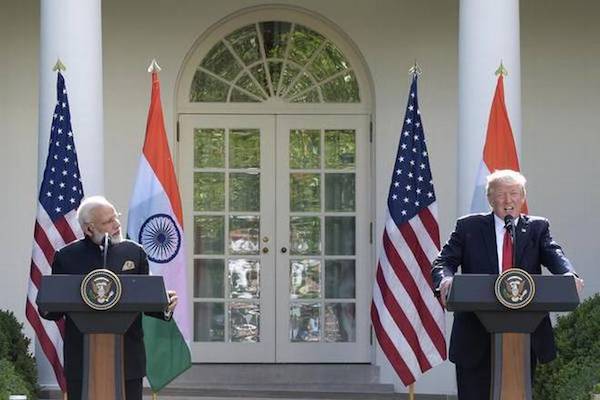
    Prime Minister Narendra Modi and U.S. President Donald Trump have both built their politics on the promise of making their countries great again. Placing India and the U.S., respectively, as leaders on the world stage is the stated objective of their foreign policy. The project of regaining national glory is based on another assumption that they inherited a mess from their respective predecessors. Yet another shared trait is their love for spectacle over meticulous, prolonged and often frustrating pursuit of strategic goals.

    Theatre as strategy

    The postponement of the India-U.S. 2+2 dialogue between the Foreign and Defense Ministers of both countries, that had been scheduled for this week, has to be understood in the context of the similar personality traits of Mr. Trump and Mr. Modi. Hugging Mr. Trump may be a good spectacle for Mr. Modi, but the same may not be true for the former. Mr. Trump has set his eyes on spectacles that suit him. Mr. Trump, still basking in the denuclearization deal that he’s said to have struck with North Korea’s Kim Jong-un, is now looking forward to the next big event: a summit meeting with Russian President Vladimir Putin. His every move on the global stage enrages his domestic political opponents and the professional strategic community alike and he is happy, as this keeps his political base constantly on the boil.

    North Korea, Syria, Afghanistan, trade deficit, and all global challenges before America are the faults of his predecessors, he repeatedly tells supporters. Most recently, at the G7 summit in Canada in June, he declared: “I blame our past leaders for allowing this to happen (trade deficits) …You can go back 50 years, frankly.” Such rhetoric may sound familiar to Indians. In Mr. Trump’s war on the legacy of all Presidents before him, India is on the wrong side. The remarkable growth in India-U.S. relations since the turn of the century had been nurtured by three U.S. Presidents, Bill Clinton, George W. Bush and Barack Obama, two Democrats and one Republican who have all been the target of Mr. Trump’s ire. India neither promises him the opportunity of a spectacle nor offers the grounds for destructing the legacy of a predecessor. So, he told Secretary of State Mike Pompeo to deal with North Korea and Russia, and 2+2 with India could wait. “Nobody wakes up in DC daily thinking of India,” says a former U.S. ambassador to India, pointing out that 16 months into the new administration, there is no Assistant Secretary of State for South and Central Asia in the State Department.

    Impact on ties

    To buttress one’s own claim to be a trailblazer by denying the achievements of predecessors may be good political tactics for these leaders but trying to wish away history itself is not a sustainable strategy. Against the backdrop of a programmatic negation of history in both countries, Mr. Trump’s bursts of unhinged rhetoric against China and Pakistan lend themselves to easy and convenient interpretations by supporters of improved U.S.-India ties as moments of enlightenment for the U.S., even as turning points.

    But Mr. Trump cannot undo all the legacy with a magic tweet. U.S. relations with Pakistan and China took shape during the Cold War. Pakistan might be the longest ally of the U.S. after the U.K., first in the fight against communism, and then in the fight against terror that was created in the first fight. China used the Cold War to its own advantage in its ties with the U.S.

    China today threatens the dominance of the U.S., but the America’s security establishment and political elite are obsessed with Russia. India gets caught in that internal American fight too, such as in the case of an American law that now requires the President to impose sanctions on any country that has significant security relations with Russia.

    Mr. Trump sees the challenges posed by China, but not in a manner helpful for India. For, India and China are in the same basket for Mr. Trump on many issues that agitate him. He has repeatedly mentioned India and China in the same breath as countries that duped his predecessors on climate and trade deals. His administration considers India and China as violators of intellectual property laws, as countries that put barriers to trade and subsidize exports and use state power to control markets. The nationalists in the Trump administration, including U.S. Trade Representative Robert Lighthizer, Commerce Secretary Wilbur Ross and White House National Trade Council Director Peter Navarro are all gunning for China, and India is in the same firing line. Many Americans who think that China took the U.S. for a ride — many Democrats among them — suspect that India is trying to do the same thing.

    But there are two constituencies in the U.S. that promote India against China: the Pentagon and the U.S. arms industry. This works to India’s favor. While the Obama administration could not overcome State Department objections to offer India even unarmed drones, the Trump administration has done so, offering armed drones. Here, Mr. Trump is not guided by any grand theories of ‘rule-based order’, etc. that professional strategists talk about, but by the opportunity to sell.

    Given Mr. Trump’s views on trade, American companies that used to argue China’s case are now guarded in their approach. Still, companies such as General Motors and Ford have come out against a trade war with China. This has implications for India too. American companies that eye the Indian market are allies in the pushback against Mr. Trump’s nationalist trade policies. Mr. Modi has realized this dynamic that puts India and China in the same corner in Mr. Trump’s perspective — and that significantly explains his Wuhan summit with Chinese President Xi Jinping, the third big leader who is gaming for the glory of his country.

    War against legacy

    The enlightenment that Mr. Trump purportedly brought on America’s Af-Pak policy also appears to have been short-lived. If one looks at the tough messages from Nikki Haley, U.S. Ambassador to the UN, in New Delhi recently on Pakistan and Iran, it is clear where the political priorities of the Trump administration lies. Here again, Mr. Trump is determined to gut his predecessor’s legacy, a key component of which was rapprochement with Iran. The war in Afghanistan is the worst optics for Mr. Trump’s showman politics, and his administration’s approach has been to sweep it under the carpet. The Pentagon has restricted release of data on the war, but a report last month paints a picture of a deteriorating situation. The U.S.’s ability to arm-twist Pakistan has been limited anyway, and Mr. Trump’s determination to turn the screws on Iran makes it tougher. National Security Adviser John Bolton, who had advocated bombing Iran, believes that a hardline policy against Pakistan is not desirable.

    All told, Mr. Trump might accept Mr. Modi’s invitation to be the chief guest at the 2019 Republic Day parade just ahead of the Lok Sabha campaign, triggering another round of commentary on their ‘body language’ and ‘chemistry’. A series of significant defense purchases and agreements could be concluded in coming months. But India-U.S. relations will be better off without hype and grand theories, often encouraged by the government. Otherwise, every rescheduling of a meeting will be interpreted as the collapse of ties. Similarly, avoiding the hyperbole could help manage India’s troubles with Pakistan and China better. The U.S. has overlapping interests with China, and India has overlapping interests with both. The trouble with big-chest, small-heart hyper-nationalism in foreign policy is that it also causes short sightedness. The audacity of hype has its limits.

    (The author is an assistant editor with The Hindu. He can be reached at varghese.g@thehindu.co.in)

    (Source: The Hindu)


  • EPA Administrator Scott Pruitt Resigns in the face of ethics issues

    EPA Administrator Scott Pruitt Resigns in the face of ethics issues

    WASHINGTON(TIP): Scott Pruitt, the administrator of the Environmental Protection Agency who was key to implementing President Trump’s conservative agenda but came under intense scrutiny for a series of questionable ethical decisions, resigned Thursday, July 5 afternoon. Pruitt’s deputy at the EPA, Andrew Wheeler, will serve as the agency’s acting administrator starting Monday, President Trump said in a tweet.

    “I have no doubt that Andy will continue on with our great and lasting EPA agenda,” Mr. Trump tweeted. “We have made tremendous progress and the future of the EPA is very bright!” 

    Donald J. Trump

    @realDonaldTrump

     I have accepted the resignation of Scott Pruitt as the Administrator of the Environmental Protection Agency. Within the Agency Scott has done an outstanding job, and I will always be thankful to him for this. The Senate confirmed Deputy at EPA, Andrew Wheeler, will…

    3:37 PM – Jul 5, 2018

    Pruitt had been the subject of a seemingly endless deluge of stories about his behavior and spending practices. It began earlier this year when it was revealed that Pruitt had rented a room at a favorable rate from a well-connected energy lobbyist. Pruitt’s lavish spending on his own security then came under scrutiny, as did his decision to install a $43,00 private phone booth in his office. There were also allegations that Pruitt had created a toxic professional atmosphere at the EPA that penalized his critics.

    Pruitt said his decision to leave the EPA was a hard one in his resignation letter to Mr. Trump.

    “It is extremely difficult for me to cease serving you in this role first because I count it a blessing to be serving you in any capacity, but also, because of the transformative work that is occurring,” Pruitt wrote. “However, the unrelenting attacks on me personally, my family, are unprecedented and have taken a sizable toll on all of us.”

    Mr. Trump defended Pruitt Thursday evening while speaking to reporters on Air Force One. He said there was “no final straw” and that he had not requested Pruitt’s resignation.

    “Scott Pruitt did an outstanding job inside of the EPA,” the president said. “We’ve gotten rid of record breaking regulations and it’s been really. You know, obviously, the controversies with Scott — but within the agency we were extremely happy. His deputy has been with me actually a long time. He was very much an early Trump supporter. He was with us on the campaign. He is a very environmental person. He’s a big believer, and he’s going to do a fantastic job.”

    The government had launched numerous investigations and probes into Pruitt’s behavior, although he continued to insist that he had done nothing wrong. At the time of Pruitt’s resignation, the EPA inspector general was looking into his protective service detail, his traveling at taxpayer expense, and the allegedly excessive raises he gave to some members of his staff. Swamped by requests and stretched thin by the sheer number of audits into Pruitt, the EPA inspector general had also agreed to look into his housing arrangements and allegations that he had staff members perform his personal errands, among other issues.

    Pruitt is the fifth member of Mr. Trump’s cabinet to resign or be fired since he took office. The others were former Acting Attorney General Sally Yates, former Health and Human Services secretary Tom Price, former Secretary of State Rex Tillerson, and former Veterans Affairs secretary David Shulkin.

    (Source: CBS News)

  • US-China Trade War Begins

    US-China Trade War Begins

    Beijing vows to strike back against tariffs on US$34 billion worth of Chinese goods

    NEW YORK(TIP): The big question is now that the first shots have been fired, what goods will be affected, who will pay the price and what could happen next?

    China’s Ministry of Commerce, on July 5 (July 6 in China) said China will fight back against the US and report to the World Trade Organisation.

    The remarks were in response to Washington’s decision to impose 25 per cent duties on a similar amount of Chinese imports, which also came into effect on Friday.

    US President Donald Trump had threatened to target another US$400 billion in Chinese products with tariffs if Beijing continued to hit back.

    On top of that, each country has prepared a second tariff list of goods worth about US$16 billion. The effective dates are pending as the office of the US trade representative is in the midst of a public comment period on its list.

    The trade war became official after Trump repeatedly said he wanted to reverse the United States’ massive trade deficit with China, which rose to about US$375 billion last year. That number is US$100 billion higher than China’s own calculation.

    In an updated list published on June 15, Washington dropped many China-made consumer goods, such as TVs and flat panel screens, and added more intermediary products like semiconductors and plastics, after opposition during a public hearing in May.

    The second tariff list, which is still under review, focuses particularly on “Made in China 2025”, a Chinese industrial policy aimed at getting ahead in hi-tech industries. It includes electronic integrated circuits and the machines that produce them.

    Washington has dropped many China-made consumer goods, such as TVs and flat panel screens, and added more intermediary products like semiconductors and plastics to its tariff list. Photo: Reuters

    China struck back in April with a list of US$50 billion worth of US imports, many of which were agricultural products. Beijing later removed US$16.3 billion worth of US aircraft from the list and added more food such as fish and nuts.

    The primary US goods affected are soybeans and vehicles, while it is mostly Chinese industrial goods hit by US tariffs.

    Who bears the brunt of these rounds of tariffs? Eventually consumers.

    Analysts said imposing tariffs on Chinese goods such as semiconductors would eventually increase prices for American consumers because they were key components of electronic products. And it’s not an easy business decision for US manufacturers to shift sourcing after tariffs are in place.

    “Alternative sources do exist for most of the Chinese products on the targeted list, but less expensive products purchased by less affluent consumers are likely to see larger price hikes as manufacturers substitute more expensive parts for Chinese inputs facing tariffs,” Mary Lovely, a senior fellow at the Washington-based Peterson Institute for International Economics, wrote.

    “These consumers may not see much difference in performance due to one higher-quality part, but they are likely to see a difference at the cash register.”

    Chinese consumers, on the other hand, could pay higher prices for imported seafood and fruit.

    It is just the beginning. What happens in the longer run will impact economic policies of many countries across the world.


  • Indian Origin Amul Thapar among Potential Supreme Court nominees to replace Justice Kennedy

    Indian Origin Amul Thapar among Potential Supreme Court nominees to replace Justice Kennedy

    WASHINGTON(TIP): Indian Origin Amul Thapar, 49 is one of the potential Supreme Court nominees to replace Justice Kennedy.

     Amul Thapar, 49, a McConnell favorite, was handpicked by Senate Majority Leader Mitch McConnell to serve as the US attorney for the Eastern District of Kentucky. In 2006, he went on to a seat on the US District Court for the Eastern District of Kentucky.

    Trump nominated Thapar to the 6th US Circuit Court of Appeals in 2017. He was born in Michigan and served in government as well as private practice. In 2007, Thapar was the first American of South Asian descent to be named to an Article III federal judgeship.

    Justice Anthony Kennedy, a longtime member of the Supreme Court and frequent swing vote, announced Wednesday that he will retire, giving President Donald Trump the chance to fill his seat.

    The opportunity will allow Trump to make a major, lasting mark on the nation’s highest court by putting in place a second justice, after his choice to elevate Neil Gorsuch to the Supreme Court last year following the death of Justice Antonin Scalia in 2016.

    Trump, reacting to the news at the White House, said he had spoken with Kennedy earlier Wednesday and asked the outgoing justice about possible contenders to replace him.

    “(We) had a very deep discussion. I got his ideas on things,” Trump said in the Oval Office. “I asked him if he had certain people he had great respect for that could potentially take his seat.”

    During his remarks, Trump pointed to a list of potential picks for the court that he had maintained during the campaign and updated last fall.

    Here are a few names of possible contenders for the vacancy.  Brett Kavanaugh, former Kennedy clerk; Amy Coney Barrett, former Notre Dame professor; Raymond Kethledge, former Kennedy clerk; Mike Lee, Utah senator; and Thomas Hardiman, runner-up for Gorsuch seat.


  • Trump disrupts global governance

    Trump disrupts global governance

    By G Parthasarathy

    India has been at the receiving end of Trump’s economic policies of “America first.” His duties on imports of aluminum and steel have resulted in India taking up the issue with the WTO and imposing reciprocal trade curbs on US exports.

    New Delhi has been at the receiving end of Trump’s economic policies of “America first.” Trump’s duties on imports of aluminum and steel have resulted in India taking up the issue with the WTO and imposing reciprocal trade restrictions on US exports. India’s trade surplus with the US in 2017-18 was around $21 billion, barely 5 per cent of the trade surplus of China. But, the Trump administration would evidently like to end GSP trade preferences, accorded to India since 1974, together with demands that India ends restrictions on imports of American dairy products.

    While Trump is proposing tariffs on some $50 billion of Chinese exports, he also supports special treatment for China, while heaping praise on President Xi Jinping. He intervened to reverse a US Congressional ban on ZTE, China’s manufacturer of Android phones, which accepted that it had violated sanctions, by exports to Iran and North Korea.  The US Commerce Department banned US companies from exporting components essential for ZTE’s survival and brought the company to its knees. Trump, however, stepped in, tweeting that he would work with Xi, to reverse the ban.

    With high-level meetings under way, India should respond to Trump’s policies by being judicious in extending support, while seeking a quid pro quo for its actions, which support US policies. Any significant purchase of defense equipment, or civilian transport aircraft should be linked to specific political, economic and security gestures from Washington, while ensuring that US actions do not undermine the India-Russia defense relationship.

    We need to work with Russia and China so that Washington does not take us for granted. Defense Secretary Mattis and Secretary of State Pompeo appear to have a realistic understanding of India’s policies, potential and imperatives.

    We need to keep a close watch on US policies on Afghanistan, where an effort appears under way to mainstream the Taliban. This should not lead to politically equating the Taliban with the legitimate Afghan Government.

    The annual summit meetings of the G7 grouping are marked by camaraderie. They make a significant contribution to issues of global governance, ranging from environment, trade and investment, to peace, stability and security. Trump shook this record by his behavior during and after the G7 summit in Vancouver earlier this month. The summit was marked by simmering tensions on trade relations, with the US unilaterally imposing additional tariffs on imports of steel and aluminum, from its G7 partners. Differences on this issue led to Trump disowning the Summit Declaration he had signed and calling Canadian Prime Minister Trudeau: “Dishonest and Weak.” Outraged European leaders joined ranks, taking exception to Trump’s comments, while Japanese Prime Minister Shinzo Abe, already shaken by Trump’s U-turns on China and North Korea, maintained a silence.

    He revoked US participation in the “Trans-Pacific Partnership”, which sought to integrate the economies of the Asia-Pacific, ranging from Canada and the US to Japan, South Korea and ASEAN markets. China, now pushing for a “Comprehensive Economic Cooperation” agreement with ASEAN and its dialogue partners like India, Japan and Australia, will only increase its economic domination of the Indo-Pacific, by these American actions.

    Other destabilizing Trump policies include his determination to scuttle the North American Free Trade Agreement, his ban on travel to the US by people from six Muslim countries, his imposition of nuclear sanctions on Iran and his insulting labelling of Haiti and countries in Africa as “shithole countries,” which provoked formal protests by six African countries.

    Trump has created new tensions by recognizing the whole Jerusalem as part of Israel, ignoring the global consensus that East Jerusalem would be under Palestinian control in any peace settlement in West Asia.

    Trump’s impetuously ignored the security concerns of key allies South Korea and Japan and went ahead with a summit meeting in Singapore, with North Korean leader Kim Jong Un, whom he had earlier spoken of in derogatory terms. Trump expressed his admiration for the North Korean leader and cancelled longstanding military exercises with South Korea, thereby implicitly accepting the assurances of the North Korean leader that he would end his country’s nuclear weapons program. These actions were ill advised, naïve and undermined the trust that South Korea and Japan had reposed in the US. There is little prospect of North Korea discarding its nuclear arsenal anytime soon. Moreover, one wonders if Shinzo Abe can afford to remain a mere spectator, with China and North Korea possessing missile and nuclear arsenals, with US acquiescence.

    Interacting with well-informed journalists and analysts in the US during a stay at the US west coast, where people voted massively against Trump, one feels that a larger section of people now appear more indulgent towards religious bigotry and racism. There is appreciation of the fact that not only did Trump receive nearly 63 million votes in the presidential elections, but his economic policies, particularly on tax relief, have been accompanied by reduced unemployment, with a booming stock market.  Acceptance and support, particularly amongst small-town white Americans, of Trump’s immigration policies, is evident. A large number of Americans, especially in the mid-west and south, feel that far too much of their national resources has been spent on involvement beyond the country’s borders and that there is, therefore, merit in Trump’s slogan of “America First”. Aspirants for quick “green cards” and those with unrealistic expectations of continuing American “liberalism,” would be well advised to bear this in mind.

    (The author is a career diplomat)

  • Deferment of Indo-US 2+2: Turbulence in ties or inconvenient scheduling?

    Deferment of Indo-US 2+2: Turbulence in ties or inconvenient scheduling?

    It was a strange way to announce the postponement of the first-ever simultaneous meeting of the Indian and American defense and external affairs ministers. US Secretary of State Mike Pompeo broke the news to Foreign Minister Sushma Swaraj after UN Permanent Representative (UNPR) Nikki Haley touched down in New Delhi to soothe feathers ruffled by a burgeoning trade dispute and attempts to circumscribe New Delhi’s freedom to buy oil and weapons from Iran and Russia, respectively. The first postponement in April was understandable — Trump had recently fired his Secretary of State and his replacement was going through confirmation hearings before the US Congress. The latest deferment lends itself to many interpretations and — since Pompeo did not elaborate — to negative inferences about the state of play of US-India relations.

    Nothing much could be deduced from the public statements by Nikki Haley who largely made boiler plate announcements that no one can find fault with. The 2+2 format, borrowed from the Japanese diplomatic blue book, is supposed to speed up strategic and security partnerships. But in actual practice the focus is narrower: all the 2+2 formats currently in vogue are aimed at containing China or Russia or both. And PM Modi crossed a Rubicon by parleying with Presidents of both these countries in settings that lend themselves to elaborate deal making and clearing of the air.

    The US would have rightly sensed that India will be hard placed to accommodate its security and defense requirements after it asked India for a complete ban on Iranian oil by November 4 and threatened its contracts for Russian military hardware. Both directives are anathema to India because of its long-standing policy of not putting all its energy and military eggs in a single basket. Trade disputes and Indian immigration woes are the other irritants. In this stalemate, both sides need sustained, creative and energetic diplomacy that gives India the freedom to pick its partners. The nature of Indo-US ties does not lend itself to permanent estrangement. But the moot question is whether a distracted and depleted US diplomacy is up to the task.

  • Crucial ‘2+2’ Dialogue Postponed: Strain in India-US Ties?

    Crucial ‘2+2’ Dialogue Postponed: Strain in India-US Ties?

    PM Narendra Modi knows why US deferred talks with India: Nikki Haley

    WASHINGTON(TIP): US abruptly postponed the crucial ‘2+2’ dialogue with India scheduled on July 6, for the second time in a row. US Ambassador to UN Nikki Haley, in Delhi, however said there’s a good reason to delay talks and PM Modi knows about it. But questions are being asked if India-US ties are facing a rough weather and are cracks emerging in India-US relationship?

    US Ambassador to United Nations, Nikki Haley, has said that Prime Minister Narendra Modi knows the reason for the Donald Trump administration cancelling 2+2 dialogue which was scheduled to be held in Washington on July 6 and 7.

    Speaking to NDTV, Haley said that the talks were cancelled for reasons that had nothing to do with India, adding that the world would soon be informed about the same. She added that Prime Minister Modi is aware of the “exact reason”, which is a “very good” one.

    Dismissing reports of differences between the two countries of rescheduling of the talks, Haley said that the relationship between India and US has “never been stronger”. Her remarks come a day after the US conveyed to India that it had postponed the 2+2 dialogue scheduled to be held in Washington next week, due to “unavoidable reasons”.

    Earlier, Haley had said that the US wants to take bilateral ties with India to the next level, adding that US President Donald Trump shares Prime Minister Narendra Modi’s vision of nations pursuing growth “free and fearless in their choices” in the Indo-Pacific region.

    Responding to a question, she also talked about the contentious issue of immigration amid an uproar over detention of scores of people in the US, including Indians, for illegally entering the country. America is a country of immigrants, but it cannot allow illegal immigration in the wake of the challenge of terrorism, Haley said.

    India and the US enjoy a natural friendship that is based on their shared values and interests, the 46-year-old Indian American said. “The Trump Administration seeks to take the US-India relationship to the next level; to build a strategic partnership rooted in our common values and directed toward our common interests,” she said.

    Haley said India was a state with advanced nuclear technologies widely accepted around the world because it is a democracy and continues to be a responsible leader. Noting that in the last couple of years, India has joined three major nonproliferation groupings, she said the US also fully supports India’s membership bid for the Nuclear Suppliers Group. “India continues to demonstrate it is a responsible steward of its nuclear technology,” she said.

    (With inputs from PTI)

  • Trauma at the border

    Trauma at the border

    As part of its “zero-tolerance” approach to dealing with undocumented migrants, the Donald Trump administration in the U.S. has been separating parents and children within migrating families, leading to outrage over the burgeoning number of minors lodged in foster care. Reports suggest that between October 2017 and May 2018 at least 1,995 children were separated from their parents, with a significant majority of the instances between April 18 and May 31. In recent weeks, disturbing images and videos have emerged of screaming toddlers in the custody of Customs and Border Protection personnel, or in what appear to be chain-link cages in facilities holding older children, as well as one disturbing audio allegedly of wailing children at one such unit. Democrats and Republicans alike have expressed deep concern about the ethics of using children, facing trauma from separation from their parents, to discourage further undocumented border crossings. Mr. Trump, however, has refused to accept sole responsibility for the family separations. Instead, he took to Twitter to blame his Democratic opponents for not working with Republicans to pass new immigration legislation to mitigate the border crisis.

    His response begs two questions. First, why, when both Houses of the U.S. Congress are under Republican control, is Mr. Trump unable to garner the numbers to pass legislation to end family separations? The answer is that poignantly tragic though the fate of these broken families may be, the issue as such has failed to garner even as much bipartisan momentum on Capitol Hill as Mr. Trump’s rescinding of the Obama-era immigration order on Deferred Actions for Childhood Arrivals. The second question is whether the policy of separating migrant families is new, or if there was indeed “bad legislation passed by the Democrats” that supports this action, as Mr. Trump claims. The answer is that both are true. Mr. Trump’s critics are correct in that there is no single U.S. law requiring families to be separated. Rather, what the White House referred to as “loopholes” in legislation are two legal provisions: a law against “improper entry by aliens” at the border, and a decree known as the Flores settlement. The first is a federal law that makes it impossible to summarily deport certain vulnerable categories of migrants, such as families, asylum-seekers and unaccompanied minors. To get around this the administrations of George W. Bush and Barack Obama adopted the policy of “catch and release” — whereby these migrants would be released from custody pending their deportation case adjudication. Family separation was unnecessary at that time, but under the Trump administration’s zero-tolerance approach, all undocumented migrants are charged in criminal courts. Here the Flores settlement applies, because it limits to 20 days the length of time migrant children may be held in immigration detention. While their parents face charges, the children are transferred to a different location, often with devastating consequences for their families. This is unspeakable cruelty.

    (The Hindu)

  • An improbable friendship

    An improbable friendship

    “Donald Trump and Kim Jong-un have stunned the world. They may yet surprise us by pulling off a détente.”

    “With Mr. Trump and Mr. Kim, it is difficult to predict how the process will unfold but it is a new opening. One can almost visualize Mr. Trump and Mr. Kim telling each other as they said their goodbyes in Singapore: “I think this is the beginning of a beautiful friendship.”

    By Rakesh Sood
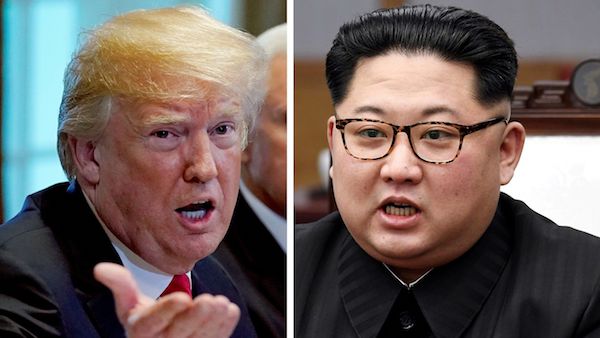
    “Truth is stranger than fiction, but it is because Fiction is obliged to stick to possibilities; Truth isn’t,” wrote Mark Twain. Nothing proves it better than the summit between U.S. President Donald Trump and North Korean Supreme Leader Kim Jong-un in Singapore on Tuesday. No reality TV show could have scripted an episode with greater suspense and drama than what the two leaders successfully imparted to their meeting.

    Mr. Trump, the 72-year-old leader of one of the world’s oldest democracies, an $18 trillion economy with a 1.3 million strong military, of whom 28,500 troops are deployed in South Korea, and Chairman Kim, at 34 the third-generation leader of a totalitarian state with an impoverished economy estimated at less than $40 billion and a military force of 1.2 million with a newly acquired nuclear capability, make for an unusual couple. And yet, as Mr. Trump said, “From the beginning we got along.” Describing Mr. Kim as “very talented”, he recalled with a degree of empathy that the North Korean had faced a challenge when he took over his country at just 26 years.

    Art of making friends

    Less than a year ago, the heightened rhetoric on both sides had led to growing concerns about the possibility of a nuclear exchange as North Korea ramped up its nuclear and missile testing programs. In September 2017, it conducted its sixth nuclear test, declaring it a thermonuclear device, a claim that has been disputed. However, with a yield of 100-300 kt (kiloton), it marked a significant improvement from earlier tests. Four of the six tests have been undertaken by Mr. Kim with a view to miniaturizing the device to fit a missile warhead.

    Simultaneously, he accelerated the missile program conducting over 80 flight tests during the last seven years, compared to 16 undertaken by his father from 1994 to 2011. At least three new missiles have been successfully tested and inducted. These include the Musudan (around 3,500 km), Hwasong 12 (4,500 km) and Hwasong 14 (around 10,000 km). Last November, Hwasong 15 was tested with a range estimated at 13,000 km, making it clear that North Korea was close to developing the capability to target the U.S. mainland.

    Mr. Trump warned North Korea with “fire and fury like the world has never seen”. North Korea responded by threatening to hit Guam “enveloping it in fire”. Mr. Trump announced that “military solutions are now fully in place, locked and loaded”. The UN Security Council met repeatedly, tightening economic sanctions on North Korea. Mr. Trump described Mr. Kim as a “rocket man on a suicide mission for himself and his regime” while North Korea vowed to “tame the mentally deranged U.S. dotard with fire”. Russia and China appealed for restraint, proposing a “freeze for freeze”, calling on the U.S. to stop military exercises with South Korea in return for North Korea halting its nuclear and missile testing.

    Beginnings of a thaw

    The situation began to change with Mr. Kim’s New Year’s address indicating that North Korea had achieved its nuclear deterrent capability and offering a new opening in relations with South Korea as it prepared to host the Winter Olympics in February. Things moved rapidly thereafter. The two Korean teams marched together at the opening ceremony and the presence of Mr. Kim’s sister, Kim Yo-jong, added a dash of bonhomie to the soft diplomacy.

    Two senior South Korean officials visited Pyongyang in early March. Over a long dinner conversation, Mr. Kim indicated continued restraint on testing and willingness to discuss denuclearization of the Korean peninsula if military threats to North Korea decreased and regime safety was guaranteed. The testing restraint was formally declared on April 21, a week before the summit between the two Korean leaders on April 27 in Panmunjom, which was acclaimed a success.

    The U.S. was kept fully briefed by South Korean officials and in early March Mr. Trump indicated readiness to meet Mr. Kim, leading to heightened speculation about mismatched expectations all around. Even after two visits by Mike Pompeo (first as CIA chief and then as Secretary of State) and the release of three Americans sentenced for spying, there were hiccups when National Security Adviser John Bolton held up the “Libyan model” for North Korea’s disarmament and the U.S. launched air combat exercises together with South Korea. North Korea responded angrily. The summit was put off, followed by an exchange of conciliatory letters between the two leaders amid mounting suspense, and on June 1 the summit was reinstated.

    There have been previous attempts by the U.S. to address concerns regarding North Korea’s nuclear program. The first was the 1994 Agreed Framework after North Korea threatened to withdraw from the Nuclear Non-Proliferation Treaty (NPT). This was annulled by the Bush administration in 2002 with the ‘axis of evil’ speech. Consequently, North Korea withdrew from the NPT. The Six Party talks (second round) were initiated in 2004, resulting in a joint statement the following year reiterating commitment to denuclearization, with a peace treaty and security guarantees to be concluded. The process collapsed when the U.S. imposed new sanctions, and in 2006 North Korea conducted its first nuclear test.

    Changed situation

    Since then, the situation has changed. The old process is dead; North Korean capabilities have grown dramatically, increasing anxiety especially in South Korea and Japan and Chinese worries about U.S. deployment of missile defense in South Korea. There are challenges too. The U.S. would ideally like complete, verifiable and irreversible disarmament as would Japan. North Korea seeks regime legitimacy and regime security together with sanctions relief while reducing its dependency on China. China would like to prolong the process to ensure its centrality. And South Korea would like to lower tensions while retaining the American presence. Reconciling these needs time and sustained dialogue.

    The Joint Statement in Singapore is shy on detail but carries political promise. Instead of obsessing on the nuclear issue, it reflects clear recognition that a new beginning in U.S.-North Korea relations is possible only by replacing the 1953 Armistice Agreement with a permanent peace treaty and that regime security guarantee for North Korea is a prerequisite for denuclearization. Mr. Trump has accepted that the denuclearization process will take time, but he wants to take it to a point that makes it irreversible. The affirmation of the Panmunjom Declaration (signed between the two Korean leaders in April) means that bilateral normalization between the two Koreas will move apace and a meeting involving the U.S. and possibly China to conclude a peace treaty can happen by end-2018.

    Mr. Trump’s unilateral announcements at the press conference are equally promising. He announced suspension of joint military exercises with South Korea and indicated that North Korea would dismantle a major missile engine testing site. There is no sanctions relief yet but given the changing psychological backdrop, it is likely that there may be a loosening by China and Russia.

    Summit diplomacy has a mixed record. In 1972, U.S. President Richard Nixon travelled to China for the first summit with Chairman Mao Zedong leading to a realignment of political forces whose impact is still reverberating. In 1986, U.S. President Ronald Reagan and Soviet leader Mikhail Gorbachev met in Reykjavik, coming close to agreement on abolition of all nuclear weapons till realpolitik eventually prevailed.

    With Mr. Trump and Mr. Kim, it is difficult to predict how the process will unfold but it is a new opening. One can almost visualize Mr. Trump and Mr. Kim telling each other as they said their goodbyes in Singapore: “I think this is the beginning of a beautiful friendship.”

    (The author is a former diplomat and currently Distinguished Fellow at the Observer Research Foundation.  He can be reached at  rakeshsood2001@yahoo.com)


  • Trump-Kim summit – Can the virus of informal summits proliferate?

    Trump-Kim summit – Can the virus of informal summits proliferate?

    Practitioners of old-style diplomacy are yet to catch their breath after the curtains had come down on the Trump-Kim summit in Singapore. No black-suited diplomat sat across the table to thrust and parry, no preparatory meetings of the alphabet soup of security advisory bodies burnt the midnight oil. Yet, by all accounts the summit concluded on a positive note. This is a huge takeaway, for the Korean Peninsula dispute is rated as among the world’s intractable, frozen-in-time animosities that bigger statesmen have opted to tip-toe around. That Kim and Trump, both looked down upon as neophytes among the hard-bitten big boys of global diplomacy, appear to be cracking open a puzzle that eluded past deal makers like Bill Clinton, may well be a pointer to political leaders taking matters into their hands rather than wait for tenured diplomats and intelligence officials to conduct the preliminary spadework.

    PM Modi has also tried his hand at springing diplomatic surprises: the invite to all SAARC heads of government at his prime ministerial swearing-in ceremony and the surprise touchdown in Pakistan were meant to unlock a dispute through an informal approach. Modi unlike Trump, however, missed a vital trick — he failed to consult other players who also have equally interested fingers in the South Asian pie. The US and North Korea avoided a pushback or a spoiler attempt like the Pathankot attack by whirlwind diplomacy that drew in Russia and China. PM Modi now seems to be taking a similar approach by long deliberative sessions with Vladimir Putin and Xi Jinping, the two major players in the region.

    Old-school diplomats would look askance at these unusual efforts to break ice. But similar acts of creativeness — Indira Gandhi-Bhutto clinching the Simla agreement without aides or Henry Kissinger’s secret visit to Beijing that unfroze the Sino-US deadlock — establish that history is made with acts of political will, with or without the diplomatic entourage. The subcontinent needs one such moment in its backyard. If the Trump-Kim bromance endures, PM Modi won’t be averse to a second informal shot at enduring peace in the neighborhood.

    (Tribune, India)

  • New York attorney general sues Trump Foundation for ‘illegal conduct’

    New York attorney general sues Trump Foundation for ‘illegal conduct’

    The lawsuit seeks $2.8 million in restitution and additional penalties

    NEW YORK(TIP): New York Attorney General Barbara Underwood sued President Donald Trump and his charitable foundation on Thursday, June 14 alleging that the president and his adult children illegally used it for personal, business, and political expenses.

    The lawsuit alleges illegal activity that took place over more than a decade, including “extensive unlawful political coordination with the Trump presidential campaign, repeated and willful self-dealing transactions to benefit Mr. Trump’s personal and business interests, and violations of basic legal obligations for nonprofit foundations,” according to a statement from the attorney general’s office.

    The suit accuses the president, along with Ivanka Trump, Eric Trump and Donald Trump Jr., of violating multiple counts of state and federal law. The New York attorney general’s office began looking into the Trump Foundation in the summer of 2016, following an investigation by The Washington Post into the then-candidate’s philanthropy.

    Barbara Underwood, the attorney general, asked a New York state judge to dissolve the Donald J. Trump Foundation and to ban Trump, his sons Donald Jr. and Eric, and his daughter Ivanka from holding leadership roles in New York charities.

    Underwood said her office’s 21-month investigation, begun under her predecessor Eric Schneiderman, uncovered “extensive unlawful political coordination” by the foundation with Trump’s campaign, as well as “repeated and willful self-dealing” to benefit Trump’s personal, business and political interests.

    Among the transactions the lawsuit cited as illegal was a $10,000 payment to the Unicorn Children’s Foundation for a portrait of Trump purchased at a fundraising auction in 2014, and $100,000 paid to another charity to settle a legal claim in 2007.

    The lawsuit, in the Supreme Court in Manhattan, seeks $2.8 million of restitution, a 10-year ban on Trump serving as a director of a New York nonprofit, and one-year ban for his children.

    (Source: PTI)

  • Half of Americans back Trump’s handling of North Korea: Poll

    Half of Americans back Trump’s handling of North Korea: Poll

    WASHINGTON(TIP): According to a Reuters/Ipsos opinion poll released on Wednesday, June 13, just over half of all Americans say they approve of how President Donald Trump has handled North Korea, but only a quarter think that his summit this week with Kim Jong Un will lead to the denuclearization of the Korean peninsula, according to a

    In a joint declaration following their meeting in Singapore on Tuesday, June 12 the North Korean leader pledged to move toward complete denuclearization of the peninsula and Trump vowed to guarantee the security of the United States’ old foe. Forty percent of those polled said they did not believe the countries would stick to their commitments.

    Another 26 percent said they believed the United States and North Korea would meet their commitments, while 34 percent said they did not know whether they would follow through.

    Thirty-nine percent believe the summit has lowered the threat of nuclear war between the United States and nuclear-armed North Korea, slightly more than the 37 percent who said they did not believe it changed anything.

    Trump has pursued what he calls a “maximum pressure” campaign” against Pyongyang to force it to give up its nuclear weapons. He toughened up international sanctions to further isolate North Korea and then agreed to meet directly with Kim after South Korea’s president convinced him that the North was committed to giving up its nuclear weapons.

    The Reuters/Ipsos poll suggests the Republican president has broad support for one of his biggest foreign policy efforts, despite criticism from non-proliferation experts that Trump had exacted few concrete commitments from Kim on Tuesday on dismantling his nuclear arsenal.

    Republicans appear much more enthusiastic than Democrats about the potential benefits of the summit. The poll found that Republicans were twice as likely as Democrats to say that the meeting lowered the threat of nuclear war, and they were three times as likely to say that both sides would follow through on their commitments.

    Democrats typically give Trump low approval ratings – only 12 percent approve of his overall job performance. But about 30 percent said they approved of his handling of North Korea.

    Trump, who returned to Washington early on Wednesday, hailed the meeting with Kim, the first between a sitting US president and a North Korean leader, as a success that had removed the North Korean nuclear threat. Their seemingly friendly meeting was in sharp contrast to their tit-for-tat insults and bellicose rhetoric late last year while Pyongyang carried out its biggest nuclear and missile tests.

    In the poll, Trump received a 51 percent approval rating for his handling of North Korea and also led the list of leaders who should take the most credit for the summit and the joint pledge. Forty percent say the former real estate developer should take the most credit, followed by South Korean President Moon Jae-in with 11 percent. Kim was third with 7 percent.

    Trump has repeatedly touted his role in bringing the reclusive North Korea to the negotiating table, a feat that he says his predecessors were unable to pull off.

  • Trump’s efforts to scare away Immigrants aren’t working very well

    Trump’s efforts to scare away Immigrants aren’t working very well

    DALLAS, TX(TIP): In the last two months, the Trump administration has mobilized the National Guard to all four Southern border states, implemented a “zero tolerance” policy mandating prosecutions for unauthorized crossings and begun systematically separating mothers from their children when they are caught crossing illegally.

    None of that has stopped the migrants from coming.

    The number of illegal crossings increased slightly in May, to nearly 52,000, according to figures released Wednesday by the Customs and Border Protection agency. That total includes 11,568 people who came through legal ports of entry, some of whom were asking for asylum or other humanitarian protections under U.S. law.

    Tyler Houlton, press secretary for the Department of Homeland Security, painted a bleak picture about the situation at the border in an accompanying statement.

    “These numbers show that while the Trump administration is restoring the rule of law, it will take a sustained effort and continuous commitment of resources over many months to disrupt cartels, smugglers, and nefarious actors,” Houlton wrote. He highlighted that border arrests had jumped 160 percent over May of last year.

    The truth is those numbers remain low by historical standards. Border Patrol arrests stand at roughly 252,000 so far for the fiscal year, which began in October. That would put them on track to exceed last year’s exceptionally low number of 304,000 arrests, but the predicted yearly total would still represent only a quarter of the 1.6 million arrests recorded in 2000. And an increase in illegal crossings during the spring months is typical ― the weather is warmer.

    For the last few years, border arrests have hovered at their lowest levels since the early 1970s. Since 2014, people seeking humanitarian protections ― particularly from the violence-plagued Central American countries of El Salvador, Guatemala and Honduras ― have made up a large percentage of all unauthorized crossings.

    Nonetheless, the numbers are sure to infuriate President Donald Trump, who has made cracking down on immigration a signature issue. Most of the measures his administration implemented over the last two months aimed to deter asylum seekers, whom the White House accuses of exploiting legal “loopholes” in order to gain lawful entry to the country or avoid getting locked up indefinitely in immigrant detention.

    (Source: Yahoo.com)

  • President Trump to attend G7 Summit, in part

    President Trump to attend G7 Summit, in part

    The two-day meeting will be dominated by the possibility of a trade war – prompted by the US levies of 25 per cent on steel and 10 per cent on aluminum

    WASHINGTON(TIP): After initial dithering, President Trump is heading for G7 Summit at Charlevoix, Canada on Friday, June 8. Following the session on Women’s Empowerment, Trump will travel directly to Singapore from Canada in anticipation of his upcoming meeting with North Korea’s leader Kim Jong Un, Tuesday, June 12.

    Deputy Assistant to the President for International Economic Affairs Everett Eissenstat will represent the United States for the remaining G7 sessions, White House Press Secretary Sarah Sanders said.

    The annual G7 (Group of Seven) summit kicks off in Charlevoix, Quebec on Friday, June 8 and the stage is set for a major showdown between the US and its allies.

    The leaders of the G7, an informal bloc of some of the world’s most powerful industrialized countries, including Germany, the UK, and Japan, get together every year to discuss collaboration on issues like global security, the international economy, and climate change.

    At the end of the summit, they aim to sign a joint statement detailing the policy positions and initiatives they agree on.

    But there’s a decent chance that might not happen this year.

    That’s because President Donald Trump has so badly rattled the other members with his recent heavy steel and aluminum tariffs and other divisive new policies that it might be impossible for the group to reach a consensus on any substantive issue.

    The two-day meeting will be dominated by the possibility of a trade war – prompted by the US levies of 25 per cent on steel and 10 per cent on aluminum.

    Angela Merkel, the German chancellor, has predicted a big fight at the summit, triggering suggestions it has become a “G6+1” – with the US president isolated and alone.

    The EU is poised to impose tariffs on US imports ranging from Harley-Davidson motorbikes and jeans to bourbon, peanut butter, cranberries and orange juice, from next month.

    Brussels is still finalizing the list it will submit to the World Trade Organisation (WTO), which will be on top of tit-for-tat tariffs on about £2.5bn of US steel.

    A French official told Bloomberg that French President Emmanuel Macron wants to make progress with President Trump on smoothing tensions over trade, the US’s withdrawal from the Iran nuclear deal, and climate policy — and if that doesn’t happen, France may refuse to sign.

    Then there’s the fact that Trump himself is reportedly contemplating not signing the joint statement to show that the US is perfectly happy to go its own way if the other members give it too much trouble during talks. The divide has become so stark that staffers and observers of the G7 have started to call it the “G6 plus one.”

    “What this G7 is going to show is that the United States are alone against everyone, and especially alone against their allies,” French Finance Minister Bruno Le Maire told reporters last week.

    The G7 summit is usually a boring meeting of broad consensus. Not anymore.

    The G7 summit, which includes Canada, France, Germany, Italy, Japan, and the United Kingdom, plus the European Union (which is not technically part of the G7 but participates), is typically a pretty straightforward affair.

    The official themes for this year’s summit include “investing in growth that works for everyone,” “preparing for the jobs of the future,” and “advancing gender equality.” Against the backdrop of these deliberately anodyne themes, world leaders can hobnob and try to move the ball forward on issues like a new free trade agreement or cooperative climate policy.

    But Trump has departed sharply from the G7 consensus on issues like these in the past by, for instance, pulling out of the Paris climate agreement and withdrawing from the Trans-Pacific Partnership.

    And White House officials say he is planning to strike a confrontational posture at the summit. “There are disagreements. He’s sticking to his guns, and he’s going to talk, talk to them,” National Economic Council Director Larry Kudlow told reporters on Wednesday. Trump is also reportedly considering implementing a fresh round of tariffs against Canada — the host of the summit.

    European countries could also shun the final statement. Their biggest priority is likely going to be getting Trump to consider some kind of compromise on his recent protectionist trade policies, the most controversial one being his imposition of sweeping tariffs on foreign steel and aluminum. Currently, those tariffs hit exports from every other member of the G7.

    Trump is also apparently not looking forward to what could be a tense and awkward meeting. According to the Washington Post, Trump has reportedly complained to advisers about having an “uneasy rapport” with German Chancellor Angela Merkel and sees British Prime Minister Theresa May as “too politically correct.”

    And Trump has apparently told advisers that he doesn’t want to be “lectured” by other world leaders, especially as he tries to prepare for an upcoming high-stakes summit with North Korea next week.

    If the final joint statement for the G7 is missing signatories this weekend when the summit wraps up, it won’t be the end of the world. It’s a symbolic show of unity, not a binding document with concrete policy effects. But it will be yet another sign of how far the US is drifting from many of its most trusted friends in the world.

    (With input from agencies)


  • U.S.-North Korea: a deal that can be done

    U.S.-North Korea: a deal that can be done

    By Zorawar Daulet Singh

    The Korean imbroglio reflects America’s fear of any meaningful adjustment to the global balance of power

    The whirlwind U.S.-North Korean bromance hit a temporary roadblock last week. If American President Donald Trump’s decision to open direct talks with North Korean leader Kim Jong-un a few months ago came as a surprise, last Thursday’s dramatic somersault to pull the plug on a summit that could have ushered in a transformed Northeast Asia will not leave too many scratching their heads. After all, Mr. Trump’s foreign policy since the outset of his administration has swayed erratically between his own pragmatism and the hawkish elements in the larger security establishment. At almost every stage, we have seen Mr. Trump succumb to the default worldview inside his administration and across the broader political spectrum.

    If we accept the proposition that Mr. Trump remains stifled in a national security system still largely dominated by the traditionalists, the question then turns to what the calculus is of the policymakers really playing the strings. The traditionalists, in essence, fear change. Having been accustomed to a unipolar moment — fleeting as it was — when the U.S. held sway over all geopolitical and geoeconomic matters, the changes in the past decade have come as a psychological shock to this self-belief in global preponderance. Mounting evidence of an emerging multipolar world and waning of American relative strength should have prompted a strategic reassessment of the U.S.’s role in the world. Instead, the establishment, despite a popular domestic revolt in the 2016 U.S. presidential election that catapulted Mr. Trump to office, has scoffed at any meaningful adjustment to the global balance of power.

    A viable deal

    North Korea’s search for state security and regime survival is well known. Nuclear weapons, as in most other cases, were deemed the only reliable card to security. Since 2006, when the Democratic People’s Republic of Korea (DPRK, North Korea’s official name) conducted its first nuclear test, the process of nuclearization saw sustained progress over a decade along with ballistic missile testing to demonstrate a path towards a credible deterrence capacity. But it was not until the July 2017 intercontinental ballistic missile (ICBM) test that Washington awoke to the reality of its own homeland being part of a deterrence equation with Pyongyang. The North Koreans shrewdly realized that only the possibility of a direct threat would stir the U.S. into serious talks. And it seemed to work. For after the usual “fire and fury” charade, Washington responded positively to the prospect of a nuclear deal.

    The DPRK, for its part, was actively encouraged by its great power benefactors to pursue such an opening. As direct neighbors of the DPRK, both Russia and China have a self-interest in stabilizing the Korean peninsula and closing an unfinished chapter of the Cold War. South Korean domestic politics too was geared to tap this moment. In short, the regional context was conducive at all levels for a détente and bargaining process to ensue.

    What a deal could look like

    The contours of a deal remain viable. Pyongyang would cease its quest for intercontinental nuclear weapons capability in lieu of a gradual normalization of ties with the U.S. along with a lifting of multilateral economic sanctions. As a result, the DPRK would gain regime and national legitimacy, assurance of survival and an opportunity to economically transform itself. The U.S. could also claim success on several fronts. A deal would confine the DPRK to a regional nuclear power, which also enables Pyongyang to preserve a degree of autonomy from Beijing; it would stabilize the broader Northeast Asian setting and thereby increase the security of its two key allies, South Korea and Japan; and finally, it would eliminate a major potential flashpoint in China-U.S. relations. Such outcomes hardly seem adverse for the US.

    Much attention has also been drawn to the mutually incompatible bargaining postures: the U.S.’s maximalist position of complete de-nuclearization versus the DPRK’s bottom line, which probably reserves the right to retain an undefined level of nuclear weapon capability as an insurance measure of last resort. The issue, however, runs much deeper. The traditionalists in the U.S. establishment fear a shifting status quo that might produce new regional re-alignments or interdependent equations that gradually diminish the cohesiveness of U.S. military alliances in East Asia. For example, it is likely that China and Russia would actively leverage peace on the peninsula to pursue their ambitious geoeconomic plans for the region. Koreans on both sides of the Demilitarized Zone would be spoilt for choice after living under the shadow of prolonged tension and conflict. Put plainly, in the image of an American hawk, successful U.S.-DPRK talks translate to the U.S. no longer being the top dog in Northeast Asia and being compelled to share power and influence with others. But this is precisely what a multipolar world will look like in the foreseeable future.

    An open window

    The rhetoric from both sides suggests that the window for talks remains wide open. Even as he called off the summit on May 24, Mr. Trump maintained a high measure of respect for Mr. Kim and spoke about how a “wonderful dialogue was building up” between the two leaders and that he “very much” looked forward to meeting Mr. Kim in the future. In his oral remarks, Mr. Trump closed by intriguingly hinting that the “existing summit could take place or at a future date”. The DPRK’s response the following day was equally effusive in portraying Mr. Trump as a rousing advocate for change. Pyongyang has drawn a sharp distinction between a “bold” Mr. Trump who dared to tread in a new direction and his hardline advisers. Not mincing its words, the DPRK had previously expressed a “feeling of repugnance” towards National Security Adviser John Bolton and described Vice President Mike Pence as a “political dummy”. Echoing Mr. Trump, Pyongyang concluded its May 25 statement by expressing “an intent to sit with the U.S.” in any format “at any time”, prompting Mr. Trump to welcome the “warm and productive statement” that could “lead, hopefully to long and enduring prosperity and peace.”

    (The author is a Fellow at the Centre for Policy Research, New Delhi)

  • President Trump stops in Dallas for private fundraiser

    President Trump stops in Dallas for private fundraiser

    DALLAS(TIP): President Trump, Thursday, May 31, attended a fundraiser at the Adolphus Hotel in downtown. Air Force One touched down in Love Field around 4 p.m. He arrived at the hotel around 4:30 p.m. and was greeted by supporters and protestors.

    Trump’s fundraiser in Dallas was originally supposed to happen on May 8, but it was rescheduled due to developments with North Korea at the time. Trump still came to the NRA Convention, but he did not mix that with raising money.

    The Thursday night reception came at a minimum cost of $2,700 per person. The dinner was $25,000 a plate. Those who wanted to take a picture with the commander-in-chief had to pay $50,000 for their ticket.

    In anticipation of his visit, Dallas police closed down several roads around Downtown Dallas like Commerce, Field, and Griffin and Main Street near the hotel. They have since been reopened to traffic.

    Early in the day, President Trump was in Houston for another private fundraiser. The White House said he also made sure to add in his original schedule time to meet with the Santa Fe High School shooting victims and their families.

    Trump departed Love Field around 6:15 p.m. as he headed back to the White House.

    (Source: Fox 4)

  • Trump imposes steel and aluminum tariffs on the E.U., Canada and Mexico

    Trump imposes steel and aluminum tariffs on the E.U., Canada and Mexico

    Tensions rise over potential Trade War-US Allies Retaliate, American Businesses and Farmers Upset

    WASHINGTON(TIP): President Trump on Thursday, May 31 imposed tariffs on imported steel and aluminum from the European Union, Canada and Mexico, triggering immediate retaliation from U.S. allies and protests from American businesses and farmers.

    The tariffs — 25 percent on steel and 10 percent on aluminum — take effect at midnight Thursday, May 31, giving rise to fears of a major escalation of the trade war between the United States and its top trading partners.

    The White House has said the U.S. tariffs — 25 percent duties on steel and 10 percent on aluminum shipments from Canada, EU member states and Mexico — are necessary to safeguard U.S. national security.

    Stung by the U.S. action, the allies quickly hit back.

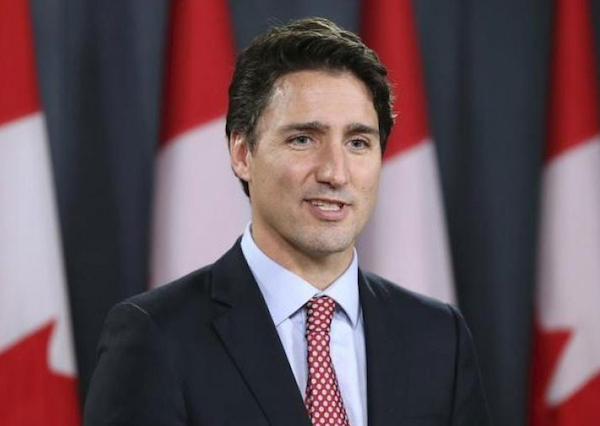
    In announcing his country’s response, Canadian Prime Minister Justin Trudeau said it was “inconceivable” that Canada “could be considered a national security threat to the United States,” noting that U.S. fighter planes and tanks contain Canadian steel.

    “These tariffs will harm industries and workers on both sides of the Canada-U.S. border and will disrupt supply chains that have made steel and aluminum from North America more competitive across the whole world,” he said in a press conference in Ottawa.

    Effective July 1, Canada will impose tariffs of 25 percent on shipments of U.S. steel and 10 percent on aluminum, as well as on other products, such as playing cards, inflatable boats and yogurt. Canada’s finance ministry estimated the value of the U.S. goods subject to those tariffs at up to C$16.6 billion ($12.8 billion),

    Jean-Claude Juncker, president of the European Commission, said the European Union also will apply news tariffs on American goods, with the trading bloc signaling it would target products made in states represented by key Republican leaders. The EU has said it would respond with tariffs on $3.3 billion in American imports as early as June 20.

    “The U.S. now leaves us with no choice but to proceed with a [World Trade Organization] dispute settlement case and with the imposition of additional duties on a number of imports from the U.S. We will defend the Union’s interests, in full compliance with international trade law,” Juncker said in a statement.

    The E.U. said it would impose import taxes on politically sensitive items like bourbon from Senate Majority Leader Mitch McConnell’s home state of Kentucky. Mexico said it would levy tariffs on American farm products, while Canada zeroed in on the same metals that Trump has targeted.

    The Mexican government said it would levy import taxes on U.S. exports of pork bellies, apples, cranberries, grapes, certain cheeses and various types of steel.

    Thursday’s action was driven by the president’s conviction that allies and adversaries routinely take advantage of the United States and that efforts to resolve trade disputes are doomed unless he wields a big tariff stick.

    “The United States has been taken advantage of for many decades on trade,” Trump said in a statement. “Those days are over. Earlier today, this message was conveyed to Prime Minister Justin Trudeau of Canada: The United State[s] will agree to a fair deal, or there will be no deal at all.”

    Officials from the three trading partners — among Washington’s closest allies for decades — have dismissed the idea that their shipments to American customers endanger the United States — and some prominent Republicans attacked the tariffs as wrongheaded.

    At home, some have expressed doubts about the position Trump has taken.

    Sen. Ben Sasse was blunter in criticizing the tariffs.

    “This is dumb. Europe, Canada and Mexico are not China, and you don’t treat allies the same way you treat opponents,” the Nebraska Republican said in a statement. “We’ve been down this road before — blanket protectionism is a big part of why America had a Great Depression. ‘Make America Great Again’ shouldn’t mean ‘Make America 1929 Again.’ “

  • Immigrant-Bashing Helps MS-13

    Immigrant-Bashing Helps MS-13

    By Tom Suozzi

    The president’s inflammatory rhetoric is counterproductive to the goal that we the people, including new arrivals in America, seek—to live in peace, security and happiness and to eradicate MS-13, says the author.

    I applaud President Trump’s mission to combat MS-13. The gang must be disrupted, dismantled and defeated. There should never be any disagreement about that, and presidential involvement is incredibly beneficial.

    MS-13 members are ruthless and depraved. The gang models itself on organized crime syndicates throughout history. It is a murderous and destructive force in too many good communities across America, including Long Island, where I’m from.

    But Mr. Trump’s failure to distinguish properly between MS-13 members and other immigrants, along with his divisive, discriminatory language, particularly against immigrants from Latin America, hampers efforts to rid our communities of MS-13. The president’s inflammatory rhetoric is counterproductive to the goal that we the people, including new arrivals in America, seek—to live in peace, security and happiness and to eradicate MS-13.

    During my tenure as mayor of Glen Cove, N.Y., we enjoyed the lowest crime rate of any community with more than 20,000 people on Long Island. My city is a mashup of immigrants and multigenerational families. We achieved public safety and harmony by relying on two fundamental American credos.

    First, all men and women are created equal. Not “all men and women with U.S. passports or green cards.” All human beings are entitled to the same respect and dignity. Issues from public safety to immigration reform cannot become an excuse for racism or other forms of discrimination.

    The second credo is “all men and women are equal under the eyes of the law.” If you live in America, whether you are a newcomer or a descendant of the Pilgrims, you must obey the law.

    And that’s where our 45th president’s words and actions become problematic. To protect those who obey the law, and to take down those who break it, particularly members of MS-13, community policing is central.

    The key to community policing is a healthy, respectful and productive relationship between police officers and the community they are sworn to serve and protect. Mr. Trump’s approach—his sweeping rhetoric that lumps all immigrants together, his proposal to curtail legal immigration drastically, his failure to support a bipartisan permanent fix for beneficiaries of Deferred Action for Childhood Arrivals, his elimination of temporary protection status safeguards—amounts to a war on immigrants, a war far beyond MS-13, which has a chilling effect on police-community relations with Latinos in America.

    Police must be able to work with law-abiding people to identify MS-13 members and movements in their communities. While overseeing police departments as Glen Cove mayor and Nassau County executive, I saw community-policing stop MS-13 in its tracks. During my time as executive, Nassau was the safest county of more than 500,000 inhabitants in the U.S.

    In contrast, when people are afraid to cooperate with the police because of Mr. Trump’s words and his administration’s crackdown on Latino immigrants, local leaders in the fight against MS-13 are pushed into the shadows. It’s a tragedy when people are afraid of the police and of government in general—afraid of reprisal from the officials every American relies on for protection.

    My grandfather and father were immigrants from Italy. As a first-generation American, I could not be prouder or more inspired by their success as newcomers to this great nation. I am also keenly aware of how the criminal actions of a sliver of Italian immigrants were once used to disparage and deny opportunity to all Italian newcomers to America in the first half of the 20th century.

    We cannot make the same mistakes by equating MS-13 with law-abiding immigrants from Latin America. Sadly, Mr. Trump—on a near daily basis—careens down this dangerous and destructive path. The president should put divisive language aside, support law-abiding immigrants, and make community policing more effective. And then he needs to be open to common-sense solutions for the DACA crisis and for comprehensive immigration reform.

    (Mr. Suozzi, a Democrat, represents New York’s Third Congressional District)

  • Along the Borders

    Along the Borders

    By Mini Kapoor

    Unmindful, or perhaps too mindful, of the date, the U.S. inaugurated its new embassy building in Jerusalem last week, on May 14. Proceeding ahead full steam to shift its diplomatic mission in Israel from Tel Aviv to the disputed city, Washington sent Ivanka Trump to point proudly to the shiny plaque that had her father, U.S. President Donald Trump’s name in inordinately large font. The timing was significant as it was the eve of Nakba Day, on which Palestinians mark the forced exodus 70 years ago of hundreds of thousands from their homes in what became the state of Israel in 1948. Just a few miles away, thousands of residents of Gaza had surged in protest towards the barrier that marks the border with Israel — Israeli forces fired at the crowd, killing at least 60 Palestinians.

    The way borders operate

    In that overlay of cheer at the new embassy in Jerusalem and the bloodshed in Gaza could be found the different ways in which borders are heeded. Jerusalem is not just a disputed city, it was divided by the Green Line till the Six-Day War of 1967, when Israeli forces occupied East Jerusalem, where crucially some of the holiest sites of Judaism, Islam and Christianity are. Palestinians are firm that East Jerusalem be the capital of their state in the much recommended two-state solution. Many Israelis make a distinction between the West Bank and Gaza territories on the one hand and East Jerusalem on the other, contending that the city is an organic whole. The inauguration was a challenge to that old border. In Gaza, the barrier put up by Israel with inhumanely stern procedures to get past the checkpoints, and with the supplies of essential commodities so easily blocked in difficult times, the violence highlighted that fact that borders operate to the dictate of the militarily stronger party.

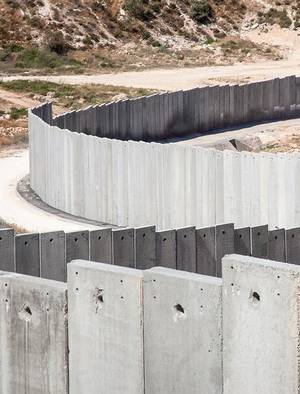
    The Israeli wall — or security barrier or separation barrier as it’s variously called, depending on your politics — is among the most contentious and photographed physical demarcations of a boundary, whether imposed or mutually agreed upon. In a new book Divided, Tim Marshall, a British journalist and writer, explains the theme in the subtitle: Why We’re Living in an Age of Walls. The data bear him out: “At least sixty-five countries, more than a third of the world’s nation states, have built barriers along their borders; half of those erected since the Second World War sprang up between 2000 and now. Within a few years, the European nations could have more miles of walls, fences and barriers on their borders than they were at the height of the Cold War.”

    Marshall’s analysis

    His analysis is sometimes unsatisfying, as he tries to see each wall (though in most parts they are not concrete walls, but fences, concertina wire, etc.) from the viewpoint of those who erect it as well as those it seeks to keep out, and the space is too limited for local nuances to be explored enough in this around-the-world tour. That equation in itself is a comment on the 21st century world, but Marshall’s tour of the great man-made barriers of today is instructive. Of course, he lingers at the Israeli wall — though as he points out, just 3% of the separation barrier is concrete. Other numbers are startling too: if the line drawn by the wall becomes a new fact on the ground, in a two-state solution, Palestinians would lose “at least 10 per cent of the West Bank land, as the wall’s current position lies well inside Palestinian land”. He describes the disparity in the checks that, say, Israeli settlers and Palestinian residents undergo, or those at the Palestinian end of the checkpoint and the Israeli. He explores the security dividend that’s accrued to Israel on account of the wall, and he also visits British graffiti artist Banksy’s Walled Off Hotel in Bethlehem overlooking, well, the wall.

    Around the world

    Marshall roams the globe, looking at “the longest border fence in the world” on the India-Bangladesh border, and also the issues of ethnicity, religion and humanitarian plight around the flight of the Rohingya from Myanmar to Bangladesh in the most fraught conditions to cross international boundaries. He looks at the wall Iran has built along its border with Pakistan. He describes the 1,700-mile Moroccan wall through Western Sahara. There’s the wall Trump wants to build/reinforce on the U.S.-Mexico border, the walls Hungary started building on its border with Serbia and Croatia. And so on.

    And there is the memory of that wall in Berlin that came down. Marshall doesn’t see the probability of a border-less world any time soon. But for now, he sees an antidote in the “great halls” that have been and are being built “to meet, discuss and try to resolve our differences”. Call it the alphabet soup of our hopes: “The United Nations, the EU, the African Union, ASEAN, MERCOSUR, OPEC, NATO, the World Bank…” Keep adding.

    (The author is a columnist with The Hindu)

  • Border Patrol agent kills migrant near Texas-Mexico line

    Authorities said the agent opened fire after he came under attack by a group of migrants, but a witness disputed that account.

    DALLAS(TIP): A U.S. Border Patrol agent shot and killed a migrant near the Mexican border in Texas, U.S. Customs and Border Protection said Thursday, May 24.

    The agent was responding at about 12:30 p.m. (1:30 p.m. ET) Wednesday, May 23, to a report of “illegal activity” near a culvert in Rio Bravo, in Webb County about 10 miles south of Laredo, when he encountered a group of migrants, according to Customs and Border Protection.

    “Initial reports indicate that as the agent attempted to apprehend the group, he came under attack by multiple subjects using blunt objects,” the agency said in a statement.

    The agent fired at least one round and fatally shot one of the migrants, according to the agency, which said three people whom it described as “illegal aliens” were arrested. It didn’t identify the officer or the shooting victim.

    Marta Martinez, who lives near the scene, said that she heard the shot and began recording video on her cellphone. She told NBC affiliate KGNS of Laredo that the victim was a young woman.

    In the video, which Martinez posted to Facebook, people in uniform can be heard yelling, apparently at the migrants, “See what happens?” and “See what you caused?”

    Martinez said she was shocked by the events.

    “They come here to the United States to live the American dream,” she told KGNS. “So, there’s no American dream right there. She died right there on the scene.”

    The FBI and the Texas Rangers are investigating, Customs and Border Protection said. Authorities scheduled a news conference for Friday, May 25.

    The shooting comes as President Donald Trump has been ramping up his rhetoric about illegal immigration. In a speech last week in Washington, the president referred to some people who cross the border illegally as “animals.”

    (Source: KGNS)

  • No immigration deal unless ‘real wall’

    No immigration deal unless ‘real wall’

    WASHINGTON(TIP): President Donald Trump said May 24 he opposes any immigration legislation that doesn’t include “a real wall” along the Mexican border and “very strong border security.”  Moderates House Republicans are pushing a deal that could lead to citizenship for young “Dreamer” immigrants brought to the US illegally. But Trump told “Fox & Friends” that unless any bill “includes a wall, and I mean a wall, a real wall, and unless it includes very strong border security, there’ll be no approvals from me.”

    (Source / PTI)

  • Former Oyster Bay Town Supervisor Venditto acquitted in corruption case

    Former Oyster Bay Town Supervisor Venditto acquitted in corruption case

    LONG ISLAND, NY(TIP) Former Oyster Bay Town Supervisor John Venditto was acquitted Thursday, May 24, on all corruption-related charges as a federal jury delivered a partial verdict before continuing its deliberations on his co-defendants, former Nassau County Executive Edward Mangano and his wife, Linda.

    Venditto was cleared on 27 counts that included federal program bribery, honest-services wire fraud and securities fraud in the trial now nearing the end of its 11th week.

    Prosecutors had alleged that Venditto, 68, of North Massapequa, accepted free limo rides and other perks from Singh and, in exchange, helped Singh obtain the more than $20 million in business loans pegged to Oyster Bay’s creditworthiness.

    “Mr. Venditto, you are excused. Good luck,” Azrack said after his verdict was read.

    “Thank you,” he replied.

    He remained stoic in the Central Islip courtroom as, count by count, the “not guilty” findings became a refrain.

    “From the very first day I started in law school, I have had nothing but faith in our justice system and the events of today confirm that faith,” Venditto told the gathered mediapersons after he was dismissed with the well wishes of U.S. District Judge Joan M. Azrack.

    Meanwhile, Jury is set to deliberate on Mangano and Linda cases on Friday, May 25.

  • A bang and a whimper- Trump scraps Kim summit, citing NK’s ‘open hostility’

    A bang and a whimper- Trump scraps Kim summit, citing NK’s ‘open hostility’

    Trump’s announcement came hours after North Korea carried out what it said is the demolition of its nuclear test site.

    WASHINGTON(TIP): US President Donald Trump on Thursday, May 24, called off a historic summit with North Korean leader Kim Jong Un scheduled for next month, even after North Korea followed through on a pledge to blow up tunnels at its nuclear test site.

    Trump announced his abrupt withdrawal from what would have been a first-ever meeting between a serving US President and a North Korean leader in Singapore on June 12 in a letter to Kim.

    A White House official said a North Korean official’s condemnation of US Vice-President Mike Pence as a “political dummy” was “the last straw” that led to cancelling the summit.

    “Sadly, based on the tremendous anger and open hostility displayed in your most recent statement, I feel it would be inappropriate, at this time, to have this long-planned meeting,” Trump wrote to Kim.

    “Please let this letter serve to represent that the Singapore summit, for the good of both parties, but to the detriment of the world, will not take place.” Trump called it “a missed opportunity” and said he still hoped to meet Kim someday. However, the chances for a quick rescheduling appear remote and cancellation of the summit will renew fears of a return to conflict on the Korean peninsula.

    Earlier on Thursday, North Korea had repeated a threat to pull out of the summit with Trump next month and warned it was prepared for a nuclear showdown with Washington if necessary.

    South Korea’s presidential Blue House appeared taken off guard by Trump’s letter and an official said it was “trying to figure out what President Trump exactly meant.” South Korean President Moon Jae-in had met with Trump at the White House on Tuesday, May 22, to urge him to follow through on the summit and not let a rare opportunity with reclusive North Korea slip away.

    A few hours before Trump announced the cancellation, a small group of international media selected by North Korea witnessed the demolition of tunnels at the Punggye-ri site on Thursday, May 24, which Pyongyang said was proof of its commitment to end nuclear testing.

    Meanwhile, alarm bells began to ring at the world body. Antonio Guterres, UN Secretary-General said, “I am deeply concerned by the cancellation of the planned meeting in Singapore between the President of the United States and the leader of the Democratic People’s Republic of Korea. Both the parties must continue their dialogue so as to find a path to the peaceful and verifiable denuclearization of the Korean peninsula”.

  • Trump lists Michael Cohen payment on federal form, raising legal concerns about Stormy Daniels payoff

    Trump lists Michael Cohen payment on federal form, raising legal concerns about Stormy Daniels payoff

    WASHINGTON(TIP): President Trump should have disclosed Michael Cohen’s hush payment to porn star Stormy Daniels as a financial liability last year, the government’s top ethics watchdog concluded Wednesday, potentially opening the President up to legal complications.

    David Apol, acting director of the Government Ethics Office, said in a letter appended to Trump’s 2018 financial disclosure form that a payment Cohen made to “a third party” on behalf of the President during the 2016 election meets the requirements for a reportable “loan.”

    The letter does not explicitly state what Cohen’s payment was for, but the President’s legal team and Cohen himself have previously acknowledged he paid Daniels $130,000 to keep quiet about allegedly having sex with Trump in 2006. Cohen has also admitted the hush payment was issued 11 days before Trump’s election.

    While Apol didn’t say so in his letter, the revelations mean Trump could have committed a crime by not disclosing the liability in his financial disclosure report last year. Apol referred his findings to Deputy Attorney General Rod Rosenstein for any “inquiry” the Justice Department may pursue into the matter.

    Trump acknowledged in the disclosure form for the first time that he fully reimbursed Cohen last year for “expenses” ranging between $100,001 and $250,000.

    Ex-Mayor Rudy Giuliani insisted Trump disclosed the repayments to Cohen in this year’s report out of “an abundance of caution.”

    “It’s not a loan, but he reported it anyway,” Giuliani, the latest addition to Trump’s legal team, told the Daily News, directly contradicting Apol’s findings. “It was in fact an expense, like paying a doctor. If you owe a doctor $2,000 and you pay him back, that’s not a liability.”

    Giuliani claimed Trump didn’t list Cohen’s payment to Daniels in last year’s form because he didn’t need to.

    “There’s nothing to report,” Giuliani said.

    Asked if Trump is worried, Giuliani delivered a one-word rebuke: “Nope.”

    Citizens for Responsibility and Ethics in Washington, a legal watchdog group that first flagged Trump’s disclosure omission in March, welcomed Apol’s findings and swiftly filed a criminal complaint against the President. They called on the Justice Department to look into whether he “knowingly and willfully” failed to report required information — an offense punishable by up to one year behind bars.

    “There is substantial evidence that President Trump had knowledge of the loan when he filed his public financial disclosures last year,” Noah Bookbinder, the watchdog’s executive director, said in a statement. “If the department is not already investigating the President’s failure to disclose the loan last year, it should open an investigation immediately.”

    A spokeswoman for the Justice Department declined to comment.

    Attorney Michael Avenatti, who represents Daniels in a civil lawsuit seeking to void her nondisclosure agreement with Cohen, said the financial form “conclusively proves” that Trump, Cohen, Giuliani and the White House deceived the “American people.”

    “This was NOT an accident and it was not isolated,” Avenatti tweeted. “Coverups should always matter.”

    Cohen, Trump’s longtime attorney and personal fixer, had his Manhattan office, home and hotel room raided by FBI agents last month as part of a criminal investigation launched by federal prosecutors in New York. The agents seized a cache of records, including communications between Cohen and his clients.

    Michael Cohen arrives at Manhattan Federal Court on April 16.

    Michael Cohen arrives at Manhattan Federal Court on April 16. (Alec Tabak)

    Whether Trump committed a crime by not disclosing the Cohen payments last year is a matter of whether or not he knowingly omitted them, according to experts.

    “Trump may be wondering today whether the information DOJ seized from Cohen’s office included any emails or other documents showing he knew of the debt when he filed last year’s report,” former Government Ethics Director Walter Shaub tweeted.

    Shaub, who served as the ethics czar between 2013 and 2017, noted that Apol’s letter to Rosenstein is tantamount to a “criminal referral.”

    Shaub also recalled that, while serving as ethics director, Trump attorney Sheri Dillon asked him if the President could submit his 2017 disclosure without certifying its contents as true.

    “The strangest moment in my entire career,” Shaub said.

    Wednesday’s financial disclosure dump also revealed First Lady Melania Trump raked in as much as $1 million last year in royalties from photos of her owned by Getty Images.

    It’s not clear what photos in particular she received royalties for, but her spokeswoman told The News the payments pertained to images taken before Trump took office.

  • A time to think fast: on the US exit from the Iran deal

    A time to think fast: on the US exit from the Iran deal

    The U.S.’s exit from the Iran nuclear deal puts India in a spot on many counts

    By Happymon Jacob
    The global non-proliferation regime has taken a direct hit from the U.S.’s decision to renege on the Iran deal. It is important to understand that norms, rules, persuasion and good faith make up the moral foundation of the non-proliferation regime, and the inability of the great powers to abide by them will dissuade non-nuclear weapons states from signing on to or abiding by new or existing agreements, protocols or regimes

    American President Donald Trump’s decision to withdraw from the Joint Comprehensive Plan of Action (JCPOA), popularly called the Iran nuclear deal, is bound to have serious implications for the international system, and for India. To be sure, the least affected will be the U.S.; European Union countries will be moderately affected due to the business ties with Iran; and the most affected will be countries closer to the region, in particular India. Moreover, for a U.S. administration that has made it a habit of accusing other countries of “undermining the rules-based order”, this action has severely undermined the rules-based global order.

    Unreasonable act

    Washington’s decision is unjustified and unreasonable for several reasons. For one, the International Atomic Energy Agency (IAEA) has consistently maintained that Tehran has complied with the strictures of the JCPOA without fail. Moreover, Iran has signed the Nuclear Non-Proliferation Treaty (NPT) which prohibits it from developing nuclear weapons and has agreed to ratify the IAEA’s Additional Protocol five years from now which will grant IAEA inspectors wide-ranging access to monitor nuclear-related activities in Iran. And yet Mr. Trump has thoughtlessly undone the outcome of negotiations that went on for close to two years.

    Second, the argument that since the provisions of the JCPOA will become less strict over the years enabling Iran to move towards nuclear-weapon capability is not a credible rationale for undoing the deal. In fact, if indeed there are concerns about Iran potentially moving towards a nuclear option, efforts should be made to engage Tehran in negotiations rather than undo what has already been achieved. This is a classic case of throwing the baby out with the bathwater.

    With regard to Iran’s involvement in the various West Asian conflicts and “promotion of terrorism”, Iran is not the only country engaging in them. And in any case the way out, again, is diplomatic engagement rather than further unsettle an already volatile region.

    The implications

    The global non-proliferation regime has taken a direct hit from the U.S.’s decision to renege on the Iran deal. It is important to understand that norms, rules, persuasion and good faith make up the moral foundation of the non-proliferation regime, and the inability of the great powers to abide by them will dissuade non-nuclear weapons states from signing on to or abiding by new or existing agreements, protocols or regimes. Second, even though Mr. Trump might think that playing hardball with Tehran will help him to extract concessions from Pyongyang, it is equally possible that the North Koreans will think twice before entering into any agreement with the untrustworthy Trump administration.

    Third, Washington’s unilateral and dictatorial withdrawal from the deal would create deep fissures in the time-tested but increasingly shaky trans-Atlantic security partnership. Not least because it implies potential secondary sanctions against those European companies which are engaged in business deals with Iran. Here again, the U.S. does not have much to lose given its almost non-existent business contacts with Iran.

    Besides, Mr. Trump’s Iran decision follows a pattern of similar unilateral steps — such as the withdrawal from the Paris climate accord and formal recognition of Jerusalem as Israel’s capital. Let alone the loss of face suffered by European leaders and the financial losses by their countries’ firms, U.S. unilateralism has deep-running implications for the global security and governance architecture, and other multilateral arrangements and regimes. It is in this context that what French Foreign Minister Jean-Yves Le Drian said becomes significant: “The deal is not dead. There’s an American withdrawal from the deal, but the deal is still there.” The argument has found support in several global capitals.

    Hassan Rouhani, the moderate President of Iran, who negotiated the nuclear deal, might lose his standing in the country as hardliners pitch for more aggressive steps, including developing a nuclear weapon capability and more military engagement in the neighborhood. The chief of staff of the Iranian Armed Forces, Maj. Gen. Mohammad Bagheri, has said that the “Iranian people never favored the nuclear deal”. This is an indication of the hardline Iranian responses in the offing as and when sanctions are reimposed.

    Iran’s refusal to fall in line might prompt Israel and the U.S. to carry out attacks against Iran leading to Iranian counter-strikes against American allies in the region, or even Israel. This would further destabilize a region already reeling under terrorism, wars and internal conflicts. Americans, and the international community, should remember how the misguided military campaign against the Saddam Hussein regime in Iraq turned out to be a huge geopolitical disaster.

    India’s Persian dilemmas

    While the U.S. has almost nothing to lose in reneging on the JCPOA, India has a lot to lose both economically and geopolitically, and it will take deft diplomacy to adapt to the changing alignments. A more unstable West Asia would ipso facto mean more difficult choices for New Delhi. More conflict in the region would adversely impact the welfare and safety of Indian expatriates in West Asia, leading to a sharp decline in the remittances they send home, and an assured hike in oil prices. Low crude oil prices had given India the much-needed economic cushion in the past few years — that phase of cheaper oil has now ended. Recall how the U.S. war on Iraq had a debilitating impact on Indian workers and the West Asian remittances. India also had to abandon the Iran-Pakistan-India pipeline in 2008 thanks to U.S. sanctions against Iran.

    The Narendra Modi government’s efforts to maintain a fine balance between India’s relations with Iran on the one hand and with the U.S., Israel and Saudi Arabia on the other will be seriously tested in the days ahead. The new warmth between Iran and India could attract American ire. What is even more worrying is that unlike the last time when the U.S. imposed sanctions on Iran, and India had to choose the U.S. over Iran, the geopolitical realities are starkly different this time. Not only are the Americans going it alone this time, but the regional ganging-up against the U.S. and in support of Iran will be more pronounced this time around, making India’s ability to make a clear choice more difficult.

    India’s dreams of accessing Central Asia via Iran could also be dashed with the return of American sanctions against Iran. India’s projects in Iran’s Chabahar port have been widely viewed in New Delhi as a crucial plank of its Iran-Afghanistan-Central Asia strategy. With U.S. sanctions again tightening around Tehran, New Delhi may find it hard to continue with this project. As a matter of fact, thanks partly to India’s dilly-dallying on Chabahar during the previous round of U.S. sanctions against Iran, Iran had invited Pakistan to the Chabahar project. Some have even suggested a potential link between Chabahar and Gwadar in Pakistan.

    Given that there is little consensus around Mr. Trump’s withdrawal from the JCPOA, several of the dissenting parties might look for ways of thwarting U.S. efforts at isolating Iran. Such efforts, especially those led by China and Russia, both parties to the JCOPA, would have implications for the Southern Asian region as well. If indeed China manages to bring together a group of regional powers, including Russia, Iran, Pakistan and interested others, to counter Washington’s influence in the region, New Delhi might find itself in a corner.

    (The author is Associate Professor of Disarmament Studies, Centre for International Politics, Organization and Disarmament, School of International Studies, Jawaharlal Nehru University)