Tag: US President Donald Trump

  • It’s not about the nuclear deal

    It’s not about the nuclear deal

    The U.S. won’t ease the terms of sanctions on Iran, as the goal is regime change in Tehran

    By Chinmaya R. Gharekhan
    The impact on India will be severe. The price of crude is already close to $80. Energy imports from Iran will become difficult and expensive. Fuel prices will go up. The Reserve Bank of India might have to increase interest rates to contain inflation and step in to check the fall in the rupee’s value. All this might have a direct bearing on politics, given the fact that the government was the beneficiary of low crude price for the first four years but may have to face consequences of inflation and attendant factors in its fifth, says the author.

    If — and that’s a big if — the leaders of the U.S., China, South Korea and North Korea succeed in concluding a deal on the denuclearization of the Korean peninsula as well as on a peace treaty formally ending the Korean War, they would be front runners for the Nobel Peace Prize. That deal could appropriately be called a Joint Comprehensive Plan of Action (JCPOA) if it lays down a detailed blueprint for denuclearization, with provisions of intrusive inspections. The only thing that could stand in their way is Iran.

    There should be little doubt that U.S. President Donald Trump’s real, but of necessity undeclared, objective in withdrawing from the Iran nuclear deal is a regime change in Tehran. This goal is even more ardently desired by Israel and Saudi Arabia. Ever since Iranian President Mahmoud Ahmadinejad made particularly provocative statements about Israel, Israelis of all political persuasions have wanted to get rid of the regime in Iran. The Saudis have openly called for cutting off the head of the (Iranian) snake. Thus, three important and powerful states have a congruence of interests seldom seen in recent times.

    Iranian discontent

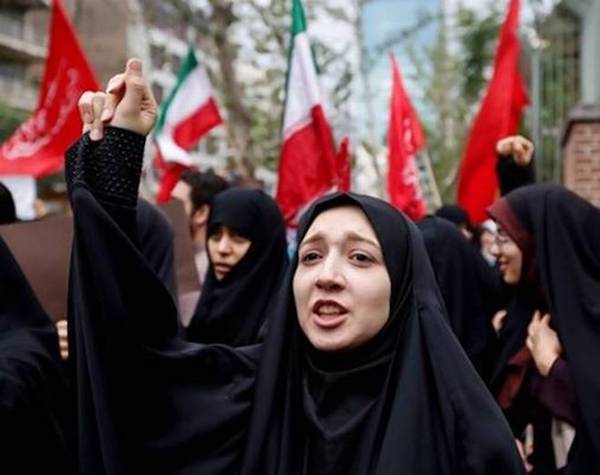
    There have been frequent and persistent reports in the Western media for several months about large-scale demonstrations and protests by Iranian people against the regime. Living conditions are difficult. Iran did not get the goodies that it expected after signing the JCPOA. Inflation is high. The Iranian rial is trading at 75,000 to the dollar. People are angry with the government. According to the well-researched work Democracy in Iran: Why It Failed and How It Might Succeed by American academic Misagh Parsa, disaffection among the people has manifested itself in several forms. Hundreds of mosques do not have imams and the attendance at Friday prayers has dwindled dramatically. Some are converting to Christianity and, according to Professor Parsa, even to the Baha’i faith, which is the largest non-Muslim community in Iran. Professor Parsa states that there is massive corruption as well as economic inequality in Iran. All in all, he suggests that it is quite likely that there might be a revolutionary upsurge, though he is careful not to indicate any timeline for it.

    A different calculation

    It is this discontent that Mr. Trump might be counting on tapping. His calculation seems to be that the reimposition of severe sanctions would render life very difficult, almost unbearable, for the populace who might, in the absence of other avenues, take to the streets, as they did in 1979 to overthrow the Shah’s regime which too, like the present one, had strong military and oppressive secret services such as the Savak but which could not defeat public anger, frustration and rage. For these reasons, Mr. Trump is unlikely to listen to voices of reason or to appeals from his Western allies. He is equally not likely to grant exemptions from sanctions to any country engaging in any form of trade and other transactions with Iran. His administration will follow strict interpretation of the guidelines regarding the sanctions regime.

    Iranian restraint

    Iran has shown restraint, forsaking knee-jerk reaction. It did not declare that the deal was dead, as it might well have done. It did not announce immediate resumption of uranium enrichment, which it emphasized will be at the industrial level. It has so far not called off International Atomic Energy Agency (IAEA) inspections. Iran will consult with the other signatories to the JCPOA for several weeks before taking any further action. This shows the maturity of Iranian diplomacy. It remains to be seen how long France and others will stick to their position of continuing to adhere to the deal; they will eventually have to fall in line in some way with the Americans, if not for political then for economic considerations. For Mr. Trump, the Republicans are fully with him and the Democrats will be too eventually.

    Will Iran live up to the American calculation? For the present, Mr. Trump’s decision has strengthened the hardliners. President Hassan Rouhani, regarded as a moderate, has no option but to take a defiant stance. The Iranian people, proud as they are of their heritage, will stand behind their regime. But there may come a time when their hardships reach a stage when they might feel compelled to take to the streets.

    In the meanwhile, Iran will even more vigorously support the Bashar al-Assad regime in Damascus, in which it will be joined by Russia and Hezbollah, which has done very well in the parliamentary elections in Lebanon this month. The Houthi rebels in Yemen will feel more emboldened to take on the Saudi-led coalition; of course, the Yemeni people will continue to suffer, as will the Syrian people, for years to come. Iran will more directly intervene in Iraq and render the possibility of progress in the non-existent peace effort in Afghanistan even more difficult.

    If the regime in Tehran does not collapse, the Washington-Jerusalem-Riyadh axis might look for an alternative course of action, not excluding military. In that case, the Nobel Peace Prize will elude Mr. Trump.

    Prime Minister Narendra Modi has established special relationship with Israel and its present Prime Minister, Benjamin Netanyahu. He has also made efforts to forge intimate relations with the U.S. With both India has the upper hand, since it is they who want to sell expensive military hardware to India. Under the circumstances, India has made a well-drafted two-sentence statement on the Trump decision. The first strikes a balance between Iran’s right to develop nuclear energy for peaceful purposes as also the international community’s concern to ensure that its nuclear program remains strictly peaceful. The second sentence contains implicit disapproval of the American decision and warns, again implicitly, against any strong military action. For India, the question will also be: can it rely on the U.S. to honor even its written word embodied in international agreements? Mr. Trump wants to annul every single achievement of his predecessor — Obamacare, the North American Free Trade Agreement, the Trans-Pacific Partnership, the Paris Agreement, and now JCPOA. India will have to remain vigilant in dealing with this administration; it would not be prudent to assume that it is a special case.

    Fallout for India

    The impact on India will be severe. The price of crude is already close to $80. Energy imports from Iran will become difficult and expensive. Fuel prices will go up. The Reserve Bank of India might have to increase interest rates to contain inflation and step in to check the fall in the rupee’s value. All this might have a direct bearing on politics, given the fact that the government was the beneficiary of low crude price for the first four years but may have to face consequences of inflation and attendant factors in its fifth.

    (The author is a former Indian Ambassador to the United Nations, was Special Envoy for West Asia in the Manmohan Singh government)

  • Trump’s Iran walk-back: Double whammy for India after CATSA

    Trump’s Iran walk-back: Double whammy for India after CATSA

    Just when Indian diplomats were figuring out how to mitigate the impact of Countering America’s Adversaries Through Sanctions Act (CATSA) on its arms and oil trade with Russia, South Block has another reason to burn the midnight oil. US President Donald Trump’s intention to exit the Iran deal, and reimpose sanctions if Tehran declines to renegotiate, could send India’s plans for the region in smoke. The sanctions will pretty much cover all areas of interest to India vis-a-vis Iran: petroleum, ports, shipping and banking. The bright side is that except for Saudi Arabia and Israel, pretty much the rest of the world has not taken kindly to Trump’s attempt to redefine the Joint Comprehensive Plan of Action (JCPOA) to cover “responsible” behavior by Iran both externally and domestically.

    The world can be grateful that Tehran doesn’t have an impetuous leader like Trump. Javed Zarif, Iran’s chief negotiator for the deal, has resolved to diplomatically lobby with the other parties to the agreement. Yet, Trump’s explanation that Iran could emulate North Korea by negotiating denuclearization will find few takers for it is widely realized that Tehran would have to be suicidal if it were to show signs of weakness. On the contrary, the US may have lost North Korea’s trust by going back on the Iran deal just as it lost Palestinian support after Trump announced the shifting of the US embassy to East Jerusalem.

    India needs to work with countries with a shared interest in the JCPOA to ensure that Trump’s exit from the Iran deal does not harm its investments and plans for the region. India and other countries on the same page must also engage with Iran to discourage it from retaliatory malign behavior that may further muddy the waters. PM Modi will get the opportunity to discuss the issue with like-minded leaders when he meets them for two multilateral summits later this year. The problem for India is it has no company like the Chinese Sinopec which has no business interests with a US company and can thus escape sanctions. India will first have to make common cause with countries in the same Iranian boat.

    (Tribune, India)

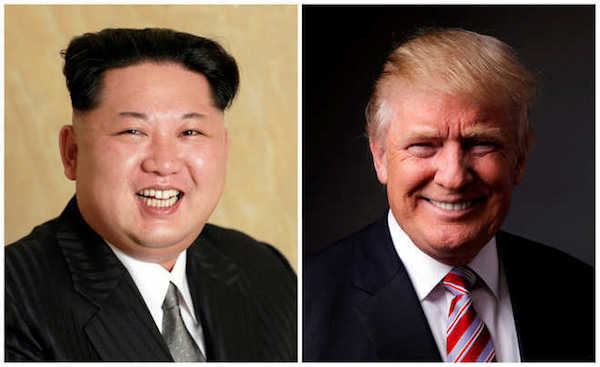
  • Trump: Will meet Kim on June 12 in Singapore

    Trump: Will meet Kim on June 12 in Singapore

    Meeting with Trump will be positive for Koreas, says Kim Jong- un

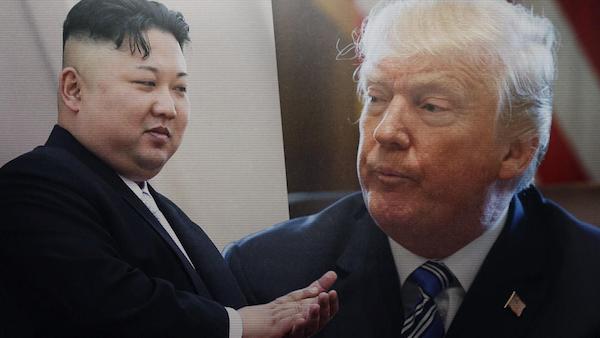
    WASHINGTON(TIP): US President Donald Trump today, May 10, announced that he will meet North Korean leader Kim Jong-un on June 12 in Singapore for a historic meeting to discuss denuclearization of the Korean Peninsula.

    Trump’s announcement came hours after US Secretary of State Mike Pompeo returned home from North Korea with three detained Americans.

    Trump, who personally greeted the trio at the Andrews Air Force Base, praised Kim for their release ahead of their summit.

    “The highly anticipated meeting between Kim Jong Un and myself will take place in Singapore on June 12th. We will both try to make it a very special moment for World Peace!,” Trump tweeted.

    Trump has struck a cautiously optimistic tone in discussing the prospects of reaching a deal during his upcoming summit with Kim, saying he is hopeful a historic agreement can be brokered while also warning the talks could prove unfruitful.

    But the President saw the release of the three Americans as yet another reason for optimism as he prepares for the summit. “We are starting off on a new footing-I really think we have a very good chance of doing something very meaningful. A lot of very good things have happened,” Trump said as he greeted the three former prisoners.

    The Americans-Kim Dong Chul, Kim Hak-song and Kim Sang Duk, also known as Tony Kim-were freed yesterday by North Korea while Pompeo was on a visit to Pyongyang to finalize the details of the Trump-Kim summit.

    The summit, which has been in the works since Trump accepted Kim’s invitation to meet in March, will be the first ever meeting between a sitting US president and North Korean leader.

    US officials had also considered holding the summit at the Korean demilitarized zone or in Mongolia, but ultimately settled on the city-state of Singapore as the location.

    Meanwhile, Kim Jong-un has said that the meeting with Trump will be positive towards easing tensions on the Korean Peninsula, Pyongyang state media reported on Thursday, May 10.

    Kim made the remark to visiting US Secretary of State Mike Pompeo on Wednesday, May 9 the state-run Korean Central News Agency (KCNA) reported.

    During the meeting with Pompeo, Kim described the planned summit as “historic” and “the excellent first step towards promotion of the positive situation development in the Korean peninsula and building of a good future”.

    This was Pompeo’s second visit to the Asian country after his secret trip over Easter, when he also met with Kim, to finalize preparations for the summit, reports Efe news.

    “At the meeting, an in-depth discussion was made on the practical matters for holding the North Korea-US summit and its procedure and ways. Kim Jong-un reached a satisfactory consensus on the issues discussed with the US state secretary,” Yonhap News Agency quoted KCNA as saying.

    This is the first time that the North Korean leader officially spoke of the meeting with Trump, which has been scheduled for the end of May or the beginning of June and will be the first meeting in history between the heads of government of the two countries.

    KCNA said Kim also “accepted an official suggestion of the US President for the release of Americans who have been detained” and gave an order “on granting amnesty to them for their repatriation”.

    The three Americans–Kim Dong-chul, 64, Kim Sang-duk, 58, and Kim Hak-song, around 60–who had been held prisoners in North Korea, were all born in South Korea but later acquired the US citizenship.

    Pompeo also delivered Kim a “verbal message” from Trump, adding Kim highly appreciated that the US President had shown “deep interest in settling the issue through dialogue”.

    Details of Trump’s message were not disclosed.

    The North’s media covered Wednesday’s meeting extensively.

    The Rodong Sinmun, the official newspaper of North Korea’s Workers’ Party, devoted the front page to the Kim-Pompeo meeting, with relevant photos, including those showing the two shaking hands.

    (Source: PTI / IANS)


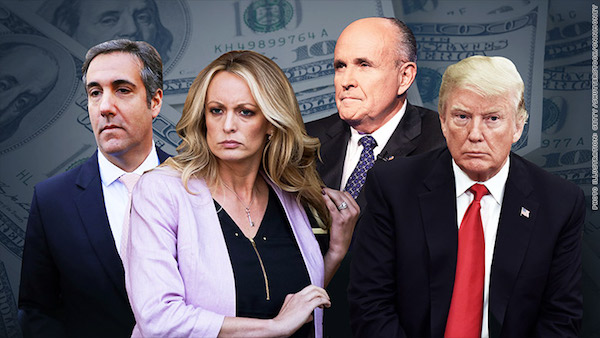
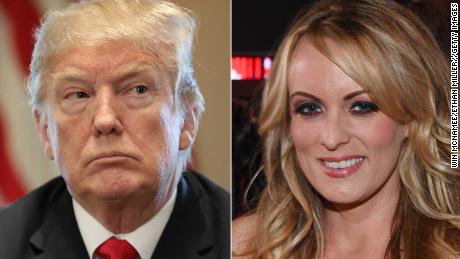
  • Trump confirms payment to porn star, denies affair; Says his lawyer paid $130,000 to buy Stormy Daniel’s silence

    Trump confirms payment to porn star, denies affair; Says his lawyer paid $130,000 to buy Stormy Daniel’s silence

    WASHINGTON(TIP): US President Donald Trump confirmed on Thursday, May 3 that he reimbursed his personal lawyer $130,000 he had given to adult film star Stormy Daniels days before the 2016 election to buy her silence over an alleged affair with the then presidential candidate.

    Trump’s confirmation came hours after his new legal aide and former New York City mayor Rudy Giuliani revealed that the President had personally repaid Michael Cohen $130,000 that was used to buy Daniels’s silence through a non-disclosure agreement.

    In an early morning tweet, Trump, 71, said his personal attorney, Cohen, was paid via a monthly retainer and that the hush agreement into which Cohen entered with Daniels had “nothing to do with the campaign”.

    The President had previously denied knowledge of the payment, which has prompted complaints to the Justice Department and Federal Election Commission over potential violations of campaign finance law.

    Trump had told reporters on Air Force One last month that he did not know about the payment to Daniels or the source of the money.

    The agreement was used to stop the false and extortionist accusations made by her about an affair despite already having signed a detailed letter admitting that there was no affair,” Trump said.

    He added, “Prior to its violation by Ms Clifford and her attorney, this was a private agreement. Money from the campaign, or campaign contributions, played no role in this transaction.”

    Speaking on Fox News on Wednesday, May 2, Giuliani said the reimbursement to Cohen was “not campaign money” and that the payment was “perfectly legal”. Cohen had admitted to paying Daniels, whose real name is Stephanie Clifford, out of his own pocket through a private LLC.

    Daniels has sued Trump and Cohen, saying the nondisclosure agreement is void because Trump did not sign it. The White House has said Trump denies the affair.

    Giuliani recently joined Trump’s legal team in an effort to bring special counsel Robert Mueller’s investigation into Russia’s 2016 election meddling and any possible coordination with the Trump campaign to an end.

    “He (Trump) paid him back. No campaign finance violations, no crime of any kind. Michael had discretion to solve these,” Giuliani told The Wall Street Journal in another interview.

    When the daily asked whether the fact that Trump had repaid his lawyer conflicted with the President’s previous statements that he was unaware of the payment, Giuliani said it was “not [an] issue”.

    “Cohen was his lawyer and had discretion to settle, as I have had for clients ultimately paying for it,’ he said. Trump was “probably not aware” of the payment at the time it was made, he said.

    Giuliani said Trump repaid Cohen “over several months” by putting him on a “retainer of $35,000 when he was doing no work for the President”. Daniels’ lawyer, Michael Avenatti, told CNBC: “This is exactly what we predicted would ultimately be shown. Every American, regardless of their politics, should be outraged.”


  • Wells Fargo Expected to be Fined $1 Billion

    Wells Fargo Expected to be Fined $1 Billion

    NEW YORK(TIP): Federal regulators are poised to impose a $1 billion penalty on Wells Fargo for a variety of alleged misdeeds, including forcing customers to buy auto insurance policies that they didn’t need, according to people briefed on the regulatory action, says a New York Times report, April 19.

    The expected penalty, levied by the Consumer Financial Protection Bureau and the Office of the Comptroller of the Currency, is likely to be announced Friday, April 20.

    It would mark the toughest action that the Trump administration has taken against a major bank. And it is the latest blow to Wells Fargo, which for years was regarded as one of the country’s best-run banks but lately has been reeling from a string of self-inflicted crises.

    President Trump has advocated a rollback of regulations on the banking and other industries. He has nominated industry-friendly officials to oversee key government agencies, including the consumer bureau, which is being run on an interim basis by Mick Mulvaney. Mr. Mulvaney has pledged to defang the agency, criticizing it for wasteful spending and overzealous oversight that is strangling banks and other lenders.

    At the same time, though, Mr. Trump has pledged to be especially tough on San Francisco-based Wells Fargo. “I will cut Regs but make penalties severe when caught cheating!” Mr. Trump wrote on Twitter in December.

    In addition to punishing Wells Fargo for forcing auto insurance on customers, the regulatory action is expected to cite the bank for improperly charging mortgage customers and for failing to maintain adequate risk management and compliance practices, according to one of the people briefed on the action.

    The bank already has been handcuffed by federal regulators. In February, the Federal Reserve barred the bank from expanding until it cleans up its internal financial and risk systems. The Fed also pushed for Wells to bring new blood onto its board of directors.

    Friday’s expected settlement is likely to intensify pressure on Wells Fargo’s chief executive, Tim Sloan. Mr. Sloan, a veteran of the bank, took over as C.E.O. after his predecessor, John Stumpf, resigned after the eruption of a scandal involving Wells Fargo’s creation of fake accounts.

  • Giuliani Joining Trump’s Legal Team ‘For the Good of the Country’

    Giuliani Joining Trump’s Legal Team ‘For the Good of the Country’

    A beleaguered president seeks a close ally’s help to rescue him

    NEW YORK(TIP): Former New York City Mayor Rudy Giuliani said he is joining President Donald Trump’s personal legal team to help with Special Counsel Bob Mueller’s investigation into potential Russian meddling in the 2016 election, The Washington Post reported on Thursday, April 17.

    News that the two had been discussing a role was first reported by The Daily Beast earlier in the day.

    The New York Times, too, followed up with the news of Giuliani joining Trump’s legal team.

    Though talks had been ongoing, a formal announcement was delayed by a slew of foreign policy matters that took over much of the president’s time and agenda. A source familiar with the arrangement said that Trump had been preoccupied by North Korea and Syria, which limited his availability to speak with potential new members of his legal team.

    Giuliani told the Post that he was joining the team “because I hope we can negotiate an end to this for the good of the country and because I have high regard for the president and for Bob Mueller.”

    In a statement, the president said: “Rudy is great. He has been my friend for a long time and wants to get this matter quickly resolved for the good of the country.”

    And Trump lawyer Jay Sekulow added: “I have had the privilege of working with Mayor Giuliani for many years, and we welcome his expertise. Mayor Giuliani expressed his deep appreciation to the President for allowing him to assist in this important matter.” Sekulow additionally announced the hiring of Jane Serene Raskin and Marty Raskin—both former federal prosecutors—to join the president’s legal team.

    Trump has had notable difficulties in recruiting new lawyers. And in the former New York City Mayor, he has brought on board a close ally with strong roots in the legal world.

    Giuliani served as the United States Attorney for the Southern District of New York during the 1980s. But his past several decades have been spent predominantly in politics. During the 2016 election, Giuliani campaigned with Trump and gave an impassioned speech in favor of Trump at the Republican National Convention in Cleveland.

    “What I did for New York City, Donald Trump will do for America,” he said at the convention. “I have known Donald Trump for almost 30 years. And he has created and accomplished great things. But beyond that this is a man with a big heart. Every time New York City suffered a tragedy, Donald Trump was there to help.”

    After Trump’s victory, however, Giuliani wasn’t selected for any cabinet post, leaving him on the outside of an administration he’d helped elect. Axios reported last summer that Trump had considered replacing Attorney General Jeff Sessions with Giuliani. But that too never happened.

    The former mayor has largely stayed out of public view since then and has said little, if anything, about the Mueller-led investigation.

    Giuliani previously represented Reza Zarrab, a Turkish businessman charged with participating in a scheme to evade American sanctions on Iran. Zarrab testified in federal court last November that two of his lawyers––presumably Giuliani and Michael Mukasey––tried to negotiate his release through a prisoner swap with Turkey. A federal judge called one of Giuliani’s affidavits about Zarrab’s alleged crimes “surprisingly disingenuous.”

    Giuliani is not the only Trump campaign alum with Turkey ties. Former national security advisor Michael Flynn, who pleaded guilty to lying to the FBI, also cultivated close links with the country.

    This isn’t the first time Giuliani has found himself enmeshed in the president’s legal troubles. After Trump announced his first travel ban—restricting immigration from several, predominantly Muslim, countries— Giuliani bragged to Fox News’ Judge Jeanine Pirro that he came up with the idea for it.

    “When he first announced it, he said ‘Muslim ban,’” Giuliani told the host. “He called me up, he said ‘put a commission together, show me the right way to do it legally.’ I put a commission together.”

    That quote was referenced frequently by litigants who sued to block the ban as evidence it was motivated by anti-Muslim animus rather than national security concerns. Giuliani later walked back the statement.

  • Encouraged by Xi’s remarks but want concrete steps to avert new tariff: WH

    Encouraged by Xi’s remarks but want concrete steps to avert new tariff: WH

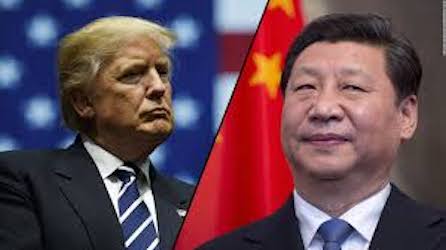
    WASHINGTON(TIP): The Trump Administration on Wednesday, April 11, said it was encouraged by the remarks of Chinese President Xi Jinping but ruled out reversing its recent move to impose 25 per cent tariff on import of products from China amounting to USD 150 billion.

    “Certainly, we are encouraged by President Xi’s words, and his kind words. But at the same time, we want to see concrete actions from China, and we’re going to continue moving forward in the process and in the negotiations until those happen,” White House Press Secretary Sarah Sanders told reporters at her daily news conference.

    The White House remarks come after President Donald Trump praised Xi for his remarks.

    “Very thankful for President Xi of China’s kind words on tariffs and automobile barriers…also, his enlightenment on intellectual property and technology transfers. We will make great progress together!” Trump tweeted.

    The US State Department also suggested the same. “We’ve been clear with the Chinese government in areas that are of concern to US workers, US companies, and the overall trade balance. We have had those conversations with them, so I think we’re looking like we’re in a better place,” State Department Spokesperson Heather Nauert told reporters at her daily news conference.

    “What we may be seeing is China coming to terms with some of our concerns about unfair trade practices and the United States saying. We stand by to engage with you, the government of China and President Xi, on that matter,” she said.

    In his keynote address at the Boao Forum for Asia after he began his second five-year term last month with prospects of continuing in power for life, Xi said, “China’s door of opening up will not be closed and will only open wider.” Without mentioning Trump’s concern over the huge trade deficit, Xi said China does not seek trade surplus and have a genuine desire to increase imports and achieve greater balance of international payments under the current account.

    (Source:PTI)

  • Trump keeps everyone guessing on Syria attack- “Could be very soon or not so soon at all!”

    Trump keeps everyone guessing on Syria attack- “Could be very soon or not so soon at all!”

    WASHINGTON(TIP): US President Donald Trump cast doubt on Thursday, April 12, over the timing of his threatened strike on Syria in response to a reported poison gas attack, while France said it had proof of Syria’s guilt but needed to gather more information.

    Fears of confrontation between Russia and the West have been running high since Trump said a day earlier that missiles “will be coming” after the suspected chemical weapons attack in the Syrian town of Douma on April 7, and lambasted Moscow for standing by Syrian President Bashar al-Assad.

    “Never said when an attack on Syria would take place. Could be very soon or not so soon at all!” the US President said in his latest early morning tweet on Thursday, April 12.

    Prime Minister Theresa May recalled ministers from their Easter holiday to debate military action over what she has cast as a barbaric poison gas attack in Douma, then rebel-held, just east of the capital Damascus.

    May has ordered British submarines to move within missile range of Syria in readiness for strikes against the Syrian military that could begin as early as Thursday night, London’s Daily Telegraph newspaper said on April 11.

    The BBC reported that May was ready to give the go-ahead for Britain to take part in military action. She would not seek approval from parliament, the BBC said. Opposition Labour leader Jeremy Corbyn said parliament must be consulted.

    Parliament voted down British military action against Assad’s government in 2013 in an embarrassment for May’s predecessor, David Cameron. That then deterred the US. There were signs, though, of a global effort to head off a direct confrontation between Russia and the West. The Kremlin said a crisis communications link with the United States, created to avoid an accidental clash over Syria, was in use.

    “The situation in Syria is horrific, the use of chemical weapons is something the world has to prevent,” Britain’s Brexit minister David Davis said, adding, “But also it’s a very, very delicate circumstance and we’ve got to make this judgment on a very careful, very deliberate, very well thought-through basis.” — Agencies

    French President Emmanuel Macron said on Thursday “we have proof that chemical weapons were used last week, at least chlorine, and that they were used by the Assad regime”. He said they would decide whether to strike back when all necessary details has been gathered

    Macron said during an interview on France’s TF1 television said he was in daily contact with Trump and that they would decide on their response “at a time of our choosing”

    Keep US at peace: Carter to Prez

    Expressing pride in his own record of peace, former President Jimmy Carter has warned that President Donald Trump should steer clear of any military action involving Syria or other world hot spots and avoid a nuclear attack at all costs

    “I pray that he would keep our country at peace and not exaggerate or exacerbate the challenges that come up with North Korea, in Russia or in Syria,” Carter said in an interview on his new book — “Faith: A Journey for All”

    A lifelong Democrat, Carter has been critical of Trump, a Republican, on a number of fronts, and he said “a lot of people” have “realized they made a mistake” supporting Trump. Yet Carter made clear that his critique is not about the current occupant of the Oval Office

    Moscow to West: Consider consequences of Syria threats seriously      

    Moscow on Thursday called on the West to “seriously consider” the consequences of threats against Syria after the US and France said they would respond to an alleged chemical attack

    “We call upon… members of the international community to seriously consider the possible consequences of such accusations, threats and especially action (against Syria),” Russian foreign ministry spokeswoman Maria Zakharova said

    “Nobody has authorized Western leaders to take on the role of global police-simultaneously investigator, prosecution, judge and executor,” she said during a press briefing.

    (Source-Agencies)


  • Disruptive Mr. Trump

    Disruptive Mr. Trump

    The consistent undermining of multilateralism by the U.S. must be countered

    This week has seen rounds of tit-for-tat tariffs between the U.S. and China, set off by U.S. President Donald Trump levying import duties of 25% and 10% on American steel and aluminum imports, respectively, in early March. Mr. Trump, who has repeatedly used the U.S. trade deficit of over $500 billion as a barometer for the country’s lot in the international trade order, has railed against the U.S. being treated “unfairly” by its trading partners, often singling out China. While it is true that China produces approximately half the world’s steel and that the European Union, India and other countries have complained about international steel markets being flooded with Chinese steel, only 3% of U.S. steel is sourced from China. Interestingly, among those exempted from the tariffs are Canada and Mexico, top sources for U.S steel imports. Mr. Trump has linked the threat of tariffs to the North American Free Trade Agreement, a trade deal among the U.S., Canada and Mexico that Mr. Trump has pried open for renegotiation. Earlier this week China retaliated with tariffs that would impact $3 billion worth of American goods. This was followed by the U.S. proposing tariffs on more than $50 billion of Chinese goods, including in the aerospace, robotics and communication industries — the outcome of an investigation of several months into whether Chinese policies were placing unreasonable obligations on U.S. companies to transfer technology and hand over intellectual property while setting up shop in China. Beijing responded with a second round of proposed tariffs impacting a similar value of U.S. imports into China. Mr. Trump has now asked the U.S. Trade Representative to examine if an additional $100 billion worth of goods can be taxed.

    Since the proposed tariffs have not kicked off, there may be room for negotiation. The economic ties between the countries are deep; China holds some $1.2 trillion in U.S. debt, and it is in everyone’s interest to avoid escalating matters. However, the larger cause for concern here is that Mr. Trump continues to undermine the World Trade Organisation and the international world trade order, now that it has served the West well and developing countries are in a significantly stronger position than when the WTO came into existence in 1995. Mr. Trump has pulled out of the Trans-Pacific Partnership, is pushing changes to NAFTA and has withdrawn from the Paris Agreement to combat climate change. While large-scale protectionism and unilateralism may please some of Mr. Trump’s constituents in the short run, undermining existing rules arbitrarily serves no nation, including the U.S., in the long run. In the current climate, it is therefore especially important for India to be a good steward for responsible globalization.

    (The Hindu)

  • America’s Taking on China is Good for the World

    America’s Taking on China is Good for the World

    By A.D. Amar
    His (Trump’s) taking on China for its flagrant violation of the trade and intellectual property rights has given courage to Europe and Japan to chime in the American challenge on China’s practices. The challenge will spread as Trump succeeds further in controlling China’s behavior, and that will benefit the whole world, says the author.     

    The implementation of China’s 75-year long project known as the “Great Trilogy of 21stCentury”that aims to erase the humiliating defeat China suffered at the hands of the British during the Anglo-Chinese trade wars or the Opium Wars of the 19thCentury and bring back its glorious past by taking the sole control of the world leadership. It started in 1978 and is to be completed by 2052. The strategy to achieve this populous goal involves benefiting from the laissez-faire policy of the free-market economies, particularly the USA and the countries in the Western Europe. Consequently, China decided to sell in these countries all types of products and services by applying predatory pricing policy with the goal to turn these countries into china’s captive markets.

    China devised policy to conduct its foreign trade as means to provide cash to fund its ambitious goal to displace the USA as the global leader. It has continued to build its cash reserves by selling but not buying or buying very little. To subvert the nations’ ability to export to China, it wrote or rewrote its laws and regulations more than 10,000 times a year, more that the rest of the world combined. The purpose has been to keep out competitive imports of any kind to preserve its huge cash reserves built by trade surpluses. While it worked to indigenize all products, services, processes, and technologies, it also worked to bring Chinese culture back to its past. This included displacing Buddha with Confucius by using the “Da Tong” that teaches achieving deals in the world with harmony.

    Since America is the world’s largest, freest market, China had larger designs to take over the US markets. It used its United Nations Security Council (UNSC) veto power as a strategy to achieve this goal. It used the veto power to negotiate the opening up of American import of goods from China whether it were apparels, consumer electronics, or whatever else. When so ever America got in conflict at any place in the world and went to the UNSC for its nod, China agreed to abstain from exercising its veto power against America for easing of Chinese imports into the USA. Also, this is how it made America have it become a member of the World Trade Organization and lift limits on import of apparel and other consumer goods that were supplied by many other smaller countries. In due course, it routed out other countries that competed against it in American market and turned America into China’s monopolistic market. Everything selling in the USA carried the China label.

    To maintain hefty cash reserves for its Great Trilogy of 21stCentury goal, globally, China imported one-dollar worth of goods for each five dollars of exports it made. This behavior became apparent in 2009 when it tremendously cut back on its imports to preserve its foreign cash reserves when its exports to some countries went down after the 2008-09 recession.

    In 2012, when the world was still going through an extended period of what was dubbed as “the greatest recession since the great depression”, China entered the global markets in a big strategic way with the cash it had preserved through the lopsided foreign trade. It started taking control of land and strategic natural resources and assets from mismanaged countries in Africa and Asia, and even in Europe by straightforward acquisition where possible or long-term leases. It started to build passageways to control its flow through the globe, building ports and strategic bases for monitoring and controlling global activities through international waters and to enhance the speed of its own movements along all continents. It started to claim its rights and, in some cases, forcibly take possession of lands based on its centuries, or in some cases millennia old dubious records.

    American presidents from the early seventies, starting with President Richard Nixon slowly but steadily, for one reason or another, gave in to China. This went on unchecked until President Bill Clinton. President George W. Bush, who had a strategy to reduce America’s dependence on China and get closer to India and other democratic countries, gave up on it after 9/11 as he decided to fight the Islamic terrorism for which he needed China’s support in the United Nations. President Barack Obama, as a candidate, had huge plans to confront China on its trade practices, the stealing of America’s intellectual property and constantly hacking into American business and government installations. After his election, in November 2009, during his first visit to China, he brought along plans to ask China to address its huge trade surplus with America and to open its markets to the USA to plug it. Instead, he was harangued by the Chinese President Hu Jintao on free trade. The meeting was so embarrassing for Obama that he did not have the courage to check on China for its trade imbalance, the stealing of intellectual property or the cyber hacking during any of his meetings with the Chinese for all of his eight years in the White House. He was afraid that China would carry forward its threat to withdraw its deposits at the US Treasury and cause a monetary havoc. Obama with the desire not to unravel the economy, kept low and China became bolder.

    No American president dared challenge China until President Donald Trump came in the White House. It is not just that Trump is bold to handle simultaneously problems along several fronts in the world but is smart and efficient to negotiate to get what is good for America. His taking on China for its flagrant violation of the trade and intellectual property rights has given courage to Europe and Japan to chime in the American challenge on China’s practices. The challenge will spread as Trump succeeds further in controlling China’s behavior, and that will benefit the whole world.

    (The author is Business Professor at Seton Hall University.  He can be reached at AD.Amar@shu.edu)


  • President Trump speaks of hitting China with $100 billion in tariffs

    President Trump speaks of hitting China with $100 billion in tariffs

    WASHINGTON(TIP): In a marked escalation of a trade war with China, President Trump said Thursday, April 5, that he will consider hitting China with an additional $100 billion in tariffs, on top of the $50 billion the White House has already authorized.In a statement late Thursday, President said that he was responding to China’s “unfair retaliation” against the United States, which this week outlined hundreds of Chinese products, like flat-screen TVs and medical devices, that could be subject to American tariffs. The Chinese, in response, detailed their own list of $50 billion worth of American products, like soybeans and pork, that would be hit with levies.

    “Rather than remedy its misconduct, China has chosen to harm our farmers and manufacturers,” Trump said, adding that he has instructed the United States trade representative to determine if another $100 billion in tariffs were warranted and, “if so, to identify the products upon which to impose such tariffs.”

    The story was first broken by New York Times.

  • Trump says he was unaware of payment to Stormy Daniels

    Trump says he was unaware of payment to Stormy Daniels

    WASHINGTON(TIP): Breaking his silence over the $130,000 payment by his lawyer Michael Cohen to adult firm star Stormy Daniels ahead of the 2016 election, President Trump on Thursday, April 5 said he was unaware of the transaction.

    Asked if he knew about the $130,000 payment to Daniels, Mr. Trump said, “No. No. What else?”

    The president made the comments aboard Air Force One, heading from a roundtable event in West Virginia to Washington, D.C. Daniels, whose real name is Stephanie Clifford, claims she had a sexual encounter with Mr. Trump in 2006. Asked why Cohen made the payment if there was no truth to the woman’s allegations, Mr. Trump said reporters would “have to ask Michael Cohen.”

    “Michael is my attorney. And you’ll have to ask Michael Cohen,” Mr. Trump said.

    Mr. Trump also claimed he did not know where Cohen obtained the money for the payment. Cohen claims the money came out of his own personal funds.

    In the past, Mr. Trump has ignored questions about the adult film star, who is suing over a nondisclosure agreement that she signed but claims, is invalid because Mr. Trump never signed it.


  • Trump deploys military to secure US-Mexico border to check ‘illegal migration’

    Trump deploys military to secure US-Mexico border to check ‘illegal migration’

    President Enrique Peña Nieto of Mexico reacts sharply to Trump’s Threats

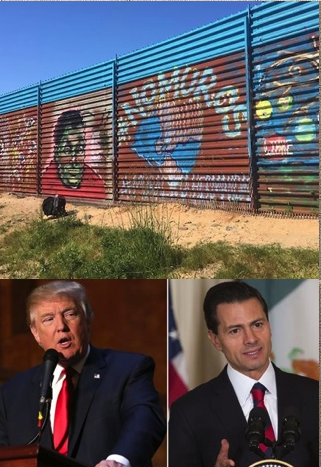
    WASHINGTON(TIP): President Donald Trump, April 5, signed an executive order directing the deployment of military along the US-Mexico border to fight illegal immigration, asserting that the situation had reached “a point of crisis.”

    The announcement came a day after Trump said he intended to deploy the National Guard to the US-Mexico border until his administration was able to deliver on his campaign promise to build a wall to bolster security.

    Given the importance to secure borders for national security, the National Guard, in coordination with governors, will remain in a support role until Congress takes the action necessary to close the loopholes, the White House said.

    Trump on Thursday told reporters aboard Air Force One that a large portion of the troops he is planning to deploy to the U.S.-Mexico border would stay there until the border wall was built. Around 2,000 to 4,000 National Guard troops will be deployed to the area, Trump said, similar to actions by Presidents George W. Bush and Barack Obama.

    “The situation at the border has now reached a point of crisis. The lawlessness that continues at our southern border is fundamentally incompatible with the safety, security, and sovereignty of the American people. My administration has no choice but to act,” Trump said in his memorandum to the Defense Secretary, Attorney general and the Secretary of Homeland Secretary.

    The threat is real, Homeland Security Secretary Kirstjen Nielsen told reporters at a White House news conference. “We continue to see unacceptable levels of illegal drugs, dangerous gang activity, trans-national criminal organizations and illegal immigration flow across our border,” she said.

    This threatens not only the safety of American communities and children, but also the very rule of law, on which, the country was founded. “It’s time to act. So, let’s talk a little bit about that today,” she said.

    “In an effort to prevent such a consequence, the President has directed that the Department of Defense and the Department of Homeland Security to work together with our governors to deploy the National Guard to our southwest border to assist the Border Patrol,” she said.

    Border Patrol recorded 37, 393 arrests on the southwest border in March, according to data released by US Customs and Border Protection (CBP).

    In the last 15 months, she said the Trump administration has taken major steps to methodically strengthen border security.

    “We began the first new border wall system construction in close to a decade, we modified our asylum system processing to more quickly adjudicate claims and we ended so-called temporary immigration program,” Nielson said.

    Ruing that the system rewards bad behavior, she said it does not punish law breakers. “It undermines our nation’s economic interests. Make no mistake, interdiction without the ability to promptly remove those without legitimate cause is not border security, it is not national security,” she asserted.

    “We will not allow illegal immigration levels to become the norm. More than 1,000 people a day, 300,000 a year, violating our sovereignty as a nation will never be acceptable to this president,” she said.

    Meanwhile, President Enrique Peña Nieto of Mexico blasted President Donald Trump in a video message on Thursday, April5, vowing that “nothing and no one stands above the dignity of Mexico” and adding that the U.S. president’s main gripes were Congress’s problem, not Mexico’s.

    “If your recent statements are the result of frustration due to domestic policy issues, to your laws or to your Congress, it is to them that you should turn to, not to Mexicans,” Peña Nieto said in the message, according to a translation provided by his office.

    (With inputs from PTI)

  • Big thaw on the Korean peninsula

    Big thaw on the Korean peninsula

    By Rakesh Sood

    The big unknown is Mr. Trump’s idea of what is an acceptable ‘deal’. Will a process towards eventual denuclearization tempt him or will he reject it as ‘fake news’ and revert to relying on sanctions and military pressure as some of his advisers are inclined to? Major compromises will be needed for reconciling interests of all the key players for the high stakes summitry on the Korean peninsula to succeed, says the author.

    An unusual charm offensive is under way on the Korean peninsula and the unlikely architect is none other than the North Korean Supreme Leader, Kim Jong-un. During the last three months, he has played a deft political hand, a far cry from his rhetorical exchanges with U.S. President Donald Trump. Last year, Mr. Trump was threatening the “Rocket Man” with “fire and fury like the world has never seen”; the North Korean leader described him as a “dotard” and his military called his statement “as a load of nonsense”. Now the two leaders are planning a summit in May which according to Mr. Trump could lead to “the greatest deal in the world”.

    Since 2011 when Mr. Kim took over, North Korea has conducted four nuclear tests; the first two were conducted in 2006 and 2009. The sixth test, last September, had a yield more than six times the Hiroshima bomb. He has accelerated the missile program, conducting nearly 80 tests, compared to an estimated 16 by his father Kim Jong-il between 1994 and 2011.

    In his New Year address, Mr. Kim conveyed two messages — that the entire U.S. was within range and the nuclear button was on his table, and that he was open to dialogue with Seoul and could send a team to participate in the Winter Olympics being hosted by South Korea in February. Mr. Trump responded by tweeting that his “nuclear button” was “much bigger & more powerful”. But South Korea responded positively and reaffirmed willingness to talk with North Korea at anytime and anywhere. Thereafter events gathered pace.

    Mr. Kim’s younger sister Kim Yo-jong attended the opening ceremony of the Winter Olympics, with the two Korean teams marching together. She conveyed her brother’s handwritten note to South Korean President Moon Jae-in even as she mesmerized South Korean audiences, and TV channels carried endless discussions about her clothes, hair style and whether she was pregnant.

    In early March, a South Korean delegation led by National Security Adviser Chung Eui-yong and intelligence chief Suh Hoon visited Pyongyang to explore the idea of talks. According to the officials, Mr. Kim indicated continuing restraint on nuclear and missile tests (last test was a Hwasong-15 in November with a range of 12,000 km), joking that Mr. Moon would not need to wake up early in the morning for emergency meetings, since North Korean missile tests were normally timed for dawn. According to the South Koreans, “the North Korean side clearly showed willingness on denuclearization in the Korean peninsula if military threats to North Korea decrease and regime safety is guaranteed”. An April summit between the two Korean leaders was announced and is now scheduled for April 27 at the Peace House in Panmunjom.

    The two South Korean officials travelled to Washington to brief Mr. Trump on March 8. It was announced that Mr. Trump had agreed to a summit with the North Korean leader in May.

    This will be the first summit meeting between the U.S. and North Korea. Jimmy Carter and Bill Clinton have travelled to Pyongyang in 1994 and 2009, respectively, to meet Mr. Kim’s grandfather and father, respectively, but after their terms as U.S. President ended. There have been two earlier summits between the Korean leaders, in 2000 and 2007, though the outcomes proved to be short-lived. Mr. Moon has also mooted the idea of a trilateral summit though there has been no reaction to it from Pyongyang or Washington. In another surprise move, the North Korean leader, accompanied by his wife Ri Sol-ju, travelled by train to Beijing on March 25. It was Mr. Kim’s first foreign trip since he took over in 2011. Though described as an unofficial visit, it had the trappings of a state visit, complete with a guard of honor and a banquet with Chinese President Xi Jinping and his wife Peng Liyuan at the Great Hall of the People. The North Korean leader assured Mr. Xi that if South Korea and the U.S. responded with goodwill and took phased, synchronized measures, the issue of denuclearization of the peninsula could reach resolution.

    China has long been North Korea’s political ally and economic lifeline, accounting for 90% of North Korea’s foreign trade. It has often resisted tightening of sanctions that could lead to the collapse of the regime. However, relations between the two countries have soured since 2013 when Jang Song Thaek, Mr. Kim’s uncle who was responsible for managing the China relationship, was purged. Missile tests when China was hosting the G20 summit in 2016 and the Belt and Road Forum in 2017 together with a nuclear test during the BRICS summit in 2017 were embarrassments for China. As sanctions tightened under successive UN Security Council resolutions, North Korea blamed China for ‘dancing to the tune’ of the U.S.

    However, Mr. Kim realizes that he needs help to handle U.S. pressure. His China visit acknowledges Mr. Xi’s extension in power beyond 2022; and for China, it reflects its pivotal role in any negotiations regarding North Korea. Mr. Xi has sent a personal message to Mr. Trump about his meeting with Mr. Kim while Politburo Member Yang Jiechi is being dispatched to Seoul. In Washington, recent appointments of John Bolton as National Security Adviser and Mike Pompeo as Secretary of State, both hardliners, raise the stakes for North Korea.

    Mr. Kim’s objectives are clear — securing regime legitimacy, regime security and sanctions relief. A summit with Mr. Trump provides legitimacy as long as it begins a dialogue process leading towards diplomatic recognition. In 1992, despite North Korean reservations, China recognized South Korea and today it is one of the South’s largest partners and a major investment source. How South Korea and the U.S. deal with the move towards recognition will demand political creativity.

    Having achieved a certain threshold in its nuclear and missile capabilities, North Korea can afford a pause in testing in return for sanctions relief but ‘denuclearization’ will only happen at the end of a long-drawn process which will involve discussions regarding the U.S. nuclear umbrella for South Korea, the presence of 23,500 American troops and converting the 1953 armistice into a peace treaty which will guarantee regime security.

    South Korea would like to ensure that it has a veto over U.S. decisions regarding North Korea and gaining operational control over its own military forces, both of which will require protracted negotiations. Meanwhile, Mr. Moon will do his utmost to maintain credibility in Washington and Pyongyang to keep his ‘sunshine policy’ on track. In Europe, the two Germanys recognized each other in 1972 (the U.S. recognized East Germany in 1974) as part of Willy Brandt’s ‘ostpolitik’, long before German unification was achieved in 1990.

    North Korea’s aggressive testing provided justification for the deployment of the THAAD missile defense system aggravating Chinese concerns. China would prefer lowering tensions though it is in no hurry to see Korean unification.

    The big unknown is Mr. Trump’s idea of what is an acceptable ‘deal’. Will a process towards eventual denuclearization tempt him or will he reject it as ‘fake news’ and revert to relying on sanctions and military pressure as some of his advisers are inclined to? Major compromises will be needed for reconciling interests of all the key players for the high stakes summitry on the Korean peninsula to succeed.

    (The author is a former diplomat and currently Distinguished Fellow at the Observer Research Foundation. He can be reached at rakeshsood2001@yahoo.com)


  • Kim in Beijing: His visit strategically brings China into North Korea’s hectic diplomatic calendar

    Kim in Beijing: His visit strategically brings China into North Korea’s hectic diplomatic calendar

    The timing of North Korean leader Kim Jong-un’s visit to China, his first foreign trip after assuming power in 2011, is not lost on anyone. After travelling to Beijing this week in an armored train, he held talks with Chinese President Xi Jinping and re-emphasized his commitment to the “denuclearization” of the peninsula, weeks before his scheduled April 27 summit with South Korean President Moon Jae-in. In May, Mr. Kim and U.S. President Donald Trump are expected to meet for a historic summit. By visiting Beijing now, Mr. Kim is sending a clear message: that he is serious about his offer of talks. The visit has also helped repair relations between Pyongyang and Beijing, which had come under some strain. China was not particularly happy with the North’s nuclear tests. Mr. Xi was under pressure from the West to exercise influence on Mr. Kim’s regime. And Beijing’s support for stringent UN sanctions on North Korea that have cut its exports of coal, seafood and other goods to China has dealt a blow to its already isolated economy. Mr. Kim reportedly rejected overtures from Beijing and purged officials who had close ties with the Chinese. But now, both leaders appear to have decided to set aside their differences.

    China has historically played a role in inter-Korean relations. In 2000, Mr. Kim’s father and predecessor, Kim Jong-il, had visited China shortly before a summit with South Korea. In 2003, China launched the Six-Party Talks aimed at peacefully resolving the North Korean nuclear crisis, which eventually failed. Mr. Kim’s visit to Beijing has reinstated China’s central role in talks over the Korean crisis, which both countries see as mutually beneficial. For the Kim regime, China’s experience and guidance could come in handy when it is preparing to engage with two of its biggest rivals. China, for its part, would not like to be bypassed by the U.S. and the North in any diplomatic process. If the Kim regime’s fundamental objective is its own survival, China’s interest lies in a peaceful resolution to the crisis in a stable political environment in its neighborhood. This enables convergence of interest for both in the diplomatic process. But there is still much uncertainty over the peace process. Mr. Trump may have agreed to meet Mr. Kim. But since then he has inducted into his team two officials with hawkish views on North Korea — Mike Pompeo as Secretary of State and John Bolton as National Security Adviser. As of now, it is anybody’s guess what the U.S. would do next if the Trump-Kim summit fails to produce a breakthrough. In such a volatile context, robust multilateral intervention would be needed to stay the diplomatic course. The Xi-Kim meet could be a step in that direction if China agrees to be a balancing force and a facilitator of talks between the North and the U.S.

    (The Hindu)

  • India in Trumpland needs to cut Trade Deals with US to keep afloat

    India in Trumpland needs to cut Trade Deals with US to keep afloat

    By Arun Kumar

    The businessman-author of The Art of the Deal, who looks at every issue as a transaction, would also be in no hurry to tear up the Iran nuclear deal, Pompeo or no Pompeo. For him, threat is a negotiating tactic. So, India has little to lose sleep on this count”.

    Washington is said to be in turmoil sending shock waves across the world from New York to New Delhi, with a mercurial President Donald Trump firing aides left and right and courting controversy with his fiats.

    Will his new incoming hawkish National Security Adviser John Bolton, who has in the past advocated military strikes against both Iran and North Korea, push his boss into another war and upend the proposed summit between Trump and North Korean leader Kim Jong-un?

    Or would CIA director Mike Pompeo, another hardliner set to replace moderate Secretary of State Rex Tillerson, spur the President to make good on his campaign promise to tear up the “disastrous” Iran nuclear deal forcing nations like India into yet another balancing act?

    And would Trump’s imposition of steel and aluminum tariffs, essentially aimed at China, set off a trade war catching India in the crossfire?  Or perhaps the brash billionaire would implode in a clash of wills with special counsel Robert Mueller, former FBI director, probing alleged Russian interference in the 2016 presidential election and any collusion with the Trump campaign?

    Or maybe the juicy tales of alleged dalliances with a porn star and a Playmate would finally prove the undoing of “The Donald”, as the first wife of the thrice married former reality TV star lovingly called him?

    As pundits on either side of the political divide fill the airwaves with such kite flying, “There is no news anymore. It’s all Trump,” as noted TV host Larry King lamented ripping into TV channels going after eyeballs and newspapers savoring the circulation windfall.

    With Trump setting the agenda, there is hardly any attempt to look at the issues dispassionately and give the devil his due. For instance, when the President ordered the expulsion 60 Russian diplomats in response to nerve agent attack on a former Soviet spy in Britain, Los Angeles Times, among others, had a different take.

    “Trump quiet as US expels 60 suspected Russian spies,” read the Times’ headline, even as the liberal daily acknowledged lower down that it was the “most aggressive diplomatic slap down since the end of Cold War”.

    Thus, contrary to instant analysts’ fears there is little danger of Trump, who in 2004 described the Iraq war as a “big fat mistake”, leading the US into another conflagration as his “America First” policy leaves no room for “regime change” or “nation building” abroad.

    The businessman-author of The Art of the Deal, who looks at every issue as a transaction, would also be in no hurry to tear up the Iran nuclear deal, Pompeo or no Pompeo. For him, threat is a negotiating tactic. So, India has little to lose sleep on this count.

    North Korea too would likely be a different story. Trump has often been painted as getting his strategic advice from TV shows, particularly Fox News, and influenced by the last man he sees before making up his mind. But contrary to conventional wisdom, the President keeps his own counsel. Witness the number of men who have been shown the door. These include Steve Bannon, his former chief strategist, who was once portrayed by influential Time on its cover as “The Great Manipulator” and “The second most powerful man in the world”.

    Trump surprised the world by accepting an invitation for nuclear talks with Kim in May after trading childish barbs with the “little rocket man” about the size of their nuclear buttons as he threatened to respond with “fire and fury” to any provocations from Pyongyang.

    Ahead of the crucial summit that he agreed to despite telling Tillerson that “our wonderful Secretary of State was wasting his time trying to negotiate” with Kim, Trump has scored his first victory on the tariff issue with South Korea.

    Under the significant one-on-one deal, Seoul has agreed to limit its steel exports to the US and ease US auto imports. Pundits concede that Trump might well pull a rabbit out of his hat at the summit. Henry Kissinger, the legendary architect of Richard Nixon’s opening up to China, has endorsed the summit attributing it to Trump’s unique style. As he told the New York Times that it may not be what “we traditionalists would have recommended in the first place” but “it could restore a political initiative to us, and could compel a conversation with countries (who may not otherwise want one).”

    During the presidential campaign, Trump had vowed to be a “true friend” to and “best friends” with India.

    But that has not prevented him from slamming India’s “high” import duties on Harley-Davidson bikes. His administration has also taken India, which has a $24 billion trade surplus with the US, to the WTO, challenging export subsidies that benefit $7 billion Indian exports. But given Prime Minister Narendra Modi’s bonhomie with Trump, they too could well work out a deal like South Korea.

    Indians are also concerned about the Trump administration’s plans to restrict H-1B visas for professionals, which are largely cornered by Indians, and limiting visas to relatives to immediate family. But his plans to introduce a point-based merit system for immigration may well work to the advantage of Indians in the long run.

    Other than that, thanks to bipartisan political support, Trump has continued to consolidate ties with India that have been growing stronger under three previous Presidents — Bill Clinton, George Bush and Barack Obama. As he told Modi last June, “The relationship between India and the United States has never been stronger, never been better.”

    His national strategy unveiled last January also welcomes “India’s emergence as a leading power and stronger strategic and defense partner” as a counterbalance to China in the Indo-Pacific Region.

    With the fight against terrorism emerging as an important area of convergence, the Trump administration also did something unprecedented in suspending security assistance to Pakistan after several warnings to Islamabad to stop supporting terrorists fell on deaf ears.

    Indian interests may be safe in Trumpland, but the ongoing Russia probe has been hanging like a cloud on Trump with all his Russia-related actions viewed as suspect. He has been itching to fire Mueller to end what he deems as the “single greatest witch-hunt in American political history”.

    Republican leaders have cautioned him against sparking a constitutional crisis by firing Mueller with Lindsey Graham, former Republican presidential rival turned supporter, warning that it would be “the beginning of the end of his presidency”.

    But Trump being Trump, he may well do the unthinkable — and yet survive!

    (The author is an expert on India-US relations)

  • In yet another ouster, Trump fires Veterans Affairs Secretary David Shulkin

    In yet another ouster, Trump fires Veterans Affairs Secretary David Shulkin

    WASHINGTON (TIP): US President Donald Trump on Wednesday, March 29 fired his Veterans Affairs Secretary David Shulkin and nominated White House physician, Admiral Ronny Jackson as his replacement.

    Trump made the announcement on Twitter and later issued a separate statement thanking Shulkin for his services.

    “I am pleased to announce that I intend to nominate highly respected Admiral Ronny L. Jackson, MD, as the new Secretary of Veterans Affairs….,” Trump wrote on Twitter.

    “I appreciate the work of Dr. David Shulkin and the many great things we did together at Veterans Affairs, including the VA Accountability Act that he was helpful in getting passed. He has been a great supporter of veterans across the country and I am grateful for his service,” Trump said in a later statement.

    Early this month, Trump had unceremoniously fired Secretary of State Rex Tillerson and nominated Mike Pompeo, the CIA Director, for the top diplomatic position in his cabinet.

    Both the cabinet positions need to be confirmed by the US Senate.

    “In the interim, Hon. Robert Wilkie of DOD will serve as Acting Secretary. I am thankful for Dr. David Shulkin’s service to our country and to our GREAT VETERANS!” Trump said in another tweet.

    Trump said Jackson was highly trained and qualified.

    “As a service member himself, he has seen firsthand the tremendous sacrifice our veterans make and has a deep appreciation for the debt our great country owes them,” he said in a separate statement.

    Wilkie, who will serve as the Acting Secretary for the department, is currently the Undersecretary of Defense for Personnel and Readiness at the Department of Defense and overseas health affairs, welfare and quality of life for military families.

    Jackson has served as the White House physician during the past three administrations of Presidents George W. Bush, Barack Obama and Donald Trump.

    Since arriving at the White House, he has directed the Executive Health Care for the President’s Cabinet and Senior Staff, served as physician supervisor for the Camp David Presidential Retreat, held the position of physician to the White House and led the White House Medical Unit as its director.

    A native of Texas, and a graduate from Texas A&M University with a Bachelor of Science in Marine Biology; Jackson began his active duty naval service in 1995 and went on to become the honor graduate of the Navy’s Undersea Medical Officer Program in Groton, Connecticut.

    The opposition Democratic Party expressed concern over the firing of Shulkin.

    Democratic leader Nancy Pelosi called Shulkin’s dismissal “a troubling step in the Trump Administration’s ultimate goal of VA (Veterans Affairs) privatization”.

    “From day one of this administration, the president has openly encouraged and embraced Koch Brothers-led forces as they work around Congress and behind closed doors to dismantle veterans’ health care,” Pelosi said.

    She urged the members of Congress to join hands against any effort to privatize VA.

    Senator Johnny Isakson, chairman of the Senate Committee on Veterans’ Affairs, said Shulkin had made a tremendous impact toward improving the lives of veterans during his time at the US Department of Veterans Affairs.

    “He has been instrumental in all that we have accomplished in the last year, and I thank Dr. Shulkin for his dedicated service to our country and our veterans,” he said.

    Concerned Veterans for America executive director Dan Caldwell said Shulkin made significant headway in reforming the department, but ultimately became a distraction from the important task of improving health care for the veterans.

    “The Trump administration has made great progress over the last year reforming and fixing the VA, however there is still much work to be done,” he said.

    (Source:  PTI)

  • US, China embroiled in a Trade War

    US, China embroiled in a Trade War

    Trump slaps tariffs on Chinese imports; Beijing hits back

    China retaliated with reciprocal tariffs on $3 billion of imports from the U.S. immediately as US President Donald Trump slapped sanctions for the “theft” of intellectual property.

    WASHINGTON (TIP): US President Donald Trump on Thursday, March 22, imposed tariffs on Chinese imports to punish the country for its “unfair” seizure of American intellectual property, a move that could escalate the already tense trade relations between the world’s two biggest economies.

    Trump directed the US trade representative to level tariffs on about $60 billion of Chinese imports after a seven-month probe into the intellectual property theft, which has been a longstanding point of contention in US-China trade relations.

    “We have a tremendous intellectual property theft problem. It’s going to make us a much stronger, much richer nation,” Trump said. “This has been long in the making,” Trump told reporters at the ceremony in the White House while signing his memorandums targeting China’s economic actions.

    Trump’s action comes a day after US Trade Representative concluded its Special 301 investigation against China and presented its report to him. The USTR report concluded that China uses foreign ownership restrictions, including joint venture requirements, equity limitations and other investment restrictions to require or pressure technology transfer from US companies to Chinese entities.

    “This requires taking effective action to confront China over its state-led efforts to force, strong-arm, and even steal US technology and intellectual property,” said US Trade Representative Robert Lighthizer.

    Trump said his Section 301 trade action could be about $60 billion. He instructed USTR to publish a proposed list of products and any tariff increases within 15 days and to pursue dispute settlement in the World Trade Organization to address China’s discriminatory technology licensing practices.

    He also has directed the Treasury Secretary to address concerns about investment in the US directed or facilitated by China in industries or technologies deemed important to the country. Trump said America’s trade deficit with China was a whopping $504 billion per annum.

    China which had earlier said it will not sit back idly in case US imposed tariffs, in a quick counter action announced plans for imposing reciprocal tariffs on $3 billion of imports from the U.S. including products from steel to pork.

    Bloomberg, in a late evening breaking news, March 22 saw the Chinese retaliation as “the arrival of a trade war” between the US and China.

    In a statement Friday, March 23, hours after Trump instructed U.S. Trade Representative Robert Lighthizer to slap tariffs on at least $50 billion in Chinese imports, China’s Commerce Ministry said it plans a 25 percent tariff on U.S. pork imports and recycled aluminum, and 15 percent tariffs on American steel pipes, fruit and wine.

    China will also pursue legal action against the U.S. at the World Trade Organization, the statement said, and called for dialogue to resolve the dispute.

    Policy makers across the world are warning of a brewing trade war that could undermine the broadest global recovery in years. Meanwhile, business groups representing companies ranging from Walmart Inc. to Amazon.com Inc. are warning U.S. tariffs could raise prices for consumers and sideswipe stock prices.

    (With inputs from PTI)

  • Trump replaces national security adviser McMaster with John Bolton

    Trump replaces national security adviser McMaster with John Bolton

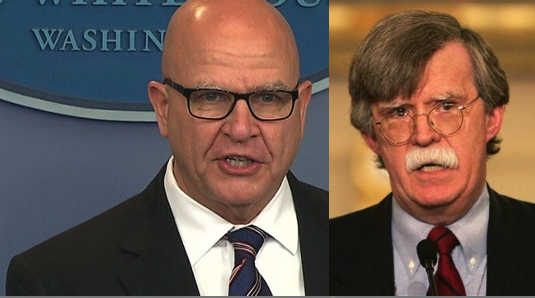
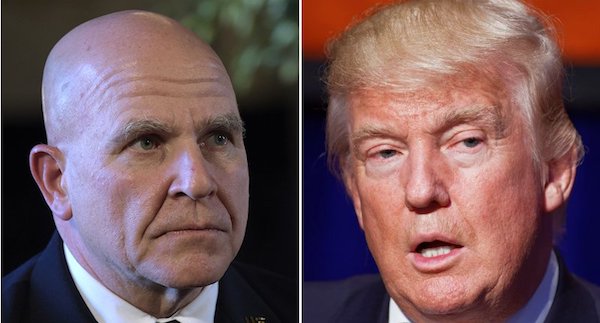
    WASHINGTON (TIP): Readers of The Indian Panorama will recall the news we published last week that President Trump had made up his mind to give marching orders to his national security adviser H.R. McMaster. And we have been proved right, as Trump ousted McMaster who is to be succeeded by John Bolton, a former ambassador.

    The president announced the news in a tweet on Thursday, March 22, saying that Bolton would take the job starting April 9, making him Trump’s third national security adviser in the first 14 months of his presidency. In dismissing McMaster from the job, Trump praised the Army general for his “outstanding work” and said he would “always remain his friend.”

    Bolton, 69, served in the George W. Bush administration in a key arms-control job. Then-Secretary of State Colin Powell said he was strongly encouraged to take Bolton by Vice President Richard B. Cheney, who shared Bolton’s belief in American military power.

    On March 13, Trump had fired Secretary of State Rex Tillerson and signaled in recent days that a shake-up at the top levels of his administration was not over.

    “I’m really at a point where we’re getting very close to having the Cabinet and other things that I want,” Trump told reporters after Tillerson was fired.

  • Trump has decided to remove his national security adviser, says Washington Post

    Trump has decided to remove his national security adviser, says Washington Post

    Trump has complained that H.R. McMaster, a three-star Army general, is too rigid and that his briefings go on too long and seem irrelevant, the Post reported.

    WASHINGTON (TIP): U.S. President Donald Trump has decided to replace his national security adviser, H.R. McMaster, but the move is not expected to be made immediately, the Washington Post reported on Thursday, March 15.

    Citing five people with knowledge of the plans, the Post said Trump was considering several possible replacements, including former U.S. Ambassador to the United Nations John Bolton and Keith Kellogg, the chief of staff of the National Security Council.

    On Tuesday, Trump fired Secretary of State Rex Tillerson and the president has signaled in recent days that a shake-up at the top levels of his administration was not over.

    “I’m really at a point where we’re getting very close to having the Cabinet and other things that I want,” Trump told reporters after Tillerson was fired.

    McMaster is not expected to be ousted immediately, the Post reported. Trump is willing to take his time making the change to avoid humiliating McMaster and carefully choose a strong replacement, the Post said.

    Trump never personally gelled with McMaster and the President recently told White House Chief of Staff John Kelly that he wanted McMaster replaced, according to the Post.

    Trump has complained that McMaster, a three-star Army general, is too rigid and that his briefings go on too long and seem irrelevant, the Post reported.

    McMaster is Trump’s second national security adviser, succeeding Michael Flynn who was dismissed a year ago for misleading Vice President Mike Pence about his contacts with the Russian ambassador to the United States.

  • Mueller subpoenas Trump Organization documents in Russia probe

    Mueller subpoenas Trump Organization documents in Russia probe

    WASHINGTON (TIP): Special counsel Robert Mueller has subpoenaed the Trump Organization for business documents, CNN reported, quoting a source, on March 15.

    The New York Times, which first reported the development, said the subpoena included documents related to Russia. The reports mark the first publicly known time that Mueller has demanded documents related to President Donald Trump’s businesses.

    The subpoena is a sign that the Mueller investigation continues to pick up steam, even as Trump decries remaining questions about potential coordination between his associates and Russia and denies any wrongdoing. Trump has said he would view any investigation of his or his family’s personal finances that didn’t involve Russia as a “violation” by Mueller that crosses a red line.

    CNN reported in January that the company had voluntarily provided documents on a range of events, conversations and meetings from Trump’s real estate business to Mueller and congressional investigators, according to three people familiar with the matter.

    It will be interesting to watch how Trump reacts to this move of Mueller.

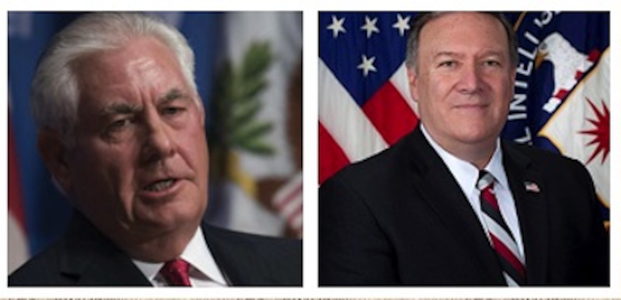
  • Trump ousts Secretary of State Rex Tillerson, replaces him with Mike Pompeo

    Trump ousts Secretary of State Rex Tillerson, replaces him with Mike Pompeo

    WASHINGTON (TIP): President Trump has removed Rex Tillerson as secretary of state and replaced him with current CIA Director Mike Pompeo, after months of speculation surrounding Tillerson’s role in the Trump administration, a fact Tillerson only learned was official when the announcement was made on Tuesday, March 13 morning.

    Mr. Trump announced the news of Tillerson’s ouster on Twitter, thanking him for his service. The Washington Post first reported news of Tillerson’s firing, shortly before the president’s tweet.

    Mike Pompeo, Director of the CIA, will become our new Secretary of State. He will do a fantastic job! Thank you to Rex Tillerson for his service! Gina Haspel will become the new Director of the CIA, and the first woman so chosen. Congratulations to all!

        — Donald J. Trump (@realDonaldTrump) March 13, 2018

    As Mr. Trump departed for a California trip Tuesday, March 13 morning, he told reporters that he and Tillerson “disagree on things,” and he singled out the Iran nuclear deal as an issue.

    “Rex and I have been talking about this for a long time. We got along actually quite well, but we disagreed on things,” he said. “When you look at the Iran deal — I think it’s terrible. I guess he thought it was OK. I wanted to either break it or do something. And he felt a little bit differently. So we were not really thinking the same.”

    Mr. Trump released a statement shortly before leaving for his trip to California saying he was “proud” to nominate Pompeo to replace Tillerson.

    “His experience in the military, Congress, and as leader of the CIA have prepared him well for his new role and I urge his swift confirmation,” said Mr. Trump in a statement. He added, ” want to thank Rex Tillerson for his service. A great deal has been accomplished over the last fourteen months, and I wish him and his family well.”

    According to the White House, Gina Haspel, the Deputy Director of the CIA, will be nominated to replace Director Pompeo. If confirmed, she would become the CIA’s first female director. She was only recently named deputy director.

    Pompeo said in a statement of the president’s decision, “If confirmed, I look forward to guiding the world’s finest diplomatic corps in formulating and executing the President’s foreign policy.”

    He added, “In my time as Director of the Central Intelligence Agency, I have worked alongside many remarkable Foreign Service officers and Department of State leaders serving here in the United States and on the very edge of freedom. I know I will learn from them and, as President Trump set out in his State of the Union Address, work hard to ensure that “our nation will forever be safe and strong and proud and mighty and free.”

  • Rex Tillerson sacking: Rexit and beyond

    Rex Tillerson sacking: Rexit and beyond

    More proof that propriety, protocol, punditry no longer hold sway in the U.S. administration

    Even by his standards for unexpected diktats, U.S. President Donald Trump’s decision to fire his Secretary of State, Rex Tillerson, and replace him with CIA Director Mike Pompeo, came out of the blue. Mr. Tillerson, who was the CEO of ExxonMobil Corporation before taking up the role, did not agree with Mr. Trump on fundamental policy matters, the President said. This is widely seen as an allusion to Mr. Tillerson’s preference, contra-Trump, for diplomacy as a means of defusing the North Korean crisis. Also implied was a widening chasm between the two men on the merits of the Iran nuclear deal. With Mr. Tillerson’s departure, the number of senior officials exiting the Trump administration after a little more than a year has reached at least 24. Less than a week before the long-rumored “Rexit”, White House Chief Economic Adviser Gary Cohn, formerly a Wall Street banker, quit his post over his opposition to Mr. Trump’s proposal to levy hefty steel and aluminum tariffs. And, less than a week before Mr. Cohn, White House Communications Director Hope Hicks resigned after admitting to a Congressional panel investigating Russian influence on the 2016 election that she had occasionally told “white lies” on Mr. Trump’s behalf. Rumors now swirl that National Security Adviser H.R. McMaster may also soon be ousted. The question at this point is: does the existing coterie of senior White House officials enjoy the confidence of their President to a sufficient magnitude as to ensure that policies can be executed in a meaningful way?

    In one sense, there does not appear to be cause for alarm over the incessant departures from the White House. It is quite possible that Mr. Trump has used his first year in office to consolidate his vision and attract the right talent to realize his governance paradigm, essentially rooted in a nationalistic, or “America First”, world view. Take the case of Mr. Pompeo: he is far more aligned with Mr. Trump’s hawkish approach towards the Kim Jong-un regime than Mr. Tillerson was. There is a case to be made that Mr. Trump’s hardline stance is what is ultimately bringing the North Koreans to the negotiating table. Mr. Tillerson, insistent on talks, was likely to have been an impediment to this strategy. The deeper message is that the liberal order of the Obama years is gone. Propriety, protocol and punditry no longer hold sway — Mr. Trump had no quarrel with Mr. Tillerson over the Secretary leaving numerous senior State Department posts vacant, but only cared about the top diplomat’s concurrence with his strategy. The President will likely apply this principle — and find himself the right people — in other policy areas as well, such as trade and immigration. Nations that engage with America may glean valuable lessons from this churn.

    (The Hindu)

  • Trump Sets Nov 11 as date for Military Parade

    Trump Sets Nov 11 as date for Military Parade

    No Heavy Tanks, but heavy air component

    WASHINGTON (TIP): President Trump is believed to have decided on the date of his Parade. It is Nov 11 or Veteran’s Day. However, according to a Pentagon memo, the spectacle won’t include tanks, to “minimize the damage done to local infrastructure,” Al Jazeera reported.

    Trump asked the Pentagon to plan a parade in February after he visited France in July for Bastille Day festivities.

    Per the Pentagon memo, which released on Friday, March 9, the parade will travel from the White House to the Capitol in Washington D.C. Instead of tanks, the show will end with a “heavy air component,” which will incorporate older aircraft. While the memo didn’t reveal the parade’s cost, it did mention that it will “highlight the evolution of women veterans from separate formations in World War II to today’s integrated formations.”

    Military parades are unusual in America; the last time we had one was in D.C. in 1991, after the Gulf War. That parade cost $8 million and would cost considerably more today. According to White House press secretary Sarah Sanders, Trump’s goal is to have “a celebration” of the military. People have criticized Trump for the idea, comparing the parade to those that occur in China and North Korea.

    And speaking of North Korea: A couple of days after news broke that Trump wanted to plan a military parade, Kim Jong-Un executed his own on Feb. 8, the eve of the opening ceremony of South Korea’s Winter Olympics. Kim’s celebration included troops, missiles, and tanks, the entirety of which traveled to Kim II Sung Square in a large choreographed military display. An estimated 50,000 people assembled to watch the parade, 13,000 of which were troops.

  • Trump denies adult star affair allegation

    Trump denies adult star affair allegation

    WASHINGTON (TIP): US President Donald Trump has denied accusations by a porn star that he had sexual encounters with her, the White House said on Thursday, March 8, a day after she sued him to invalidate a deal that prevented her from discussing the alleged relationship. Stephanie Clifford, who is known as Stormy Daniels in the adult film industry, filed a lawsuit in a California State court on Tuesday.

    “The President has denied the allegations against him and again this case has already been won in arbitration,” the White House Press Secretary Sarah Sanders told reporters at her daily news conference.

    The former adult film actress has sued Donald Trump, claiming that his lawyer forced her to sign a statement in 2016 to stop her from going public about her alleged relationship with the then Republican-presidential candidate. Stephanie Clifford filed a lawsuit in a California State court. The lawsuit alleges that she was paid $130,000 by Michael Cohen, Trump’s personal lawyer, to not to go public with her alleged sexual encounters with Trump when he was the then presidential candidate.