Tag: US President Donald Trump

  • Indian American Congresswoman Pramila Jayapal to boycott Donald Trump’s State of the Union address

    Indian American Congresswoman Pramila Jayapal to boycott Donald Trump’s State of the Union address

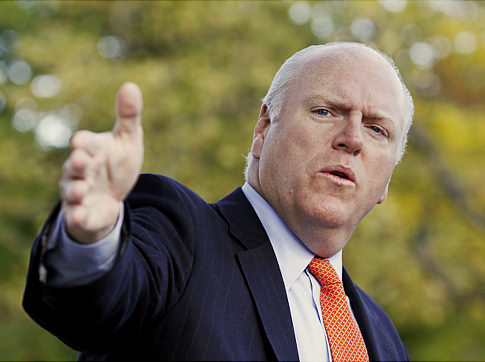
    WASHINGTON (TIP): Indian American Congresswoman Pramila Jayapal has announced that she would skip President Donald Trump’s State of the Union address, in protest against his policies and rhetoric against immigrants. Jayapal, 52, joins more than half a dozen Democratic lawmakers, including the legendary Congressman John Lewis, who will give a miss to the January 30 event.

    Other lawmakers who have announced to boycott the event include Frederica Wilson, Maxine Waters, and Earl Blumenauer.

    “I would not be attending the State of the Union this year. I join other distinguished members, including Rep John Lewis, in refusing to dignify a president who has used the platform of the Oval Office to fan the flames of racism, sexism and hatred—most recently with his vulgar condemnation of Haiti and other African countries,” Jayapal said in a statement.

    Jayapal said she disagrees with Trump’s approach which is “narrow and self-serving”.

    “This president has consistently indicated that he has no interest in leading a unified country. He has gone out of his way to play to a small and shrinking base of voters by using language that diminishes and demeans vast swaths of people in our own country and around the world,” Jayapal said.

    “His path is dangerous. His path is destructive. His path cannot be normalized. I will not normalize it. This is our own form of non-violent resistance,” she said.

    According to Jayapal, her constituents and people across the country are “heartbroken, terrified and demoralized”.

    “He does and says things that none of us, as parents, would condone for our children. He consistently uses language that is outright racist. He actively uses the highest office of the land to promote hatred as a political tool for his own benefit,” said Jayapal.

    “As a brown immigrant female member of Congress, I feel the impact of these words personally, as well as collectively,” she said.

    Jayapal is the only Indian American lawmaker to have announced boycotting Trump’s State of the Union Address, which is a customary annual address of the US President to a joint session of the Congress.

    Other Indian American Congressmen are Dr. Ami Bera, Ro Khanna and Raja Krishnamoorthi. Senator Kamala Harris from California is of mixed African and American heritage.

     (Source PTI)


  • US Bill pushes for more Green Cards

    US Bill pushes for more Green Cards

    Indian techies to benefit if ‘Securing America’s Future Act’ is signed into law by Trump administration

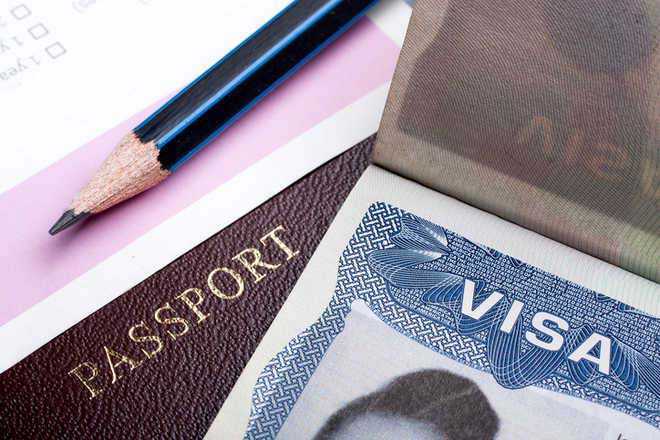
    WASHINGTON (TIP): A legislation backed by the Trump administration pushing for merit-based immigration and increasing the allotment of Green Cards by a hefty 45 per cent annually has been introduced in the House of Representatives, a move that could benefit Indian techies if signed into law.

        500,000 Indians have been waiting in queue for Green Cards

        120,000 of these cards are available annually at present in the US

        175,000 will be the count after 45% raise if Bill is signed as law

    The legislation ‘Securing America’s Future Act’, if passed by Congress and signed into law by US President Donald Trump, will end the diversity visa program and reduce the overall immigration levels from currently averaging 1.05 million to 260,000 a year.

    Indian-American technology professionals, who come to the US mainly on H-1B visas and opt for Green Cards or legal permanent residence status, are expected to be a major beneficiary of the ‘Securing America’s Futures Act’. As per unofficial estimate, there are nearly 500,000 Indians waiting in the queue for Green Cards and have to seek annual extensions of their H-1B visas. Many wait for decades to get Green Cards. The H-1B program offers temporary US visas that allow companies to hire highly skilled foreign professionals working in areas with shortages of qualified American workers.

    The increase in the number of Green Cards per annum is likely to reduce their wait period drastically. Having a Green Card, officially known as a Permanent Resident Card, allows a person to live and work permanently in the US. However, the elimination of chain migration is likely to badly affect those Indian-Americans who are planning to bring their other family members to the US.

    Securing America’s Future Act eliminates Green Card program for relatives, other than spouses and minor children.

    A merit-based immigration system, the Trump administration feels would admit the best and the brightest around the world while making it harder for people to come to the country illegally.

    Observers say this could benefit technically-qualified people from countries like India and China.

    The legislation creates a workable agricultural guest worker program to grow the US economy, authors of the legislation said. In a late-night statement, the White House said the legislation “would accomplish the President’s core priorities for the American people”.

    (Source: PTI)

  • US can rejoin Paris pact:  fairer deal might coax us back into climate agreement, says Trump

    US can rejoin Paris pact: fairer deal might coax us back into climate agreement, says Trump

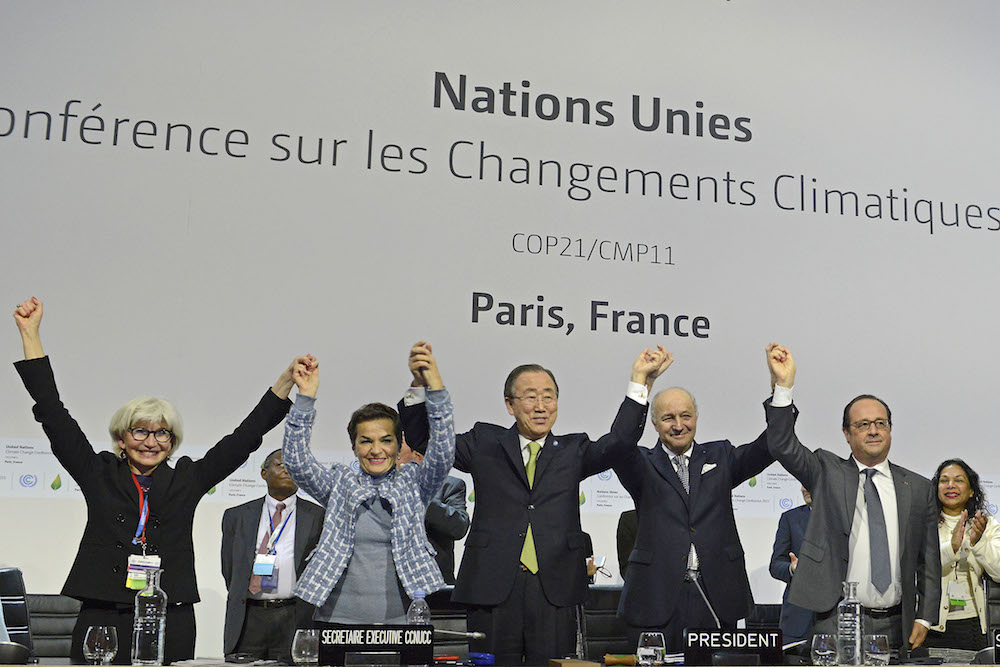
    WASHINGTON (TIP): President Donald Trump said, January 11, his primary concern with the Paris climate accord was that it treated the United States unfairly and that if a better deal could be reached, Washington might be persuaded to rejoin the agreement.

    “It treated the US very unfairly,” Trump said during a news conference with Norwegian PM Erna Solberg. He said he had no problem with agreeing to a climate deal, but the Paris accord was “a bad deal. So, we could conceivably go back in.” However, he did not indicate any move in that direction.

    In June, Trump withdrew the US from the Paris Agreement on climate change and decided to renegotiate the deal that was agreed upon by over 190 countries during the previous Obama administration.

    Defending his decision to withdraw from the Paris Agreement on Climate Change, Trump said: “The Paris Agreement as drawn and as we signed was very unfair to the United States. It put great penalties on us. It made it very difficult for us to deal in terms of business. It took away a lot of our asset values.” “Frankly, it’s an agreement that I have no problem with, but I had a problem with the agreement that they signed, because, as usual, they made a bad deal,” Trump told a news conference with Norwegian Prime Minister Erna Solberg.

    “So, we could conceivably go back in,” Trump said, stressing his administration’s commitment to environmental issues, “clean water, clean air”, but added “we also want businesses that can compete”.

    Trump justified his decision to withdraw from the Paris Climate accord, saying there was a “tremendous” penalty for using the country’s rich in gas and coal and oil and that hurt American businesses.

    The US has appeared to be so far globally isolated on this issue, but Trump strongly defended his decision. Trump insisted that his administration feels very strongly about the environment.

    “I feel very strongly about the environment. Our EPA (environment protection agency) and our EPA commissioners are very, very powerful, in the sense that they want to have clean water, clean air, but we also want businesses that can compete,” he said.

    “The Paris Accord really would have taken away our competitive edge, and we’re not going to let that happen. I’m not going to let that happen,” Trump asserted. — PTI

    Climate accord goals

    The Paris agreement’s central aim is to strengthen the global response to the threat of climate change by keeping the global temperature rise in this century well below 2° Celsius above pre-industrial levels and to pursue efforts to limit it to 1.5° Celsius

    The landmark agreement, which entered into force last November, calls on countries to combat climate change and to accelerate and intensify the actions and investments needed for a sustainable low carbon future, and to adapt to the increasing impacts of climate change.


  • Chairman Crowley criticizes President Trump’s $18 Billion Border Wall

    Chairman Crowley criticizes President Trump’s $18 Billion Border Wall

    WASHINGTON (TIP): House Democratic Caucus Chairman Joe Crowley (D-NY) issued the following statement on the funding request from President Trump to build his border wall:

    “President Trump has no interest in keeping Americans safe or overhauling our nation’s fundamentally flawed immigration system. He is solely focused on building an illogical and unnecessary border wall to appease the anti-immigrant voices in his party.

    “Spending $18 billion on a useless border wall is a non-starter for House Democrats. We need to fund the government, extend health insurance programs for children, protect DREAMers, secure Americans’ pensions, put forward a comprehensive overhaul for our broken immigration system that addresses border security concerns, and get back to work for the middle-class. We should not waste time on a completely impractical obsession that the President exploited for crass political reasons.”

  • Indian Americans welcome continuing H-1B visa extension 

    Indian Americans welcome continuing H-1B visa extension 

    WASHINGTON (TIP): Indian Americans today welcomed the Trump Administration’s decision of not blocking extensions to H-1B visas, saying the “devastating” move would have caused “unprecedented” brain to drain and hurt American businesses.

    The US Citizenship and Immigration Services had yesterday said it was not considering any proposal that would force H-1B visa holders to leave the country.

    The announcement came days after reports emerged that the Trump administration was considering tightening H-1B visa rules that could lead to deportation of 7,50,000 Indians.

    “I welcome the decision by the US Citizenship and Immigration Service to allow H1-B visa holders to continue to apply for visa extensions while awaiting their green cards,” Indian-American Congressman Raja Krishnamoorthi said.

    “While we must continue to invest in developing the skills of our domestic workforce, this decision avoids hurting American businesses and workers, while keeping families together in the process,” he said in a statement.

    Krishnamoorthi said when a proposal to terminate H1-B extensions arose from within the Trump administration, his office and others opposed it because it would have hurt American businesses, American workers and the American economy, as well as tear apart families.

    “In short, that proposal was un-American. I am glad that the Trump administration listened to us and others,” he said.

    Suhag Shukla, Hindu American Foundation (HAF) executive director and Legal Counsel, said, “the results would’ve been devastating. Devastating to these law abiding, tax paying workers and their families who have made America their home. Devastating for America by causing an unprecedented brain drain of skilled workers and potential entrepreneurs.”

    He said soon after US President Donald Trump began raking up the       H-1B visa issue, the HAF lobbied and asked members of the Congress to ensure they voice their concern with the administration.

    “We’re grateful for the swift response by Representatives Tulsi Gabbard and Kevin Yoder in expressing to the administration the detrimental impact the proposed changes would have on the American economy and credibility, US-India relations, and families of skilled workers,” Shukla said.

    “It is a welcome relief for hundreds of thousands in our community,” he said.

    (Source: PTI)


  • What to watch in 2018

    What to watch in 2018

    As the new year begins, here are the smartest predictions of what’s coming in politics, tech and business in 2018.

                                                         By Erica Pandey

    The Big picture: In many ways 2018 will mirror 2017. The world’s largest economies will continue to grow in sync, the #MeToo movement will continue to topple men who behave badly from positions of power, and the North Korean nuclear threat will keep fueling international tensions. But new trends may emerge if the Democrats take the House in the midterm elections or media companies find a solution to the “fake news” epidemic.
    At home

    Democrats will take back the House “by an eyelash” in the 2018 midterm elections, the Financial Times’ Courtney Weaver predicts. It’s typical for the party of the president to lose seats in the midterms, and the Republican Party could “lose big” given Trump’s sub-50 approval rating. A Democrat majority in the House would also mean impeachment proceedings against Trump could gain ground in the new year.

    Abroad

    Trump’s approach to China is about to change for several reasons, per Sinocism’s Bill Bishop: the administration’s National Security Strategy very clearly reframed the U.S. government’s view of China in a confrontational way, the president believes China is still not doing enough on North Korea, and the administration’s “America First” trade contingent is ascendant. Several trade actions are in the planning stages and they will likely hit soon.

    Uneasy tension around the North Korean nuclear threat will continue — or escalate. Trump tweeted on Dec. 28 that there won’t be a “friendly solution” to the issue of North Korea if China violates UN sanctions against the rogue regime. And Admiral Mike Mullen, a former chairman of the Joint Chiefs, said on ABC’s This Week that the U.S. is closer “than ever before” to a nuclear confrontation with North Korea.

    UK Prime Minister Theresa May will keep her job, per the Financial Times’ Sebastian Payne. “Sealing a Brexit divorce deal has ensured short-term job security,” Payne writes.

    Zimbabwe won’t hold free and fair elections in 2018 despite the end to Robert Mugabe’s 37-year rule, FT’s David Pilling predicts. And Al Jazeera’s Barnaby Phillips writes, “Emmerson Mnangagwa will surely prove a more capable manager of Zimbabwe’s economy than Mugabe, but there are plenty of reasons to fear he’ll be just as ruthless and undemocratic.”

    The global economy

    Synchronized growth will continue. This year, for the first time since the Great Recession, the world’s leading economies grew in sync. And that growth will hold into 2018, Goldman Sachs research economists predict. They’re forecasting 4.0% GDP growth for the new year, up from a 3.7% projection for 2017.

    Emerging markets will grow as well. Average GDP growth for emerging markets will reach 5%, up from 4.7% in 2017, per the Financial Times’ James Kynge. “This will mostly be because Russia and Brazil, which have stumbled, will bounce back,” Kynge writes.

    In tech

    Big Tech will get stronger. “Silicon Valley got raked over the coals in 2017 about sexism, security and its influence on national affairs. But it hasn’t really grappled with the bigger problem: There’s too much power in the hands of too few … Expect to see tech giants flogging their “social good” efforts in the year ahead, but our trust won’t be restored by watching them act like benevolent dictators,” per the Washington Post’s Gregory Fowler.

    Bitcoin will keep dominating headlines with its dramatic crashes and booms. Goldman Sachs became the first major Wall Street institution to launch a trading desk for the cryptocurrency in 2017, and, as more institutions venture into the crypto world, prices will rise accordingly, CNBC’s Eric Jackson predicts.

    Augmented reality will rise in prominence, Axios’ Alayna Treene reports. “In the next few years, we’re going to see AR develop significantly and start to break through to the mainstream. Once that happens, it will effect almost every aspect of daily life — from entertainment and work to education and transportation.”

    In media

    Transparency will become “the antidote to fake news,” Frontline’s Raney Aronson-Rath tells Nieman Lab. Per Aronson-Rath, “We’ve seen Facebook make moves towards differentiating between verified and unverified stories. Twitter and Google, too. But the problem is massive, and these are just first steps.”

    The #MeToo movement will continue toppling powerful men who behave badly in media and every other industry. Here’s a list of the 82 men accused of sexual harassment and assault in 2017.

    (Source: Axios)

  • 365 days: A look at Donald Trump in the White House

    365 days: A look at Donald Trump in the White House

    The dawn of November 9, 2016, was one of great disbelief for the world’s oldest democracy as the news was just beginning to sink in among Americans of Donald Trump’s astounding victory in the presidential polls. A year on since that win, here’s a look at Trump in the White House:

    BY THE NUMBERS
    • Approval rating: 37% Lower than any previous president in over 70 years
    • Economy: 2.6% up in 2nd quarter of 2017. Trump had set a 3% target for long-term economic growth
    • 21% rise in S&P 500, fourth largest 12-month gain following a presidential election since 19363.
    • Jobless rate: 4.3% in July, lowest since early 2014
    • Tourist flow: 4.3m decline in overseas tourist numbers to US, represents loss of $7.4 billion revenue
    • Terror cases/ mass shootings: 362, including the October 1 Las Vegas shooting, the worst such in US history, and the October 31 New York van attack
    Trump on Twitter
    1. Around 2,400 tweets since November 8, 2016. That’s about 7 tweets a day
    2. Key words used in tweets: Great – 456, Fake news/media – 167, Jobs – 94, Obamacare – 77

    Some interesting tweets:

    Donald J. Trump✔ @realDonaldTrump My use of social media is not Presidential – it’s MODERN DAY PRESIDENTIAL. Make America Great Again! 5:41 PM – Jul 1, 2017

     75,611 75,611 Replies   55,085 55,085 Retweets   193,178 193,178 likes

    Twitter Ads info and privacy

    Donald J. Trump @realDonaldTrump Just heard Foreign Minister of North Korea speak at U.N. If he echoes thoughts of Little Rocket Man, they won’t be around much longer! 10:08 PM – Sep 23, 2017

     49,288 49,288 Replies   36,800 36,800 Retweets   133,381 133,381 likes

    Twitter Ads info and privacy

    Donald J. Trump ✔ @realDonaldTrump CHAIN MIGRATION must end now! Some people come in, and they bring their whole family with them, who can be truly evil. NOT ACCEPTABLE! 6:03 PM – Nov 1, 2017

     20,795 20,795 Replies   22,768 22,768 Retweets   76,320 76,320 likes

    Twitter Ads info and privacy

    Trump’s wealth
    1. Forbes said Trump’s wealth dipped by $600m to $3.1bn in Sept 2017 since 2016
    2. He fell 92 spots on the latest list of the richest Americans
    3. The drop was put down mainly to a tough real estate market and an expensive poll campaign

    PM Modi and Trump have declared ties between Washington and New Delhi have “never been stronger”. India is a key component in US plans to contain China. The White House has also pushed Pakistan to combat terrorism.


  • President Trump’s ambitious agenda: 7 things to watch in 2018

    President Trump’s ambitious agenda: 7 things to watch in 2018

    President Trump may have big policy plans for 2018, but political distractions are likely to shadow prospects of big legislative achievements.

    WASHINGTON (TIP) White House officials said Trump wants to rein in the threat from North Korea and list four top domestic priorities on his 2018 agenda: Repealing and replacing President Obama’s 2010 health care law, welfare reform, immigration, and a new infrastructure plan.

    “I would expect to see those four areas, as well as national security, which never goes away,” White House spokeswoman Sarah Sanders said.

    Yet the Republican-controlled Congress has been struggling to pass some of Trump’s major priorities since his election – and their challenges will only increase in 2018. The GOP’s Senate bare majority will shrink when Alabama’s newly elected senator, Democrat Doug Jones, is sworn in.

    In January, lawmakers will have to confront a thicket of unfinished business. In their rush to get home for the holidays, the GOP-led Congress passed a short-term spending bill that expires Jan. 19.

    Trump and GOP leaders will have to negotiate a longer-term spending deal before then to avert a government shutdown, and they will likely need Democratic support for that to pass. Other sticky issues on the January agenda include legislation aimed at stabilizing the Obamacare individual insurance markets and reauthorizing the Foreign Intelligence Surveillance Act, a contentious anti-terrorism law that gives law enforcement sweeping spy powers.

    What’s more, lawmakers will be consumed with their own 2018 mid-term elections – and the increasingly contentious Russia investigations. “As everybody in Washington knows, a midterm election year is a year when most legislation comes to a standstill,” said David Cohen, a political science professor at the University of Akron.

    “Members of Congress are going to be obsessed with winning re-election,” Cohen said, and will be more eager to campaign at home than be in Washington casting tough votes.

    Here are seven key issues that Trump and Congress will confront:

    North Korea

    Trump will lobby China – and other countries – to twist the economic screws on North Korea, in the hopes of forcing that rogue nation to give up their nuclear weapons program.

    Trump traveled to Asia to press that issue in November and declared North Korea a state sponsor of terror. Yet North Korea leader Kim Jong Un has more or less thumbed his nose at the effort, recently setting off another ballistic missile test, and continued threatening the U.S. and its allies.

    As 2018 approaches, Trump and his advisers hope to settle the dispute diplomatically, but they have not ruled out the possibility of a military strike.

    Infrastructure

    In his 2018 budget proposal, Trump sought $200 billion over 10 years to spend on infrastructure, leveraging private-sector spending to focus federal dollars on “transformative” projects seen as priorities at both the federal and regional level.

    That went nowhere in 2017, as Trump and the GOP-led Congress focused instead on trying to repeal Obamacare and enacting tax cuts. But the president plans to rev up that push early next year, with the hope that Democrats will cooperate.

    Infrastructure spending is generally a bipartisan issue, and few dispute the need to improve the nation’s highway and bridges. But Trump and Democrats have already outlined competing plans, and conservatives are likely to oppose any legislation that calls for massive new spending.

    So, the fate of that will likely depend on Trump’s willingness to cut a deal with Democrats—and vice versa—heading into a heated election year.

    Health care

    Trump insists he has not given up on his goal of repealing and replacing the Affordable Care Act, President Obama’s health reform law, even though Republicans in Congress could not muster enough votes to deliver on that long-promised goal this year.

    After Congress passed a massive tax bill in December that repealed Obamacare’s individual mandate, Trump declared the law was “essentially” repealed and lawmakers would work together to find a replacement. (However, the law is barely touched, though the requirement that nearly everyone have insurance or pay a penalty at tax time was repealed effective in 2019.)

    Overhauling Obamacare will only get more complicated in 2018, as Republicans will have just 51 seats in the Senate. And the GOP’s previous efforts to nix Obamacare sparked intense anger among voters who wanted to keep the coverage – something lawmakers may not want to reignite when many of them will be on the ballot.

    Senate Majority Leader Mitch McConnell, R-Ky., signaled little interest in taking another stab at the issue. “Well, we obviously were unable to completely repeal and replace with a 52-48 Senate,” McConnell told NPR in a Dec. 21 interview. “We’ll have to take a look at what that looks like with a 51-49 Senate. But I think we’ll probably move on to other issues.”

    Other Republicans pushed back, saying the GOP should not give up on that long-touted campaign promise.

    Immigration

    Congress has a March deadline to decide the fate of the so-called DREAMers, the approximately 700,000 immigrants brought to the U.S. illegally when they were children. Trump nixed an Obama-era program that shielded the DREAMers from deportation, but he also said Congress should figure out a legislative fix, so the young people aren’t sent back to countries they did not grow up in.

    Critics have called the Obama protections—known as DACA, or Deferred Action for Childhood Arrivals— a form of “amnesty” and suggested those young immigrants have taken jobs from Americans. But there’s bipartisan support in Congress and in the public to grant the DREAMers legal status and even a path to citizenship.

    Whether Trump—who campaigned on a hardline anti-immigrant platform—will sign such a bill is unclear. He has sent mixed signals on the issue, and he’s also called for new restrictions on refugees and others seeking entry into the United States.

    After the Dec. 12 arrest of a man who tried to set off a bomb in a New York commuter tunnel, Trump called for the end of “chain migration” and the diversity visa lottery programs.

    Welfare reform

    In announcing a new major legislative priority following the tax cut bill, Trump said welfare reform is “desperately needed in our country.”

    A Trump budget proposal last year called for adding work requirements to some government programs and tightening eligibility requirements for low-income tax credits. “We want to get our people off of welfare and back to work,” Trump said. “So important. It’s out of control. It’s out of control.”

    Democrats say welfare reforms instituted two decades ago are working and that Trump wants to punch major holes in the social safety net.

    Iran

    Trump announced in October he would no longer certify that Iran is in compliance with an Obama-era deal, in which Tehran pledged to give up the means to make nuclear weapons while the U.S. and allies ease economic sanctions. Instead, Trump called on Congress to improve the agreement, and the fate of the Iran nuclear deal is likely to come to a head in 2018.

    Supporters of the agreement fear Iran will walk away from the agreement and pursue nuclear weapons anyway, triggering a dangerous arms race in the Middle East.

    The debt limit

    The U.S. Treasury will run out of money to pay its bills sometime in the spring — unless Congress and the president agree on legislation to raise the nation’s debt limit. The Treasury Department lost its authority to borrow any new money to pay the government’s obligations on Dec. 9.

    Officials are currently taking “extraordinary measures” to keep from defaulting on the government’s current obligations, including Medicare benefits and the interest on the national debt. But the agency will run out of those accounting gimmicks in late March or early April, according to an analysis by the Congressional Budget Office.

    That could lead to a round of partisan fiscal brinksmanship—with threats of defaulting on the government’s debts. Conservatives have generally opposed increasing the nation’s borrowing authority, so Trump will likely have to negotiate with Democrats to come to an agreement.

    (Source: USA Today)


  • Trump Tax Bill Is Pro-Growth & Pro-People

    Trump Tax Bill Is Pro-Growth & Pro-People

    By Dave Makkar

    After more than three decades, Congress under President Trump, finally passed much-needed and long-overdue tax relief for millions of individuals, families and businesses. While the new tax bill is still not perfect, but it will go a long way in helping individuals, families, small to medium businesses as well as big corporations practically in every sector to be more competitive domestically as well as internationally. Consumers will receive much-needed tax relief and therefore, increase discretionary income. This Tax Bill will create still not too perfect but some what a fairer tax code that will trigger reinvestment in practically every state of America to create more jobs and better wages. This will boost the spending power of consumers and take America on the path of more prosperity, says the author.

    Personally, I have failed to understand the logics of Democrats that the Trump Tax Bill is anti-growth and anti-common person. The fact is this bill is pro-growth and pro-people. There is no doubt that the residents like me of high property and state tax states like New Jersey, New York, California etc.  will be affected to a certain extent because of the $10,000 cap on property tax and state tax deduction but not a whole lot because of the doubling up of standard deduction.

    As an resident of New Jersey since 1996, I can simply say if the property taxes are exorbitantly high; it is the residents that are to be blamed for allowing unionized politicians posing as Republicans & Democrats to govern 8.5 mil people in 8,000 sq. miles with 588 governments with over 10,000 elected/appointed politicians and 660,000 employees with no or little work. Unless the residents revolt to cut down the number of governments, elected/appointed politicians as well as the employees; they will see every year their property and state taxes going up to financially feed the monstrous size 588 governments of New Jersey.

    Democrats are ignoring the fact that about 70 percent of Americans take the standard deduction. Trump Tax Bill has doubled that deduction to $12,000 for individuals, 18,000 for heads of household, and $24,000 for joint filers combined with some more generous 7 tax brackets and rates. It would mean less tax taken from most individuals’ and families’ paychecks. Child tax credit has been increased from $1,000 to $2,000 per child. A portion $1,400 would be refundable. That is, taxpayers could get up to $1,400 back from the government, even if they owed no tax. The Bill also raises the income limit for child credit, so families with higher incomes can qualify. Families also could claim a new, $500 “family” tax credit for non-child dependents. That credit is non-refundable. The Bill would increase the amount that could be contributed to tax-favored ABLE savings accounts, designed to save for the needs of disabled adults and children. Contributions could also make the beneficiary of an ABLE account eligible for the saver’s credit, intended to supplement savings for lower-income people. This Bill also provides a temporary break to low-earning people, applying the lowest, 10% rate to more of their taxable income (individuals would get an additional $200 in income taxed at 10 percent; joint filers would get an additional $400 taxed at that rate). For Tax payers subject to the alternative minimum tax, for individuals the exemption from current first $54.300 has been raised to $70,300. For married couples filing jointly the limit from $54,500 has been raised to first $109,400 of income. Under the new Tax Bill by one estimate, a family of four with an income of roughly $73,000 would save $1,500 each year in taxes. In nut shell under this Tax Bill, it would mean less tax taken from most individual’s and families’ paychecks.

     Lower Property & state taxes deduction: A maximum $10,000 deduction for state and local taxes could be split between property taxes, and either state income or sales taxes. That’s compared with an unlimited deduction in the current tax code is certainly a setback for residents of high property & local tax states. This $10,000 cap applies to both singles and married couples filing jointly, though married people filing separately could deduct a maximum of only $5,000 each. People who run home businesses could still deduct the portion of state and local taxes, including property tax, that applies to that business. Interest on up to $750,000 in mortgage debt on a newly purchased primary home could be deducted; that’s a drop from the $1 million allowed now. The interest on home-equity loans and line of credit would no longer be deductible, regardless of what it’s used for.

    Upper-Middle Class Tax payers/investors with passive income.  Will get a significant tax break on a portion of qualifying income. According to a  research paper authored by 13 tax experts notes, certain wealthy individuals might be able to incorporate themselves and pay tax on interest income at the corporate rate of 21 percent, not the top 37 percent they’d pay as individuals.

    Coming to the rich, the heirs of wealthy people’s surviving spouses would continue to pay no estate tax. The estate tax exemption would double; currently non-spousal heirs would avoid a 40 percent tax on the first $5.49 million inherited from one individual and $10.98 million inherited from two.

    The main villain for the Tax Bill critics “The Corporations”: Their tax rate would drop to 21 percent from a top 35 percent rate; decline of a whopping 40 percent! Also allows fully allowable deductions for capital expenses and lower levies on repatriating overseas profits.

     Real Estate Businesses: can claim a new tax break that’s planned for partnerships, limited liability companies and other so-called “pass-through” entities.

    Technology: U.S. Tech companies are sitting on $3.1 trillion in overseas earnings, according to an estimate from Goldman Sachs. The largest stockpile belongs to Apple at $252 billion – 94% of its total cash. Microsoft, Cisco Systems, Google parent Alphabet Inc. and Oracle round out the top five, data compiled by Bloomberg show. One caveat is that the repatriation provision could generate a large tax bill. In Apple’s case, a 14.5 percent rate would equate to $36.6 billion in taxes, or about $7 a share, according to Bloomberg Intelligence.

    Banks: The earnings of big U.S. banks will be boosted by an average of 13 percent, according to Goldman Sachs. Leading the way will be Wells Fargo (17%) and PNC Financial Services Group Inc. (15%).

    Autos: The industry’s biggest companies, including General Motors and Ford, will benefit from the rate cut and the reduction on levies for repatriating overseas profits, according to UBS.

    Consumer products/retail: Retailers are big winners from the rate cut because many generate all, or at least an overwhelming majority, of their income in the U.S. and pay the highest tax rates of any industry. Most tax breaks and loopholes are not applicable to retail. Total sales from the nearly 3.8 million retail establishments in the United States reached about $2.6 trillion in 2016. Retailers employ almost 29 million, and support more than 42 million jobs in the U.S. That increases the prospect for better wages for existing employees in this sector and more jobs.

    Full and immediate deductions on capital expenditures could allow at least one retailer to not owe any federal taxes the next two years. Aaron’s Inc., which leases televisions and refrigerators to consumers at more than 1,700 stores, will be able to use deductions on buying inventory, which are considered capital investments, to wipe out its tax bill in 2018 and 2019, according to Stifel Nicolaus & Co.

    Chains and consumer brands also expect the tax bill to boost demand for their goods and services. Many of those companies rely on middle- and low-income shoppers for the bulk of their sales, and changes to individual taxes — such as doubling the standard deduction — will increase discretionary income.

    Industrials: In machinery, trucking is likely to see the biggest impact, according to Jefferies. The corporate rate cut would give U.S. transportation companies of all sizes more money to upgrade their fleets with fuel-efficient vehicles. The bill’s increased deductions for capital spending would add another incentive to buy new 18-wheelers, a potential boon for truck makers like Paccar Inc. and Navistar International Corp.

    Energy: oil-and-gas companies will be big winners because they pay the second-highest effective tax rate of any sector, at 37 percent, according to Bloomberg Intelligence. But a number of oil explorers and equipment providers won’t benefit because their operations are unprofitable.

    Hospitals and insurers: The bill is estimated to boost insurance companies’ profits by as much as 15 percent because they pay high rates, according Ana Gupte, an analyst at Leerink Partners.

     Pharmaceuticals: U.S. drug makers will be one of the biggest beneficiaries of the repatriation portion of the bill. They’ve been sitting on billions of dollars in overseas earnings and can now bring home that cash at a reduced rate. Biotech and pharma companies will get a smaller tax credit for developing drugs for rare diseases. Under current law, they can deduct 50 percent of the cost of testing drugs for rare or orphan diseases that affect only small numbers of patients. The revised bill cuts that amount to 25 percent, raising government revenue by $32.5 billion over a decade.

    Chris Martin in his article “Hidden Benefit to U.S. Corporate Tax Cuts: Lower Utility Bills” in Bloomberg wrote that there’s one place where every American may benefit from lower corporate income-tax rates: utility bills. Regulated utilities may pass tax savings on to ratepayers, consumers may get share of estimated 15% cut to utility tax. An average consumer could see a reduction of about 5 percent off their monthly bill, according to Rhame.

    After more than three decades, Congress under President Trump, finally passed much-needed and long-overdue tax relief for millions of individuals, families and businesses. While the new tax bill is still not perfect but it will go a long way in helping individuals, families, small to medium businesses as well as big corporations practically in every sector to be more competitive domestically as well as internationally. Consumers will receive much-needed tax relief and therefore, increase discretionary income. This Tax Bill will create still not too perfect but some what a fairer tax code that will trigger reinvestment in practically every state of America to create more jobs and better wages. This will boosts the spending power of consumers and take America on the path of more prosperity.

    If we want sustained and continuous economic growth and prosperity for all with low levels of poverty, the corporations must come up with a solution for equitable distribution of nation’s economic prosperity by voluntarily defining what should be the maximum or reasonable pay, perks and retirement packages for its executives. Corporations must stop creating high levels of economic inequalities by fraudulently defining the minimum wages for its workers that have if not equal; at least equitable contributions in creating the wealth for corporations and the nation. An Economy of exclusions, gross economic injustice with very high inequalities cannot continue forever because it can bring down the country with a massive class war   between the “Haves” and the “Have Nots”.

    (Data Compiled from various sources)

    (The author is a social activist and is a regular contributor to The Indian Panorama. He can be reached at davemakkar@yahoo.com)


  • Trump’s Jerusalem decision evokes mixed reaction

    Trump’s Jerusalem decision evokes mixed reaction

    Hailey calls it courageous and historic:  The world views it differently

    Hamas calls for Palestinian uprising in reply to Trump’s Jerusalem plan

    NEW YORK (TIP): While US envoy to the United Nations Nikki Haley has hailed President Trump’s decision on Jerusalem as a “courageous” and “historic” step by recognizing Jerusalem as Israel’s capital, Hamas has urged Palestinians to abandon peace efforts and launch a new uprising against Israel in response to US President Donald Trump’s recognition of Jerusalem as its capital.

    Trump recognized Jerusalem as Israel’s capital December 6, reversing decades of US and international policy on the holy city, in a major announcement which many Arab leaders warned could trigger an upheaval in the already volatile Middle East.

    Indian-American Haley said that for 22 years, there had been an overwhelming bipartisan consensus in favor of moving the US embassy in Israel to its rightful place in the Israeli capital city of Jerusalem.

    “On Thursday, the President took a courageous and historic step that was long overdue. Across the globe, America has its embassy in the capital city of the host country. Israel will now be no different. It is the just and right thing to do,” she said, December 6.

    “This is following members of Congress. This is doing what the American people said. But we are also taking Jerusalem out of the discussion because the two sides have to come together on how they’re going to see Jerusalem, what they’re going to see as their capital,” she said.

    Haley said several top American lawmakers have described Trump’s decision as “provocative” and “counterproductive”.

    In a joint statement Congressmen David Price, Peter Welch, John Yarmuth, Barbara Lee and Earl Blumenauer said Trump’s announcement demonstrates “his complete disregard” for long-standing American and international diplomatic practice.

    “It unilaterally undermines prospects for a peaceful resolution to the Israeli-Palestinian conflict and recklessly endangers US, Israeli, and regional security. For more than 50 years, Republican and Democratic Administrations have recognized that the US should stand as a good faith arbiter for peace between the Israelis and the Palestinians,” they said.

    The lawmakers said that recognizing Jerusalem as the capital of Israel outside the framework of a final status agreement between the parties does more to sabotage than to advance peace.

    Congressman Alcee Hastings warned that the ramifications of the decision could be profound.

    “I fear that the President made his decision based on political expediency rather than sound foreign policy,” he said.

    Israeli Prime Minister Benjamin Netanyahu, who hailed Trump’s announcement as a “historic landmark”, said on December 6, many countries would follow the US move and contacts were underway. He did not name the countries he was referring to. “President Trump has immortalized himself in the chronicles of our capital. His name will now be held aloft, alongside other names connected to the glorious history of Jerusalem and of our people,” he said in a speech at Israel’s Foreign Ministry.

    “We should call for and we should work on launching an intifada (Palestinian uprising) in the face of the Zionist enemy,” Hamas leader Ismail Haniyeh said in a speech in Gaza. Haniyeh, elected the group’s overall leader in May, urged Palestinians, Muslims and Arabs to hold rallies against the US decision on Friday, calling it a “day of rage”.

    Naser Al-Qidwa, an aide to Palestinian President Mahmoud Abbas and senior official in his Fatah party, urged Palestinians to stage protests but said they should be peaceful.

    India has not made any comment so far.


  • Trump unveils Afghanistan and South Asia policy, calls for deeper strategic partnership with India

    Trump unveils Afghanistan and South Asia policy, calls for deeper strategic partnership with India

    WASHINGTON DC (TIP): US President Donald Trump announced a comprehensive review of the US South Asia policy in Afghanistan and the region. Calling out Pakistan’s duplicitous role in harboring agents of terror and violence on its soil, Trump called for further developing strategic partnership with India, ‘the world’s largest democracy and a key security and economic partner of the United States.’ Noting that billions of dollars were given as aid to Pakistan Trump declared, “They are housing the very terrorists we are fighting……That will have to change and that will change immediately. No partnership can survive a country’s harboring of terrorists.”

     President Trump hailed India’s role in stabilizing Afghanistan, adding, “We appreciate India’s important contributions to stability in Afghanistan, but India makes billions of dollars in trade from the United States, and we want them to help us war with Afghanistan, especially in the area of economic assistance and development.” Even as Trump elevates India’s bilateral status as an un-declared ally, in Afghanistan, India has long shared cultural, social, economic and security ties with the beleaguered nation. In the region, India is the biggest regional donor to Afghanistan and globally the fifth largest donor with over $3 billion in assistance. India has been an active partner in the reconstruction and infrastructure development in Afghanistan, building critical infrastructure including roadways, highways, dams, electricity lines, educational centers and even the Afghan Parliament building. India also trains Afghan military officers. Reinforcing its partnership with India and rebuking Pakistan for its role in terror activities in the region, Trump is strengthening India’s image as a force for good, democracy and stability. This shift in American policy in South Asia carries huge implications regarding India’s role vis-a- vis both Pakistan and China.

     Sanjay Puri, Chairman, US India Political Action Committee, said, “President Trump has recognized India’s key role in maintaining peace and stability in South Asia. As close strategic allies, India and the US can defeat ISIS and the Taliban and ensure stability in South Asia and Afghanistan.”


  • Kremlin warns against harmful new US sanctions on Russia

    Kremlin warns against harmful new US sanctions on Russia

    MOSCOW (TIP): The Kremlin on july 28 warned that new US sanctions on Russia would hit the interests of both sides as Congress gears up to approved fresh punitive measures.

    “We consider such a continuation of the rhetoric of sanctions counter productive and harmful to the interests of both countries,” Kremlin spokesman Dmitry Peskov said. In mid-June, the US Senate overwhelmingly passed tough sanctions, but the text stalled in the House of Representatives, until agreement was reached on Saturday.

    The House is now set to vote Tuesday on a bill that targets Russia — for its alleged meddling in the 2016 presidential election and its annexation of Crimea from Ukraine in 2014 — as well as Iran and North Korea, for its ballistic missile tests. Initially, US President Donald Trump resisted the legislation, which would prevent him from unilaterally easing penalties against Moscow in the future — effectively placing him under Congress’s watch.

    But he seems to be left with little option but to sign off on the move as a political firestorm swirls over potential collusion between his campaign and Russia.

    Peskov said the Kremlin is still waiting and watching to see if Trump will approve the measures, after White House communications director Anthony Scaramucci said the US leader was weighing his decision.

    Before Trump definitively takes a decision it is too early to talk about any potential counter measure from Moscow, Peskov said. Ties between Moscow and Washington have slumped to their lowest since the Cold War as the US slapped sanctions on Moscow over it meddling in Ukraine.

    Russia had hoped that Trump’s election might ease relations between the two sides, but those prospects have dimmed in the face of a major political pushback in Washington. (AFP)

  • Obamacare Repeal Fails as McCain Casts Decisive No Vote

    Obamacare Repeal Fails as McCain Casts Decisive No Vote

    WASHINGTON (TIP): Despite President Trump’s Twitter exhortations to Republican Senators shortly before the vote, Obamacare repeal failed.   The President tweeted:

    Donald J. Trump ✔ @realDonaldTrump

    Go Republican Senators, Go! Get there after waiting for 7 years. Give America great healthcare!

    10:43 PM – Jul 27, 2017

    The Senate rejected legislation to repeal parts of the Affordable Care Act, with Senator John McCain casting a decisive “no.”

    Senate Republicans unveiled a “skinny repeal,” a narrow measure to roll back parts of the Affordable Care Act. It would leave 15 million more Americans without insurance next year, the Congressional Budget Office said.

    Speaker Ryan tried to reassure senators balking at the narrow bill, but he left the door open for “skinny” passage.

    The health insurance lobby came off the sidelines Thursday, July 27, to warn Republicans against repealing the individual mandate.

    While 49 Republican Senators voted for Skinny Repeal, 3 said Nay. All 48 Democrats opposed the repeal.  Senate, thus, rejected the scaled-down Obamacare repeal.

    Senator John McCain, Republican of Arizona, cast a decisive vote to defeat the proposal, joining two other Republicans, Susan Collins of Maine and Lisa Murkowski of Alaska, in opposing it.

    The 49-51 vote was a huge setback for the majority leader, Mitch McConnell of Kentucky, who has spent the last three months trying to devise a repeal bill that could win support from members of his conference.

    The truncated Republican plan was far less than what Republicans once envisioned. Republican leaders, unable to overcome complaints from both moderate and conservative members of their caucus, said the skeletal plan was just a vehicle to permit negotiations with the House, which passed a much more ambitious repeal bill in early May.

    The so-called “skinny” repeal bill, as it became known at the Capitol this week, would still have broad effects on health care. The bill would increase the number of people who are uninsured by 15 million next year compared with current law, according to the nonpartisan Congressional Budget Office. Premiums for people buying insurance on their own would increase by roughly 20 percent, the budget office said.

  • Bangladeshi entrepreneur opens Trump Cafe in Dhaka

    Bangladeshi entrepreneur opens Trump Cafe in Dhaka

    DHAKA (TIP): Donald Trump’s fanbase in Dhaka now has an official hangout – a restaurant here which has been named Trump Cafe in honor of the US President.

    Saiful Islam, a Bangladeshi entrepreneur and a big fan of Trump, founded the cafe and decided to use the President’s name for his coffee shop in Dhaka.

    Bringing his idea to fruition was not easy. Saiful had to prove to the authorities that he was the real owner of the business and the President had nothing to do with it, the Dhaka Tribune reported.

    The ‘Trump Cafe’ offers Chinese, Indian and Thai cuisine and other fast food items on its menu.

    “I did not start the business with any specific idea in mind, just the fact that I am a big fan of US President Donald Trump,” Saiful was quoted as saying.

    Along with other regular favorites, the cafe also serves some food items inspired by Trump such as the special Trump Cocktail or the Green Apple Mocktail.

    “My uncle, Kabir Ali, is the manager at a Trump-owned restaurant in the US. It was initially his idea to start a restaurant, and since I am a big fan as well, I wanted to get involved in the venture,” said Saiful.

    Even though Trump remains unaware about the existence of the restaurant and bears no connection to it, Saiful is happy to be a part of the restaurant named after Trump, the report said.

    “Many people think he is a joke, but he is an inspiration for me. If you look at his business ventures, you will see that he is quite successful and shrewd at doing business. That is what inspires me,” Saiful said.

    One of the attractions of the cafe is a Trump cutout that people can take pictures with. Even the cafe’s wifi password is named after a Trump family member, the report said.

    Despite formally opening more than two months ago, the owners are planning a grand opening within the next two months.

  • Trump arrived in Paris to a red carpet welcome with Russia in tow

    Trump arrived in Paris to a red carpet welcome with Russia in tow

    PARIS (TIP): France rolled out the red carpet, July 13, to welcome Donald Trump on a presidential visit laden with military pomp that the White House hopes will offer respite from a growing scandal back home.

    The US president’s brief 24-hour trip to the French capital coincides with celebrations for Bastille Day, France’s national day which is marked on Friday, and the 100th anniversary of US involvement in World War I.

    Accompanied by First Lady Melania Trump, the 71-year-old stepped onto French soil for the first time as President hoping the visit will distract from weighty allegations that his family and inner circle colluded with Russia to win the 2016 US election.

    The scandal has put his son and top aides in legal jeopardy, cast a pall over his efforts to remake the political agenda and may yet imperil his presidency.

    During the brief visit, Trump—who sees himself as a transformative figure in US history—will be the guest of honor for Friday’s Bastille Day festivities that mark a pivotal point in the French Revolution. This year’s event also coincides with the centenary of America entering World War I.

     (Source: AFP)

  • Donald Trump is an ‘outright thug,’ says Padma Lakshmi

    Donald Trump is an ‘outright thug,’ says Padma Lakshmi

    The celebrity Indian American chef says the president would rather tweet www videos “than read a security briefing or actual health care bill.”

    NEW YORK (TIP): In fact, even that would be a charitable description judging from the way she described the 45th president of the United States on Monday.

    “So, it’s official, we have an outright thug in the WH who tweets www videos rather than read a security briefing or actual health care bill!”

    So, it’s official, we have an outright thug in the WH who tweets www videos rather than read a security briefing or actual health care bill!

    Lakshmi’s tweet came in response to a doctored video that Trump posted on Saturday where the president is seen body slamming an opponent with a CNN logo imposed on his face.

    Lakshmi, an author and well-known host of Top Chef, a reality competition aired on Bravo, has been quite active on twitter. Lately, she has been campaigning against a Republican effort to repeal Obamacare, especially GOP lawmakers’ attempt to defund Planned Parenthood.

    Recently, the celebrity chef also featured on a video explaining why every woman deserves access to birth control and highlighting the work Planned Parenthood is doing.

    This was not the first time the Indian American aired her contempt for Trump publicly. During the presidential election last year, she had called Trump a buffoon. “Even if he wasn’t the racist buffoon that he is making himself out to be, I probably wouldn’t vote for him,” Lakshmi said, Variety reported. “But as an immigrant, I obviously don’t see his worldview as mine.”

    Laxmi was in India in February to promote her book Love, Loss and What We Ate: A Memoir.

    Trump’s tweet was part of his continuing tirade against CNN and other media organizations.

    A few hours after the controversial CNN tweet, Trump tweeted again saying, “At some point the Fake News will be forced to discuss our great jobs numbers, strong economy, success with ISIS, the border & so much else!”

    In response to Trump’s tweet, CNN tweeted, “The President is no way form or fashion has ever promoted or encouraged violence. If anything, quite the contrary.”

  • Trump’s Travel Ban Returns

    Trump’s Travel Ban Returns

    President’s executive order targeting travelers from six Muslim-majority countries and refugees went into partial effect on Thursday, June 29 night.

    WASHINGTON (TIP): President Trump’s controversial executive order went into partial effect on Thursday night for the first time since January 2017. The ban imposes broad restrictions on visa travel from six Muslim-majority countries and temporarily suspends U.S. refugee admissions worldwide. But the new barriers already drew legal challenges shortly before going into force.

    The Trump administration announced Thursday morning it would begin enforcing the ban at 8 p.m. Eastern Time that night. The move came less than a week after the U.S. Supreme Court narrowed a series of injunctions by lower federal courts blocking the government from imposing the ban’s two key provisions: a 90-day freeze on visa applications from Iran, Libya, Somalia, Sudan, Syria, and Yemen, and a 120-day suspension of the U.S. Refugee Admissions Program.

    The Court said Monday that the government can enforce the restrictions on travelers unless they have a “bona fide relationship” with a “person or entity” inside the United States. The justices noted that a family member, employer, or educational institution inside the country would qualify. But they also warned that relationships formed for the purpose of evading the ban would not suffice to gain entry.

    “The students from the designated countries who have been admitted to the University of Hawaii have such a relationship with an American entity,” the Court explained in an unsigned order, referring to the lawsuit filed by that institution against the government. “So too would a worker who accepted an offer of employment from an American company or a lecturer invited to address an American audience.”

    What will qualify as a “bona fide relationship” in practice is unclear. The State Department, which oversees the visa-application process at embassies and consulates throughout the world, is interpreting the Court’s language narrowly. According to a diplomatic cable obtained by multiple news outlets, applicable relationships will be defined as “a parent (including parent-in-law), spouse, child, adult son or daughter, son-in-law, daughter-in-law, sibling, whether whole or half. This includes step relationships.”

    Other family ties will not qualify, even if they fall within what the Court described as a “close familial relationship.” The cable explicitly ruled out entry based on connections inside the United States if those relationships were with “grandparents, grandchildren, aunts, uncles, nieces, nephews, cousins, brothers-in-laws and sisters-in-law, fiancés and any other ‘extended’ family members.”

    Shortly before the ban went into effect on Thursday, the state of Hawaii, which filed one of the original lawsuits on behalf of its higher-education system, filed an emergency motion asking a federal district court in Hawaii to clarify the Supreme Court’s order. Among the issues the state asked the court to resolve is whether close family members like grandparents and fiancés fell under the justices’ exception. Neither the court nor the Justice Department has yet responded to the motion.

    Human-rights organizations quickly criticized the department’s guidelines as inadequate. “This guidance shows a cruel indifference to families, some already torn apart by war and horrifying levels of violence,” Naureen Shah, a senior director at Amnesty International USA, said in a statement. “It also defines close family relationships in a way that The ACLU, which is among the groups challenging the order at the Supreme Court, suggested the State Department’s interpretation did not conform to the justices’ standard. “The reported guidance does not comport with the Supreme Court’s order, is arbitrary, and is not tied to any legitimate government purpose,” Omar Jadwat, the director of the organization’s Immigrants’ Rights Project, said in a statement.

    The Supreme Court’s modifications will remain in force until at least October, when the justices return from their summer recess and hear oral arguments in the case. Because the visa-application freeze is set to last 90 days, it’s possible those restrictions could lapse before the Court has an opportunity to consider them.

    Trump claimed victory earlier this week after the Court announced its decision, saying on Twitter that he was “very grateful” for the justices’ move. The president has struggled to implement a version of the ban since he signed its first iteration on January 27. That version went far beyond what the Court sanctioned on Monday, suspending tens of thousands of visas from the six targeted countries and Iraq with virtually no exceptions. ignores the reality in many cultures, where grandparents, cousins, and in-laws are often extremely close.”

    (Source: The Atlantic)

  • Donald Trump meets Pope Francis at Vatican

    Donald Trump meets Pope Francis at Vatican

    VATICAN CITY (TIP): US President Donald Trump met Pope Francis at the Vatican on May 24 in a keenly anticipated first face-to-face encounter between two world leaders who have clashed repeatedly on several issues.

    The private audience with the pontiff was preceded by a cordial handshake for the cameras and was expected to last around 20 minutes.

    It came on the third leg of Trump’s first overseas trip as president, which has already taken him to Saudi Arabia and to Israel and the Palestinian territories.

    The two men had never met before Wednesday morning but they have significant history having clashed publicly over subjects ranging from migration to unbridled capitalism and climate change.They also disagree on issues like the death penalty and the arms trade but share a fervent opposition to abortion.

    Trump was accompanied for the audience by his wife Melania and daughter Ivanka, both dressed all in black, in keeping with traditional protocol that is no longer always observed by all female dignitaries visiting the Vatican.

    (AFP)

  • Trump meets EU leaders in Brussels

    Trump meets EU leaders in Brussels

    BRUSSELS (TIP): US President Donald Trump met the European Union’s top officials on Thursday in a bid to mend ties with a bloc he deeply alarmed by backing Brexit.

    Trump arrived for his first ever talks with EU Council President Donald Tusk and European Commission head Jean-Claude Juncker, who will argue for the benefits of open trade and the Paris climate agreement.

    The meeting took place at the EU’s new “Europa” headquarters in Brussels on the same day Trump attends a NATO summit, also in the Belgian capital.

    Trump is also meeting with European Parliament President Antonio Tajani and EU diplomatic chief Federica Mogherini.

    The visit with Tusk and Juncker is a victory of sorts for the EU, which had worked behind the scenes to secure a first encounter with Trump. Tusk, who coordinates common policy for the EU’s 28 leaders, had until now only held a congratulatory phone call with the US president in November.

    “At that time the questions were on Brexit,” and on the survival of the EU, a senior European official said on condition of anonymity. But since election victories by pro- EU candidates in France and the Netherlands “we are in a completely different place,” the official added.

    In the heat of the US election campaign last year, Trump rankled European leaders by predicting that other countries “will leave” the EU after Britain voted to do so in June. (AP)

  • Indian immigration detainee dies in Atlanta

    Indian immigration detainee dies in Atlanta

    Atul kumar Babubhai Patel, 58, had shortness of breath and was hospitalized .His death is the second death of a detainee in ICE custody this week

    ATLANTA (TIP): A man in Immigration and Customs Enforcement custody has died after being hospitalized for shortness of breath, officials said Wednesday, May 17, says a CNN report Atulkumar Babubhai Patel was pronounced dead at Atlanta’s Grady Memorial Hospital on Tuesday, May 16 afternoon.

    The 58-year-old Indian national’s death is the second death of a detainee in ICE custody this week — and the second this week in the state of Georgia, according to CNN report.

    Officials said complications from congestive heart failure were ruled the preliminary cause of death. Patel arrived at the Atlanta airport on May 10  on a flight from Quito, Ecuador. Authorities denied him entry into the United States because he did not have the necessary immigration documents, ICE said.

    He was transferred to ICE custody in the Atlanta City Detention Center on Thursday, May 11 according to the agency. An initial medical screening at the time determined he had high blood pressure and diabetes. Two days later, Patel was transported to the hospital after a nurse checking his blood sugar noticed he had shortness of breath, ICE said. He died on Tuesday afternoon.

    In its statement announcing Patel’s death, officials said fatalities in ICE custody are “exceedingly rare.” “ICE is firmly committed to the health and welfare of all those in its custody and is undertaking a comprehensive agency-wide review of this incident, as it does in all such cases,” ICE said.

    Second death this week Patel is the eighth person to die in ICE custody this fiscal year, which began in October. Authorities are also investigating the death of another immigrant detainee in Georgia. Jean Jimenez-Joseph, 27, was found unresponsive in his cell on Monday with a sheet around his neck. The preliminary cause of death was self-inflicted strangulation. He’d been in solitary confinement for more than two weeks at the Stewart Detention Center in Lumpkin, Georgia.

    The recent deaths have drawn sharp criticism from immigrant rights activists, who have long decried conditions in immigration detention centers and called on the government to close such facilities.

    US President Donald Trump has called for increasing detention as part of his crackdown on illegal immigration. And Congress recently upped its funding for immigrant detention, approving a spending bill that pays for an average of more than 39,000 detention beds per day.

  • S Korea president says ‘high possibility’ of conflict with North

    S Korea president says ‘high possibility’ of conflict with North

    SEOUL (TIP): South Korean President Moon Jae-in said on May 14 there was a “high possibility” of conflict with North Korea, which is pressing ahead with nuclear and missile programmes it says it needs to counter US aggression.

    The comments came hours after the South, which hosts 28,500 US troops, said it wanted to reopen a channel of dialogue with North Korea as Moon seeks a two-track policy, involving sanctions and dialogue, to try to rein in its neighbour.

    North Korea has made no secret of the fact that it is working to develop a nuclear-tipped missile capable of striking the US mainland and has ignored calls to halt its nuclear and missile programmes, even from China, its lone major ally.

    It conducted its latest ballistic missile launch, in defiance of UN Security Council resolutions, on Sunday which it said was a test of its capability to carry a “large-size heavy nuclear warhead”, drawing Security Council condemnation.

    “The reality is that there is a high possibility of a military conflict at the NLL (Northern Limit Line) and military demarcation line,” Moon was quoted as saying by the presidential Blue House. He also said the North’s nuclear and missile capabilities seem to have advanced rapidly recently but that the South was ready and capable of striking back should the North attack .

    Moon won an election last week campaigning on a more moderate approach towards the North and said after taking office that he wants to pursue dialogue as well as pressure. But he has said the North must change its attitude of insisting on pressing ahead with its arms development before dialogue is possible. South Korean Unification Ministry spokesman Lee Duk-haeng told reporters the government’s most basic stance is that communication lines between South and North Korea should reopen.

    “The Unification Ministry has considered options on this internally but nothing has been decided yet,” said Lee.

    NO WORD YET ON THAAD

    Communications were severed by the North last year, Lee said, in the wake of new sanctions following North Korea’s fifth nuclear test and Pyongyang’s decision to shut down a joint industrial zone operated inside the North. North Korea and the rich, democratic South are technically still at war because their 1950-53 conflict ended in a truce, not a peace treaty. The North defends its weapons programmes as necessary to counter US hostility and regularly threatens to destroy the United States. Moon’s envoy to the United States, South Korean media mogul Hong Seok-hyun, left for Washington on Wednesday. Hong said South Korea had not yet received official word from the United States on whether Seoul should pay for an antimissile US radar system that has been deployed outside Seoul.

    US President Donald Trump has said he wants South Korea to pay for the Terminal High Altitude Area Defense (THAAD) anti-missile system which detected Sunday’s test launch. China has strongly opposed THAAD, saying it can spy into its territory, and South Korean companies have been hit in China by a nationalist backlash over the deployment.

    The United States said on Tuesday it believed it could persuade China to impose new UN sanctions on North Korea and warned that Washington would also target and “call out” countries supporting Pyongyang.

    Speaking to reporters ahead of a closed-door UN Security Council meeting, US Ambassador to the United Nations Nikki Haley also made clear that Washington would only talk to North Korea once it halted its nuclear programme. Trump has called for an immediate halt to North Korea’s missile and nuclear tests and US Disarmament Ambassador Robert Wood said on Tuesday that China’s leverage was key and Beijing could do more.

    Trump warned this month that a “major, major conflict” with North Korea was possible, and in a show of force, sent the Carl Vinson aircraft carrier strike group to Korean waters to conduct drills with South Korea and Japan.

    The US troop presence in South Korea, a legacy of the Korean War, is primarily to guard against the North Korean threat. (AP)

  • KREMLIN SAYS ‘TOO EARLY’ TO SPEAK OF THAW IN RUSSIA-US TIES

    KREMLIN SAYS ‘TOO EARLY’ TO SPEAK OF THAW IN RUSSIA-US TIES

    KREMLIN SAYS ‘TOO EARLY’ TO SPEAK OF THAW IN RUSSIA-US TIES

    MOSCOW (TIP): The Kremlin said on Thursday it was too early to speak of a thaw in ties with Washington, a day after Russian Foreign Minister Sergei Lavrov met US President Donald Trump.

    “It’s too early to draw this conclusion,” Kremlin spokesman Dmitry Peskov told reporters. But he added: “Of course the fact that a dialogue is taking place is very positive.”

    Peskov said both Trump and Russian President Vladimir Putin are expected to be at the G20 summit in Germany in July, which “could serve as a good occasion” for them to meet. Wednesday’s meeting came as Trump was embroiled in a political firestorm over the investigations into allegations his US presidential election campaign had colluded with Russia. Lavrov met both Trump and US counterpart Rex Tillerson in Washington, saying the US president was seeking “mutually beneficial” and “pragmatic” relations with Moscow.

    “The goal of both president Trump and president Putin is to have concrete results which will be tangible and which will allow (us) to alleviate problems, including on the international agenda,” he told reporters.

    Tillerson also travelled to Moscow last month for talks with Lavrov. Tillerson, who also had a closed-door meeting with Putin during his visit, deplored the “low level of trust” between the two powers, whose relations have sunk to a post-Cold War low over the conflicts in Ukraine and Syria.

    “The world’s two foremost nuclear powers cannot have this kind of relationship,” the US secretary of state said. In a shock move on Tuesday, Trump sacked FBI chief James Comey, the man overseeing federal investigations into suspected Kremlin interference in the 2016 US vote. (AFP)

  • Indian-American Recommended to Serve as FTC Commissioner

    Indian-American Recommended to Serve as FTC Commissioner

    Indian-American Recommended to Serve as FTC Commissioner

    Rohit Chopra, currently serving as a Senior Fellow at the
    Consumer Federation of America, has been recommended to
    serve as FTC Commissioner

    WASHINGTON (TIP): A top Democratic Senator recommended to US President Donald Trump that Indian- American Rohit Chopra be selected to serve as a commissioner in the Federal Trade Commission. “The Federal Trade Commission should be led by people who put the interests of consumers above all else, and that’s what Rohit Chopra has done his entire life,” Senate Minority Leader Charles Schumer said after he formally recommended the name of Chopra for this top federal trade commission position.

    Chopra is currently serving as a Senior Fellow at the Consumer Federation of America, where he leads the organization’s research and advocacy on consumer protection in consumer finance and higher education. Prior to this position, he served as Special Adviser to the Secretary of Education.

    “Whether it was fighting on behalf of students and borrowers with student loan issues at the Consumer Financial Protection Bureau, or working to protect the finances of our nation’s veterans, Rohit has been a thoughtful and effective advocate for consumers,” Schumer said.

    “He would make an excellent addition to the FTC. I strongly urge the President to nominate him and will push for his swift confirmation in the Senate,” said the Senator. Chopra holds a BA from Harvard College and an MBA from the Wharton School at the University of Pennsylvania. He was also the recipient of a Fulbright Fellowship to South Korea.

    Prior to his service at the Education Department, Chopra was among the first employees at the new Consumer Financial Protection Bureau in 2010. As Assistant Director, he served on the senior leadership team and led the agency’s work on behalf of students and young consumers.

    In 2011, he was also named by the Secretary of the Treasury as the agency’s first student loan ombudsman, a new role established by the Dodd-Frank Wall Street Reform and Consumer Protection Act. In this role, he led agency efforts to spur more loan modifications for delinquent student loan borrowers, secure hundreds of millions of dollars in refunds for borrowers victimized by unlawful conduct, and develop new tools for students and student loan borrowers to make smarter decisions.

    He led development of a new Financial Aid Shopping Sheet, voluntarily adopted by more than 3,200 colleges and used by millions of families annually.