Tag: Uttar Pradesh

  • Affordable Housing – Win-Win for all

    Affordable Housing – Win-Win for all

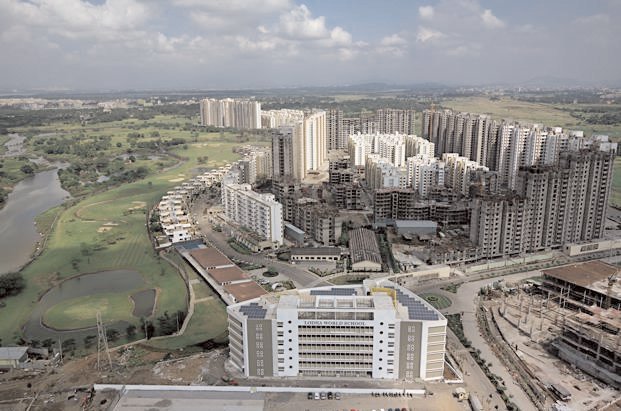
    The Govt. of India, Ministry of Housing and Poverty alleviation with the aim to create affordable housing stock encouraged private players to enter this segment as PPP Model (Public Private Partnership) recognizing that mere efforts of government will not be sufficient to address the housing shortage aspect of rapid growing cities

    The AHP (Affordable Housing Project) is driven by any of the following modes:-

    • Projects on Govt. land(State/UT’s/Central Govt.) executed by Govt. itself
    • Projects on land provided by Govt. but executed by Private players by providing suitable facilities/incentives to use its financial and technical resources
    • Projects on land of Private developers executed solely by them where Govt. to offer Incentives/facilities like FAR/FSI Use and other concessions to make the product available to masses classified as “Affordable”

    To make the project commercially viable for Pvt. Player’s mix of EWS/LIG/MIG/HIG & Commercial spaces are allowed with cross subsidy on premium earned for MIG/HIG/Commercial units

    With these mechanisms in place the Govt. has ensured to use low cost construction technologies, clearances for the project within 60 days to avoid any delays, nominal stamp duty for EWS/LIG Units

    This project once awarded will be subjected to Supervision for Quality by 3rd party agency appointed by State/UT and becomes the basis of release of Incentives

    The booking is subjected to Allotment on a draw based system only. Successful participant to complete the payments in 3 years in equal tranches and post-handover can move in to stay or may create a rental Inventory

    This initiative is purely aimed to provide Housing for all by 2022 and aims to build a stock for end users or migrants looking to rent out and is a complete win-win for all end users as well as Developer.

    So far in NCR region, Haryana has taken lead and more than 5 affordable projects already launched and sold; Uttar Pradesh is also following the trend starting with Lucknow, Meerut and Ghaziabad

    Right time to make the best of this Initiative by Central Govt. and Safety Invest to build your nest

    (With Inputs from Affordable Housing in Partnership, Sept 13-Guidelines from Ministry of Housing and Poverty Alleviation

  • Juvenile in Nibhaya gangrape case won’t to be freed for now: Sources

    Juvenile in Nibhaya gangrape case won’t to be freed for now: Sources

    NEW DELHI (TIP): The juvenile convict, the youngest out of the six who gangraped and tortured a paramedical student in a moving bus in Delhi in 2012, will walk out of a special home on December 22 but will not be freed for the time being.

    The juvenile convict has served his three-year sentence and his release has raked up major issues and old debates. The convict, now 20 years old, was a juvenile in 2012 when the crime was committed, and the court found him guilty of raping and assaulting the victim along with five accomplices – among whom main accused 35-year-old Ram Singh was found dead in his Tihar jail cell in 2013.

    According to Delhi police sources, the juvenile convict will be kept in custody after completing his sentence but whether he will be kept inside jail or outside in the custody of NGO is not yet decided.

    Earlier, Union minister Maneka Gandhi had advocated that a ‘close watch’ should be kept on the convict after he completes his sentence. “He is a person who should be kept under watch. We can’t just let him go and wait for him to do something else,” she cautioned.

    Gandhi said that she has written to the Home Ministry demanding that those accused of sexual abuse and having served a sentence, should be tracked once released.

    The parents of the December 16 gangrape and murder victim had recently demanded that the face of the juvenile, who was considered the “most brutal” of all the six offenders, should be shown to the world before he is released as “he is a threat to the society”.

    Nirbhaya’s mother told CNN-IBN that allowing the 20-year-old from Badaun, Uttar Pradesh to leave the reform home ‘sends out a wrong message’. “Juveniles will now think they can do whatever they want, and get away with it,” she added.

    PTI quoted her as asking, “But did he reform? Thousands of girls are being raped across the country. What has changed?”

    Making a strong plea to the government to ensure he remained in custody, in jail if not in a juvenile home, while being tried (it is not clear what she meant because he was tried and sentenced by a juvenile court), Nirbhaya’s mother said: “They say that his rights as a juvenile have to protected. What about us?Are we not citizens, don’t we have rights?And what about Nirbhaya’s rights?Doesn’t she deserve justice? Don’t we deserve justice? I appeal to the government to not allow this to happen. If he roams free we will be sending a wrong message to others.”

    Meanwhile, Nirbhaya’s father is quoted by PTI as warning that “He may go out and commit another crime and if he does, it will be due to shortcomings on the government’s part”.

  • Intolerance Fuels Radicalisation

    Intolerance Fuels Radicalisation

    India is awash with Islamophobia and there could not be a more dangerous time for this pernicious slant in our national politics.

    Hateful vitriol was spewed upon actor Aamir Khan recently, for expressing concern over the rising anti-minority attitude, just as black ink was literally spilled on the Observer Research Foundation’s Sudheendra Kulkarni last month for organising a book release event for a former Pakistani foreign Minister.

    Even more violent and disquieting were September’s mob lynching of Mohammad Akhlaq in Dadri, Uttar Pradesh, over rumours that he had stored beef in his home, and August’s murder of notable rationalist M.M. Kalburgi, who was shot dead after being threatened for his criticism of idolatry in Hinduism.

    There will no doubt be more such displays of bigotry in the months ahead, as fringe elements of the Hindutva brigade, emboldened by Prime Minister Narendra Modi’s description of the Dadri lynching as “unfortunate” and “undesirable”, go on the rampage to correct what they perceive to be injuries to the sentiments of the majority.

    The most compelling reasons for Mr. Modi to decisively stymie this rising tide of hatred are quite obvious: respect for India’s constitutionally protected secular credentials, and the maintenance of broader societal peace and harmony between communities.

    Yet there is a third feature of the Indian political firmament that makes it urgent, nay imperative, that the country’s leadership effectively tamp down on the flames of extremism – the alarming proliferation of support for Islamic State (IS), the jihadist terror outfit that controls parts of Syria and Iraq.

    The discovery of these IS-sympathisers has had a creeping quality, starting late last year with a handful of youth travelling to West Asia from Kalyan, near Mumbai, but more recently has been gathering momentum with a much larger cohort being pulled into the net by intelligence operations.

    The fact that this trend has been coterminous with the surge in anti-minority violence ought to be a red flag for the Modi government, for there is a risk that the two developments may begin to feed off one another, leading to a perfect storm linking an ongoing foreign policy crisis to a community under siege on Indian soil.

    Consider the speed and pattern of IS proliferation on Indian soil over the past year.

    Back in January The Hindu received a response on a Freedom of Information Act request to the U.S. Department of Defence asking what information it had on Indian nationals discovered to be fighting for IS in Syria and Iraq.

    Their answer was simple: none. Clearly the few Indians that had made it into the ranks of IS at that point were either relegated to menial tasks or used as cannon fodder on the frontlines as they have generally been considered “inferior” fighters.

    Yet, as outlined in a series of reports in The Hindu (“The IS Files”), the last past year has witnessed a slew of intelligence operations that have flushed out a number of potential IS recruits, and they hail from across the breadth of India.

    For example, Haja Fakkrudeen and Gul Mohamed Maracachi Maraicar both grew up in Cuddalore district in Tamil Nadu, and while Maraicar is now lodged in an Indian prison, Fakkrudeen, who may have been radicalised by Maraicar, is likely to be fighting alongside IS in Syria.

    The case of Muhammed Abdul Ahad, a U.S.-educated computer professional from Bengaluru, reflects the diversity of backgrounds from which IS has managed to woo supporters in India. Ahad was intercepted by Turkish authorities last year on the Syrian border and deported earlier this year after authorities suspected him of seeking to enter the Syrian battlefield.

    At the opposite end of the nation, in the Kashmir Valley, Kamil Wada spoke to The Hindu about how his older brother Adil had travelled to Syria, with authorities noting that he may have got radicalised by an Australian Islamic group after a visit to that country.

    As Indian intelligence agencies continue to grapple with the “foreign fighter” question, an issue that has long been front and centre for the U.S., Canada and Western Europe, it behoves the government of Mr. Modi to more effectively address societal forces that make the isolation, demonisation and ultimate radicalisation of minority communities more likely.

    Unless there is a concerted effort to neutralise the impunity of extremist elements that regularly engage in anti-Muslim violence, there may be little to halt the drift of a few members of an overwhelmingly moderate community into the arms of IS radicals.

    In the present climate of hostility, a vicious cycle is likely, as there are groups that would happily seize upon the insidious presence of the IS in India to paint the entire Muslim community with the broad brush of negative propaganda or worse.

    To have any hope of success in this context, anti-radicalisation strategies of the government must foster a sense of physical security, democratic space and cultural sensitivity towards traditions of minority communities while adopting a no-nonsense, intelligence-based crackdown on the shadowy menace of the IS.

  • Suspected ISI agent arrested in Meerut by Uttar Pradesh STF

    Suspected ISI agent arrested in Meerut by Uttar Pradesh STF

    Uttar Pradesh: An ISI agent today has been arrested from Meerut Cantt area by Special Task Force team of Uttar Pradesh, who has some sensitive documents related to Indian Army. IG Sujit Pandey of UP STF said the man had already relayed classified information about military establishments and the movement of Army units to his Pakistan handlers.

    According the reports from TNN, Mohammand Eizaz alias Mohammad Kalam, a resident of Taramadi Chowk, Irfanabad, Islamabad, Pakistan, was arrested from Meerut Cantt area when he was on his way to Delhi.

    IG Pandey said, “He sneaked into India from Bangladesh on February 9, 2013. He has already handed over classified information on the movement of the Sukhoi 30 combat aircraft and their hangars. He had information about the anti-tank guided missile programme. He had in his possession video images of Mirage’s emergency landing on Yamuna Expressway, the movement of the mountain brigade at Pithoragarh and information about an under-construction runway. His bank account in India showed transaction of more than Rs6 lakh in the last two years. This money was transferred in instalments, once from Saudi Arabia then from Dubai. He has sent his handlers information on cantonments in Bareilly, Meerut, Agra, Pithoragarh, Shahjahanpur and Mathura. He was in contact with a man called Salim, an officer of the ISI. His family was receiving Rs 50,000 per month in Pakistan for his services.”

    Besides classified Army documents, sleuths in Meerut recovered a fake Aadhar card with a Bareilly address, a fake voter ID card made in West Bengal, a Delhi Metro traveller card and Nepali and Saudi currency from him. His laptop, pen drive and ATM card have been seized. A NADRA card (Pakistani national identity card) was also found, Pandey said.

    Sources said Ejaz revealed during interrogation that he was sent from Karachi to Dhaka on January 31, 2013. He was received in Dhaka by a man named Probin, who enabled his travel by boat to West Bengal and dropped him at the house of Mohammad Irshad, a resident of Matiya Burj, West Bengal.

    Irshad and his son Ashraf, aided by a relative, helped Ejaz get a fake junior high school certificate, a voter ID and a ration card. These documents were used to open an account with the Central Bank of India.

    In West Bengal, he took up work as a videographer and married a woman from Ara district in Bihar. The man then lived in Bihar for a few months before moving to Bareilly in December 2014.

    At Bareilly, he began his spying assignment, working on a day job as a freelance video mixer. He got a fake Aadhar card made, showing his original address in Bihar. In his Aadhar card, his name is shown as Mohammad Kalam.

    The surveillance network received a tip-off on Friday, with the information that he would be boarding a train to Delhi at 3.00 pm from the Meerut Cantonment station. Acting on that information, the man was nabbed.

  • Quota remark, Dadri incident led to Bihar defeat, says Ram Vilas Paswan

    Quota remark, Dadri incident led to Bihar defeat, says Ram Vilas Paswan

    NEW DELHI (TIP): NDA partner and Union minister Ram Vilas Paswan on Thursday spoke out on the Bihar election defeat for the first time since the verdict, saying the rival grand alliance benefitted from successfully convincing people that reservation for backwards would be withdrawn and minorities won’t be safe if the NDA came to office.

    Even though Paswan refrained from directly blaming RSS chief Mohan Bhagwat, he agreed that the quota remark and the Dadri incident were the two major reasons for votes moving away from NDA parties.

    Besides the two controversial issues, the decision of Bihar chief minister Nitish Kumar to shift a number of castes from OBCs to EBCs and from EBCs to SCs/STs also led to consolidation of votes in favour of the grand alliance, the LJP chief said at a press conference.

    Replying to a question on Bhagwat’s remarks on quota review, Paswan said, “I do not think that this was the only issue. But this is true that the grand alliance leaders were to a large extent successful in misleading people with the help of that statement. That became a major issue. They were able to convince people that if NDA comes to power, reservation will be done away with.”

    He added, “We were not successful in convincing voters from SCs and OBCs that it is not so, though all of us including Prime Minister Narendra Modi and BJP chief Amit Shah clearly said that there was no plan to undo reservation system.”

    He hastened to add that he was not in a position to say in what context Bhagwat had made the remarks or whether he was saying this in response to Hardik Patel’s stir for reservation for Patels in Gujarat.

    Besides, he spoke about the discomfiture in NDA over the lynching in Dadri on the beef issue and subsequent row. “The incident of Dadri was a law and order problem and the blame for it should have gone to Samajwadi Party, which rules Uttar Pradesh. It should have been treated as an issue concerning Mulayam Singh Yadav. Latching on to this incident, the opposition was also successful in convincing minorities in Bihar that they will not be safe if NDA came to power,” Paswan said.

  • Suspected Bajrang Dal members lynch man over alleged cow smuggling in Himachal

    Suspected Bajrang Dal members lynch man over alleged cow smuggling in Himachal

    SHIMLA (TIP): Suspected Bajrang Dal activists lynched a man from Uttar Pradesh at a village near Shimla because they suspected he was smuggling cattle, his relative has alleged.

    A seriously injured Noman was found by Himachal Pradesh Police on October 14 morning inside a truck at Sarahan village near Nahan, and rushed to a nearby hospital where he succumbed to his injuries.

    His relative Imran Asgar, who was travelling with him, said Noman was severely beaten up by Bajrang Dal activists after they stopped the truck carrying cattle.

    The four other occupants of the truck were booked under the Himachal Pradesh Cow Slaughter Act and the Prevention of Cruelty to Animals Act after police found the truck was carrying cattle.

    Police also registered a case of murder under section 302 of the IPC and are investigating whether Bajrang Dal activists were behind the attack.

    The incident came three weeks after a 55-year-old man was lynched in Bisada village of Uttar Pradesh over rumours that he had slaughtered a cow on the occasion of Eid-ul-Azha.

  • Philanthropist Frank Islam asks Indian Americans to Invest in Education in India

    Philanthropist Frank Islam asks Indian Americans to Invest in Education in India

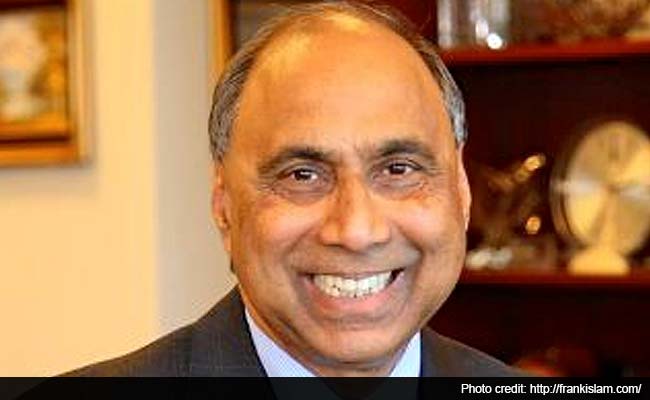
    Entrepreneur and philanthropist Frank Islam would like fellow Indian-Americans to make a strategic investment in education in India as it is the great equalizer and opportunity creator.

    “Supporting educational institutions is one of our highest priorities because education is the key to opportunity and the bridge to the future,” he said during the Second American Bazaar Philanthropy Dialogue and Dinner, organised by an ethnic publication here.

    Dozens of prominent philanthropists, nonprofits, stakeholders and leaders from the South Asian and Indian American philanthropic community attended the dialogue to brainstorm giving.

    Lata Krishnan chair of the American India Foundation delivered the 2nd American Bazaar Philanthropy lecture.

    “While education is important in America, the needs are even greater in India and that is why I am supporting initiatives in India,” Islam said.

    “My intent is to use education as a tool to improve the socio-economic status of the underprivileged in India. My desire is those who benefit will in turn contribute towards social, political, and economic development in India,” he added.

    Azamgarh, Uttar Pradesh, born Islam, has announced a $2 million donation to his alma mater, Aligarh Muslim University, which “shaped my history and my journey and determined my destiny,” for building the Frank and Debbie Islam School of Management.

    The school, Islam said will place emphasis on entrepreneurship and preparing the students at AMU to become entrepreneurial leaders and engage in economic development activities that will create jobs and opportunities for thousands of people throughout India.

    “We see our contribution not as a charity but as an investment that will yield exponential returns,” he said.

    “We not only support AMU, but also give to other educational institutions as well here in US and in India,” said Islam who was presented the American Philanthropy award for his pioneering efforts in the fields of education arts and culture.

    Receiving the award from Arun M. Kumar, US Assistant Secretary of Commerce for Global Markets, Islam told fellow Indian-Americans that they had done well in the US and now it was their turn to do good in India.

    “Let us together change the face of India. One family, one village and one life at a time,” he said. “Let us extend our hope, our help, and our hand so that we can together change the face of the world.”

    Apart from AMU, Islam has made major gifts and supported scholarships at his alma mater in the US, the University of Colorado at Boulder and his wife Debbie Driesman’s alma mater in Canada, Western University among others.

    Underlining the importance of strategic philanthropy, Islam said: “I invest in education and promotion of the arts because these are two of those critical areas. I refer them as pivot points -areas that can be leveraged to build a bigger and better future for all.”

    “Education is a pivot point because it is the great equaliser and opportunity creator,” he said. “Art is also a pivot point because it educates and advances social causes. Art and culture transcend all boundaries.”

    Islam has also given $1 million to the US Institute of Peace, an organization devoted to nonviolent prevention and mitigation of conflict around the globe, “because it’s very much engaged in curbing violent extremism.”

    “In addition they are engaged to make the transition to peaceful and stable democracy,” he said.

  • BJP MLAs IN J&K ASSEMBLY THRASH LEGISLATOR WHO HOSTED ‘BEEF PARTY’

    BJP MLAs IN J&K ASSEMBLY THRASH LEGISLATOR WHO HOSTED ‘BEEF PARTY’

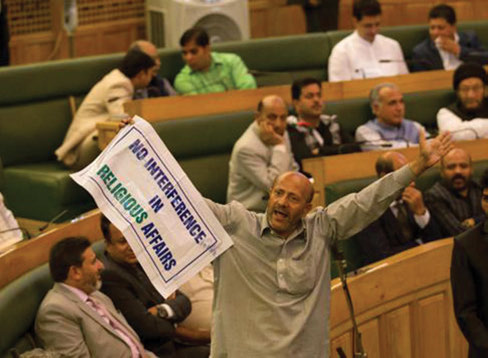
    SRINAGAR (TIP): BJP legislators thrashed an independent MLA for hosting a beef party as the Jammu and Kashmir assembly grounded on October 8 opposition-backed bills aiming to overthrow a decades-old ban on cattle meat in the state.

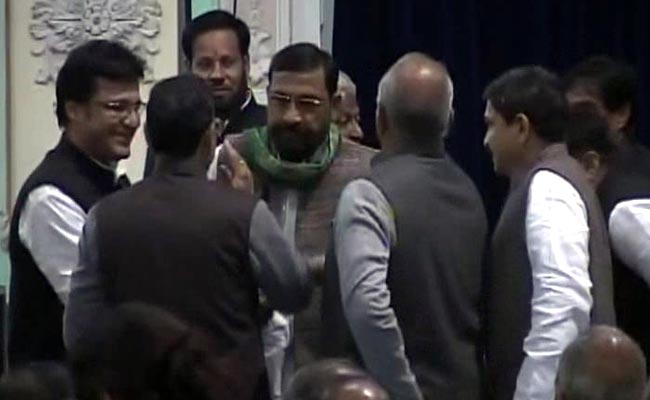
    Lawmakers from the ruling party threw kicks and punches at Engineer Rashid a day after he reportedly served beef kebabs and patties on the lawns of the state legislators’ hostel in protest against the prohibition on cow slaughter that has triggered debates and communal concerns in parts of the country.

    Rashid said he didn’t wish to offend anyone and hadn’t broken any rules as the Supreme Court this week suspended the colonial-era beef ban under the state’s Ranbir Penal Code (RPC) for two months after separate wings of the J&K high court gave conflicting orders on the issue.

    “Nearly six to eight BJP members grabbed me and kicked and punched me,” the MLA told the media. “Is this democratic behaviour? And you expect separatists to join this assembly.”

    The Langate legislator has been in the news for leading protests against the ban and also courted controversy this month when he demanded that the remains of terrorist Afzal Guru, who was executed for his involvement in the 2001 Parliament attack, be returned to his family in the Valley.

    Amid the uproar, separate opposition bills seeking amendments to the RPC to decriminalise cattle slaughter were not taken up by the assembly on Thursday despite being listed for discussion, prompting criticism from the National Conference, Left and Congress leaders.

    Speaker Kavinder Gupta adjourned the House for the day at 1.30 pm, the schedule followed in the assembly during the current session, despite opposition leaders seeking more time to discuss the issue.

    “It seems that you have already decided to adjourn the house as the chief minister has left the House,” an angry Omar Abdullah, NC leader and former chief minister, told the Speaker. “This seems to be a way to save their chairs.

    This government is hiding behind you.”

    The beef ban controversy has emerged as a nettlesome test for the ideologically divergent PDP and BJP that tied up to form the J&K government this year after voters delivered a fractured mandate.

    “You cannot manhandle an MLA,” said chief minister Mufti Mohammad Sayeed of the PDP as he condemned the attack on Rashid.

    The incident comes against the backdrop of a raging debate across the country over cow slaughter with hardline Hindu organisations pushing for a nationwide ban and minority groups resisting the move. Last week, a mob dragged a Muslim man out of his home in an Uttar Pradesh village and bludgeoned him to death with sticks and stones over suspicions that he butchered a calf.

    The beef row snowballed in Jammu and Kashmir after a division bench of the high court instructed authorities to strictly implement the ban, an order that drew sharp reactions from separatists and several minority groups who called it “interference in religious affairs” and sought revocation of the law.

    The laws governing slaughter of cows, bullocks and buffaloes vary from state to state. Jammu and Kashmir has a 10-year jail term for flouting the ban, while many northeastern states are allowing slaughter of all three.

  • PRESIDENT INDICATES DISPLEASURE ON DADRI

    PRESIDENT INDICATES DISPLEASURE ON DADRI

    NEW DELHI (TIP): Apparently referring to the Dadri lynching episode, President Pranab Mukherjee on October 7 asserted that the core values of India’s civilisation cannot be given the slip.

    “We cannot allow core values of India’s civilisation to be given a slip,” President Mukherjee said.

    “Core values of diversity, tolerance and plurality must be kept in mind,” he added.

    The President’s comments came at a time when leaders from across the spectrum are deriving political mileage from the Dadri incident.

    Meanwhile, the Ministry of Home Affairs has appraised the Prime Minister’s Office of the situation in the western Uttar Pradesh village.

    The Uttar Pardesh government had submitted a report to MHA on the probe into the Dadri incident.

  • Indian television journalist shot dead in Uttar Pradesh: CPJ Demands Punishment to Culprits

    Indian television journalist shot dead in Uttar Pradesh: CPJ Demands Punishment to Culprits

    NEW YORK (TIP): The Committee to Protect Journalists, October 8, called on authorities in the Indian state of Uttar Pradesh to thoroughly investigate the shooting death of journalist Hemant Yadav, determine a motive, and bring the perpetrators to justice. The attack follows the killing of another journalist in the state in June. Yadav, 45, was a reporter for the Hindi-language news channel TV 24. He was shot near his home on Saturday, October 3 night, in Chandauli district in Uttar Pradesh. His attackers fired at him from a motorcycle and then fled the scene, according to Agence France-Presse. No arrests have been made, AFP reported, citing police.

    It is unclear if Yadav was killed in relation to his work as a journalist. CPJ was unable to determine what Yadav covered at the TV channel. TV 24 did not immediately reply to CPJ’s message requesting comment.

    Police have not identified suspects or offered a clear explanation of a motive behind the attack, news reports said. He was shot while returning home from a local market, media reports said.

    “We call on authorities to step up their investigation into the killing of Hemant Yadav. Police must act quickly and decisively to investigate this case and bring his killers to justice,” said Bob Dietz, CPJ’s Asia program coordinator. “Far too often, journalists’ murders go unpunished in India, no matter the motive. It is time for India to address this tradition of impunity.”

    In June, freelance journalist Jagendra Singh, who reported critically on politics and current affairs in Hindi-language newspapers and on Facebook, died from burn injuries he sustained after a police raid at his home in Uttar Pradesh on June 1.

    Of the 11 journalist murders CPJ has confirmed as work-related in the last 10 years in India, all have been carried out with complete impunity. India ranks 14th on CPJ’s 2015 Impunity Index, which spotlights countries where journalists are slain and the killers go free.

    CPJ is an independent, nonprofit organization that works to safeguard press freedom worldwide.

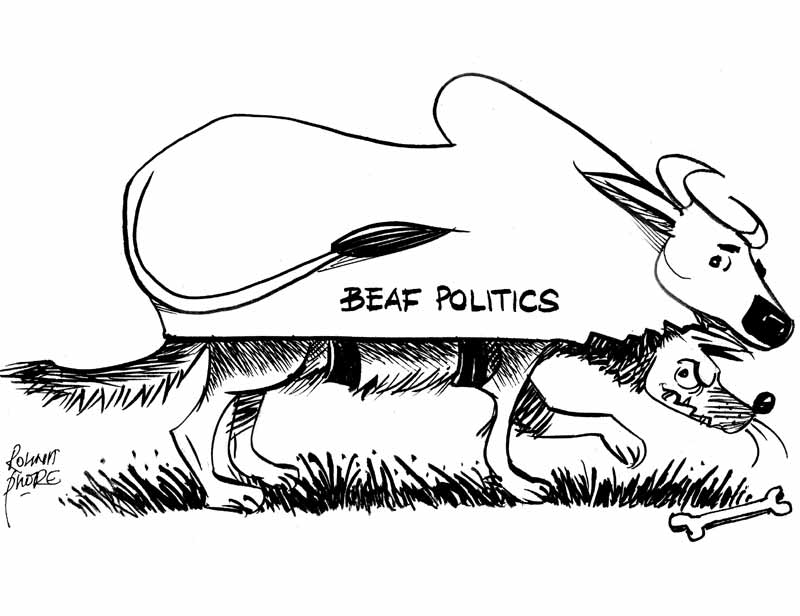
  • THE POLITICS OF BEEF

    THE POLITICS OF BEEF

    On Sept. 28, in a village less than 60 miles from New Delhi, a Hindu priest announced in a local temple (under threat by some hot heads, he claims) that a Muslim family was consuming beef.

    Shortly afterward, a frenzied (Hindu) mob, wielding sticks, swords and cheap pistols barged into the family’s house and pulled out Akhlaq & his 22-year-old son, Danish, accusing the family of having slaughtered a cow and consuming it. They beat the men with such rapturous fury that within minutes the father was dead and his son in a coma.

    Times cannot be treated as normal if the President of India feels the need to issue a public advisory. What can explain the inexplicable silence of the otherwise hyper-expressive Narendra Modi.

    While, leaders of the political parties have left no stone unturned in trivializing the issue. PM Modi did not issue a single tweet, nor posted a Facebook statement expressing regret or offering condolence for this dead citizen.

    The Prime Minister finds himself unable to condemn utterances of his own party leaders & ministers. Isn’t this what happened in Godhra, when Modi was the Chief Minister.

    PM Speaks – Only too little too late 

    Less than 24 hours after the President’s subtle reprimand, India’s Prime Minister did speak – Not against the murderers of Akhlaq. Not even on the provocative comments by his party men/women in Dadri. No, not even on the urgent need to put an end to beef politics. All this can wait. After all, elections in Bihar happen just once in five years.

    Its all Politics for Narendra Modi – Why else would he choose an election rally to indirectly mention the incident. What are the compulsions of Narendra Modi who has brought to his party 284 seats in the Lok Sabha?

    Why Laloo alone comes to his mind; and people like Mahesh Sharma, Sanjeev Balyan, Sakshi Maharaj, Yogi Adityanath, Sangeet Som, Azam Khan and AIMIM leader Assaduddin Owaisi are allowed to get away with their shameless statements?

    Akhlaq’s family members can wait. And the President of India should learn to wait. Prime Minister of India is busy consolidating his position. And for this he must win Bihar. India’s core civilizational values can wait too

    While only hinting on the raging row over the Dadri lynching incident, Prime Minister Narendra Modi said Hindus and Muslims should decide whether to fight each other or together overcome poverty while asking the people to ignore “irresponsible” statements of politicians.

    Its to be noted that the above statement comes at his 4th Bihar election rally this week and that too after blowing all the jibes on the beef row towards BJP opponents like Laloo.

    “The country has to stay united,” Modi asserted. “I have said it earlier also. We have to decide whether Hindus should fight Muslims or poverty. Muslims should decide whether to fight Hindus or poverty,” he added.

    The silence does not douse flames, it fans conspiracy theories

    Adding Fuel to the Fire – Our Politicians whom ‘WE’ elected

    Why are these shallow leaders not expelled? Every time a party has been questioned, their answer has been simple -point fingers at the other parties.

    Outrageous Things Leaders Have Said – For the record, BJP leads here. 

    Mahesh Sharma 

    Modi’s Culture Minister & BJP Leader Mahesh Sharma, a moral idiot recently opined that India’s late President Abdul Kalam was patriotic “despite being a Muslim,” and dubbed the vicious beating an “accident.” He consoled the family by noting that at least the 17-year-old daughter of the slain man was untouched!

    Azam Khan
    Uttar Pradesh minister Azam Khan took one step further and wrote to United Nations on the condition of Muslims in India.

    He goes on further to hint on a new partition of India, “There should be a round table conference on what will be the new map of India and how people will live in the country” and “Aaj poori duniya dekh rahi hai ki Babri se le ke Dadri tak ka mansooba kya tha”.

    He clubs the incident with the demolition of Babri Masjid to harness the power of hatred.

    Sangeet Som 

    BJP MLA Sangeet Som, infamous for making controversial speeches during the 2013 Muzaffarnagar riots & one of the accused, declared, “Agar nirdoshon ke khilaf karyawahi ki gayi, to munh-tod jawab hamne pehle bhi diya hai aur abh bhi dena jante hain (If action is taken against innocent, we have given a befitting reply earlier and can do so again). We can give a reply whenever we want.” He made this statement at a temple on the outskirts of Bisara, near where the incident occurred.

    Asaduddin Owaisi

    “This murder was premeditated. He has been killed in the name of religion. It is an attack on our community. It cannot be an accident. All of this is being propagated by the state and central governments,” Owaisi says. The Hyderabad MP also questioned Prime Minister Narendra Modi’s silence on the killing. “This mother has seen her son getting beaten to death in front of her. Where are his condolences?”

    Owaisi also slammed Union Minister Mahesh Sharma for describing the killing in the Dadri village as “an accident”. “He is the country’s Culture Minister. It is unfortunate that a minister who has taken an oath on the Constitution does not have the courage and intellectual honesty to condemn the incident unconditionally.”

    Tarun Vijay 

    BJP MP Tarun Vijay said, it wasn’t the Hindu community’s responsibility to maintain peace and the Muslim community should remain mute.

    “Why responsibility to keep peace and maintain calm is always put on the Hindus alone? Be a victim and maintain silence in face of assaults!!” tweeted the former editor the Rashtriya Swayamsevak Sangh (RSS) weekly in Hindi, Panchajanya.

    Muslims & Minorities in India – whatever the politicians may think – have a right to live with their heads held high as anyone else. They cannot & must not be ‘dumped’ or ‘subdued’.

    As Indians we need to fix our dysfunctional democracy. The idea of democracy cannot begin and end with elections alone. Until then we will continue to lose lives like Mohammad Akhlaq’s because of let’s call it “the politics of food “.

    Is anyone there listening???

  • Indian American Muslim Council Condemns Dadri Mob Killing

    Indian American Muslim Council Condemns Dadri Mob Killing

    NEW YORK:  The Indian American Muslim Council (IAMC), a US based advocacy group, has strongly condemned the anti-minority violence in India, in the form of a mob lynching of a Muslim man and his son in Dadri, Uttar Pradesh, over mere suspicion of having eaten beef.

    “Beyond the mob’s inhuman behaviour, it is alarming to note that the police have sent the meat from the victim’s refrigerator to a forensic lab to be tested, out of apparent respect for the mob’s feelings,” a statement posted on the IAMC website said.

    “This effectively turns the victim into the accused, despite the fact that even if the family were in possession of beef, they were not in violation of the Uttar Pradesh Cow Protection Act,” the statement added.

    The IAMC also accused the authorities for their inaction, calling on the media to “expose the larger design behind the incident”. The State Government is of Samajwadi Party (SP) & the Centre or National Government is of Bharatiya Janata Party (BJP), both SP and BJP have been found responsible for the mass violence that claimed over a 100 lives and resulted in the displacement of over 50,000 people in Muzaffarnagar in 2013 by The Sahay Committee.

    A week ago, Mohammad Akhlaq, a resident of Bisara in Greater Noida, was dragged out of his house after a mob of over 200 people alleged he had killed a cow in his house. They beat Akhlaq to death, while his 22 year-old son Danish was injured and is in critical condition. Another son of Mohammed Akhlaq is a serving corporal in the Indian Air Force.

    The IAMC said the incident was made to appear like a spontaneous act of violence by an unruly crowd but there are strong indications that this was a planned act.

    Indian-American Muslim Council (IAMC) is the largest advocacy organization of Indian Muslims in the United States with chapters across the nation, “dedicated to safeguarding India’s pluralist and tolerant ethos”.

  • Vyapam scam: CBI conducts massive raids

    Vyapam scam: CBI conducts massive raids

    NEW DELHI (TIP): Two months after it took over the investigation in the multi-layered Vyapam (Vyavsayik Pariksha Mandal) scam, CBI sleuths on Thursday conducted raids at around 40 places in Madhya Pradesh and Uttar Pradesh.

    Searches were also conducted at the residences of MP’s former BJP minister Laxmikant Mishra; former Vyapam system analyst Nitin Mahindra; Dhanraj Yadav, former officer on special duty to MP Governor Ram Naresh Yadav, in Lucknow, alleged mastermind Jagadish Sagar and several others.

    “We have conducted searches relating to Vyapam cases in around 40 places in Madhya Pradesh and Uttar Pradesh. In MP, the searches were conducted in the districts of Bhopal, Indore, Gwalior, Ujjain, Jabalpur and Rewa; the headquarters of Vyapam in Bhopal and in Sironj in Vidisha district. In Uttar Pradesh, the searches were conducted in Lucknow and Allahabad,” a senior CBI official overseeing the probe said.

    The searches hinted at an alleged nexus between politicians and high-placed officials in receiving bribes from the job-seekers to clear Madhya Pradesh Professional Examination Board or Vyapam examinations. The Supreme Court, which  had directed the CBI to take over the probe on July 9, has sought a status report by October 9.

  • A Story of Courage and Determination | Arunima Sinha, the First Indian Amputee to Climb Mount Everest

    Ms Arunima Sinha of Lucknow (Uttar Pradesh) is the first Female Amputee of the world to climb Mount Everest. She is also the first Indian Amputee to climb Mount Everest. She reached the summit of Mount Everest on 21st May, 2013 at 10.55 hours after a hard toil of 17 hours, as a part of the Tata Group sponsored Eco Everest Expedition. She took 52 days to reach the summit.

    She was formerly a national level volleyball player. While traveling by train from Lucknow to New Delhi on 11th April, 2011, she was pushed out of the running train by the thieves wanting to snatch her bag and gold chain at about midnight. Her left leg below the knee was crushed. There were multiple injuries in her body. About 50 trains passed over her as she was lying between the two tracks in helpless condition. Next day morning she was rushed to Bareilley civil hospital with serious injuries. The doctors amputated her infected left leg below the knee to save her life. Then she was shifted to All India Institute of Medical Science, New Delhi. While she was undergoing treatment there for four months, she resolved to climb Mount Everest.

    When she was about one thousand feet away from the summit, her oxygen cylinder got almost empty. She was told to come back but she decided to take the risk of her life and marched forward and reached the summit. She placed the Indian flag on the top of the summit along with the flag of Tata Steel (sponsoring agency). Then she worshiped the photograph of Holy Trio (Swami Vivekananda, Bhagwan Shri Ramakrishna and the Holy Mother Sri Sarada Devi) and left it there for good. After the worship, she unexpectedly found an oxygen cylinder left by an Englishman, who had dropped one of the two cylinders as it was too heavy. This is how she survived and came back. She feels that she survived because of the grace of Holy Trio, therefore she has resolved to place the photos of Holy Trio on remaining six summits of the world, she has already placed the photographs on Mount Killmanaro of Africa (11 May, 2014 And Mt. Elbrus of Russia (24th July, 2014).

    She was felicitated by Dr. APJ Abdul Kalam, former President of India at Vadodra on August 10, 2013 during the international youth conference organized by Ramakrishna Mission, Vadodra. She was felicitated by Shri Narendra Modi, the then Chief Minister of Gujarat on January 11, 2014 at Mahatma Mandir, Gandhinagar in the presence of a large number of youths of India and abroad and a large number of dignitaries. She has received many prestigious awards from many reputed organizations — Salam India Award by India TV, Bharatiya Nari Shakti Award by India Today etc. The Vice-President of India Shri M. Hamid Ansari presented an ‘Amazing India Award’ instituted by Times Now channel on 6 Feb. 2014. The Governor of Rajasthan Mrs. Margret Alva presented International Vaish Federation Award .

    She has now dedicated herself to the social cause. She actively participated in Uttarakhand Relief Work. She is planning to start a Sports Academy for poor and differently abled people and is motivating thousands of youths throughout the country with her inspiring life story and the message of Swami Vivekananda. She has delivered many Motivational talks in educational institutions like IIM, Kolkata, IIM Ahmedabad, IIT, Kanpur and in international, national and regional level youth conventions organized by Ramakrishna Mission in various parts of India, and in many reputed companies. Both print media and electronic media have covered her life story in various ways and on various occasions which has inspired thousands of people throughout the country. A book on her life will be soon published by Penguin.

    She is now preparing herself for participating in Para Olympics, 2016 as a Blade Runner.

    Because of her extraordinary courage and self-confidence and inspiring speeches, she is now becoming a role model for modern youth. She is a living example of women Empowerment & Development. Her life story is at once thrilling and inspiring and practical demonstration of the power of faith.

  • Indian American Entrepreneur & Philanthropist Frank Islam Conferred ‘Pride of India’ Award

    Indian American Entrepreneur & Philanthropist Frank Islam Conferred ‘Pride of India’ Award

    The American Federation of Muslims of Indian Origin (AFMI) has honoured India-born entrepreneur and philanthropist, Frank Islam with the “Pride of India” award.

    India’s Consul General in New York Dnyaneshwar M. Mulay conferred the award upon Mr Islam.

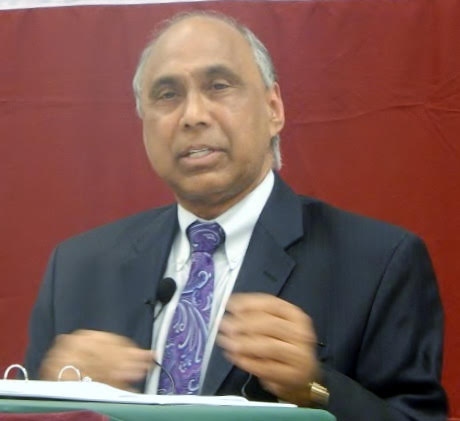
    frank islamIslam, a confident of President Obama and an entrepreneur, investor and philanthropist, donated $222,000 in May this year to Aligarh Muslim University in India. This is part of his $2 million commitment for the construction of a new management complex at the 140-year-old university.

    “It is a distinct honour and privilege to be here tonight to accept the AFMI ‘Pride of India’ award. It is also a privilege to be asked to speak as a part of AFMI’s silver jubilee celebration,” Mr Islam was quoted as saying.

    “I have received many awards. But this one is extra special because it comes from this prestigious organisation in its silver jubilee year,” Mr Islam added.

    “I must admit that receiving this award and joining such luminaries does not make me proud. It makes me humble,” he noted.

    Mr Islam, 63, was born in Azamgarh in Uttar Pradesh and is married to Debbie Driesman, 61.

    Apart from being a successful entrepreneur, philanthropist and civic leader, he is also a thought leader with a special commitment to civic, educational and artistic causes.

    He currently heads the FI Invest Group – a firm that he established after he sold his information technology firm called the QSS Group in 2007, the report added.

    Islam also sits on several boards and advisory councils including the Kennedy Center Board of Trustees, the US.. Institute of Peace, the Woodrow Wilson Center and the Brookings Institution in Washington, D.C., reported the Indo Asian News Network.

    He has written two books on the American condition, titled “Working the Pivot Points: To Make America Work Again” (2013) and “Renewing the American Dream: A Citizen’s Guide for Restoring Our Competitive Advantage” (2010).

    The donation to the Aligarh Muslim University (AMU) will be used towards building the Frank and Debbie Islam School of Management with an endowed chair and building a technical college for girls in Azamgarh in memory of his mother Qumran Nisan.

    Past winners of “Pride of India” award include noted lyricist and song writer, Javed Akhtar; Ram Vials Paswan, Union Minister; and Rehman Khan, Former Union Minister of Minority Affairs in India.

    The AFMI, a philanthropic charity formed by American Muslims of Indian Origin in the 1989, celebrated its silver jubilee convention on August 29.

    The AFMI strives to improve the socio-economic status of the underprivileged Indian Muslim minorities through education.

  • CENTRAL GOVT ANNOUNCES 98 SMART CITIES

    CENTRAL GOVT ANNOUNCES 98 SMART CITIES

    NEW DELHI (TIP): The union government on August 27 released the list of 98 cities that will be developed under the Smart Cities mission.

    These cities together have a population of 13 crore, accounting for 35 per cent of India’s urban population. Names of two cities — one from Jammu and Kashmir and Uttar Pradesh each — are yet to be revealed. The metros with a population of over 50 lakh each on Smart Cities list include Chennai, Greater Hyderabad, Ahmedabad and Greater Mumbai. Some of the other important urban local bodies that have been included in the list are the New Delhi Municipal Council, Vishakhapatnam, Chandigarh, Surat, Kochi, Bhopal, Navi Mumbai, Thane, Bhubaneswar, Amritsar, Jaipur, Allahabad and Lucknow.

    The Smart Cities mission, launched by PM Narendra Modi in June this year, will provide central funding of Rs 48,000 crore to the selected cities for improving their infrastructure and service delivery through application of better technology and e-governance.

    Explaining the meaning of Smart Cities in an Indian context, Venkaiah Naidu, Minister for Urban Development, said that it would ensure robust IT connectivity and digitization as also core infrastructure such as water supply, electricity supply, sanitation, public transport, solid waste management and affordable housing. “We are not just aiming at making our urban landscape fanciful and flashy but the prime objective is to enhance quality of urban life,” he said.

    He added that central government will immediately release Rs 2 crore to each of the cities for preparation of their smart city plans.

    The state and urban local bodies have to provide a matching contribution of Rs 48,000 crore to each city for the five year mission. This is in addition to thousands of crores worth investments from the private sector which they will be allowed to recover through levy of user charges on say water supply or urban transport. “In a situation such as the recent financial crisis, when private firms are looking for safe investments, I assure them that Smart Cities are safe investment. The land is going to be readily available and the returns are assured,” he said.

    According to the union government, twenty four cities on the list are industrial or business centres, 18 are cultural or tourism hubs, five are port cities and three are educational and heath care hubs and capital cities account for a quarter of total Smart Cities. However, nine state capitals have been left out of mission. These include Patna, Bengaluru, Trivandrum, Kolkata, Puducherry, Gangtok, Shimla, Daman, Itnanagar. All states and union territories were to send in their nominations according to the quota allotted to them by the centre by July 31st.

    The quota was assigned based on the the number of statutory cities and towns in the state and its total population. Accordingly, UP had the highest allotment at 13 followed by Tamil Nadu at 12 and Maharashtra at 10.  The smaller states, North eastern states and union territories mostly have only one smart city slot each. The J&K government has asked for more time to decide on whether the winter capital of Jammu or the summer capital of Srinagar should be their smart city candidate. The conflict-ridden state is allowed only one nomination to the mission after demands by the state government to allow for two was turned down by the Centre.

    According to the ministry, both Jammu and Srinagar have similar scores in the grading system. The same is the case with Rae Bareli and Meerut both of which had a tie for the 13th position in Uttar Pradesh.

    What is a ‘smart city’?

    A city equipped with basic infrastructure to give a decent quality of life, a clean and sustainable environment through application of some smart solutions.

    Basic infrastructure

    Assured water and electricity supply, sanitation and solid waste management, efficient urban mobility and public transport, robust IT connectivity, e-governance and citizen participation, safety and security of citizens.

    Smart solutions

    Public information, grievance redressal, electronic service delivery, citizens’ engagement, waste to energy & fuel, waste to compost, 100%treatment of waste water, smart meters & management, monitoring water quality, renewable source of energy, efficient energy and green building, smart parking, intelligent traffic management system.

    What’s the next step?

    The next step is identification of the 100 cities and for this a city challenge competition to be conducted by Bloomberg Philanthropies is envisaged. The current plan looks to select 20 cities this year followed by 40 each in the next two years.

  • Census 2011: Hindus dip to below 80% of population; Muslim share up

    Census 2011: Hindus dip to below 80% of population; Muslim share up

    NEW DELHI (TIP): The percentage of Muslims in the country’s population increased 0.8 percentage points between 2001 and 2011 to 14.23% or 17.22 crore. In the previous decade, i.e. between 1991 and 2001, their share in the total population had increased by a bigger measure or 1.73 percentage points to 13.43%. They were, however, the only community to register a growth in terms of their share in the total population. The Census 2011 data on Population by Religious Communities, released by the Registrar General of India on Tuesday, also showed that the percentage of Hindus dipped by 0.7 percentage points (PP) in the decade 2001 to 2011, pulling it for the first time below 80%. Hindus now constitute 79.8% of the country’s total population. In the previous decade, the proportion of Hindus in the population showed a sharper fall by 1.94 percentage points.

    In January this year, The Indian Express had reported about the fall in percentage of the Hindu population. According to the 2011 Census data, India’s population in the 2001-2011 grew 17.7% to 121.09 crore, with Hindus numbering 96.63 crore. The decadal growth rate of Hindus was 16.8% during the period. The previous UPA government did not release the census data on religious composition in the last couple of years for political reasons.

    The data release coincides with Assembly elections due in three states with significant Muslim population —Bihar in October this year and Assam and West Bengal in 2016. Except Madhya Pradesh, the increase in the Muslim population in all big states remained above the national average of 24.6%. In Rajasthan, it increased by 29.81%, Bihar 27.95%, Gujarat 27.3%, Maharashtra 26.3% and in Uttar Pradesh by 25.19%. In Madhya Pradesh,the increase was marginally less than the national average at 24.29%. Among the other big states which have sizeable Muslim numbers, Assam has seen their count increase 29.59% and West Bengal 21.81%, both of which are poll-bound. Barring Manipur and Puducherry, Muslims as a percentage of the population increased in all other states. In Assam, their share increased 3.3 percentage points to 34.22%. In Manipur and Puducherry, it fell 0.41 and 0.04 percentage points respectively to 8.4% and 6.05%. According to the 2011 data, Christians formed 2.3% of the total population at 2.78 crore. The Sikh population stood at 2.08 crore making up 1.7%, Buddhists at 84 lakh accounted for 0.7%, and 45 lakh Jains accounted for 0.4% of the total population. While there has been no significant change in the proportion of Christians and Jains, that of Sikhs has declined by 0.2 percentage points and of Buddhists by 0.1 percentage points during the decade.

    The growth rate of Christians over the decade stood at 15.5%, Sikhs at 8.4%, Buddhists at 6.1%and Jains 5.4%.

  • What is the Vyapam scam

    What is the Vyapam scam

    NEW DELHI (TIP): The Madhya Pradesh Professional Examination Board (MPPEB) scam also known commonly by its Hindi acronym as the “Vyapam scam” hits headlines on and off throughout the year. Last week a reporter with Aaj Tak news channel collapsed while interviewing kins of victims, reports say post-mortem does not indicate foul play, but viscera reports are awaited. ext day , the dean of a college from Jabalpur who was assisting the Special Task Force in the investigations was found dead at a hotel in New Delhi. Activists say that the English media has not reported the scam as extensively as they should have.

    But what is the Vyapam scam?

    One of the first complaints were registered way back in 2000, but it was only by 2007 that the scam came to fore as a full fledged professional racket. Investigations and arrests started in 2013 after new details emerged.

    The MPPEB has been responsible for conducting entry into professional courses like the Pre-Medical examinations for the state since 1982. Complaints of irregularities while conducting the examinations first surfaced in 2009, and the scam blew over in 2013. The Vyapam scam pertains to manipulation in the selection process for government jobs conducted by MPPEB which came to light after a report by the Madhya Pradesh Local Fund Audit office for 2007-08 found alleged financial and administrative irregularities, including unauthorized disposal of application forms, worth crores of rupees by the MPPEB. In July 2013, the crime branch at Indore arrested 20 people, 17 from Uttar Pradesh for impersonating MPPMT candidates. The lid blew over what was apparently an entirely rigged system.

    A list containing names of 317 candidates was confiscated from Dr Jagdish Sagar, considered to be the mastermind of the scam. He was arrested by the Indore police on July 12, nine days before the PMT counselling.

    Modus operandi

    Impersonation: In this, all the detail is in the admit card, including name, date of birth, and roll numbers, of the candidate who is applying for the seat. However, the photograph is of the impersonator. An impersonator is one who writes an exam on behalf of someone else. In such cases, they are brilliant students who can score very high marks. The concerned officers on the examination board change the photograph back to that of the original candidate after the exam.

    Engine and bogie system: A person is fixed by people on the board whose work is like that of an engine. He/She is seated strategically between two other candidates who want a seat. The engine helps them copy from his/her own paper. The examiners are usually bribed to fix the seating arrangements.

    OMR sheets: The select candidates are advised to leave their answer sheets blank. They are randomly given high percentages after the exam. They then fill in the answers in the OMR booklet according to the marks they have already been given.

    Arrests and accusations

    In December 2013, the Special Task Force investigating the scam under the supervision of SIT formed by the Madhya Pradesh High Court produced a supplementary charge-sheet against the 34 accused in the Indore district court. The charge-sheet ran into 23,000 pages and 30 out of the accused were the parents of children.

    In April next year, 27 students of MGM College were expelled for fraudulently clearing PMT-2012. These were only those who could be identified, the total number of fraudulent candidates was 286 that year. In June 2014, the STF said that the police had arrested close to 100 medical candidates in connection with the scam. On the 16th of the same month, the former technical education minister in the BJP govt in the state, Laxmikant Sharma was arrested for his involvement in the contractual teachers scam. Those arrested in connection with the impropriety also include MPPEB’s exam controller Pankaj Trivedi, MPPEB’s system analysts Nitin Mahendra and Ajay Sen and state PMT’s examination in-charge C. K. Mishra.

  • Suit Boot Ki Sarkar Versus Soojh Boojh Ki Sarkar

    Suit Boot Ki Sarkar Versus Soojh Boojh Ki Sarkar

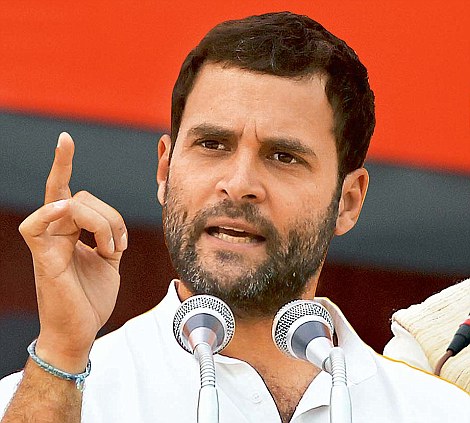
    NEW DELHI (TIP): After his return from the nearly two-month-long political sabbatical on April 16, Congress vice-president Rahul Gandhi has been unsparing in his attacks on Prime Minister Narendra Modi and his government over issues concerning farmers, landless laborers, netizens, middle-class home buyers, fishermen, ex-servicemen, Dalits and now sanitation workers.


    This appears clearly to be part of a grand strategy to reach out to different sections, that once comprised the support base of the Congress but which gradually shifted their loyalties to different parties, in a desperate bid to revive the party’s sagging fortunes after its worst ever electoral defeat in 2014 Lok Sabha elections.


    In the case of striking sanitation workers in Delhi, Gandhi attacked the ruling Aam Aadmi Party (AAP), which had eaten into the Congress vote-bank in the assembly elections early this year. The Congress is desperately seeking to regain its space in Delhi from the AAP.


    The new-found aggression by taking different communities into account has given a fresh lease of life to the Congress after a series of electoral setbacks. It appears to have regained some ground at least in Parliament where its aggressive tone on various issues, especially plight of farmers and the land acquisition bill, has put the BJP-led government on the defensive.


    While Congress president Sonia Gandhi had led the Opposition from the front in the first part of the budget session, the second half saw a combative Rahul launch stinging attacks on the Modi government.


    The Congress has already launched a countrywide agitation against the NDA government’s policies on farm, land and labor reforms, issues the party hopes will help reconnect with its eroding traditional support base. The party has maintained its opposition to the land bill was non-negotiable and it would go to any extent to ensure it is withdrawn and provisions of the original UPA law restored. It has vowed to champion the cause of tribals and forest dwellers both in Parliament and on the streets.

    Rahul, too, has plunged headlong into the battle since his return with a countrywide padyatra that he launched from Vidarbha in Maharashtra on April 30 to support the cause.


    His advocating net neutrality was seen as an attempt at an image makeover as Rahul had so far chosen to stay away from all forms of

    social media. Similarly, after the middle class completely deserted the Congress, Rahul’s assurance to fight for their cause is clearly an attempt to seek rapprochement. Sonia had on many occasions in the past stressed the need to address the aspirations of the middle class.


    The Dalit outreach has been planned in order to win back the support of the community which has shifted its allegiance to the Bahujan Samaj Party for years now. However, a major chunk of the Dalit vote bank both in Uttar Pradesh and Bihar gravitated towards the BJP in the 2014 Lok Sabha elections. A buoyed BJP is now eyeing Bihar, where assembly elections are due in September-October this year, and has stepped up its efforts to woo the Dalit and Mahadalit communities.


    Also, Rahul’s repeated “suit-boot ki sarkar” barbs at the Modi government has prompted many senior ministers to return the fire. Finance minister Arun Jaitley hit back, saying there is a “difference between a national duty and disappearance for a jaunt” and that theirs is a “soojh-boojh ki sarkar” (a wise government).

  • Indian minister booked for burning journalist to death over a Facebook post

    Indian minister booked for burning journalist to death over a Facebook post

    Uttar Pradesh Minister Ram Murti Singh Verma has been booked along with five others in connection with the killing of a journalist by allegedly setting him on fire in Shahjahanpur district.

    Journalist Jagendra Singh was burnt to death for a Facebook post against Ram Murti. According to reports in CNN IBN, Singh’s family has claimed that a police officer allegedly set him on fire.

    Singh had reportedly written about Ram Murti’s involvement in illegal mining and forced occupation of land etc.

    “An FIR has been registered against Minister for Backward Classes Welfare Ram Murti Singh Verma, Inspector Sri Prakash Rai, and four others identified as Gufran, Akash Gupta, Amit Pratap Singh, and Bhure for allegedly killing Jagendra Singh by setting him afire,” police said.

    he FIR has been lodged under IPC 302 (murder), 120 B (criminal conspiracy), 504 (intentional insult with intent to provoke breach of the peace) and 506 (criminal intimidation).

    The FIR was registered at the Puwayan police station on Tuesday afternoon on the basis of a complaint by Jagendra’s son Raghvendra after the journalist died during treatment at a hospital in Lucknow on Monday night, police said.

    According to the family members of the deceased, Jagendra had made a Facebook post against the minister regarding his alleged involvement in illegal mining and land grabbing.

    The family alleged that during a raid at the journalist’s house at Awas Vikas colony in Sadar Bazar area of Shahjahanpur on June 1, he was set on fire, following which he was taken to a hospital in Lucknow.

    Before his death, Jagendra had accused Ram Murti Singh Verma of “unleashing” a reign of terror on him and his family for his investigative reports and comments against the minister.

    The journalist had alleged earlier that he sustained burn injuries during a raid by Inspector Sri Prakash Rai at his house.

    He reportedly told Inspector General (Civil Defence) Amitabh Thakur two days ago at the civil hospital in Lucknow that he was also attacked on April 28 near his house by the minister’s henchmen but no action was taken in the case.

    “He told me he was hounded for exposing the ministers alleged involvement in illegal mining and forced occupation of land,” Mr Thakur confirmed.

  • PRADEEP KUMAR SINHA APPOINTED NEW CABINET SECRETARY

    NEW DELHI (TIP): Power secretary Pradeep Kumar Sinha was appointed as the next Cabinet secretary of the government.

    He will succeed Ajit Seth who has been holding the position for the last four years. Sinha, a 1977-batch IAS officer of Uttar Pradesh cadre, has been asked to take over as officer on special duty (OSD) in Cabinet secretariat, an official release said.

    He will formally take over the new charge on June 13, it said. The Prime Minister has approved the appointment of Sinha as the next Cabinet Secretary with effect from June 13, the release said.

    Sinha has been serving as power secretary since July 2013. He has earlier served as the shipping secretary and has also held several other important positions in the Union government and in his cadre state – Uttar Pradesh.

    Seth, a 1974-batch IAS officer of Uttar Pradesh cadre, had taken over as Cabinet secretary on June 14, 2011 with a two-year fixed tenure upto June 13, 2013. The UPA government had extended his tenure by a year. The Modi-government had given six-month extension to Seth in June followed by the third such extension in December last year.

    The Cabinet secretariat is under the direct charge of the Prime Minister. The administrative head of the secretariat is the Cabinet secretary who is also the ex-officio chairman of the civil services board.

    The Cabinet secretariat assists in decision-making in government by ensuring inter-ministerial coordination, ironing out differences amongst ministries or departments and evolving consensus through the instrumentality of the standing or adhoc committees of secretaries.

  • AAP, Jung & Centre battle goes to courts

    AAP, Jung & Centre battle goes to courts

    Delhi Politics - Kejriwal & Jung - Face OffThe AAP government on Thursday moved the Delhi high court challenging the Union home ministry’s May 21 notification that lieutenant-governor Najeeb Jung has discretionary powers for appointments and transfers to key bureaucratic posts in the nation’s capital. Delhi chief minister Arvind Kejriwal is likely to seek political support for his stand by writing letters to the chief ministers of West Bengal, Uttar Pradesh and Bihar, among others. Even Delhi Assembly Speaker Ram Niwas Goel is in the process of writing to President Pranab Mukherjee urging that the city government be accorded more powers in line with the bill moved by then home minister L.K. Advani in Parliament in 2003.

    The Supreme Court also agreed to hear on Friday a special leave petition by the Union home ministry against the May 25 Delhi high court order describing as “suspect” its notification on the transfer of officers, and holding that Delhi’s lieutenant-governor could not act in his discretion.

    Following the tiff, lieutenant-governor Najeeb Jung on Thursday met Union home secretary L.C. Goyal and had a telephonic conversation with home minister Rajnath Singh. Mr Jung reached the home ministry early Thursday morning and had a 20-minute meeting with Mr Goyal. It is understood that the lieutenant-governor discussed the resolution passed by the Delhi Assembly on Wednesday and the government’s stand in the Supreme Court on the special leave petition. The L-G is said to have briefed the home secretary on the transfers and postings by the AAP government which he claims are in violation of the rules.

    A Supreme Court vacation bench of Justices A.K. Sikri and U.U. Lalit has posted the petition for hearing Friday after a “mention” was made by additional solicitor-general Maninder Singh on its urgency, seeking an early listing. The MHA’s May 21 notification prohibited the Delhi government’s Anti-Corruption Branch (ACB) from acting against Central officials in criminal cases. It had said that the ACB could not take cognisance of offences against officials, employees and functionaries of Central services, that includes the Delhi police. It also gave the lieutenant-governor absolute powers on the transfer and posting of senior officers.

    In the Delhi high court, the city government mentioned the matter before a division bench of Justices B.D. Ahmed and Sanjeev Sachdeva. The bench also then posted it for hearing on Friday. The Delhi government has sought the quashing of the MHA notification on the grounds that it is not constitutionally valid.

    A similar plea filed by law student Vibhor Anand that had challenged the MHA notification and contended that the appointment of bureaucrat Shakuntala Gamlin as acting chief secretary by the lieutenant-governor was “illegal” was also posted for Friday. Mr Anand’s petition said: “Delhi is neither a full state nor a Union territory and (is) governed by Articles 239-AA and 239-AB of the Constitution of India (which deals with Union territories) introduced by a constitutional amendment in 1991.”

    It said: “As per Section 41 of the GNCT Act 1991, the Lieutenant-Governor does not have any discretion to appoint Gamlin as chief secretary and other such posts, nor any special law granted him this discretion.”

    The faceoff between chief minister Arvind Kejriwal and lieutenant-governor Najeeb Jung took place over the control of key bureaucratic appointments.

    The high court, while commenting on this notification, had noted that the lieutenant-governor was bound to act on the aid and advice of the council of ministers directly elected by citizens of Delhi, and that the Centre’s “executive fiat” siding with him was “suspect”. It observed that the people’s mandate “must” be respected by the lieutenant-governor as there was no other “constitutional or legal fetter”.

    The ASG submitted before the Supreme Court bench that the observations by the high court led to total uncertainty and made everyday administration difficult in Delhi. He said there was a need for a clear interpretation of Article 239-AA of the Constitution.

    When the Supreme Court bench noted the high court had only used the word “suspect”, the ASG said a clarification was needed. He said the high court’s observations and findings had come while dealing with the bail application of the policeman who was arrested by the ACB.

    The Delhi government, meanwhile, filed a caveat to make sure that the bench did not pass any ex-parte orders on the MHA’s prevent the Bench from passing ex- parte order in the MHA’s petition without giving it a hearing. In its petition, the MHA faulted the high court for passing an order without giving an opportunity to the Centre to make its submissions.

    The petition questioned the proprietary of the high court in commenting against the May 21 notification although the arguments had been concluded on the bail plea on May 20. It noted there was no occasion for the high court to pass remarks against the notification when it was neither on record nor was it even argued. Further, the petition said the order had also been reserved a day before the notification came into existence.

    The MHA contended that the HC had made sweeping observations against the May 21 notification without any hearing on this aspect. It raised a question whether the high court was required to examine the notification and its implications when the issue pending before it pertained only to a bail petition. Contending that the high court had unreasonably expanded the scope of the controversy and delved upon the notification even as the bail application was pending, the MHA prayed for quashing the impugned order and an interim stay of its operation.

  • US panel: Minorities under attack in India

    US panel: Minorities under attack in India

    NEW DELHI (TIP): A US government panel tracking international religious freedom has said in its latest report that religious minorities in India were exposed to “derogatory” comments by leaders of the ruling BJP as well as “violent attacks and forced conversions by the RSS and VHP” since the Modi government took over last year.

    It also slammed the “ghar wapsi” campaign and accused “Hindu nationalist groups” of offering monetary inducements to Muslims and Christians for converting to Hinduism but also to Hindus who carried out such
    “forced” conversions.

    Even as the United States Commission on International Religious Freedom (USCIRF), a federal government panel that makes policy recommendations to the US President and the Congress, welcomed Prime Minister Narendra Modi’s February 17 statement assuring protection to the minorities as a “positive development”, it added a sting to the compliment.

    The panel said his assurance was notable “given the long-standing allegations that, as chief minister of Gujarat in 2002, Modi was complicit in anti-Muslim riots in that state”. Recalling how Modi’s tourist visa was revoked by the US for “severe violations of religious freedom”, the USCIRF underlined that the Indian PM “remains the only person known to have been denied a visa based on this provision”.

    The findings in the USCIRF annual report- 2015, largely based on the accounts of minority leaders and NGOs based in India, have led it to place India on its Tier 2 list of countries for the seventh year in a row.

    Alleging that incidents of “religiously-motivated and communal violence” had reportedly increased for “three consecutive years”, the USCIRF report said religious minorities in India frequently accused RSS, VHP and other Hindu nationalist groups and individuals of intolerance, discrimination and violence against them. It even alleged that the local police seldom provided protection to the minorities, refusing to file complaints and rarely investigating them.

    Slamming the “ghar wapsi” campaign, the USCIRF noted that Hindu nationalist groups were not only paying off Christians and Muslims to convert to Hinduism but also reportedly offering money to Hindus to convert Christians and Muslims to Hinduism.

    “In December 2014, Hindu nationalist groups announced plans to forcibly reconvert at least 4,000 Christian families and 1,000 Muslim families to Hinduism in UP on Christmas Day… the Hindu groups sought to raise money… noting that it cost nearly Rs 2 lakh (nearly $3,200) per Christian and Rs 5 lakh ($8,000) per Muslim,” the report said. However, it added that domestic and international criticism led “Mohan Bhagwat, a RSS leader” to postpone the programme.

    The report also referred to the alleged mass ceremony held in Agra in December last year to forcibly reconvert Muslims to Hinduism.While noting that nearly half-a-dozen states in India had laws against forced conversions, the US panel alleged these were “one-sided, only concerned about conversions away from Hinduism but not towards Hinduism”.

    Also faulting India on protection of Muslims, the USCIRF report said the community had to face significant hate campaigns by Hindu nationalist groups and local and state politicians, “that includes widespread media propaganda accusing Muslims of being terrorists, spying for Pakistan, forcibly kidnapping, converting and marrying Hindu women, and disrespecting Hinduism by slaughtering cows”. The panel noted that the minority community also complained about some Indian states violating their religious freedom by banning cow slaughter, “which is required for Eid-al-Adha”. This, however, may not be true as the animal traditionally sacrificed for Eid-al-Adha in India is the goat.

    Regarding the religious freedom of Sikhs, the USCIRF report claimed that Sikhs were being denied benefit of reservation available to other religious minorities and Scheduled Castes. It also alleged that Sikhs were harassed and pressured to reject religious practices such as unshorn hair and carrying of kirpan. Indian commentators, however, refute these allegations saying the Scheduled Castes among Sikhs are eligible for reservation benefit and free to follow their religious preferences.

    The panel noted that prosecution and trial of communal cases was slow in India. “The Indian courts are still adjudicating cases stemming from large-scale Hindu-Muslim communal violence in Uttar Pradesh in 2013 and in Gujarat in 2002,” it said.

  • UP project runner-up at UK award

    LONDON (TIP): First the good news – a rural project in the heart of Uttar Pradesh that plans to use abundantly and cheaply available agricultural waste as feedstock to co-produce reliable and affordable electricity and clean household cooking gas has become the runner up for the first prize floated by world famous Imperial College for its most innovative female student entrepreneurs in science and technology.

    The bad news however is that two female students from India, who had made it to the top five shortlist failed to make it to the winner’s podium.

    The £10,000 Althea-Imperial prize was won by Charikleia Spathi, a PhD student from the faculty of engineering for her idea of creating ultra-waterproof concrete additive that makes buildings less vulnerable to natural hazards like flooding.

    Spathi draws on the use of paper sludge ash, a waste product to create a super waterproof powder.

    The two Indian students – one who has developed a vaccine delivery system and another who is working on a way of enabling citizen scientists to help find potential new antibiotics failed to win the prize.

    Meanwhile the UP project Oorja is by Clementine Chambon, a PhD student which aims to build and install decentralised, easy to operate plants to power off-grid villages in rural India, where it will be owned and leased by micro-entrepreneurs and women’s self-help groups.

    These ‘mini power-plants’ will coproduce renewable energy and biochar from crop residues. Clean and reliable electricity will help increase the time children can study, facilitate mobile phone charging and use of computers and extend business hours beyond daylight. Provision of cooking gas will reduce the time women spend collecting firewood and reduce health hazards.

    Biochar will also help improve soil fertility by improving its water retention capacity, resulting in higher crop yields and enhanced food security.

    Speaking exclusively to TOI, Chambon said, “We are developing an innovative and sustainable technological solution to address the challenges of energy poverty, soil degradation, food security and greenhouse gas emissions simultaneously. Biochar is a natural and safe soil remediation product which will help restore degraded agricultural soils by improving its water and micro-nutrient retention capacity, thereby significantly increasing crop yields and improving farmer incomes. It will reduce the dependence on fertilizers and store up to 80%of organic carbon by mass permanently and safely in the soil, providing negative carbon emissions.”

    Chambon added, “We will pilot our solution in rural Eastern UP where nearly 80% of villages are un-electrified. They rely on fossil-fuels such as kerosene for household lighting, firewood for cooking and diesel for irrigation and commercial power. All of these are expensive and unreliable alternatives and harmful to health and environment, releasing large amounts of CO2 in the atmosphere. Here, 75% of people are engaged in agriculture for their livelihood and a major driver of poverty is crop failure, due to soil degradation resulting from frequent droughts and floods, exacerbated by the pernicious effects of climate change. Our mission is to develop locally available crop wastes”.

  • Treat acid attack victims for free, Supreme Court orders private hospitals

    NEW DELHI (TIP): The Supreme Court on April 10 directed private hospitals to provide free treatment, including specialized surgeries, to acid attack victims and asked government authorities to take action against them if they fail to comply with its order.

    After laying down a stringent regulatory mechanism for sale of acid to curb acid attacks on women, the court asked private hospitals to bear the entire cost of medical treatment of acid attack survivors, including costly plastic and corrective surgeries.

    A social justice bench of Justices Madan B Lokur and U U Lalit said hospitals must also provide free medicine, food and other facilities to such victims. Meanwhile, the Centre informed the court that 309 cases of acid attacks were registered in the country in 2014 out of which 185 incidents were from Uttar Pradesh.Madhya Pradesh witnessed the second highest number of cases with 57. No acid attack incident was reported in any Union Territory except Delhi where 27 such cases were registered last year.