Tag: Uttar Pradesh

  • Aruna Roy, over 100 AAP LS poll nominees to attend ‘Swaraj’

    Aruna Roy, over 100 AAP LS poll nominees to attend ‘Swaraj’

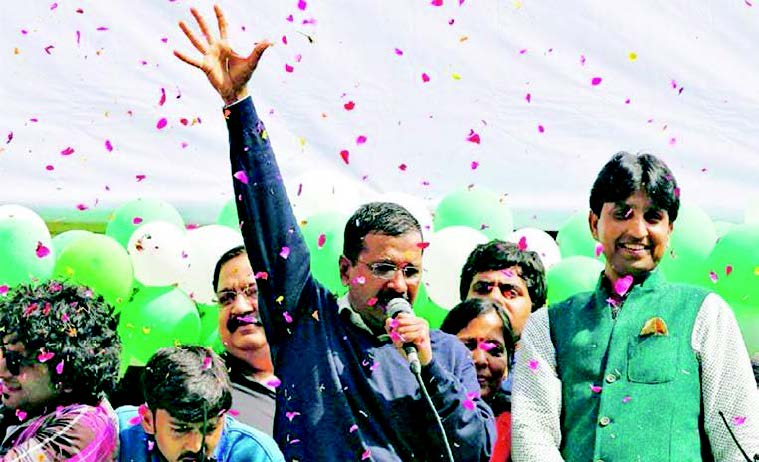
    The AAP rebel camp today claimed that rights activist Aruna Roy, a former comrade of Arvind Kejriwal from his RTI campaign days, would be attending a meeting called by them next week along with over 100 Lok Sabha poll nominees who had fought on the party’s ticket.

    A twitter account created by the rebel camp also claimed that veteran journalist Kuldip Nayar would be among those attending the meet.

    The group has claimed that it has received responses from around 3,591 people for the April 14 meet.

    It also said that social activist Medha Patkar, who had resigned from AAP as it was rocked by internal differences, is going to attend the meet.

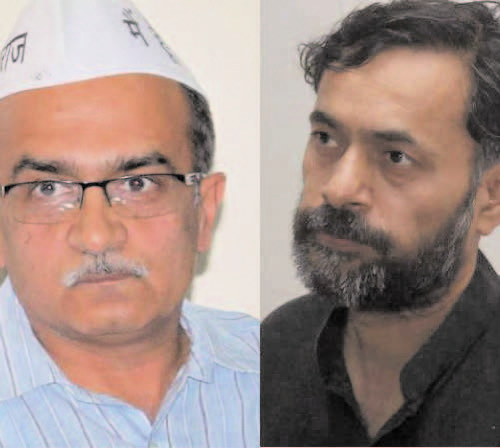
    Yogendra Yadav and Prashant Bhushan have also released a pre-invite for the event that is to be held at IFFCO Chowk at Gurgaon from 10 A.M. To 5 P.M., saying it involves “restarting” the journey of alternative politics so as to remain true to the “original spirit” of the ‘andolan’ (movement).

    The rebel camp claims to have garnered the support of 968 volunteers in Delhi, 661 from Uttar Pradesh, 329 from Bihar, 301 from Haryana and 200 from Maharashtra.

    The build-up to the April 14 meet has witnessed a series of allegations and counter-allegations with the dissident camp accusing Arvind Kejriwal loyalists of trying to scuttle the event while the party has issued a veiled warning to those intending to participate in the ‘Swaraj Samwad’.

    Bhushan and Yadav were ousted from the party’s top panels last month.

  • 2 AAP leaders suspended for backing Yadav, Bhushan

    NEW DELHI (TIP): In continuing purge of dissidents, AAP has suspended two of its National Executive members from the party for attending a press conference held by rebel leaders Yogendra Yadav and Prashant Bhushan immediately after they were expelled from the top echelons of the party.

    The party sent the suspension notices to Uttar Pradesh leaders Rakesh Sinha and Vishal Sharma Lathe for openly coming out in support of Yadav and Bhushan.

    Incidentally, Sinha who is an elected National Executive member, raised questions over the way its internal Lokpal Admiral L Ramdas was sacked and Bhushan was removed as the chief of its disciplinary committee. Lathe had voted against the resolution to sack Bhushan and Yadav from Political Affairs Committee on March 4.

    Sinha and Lathe slammed the leadership for taking the punitive action against them without giving them any opportunity to explain their position. Both National Executive members were present in a press conference held by Bhushan and Yadav on March 28 after the duo was expelled from the party’s top decision-making body.

  • Challenges to Conservation of Ganga

    Challenges to Conservation of Ganga

    Prime Minister Narendra Modi has made clear his commitment to clear up the Ganga River. This is a most welcome step since Ganga is Holy to People world over. Ashes of many American Indians are taken to Hardwar to be immersed in the Holy River at Hardwar. PIOs world over have offered help to the Government of India in cleaning up the river.

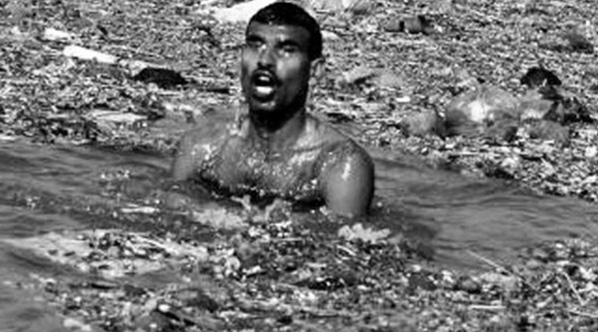
    The Ganga suffers from two problems-pollution and obstructions to free flow. Pollution, in turn, comes from two sources-municipalities and industries.

    Large amounts of monies have been spent in building Sewage Treatment Plants (STP) in cities along the Ganga. However, the Municipalities have no incentive to run these plants. They would rather spend their limited resources in providing pressing civic services like street lighting and road repairs. The Municipalities, however, are mighty happy to construct more STPs since that provides opportunities for leakages and corruption.

    The problem cannot be solved by yet more funding on non-working STPs. The way out is to make sewage treatment a profitable activity. Municipalities in Mumbai and Nagpur are selling sewage to industrial units who find it cheaper to use treated sewage water instead if buying fresh water. This model has to be applied across the board. The Government must invite private entrepreneurs to set up the STPs and make arrangements to buy the treated sewage water which can then be supplied for irrigation. This will make it profitable for businesses to treat sewage. This treatment will no longer be a “liability” for the Municipalities. This change of gears will require building a new system of canals to reach treated water to the farmer’s field. The supply of this water to farmers would also reduce their need for drawing fresh water from the Ganga and lead to increase in flows in the Holy River. The Modi Government has opened the purse strings and is providing large amounts of monies for STPs. Though good intentioned, it is still pursuing the “build STP” model that is destined to fail.

    The other source of pollution is from the industries located in the Ganga Basin. The consortium of seven Indian Institutes of Technologies is making a Ganga River Basin Management Plan under directions of the Government. They have suggested that all industries be required to adopt “Zero Liquid Discharge.” Industries should be required to treat and reuse the effluent continuously so that nothing is discharged. Industries are willing to adopt this. Their problem is that the additional cost would price them out of the market vis-à-vis industries located outside the Ganga Basin that are allowed to discharge effluent. The problem cannot be solved by imposing punitive measures on industries in the Ganga Basin. Per force, industries in the Ganga Basin will have to close down. The way out is to make a national legislation requiring Zero Liquid Discharge by all industries irrespective of their location. Let us not forget that the Krishna, Cauvery and Mahanadi also need to be conserved. It is to the credit of Modi Government that Water Resources Minister Uma Bharati has put the industries on notice to control effluent discharges. This is a step forward. But it is still following the punitive model instead of solving the underlying economic problem.

    The second dimension of conservation of Ganga is to ensure free flow in the river. Flow of the Ganga is presently obstructed by hydropower projects like Tehri, Vishnu Prayag and Srinagar; irrigation barrages at Hardwar, Bijnor, Narora and Kanpur; and the Farakka Barrage made in West Bengal to divert water to the Hooghly to enable ships to reach the Kolkata Port. Hindu scriptures clearly state that only flowing water is Holy. These projects obstruct the flow and damage the spiritual energy that the Ganga brings from the Holy Shrines of Gangotri, Kedarnath and Badrinath. Japanese researcher Masaru Emoto has taken photographs of water crystals made from different waters and found that crystals made from flowing rivers are of beautiful shape while those made from stagnant waters are not so.

    Abstraction of water for hydropower, irrigation or navigation requires building a barrage that obstructs free flow and damages the spiritual quality of the water. But we cannot stop abstraction either. The way forward is to abstract water by making a partial obstruction on the riverbed so that, say, one half of the water flows freely while other half is abstracted for various purposes. Unfortunately Modi Government is bent upon making yet more obstructions to the free flow of the Ganga. The Ministry of Shipping has come up with a plan to develop the Ganga as a waterway from Haldia to Allahabad so that imported coals can be carried to the thermal power plants top be made along the banks of the Ganga. This will entail building three or more barrages between Allahabad and Buxar. The Uttar Pradesh Government is increasing the size of Narora canal so that more water can be abstracted for irrigation. The Government-owned Tehri Hydro Development Corporation has only recently started construction of the Vishnugad-Pipalkoti hydropower project that will create one more obstruction to the free flow of the Ganga. It must be mentioned here though that the Government has recently stated in the Supreme Court that it wants to ensure free flow in the Ganga but the measures it proposes to take are still unclear. Challenge before the PIOs is to make proposals to the Government of India and lead the Government in the right directions.

  • Indian-American Renu Khator to head US Higher Education council ACE

    Indian-American Renu Khator to head US Higher Education council ACE

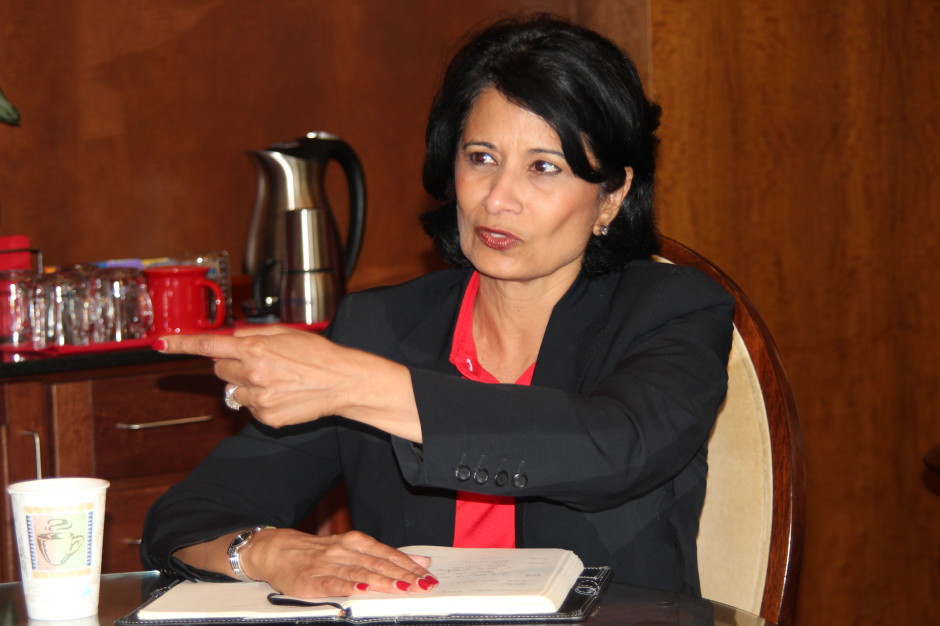
    Dallas (TIP) : Indian American Renu Khator, Chancellor of University of Houston System and also President of University of Houston, will be the new Chair of American Council on Education (ACE) which is the most influential higher education association. She will be succeeding James H Mullen Jr  from tomorrow.  

    Uttar Pradesh-born and University of Kanpur educated Khator told PTI that “On March 16, I will become chairman of the American Council on Education, a national organisation representing all institutions of higher education– from elite private to community colleges to ‘for profit’ universities – in America.” 

    “In the next decade, American higher education is going to be transformed. We need a collective voice, a shared platform, a place where we can collectively anticipate change, dare to innovate, and learn from each other’s mistakes. 

    “I think ACE provides that forum, that collective voice that shared space, and that togetherness,” reads a message by Khator on ACE’s official website.  

    She will be the first ever Indian immigrant to lead a comprehensive research university in the US. She is also the UH System’s first woman chancellor and UH’s first foreign-born president. Last year, she was named the chairperson of the Federal Reserve Bank of Dallas’ board of directors.  

    Currently the Vice Chair of ACE, she says she feels tremendously honoured to be selected for the new position by fellow presidents. 

    ACE represents the presidents of US accredited, degree- granting institutions, which include two and four-year colleges, private and public universities, and non-profit and for-profit entities. In its role representing all sectors of higher education, ACE provides higher education administrators multiple opportunities to learn from colleagues and experts. 
     
    According to Khator, both the Indian and US education systems have the same mission but take different approaches to accomplish it. 

    “India does not have a two-year college system for those who wish to pursue trade related degrees. It has a cohort system where a student enters a university and must continue and finish his or her degree at a predetermined course in a pre-selected field.

     
    In US, students can work on their own pace and start their degree at any age and change majors several times,” she says.

    “Bachelor’s education in the US includes two years of common core. Irrespective of your field of study – engineering or commerce or arts – everyone must take common courses in humanities, math and social sciences,” she says.

    A product of the Indian education system, she says she values it for all that it offers

  • FRESH TROUBLE FOR MAJITHIA

    FRESH TROUBLE FOR MAJITHIA

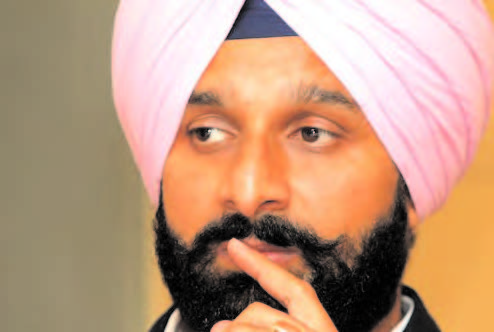
    CHANDIGARH (TIP): Punjab revenue minister Bikram Singh Majithia received about Rs 35 lakh as “election fund” from Jagjit Singh Chahal, the arrested pharma company owner and the kingpin of the synthetic drugs racket, according to the Enforcement Directorate (ED) chargesheet filed in the Patiala court on March 2.

    “Between 2007 and 2012, I gave Rs 35 lakh in cash to Majithia in seven or eight instalments. I used to hand over the money to Majithia in the drawing room of his 43, Green Avenue, residence in Amritsar,” Chahal said in signed statements in Punjabi made before Niranjan Singh, the Jalandhar-posted assistant director of the ED, on February 9 this year.

    The statements, made under Section 50 of the Prevention of Money Laundering Act and permissible in the court as evidence, are part of the ED’s voluminous chargesheet.

    However, it’s noteworthy that the ED chargesheet does not directly name Majithia in this case of money-laundering. Nor has the ED produced any corroborating evidence yet to establish the veracity of Chahal’s allegations.

    Significantly, Majithia had appeared before the ED on December 26 last year in connection with the drug racket. Strangely, it is after summoning Majithia that the ED again recorded Chahal’s statement on February 9, 2015, in which the latter has alleged that he gave the money to the minister. It is, however, not clear whether Chahal had made the same allegation against Majithia in his earlier confessional statements before the ED.

    Majithia was questioned by assistant director Niranjan Singh, who was later transferred to Kolkata. In an interim order, the Punjab and Haryana high court has stayed Singh’s transfer.

    According to the ED documents, Chahal told ED, “Eh sariyan rakman main Majithia saab di kothi ch ja ke usde drawing room which dittiyan. Jaan ton pehlan, main usde PA Kartar Singh, jo ki usda sarkari PA hai, de naal telephone the gal kar ke Majithia saab de naal meeting da sama le lenda si (Before going to meet Majithia, I used to take appointment from his PA Kartar Singh).”

    One of the primary accusations against Chahal who owned pharma companies was that he was allegedly manufacturing banned precursor chemicals — ephedrine and pseudoephedrine — which were being diverted illegally for the production of synthetic drug ICE.

    The ED chargesheet says another accused and Amritsar businessman Maninder Singh alias Bittu Aulakh, stated before the central agency that Majithia was “involved” in sand mining business.

    In response to the ED’s question about the “business of Majithia and his business associates”, Aulakh on January 13 this year had told ED, “He (Majithia) runs a distillery in Uttar Pradesh. His trusted man for sand mining is Kanwarjit Singh alias Rosy Barkandi of Muktsar.”

    On the other hand, Chahal said, “Bittu Aulakh, Majithia and Bonny Amarpal Ajnala, SAD MLA, together deal in the business of sand mining.”

  • INVESTMENT PROPOSALS DON’T MEET PROMISES

    INVESTMENT PROPOSALS DON’T MEET PROMISES

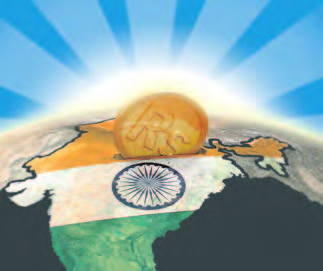
    NEW DELHI (TIP): Investment proposals by corporates are generally associated with improving business sentiment and often linked with the possibility of job creation. The comparison of proposed investment with actual implementation and job creation in the past 23 years, however, shows that the actual delivery has fallen well short of the promise.

    Data from the department of industrial policy and promotion shows that between August 1991 and March 2014, the government received about 94,000 investment proposals. These proposals include Industrial Investment Intentions through Entrepreneurs Memorandum — IEMs (delicensed sector) and Direct Industrial Licences (licensable sector).

    Put together, these proposed the investment of more than Rs 102 lakh crore and were supposed to create 2.3 crore jobs. The data on actual implementation of these proposals shows that only Rs 5.1 lakh crore was actually invested and just 20.1 lakh jobs created. That’s less than 5% of the proposed investments and 8.9% of the promised jobs.

    A state-wise analysis of proposals shows that between August 1991 and March 2014 corporates proposed to invest Rs 15.4 lakh crore in Orissa —the highest in the country. It was followed by Gujarat and Chhattisgarh receiving over Rs 10 lakh crore of proposed investments and Maharashtra just a tad below that mark. Overall, there were 15 states, which were each supposed to get over Rs 1 lakh crore of investments in these 23 years.

    When one analyses actual investments, Haryana has been the most successful among these 15 states in converting proposals to reality as 18.9% of the proposed money actually reached the state. It is followed by Gujarat (12.6%) and Uttar Pradesh (11.4%). The states that fared the worst in this conversion are Bihar, Jharkhand, Chhattisgarh and Orissa, where less than 1% of the proposed money actually arrived.

    So, what is the investment to job creation ratio? Overall, the Rs 5 lakh crore actually invested created a little over 20 lakh jobs, which amounts to four jobs per crore of investment. There were 25 states which witnessed the actual investment of more Rs 1,000 crore. Among these states, Jammu and Kashmir witnessed the most labour intensive investments, while Gujarat had the most capital intensive ones. Every crore of rupee invested in Jammu and Kashmir created about 12 jobs, while in Gujarat a crore of investment yielded only two jobs.

    In the investment to job creation ratio, Jammu and Kashmir is followed by Goa, Uttarakhand, Kerala and Punjab, where ten or more jobs were created per crore of investment. The worst state/UTs in this list are Madhya Pradesh, Jharkhand, Daman & Diu, Uttar Pradesh and Gujarat.

  • Developing Story: Ex-reporter held in petroleum ministry document leakage case

    Developing Story: Ex-reporter held in petroleum ministry document leakage case

    New Delhi (TIP): A former journalist along with a corporate employee have been arrested in connection with the petroleum ministry document leakage case, police said on Feb 20, adding that some more people would be arrested soon.

    Santanu Saikia, who runs a web portal and covered crime stories for several years, was arrested early Friday for his alleged role in providing secret documents of the petroleum ministry to corporate houses.

    Prayas Jain, an energy consultant, was also arrested on Friday.

    Delhi Police on Thursday had arrested two employees of the petroleum ministry and three others for stealing official documents and leaking them to corporate houses.

    Rakesh Kumar, 30, Lalta Prasad, 36, both brothers and residents of Delhi, and Raj Kumar Chaubey, 39, a resident of Ghaziabad in Uttar Pradesh, were held red-handed with the photocopy of some secret documents at Shastri Bhawan on February 17 night.

    On information provided by them, government employees -Asharam, 58, and Ishwar Singh, 56 – were also arrested. They were were part of multi-tasking staff (MTS) at Shastri Bhawan.

    Police on Thursday said that Kumar and Prasad were former MTS employees, while Chaubey was their associate who never worked at Shastri Bhawan.

    The theft of the secret documents had been taking place in the office of the ministry located in high-security Shastri Bhawan near the parliament house.

    Previous Update (below) – Two officials of the Petroleum Ministry were arrested today

    Two Petroleum Ministry employees are among five persons arrested for allegedly leaking

    confidential government documents to private companies, Delhi Police said today.

     Sources said a clerical staff and a peon of the Petroleum Ministry were apprehended by the police.

    They said provisions of Official Secrets Act may be slapped on them.

    The sources said the two Petroleum Ministry employees used to provide confidential information to private companies in return for money.

    Petroleum minister Dharmendra Pradhan told Times Nowthat the government will probe the matter as the leakage of information is a very serious issue. “We will provide assistance to Delhi police and law will take its course,” Pradhan was quoted as saying by Times Now.

    “Earlier, it was common for papers to be leaked, now strict measures are  in place. Cameras  have been installed everywhere and we have increased our surveillance,” Pradhan added. He also said that the the current govrnment will not allow  the kind of leakages that the UPA Government had allowed.

    BJP spokesperson GVL Narasimha also reiterated that those involved the ‘murky affairs’ will have to face the consequences of law.

    With inputs from Agencies

  • The AAP’s Second Coming

    The AAP’s Second Coming

    In the winter of 2013, at a dinner party hosted by a prominent Janata Dal (United) leader in the national capital, shortly after the Delhi Assembly elections, I was witness to an extraordinary conversation. Seated at a table on the lawns of a Lutyens’ bungalow, senior leaders from the Congress, the Nationalist Congress Party (NCP), the Bharatiya Janata Party, the Communist Party of India (Marxist), the JD (U) and the Samajwadi Party discussed the dramatic electoral debut of Arvind Kejriwal’s Aam Aadmi Party (AAP) that stood a close second to the BJP in the State polls. The surprise?Despite their differing world views, they unanimously described Mr. Kejriwal’s politics as the most serious threat to the future of their own parties.

    But 13 months later – a period that saw Mr. Kejriwal become Chief Minister, then quit and fade away, and Narendra Modi’s BJP achieve spectacular success in the general election – many of those opposition parties including the JD (U), the Trinamool Congress and those from the Left declared solidarity with the AAP ahead of this year’s Delhi Assembly polls. When the results arrived, the significance of the barely two-year-old party’s victory sank in, and congratulations started pouring in from opposition parties including the Shiv Sena and the People’s Democratic Party, BJP allies, old and new. The message?Thank you for stopping the BJP.

    So what does the AAP’s second coming in Delhi – a microcosm of India, with its privileged, powerful urban centre widening out into a hinterland of migrants – mean for the traditional opposition parties? Is it an opportunity or a challenge, as they read it in 2013? 


    Ending era of ‘anti-Congressism’

    Last year, the BJP became the first party other than the Congress to win a majority at the Centre, ending the era of “anti-Congressism.” If the BJP was to be defeated, the message of the electorate was that as many non-BJP parties as could unite would have to come onto one platform, flipping the concept of “anti-Congressism” formulated by the socialist leader Ram Manohar Lohia over half a century ago.

    It is, therefore, not surprising that those at the forefront of the emerging “anti-BJPism” in the country are Lohia’s disciples: Janata Parivar members who have, on several occasions, since the 1960s, worked closely with the BJP or the Jan Sangh against the Congress.

    Today, the Janata Parivar’s constituents are struggling to merge their identities to form one party to protect their turf in Bihar, Uttar Pradesh, Karnataka and Haryana against the imminent BJP onslaught, their efforts slowed down by the crisis within the JD (U) in Bihar where they will face their first challenge in State elections later this year.


    Challenging BJP in Parliament

    Simultaneously, the Janata Parivar has also been playing a key role in challenging the BJP on the streets and in Parliament. The Janata Parivar-sponsored agitations questioning the government’s failure to act on the BJP’s electoral promises of bringing back black money, enhancing prices of farm produce, etc. may have gone largely unnoticed. But in Parliament, along with other opposition parties, they have caused serious discomfort to the ruling dispensation.

    In the winter session, the opposition deployed its superior numbers to block the Modi government’s reforms agenda. Divided on economic issues, the opposition joined hands to demand a clarification on religious conversions and communal statements made by BJP MPs, before cooperating on legislative business. The government walked into the opposition trap, failing to clear the Insurance Bill and the Coal Mines Bill. Eventually, it issued a slew of ordinances, providing fresh fodder for the opposition, which accused the BJP government of bypassing Parliament.

    This show of opposition solidarity (that saw nine parties including the Dravida Munnetra Kazhagam, the Bahujan Samaj Party and the NCP working jointly) will be repeated in this month’s budget session of Parliament, with the AAP’s clean sweep in the capital only strengthening that unity. Indeed, the government will find it hard now to push the land acquisition ordinance, for it was on this issue that the AAP campaigned in Outer Delhi where it had failed to get even a single seat in 2013, thanks largely to its inability to crack the caste factor among the migrant population. In 2015, the AAP won 12 of the 14 seats here.

    But replicating opposition unity outside Parliament will be far more difficult. The compulsions of State politics will ensure that regional parties such as West Bengal’s Trinamool and Odisha’s Biju Janata Dal will continue to work alone in their States, especially when it comes to electoral politics. The All India Anna Dravida Munnetra Kazhagam and the DMK will remain the dominant parties in Tamil Nadu, joining hands with parties with smaller presence at election time. Of course, any of these parties might at some stage join a broader national opposition front, provided potential partners don’t encroach upon their own areas of influence.

    For the steadily declining Left parties, which are in power in Tripura and have a notable presence in West Bengal and in Kerala, forging issue-based unity with other parties in Parliament is even less likely to translate into electoral solidarity. At best, it will participate in street agitations and its trade unions may make common cause with similar organisations on specific issues. The Left parties – the CPI(M), the CPI, the Forward Bloc and the Revolutionary Socialist Party – are currently engaged in trying “to broaden the Left” by including the Communist Party of India (Marxist-Leninist) and the Socialist Unity Centre of India. But with its focus still on creating an alternative policy framework, one that still remains at odds with most other political parties, it is unlikely that it would have any meaningful electoral alliances.

    That leaves us with the country’s largest opposition party, the Congress. If party president Sonia Gandhi had forged electoral alliances ahead of the 2004 general election to lead the United Progressive Alliance to victory, one that sustained for a decade, her successor is not cut from the same cloth. Rahul Gandhi, poised to become party president, has not yet demonstrated the leadership qualities necessary to revive the Congress that touched a historic electoral low last year. Worse, say despairing members of the Congress Working Committee, he is unwilling to work towards building electoral alliances to regain political ground.

    Most opposition parties were looking to the Congress for revival of the opposition. But now with the party scoring a duck in a State that it had earlier ruled for 15 uninterrupted years, that hope will diminish further.

    Where does the AAP now fit into the opposition? A quick check with some opposition leaders suggests that while they would like Mr. Kejriwal to endorse their dying brands, they are wary of entering into an alliance with him. They know that his David-like slaying of the Modi Goliath means he could only join such a platform in one capacity – as the leader.

    The AAP’s historic win may have shattered the air of invincibility that Mr. Modi had acquired, but for traditional opposition parties to get another life outside Parliament, they must build a younger leadership, re-invent themselves or simply perish. The Delhi election reflected a change in the national mood and if they don’t adjust to it, their irrelevance will further grow. Arithmetic can only help up to a point.

    The AAP, on its part, is in no hurry. It first wishes to make Delhi a model State, then build its unit in Punjab where it has four MPs, and then gradually grow in the rest of the country. Any success – or failure – in Delhi, the AAP knows, will get it nationwide attention. For the traditional parties, the threat they spotted in 2013 still looms large.


  • Was BJP’s Loss In Delhi Intelligently Planned?

    Was BJP’s Loss In Delhi Intelligently Planned?

    There were enough signs to indicate what you see in Delhi may not be true at all. 

    BJP is a very well organized outfit with sympathizers in every layer of government, judiciary, media, commerce and industry. It is unlikely all this is happening due to poor management. Then is all this ‘bad management’ part of a deliberate plan to lose Delhi? A lot actually.

    Here are some reasons why:

    1: BJP inducted three rejects of India Against Corruption movement and Aam Aadmi Party (AAP) into its fold — Kiran Bedi projected as BJP’s chief ministerial candidate, Shazia Ilmi and Vinod Kumar Binni. As per plans Bedi is BJP’s scapegoat to save Modi’s image.

    2: Kejriwal’s Delhi WIN will be projected as a victory of a mass movement, media will eulogize Kejriwal, hail him as a hero and will dissect AAP’s campaign for days. Also this will divert attention of the people who are getting restless from Modi’s inability to deliver on his election promises. 

    3: Kejriwal will have no honeymoon period, both media and voters will demand immediate results, at least on corruption, power tariffs, VAT (value added tax), health hotline and WiFi. A hostile government at the Centre will not help him either. This spotlight on Kejriwal will come as a huge relief for Modi.

    4: Sangh Parivar machinery can now unleash its foot soldiers to polarize voters with low-intensity disturbances ahead of the two big battles — Uttar Pradesh (UP) and Bihar.

    5: BJP’s top brass is aware that if the party plans to win Delhi, the state will remain a headache — partly due to Kejriwal in opposition and partly because of impatient voters who expect immediate results and good governance, something the BJP is unsure of delivering. Proving that losing Delhi isn’t such a bad idea! 

    6: Now BJP can deploy numerous tactics to not let Kejriwal do what he want’s thus proving him a failure in Delhi. BJP team knows that many of the promises by kejriwal are impractical and cannot be fulfilled and this will snatch his ‘Nayak'(Hero) image. 

    7: This undeliverable performance of Kejriwal will surely break his image through out the country making him unpopular in other states limiting his scope in next Lok Sabha Elections.

    8: Now the One-Man-Army AAP will not be able to spread itself in other states nationwide because the face(Kejriwal) of party will be busy managing Delhi for next 5 years. And there is no other mob-attractor face in AAP.

    9: BJP knows that if they win Delhi, Kejriwal in Opposition will make their life hell and will criticize their every action if its not the best one. 

    10: Now the media houses have 2 faces Modi and Kejriwal to criticize. BJP knows this will surely save Modi from being the only target of media & mass criticism.

    source: story alert

    Disclaimer: The opinions expressed are personal opinions of the author

  • Excesses of Hindutva hotheads

    Excesses of Hindutva hotheads

    There is urgent need to restrain those making provocative and poisonous statements, says the author.

    All through his campaign that brought him spectacular victory in the parliamentary poll, Prime Minister Narendra Modi had concentrated on only “development” and “good governance” and avoided any item on the Hindutva agenda that could have upset the pluralist Indian society. Unfortunately, however, even then he did absolutely nothing to silence or even restrain those of his irresponsible supporters belonging to the Sangh parivar who made provocative, polarizing and even poisonous statements.

    For instance, at an early stage, Giriraj Singh, a Bhumihar leader of Bihar, declared that all those who opposed Mr. Modi in any way would have “no place in India” and must therefore “go to Pakistan”. Mr. Modi said not a word about this preposterous pronouncement. All that Rajnath Singh, then the BJP president and now Union Home Minister, did was to “disassociate his party” with Mr. Giriraj Singh’s statement. No wonder there followed a spate of equally absurd and dangerously divisive observations.


    49


    The head of the BJP unit in Uttar Pradesh, Laxmikant Bajpai, and the five-time MP, Yogi Adityanath, discovered that the Muslims were engaged in “love jihad” – a campaign to lure Hindu women into marriage or romance and then “forcibly” convert them to Islam. Mr. Bajpai stated that of the rapes taking place “99 per cent were committed by Muslims”. As for Amit Shah, Mr. Modi closest confidant and soon to be the party president, the Election Commission was constrained to deny him permission to hold public rallies.

    This ban was withdrawn only after Mr. Shah had apologized to the Commission and assured it that he would say anything that was “unacceptable”. On none of these disconcerting episodes Mr. Modi said a word during his powerful oration on all other subjects under the sun. Sadly, most people’s hope that what had been permitted during the election would be quietly disallowed after the BJP-led government had settled down has turned into a dupe. The bitter stand-off between the ruling party, on the one hand, and nine Opposition parties, including the Congress, that have a clear majority in the Rajya Sabha, on the other, that led to the disruption of the Upper House for several days could be the foreshadow of the shape of things to come.

    The sequence of events was distressingly sordid. A 47-year-old, firsttime BJP MP, Sadhvi Niranjan Jyoti – who was recently made a Minister of State, together with Mr. Giriraj Singh – had delivered an election speech in a Delhi suburb as the national capital is due to have assembly elections. Pontifically she told her audience that the choice before them was clear: They could elect a government of “Ramzadas” (children of Lord Ram) or that of “Haramzadas” which really means “b******s” but the BJP propagandists translated it as “illegitimate” to dilute the vulgarity. Inevitably there was a wave of outrage.

    When the matter exploded in Parliament, as it was bound to, the Prime Minister chose to stay away. Some senior cabinet ministers told the House that at a party meeting Mr. Modi had “strongly disapproved of the language used” whereupon the sadhvi offered an apology of sorts. This, declared the BJP leaders magisterially, was the “end of the matter”. The Opposition in both Houses, but particularly that in the Rajya Sabha where the saffron party is in a minority, demanded that Mr. Modi should come to the House to explain his position. He took three days to do so and declared that discussion was all over.

    An easily avoidable disruption of the Rajya Sabha followed. For, the determined Opposition gave up its initial demand for the sadhvi’s resignation or dismissal and asked for only a resolution to denounce the use of foul language by everybody in politics. The government contemptuously rejected this. In the end a “consensus statement,” appealing to all MPs “to maintain civility at all costs in public discourse” settled the bitter dispute.

    The crowning irony is that just when Vice-President Hamid Ansari, who is also the Chairman of the Rajya Sabha, was reading out the consensus document, a former BJP minister, Swami Chinmayanand was publically using the H-word in relation to, of all people, Imam Bukhari of Jama Masjid for advertising his association with a foreign place, Bukhara. Far more shocking was what so senior and experienced a leader as Foreign Minister Sushma Swaraj, who was earlier leader of the Opposition in the Lok Sabha, did only a few hours earlier. She strongly advocated that the Gita should be declared the “National Scripture” of India.

    Remarkably, even before anyone from religions other than Hinduism could speak, vigorous opposition to Swaraj’s demand came from Tamil Nadu, ironically from the BJP’s allies. One of them, MDMK leader Vaiko, simultaneously announced that he was ending the alliance. He accused the Centre of working against Tamil Nadu and suggested that the Dravidian forces should unite to fight the “Sanskritisation” of cultural and social spheres. He added that “Hindutva will not be allowed to gain a foothold in Tamil Nadu”. PMK’s founder S. Ramadoss, who is still an ally of the BJP, also came out against Swaraj’s idea and stated that “apart from “cultural imposition” the Modi government had “hardly come out with any constructive programs in the last six months”. The BJP would be making a grave mistake if it underestimates the Tamil sentiment. Those who did so in 1965 over the official language issue paid a very heavy price.

    At that time even Prime Minister Shastri did not dare to go to the trouble-spot. Only Indira Gandhi had the necessary courage. Finally, it cannot be overlooked that while Mr. Modi has full control on his government he is either unwilling or unable or both to discipline the wrongdoers among other members of the Sangh parivar who seem determined to build up a Hindu rashtra by hook or by crook. They enjoy the protection of the Rashtriya Swyamsevak Sangh (RSS) of which the BJP is only the political face.

    (The author is a Delhi-based political commentator.)

  • Cabinet clears Rs 5 lakh compensation to 1984 anti-Sikh riot victims

    Cabinet clears Rs 5 lakh compensation to 1984 anti-Sikh riot victims

    NEW DELHI (TIP): A proposal to give Rs 5 lakh each to the kin of victims of the 1984 anti-Sikh riots, triggered after assassination of the then Prime Minister Indira Gandhi, has been approved by the government on December 10 night. The decision has been taken by the Union Cabinet at a meeting presided over by Prime Minister Narendra Modi. The compensation to the families of the riot victims will be given in addition to what they have so far received from the government and other agencies, official sources said. Of the 3,325 victims, 2,733 were killed in Delhi alone while rest of the victims were from Uttar Pradesh, Haryana, Madhya Pradesh, Maharashtra and other states.

    The Narendra Modi government had received several petitions from various Sikh organisations in the last three months. The fresh compensation, which will cost the exchequer Rs 166 crore, sources said. The anti-Sikhs riots were triggered following the assassination of the then Prime Minister Indira Gandhi by her Sikh bodyguards on October 31, 1984. In 2006, the UPA government led by Prime Minister Manmohan Singh had announced a package of Rs 717 crore which included monetary compensation of Rs 3.5 lakh to the kin of each killed in the riots besides financial assistance to the injured and those who had lost their property.

    Out of this only, Rs 517 crore had been spent and the remaining Rs 200 crore could not be distributed because of dispute over claimants. The most affected regions were the Sikh neighbourhoods in Delhi. Some of the anti-Sikh riot cases are still continuing in courts and many Sikh organisations have alleged that the key conspirators of the violence were at large and victims have not yet got justice. In 2005, then Prime Minister Manmohan Singh had apologised for the 1984 anti-Sikh violence saying Gandhi’s assassination was a “great national tragedy” and what happened subsequently was “equally shameful”. “I have no hesitation in apologising to the Sikh community. I apologise not only to the Sikh community, but to the whole Indian nation because what took place in 1984 is the negation of the concept of nationhood enshrined in our Constitution,” he had said.

  • 22 STATES, UTS SUPPORT BILL TO PREVENT ‘HONOUR KILLINGS’

    22 STATES, UTS SUPPORT BILL TO PREVENT ‘HONOUR KILLINGS’

    NEW DELHI (TIP): The government has initiated the process of drafting a law against honour killings by treating crimes in the name of honour as a separate category of offences. The moves comes after 22 states, including Punjab, Haryana, Himachal Pradesh and Chandigarh (UT), supported the recommendations of the Law Commission of India to treat honour crimes as a standalone offence. Law Minister Sadananda Gowda said in Parliament today that the government would, after considering the comments from states, hold consultations on the enactment of the legislation against honour crimes. “After considering the responses of all states and UTs and consultations with stakeholders, the policy decision to enact the legislation on the subject will be taken. It would be difficult to fix a timeline but the department has initiated the process of implementation of the report of the Law Commission in this respect,” Gowda said.

    The Law Commission had in its 242nd Report on “Prevention of Interference with the Freedom of Matrimonial Alliances in the Name of Honour and Tradition” recommended a strict law against honour crimes being perpetuated by community panchayats working by different names in different parts of the country. The proposal to bring the law was first initiated during Congress-led UPA-II which had formed a Group of Ministers to make recommendations. The GOM never presented its report and was disbanded once its chairman – Pranab Mukherjee – proceeded to become President. At that time, Haryana had opposed the move. The BJP government, after coming to power, circulated the proposal again and 22 states, including Haryana (which now has a BJP government), have supported the recommendations of the Law Commission.

    Apart from Punjab, Haryana, Himachal and Chandigarh, the states that have backed the law are: Andhra, Assam, Chhattisgarh, Goa, Jharkhand, Karnataka, Kerala, Meghalaya, Mizoram, Nagaland, Odisha, Uttar Pradesh, West Bengal and the UTs of Dadra and Nagar Haveli; Daman and Diu, Lakshadweep and Puducherry. The responses of the remaining states are awaited. Consensus of states on the law to curb honour crimes is critical because the subject falls in List III (Concurrent List) of the Seventh Schedule of the Constitution and the Centre alone cannot legislate on it.

  • MY WAY OF DOING POLITICS IS TO STRENGTHEN PEOPLE: RAHUL

    MY WAY OF DOING POLITICS IS TO STRENGTHEN PEOPLE: RAHUL

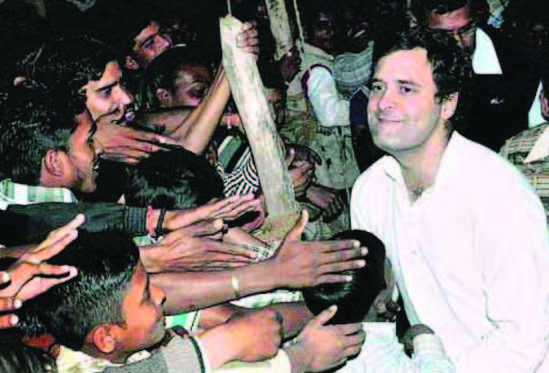
    AMETHI (TIP): Accusing Prime Minister Narendra Modi of living in an ivory tower disconnected with grassroot realities, Congress vice president Rahul Gandhi said here on December 4 his style of doing politics was different from that of the PM. “Jo Sarkar mein hain aur meri soch mein bada fark hai (There is a great difference in ideology of the one in power and mine),” he said, adding that he believed in giving power to the people while the PM preferred to become the centre of power himself.

    Rahul also came forward to assist one Vidyavati, a member of the Rajiv Gandhi Mahila Vikas Pariyojana who was scheduled to make a speech on the 10th anniversary of the Indira Gandhi Eye Hospital in Amethi. Vidyavati who was too short to be visible from behind the podium and was interrupted by Rahul who asked her to stand on a foot stool to address the crowd. Later, making his own address, he said, “I could have sat there and watched. But she came here wanting to be seen and heard. I want to ensure no one feels disadvantaged. This is my way of doing politics.

    I want to strengthen people.” Making a dig at Modi’s “autocratic” style of functioning, Rahul said, “Unki ye soch hai ki poore Hindustan ko Dilli se chalaya jaaye.” (He wants to run all of India sitting in New Delhi) Alleging also that the NDA government had created a clique, where PM Modi held the reins of power and a select group of bureaucrats did his bidding, Rahul asked his audiences to use their discretion to decide what kind of governance they preferred. “It is up to you to choose whether you want a government that gave you RTI, panchayati raj, rural employment guarantee and food security, or a government that likes to keep all the power centered in itself,” he said. Concluding his two-day visit to his parliamentary constituency, Rahul reiterated his dig at the Centre’s Saansad Adarsh Gram Yojana and said as MP to 750 villages, he wanted each one to be model villages, rather than one single village.

    Participating in the anniversary celebrations of the eye hospital, Rahul also said the eye hospital, named after his grand mother, aimed to rid UP of cataract in the coming years. He also congratulated the doctors and staff members of the hospital for being adjudged the best eye hospital in Uttar Pradesh, in a recent AC Neilson survey on hospitals. While touring his constituency, Rahul stopped at a garment store in the city where he first tried and then purchased a jacket.

    Even as visitors looked on fondly, a family that ad come visiting the shop asked Rahul about his wedding plans, advising the MP to wed in Amethi so they could join the ‘baraat.’ Jovially, the Congress vice president, now 44, replied, “You all give me such a long list of things to do that I have little time left to do anything else.”

  • BHAI DOOJ: THE BOND OF BROTHERLY-SISTERLY LOVE

    BHAI DOOJ: THE BOND OF BROTHERLY-SISTERLY LOVE

    Nowhere is the bond of brotherly-sisterly love glorified with such grandeur as in India. Hindus celebrate this special relationship twice every year, with the festivals of Raksha Bandhan and Bhai Dooj.

    What, When & How

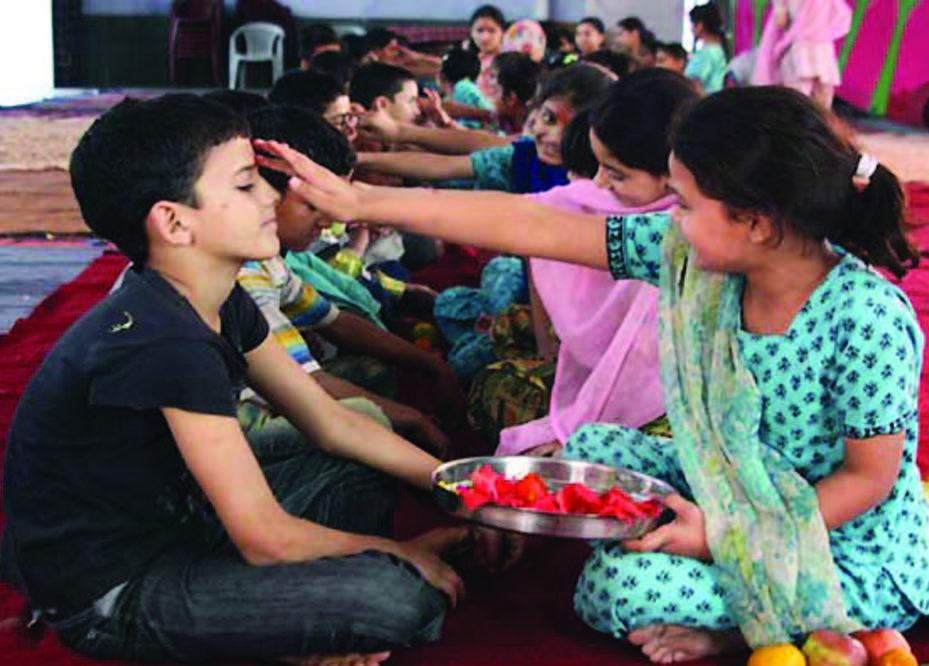
    After the high voltage celebrations of Diwali , the festival of lights and fire-crackers, sisters all over India get ready for ‘Bhai Dooj’ – when sisters ceremonize their love by putting an auspicious tilak or a vermilion mark on the forehead of their brothers and perform an aarti of him by showing him the light of the holy flame as a mark of love and protection from evil forces. Sisters are lavished with gifts, goodies and blessings from their brothers. Bhai Dooj comes every year on the fifth and last day of Diwali, which falls on a new moon night. The name ‘Dooj’ means the second day after the new moon, the day of the festival, and ‘Bhai’ means brother.

    Myths & Legends

    Bhai Dooj is also called ‘Yama Dwiteeya’ as it’s believed that on this day, Yamaraj, the Lord of Death and the Custodian of Hell, visits his sister Yami, who puts the auspicious mark on his forehead and prays for his well being. So it’s held that anyone who receives a tilak from his sister on this day would never be hurled into hell. According to one legend, on this day, Lord Krishna, after slaying the Narakasura demon, goes to his sister Subhadra who welcomes him the lamp, flowers and sweets, and puts the holy protective spot on her brother’s forehead. Yet another story behind the origin of Bhai Dooj says that when Mahavir, the founder of Jainism, attained nirvana, his brother King Nandivardhan was distressed because he missed him and was comforted by his sister Sudarshana. Since then, women have been revered during Bhai Dooj.


    22


    Bhai Phota

    In Bengal this event is called ‘Bhai Phota’, which is performed by the sister who religiously fasts until she applies a ‘phota’ or mark with sandal wood paste on her brother’s forehead, offers him sweets and gifts and prays for his long and healthy life. Every brother eagerly awaits this occasion that reinforces the bond between brothers and sisters and their affectionate relationship. It’s an opportunity for a good feast at the sister’s place, coupled with an enthusiastic exchange of gifts, and merriment amid the resounding of conch shells in every Bengali household.

    Underlying Significance

    Like all other Hindu festivals , Bhai Dooj too has got a lot to do with family ties and social attachments. It serves as a good time, especially for a married girl, to get together with her own family, and share the post- Diwali glee. Nowadays, sisters who are unable to meet their brothers send their tika – the spot of protection – in an envelope by post. Virtual tilaks and Bhai Dooj e-cards have made it even easier for brothers and sisters, who’re far away from each other, specially remember their siblings on this propitious occasion.

    Bhai Dooj In Uttar Pradesh

    In Uttar Pradesh, at first, sisters give a piece of cloth, knotted into a circular shape, full of batashas (sugar balls) to their brothers. This piece of cloth is called as ‘aabf’. For each brother, there are two aabf. After all the rituals, sisters apply a tika of roli and rice on the forehead of the brothers and then perform aarti, praying for the long and happy life of their brothers. At last, they offer sweets to them and then the story of Bhai Dooj is narrated.

    Bengal

    In Bengal this festival is called Bhai Phota. On this day, sisters observe fast till the time all the traditional customs have been performed. After this, they apply tika made of sandalwood paste, ghee and kohl (kajal) on their brothers’ forehead. Then the aarti is performed and sisters give sweets to their brothers to eat. Kheer and coconut laddus are the traditional sweets which are prepared on this day. At the time of applying tika, the sister chants the mantra which is as follows: “Bhratus tabaa grajaataaham Bhunksa bhaktamidam shuvam Preetaye yama raajasya Yamunaah Visheshatah.” This mantras means “I, your sister making you eat this holy rice for the pleasure of Yama and Yamuna”. In this way she prays God to bless her brother with the best in life.

    Bihar

    In the Bihar, the festival of Bhai Dooj is celebrated in the most unique way. The sisters curse their brothers in order to keep the evil spirits and dangers away from them. At first, they say very bad things to their brothers and then prick their own tongue with a wild prickly fruit as a punishment. By doing this, they ask their brothers to forgive them for the ill behaviour and mistakes which they have done till the date. Besides this, there is a unique custom in which brothers eat grains of bajri with water, from the hands of their sisters.

    Punjab

    In Punjab, the day after Diwali is celebrated as tika and on this day, sisters make a paste with saffron and rice and apply tika on their brothers’ forehead to keep away all the difficulties and dangers from them. After this, they exchange gifts and sweets among each other.

    Gujarat

    Bhai Dooj in Gujarat is known as Bhai Beej and on this auspicious occasion, sisters get up early in the morning and then the traditional tilak ceremony is held. After this, they perform aarti of their brothers and pray for their good fortune and life. Then they offer sweets to their brothers and in return the brothers bless them and exchange gifts.

    Maharashtra & Goa

    Marathi communities in Maharashtra and Goa called this festival as Bhav Bij. On this day, sisters draw a square on the floor in within the boundaries of which the brothers have to sit. After they are seated, it is a custom for to have a bitter fruit named Karith. After this, the rituals and applying the Tilak, traditional sweets such as Shrikhand Puri and Basundi Puri are served.

  • VARANASI

    VARANASI

    THE ABODE OF LORD SHIVA AND PARVATI

    The land of Varanasi (Kashi) has been the famous pilgrimage spot for Hindus for ages. The holy city is situated on the banks of the river Ganges in the Indian state of Uttar Pradesh. Ganges in Varanasi is believed to have the power to wash away the sins of mortals. Often referred to as Benares, Varanasi is the oldest living city in the world. It is said to be the abode of Lord Shiva and Parvati. The name Kasi (another name for Varanasi) is mentioned in the Rig-Veda. It is often also referred to as “city of temples and learning”. Buddha preached his first sermon after enlightenment at Sarnath, just 10 km away from Varanasi. Knowledge, philosophy, culture, devotion to Gods, Indian arts and crafts has all flourished here for centuries.

    Ghats

    The city’s life revolves around its seven km long sweep of about 100 bathing ghats that skirt the west bank of the Ganges. Most of them are used for bathing. Some are used for cremating bodies. The most sacred ghats are the Asi, Dasashwamedh Ghat, Manikarnika and Panchganga. Pilgrims who bathe in each one consecutively believe their prayers will be fulfilled. A short boat trip from Manikarnika Ghat can be an interesting introduction to the river.

    It is believed that cremation at Manikarnika ghat ensures a safe place in Heaven, as the cremators of this ghat are believed to have the patronage of Shiva. The furthermost upstream ghat is Assi Ghat, which marks the confluence of the Ganges and the Assi rivers. It is said that after striking down demon Shumbha and nishumbha, Durga’s sword fell and created a curved ditch, which later became the Assi Channel. This Ghat is one of the five special ghats which pilgrims are supposed to bathe at in sequence during the ritual route called ‘ Panchatirthi Yatra’ ending in the Adikeshva ghat in the north. Nearby is the Tulsi Ghat, where Goswami Tulsidas lived till his death in 1623A.D.

    The Bachra Ghat is used by Jains and there are three riverbank Jain Temples. The Dandi Ghat is used by fakirs , yogis and ascetics and nearby is the very popular Hanuman Ghat. Dashashvamedh Ghat, Varanasi’s liveliest bathing place was constructed by Peshwa Balaji Baji Rao. It’s name indicates that Brahma sacrificed (medh) 10 (das) horses (aswa) here. It’s one of the most important ghats and is conveniently central. Nearby is the grand Man Mandir Ghat (1637) and an observatory both built by Sawai Raja Jai Singh of Jaipur in 1710. Mir Ghat leads to a Nepalese temple, which has erotic sculptures.

    Dattatreya Ghat bears the footprint of the Brahmin saint of that name in a small temple nearby. The Ram Ghat was built by the Raja of Jaipur. Panchaganga Ghat, where India’s five holy rivers are said to merge. The Trilochan Ghat has two turrets emerging from the river, and the water between them is especially holy. Another important cremation ghat is the Hirishchandra ghat, named after the king Harishchandra who worked as a cremator at the cremation grounds. The best time to visit the ghats is at dawn when the river is bathed in a magical light and pilgrims come to perform puja to the rising sun.

    The best view of the Ghats can be had from a boat midstream or from the Malviya bridge. Burning pyres, people getting their hair shaved off, the chanting of sacred slokas, giving of alms to Brahmins, Pandas (Brahmin Priests) sitting under huge umbrellas offering prayers for their clients, devotees praying and drinking water from the holy river are the common sight at these ghats.

    Vishwanath temple (Golden Temple)


    12


    The most sacred temple in Varanasi is the Vishwanath temple, located at Vishvanath Gali dedicated to Lord Shiva. Hindus believe Shiva lives here, so it’s far too holy a place for non-Hindus to view, the followers of other religions are permitted a view from the Naubat Khana (seat of temple choir). The shivalinga at the Vishwanath temple is among one of the 12 Jyotrilingas. The current temple was built in 1776 by Ahalya Bai of Indore with about 800 kg of gold plating on the towers, which gives the temple its colloquial name, Golden Temple. The gold plated spire, was the gift of the Sikh Maharaja Ranjit Singh of Lahore in 1835, more than 50 years later. The well of wisdom or ‘Gyan Vapi’ which is nearby is believed to have been built by Lord Shiva himself to cool the ‘linga’ of Vishwanath with water.

    Sarnath


    13


    The Buddha came to this hamlet, 10 Km. north-east of Varanasi, to preached his message “Maha-Dharma-Chakra Pravartan” (in Buddhist terminology, ‘turned the wheel of the law’) after he achieved enlightment at Bodhigaya. Later, the great Buddhist Emperor Ashoka built here the Dharmarajika Stupa and near it erected a pillar surmounted by the magnificent capital of four adored lions, which today forms the national emblem of India. Ashoka erected several memorial towers or stupas.

    Saranath probably derived its name from one of Buddha’s title, Saranganath, Lord of the Deer. The Chinese Buddhist pilgrims, Fa-hsien and Hiuen Tsiang who visited in the 5th and 7th centuries respectively, both recorded impressions of their stay. The huge swastika (110ft) covered Dhameskh Stupa dates from AD 500 and is thought to mark the place where Buddha gave his sermon. Sarnath has been a premier centre for Buddhism. It is a rich collection of ancient Buddhist relics and antiques comprising numerous Buddha and Bodhisatva images on display at the excellent Archaeological Museum (open 10am to 5pm except on Friday).

    Ramnagar

    The residential place of Kashi Naresh (Former Maharaja of Varanasi) across the Ganges at Ramnagar houses a museum with the exhibits of palanquins, costumes, swords, sabres, etc. Dussehra celebration of Ramnagar is an interesting event to witness.14 km. from Varanasi. The fort at Ramnagar houses a museum displaying the Royal collection which includes vintage cars, Royal palkies, an armoury of swords and old guns, ivory work and antique clock.

    The Durga Temple and Chhinnamastika Temple are also located at Ramnagar. Ramnagar Fort which was built in 1750A.D by the Maharaja of Banaras, is on the right bank of River Ganga. Built of red stones, it provides strength and stability to the city. Visit : Daily from 0900 t0 1200 and 1400 – 1500. It is the residential palace of the former Maharaja of Varanasi. The palace is an astronomical and astrological wonder. Inside the giant walls of the palace, there is a big clock. Besides showing year, month, week and day, it baffles the onlooker with astronomy of the sun, moon and constellation of stars.

    This wonder clock or Dharam Ghari was made by the court astronomer of Banaras in 1852A.D. The palace has a temple dedicated to Ved Vyas and a museum set up by the last Maharaja of Banaras, Vibhuti Narain Singh. The museum has a collection of brocade costumes, palanquins, weapons and has expensive coaches made of ivory. The palace is decorated majestically and it vibrates with colour and life, during Dussehra festival. The celebrations comes to an end on Vijayadashmi, when the huge effigies of demon king Ravana and his kinsmen are sent up in flames, signifying the victory of good over evil.

  • A Mushaira Celebrates

    A Mushaira Celebrates

    DALLAS (TIP): A Mushaira in celebration of unity and peace was organized by the local Al Noor International in Irving on September 12 to honor a celebrated Indian poet Munawwar Rana. Several local and guest poets from India and America participated. Munawwar Rana was born in Rae Bareli in Uttar Pradesh but spent most of his life in Kolkata. He published his poetry not only in Urdu but also in Hindi and Bengali.


    70
    Dr. Hasan Hashmi presided over the Mushaira


    The notable feature of his poetry is that he used the genre of ghazal to eulogize mother, which is unique, as ghazal was considered a poetic form in which lovers’ conversed with each other. He avoids using flowery language and shuns chaste Urdu in his couplets, which is a reason that he is successful in poetic meetings in non-Urdu areas also.

    He is considered[ to be one of the most successful poets at Mushairas and is popular outside India also. “Yeh Aisa Karz Hai Jo Main Ada Kar hi Nahin Sakta Main Jab tak Ghar na Lautun meri Maa Sajde Mein Rehti hai” Noor Amrohvi who has been organizing Mushairas in Dallas for the last couple of years, despite all odds- financial constraints and opposition from some in his own community- has once again proved he is an organizer par excellence.


    71
    Surinder K. Mital graced the occasion as Chief Guest of the evening


    Noor who belongs to the famous Amroha in Uttar Pradesh in India which has given quite a few artists, including the famous film maker and director Kamaal Amrohvi, is very proud of his heritage. He has great attachment for Urdu and has been trying to promote it in America ever since he arrived in the United States. An experienced compere, Noor conducted the proceedings of the Mushaira in a very professional and orderly manner. While Dr.Hasan Hashmi presided over the Mushaira, a local businessman Surinder K. Mital graced the occasion as the chief guest. Sunil Jogi, a State Minister from India, who excels in humorous poetry, displayed his skill with a torrent of anecdotes, jokes and amusing satire.


    72
    Dr. Hashmi(second from left), Surinder K Mittal (third from left) and Noor Amrohvi(extreme right) honoring Dr. Munawwar Rana(extreme left) with a Souvenir Calendar that listed Dr. Rana’s achievements in the field of poetry


    He was the most appreciated poet of the evening. Dr. Irfan is a celebrated and widely popular poet for his humorous, hilarious and witty four line compositions. His verses are meaningful satire on social evils and peoples’ attitude. Shah Alam is a versatile poet with a distinction. He has been quite active in literary circles for many years. He recited his latest composition that was highly applauded for its originality and message. It had spiritual undertones that gave a new dimension to his poetic vision. He was greatly applauded by the audience for his presentation Saeed Qureshi has a long literary background both as a writer and a poet. He recited his latest Ghazal portraying the uncertainties of human life and mysteries that a person encounters. The tone and tenor and the depth of the ghazal that he presented received great ovation and admiration.


    73
    Sunil Jogi, a State Minister from India, who excels in humorous poetry, displayed his skill with a torrent of anecdotes, jokes and amusing satire


    Khalid Khaja has an originality of both thought content and style of delivery of his poetic compositions. He is a favorite with mushairas in America and elsewhere in the world. His picks the themes from the daily life and writes in a unique diction that is only unique to him. His ghazal was greatly appreciated and clapped by the audience. Dr. Shamsa arrived in Dallas only in the recent past. She has been reciting her poetry at various Mushairas held in Dallas Fort Worth area. She presented her Ghazal and was loudly applauded. The Mushaira continued till midnight- an indication of the strength and success of the event.
    Unity and Peace

    Reciting their compositions


    47
    Noor Amrohvi


    48
    Jyoti Kumar welcomes guests


    49
    Shazia Khan compered well


    50
    Naheed Shad


    51
    Mike Ghouse- thinker, writer and poet is a well known activist for pluralism


    52
    Shah Alam Siddiqui


    53
    Dr. Shamsa Qureshi


    54
    Zohra Chishti


    55
    Dr. Amir Suleman


    56
    Saeed Qureshi


    58
    Tariq Hashmi


    59
    Yunus Ijaz


    60
    Khalid Khaja


    61
    Archuna Pandit


    62
    Farah Iqbal


    63
    Fayaz Hussain


    64
    Arif Imam


    65
    A group photo of poets at the Mushaira


    66
    A view of the audience


    68
    Dr. Nirmal Mann

  • By-poll results shock BJP

    By-poll results shock BJP

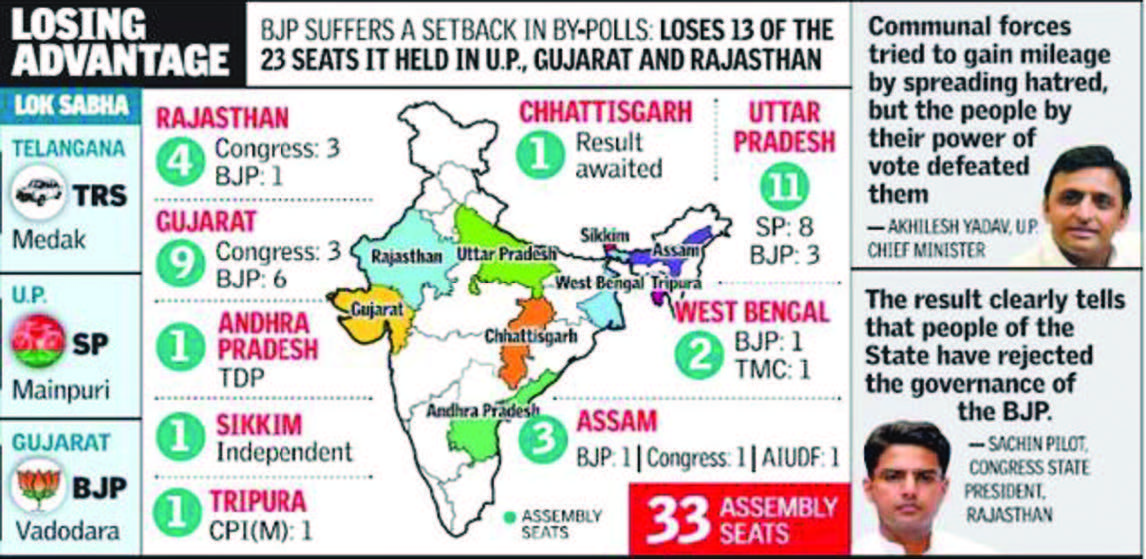
    New Delhi (TIP): The results of the Assembly byelections have come as a blow for the BJP in Uttar Pradesh, Rajasthan and Gujarat — the states it had swept in the Lok Sabha polls four months ago — losing 13 of the 24 seats held by it. Of the 32 Assembly seats across nine states for which counting of votes was held today, the BJP won 12, Congress seven and Samajwadi Party eight while TDP (Andhra), Trinamool Congress (West Bengal), AIUDF (Assam) and CPM bagged one each. One seat in Sikkim was won by an Independent.


    This is the third consecutive setback for the saffron party after its disappointing performance in Assembly byelections in Bihar, Uttarakhand, Karnataka and Madhya Pradesh in the past two months. All 11 seats in Uttar Pradesh, Gujarat (9) and Rajasthan (4) were held by the BJP and the bypolls were necessitated after the sitting MLAs were elected to the Lok Sabha. It was Uttar Pradesh — the party’s recently acquired stronghold where the BJP managed a near-total sweep in the LS elections — that delivered a humiliating blow to the saffron party as it lost seven of the 11 seats held by it, including the one held by its ally, the Apna Dal.


    The BSP’s absence in the byelections had made it a virtual straight fight between the SP and the BJP in the politically crucial state. BJP strongman Amit Shah was credited with crafting the spectacular win for his party in UP in the Lok Sabha polls. The party lost six out of 13 seats in Rajasthan and Gujarat, where it’s in power. Lost for words, BJP leaders could not even blame rival parties for playing foul in the elections. Senior BJP leader Rajiv Pratap Rudy said the results “deserve a small introspection”. “This is not a national mandate. It is a localised issue.


    Surely, it is a wake-up call for better planning in the upcoming Haryana and Maharashtra Assembly elections,” he said. Senior leader Uma Bharti dismissed questions about efficacy of the “Modi wave” saying “state leaders and workers need to introspect.” It was a significant comeback by the SP, which won eight out of 11 seats in Uttar Pradesh —and the Congress, which trounced BJP on three out of four seats in Rajasthan. “The people of the state have given a befitting reply to the communal forces and clearly expressed their desire for harmony and brotherhood,” said a beaming UP CM Akhilesh Yadav.


    Among BJP’s big losses is the Rohaniya seat, which falls within Modi’s parliamentary constituency Varanasi. The saffron party just about managed to hold to its own in Modi’s home state Gujarat, winning six out of nine seats. Rajasthan Chief Minister Vasundhara Raje was left re-faced as the Congress won three out of four seats. One of the seats — Surajgarh—was being contested by her close aide Digambar Singh who lost to Shravan Kumar of the Congress by 3270 votes.


    The BJP had swept the Lok Sabha and Assembly elections in the desert state earlier this year. High on the win, Rajasthan Congress chief Sachin Pilot advised the “BJP to take a lesson from these elections and introspect” The BJP retained Kota South, losing Surajgarh, Weir and Nasirabad to the Congress. The only silver lining for the BJP was the inroads into WB where it has won Basirhat Dakshin (South) seat.

  • BJP GETS THE JOLT IT DESERVED

    BJP GETS THE JOLT IT DESERVED

    The folly of polarization boomerangs

    Normally no great importance is attached to by-elections in this country which should explain why no Prime Minister has ever canvassed during them. Interestingly, Congress president Sonia Gandhi and her son and party vice-president Rahul Gandhi have stuck to this routine even after losing power. During the most recent by-elections to 33 assembly and three parliamentary seats, the Congress’ First Family chose to be abroad.


    38


    It must have regretted this because it lost the opportunity to celebrate the jolt the Bharatiya Janata Party has suffered exactly four months after its spectacular success in the parliamentary poll under Narendra Modi’s leadership. Particularly prominent is the saffron party’s overwhelming defeat in the politically key state of Uttar Pradesh where it had won 71 of the 80 Lok Sabha seats on May 16. This time around it has surrendered eight of 11 assembly seats to the Samajwadi Party that rules the state even though the latter’s own record is conspicuously poor.

    Even more hurtful to the BJP is that the Congress that was virtually wiped out in the Lok Sabha elections has wrested from it three assembly seats each in the BJP’s bastions, Rajasthan and Mr.Modi’s Gujarat. In UP, however, the Congress has drawn a complete blank. Having slid in nine of the 10 states where by-elections were held, the BJP has a cause for comfort only in West Bengal, where it has wrested a seat from Chief Minister Mamata Banerjee’s Trinamool Congress. From the day the Modi government came to power, there have been 50 by-elections across the country.


    39


    Of these the BJP and its allies have won only 18 and lost all others. The reason for this serious setback is crystal clear and it is writ large on the political landscape.Mr. Modi may have spoken about development and good governance in the past. Those in charge of the by-elections or chief campaigners in the by-elections never used these expressions. Arrogantly confident of coming to power in this most populous state in 1917, the BJP adopted the wrong, disruptive and dangerous strategy of polarization along religious lines. “Love jihad” was one of its favorite slogans.

    As time passed, the tone of the BJP’s UP leaders – such as the president of the party’s state unit, Lakshamikant Bajpai, and the saffron-clad Yogi Adityanath, a five-time MP and the principal campaigner in the state – became more provocative and indeed poisonous. It is noteworthy that neither Prime Minister Modi, nor party president Amit Shah, nor any other senior leader did anything to restrain the Hindutva hotheads. On the contrary, their silence greatly encouraged those spewing venom.

    The situation is not without irony. At a time when Bajpai and Yogi Adityanath were shouting hoarse about “love jihad”, an oxymoron that is supposed to mean that Muslims were busy luring Hindu women to marry them and then convert to Islam, the country’s Home Minister and a former president of the BJP, Rajnath Singh, told a press conference that he didn’t know what “love jihad” was. Exactly at that time, Sakshi Maharaj, another saffron-wearing BJP leader in UP, harangued his audience and the media not only about “love jihad” but also about “education in terrorism”.

    He thundered that madrasas were teaching “terrorism” to their pupils and “motivating” youth to lure women of other religions with “offers of cash awards – Rs 11 lakh for an affair with a Sikh girl, Rs 10 lakh with a Hindu girl and Rs 7 lakh for a Jain girl”. Not to be left behind, Usha Thakur, a BJP MLA in Madhya Pradesh who is also the vice-president of the party unit in the state, made another startling disclosure: At the prolonged Hindu festival of Garba, according to her, Muslims joined in large numbers. Consequently at the end of this festival every year, four and a half lakh Hindu women were converted to Islam.

    Yogi Adityanath reaffirmed that wherever in India the proportion of Muslims in the population was 35 per cent or more “non- Muslims could not be safe”. At this stage no less a person than Union Cabinet minister Maneka Gandhi intervened to declare that “profits made from the trade in slaughtered animals was financing terrorism” and to demand that the slaughter of all animals should be “banned completely”. If this strange and highly controversial statement went relatively unnoticed the reason is that by-election results had started coming and it was immediately obvious that the electorate in UP had rejected with contempt the BJP’s strategy to polarize and divide the country along religious lines.

    An accompanying development of significance is that the Election Commission took note of some of Yogi Adityanath’s “hate speeches” and “use of religion for electoral purposes”. He has been asked to explain why requisite action should not be taken against him. An earlier FIR against the BJP’s national president Amit Shah, issued by the UP police, was set aside by a district judge. The critically important need now is for the BJP to abandon its dangerously disastrous electoral strategy of polarization that has already boomeranged.

    So Mr. Modi must give priority to this for two reasons, and make up his mind on the subject because he alone can take crucial decisions. The first reason is that assembly elections are due in Maharashtra and Haryana very soon, and the saffron party would be courting huge trouble if it repeats in these two states what it did in UP. It should fully exploit the heavy anti-incumbency the Congress has piled up against itself in both these states. The second reason is that in view of the worsening of the overall situation, our duty is to promote communal harmony, not communal hatred.

    (The author is a senior journalist and editor.)

  • Akhilesh laptops to play Modi CDs

    Akhilesh laptops to play Modi CDs

    LUCKNOW (TIP): Political opposition notwithstanding, the Samajwadi Party government in Uttar Pradesh has made elaborate arrangements to ensure that Prime Minister Narendra Modi’s speech reaches lakhs of students in the state this Teachers’ Day.

    The UP secondary education department has issued detailed instructions asking for the necessary arrangements to be made for the live telecast of the speech, which has come under attack in some Opposition quarters amid a clarification from the Centre that the exercise involving students was voluntary. Ahead of the event on September 5, the Akhilesh Yadav-led government is making sure that the PM’s speech reaches students through television, webcasting, loudspeakers and even via laptops, which were distributed among UP students by the CM under a flagship scheme.

    “The education department has been directed to ensure that CDs of Modi’s speech should be showed on laptops that have been distributed by the state government,” principal secretary, Information, Navneet Sehgal, said. In a circular sent to all district inspectors of schools, director of secondary education, Awadh Naresh Sharma, specified that, “Modi’s programme would be in addition to the regular programme organised in schools and colleges. In schools where computers are available, preparations should be made for live webcast, it added. It was also advised that in remote areas the programme should be relayed on public address systems via radio.

  • Court Issues Death Warrant Against Surinder Koli in Nithari Case

    Court Issues Death Warrant Against Surinder Koli in Nithari Case

    Ghaziabad (TIP): In a fresh development in Nithari serial murder cases, Ghaziabad sessions court has issued death warrant against Surinder Koli in connection with the brutal killing of 14-year-old Rimpa Halder. CBI sources saidthat a death warrant was issued by Additional sessions Judge Atul Kumar Gupta in the name of Koli that he should be hanged to death after the convict exhausted all his legal remedies in this case.

    The death warrant has been sent to the Uttar Pradesh government for making necessary preparations for execution of 42-year-old Koli, who has been sentenced to death in four other cases. Koli has been lodged in a Ghaziabad jail. The sources said the court had fixed September 12 as the date of hanging but the final date can be reworked with the UP administration.

    Union Home Minister Rajnath Singh had earlier recommended to President Pranab Mukherjee that Koli’s mercy plea be rejected barely a month after he had taken over as the minister. The President, exercising his powers, rejected the mercy petition on July 27, thereby paving the way for the judicial process to commence for hanging of Koli. It was not immediately clear whether Koli would be hanged as already 11 cases of murder were pending against him. CBI had filed chargesheet against him in 16 cases where he had allegedly killed children after sexually abusing them.

  • FIRST PRAKASH DIVAS OF SHRI GURU GRANTH SAHIB

    FIRST PRAKASH DIVAS OF SHRI GURU GRANTH SAHIB

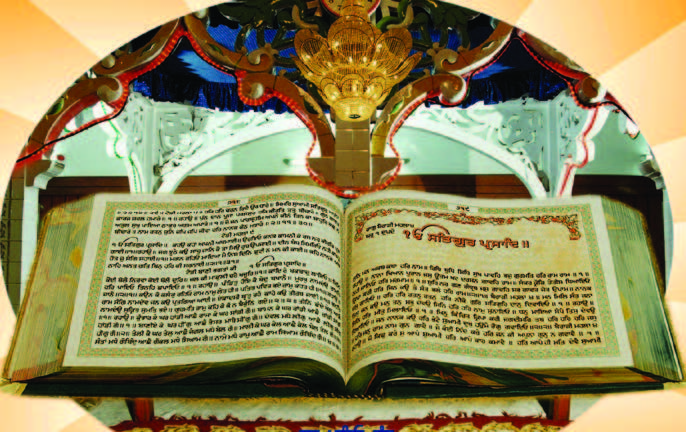
    Guru Arjan Dev Ji installed Adi Granth at Harmandir Sahib Ji 1604. Baba Buddha Ji was the First Granthi and Bhai Gurdas Ji completed Adi Granth Sahib Ji as dictated by Shri Guru Arjan Dev Ji in 1604. Later Guru Gobind Singh Ji adds Shabads of Guru Teg Bahadur Sahib Ji and then in 1708, Adi Granth became Guru Granth Sahib Ji, the Eternal Guru of Sikhs as was declared by Guru Gobind Singh Ji.

    The Guru Granth Sahib is indeed unique in its thought, literary expression and the message it continues to communicate centuries after it was written. Exalted thought needs to be transported on the vehicle of language to reach the masses. Poetic expression lifts prose to a higher plane.When verse and music meld, their beauty and sweetness makes mind transcend the humdrum of rational existence. This is divine love, passion pure expressed poetically; set to select 31 ragas…. The thought is egalitarian, expressed in a language that can be lucidly understood by the masses and the compositions are poetic, composed in the traditional Indian meters.

    As Bhai Kahan Singh’s Mahankosh tells us, the Guru Granth Sahib contains the bani (sacred compositions, literally utterances) of six Gurus, 15-non Sikh bhagats (saints) whose bani was in consonance with the teachings of the Gurus, 17 bhattas (bards) and four others. Guru Arjan Dev, the fifth Guru of the Sikhs, had the bani of the first four Gurus compiled in a manuscript for which he asked Bhai Gurdas, a major Sikh theologian, to be the scribe. It was this manuscript, the Adi Granth, which was ceremoniously installed in the sanctum sanctorum of Harmandir Sahib at Amritsar in 1604 AD.

    The manuscript also had Guru Arjan Dev’s compositons, the writings of bhagats and some others like Bhai Mardana and Sunder. The work of scribing the bani of the Guru started in the lifetime of the founder of Sikhism, Guru Nanak Dev. His compositions were carried in oral tradition as well as written down by his followers, even during his journeys.

    There are references in Puratan Janamsakhi to Hassu Lohar, Shihan Chheemba, Saido Jat, and Tan Sukh Bania, who were also among those who accompanied Guru Nanak during his journeys or udasis and penned his bani. Guru Nanak had founded Kartarpur, at present called Kartarpur Ravi and Dera Baba Nanak. It is now in Pakistan, just across the Ravi and is visible from the Indian side. It was here that the Guru settled down with his family in the twilight of his life. He was then in his seventies. As Bhai Gurdas, who was later to scribe the Adi Granth (original manuscript), says: “The morning would begin with the recitation of Japji and Asa di Vaar, after which people would continue with their worldly duties. In the evening, Sodhar and Aarti were recited.” The Janamsakhis tell us that Guru Nanak compiled Japji and Asa di Va at Kartarpur.

    He asked Bhai Lehna to assist him in editing these compositions. He was subsequently chosen, over his own sons, by Guru Nanak as his successor and named Angad, a part of oneself. As tradition puts it, Guru Nanak gave him the pothi (manuscript) that had 974 of his compositions (Pothi zuban Angad jog mili). Guru Angad added 63 of his compositions and gave the corpus to Amar Das, who was to be the next Guru. He was to add 907 compositions. Guru Amar Das made his grandson, Sahansar Ram, write the manuscript. It included the bani of Guru Nanak Dev, Guru Angad Dev and Guru Amar Das. The works of the bhagats were also included in it. A number of manuscripts were written, two of which are still available.

    They are known as the Goindwal pothis. These pothis also have Guru Amar Das’s forceful message about bhagat bani’s inclusion and importance, and of how the bhagats were influenced by Guru Nanak (Nama chimba Kabir julaha pure Gur te gat pai). Guru Amar Das decided that the next Guru would be his son-in-law, Guru Ram Das. At this, his two sons were unhappy and they kept the manuscripts with them in order to project their own importance to the followers. The pothis were thus kept by Bhai Mohan, Guru Amar Das’ elder son.

    The other major source of bani of Guru Nanak was the Harsahai pothi, which was with the family of the descendants of Prithi Chand, elder brother of Guru Arjan Dev. This manuscript was to remain with the family till it was stolen in 1970-71. When Guru Arjan Dev decided to compile the bani of his predecessors, there were thus a number of significant manuscripts that contained the Gurus’ compositions. Some had certain compositions that Guru Arjan Dev did not consider authentic. In order to consolidate the bani and prevent any spurious compositions from creeping into the original texts, he decided to have the Adi Granth compiled. The Tawarikh Guru Khalsa tells us that everyone who could contribute was asked to do so.

    The Guru issued hukamnamas to all Sikhs, asking them to bring the bani of the Gurus to Amritsar, where the editing was to be done. He called the rababis (rebeck players) who had memorised the bani, as well as ordinary Sikhs, who had preserved the bani safely. It was with this corpus that the editing began. Every available source and content was carefully scrutinised and Guru Arjan Dev kept only what was considered absolutely authentic. The task of making the manuscript was entrusted to Bhai Gurdas. The compositions of the bhagats were also scrutinised. The bhagats whose works are contained in the Guru Granth Sahib came from different regions of India and wrote in regional languages.

    The number of their compositions which were included is given along with their names: Kabir 541, Farid 116, Namdev 61, Ravidas 40, Trilochan 4, Beni 3, Dhanna 3, Bhikhan 2, Jaidev 2, Parmanand 1, Pipa 1, Ramanand 1, Sadhana 1, Sain 1, Surdas 1. The bhagats were from different religious denominations. They also belonged to different castes, including the so-called low castes, and came from different parts of the country like Uttar Pradesh, Bengal, Maharashtra, Mysore, Sindh, Rajasthan and Punjab. The bhagat bani gives a unique inter-religious, inter-regional flavour to the Adi Granth and the bhagat bani of the Guru Granth Sahib is a wonderfully catholic, cosmopolitan aspect of this scripture. While scribing the Adi Granth, Guru Arjan Dev ensured that the matter was arranged in a particular order and that everything was in proper context.

    The author of each composition was identified; the context determined the placing of the bani; the appropriate ragas were determined; and the whole text numbered, so that nothing could be interpolated. Scholars contend that the earlier manuscripts were written without any break between words to prevent anyone from inserting anything between these, and this tradition continues. A raga is usually defined as a musical arrangement that brings forth love in one’s mind. The arrangement of ragas in the Guru Granth Sahib is, according to the Hanuwant system, without the raginis.

    All the hymns are meant to be sung; and kirtan, the singing of the bani in an appropriate raga, is considered by Gurmat as an essential part of the religion and the sole form of worship among the Sikhs. Singing kirtan creates a shared community experience through repetition. After the Adi Granth was ready, the manuscript was taken in a ceremonial procession from Ramsar to Harmandir Sahib. Bhai Budha, who had come to Kartarpur and became Guru Nanak’s follower as a young lad, was now much revered. He now had a silver beard and he carried the Adi Granth on his head as a mark of respect. Guru Arjan Dev held a chowr (whisk), and the Sikhs, led by Bhai Gurdas, accompanied the solemn and grand procession to Harmandir Sahib, where the Adi Granth was installed. Guru Arjan Dev and other Sikhs sat at a lower level.

    The bani of the Adi Granth held an exalted status. Baba Budha became the first Granthi. Soon more and more Sikhs concentrated on learning Gurmukhi, since the bani was written in this script. The Sikhs also started making copies of the manuscript of the Adi Granth, some of which can still be seen. While the installation of the Adi Granth at Harmandir Sahib was of great significance to the Sikhs, it also caused jealousy to some, especially the estranged relatives of the Gurus. This led to an interesting incident that finds mention in history. In 1605, when Emperor Akbar was visiting Batala in Punjab, he was told that the Sikhs had a holy book that contained passages that were blasphemous to Islam.

    The Emperor called for the Adi Granth, which was sent by the Guru in the custody of Bhai Gurdas and Baba Budha. Bhai Gurdas, who had written every word of it, assured the Emperor that there was nothing against Islam, and that on the contrary, it contained hymns of Muslim saints. The Adi Granth was read at random in the presence of qazis and pandits. The first stanza said: “We are all children of our Father God.” When it was opened next, it said: “God pervades all His creation and the creation resides in Him. When there is nothing but God, whom should one blame.”

    The Emperor realised that there was nothing blasphemous in the document and he made an offering of gold coins to the Adi Granth. Robes of honour were presented to both custodians of the Adi Granth. This became the first significant instance of someone recognising the intrinsic truth contained in the Adi Granth and thereafter making a symbolic offering to it, something millions do every day, the world over. Guru Gobind Singh, after adding 115 compositions of his father, Guru Teg Bahadur, and Jai Jai Vantee Raga to the extant 30 ragas in the Adi Granth, proclaimed near the end of his life that henceforth there would be no person who would be the Guru of the Sikhs.

    The sole Guru would be the Word enshrined in the Guru Granth Sahib. The Word of faith, scribed for two centuries, was now complete and final.

  • RSS Influence over the BJP

    RSS Influence over the BJP

    Despite the nominal distance it maintains from the organisations of the Sangh Parivar, the RSS ensures that its writ runs where it matters: in the BJP governments at the Centre and in the States. The influence of the Rashtriya Swayamsevak Sangh on the Bharatiya Janata Party is always greater during periods when the party is in power. While the Sangh is sometimes ready to appear twice removed from the government, it is keen to exercise control over the party’s organisational affairs.

    Little surprise then, the newly elected president of the BJP, Amit Shah, chose to pack the top rung of the party with those from the Sangh. Former RSS spokesman Ram Madhav is now general secretary and ideologue Vinay Sahasrabuddhe is vice-president; four of the joint secretaries (organisation) are RSS members without much of a background of work in the party. Despite the nominal distance it maintains from the organisations of the Sangh Parivar, the RSS ensures that its writ runs where it matters: in the BJP, and in the BJP governments at the Centre and in the States.

    With its organisational strength, and the large number of committed cadre, the RSS is the backbone of the BJP, and not just an ideological mentor. In the 2014 general election, workers of the RSS and its affiliates threw their weight behind the BJP and contributed in no small measure to the party’s revival in States such as Uttar Pradesh and Bihar.

    It was only natural for the BJP, especially Mr. Shah who was in charge of the party’s electoral management in Uttar Pradesh, to recognise this fact and accommodate RSS leaders in the decision-making structure of the party. What is problematic, however, is how the RSS will wield its influence in the BJP to remote-control the government. Mr. Shah enjoys a close rapport with Prime Minister Narendra Modi and it is feared he might indeed function as an extra-constitutional authority. Now, with the BJP being led by RSS hands, the party’s influence on the government can only get bigger.

    Decision-making may not be confined to the Cabinet or legislative bodies, but may extend to party forums and Sangh meetings. Going by the statement of RSS sarsanghchalak Mohan Bhagwat that Hindutva is India’s identity, the RSS’s relations with the BJP and, by extension, with the government, could raise serious concerns in the public mind, and particularly among minorities. Prime Minister Modi spoke of ruling by consensus and not by the party’s majority in the Lok Sabha, but statements such as those made by Mr. Bhagwat seeking to equate Hindutva with Indianness and Hindustanis (Indians) with Hindus can only create doubts whether the BJP intends to return to a divisive majoritarian agenda.

    Mr. Modi and the BJP need to distance themselves from such statements if these are not to be taken as reflective of the thinking of the ruling establishment. Otherwise, the Sangh, the BJP and the government would be widely seen as just different forms of the same entity.

  • 308 communal incidents till June: Govt

    308 communal incidents till June: Govt

    NEW DELHI (TIP):
    Even as the Congress party tried to corner the BJP-led NDA government on communal riots, fresh data showed that the country witnessed 308 communal incidents this year until June, with Uttar Pradesh, Maharashtra and Karnataka topping the list. An analysis of two sets of statistics provided by the government over a period of one month also showed that there was a surge in communal incidents in the two months of May and June with 113 cases compared to the first four months of the year, which reported 195 incidents.

    The government placed the statistics in the Rajya Sabha through a written reply on Tuesday on a day when Congress forced the government to discuss the “need for more effective mechanisms to deal with communal violence”. The Congress has been alleging that there is an increase in communal riots in the country after the new government took over on May 26. Leader of Opposition Mallikarjun Kharge claimed that 600 communal incidents took place after the Modi government took over, an allegation vehemently contested by the BJP.

    Kharge’s claim could not be backed by any official data and when countered, he himself cited the figures for May and June. “Why are these incidents happening now? What is the reason? Who is behind these? These have increased in the last 2- 3 months since the new government came. This is not a good sign,” Kharge said in the Lok Sabha. As per the fresh figures, the Union Home Ministry said Uttar Pradesh recorded the highest number of communal incidents this year at 56 followed by Maharashtra at 51 and Karnataka 44.

    Telangana, which came into existence on June 2, has already registered one case of communal incident. Interestingly, almost half (27) of the communal incidents (56) in UP took place during May and June while the 20 in Maharashtra took place during the same period. In Karnataka, 11 incidents took place during these two months. Gujarat reported 26 incidents out of which 11 happened in May and June. In these two months alone, 15 people were killed and 318 injured. Last year, the communal incidents numbered 823 while in 2012 it was 668. In 2010, it was 580. Except for 2011, Uttar Pradesh topped the list.

  • Army man takes Pakistan spy bait, arrested for espionage

    Army man takes Pakistan spy bait, arrested for espionage

    HYDERABAD (TIP): Indian Army Naib Subedar Patan Kumar Poddar became the victim of his carnal desires and greed for money. The 40-year-old Poddar,who was posted at 151 MC/MF detachment at the Secunderabad railway station, was on Wednesday arrested by the Hyderabad police for espionage. Poddar,who is from Malda district in West Bengal, passed on vital information to a female Pakistani spy since last July.

    In return for his bits of information, the spy deposited money at regular intervals in his account, entertained him with her nude videos and even promised an all-expenses paid trip to London. During interrogation, Poddar told the central crime station (CCS) and Army officers that he came in contact with ‘Anushka Agarwal’,who claimed to be from Jhansi town in Uttar Pradesh, via Facebook last year and she introduced herself as an MSc student. The woman told Poddar her father, reportedly a retired IAF commander, ran an NGO for the UN in Jhansi.

    Dropping hints that she was attracted to Poddar, Anushka gave him an offer to work for their NGO by doing online surveys about the Indian Army for a monthly payment of Rs 10,000. Last July, Anushka deposited Rs 9,000 in Poddar’s SBI account at Mangalbari branch in Malda. As instructed by her, he filled an online form mentioning his professional, personal details and emailed it to her along with a photograph. After that Anushka started calling Poddar on his cellphone and collected the telephone numbers of 50 movement control offices (MCOs) across the country. In August 2013, the Pakistan spy deposited Rs 20,000 in Poddar’s account.

    She also trained Poddar in accessing emails through a proxy to avoid detection. As per Anushka’s request, the naib subedar provided her details of the movement of Indian Army units in the Western sector. He also gave her details about the movement of the 96 Field Regiment and 10 Medium Regiment from Secunderabad to Jodhpur and about their exercises. “I also provided her details about the army’s train demand whenever any unit was about to move from Secunderabad,” Poddar said in his confession. On the instructions of the spy, Poddar installed a Trojan (virus software) on his official computer, enabling Anushka to remotely access the system.

    Anushka asked Poddar to click photographs of the missile unit and storage unit, and provide ‘formation sign’ in Secunderabad, but the latter could not do it due to lack of access. With the money provided by Anushka, he purchased a secondhand laptop and started using it for communicating with her. Poddar subsequently received Rs 15,000 in November 2013 and provided Anushka with details of 12 army units, their brigade names and deployment locations. Anushka then gave a list of army units deployed on the western border to Poddar to corroborate, and the latter confirmed the same to her over the phone.

    This year, Poddar received Rs 30,000 in two installments for providing details about the location of artillery regiments, commands, army bases, corps, division headquarters and brigades through a common email account. Anushka also promised to send Poddar on a London trip, but he was caught before it could materialise. According to police sources, Anushka lured Poddar initially by sending him her naked photographs. Later, she got him completely under her spell by sending him nude videos and nude video chats. Central intelligence sleuths had gathered information that ‘Anushka Agarwal’ was a fake identity on Facebook. The spy had managed to get in touch with several military personnel.

    The sources revealed the woman in the videos was not the actual spy and her handler was untraceable due to the proxies used in communicating with Poddar. “Anushka used to communicate with Poddar over the phone through Voice-over-internet protocol (VoIP) applications,” a police official said. “We have seized three cellphones, 10 SIM cards, three data cards, a pen drive, a card reader and two computers from the possession of the erring subedar. He will be taken into custody for further probe.” Before he was posted in Secunderbad, Poddar had worked with artillery units in Jammu & Kashmir and Jodhpur.

    He also worked for the Military Intelligence Unit. However, his cross-border communication and practice of accessing military information attracted the attention of the intelligence agencies. So, he was under the surveillance of the Intelligence Bureau, Counter Intelligence Cell, Military Intelligence and the Multi Agency Centre (MAC) for the past seven months. The sources revealed Poddar used to spend long hours alone during the night at the military booking counter at the Secunderabad railway station to chat with Anushka using his personal laptop and data card since social networking sites are blocked on the Army network.

  • No new VIP security duties for NSG

    No new VIP security duties for NSG

    NEW DELHI (TIP):

    VIPs may no more enjoy the cover of coveted ‘Black Cat’ commandos. Government is learnt to have decided that VIPs would no longer get the cover of NSG commandos and the force would be redirected to keep 100% focus on counter-terror operations. The elite commando force was established as an emergency force to respond to terror attacks but has been diluted over the years with the burden of VIP security. As the force’s commandos are known to be the best in the country, they are coveted for security cover by politicians and VIPs as a status symbol. This may change soon, though. NSG DG J N Choudhary on Thursday told TOI, “The government is aware that VIP security is not our core competence.

    If any more responsibility of VIP cover is given to us, it would dilute our capability to counter terror attacks. That is why the government is not giving us such responsibility anymore.” He added that NSG was a lean force, as any specialized force should be, and increasing VIP duties would spread it thin and unavailable to consistent counter-terror training, an absolute essential for such a force. Though the force has been demanding for long that its VIP duties be limited, successive governments have only increased the number of VIPs under its protection. Chhattisgarh CM Raman Singh and UP CM Akhilesh Yadav were added to the list in recent years.

    However, the new government has been careful of the force’s concerns and has assigned other paramilitary forces to secure VIP protectees. A case in point is that of BJP chief Amit Shah and NSA Ajit Doval, both having very high threat perception, but still given CRPF and CISF security respectively. It will, however, continue to provide security to the 15 VVIPs that it guards at present until further orders.

    The NSG guards CMs like Raman Singh (Chhattisgarh), J Jayalalithaa (Tamil Nadu), Tarun Gogoi (Assam), Akhilesh Yadav (Uttar Pradesh), Parkash Singh Badal (Punjab) and a host of other political figures like senior BJP leaders L K Advani and Rajnath Singh. It is also securing former CMs like Prafulla Mahanta (Assam), K Karunanidhi (Tamil Nadu) and Mulayam Singh Yadav (Uttar Pradesh).

    The concept and thought process to reduce VVIP security duties of the elite force was mooted about two years back when the force decided to pull out about 900 commandos from its VVIP security duties and train them for specialized operational tasks of counter-terror and counter-hijack operations for which it was raised in 1984.